During the night Paul had a vision: there stood a man of Macedonia pleading with him and saying, “Come over to Macedonia and help us.” When he had seen the vision, we immediately tried to cross over to Macedonia, being convinced that God had called us to proclaim the good news to them.
We set sail from Troas and took a straight course to Samothrace, the following day to Neapolis, and from there to Philippi, which is a leading city of the district of Macedonia and a Roman colony. We remained in this city for some days. On the sabbath day we went outside the gate by the river, where we supposed there was a place of prayer; and we sat down and spoke to the women who had gathered there. A certain woman named Lydia, a worshiper of God, was listening to us; she was from the city of Thyatira and a dealer in purple cloth. The Lord opened her heart to listen eagerly to what was said by Paul. When she and her household were baptized, she urged us, saying, “If you have judged me to be faithful to the Lord, come and stay at my home.” And she prevailed upon us.
——————–
This is the mandatory reading from the Book of Acts, which will be read aloud on the sixth Sunday of Easter, Year C, according to the lectionary for the Episcopal Church. It will precede a singing of Psalm 67, where David wrote: “Let your ways be known upon earth, your saving health among all nations.” That song of praise will be followed by a reading from Revelation, where John wrote: “In the spirit the angel carried me away to a great, high mountain and showed me the holy city Jerusalem coming down out of heaven from God.” All will accompany one of two possible Gospel selections. The first is from John’s fourteenth chapter, where he wrote: “Jesus said to Judas (not Iscariot), “Those who love me will keep my word, and my Father will love them, and we will come to them and make our home with them.” If not that, then a reading will come from John’s fifth chapter, where it is written: “Jesus said to [an invalid by the pool of Bethesda], “Stand up, take your mat and walk.” At once the man was made well, and he took up his mat and began to walk. Now that day was a sabbath.”
To begin to understand this selection from Acts, one must know what is written in the previous three verses. The NRSV presents those as saying this:
“They went through the region of Phrygia and Galatia, having been forbidden by the Holy Spirit to speak the word in Asia. When they had come opposite Mysia, they attempted to go into Bithynia, but the Spirit of Jesus did not allow them; so, passing by Mysia, they went down to Troas.”
Here is a map of those travels. It follows a straight line:
Following the addition of Timothy with Paul and Silas, between Derbe and Lystra, the three then made their way north through Galatia (a region), before turning west. It was when they entered the region of Asia that the three were “hindered” or “prevented” (not the translated “forbidden”) from “speaking the word.” This being stated “by the Holy Spirit,” the Greek word “hypo” (translated as “by”) is properly translated as “under.” In this regard, HELPS Word-studies says of “hypo,” “under, often meaning “under authority” of someone working directly as a subordinate (under someone/something else). Since the three apostles were “under the authority to speak the word by the “Holy Spirit,” this says they were unable to “speak the word” divinely in Asia.
This means when they entered the region of Asia, having left Galatia, they were at a loss for what to say, as far as teaching Hebrew Scripture. As they would go from Jewish settlement to Jewish settlement, each Sabbath they would enter a synagogue and hear the selected readings for that day. Because the texts read as “Sacred” of “Holy,” none of the three was led by the “Spirit” that possessed their souls to add anything that would further explain that which was “Holy” in writing. This says they got as far as Mysia and were not moved to preach; so, they considered going north, into Bithynia, but the presence of Jesus within each of their souls said, “No.”
This is where it should be understood that all three were filled with Yahweh’s “Spirit,” which brought forth the resurrection of the soul of Jesus in each, so all were Jesus reborn. When verse six stated “hypo tou Hagiou Pneumatos,” which is in the Genitive (possessive) case, as: “under the authority of this of Sacred of Spirit,” that is no different than verse seven says “to Pneuma Iēsou.” That states “Iēsou” in the Genitive, saying “this Spirit of Jesus.” This means the “of Sacred of Spirit” was the “authority they were under,” which was the divine possession “of Jesus.” Therefore, “Jesus” did not raise his soul within them to “speak the word,” so the three knew from that lack of inspiration they should go another direction.
By realizing this stated in the prior three verses, with the three having reached “Troas,” verse nine begins with a capitalized “Kai,” which states great importance is to follow and one should pay close attention to that stated. Following that marker word, we read, “a vision on account of [of this],” where there are brackets placed around the word Genitive article “tēs,” which translates as “of this.” The brackets become a statement about “this” inability to “speak the word,” which the three had faced prior.
When the following word is also in the Genitive, connecting it to the bracketed “of this,” the word says “of night,” which leads the NRSV to read the whole (sans the bracketed “tēs”) as saying, “During the night Paul had a vision.” While it could be at a time between six P.M and six A.M, which is when “night” occurs in the Hebrew timing of days and “nights,” the Genitive links as a metaphoric statement that says “of darkness,” which means the inability to be led to speak the word by Jesus is an absence of light, which is synonymous with “of night.” Thus, the great importance (of the “Kai”) says Jesus returned to show Paul a sign (which could have been during the day) that was Jesus speaking to him, as to where to go next.
In the vision, we are told that Paul was shown “a man certain,” which means the “man” was understood to be a Jew, but perhaps also someone Paul had previously encountered in his ministry, where he was led to bring Jesus’ presence to the “man,” so he could also be married to Yahweh and reborn as Jesus. Not too long ago, the reading that told of Philip going to Samaria to pass the Spirit onto Samaritans led to a call to Jerusalem, where Peter and John of Zebedee were ‘called’ to come help. In that observation, I mentioned there was no telephones or Internet, and said the distance was too far for smoke signals. This vision had by Paul, where a “man certain stood and called for help” would explain how the Christians in Jerusalem knew Philip (a certain man to them) needed help. This says that everywhere a soul existed that was one with the soul of Jesus that became the ‘communication system,’ such that visions were ‘incoming calls.’
Verse ten then is shown by the NRSV to state: “When he had seen the vision, we immediately tried to cross over to Macedonia, being convinced that God had called us to proclaim the good news to them.” A better translation of the last segment of words is, “joining together in reasoning because (we) had been called our souls [ourselves] this God to preach good news to their souls [themselves].” This says each of the three were able to hear an inner voice speaking to their souls, telling each that this was the voice of Jesus speaking to them as “a man certain in Macedonia.”
It should be understood that the route taken to reach Macedonia was the fastest, so when they reached a Roman “colony” there, they stayed for enough “days” to include two “Sabbaths.” When we then read, “we went outside the gate by the river, where we supposed there was a place of prayer,” the meaning is Jews were indicated to go to “the river” for a gathering place or assembly point for morning “prayers.” Without a leader of a synagogue or an official house of meeting there, Jews would gather and sit in reverence. On this morning, Paul, Silas and Timothy found only “women” there.
The importance of only “women” says they were Jews, but married to Greeks or Romans, with no male to teach them Scripture. Paul began to preach about Scripture to the women; and, some of then had their hearts opened (metaphor for souls receiving the Spirit). When we read that “a certain woman named Lydia” was there, she was one whose heart was so opened. In this, she was so moved she begged the three apostles to stay with her, with her household also becoming Christians. This means there was no “man” waiting for them in Macedonia, as the “vision” had “appeared to Paul.” Both that “man” and Lydia were deemed “certain,” so the “man” in the vision was the soul of Lydia calling out.
When one sees how all human beings are souls in bodies of flesh, we are all feminine essence until our souls are married to Yahweh and we receive the resurrected soul of Jesus in our souls, making us be reborn as the Son, all brothers in Christ (not a last name of Jesus). This says the soul of Lydia had been marked by Yahweh as one of His flock and Jesus (the Good Shepherd) was told where Lydia could be found. After Paul, Silas and Timothy came and baptized the women as Yahweh’s, each reborn as Jesus – true Christians – those “women” became Sons of Yahweh, each Jesus reborn.
As the mandatory reading from the Acts of the Apostles that takes place during each Easter season, it is important to see that the works of faith (the “Acts”) are not an education that makes one smart enough to pretend to know what Jesus would do (if he were alive today). The unread verses set this reading up; and, it is vital to know that a Saint has no powers other than those given to him or her by the possessing soul of Jesus, gifts sent by the Father. Paul and his fellow Christians could not “speak the word” when Jesus was not leading them to do so. They had the faith to know not to attempt to preach as laymen, letting patience lead them to wait for a sign. Once they received their sing, they immediately went to where they were led. This says Easter is a time to reflect on the Acts that are led by the soul of Jesus being within one’s own soul. To have the soul of Jesus resurrected within one’s own soul means one who was dead (all dead are unable to “speak the word”) is raised by that divine possessing Spirit. Pretending to know how to live righteously and lead others to do so as well only leads souls to ruin.
show us the light of his countenance and come to us. selah
2 Let your ways be known upon earth, *
your saving health among all nations.
3 Let the peoples praise you, elohim; *
let all the peoples praise you.
4 Let the nations be glad and sing for joy, *
for you judge the peoples with equity and guide all the nations upon earth. selah
5 Let the peoples praise you, elohim; *
let all the peoples praise you.
6 The earth has brought forth her increase; *
may elohim, elohenu, give us his blessing.
7 May elohim give us his blessing, *
and may all the ends of the earth stand in awe of him.
——————–
This is the Psalm to be read aloud in unison or sung by a cantor on the sixth Sunday of Easter, Year C, according to the lectionary for the Episcopal Church. It will be sung following the mandatory Acts reading, where Paul, Silas and Timothy were unable to speak the word. We read, “We set sail from Troas and took a straight course to Samothrace, the following day to Neapolis, and from there to Philippi, which is a leading city of the district of Macedonia and a Roman colony. We remained in this city for some days.” Those will be followed by a reading from John’s Revelation, where he wrote: “Then the angel showed me the river of the water of life, bright as crystal, flowing from the throne of God and of the Lamb through the middle of the street of the city. On either side of the river is the tree of life with its twelve kinds of fruit, producing its fruit each month; and the leaves of the tree are for the healing of the nations.” All will accompany a Gospel reading, which will either come from John 14 or John 5. The first choice will offer Jesus saying to his disciples, “I have said these things to you while I am still with you. But the Advocate, the Holy Spirit, whom the Father will send in my name, will teach you everything, and remind you of all that I have said to you.” The John 5 offering we read of Jesus asking a lame man if he wanted to be healed, then, “The sick man answered him, “Sir, I have no one to put me into the pool when the water is stirred up; and while I am making my way, someone else steps down ahead of me.” Jesus said to him, “Stand up, take your mat and walk.”’
In this seven-verse song of praise, you will note how I have restored the five times David sang “elohim,” and the one time he wrote “elohenu.” I have placed them in italic type, because that is a Hebrew word. In all cases the words written as “elohim” are nouns in the masculine plural, with “elohenu” a noun in the masculine plural construct, a first-person common plural. In all cases the translation has been as “God” (“elohim”) or “our own God.” The word “God” qualifies as a masculine singular noun; so, it is wrong. Because it is wrong, it is not what David intended (he understood the language he wrote in and knew the difference between Yahweh and one of His “elohim”); and, I have restored the word so the intent can be seen.
In addition to those obvious changes, I have also added the word “selah,” in two places. The NRSV shows both clearly; but the Episcopal Church has decided to remove them. The word “selah” means “to life up, exalt,” which can be seen by some as a musical direction, to the “chief musician on stringed instruments,” as named in verse one (not translated) for this reading. Again, the NRSV states that in a pseudo-title to this psalm, seeing it as instructional, not lyrics. As a note to the chief musician on stringed instruments, “selah” might be read by some as a place for a ‘harp solo,’ to “exalt” one’s soul through some heavy strumming. I see it as soul directional, not a direction to ignore; so, I have restored that too in italics.
I believe the English translations lack the necessary insight that needs to be realized, in order to understand that the use of “elohim” means a possessing Spirit that comes from David having been Anointed by an outpouring of Yahweh’s Spirit. While we read of Samuel “way·yim·šaḥ” (a construct of “mashach” – “messiah”) and can understand a physical “anointment” with oil poured from a “horn,” but it is difficult to understand the following text, which says, “and came the spirit of Yahweh upon David from that day forward.” (1 Samuel 16:13) That is a capitalized “Mashach,” meaning David received the Spirit of Anointment by Yahweh – in Greek, David became a Christ. That cleanses the soul for possession by the divine soul of Yahweh’s Son; and, today we call that the soul of Jesus (a name that means “Yahweh Saves”).
For this reason, I will list each verse as they literally translate into English. No paraphrasing is allowed, as that has been done under the misguided idea that the plural word which would translate as “gods” is (for whatever reason) changed wrongly to “God.” In David’s psalms, “God” is written “Yahweh.” All of the “elohim” are the creations of Yahweh, as His “gods” or “angels,” with a soul also an eternal spirit, like an “elohim,” but set free at birth into flesh. A soul is returned to Yahweh by divine possession, which must first be cleansed of all past sins (the “Mashach” of “Spirit.” Therefore, in this psalm of praise, David was singing of praise to the “elohim” possessing his soul and flesh, which was sent to his being by Yahweh.
Verse one then literally states: “elohim will be merciful to us and bless us ; will cause to shine his face together with ours exalted .” When “elohim” is understood to be a possessing Spirit within one’s soul (the resurrection of the soul of Adam-Jesus), then it is easy to see that this presence bestowed upon a soul in the flesh is “merciful” (the cleansing of past sins) and a “blessing” (an inner feeling that drops one to his or her “knees” in thanks to Yahweh). It is the same for all souls so divinely possessed. When David then sang, “will cause his face together with ours” says the First Commandment is forever upheld by this presence of an “elohim.” That possessing Spirit places the face of Yahweh “upon” each “face,” so all are then “exalted” or “lifted up” (from “selah”) to a state of righteousness by this inner presence.
Verse two then literally states: “that will be known on earth your pathway ; among all peoples , your deliverance .” Here, the use of “erets” or “earth” (“bā·’ā·reṣ”) should be seen as the elements of the material realm that are the bodies of flesh that house a soul. The “face” of Yahweh has no reason to “shine” on mountains, or deserts, or oceans, as none of that possesses a soul. So, the verse says the “ways” of righteousness will be known by “bodies of flesh” that are animated by souls. This then leads to the large collection of “bodies of flesh” that are the “people,” from which “nations” cover the “earth.” By Yahweh’s “face together with ours,” then the “ways” of Yahweh will be demonstrated by those possessed by “elohim.” It is then that divine possession that “delivers” a soul back to Yahweh upon death in the flesh, which means “salvation” given by Yahweh to His servants (wives).
Verse three then literally states: “will praise you the peoples elohim; will praise you the peoples all .” In this, it must be realized that “the peoples” have no true ability to “praise” Yahweh. In the fifth Sunday of Easter (Year C), when Psalm 147 was sung, which sings “praise YAH, praise Yahweh’ and praise him” thirteen times, I mentioned that it was the presence of a possessing Spirit (the inner soul of Jesus resurrected) that brings forth “praise.” One cannot know the true depth of divine “praise” without a possessing soul within. Here, in Psalm 67, David is naming that inner source of “praise” as the “elohim,” which possesses “the peoples.” This “praise” is not from a personal perspective that sings out, “Look what God gave to me!” That is not divine “praise.” Divine “praise” is the “elohim” source within, which takes that “praise” of Yahweh to “all the peoples,” so all whose souls are lost can be found.
Verse four then literally sings: “oh will be glad and sing joyfully , the peoples because you will govern the peoples righteously ; and the people on earth will be led exalted .” Following a verse that sang of the inner “praise” for Yahweh emanating from the possessing “elohim,” the soul in a body of flesh will feel the divine elevation that “praise” will bring through their beings. Their happiness will cause them to “sing joyfully” or put to melodic words what is beyond verbal expressions. This will be from the promise of salvation leading “the peoples” to live “righteous” lives, led by the “elohim” within. Here, again, “the earth” must be seen as the flesh inhabited by a soul divinely possessed, as dead soil cannot be “exalted” (from “selah”).
Verse five then literally translated into English saying: “will praise you the peoples elohim; will praise you the peoples all .” This is a repeating of that sung in verse three. The same divine presence within – the possessing “elohim” – is the source of all “praise” in “the peoples.” Wherever one takes this “praise” and others accept it – marrying their souls to Yahweh [ala David] – then “all the peoples” will know the same “gladness and urge to sing” aloud to Yahweh.
Verse six then literally states: “the earth it will yield her increase ; will bless us , elohim elohenu.” In this, once more, the use of “erets” must not be read as the dead matter that does not contain a soul. The use of “earth” means a body of flesh, so just as “the people” reflect the “land,” “she will yield her increase” (using the feminine gender application to the transliterations “nā·ṯə·nāh yə·ḇū·lāh”) is applying femininity to “the earth.” This says “all the peoples” are souls in flesh as ‘brides-to-be,” so the “yield” of divine pregnancy is the resurrection of the “elohim” within a ‘womb soul.’ This says the “blessing” that comes from the “yield” is the birth of a new Spirit in that which became the wife of Yahweh (“she” and “her”).
A divine pregnancy is not so noticeable outwardly.
This ‘child’ reborn is then stated clearly as an “elohim,” but the addition of “elohim” in construct, saying, “our own elohim,” the plural number says all will have given birth to the Son of Yahweh, within their souls. All “the peoples” will have the same “elohim” within each (a divine duplication in multitude), so the same “elohim” will be “our own.” That states a possession, but it is not the soul that possesses this “elohim” Spirit. Instead, it is the “elohim” Spirit that possesses the soul.
Verse seven then literally sings: “will bless us elohim; and will fear him , all the ends of the earth .” Once more the use of “the earth” must be read as “bodies of flesh” made alive by a soul given by Yahweh. Following the ‘birth’ or “the yield of the flesh,” that birth is now called “a blessing” (as all children born are). The ‘child’ is again identified as an “elohim.” The element of “fear” is not that Yahweh scares “the peoples” to serve Him. Instead, the “fear” comes from knowing the presence of the inner “elohim,” such that a soul “fears” ever being without that divine possession. This is the truth of “fear nothing but Yahweh,” where the “fear” is of losing that divine protection. This presence within will last an eternity, which is the metaphor of “the ends of the flesh,” which is death. One’s soul is assured of salvation beyond the death of the “flesh” that holds captive a soul. The “fear” of not being saved keeps one serving Yahweh the rest of one’s life “on earth.”
This Psalm 67 being chosen to be sung on a Sunday of Easter, following a Sunday where “praise Yahweh” was repeated, today’s use of “elohim” connects this psalm with Psalm 147, explaining it is the “elohim” within a soul that brings forth divine “praise.” Both psalms say it is impossible to truly offer “praise” to Yahweh without personally coming to know His inner presence. The purpose of the Easter season is to be resurrected from the dead. Here, the repetition of “earth,” rather than stating a human being or one of mankind, forces one to see that a body of flesh is only alive temporarily, when only animated by a soul from birth (first breath). A body of flesh alone is death. A body of flesh, whose soul has been resurrected with the Son of Yahweh (His elohim) means one has been raised from the dead. This is when one wears the face of Yahweh and lives righteously, as directed by that inner “elohim.” It is vital to realize this song of praise as it is intended to be sung. No songs sung by a soul unmarried to Yahweh will truly “sing joyfully” the “praise” Yahweh deserves.
[21:10] In the spirit the angel carried me away to a great, high mountain and showed me the holy city Jerusalem coming down out of heaven from God.
[21:22] I saw no temple in the city, for its temple is the Lord God the Almighty and the Lamb. [21:23] And the city has no need of sun or moon to shine on it, for the glory of God is its light, and its lamp is the Lamb. [21:24] The nations will walk by its light, and the kings of the earth will bring their glory into it. [21:25] Its gates will never be shut by day– and there will be no night there. [21:26] People will bring into it the glory and the honor of the nations. [21:27] But nothing unclean will enter it, nor anyone who practices abomination or falsehood, but only those who are written in the Lamb’s book of life.
[22:1] Then the angel showed me the river of the water of life, bright as crystal, flowing from the throne of God and of the Lamb [22:2] through the middle of the street of the city. On either side of the river is the tree of life with its twelve kinds of fruit, producing its fruit each month; and the leaves of the tree are for the healing of the nations. [22:3] Nothing accursed will be found there anymore. But the throne of God and of the Lamb will be in it, and his servants will worship him; [22:4] they will see his face, and his name will be on their foreheads. [22:5] And there will be no more night; they need no light of lamp or sun, for the Lord God will be their light, and they will reign forever and ever.
——————–
This is the Easter season Epistle reading from Revelation, which will be read aloud on the sixth Sunday of Easter, Year C, according to the lectionary for the Episcopal Church. This will follow a mandatory Easter reading from Acts, where we read, “On the sabbath day we went outside the gate by the river, where we supposed there was a place of prayer; and we sat down and spoke to the women who had gathered there. A certain woman named Lydia, a worshiper of God, was listening to us”. That will precede a singing of Psalm 87, where David wrote: “Let your ways be known upon earth, your saving health among all nations.” All will accompany a Gospel reading from John, either from his fourteenth chapter or his fifth chapter. From the fourteenth we read: “Jesus said to Judas (not Iscariot), “Those who love me will keep my word, and my Father will love them, and we will come to them and make our home with them. Whoever does not love me does not keep my words; and the word that you hear is not mine, but is from the Father who sent me.” In John’s fifth chapter he wrote, “Jesus said to [the lame man at the pool of Bethesda], “Stand up, take your mat and walk.” At once the man was made well, and he took up his mat and began to walk. Now that day was a sabbath.”
The prior Sunday the Revelation reading was verses one through six, of chapter twenty-one. Today we begin by reading verse ten; but then we skip over lots of verbiage that details the new “holy city of Jerusalem.” As that metaphor [remember this is a divine vision witnessed by John’s soul, not his physical eyes] is so difficult it would be easy for script writers for productions of Ancient Aliens to twist everything into so vision of John being taken aboard some flying saucer, it is best not to delve into those verses in a church. Priests had a hard enough time dealing with any reading from Revelation; so, do not expect any Episcopal priest to spend thirty seconds talking about anything coming from these readings – which are the mandatory Epistle for the Year C Easter season.
In every divine vision had by any apostle-saint-prophet in the Holy Bible, it is most vital to understand nothing is detail physically. Everything is as physical as if dreaming you found a treasure chest filled with solid gold coins and ingots. Even if you dreamed you put your sweaty little hands all over the gold and exclaimed, “Mine! All mine!” when you wake up you find absolutely nothing you dreamed is in your bed. Therefore, everything detailed by John is not to be taken literally, as physical descriptions. Instead, everything is to be taken as metaphor for something spiritual, which can only be described in physical terms, which pea brains can understand.
To begin to understand verse ten, one must know what is written in verse nine. There, John wrote, “Kai came one of the seven angels.” This must be understood symbolically as an “elohim” [read Psalm 67 for this], where the number “seven” is symbolic for the final inner presence that brings “rest” and “completion.” With that understood, John then said this inner Spirit (or soul of Jesus) said to John’s soul, “Come [a capitalized word of divine importance] , I will teach your soul [“you” or “yourself”] this bride , this wife of this of Lamb .” That says John’s soul had married Yahweh, received His Spirit, became His “bride” and “wife,” to whom was born “of this of Lamb,” which is the soul of Jesus. Thus, by translating the Hebrew “deixō” as “I will teach” (a viable translation, according to Strong’s usage), the following word “Jerusalem,” which means “Teaching Peace,” will make more sense.
In verse ten is a usage of “edeixen,” which is a third-person singular, Aorist Indicative Active form of the same root as “deixō” (which is written in the first-person Future Indicative Active) – “deiknumi.” This says what was told to come (future) has now come, with John’s soul “having been carried away within Spirit.” Rather than be physically taken out of his physical body, the soul of John delved deep “within” (from “en”) his soul, due to it being married to Yahweh’s “Spirit.” This vision of inward awareness then allows one to fathom “a mountain great” as a fixture of Yahweh’s, which is divinely “high” or “elevated.” Because there can be no possibility of a “city” deep within one’s soul, that word needs to be realized as meaning “the inhabitants” that are of the same kind, where “city” should be grasped as meaning “a lifestyle.” This was then the “assembly” of all like souls who had been deemed “holy, sacred, set apart by Yahweh” (“hagian”); and, the title for such an “assembly of inhabitant souls” was “Jerusalem,” a name that means “Teaching Peace.” Because this word is capitalized, it is divinely elevated to be the meaning behind the name, which is what the soul of John was “taught” this “city” stood for.
When this collection of inhabitant souls are then known to be the ones “Teaching Peace,” this is then sensed by John’s soul as “descending out of of this spirit [“heaven”] away from of this of God”. This says “descending is being placed on the physical plane of the earth, in order to take knowledge of Yahweh’s possession to the souls that are still lost and have not been “Taught Peace.” This is that which is stated in verse ten. This becomes a divine statement (in vision terminology) that Christianity is the ‘new Jerusalem,’ which is only “inhabited” by souls married to Yahweh, having all been reborn as His Son – “the one” of the “angels” [“elohim”] representing “completion,” as a creation of Yahweh. A soul that has not met these heavenly requirements has not been “carried away” in divine marriage, to the “mountain great and lofty.” Without having reached that “height,” one’s soul cannot see the truth of Christianity as it being the saved “Teaching Peace” to the unsaved.
When the strange metaphor that follows is skipped over, one comes to verse twenty-two, which literally translates as saying, “Kai [another capitalized signal word of great importance to follow] temple (or “sanctuary”) not I saw within to itself”. This is not a statement that John was looking at a physical city named Jerusalem. John saw that of the “descended,” where souls gather in a sea of souls, all lost, in need of being caught by fishermen of souls (Apostles and Saints). What John was allowed to understand was how none in the sea of souls had made his or her soul in a body of flesh be a “tabernacle-temple-sanctuary” where Yahweh’s throne was in the midst, with the Lamb in the center of that throne. The Greek word “autē” is the third-person Dative Feminine personal pronoun that translates as “it” or “itself,” where ‘self’ equates to a ‘soul.’ Thus, what John was shown was a sea of souls (all feminine unengaged bride-souls), which had not received “one of the seven angels” [Yahweh elohim – Jesus] as Lord of “itself.”
Following a semi-colon mark, where there followed a separate but related statement to this lack of divine possession [“descended” can then be seen as “the dead in need of raising”], John confirmed this lack as being without “a Lord,” or “God,” or “the Almighty” presence of the divine, so no one “existed” as “a sanctuary-tabernacle-temple,” therefore none was led by “the Lamb.” All of those capitalized words state an absence (from “not” in the first statement) of the divine possession that brings a soul salvation.
When this verse is seen as a prophecy shown to John’s soul, of the reality on the physical plane, the absence or lack of John being shown a “temple” is not his soul being shown a fallen Jerusalem, after the Second Temple had been destroyed. It was a prophecy of times when a building would not be where the truth would pour forth. An example of this can then be seen in the Acts reading, where Paul had a vision to go to Macedonia, where he stayed in a fortress without a synagogue. He left the gates of that place and walked to a river, which was where Jews (and possibly others) gathered to pray. There was no need for a “temple” being there, as Paul was himself the “temple” raised to serve Yahweh and His Son. This is another way to read verse twenty-two.
Verse twenty-three then is the soul of John being taught by his Spiritual union with the soul of Jesus that Christianity means no need for an external source of light. The “sun” is the light of truth always; so, reading the Holy Bible becomes the symbolic meaning for the “sun.” Other written matter, that which is less clear and more obscure (including all writings held as divine by many religions on the earth), they symbolize the lesser light of the “moon,” which has no inner source of light. The moon merely reflects thoughts sourced in truly divine material, having not been written from a true prophet, saint, or apostle, whose source was Yahweh and Jesus (His Son resurrected within a soul). This is stated following a semi-colon, where John wrote: “this indeed renown this of God giving light their souls [“themselves”] , this lamp of their souls [“themselves”] this Lamb .” All of the light of truth comes to Apostles-Saints-Prophets from within their possessed [Genitive case “of themselves”] souls.
Verse twenty-four then says, “kai [important to know] will walk this the peoples on account of of this of light of their souls [“themselves”] ,” where “will walk” is the Future Indicative Active use of “peripateó,” which means “will conduct a life” or “will live.” (Strong’s usage) This means “walking” is “on account of” a soul having been possessed [the Genitive case usage] and led to the “paths of righteousness.” The Genitive that says, “of this of life of their souls” says it is the inner light of Yahweh and Jesus that leads true servant-wives (and mothers, as divinely married to Yahweh, being where His Son’s soul is resurrected) from an inner “light” of truth. When one has that inner light, one does not go to a building (a “temple”) to hear opinions on religions by hired hands and false shepherds. One goes out as the source of the truth for seekers thirsting for salvation to consume. Thus, true Christianity is only priests of Yahweh, led by the light of Jesus within.
In the translation of the first segment in verse twenty-four, the Greek word “ethnē” has been translated as “the peoples.” The tendency is to translate this as “the nations,” but there can be no “nations” without “the peoples” that are unified as one. This leads to John marking separation with a comma, to then write importantly (use of “kai”)of “these kings of this of earth they bring forth this renown”, where the repeating of “doxan” reflects back to the “renown” (from “doxa”) written in verse twenty-three (“this indeed renown this of God giving light their souls”). In “kings of this of earth,” this should not be interpreted as those “rulers of nations of people,” but John speaking metaphorically of each individual soul within “the peoples.” Each soul is “this ruler of this of earth,” where “of earth” means a soul encased in a body of flesh. Each soul then rules over his or her body of flesh; but as that ruler, each soul will have submitted its rule to Yahweh and His Son Jesus. It is this submission that “brings forth this renown,” which is the presence of Yahweh and Jesus.
In the middle of this segment of word, not clearly represented by the NRSV translation above, is John writing something like an aside (more like a divine whisper), which is enclosed within angle brackets. That written is like this: “<kai timēn tōn ethnōn> .” This importantly states (use of “kai”) that “the perceived value of this of the peoples.” The Greek word “timēn” can equally state “the price” or “the perceived honor,” which becomes a hidden statement that sacrifice has been made for this transformation of “these peoples.” As it is enclosed in angle brackets, it is a decision made by the “kings” or “rulers” of “the people” who “bring forth” this “honor” of Yahweh and Jesus upon their souls [“themselves”] willingly. The “price perceived” to receive this divine “renown” is servitude to a higher power, in exchange for eternal salvation of their souls.
It is then after a period mark, which denotes a complete statement has been made, when John then completed this verse twenty-four by adding: “of their souls [“themselves”] into one’s soul [“it” or “itself”] .” This is a separate statement that says “the kings” and “the peoples” are all souls that willingly allow the divine possession {Genitive case – “of their souls”] within [“into”] the Spirit of Yahweh, allowing for His Son’s soul to resurrect “into” a host soul.
In verse twenty-five, John literally wrote this: “kai these passageways of one’s soul [“itself”] not lest shall be shut of day , nightindeednot will exist there .” This importantly says the opening to a soul that (as the gate to many souls) is the presence of Jesus, who said, “I am the gate for the sheep.” (John 10:7) That opening, where “pulón” meant the “the passage which led from the street through the front part of the house to the inner court” (HELPS Word-studies), is the protection a soul uses to prevent unwanted entrances. Once one’s soul surrendered access to the inner self (soul), then Jesus takes residence as that protection that only allows in that which is wanted. That allowed in is the light of truth (“day”), so the lost ways of “night” will no longer “exist there.”
Verse twenty-six then states what will be allowed within each soul, where the Greek word “oisousin” follows a capitalized use of “Kai,” showing great importance must be seen in that “to bear, carry, bring forth.” The third-person plural Aorist Indicative Active says Jesus being their “gate” “will bring forth” in “their souls” the “renown” that has been stated as Yahweh, twice before. When the word is also seen as related to meaning “to conduct,” this essence becomes a reflection that the “paths of righteousness” will be that “brought forth,” as the way one “conducts” his or her life.
Following that which will be allowed within, John added another use of “kai,” marking it important to understand that “this value of these peoples into one’s soul [“oneself” or “itself”].” Here, the repeat of “timēn” usage (as in verse twenty-four) says the “price” one’s soul pays for this new protective “gate” is submission to the Will of Yahweh and His demand for a righteous lifestyle.
Verse twenty-seven then confirms this state of righteousness is the intent, as John wrote, “kai not lest shall enter into one’s soul [“itself” or “oneself”] all unclean”. When the concept of souls is understood, the aspect of “entrance” has to be seen in the same level of spirits. That which is “common” or “defiling,” as “unclean,” are demonic spirits that brings the need for a protective wall surrounding all souls. The whispers of sin come from demon spirits; and, human beings are quite capable of being tricked into opening the “gates” that let demon spirits possess souls. When a soul has become married to Yahweh, cleansed of demon spirits by His Spirit, then the ”gate” becomes His Son’s soul, which forever forbids demon spirits from “entering” one’s soul.
This concept is clarified in the subsequent segment, which includes two uses of “kai,” showing importance to behold. John wrote here: “kai this causing abomination [or detestable acts] kai untruth”. Here, the two important elements of demon spirits means they lead souls (become their lords) to do “detestable acts” that break the Laws of Yahweh. They do this by spreading “lies,” meaning they become “false shepherds” over souls, teaching souls to follow “false religions.”
This led to the final segment of this verse and this chapter, as John wrote: “if not those having been written within this book of this of life of this Lamb .” This begins with a conditional “if,” which is saying souls without the protection of Jesus as their “gate” then cannot prevent possession by demon spirits, as this assurance against will “not” be. It is most important to realize that “this book” is Revelation, which is the vision shown to John by Jesus (his protective “gate”). It is wrong to read this segment as saying, “those who are written in the Lamb’s book of life.” It is wrong because divine possession is implied through the final words being written in the Genitive case, as “of this of life of this Lamb.” The Revelation tells of the souls who marry Yahweh and are resurrection wombs for His Son’s soul. Those who meet this condition (“if”) are then the souls receiving eternal “life.” That “value” comes at the “price” of servitude to Yahweh, with His Son becoming one’s Lord. This makes one’s soul be one of Yahweh’s sheep, whose Good Shepherd is the Lamb; and, Jesus will prevent all thieves from sneaking into a soul and killing it with “abominations and lies.”
At this point the reading flips over to the beginning of chapter twenty-two. A new chapter means an entirely new vein of thought, again as a new vision shown to John. When he wrote, “Kai [great importance to follow] he showed my soul [“me” or “myself”] a river of water of life”, this must also be seen as metaphor and not a physical stream. The metaphor of “a river” is an endless flowing, which is sourced from within, at high places. To state “of water,” the Genitive says one’s soul is “of Spirit,” which is the breath coming from Yahweh at birth. The esoteric meaning “of water” is that which is emotional in nature, which is always changing course to the path of least resistance and changing states due to the environment. This says being in possession of a soul is “of water of life,” which flows like “a river” from Yahweh (the high and hidden source) into the flow of mortality.
For John to then state this “river” was “clear as a crystal,” that speaks of the unseen soul that has the power “of life” as its inherent nature, which lies dormant unless the source of that power is called upon. The source of that power is then said to be “flowing from out of of this throne of this of God kai of this Lamb .” Here, the Genitive case states covertly the divine possession of the “crystal of life” that all souls can call upon.
In verse two, where the NRSV shows that John wrote, “through the middle of the street of the city,” there is no word used to denote a “city.” This becomes misleading, forcing minds to recall the use of “city” in chapter twenty-one, so they relate chapter twenty-two as a continuation of that line of thought. In reality, John wrote this: “within to midst of this of wide road of one’s soul [“it” or “itself”] kai of this of river .” When one reads “within to midst,” this must be read as within one’s soul, which is that “flowing from out of of this throne of this of God kai of this Lamb”. To say the soul flows as “a wide road,” where the tendency to translate plateias as “street,” which leads the NRSV to imply “streets” are in cities, the “wide road” is the length of one’s soul in a mortal state of existence. This “width” is then including all the times the same soul has died physically of flesh, but then been reincarnated. This is like a river seeming to disappear, when it has merely taken the least path of resistance and become an underground stream, to resurface elsewhere. The importance [from use of “kai”] is the continued “flowing” “of this of river.”
To then place a comma and write “on this side kai from that place,” verifies this coming and going of the “river of life” that is a soul. Still, it becomes metaphor for there always being two sides to the “flow,” one to the left and one to the right. When the “kai” states the importance of “from that place,” where “ekeithen” is the source that is Yahweh , “on this side” is John stating where true Christians spring forth. Following a comma of separation, John then wrote “tree of life,” which says the ”river flowing on this side,” importantly from the source of Yahweh, waters the “tree of life,” which can only be seen by souls allowed into Eden.
In the remaining segments of verse two, the number “twelve” is important to realize mystically. The numerology of the number “twelve” is a higher octave of the number “three,” where 12 => 1 + 2 = 3. A three represents initial completion, which is mortal life (birth, life, death). A “twelve” is then reflective of a higher state of life, as one who serves Yahweh – the source of all life. Thus, the twelve months equate to one season of life, with “fruits” produced each month being due to one’s divine elevation into service to Yahweh. There is no cessation of “fruit” production, once a soul has married Yahweh, as John becomes a reflection of “fruit” produced when he was ninety, blind, and imprisoned on a remote island. Each Apostle then becomes a ‘tree of life,” such that the “leaves” it produces being the Word of Yahweh sprung forth to heal the souls of the lost.
Verse three then literally states, “Kai [great importance to follow] every curse not there will exist further .” This relates back to John having said in verse twenty-seven of chapter twenty-one, “kai not lest shall enter into one’s soul [“itself” or “oneself”] all unclean”. When a soul finds the living waters flowing that bring forth the tree of life, the inner sanctum of Eden (heaven on earth) will be a place where nothing is allowed that is an “accursed thing.” Nothing of a “destructive” nature is allowed near this holy sanctuary. This is deep within the soul, not a physical place.
Following the period mark of that complete statement, John then added in verse three: “kai [importance to follow] this throne of this of God kai of this of Lamb to one’s soul [“itself”] will exist , kai [more importance to follow] these slave of himself [God and the Lamb] they will serve to himself [God and the Lamb] .” This says the “flowing river of life” that earns one’s soul eternal life [from the “tree of life”] will produce the ‘fruits” and the “leaves” that come forth by Yahweh and Jesus, given to His wife-servants, who are the Apostles-Saints-Prophets risen by the soul of Jesus. All willingly and lovingly serve God and the Lamb, because they “exist” as eternal souls in service – the “price” a soul pays for eternal life.
Verse four then literally states, “kai [importance to follow] they will experience this face of himself (God) , kai [more importance to follow]this name of him (God) upon of this of foreheads of their souls [“themselves”] .” This says that all souls who have submitted to Yahweh in divine marriage, receiving His Spirit and the soul of Jesus resurrected within their souls, they importantly will all bow down before Yahweh and receive His “face” to wear, in replacement to their own souls. Once this is done, then importantly they will take on “the name of him,” which is “Israel” – meaning “Who Retains Yahweh as His elohim.” Once reborn as Jesus, his name will be “upon the foreheads of their souls,” so the names of their prior bodies of flesh will be replaced by the “name” of Jesus, who will become the Lord of those souls.
In verse five John then wrote: “kai [importance to follow] night not there will exist further , not they possess need of light of a lamp kai [more importance to follow] of light of sun , because Lord this God he will give light upon their souls [“themselves”] , kai [more importance to follow] they will reign as kings unto these ages of these of ages .” This is restating that said prior, in verse twenty-three of chapter twenty-one. It is the promise of divine “enlightenment” to a soul, so it will be eternally saved and forever be led by Yahweh and His Son, “ruling as the kings” of all saintly souls.
As the Epistle selection from Revelation in the Year C Easter season, one has to see the meaning relative to souls being raised from the dead. John was not given a vision of the End Times. That can only be true when one sees how each individual soul – at all possible times forevermore – has an End Time that will literally be a mortal death, but also be figuratively as the willing sacrifice of self to Yahweh, so one’s soul can be reborn as His Son Jesus. This vision details that willing sacrifice, which then becomes a soul’s ‘End Time,’ for selling itself to demons and the lies and abominations they bring to souls. This is presented as a vision of a “city” what is in reality the true “inhabitants” of Christianity. This is a way of life, not a religion. Its only “temple” is each individual soul and its body of flesh. This lesson should lead all who think sitting in a church pew will save their souls to experience a cold shiver run down their spines. This reading says there is a price to pay for salvation, as the true value of being cleansed of past sins demands a new “gate” be installed and willing servitude that brings the fruits of the tree of life so others can be led likewise.
Jesus said to Judas (not Iscariot), “Those who love me will keep my word, and my Father will love them, and we will come to them and make our home with them. Whoever does not love me does not keep my words; and the word that you hear is not mine, but is from the Father who sent me.
“I have said these things to you while I am still with you. But the Advocate, the Holy Spirit, whom the Father will send in my name, will teach you everything, and remind you of all that I have said to you. Peace I leave with you; my peace I give to you. I do not give to you as the world gives. Do not let your hearts be troubled, and do not let them be afraid. You heard me say to you, `I am going away, and I am coming to you.’ If you loved me, you would rejoice that I am going to the Father, because the Father is greater than I. And now I have told you this before it occurs, so that when it does occur, you may believe.”
——————–
This is one of two Gospel choice to be read aloud by a priest on the sixth Sunday of Easter, Year C, according to the lectionary for the Episcopal Church. If chosen, it will follow a mandatory reading from Acts, where Paul, Silas and new Apostle Timothy searched to where to go. We read, “During the night Paul had a vision: there stood a man of Macedonia pleading with him and saying, “Come over to Macedonia and help us.” That will precede a singing of Psalm 67, where David used the word “elohim” several times, saying, “Let the peoples praise you elohim; let all the peoples praise you.” That pair of readings will be followed by a Year C standard from Revelation, which has John saying, “I saw no temple in the city, for its temple is the Lord God the Almighty and the Lamb.”
Missing from this reading are key verses that make this reading selection make more sense. The first is verse nineteen and the second is verse twenty-two. Verse nineteen has Jesus saying to his disciples, “yet short kai this world myself no longer beholds , yourselves now behold myself ; because I exist , yourselves will exist .” In verse twenty-two, we then read, “Calls to himself Judas , not this Iscariot , Lord , kai what has happened because to ourselves you are about to appear yourself , kai not at all to this world ?”
Knowing of these two verses written prior, those reading the above selected verses can understand what Judas asked Jesus, based on what Jesus had said; and, these verses make it clear to see what was written prior helps one see the truth of what these above selected verses say.
In verse nineteen, which led Judas to call upon Jesus for an explanation, Judas heard what the NRSV translate: “In a little while the world will no longer see me, but you will see me; because I live, you also will live.” Because Judas heard Jesus say that (keeping in mind that the post-Seder experience demanded each adult keep drinking wine until they passed out drunk; so, Judas – like the other adult disciples – was not able to keep up with much said), Judas wanted to know how the disciples could see Jesus, when the rest of the world could not. His question was akin to him asking, “Will you give up magic glasses to see your ghost, when you will be invisible to everyone else?”
What Jesus actually said in verse nineteen, based on the literal translation, was a “short” or “small” synopsis of what the future would hold. While those two Greek words were heard as “in a little while” or “soon to come,” Jesus actually told his disciples they were “still little,” in comparison to what they would become.
Jesus then stated an important (due to “kai” usage) statement about “this world.” Here, the Greek word “kosmos” means “order, the world,” but it implies in usage (other than that), “worldly affairs; the inhabitants of the world; adornment.” According to HELPS Word-studies, the proper meaning is “an “ordered system” (like the universe, creation).” It is a word that is the root word for “cosmetics,” where that implies “the order [“ensemble”] used of treating the face as the whole.” In other words, Jesus forecast the “order” of his soul in one body of flesh [“myself,” where ‘self’ equates to a ‘soul’] will “no longer” be possible to “behold.” The Greek word there – “theōrei” – is the root word in the English word “theater.” This is because the root word is “where people concentrate on the meaning of an action (performance).” Therefore, “no longer” would people in the “ordered” world be able “to look at” or “gaze upon” the physical body of Jesus, “to see, experience, discern” or “partake of” him as a soul possessing the body of flesh he was in at that moment in time.
After Jesus said that, a comma marks a separation point in his words, where he next said, “your souls [“yourselves”] now perceive my soul [“myself”].” This was a statement that the soul of Jesus, by the grace of Yahweh the Father, had allowed – “yet small” – a part of Jesus’ soul to be one with the souls of each disciple that was there (“not the Iscariot”). This was how they could enter intern ministry and perform small miracles in the name of Jesus. This “small” portion they “beheld” would later become the ‘full deal,’ when each disciple would become an apostle and “see the world” as Jesus reborn into their souls.
In verse twenty-two, the capitalization of “Legei” divinely elevates the meaning of this usage, more than it simply stating “says,” as a matter of fact statement that someone spoke. The divine elevation says that “Judas” – a capitalized name that means “Praised” or “Let Him Be Praised” – was moved by the presence of “yet little” of Jesus’ soul within his soul to “Calls” out to Jesus from a soul-centered “Praise” of Yahweh. The use of “autō,” which means “to self,” as well as “to himself,” where all references to “self” is a hidden statement about a “soul.” Thus, Jesus having said he was with his disciples (“yet short”), that presence within “Judas” was the same presence in all the disciples, so “Judas” spoke for everyone [drunk as they were at that time], because Jesus wanted this question asked.
When we are told by John that “Judas” was “not this Iscariot,” that identifies “Judas” as another disciple with that name who was among Jesus’ disciples. Still, the capitalization of “Iscariot” needs to be read as a divinely elevated statement, based on the word’s meaning. As such, the question asked by “Judas,” which was the same question on all the minds of the disciples still capable of listening and understanding on some level of awareness, the name “Iscariot” means more than simply a statement of one born is the city of “Kerioth” (in southern Judah, where the other Judas was born). The word equally means “Man Of The City,” which would be deemed by country folk as a “City Slicker.” Judas Iscariot was one who lived up to that name because he acted smarter than the other country rubes from Galilee. Thus, John writing, “not this Man Of The City” says a lot flew over the heads of Jesus’ disciples; so, Jesus was often led to make one or more blurt out questions, when they would bite their tongues, rather than appear to be slow minded.
When Judas then identified Jesus as his “Lord,” that capitalized word (“Kyrie”) was a divinely elevated statement about what moved “Judas” to “Call” out a question. While this was a typical address by a student to a teacher, as a statement that Jesus was a “Master” of the teachings of Judaism – and the disciples were learning to become teachers in his mold – the written word being capitalized always becomes divinely elevated as an address motivated by Yahweh to one of His servants, to recognize Jesus as His Son (even if the one making the address had not clue his or her inner self was speaking that.
When John then used the marker word for importance (“kai”), that which Judas asked can be seen to be Jesus speaking the truth of what was soon to happen. While the NRSV states that said by Judas as: “how is it that you will reveal yourself to us,” the importance of what was truly asked is this: “what has happened because to ourselves you are about to appear yourself”. This first asked, “Where will you be going?” Remembering the Seder ritual is to get as drunk as one can before passing out (a test of will power, which will always show it to be powerless in the long run), Jesus was telling his disciple about the future after his coming execution by the Sanhedrin. None of the disciples were sober enough to recall that. Second, Judas wanted to know how it would be possible for Jesus’ soul to appear in their souls.” Without knowing what he just asked, Judas said what would happen in the upper room on the first day of the week, after Jesus was found to be nowhere. When he would be “seen” (a way of stating divine perception, not physical vision) within each of those present, all “appearing themselves as the self of Jesus [“yourself”].”
When John the separated that question by a comma mark, followed by another use of “kai” [English teacher frown upon students writing “, and,” as a comma reflects where the word “and” is present but unstated]. There, importance is found in Judas saying, “not at all to this world.” In that, the Greek word “ouchi” should be understood to mean “not, not at all,” implying in usage “by no means.” When a simple “not” is not the translation, but “not at all” is read, this says that Jesus “appearing to their souls [“themselves,” as “ourselves”] was “not at all to this world.” That was Judas saying his soul knew the future would mean his own soul having the soul of Jesus “appear in his soul,” so he realized he was Jesus, but nothing about that self-knowledge could be confirmed by “this world,” which cannot see souls. While that can be also read as Jesus would “not appear at all to this world” of heathen disbelievers, that does little to help one realize the truth of these words posed by a drunken Judas, recorded by a most sober [child, son of Jesus] John. John would write his Gospel at a mature age, divinely inspired to write each word, so each word should be read by souls equally divinely inspired.
Notice how medieval art censors refused to depict saints as drunken Jews on a Seder.
From knowing this said prior (in two separate verses), it lets one be ‘up to date’ on seeing that “Answered Jesus,” where those two capitalized words are divinely elevated to say that Yahweh spoke through His Son. That “said to himself” (the soul of Jesus in Judas and each of the other “selves) was, “IF [a Big “If”] someone loves me , this word of me he will observe , kai this Father of me will love [“someone”] the same , kai advantageous to the same [“someone” and “this Father”] we will come ¸ kai a dwelling place alongside of to [“someone”] the same will act .” As can be seen, this “Answer” made by “Jesus” says nothing directly about the “cause” that would make Jesus be gone, then “appear” in his disciples, unseen by the rest of the “world.” Instead, a condition is set that is the “cause” of what Jesus had said prior. “If someone … anyone … loves Yahweh [the speaker through Jesus], then just as Yahweh spoke what Yahweh said through his lips, “the same” will take place in Yahweh’s ‘lover.’ When it is importantly stated, “If love,” then “this Father of me will love the same [relative to the someone-anyone],” that is a statement of divine marriage. Divine marriage is between a soul and Yahweh’s Spirit, neither is visible to naked eyes (not physically perceived). This “Answered” the “cause of appearance in a disciple.”
When John then had Yahweh say through Jesus, beginning with another “kai,” “advantageous to the same [someone anyone] we will come.” Here, the third-person plural Future says each “someone-anyone” will no longer be alone, but part of a Trinity: Father, Son Jesus, and soul married with Spirit. This divine union will be only for those who meet the conditions of the “If.” That is “advantageous” for the ministry of Jesus to continue in a body (many times over) of flesh, while Yahweh leads saints to find His lost souls [His sheep], and the soul destined to die and be recycled (or worse) get the advantage of knowing one’s soul has been saved for eternity. The “Answer” to the “not at all this world” will know this “appearance” of Jesus (after he is raised from the dead) is it will not meet the “love” conditions that bring about salvation.
In verse twenty-four, Jesus then continued by saying the other aspect of the conditional, which placed focus on what “not at all this world” meant. Here, Jesus said, “this not loving me , these words of me not they will observe ; kai this word that you listen to , not is mine , but of this of having been sent myself of Father .” This confirms that what Jesus said came from Yahweh speaking through him. Jesus saying what Yahweh told him was a sign of his love for the Father. The words of the Father were His Law, which Jesus lived, simply due to his willingly allowing Yahweh to lead his every path in life. The “If” condition meant one’s soul must likewise desire to “listen” to the Word of Yahweh and live accordingly to His Will. The meaning of “not at all this world” says there are few souls who will bow down and submit “self” to anyone else … even Yahweh.
In verse twenty-five, Jesus said, “These I have said to your souls [“you” or “yourselves”] , alongside of to your souls [“you” or “yourselves”] abiding .” The capitalized “Tauta” gives divine elevation to the plural pronoun “these,” which are the words of prophecy Yahweh just spoke through His Son. This confirms that “yet small” was a statement about the “little” part of Jesus’ soul that was “abiding” in the souls of his disciples. Yahweh knew each of the disciples was doing Judaic duty by getting drunk as skunks, so speaking to those foggy brains would be futile. Instead, He spoke to their souls [seeing all places where a “self” is implied as meaning a “soul”]. Because the soul of Jesus had been allowed by Yahweh to “abide” in his disciples, Yahweh could speak to those souls, sounding just like Jesus to their brains.
In verse twenty-six, Jesus then said, “this now Helper , this Spirit this Sacred , this he will send this Father within this name of myself , that one your souls [“you” or “yourselves”] will direct all kai will remind your souls [“you” or “yourselves”] all that have said to your souls [“you” or “yourselves”] I .” In this, the capitalized word “Paraklētos” is written, which means it is a divinely elevated “advocate, intercessor, consoler or comforter.” This is direction spoken “to your souls , alongside of your souls abiding,” which is the presence of all that is necessary to live righteously, having submitted one’s self-will to that of the Father and His Son. This is not some extra link in the Trinity chain. It is how one becomes a soul saved, through love of Yahweh and His Word. One’s own soul alone is handicapped and unable to walk a straight path, without falling down over and over. The “Helper” makes sure one’s little brain no longer has to figure things out. Thus, it is “this Spirit” that comes when one is Anointed by Yahweh in marriage (made one of His Christs … He can have as many as He wishes). That presence of Yahweh’s “Spirit” then leads one to walk righteously, which thereby makes oneself become “Holy, Sacred, Consecrated by Yahweh.”
When the “Spirit” comes in divine marriage, then the reason for marriage becomes evident – having a baby together. This is then where Jesus’ soul being resurrected comes in. It is raised within one’s soul, which was previously dead. The presence of Jesus means a soul has been saved. Thus, the name “Jesus” means “Yahweh Saves.” That “sent by the Father” is His seed, which comes in the “name” Jesus. Once the soul of Jesus has been reborn is each apostle’s soul, then Jesus “will direct” them, as their Lord. Everything written in divine Scripture will then be understood, as the soul of Jesus “will remind your souls” of the circumstances in which divine Scripture was written, having been there and done that, as the soul of Adam-Jesus – the Son of Yahweh. When the word “egō” is written, this becomes the identity of each soul, where “I” states Jesus as each soul’s Lord, while also knowing “I AM” is the source of all “I’s,” because all souls (including that of Jesus) bows in submission to Yahweh.
Verse twenty-seven then says, “Peace I permit to your souls [“you” or “yourselves”] , this of my soul [“mine” or “of myself”] I place to your souls [“you” or “yourselves”] ; not according as this world gives , I give to your souls [“you” or “yourselves”] . not let it be troubled of your souls [“you” or “yourselves”] this heart , not even let it fear .” To begin this verse, John wrote the capitalized “ Eirēnēn,” which is a divinely elevated translation that says “Peace.” The common usage of this word has it translate as “one, peace, quietness, rest,” where divine elevation to a level of Yahweh’s Spirit says “One” is the command Jesus would give to his disciples in the upper room [the Episcopalian catch phrase, “Peace to you “], where Jesus said we are “One” now. The divine elevation to mean “Rest” says the symbolism of the seventh day – a time of “Completion” and “Rest” has come to their souls. All the “yous” and “mine” are statements relative to this capitalized “Peace,” as it has no meaning in the physical sense. That is confirmed when Jesus said, “not according as this world gives [rest, peace, oneness].” The element of “heart” is where the throne of Yahweh is seated with the Lamb (the Revelation element). Thus, a soul is no longer “troubled” when it is forgiven its past sins of the flesh and has received “Peace.” The only “fear” that then comes is the “fear” of losing Yahweh and Jesus in one’s soul.
In verse twenty-eight, Jesus then said, “you listened because I spoke to your souls [“you” or “yourselves”] , I am departing kai I am going towards your souls [“you” or “yourselves”] . if you loved me , you have had rejoiced in that I am traveling advantageous for this Father , because this Father greater than myself exists .” Here, Jesus had told his disciples three times of his death and resurrection. Their brains could not fathom what that meant; but Jesus poke those words to their souls. He told them he would “depart” in death, but his soul would be “going towards their souls.” With the conditional having been set about loving Yahweh and loving to obey the commands of Jesus, then their souls would realize (later, rather than sooner) it is “advantageous for this Father” to have twelve Apostles each with the soul of Jesus teaching His Word than only have one Jesus in the flesh. Yahweh can have many millions of saints, all resurrections of His Son Jesus, because Yahweh is the Father that is “greater than” one man with a holy soul in the flesh. For all to be Jesus [“myself exists”] reborn, the world becomes a better place for all.
Verse twenty-nine then says, “kai now I have told your souls [“you” or “yourselves”] before this has been born , in order that whenever it shall have been born , your souls shall believe [2nd person implied “you” or “yourselves”] .” This verse importantly states (use of “kai”) the drunken brains of those disciples will not remember anything of that said that Seder night, especially after the coming arrest and the ensuing fear that would envelope most of them (especially the male disciples). Thus, one should see “your souls” as the translation of “I have told you.” The two uses of “erchomai,” which can truly translate as “to be born,” as well as “to come” or “to happen,” becomes a clear statement that each soul told by Jesus would be reborn in his name. This planting of a seed of thought in their souls would make them all realize everything said to them by Jesus – at all times – including this important night when he was saying his, “Goodbye for now, but I will return as you.”
As one of two Gospel selections that will only receive the ‘light of day’ in an Episcopal church on this sixth Sunday of Easter, it is vital to be told the meaning of what Jesus told his disciples on the nights that he would be taken away from them … forever in the flesh. The Easter season is when readings will be presented that all place focus on souls being raised from the dead, with none of those souls being Jesus. Lazarus was raised from the dead with a decomposing body returned to full life; and, Lazarus would travel in ministry – AS JESUS REBORN – to southern France (along with others), following the orders his soul received from Jesus within. Jesus would not be raised in his own physical flesh. He would be raised in the physical flesh of his Apostles-Saints-Prophets that carried on that ministry for the past two thousand years. To not hear Jesus speaking to one’s soul in this reading selection is to become one of “this world” that does “not love Yahweh” (not married divinely in Spirit) and does “not love Jesus” as one’s inner Lord. Now is the time to grasp that meaning.
[1] After Jesus healed the son of the official in Capernaum, there was a festival of the Jews, and Jesus went up to Jerusalem.
[2] Now in Jerusalem by the Sheep Gate there is a pool, called in Hebrew Beth-zatha, which has five porticoes. [3] In these lay many invalids– blind, lame, and paralyzed. [5] One man was there who had been ill for thirty-eight years. [6] When Jesus saw him lying there and knew that he had been there a long time, he said to him, “Do you want to be made well?” [7] The sick man answered him, “Sir, I have no one to put me into the pool when the water is stirred up; and while I am making my way, someone else steps down ahead of me.” [8] Jesus said to him, “Stand up, take your mat and walk.” [9] At once the man was made well, and he took up his mat and began to walk. Now that day was a sabbath.
——————–
This is the alternate Gospel selection that can be chosen for a priest to read aloud on the sixth Sunday of Easter, Year C, according to the lectionary for the Episcopal Church. If chosen, it will follow a mandatory Easter reading from the Book of Acts, this Sunday telling of Paul being called by a vision to Macedonia, where we then read: “A certain woman named Lydia, a worshiper of God, was listening to us; she was from the city of Thyatira and a dealer in purple cloth. The Lord opened her heart to listen eagerly to what was said by Paul.” That will precede a singing of Psalm 67, where David wrote: “May elohim give us his blessing, and may all the ends of the earth stand in awe of him.” That pair will lead to the Year C Epistle reading from Revelation, where John was shown: “the assembly of inhabitants has no need of sun or moon to shine on it, for the glory of God is its light, and its lamp is the Lamb. The peoples will walk by its light, and the rulers of the flesh will bring their glory into it.”
Verse one of this fifth chapter does not say, “After Jesus healed the son of the official in Capernaum.” Chapter four ended with such a healing; but chapter five begins with the Greek words “Meta tauta,” where “tauta” is the Accusative Neuter Plural form of “touto,” meaning “these.” As a plural designation, John ended chapter four by saying the healing of the official’s son in Capernaum was, “once more the second sign done by Jesus.” Chapter four tells of different things Jesus accomplished in ministry; so, to limit “these” to a single event is wrong. The NRSV begins chapter five as saying, “After this,” so the Episcopal Church has once again been found attempting to rewrite Scripture, to keep the blind from being able to see the truth. As to the capitalization of the word “Meta,” this is a divine elevation that says Yahweh had used Jesus to make changes in Jewish souls, which included his disciples sent out into ministry as an extension of his soul. Therefore, “In accompany with these” works of Yahweh done by Jesus up to this point, it became time for the Sukkot festival in Jerusalem; and, Jesus went there in his ministry for Yahweh.
In verse two, John sets up this event by telling us where it happened. The Sheep Gate and the Pool of Bethzatha were close together, in the northeastern corner of the city. It was outside the Fortress of Antonia, thus outside the walls of Jerusalem. Here is a picture that shows its location.
In the above selection of verses, I have placed the verse numbers in bold type, within brackets. If you carefully observe these numbers, you will find that there is no verse four. In fact, the last segment of verse three has been omitted. In the NRSV presentation of John’s fifth chapter, at the last word translated in verse three they add a footnote that says: “Other ancient authorities add, wholly or in part, waiting for the stirring of the water; 4 for an angel of the Lord went down at certain seasons into the pool, and stirred up the water; whoever stepped in first after the stirring of the water was made well from whatever disease that person had.” Here is a picture of how Bible Hub presents the italicized text – as written within angle brackets, thus becoming like an aside or whisper, unworthy of telling anyone about.
When verse three is shown to state “these lay” beside the pool, the missing content is a new sentence (in whisper), explaining “[they lay] awaiting this of this water stirring.” This says the “blind, lame and paralyzed” had been led to that pool and laid on mats, by relatives who believed this pool had healing qualities. Whenever the “waters stirred,” those seeking to be healed needed to be the first into those “waters stirred.” To further explain why the “waters stirred,” verse four was John stating that, still as a whisper, because it does not add to the miracle of Jesus and the lame man; but it shows how faith in miracles of “stirred waters” led those in need of a miracle to await faithfully for a miracle to come in their presence. Thus, verse four says, “an angel indeed according to opportunity descended within this pool , kai stirred this water ; this then first stepped into after this stirring of this water , sound was born , to this even at that time he had been possessed to sickness .”
In this verse four, the use of “angelos” and “katebainen” can also be read as “a messenger [of God]” and “went down.” When an “angel [of God]” is understood to be an “elohim” [in Hebrew], one must realize that Jesus possessed the soul of the “Yahweh elohim” (as stated repeatedly in Genesis 2) that Yahweh placed within the “earth” He formed to be who we call Adam. That says Jesus was also “an angel [of God].” In verse one, John wrote, “Jesus went up to Jerusalem,” where the verb “anabainó” was used and means, “to ascend.” When John used the word “kairon,” which has been translated as “season,” the same word means “opportunity,” but “season” leads one to associate the festival of the Jews as a “season.” The difference that must be seen from this unpublished ‘aside’ written by John, is the healing “angel” that “descended” is more in line with a demon (as a ‘fallen angel’), whereas Jesus was a true “messenger of Yahweh.” Thus, the “opportunity” to heal … only the “first who stepped into the stirred waters” … was not a miracle sent by Yahweh, but one sent by Satan. Those not able to get into the pool first … if many times faithfully gone to the pool, only to miss out, that would lead to weakened faith and even blame of Yahweh being not caring for those most invalid.
In verse five, John’s writing “Ēn de tisanthrōpos ekei” (“Existed now a certain man there”), his use of “tis” – as a writing after the fact – says this “man” was “certain,” meaning his name was known afterwards. The use of “tis” should be read generally as a statement of a Jew known, but more specifically as an individual Jew known. The “certainty” says this “man,” once healed, would become a devoted follower of Jesus. Therefore, John and others who followed Jesus would come to know his name.
[Aside: In the story of three women Christians named Mary landing at the French place now called Saintes-Maries-de-la-Mer, two men accompanied them, named Maximin and Sidon. Sidon was the man who was born blind that was healed by Jesus at the Pool of Siloam. Maximin was said to have been one of the seventy commissioned into intern ministry by Jesus. Both became servants at the house of Mary, Martha and Lazarus. By seeing that a man had been lame for thirty-eight years (which means he could have been at least forty-to-forty-five years of age at that time of healing), it makes sense that his devotion to Jesus would make him possibly the man healed from being lame, having no learned trade to then turn to. As a servant to the family of Jesus, near Jerusalem (in Bethany), this would make Maximin be “the certain man.”]
In verse six, where John says Jesus saw the man and knew (importantly, from the use of “kai”) how long the man had been there faithfully, this following a statement by John that he had been there “thirty-eight years” says this information was made available to Jesus by the Father. This divine knowledge led Jesus to ask the man (according to the NRSV translation), “Do you want to be made well.” That is a poor translation of the question John wrote of Jesus posing.
The Greek text of the question is this: “Theleis hygiēs genesthai?” In that, the capitalized “Theleis” divinely elevates this word to a higher question that “want.” The word means, “to will, to wish,” implying in usage: “desire, willingness, intention, and design.” To place this divinely, Jesus asked if the man “Desired.” This then needs to cause one to see “hygiēs” as meaning more than healthy, well, or sound. When the question is about divine “Desire,” that is to cease being a failure in the eyes of Jews, as for some reason shunned by Yahweh, due to being incomplete. Thus, this focus is placed on being “whole.” Then, the verb “genesthai” has little to do with a simply “happening” or “coming” or “being,” but one of being “born anew.” Therefore, what John recorded Jesus asking the lame man is, “Desire you to be born again whole?”
The man then responded to Jesus saying, “Lord , a man not I possess , in order that whenever has been stirred this water , he might rush me into this pool , within which now am coming I , another before of myself goes down .” Here, the man’s reasoning was not a question of “Desire,” but ability. He had nobody who would stay with him, after carrying him to his place by the pool each morning, then carrying him away at the end of the day. Thus, by the time he saw “stirring water,” his attempts to drag his lame body to the pool was too slow to beat someone who had help. The man’s answer said he had thirty-eight years of “Desire,” but he had no “man” who would assist him in having his “Desires” met.
In verse eight, John wrote “Legei autō ho Iēsous,” where two capitalized words bring divine elevation to the NRSV translation: “Jesus said to him.” The capitalization of “Says” is divinely elevated as Yahweh “Speaking” through the Son. It is not simple words being conveyed, but a divine command being “Uttered.” The pronoun “autō” then goes beyond a simple “to him” and “Speaks to his soul” [“himself” => “his soul”] The name “Jesus” means “Yahweh Saves,” so it is through the lips of “Jesus” that the lame man would be “Saved by Yahweh.”
Jesus at first gave a one-word command: “Egeire,” which is a capitalized word that is also divinely elevated in meaning. It is the second-person Imperative Active form of the word saying “to raise up.” More than being a command to stand on your feet, it was Yahweh speaking to the soul of the lame man, telling his soul to be made whole and “Rise” as a servant to Him. After that command, Yahweh then spoke through Jesus, saying “remove this mattress of the poor of your soul [“you” of “yourself”] , kai conduct your life [or “live”] .” A “mattress of the poor” was also considered a “camp-bed,” which was for sleeping on when in a tent, while traveling. Beggars would stay in one place so long they would need such a quilted mattress to lay upon, while begging for alms. That becomes a symbolic statement of one being dead to life, due to always being on a bed. The Greek word “aron” is similar to the word “Egeire,” as it too means “to raise, take up, lift,” where the divine essence is to grow to a higher state of being. To “raise up one’s mattress of the poor” is to be the Easter message that says be “raised from the dead.” Thus, when the Greek word “peripatei” is translated as “walk,” the meaning is to begin a path of righteousness;” and, therefore, this is being raised to “life,” from having been dead.
Verse nine is begun by a capitalized “Kai,” which says the information to follow is most important to discern. John then wrote: “immediately was born whole this man”. The great importance to grasp is the words “egeneto hygiēs” are forms of the same words used prior, asking the man if he “Desired to be born whole” of if he “wanted to be well.” Certainly, the same immediacy made the man well, but for a man who had never experienced true “life” before that moment in time, the divine statement of truth says he “was born whole” … and that means body and soul united with Yahweh.
Following a comma mark of separation, with John writing another “kai,” the importance that followed was the man “raised up this mattress of the poor of his soul [“him” or “himself”] kai began to walk [which also means “to live”] ,” The importance noted here is less about a man carrying away the mat he had been laid on, as much as it places important focus on the symbolic crutches in life that human sinners use as an excuse to be dead. By “lifting up his mat” the man ceased being enslaved to the ways of the world. Instead, he began to live righteously, as a soul whole with Yahweh.
Following the period mark that ended that important statement, John then added, “Existed now sabbath within that this day .” Here, it will be the following verses that will make an issue of Jesus having healed a lame man on the Sabbath; but that is not the point to be gained from this sentence being still part of verse nine. The capitalized “Ēn,” which is the third-person Indicative form of “eimi,” means “I am, I exist. It is the same word used to begin verse five, where the man was first introduced, as “Existed a certain man.” As the ending to verse nine, where this certain man has now been healed, to write “Existed now sabbath” says the state of “completeness” had come to this “certain man.” His life have become “whole,” so his soul being joined with Yahweh meant he was at “rest” and at “peace,” no longer lame. This means the use of “hēmera,” which translates as “day,” is less about the “day” of the week,” but more about the “light of day” that Yahweh had brought into his soul, which is the “daylight” of eternal salvation. This sentence ending verse nine says the man’s darkness of mortal death had been born anew as the light of one walking the path of righteousness.
As the alternate Gospel possibility for this sixth Sunday of Easter (which is only made available to be read this one time each three-year cycle), it is important to see the Easter theme of raised from the dead alive and well in this event in Jesus’ ministry. The metaphor is all of us should identify with the lame man, who is always looking for a miracle to come into his life. When he responded to Jesus about his “Desire to be born whole,” he put more energy into explaining, “I would be happy if someone would help me with my faith, because my Desire has never wavered.”
Yahweh sent His son to be his assistant; but instead of throwing him into the pool first, as soon at the water stirred, Jesus was sent to tell him, “You faith has made you whole. Get up, take away your crutch and live your new life for Yahweh.” This is why I strongly believe the lame man remained a servant to Jesus, as the axiom goes: “Scratch my back and I’ll scratch yours.” Jesus put it as, “Do unto others as you would have them do unto you.” The lame man was not like the past ‘pool lottery winners,’ who were healed and then ran away thanking some water stirring angel … once and never again. The lame man is like the way we are supposed to model. Faith personified, through all the crap the world keeps heaping on everyone. We only need someone to help us make it through all the failures. When Yahweh sends us His Son, then we become souls raised from the dead, as well as becoming Yahweh’s helpers in return.
With Paul and Silas, we came to Philippi in Macedonia, a Roman colony, and, as we were going to the place of prayer, we met a slave girl who had a spirit of divination and brought her owners a great deal of money by fortune-telling. While she followed Paul and us, she would cry out, “These men are slaves of the Most High God, who proclaim to you a way of salvation.” She kept doing this for many days. But Paul, very much annoyed, turned and said to the spirit, “I order you in the name of Jesus Christ to come out of her.” And it came out that very hour.
But when her owners saw that their hope of making money was gone, they seized Paul and Silas and dragged them into the marketplace before the authorities. When they had brought them before the magistrates, they said, “These men are disturbing our city; they are Jews and are advocating customs that are not lawful for us as Romans to adopt or observe.” The crowd joined in attacking them, and the magistrates had them stripped of their clothing and ordered them to be beaten with rods. After they had given them a severe flogging, they threw them into prison and ordered the jailer to keep them securely. Following these instructions, he put them in the innermost cell and fastened their feet in the stocks.
About midnight Paul and Silas were praying and singing hymns to God, and the prisoners were listening to them. Suddenly there was an earthquake, so violent that the foundations of the prison were shaken; and immediately all the doors were opened and everyone’s chains were unfastened. When the jailer woke up and saw the prison doors wide open, he drew his sword and was about to kill himself, since he supposed that the prisoners had escaped. But Paul shouted in a loud voice, “Do not harm yourself, for we are all here.” The jailer called for lights, and rushing in, he fell down trembling before Paul and Silas. Then he brought them outside and said, “Sirs, what must I do to be saved?” They answered, “Believe on the Lord Jesus, and you will be saved, you and your household.” They spoke the word of the Lord to him and to all who were in his house. At the same hour of the night he took them and washed their wounds; then he and his entire family were baptized without delay. He brought them up into the house and set food before them; and he and his entire household rejoiced that he had become a believer in God.
——————–
This is the mandatory Easter season selection from the Book of Acts, which will be read aloud on the seventh Sunday of Easter, Year C, according to the lectionary for the Episcopal Church. It will precede a singing of Psalm 97, where David wrote: “Yahweh loves those who hate evil; he preserves the lives of his saints and delivers them from the hand of the wicked.” That pair of readings will be followed by the Year C Epistle choice from John’s Revelation. There, the prophet wrote of hearing a voice saying, “Blessed are those who wash their robes, so that they will have the right to the tree of life and may enter the city by the gates.” All will accompany the Gospel selection from John, where he remembered Jesus praying, saying “As you, Father, are in me and I am in you, may they also be in us, so that the world may believe that you have sent me.”
I wrote this commentary in response to an online Bible Study class, where a minister addressed this reading. That commentary has since been deleted. As the focus was on verse thirty-two, rather than the whole, I will offer new observations that see the whole of this reading as relative to the Easter season and when the dead have been raised by receiving the soul of Jesus within their souls.
Verse sixteen begins with the capitalized “Egeneto,” which is the third-person singular Aorist Indicative Active form of “ginomai,” meaning “to come into being, to happen, to become,” implying also “to be born, happen, come about.” This is a standard verb that conveys something else to write about; however, this word is capitalized, which bring a divine elevation to the way it should be read. Certainly something else happened to Paul and Silas, but following the conversion of Lydia and her household at the place of prayer in Philippi (a Roman colony), verse sixteen then placed importance to be noted that “Was Born now,” where “Birth” is the coming of Jesus-within upon others; so, other souls can be “Reborn” as Jesus.
When this is followed by Luke writing, “we were going to the place of prayer,” this is the same place of prayer where Paul and the others encountered Lydia and other women, when Paul’s speaking the word of Yahweh (as Jesus reborn) opened their hearts. We read that Lydia was “a certain women,” and now we read that another “certain girl met us.” I firmly believe the use of “tis” (“certain one”) means a Jew. As such, the place of prayer was for Jewish women to go to pray, as there was no Jewish synagogue (nor a rabbi-teacher) in Philippi. This says many of the women there were dispersed Israelites, many in mixed marriages to Roman men, as well as women taken as slaves (employees), as they had no Jewish husbands and refused to marry outside their religious beliefs.
One must assume that this girl was not going to the place of prayer with her masters (“kyriois”), as it is unlikely she was kept on a leash and not allowed to go alone outside the gates to the place of prayer by the river. As one who recognized a need to pray daily, at morning, noon, and evening times, she would have met Paul and fellows without her owner-controllers. Those men would have provided for this girl, as they made money off her ability to prophesy; and, without their care, she would have no one else to turn to for sustenance. Thus, rather than think Paul used his inner Jesus to find out things about this girl, the better way to read this is the soul of Jesus led Paul to engage the girl in conversation, where she openly told the apostles that she was being used by men.
When we are told the girl had “a spirit of Python” (“pneuma Pythōna”), this must be read as a statement of a possessing “spirit,” which has a capitalized name that means “Python, a mythical serpent slain by Apollo.” This must be read as confirmation that David’s singing of the Leviathan in the sea of souls is what this girl had been possessed by. It was not a demonic “spirit,” per se, as much as it was an attachment to the girl’s soul, which she did not ask for. One could almost say it was sent to her so the girl would not die of neglect, without parents. A “spirit” that gave her an ability to truthfully prophesy – even if such a ‘spirit possession” was misused by others, it at least provided for the girl’s survival in the world. Thus, we read, “she continued [to shriek the truth of Paul and the others] for days,” there was no immediate need found to cast out a demon “spirit.”
In the story of Jesus’ ministry, when he went to “the region of the Gerasenes” and encountered a man with many demon spirit possessing him, led by one named “Legion,” we read that when Jesus approached the man his spirit shouted out, “What do you want with me, Jesus, Son of the Most High God? In God’s name don’t torture me!” Here, the girl’s spirit also knew Jesus was with Paul et al and said they were “servants of this of God of this Most High.” The same words of identification were used in two places, at different times, which says Jesus was present in both places, in different ways. The soul of Jesus is readily known to all “spirits,” which means all “spirits” are “elohim” in Hebrew.
When we then read, “Paul, very much annoyed,” this says it was Paul who was moved by anger, when that is not the case. The Greek word written is “diaponētheis,” which is the Aorist Participle of the word meaning “to toil through, to be worn out or annoyed,” implying “to be greatly troubled.” The truth of the word says, “bring on exhausting, depleting grief which results in “piercing fatigue.” This more appropriately says Paul was “exhausted” from hearing the girl shout that they were servants of God every day. Paul was trying to recognize the girl spoke the truth; but his fatigue became time for Jesus to erupt from within Paul, telling the “spirit” to leave the girl. When he said, “in the name of Jesus Christ,” that confirmed that everything the girl had shouted was the truth. Paul was reborn as Jesus, having taken on the “name” of Yahweh [Israel], such that the “elohim” within his soul was the Yahweh elohim of Adam-Jesus. We then find that the “spirit” left the girl “that hour.” This means she stopped shouting the truth at the apostles; but after prayers, when she returned to her Roman keepers (within an hour), she was found to no longer have the power of prophecy.
After her “masters’ realized she no longer was possessed by the “spirit Python,” having explained how Paul commanded it to leave her, in the “name of Jesus Christ,” those men immediately went and forcibly grabbed Paul and Silas and took them before “the leaders of the marketplace,” who somehow depended on the girl to forecast the best produce and merchandise to sell, for the highest price. That meant not only had the “masters” of the girl profited from he spirit possession, but so too did the vendors that paid the “masters” for ‘insider trading tips.’ That lack of a ‘cash cow’ meant many men were angered; so, they all led Paul and Silas down to the Roman “magistrate’s” office, to file a complaint.
It must be realized that Paul and Silas were not severely beaten and thrown in prison for freeing a Jewish girl from being possessed by a overwhelming “spirit,” which denied Roman slave owners from profiting. They were punished for being Jewish men coming into a Gentile colony of Romans, telling them about salvation of soul being what they offered; and, those Romans saw no value in that. So, when we read they “had torn off their garments” (where “himation” means “outer cloak or robe”), those were most likely the robs of a Jewish priest. By wearing such identifying outerwear, they would readily identify themselves as Jews, most easily identified by other Jews. The rejection of Jews by Romans mirrored the lower-class standing that Jews had in Rome. Thus, the ministry to Gentiles was primarily those mixed-blood diaspora, who were rejected by the mainstream Jews of Jerusalem. Certainly this story shows Gentiles rejecting Jews; but the women (who were like the Samaritan woman at the well who Jesus spoke to) of Philippi in Macedonia were knowledgeable of the Law, to some degree. The story coming about the jailer becomes the fulfillment of the vision Paul had in Troas, as “a certain man crying out to come help us.”
In verse twenty-five where is says, “About midnight,” the Greek word written, which is capitalized (thus divinely elevated in meaning” is “Kata.” The lower-case spelling means “down, against, according to,” with the word properly meaning: “down from, i.e. from a higher to a lower plane, with special reference to the terminus (end-point).” [HELPS Word-studies] Thus, the divinely elevated statement made is Paul and Silas had gone “Down” from the heights of being priests of Yahweh [Apostles-Saints], as Jesus reborn, to being prisoners with their feet in stocks, in the most hidden away cell in the Philippi jail. Therefore, the word “midnight” brings on the connotations of the “darkness” of a sinful world. Still, in that lack of divine light being allowed to shine in the depths of a jail, Paul and Silas were “praying.”
In the scenes established in John’s Revelation this Easter season, we have read of those who were “inhabitants” of Christianity [the “city descending from heaven”] being those souls who will never need the light of the sun or the moon, because the “lamp of the Lamb” will make it always s nice, sunny day in their souls. This needs to be seen as how the “praying” in the darkness was their talking with Yahweh, through the light of His Son, their souls His Christ (thus true “Christians”). It was then the inner elohim that was the soul of Jesus in both Paul and Silas, who began “singing praising to of this of God,” with their souls joining in on the songs. This must be seen as the Psalm 148 and Psalm 67 themes of praising Yahweh, which I wrote about. This says there was absolutely no darkness surrounding Paul and Silas’ souls, after having been stripped of their robes, beaten severely and locked up like dangerous animals.
Now, without knowing the materials used to construct this jail, if it was made with thick, soundproof walls (of stone and mortar), for anyone else imprisoned in the jail to hear Paul and Silas praying and singing praises to Yahweh, at best they would make dim sounds in a bleak place. This means verse twenty-five saying, “the prisoners were listening to them,” is another example of “autōn” (typically translating as “them,” but means “self, same, and themselves [in the plural],” where a “self” is a “soul,” so the souls of the “prisoners” “were listening” to “the souls” of Paul and Silas singing praises to Yahweh. That means they were all souls hearing songs of praise be led by the inner Jesus in Paul and Silas.
When the story then says: “Suddenly there was an earthquake, so violent that the foundations of the prison were shaken,” it is important to realize that Greece is a place where earthquakes happen with regularity, then and today. Still, in the Greek text, the literal translation says nothing about “violent.” Instead, it says, “suddenly now a shaking [which can imply an “earthquake”] was born great.” In that, the Greek word “egeneto” is found again, this time in the lower-case. While there can be seen a major earthquake taking place, the connection of “egeneto” to “megas” needs to remind us how were pray over our food saying, “God is great.” Thus, one of Yahweh’s faithful (not everybody) would read these words in Greek and see how the “foundations of the prison house were shaken” by movement caused divinely (not Mother Nature). It was “born” of the “great” Yahweh.
We know this is more than just a natural earth tremor because after a semicolon we are told (literally translated), “(they) were opened now these doors all , kai chains (there) were loosened .” Certainly, in a natural earthquake, where the foundations of a building are greatly moved, walls might collapse and ceilings fall in, but “chains” being “loosened” can only mean the places where chains were attached to walls crumbled, freeing those bolts and rings, so people in chains would be still attached to chains, but able to walk out opened doors, dragging their chains. This means a better translation comes when “doors” is read as “opportunities” and “chains loosened” is seen as “imprisonments abandoned.” This new light is speaking less of Yahweh sending forth a jailbreak chance for Paul and Silas and more about the lost souls that filled that “prison house,” including that of the jailer. Yahweh sent forth an “opportunity” for the lost to turn away from the lifestyles that “imprisoned” their souls, so they could open their hearts to receive salvation.
The element of it being “midnight” and total darkness was everywhere in the rubble, says the soul of the jailer feared his soul was lost forever. His threat to kill himself with his own sword said he assumed he would be blamed for a natural disaster; so, his life being secured with a paying job was over. Without that physical security, he would be better off dead. That speaks loudly as the point in life when all lost souls have reached rock bottom – a personal earthquake has shaken one’s “foundations” of the flesh, which are what “imprison” one’s soul. To die by one’s own sword says one has come to the realization that everything happening in one’s life is not caused by others, but by one’s own lack of self-worth. When darkness surrounds one’s big brain, then the imagination turns to everything bad and worse. The jailer is then a reflection on all readers of this Scripture, who is not a soul married to Yahweh, having received His Spirit and made a Saint, so the soul of Jesus could resurrect within one’s soul.
This is why Paul shouted out to the jailer, when total darkness could not be how Paul knew physically to shout out. Paul and Silas had souls that were forever in the light of Christ (a Yahweh Anointment, not the ‘last name’ of Jesus) surrounding their soul; so, they spiritually saw the soul of the jailer and knew he was in need of help. The fact that the jailer had to bring in fire to light the prison house and physically see that all the prisoners were still there says it was impossible to physically see the jailer pick up his sword to commit suicide. [Presumably he did not holler out, “I am going to kill myself with this sword of mine, if everyone escaped!” That would be spineless; and, spineless wimps are not hired to be jailers.]
Now when it is shown written (NRSV), “Paul shouted in a loud voice,” the truth of the Greek translates literally to this: “summoned now << this Paul >> ⇔ << great to voice >> ”. In this there are inset double brackets surrounding “this Paul” and “great to voice.” In between is a left right arrow, which says “this Paul” is true if “great to voice” is true. The value judgment of what is true is in seeing “great to voice” (“megalē phōnē”) as being different than “Paul,” but the same as “Paul.” This would be the soul of Jesus calling out to the jailer; and, while the “voice” might or might not have been loud, it spoke loudly to the jailer’s soul. Thus, following is said, “Not (a capitalized word of divine elevation) do to yourself harm.” In that, the soul of Jesus spoke to the soul of the jailer (“yourself” = “your soul”) says he had not yet harmed his soul irreparably. Thus, when we then are shown Paul and Silas speaking, we read “they spoke to his soul this word of this Lord.” The “Lord” is Jesus within their soul-bodies. This relates back to when the pair were in Troas and were hindered from “speaking the word of this Sacred Spirit.”
Thus, the jailer and his family (like Lydia and her household) were all saved. Nobody escaped the prison house. Only souls were freed to return to Yahweh and become His servants.
As a mandatory reading from the Acts of the Apostles during the Easter season (this selection only read during this seventh Sunday of the Year C season), it is important to see the souls that were saved by Paul and Silas being imprisoned in Philippi. In Paul’s letter to the Philippians, he wrote the names Euodia and Syntyche, both women of that assembly of true Christians. The name “Euodia” means “Good Road, Right Way, Good Luck!,” while the name “Syntyche” means “Collective (Mis-)Fortune, Total Happenstance, Completely By Chance.” Because the souls saved by Paul and Silas (Luke and Timothy) had all been women prior to this event in the prison, it is very possible that Syntyche was the name of the girl who was called “a fortune-teller” (“manteuomenē”). The Greek is a combined word, where “Syn” (as “sun”) means “together with,” while “tuche” means “fortune or chance.” As it is most likely her Roman owners would sell her or cast her away, her encounter with the soul of Jesus in Paul would have saved her soul in the same way the jailer’s soul was saved. That makes it probable that Lydia’s house took the girl in; so, Euodia would most likely be one of Lydia’s household.
In a season where the theme is always souls of the dead (lost and unsaved) being raised to eternal life, by the resurrection of Yahweh’s Son in His new servants, it is imperative to see this story being nothing about imprisonment, but instead freedom allowed to a lost soul. The levels this story takes shows how easy it is to become possessed by an “elohim,” who takes the form of a serpent (“Pythōna” or “Python” was a Leviathan swimming in a sea of soul, with the girl his captive [she was imprisoned by that spirit]), which says it is just as easy for us to fall prey to “spirits” that are not offering a soul salvation, as much as bringing in a form of torment that cannot be easily escaped from. The Roman slave-owners who profited from her abilities to prophesy speaks of all the corrupt people in the world who climb on top of the shoulder of the weak, controlling us for their benefits. It is the ”marketplace” that souls are bought and sold; so, vendors are those who are only looking out for their own self-interests (not anyone else’s). The “magistrates” are the government officials who know pleasing those with money, power, and influence is better than serving God or His Laws. Thus, the prison house is where all souls live, when in the flesh on the physical plane. It takes a “great shaking” in one’s soul “foundations” to be reduced to the rubble that sees death as all one has to look forward to.
This is the word spoken by Luke. It is written to shake the foundations of oneself. It is meant for readers to hear the word of this of Yahweh spoken to their souls.
Aside Note: I have been led to write more about the girl who was possessed by the “spirit Python.” I feel it is important information that does not fit this commentary, without being a distraction. It is best read separately. The article can be accessed by searching this title: The girl having a “spirit Python”.
righteousness and justice are the foundations of his throne.
3 A fire goes before him *
and burns up his enemies on every side.
4 His lightnings light up the world; *
the earth sees it and is afraid.
5 The mountains melt like wax at the presence of Yahweh, *
at the presence of adown of the whole earth.
6 The heavens declare his righteousness, *
and all the peoples see his glory.
7 Confounded be all who worship carved images and delight in false gods idols! *
Bow down before him, all elohim.
8 Zion hears and is glad, and the cities of Judah rejoice, *
because of your judgments, Yahweh.
9 For you are Yahweh, most high over all the earth; *
you are exalted far above all elohim.
10 Yahweh loves those who hate evil; *
he preserves the lives of his saints and delivers them from the hand of the wicked.
11 Light has sprung up for the righteous, *
and joyful gladness for those who are truehearted.
12 Rejoice in Yahweh, you righteous, *
and give thanks to his holy Name.
——————–
This is the Psalm that will be read aloud in unison or sung by a cantor on the seventh Sunday of Easter, Year C, according to the lectionary for the Episcopal Church. It will follow a mandatory Easter reading from Acts, this time where Paul and Silas are imprisoned in Philippi. We read: “About midnight Paul and Silas were praying and singing hymns to God, and the prisoners were listening to them. Suddenly there was an earthquake, so violent that the foundations of the prison were shaken; and immediately all the doors were opened and everyone’s chains were unfastened.” The psalm of David will be followed by a Year C staple of readings from Revelation, where John wrote, “It is I, Jesus, who sent my angel to you with this testimony for the churches. I am the root and the descendant of David, the bright morning star.” All will accompany the Gospel reading from John, where we read: “Jesus prayed for his disciples, and then he said. “I ask not only on behalf of these, but also on behalf of those who will believe in me through their word, that they may all be one. As you, Father, are in me and I am in you, may they also be in us, so that the world may believe that you have sent me.”
In the above translation you will find I have made several changes. The first and foremost is the NRSV (and all others) erroneously translating “Yahweh” as “Lord.” The Hebrew word for “lord” is “adon” and a singular construct form of that word is found written in verse five. There, I have restored the Hebrew written by David (a transliteration), which is “adown,” meaning “of lord.” The NRSV has confused all readers by making this appear to be the same as “Yahweh,” by capitalizing it as “of the Lord.” It does not make such a statement. Additionally, in verse seven I have stricken out the translation of “bā·’ĕ·lî·lîm,” as “false gods.” The word means “worthlessness,” but is translated most routinely (16 times out of 20 appearances in the Hebrew texts) as “idols.” I have replaced that translation into the text. Finally, in verses seven and nine are found the word “elohim” written, which is a masculine plural noun, not the singular “God,” as is usually the NRSV translation. However, because it here suits their wistful need to see “elohim” as a plural “gods,” in the lower case, they have translated these two words as “you gods” and “gods” (respectfully), with that missing the point of what “elohim” meant to David. Thus, I have restored “elohim” in the above text.
Because I am dissatisfied with the NRSV translation, I will now reproduce each verse in a literal translation, which can (optionally) be compared to the one above. This will show how often paraphrases are produced, which takes the truth and bends it around preconceptions, which quite frequently are missing the point, thus misleading and dangerous. It is important to realize that David was not like some pop singer-musician on some network television production, where he wrote lyrics he felt would make him a rock-country-pop star. His words, like the music he played to them as songs, were all divinely inspired. Yahweh is singing to us through David’s Psalms. In comparison, badly paraphrased English translations of Scripture have been turned into the music played in Christian churches, when the quotes they sing popularly about are some translator’s paraphrases and often not the point of that written. Realizing this makes it important to understand how David was not writing catchy jingles to stroke his ego. He was moved to record divine word musically.
The first verse sings literally in English: “Yahweh reigns let rejoice the earth ; let be glad , islands many .” In the NRSV translation, they capitalize “King,” which becomes a paraphrase and preconception that “God is King.” David was the King of people who were a true nation of “Israelites” – those Who Retained Yahweh as their inner elohim. In the Easter readings from John’s Revelation, the “throne” is within one’s soul; and, that is what David was singing here: Yahweh reigns within my soul. This understanding then allows one to see “earth” as metaphor for “flesh and blood,” or within the physical body of David. The expansion of “earth” beyond David, to his Israelite followers, says then that their “flesh” was also where Yahweh reigned; so all who had Yahweh’s Spirit within their souls could “rejoice” and “let be glad.” When David then sang of “islands many,” this refers to the individuality of where “Yahweh reigns.” He does not reign as a distant King, hidden away behind the clouds of the sky, but in each and every “island” whose soul has married His Spirit, making Him become one’s King. The rejoicing and gladness come from that inner presence, which is His elohim – the soul of Jesus resurrected within one’s individual soul.
Verse two then literally translates into English as: “mass of cloud and thick cloud round about him ; rightness and judgment , the foundation of his throne .” The double words stating “cloud” is David speaking of the impossibility to see Yahweh, when one does not wear his face upon one’s soul. This means the uses of “cloud” are those confusions that surround each “island” that must seek and find Yahweh. To make the clouds disappear, one must then live a life of “rightness,” which will become a life of righteousness, when an elohim has been born within one’s soul, following marriage of a soul to Yahweh’s Spirit. Yahweh will judge one’s merits, based on the way one’s soul judges self and others. This becomes the ‘dating’ dance done to attract Yahweh and remove the clouds. Those “foundations” of lifestyle will prepare one’s soul for divine marriage, when the “seat” of the Spirit that will “reign” within will be placed in one’s soul.
Verse three then translates into English as, “a fire on the face of him walks ; and will blaze his enemies .” While this projects connotations of the pillar of smoke during day (the cloud) and the fire behind the Israelite at night, here the word “lə·p̄ā·nāw” (from “paneh”) needs to be read as the “fire” being the Spirit of Yahweh, which is the light of His “face” that shines so one can see the path of righteousness and “walk” that path. This “fire” will then “blaze” away “one’s enemies,” such that all “enemies” to oneself are self-inflicted wounds, due to allowing sin to reign over one’s soul and flesh. The “fire” of the “face” of Yahweh will “burn away” those influences, so they no longer enslave one’s soul.
Verse four then says in literal English translation, “he made lights his lightings the world ; it has seen and trembles the earth .” This is David singing about the “many islands” who have married Yahweh and put the “fire of his face” on theirs; so, Yahweh has made each and everyone of them “his lights” utilized for Him “lighting the world” from its darkness of mortal death. All souls alone in bodies of flesh are condemned to die and repeat, until they either see the light and marry their souls to Yahweh for salvation, or do worse sins and become burned in the great flames of the abyss. It is the saints and apostles who carry forth the light of truth that allows the world to see their fates, should they not surrender their selves and become servants to Yahweh. The alternative brings forth “trembles” of fear, both for being condemned to darkness and from losing eternal life from turning away from Yahweh, once saved. Fear of losing Yahweh is the only fear to be allowed.
Verse five then sings literally in English, “mountains like wax melt at the presence of Yahweh ; at the presence , of the lord of all the earth .” Here, again, the use of “earth” must be read as metaphor for the body of flesh (which is made up of matter). This then is reflected in “mountains,” which are not heaps of rock and dirt, by souls in human bodies of flesh who think they are mighty and above all others. Those self-perceived heights “melt like wax,” once Yahweh becomes present within their souls. They are then able to see how miniscule a worldly position is, as no matter how high one achieves in the world of death, death will always overcome that height. This is why David sang singularly of “at the presence,” as when one’s soul becomes “in the presence” of Yahweh, then one bows in submission, lowering one’s face from attempting to stand as almighty before the true Almighty. When David used the construct “adown,” which means “of the lord,” this sings of the inner “presence” that is Yahweh’s elohim. This is the ”presence” of the soul of Jesus, who becomes the “lord” over each individual soul married to Yahweh. This is “all those in the flesh” who walk the face of the “earth” as “lights” for Yahweh.
Verse six then says in literal English: “he has told the heavens his righteousness ; and they see all the peoples his abundance .” Here, Yahweh speaks to souls, which makes “heavens” be metaphor for all things spiritual, which souls are. A soul alone cannot choose to live a life of righteousness, as the world will influence the flesh to convince the soul to allow it to sin. When “he has told” is understood to be Yahweh speaking to the soul-flesh through His elohim (Jesus resurrected within a soul-body), “his righteousness” is then directed to the subservient soul-body to live as commanded; and, that is by “his righteousness.” Once this change has been done, the possessed souls are able to see how easy “righteousness” comes, due to the “abundance” brought within by this gift of an elohim.
Verse seven then sings in literal English, “they will be put to shame all those who are serving idols , those boasting of worthlessness ; they worship him all elohim.” Here, the strikethrough can be seen truthfully stated, where it is most important for Christians today to see a wooden cross as a “carved image” or an “idol of worship.” To worship Jesus’ death on a cross, is to worship one’s own death in a mortal existence, doing absolutely nothing to hang their own soul-bodies on a cross and die of self-will and self-ego, so one can be raised from the dead and be resurrected as Jesus. The symbolism of a “stake” (shaped like a cross) is to hold the vine of Yahweh, which is the growth of His Son Jesus (the vine), so the branches producing fruit are kept high off the ground (the life of righteousness gained by that stake). To worship, “I am saved because Jesus died for my sins” is to “boast of worthlessness,” as one’s soul that plans on still sinning, because Jesus did all the work so it can keep sinning. That is worthless worship of all the demonic elohim that exist in the world, making souls become their prey and worship their worthlessness (money, power, influence … that all ends up given back in death). When David sang, “they worship him all elohim,” this is how Jesus can command demon elohim to leave souls they possess. They do as commanded because “allelohim worship Yahweh.” They do not worship souls alone in the flesh, those who worship their own worthless selves as gods.
Verse eight then literally sings in English, “they have heard and they will rejoice dryness [the meaning of zion] , and they will rejoice the daughters of praisers [the meaning of judah] ; purpose of your judgment Yahweh .” Here, the seeming proper names “Zion” and “Judah” must be replaced with the meaning behind the names. As such, “dryness” is a state of selflessness, where there are no emotions feeding the soul from the flesh. This outer dryness is kept moist by the inner presence of an elohim of Yahweh (Jesus). As “daughters” these souls have become the brides of Yahweh, in divine marriage; and, once married so Jesus is resurrected within each soul of those “daughters,” then Jesus becomes the “praiser” that leads the host soul to also join in the “praise” given to Yahweh. The “purpose” or “intent” of this inner “praise” is another soul has been “judged” cleansed of all past sins, thereby destined to eternal salvation. This salvation means “Yahweh Saves,” which is the meaning of the name “Jesus.”
Verse nine then sings in literal English, saying “for you Yahweh most high above all the earth ; exceedingly you have ascended , above all elohim.” Once again, the metaphor of “earth” must be read as meaning “flesh.” The Hebrew stating “for you Yahweh” says souls have submitted themselves to Yahweh in divine marriage. This brings within a soul-body His Spirit, which is a Spirit “high above” a spirit that is a soul, which was given by Yahweh to rule over its flesh. Once divinely married, Yahweh becomes the ruler over everything a soul-flesh does. In that divine union, which brings about the resurrection of the soul of Yahweh’s Son Jesus, all souls becoming the wives (mothers) will have “exceedingly ascended” to a higher state of being. That inner presence of Jesus in “all” becomes their “elohim” that is the same within “all.” Jesus the Yahweh elohim will become the Lord of every soul-body, thereby being “above all,” acting “for you Yahweh.”
Verse ten then has a literal English translation that sings, “those loving Yahweh hate evil preserving those souls of his saints ; from the hand of the wicked he takes away them .” When the Hebrew word “aheb” (“to love”) is used, it goes far beyond all human concepts of mortal “love,” to a statement of divine union, through the most holy forms of matrimony. To “love Yahweh” is to be one with Him and know His “love.” While Jesus told his disciples to “love one another as I have loved you,” this was Yahweh speaking through His Son, about a form of “love” none of the disciples understood at that time. Still, to have David sing that “loving Yahweh hates” is beyond the comprehension of the feeble minds held dear by pretend priests (hired hands and false shepherds), who break out in worship of The Beatles, singing, “love, love, love … love is all you need” … when they do not have any idea what “loving Yahweh” means (having never walked that sacrificial path of marriage).
To “hate evil” says Yahweh and Jesus agree, “You cannot serve two masters, because you will hate the one and love the other.” If Yahweh told David his “loving Yahweh” meant his soul must “hate evil,” then that is a Commandment that says “hate evil.” One hates evil by wanting to have nothing to do with it; but today’s Christian priesthood (in the Catholic denominations especially evident) goes out of its way to become the evil that Yahweh hates, decorating their pagan houses of worship with the worthlessness of rainbow colored flags and vestments. They praise homosexuality as if they have souls that are “loving Yahweh,” when they do not. Their evil ways speak for their souls. None of them are “saints,” so none of their souls have been “preserved” as saved (guarded and watched over by Jesus). The “hand of the wicked” is all forms of sin. To promote forgiveness of sin, while avowing, “I am a practicing sinner!” is to speak praise for being a lost soul, leading other lost souls to damnation and ruin. Thus, such false shepherds and hired hands are ”snatching away” the victory of salvation possible, from the jaws of eternal salvation to be gained.
Verse eleven then sings in literal English, “a light is being sown by the righteous ; and to the right of heart joy .” Here, David sang of the joy brought within the souls of Yahweh’s wives, coming to them as his “lights” placed in the world, to lead lost souls to Yahweh. The use of “sown” (“zara”) says Yahweh is the owner of fertile land, who plants good wheat to feed the world. His seed is His Son’s soul, which died on a cross in the same way a seed loses its outer covering. Then its inner purpose can grow through its vine and branches that produce good fruit. To be a part of that plan brings a soul great happiness and fulfillment.
Verse twelve then translates literally into English, singing “they rejoice your righteousness Yahweh ; and give thanks , in the memorial of his sacredness .” This sings praises by those souls who have been saved by the presence of Yahweh’s Son Jesus. It is that inner presence, as one’s Lord, who leads the sheep to “righteousness,” as their individual soul’s Good Shepherd. All souls saved “give thanks” for having been found and having been allowed to submit fully unto Yahweh. It is their souls in bodies of flesh that become the “memorials” of Jesus reborn, as it is his presence within that makes them walk the face of the earth as Jesus reborn. Again, in the times of David the name “Jesus” still had the meaning, “Yahweh Saves.”
As the Psalm to be sung on the seventh Sunday of Easter, mostly sung during this Year C Easter season (it is also sung in the II service on Christmas, all Years), it is important to see the depth of meaning being applied to rebirth, as a song of praise by souls having been raised from the dead, with Jesus being born anew within them. In these verses are found several mentions of “joy, rejoicing, gladness, and giving thanks.” It is a song of praise, where the impetus of praise comes from the presence of an “elohim” within. That “elohim” must be seen as a divine possession, sent by Yahweh; and, we know the name of that “elohim” as Jesus – a name that means “Yahweh Saves.” Jesus is not the only “elohim,” which David knew and sang about. Every sin one’s soul-flesh can become addicted to is an “elohim” that is sent by Satan to test if a soul’s will, to see if it will succumb to evil influences. When one’s soul has been protected by Yahweh, as marked by Jesus, then one knows divine love through divine possession. It is that divine possession that casts out all other spirits, because they too know the “love of Yahweh.” To know Jesus is to know his soul as one’s Lord; and that love will lead one’s soul to hate evil. It will not ever again fall for the tricks of the serpent; and, it will teach others to walk the path of righteousness, not the road to ruin.
At the end of the visions I, John, heard these words:
[12] “See, I am coming soon; my reward is with me, to repay according to everyone’s work. [13] I am the Alpha and the Omega Ὦ, the first and the last, the beginning and the end.”
[14] Blessed are those who wash their robes, so that they will have the right to the tree of life and may enter the city by the gates.
[deleted verse fifteen]
[16] “It is I, Jesus, who sent my angel to you with this testimony for the churches. I am the root and the descendant of David, the bright morning star.”
[17] The Spirit and the bride say, “Come.”
And let everyone who hears say, “Come.”
And let everyone who is thirsty come.
Let anyone who wishes take the water of life as a gift.
[deleted verses eighteen and nineteen]
[20] The one who testifies to these things says, “Surely I am coming soon.”
Amen. Come, Lord Jesus!
[21] The grace of the Lord Jesus be with all the saints. Amen.
——————–
This is the Year C Epistle selection that all come from Revelation, which will be read aloud on the seventh Sunday of Easter, according to the lectionary for the Episcopal Church. The readings for this day will begin with a mandatory Acts reading, where we learn: “A slave girl who had a spirit of divination and brought her owners a great deal of money by fortune-telling. While she followed Paul and us, she would cry out, “These men are slaves of the Most High God, who proclaim to you a way of salvation.” She kept doing this for many days. But Paul, very much annoyed, turned and said to the spirit, “I order you in the name of Jesus Christ to come out of her.” And it came out that very hour.”
That will be followed by a singing of Psalm 97, where David wrote, “Yahweh loves those who hate evil; he preserves the lives of his saints and delivers them from the hand of the wicked.”
All will accompany the Gospel selection from John, where the prophet wrote of Jesus praying, “Righteous Father, the world does not know you, but I know you; and these know that you have sent me. I made your name known to them, and I will make it known, so that the love with which you have loved me may be in them, and I in them.”
In the above presentation, one will see there are omitted verses [three]. Rather than have expected regular attendees to realize the Year C lectionary features Revelation as the Epistle selections each Sunday, where everyone has been keeping abreast of John writing about his divine vision, the Episcopal Church has found need to make up a pretend verse that says, “At the end of the visions I, John, heard these words.” That is not written. In verse eight [not read aloud by a priest, nor listed as a verse that will be read] is written [NRSV]: “I, John, am the one who heard and saw these things. And when I heard and saw them, I fell down to worship at the feet of the angel who showed them to me.” The Church chose not to read that verse wholly.
In verse eight, John says, “I fell down to worship before the feet of this angel [Jesus, as a Yahweh elohim] of this showing me these (visions).” That says John’s was worshiping an “elohim,” not the Creator of all, including His elohim (the soul giving his flesh life). So, in verse nine, the angel [Jesus] tells John, “Look upon (me) not, [because] I am a fellow servant of you, kai of all brothers of you [apostles-saints – m & f] , kai of all keeping these words of this of this book – of this to God worship !” That says Jesus is sent by Yahweh to His servants, which makes Jesus a servant in the same manner as all apostles and saints. It says: Do not worship apostles and saints; and, Do not worship Jesus. The exclamation point makes it be very clearly stated: Worship God! [Yahweh]
In verse ten, Jesus (the angel) tells John “Not to seal this book.” This prophecy is to be known by all. Thus, one can read between the lines and hear Jesus saying, “When you parse out verses to read in buildings of worship, make sure you do not omit anything that is important [and it is all important].” Then Jesus (the angel) said, “The time indeed near exists,” meaning the time to know what this book of divine visions and divine words reveal [an Apocalypse] is always when they should be understood and acted upon. So, Jesus (the angel) told John, in verse eleven:
“this being unrighteous, let him (or her) be unrighteous still ; kai this being defiled, let him (or her) be defiled still ; kai this being righteous, righteousness let him (or her) practice still ; kai this set apart by God , let him (or her) be set apart by God still .”
This means this book, when read, most likely will not be understood by those who are not divinely possessed. Being a sinner and freely reading this book will not save their souls. Likewise, being an apostle or saint and understanding what this book truly says will not change one’s soul from be possessed … by knowing what John wrote means. The apostles and saints will be sent to find the seekers of truth and tell them the meaning of other Scripture; and, then it will be up to those souls to decide which path their bodies of flesh will walk: unrighteousness or righteousness.
In verse twelve, the angel (Jesus) is speaking the Word of Yahweh. He first says importantly (via capitalization of “Idou”), “Behold!” This says open your mind’s eye (a soul’s vision) and “See!” the truth that is known. When the voice spoke in the first-person, adding “I AM” to “coming quickly,” this is not about Jesus coming, but Judgment “coming” to all mortals; and, that always comes faster than a soul in the flesh would like. This then links back to Jesus (the angel) having said, “The time indeed near exists.” [Verse ten] So, when that time of Judgment comes, the ”reward” or “punishment” (“misthos” means the same thing, as “payment for work done”) that will come, measured by who had the soul of Jesus “of me with of myself” (a “self” equals a “soul”). Those souls married to Yahweh and reborn as His Son Jesus will be led to do the works [remember the Easter season is when lessons from Acts are read] that will gain Judgement of eternal life [a reward, not a punishment].
This is where Jesus (the angel) repeated what was said in Revelation 21:5 (the Epistle selection for the fifth Sunday of Easter, Year C), where “Alpha” is spelled out, but the symbol for omega is written (capitalized, as “Ω”). The Greek letter is open at the bottom, which reflects where sin enters the soul-body. Jesus, as the Alpha completes the meaning of “omega,” which is a word that says “great [“mega”] O.” A great “O” is a completed circle. So, Jesus completes us; and, the Greek word “telos” properly means: “consummation (the end-goal, purpose), such as closure with all its results.” [HELPS Word-studies] As the “end times,” when every mortal human will face the death of a body of flesh, when its soul is judged, one should want to be judged for having already figuratively died of self, married Yahweh in submission to His Will, and been the soul where the soul of Jesus has been resurrected. That presence of Jesus keeps a soul-flesh from reverting back to a sinful way of life. That presence of Jesus within defines one as an apostle-saint.
Now, in verses fourteen and fifteen, Jesus (the angel) summed up this “reward” or “punishment” phase of Judgment. In verse fourteen, John wrote the capitalized word “Makarioi,” which is a word of divine elevation, meaning “Blessed.” Matthew wrote that word nine times in his fifth chapter, when remembering what Jesus said on the mount by the sea. Many people use the Latin equivalent word, and call Matthew 5:3-12 the “Beatitudes.” In reality, what “Makarioi” is divinely elevated to say is: This marks a Saint, or One Set Apart by Yahweh. That is the capitalized meaning of “Blessed.” So, verse fourteen says “Saints” are those “washing the robes of their souls” [that makes the flesh be metaphorically a robe]. They are the ones who live righteously [led by the soul of Jesus only, no shortcuts possible]. They are the ones fed the fruit from the “tree of life;” so, they are the souls that pass through the ‘Jesus gate,’ as the flock of Yahweh, into the “city” that is Christianity [those Teaching Peace as Jesus reborn].
When verse fifteen is omitted, this would be when Dana Carvey could resurrect his SNL days and become “church lady” again, saying, “Isn’t that special.” It begs the question, “What about those who don’t get a good Judgement Day grade? Church lady would ask, “What about those who go to S A T A N?”
Verse fifteen is omitted. It says, “without these dogs , kai these poisoners , kai these fornicators , kai these murderers , kai these idol worshipers , kai all loving kai making lies .” Obviously, nobody sitting aloft on the altar stage in a priestly chair situated cozily in an Episcopal Church wants to have this be read aloud. None of the hired hands or false shepherds want to take the chance that a parishioner might actually listen and hear Yahweh telling John, in a divine auditory experience, this verse that is contrary to who has their robes washed clean by Jesus. That is because it would not take much to prompt someone actually listening to ask, “Isn’t that you priest?” Therefore, the Church has decided it is best to cut this verse out.
When one immerses oneself in readings from divine Scripture, it is easy to get the feel that the whole world is hunky-dory and everyone is headed the same direction. Reading from Revelation and getting the image in one’s mind of so many angels and saints standing around the throne and the Lamb makes it seem that every soul goes to heaven when it dies. The reality, when one wakes from that daydream, is for every saint or apostle that walks the earth as a TRUE CHRISTIAN there are myriads more that wallow in sin like hogs in mud. The entire point of true Christianity [the “city” without a temple, where all inhabitants are Jesus reborn, as tabernacles of the throne, reborn by the Lamb] is to lead seekers to become Jesus sent out into ministry in the flesh again and again. When a denominated group of religious philosophers call themselves “Christian” and only plan on leading sheeples into the pews, where they can be fleeced to pay the mortgage of buildings and insurance benefits for hired hands … with nobody ever taught the truth of the Word … well then … there are a lot more sinners in the world [headed to bad Judgements] than there are saints. Deleting that truth as a serious warning is just an example of what Jesus (the angel) meant when he told John, “Leave the book unsealed. The trash will burn itself as trash. The sheep will be saved, as always.”
In verse sixteen, the literal English that translates from the Greek text is this: “I , Jesus , am sent this angel of me to bear witness to your soul [“you” or “yourself”] these on the basis of these assemblies . I exist this root kai this offspring of David , this star this bright this dawning light .” In this are two ‘sentences,’ or complete statements. The first is begun by a capitalized “Egō,” which is divinely elevated to be a statement of Yahweh being the “self” that is then named “Jesus.” When “Jesus” is stated separately and capitalized, it must be read as a statement that says “Yahweh Saves.” The conversation to this point was last on Judgment and Salvation, so this verse says the “I” of Yahweh Judges, with His favor given to those He Saved in the name of His Son. The second statement begins with a lower-case “egō,” followed by “eimi,” which says “I am” or “I exist,” where the lower-case is the soul of Jesus being the Lord over the soul-flesh of all Yahweh’s wife-souls. As such, Yahweh “exists” as “Jesus” in apostles-saints; and, Jesus is “this angel sent to bear witness to your soul” that Jesus is Yahweh incarnate in true Christians. Those are the “assemblies” [a.k.a. “churches”] that are so-called [Christian] because of this divine presence sent by Yahweh, as His Anointed to receive His Son – all are Baptized with the Spirit as Christs. All are then Jesus reborn. The “assemblies testify” to that truth of soul-being – “Jesus exists” in all of their souls.
In the second sentence, Jesus said he was “this root,” which is the vine through which the Spirit of the Father flows, reaching all the branches, being the impetus to produce good fruit. When John placed “kai,” as a signal to see importance to follow, the good fruit of the vine can then be seen as “this offspring,” meaning “fruit.” In that, the word translating as “root” can also translate as “shoot” or “sprout.” This means the possessive case stating “of David” means the capitalization of that name forces one to see the divine elevation coming through the meaning behind the name, which is “Beloved.” The good fruit of the “root” of Yahweh is the love of Yahweh, which flows through His Son and into his apostles-saints. This can then be seen as the “tree of life,” where the presence of Jesus within becomes the “star” that brings life to the physical world. That life comes from the “light” is shines forth. The “brightness” of the sun (the only “star” that matters to the Earth) shines through the good fruit, so seekers can ‘see the light’ and have the “dawning” of salvation come over them. When they see the light shone by apostles and saints, they can submit their souls to Yahweh, as all before them have done. When no one ever rises from a pew in a building with mortgage payments and hired hands to pay, then no light of Jesus is shining upon their souls. They then never leave as good fruit produced by a priest, minister, or preacher who is a soul alone in a body of flesh, unaware of what the book of life says. The blind leading the blind will always end up in pits.
To make sure Jesus was telling John about a divine marriage of souls to Yahweh (each individually wed), verse seventeen has Jesus say, “Kai [great importance to follow] this Spirit kai this bride speak , Come ! kai this hearing , let him (or her) say , Come ! kai this thirsting let him (or her) come ; this desiring , let him (or her) receive water of life freely .” The use of “kai” between “Spirit” and “bride” says the ”Spirit” does not speak outside of a soul that possesses a body of flesh. Since all mortals are of feminine essence (souls in bodies that are males and females) then the “Spirit” (meaning Yahweh) must marry a soul in human flesh. That divine union allows the voice of Yahweh to be heard, which is inviting all souls in bodies of flesh to also marry His “Spirit.” The key words here (introduced by the word “kai”) are “dipsōn” [“thirsting”] and “thelōn” [“desiring”]. Yahweh is not interested in any soul that is looking for free samples in the grocery store. To drink freely of “living waters,” those which maintain the Baptism of the “Spirit,” one must be a seeker who loves the idea of submission of self to Yahweh, in order to be risen from the dead as His Son Jesus reborn.
In my main reference source [BibleHub Interlinear], verses eighteen through twenty-one are headed with this notice: “Nothing May Be Added.” The NRSV places no such heading beyond its heading before verse eight, which says the rest of the chapter tells the “Epilogue and Benediction.” When you leave out three verses here, there is no need to remind anyone, “Oh yeah! Jesus said do not add anything or subtract [another word for “omit”] anything.” He said if you add anything then whoever does that will bring plagues upon their souls. Anyone who subtracts anything will lose their name being added to the tree of life. So, rather than spoil all the fun of a soul leaving its dead body of flesh and finding out it is plagued and marked as dead limbs to be thrown into the fire, I will leave it up to the readers to check out what is written, which the Episcopal Church has subtracted from your ‘daily bread’ on this last Sunday of Easter.
Verses twenty and twenty-one say, if one is a witness to the presence of Jesus within, then one will shout out “Yes!” to all written here in John’s Revelation. One will say, “It is the truth!” [the meaning of “Amen”] They look forward to death, so they say, “I AM (is) coming quickly. Come, Lord Jesus!” … and lead me to Yahweh, as my “Lord.” In verse twenty-one, where we read [NRSV], “The grace of the Lord Jesus be with all the saints,” the actual text says, “Hē charis tou Kyriou Iēsou (Christou) meta pantōn <hagiōn . Amēn > .” If you look closely, you will notice the “Christou” is in parentheses, as an aside, which is seen as optional text [another subtraction of what is written here]. Because it is in parentheses the NRSV does not translate “Christ” in this last verse. The reality is the parentheses separates that capitalized possessive word from “Jesus,” so it is not meant to be read as his ‘last name.’ As an aside, it says all who have “Jesus” as the “Lord” over their souls are (separately and equally) “Christs.”
The Genitive case (the possessive) is also not clearly shown in this translation. It literally says, “This” [the “coming of Lord Jesus”] is by “grace of Lord of Jesus (of Christ) with all.” Then, there are angle brackets separating “saints” (or “sacred ones”) from a period mark, still within a set of angle brackets. This word is then silently stated. This means “all” who are shown “grace” – the “grace” presented by Yahweh – are each one “Anointed” by Him (thus “of Christ”). Yahweh sends “Lord Jesus,” so he will “come Lord Jesus.” To whom he goes, those will be “saints,” but the caveat is none will know it while alive in a body of flesh. Saints Act first; and, then they are Beatified posthumously, never considering themselves anything more than servant-wives of Yahweh, reborn as His Son. Then, still within the silence of a statement unspoken, “Amen” repeats, “This is the truth.”
As a standard Revelation selection for the seventh Sunday of Easter (Year C), when the season places focus on souls in bodies of flesh being raised from the dead (mortal condemnation of reincarnation, if not saved by Jesus), this is a great example of why so many calling themselves “Christian” will find their souls gathered at each’s own personal Judgment Day and placed in with all the goats (not the sheep). None of them will have a clue what they did to deserve being given a failing grade; but that will be due to them bowing down and worshiping their priest, minister, or preacher (add in rabbis too), who told them everything they wanted to hear [none of it true]. Maybe they bowed down before a cross with dead Jesus on it, hanging on the wall of a church? They did not read this book, which says, “Do not worship Jesus. Worship God!” One worships God by being His loving wife in a divine union of soul to Spirit (see the references to “Saints). Eternal salvation is based on Acts, which means more than getting fanny blisters from sitting on the same spot in the same pew for a lifetime. Acts means being filled with the soul of Jesus and taking your body of flesh on the road in ministry, letting seekers find the truth flowing from your lips (Jesus speaking through you!). That puts your soul in the sheep group at Judgment Day, but you will not know what you did to deserve that either. That is because your self will have long ago been sacrificed at the altar to Yahweh. Your works will have kept you too busy to count your blessings [or read your press clippings].
Jesus prayed for his disciples, and then he said. “I ask not only on behalf of these, but also on behalf of those who will believe in me through their word, that they may all be one. As you, Father, are in me and I am in you, may they also be in us, so that the world may believe that you have sent me. The glory that you have given me I have given them, so that they may be one, as we are one, I in them and you in me, that they may become completely one, so that the world may know that you have sent me and have loved them even as you have loved me. Father, I desire that those also, whom you have given me, may be with me where I am, to see my glory, which you have given me because you loved me before the foundation of the world.
“Righteous Father, the world does not know you, but I know you; and these know that you have sent me. I made your name known to them, and I will make it known, so that the love with which you have loved me may be in them, and I in them.”
——————–
This is the Gospel selection that will be read aloud by a priest on the seventh Sunday of Easter, Year C, according to the lectionary for the Episcopal Church. It will follow a mandatory Easter season reading from Acts, this time where we read: “Suddenly there was an earthquake, so violent that the foundations of the prison were shaken; and immediately all the doors were opened and everyone’s chains were unfastened. When the jailer woke up and saw the prison doors wide open, he drew his sword and was about to kill himself, since he supposed that the prisoners had escaped. But Paul shouted in a loud voice, “Do not harm yourself, for we are all here.” That will precede a singing of Psalm 97, where David wrote: “For you are Yahweh, most high over all the earth; you are exalted far above all elohim.” Those will be followed by a Year C standard selection from John’s Revelation, where he wrote of Jesus (an angel) saying, “The Spirit and the bride say, “Come.” And let everyone who hears say, “Come.” And let everyone who is thirsty come. Let anyone who wishes take the water of life as a gift.”
In my main resource for Scripture [BibleHub Interlinear], I see titles placed before sections of text. In John’s chapter seventeen, verses one to five are headed by “Prayer for the Son.” Verses six through nineteen are headed “Prayer for the Disciples.” Verses twenty through twenty-six [the last of chapter seventeen] are headed “Prayer for all Believers.” At no place in the text written by John [the one divinely inspired to write Scripture] did he write, “Jesus prayed for his disciples, and then he said.” This is like a header applied by the Episcopal Church … to sum up their thoughts [most unholy originated in a Big Brain] about what led to this selection of verses, beginning at verse twenty. This makes the pewples’ minds be prepared to only think about Scripture in a historical past concept, where Jesus praying for long dead people has nothing applicable to anyone blistering his or her ass in a pew today. Just squirm a little more and put up with the reading. It will all be over when the priest makes you forget everything heard read aloud, talking about his or her favorite philosophical author you never heard of.
When Jesus prayed long ago, he prayed with a witness [his son John], while the rest of the Jewish world in Jerusalem was still getting drunk on Seder wine and all were three sheets to the wind. That is basically what church congregations are like every Sunday. The words of Jesus were recorded – here especially, in his prayer – to be heard by the ears and minds of those he prayed for: Christians. In verse twenty, Jesus said (in Greek): “allakai peri tōn pisteuontōn dia tou logou autōn eis eme .” He said that after saying, “Not for these [those long dead disciples not too far away from where Jesus prayed … all drunk as skinks] now do I ask only.”
The Greek text that followed says literally: “but importantly all around concern to those of believing on account of of thisof expression of though [“of word”] of their souls [“them” or “themselves”] in union with my soul [“mine” or “myself”].” When one reads that slowly and ponders what Jesus said to his Father (Yahweh), one can see how Jesus prayed for everyone in the future of the world, who would be just like those devoted, drunken disciples of his. That means (when the drunk wore off on Pentecost morning) all souls married to Yahweh that give resurrected rebirth to Jesus’ soul. In that way only can a soul in a body of flesh understand “this word” or “this expression of thought” contained in Scripture. The sobering presence of Jesus as one’s divine Lord over both one’s soul and flesh makes one a saint; and, those who are saints today were included in this prayer recorded by John.
In verse twenty-one, Jesus began by asking “that all may be one,” where the plural number of “all” means “all souls,” where “one” is then the soul of Jesus as their Lord. The number “all” is a vast number of true Christians, where every “one” of them is in the same divine name: “Jesus.” When Jesus then said, “just as you, Father,” that was a statement that all would be “one” through divine Anointment, as a Christ. Then to further explain, “within me, kai I within you, that kai they within to us may be,” that defines what “all as one” means. This would then be the only way for the “world to have faith that you me sent.” Faith does not come by someone telling another, “God sent Jesus to die on the cross to save your sinner butt.” Faith comes by being Jesus reborn and knowing personally that Yahweh sent the soul of Jesus into your soul, to be His Son reborn.
Verse twenty-two begins with a capitalized “Kago.” A lower-case “kago” was written in verse twenty-one, where “kago” is a contraction of “kai” and “egó.” That is shown above as “kai I,” which denotes the importance of the identity of Jesus being derived from Yahweh, as the Father Created the Son. That divine creation is then projected in the capitalized “Kago,” where great importance is placed on this identity that is the “glory that you [Yahweh] have given me [Jesus].” That divine “honor” is Created to be passed on forevermore in willing subjects [wife souls of Yahweh]. That “honor” bestowed is so each soul that resurrects the soul of Jesus [the Adam Creation, a Yahweh elohim] becomes equally a Son of Yahweh (all brothers spiritually [including the females]), in the flesh of a human being [mankind]. Without knowing that “honor” of Yahweh => in Jesus => in saint, faith in that is impossible.
Verse twenty-three then begins with a lower-case “egó,” which says all saints can identify as Jesus reborn, when his soul exists “within their souls” [“them” or “themselves”]. Jesus then importantly said (use of “kai”) “you within me – that they may be perfected in unity.” That “perfection” is the Trinity coming into an individual. The Father is the Spirit of Baptismal marriage, the son is one’s soul in flesh as the Son resurrected, and the Spiritual presence that links all together as one is what makes Holiness walk the earth as Jesus reborn is Sacred (call it “Holy,” along with the “Spirit”). The perfection is recreated many times over: Father, Son, and soul Set Apart by God.
In vampire movies one sees people protect their souls by making a cross with their arms or holding out a wooden cross to make the vampire hide his face. This should be done whenever a priest, minister, or pastor begins to wax poetically about “love.” When Jesus said, “you sent me importantly you loved their souls [“them” or “themselves”] according to the manner in which me you loved,” that is not anywhere close to relatable to mortal (emotional) touchy-feely “love.” Babies are born “loving” their mothers and fathers and siblings and relatives. That is the closest “love” that equates to the “love” of Yahweh (unconditional love); but, still, that pales in comparison to the truth of divine “love.” Cross yourselves when priests begin to play the Beatle records that sing about a perverse form of human “love.” It is like a vampire coming to suck the life blood out of your bodies. If they can convince you that you know what “love” is, without ever experiencing true divine “love,” then you will never seek to know that true “love.” Without that desire to know God’s love, by knowing what it feels like to be Jesus resurrected in your soul, your soul in the flesh will become like a zombie – the living dead. The “love” of God is what raises souls from the dead.
In verse twenty-four, John wrote of Jesus praying: “Father , this you have offered me , I desire that where exist I , that all ones may be with me , that they may experience this honor this mine , that you offered me because you loved me in advance of laying down of inhabitants of the world .” Where Jesus said he was “offered” (“dedōkas” used twice), this means Yahweh created his soul for the purpose of dying of flesh, so that soul would be released to enter other souls, so other souls could be saved (“Jesus” means “Yahweh Saves”). Jesus’ soul was “offered” as the eternal sacrificial lamb to possess the soul-flesh of others, in order to be “where exist I.” Every soul into which Jesus’ soul is resurrected is where “all ones may be with me,” as Jesus reborn. This inner presence is the “love” of Yahweh for saving souls. It is the “love” of Yahweh found in Jesus that those saved souls can “experience this honor this mine.” The “glory” of Yahweh is His “love” placed into the soul of His Son. When Jesus is one with another soul, that soul submits to his possession, so that soul becomes his, as him reborn in flesh. This “love” of Yahweh was known before the first human being was made by Yahweh’s elohim. He knew this “love” would wait until Creation had been completed; and, likewise, each soul’s creation into a body of flesh becomes completed by the “love” of Yahweh added to it, in the soul of Jesus.
In verse twenty-five, Jesus then said, “Father approved , kai this world you not they have known , I now you they have come to know , kai these they have come to know that you me sent .” When John wrote the Greek words, “Pater dikaie,” the NRSV has translated this as “Righteous Father,” which becomes an absurdity. No human being has the right or power to deem any state of being upon Yahweh. Yahweh is undefinable; and, “righteousness” is a state of human existence, brought on by the presence of Yahweh’s Spirit and the resurrection of His Son’s soul, so it is an impossibility to call Yahweh “Righteous.” The Greek word “dikaie” means “approved by God” or “just in the eyes of God.” This means Jesus did not define his “Father,” but instead said all in whom the soul of Jesus would save them they would be those “approved” by the “Father,” as those souls “justly” chosen. Those souls prove they are marriage worthy (by keeping their lamps filled with oil at all times).
The two important elements of this verse then say, “the world is born of souls breathed out by Yahweh at birth, but all remembrances of Yahweh have been erased by their presence in bodies of flesh.” Only when the “I” identity of Jesus is born into those souls chosen as “just” or “approved” can they come to know Yahweh (an awakened remembrance). Once that knowledge of Jesus is known, then those souls will know that Yahweh was the “Father,” who sent the Son into one of His wife-souls (many times over).
In verse twenty-six, John began by writing the word “kai,” denoting importance is stated when Jesus said, “I have made known to them the name of you.” That “name known” is “Jesus,” which says “Yahweh Saves.” Jesus then importantly said, “I will make known,” where the first-person singular “I” says a soul becoming identified by the soul of Jesus will know Yahweh as His Son reborn. Jesus then said this knowledge made known will be “so that this love which you love me within their souls [“them” or “themselves”].” This say the all-encompassing “love” of Yahweh will then be known by souls born into human flesh; and, they will know that is an indescribable “love,” just as Yahweh cannot be defined in human terms. This then led to Jesus ending his prayer by saying, “kai I within their souls [“them” or “themselves”].” They will know the “love” of the Father by identifying importantly as His Son, in whose soul the “love” of Yahweh permeates.
As the Gospel selection to be read aloud on the seventh and final Sunday of the Easter season (not counting Pentecost Sunday), the focus of the Easter season must always be remembered to be souls raised from the dead. This prayer of Jesus is for the continued presence his soul would find in all future times, where souls submitting to Yahweh’s Will will be rewarded by being raised from the dead and made His Sons (boys and girls alike). The flaw in Christian thinking is Jesus is someone to worship, more so than Yahweh; and, that is wrong. This prayer asks Yahweh the Father to allow souls to become the new disciples of Jesus, so they will know that means marrying their souls to Yahweh, so his soul can be resurrected within their souls. The Trinity must be perfection found in each true Christian, because Christianity is not a club made up of dead do-nothings.
When the day of Pentecost had come, the disciples were all together in one place. And suddenly from heaven there came a sound like the rush of a violent wind, and it filled the entire house where they were sitting. Divided tongues, as of fire, appeared among them, and a tongue rested on each of them. All of them were filled with the Holy Spirit and began to speak in other languages, as the Spirit gave them ability.
Now there were devout Jews from every nation under heaven living in Jerusalem. And at this sound the crowd gathered and was bewildered, because each one heard them speaking in the native language of each. Amazed and astonished, they asked, “Are not all these who are speaking Galileans? And how is it that we hear, each of us, in our own native language? Parthians, Medes, Elamites, and residents of Mesopotamia, Judea and Cappadocia, Pontus and Asia, Phrygia and Pamphylia, Egypt and the parts of Libya belonging to Cyrene, and visitors from Rome, both Jews and proselytes, Cretans and Arabs– in our own languages we hear them speaking about God’s deeds of power.” All were amazed and perplexed, saying to one another, “What does this mean?” But others sneered and said, “They are filled with new wine.”
But Peter, standing with the eleven, raised his voice and addressed them, “Men of Judea and all who live in Jerusalem, let this be known to you, and listen to what I say. Indeed, these are not drunk, as you suppose, for it is only nine o’clock in the morning. No, this is what was spoken through the prophet Joel:
`In the last days it will be, God declares,
that I will pour out my Spirit upon all flesh,
and your sons and your daughters shall prophesy,
and your young men shall see visions,
and your old men shall dream dreams.
Even upon my slaves, both men and women,
in those days I will pour out my Spirit;
and they shall prophesy.
And I will show portents in the heaven above
and signs on the earth below,
blood, and fire, and smoky mist.
The sun shall be turned to darkness
and the moon to blood,
before the coming Yahweh great and glorious day.
Then everyone who calls on the name Yahweh shall be saved.’ “
——————–
This is the mandatory reading from the Acts of the Apostles that will be read on Pentecost Sunday, Year C (and every Year), according to the lectionary for the Episcopal Church. It will be read aloud as either as a First Lesson or as a New Testament selection. If as the First Lesson, it will precede a singing of verses from Psalm 104, where David wrote: “There move the ships, and there is that Leviathan, which you have made for the sport of it.” If as the New Testament selection, its place will be filled by a reading from Genesis 11, which tells of the Tower of Babel. There is written: “Yahweh said, “Look, they are one people, and they have all one language; and this is only the beginning of what they will do; nothing that they propose to do will now be impossible for them. Come, let us go down, and confuse their language there, so that they will not understand one another’s speech.” In that scenario, if the Acts reading comes as the First Lesson, then the New Testament selection will be from Paul’s letter to the Christians of Rome, where he wrote: “All who are led by the Spirit of God are children of God.” Everything will accompany the Gospel selection from John, where he wrote, “Jesus said to [Philip], “Have I been with you all this time, Philip, and you still do not know me? Whoever has seen me has seen the Father. How can you say, `Show us the Father’? Do you not believe that I am in the Father and the Father is in me?
I have written about this standard Pentecost Sunday reading on several occasions. Here are links to commentaries I have published prior, which can be searched under these titles: A refresher about what Pentecost means (2021); Pentecost Sunday 2020 – Part I (Episcopal Lectionary & Acts 2:1-21); and, The Feast of Fifty Days (2018). There is not much I can add to the same verses; but, as this is the first time I have written about this during Year C, I will make references to this reading that align with the Year C reading selections [Genesis 11:1-9; Romans 8:14-17, and, John 14:8-17,(25-27)].
First, when we read the NRSV translation that says, “suddenly from heaven there came a sound,” the Greek needs closer inspection. Luke wrote, “aphnō ek tou ouranou ēchos,” which literally translates to mean, “suddenly from within out of this spirit roaring.” This says that nothing flew in the window and nothing came mysteriously through the wall, as if “heaven” is some mystical place that is somewhere not within. This becomes a statement that the soul of Jesus had entered his disciples and remained with their souls – within their beings – for forty days prior. Now, after his appearance of a physical body ascended – meaning Jesus would never again look physically like Jesus the man in a body of flesh [sorry Hollywood Jewish movie moguls] – the soul of Jesus (the seed implanted within the souls of his good fruit) came suddenly roaring out. That has to be seen and understood.
The Greek word that follows this “roaring” (“ēchos”) is “hósper,” which means “just as, even as.” The NRSV translates that as “like.” This key word says “not a violent wind,” but metaphorically “just as” that. Not too long ago, I heard a Baptist preacher bend over and look at his audience and say Jesus cried tears of blood in Gethsemane [only told in Luke’s Gospel]. He failed to understand the metaphor stated in that verse, which says “hōsei thromboi haimatos,” or “just as clots of blood” or “even as large drops of blood.” Jesus was not bleeding out from his eyes. He was sweating profusely, and the large drops of sweat were symbolic of a sacrificial lamb before the slaughter. Such errors of intellect lead the weak-minded to follow the lead of imbecilic preachers, all happily prancing together towards the great pit of ruin. Thus, Acts 2:2 speaks metaphorically of “violent wind,” not literally.
Following this revelation, when we read the NRSV translate: “it filled the entire house where they were sitting,” that makes it seem like a room in a house was filled with the ‘Holy Spirit.’ Rooms and houses are inanimate objects, all made of dead matter, possessing no soul. The Greek written says, “kai eplērōsen holon ton oikon hou ēsan kathēmenoi”. That literally translates to say, “importantly he made complete the whole this dwelling in what place they existed enthroned”. In that, two third-person verbs are found, one singular (“he”) and one plural (“they”). This references the soul of Jesus being in “the whole this dwelling,” as that soul dwelt within everyone in that room. This is important to grasp (from the use of “kai” leading this statement). The disciples were not “sitting.” The soul of Jesus and the throne of Yahweh was “enthroned” (viable translation of “kathēmenoi”) within everyone’s soul (men and women followers of Jesus). The Greek word “eplērōsen” is the third-person singular (“he”) attached to “pléroó,” meaning “to make full, to complete,” properly meaning “fill to individual capacity.” This is like how the soul of Jesus (an angel or elohim) told John’s soul about the symbol of omega (“Ὦ”), where the open allowing in sin needs to be “complete,” as the “closure” of Jesus, making the “Great O” be a “complete” circle (“Ō”).
In verse three, the Greek word “ōphthēsan” is translated by the NRSV as “appeared,” which is correct. Still, the truth of the word “horaó” says, “to see, perceive, attend to,” implying “I see, look upon, experience, perceive, discern, beware.” HELPS Word-studies says the metaphorical meaning of this word is: “to see with the mind” (i.e. spiritually see), i.e. perceive (with inward spiritual perception).” This must be understood, as there were no visible tongues of any physical type flying into the mouths of the disciples. The word should be read as the disciple each “perceived” within their bodies of flesh a “tongue” that was “divided” from their natural tongue (learned language), coming not from their brains (not subliminally taught and forgot), but from the “spirit of Yahweh within their souls.”
Now, the “dividing tongues” (from “diamerizomenai glōssai”) become a reference to the reading from Genesis 11, where the story tells of Yahweh seeing mankind building a tower and everyone being one, with the same language. When Yahweh saw this would lead mankind away from seeking a Spiritual return to Yahweh, seeing human greatness as a more pleasing god to worship, Yahweh ordered His elohim (angels) to “divine their tongues,” to confuse their brains. Now, in Acts, the “Spirit” within, which was not the soul, but the “Spirit” that elevated a soul in a body of flesh to “Sacredness,” as one “Set Apart by God” [made “Holy”], the “dividing tongues” was the ability to understand everyone in a telepathic way, where physical words were not necessary. In fact, physical words only make it harder to understand what someone is attempting to say. The “Spirit” within gave all within the upper room an ability to think as Jesus, so others of different languages could hear Jesus speaking in their “tongues.”
This multiplicity is seen in the long list of languages spoken by the pilgrim in Jerusalem for the Passover-Shavuot festivals. That multiplicity says everyone there heard “magnificence of this of God” communicated to them, which was mot likely whatever Scriptural questions each had within, which no one had ever fully addressed, to further enhance his or her faith in Yahweh. Before we read specific words spoken by Peter, coming from the prophet Joel, everyone’s attention was drawn by many different enlightening words heard by their souls (seeming as if only one voice was being shouted from an upstairs room), when thousands each heard a voice speaking his or her specific language, fluently, revealing the truth of Scripture. That amazing happening froze the faithful in their places, drawing all focus and attention of some rubes, obviously from the rural setting of Galilee.
In the Greek translations of Peter quoting John 2:28-32, it should be realized that Peter was a rube Galilean, so it was not him speaking Scripture in every different language mentioned prior. Peter spoke one language, which was Hebrew. In the Hebrew of Joel’s prophecy, he wrote “Yahweh” four times in the last two verses. That is where you will find I have restored that name, replacing the poor translation that says “of the Lord” (from the Greek “Kyriou”). Every pilgrim in that area of Jerusalem [the Essene Quarter] would have known “Yahweh” to be the name of their God. They would have all memorized those Hebrew words of Joel; and, they all would know the truth of those words spoken in prophecy was being fulfilled in their presence at that time … the truth of what Joel prophesied having come true in their souls.
Each of those pilgrims, whose hearts and souls were opened because of their faith, then received the Spirit, just as Joel said. This is how Paul wrote in Romans, “you did not receive a spirit of slavery to fall back into fear, but you have received a spirit of adoption. When we cry, “Abba! Father!” it is that very Spirit bearing witness with our spirit that we are children of God, and if children, then heirs, heirs of God and joint heirs with Christ.” Paul was not one of those filled with the “Spirit” and made a “Saint” on that Pentecost Sunday. His completing the Great O would come later; but the way he explained it as he was close to his execution by the Romans who imprisoned him, he knew the soul within his soul – Jesus – made him able to call Yahweh his “Father” – “Abba” – in the same way each of those Pentecost Sunday pilgrims knew they were able to also replace “Yahweh” with “Father.” As their “Pater,” they had all (men and women alike) become Sons of Yahweh, brothers each, all because they became Jesus reborn.
It is this element of “Fatherhood” that is central in the reading from John, when a drunken Philip asked Jesus to tell them where his “Father” lived. He told them the “Father dwells in me.” He repeated, “the Father is in me.” When he then said, “I am going to the Father, I will do whatever you ask in my name, so that the Father may be glorified in the Son. If in my name you ask me for anything, I will do it.” When the prophecy of Joel came true, the soul of Jesus entered into every soul of welcoming pilgrims, so all were able to ask the Father for anything, in the name of Jesus. Whatever they asked in that new name, it would be done.
As the mandatory reading for every Pentecost Sunday, it is important to realize this is the final day of the Easter season. It is the end of one’s internship bearing only a portion of Jesus’ soul, through extension. This prophecy of Joel says the time of preparation of the green fruit has taken place. The festival of Shavuot (the Fiftieth Day announcement that the first fruits are ready to be served to the faithful) is when those prepared to be good fruit (not rot and wasted) will be fed to those desiring the bread from heaven and thirsting for ever-living waters of eternal salvation. Those pilgrim who heard Peter and the eleven (and any others whose souls were ready to ‘speak in tongues’ in the upper room) were not listening with human ears. Their souls heard the Spirit of the Son speaking to them, pouring out the love of Yahweh, just as it had been poured out into the Son in Eden, when the seventh day began. Pentecost Sunday becomes a reflection when one is deemed good fruit to be served to the faithful. If one has not been prepared for this word to be heard, then one’s soul is not good fruit. One’s soul is turning to rot and spoiling everything surrounding that soul.
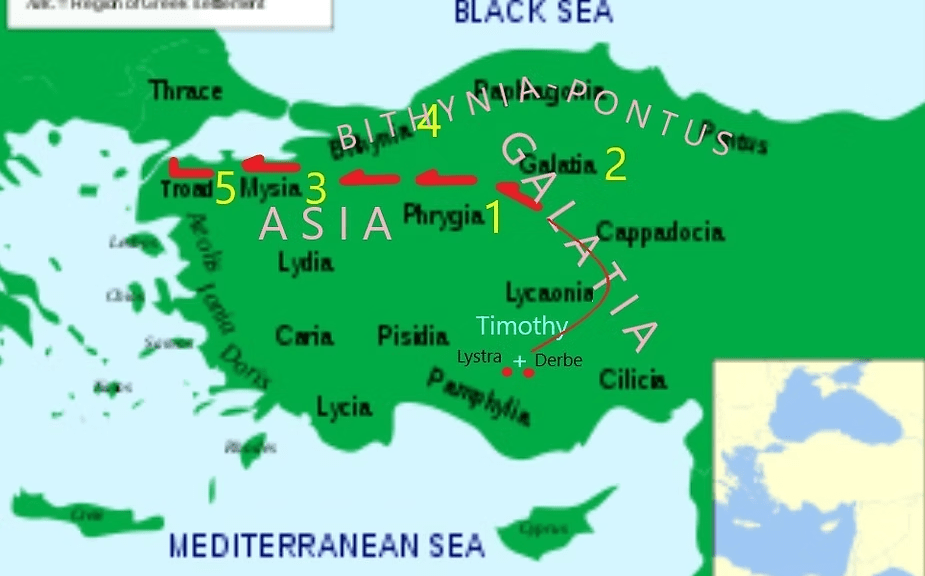
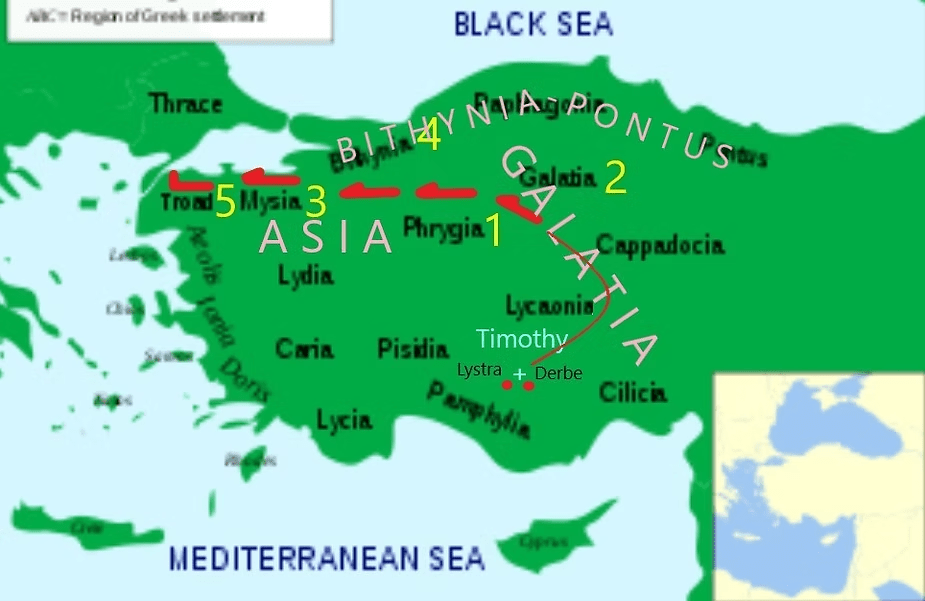
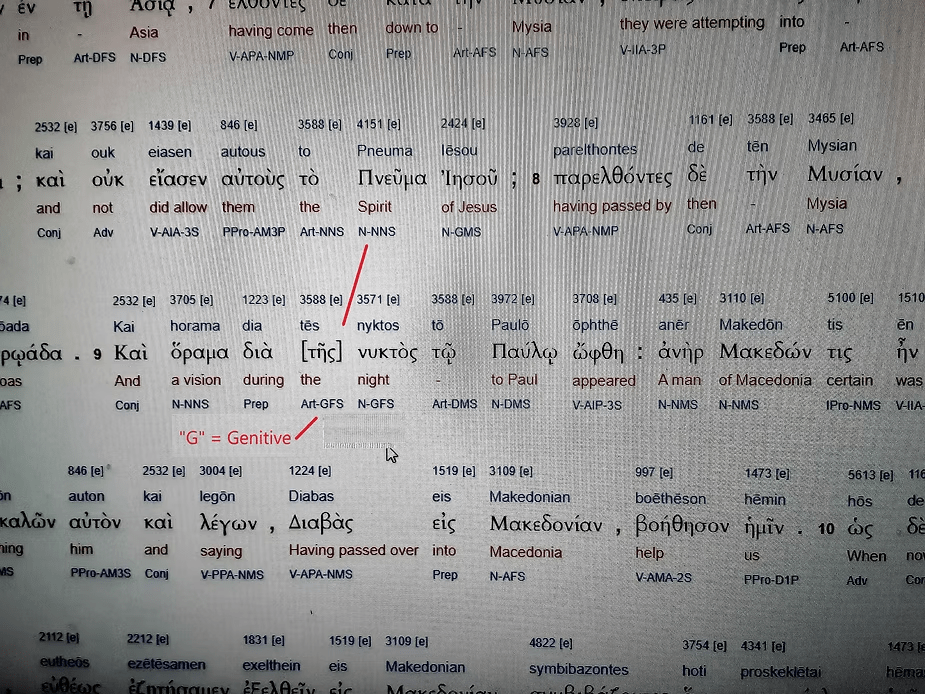


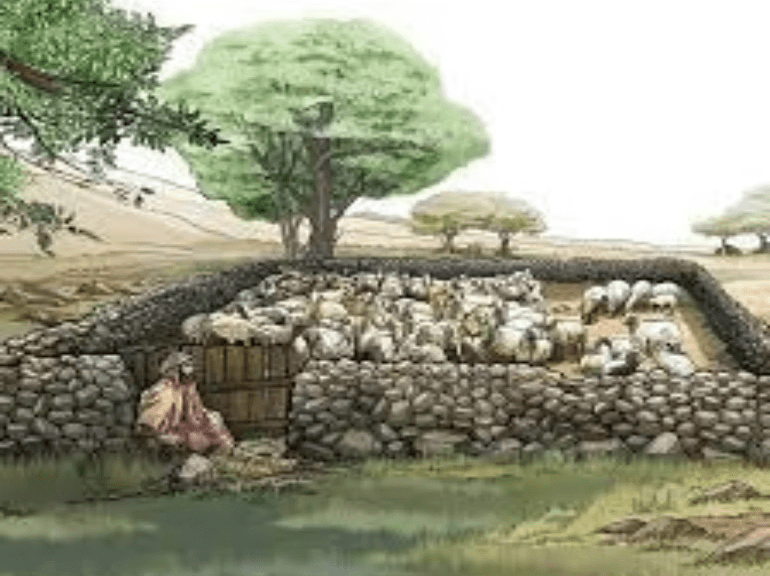
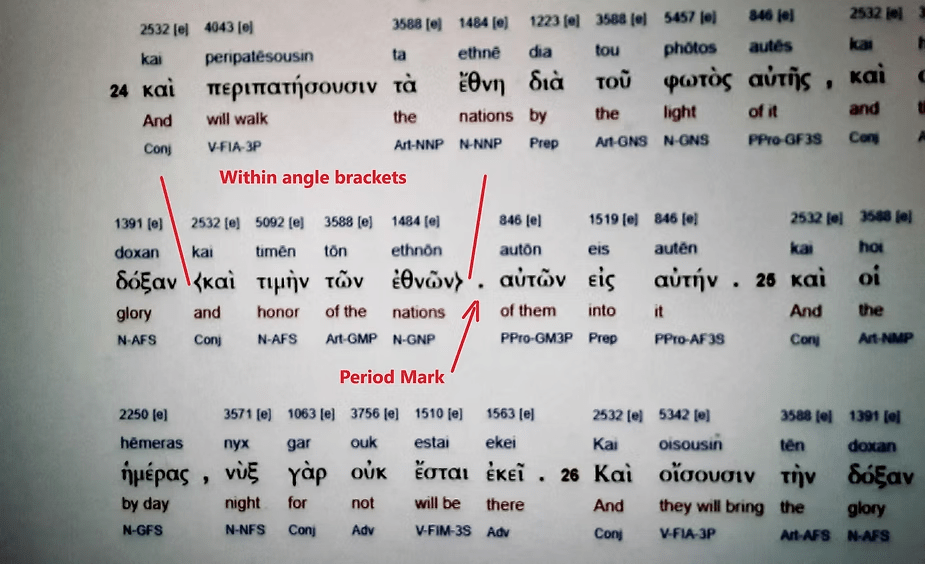
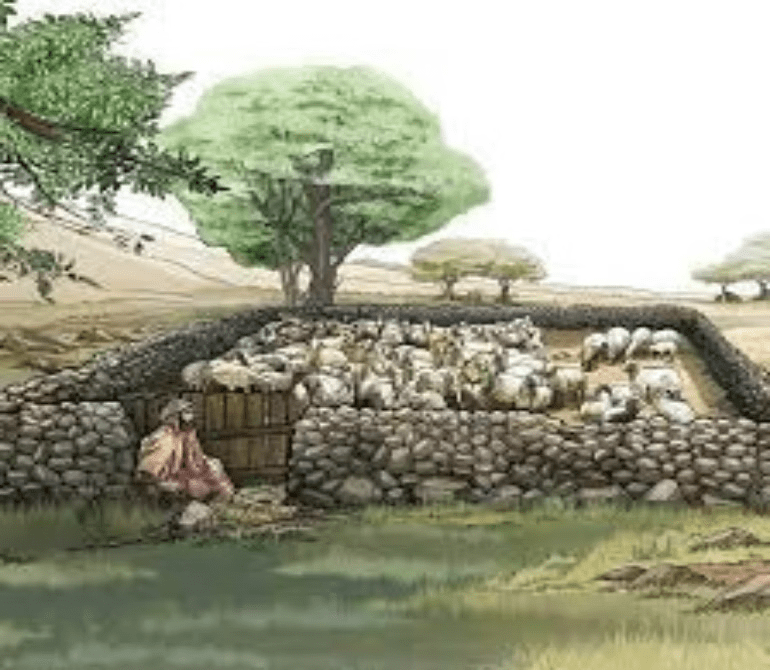
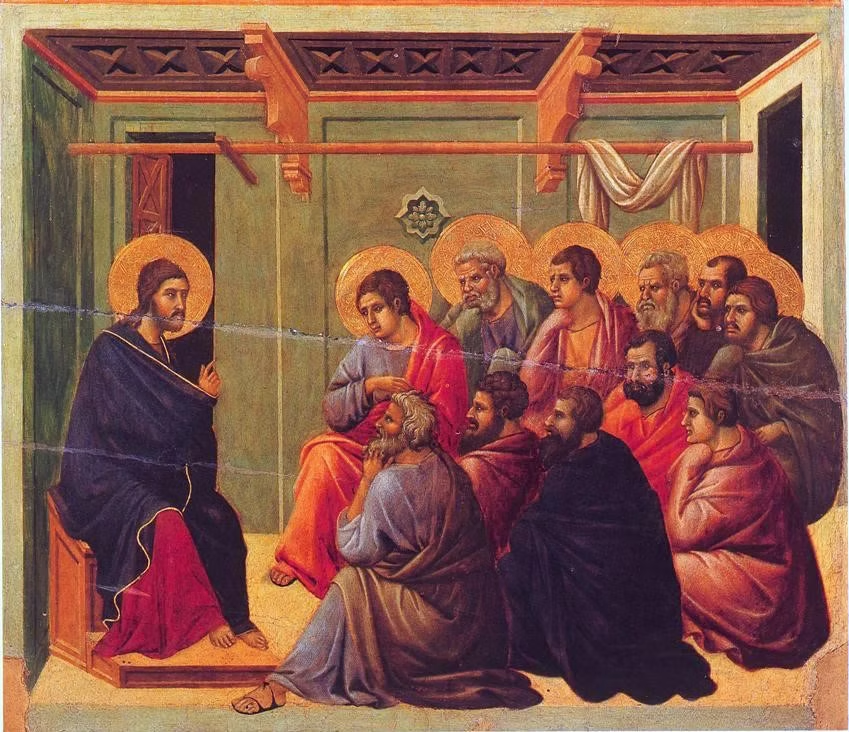
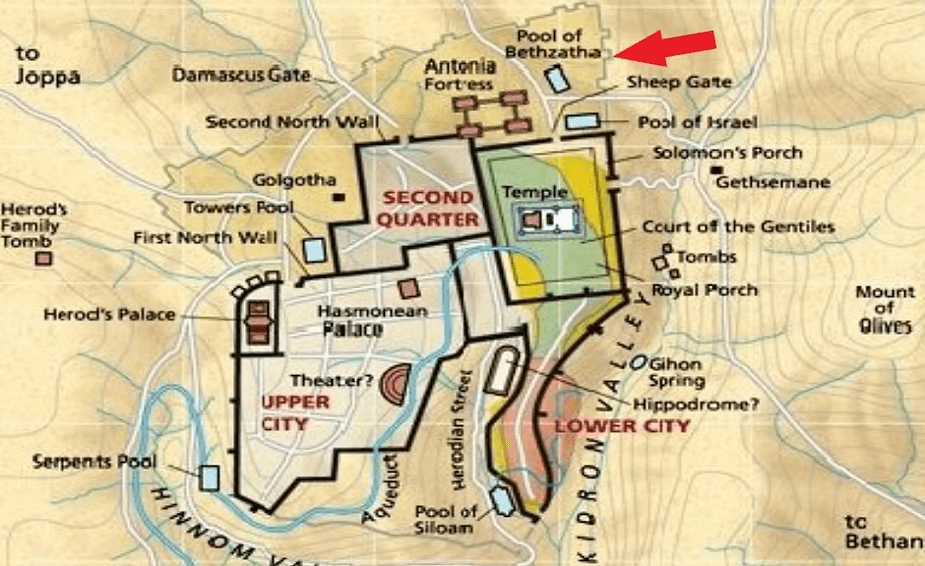
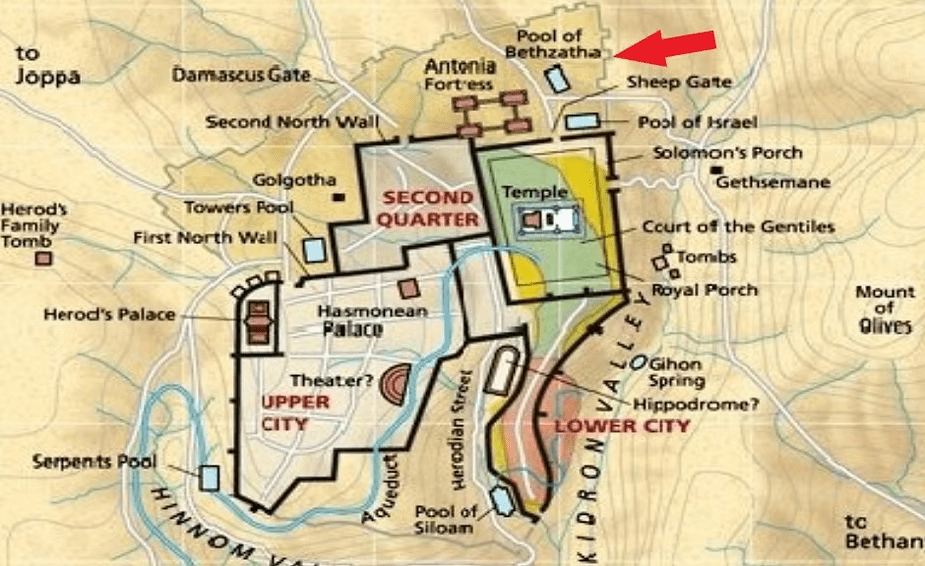
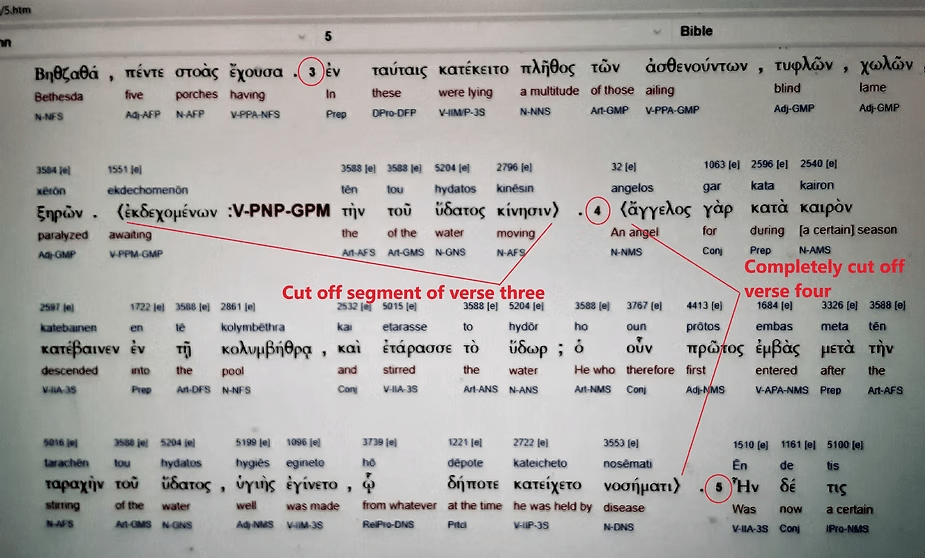

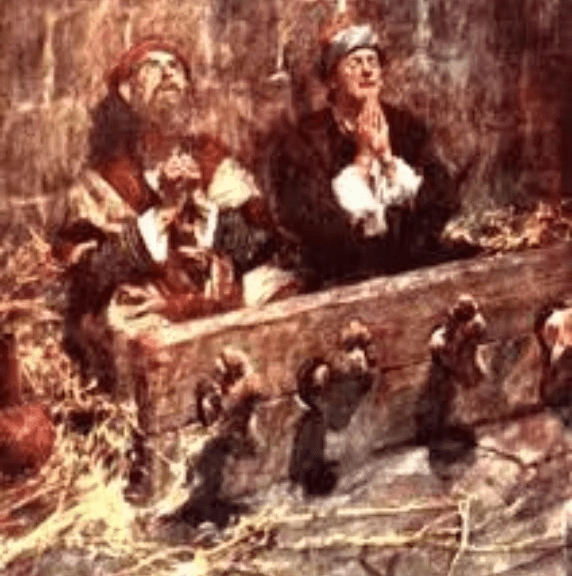








 Explaining the Readings