When Yahweh first spoke through Hosea, Yahweh said to Hosea, “Go, take for yourself a wife of whoredom and have children of whoredom, for the land commits great whoredom by forsaking Yahweh.” So he went and took Gomer daughter of Diblaim, and she conceived and bore him a son.
And Yahweh said to him, “Name him Jezreel; for in a little while I will punish the house of Jehu for the blood of Jezreel, and I will put an end to the kingdom of the house of Israel. On that day I will break the bow of Israel in the valley of Jezreel.”
She conceived again and bore a daughter. Then the Lord said to him, “Name her Lo-ruhamah, for I will no longer have pity on the house of Israel or forgive them. But I will have pity on the house of Judah, and I will save them by Yahweh elohehem; I will not save them by bow, or by sword, or by war, or by horses, or by horsemen.”
When she had weaned Lo-ruhamah, she conceived and bore a son. Then the Lord said, “Name him Lo-ammi, for you are not my people and I am not your God yours.”
Yet the number of the people of Israel shall be like the sand of the sea, which can be neither measured nor numbered; and in the place where it was said to them, “You are not my people,” it shall be said to them, “Children of the living God “sons el living.”
——————–
Please take note of the places in bold type that have restored “Yahweh” in the above text. The NRSV has translated each of these as “the Lord.” In four other places, the translation has stated incorrectly: “the Lord said,” “your God,” and “children of the living God,” when no such Hebrew text is found written that states that. Those have been stricken out. Only in the last mistranslation is the Hebrew word “el” found written, with that preceded by the Hebrew plural word “bene,” meaning “sons” [no daughters allowed, as ‘children’ would propose].
In verse two is a complete statement, ending with a pe (“פ”), which is the seventeenth letter of the Hebrew alphabet, but used at the end of a verse to mark finalization of that said prior. Verse two begins with this written in transliterated Hebrew: “tə·ḥil·laṯ dib·ber-Yah·weh bə·hō·wō·šê·a‘ ; פ” That reflects a stand-alone statement that must be read separate from the rest of verse two. The literal English translation of that Hebrew text says, “began to speak-Yahweh by Hosea ; פ” This is a separate statement that says Hosea became a prophet of Yahweh, speaking what Yahweh told him to speak. The pe indicates that everything written subsequent to that mark must be understood as Yahweh speaking.
At this point, it should be grasped that the text of Hosea should be understood in a spiritual sense, rather than as a literal account of the physical life of Hosea. To ponder this reading only in the physical sense makes it seem that Yahweh is a cruel God, who forced Hosea to do bad deeds that punished the innocent, who would be his two children coming from “whores.” That type of discernment makes all the modern “We love Jesus because he is not harsh like his daddy Yahweh”be found rejecting Yahweh, from not having a clue how to read Scripture from a spiritual perspective. To read this selection in that light of truth, one finds that neither Yahweh, nor Hosea, did anything bad.
To be able to grasp what “Yahweh said to Hosea,” one has to realize the Biblical accounts of demonic possession is not just made-up crap. To believe that Jesus (and his intern apostles in pre-ministry) had the ability to cast out demon spirits, one must believe that demon spirits are real. If one believes that, then one must be able to make the tremendous leap of belief that says, “If demon spirit can possess souls, then the soul of Adam-Jesus [“Yahweh elohim”] can equally possess souls.” In this realization, one can come to the understanding that a soul that has rejected Yahweh’s possession [Baptism by His Spirit] is then left open for possession by normal “elohim” or spirits-angels-souls, which can be both good and evil. We saw an example of a benign possession in the story of Paul, Timothy, Luke and Silas in Philippi (Acts 16:16-18).
Because this reading selection from Hosea says “began to speak-Yahweh by Hosea ;פ” and “Yahweh said to Hosea,” this must be understood in spiritual terms of ‘speech,’ as Yahweh does not ‘speak’ to human ears. Yahweh speaks to souls. So, when “Yahweh said to Hosea … take your soul a wife,” this is Yahweh telling the soul of Hosea to possess another soul and lead that soul spiritually. An example of this was seen in the sixth Sunday after Pentecost, when Abraham possessed his wife Sarah [as one possessed by Yahweh] and when Jesus possessed the souls of his disciples, including Martha and Mary. The fact that English translations make these possessions difficult to grasp has no bearing on the intent that is unseen [a spiritual matter].
To see this command from Yahweh to Hosea in spiritual terms, one can then see that the use of “whoredom” or “harlotry” is metaphor for “this land (away) from Yahweh” (“hā·’ā·reṣ , mê·’a·ḥă·rê Yah·weh”), where the people [souls in “flesh,” where “earth” or “land” is metaphor for that] had become misled by their false leaders [kings and priests]. Rather than all be souls given in divine marriage to Yahweh [like Amos, David, Hosea, Abraham and Jesus … etc.], those souls had been sold into slavery to Satan. “Yahweh said to Hosea … take spiritual possession of one of these ‘prostitutes’ that had been stolen from Yahweh.
The name “Gomer” must be realized to mean “Completion,” rooted in “gamar,” which means “to end or complete.” To see that as the name of a daughter of “Diblaim,” that name must be realized to mean “Two Fig Cakes” or simply “Fig Cakes” (in the plural number). More than the name of a physical wife taken by the male Hosea, this means the soul of Hosea – enabled by Yahweh to possess another soul – took a soul in flesh that became the “Completion” of the soul alone – given free will by Yahweh at birth – being return full-circle to Yahweh, through possession by Hosea. As that soul then knowing “Completion,” she was a “daughter” of “Two Fig Cakes,” having personally experienced the “harlotry” of a sinful life and the Salvation of Yahweh, shown to her by Hosea’s soul. A “daughter” means a soul in a body of flesh is a bride-to-be to a masculine essence spirit-soul-angel. When Hosea took possession of that soul, that soul became his “wife” spiritually.
To then read that “Gomer conceived and bore him a son,” this must be understood on spiritual terms, more than the physical. This says the soul of a “daughter” that had experienced two ways of life then became a soul possessed with a masculine soul, which is the resurrection of the Adam-Jesus soul. We saw this in the Genesis story the past Sunday, although the cutoff point in verse ten did not include the visiting Spirit in possession of Abraham telling his soul that Sarah would “conceive and bear him a son.” In the same way that the Genisis 18 story told of Sarah becoming possessed by her own adonay [Adam-Jesus resurrection in her soul], but her soul would possess the soul of her son Isaac, until Isaac was able to be possessed by his soul’s own adonay.
Here, it is important to see that “Gomer,” meaning “Completion,” does not represent a female woman physically, because this reading selection must be read in spiritual terms. Therefore, the “son born,” who would be named “Jezreel,” is actually a statement about the soul Hosea possessed receiving its own resurrection of an adonay, which would become a future King of Israel. The name “Jezreel” means “God Sows;” and, Yahweh sowed the soul of His Son into the soul of “Gomer” (not a female human being), through Hosea’s soul possessing that lost soul.
We read of Jezreel, “[through him] soon , [Yahweh] will avenge the blood Yah Sows [Jezreel] on the house of Yah Is He [Jehu] , and bring an end , the kingdom of the house of Israel [the Northern Kingdom].” In that, “Jehu” was the one Yahweh told Elijah to anoint. When Yahweh told that to Elijah, Elijah had died and been reborn spiritually. This is how Yahweh told Hosea to anoint “Gomer,” where “Completion” is stated above as “to bring an end to the house of Israel.”
When that is realized, then “Jezreel” is a soul into which “Yahweh Sows” souls of vengeance. This is how one should read, “and she [the soul of Jezreel in a body of flesh] conceived again and bore a daughter.” Here is where the strike through eliminates it being Yahweh who said, as the Hebrew written is “way·yō·mer” [a construct of “amar”], such that only translates as “and said.” This is then Jezreel’s soul saying what the name of his “daughter.” That name is then stated to be “Lo-ruhamah,” meaning “Not With Compassion.” This is the “daughter” born of Jezreel that will “for no additional time have compassion (or mercy) on the house of Israel.” This is then not a commandment of Yahweh, but a strong sense of vengeance born into the soul of Jezreel [aka Gomer].
In verse seven, the same soul of Jezreel then speaks of having “compassion on the house of Judah , and save them Yahweh their elohim”. In that, “their elohim” is written as “elohehem.” In all cases, “elohim” is the plural number of “el” being states, such that to translate “God” is an egregious error. The word means the spirits-souls-angels of Judah [the Southern Kingdom] will be spared the wrath of Jezreel, because their people and leaders still are possessed by “their elohim” of Yahweh. Here, it is important to realize that Yahweh initially told Hosea to possess the soul of a wayward Israelite [in the Northern Kingdom], which means the soul of Hosea was made an “elohim” of possession. That was not Hosea’s choice to become. It was wholly Yahweh’s “speaking to Hosea” that made that happen. Thus, Jezreel knew [inspired by Yahweh] that Judah [a name meaning “Praised; Let Him Be Praised”] still had “their elohim” to protect them.
Now, in verse eight we read “and when she had ripened,” which implies after Lo-ruhamah had been weaned, the truth says Jezreel had solidly formulated his “daughter” plan to strike vengeance against the Northern Kingdom. With that a set path for him, another “daughter” was born. Again, there is nothing stated that says Yahweh said anything. The Hebrew written is the exact same “way·yō·mer,” written after was born the first “daughter.” Again, this says Jezreel came up with the name “Lo-ammi,” which means “Not My People.” While this can be seen as a view shared by Yahweh, the soul of Jezreel was “born a son” by the possessing soul of Adam-Jesus, so this view is shared by a Trinity of entities. In the same way, when adonay Yahweh told Amos what to do, it was Amos’ “daughter of idea” that made that command his own willful pursuit. It is the same every time Yahweh speaks to His prophets, as each submitted into divine marriage soul seeks to please their Husband. What He wants, so do they. Thus, “the people” of the Northern Kingdom – from which “Gomer” became a “daughter of Two Fig Cakes” – were no longer of the same commitment to Yahweh when “Completion” joined Gomer’s soul to Yahweh. That divine marriage brought forth the “son Jezreel,” as the Son of Yahweh that “God Sows” into His prophets.
In verse nine, after the “daughter” has been named, we read, “and not will be yours.” Here, one will find another strikeout above, as the translators have used inference to make the Hebrew state, “I am not your God.” There is no form of “el” written, but “yours” is the translation implying that, from “’eh·yeh lā·ḵem.” That is a dual word construct that is rooted in “hayah,” meaning “to fall out, come to pass, become, be.” The implication says Yahweh did not disown any “peoples.” Instead, the Hebrew says, “that you not my people , and I not come to pass .” In that translation, “not come to pass” means Yahweh will not spare the souls of those who are not protected by the blood of the Passover lamb. To “not be my people” means to “not be saved from death.” In this, verse nine ends with a pe, showing this is an important statement to grasp.
In verse ten, where it begins by stating, “and it will come to pass the number of the sons of Israel,” the meaning of “Israel” is “Who Retains Yahweh as His elohim.” The meaning of “el” in “Israel” is all who are truly “Israel” are possessed divinely by marriage of a soul to Yahweh, while the resurrected soul of the Son of Yahweh – THE “el” of Adam-Jesus – is the blood of the lamb that saves those souls. Those true Israelites [“sons of Israel”] are countless in number, as souls saved before and after the coming destruction of the Northern Kingdom. The end of verse ten then says, “you are not my people unless you are the sons el living.” This says all not resurrected with the “el” of Yahweh’s Son are dead. No pass over will be spared.
and turned yourself from your wrathful indignation.
4 Restore us then, elohe our Savior; *
let your anger depart from us.
5 Will you be displeased with us forever? *
will you prolong your anger from age to age?
6 Will you not give us life again, *
that your people may rejoice in you?
7 Show us your mercy, Yahweh, *
and grant us your salvation.
8 I will listen to what the ha-el Yahweh is saying, *
for he is speaking peace to his faithful people and to those who turn their hearts to him.
9 Truly, his salvation is very near to those who fear him, *
that his glory may dwell in our land.
10 Mercy and truth have met together; *
righteousness and peace have kissed each other.
11 Truth shall spring up from the earth, *
and righteousness shall look down from heaven.
12 Yahweh will indeed grant prosperity, *
and our land will yield its increase.
13 Righteousness shall go before him, *
and peace shall be a pathway for his feet.
——————–
This is one of the eleven psalms identified as “of the sons of Korah.” Despite all the thought about who the “sons of Korah” were [not singings in the Tabernacle], we are told in Numbers 16 that a rebellion against Moses and Aaron, led by Korah (Moses’ cousin) was quelled by the earth opening up and swallowing the rebels. In Numbers 26:11 we are told, “the sons of Korah did not die.” This does not mean they survived unscathed from Yahweh’s punishment. It means they became eternal soul that live underground. This means the “sons of Korah” are protectors of the underground tunnel system beneath the Tabernacle-Temple. In Jerusalem, this was the fortress of the Jebusites.
Verse 1: “you have been favorable Yahweh to your flesh ; you have returned captives [captives] (supplanters) .” There is little about the “earth” or the “land” that Yahweh “favors.” He only “favors” souls that have become “captives” of their own “flesh.” The repeating of the Hebrew word “shebuth”(“šə·ḇîṯ”), with the first stated in song, with the second enclosed in brackets – thus a silent statement about the soul within the “flesh” – says the “favor” shown to the “flesh” comes when the “captive” souls are shown the “favor” known by “Jacob,” which is the promise of eternal salvation, after the lusts of material gains [evil “favors”] have been ”overturned” or “turned back.”
Verse 2: “you have uplifted the guilt of your people ; you have covered all their sins . Selah” This furthers the “favor” of “Yahweh,” speaking of His presence in the second-person masculine singular. It can only be by Yahweh’s Baptism of Spirit that the “guilt” of “sins” can be “uplifted,” “carried away,” of “forgiven.” To ensure no further “sins” can reach into those souls of Yahweh’s “people,” His Spirit has “covered” them in a protection of His presence.
Verse 3: “you have removed all your overflow ; you have returned , with the burning anger on your face .” Following the verse two singing of the removal of sins, verse three then places focus on the “exaltation” or “uplifting” [the meaning of “selah”] that represents. David sang that Yahweh “removed all” sin, not just the worst, while “all” says His “people” can only be totally and completely cleansed by the Baptism of His Spirit. Just as verse one sang about the “returning of captives,” it is that “removal of all sins” that makes it possible for a soul to rejoin Yahweh. That reunion is a divine marriage, which must include a bathing by His Spirit.
While the Hebrew word “ebrah” [“‘eḇ·rā·ṯe·ḵā”] means “arrogance, fury,” with “overflow” being used mostly as a statement of uncontrolled emotions (“anger”), this says one’s own soul turns one away from Yahweh, so the “wrath” of the world makes one’s soul vulnerable to physical abuse. It also says Yahweh does nothing to stop souls from sinning; but He will not accept any soul that has the ”arrogance” to think he or she can retain some personal sins, without punishment. Yahweh’s Baptism that cleans a soul of past sins says Yahweh will not tolerate the filth of the world in any way, shape or form clinging to a soul He takes as one of His wives. To have then “returned” to a pristine state of being – guiltless and upright – oneself then projects a “face” of “burning anger” against ever returning to a life of sin. The “face” a saved soul wears is that of Yahweh [First Commandment]; and, that “face” terrifies demon spirits and minions of Satan.
Verse 4: “and return us elohe of our salvation ; and break your anger with us .” Once more the theme of “return” is sung by David, where a “return to be one with Yahweh” is now said to be the “return of an elohim” in each soul. The “elohe of salvation” is “Jesus,” where that name means “Yah[weh] Saves.” The presence of that inner soul, joined with one’s lost soul, brings the completion of wholeness, which was missing when a soul was released into a new body of flesh, at birth. This is then less about the “anger” of Yahweh, as much as it is the “anger” His people find from not receiving His benefit, due to their sins. Once a soul has “returned to Yahweh,” then only His love can be felt; and, His love comes into one’s soul through the “elohe of salvation.”
Verse 5: “forever will you be angry with us ; will you continue your face , to dwelling with all the generation .” Here, the use of “forever” (“hal·‘ō·w·lām”) is better stated as “to the ends of time.” Again, there is no “anger” in Yahweh, as that can only be found in souls in bodies of flesh that reject a return to Yahweh, through submission in divine marriage. David is singing that this “anger” will be felt for as long as it takes for a soul to realize its need to return and be one with Him. The “face” of Yahweh is eternal and unchanging. Unless a soul in the flesh submits self-identity (one’s own “face” over bowing down and wearing the “face” of Yahweh) completely unto Yahweh [one’s Husband in divine union], then one’s own “face” will flare at the “nostrils” from self-caused “anger.” The element of “dwelling” (from “lə·ḏōr,” also meaning “to period, to generation”) says the “elohe of salvation” must dwell within one’s soul, in order for that soul to be a wife of Yahweh and the mother of His Son reborn. The “generation” (a repeat of “dor” in the masculine singular) is then the ministry in service to Yahweh, as His Son reborn, so others can find this “generation dwelling” within their souls.
Verse 6: “not you will return you will live in us ; that your people , it will rejoice in you .” This is David saying that to be married to Yahweh is “not” for a temporary period of time, as a soul’s “return” to be one with Him is forever lasting. One’s soul in the flesh is facing death; but to be rejoined divinely – one’s soul to Yahweh’s Spirit – means His eternal “life” will be the promise that lasts beyond the death of one’s flesh. This “life” is the promise offered to all “the people” whose souls submit to Yahweh [true sons of Israel]. It is the inner presence of Yahweh’s “life” – which comes from the soul of His Son being resurrected within one’s cleansed soul – that will “rejoice” within, as one’s Lord, causing the soul-flesh to follow that lead and also “rejoice.” It is the “gladness” of salvation, with the promise of eternal life receive.
Verse 7: “let us see Yahweh your goodness ; and your salvation , give to us .”Here, for David to sing to “see,” this is less about physical sight and more about the ability to understand the truth. This came during David’s time from being led by an inner “elohe of salvation,” as well as understanding the scrolls of the Torah. Today this equates to a soul being able “to see” the truth written in Scripture. It is from this ability “to see” that one realizes no human beings could ever devise writings of such profound depth, as they could only come from “Yahweh.” This is the truth of the “goodness” that a soul receives from “Yahweh.” That “goodness” is then stated as “your salvation,” which (again) states “Jesus,” which means “Yah[weh] Saves.” The “goodness” of “Yahweh” is known through His Son’s resurrection in the flesh. This is the “gift” of the Spirit and the Son, which is the harvest of commitment to Yahweh in divine marriage.
To understand verses eight through thirteen, read this posting for the seventh Sunday after Pentecost, Year B, when the Track 2 Psalm accompaniment then is Psalm 85:8-13. The message is still the same, as I entitled that posting from 2021 Restoration through holy matrimony. Please click on the link to read what I posted a year prior, as it is still applicable today.
As a companion reading to the Track 1 Old Testament reading from Hosea, this clearly sings praises to a divine marriage. The physical impression given by the Hosea reading is Yahweh forcing Hosea to belittle himself and go marry a whore, to have daughters he despised. That story must be read from a spiritual perspective, where Hosea’s soul became an “elohe of salvation” that was sent into the wicked people of the Northern Kingdom. Hosea then transmitted the Spirit into one who found “Completion” [the meaning of “Gomer”], who then was reborn in the name of Jezreel. That resurrection of the “elohe of salvation” within Jezreel would bring forth the “face of anger” and “wrath” that would prove to the failed nation named Israel that they “Not Would Find Mercy,” because they were “Not My People.” Those were born of the inner elohim in Jezreel, so Yahweh did not give birth to those concepts, nor name them. This Psalm 85 sings of what it takes to transform from a soul sold into prostitution in the world, while calling oneself a believer in God and Jesus. One’s soul must make all these changes to fine eternal salvation – be reborn as Jesus.
Yahweh said to Abraham, “How great is the outcry against Sodom and Gomorrah and how very grave their sin! I must go down and see whether they have done altogether according to the outcry that has come to me; and if not, I will know.”
So the men turned from there, and went toward Sodom, while Abraham remained standing before Yahweh. Then Abraham came near and said, “Will you indeed sweep away the righteous with the wicked? Suppose there are fifty righteous within the city; will you then sweep away the place and not forgive it for the fifty righteous who are in it? Far be it from you to do such a thing, to slay the righteous with the wicked, so that the righteous fare as the wicked! Far be that from you! Shall not the Judge of all the earth do what is just?” And the Yahweh said, “If I find at Sodom fifty righteous in the city, I will forgive the whole place for their sake.” Abraham answered, “Let me take it upon myself to speak to adonay, I who am but dust and ashes. Suppose five of the fifty righteous are lacking? Will you destroy the whole city for lack of five?” And he said, “I will not destroy it if I find forty-five there.” Again he spoke to him, “Suppose forty are found there.” He answered, “For the sake of forty I will not do it.” Then he said, “Oh do not let ladonay be angry if I speak. Suppose thirty are found there.” He answered, “I will not do it, if I find thirty there.” He said, “Let me take it upon myself to speak to adonay. Suppose twenty are found there.” He answered, “For the sake of twenty I will not destroy it.” Then he said, “Oh do not let ladonay be angry if I speak just once more. Suppose ten are found there.” He answered, “For the sake of ten I will not destroy it.”
——————–
It is important to realize the truth of that written, where “Yahweh” does not equate to “the Lord.” There are three specific namings of “Yahweh” that have been restored. Then, there are four forms of “adonay” written, which are also translated by the NRSV as “the Lord.” This completely misses the point of there being “adonay” written. The “adonay” are the elohim of Yahweh that possess Saints (such as Abraham) and are the Lords over those souls in bodies of flesh. Hosea was led by his adonay when Yahweh told his soul what to do about the wickedness in the Northern Kingdom. Amos followed his adonay Yahweh when he was shown visions and told what to do. One must understand Scripture and make sense of that written (divine inspiration), rather than make stuff up to fit a personal agenda, so one can them spread lies for others to believe.
As far as this reading selection goes, it is a projection of the future, rather than a retelling of a story already told. The story of Abram, Lot and Sodom and Gomorrah was told in Genesis 13 and Genesis 14. This story in Genesis 18 speaks of our modern times, which includes all times when evil and wickedness has become rampant, as it was when Lot had to escape and his wife turned to a pillar of salt for looking back. That is not a story of the past, but a prophecy of our future.
One has to realize that Genesis is not ‘the Book of Abraham.” It is the story of all that came before the Exodus and Moses leading the sons of Israel into the wilderness. They were all “sons of Israel” because the word “sons” does not refer to men running around with circumcised penises. The word refers to the souls that are trapped within bodies of human flesh, which comes in two basic varieties – male and female. The word “Israel” means those souls that have divinely married Yahweh, so each is “Who Retains Yahweh as one of His elohim” … means each has adonay Yahweh as his or her Lord.
Moses did not even know he was born to the immigrants born of Jacob, who went to Egypt and stayed there four hundred fifty years. The only way Moses could recite the Book of Genesis for other to memorize and eventually write down (perfectly recalled) was he was a soul married to Yahweh and had become a soul resurrected with the soul of Adam (a.k.a. Jesus), who knew the history Moses then knew. So, this “adonay” of Moses was the same “adonay” of Abraham; and, the “adonay” of Abraham would not ever dare to question Yahweh, such as this reading shows him negotiating with Yahweh about how much sin can be left in Sodom and Gomorrah, before Yahweh will destroy them. This is a version of Abraham that projects to the miserable failures of modern times, who call themselves holy and righteous, while defending every perversion that Sodom and Gomorrah is known for,
In verse twenty-three, where is written: “and drew near Abraham [a name meaning “Their Protection” or “Their Shield”] and said ; also you sweep away , righteous with wicked .” This is presented as a question of Yahweh’s Judgment. In the Hosea reading [Track 1, seventh Sunday after Pentecost – Year C], the adonay placed by Hosea [a name that means “Salvation”] in “Gomer” [a name that means “Completion”] by the elohim in Hosea’s soul, transformed one of those who were harlots to sin [Sodom and Gomorrah-like] in the “son ehohe of salvation” – Jesus, in the name “Jezreel” [a name that means “God Sows”]. Hosea did not question what seems to be a command from Yahweh to go marry a whore and have babies he did not love. That shows extreme obedience (as well as not being what is intended from that reading), which is not shown by Abraham in his “drawing near to Yahweh.”
That “drawing near” says the soul of the figure named “Their Protector” stood up, just as did Martha when she began barking commands at Jesus – her “Lord.” This says both tried to be an equal to Yahweh, as if Yahweh [the Lord of Jesus] couldn’t figure everything out on His own. For Abraham to go from fifty righteous to ten, was presenting a scenario of which he knew nothing. Yahweh, on the other hand, knew the wickedness of Sodom and Gomorrah was so total that there was less than ten souls there that were indeed righteous. When Lot’s family of four is seen as righteous, with the three angels who visited them being three more, the total was still less than ten. That means Abraham was “Their Protector,” meaning he “stood up and drew near to Yahweh” as a false prophet. That is a prophecy of the coming times, as Abraham proved his devotion to Yahweh in the story of the “three men” visiting him in his tent.
The important element to see is the use of “adonay” and “ladonay.” The last we find “Yahweh” speaking is in verse twenty-six, where it is written: “so he said Yahweh , if I will find in Sodom [a name that means “Burnt, Flaming”] fifty righteous in midst of the city ; I will lift to all this place for their sake .” That says “Yahweh” agreed only with the first argument made by Abraham. All the times after, Abraham was bargaining with the “adonay” within his soul. Here, it is important to see that the inner “adonay” leading Abraham to question and ask for more sin to be allowed is not the Son of Yahweh. It was not the same as was in Amos. It was not the same as the one in Hosea or David. Only Satan would marry a soul and have is negotiate terms with Yahweh.
To see this, the last verse of this chapter [not read aloud in Episcopal Churches] returns one last use of “Yahweh.” It says, “so went his way Yahweh , as soon as he had finished , speaking with Abraham ; and Abraham he turned back to his place .” To realized when “Yahweh went his way” is before a comma mark, such that following the comma is when we read “as soon as he had finished.” This says “Yahweh left” Abraham when Abraham began negotiating, rather than say, “Yahweh, you know” and do as told. The Hebrew word translating as “finished” also says, “came to an end.” That says “Yahweh” no longer spoke to this version of Abraham [“Their Protector”], so “Abraham he turned back” to Yahweh, choosing to wear the face of another “adonay.” This then is a prophecy of a future version of a Patriarch of the people [can you say, “Pope”?], who is a false shepherd, to whom Yahweh no longer speaks.
As a reading selection that parallels the Hosea Track 1 selection, the marriage theme must be seen here. For a soul to be a wife of Yahweh, there must be absolute and complete submission to His Will. There is no equality to be found in eternal Salvation. One either is Baptized clean of all sins, so one’s soul become a virgin womb in which the soul of Yahweh’s handmade Son can be resurrected – and become one’s divineadonay [Lord] – there is no questioning anything said to one’s soul by Yahweh. In the Psalm of David that sang of Doeg telling Saul where David had found aid and in the story of Hosea where Jezreel bore two drives that would “destroy” the Northern Kingdom there was evil at play and the removal of evil at play. To defend evil – in any way – is to turn one’s back to Yahweh and serve another master.
1 I will give thanks to you, O Lord, with my whole heart; *
before elohim I will sing your praise.
2 I will bow down toward your holy temple and praise your Name, *
because of your love and faithfulness;
3 [2] For you have glorified your Name *
and your word above all things.
4 [3] When I called, you answered me; *
you increased my strength within me.
5 [4] All the kings of the earth will praise you, Yahweh *
when they have heard the words of your mouth.
6 [5] They will sing of the ways of Yahweh, *
that great is the glory of Yahweh.
7 [6] Though Yahweh be high, he cares for the lowly; *
he perceives the haughty from afar.
8 [7] Though I walk in the midst of trouble, you keep me safe; *
you stretch forth your hand against the fury of my enemies; your right hand shall save me.
9 [8] Yahweh will make good his purpose for me; *
Yahweh, your love endures forever; do not abandon the works of your hands.
——————–
I have written about this Psalm 138 twice before, both times within the past year (2021). The first time was in response to this reading selection being assigned as part of the Proper 5, Year B Ordinary after Pentecost season; and, the second time when it is the reading selection for the second Sunday after the Epiphany, in this Year C. This Psalm 138 is obviously selected for public singing later this Ordinary after Pentecost season (Year C), as a Proper 12 Sunday offering. Finally, it is a choice to be sung on the Proper 16 Sunday, during the Ordinary after Pentecost season in Year A. Being found a reading selection in each of the Ordinary after Pentecost seasons and during Year C Ordinary after the Epiphany season, that multiplicity shows this Psalm 138 as important to grasp, relative to one’s personal ministry.
Same Psalm played yet again!
I have published the following two commentaries about this Psalm 138. I recommend anyone who seeks to see what David meant to read both of them, then compare the two. The links to these commentaries are as follows:
Giving thanks to Yahweh with one’s whole heart – Proper 5 Year B
Smacking down the enemy of self with the right hand of God – Epiphany 5 Year C
I will not add anything new to my prior comments at this time. However, please take not of the presence of “elohim” in verse one. It has been translated as “the gods” (in the lower-case), with a non-existent “O Lord” [the assumption of “Yahweh”] being written. That “O Lord” has been stricken from the text. There are then six direct namings of “Yahweh,” which appear in bold type. All of these have been incorrectly mutated into “O Lord” or “the Lord,” both variations diminishing the value of the name told to Moses, when he asked the presence of Yahweh, “Which ‘god’s name’ shall I say sent me?” By asking that question silently says, “There are so many “lords” (“gods”) to name, which one are you?” Finally, the Episcopal Church has altered this Psalm 138 from its eight true verses into nine. The correct verse numbers are listed in bold type, between brackets.
[6] As you have received Christ Jesus the Lord, continue to live your lives in him, [7] rooted and built up in him and established in the faith, just as you were taught, abounding in thanksgiving.
[8] See to it that no one takes you captive through philosophy and empty deceit, according to human tradition, according to the elemental spirits of the universe, and not according to Christ. [9] For in him the whole fullness of deity dwells bodily, [10] and you have come to fullness in him, who is the head of every ruler and authority. [11] In him also you were circumcised with a spiritual circumcision, by putting off the body of the flesh in the circumcision of Christ; [12] when you were buried with him in baptism, you were also raised with him through faith in the power of God, who raised him from the dead. [13] And when you were dead in trespasses and the uncircumcision of your flesh, God made you alive together with him, when he forgave us all our trespasses, [14] erasing the record that stood against us with its legal demands. He set this aside, nailing it to the cross. [15] He disarmed the rulers and authorities and made a public example of them, triumphing over them in it.
[[16] Therefore do not let anyone condemn you in matters of food and drink or of observing festivals, new moons, or sabbaths. [17] These are only a shadow of what is to come, but the substance belongs to Christ. [18] Do not let anyone disqualify you, insisting on self-abasement and worship of angels, dwelling on visions, puffed up without cause by a human way of thinking, [19] and not holding fast to the head, from whom the whole body, nourished and held together by its ligaments and sinews, grows with a growth that is from God.]
——————–
My main reference source – BibleHub Interlinear – shows a heading for verses six through twenty-three (the end of the chapter) as “Alive in Christ.” The NRSV shows a header for verses six through nineteen as “Fullness of Life in Christ,” with verses twenty through twenty-three headed “Warnings about False Teachers.” The NIV translation shows verses six through fifteen as headed “Spiritual Fullness in Christ,” with verses sixteen through twenty-three as headed “Freedom from Human Rules.” From those three different sources, one can assume the verbiage in the text of Paul implies “Alive” means a “Spiritual Fullness,” involving “Christ.” That makes understand “Christ” important, as it is NOT the last name of the man named Jesus.
In the following, I will present a literal translation of the Greek written by Paul (as presented on BibleHub Interlinear, using their link to Strong’s). In this, I have used bold type in all first letters of capitalized words. All capitalized words must be read from a divinely elevated perspective. For example, the lower-case spelling of the Greek word “christos” means “anointment,” which would be done physically, using oil, performed by a priest. The capitalized “Christos” is divinely elevated so it states an “Anointment” performed by Yahweh, as the outpouring of His Spirit upon one’s soul. In addition to marking the capitalized words, I have also presented the punctuation as presented by BibleHub Interlinear in bold type, set off by extra spacing. Included as like punctuation is all presentations of the Greek word “kai” (lower-case and capitalized) are presented in bold type. Just as punctuation is a signal (a sign unread) how to read the written text, so too is the word “kai” a marker word that indicates importance to follow. A capitalized “Kai” then is divinely elevated to denote major importance to be aware of. Finally, the use of the Genitive case, where a word shows the possessive by the addition of “of” will often be found following a preposition that end with the word “of,” showing a repeating of “of” in the text. The possessive case must be understood to be a statement of spiritual possession, as everything in Scripture reveals deeper, inner truths when the words are read from a spiritual perspective.
As you read these literal translations and my commentary about what the words of Paul mean, take the time to compare each verse below with the verses above, which I have taken the time to number in bold type, within brackets. You will see the liberties taken by translation service to take words not understood and conform them into a paraphrase that goes well beyond the differences between Greek and English syntax, turning divine Scripture into the agenda of human beings not possessed by Yahweh’s Spirit (therefore not a “Christ”).
This exercise I suggest will measure your heart’s desire to learn the truth of Holy Scripture. You will find that what I present is not in line with the mainstream ‘Christian’ mindset. It challenges one to stop thinking one knows anything about what the divine Word of God means, when one is not divinely led to understanding. This brings forth vile resistance to one like me, offering a new paradigm towards understanding, so those calling themselves ‘Christian’ will react exactly like those who thought of themselves as Jews heard Jesus speak of things no one had ever taught them to memorize before. It is always much easier to kill the messenger, than it is to listen to the message and ponder it seriously. When divinely led to ponder messages, Yahweh and Jesus will send “angels” as their “messengers” to assist your brain towards accepting things presented differently, if the truth is told for your benefit. After all, it is not what someone else says to believe that matters. It is seeing the truth for oneself that becomes life saving. True faith, more that run-of-the-mill beliefs (without proven truths), is what turns a soul towards Yahweh, so a divine union can result. When married to Yahweh, then one becomes a “Christ,” able to have the soul of Jesus resurrect within one’s cleansed soul.
Escaping the grave
Verse 6: “As soon as therefore your souls [2nd person you] have received from this Christ Jesus this Lord within to his soul [him, himself] you all walk ,”
The capitalized Greek word “Hōs” means “as, like as, even as, when, since, as long as,” implying in usage “as, like as, about, as it were, according as, how, when, while, as soon as, so that.” (Strong’s) I have translated this to say “As soon as,” where this states the immediacy of “likeness” that relates to the last words stated in verse five [not read aloud]: “this constancy of this into Christ of faith of your souls,” where the plural “you” or “yourselves” equates to the souls that manifest “you.” This is now stating the immediacy of this “likeness” that comes “therefore.”
The second-person plural Aorist Indicative form that says, “you have received from” has to also be read where “you” in the plural number reflects upon “yourselves,” with “selves” being understood as “souls.” This is still referencing the “faith” that enters one’s “soul,” as a “constancy” or “firmness” [unchanging], which comes from Yahweh’s “Anointment” – becoming a “Christ.” That outpouring of His Spirit comes from divine union – Yahweh absorbing one’s soul into Him. It is then this “Christ” state of being that becomes “Jesus” reborn.
In the naming of “Jesus,” the meaning behind that name must be understood. It means “Yah[weh] Saves.” This means Yahweh is what saves a lost soul from eternal damnation, by receiving a lost soul back into Him, as marked by His “Anointment.” This cleansed state of divine Baptism then makes it possible for “Jesus” to be resurrected within one who has also been made a “Christ.” When the soul of “Jesus” has been resurrected within one’s Baptized soul, the presence of two souls in one body of flesh means one must rise to the top. It is then the soul of “Jesus” that does so, becoming “this Lord within.” One’s own soul submits completely “to his soul.” This is the same “to you all” who then “walk” in his name, as “Jesus” reborn. That “walk” is the ministry of service in his name, where the soul of “Jesus” continues to preach the truth, so lost souls can be saved.
Verse 7: “establishing kai building upon a foundation within to his soul [him, himself] , kai confirming to this to faith according as you all were taught , abounding ( within to its soul [it, itself] ) within to thankfulness .”
This verse begins with the Greek word “errizōmenoi,” which is the masculine plural Perfect Participle that states “to cause to take root,” implying in translation “I cause to take root; met: I plant, fix firmly, establish.” (Strong’s) Because this word leads to the marker word “kai,” it stands alone as stating “walking” in the name of “Jesus” comes upon one’s soul-flesh like a splicing of a good vine to a dead shoot. It then is “planting” the seed of “Jesus” within one who was not that before. This “receipt” of Yahweh’s “Christ” “Anointment,” bringing within one’s soul the soul of “Jesus,” who becomes one’s “Lord,” is then “establishing” that divine presence “within.”
The placement of the word “kai” then means that it is important to understand this “rooting” of one’s soul, allowing that soul’s flesh to “walk” in the name of Yahweh (a “Christ”), as His Son reborn (as “Jesus”), is it is “building upon a foundation within.” The Greek word “epoikodomoumenoi” is a mirror masculine plural Perfect Participle that means “to build upon,” implying in usage “I build upon (above) a foundation.” (Strong’s) This “building upon the foundation” of being a “Christ” in the name of “Jesus,” who has become one’s “Lord,” is then the transformation of a dead branch into the living vine that will produce good fruit for Yahweh. This is done by the resurrection of “his soul within” one’s own soul.
Following a comma mark of separation is another use of the word “kai,” which again denotes an important statement to follow – one that is separate from the “establishing and building upon a foundation” of divine union. For Paul to be led to write, “confirming to this to faith according as you all were taught,” says everything one was raised as a Christian to believe in will no longer be something someone told you to accept, because that belief has transformed into true faith, because one’s own soul in a body of flesh is experiencing the truth of what one was told (wrongly perceived). The “confirmation” (from “bebaioumenoi,” being a masculine plural Perfect Participle that says, “to confirm, secure,” implying in usage “I confirm, ratify, secure, establish; pass: I guarantee.” – Strong’s) is then the sacred rite that initiates a soul into Yahweh’s family of souls. Here, the use of “faith” can be discerned to be the collection of saved souls [Yahweh’s wives, the mothers of Jesus reborn] that truly establish a ‘religion’ in His name. This becomes a “confirmation” that one’s soul is eternally saved, because one has been “Anointed” by Yahweh (made a “Christ”), thereby being “guaranteed” to be a true Christian. To “ratify” and “secure” one’s place among those who “you all were taught” says serious study of Scripture has led one to question that one has been told to believe, to the point that deeper study has yielded a much greater reward – that of true faith.
In the final segment of verse seven, the Greek words “en autē” are written within parentheses. The presence of parentheses marks is a signal (a sign) that says the written words must be analyzed as invisible to the naked eyes. That invisibility then says “within to its soul” says one’s own soul “within” is then “abounding within to thankfulness.” One can discern this enclosed (use of parentheses) statement is of one’s own soul – not the soul of Jesus joined to “it” – because “autē” is written in the Dative third-person feminine singular. The use of the feminine indicates the soul within the flesh, as the adjoining soul of Jesus would be written in the third-person masculine singular. All eternal spirits-souls-angels are masculine essence, as are Yahweh the Father and Jesus the Son. It is the presence “within one’s soul” that makes that soul become “abounding within to thankfulness. The “giving of thanks” or “thanksgiving” is due to one’s soul felt the love of Yahweh that is His Son; and, it is that feeling of love that brings with it the “confirmation” that one’s soul has gained eternal life beyond the death of one’s flesh.
Verse 8: “you Perceive not a certain one your souls [you, yourselves] it will exist this carrying off on account of of this of pursuit of wisdom kai of worthless of delusion , according to this instructions of these of men [human beings] , according to these elementary rules of this of world kai not according to Christ .”
This verse begins with the capitalized Greek word “Blepete.” In the lower-case, the root word means “to look (at),” implying in usage “(primarily physical), I look, see, perceive, discern.” (Strong’s) Written in the second person plural Present Imperative, the divine elevation follows a sense of inner “thankfulness” as the result of spiritual insight, where one’s soul (“you”) having become a “Christ,” reborn in the name of “Jesus,” is now enabled to “Perceive” the truth that could not be seen before. That becomes why one has become “thankful within.”
Next is written the Greek word “tis,” which routinely translates as a generic “anyone” or “someone,” but the word used in divine Scripture denotes “a certain one.” This is then identifying “someone known.” The “Perception” one receives says one’s own soul is “not a certain one.” This should be seen in Saul being stricken blind by the soul of Jesus, then later changing his name to Paul, because his ”soul” realized he “no longer” was “a certain one” as Saul. The third-person singular future indicative then says “it will exist,” where “it” is the host soul that has married Yahweh (made a “Christ”) and been the soul womb where His Son’s soul has resurrected within. That says the old self identity has been “carried off,” with a new “Lord existing” over one’s flesh. That flesh includes one’s brain, such that this “Perception” from a new “existence” within will be “on account of” this possessing soul, where “of this” (possessed by Jesus) will lead one to a “pursuit of wisdom” never achieved before. The ‘Big Brain’ of self will die, so worship of intellect will be replaced by submission of self at the feet of the All Knowing Yahweh, whose “wisdom” will fill one’s soul through His Son.
Here, Paul inserted the word “kai,” which is a marker that alerts one to the importance of seeing one’s powers of the brain as being “of worthless” and “of delusion.” Both Greek words “kenēs” (also translating as “empty,” implying in usage “vain, foolish, unreal, false, pretentious, and hollow” – Strong’s) and “apatēs” (also translating as “deceit,” while implying in usage “deception, deceitfulness, delusion” – Strong’s) say the flaw of a fleshy brain is it will allow that which is untrue to manifest as believable. The importance of this statement is it says a soul in its body of flesh will be influenced by evil spirits-souls-angels to be misled, being sent away from Yahweh, based on being possessed (the Genitive case of both words) by “philosophies” (from “philosophias,” translated as “of pursuit of wisdom”) that reject the truth.
Paul then stated that such possessive powers of intellect are “according to this instructions of these of men.” Here, the Greek word “anthrōpōn” is used to speak of “human” knowledge, where science is understood as some false foundation of truth, when it is regularly amended and old beliefs of science are rejected as false by new beliefs of science. The Greek word translated as “instruction” (“paradosin”) also translates as “a handing down or over, a tradition.” When religion is the study of “philosophy” that never finds proof to satisfy all minds on one concrete faith, it is the flaw of “humans” to put greater belief in their own abilities to mess things up, rather than admit self-failures and seek Yahweh for all answers of value.
Paul then clarified who these “human beings” of “instruction” were, writing “according to these elementary rules of this of world.” The Greek word translated as “elementary rules” (“stoicheia”) also says, “one of a row, a letter (of the alphabet), the elements (of knowledge),” which can be seen as like the Table of Elements, where rarely is any single element found alone in “the world.” The complexity comes when the various “elements” are combined, as compounds that are difficult to explain how this bonding of “elements” came to be. This is then an ability to take single “elements” of thought and imagine how one idea can merge with another. Still, in all “mankind’s” wrongful ponderings, it never sees “human beings” as the weak link. Thus, Paul said of all this “wisdom” or “philosophy of man,” it is “not according to Christ.” That says only pure truth can be understood through a soul being Baptized with the Spirit of Yahweh.
Verse 9: “because within to his soul [him, himself] he inhabits [dwells] all this fullness [completion] of this of Godhead belonging to the body ;”
In this verse is the core reason for the headers for this reading that use the word “fullness.” Rather that connect that Greek word (“plērōma”) to “Christon” (found in verse six), it is connected to two Genitive case (possessive) Greek words: “tēs Theotētos.” Those words say, “of this of Godhead,” where “Theotētos” can also state: “Deity.” As a capitalized word (as are “Christon Jesus and Kyrion”), a “Deity” is divinely elevated to only mean Yahweh. To use “Godhead,” this should be read as relative to the “Christ Mind.” This is then Paul speaking of the “fullness” or “completion” that comes when “within to his soul he inhabits,” with this same presence being in “all” souls married to Yahweh, such that each are “belonging to the body” that holds this “completion” from possession “of the Godhead.” The Greek word “sōmatikōs” is an adverb that also states “bodily,” but an acceptable variation in translation is “belonging to the body.” Here, “bodily” says the “Godhead” or “Christ Mind” will become a function of the fleshy brain, as the soul born into a “body” of flesh needs this flesh processing of divine insight into understandable elements of divine wisdom.
Verse 10: “kai you exist within to his soul [him, himself] completing [fulfilling] , that he exists this head [ruler, lord] of all of origin kai of authority ,”
Relative to this statement made in verse nine, Paul began verse ten with the word “kai,” indicating importance is needed to grasp the truth of “fullness” and “completion.” In that, rather than being a soul leading a body of flesh around through intellectual commands [less than ten percent of the human brain relates to conscious activity, meaning elohim [souls, spirits, angels] secretly control the vast majority of “bodily” functions. Here, the importance comes from the realization that “you exist within to his soul,” due to that union “completing” or “fulfilling” a spiritual need. The masculine plural participle “peplērōmenoi” is a statement of a divine presence becoming one with one’s soul, thereby “making full, completing,” or “filling” one’s soul where it was empty. To then say “fullness in life in Christ” or “spiritual fullness in Christ” means one’s soul was partially empty, prior to being “Anointed” by Yahweh’s Spirit. To then be spiritually possessed, so “you exist within to his soul” is that missing, making one be incomplete. Here, it is important to recall how Jesus whispered to his disciples, “Peace, receive the Spirit,” where the Greek word for “Peace” (“Eirēnē”) properly means “Wholeness.”
When Paul was then led to write, “that he exists this head [ruler, lord] of all of origin,” the word “that” (“hos”) refers to “that completing,” as “who completes.” This is then the soul of Jesus, such that “he exists this lord;” and, he is “lord of all” in whom “he exists.” This is not Paul saying Jesus rests on a cloud as the lord over all who claim to be Christians. It says his soul “exists in all” to whose souls his soul is sent by Yahweh, so “his soul exists as ruler” in each and “every” wife-soul of Yahweh. It is Yahweh who is the “origin” of “all” souls; and, it is Adam-Jesus whose soul was the “origin” of “all” salvation. The Genitive case (possessive) that says “of origin” says Yahweh is the rightful possessor of “all” souls; but only those souls who “exist his soul” Jesus have ‘completed” a return to that “origin.”
In the final segment of verse ten, Paul was led to begin it with the word “kai,” which brings importance to the word stating the Genitive “of authority.” That Greek word is “exousias,” which also means “power, authority, weight, especially: moral authority, influence.” Its proper usage intends one see “authority, conferred power; delegated empowerment (“authorization”), operating in a designated jurisdiction.” (HELPS Word-studies) This is then stating importantly the “right or privilege” that makes the soul of Jesus become the “Lord” over one’s soul-body. As the “Lord,” the body “walks” in ministry as Jesus reborn, although it ‘walks” in different flesh, many times over. Those whose “Lord” is the soul of Jesus are Saints.
Verse 11: “within to whom kai yourselves were circumcised to circumcision to not hands made , within to this to casting off of this of flesh , within to this to circumcision of this of Christ ,”
Following a comma mark that separates verse ten from eleven, Paul was led to confirm the “possessing authority,” as Lord, was soul-centered, as “within to whom” a soul had submitted self-will to Lord Jesus. Paul then wrote the word “kai,” to denote importance follows as to “whom” this refers. Here, the confusion comes from reading a word like “circumcision” and reading that as only a physical procedure done (for symbolic reasons), done only to male Jews. Many modern American Christians opt for this procedure when their male children are born, rather than follow the Jewish ritual of this cutting being done on the eighth day after birth. The second-person plural form of “perietmēthēte,” which attaches “yourselves” to the Aorist past tense, as “yourselves were circumcised” can make one miss the point that the word also means ‘to cut around.” According to the proper intent of this word, HELPS Word-studies writes: “cutting off the “old life,” in favor of the new which is in Christ.” When this is grasped, Paul then writing “to circumcision to not hands made” says Paul’s reference is to a spiritual “cutting off” of the ‘head’ of a soul-flesh entity, by making the soul of Jesus become the new “head.”
When Paul was then led to add, “within to this to casting off of this of flesh,” the possessive words that state “of this” and “of flesh” refers to the divine possession of a soul, so that soul (“within”) willing chooses “to this” sacrifice of lordship, “to casting off” control over its own “flesh.” This says the soul of Jesus takes over, after the “removal” or “stripping off” (alternate meanings of “apekdysei”) of a soul’s control over itself (its own soul), which was why that soul became lost and filthy from sins. This means the control of Jesus as Lord keeps the body of “flesh” from ever again influencing a soul – impulses sent from the brain to the body – to ever sin again. Thus, Jesus’ soul in control maintains the state of cleanliness brought about by Yahweh’s Baptism by His Spirit (made a “Christ”).
This is confirmed in the final segment of verse eleven, where Paul was led to write: “within to this to circumcision of this of Christ.” Again, the Greek word “en” means “within,” which is a direction towards one’s soul. It is thus “to this” soul overtaking by the soul of Jesus that “to circumcision” or “to cutting around” the flesh from the soul that was led to sin. As this can only be a spiritual “circumcision,” is comes through divine possession, where the Genitive case says, “of this of Christ.” The word “of this” (“tou”) means the possession of the soul-body, symbolically just as parents surrender their sons to a mohel, comes when a soul in the flesh surrenders itself unto Yahweh in divine marriage. It is at that time that a soul is “cut off from” its flesh, when there is an outpouring of Yahweh’s Spirit upon one’s soul. That “Anointment” is what makes a soul a cleansed wife of Yahweh, as a new “Christ.” The word “Christou” (“of Christ”) states possession by Yahweh and has nothing yet to do with the next phase of divine possession, when the soul of Jesus is resurrected in the ‘virgin womb’ of a new “Christ.”
Verse 12: “being buried along with to his soul [him, himself] within to this to submersion [to baptism, to cleansing] , within to which kai you were raised along with on account of of this of faith of this of working [of action] of this of God , of this of having raised up [having awakened] his soul [him, himself] from out of dead [of corpse] .”
Following a comma mark of separation at the end of verse eleven, verse twelve offers deeper insight into this spiritual “circumcision” that “casts off” control of a soul “of this of body.” Paul was led to write “being buried along with,” where the symbolism of “being buried” has to be seen as the death of self. That self-sacrifice gives rise “to his soul within.” That presence is then explained as being possible because of the sacrificing soul (that “within”) to Yahweh, bring about divine union through “submersion” or “baptism” by Yahweh’s Spirit.
Following a comma mark of separation, Paul was then led to write “within which,” where the Greek word “hō” is the Dative masculine singular soul of Jesus (the masculine gender states the eternal spirit-soul-angel). The pronoun “which” makes this next segment be less about the “who within,” as this segment puts focus on the “submersion” of “baptism,” which is Yahweh’s Spirit. That is better stated as “which.” At that point, Paul inserted the word “kai,” indicating importance coming from his words, “you were raised along with on account of of this of faith of this of working [of action] of this of God.” The last word being a capitalized “Theou” – the Genitive (possessive) word that states “of God” – says the “submersion” relative to the “circumcision of Christ” allows a self-sacrificing soul-body to be “raised” “of this of faith,” where belief was the emptiness of death, but the truth is “raised” through a possession “of God.
Once this focus on “God” has been seen, Paul was then led to write how “of this of having awakened his soul from out of dead,” this says the soul of Jesus has been sent into a “dead” soul alone in flesh, to resurrect that soul to everlasting life. While this can equally say that the soul of Jesus has been (once again, of countless times) “raised from the dead,” the soul of Jesus [remember: this name means “Yah[weh] Saves”] was made by Yahweh on the seventh day, for the purpose of saving lost souls. Therefore, it all lost souls in bodies of flesh that will certainly die that need to be “raised up” or “awakened” from the “dead.” Here, it is important to remember that Jesus said he was going to “awaken” a sleeping Lazarus, where ‘sleep’ was metaphor for “death.”
Verse 13: “Kai your souls [you, yourselves] dead existing [being] within to this to trespasses [to sins] kai to this to uncircumcision of this of flesh of your souls [you, yourselves] , he made alive together with your souls [you, yourselves] together with his soul [him, himself] , forgiving to our souls [us, ourselves] all these transgressions [sins] ,”
Following a period mark that signals the end of a series of related statements, Paul wrote a capitalized “Kai,” which denotes great importance is stated in verse thirteen. Here, “sin” becomes the explanation why “your souls dead existing within.” This clearly says no “sins” will be allowed for eternal salvation. The presence of “sins with” makes a soul “dead,” because its flesh had become its lord and master. Only complete and total submission of a soul to Yahweh can save it. To mark that soul as saved, the soul of “Jesus” enters to be one’s Lord, with “Jesus” meaning “Yah[weh] Saves.”
Paul then adding another “kai,” written in the lowercase, denoting importance that relates the way to remove “sins” to “circumcision.” The reason one’s soul is “dead” due to “sins” is the soul has not been “circumcised” from its flesh. This state of “uncircumcised” is due to the possession of the soul by the “flesh,” where the Genitive case says this as “of this of flesh of your souls.” It is then a spiritual “circumcision” that “forgives our souls” of “all these transgressions.” When “sins” are “cut off,” then the soul dies of self, its head removed. The new head replacing it is that of Jesus’ soul.
Verse 14: “having wiped off this according to of our souls [us, ourselves] handwriting [bond] to these to decrees [to ordinances] , which within adverse to our souls [us, ourselves] ; kai his soul [him, himself] he lifts up from out of of this of midst , having fastened with nails himself [him, his soul] to this to cross [to upright stake] .”
In the first segment of words in verse fourteen, the word “exaleipsas” is written, which is an Aorist Participle, stating “has wiped out, erased, or obliterated,” implying also “has plastered, washed over or wiped off.” This “erasure” is relative to past “sins,” which are relative to those judging one’s “soul.” The Greek word “cheirographon” is then relative to “a (handwritten) document, legal note, bond,” where this must be seen as a “bond” or “legal agreement” that is based on this having been “wiped out.” The following Greek word “dogmasin” states “decrees, edicts, or ordinances,” which must be seen both as the Law of Moses being permanently “written” on one’s heart (“souls”), such that having been forgiven all past “transgressions” means in return for obedience to Yahweh’s rules.
In the second segment, the Greek word “ho” is referring to these “ordinances” and “edicts” (as “which”), with them being “within” in one’s soul. The Greek word “hypenantion” means “set over against, opposite,” implying in usage “opposite to, adverse,” as “an adversary.” This means the Law has been known – through religious education – but the soul was led to “transgressions” by doing the “opposite” that the Law commands. This means “sins” are “adverse” to the end of one’s soul – Judgment.
Following a semicolon, which separates a new but related statement, this is begun by the word “kai,” saying this change of focus is important to grasp. Here, Paul was led to write, “his soul he lifts up from out of of this of midst,” where the Genitive stating “of this of midst” says the “uplifting” or “elevating” to a divine standard is done by the presence of the soul of Jesus, so the wayward “soul” (his soul”) is no longer in the “middle” “of this” influence caused by the flesh. In this way, the soul being the lord over its body of flesh has been “wiped out” by being removed from any contact with the influences of the flesh, with the soul of Jesus (the Lord) replacing the host soul in “the midst” of this body.
This then leads to the final segment in verse fourteen, where Paul wrote: “having fastened with nails his soul to this to upright stake.” In that, the “nailing of the host soul to a cross gives the wrong imagery for full understanding. With the soul of Jesus replacing the host soul as the Lord over the flesh (in no way influenced by it, as the host soul way) the host soul figuratively dies. This becomes synonymous with the death suffered by the physical Jesus on a crucifix. However, the soul of Jesus was freed to enter countless true Christians and become the “upright stake” set “in their midst,” upon that “cross” those souls would be “nailed,” as their having been “lifted up,” kept away from the filth of the flesh. This makes Jesus be the “cross” of a holy vineyard, where he is the “upright stake” that forever keeps a cleansed soul from ever sinning again. This is the meaning of Jesus saying, “Whoever wants to be my disciple must deny themselves and take up their cross and follow me.” To “deny one’s soul” is to submit it to Yahweh, figuratively dying in that process. To “take up one’s cross,” the same “lift up” is translatable, meaning “to follow Jesus’ means to be “nailed to his cross.”
Verse 15: “having stripped from one’s soul these rulers kai these authorities , he exposed within to bold resolve [to confidence] , having caused to triumph their souls [them, themselves] within their souls [them, themselves] .”
In this verse, Paul is led to explain how “one’s soul” is led to “transgression” by the “rulers” of the world. The Greek word “archas” is written in the feminine plural, where the feminine is always a soul trapped in a body of flesh, as one of the material world, not the spiritual. The word can also translate as “magistrates,” which aligns this usage to the “ordinances” and “decrees” stated in verse fourteen. This means the “rulers” leading one to “sins” are those of the world, who are justifying their own “sins,” by making changes to Yahweh’s Law. This is what becomes “adverse” and “opposite” to what one is taught is right. When the “transgressions” have been “wiped out,” this also means subsequently that these “rulers” have neem “stripped” of all powers of influence. This, again, is due to the soul of Jesus not being swayed to change the Law of His Father.
When Paul added a “kai” before the end of the first segment in verse fifteen, he stated it is important to realize that these “rulers” are not simply people running around making suggestion to go against the Law. The importance to realize is “these rulers” call themselves “authorities” of the Law. This was the Temple elite in Paul’s time (of which he was one), but in these modern times “these authorities” are those running around investments, robes, and wearing high hats (like Pope Francis) making up amendments to Law, saying crap like, “If Jesus were alive today, he would agree with my changes in the Law.”
In the second segment, Paul then wrote, “he exposed within to bold resolve.” In this, the Greek word “edeigmatisen” is written in the third-person singular Aorist Indicative, where this says, “having exposed.” The alternate translation says, “having made a show of,” where this says the “authorities” make public appearances, which “exposes” just how little they believe in God. This “exposure” is an enlightenment “within,” where one must hear the whispers of Jesus telling one what flaws of philosophy are “shown” by these false prophets. This comes to one’s soul with a “bold resolve” of a strong sense of “confidence,” so one cannot be swayed to fall for the lies and deceit of “these authorities” and be led to “transgressions” they condone.
In the final segment of verse fifteen, Paul wrote that it is this awareness of the false changes to Yahweh’s Law that keeps one from sinning. This makes one’s soul be victorious over the influences of other souls. This is because one’s soul has been “nailed to the upright stake” that is Jesus within one’s “midst.” Just as Jason had himself tied to the mast of his ship, so he would not be influenced by the sirens to steer into the rocks, Jesus also ties our souls to the mast of righteousness. With that strength, a saved soul will remain saved.
Verse 16: “Not therefore a certain one your souls [you, yourselves] he judges within to food , kai within to drink , or within to portion of a feast , or of new moon , or of sabbaths ,”
It is here that the NIV shows a separate header, listed as “Freedom from Human Rules.” With verse fifteen ending with a period mark, denoting the end of a complete ‘sentence,’ verse sixteen begins a new line of thought. As such, Paul began by writing a capitalized “Not” (“Mē”), where the intent is to “negate “subjectively,” ruling out any implications (“suggestions”) that could be involved with what should (could, would) apply.” (HELPS Word-studies) This is then projecting forward what is “Not” the purpose of the Law of Yahweh, passed down through Moses. Paul then wrote, “Not therefore a certain one your souls he judges within.” Again, the use of “tis” is found, where this word always should be read as “someone known.” To Yahweh “someone known” would be His children or the sons of Israel. There are “No” individual “souls” that Yahweh “judges” differently than all “souls.”
This is then spread out as being relative to “food, drink, portions of a feast, new moons, and sabbaths.” The first three of those sets of Laws are all led by the word “en,” meaning “within.” That words excludes any external or material things that could ever be determined to be “food, drink, or portions of a feast.” The soul is fed spiritual “food,” which is the truth about Scripture. This then importantly leads to a soul “drinking” the living waters of Yahweh’s Spirit. This means the spiritual “food” proves the truth to one’s soul, so it seeks to marry Yahweh and become His bride soul. To become married one must “drink” of the outpouring of Spirit that Baptizes one’s soul. Once this divine union has taken place, then one’s soul becomes “a share” or “portion” of the “feast,” which is the sacrificial lamb. To become a soul (“within”) that is “a part” of the lamb, then one’s soul must be where the soul of Jesus is resurrected.
The remaining elements of “new moon” and “sabbaths” are relative to the beginning of Nisan – the first month – which begins on the first “new moon” after the vernal equinox (onset of spring). The symbolism of a “new moon” is death, as the sun no longer finds any reflection of its light to guide the souls on earth. The “new moon” reflects the sins of the world keeping souls from being led to Yahweh. The sacrifice of the lamb takes place before the first full moon of the first month, when the darkness is lit by the reflected light of the sun. This is seen in the eight-day festival (“feast”) that is Passover, when souls are spared from death. During an eight-day period there will always be one sabbath, if not two (when Passover begins and ends on a sabbath). The symbolism of the sabbath is the day of rest, which Yahweh deemed holy. Still, “None” of this means anything to “anyone,” if a soul “within” is not able to see the true value of each element, as only Yahweh can make this truth be know (a “certain one”). It can “Not” be taught by those who Yahweh leads to overcome and “triumph over” – the false prophets and bad shepherds.
Verse 17: “that he exists a shadow of this of being about [or intentions] ; this now flesh of this of Christ .”
Here, the use of the Greek word “skia,” meaning “shadow,” must be read as relative to “that” just stated in verse sixteen, where the overthrown “rulers” are “Not” those “certain ones known” that can teach Yahweh’s Word. The true “certain one” is the soul of Jesus, who joins with one’s soul, so that soul is known as Yahweh’s Son. This union of two souls as one makes it so “he exists a shadow” in possession of all souls known by Yahweh. This leads to the Genitive case (possessive) words that say, “of this of being about.” In that, the Greek word “melló” properly intends to mean “at the very point of acting; ready, “about to happen.”’ It states the surety of that to come; and, it says a soul with Jesus as its shadow is the “intention” Yahweh wants from one of His souls.
Following a semicolon, verse seventeen then says, “this now flesh of this of Christ.” When two souls are joined like twins [the meaning of the name Thomas], one will become the dominant soul, in control of the outward movements. This is then about the “shadow” becoming the Lord “now flesh of this,” where the host soul has become submissive to the dominant soul. That new presence is only possible because a soul has become possessed “of this of Christ.” This, again, is not a direct statement of Jesus (like “Christ” is his last name). Instead, the word “christos” means “anointed,” with the capitalization divinely elevating that to be an ”Anointment” by Yahweh. The can be no Jesus “shadow” in possession of one’s “flesh,” without the soul first submitting self-identity and self-importance to Yahweh, as a wife-soul.
Verse 18: “nothing your souls [you, yourselves] he gives judgment against , intending within to humility kai to religion [to worship] of these of messengers [of angels] , who he attends to setting foot upon , vainly being inflated about of this of intellect [of reason, of understanding] of this of flesh of himself [him, his soul] ,”
Here, the Greek word “mēdeis” equally means “nothing” and “no one.” This dual usage says “not things” and “no persons” of the world will ever be an influence upon “your souls,” after one’s “body” has become the possession “of Christ,” reborn as His Son. The Greek word “katabrabeuetō” is written in the third-person singular Imperative Active, where this is focus placed on “him,” which is both the soul of Jesus and the souls considered to be “no one” and “nothing.” Jesus then becomes the “judge” who rejects any and all arguments that are “against” the truth, intended to lead a soul to sin. The root word here properly means “he” is “a judge (arbiter) making the wrong call, depriving someone of their rightful prize and reward.” This makes the soul of Jesus, as Lord over the flesh, be the one who hears the arguments of those making bad judgments relative to Scripture, so it is they who are “judged” and prevented from having any influence upon a soul married to Yahweh.
Following this protection against those who would attempt to “disqualify your souls” from salvation, it is the presence of Jesus within – one with one’s soul-flesh – that is “designed” or “intended” to allow the soul “within” to seek “humility.” The Greek word “tapeinophrosynē” is written in the Dative feminine singular, where the feminine points to the host soul still trapped in its flesh [the feminine represents the material world]. The word then means “lowliness of mind, humility,” including “modesty.” This says the presence of Jesus keeps the outer world from attempting to inflate a soul in ego, so it begins to think it is a god of the world.
When this is seen, Paul then inserted the word “kai,” where this inner focus on “humility” is importantly means to be so one’s soul can be led totally “to worship,” where this is a concentration place upon one’s “religion.” This lone focus then allows the soul to be taught by the “messengers” of “angels” that serve Yahweh and His Son. The whole of Scripture is a series of divine writings that were written by “messengers,” who were influenced by the Spirit and their own personal presence of His Son’s soul, which is the premier “angel” [a Yahweh elohim].
Paul then wrote that this inner guardian and teacher is intended to teach the truth, by “setting foot upon” all falsehoods. All of the influences to sin are more attempts by Satan’s serpent; so, the guardian “angels” will trample upon those whispers, exposing them for their flaws. These evil approaches will never have an effect on the saved soul, but they will be known for what they represent – a danger to those unmarried to Yahweh souls.
Paul was then led to write these who will have the “angel’s foot set upon them” are “vainly being inflated about of this of intellect of this of flesh of himself.” This says the whispers to sin are all attempts to play upon the “vanity” of a soul in its flesh. They are intended to “inflate” one’s self-ego and self-worth, far beyond the reality of one being a soul, in need of finding the truth of Yahweh. The point of “intellect” (where “noos” equally means “understanding and reason”) is the fleshy Big Brain becomes the replacement for Yahweh, as Satan takes over the soul through his cunning mismanagement of one’s brain.
Verse 19: “kai not taking hold of this Head [Ruler, Lord] , from out of of which all flesh , on account of of this of joints [of fastenings] kai of bonds [of that which binds together] being provided [being furnished] kai being joined together , he increases [he grows] this growth of this of God .”
This final verse to be read aloud [listed as ‘optional’ reading] has three uses of “kia,” which means important points are made by Paul, relative to that stated prior, where focus was placed on those who would lead a soul to ruin, using its flesh’s desire to be one with its feminine element [the world] as the trap that leads all souls to “transgressions.” The first use of “kai” leads to a capitalized “Kephalēn,” which must be read as a divinely elevated “Head.” This also implies a ”Ruler” or “Lord,” which has to be seen as the importance in understanding how “not taking hold of this Head,” versus depending on one’s own false impressions coming from a ‘Big Brain’ [“intellect” and “reason”] is vital for one’s salvation.
When Paul was then led to write, “from out of of which,” the use of the Greek word “hou,” in the Genitive case (possessive) says “all flesh” must have this dependency on “intellect” removed (“from out of”), so “all flesh” can then be “of which” or “of who” the truth will be told. Paul then added (following a comma mark of separation) how this that possesses, coming from out of all flesh,” is “on account of” the divine possession “of this” (“of who” or “of which”) that is “of joints” or “of fastenings.” This is then the divine union of the soul of Jesus with the soul of oneself in the flesh, such that two are “joined” as one. It is the possession of Jesus’ soul (the Genitive case “of joints”) that removes the ‘Big Brain’ as the “Head” of the body of “flesh” (in “all” who so “join”), so Jesus becomes the “Lord” of this “flesh” (in “all who join”).
Paul then added the second “kai” in this verse, which announces the importance of understanding “of joints” as being “of bonds,” or the possession “of that which binds together.” This is then said to be “epichorēgoumenon,” which is written in the present participle, meaning “being supplied, being furnished, or being provided.” The importance says this “joining” (divine union) is not oneself can bring into being, by self-will power. One must lay down its worship of intellect and submit to knowing nothing of value that is not divinely led to “understanding” by the new “Lord” that has come “from out of” this surrender of self. This then leads to a third use of “kai,” which make it important to realize the “provision” of a new “Head” is only possible by “being joined together.” This importance says Jesus cannot be some external figure that one professes belief in, as Jesus can only save one’s soul by “being joined together” with that soul being saved.
The final segment of this verse then says, “, he increases this growth of this of God,” where the Genitive case use of “Theou” says “God’s possession” is the source of all that saves a soul. The name (once again) “Jesus” means “Yah[weh] Saves.” While the impression is to think “Jesus Saves,” in reality it is the possession of one’s soul by the soul “of Jesus” that can only come after a soul has submitted unto Yahweh in divine marriage, bringing about the Baptism of that soul (each and every soul saved), so the soul of Jesus can be resurrected. That resurrection is totally due to Yahweh sowing the seed of His Son into a lost soul; so, Yahweh Saves all souls that surrender to His Will. This presence “of God” is then the “increase” that is eternal life, where a soul has been spared the death brought on by its flesh. This is the “growth” that is only possible by “God.”
It took me three days to write this quite deep explanation of the text written. I thoroughly enjoyed every moment of that time. If any readers have reached this point, after reading everything prior, you will probably notice I have not added more time in editing that written. If you have a question about something not made clear, then ASK ME what you want cleared up. I doubt there will be any who read this far. Modern [false] Christianity is filled with those who like the idea of pretend salvation, because they like to believe Jesus died on a cross to forgive every sin thereafter. The lazy Christians are always deemed to be the bridesmaids whose lamps were empty and the goats that did nothing for anyone other than themselves. The reason I write 8,200-word commentaries is for the one lost soul who truly seeks salvation.
[1] Jesus was praying in a certain place, and after he had finished, one of his disciples said to him, “Lord, teach us to pray, as John taught his disciples.” [2] He said to them, “When you pray, say:
Father, hallowed be your name.
Your kingdom come.
[3] Give us each day our daily bread.
[4] And forgive us our sins,
for we ourselves forgive everyone indebted to us.
And do not bring us to the time of trial.”
[5] And he said to them, “Suppose one of you has a friend, and you go to him at midnight and say to him, `Friend, lend me three loaves of bread; [6] for a friend of mine has arrived, and I have nothing to set before him.’ [7] And he answers from within, `Do not bother me; the door has already been locked, and my children are with me in bed; I cannot get up and give you anything.’ [8] I tell you, even though he will not get up and give him anything because he is his friend, at least because of his persistence he will get up and give him whatever he needs.
[9] “So I say to you, Ask, and it will be given you; search, and you will find; knock, and the door will be opened for you. [10] For everyone who asks receives, and everyone who searches finds, and for everyone who knocks, the door will be opened. [11] Is there anyone among you who, if your child asks for a fish, will give a snake instead of a fish? [12] Or if the child asks for an egg, will give a scorpion? [13] If you then, who are evil, know how to give good gifts to your children, how much more will the heavenly Father give the Holy Spirit to those who ask him!”
——————–
There are nineteen uses of “kai” in these selected verses, with sixty-four in the entire eleventh chapter. Every use of “kai” denotes importance to follow, with capitalized usage denoting a divinely elevated great importance. Of the nineteen here, five are capitalized. The NRSV does not understand this marker word; so, there is no way for them to translate this word as if Luke had some need to repeat the word “and,” like a poorly educated high school kid. That gives the impression that Luke was just ‘some guy’ who wrote about Jesus, without any divine inspiration whatsoever.
In addition to this inability to read the word “kai” from a true understanding of holy Scripture, the translation services do not know how to handle the presence of parentheses and brackets written in the text. To them, the use of parentheses ais seen as some insignificant aside; so, they simply omit that text from the translations they present. This is found to be the case in verses two and four, where three sets of parentheses mark off divine text – inspired by Yahweh, through the Son – such that none of that holy writing is show in the NRSV translation above. They threw it out with the dirty bath water that their translation programs are.
Because of this poor view of divine text, I have taken the time to number the verses above [in bold type set between brackets], so the readers of this analysis will be able to see where paraphrase and omission have modified the truth of that written by Luke. With the verses numbered for your convenience, I will now offer a literal translation of all that Luke wrote (according to my reference source – BibleHub Interlinear). It is advisable for the serious student, who seeks truly to have his or her soul eternally saved, to read this commentary with a notepad and pen, to make notes to yourself about all the misleading things you have been taught by lazy pastors, priest, and ministers, who get down on their knees and worship translation services, because all their faith is placed in an English Bible (not wanting to take the time to study the Greek and/or Hebrew).
In the following, you should take note that I have made all capitalized words written by Paul begin with a bold type first letter. Some words that translate a multiple English words will offer multiple bold type first letters. A capitalized word written by Luke indicates a divinely elevated meant should be applied to that translation. It should be understood that everything in these thirteen verses is relative to the request made to Jesus (by a known student-disciple-learner), for him to teach them all to pray as he prayed (and as John the Baptizer taught his disciples). Thus, that deemed to be ‘The Lord’s Prayer’ (a mistake to think of it in those terms) is much more than Jesus saying, “Memorize these words,” before he then began talking about asking for things, seeking stuff lost and knocking on doors to make opportunities happen. Everything is relative to Jesus teaching those who follow him how to talk with Yahweh. If one does not talk to Yahweh, then one will never be able to pray like Jesus.
Verse 1: “Kai it was born within to this existence his soul within to an opportunity to a known one offering prayer , as soon as he caused to cease , he brought word a certain one of them of learners of his soul advantageous for his soul , Lord , you teach our souls to offer prayer , just as kai John [a name meaning “YAH Is Gracious”] he taught those learners of his soul .”
Here, Luke wrote that it was of great importance to see Jesus in terms of his having been born of this world with a divine soul that had an open line of communication with Yahweh, as the Son being in direct contact with his Father. The Greek word “egeneto” is read benignly as saying “it came to pass” or “it happened,” but the word implies (in the third-person Aorist Indicative) “he was born” or “he came into being.” The Greek words “en” and “einai” must be seen as referencing the soul of Jesus, as “within” and “existing.”
In the segment of words that say, “as soon as he caused to cease,” this means Jesus was seen to be in a state of prayer, which he then ended. He made this as clear to the disciples as would someone in a group who was talking on a cell phone would immediately alert others that they should not interrupt that call. Just like someone pushing buttons on a cell phone and putting the cell phone in a pocket, alerting others that he or she was then free to talk to them, this is the meaning of “he caused to cease.” Jesus was not away from the disciples while he was in prayer with Yahweh.
In all pronoun usage in this reading selection, words reflecting “you” or “yourself,” in the singular and the plural number, must be read as Jesus not speaking to human ears, but speaking to their “souls,” where “you” or “him” is an indication of a living flesh, which is only alive due to the presence of a “soul.” Jesus “was born” to enter “within” the souls of those seeking divine marriage to Yahweh, bring to them “an opportunity to become a known one” who will be heard spiritually communicating with the Father. As such, the disciples did not watch Jesus go off into the wilderness or a mountain cliff to pray, causing the disciples to ask him how to find such a place for themselves to pray. Jesus was seen to be obviously in a state of divine communication, much like a Zen master would be seen in a lotus position, eyes closed, fingers in a particular position, thereby known to be in prayer – so “Do not disturb.”
The element of a “certain disciple” asking Jesus for the group to teach them as “John taught his disciples,” says this was most likely Peter (a certain one known), who had been a follower of John, prior to leaving to follow Jesus. This means John had held class about how to pray, which he learned; but Jesus had yet to do such training. He was asking Jesus to be like John; and, in that one needs to realize the name “John” means “YAH Is Gracious,” with the word “gracious” meaning “merciful” and “forgiving.” This says the “known disciples” was acknowledging all the disciples knew sins and needed to know how to ask Yahweh properly how to “forgive” their failures.
Verse 2: “He Answered now to their souls , Whenever your souls might offer prayer you say : Father , < of our souls , this within to these to spiritual presences [souls] > , he has made holy [he has sanctified] this name of your soul . It Comes this (physical) realm of your soul . < He has Born this will of your soul , just as within spiritual heaven , kai upon of this of earth [of the flesh] > .”
In this verse it is important to see the capitalization of “Eipen,” which in the third-person Aorist Indicative becomes a divinely elevated statement about Jesus’ response to the request for him to teach how to pray. “He” is then the words coming from the mouth of physical Jesus being those spoken by “Him” the Father, through the Son. This says Yahweh heard the question, as the one to whom Jesus had been talking; so, it was “He” who “Answered” for Jesus. The use of the Greek pronoun “autois,” which typically means “them,” must be read as “their souls,” as Yahweh only speaks to souls.
This same way of reading a pronoun is found in Luke writing “proseuchēsthe,” where the second-person plural subjunctive participle of “to pray” actually means, “your souls might offer prayer.” By reading this, one should see how Jesus gave his disciples instructions at this time (as told in Matthew 6:5-6) not to pray out loud, in public, like the hypocrite. You are seek privacy and speak secretly to Yahweh. When one is not uttering audible words, one is then speaking from one’s soul. For Jesus to be seen praying amid his disciples, he actually had entered the ‘room’ within himself (his soul) and spoke spiritually with his Father. Thus, the subjunctive of “Whenever your souls might offer prayer” says, “Whenever your souls have removed themselves from the material world to the spiritual world of one’s soul. This is then the divine elevation of the capitalized “Hotan,” meaning “When” or “Whenever.” There is no set time to pray, as to offer prayer to Yahweh musts be “Whenever” the need or desire arises.
The capitalized “Pater” must be seen as a divinely elevated meaning that goes beyond a biological “father,” to a statement about Yahweh. Here, Jesus is not instructing the whole world to refer to Yahweh as “Father.” The divine elevation in meaning takes the word “father” as meaning “a progenitor,” with the implication being “an ancestor, elder, or senior.” The word denotes a personal relationship to a “father,” whereby the one addressing a “father” would be a child of that lineage. Thus, the capitalization in an offering of prayer to “Father” means Yahweh has become related to one’s soul, with one’s soul having become His Son [there are no feminine souls-spirits-angels, thus no ‘daughters’].
Here is where the first set of parentheses are placed, with the text omitted that says, “of our souls , this within to these to spiritual presences.” This makes it clear that Yahweh can only be the “Father” “of our souls.” In that, the Genitive case (possessive) says “our souls” are possessed by Yahweh; and, it is that divine possession that makes one’s soul offer prayers to Him as His Son.” This is “within to these to heaven,” where the use of “ouranois” is translated as “our Father in heaven,” where the nebulosity causes one to ask, “Where is ‘heaven’?” comes up. The word can equally translate as “spiritual heavens,” with the “spiritual heavens within” one’s body of flesh is one’s soul. This means “heaven” is the “spiritual presence” within” that gives a body of flesh life. Thus, the omitted word segment says Yahweh is “our spiritual Father within,” as the possessor of “our souls.”
The next segment is not written within parentheses, but the NRSV translates this as “hallowed be your name.” That is very misleading and incorrectly translated. The truth written says, “he has made holy [he has sanctified] this name of your soul,” where it is a human concept that thinks it is man’s place to judge Yahweh – in any way – such that to say the “name” of the “Father” is “hallowed” (when His “name” Yahweh is not stated) is foolishness. That written says Yahweh – the “Father” in a relationship with one’s “soul” – “has made” a soul be “sanctified,” such that His “name” has become the “name” of one’s soul. To take on the “name” of Yahweh means to become His bride in marriage. That is then a divine union, which makes one be “set apart by God” as His own – a wife-soul.
Following a period mark, Luke then wrote the capitalized “Elthetō,” which is the third-person singular Aorist Imperative form of the word stating “to come.” This is then a divinely elevated meaning that says “He Comes,” or the divine marriage is “It Coming,” which makes one’s soul become “this kingdom” or “this (physical) realm” of the flesh, where Yahweh reigns supreme over “your soul.” This divine presence within “your soul” makes one’s physical body become the tabernacle in which the Ark of the Covenant resides in one’s inner chamber – one’s heart. This divine presence makes one’s ground (one’s flesh) become “holy.”
At this point, Luke wrote another segment of words enclosed within parentheses, denoting an inner, unseen presence that cannot be physically known. This is begun by the capitalized word “Genēthētō,” which is the third-person singular Aorist Imperative form of the word “ginomai,” seen written as “egeneto” in verse one. When the same meaning is seen now divinely elevated as a statement that says, “He has Born this will of your soul,” this says one’s soul “has been Reborn” as the Son of Yahweh, due to one’s personal “desire” or “will” to please Yahweh. The Genitive use of “sou” says one’s soul has become the possession of Yahweh, where He is “of your soul.” This is “like as within” one’s flesh, where one’s “soul” is the “spiritual presence” that reflects the heavenly.
When the last segment of words in this verse (still enclosed within parentheses) begins with the word “kai,” this denotes the importance that should be understood from Luke writing, “upon of this of earth.” The word “upon” means there is another soul added to one’s soul, which is placed “upon” the one already there. This then leads to two words stated in the Genitive case, which says that “upon” possessed “of this” soul it have come “upon.” Then, this is said to be “of earth,” where a soul is trapped within the world by being restricted to its “flesh.” This means a possession not only “of this” soul, but also possessing full control over its “flesh,” while that soul is “of the earth.”
Verse 3: “This bread of our souls this for the coming day you offer to our souls this according to day .”
The NRSV translates this verse as saying, “Give us this day our daily bread.” This makes it unclear if “daily bread” is physical food to stay alive or it is has any spiritual connotations. When the pronoun for “us” (“hēmōn”) is seen to be written in the Genitive case (possessive), where the first-person plural says “of ourselves,” or “of our souls,” the “bread” is then totally referencing spiritual needs being met by Yahweh. “This bread,” where “Ton” is capitalized to a divine level of meaning as “This” that is in possession “of this of earth,” says the Spirit of Yahweh is what feeds one’s soul. Rather than read “this daily,” but as “this for the coming day,” makes one place more direct focus on the meaning of “day.” This word is then repeated as “according to day,” where the physical meaning of “day” (either a twelve-hour period of light or a twenty-four-hour period of the earth’s rotation) is not the intent of this usage. The word “day” means the light of truth that comes from within one’s soul, as the “bread” of life that is eternal and always shining. It is a spiritual “day” that is coming and will remain always with those souls married to Yahweh.
Verse 4: “Kai you send away for our souls these sins of our souls , Kai he our souls we send away for all to obliged to our souls ; Kai not you carry in our souls into temptation (experiment, trial) . < on the other hand your souls rescue our souls away from of this of evil > .”
In this verse are three uses of a capitalized “Kai,” denoting great importance to grasp. At the end of the verse is the third set of parentheses, which is again not part of the NRSV translation. The first “Kai” introduces a focus on “you send away for our souls these sins of our souls.” This says Yahweh has baptized one’s soul clean of all past transgressions. In that, the Genitive case presentation that says “these sins of our souls” means “sin” is a possessing spirit that enters into a soul, making it become the slave to its flesh. When this is seen, the great importance is less about forgiveness of past “sins” and much more about Yahweh “sending away” that which has united with one’s soul, causing it to sin. That possessing demon spirit has then been cast out.
The second use of a capitalized “Kai” then denotes great importance should be found in the segment that says, “our souls we send away for all to obliged to our souls.” Here, the possessive pronoun in the third-person plural becomes a focus on “indeed he sends our souls away,” where “indeed” is stating the reason “for” the prior removal of an evil influencer in one’s soul. It is so Yahweh can use a Baptized soul [one “Anointed” by Yahweh, therefore a “Christ”] to “send away” into ministry. The great importance says Yahweh does not cast out demon spirits possession just anyone, just to prove He can. The purpose for that cleansing is to the ”send away” His Son into ministry. That ministry is “for all” souls, “to the indebted” like the one Baptized was, who is not “indebted” to Yahweh for his or here salvation. That ministry is then to find others who seek “to be obliged” also to Yahweh, just like the possession “to our souls.”
The third use of a capitalized “Kai” then denotes the great importance one must find in Luke writing, “not you carry in our souls into temptation (experiment, trial).” This says the purpose of ministry is to stop sinners from wanting to sin. To “carry in our souls” a demon spirit, one’s soul is tempted to “experiment” and “try” the laws that suggest “not” doing certain acts. Because one “sent away” in ministry “not carries in their souls” a tendency to fall for “’temptations, experiments and trials,” they demonstrate to those seeking to be freed from the addictions of sin that with Yahweh’s help, they too can resist those influences.
The omitted last segment, enclosed in parentheses,’ says ministers “sent away” will be of the opposite inward possession. The parentheses place focus on the unstated and unseen that takes place within one’s soul. Thus, those ministers are “on the other hand” “sent away” are so “your souls rescue” or “deliver” “our souls away from” the possessive demons “of this of evil.”
Verse 5: ”Kai he said advantageous for their souls , Known one from out of of your souls will possess a beloved , kai he will journey towards his soul of midnight kai he might have said to his soul , Beloved , you lent to my soul three loaves ,”
In this verse, it should be noted that the ‘Lord’s Prayer’ has been fully stated, with special need to grasp the enclosed statements, which are not so ‘whispered’ in Matthew’s rendition. Still, with that “teaching disciples how to offer prayer” to Yahweh done, this verse begins with another capitalized “Kai,” denoting that great importance must be found fro additional remarks made that are “advantageous for their souls.” What Jesus then said places focus on “A Certain On” or “A Known One,” where the capitalized “Tis” takes this beyond the material “known” disciples, to a divinely elevated level of meaning that is Jesus, who was “Known” to the disciples as the Son of God. This example that is based on the “teaching how to offer prayer” to Yahweh then demands that one see Jesus as the central figure in the scenario posed.
When this focus on the divine soul of Jesus is understood, he then said this “Known one” will possess his disciples, coming “from out of” himself to possess their souls. This means the Genitive case “of your souls” (from “hymōn”) “will possess” (from “hexei”) the disciples, with this union being based on love, where the Greek word “philon” means a “beloved” one. This aspect of “love” is relative to a soul’s marriage to Yahweh, “from out of” love, so it results in the rebirth of His Son’s soul in His “beloved” wives. Now, while this was not fully in play while Jesus was alive and walking in his own personal ministry for Yahweh, his soul (being divine) was still able to stand beside the souls of his disciples (as seen when he sent them away in intern ministry). Still, the prophetic aspect of this lesson taught to disciples remains in full effect, long beyond the times of Jesus and his disciples on earth.
The next segment of words in this verse is begun with the word “kai,” meaning it is important to grasp who these “beloved” ones are. In that, the third-person future presentation of “poreusetai” says “he or she will go” or “will travel,” where the third-person here are those souls seeking to marry Yahweh, who “will go” to find Jesus, in a “journey to his soul.” At the beginning of that search he or she will be possessed by blindness, where their souls are unable to see the light of day – the truth of Yahweh. This means they will be possessed “of midnight,” where the symbolism of “midnight” is complete darkness, with no light to lead them.
When they are led divinely to find where Jesus lives, they “might have said to his soul,” where the subjunctive case reflects a true seeker of truth will humble his or herself by admission of having no self-worth to speak of. The preface of this statement by the word “kai” says it is important to grasp this subjunctive state, where being led to find Jesus implies a lost soul has been offering prayers that beg to be found. The importance is what a lost soul “should have said” to put himself or herself on the doorstep of Jesus’ soul.
The next segment is one capitalized word “Phile,” which furthers the lower-case use earlier in this verse – “philon.” The capitalization is then a divinely elevated state of love, where the prayers offered to Yahweh have married a lost soul through divine Baptism, so the wife-soul has then been delivered to the doorstep of His Son for further assistance [the resurrection or awakening of Jesus soul, to become Reborn in that wife-soul]. The capitalization must be seen as the lost soul now has a relationship with Jesus, through the Father.
In the final segment of words in this verse, Luke was led to write how this relationship “of Love” has made it possible for the wife-soul of Yahweh to offer prayer of need, which will be heard by the soul of Jesus (as the Advocate). The prayer offered says, “you lent to my soul three loaves.” In this, the Aorist Imperative suggests a reminding of past “lending,” where the soul calling upon the soul of Jesus admits he is indebted to Jesus, for past spiritual feedings. The number “three” must always be seen as a signal to see the Trinity being expressed, where the wife-soul, Jesus, and the Father are the “three loaves” of spiritual “bread” being passed from one to the other. As far as the element of “lending” is involved, only Yahweh is the “lender,” with the one receiving the spiritual food expected to pass that one … a forever feeding of the multitude spiritually.
Verse 6: “seeing that a beloved of my soul he has arrived from out of of path towards my soul , kai not I possess that I will place beside to his soul .”
Here, Jesus is continuing this story that teaches his disciples about offering prayers, where Luke wrote the word “epeidē,” meaning “seeing that.” This means Jesus hearing the call of one of Yahweh’s wife-soul, who in the process of finding divine marriage to Yahweh his path to take, he or she had prior offered prayers in the name of Jesus as well. The proper use of “” then means, “aptly if indeed, which assumes the preceding is something factual – and emphatically what aptly (predictably) follows.” This says Jesus knows the one calling his name outside his door is truly a “Beloved,” as a soul married to Yahweh. This segment than sets focus on Jesus knowing who has been sent to be reborn as his soul.
Where Luke then wrote, “beloved of my soul it has arrived,” this speaks of the resurrection of Jesus’ soul within the soul of a “beloved.” That ‘rebirth’ is then a spiritual possession, as denoted by the Genitive case stating “of my soul.” To then write “it has come,” where an alternate translation can say “it has come beside me” (from “paregeneto” written in a third-person singular Aorist Indicative form), the imagery of two (one in a house and one outside, at the door) depicts the union of Jesus’ soul with the soul of a seeker, one who has become Yahweh’s “Beloved” in marriage. The lower-case spelling of “beloved” is then an indication of Jesus being the “love soul” sent by Yahweh into His wife-souls. The soul of His Son “has arrived.”
In the second segment of this verse, Luke led with a “kai,” denoting importance that should be grasped, relative to this divine merger of souls. Here, Luke was led to write Jesus saying, “nothing I possess that I will place beside to his soul.” This says that every soul sent to the doorway of Jesus will be wholly “possessed” by him; and, the first-person “I” will then become the identity of that “Beloved” wife-soul, as it “will be placed beside” the soul of Jesus, in a submissive support role. The Greek word “parathēsō” can equally translate as “I will set before,” where this is a statement of the soul of Jesus taking a position “before” that of the host wife-soul. As such, “before” can be seen as the spiritual ‘face’ that the host soul will then wear, where the ‘face’ of Jesus is a reflection of one’s soul wearing the ‘face’ of Yahweh. All wife-souls of Yahweh will then be reborn in the name of the Son, through the addition of the soul of Jesus with the host soul.
Verse 7: “And He from within answering he will say , Not to my soul labor you present ; already this door it has been shut , kai these children of my soul into this bed they exist ; not I have power having raised up from among the sleeping , to have offered to your soul .”
In verse seven we are presented the capitalized Greek word “Kakeinos,” which translates as “And He” or “And That One.” The word is a combination of the Greek words “Kai” and “Ekeinos,” yielding the translation that includes “And.” Because the word “Kai” (in the capitalized form) is not presented alone, the translation as “And” then acts as a divinely elevated union of souls, where Jesus’ soul becomes “He Added” to the host soul. The hidden aspect of “Kai” can still project a level of importance needed to be grasped in this word’s use. Because the perceived story being told to Jesus’ disciples leads one to see this verse as Jesus speaking, to read “He from within answering,” this is the way Jesus will speak through the “beloved souls” his soul has merged with.
In that said, Luke wrote a capitalized “Mē,” which means “Not.” As a divinely elevated word that presents the negative, Jesus’ soul says what “Not” will be spoken to a “beloved soul” coming offering prayers to his soul for help. Such a prayer offering will “Not to his soul you present labor.” The Greek word “kopous” translates as “laborious toil,” but can imply in usage “trouble.” I present this as “labor” because the arrival of a wife-soul – a “Beloved” – then signifies the resurrection of Jesus within that wife-soul, so that soul is reborn with the Son of God’s soul beside theirs. This rebirth is then stated by the soul of Jesus “Not a laborious toil for his soul to become what you present” in the host soul. The Greek word “pareche” can also translate as “you furnish,” with this also translatable as “you cause.” This then indicates the path taken that leads to the resurrection of Jesus’ soul within a host soul is a “laborious toil” for the host soul, where it was tested in its commitment to Yahweh first.
The use of “Not” then continues to be present in the rest of the segments in this verse, such that Jesus’ soul will “Not” see the pains and sufferings of a “Beloved” of the Father as inconsequential. Likewise, for Luke to be led to write “already this door it has been shut,” this is “Not” a limitation being stated, as to how many wife-souls of Yahweh will be allowed to be reborn as His Son. When one sees the symbolism of the Passover, where the “door was shut” after the threshold had been covered in the blood of the sacrificial lamb, a soul being spared the death of its flesh (promised eternal life) makes what the soul of Jesus saying be relative to this sealing of a soul’s commitment. The “door already being shut” becomes a statement that the soul has been passed over, by being sent to where the blood of the lamb will no longer be on a physical “door,” but within one’s soul, where the “door” is the gate to eternal life, through Jesus the lamb pumping through one’s heart.
That then leads to Luke presenting the word “kai,” which denotes importance needing to be grasped that is relative to being “children” of Yahweh. In this, Jesus said, “these children of my soul into this bed they exist.” The point of “these children” or “these little ones” means all souls that are in the “bed” of Jesus’ soul are those married to Yahweh. Here, the Greek word “koitēn” implies in usage “marriage bed.” As such, “these children of my soul with of my soul within this marriage bed” says all are the “children” sired by Yahweh. It also means, from the possessive repetitive “of my soul” says all the “children” or “little ones” of Yahweh are His Sons (regardless of human gender, because human gender is physical, not spiritual).
Following a semicolon mark, indicating a new but related statement about the “children” of Yahweh, Luke was led to write, “not I have power having raised up among the sleeping.” In this, the Greek word “anastas” presents the Aorist Participle, where “having raised up” or “having risen” also implies in usage “having raised up among (the) dead,” where the aspect of “rising” reflects a spiritual uplifting. I add the “dead” because of the impression given of Jesus being asleep in a house with his children in bed with him, where “sleep” is metaphor for “death.” When this is led by “not I have power” (or “not I am able”), the “I” is a statement about the soul of Jesus, such that he does “not” possess any ability to grant eternal life to any lost souls. In relation to the prior segment of words speaking about all in the “marriage bed” being “children,” they are all “children” of Yahweh, including the soul of Jesus. This says only Yahweh has the “power to raise up” a soul “among its dead body of flesh,” where it sleeps.
In the final two words of this verse (“dounai soi”), they state “to have offered to your soul,” such that to offer a prayer to Jesus cannot be answered by him directly. For a soul to seek salvation – and the name “Jesus” means “Yah[weh] Saves” – one must offer prayers to Yahweh, recognizing Him as the Father of one’s soul, making that soul be a Son of God, as a brother of Jesus – all “children” born of the “marriage bed” of Yahweh and souls. This means the soul of Jesus is a “gift” from Yahweh, due to one’s soul fully submitting to Him as His wife-soul. That “given” or “offered” for that commitment is to become a “child” or “little one” of Yahweh, the same as Jesus.
Verse 8: “I Say to your souls , forasmuch as kai not he will offer to his soul , on account of this to existence beloved of his soul , on account of indeed this shamelessness of his soul , having raised up he will offer to his soul of how much he has need of .”
Following a period mark that ended verse seven, Luke wrote a capitalized “Legō,” which is the first-person Present Indicative that says, “I say.” After verse seven has placed focus on all of Yahweh’s children being born of His “marriage bed,” with all in that “bed” of relationship with Jesus, the capitalization that divinely elevates this that is “Said” must not be seen as coming from Jesus. Because Jesus responds to a new “beloved” knocking on the door of relationship with Jesus, the lesson of prayers offered must now be seen as what “Jesus says to your souls.”
Following a comma mark of separation, Luke was led to write one tiny Greek word, prior to inserting the word “kai.” This manes “ei” stand alone as a one-word statement that bridges what “Jesus says to your souls” and the marker word of importance to grasp. The word “ei” means “forasmuch as” or “if,” making this signify that what “Jesus says to your souls” depends on it being a foregone fact that one’s soul has come to Jesus as the wife-soul of Yahweh; so, “Jesus speaks to your soul.”
The word “kai” then says it is important to grasp what Jesus will “not” do. Here, Luke wrote: “not he will offer to his soul,” where the Greek word “dōsei” states the third-person Future Indicative form that says, “he will give,” implying “he will offer, put or place.” When this has to be seen in the light of an instruction about offering prayers to the “Father,” one’s soul cannot expect Jesus to be the one responding to those prayers. This means the souls who have become the “beloveds” of Yahweh must offer prayers to Him directly, “not” to Jesus. This is an important part of this lesson.
The reason is then furthered by Luke being led to explain, “on account of this to existence beloved of his soul.” The Genitive case that states “beloved of your souls” is the possession of a wife that a Husband receives in marriage. This is not a state of ‘friendship,’ although the word “philon” says Yahweh and His wife-souls are “friendly.” The Greek words “dia to einai” translate to say, “on account of this existence,” where “einai” is the Present Infinitive for “I am, I exist.” A soul alone in its body of flesh has an “existence” that is on the path to death and Judgment; but a soul that has married Yahweh has changed course [sent on the path to Jesus], due to taking the steps towards pleasing Yahweh, proving to be His “beloved” that submits totally to His Will. For this reason (“because” or “on account of”), one’s soul does “not offer” prayers “to Jesus’ soul” for help. A “beloved” relationship with Yahweh came first, leading one’s soul to Jesus.
Following a comma mark of separation, Luke was led to add another reason stated by Jesus, which says “on account of indeed this shamelessness of his soul.” In that, the Greek word “anaideian” is the Accusative Feminine word that states “shamelessness” or “shameless persistence.” There is a tendency to reduce this to simply meaning “persistence,” but the Feminine must be read as relative to one’s soul, where ‘shame’ is the presence of sins and a debt due before Judgment. The state of “shamelessness” is a statement that Yahweh has Baptized a soul with His Spirit being poured out upon that soul, cleansing it of all past transgressions. That means Yahweh has erased all “reason” for a ‘shameful’ soul to be afraid of talking directly to Yahweh. This cleansing of a “beloved” wife-soul makes it a wife-soul’s right to talk directly to her Husband [all souls in the flesh are brides, thus feminine].
Following another comma mark of separation, Jesus then completed this instruction to his disciples’ souls, adding “having risen up he will offer to his soul of how much he needs.” Here, the metaphor of “having risen up” becoming “having awakened” plays into the storyline, where a “beloved” has arrived at “midnight,” when all are asleep. The metaphor of sleep is death, which all souls in the “marriage bed” of Yahweh have been reborn from death, “having been raised up.” This means that which has “raised up” all those “children of the marriage bed” is Jesus. It is his soul that has been “raised up” within each of the other wife-souls of Yahweh, meaning Jesus has “resurrected” within each of their souls. Yahweh made each become the ‘mothers’ of His resurrected Son; so, none of them would be expected to offer prayers to a brother. Jesus taught them to offer prayers to “our Father.”
Verse 9: “And I to your souls command , all ofyouask kai it will be given to your souls ; all of you seek kai you will find ; all of you knock (on a door)kaiit will be opened to your souls .”
Following the period mark that ended verse eight, Luke wrote a capitalized “Kagō,” which is similar to the capitalized “Kakeinos” that began verse seven. Both words are combined words that use a capitalized “Kai,” with the added word here being “egō,” meaning “I.” This means there is great importance that should be found from Jesus saying his soul has become the “Added I to your souls.” This becomes a most important concept to grasp, which is the “I” of Jesus having been merged “to your souls” – to those who married Yahweh and had Jesus resurrected within their souls. This then becomes Jesus as Lord over those wife-souls, as he “commands” them, from the first-person use of “legō” meaning “I say,” “I tell,” or “I command.” When the disciples wanted to be taught how to offer prayers to Yahweh, it was the “I” of Jesus “Added” to their souls that “told” them what they needed to know.
It is then in this verse that Jesus “commanded” all his disciples to “ask,” to “seek,” and to “knock.” Those three commands are each followed by the word “kai” and an important element to grasp, relative to those commands, with the three separated by semicolons, denoting each was an equal “command,” each with an importance to grasp.
The first command is to “all of you ask,” with the importance being “it will be offered to your souls.” In this, the Greek word “dothēsetai” is preferred to be translated as “it will be given,” but this leads one to expect to be given everything one “asks” for. That is not the case. The element of “ask” is to offer prayers, where prayers offered are not for things, as much as they are for understanding. While being “given” answers can be seen as the response from Yahweh to questions of knowledge, the better translation is an answer “offered” in return. This “offering” may take time to digest and make the true answer be revealed. Again, because the “asking” and the “offering” is “to your souls,” material things are less to be asked for in offering of prayer. Faith demands a wife-soul know all physical needs will be met. Thus, prayer is for spiritual needs.
The second command is to “all of you seek,” due to the second-person plural number being applied to this verb. Here, the questions “asked” are now explained as relative to the unknown. The meaning of Scripture is where all answers lie hidden; but it demands one “seek” that hidden meaning, so one’s faith becomes enhanced and growing. This is then Jesus saying offerings of prayer should be to “seek” the truth, when it is hidden from view. For Jesus to then promise, “your souls will find” or “all you will find,” says one’s prayers for understanding will be answered.
Relative to the command for “all of you knocking,” this is directly relative to the storyline of someone showing up at a ‘friends’ house at midnight. The symbolism of “midnight” is the darkness of night, when death seems to be surrounding one’s soul, rather than the light of truth. Here, the “knocking” is to awaken Jesus within, who is one’s brother, born in the marriage bed of Yahweh. Because one’s soul has been forever joined with the soul of Jesus, becoming one’s Lord, a saved soul is never alone and all darkness is only temporary. Thus, the importance to grasp here is the comfort of one’s divine spiritual brother will always be “opened to all” who call upon his name. This becomes a prayer offered to Yahweh to have His Son answer at a time of need.
Verse 10: “all indeed this asking receives ; kai this seeking he finds ; kai to this knocking (to gain entrance) , it will be opened .”
Following a period mark that ended verse nine, verse ten does not begin with a capitalized word, proving the last three capitalized words beginning verses is not due to grammatical rules. The first segment of words becomes a summation of the first command and important expectation, such that Jesus now says “all indeed this asking receives.” The word “pas” not only means that “all” souls who are married to Yahweh and offer prayers “asking” for spiritual guidance will “receive” the answer needed; it also means that “every kind of” question “asked” will “receive” the appropriate response.
Following a mirror semicolon to the one separating the commands stated in verse nine, Luke wrote the word “kai,” indicating an importance must be grasped from “this seeking he finds.” The importance must be seen as “this seeking” is relative to the “all” or “every kind of” search begun, following an answer having come from one “asking.” This says it is important to grasp how the answers will not come with instructions, making it be answers that should not be tested for truth. To be “this seeking” means to be one “receiving” answers and then making those answers become one with one’s soul, from testing. Only when one owns the answers as one’s own (rather than being able to say, “God told me to believe this”) can one have true faith that the answers “received” have been “found” valid and clear.
Following another mirror semicolon, another use of “kai” denotes it is important to grasp the meaning of “to this knocking,” where “to gain entrance” is the implied meaning of “knocking.” Where the story of Jesus that told of a ‘friend’ coming at midnight to “knock” on a neighbor’s door, asking for loaner loaves of bread must be seen as the truth of lost souls having been found, through divine union with Yahweh, the “knocking” must be seen as more important as a statement of ministry. After one has offered prayers for understanding Scripture and then received guidance to find the truth with one’s own eyes, so faith is firmly established, the next important step is to share that understanding with one’s neighbor or fellow seeker. This is then confirmed when a comma mark leads to the truth of “knocking (to gain entrance)” and reading “it will be opened.” This means one’s soul, which is a spiritual brother of Jesus, born of the marriage bed shared by one’s soul and Yahweh, the “opening” of ministry will be found. This means “knocking” is relative to one’s desire, from love of Yahweh and the faith of Jesus within, to become the neighbor to whom others will come at their time of darkness. They will come seeking spiritual food that explains the Trinity; and, like Jesus said, “one’s soul will “Not” deny those souls seeking salvation all the help they need.
Verse 11: “Who now from out of of your souls this father , he will request this son a fish , a serpent to his soul he will hand over ?”
Following a period mark ending verse ten, Luke began verse eleven with the capitalized word “Tina,” which alone asks a question that is: “Who?”, “Which?,” “What?, “ or “Why?” The capitalization must be seen as a divinely elevated pronoun, where “Who?” becomes relative to the statement “it will be opened.” This is then said to be a changed soul – “now Who from out of,” with the Genitive case “of your souls” (“hymōn”) states the divine possession by “Who now” comes “from out of” one’s soul. The statement “this father,” where “pater” is in the lower-case, is then a question asked that amounts to “Who” having become a Son of the Father, would then see a lost soul seeking help as not being in need of help, like that of a child to its “father.”
When Luke was then led to show Jesus posing the scenario of a lost soul “will request this son a fish,” the aspect of “request” means “to ask for.” This is then a statement about a lost soul offering prayers for help, where “this son” means a soul merged with the soul of Jesus and “knocking” on doors of seekers, in ministry. To then have such a lost soul ask for a “fish,” the metaphor is as Jesus told his first disciples (who were fishermen), “I will teach you to fish for men (or the souls of mankind).” Thus, “to ask for a fish” means to offer prayer to be saved by one merged with Jesus’ soul.
With a “fish” being seen as metaphor for salvation, the use of “serpent” can now easily be seen as metaphor for the wiles of the ‘serpent” in Eden, who was the influencer of evil doings. This means a true minister in the name of Jesus, as a servant of Yahweh seeking to save His lost sheep souls, where ‘in the name of Jesus’ means married to Yahweh as one to Save souls [“Jesus” = “Yah[weh] Saves”], such a soul would never become a trickster that would lead another soul away from Yahweh the Father.
Verse 12: ”or kai he will request an egg , will he hand over to his soul a scorpion ?”
When verse eleven is shown to end with a question mark [which is based on the first capitalized word], one can see how this punctuation is assumed and not written by Luke. The first word of this verse is the lower-case “ē,” which states an “or” scenario to the prior scenario of hearing one who is lost ask for salvation, then “Who?” would offer a “serpent” to lead that soul away from what it seeks? After Luke stated this “or” possibility, he wrote the word “kai,” indicating importance comes from grasping this scenario. Here, Jesus said a lost soul “will request an egg.” In that, one must see how the material value of “an egg” (from a fowl) is not the point of any of this lesson. The lesson is directed to souls, about souls; so, everything is spiritually directed. As such, “an egg” is says a lost soul [being alone in its flesh, therefore feminine] is offering up a prayer to Yahweh to use his or her soul as the “egg” in which the soul of Jesus will be placed. The “egg” is a statement of the value of a bridesmaid, as marriage is only for the purpose of bearing children. Thus, the importance of “he will request an egg” is it is a soul offering oneself to Yahweh, to be taken into His marriage bed and be reborn as His Son.
After that is understood, the question assumed in the second segment of words asks, “will he hand over to his soul a scorpion?” This says Yahweh will never have one of His wife-souls act as a merchant of death. The symbolism of “a scorpion” is it has a deadly stinger. As an arachnid that is known fro injecting venom into its victims, lead them to a painful death, the opposite symbolism of “an egg” must be seen as one of “birth.” Thus, Jesus offered the statement that Yahweh would never allow His wife-souls to do anything other than lead a lost soul to marriage to Yahweh, ensuring they do not fall prey to those souls who would cause them pains and agony, with death the end result
Verse 13: “if therefore your souls , evil possessing you , you perceive gifts good to offer to these children of your souls , to how many more this Father this from out of of spiritual heaven will offer Spirit Sacred (Set Apart by God) to those to asking him !”
Following another assumed question mark at the end of verse twelve, verse thirteen begins with another small word that projects a chance that not all souls will be offering prayers that will be heard by Yahweh, having turned their backs to Him and rejected divine union with His Spirit. This “if” scenario says, “therefore your souls” is stating there is a choice one’s soul must make, in order to become the virgin womb in which the soul of Jesus can resurrect, or be the soul stung by the influencers of evil, headed to a painful end. The Greek word “oun” can translate as “therefore,” but that combined word implies the past leads to the future. According to HELPS Word-studies, it means “accordingly” or “by extension,” where the dots connect.
The second segment of words then becomes the scenario of all souls that are lost. Jesus said, “evil possessing you,” where the Greek word “hyparchontes” means “to begin, to be ready or at hand, to be,” implying in translation “I begin, am, exist, am in possession.” When that which is “at hand” is “wicked” or “bad,” then one becomes a lost soul that “is ready” to seek divine assistance from Yahweh.
It is then this low state of being that the third segment of words say, “you perceive gifts good to offer to these children of your souls.” Here, “you perceive” means a soul “knows” the element of religion and Yahweh is an option to explore. One “remembers” the teachings of “gifts” given by Yahweh that bring “good” to formerly lost souls. Through ministry, those with the “gifts of goodness” then go out an “give” the truth to those seeking. Those receiving those “gifts” then become “the children of your souls,” where the Genitive case states they too will be possessed by Yahweh and reborn as His Son.
The final segment of words includes three capitalized words, with each of them divinely elevated to its own spiritual meaning that is related to Yahweh. The beginning of this final segment says, “how much more this Father who in spiritual heaven.” Once more, the use of “ouranou” is in the Genitive case, stating one’s soul has become “of spiritual heaven.” Because a soul is eternal, it is the “heaven” within one’s flesh, animating it to temporal life. When one’s soul has become “much more” because of “this Father,” that soul equates to the truth behind the word “of heaven.”
To then read, “this from out of of spiritual heaven” [a saved soul possessed by Yahweh] “he will give Spirit,” the capitalized “Pneuma” is a statement of divine Baptism that comes only to souls married to Yahweh. It is the marriage that come from the outpouring of Spirit upon one’s soul. This word “Spirit” must be read and understood as a divine relationship between a soul and Yahweh, which is permanent and everlasting. It is not an emotional uplifting to some state of bodily excitement. The “Spirit” is the raising of a soul trapped in a body of flesh that is influencing that soul to seek death and Judgment, where it awakens a soul to eternal life.
Following the word “Pneuma” is the capitalized word “Hagion,” which in the lower-case means “sacred, holy,” implying in usage, “set apart by (or for) God.” As a capitalized word it stands separate and equal as a word that is divinely elevated to a meaning that is related directly to Yahweh. There is no such thing as a “Holy Spirit,” just as “Christ” is not the last name of Jesus. The “Spirit” is the Baptism of a soul by Yahweh. It is then this Baptism that makes the soul in a body of flesh become “Set Apart for God.” Only a soul in a body of flesh can be made “Sacred.” A human being has no right to judge Yahweh, even if it is to see Him in human terms, as “Sacred, Holy, or Set Apart.” It is the presence of Yahweh’s “Spirit” that makes the receiver of that “Spirit” become “Sacred.” This stand-alone word then denotes a “Saint,” which is all souls of disciples who become reborn as Jesus.
Jesus then ended his lesson that teaches all his disciples (past, present, future) that “to those to offering prayers to him” can this be known. One has to begin this process by becoming attractive to Yahweh. That means taking religion seriously and doing more than listen to other read you Scripture and poorly explain what that means. One has to take responsibility for one’s soul and know it is headed down the wrong path – to a bad Judgment – if one is not a Saint and teaching the truth to others. Between point A and point Omega [Greek for Great O, meaning the completion of one’s soul with the soul of Jesus] is a lifetime of courtship. Simply praying to Yahweh to give your soul eternal life means it falls on deaf ears, BECAUSE you have turned you back to Yahweh and have sold your soul into a slavery to sin. You have to die of self-worth and start showing Yahweh you want to find faith, and faith can only come from seeing the truth with your own mind’s eye. To see that truth be exposed, one’s soul must begin begging for God to help open your eyes. Then, you have to do the work that proves to Yahweh you mean what you pray.
[1] When Israel was a child, I loved him, and out of Egypt I called my son.
[2] The more I called them, the more they went from me; they kept sacrificing to the Baals, and offering incense to idols.
[3] Yet it was I who taught Ephraim to walk, I took them up in my arms; but they did not know that I healed them.
[4] I led them with cords of human kindness, with bands of love. I was to them like those who lift infants to their cheeks. I bent down to them and fed them.
[5] They shall return to the land of Egypt, and Assyria shall be their king, because they have refused to return to me.
[6] The sword rages in their cities, it consumes their oracle-priests, and devours because of their schemes.
[7] My people are bent on turning away from me. To the Most High they call, but he does not raise them up at all.
[8] How can I give you up, Ephraim? How can I hand you over, O Israel? How can I make you like Admah? How can I treat you like Zeboiim?
My heart recoils within me; my compassion grows warm and tender.
[9] I will not execute my fierce anger; I will not again destroy Ephraim; for el I am God and no mortal, the Holy One in your midst, and I will not come in wrath.
[10] They shall go after Yahweh, who roars like a lion; when he roars, his children shall come trembling from the west.
[11] They shall come trembling like birds from Egypt, and like doves from the land of Assyria; and I will return them to their homes, says Yahweh.
——————–
In verse one are the words saying, “and out of Egypt I called my son.” This is known as the prophecy that would be fulfilled after Yahweh called Joseph (who had been sent to Egypt with his new wife and son Jesus) to return to Nazareth. While that is a truth that makes this verse and song appear to be a literal – geographic – statement, there is much more being stated in these words; and, to understand the fulfilled prophecy of Joseph and Jesus (both “sons” of Yahweh) leaving Egypt behind, one has to understand why Hosea sang of that unfulfilled prophecy in the Northern Kingdom.
For modern times, when people call themselves ‘Christians’ sit in pews and listen to songs that tell of ‘olden times,’ which seem boring to listen to, thinking there is no Egypt of consequence anymore, the danger comes from not hearing these words being sung by Hosea about all times, especially these times present. It is important to remember that in Hosea 1:1 we are told, “the word of Yahweh that came to Hosea.” This becomes the theme for the entire book of Hosea, as Hosea was a prophet through whom Yahweh spoke. This song in chapter eleven is sung by Hosea, singing what Yahweh led him to sing. Therefore, everything stated is from the All-Knowing Mind of Yahweh, which goes far beyond the restrictions placed on human brains and their inabilities to understand the meaning behind names. The truth of this song demands one look deep into that meaning, to understand this song is prophetic of all times, in all places where souls trapped in human flesh roam.
Christians are equally expected to live up to that name. If they do not, then they are lying about a commitment to Yahweh; and, that constitutes taking Yahweh’s name [being Anointed in marriage to Him, via His Spirit] and using it vainly. The people who lived in a nation named Israel, who were most certainly not those Who Retained Yahweh as His elohim, raise His wrath, spoken through the prophet Hosea. Likewise, those of the world today (primarily the Western world) who are doing the same negligence to Yahweh as were those of that nation of Israel, are the intended readers of this song. This makes it important to understand the names used, with several of them repeated.
The name Israel is listed twice: in verse one and again in verse eight. The name Egypt is stated three times: in verse one, verse five, and verse eleven. The name Ephraim is read three times: in verse three, verse eight, and verse nine. The name Assyria is written twice: in verse five and verse eleven. The names Baals, Admah and Zeboiim are stated just once each. This means one should read the deeper meaning of this chapter in Hosea, by hearing the voice of Yahweh speaking of the meaning behind the name. The surface meaning – as names of nations, individual people, and general rulers over souls – still has application. However, the following should be grasped as why Yahweh spoke those names through Hosea.
Israel: Who Retains Yahweh as one of His elohim
Egypt: Married To Tragedy
Baals: Lords
Ephraim: Doubly Fruitful
Assyria: Level Plain, Step, Happy, Just
Admah: Red Ground, Earth – One of the five cities on the plain, with Sodom and Gomorrah
Zeboiim: Collectives, Gazelles – One of the five cities on the plain, with Sodom and Gomorrah
In verse one, the translation above shows it saying: “When Israel was a child, I loved him, and out of Egypt I called my son.” The only way such a statement can be made by Yahweh is to see the truth that Israel was the spiritual name given to Jacob. Jacob was not given that name as a child. He had already sired all his children when he wrestled with his soul (Genesis 31), with the exception of Benjamin, when Rachel died (Genesis 35). So, the name Israel cannot be applied to Jacob or the nation named Israel, which would not come until well after anyone was called out of Egypt.
The name Israel means one in the flesh “Who Retains Elohim,” where this has to be seen as the creation of Yahweh on the seventh day, when he made Adam. That dust and clay form was filled with ”Yahweh elohim,” where this was the “son” made by Yahweh for the purpose of saving lost souls. When Adam “was a child” he was “loved” by Yahweh, meaning that divine soul of Adam (also to be called Jesus) was the truth of Yahweh’s “love.” It was Yahweh’s “love” that merged with the soul of Jacob, allowing his soul to be given the name Israel, as a Son of Yahweh reborn in the flesh.
Now, the name Egypt means “Married To Tragedy,” where the importance of “Marriage” has to be seen as divine union, where an eternal “elohim” has merged with a soul in the flesh. The meaning of Egypt is this divine union is not a Yahweh elohim, as an Israel. In the history of Jacob’s descendants in the land of Egypt, they went there willingly due to need, found Jacob’s son Joseph had power and influence (as a minister of Yahweh, passed to him by father Israel), so they became married to that land; and, in Egypt the children of Jacob were all taught the value of divine union between their souls and Yahweh’s Spirit. Then, after four hundred fifty years, that marriage soured and it became a tragedy of oppression placed upon these wife-souls of Egypt and its Pharaoh. Thus, Yahweh called His people out of a “Marriage To Tragedy” to go to a new land promised them.
The meaning of “I called my son” is Yahweh raised the soul of Adam-Jesus in Moses. Moses was a soul in the flesh who became Israel at the burning bush. As one “Who Retained Yahweh as one of His elohim” Moses went back to Egypt as the incarnation of Adam-Jesus, with all the powers of Yahweh behind him and his actions.
It is this element of being a “son called by Yahweh” that is then the theme of this chapter, as Hosea spoke as a soul in the flesh who was divinely married to Yahweh – an Israel – who was raised to prophesy in the land named Israel, where the people were great sinners. Verse two says what the leaders of the Northern Kingdom were doing, which made Yahweh angry.
In verse three, the name Ephraim must be known to mean “Doubly Fruitful,” where that is a statement of a divine marriage between Yahweh’s Spirit and a lost soul, where the Yahweh elohim that merges with one’s soul is what makes it become “Doubly Fruitful.” The resurrection of the soul of Adam-Jesus becomes the Lord over one’s soul, with that soul becoming like Moses, in only doing as told by his inner Yahweh elohim. Instead of being a servant of Yahweh, the people worship “Baals,” which is a term that means “Lords.” Instead of a divine marriage that links their souls to Yahweh, the lost souls see outer gods and idols as who to make offerings to, keeping their souls enslaved to demonic spirits their souls marry.
Verse four then is Yahweh speaking as the Father of His children. A Baal is dead and can do nothing for a soul. Yahweh, however, fed His wife-souls, so they became reborn as His Sons (in male and female flesh). The manna from heaven was given to them in the wilderness, as an Eden-like Pablum that nourished their souls. When they entered the Promised Land, this ceased being that semi-physical milk and honey, becoming instead inner insight from their souls marrying Yahweh’s Spirit. This is the “bands of love” that is both symbolic of divine marriage and the rebirth of Yahweh’s “Love” in the soul of His Son. It is this presence of Yahweh’s Son’s soul in each wife-soul married to Yahweh that makes each able to call Yahweh their Father.
In verse five, Yahweh sang through Hosea that those descendants who claimed to have a relationship with Him, while acting sinful in His name, had become again “Married To Tragedy,” where the name Egypt bears no meaning as the land of the Pharaoh. The use of Assyria says the people of the Northern Kingdom had fallen in “love” with new ways that made them “Happy.” This became a divine union to “Assyria,” where the name that means “Level Plain” makes that “King” become synonymous with the “five cities of the plain,” two of which were Sodom and Gomorrah. In other words, the people of the Northern Kingdom had become adulterers, having divorced Yahweh, while retaining His name. This is seen stated in verse six, with verse seven says the priests have not taught the ordinary people to marry their souls to Yahweh and serve only Him.
In verse eight are four questions asked by Yahweh, the first relative to the “Doubly Fruitful” souls that had remained faithful to Yahweh. The second called those wife-souls that were still faithful those “Who Retained Yahweh as one of His elohim.” Here, the translation of “Assyria” as “Level Plain,” where Sodom and Gomorrah are inferenced, can be seen confirmed in the names Admah and Zeboiim. Both were cities included with Sodom and Gomorrah. This means verse eight is fulfilling the prophecy of Genesis 18-19, when Abraham bargained for not destroying Sodom is fifty good souls were there.
Verse nine then says “el I am,” where the Hebrew word ‘el” is the lower-g “god” of Israel, which is a single elohim. This says all who will be saved from destruction will be able to say “I am” with Yahweh, because I “Retain His elohim.” When Yahweh says this is “the holy one in your midst,” this refers to the soul of Adam-Jesus having become merged with the soul of a wife of Yahweh, making each be “Doubly Fruitful.” Those who are possessed by Yahweh, reborn as His Sons, will never perish.
Verses ten and eleven then repeat the name Yahweh, which says those soul in His name cannot be destroyed. They are promised the true Promised Land, which is eternal life. The translation above which says “his children shall come trembling from the west” actually says, “and shall come terrified sons of the sea” (the Mediterranean Sea was to “the west”). In that, the symbolism of the “sea” is where all souls are lost in a sea of souls, where the Leviathan will consume them or lead them to find Yahweh in marriage. This “trembling” that comes is the realization that nothing offered in the world will ever bring the security and comfort of Yahweh.
2 Let all those whom Yahweh has redeemed proclaim *
that he redeemed them from the hand of the foe.
3 He gathered them out of the lands; *
from the east and from the west, from the north and from the south.
4 Some wandered in desert wastes; *
they found no way to a city where they might dwell.
5 They were hungry and thirsty; *
their spirits languished within them.
6 Then they cried to Yahweh in their trouble, *
and he delivered them from their distress.
7 He put their feet on a straight path *
to go to a city where they might dwell.
8 Let them give thanks to Yahweh for his mercy *
and the wonders he does for his children.
9 For he satisfies the thirsty *
and fills the hungry with good things.
43 Whoever is wise will ponder these things, *
and consider well the mercies of Yahweh.
——————–
In the above translation by the NRSV, I have reinstated the name “Yahweh,” which was written five times by David, in these ten selected verses. This repetitiveness is confirming that David’s soul was married to Yahweh, so he knew His name personally. To call “Yahweh” by His name means to be in a spiritual relationship with His Spirit. David was “anointed” by Samuel (made a “mashiach”), while Yahweh poured out His Spirit upon David’s soul, forever making him be “Anointed” (a “Messiah” or “Christ”). To be so Anointed means one can call Yahweh by His preferred name (rather than be minimalized as “the Lord”).
When David sang in verse one, “give thanks to Yahweh for he is good,” this says David was joined to His, because only one who knows Yahweh can know “he is good.” This is why Jesus asked the young, rich ruler how he knew Jesus was “good.” Jesus told him, “Only God is good.” This said Jesus knew the young, rich ruler did not know Yahweh personally, therefore he did not know “good.” Without knowing Yahweh (by name), he could not assume Jesus was “good;” and, that said the young, rich ruler did not know Jesus either.
When David sang about Yahweh’s “mercy endures forever,” this speaks of the blessing of eternal life that comes to a soul that has married Yahweh. The Hebrew word translated as “mercy” actually means “goodness, kindness.” This speaks louder as the “foreverness” of salvation, as once a soul is united with Yahweh in marriage it then becomes merged with the essence of Yahweh – that forever brought on by the resurrection of Yahweh’s Son’s soul with one’s soul – which is the ”goodness” and “kindness” of divine possession.
Verse two repeats the verb “redeemed,” which shows the “goodness” of Yahweh comes from all past debts being paid. The debt of sin is washed clean by the Baptism of Yahweh’s Spirit; and, this is the marriage that makes a soul in its flesh become His wife (regardless of human gender). This means “the hand of the foe” is Satan, who is the enemy of all souls. It is a marriage of a lost soul to Satan that leads a soul in the flesh to build up a debt that must be repaid before death. Otherwise, the payment of sins will be either reincarnation of eternal damnation.
When verse two is understood to be placing focus on the trappings of evil being “the foe” or “the enemy,” verse three then makes it clear that the influence of Satan on souls in the flesh is everywhere. The root word that begins this verse is “erets,” which means “earth, land,” should be read metaphorically, such that human flesh is made of “the earth.” There is no place on “the earth” that is more conducive for lusts and sins. This verse is saying that wherever souls in habit “the flesh,” they will be drawn by the guilt of sins to find Yahweh for redemption.
Verse four then speaks of those souls that will be more apt to seek Yahweh. They will be those who “wander into the desolate wilderness” or “desert wastes.” This speaks of a dryness of soul, which seeks ever-living waters to be refreshed. On the other hand, it is the “cities” that create the “excitement” (the Hebrew word “iyr” means both) that leads the flesh to desire pleasures that are morally denied. When one’s soul remains moist from Satan’s rewards of the material realm, the souls are less inclined to seek spiritual nourishment.
Verse five then sings of hunger and thirst, where this is spiritual needs, not physical desires. A soul “faints” or a “spirit languishes” in an environment that finds no solace from religious teachings. When one’s soul is seeking the bread of heaven to feed one’s mind and the blood of Christ [not Jesus – the Spirit of Yahweh] to course through one’s flesh – and everlasting waters that never need replenishing – that flowing from the Spirit being one with one’s soul – then one’s soul will seek Yahweh to fill that void.
Verse six then names “Yahweh” as the one a deprived soul turns to. When a soul cries out to His name in seriousness, then He hears one’s pleas for help and will not deny them. That help comes one bite at a time and one drop at a time, with each drop leading one to seek more.
Verse seven then says those who have been fed spiritual food and given spiritual drink to nourish their souls, they must be led to a place where other lost souls are also seeking help. This sings of the need for ministry in the name of Yahweh. This means that a soul has married Yahweh and given rebirth to His Son’s soul (Adam-Jesus), so that Lord over one’s flesh will keep one from being distracted by the lures of a place of “excitement,” remaining sin free. This becomes the model upon which other souls in bodies of flesh can look to.
In verse eight is found the NRSV translating “children” incorrectly. The literal Hebrew states “sons of men,” from “liḇ·nê ’ā·ḏām.” As can be seen, this can also say “sons of Adam,” since that is the Hebrew word written in Genesis 2, where Adam is named. To be a “son of Adam,” one’s soul has to have the soul of Adam resurrected within it, which is the soul of Jesus [a name meaning “Yah[weh] Saves.” The “wonderful works” or “wonders” done by these reborn “sons of men” are those in ministry, as Saints, each reborn as Jesus, each a “Son of Yahweh.”
Verse nine is then singing praise to these holy men (and women) going out in ministry “feeding the hungry and giving drink to the thirsty.” To then jump ahead to the last verse in this song of David, verse forty-three says this is only possible after a soul has sought Yahweh and served Him as His disciple. Once one has proved one’s worth to Him, Yahweh will marry His wife-souls through divine Baptism of His Spirit. This brings about the rebirth of His Son Adam (a. k. a. Jesus), who becomes a soul in the flesh’s Lord, leading each into ministry as Adam-Jesus resurrected in new flesh.
As a companion song to the Hosea 11 reading, where Yahweh sang through His prophet about the cities on the plains that were destroyed by their own neglect [not Yahweh], this song sings of the influence of “cities” on the flesh of human souls. Only when one has been given an inner protector – a Lord of divine origin – can one not be distracted by the “excitement” these places of mixed souls. The “cities” are like the world, which is a “sea” of souls that must be caught by the Saints of Yahweh. Otherwise, they will be caught by demon spirits and enslaved.
Vanity of vanities, says the Teacher, vanity of vanities! All is vanity.
I, the Teacher, when king over Israel in Jerusalem, applied my mind to seek and to search out by wisdom all that is done under heaven; it is an unhappy business that God has given to human beings has given elohim to sons of Adam to be busy with. I saw all the deeds that are done under the sun; and see, all is vanity and a chasing after wind.
I hated all my toil in which I had toiled under the sun, seeing that I must leave it to those who come after me — and who knows whether they will be wise or foolish? Yet they will be master of all for which I toiled and used my wisdom under the sun. This also is vanity. So I turned and gave my heart up to despair concerning all the toil of my labors under the sun, because sometimes one who has toiled with wisdom and knowledge and skill must leave all to be enjoyed by another who did not toil for it. This also is vanity and a great evil. What do mortals get from all the toil and strain with which they toil under the sun? For all their days are full of pain, and their work is a vexation; even at night their minds do not rest. This also is vanity.
——————–
According to the Wikipedia article entitled Ecclesiastes, the definition of the word says it is a Greek root that means “assembly,” which is derived from the Hebrew word “Kohelet,” which bears the same translation. The interesting thing to grasp from that article is this observation made: “As Strong’s concordance mentions, it is a female active participle of the verb kahal in its simple (qal) paradigm, a form not used elsewhere in the Bible and which is sometimes understood as active or passive depending on the verb, so that Kohelet would mean ‘(female) assembler’ in the active case (recorded as such by Strong’s concordance), and ‘(female) assembled, member of an assembly’ in the passive case (as per the Septuagint translators).” This means the female gender makes this ‘Book of Wisdom’ be strongly associated with the goddess principle, whereby Solomon wrote of Wisdom as “her,” meaning his soul’s spiritual possessor, by a worldly elohim. This is the opposite of being a soul married to Yahweh [a masculine “assembler”]. Thus, everything in this book should be attributed to that feminine voice emanating from Solomon’s pen.
As opposed to David’s Psalms identifying “Yahweh” and his elusions to an inner elohim that led him to write songs, one should find these selected verses (from two chapters) absent of that name. In verse one of chapter one [not read today], Solomon wrote similarly about what one can expect to find from this Book, in the same way David would write such introductions as a song relative to the “sons of Korah.” In the first verse in chapter one, we read immediately, “words of the teacher” (“diḇ·rê qō·he·leṯ”). In verse two, where we read, “vanity of vanities, says the teacher,” the absence of a name leads one to connect the “teacher” to “wisdom,” as this is known to be a Book of Wisdom, as “assembled words of the teacher.” Thus, the “teacher” is a feminine spirit, not Yahweh.
The Hebrew words translated as “vanity of vanities” are “hă·ḇêl hă·ḇā·lîm,” with those two repeated in this verse, along with another use of “hă·ḇêl.” The Hebrew word “hebel” means “vapor, breath.” In the Wikipedia article, they quote this first verses, explaining: “the Hebrew word hevel, “vapor”, can figuratively mean “insubstantial”, “vain”, “futile”, or “meaningless”.” This implies that the “teacher’s words” were “vain, futile, or meaningless.” I see this as better understood as Lady Wisdom speaking of the source of Solomon’s wisdom, as it came to him much like the ”vapor” of truth came upon the oracle of Delphi. The use of “habel” is then a statement about an unseen possessor of Solomon’s soul, where “vapor of vapors” becomes a statement of two souls or two spirits [unseen sources of animation within flesh] have joined. As such, verse two says, “soul of souls says the teacher , soul of souls the whole soul .” Instead of David’s soul being possessed by Yahweh’s Son and His Spirit [a Trinity], Solomon is wholly one with the goddess of wisdom, which he loves so much.
In verse twelve, the first person “I” is a statement of the ego or identity that Solomon had, where “I the teacher” becomes a statement of his lord or controller. Solomon did not speak for himself, as much as he spoke what “the teacher” told him to say. When this then leads to Solomon writing (in verse thirteen): “applied my mind to seek and to search out by wisdom all that is done under heaven” [NRSV], this says his soul was not seeking Yahweh in any way. As the king of Israel in Jerusalem [names that imply “Who Retains Yahweh as one of His elohim” and “Teaching Peace”], Solomon’s “heart (“lib·bî”) was “seeking and searching for wisdom.” His love was of knowledge, which was to be godlike. When this then says “under heaven,” this should be read as implying “underneath spiritual.” That “under” is hidden and out of view, with the “heaven” being metaphor for the inner soul and its possessing spirit.
The second statement in verse thirteen is then said to say this quest for knowledge is “burdensome,” or “unhappy business,” where all knowledge necessary for a Saint is “given” by Yahweh to those souls that are “sons of elohim,” as “Adam” resurrected. No effort is required to “seek and search” for knowledge, when everything one needs to know is freely “given” by Yahweh to His wife-souls. The “burden” or “unhappiness” comes from finding that a human brain cannot know everything; and, much of what it thinks it knows is found to be wrong.
In verse fourteen, which the NRSV translates as an impossible venture to know everything – “I saw all the deeds that are done under the sun; and see, all is vanity and a chasing after wind” – this is a double-edged verse that cuts two ways. What is missed is that not recognized as a statement of true wisdom, which is “I have seen all the works that are done under the son.” The “sun” is a statement of the light of truth, which comes from Yahweh’s inner elohim. The “works” or “deeds” are those of a Saint, who can easily defeat a brain in logical argument, without any need to say, “Give me a moment to check my resources.”
These “deeds done under the son” were how Jesus so often left the Pharisees, Sadducees and scribes at a loss for words, when their ploys and plots failed miserably. Thus, when the “sun” is seen as this light of truth that is available to all resurrected as Yahweh’s Son, the last words say, “and indeed all breath striving for spirit.” That states the “deeds” of ministry, where a soul does whatever Yahweh’s Son leads one to do in His name.
When chapter one’s verse fourteen speaks of seeing “all the deeds that are done under the sun,” this speaks of a spirit that has rebelled against Yahweh’s command to serve mankind and thus were enslaved within the scope of the earth, just as souls are enslaved within their bodies of flesh (the earth). Those elohim that are spoken of thirty-two times in Genesis 1 are those which were told to rest on the seventh day – when Yahweh created His elohim Adam. Those fallen elohim that (like the serpent) were thrown within the confines of the material plane, can only attempt to lure souls away from Yahweh, by using their access to His knowledge (the serpent was the craftiest of the animals), which came from their time during the Creation. Still, Solomon wrote in chapter two, verse eighteen, “I hated all my toil in which I had toiled under the sun, seeing that I must leave it to those who come after me — and who knows whether they will be wise or foolish?”
Here, again, the “I” is a statement of personal identity with wisdom, where “hatred” is a core element of being, rather than love. This speaks of the service to Yahweh that an elohim has sworn an oath to do forever; but the hatred is for those temporal souls in death that will turn back to dust. The goddess of wisdom hates serving souls in death that will come and go, with the next soul not yet known to be a servant to wisdom or a servant to Yahweh. This places a perspective on a soul that would sacrifice self, to serve Yahweh totally as “foolish.”
When verse nineteen poses the question, “who knows , whether wise he will be or a fool ?” this says not even the goddess wisdom knows what souls will choose to do. To then continue in the third-person masculine singular (where the masculine indicates a divine spirit, of Yahweh), to say “he will have dominion over all my labor in which I have toiled and in which I have shown myself wise under the sun this also is vapor” (or “vanity, meaningless”). This says that even as much as a feminine god or goddess (a demon spirit) has control over a soul in a body of flesh, all that work and effort will come to naught, should that soul change course and seek Yahweh to serve completely. In short, it says all efforts to attempt to become a Big Brain in the world will fail, leading a soul to realize wisdom is not all it is proposed to be.
Verse twenty speaks of a soul realizing the error of toiling for the brain, when the “heart” found “despair.” This says all the facts and figures, all the statistics that point in one direction are empty forms of knowledge. When all those “labors” are revealed by the “sun” – the light of truth – the truth makes averages be seen as lies and half-truths.
Verse twenty-one then speaks of two Adams, where “’ā·ḏām” and “ū·lə·’ā·ḏām” speak of the dual merger of a divine soul with an ordinary soul of mankind, trapped in a body of flesh. It is the “heart” of men and women (their souls) that find “despair” and seek the Son of Yahweh within their souls (“adam”). This presence then leads them “to toil for wisdom and knowledge and skill.” However, it is “yet to mankind who has not toiled for this [led by adam] that has been set [the heritage of the Patriarchs to become “Israel”].” It then follows the truth that says a soul without Adam’s soul is “a vapor of evil great.” Without divine guidance, one’s soul invites Satan to control its fate.
Verse twenty-two then poses the question that can be summed up as asking, “What else has a soul to do when enslaved in a prison of flesh?” The NRSV poses this question as: “What do mortals get from all the toil and strain with which they toil under the sun?” The element of the “sun” being the wisdom, knowledge, and skill that comes from the light of truth is missed in this paraphrase. The answer is more imprisonment that separates a soul from Yahweh – reincarnation or eternal damnation. The truth posed by the question asks, “Why would any soul not welcome the demands of the works and toils of righteous living, if that was all it took to become free for eternity?” It is innate laziness and the influences of evil that play on that flaw that turn this question into one that implies, “Who work hard when the spirit of wisdom can make it easy for a soul to figure things out?”
The answer then tells the truth that failure to do the work places a soul in the darkness of “night,” where no light of truth is shown. The “night” reflects upon the state of death that is the worldly realm. A soul can only animate a bag of dirt for so long, before it must be expelled for judgment. That judgment brings out the “burden” and “sorrow” of a life in the flesh that went totally wrong. When Yahweh told His elohim to “take a rest” when the seventh day came [we are still in the seventh day today], only those who rebelled against Yahweh will steal the “hearts” of mankind and lead them to “vainly” resist doing what is right.
1 Hear this, all you peoples; hearken, all you who dwell in the world, *
[2] you of high degree and low, rich and poor together.
2 [3] My mouth shall speak of wisdom, *
and my heart shall meditate on understanding.
3 [4] I will incline my ear to a proverb *
and set forth my riddle upon the harp.
4 [5] Why should I be afraid in evil days, *
when the wickedness of those at my heels surrounds me,
5 [6] The wickedness of those who put their trust in their goods, *
and boast of their great riches?
6 [7] We can never ransom ourselves, *
or deliver to lelohim the price of our life;
7 [8] For the ransom of our life is so great, *
that we should never have enough to pay it,
8 [9] In order to live for ever and ever, *
and never see the grave.
9 [10] For we see that the wise die also; like the dull and stupid they perish *
and leave their wealth to those who come after them.
10 [11] Their graves shall be their homes for ever, their dwelling places from generation to generation, *
though they call the lands after their own names.
11 [12] Even though honored, they cannot live forever; *
they are like the beasts that perish.
——————–
This is another of the Psalms of David that sings an ode to the “sons of Korah,” who did evil, were cent beneath the earth but never died. This introduction lets one know that there should be found some focus on evil, which acts as the “sons of Korah” acted against Moses and Aaron.
In verse one, the declaration for “all people … who dwell in the world” must not be seen as some global announcement that what follows is important for everyone to realize. If one does not understand that “all people” are souls in bodies of flesh, where it is that soul that “dwells in the body” that has a limited “duration” [alternate translation of “ḥā·leḏ”], then one will not see all the verses that follow as speaking of the salvation of that soul, in one’s “lifetime” [accepted implication of “ḥā·leḏ”].
The verse presented above as the continuation of verse one is actually verse two. The paraphrase above completely misses the truth of that stated. Verse two sings of “my son Adam also son man”. The two are “together.” It combines the “rich” and the “poor.” This is a statement that the importance that “all people … who dwell” in bodies of temporal flesh must know is divine possession. One’s soul is incomplete without the soul of Adam [a.k.a. Jesus] merged within one’s soul, becoming its Lord. This duality is only possible after one’s soul has married Yahweh, becoming His Spiritual wife, in whose soul is resurrected His Son’s soul.
Verse three becomes the key verse that makes this Psalm 49 be a companion to the Track 2 selections from Ecclesiastes. In that Book of Wisdom, Solomon wrote of “wisdom” being an exercise that brought “despair” to the “heart” – one’s “inner man” or “soul.” In verse three, David is singing that divine possession by Adam’s soul will make one’s “mouth speak wisdom,” while “meditation in one’s heart will bring understanding” of that “wisdom.” The “understanding” was stated by Solomon as the “works of Adam for wisdom, knowledge, and skills.” The word translated as “understanding” also implies “skill.”
In verse four, David sang of “inclining a proverb,” where this means his mind will be able to “stretch out” the meaning of a “parable,” so it is fully understood. It is this inner understanding that will then become the lyrics of his divinely inspired songs, where David was told to write words with multiple translations possible, where the “riddle” is being led to see the truth intended. This would then be placed to music on the “harp.” Like many songs where the lyrics lead one to thing they sing one meaning, the truth is a hidden meaning that requires deeper thought.
In verse five the actual translation has David asking, “what will I fear in the days of evil?” Rather than seeing this as “evil days,” the aspect of “in the days” must be realized as the time when the light of truth [Solomon’s “toil in the sun”] shines brightly. Evil can only exist in the world, but it is “feared” due to its darkness or the absence of light [Solomon’s “night”]. The question is then relative to being able to see the evil that exists and not be influenced by its tricks and ploys. This ability to see evil as it is keeps its “iniquity surrounding the feet,” not the head or heart.
Verse six then points out the lures of evil, which is measured in material objects and things. Those who “put their trust in their wealth” – be it coins, power of position, the support of men paid to do one’s battles, et al – will have no such assistance accompany their souls to, where only souls and spirits are allowed. This element of “trust” is then misplaced beliefs, which fall well short of true faith. When Yahweh is the only one who will hear what values their soul brought with them to Judgment, bragging about riches left behind will be strikes against one’s soul.
Verse seven is then David setting the foundation of Jesus telling the parable about poor Lazarus and the rich man. The soul of the rich man made requests to Father Abraham to send Lazarus to warn his brothers to change their ways; but that request was denied. In this verse, where David said, “brother not to redeem or ransom nor give the elohim as payment,” says one who has married Yahweh and become a soul resurrected with Yahweh’s Son (his “brother” within) cannot save anyone else, simply by having oneself been saved by his or her Yahweh elohim. In this way, believing in Jesus as most holy will do nothing to save one’s soul, because one’s soul must be reborn as Jesus, so one’s soul goes to Judgment before Yahweh as His Son. Seeing physical Jesus as a form of wealth or a valuable coin to hang around one’s neck while alive in the flesh will mean that external Jesus will be left behind, just like coins of gold or silver.
Verse eight says the “cost for redemption” is high. Saying what one has been told to say (a vow of belief, without the personal experience that generates true faith) is a lazy approach to salvation. It speaks out of one side of the mouth, while the other side still speaks as a filthy sinner. This verse says the price of “redemption” is the complete cessation of evil deeds; and, that can only be done by one’s soul having married Yahweh and had His Son’s soul resurrected within one’s soul. It is that personal experience of Adam-Jesus – as one’s Lord over the soul in flesh – that creates true faith, which ceases all deeds of evil forevermore.
Verse nine then confirms that this ceasing is evil deeds, as the amount of evil deeds still in need of redemption at the time of death is how one’s soul will be judged. Without a saving soul [“Jesus” means “Yah[weh] Saves”] to erase all debts of sin from the soul, itself an eternal entity that will live on forever, a filthy dirty soul will be judged as unworthy of eternal life with Yahweh. It will then be judged to return to the “pit,” where that is metaphor for the “grave” of death, where the “grave” or “pit” is a hole in the earth [metaphor for “flesh”]. An eternal soul will then be returned to the earth – the realm of dead matter – until it becomes so sinful it is eternally condemned or it finds the only escape from the prison of “the pit” is marriage to Yahweh and doing the deeds of goodness, as the Son of Yahweh reborn.
In verse ten, David uses the same “wise men” and “fools” as did Solomon in Ecclesiastes, where David saw both as failures, whose souls were sold for “wealth” that others would inherit when they died. Solomon say the “wise” as the elite of the earth, who gained that physical status by worshiping the goddess of wisdom. He saw a soul that would reject worship to an earthly elohim [a demon spirit] as the ”fool,” but either way the view was from the perspective of the demon, who did not know which soul would be available next. All would die. Therefore, David sang of the fleeting nature of a worldly existence; so, to not do the deeds necessary to escape “the pit,” whether “wise man” of “fool,” the results were the same.
Verse eleven then can be seen as an deeper view of “the pit” or “the grave.” It is a reflection of the earth, of which a body of flesh is made. David wrote (literally translated into English): “their inward parts their houses,” which must be read as metaphor for a soul (“inward parts”) being “housed” in a body of flesh or in heaven (the “house” of Yahweh, where a room is prepared). To then say this arrangement is “forever” says a soul has to decide which “house” it will choose – either hell (“the pit” of earth) or heaven (the spiritual realm of Yahweh). To then sing “their dwelling places for all generations they call after their own names on land,” says it all depends on whose “name” they will choose in spiritual marriage. The Hebrew word translating as “and all generations” means self-“generations,” not a statement of lineage. This then projects a repetition of reincarnations (re-“generations”) into the dust and clay of “the ground.” The “name” of importance is self or the elohim that will lord over one’s soul, leading it to do evil deeds. Only by marrying Yahweh and taking His “name” in divine union, becoming the “name” of His Son resurrected can one choose to be “dwelling” in a spiritual eternity of love with Yahweh.
Verse twelve then sings that a “man without honor will perish like the animals,” which can also be read as “a man with honor does not perish like the animals” (an enigmatic statement). The key to reading this is to determine what emphasis the “not” takes hold of. Both are true. One says a soul has become an “honor” to Yahweh, as His wife, giving rebirth to His Son’s soul. That “honor” will bring everlasting life, where the soul will never “perish.” On the other hand, the “not” is a rejection of that “honor,” so one’s soul is nothing more than a “beast” of the field, due to live and die, then repeat … forever.
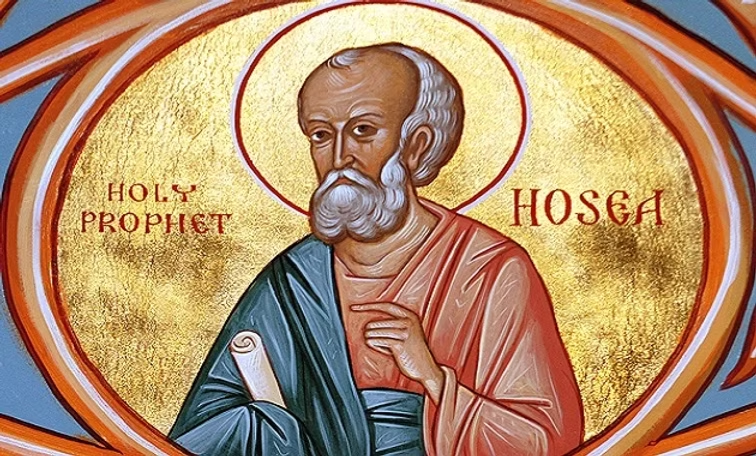
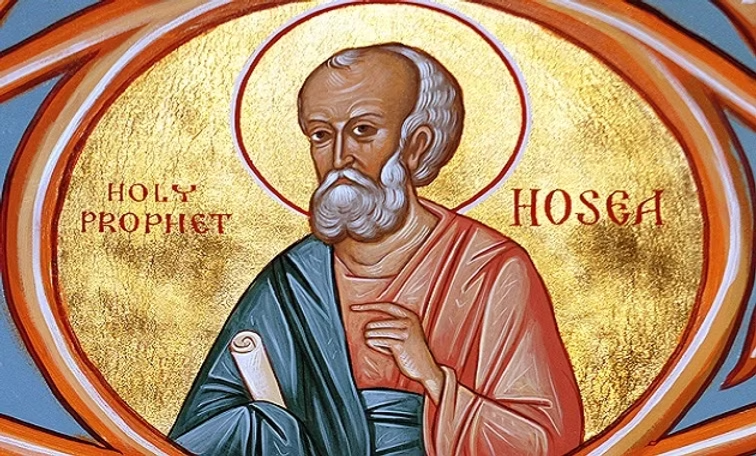


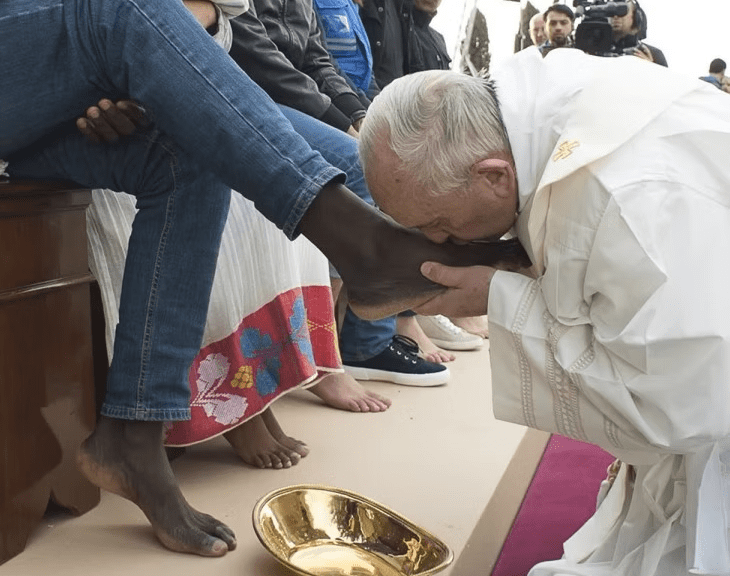
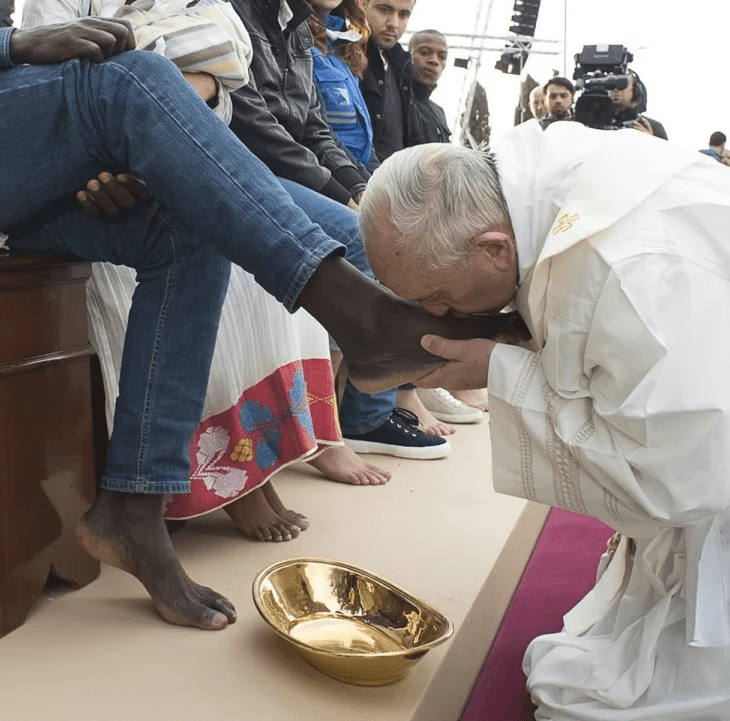




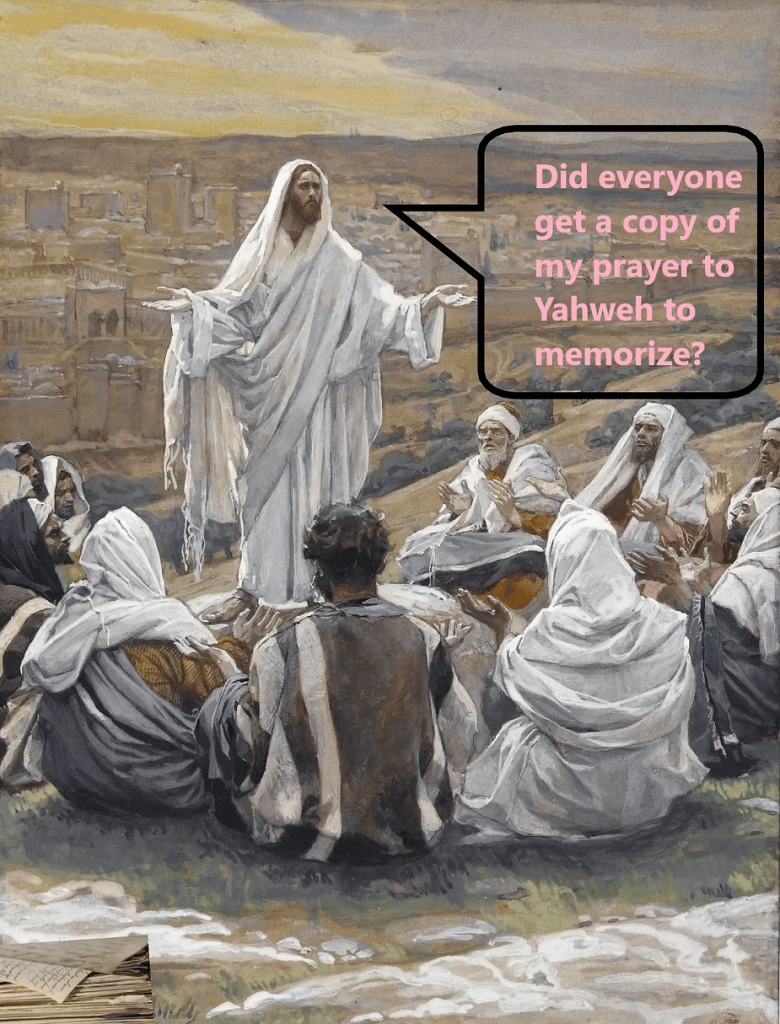
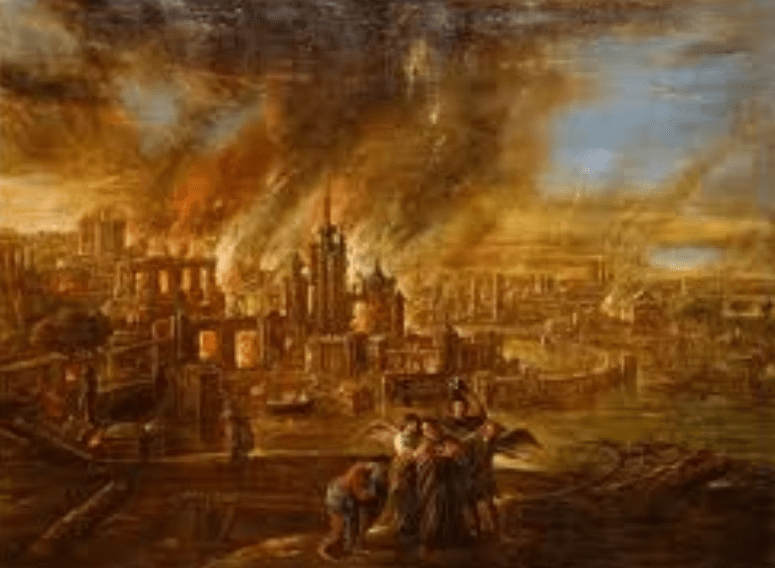




 Explaining the Readings