Mark 6:1-13 – Prophets seen with dishonor

Jesus came to his hometown, and his disciples followed him. On the sabbath he began to teach in the synagogue, and many who heard him were astounded. They said, “Where did this man get all this? What is this wisdom that has been given to him? What deeds of power are being done by his hands! Is not this the carpenter, the son of Mary and brother of James and Joses and Judas and Simon, and are not his sisters here with us?” And they took offense at him. Then Jesus said to them, “Prophets are not without honor, except in their hometown, and among their own kin, and in their own house.” And he could do no deed of power there, except that he laid his hands on a few sick people and cured them. And he was amazed at their unbelief.

Then he went about among the villages teaching. He called the twelve and began to send them out two by two, and gave them authority over the unclean spirits. He ordered them to take nothing for their journey except a staff; no bread, no bag, no money in their belts; but to wear sandals and not to put on two tunics. He said to them, “Wherever you enter a house, stay there until you leave the place. If any place will not welcome you and they refuse to hear you, as you leave, shake off the dust that is on your feet as a testimony against them.” So they went out and proclaimed that all should repent. They cast out many demons, and anointed with oil many who were sick and cured them.

——————————————————————————–

This is an Gospel selection from the Episcopal Lectionary for the Seventh Sunday after Pentecost, Year B 2018. In the numbering system that lists each Sunday in an ordinal fashion, this Sunday is referred to as Proper 9. It will next be read aloud in a church by a priest, on Sunday July 8, 2018. This is important as it shows how Jesus was rejected by the Jews of Nazareth, just as were his disciples faced rejection in their appointed ministries. This is seen today in the fight among Christians to cast out anyone who offers wisdom without some degree of approved divinity, such as that handed out by professors of scholastic religion.

This is Mark’s version of the same story told by Matthew (13:53-58) and Luke (4:14-30), with Luke’s more detailed about Jesus being rejected in his hometown. Mark then followed with the commission of the twelve, which Matthew told of in his tenth chapter (the whole chapter) [slightly before Jesus was rejected in Nazareth] and Luke told of in his ninth chapter (verses 1-6) [well after Jesus was rejected in Nazareth]. Luke told the story of Jesus being rejected in Nazareth with much detail, well beyond what Mark wrote; but the inconsistencies of the chronology makes certainty of when each event occurrences difficult to pinpoint.  Still, there is purpose to the order of presentation that is found here in Mark.

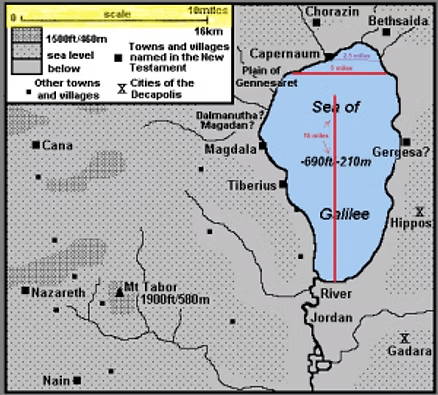
There is no mention of Nazareth specifically in either Mark of Matthew, but Luke does make that specifically known, with Mark telling that the people in the synagogue knew his father was a carpenter. One can assume Joseph died before Jesus began his ministry, certainly before he moved to Capernaum, because there was no mention of Joseph at the wedding in Cana.

By knowing all of the surrounding stories of the same events, a three-dimensional view of Mark’s story emerges. When we read, “Jesus came to his hometown, and his disciples followed him,” we know from Luke that Nazareth was one of several synagogues that Jesus taught in, after he “returned to Galilee in the power of the Spirit.” (Luke 4:14a) This means that Jesus did not go to his hometown solely for the purpose of showing off his teaching talents. The synagogue of Nazareth welcomed Jesus because of the “news about him [had] spread through the whole countryside” and “he was teaching in [multiple] synagogues, and everyone praised him.” (Luke 4:14b-15)

When Mark wrote, “On the sabbath [Jesus] began to teach in the synagogue,” Luke makes a point of stating, “he went into the synagogue, as was his custom” and “he stood up to read.”
This means each Sabbath in the Hebrew calendar calls for specific readings to be read and discussed. Luke quotes the reading as being that of Isaiah 61:1-2a. In the “Calendar of Torah and Haftarah Readings,” for 2015 – 2018, the schedule for these two verses (plus verses 3-11) comes up in the reading for October 29, 2016 [27 Tishri 5777], which is called the “Blessing for Cheshvan” [Cheshvan = “Eighth Month”]. The same reading was also scheduled for September 9, 2017 [18 Elul 5777].

In the verses recited by Luke (Isaiah 61:1-2a only), the words from the verses include: “The Spirit of the Lord is on me;” and “He has sent me to proclaim.” Some English translation versions place a title on this chapter that comes from verse two-a, which is “The Year of the Lord’s Favor.” This portion of Isaiah 61 announces an unnamed prophet to come, which is not Isaiah but a prophecy of one who will bring freedom to those in captivity. Jesus stood and said, “Today this scripture is fulfilled in your hearing.” (Luke 4:18-21)

While Mark did not address this specific reading as what Jesus “began to teach” about, this is what led the Jews of Nazareth to be “astounded.” The use of the Greek word “exeplēssonto” means “astounded,” which might lead one to think Jesus impressed the Jews of Nazareth, as if he “bedazzled” them or “amazed” with his words. While Luke’s use of “ethaumazon” implies “wonder, marvel, and admiration,” it actually in a statement of “surprise.” Mark’s word most clearly shows that Jesus’ words had the effect of “striking them with panic or shock.”

This view is supported by seeing how those in attendance in the synagogue took this proclamation by Jesus as an insult. It led them to question his credentials: “Where did this man get all this? What is this wisdom that has been given to him? What deeds of power are being done by his hands!” Those questions did not in any way infer that what Jesus said was believable.

The question that asked where Jesus saw Isaiah foretelling of him was one asked in the tone of “What gall!” The use of “sophia,” as “wisdom,” misses the hint at “cleverness,” where a rabbi should teach the “intelligence” that comes from the standards of education, and not unfounded “insight.” The “deeds of power,” from “dynameis,” hints at a stunt proclaiming to be a “miracle.” The addition of “by his hands” is then meant as a preconceived “plan,” which is the art of shysters, made-up by Jesus only.

When the next question was, “Is not this the carpenter, the son of Mary and brother of James and Joses and Judas and Simon, and are not his sisters here with us?” they concluded that Jesus was just the boy down the lane who was the son of a carpenter. Growing up in Nazareth meant Jesus was from another poor family of Jews. His relatives were of no importance … pretty much like everyone from Nazareth … so the same expectations should be placed on Jesus. They let him teach out of respect for his being from Nazareth and some gossip that said, “Give him a chance,” but that sermon (in their minds) was a colossal failure.

To ensure that no one missed that point, Simon-Peter told Mark to be sure to write down, “And they took offense at him.” The Greek word written, “eskandalizonto,” is rooted in “skandalizó,” which in Latin is transcribed “scandalizabantur,” a word that is associated with the etymology of the English word “scandalous.” The “offense” caused was “disgraceful; improper or immoral.” The Nazarenes felt like they had fallen into a trap that had been set by Jesus, snared up quickly from their peaceful Shabbat Jewish selves and forced to become angry and wild in an attempt to free themselves.

Their anger led Jesus to say, “Prophets are not without honor, except in their hometown, and among their own kin, and in their own house.” As a true prophet of the LORD, such that everything Jesus said was the Word of God flowing through his mouth, the “honor” that comes to all “Prophets” (capitalization is purposeful, showing a divine connection, although the capitalization is from the paraphrase of translation) is the presence of God within.

Because a relationship with God requires many years to build up, into a marriage where a Prophet submits his (or her) personal will to the dominant Will of God – the Husband – even Jesus, as a child, was seen as no different as other children his age. Even though God spoke to Jesus daily, from human birth to human death and beyond, Jesus was free to express his personal opinions (albeit God-led) at all times prior to his Spiritual baptism, when the dove lit upon his spirit in the river Jordan, with John the Baptizer. That period of Jesus talking, rather than God speaking directly through Jesus, was not part of any written Gospel. The Jews of Nazareth, therefore, saw Jesus as a little more than an impudent human, one who (as far as they knew) was ordinary.

When we then read, “And he could do no deed of power there, except that he laid his hands on a few sick people and cured them. And he was amazed at their unbelief,” this says that the rejection of Jesus was so great that the Son of God could do little to reach through that refusal to accept holiness. It says that “unbelief” (“apistian”), which is a negative form of “faith.” It means “unfaithfulness” and “distrust” is the power of “disobedience” that pushes those professing “faith” away from God.

This makes Nazareth become a model for all of the Israelites, in particular those who maintain Judaism today, denying Jesus as their Christ. When the scope of definition for “Israelite” is broadened, to be seen as the children of God who do follow the promised Messiah that is Jesus Christ – Christians, Jewish and Gentile – then the same sense of “astonishment” and “taking offense” can be seen when so-called “believers” reject someone who is truly filled with God’s Holy Spirit.  When Saints are seen as extremely rare, then the appearance of one teaching about Scripture in ways only God could know, it seems natural that those not in a relationship with God will fail to recognize one who is.

The same “unfaithful” (“offended”) have become led by people like them, who teach an ordinary message, so they set expectations for all substitute teachers – they must teach the same faithless message. Just as were the Jews of Nazareth so “disobedient” to the Lord that they ran Jesus out of town, with few being healed by his hands, Christians today are just as closed-minded to the truth.  It is a knee-jerk reaction to reject the unknown, even when it scandalously slaps the truth in their face.

The message that so many fail to hear, and fail to learn, and fail to teach is that message that is repeatedly written in the Gospels and Epistles that says, “in the name of Jesus Christ.” Christians sit in pews and believe they should believe “in the name of Jesus Christ.” Christians believe they should be baptized “in the name of Jesus Christ.” Christians believe they should pray “in the name of Jesus Christ.”

Christians believe Jesus Christ is in Heaven with the Father, listening to prayers and placing check marks by the names of Christians who believe “in the name of Jesus Christ,” just like the Jews of Nazareth sat in pews in the synagogue and believed in the name of Isaiah.  They all believed in the prophecies of Isaiah, but they all believed they would never see the day when any of Isaiah’s Saviors would come to town. Therefore, if a Christian stood up in a church on Sunday (or Saturday) after a priest or reader said the words “in the name of Jesus Christ” and loudly proclaimed, “I am in the name of Jesus Christ!” those Christians would (for the most part) be greatly offended.

Anyone who would hear that claim and come to Jesus Christ, in the person who knew he or she had been reborn as that Christian who proclaimed “the year of the Lord’s favor has come!” then he or she would benefit. A few of the whole would only amount to a few sick people who could be cured or have demons cast out of them by Jesus reborn. In that process, those few would have the torch of the Holy Spirit passed onto them, due to their faith. However, the many would shun that person, run him or her out of town, spread ugly gossip about him or her in that wake, and blacklist him or her from ever coming back to that church. In short, a Christian today would treat a reborn Jesus Christ just as the Jews of Nazareth scorned Jesus.

This means that when Jesus said, “Prophets are not without honor, except in their hometown, and among their own kin, and in their own house” that paraphrases as, “Persons gifted at expositing divine truth [true Prophets of Yahweh – “prophētēs”] are not despised, except when surrounded by those not filled with the Holy spirit [not also Prophets of Yahweh],who are not taught by persons gifted as expositing divine truth, thus who are not led to ever be expecting to meet one person gifted at expositing divine truth, much less ever become a “Prophet” themselves.

As such, “hometown” and “own house,” in today’s vernacular, represents one’s specific denomination of Christianity, in a specific church building. The version of Christianity that one holds dear leads one to go to a place where one feels at home. The church one goes to most regularly is then personal, as one’s own house of worship. This means “own kin” are all the others who go to the same church, in the same town, and (in the cases of the devout that adhere to the tenets of Christianity) it has been this way for generations.

As for Jesus, who was a Great Prophet who only spoke the Truth of the Father, his disciples were his “house” [“a church being wherever two or more gather in my name” – Matthew 18:20]. That included his mother, brothers, sisters, aunts and uncles who were all followers that would become “in the name of Jesus Christ” following Jesus’ death, resurrection, and ascension.  The became his church, gathered in his name when Jesus Christ returned on Pentecost Sunday (the day after he ascended).  They were strong supporters of Jesus as the Christ, who would continue his work when they also became Jesus Christ reborn. All honor and glory was given to Jesus of Nazareth  by all who felt the presence of God in and surrounding him.

The Jews of Nazareth, those of Jesus’ hometown, did not bestow any honor onto Jesus, as they did not embrace him as the one Isaiah prophesied. Instead, they saw Jesus as a black sheep who had turned away from their simple mindset of belief … themselves as God’s chosen people … where all were chosen equally, with none to ever rise to the level of being truly righteous and responsible for the well-being of their family of Judaism.

This truth has to be seen in order to then understand why Simon-Peter told Mark (his Gospel writer), “Save the story of Jesus sending us disciple of Jesus out to minister in our hometowns, in the synagogues when we were raised, where the Jews who knew us before we were “in the name of Jesus Christ” could reject us also.”

Peter had Mark write about the commission of the twelve immediately after Jesus was rejected in Nazareth, because (in the imagined words of Peter), “We too were Jesus by extension, through God’s Holy Spirit being our authority.” Therefore, Mark’s story of the sending out of the twelve disciples then becomes the story of every Apostle who ever ministered Jews and/or Gentiles as Jesus Christ reborn. Matthew and/or Luke could chronologically state that event, with the same higher meaning intended to be found; but Mark’s retelling was for the purpose of understanding the future growth and spread of all true Christianity.  The commission of the twelve was the commission of all Saints in the name of Jesus Christ.

When Mark wrote, “He called the twelve,” the most basic meaning is the twelve named disciples of Jesus, as of that time in Jesus’ ministry. In Matthew 10:2-4, amid his story of the commission of the twelve, Matthew named each disciple. This included (last and least), “and Judas Iscariot, the one who betrayed [Jesus].”

That inclusion of Judas and the disclaimer that will forever go along with his name is what makes the sending out of twelve guys from Galilee, around 30 A.D., be the least intent of this commission. We can assume Judas Iscariot went, like the others; but one has to ask, “Did he and his partner obey all the instructions and cast out demons?”

That makes the number twelve stand out as the eternal condition for those who would forever be “called” by Jesus Christ AND fully comply with those commands. This means that the number is symbolic, more than literal.  Its use intends more than a number of physical disciples be discerned.  It implies that twelve is the state of being that must be reached by all who heed that call … with Judas Iscariot failing to meet that requirement (as the note beside his name by Matthew implies).
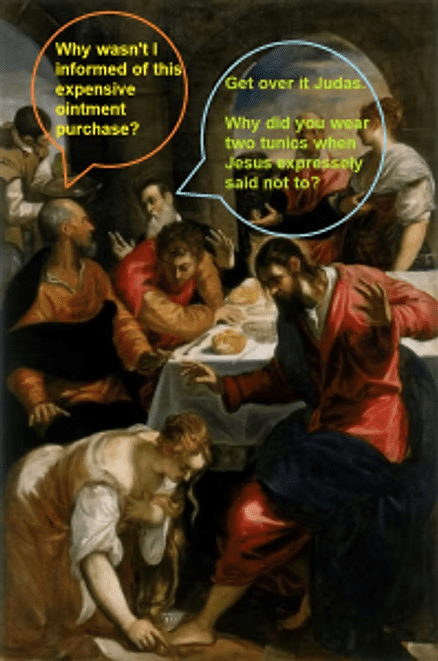
Rather than attempt to teach a course in numerology, here is one of many web pages that explain the symbolic meaning of the number twelve. It is this symbolic nature that forms the core explanation as to why Jesus had twelve disciples, when he actually had many more followers and believers. Luke wrote of a commission that included seventy (or seventy-two) that were appointed in pairs. (Luke 10:1-20)

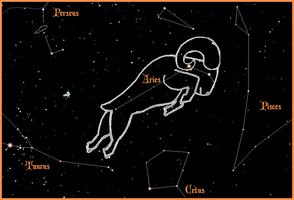
The number twelve represents a spiritual elevation, so the self is no longer controlling the soul. Twelve ‘boils down’ to a three (12 => 1 + 2 = 3), but is a special number that is like a “master number” (11, 22, 33).  The number three represents “initial completion,” whereas twelve (as 12 => 1 + 2 = 3) is a number that represents “final completion.” We see this in the twelve signs of the zodiac and the twelve tribes of Israel.

A three is then representative of the self, while a twelve elevates the self by submission to God. Still, oneself can reject that elevation and reduce a twelve back to a basic three, which is symbolic of the free will the self maintains. In this regard, Jesus symbolically named twelve disciples to be those who assumed roles that were elevated above his other base followers. However, the inclusion of Judas Iscariot reflected how a title of respect does not guarantee complete subjection to God, as some will always choose self over becoming Jesus Christ.

When this concept of twelve is seen, it allows one to see the eternal potential of the commission of Jesus Christ into the world, through subjects that never knew him as the human being that was Jesus of Nazareth. They were then, are now, and will always be the ones sent out “two by two, given authority over unclean spirits.” That “authority” (“exousian”) is less about being a power over others, as it is more important as the power of the Holy Spirit, which rejects the presence of anything spiritually unclean to enter into an Apostle (i.e.: Saint).

This means that when Mark wrote, “They cast out many demons, and anointed with oil many who were sick and cured them,” it was the power of the Holy Spirit that had the effect of “anointing oil.”  This has to then be read as more than olive oil that has somehow been blessed by a Saint.  The use of “oil,” where the Greek word “elaion” means, “(figuratively) the indwelling (empowering) of the Holy Spirit,” means this has more power in a Spiritual sense, rather than a physical pouring of oil on one’s forehead.  It becomes synonymous with baptism by the Holy Spirit, where physical water has no effect on a soul.

By realizing the power given to the disciples (elevated to Saints) was not self-generated or self-willed, but the power of God’s Holy Spirit passed onto them, we can then best understand Jesus’ instructions. When Peter told Mark that Jesus said, “Take nothing for their journey except a staff; no bread, no bag, no money in their belts; but to wear sandals and not to put on two tunics,” those instructions apply today as well as they applied then, because Jesus spoke in ageless metaphor.

In general, Jesus told the Saints who would be in the name of Jesus Christ, “Go into the world as ordinary looking people, with nothing about you hinting at piety.” In other words, Jesus said, “Go and make it so only the truly faithful to God will be positively drawn to you.”  As a fishing analogy applied to fishers of men, Jesus sent them out fishing with just a line and a hook, but no pole, no net, no bait , no spinners, and no lures.

The Greek text of Jesus’ instructions actually states, “Nothing they should take for the journey,” where “hodon” says (in addition to “journey”), “path, road, and way.” This then becomes the path of Jesus, who said, “I am the way (“hodos”) , and the truth, and the life; no one comes to the Father but through Me.” (John 14:6, NASB) “Nothing” more is required, when one walks as Jesus Christ reborn through the Holy Spirit.

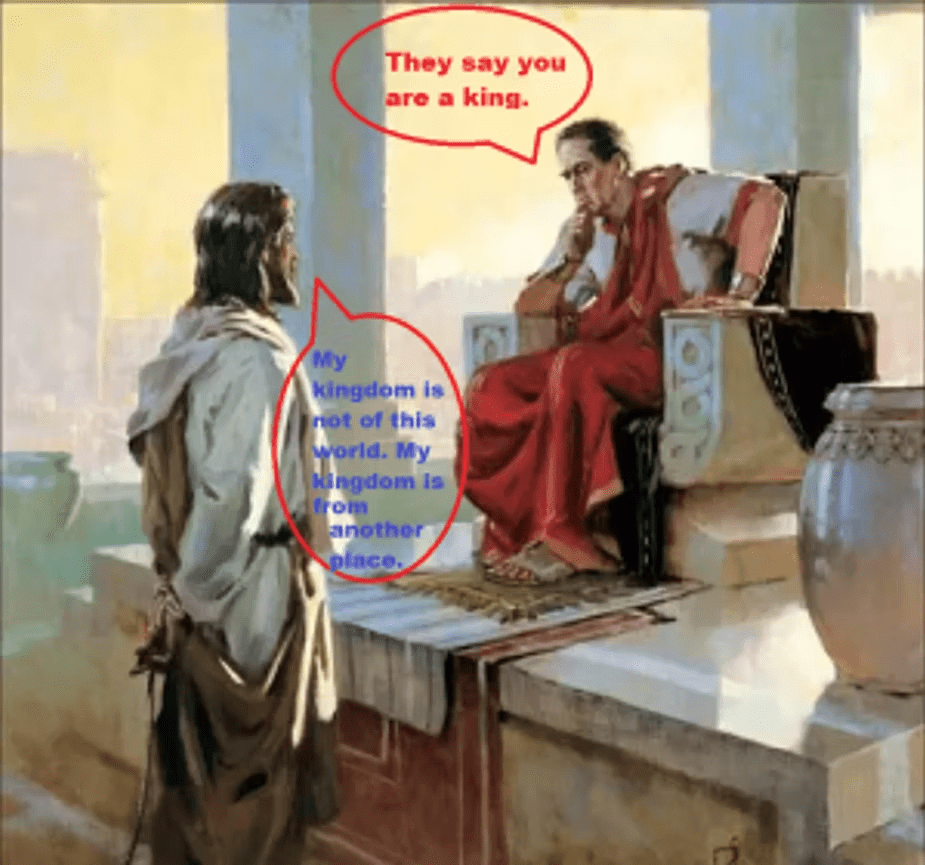
This makes the exception of “a staff” be not a walking stick (or crutch to lean on) but the authority of the Holy Spirit. It is like the invisible “rhabdos” that is the “scepter” of Christ the King.  Jesus said, “My kingdom is not of this world,” (John 18:36) but when his subjects are the souls within the realm of their flesh, his staff of sovereignty appears as just another human being.

To have his Saints carry “no bread,” this is more than the him demanding they deny the physical necessity of food (fasting), where taking a “loaf of bread” would be viewed as a lack of faith, as if there would be an unwillingness to depend on manna from heaven. More than a demand to physically restrain one’s bodily needs, the symbolism of “bread” is relative to the symbolic presence of matzah is the Passover.

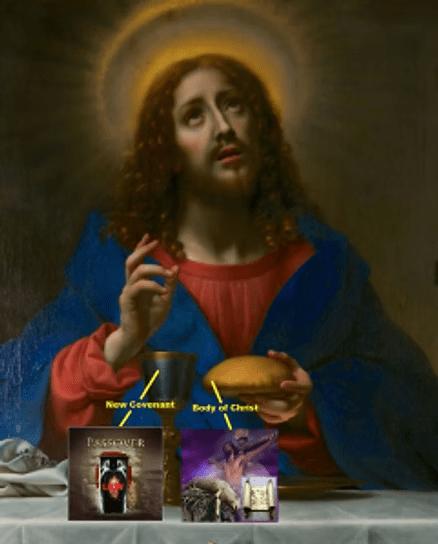
At the Seder meal (the “Last Supper”) ceremonial bread was broken (a ritual breaking, called the Yachatz) and the disciples were told to eat in remembrance of him. The Yachatz is actually hidden and must be found, so it can be eaten as a dessert. Children are the focus of this exercise; and Jesus called his disciples, “little children.” (John 13:33)  As such, one is asked to seek and find Jesus Christ, who is hidden in the “bread” that is the Word of God. Scripture must be consumed to begin a journey that, when found, requires one be stripped of self.  To reach that point of sacrifice, one must see the prophecies of Jesus in the holy text first.

As an instruction to the holy priests of the LORD who are sent out to teach the truth, “take no bread” means to take no prepared Scripture lessons to teach. A prepared lecture or sermon requires the intelligence of a brain, which cannot withstand questions the brain has not been prepared to answer. When one is without “bread” due to faith, then the manna from heaven will be sent to one.

Trusting Saints are sent unprepared so they can then receive the knowledge of the Mind of Christ that is promised to come, as needed. It comes so that not only will one be fed spiritually, but so too will one’s whole family be fed spiritually. All questions will be answered without conscious thought required, through teaching by the power of the Holy Spirit.

When we hear the instruction, “no bag,” this goes beyond the literal meaning of “a sack, wallet, or leather pouch for carrying provisions.” The intent here is like a quiver that holds a supply of Biblical arrows or Scriptural quotes that are intended to wound or defend one’s position. It means (to Jews) not to be lugging around a selection of Torah scrolls to read for Jews to hear. To a Christian, it means not to carry a copy of a Holy Bible to read to others. This means “no bag” is akin to thinking outside the box, where everything written in scrolls and Holy Bibles is relative to translation restrictions or pronunciation choices. It becomes an attempt to put God in “a bag” that limits Him and the truth of His Words spoken through prophets.  Without that bag, God is free to enlighten an unfettered mind.

The requirement that says, “no money in their belts,” where “zōnēnchalkon” (literally “belt money”) can be read as “money belt” or “purse,” was stated at a time when “money” meant minted coins of precious metals. Still, when “belt” and “money” are seen as separate words, where “belt” means “girdle” or “waistband,” such as a leather strap tied around one’s mid-section, and “money” means coins of “brass, bronze, or copper,” the implication is not to go into the world displaying an underlying support (girdle) that is wealth-driven (money). It means not to travel like the scribes of the Temple, with an entourage of support encircling them; and it means not to go public in clothes that say, “Only I can afford this suit.”
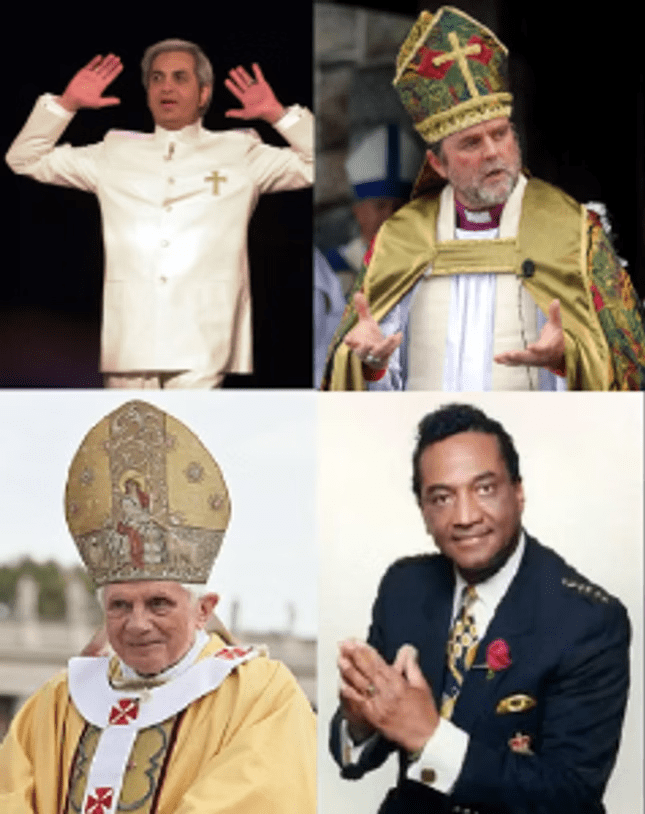
“Every girl crazy ’bout a sharp dressed man.” ZZ Top

While such a restriction set by Jesus can easily be noticed in the television stardom of televangelists who plead for contributions to buy another $54-million private jet for ministry, it still applies to all mainstream organized religions, where priests, bishops, cardinals, and popes wear fancy costumes as if those clothes (hats, belts, miters, and staffs) deem them as holy.  Further, many churches revel in ensuring their pastors live in nice homes and drive fine cars. The people tend to associate their piety in a figurehead deemed as their reflection.  However, Jesus’ order means all of that flash and glitz only distracts from God’s message of sacrifice, causing others to focus on the outward appearances of others and not their own inner needs.

When Jesus said to “wear sandals,” that fashion statement does not means shoes cannot be a footwear replacement. A “sandal” is a piece of leather worn under the sole of the foot, as an invention for the purpose of human beings being able to walk boldly over rocky and sandy soil. It is protective clothing in that sense, which any modern version of footwear that is designed for outdoor walking can match. Still, by Jesus giving an order to wear sandals it has to be seen as symbolic of keeping the feet prepared to walk wherever the Lord sends one. The use of “sandals” is then akin to being a messenger, as God prophesied through Malachi: “Behold, I am going to send My messenger, and he will clear the way before Me. And the Lord, whom you seek, will suddenly come to His temple; and the messenger of the covenant, in whom you delight, behold, He is coming,” says the LORD of hosts.” (Malachi 3:1)

Finally, when Jesus said “not to put on two tunics,” the number two must be grasped. Two reflects the duality of humanity, which is the physical body joined with a spiritual soul. To “put on” or “be clothed” with “two tunics,” where the word “tunics” (“chitōnas”) implies “undergarments” or “shirts worn under a robe,” there is a hidden element that underlies the apparent. This should be seen as an instruction not to retain one’s self-ego under the cloak of righteousness. One can only be a messenger of God when one is wearing the robe of Jesus Christ and no one else. This is why a Prophet of the LORD is merely a nameless “mortal,” whose response to all God’s questions is, “LORD you know.”

With that state of being seen, we then read how Jesus said to the disciples, “Wherever you enter a house, stay there until you leave the place. If any place will not welcome you and they refuse to hear you, as you leave, shake off the dust that is on your feet as a testimony against them,” this should be seen as relative to the story Mark just told about Jesus being rejected in Nazareth.  One should see how this connects to the “house” of worship (the synagogue in Nazareth) Jesus had just been rejected from, where as a messenger of God he was shown dishonor.

The symbolism of “dust” (“choun”) is as “earth” or “soil,” which relates to the physical and not the spiritual. God told His Son Adam, “For you are dust, And to dust you shall return.” (Genesis 3:19f) In Ecclesiastes we read, “All came from the dust and all return to the dust.” (Ecclesiastes 3:20b)
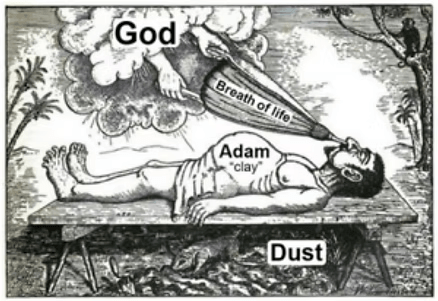
Therefore, the rejection of a Prophet of the LORD means the messenger (sandals) has been refused and the punishment means reincarnation on the worldly plane, not the reward of faith – eternal life in Heaven with God.

Mark then summed up Simon-Peter’s memory by stating, “So [the twelve] went out and proclaimed that all should repent.” The Greek word “metanoōsin” states the conditional, such that the recommendation is to repent, so one should repent; but one is free to do as one chooses. This means one must fully grasp the meaning of “repentance,” such that the Greek word “metanoeó” (the root verb) means, “change my mind, change the inner man (particularly with reference to acceptance of the will of God); properly, “think differently after,” “after a change of mind”; to repent (literally, “think differently afterwards”).” When “repent” is understood to basically mean, “to change one’s mind or purpose,” this becomes a recommendation to surrender one’s big brained ego (self) so the Christ Mind can be born within one’s being. A Saint’s purpose is then to recommend that one should make such a change of mind.

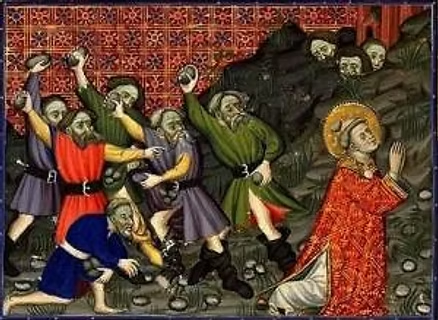
As a Gospel selection for the seventh Sunday after Pentecost, when one’s personal ministry to the LORD should be underway – one has truly repented – the intent should be to see the standard of rejection. In most cases, which can be seen in the story of Saul being transformed into Paul, rejection begins within one’s self. Saul stood holding the cloaks of those who rejected the messenger Stephen, so the persecutors’  hands would be free to stone a Saint (in the name of Jesus Christ) to death. They rejected Stephen just as the Jews of Nazareth rejected Jesus. Saul stood by and watched the rejection, not raising a hand to stop the mindset that bears the responsibility for neglecting everything Jesus ordered his disciples not to wear.

The ones who reject a change of mind hold their hard loaves of unleavened bread high, hoping the lack of yeast (the Holy Spirit) will punish those they swing hard at.  Instead, that bread breaks and crumbles, unlike bread that was allowed to expand its basic ingredients into a tasty, life-giving softness. The hands with stones have bagged God as their personal slave, whose words say what they want them to say. They have transformed the exclusivity of being God’s chosen people into a lucrative businesses that caters to intellectual giants. The ones throwing the stones that killed Saints pretended to be upholding the Laws outwardly, while they are led by the fears of responsibility denied inwardly. These are the ones a minister of the LORD is called to confront.

Luke wrote of the people of Nazareth being so angered at Jesus that, “They got up, drove him out of the town, and took him to the brow of the hill on which the town was built, in order to throw him off the cliff.” (Luke 4:29) They could not harm Jesus, as Luke continued to say, because “he walked right through the crowd and went on his way.” (Luke 4:30)

As Stephen was dying, “Stephen prayed, “Lord Jesus, receive my spirit.” Then he fell on his knees and cried out, “Lord, do not hold this sin against them.” When he had said this, he fell asleep.” (Acts 7:59-60) That was Jesus again going on his way, because Stephen touched Saul on his path that led him to encounter Jesus Christ.
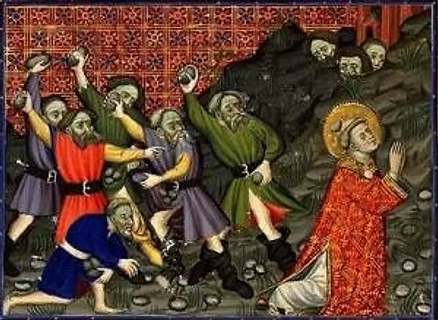
This says that all ministers of the LORD begin as those who have played their part in rejecting Prophets who have suggested a change of mind and the subjection of self-ego to the LORD. Ministers have been there, done tha;, so when they see others rejecting their transformed souls as being the old insolent human beings they were before, ministers then see themselves in reflection. This leads them to pray for God to forgive them all for being ignorant for so long, while really wanting to be saved.

Aside F.Y.I.: Deleted from this reading is the verse that is marked as an aside [in parentheses] that is a long ending to verse 11, following “a testimony against them.”  It states “(Truly I say to you more tolerable it will be for Sodom and Gomorrah in day of judgment  ,  than for that town.)  This means rejecting a Prophet of the LORD calls for eternal damnation, assuming repentance does not come before the day of judgment.”

2 Samuel 6:1-5 and 12b-19 – Placing God where He wants to be

David again gathered all the chosen men of Israel, thirty thousand. David and all the people with him set out and went from Baale-judah, to bring up from there the ark of God, which is called by the name of the Lord of hosts who is enthroned on the cherubim. They carried the ark of God on a new cart, and brought it out of the house of Abinadab, which was on the hill. Uzzah and Ahio, the sons of Abinadab, were driving the new cart with the ark of God; and Ahio went in front of the ark. David and all the house of Israel were dancing before the Lord with all their might, with songs and lyres and harps and tambourines and castanets and cymbals.

So David went and brought up the ark of God from the house of Obed-edom to the city of David with rejoicing; and when those who bore the ark of the Lord had gone six paces, he sacrificed an ox and a fatling. David danced before the Lord with all his might; David was girded with a linen ephod. So David and all the house of Israel brought up the ark of the Lord with shouting, and with the sound of the trumpet.

As the ark of the Lord came into the city of David, Michal daughter of Saul looked out of the window, and saw King David leaping and dancing before the Lord; and she despised him in her heart.

They brought in the ark of the Lord, and set it in its place, inside the tent that David had pitched for it; and David offered burnt offerings and offerings of well-being before the Lord. When David had finished offering the burnt offerings and the offerings of well-being, he blessed the people in the name of the Lord of hosts, and distributed food among all the people, the whole multitude of Israel, both men and women, to each a cake of bread, a portion of meat, and a cake of raisins. Then all the people went back to their homes.

——————————————————————————–

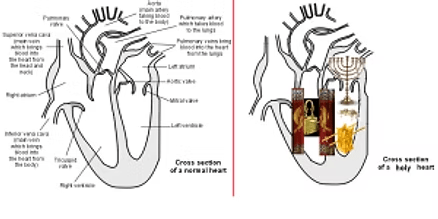
This is an optional Old Testament selection from Episcopal Lectionary for the Eighth Sunday after Pentecost, Year B 2018. In the numbering system that lists each Sunday in an ordinal fashion, this Sunday is referred to as Proper 10. It will next be read aloud in a church by a reader on Sunday July 15, 2018. This is important it shows the ark’s presence in Israel is symbolic of God’s presence in one’s heart, thus worthy of celebration by songs, dance, and sharing the blessings that come from offerings to the LORD.

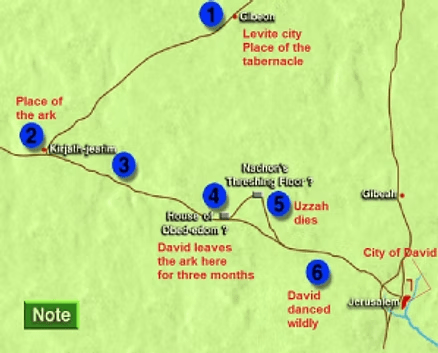
In this reading it is important to realize that David has been King of Israel for over seven years. He has taken the stronghold of Jebus from the Jebusites and renamed it Jerusalem, with his area called the City of David. He has then made arrangements for this stronghold to be the home of the ark. One can presume some time took place preparing a location for the ark to rest, as well as preparations for moving the ark (a new cart, minimally), so at least six months has passed since Jebus fell.

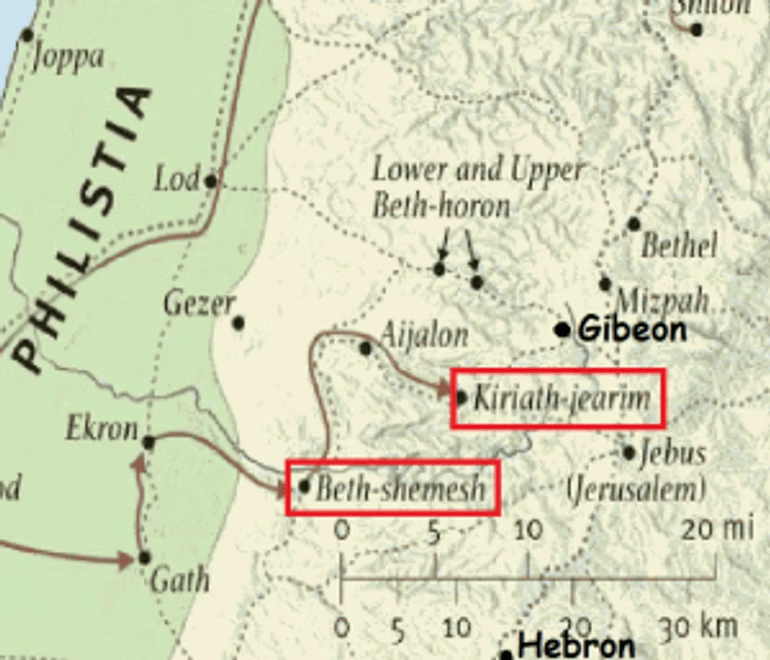
The ark was under the control of Levites in the “house of Abinadab,” as well as in Gibeon. While the ark was in Kiriath Jearim, the ancient tabernacle was kept in Gibeon. The Levites would have overseen the consecration of all priests who would attend to the ark. Uzzah and Ahio are called “sons of Abinadab, but “sons” (“bə·nê”) were “descendants” of that “house” (“mib·bêṯ” as “family”).

The ark had been moved there after the prophet Eli’s death, as Samuel became the judge of Israel and shortly before the elders of Israel asked Samuel for a king.

After seven months, the Philistines had been punished enough for having the ark and they left it on a rock in Beth-Shemesh so it was up to the Israelites to deal with. It caused 50,070 to die there, so they asked for it to be removed. It was then taken to Kiriath jearim.

The ark stayed in Kiriath Jearim for twenty years (1 Samuel 7:2), when Saul ordered the ark moved, without permission (1 Samuel 14:18). One can then presume the ark was returned, after God stopped answering Saul, in an attempt to make amends. By the time David went to move it to the City of David, the ark had been back in Kiriath Jearim around thirty additional years (fifty in all).

When the translation says, “gathered all the chosen men of Israel,” the operative Hebrew word is “bā·ḥūr,” which leans one to “young men,” even “vigorous young men.” Thirty thousand is a symbolic number that states the importance David saw in this move. The youth factor was so all those accompanying the ark would be energetic and enjoying the festivities surrounding God being moved.

The name Uzzah means “Strength,” while the name Ahio means “Brotherly,” or “Brother/Friend of the LORD.” The place named as the “house of Obed-edom,” can also be read as a family residence named for a “Servant of the Red One,” or “Servant of Edom,” where Edom was a kingdom south of Judah. This can equally be read as “Servant of Strength,” where it held the strategic advantage of height on a hill. It is believed the path of the ark was forced to shift to an easier path downhill.

The omitted verses address the near fall of the ark from the cart. Uzzah attempted to stop its slide and was killed. The symbolism there could be no human strength can force its will upon the power of the LORD. Because of the death of Uzzah, David turned the cart around and returned to the “house of Obed-edom and left it there for three months. During that time, the family at Obed-edom was blessed by the presence of the ark, so David returned to continue the move of the ark to his city.

[Back to the reading]

When we read, “he sacrificed an ox and a fatling,” this was a priestly act performed by David. After the ark was returned to Israel by the Philistines, Samuel had become elevated to the judge of Israel and he made burnt offerings to the LORD also. This says David was more than the King of Israel, as he was also the one who could perform holy ritual. By doing this after the ark carriers had walked six steps into his city; he sacrificed an ox and fatling as the head of the family that was the house of David. This is then repeated when we read, “They brought in the ark of the Lord, and set it in its place, inside the tent that David had pitched for it; and David offered burnt offerings and offerings of well-being before the Lord.” Finally, David “blessed the people in the name of the Lord of hosts,” which was a priestly act.

David danced and rejoiced mightily as a sign of his complete devotion to God. His displays, as well as those of the Israelites, were to show their happiness to have the LORD welcomed with fervor into their midst. That celebration was followed by more ceremonial burnt offering, which had to have been enough for thousands of Israelites. We know this because we read how David, “distributed food among all the people, the whole multitude of Israel, both men and women, to each a cake of bread, a portion of meat, and a cake of raisins.” This act of blessing and feeding a multitude would much later be seen by Jesus.

To myself, the element of this reading that sticks out and stays in my mind is when I read, “As the ark of the Lord came into the city of David, Michal daughter of Saul looked out of the window, and saw King David leaping and dancing before the Lord; and she despised him in her heart.” When David and Michal were younger, when David was living as an adopted member of Saul’s royal family, “Michal loved David,” and Saul “was pleased” to hear that news. Saul planned to use that love to get David killed by Philistines. Because David was poor, Saul set the dowry as “a hundred foreskins of the Philistines.” David brought back two hundred and was given Michal as his wife. However, soon after, Saul forced David into exile, trying to kill him.

David and Michal were then separated for many years. After Saul was dead and his son Ish-Bosheth was King of Israel, David sent a demand to send his wife Michal to him in Hebron (he was then King of Judah). Ish-Bosheth forced Michal from her husband to go to David, while David had taken on other wives while in exile and they bore him children. Still, this story tells how Michal “despised [David] in her heart” because he acted in an unroyal manner before the ark. Her “contempt” shows how she had been coddled as a princess and seeing David playing the fool before God disgusted her.

As a reading option for the eighth Sunday after Pentecost, when one’s personal ministry to the LORD should be underway, the lesson is to fear the LORD and only Him. That was the commandment stated in Deuteronomy 6:13 and it was restated in 1 Samuel 7:3, after the ark was returned by the Philistines. The fear of the ark was the fear of God, and the lesson of this reading is delight in that power.

The ark had remained in one house on a hill for the most part of half a century. It was not in the tabernacle Moses had the Israelites construct, which could be taken down and moved in their travels. David prepared a tent for the ark in the City of David. The entire time Saul ruled over Israel, the LORD did not have a proper place to rest; and, in return, Israel did not benefit from the power of the LORD. This story is about how David returned that power to a proper home.

The symbolism is the struggle that one of faith has in mistaking a fear of the LORD as the fear one has to find a proper home for God. A minister to the LORD has prepared a place for God to reign, which is the tabernacle-tent covering one’s heart. Many people have difficulty making the sacrifice that makes one appear publicly foolish, as that has the effect of bringing contempt and disdain from those who see the rewards of the world come freer and more frequently when they act in ways that attract wealth. This means Michal, whose name means “What’s God Like?” questioned how God could bless anyone as wildly foolish as David. A minister to the LORD is no longer worried about how the self is seen by other human beings, as the only eyes that matter are God’s.

It can take many years of one’s life to dare to move the ark of God from some external resting place (like a church building, a religious denomination, or a surrogate minister) into one’s heart.

There may be setbacks, like the death of Uzzah and the testing of the presence of God in another (like David leaving the ark at Obed-edom), but one needs to see how God being kept external does not save one’s soul in the end.

The marriage of David to Micah, when David was too poor to pay a dowry, symbolizes one’s marriage to the world and the inheritance of worldly goods. When Micah saw David had chosen God, she saw him as returning to earthly poverty, even though he was the king of all Israel. Her love of a young, self-assured David, who had so much potential for capturing the booty and spoils of war, dissipated to nothing, once she saw his Spiritual choice. So too does the world reject a high priest, a holy judge, and a servant to God. Just as did Michal turn on David, a minister can expect to find the same rejection of past friends and business partners. Simply by changing from self-promoting, soul-selling, run-of-the-mill typical people, those people who one was just like feel disdain being around someone so changed. When one has fallen in love with God and married into His house, then there can be no turning back – because one sees the true love of God and the false love of those too weak to sacrifice immediate gratification for eternal peace.

The lesson in this optional Old Testament reading is ministry requires one become a Brother of Jesus Christ, just as Ahio led the ark in its return. To be a Brother is to become a reproduction (a rebirth) of the Son of God. A Brother comes in both male and female human bodies. As Christians, who profess to have the Strength of the LORD at their beck and call (the spirit of Uzzah), that consecration as a high priest of the ark leads one to think you can control God. One’s lineage and pedigree makes one thing one can reach out and touch the LORD whenever one pleases. While omitted from today’s reading, we find that Uzzah’s attempt to keep the ark from coming off the cart was not seen by God in his favor. Instead, we read, “The Lord’s anger burned against Uzzah because of his irreverent act; therefore God struck him down, and he died there beside the ark of God.” (2 Samuel 6:7)

That lesson says to be careful that one does not think God obeys one’s commands. That is irreverent and causes God to burn such selfish souls from anger. One has to fear the power of the LORD and bow down before that magnificence. Bowing down might be seen as foolish and weak; but foolish and weak is much better than fried to a crisp, having God raised God’s ire.

Amos 7:7-15 – Human plumb lines

This is what the Lord God showed me: the Lord was standing beside a wall built with a plumb line, with a plumb line in his hand. And the Lord said to me, “Amos, what do you see?” And I said, “A plumb line.” Then the Lord said,

“See, I am setting a plumb line in the midst of my people Israel; I will never again pass them by; the high places of Isaac shall be made desolate, and the sanctuaries of Israel shall be laid waste, and I will rise against the house of Jeroboam with the sword.”

Then Amaziah, the priest of Bethel, sent to King Jeroboam of Israel, saying, “Amos has conspired against you in the very centre of the house of Israel; the land is not able to bear all his words. For thus Amos has said,

‘Jeroboam shall die by the sword, and Israel must go into exile away from his land.’ ”

And Amaziah said to Amos, “O seer, go, flee away to the land of Judah, earn your bread there, and prophesy there; but never again prophesy at Bethel, for it is the king’s sanctuary, and it is a temple of the kingdom.”

Then Amos answered Amaziah, “I am no prophet, nor a prophet’s son; but I am a herdsman, and a dresser of sycamore trees, and the Lord took me from following the flock, and the Lord said to me, ‘Go, prophesy to my people Israel.’”

——————————————————————————–

This is an optional Old Testament selection from Episcopal Lectionary for the Eighth Sunday after Pentecost, Year B 2018. In the numbering system that lists each Sunday in an ordinal fashion, this Sunday is referred to as Proper 10. It will next be read aloud in a church by a reader on Sunday July 15, 2018. This is important because it shows the rejection prophets face when they speak the truth of God, while not backing down to that rejection.

The plumb line is used to make sure a wall is going up perpendicular to the ground, assuming the ground has been leveled and a solid foundation is in place.

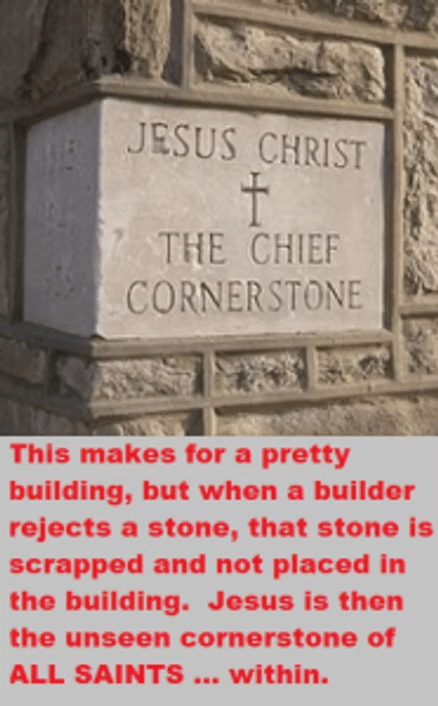
Without a plumb line to ensure the squareness of the angle (90 degrees), the wall will collapse under its own weight. David was the plumb line for Israel, where the wall was reworked after Saul.  Jesus Christ would be the cornerstone to a new foundation for a new wall (Christianity) that would test the squareness of each brick (Christians) making up that wall.  Thus, Jesus would also be the plumb line sent to be in the midst of God’s people, after their walls collapsed in Israel and Judah, sending those of Israel to the winds of the earth and the Jews to Babylon.

The prophets, like Amos, set that line and the people rejected it by allowing kings who were out of square to reject the prophets. The collapse of Israel and Judah can then be seen as nothing more than a law of physics. Thus, just as they fell because they were not square with the LORD, so too did the Jews of Judea and Galilee collapse for not accepting the square that was Jesus Christ.  The same building failure is often repeated throughout history in nations of people who reject God and His cornerstone.

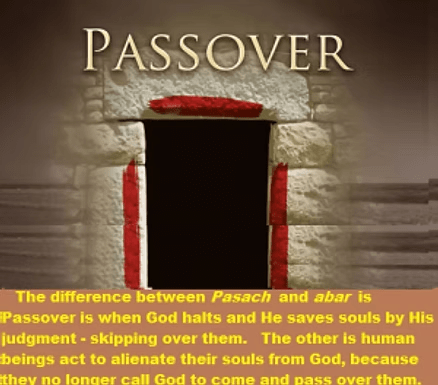
When we read how Amos wrote of the LORD telling him, “I will never again pass them by,” the actual Hebrew words from which this is translated are “‘ă·ḇō·wr lōw,” from “abar lo,” meaning “no pass over.” Those two words are separated (a hyphen mark shown in the text) from the lead-in words, “lō- ’ō·w·sîp̄ ‘ō·wḏ,” rooted in “lo yasaph od,” which state, “not again going around.”  God told Amos that the breaking of Israel into two nations meant the Israelites were breaking free of His influence.

This means the history of Moses and the Israelites comes into play, where the angel of death would no longer be allowed to pass over the doorways to homes of the children of Israel that would no longer be marked by sacrificial blood of lambs. This prophecy given by God to Amos came at a time after Jeroboam had successfully manipulated the secession of the ten tribes that became the Northern Kingdom, splitting away from Judah.

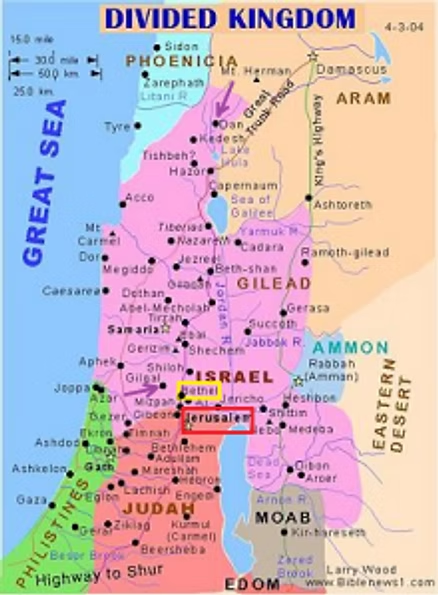
When we read, “Amaziah, the priest of Bethel,” we need to know that Bethel was the place established by Jeroboam as the second Temple. This site was deemed the holy place of the Northern Kingdom, so Israelites would not pilgrimage to Jerusalem for the required holy festivals (Passover being the first each year). Amaziah is said to be a priest of Jeroboam II, the distant descendant of the initial usurper Jeroboam. Amaziah is therefore considered as a false prophet of Israel, although his name means “Yahweh is Strong” or “Strength of the LORD”.   Amos was then prophesying for the LORD when Amaziah was a priest of Bethel, under Jeroboam II.

When we then read how Amaziah reported about Amos, “Amos has conspired against you in the very center of the house of Israel,” the map above shows how Bethel was not geographically central to the area comprising the Northern Kingdom. Amos was sent to Bethel to preach the Word of the LORD; and because of Bethel being only 10.5 miles north of Jerusalem, “the very center of the house of Israel” means the “heart” of their house of rebellion. Since the original unification of twelve tribes was Israel, and all its inhabitants were Israelites (of which Bethel and Jerusalem were centrally located), “the house of the new Israel” became synonymous with those who rebelled and broke away, stealing the name “Israel” in that process.

When we read that Amaziah told Jeroboam II, “The land is not able to bear all his words,” those words are stated by Amos as being the Word of God, stating:

“the high places of Isaac shall be made desolate,

and the sanctuaries of Israel shall be laid waste,

and I will rise against the house of Jeroboam with the sword.”

This should be seen as saying Mount Moriah will have been made a place to avoid, as Abraham took Isaac to Mount Moriah to offer him as a sacrifice. Mount Moriah is one of the hills (high places) of Jerusalem. Thus, Jeroboam, through the establishment of a second temple in Bethel (where Abram built an altar and Jacob dreamed of a ladder to Heaven), devised a scheme to desolate Jerusalem of Israelite observance of the Law of Moses. Other shrines of the newly unified Israel, in Dan and Gilgal, were where golden calves were placed, which welcomed complaints by prophets and opened doors to foreign cult worship.

This made Bethel become representative of all the “sanctuaries of Israel” that would become wasted through rebellion. Imagine how this was not seen by all the people as unwanted.  See it as similar to the removal of statues of the Ten Commandments from American public places and government buildings.  Therefore, the wasting of sanctuaries was cheered, more than bemoaned.

While God spoke to Amos during a period of relative peace and stability, “the house of Jeroboam” would be stricken down by “the sword” of Assyria in the future. The “waste laid” to that house would be such that those of the Northern Kingdom would lose all identity by not being deemed worthy of captivity.   The people of Israel would be scattered into the winds, sent to the four ends of the earth, no longer identifiable as Israelites. However, because that future had yet to materialize, Amaziah said the Northern Kingdom was, “not able to bear all his words” as truth.

Amaziah then quoted Amos as saying, “Jeroboam shall die by the sword, and Israel must go into exile away from his land.” The death of Jeroboam II should not be seen as the prophecy made by God through Amos. This is on a grander level, where the rebellious house of the Northern Kingdom took on the spirit of Jeroboam, whose name means “The People Contendeth.”  It can be seen also as “The people contend” or “He pleads the people’s cause” (from the “Etymology” section in Wikipedia article “Jeroboam”). Thus, the prophecy of Amos foretold of a future death that would come by the double-edged sword of God’s judgment.

Because all divine prophecy can be averted through belief and actions of faith based on belief, the future of a divine prophecy is both set in stone and able to be avoided.  All divine prophecies of warning will come true, but judgment is equally served.  Upon those who serve the LORD righteously and choose to change their ways, the truth is revealed as continued peace and prosperity.  The prophecy of the sword has been securely locked in stone. However, without that change, those who serve themselves above God will find judgment coming from the blade of the sword being freed and wielded recklessly.

The prophecy is not exclusive punishment of the ten tribes of the Northern Kingdom.  It was specific to those who followed a wicked leader.  Had Israel overthrown Jeroboam and reunited with Judah, the prophecy would still be in effect for any other leader of rebellion that may come later.  As such, all the rebellious peoples of the world – those who rebel against their God – can be figuratively identified as being in “the house of Jeroboam.”

The land “Israel” stands by the name meaning that is “God Strives.” It means “God [El] Persists,” such that Israel is a state of being, more than a place on the earth. Anyone who does not maintain such a state of being – of steadfastly holding onto the Will of God as one’s purpose in life on earth – then that human being has exiled oneself from the protection of the LORD. The sword of judgment will fall in the direction of one’s self soul, whose physical body becomes the land it serves.  One can only be “the land where God Strives” when the soul has been cleansed by the Holy Spirit.  Without that holy baptism, the soul is exiled from God.

We then read, “And Amaziah said to Amos, “O seer, go, flee away to the land of Judah, earn your bread there, and prophesy there; but never again prophesy at Bethel, for it is the king’s sanctuary, and it is a temple of the kingdom.” In this series of segments, where each makes an important statement, we first see Amaziah pronouncing Amos as a “seer” (“ḥō·zeh,” rooted in “chozeh”).  That was an admission that Amos was truly a prophet of God. It was recognition that Amos was one who experienced divine whispers rather than visions, confirming how Amaziah had already pronounced to Jeroboam II that the words of Amos were unbearable.

Next, Amaziah told Amos to “Go.” The Hebrew word “halak” (“leḵ”) says, “Walk; Act; Grow; and Live,” as well as “Go; Return; and Depart” (among many other things). This says Amaziah acknowledged that Amos had entered upon a path that he could not avoid. He did not tell him to “Stop,” because he knew that was impossible. Therefore, he then said “flee away to the land of Judah,” as the Word of the LORD would find welcoming ears there. The urge to “flee” said there would be danger if Amos did not leave the Northern Kingdom.

To translate “we·’ĕ·ḵālšām le·ḥem” as “earn your bread” means old beatniks from the early ‘60’s must still be around and translating the Holy Bible.

The earliest form of “rap”?

The most literal translation of the root words in that segment clearly says, “eat there bread,” but the intent is quite clearly “feed bread there.” Rather than seeing Amos as a paid priest, paid priests love to justify their “bread” (wages, housing, insurance and corporate perks) by the words of Timothy.  That Saint wrote, “For the Scripture says, ” You shall not muzzle an ox treading out grain,” and “The laborer is worthy of his wages,” (1 Timothy 5:18).

That verse says the whole purpose of a prophet is to feed, not to be paid as a laborer.  The metaphor is missed when “wages” are seen as paper notes and metal coins.  Timothy meant, “Your work justifies your reward.”  Amaziah was telling Amos that his words of prophecy would be more rewarding when fed to hungry mouths.

The Word of God flows through a prophet’s mouth like manna falls from Heaven. This means the Holy Word is the “bread” that must be consumed by the faithful. Jesus said to break and share the bread of the Seder meal and remember him, because the bread (words) of the Old Testament feeds belief in Jesus Christ.  Thus, a prophet earns the right to feed others through righteous living and a marriage to God.

This explains why “feed there bread” is followed by the stated segment(s), “there – prophesy.” Above and beyond a physical state of “there” (Judah), this word being set alone becomes a focus set upon the Spiritual state of being that is “there.”  Rather than Amaziah identifying a place, “there” set apart was the state of a prophet who has been allowed by God to “feed His bread” (“prophesy”). Once “there,” there is nothing else a prophet of the LORD can do but “prophesy.”

To be there, one has to first seek to learn where “there” is.  Then ask God, “How do I get there?”

When Amaziah then followed this recognition of righteousness in Amos by stating, “But never again prophesy at Bethel, for it is the king’s sanctuary, and it is a temple of the kingdom,” he was making it clear that the rebellious (those calling themselves Israel) were no longer following the order of Yahweh.  He was no longer their spiritual king; and the land they took was not ruled by true prophets of the LORD.

This is how Amaziah can be called a false prophet, because he remained in Bethel where priests and prophets did not advise the man who would be “king” (a procession of names) of God’s Word.  This would worsen over the years, especially under Ahab and Jezebel, when the remaining good priests were executed and replaced by pagan ones. Rather that priests advising the king, the king commanded as a god and his priests and prophets would spin those decrees to the people.

At the end of this selected reading, we read the response of Amos as: “Then Amos answered Amaziah, “I am no prophet, nor a prophet’s son; but I am a herdsman, and a dresser of sycamore trees, and the Lord took me from following the flock, and the Lord said to me, ‘Go, prophesy to my people Israel.’” This again speaks in segments, where each states the Word of the LORD.

When Amos said, “I am no prophet, nor a prophet’s son,” this was a denial that he had been professionally schooled or educated in Scripture. The ancients of Israel and Judah had a school of prophets, such as the one Eli led, which was where the parents of Samuel left their son, dedicating him to the LORD. It had once been the role of each Israelite family to present their firstborn sons to priestly service (Exodus 22:29), but this was modified to being only those of Levite parentage (Numbers 8). This means that not only had Amos never been educated in a school that taught priestly duties, he was not of Levite heritage.

When Amos said, “I am a herdsman, and a dresser of sycamore trees, and the Lord took me from following the flock,” the combination of “herdsman” and “flock” means Amos was a shepherd, although the specific animals he shepherded may or may not have been sheep. The Hebrew words written, “ū·ḇō·w·lêsšiq·mîm,” can more literally be seen to state, “gather figs from trees.”  While “sycamore trees” can be implies, the general intent is “a tree.”  The word translated as “dresser” is better understood as “gatherer,” where “figs” are the fruit implied.

A tree hung with dresses is not the intent here.

When this is read as Amos rejecting the notion of being a trained “prophet,” with him saying he made a living selling wool and figs, the point is missed that this states his qualifications for prophesying.  Amos was chosen to prophesy for God because he had found pleasure watching over creatures that needed help and he had gained strength through holy fruit. According to Google, “The fig tree is a symbol of peace and plenty,” such that Amos lived as a peaceful man and the LORD provided him with all he needed. This makes Amos be a model of the Good Shepherd, as Jesus of Nazareth shared the same lack of institutional education, with both men relying totally on the insights coming to them from the LORD.

Finally, when we read Amos saying, “and the Lord took me from following the flock, and the Lord said to me, ‘Go, prophesy to my people Israel,” the skills of a shepherd are better than having a big brain filled with memorized words and the interpretations of scholars and false prophets.  Rather than preach what he had heard or read from some other big brain, Amos had no knowledge of Scriptural meaning, other than that sent to him by God.  Those who say what they are told to say by kings, and other demigods whose brains are quite inferior to the knowledge of the LORD, pale in comparison to the words of a lowly prophet.

Amos then possessed the Mind of Christ, due to his reception of God’s voice. When the LORD said, “Go,” Amos went, without question. He went because the LORD only speaks to His servants and His servants serve by spreading the Word of the LORD so others can hear it – whether they want to hear it or not (usually, they do not want to hear it, like Amaziah).

As an optional Old Testament reading selection for the eighth Sunday after Pentecost, when one’s personal ministry to the LORD should be underway – one should be like Amos – the message here is the requirements for being a minister.

First of all, one must stand upon the solid ground of faith, squarely rising as a student of Scripture. Either one’s parents has delivered one to the church for children studies, later to attend sermons in adult church, or someone gave one a person copy of the Holy Bible, which shows evidence of having been read. One has demonstrated some interest in one’s religion first.  Addition studies are then chosen as interesting, such as attending optional classes in church, making personal investigations of Biblical questions on Internet sites, or reading books of Biblical interpretation purchased from booksellers. To call oneself Christian requires more than having water poured over one’s head as an infant.

The plumb line that one is measured by is belief, which is squared by the insight of God’s whispers, but leaned by the contradictions and inconsistencies of interpretation that keep one from actually experiencing God personally. Belief is based on questioning the meaning of Scripture, all the while knowing it is wholly the truth. One seeks answers that prove the truth of Scripture, and that proof is personally experiencing God.  One prays and is sent insight or shown signs that answer the prayers.  One is able to see through the veil of mystery.  Thus, one rises perpendicular to the foundations of Christianity and Judaism when one becomes a prophet of the LORD, without the blinders worn by scholastic professors of religion.

Second, a minister of the LORD has heard the truth be spoken within and proved time and again by searches for examples, so one knows the truth always comes when one closes the brain and lets the lips become the vehicle of God’s knowledge. One does not become a minister because one needs to pay off the loans one incurred going to school, to learn some religious stuff. One does not become a minister that is approved by a dean of theology or a bishop in an organization of religious churches, in order to “make one’s bread.” A minister of the LORD drops everything else (church flocks of sheep and the fruit of business trees) and does (gladly) what God leads one into.

Third, a minister of the LORD says what is true, expecting to find rejection and banishment. The truth hurts the ears of those who act (as pretense) faithful to God, but are really more interested in what their leaders tell them to do, so the nation state-of-being cannot be distracted by those who would point out the errors of their ways. Even though a minister of the LORD is told to get out of a disbeliever’s mindset (the “face of other gods” they wear before the LORD), a minister of the LORD teaches his or her family to remain faithful.

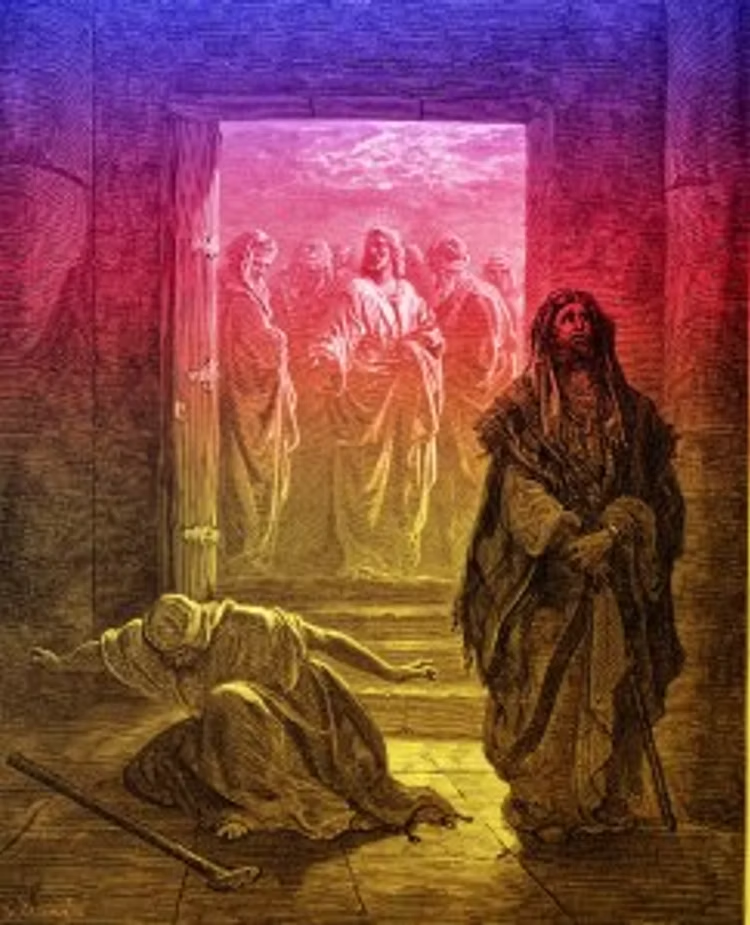
Finally, it must be understood that ministers of the LORD have been set in a world that has plenty of souls who want to believe; but they struggle to find the strength to turn away from a world that demands spiritual sacrifice for survival. As Jesus told the parable of two men who went into the temple to pray – the Pharisee and the publican (tax collector) – it is important to see how both men had made worldly sacrifices, in the name of the god “money.”

The Pharisee boasted to God that he gave ten percent of his stolen wealth to the priests each week, and he sacrificed by not eating during the daytime twice a week. Not once did he admit to God that he had sinned in the first place. He wore the blinders that allowed him to sin without regret.

The publican felt so much humility that he knew everything he did was based on sin. He was as wealthy as the Pharisee, but the Pharisee had the people too afraid to reject him, due to his powerful connections. The people could easily see the sin of wealth on the tax collector, and he was in a position easier to hate. This grieved the publican; but he had never met anyone from the temple or synagogue who could lead him to truly believe he could stop sinning. He saw their sins of accepting some sinners, while rejecting people like him, without any sense that any rabbi was in that position of teacher, filled with knowledge that was designed to lead sinners to being sin free.

The parable ended when Jesus said, “I tell you that this man [the publican], rather than the other [the Pharisee], went home justified before God. For all those who exalt themselves will be humbled, and those who humble themselves will be exalted.”  Neither was able to stop their sinful ways.  However, one prayed for someone to help; and that is why God sends ministers into the world … to make help available to those seeking it through prayer.

A minister to the LORD is sent by God to help the humble to find the truth that opens their hearts up to receiving the love of God. This comes by feeding the Word to them, one bite at a time, like a baby is fed by its parents. Thus, a minister must see those who seek the truth as infants that must learn to crawl before they can learn to walk. Most Christians are fed Scripture as Pablum (def.: bland or insipid intellectual fare, entertainment, etc.), and they never develop an appetite for solid religious food.  Those babies grow into hardened people, like Amaziah, who love to say, “The land is not able to bear the bread of truth.”

A minister of the LORD goes to offer food for thought to those who are seeking that fare.

Ephesians 1:3-14 – Living for the praise of his glory

Blessed be the God and Father of our Lord Jesus Christ, who has blessed us in Christ with every spiritual blessing in the heavenly places, just as he chose us in Christ before the foundation of the world to be holy and blameless before him in love. He destined us for adoption as his children through Jesus Christ, according to the good pleasure of his will, to the praise of his glorious grace that he freely bestowed on us in the Beloved. In him we have redemption through his blood, the forgiveness of our trespasses, according to the riches of his grace that he lavished on us. With all wisdom and insight he has made known to us the mystery of his will, according to his good pleasure that he set forth in Christ, as a plan for the fullness of time, to gather up all things in him, things in heaven and things on earth. In Christ we have also obtained an inheritance, having been destined according to the purpose of him who accomplishes all things according to his counsel and will, so that we, who were the first to set our hope on Christ, might live for the praise of his glory. In him you also, when you had heard the word of truth, the gospel of your salvation, and had believed in him, were marked with the seal of the promised Holy Spirit; this is the pledge of our inheritance toward redemption as God’s own people, to the praise of his glory.

——————————————————————————–

This is the Epistle selection from Episcopal Lectionary for the Eighth Sunday after Pentecost, Year B 2018. In the numbering system that lists each Sunday in an ordinal fashion, this Sunday is referred to as Proper 10. It will next be read aloud in a church by a reader on Sunday July 15, 2018. This is important it touches on the predestination of Saints, where God released all human souls on the material plane with the instruction: “Come back. Don’t get lost in a physical body.”

When I was a young boy being raised in an Assemblies of God church, I remember there was a “prayer room.” It had folding chairs in it, at which people would kneel and pray.

As best as my young brain could discern (from what I saw happen in that room) was the room was a place to be trained in how to “speak in tongues.” According to the methods taught to me, as I knelt in front of one of those folding chairs, I was told to repeat the word “Glory,” over and over.  I would do that until my tongue got so tied up it would stop saying “Glory” and start making unintelligible noises. I was told those unintelligible sounds was “speaking in tongues.”  One traveling evangelists actually encouraged me to just make up any noises that I wanted.  When I did, I was praised by the congregation for “speaking in tongues.”

Reading this greeting written by Paul to the Christians of Ephesus, it dawned on me how repetition being the key to leading one to speaking in tongues was the truth. Someone, somewhere along the line of the foundation of the Assemblies of God church mistook reading Scripture (the Glory of God in writing) over and over, until it begins to make deep, spiritual sense, as how one speaks in the tongues of God. What is unintelligible to those who have no time for repetition then becomes crystal clear to those who eyes and ears (and mouths) that God has opened.

Paul is a classic example (in all his writings) of how repetition is the key to understanding. The faster one reads Paul the more it sounds like babble. However, when it is read slowly, over and over, praying for the deeper truth to be exposed, it begins to amaze with how accurately detailed Paul’s words were.  They are of divine origin.

With that short lesson about speaking in tongues complete, read this over and over and contemplate its deeper meaning: “Blessed be the God and Father of our Lord Jesus Christ.”

Perhaps knowing the Greek text will help, along with knowing alternative English translations: “Eulogētos ho Theos kai Patēr tou Kyriou hēmōn  ,  Iēsou Christou” or “Worthy of praise the [one] God and Father of the Master of us , Jesus the Messiah.”

Ask yourself as you repeat those words, several of which are capitalized, showing importance, “Is this a simple church greeting, where important words are written ceremoniously, or formally, or ritually, rather than with the intent to express the truth?”

Ask yourself, “Is God truly Worthy of praise, such that God is the epitome of ones Blessings?”

Was Paul pointing out that God is the Father of all Creation, including himself, all the people breathing air in Ephesus, as well as every living being on earth? Or, was Paul making an important statement about God being exclusively the Father of himself – an Apostle – and those true Christians of Ephesus – also Apostles? Did Paul intend his use of Patēr (capitalized as “the Father,” versus “ancestor, elder, or senior” in the lower case) to be meaningless or meaningful?

Why did Paul further that by stating God is the “Father of the Lord,” going on to say “the Lord of us”? What does the word “Kyriou” mean, when it is the “Lord” and/or “Master of us”?

If God is King of Heaven and Jesus was not a king of a nation, where would he be Lord? Where could his kingdom be, if not within an Apostle?

When a comma is placed after “hēmōn” (“of us”), indicating a pause in this line of thought, how then does that mark in the text act to denote a separation between “us” and “Jesus Christ”?

When you read these ten words over and over … slowly … allowing the truth and full scope of intent to sink in … can you see Paul stating, “I praise the One God as do you praise the One God [“Blessed be the God”], for together we are blessed to know God as the Father [“and Father”] of new state of spiritual being, having been born of His love in His sending us our Master [“of our Lord”], the new Lord of our souls in our flesh, such that we each have become a kingdoms of Jesus Christ [“Jesus Christ”], each being the resurrection of Jesus Christ”?

When your eyes begin to open to Paul having just made a powerful statement that he was a member of the church of Ephesus, where “church” is defined by Jesus as being “where two or three gather in my name, I am there in their midst,” (Matthew 18:20), those to whom Paul wrote were just like him, in the sense they had each been “Blessed” by “God,” who then was the “Father” of their rebirth, where the “Lord” of their bodies, minds, and souls was “Jesus Christ.”  They had each become Jesus Christ incarnate.  When that becomes clear, then you can begin to do the same repetition of the rest of this reading.

To speak in the tongue of God, as Paul was writing “in tongues” using the Word of God spoken to him, each Apostle in Ephesus was then capable of “reading in tongues” (a.k.a. “speaking”) and reading the words of Paul on a divine level of understanding (above a human brain level).  To an Apostle, there is not thought that goes into word selection, as some brain-powered trick of language.  Words naturally come to one filled with the Holy Spirit.  However, a disciple can be trained to begin proving the divinity in such tongues by following logical methods.

Like I am instructing, one has to practice reading slowly, repeating each word as it was meant to be read – using the full scope of each word’s usage, not just the standard or typical. That requires learning Greek (and Hebrew) as well as God knows Greek (and Hebrew), or using a tool to make up the difference (such as an online Interlinear translation of the foreign to the known.  One has to know God’s Mind is so great it chooses the precise words necessary to convey depth beyond the standard and typical; but intelligence is elevated to inspiration when one proves to oneself how great God is to choose words with so much meaning unseen.

(I am now going off the script above and will be using the literal (interlinear) English translation of the Greek written. Feel free to see how English alters the ordering of words written, to satisfy syntactical differences from Greek.)  By seeing that Paul said “Blessed [be] the [One] God,” as the source of Apostles having been reborn as Jesus Christ, next read:

“the [One] having blessed us with every blessing spiritual in the heavenly realms in Christ.”

God is “the [One] having blessed” Apostles. God has bestowed upon His servants “spiritual blessing,” rather than physical rewards. The spirit of a human being is the soul, so an Apostle’s soul has been made “worthy of praise,” due to it having been cleansed of sins by the Holy Spirit of God. They have been spiritually blessed so their souls can gain spiritual reward in the “heavenly realms.” The plural number of “realms” shows how heaven has become one with earth in an Apostle, of which there are many.  They have been blessed with the knowledge of God that comes to them because they are in Christ. They have been blessed with the Christ Mind.

Then read:

“just as he chose us in him before foundation of world  ,  to be for us blameless and holy before him  ;  in love.” [Notice the presence of punctuation marks, which are ‘road signs’ that say how to slow down more and shift gear.]

Again, “he” is God, who has Blessed them and they praise Him for those blessings. Paul is saying Apostles are predestined to become Saints. The Greek words “katabolēs kosmou” imply verbiage that says, “the foundation of the world,” but that is a limitation that plays on one’s brain. A brain thinks the only way that can be interpreted is from Creation, a long, long, time ago. It does not have to be that far-stretched. Each soul in “the world” is reincarnated into new flesh each earthly life. The word “katabolé” actually has a meaning that is relative to “conception,” so each human being’s “foundation” in “the world” is their birth. When rebirth is factored in, then being chosen “before being born as Jesus Christ” is the call to be a disciple. In Paul’s case, the spirit of Jesus Christ knocked Saul off his donkey and blinded him for three days before he took on the name Paul and began serving God as Jesus Christ reborn. The choice one makes that answers that call from God is completely and totally “to be blameless and holy before [God].” An Apostle is not forced to serve God; but one serves out of “love.” An Apostle falls “in love” with God. An Apostle becomes married to God [the cleansing of sin from the soul] and God’s love reigns in an Apostle’s heart.

Jesus is the round stone that rolls away from the entrance to the tomb, freeing the soul for eternal life.

After absorbing that, then next read:

“having predestined us for divine adoption as sons through Jesus Christ  ,  according to the good pleasure of the will of him.”

The Greek word “proorizó” means “I predetermine,” but it equally means “preordained” and “marked out beforehand.” By seeing how Paul said Apostles were “chosen at birth,” and that means being reborn “in him” – Jesus Christ – the view is now broadened to show one’s responding to God’s call is one’s “pre-ordination” towards becoming the Son of God. This is then a “divine adoption” by all human beings, of both sexes, those who answer the call, to be reborn as Jesus Christ.  His Spirit is resurrected within one’s soul, so all who are so adopted divinely are transformed into “sons through Jesus Christ.” This Spiritual adoption goes beyond human gender because of the “love” of God, so accordingly all “sons” are everyone who is filled with the “happiness of the will of him,” which is the presence of the Holy Spirit – the same that surrounded Jesus of Nazareth.

That revelation then prepares one to read further:

“to praise of glory of the grace of him  ,  which he has freely given us in the [One] beloved.”

This “good pleasure, happiness, and delight” that is brought on by God’s love, His Holy Spirit and the Mind of Christ is then the elation that instantly causes an Apostle to “praise the unspoken manifestation of God” inwardly. Such feelings of joy are due to the “favor” and “gift” of God, leading one to give in return “thanks” and “gratitude” to God. It means an Apostle acts as did Jesus of Nazareth, giving all “honor and glory to God.” This does not come by asking for favor. It comes “freely,” given by God to His ‘wives’, those who have subjected their will in marriage to God, accepting him into their hearts as “the [One] beloved.”

If that is difficult to grasp, keep repeating those words over and over, slowly. Understand that “praise” comes from inner delight that is beyond natural emotions, which are impossible to maintain by self-will. However, seeing “happiness” as a “gift of God” allows one to then read:

“in whom we have redemption through the blood of him  ,  the forgiveness all of trespasses  ,  according to the riches of the grace of him.”

Notice the repetition of the word “grace,” which in Greek is “charis.” The form written by Paul, “charitos,” is now being linked to “the blood of him,” where the Greek word “haimatos” means “blood” that has been spilled. This means that like Jesus of Nazareth spilled his “blood” in the act of crucifixion, where he willingly became a sacrificial lamb for a higher cause, so too are Apostles called to the same higher cause, through self-sacrifice.

By being reborn as Jesus Christ, one has been given the higher reward of “redemption,” where the sins of one’s life have been “ransomed” through a “blood” payment. Therefore, the “blood” of self no longer leads one’s body, because it has been replaced by the “blood of Christ.” The “blood” of Christ is the Holy Spirit that protects one from death.  Achievement of that reward means “forgiveness of all sins” – the baptism of one’s soul by the Holy Spirit. That cleansing is “according to the abundance of the kindness of God” – through His “granting the favor of Jesus Christ” to one.

Keep repeating those words until they speak to you on a personal level, rather than as a bystander looking at an old letter written by an Apostle to a church in ancient Greece. See how Paul was not spreading the truth of some blanket promise of redemption and worldwide forgiveness of sins, given to anyone who did little more than profess belief in Jesus as the Son of God. One cannot believe in Jesus Christ without letting go of selfishness and actually living as Jesus of Nazareth lived. When one has a firm hold on that “grace of him,” then read:

“which he lavished upon us in all wisdom and understanding  ;  having made known to us the mystery  ,  of the will of him  ,  according to the pleasure of him  ,  which he purposed in him.”

The Greek words that begin this series of segments, “hēs eperisseusen,” can equally translate as “that exceeded the ordinary” or “which abounded.” The use of “lavished” means the amount of the spirituality richly given by God to His Apostles is much more than they could ever possibly comprehend with a human brain. Those “riches” are now stated as “wisdom and understanding.” It is such divine insight that allows them to understand Scripture (“the mystery” is the hidden meaning in the words – such that I am expanding upon now) is made known instantly or with quick inspiration to know, not by the will of one’s intellect (a Big Brain) but by God’s whispers. God then delights in His servants finding enjoyment in seeing Scripture unfold before their eyes – meaning that astonishes – because everything was written with that deeper purpose intended. This is the knowledge of God being conveyed through the Mind of Christ, made available to an Apostle that has been reborn as Jesus Christ.

Then read the next series slowly and with repetition:

“for administration of the fullness the [one] of times  ;  to head up the all things in the Christ  ,  the things in the heavens  ,  and the things upon the earth.”

This series begins with the Greek words “eisoikonomian,” which can also state “for stewardship.” The translation read aloud in church states, “as a plan for.” The Christian view of “Stewardship” has been applied to the responsibility of Christians to take care of the earth.  There is “a plan for” this type of “administration.”  However, that view frequently turns into pleas for donations to the churches, so the burden will be taken on by Church, directing funds to outreach programs, allowing the individuals to have the comfort of knowing that doing little more than contributing money absolves them of this “administrative” duty.

The meaning here is different.  It means Scripture is never to be read as a stagnant story of one time past. Apostles are given divine insight so Scripture is seen to always apply to current times, so there is a “full complement” of timely interpretations of meaning. The one who heads this organization is not a bishop or pope, but Christ – the head of the Church. Therefore, Stewardship can only come through Apostles who are enlightened as to the “administration” of all things that fit the requirements that bring one to God and project the Christ in the flesh. The “administration” is not for a body of people – an organization called a church – but that which ensures each soul can return to heaven. Those are the deeds one’s flesh does, through the Christ, as one in the name of Jesus Christ, while here on the earthly plane.

Being able to grasp that vital message, then slowly read and reread this:

“in him  ,  in whom we also we have obtained an inheritance  ,  having been predestined according to purpose of the case all things working  ,  according to the counsel of the will of him.”

This begins with “in him,” which is a statement of being in Jesus Christ. The Greek words “enautō” state “in him,” but also can convey “with the same” or “in self.” This says an Apostle and Jesus Christ are one, not one on earth and the other in heaven.  The Greek word “eklērōthēmen” expands on the root “kléroó,” where “inheritance” means an “allotment” or “a share.” When “inheritance” is understood to be defined as, “something, as a quality or characteristic, received from progenitors or predecessors,” then the share received is the resurrection of the Son, born of the Father, into the inheritors.  That makes them also be (regardless of human gender) “sons of the Father.” Again, the “predestination” is less a birthright that comes from professing belief that Jesus was the Son of God, but more a statement about that period of devotion preceding one being filled with the Holy Spirit, married to God, and reborn as His Son. The Greek words “panta energountos” (“all things working”) means the “predestination” is “according to the purpose” of inheritance, where one does the works of the LORD – “of every kind.” This is how Saint James could truthfully argue: “Faith, without works, is dead.” (James 2:14-26)

Those “working” acts are then not led by brainstorming with a denomination of Christianity and its political agendas, where one is blindly led by the will of other human beings.  Instead, one possesses a brain that functions, made fully cognizant of how what one does under the direction (“counsel of the will”) of the Christ Mind is works based on the gifts of the Holy Spirit.  That subjection to the Will of God is how one inherits the resurrection of Jesus Christ within one’s being.

Allowing that vision to slowly appear makes one able to then progress to this series of words:

“for this to be us  ,  to praise of glory of him  ;  those having first trusted in the Christ.”

Here we see Paul stating that doing the works of faith, directed by the presence of Jesus Christ within on, is the only way such works can be done. It means the self must be sacrificed to serve the Will of God. It is the self that becomes filled with doubts and fears and hesitates doing the works the whispers (conscience) tell one to do. “for Jesus Christ to be us,” following the counsel of his will, “all things working” are accomplished. That accomplishment is in no way attributed to the power of the self, but to the “glory of God.” As an Apostle watches him or herself doing the works of Jesus Christ – according to the talents given, listed by Paul elsewhere – “praise” is given to the Trinity having involved oneself: as Father, Son, and Holy Spirit converging in one’s flesh. That promise of accomplishment is then the “predestination,” where “one first trusted in Christ,” which is faith. Faith alone is not enough, but it is a “first” step in the direction of discipleship. To do the works of faith, one has to learn belief through study of Scripture, praying for the truth to be revealed. Until one sees that truth personally (not simply being told, like I am doing here), such that “all things working” become one’s personal acts of investigation, one will not be enabled by God to progress to Apostle status.

Seeing that insight of a search for the truth and the acts of faith coming from personal belief, read this next series of segments slowly, repeating until the meaning is clear:

“in whom also you  ,  having heard the word these of truth  ,  the gospel of the salvation of you  ,  in whom also  ,  having believed  ,  you were seated with the Spirit this of promise  ,  the Holy.”

Notice how the last segment ended with the word “Christ,” who offered one “hope” (another translation of “proelpizó,” which states “trust”) as one’s “first” step towards marriage with God and giving birth (resurrection) to Jesus Christ, Paul then stated “Christ” is “in whom also you,” where Paul was in the name of Jesus Christ and so were the true Christians of Ephesus. They have all been elevated to the status of Apostle, as completely devoted servants of the LORD, because their “works” involved study of Scripture, through divine insight. By “having heard the word these of truth” coming from whispers of enlightenment inside one’s head, one has been able to find a personal relationship with God that gives delight in His glory. That experience moves one spiritually (in one’s soul-being) to submit to the Will of God. When one has become the wife of God (males and females He weds them), the “love” child is Jesus Christ reborn into another Son of the Father. That presence of Christ in one becomes the “good news” of one’s personal soul’s salvation. The Holy Spirit has baptized the soul clean, with all sins forgiven, and “all things working” henceforth are the Will of God, through Jesus Christ reborn in flesh (“in whom also”). All comes from true belief, not just obedience to dogma and being told what one should say that one believes. One is then “seated” with salvation through having received the Holy Spirit of God.

Having grasped that last important series of segments, look now closely at this final series in this reading:

“that is guarantee of the inheritance of us  ,  to redemption of the acquired possession  ,  to praise the glory of him.”

The Greek word “arrabōn” can be translated as “guarantee,” but the truest sense of the word “arrabón” is: “an earnest, earnest-money, a large part of the payment, given in advance as a security that the whole will be paid afterwards.” This means the receipt of the Holy Spirit must be seen as a pre-payment made in the worldly realm (while alive in the flesh) that then “guarantees the balance” that assures “the inheritance of us” in Heaven. This means one cannot sin an entire lifetime, doing nothing for anyone other than self (where all forms of altruism, without being led by the Christ Mind as one with a human being, is ultimately for selfish purposes) cannot find God on one’s death bed.  Repentance must be pre-paid by selfless acts. Try borrowing money for a house in the same manner, where one has never worked to earn anything that would then act as a promise that more productive work will qualify one for total repayment. No house loans come to slackards, just as no heaven comes to those claiming faith, but without works. One has to become Jesus Christ reborn to insure entrance into the heavenly realm for eternity. In order to acquire that heavenly promise, one has to “deliver” on the promissory note of living a “Holy” life, once married to God. The act of “redemption” is payment in full for works done. Again, nothing is self-praiseworthy as no self-willed donations of time or possessions will cause one “to praise the glory of God” for one’s acts of faith. Self-acts of faith are then due to guilt or delusions of grandeur (the prayers of the Pharisee and the Publican), where neither is worthy of divine reward.

One is acquitted of his sins before God (a sheep of the flock) and one is condemned (a false shepherd blowhard), but neither can keep from further sins without the Holy Spirit’s assistance.

As a selected Epistle reading for the eighth Sunday after Pentecost, when one’s personal ministry to the LORD should be underway – like that of Paul and the true Christians of Ephesus – the lesson here is a personal relationship with God, one where oneself has become subjected totally to God’s Will. A minister supports other ministers, while being a light of truth to those “predestined” to also become ministers.

The words of Paul are written minister-to-minister. This means it requires one be led by the Holy Spirit to write in divine ways, so only those who are filled with the Mind of Christ can fully grasp the deeper meaning. In the story told in Acts 2, where Peter stood with the eleven other new Apostles and “spoke in foreign tongues,” the pilgrims in Jerusalem who heard them were amazed. It was not amazing how twelves ‘rubes’ from Galilee, who had no foreign travel experience or formal training in foreign languages, were speaking fluently in languages that were understood by those who recognized their tongue being spoken. Some wrote that marvel off as being drunk on new wine, where some slurring drunkards had been mistaken before as speaking in foreign languages. That notion was discounted because of the knowledge that came from each foreigner hearing the truth of Scripture in his or her own native tongue. Therefore, we learn that three thousand pilgrims were filled with the Holy Spirit that Pentecost morning, because their ears were opened to the truth of God’s Word for the first time.

The repetition of Scripture can be found in those three thousand pilgrims having lived a lifetime studying the Torah, Psalms, and the Prophets, so they recognized what the Apostles were speaking about in their language. They wanted to know the truth, so their hearts were opened to receive it. They were predestined to receive the truth through devotion to a religious doctrine; but they had never been told the deeper meaning of God’s Word before that time.

Decades after I left the Assemblies of God church, I heard someone say that one can speak in tongues that are not understandable, but confirmation is then required as proof.  The confirmation requires one who can understand the tongue spoken. When this is guttural noises of meaningless origin being interpreted by someone who says what the meaning of meaningless is, I see that as wolves in sheep’s clothing leading lambs to the slaughter.  However, that still makes sense as a valid test of one having a gift of the Holy Spirit, which prophesying and interpreting prophecy are two.

Paul wrote in the tongues of the LORD.  This reading from Paul’s letter to the Ephesians has 255 words in it, with only six periods.  That is an average of 24.5 words per “sentence.”  Because the human brain is not accustomed to comprehending such long-winded statements, the “normal Christian” gets confused easily when reading Paul.  This is because the sacred texts are not written to be read “normally.”

Paul’s letters, like all Scripture, requires the willingness to read them meditatively and then listen for insights.  Those whispers come from the Mind of Christ.  Thus, the reality of one speaking unintelligible words of divinity (Paul and the other Biblical writers) is indeed confirmed by others who interpret those unintelligible words (Apostles) as the truth.  From what I have heard said to be a confirmation of one speaking in tongues, this could be what the Assemblies of God believes.

Still, when people stand and quote Scripture (such as a reader does in an Episcopal church each Sunday) and no one can understand what that Scripture means, it can seem as if it is double-talk or nonsense.  But, if a priest can stand before a congregation and explain that meaning, so that everyone present is suddenly filled with the Holy Spirit and transformed into Jesus Christ reborn, then an Apostle has confirmed the meaning publicly.  Both Paul and the Apostle-priest have spoken the truth as Jesus Christ.  However, the purpose of understanding the unintelligible is not to make a living writing books of explanation or standing on the stage of a mega-church selling oneself as a prophet.

God chooses who can understand His words; and He does that for the purpose of transforming disciples into Apostles.

Somewhere, long ago, someone laid that truth before those who were not filled with the Holy Spirit, but they felt the power of the truth and believed. Speaking in tongues is not gained by repeating the word “Glory” over and over. But, it is seeing the “Glory” of God in Scripture that must be repeated over and over.

The true meaning of a church of Christ is everyone who is a member is an Apostle. When Scripture is read in that church, everyone understands, because everyone is a priest that can stand up and speak the truth to a chorus of “Amen’s.” Those churches were where Paul sent letters that were fully understood. Therefore, those churches were more like a ‘teacher’s break room’, where they gathered in the name of Jesus Christ, to rest before going to a synagogue here or a meeting place there (a classroom), where the truth could be taught to those “predestined” to receive the Holy Spirit.

This is the time to begin doing “all things working” towards one’s personal salvation and earning the down payment required for a loan for eternal happiness. A minister of the LORD makes him or herself available to those seekers of faith. A minister of the LORD teaches those how to believe with praise to the glory, glory, glory of God.

#Matthew1820 #Ephesians1314 #speakingintongues #repetitionofScripture #James21426

Mark 6:14-29 – Serving a head on a platter

King Herod heard of Jesus and his disciples, for Jesus’ name had become known. Some were saying, “John the baptizer has been raised from the dead; and for this reason these powers are at work in him.” But others said, “It is Elijah.” And others said, “It is a prophet, like one of the prophets of old.” But when Herod heard of it, he said, “John, whom I beheaded, has been raised.”

For Herod himself had sent men who arrested John, bound him, and put him in prison on account of Herodias, his brother Philip’s wife, because Herod had married her. For John had been telling Herod, “It is not lawful for you to have your brother’s wife.” And Herodias had a grudge against him, and wanted to kill him. But she could not, for Herod feared John, knowing that he was a righteous and holy man, and he protected him. When he heard him, he was greatly perplexed; and yet he liked to listen to him. But an opportunity came when Herod on his birthday gave a banquet for his courtiers and officers and for the leaders of Galilee. When his daughter Herodias came in and danced, she pleased Herod and his guests; and the king said to the girl, “Ask me for whatever you wish, and I will give it.” And he solemnly swore to her, “Whatever you ask me, I will give you, even half of my kingdom.” She went out and said to her mother, “What should I ask for?” She replied, “The head of John the baptizer.” Immediately she rushed back to the king and requested, “I want you to give me at once the head of John the Baptist on a platter.” The king was deeply grieved; yet out of regard for his oaths and for the guests, he did not want to refuse her. Immediately the king sent a soldier of the guard with orders to bring John’s head. He went and beheaded him in the prison, brought his head on a platter, and gave it to the girl. Then the girl gave it to her mother. When his disciples heard about it, they came and took his body, and laid it in a tomb.

——————————————————————————–

This is the Gospel selection from Episcopal Lectionary for the Eighth Sunday after Pentecost, Year B 2018. In the numbering system that lists each Sunday in an ordinal fashion, this Sunday is referred to as Proper 10. It will next be read aloud in a church by a priest on Sunday July 15, 2018. This is important because it gives the details of John the Baptist’s execution, which has applications that should be realized by all readers.

In this reading selection, one has to notice how Mark (the writer for Peter) gave a base statement of how Herod Antipas (a.k.a: Herod Antipater), the ruler of Galilee and Perea, was informed of a man named Jesus, from Nazareth in Galilee.

At that time, according to Mark’s Gospel, Jesus was teaching in Galilee and drawing rising attention. By stating, “Some were saying, “John the baptizer has been raised from the dead,”’ this is following the death of John, ordered by Antipas. It was the news of John the Baptist’s death (Jesus’ cousin) that led Jesus to seek solitude across the sea, which led to the feeding of five thousand.

Matthew (Matthew 14:1-13) and Luke (Luke 9:7-10) also tell of the Herod’s role in the death of John the Baptist, with Matthew also giving the details found here in Mark. Matthew also speaks of the details of John’s beheading in hindsight, after telling how Herod had “heard reports about Jesus.” This hindsighted view is seen as “John’s Fate Recalled” (an artificial title placed before this story in the New American Standard Bible translation version).  Such a title gives the impression that this story is rumor, rather than a truth personally witnessed.

The disciples of Jesus were attending to his needs, in particular on the Sabbaths, when Jesus would teach in synagogues around Galilee or from a hillside around the Sea of Galilee (that had natural acoustics that allowed a normal voice to be heard at a distance). Further, both Matthew and Mark connect Jesus’ being rejected in Nazareth to news of his travels in Galilee reaching Herod Antipas, and  both prior to the feeding of five thousand. Luke, Matthew and Mark all say that Jesus sent out the twelve prior to the news of John’s beheading, which then led to the event of five thousand being fed.

This three-dimensional view says that the disciples did not venture close to Herod’s palace when they were sent out as extensions of Jesus. Even if one can assume that the prison and palace were in the capital city Antipas built – Tiberius, on the western shore of the Sea of Galilee (a.k.a: Lake Tiberius) – that presence in Galilee would not allow Jesus’ disciples into the palace.  They certainly would not have been invited to a birthday party thrown for the king.

As poor Galilean fishermen of Jewish heritage, they would have had absolutely zero contact with any Roman approved ruler of Herod the Great’s kingdom.  After his death over twenty years prior, Judea was split into quarters. Herod the Tetrarch (Antipas) was a ruler of “One Quarter” of that realm, which was divided four ways. Herod Archelaus ruled Judea, until he was disposed by Rome and replaced by a governor (several before Pilate).  Herod Antipater received Galilee & Perea, while the half-brother Herod Philip II was assigned Batanea.  Decapolis being an autonomous league of ten cities, which made up the fourth division.

It is even doubtful that Jewish scuttlebutt was allowed to be proclaimed about the beheading, which would clearly paint Antipas as an evil ruler. This means the news of John’s death by beheading, news of his body being claimed by relatives for burial, and any information given to those relatives as to why the decision to execute was made, can be second-hand by the time that news would have reached Jesus and his disciples. One could seriously doubt that John’s relatives were told this story of a daughter’s dance and the whispers of the wife-mother hatred.

The nuances of Mark’s Gospel make it stand out beyond Matthew’s statement that “Herod wanted to kill John, but he was afraid of the people, because they considered John a prophet.” (Matthew 14:5) Mark adds depth to the aspect of the Baptist having told Herod, “It is not lawful for you to have your brother’s wife.” More than Antipas wanting to kill John, but was afraid of what the people thought, Mark tells us, “Herod feared John, knowing that he was a righteous and holy man, and he protected him.”

Wanting to keep John alive is what set the ruler above the disdain his wife, Herodias, had for the prophet. When Mark writes that Herod “heard him” and “liked to listen to John,” this links the Judaic roots the Herodians had, as their blood was Jewish. While they were all largely disbelievers of the teachings of the Torah and much more inclined to see the value of Roman and Greek empirical ways of law and government, the Herodians knew the demands (weak as they were) of the Jews had to be respected.  The disposition of Herod Archelaus proved that Rome did not want a civil war to deal with.  Thus all the client kings of the Herodian kingdom knew how important it was to simply keep unrest at a minimum.

For Herod Antipater to enjoy listening to John the Baptist, this implies Herod would call upon John to answer questions about Scripture that he thought were the weak links in the Judaic faith. How King Herod would do this is unstated; but it could have happened any number of ways.  John, undoubtedly, would speak words of truth that impressed Herod and made him rethink some of his inherent bias.  Those words of wisdom probably kept him alive longer, but gave Herod no desire to free John.

Mark then identifies the “daughter of Herodias” as Herod’s, but Matthew clarifies this somewhat by simply stating, “On Herod’s birthday the daughter of Herodias danced.” Since Herodias had been the wife of Philip, it is more likely that Herod Antipater’s half-brother was the father of Salome. [Josephus confirms she divorced herself from Philip after the birth of Salome and then married Antipas in his Antiquities of the Jews, Book 18, chapter 5, paragraph 4 .]

When we read, “the king said to the girl,” the Greek word “korasiō” is a statement that Salome was “a little girl, a young girl; a girl, maiden.” While it is possible to see her dance as sexually arousing, it should be understood that Salome was most likely a pre-teen, albeit close to, but still under that age of puberty that would make her a young woman. That youthful energy, combined with an innocence of naïveté, is then why we read: “She went out and said to her mother, “What should I ask for?”’

Mother Arguing With Teenage Daughter

After Herodias told Salome to ask for the head of John the Baptist, one can assume that her suggestion was for John to be executed, such that “off with this head” is somewhat of a euphemism that is a harsh way of saying, “I would ask that John be executed.” Salome, however, took her mother’s suggestion most literally and went back to Herod and announced, “I want you to give me at once the head of John the Baptist on a platter.” That request by a little girl is then less capable of being heard as a general suggestion of a death sentence be given to a prisoner.  It was made specific by her imagination of a platter.

When we read, “The king was deeply grieved,” Matthew used the Greek word “lypētheis,” which means “deep grief, or painful sorrow.” Mark wrote “perilypos,” which says “greatly grieved or very sorrowful.” Still, this should not necessarily be seen as severe distress over having John the Baptizer killed. Both Matthew and Mark tell that Herod ordered this act be done because he had publicly given his oath before guests. He was probably more grieved because he had given up control over what he was going to do to John.

After all, John had done little more than speak out against Herod Antipas as an adulterer and sinner, for having taking his brother’s wife as his wife, when his brother was still living. There probably was no official divorce involved, one following Mosaic Laws. Still, the grief felt by Herod was probably due to him having to account for the execution of a prophet that the people thought might have been their Messiah, when John had done nothing to warrant that sentence.  If civil riots were to ensue, that would be the source of Herod’s inner anguish – punishment by Rome.

It is at the point that Herod “Immediately … sent a soldier of the guard with orders to bring John’s head.” The guard then “went and beheaded [John] in the prison, [and] brought his head on a platter.” Antipas then commanded that the guard give the head on a platter to the girl. When Salome then gave that gruesome gift to her mother, one could expect it was a sight she had never seen before and was one that would forever leave a mark in her memory. While Herodias was probably happy to see that her vengeance had been fulfilled, Salome had danced for no personal reward, other than her mother’s pleasure.

What one can overlook in the quick decision by Herod Antipater is how beheading was a form of execution that was largely reserved for important people, those who held some level of respect by Rome. While death was the ultimate price paid by beheading, it was swift, immediate, and (one can assume) relatively painless. When this reading begins by the rumors that Jesus was the reincarnation of John the Baptist (“raised from the dead”), this is like premonition of Jesus’ death and resurrection. However, Jesus would suffer from the disgraceful form of execution that was crucifixion, not the form of execution that would be suitable for a king.  John the Baptist, by chance opportunity, was executed, but he was not tortured to death.

When we read, “But when Herod heard of it, he said, “John, whom I beheaded, has been raised,” this becomes the foundation for understanding why Herod Antipater would send Jesus back to Pilate, when Pilate sent him to be judged by Antipas because Jesus was a Galilean. In Luke we read, “When Herod saw Jesus, he was very glad, for he had long desired to see him, because he had heard about him, and he was hoping to see some sign done by him. So he questioned him at some length, but he made no answer.”

This says that Herod Antipater wanted to believe that his ordering the head of John the Baptist being taken was not a burden placed upon his soul, because John had been raised in Jesus. King Herod was “very glad,” having “long desired to see” Jesus, so Jesus could give “some sign” that he was indeed John raised again. John had “perplexed” Herod with his words and Antipas “liked to listen to him,” but Jesus said nothing to Herod Antipas. Because Jesus gave no signs he was John (which would have saved his life), Herod gave him over to his soldiers to mock and send back to Pilate.

When we read, “But others said, “It is Elijah,”’ referring to the increased popularity for (and increased protests against) Jesus, this is confirmation that prophecy was fulfilled by John the Baptist. To have some think John had been resurrected in Jesus, and to have other think John’s death brought about the return of Elijah in Jesus, that was people claiming the fulfillment of what had been prophesied to occur before the appearance of the Messiah.

In Matthew 11, after John the Baptist had been arrested and imprisoned, he sent messengers to Jesus asking, “Are You the Expected One, or shall we look for someone else?” Jesus sent the messengers back to John and then said to the crowd, “This is the one about whom it is written, ‘Behold, I send My messenger ahead of You, Who will prepare Your way before You.’” (Matthew 11:10) That implied that John was the reincarnation of Elijah; but when Jesus told his disciples, as they (Jesus, Peter, James and John of Zebedee) came down from the high mountain, “I tell you, Elijah has already come, and they did not recognize him, but have done to him everything they wished. In the same way the Son of Man is going to suffer at their hands.” Then the disciples understood that he was talking to them about John the Baptist,” (Matthew 17:12-13) that confirmed what had been felt by many Jews after John’s beheading.

From the depth that comes from this story told by Mark, which is echoed in those told by Matthew and Luke, the truth comes not from innuendo and rumor but from divine insight. Rather than a story being told of the execution of a prophet of the LORD, a story being recalled or remembered in the third person, by a man writing of it decades after the fact and in his own old age (60-ish), Mark [Peter], Matthew, and Luke (Mother Mary] saw what they wrote of divinely. All Scripture should be recognized as of divine origin, such that each writer of a book in the Holy Bible is divinely inspired (through the Holy Spirit).

In this way, God was present when Salome danced for King Herod Antipater and God knows of the private conversation held between Salome and Herodias. The truth is told, which may or may not confirm any scuttlebutt or hearsay that circulated then, because neither Mark nor Peter (both believed to have died in 68 A.D.) wrote from the memories of human brains. They told and wrote as commanded by the LORD, as Saints filled with God’s Holy Spirit, as each had been reborn as Jesus Christ.  They each were shown the truth of that event.

As a selected Gospel reading for the eighth Sunday after Pentecost, when one’s personal ministry should be underway – as was Peter’s and Marks’s – the message here is the divine insight of truth. A minister will be led to know the truth, without the necessity of being present at events where the truth will be masked or covered-up.

The main perspective that comes from all Scripture comes when one can see the flaws of the characters portrayed as being the characteristics present in all human beings. This means all human are like Herod Antipas, all are like Herodias, and all are like the little daughter who danced to please her mother’s husband, and who asked for a gift that would please her mother. A minister learns not to see oneself as John the Baptist or as Jesus, even when becoming an Apostle means being reborn as Jesus Christ. To reach that lofty goal, one has to first see oneself as too flawed to become Jesus Christ without divine assistance.

In this way, each person is a king (or queen, perhaps for women?), as the supreme ruler of the kingdom that is oneself, one’s physical body. In the situation comedy Seinfeld, the joke was that each person is the “master of one’s domain.” Being a king or master is then how each human being develops an almost godlike view of self. This is how our minds look upon each part of our bodies as if they are vitally needed and must be served by the will of one’s mind. This is how the sum of the parts becomes greater than the whole, rather than the whole being determined by the sum of the parts.

This is the Big Brain that rules over us. In the typical decrees of self, we sin, just as Herod sinned by taking his brother’s wife as his wife. It is from our royal, all-powerful opinion of self that we approve adultery, divorce, adoption, and all other decisions we make.  It is afterwards that we feel inner guilt over wrong decisions. We advise ourselves that there is no truth in religion that warrants we make the sacrifices, as the sacrificial ones are the less fortunate.  We choose not to sacrifice because, after all, we recline when we dine (something only the rich do) and we throw parties for “courtiers, officers, and for the leaders,” those who have scratched our backs as we have scratched theirs.

In the rejection of religious sacrifice and any attempts to become righteous, initiated by the self-will (overseen by the Big Brain), one’s failures (sins) are internalized in private moments of shame and guilt. This is how we know John the Baptist (one’s conscience) is kept hidden in the personal jail cell of one’s personal palace. There is where one can ponder the legal clauses that one leans on, as crutches, which are the loopholes to do as one pleases. Once one seriously asks how is a natural or normal act deemed a sin, the wisdom of God brings those questioners glimpses of enlightenment.  One sees in ways one had never seen before.

Just like Herod and John, one can be greatly perplexed when one hears that inner voice saying the truth about the condemnations of personal sins. Still, because no one else heard that truth be told, no one outside of the prison walls of one’s mind, one can delight in the sensation of hearing wisdom. One likes to hear what one’s inner voice says.  It allows one time to manufacture a defense of sin, later in retort.

To cut off the head of one’s conscience is to completely forsake all attempts to justify one’s actions or to give any further thought to the dogma of religion. It is one’s oath before one’s personal collection of irreligious associates, where one feels one has finally sold one’s soul for good, willing to take the risk that there is no afterlife. If there is, then one accepts condemnation to hell, because one has become too attached to the rewards of the material world. The head one serves on a platter is none other than one’s own sense of righteousness. The “half of my kingdom” that has been sacrificed for the ‘dance’ of personal gain is that of an unseen  spiritual realm and the promise of eternal bliss. With one’s head on a platter, one has made a deal with the devil and served up one’s soul.

“Stop or I’ll shoot,” where you take yourself hostage, only works in Hollywood.

This makes Herodias the epitome of Satan, a named evil entity, one which lurks behind the curtains of the stage where the dance of life is performed. She represents the element of wickedness that enters one’s life, to which one’s John the Baptist conscience screams, “Shame! Sinner be damned!” She whispers in the ear of a naïve act of pleasure, one seemingly innocent and pure, then suddenly that little vice has become a big trap.

Salome is unnamed because she represents the myriad of ways one can be tempted to give up one’s soul. She calls upon one’s standing in front of others as the oath one must live up to. This trick, like that whispered by Satan to Jesus, while he was tested in the wilderness, calls for one to look for honor among thieves, when there is no such thing. Herod catered to the will of a “little girl” because he made an oath before dignitaries that had no honor. Had Herod Antipas not cut his own head off, he would have told Salome, “Go to Hell,” just as Jesus told Satan, “Get out of my face.”

This is the lesson that a minister must heed. One has to make the life decisions that will take one away from the pretense of lavishness. The Jewish recognition of the Passover has them reclining for dinner, where they recognize only the wealthy can do that regularly. Jews only do it once a year (two evenings).  The symbolism of the Passover is God giving protection to His chosen, those whose dedication and devotion will be rewarded with riches that are greater than any found on earth. That symbolism of a Seder meal has to then become the reality of one’s real life. One has to see the folly of pretending the material world offers anything of lasting value. Therefore, the call to sacrifice all addictions to the worldly means the head that is served on a platter is one’s self-ego … the illusion that is the Big Brain.

A minister of the LORD can then read the last line of this selection with understanding. “When his disciples heard about it, they came and took [John the Baptist’s] body, and laid it in a tomb.” That body was headless. Only the physical body was buried, so it could return to dust. Death is the end to all human bodies; but Heaven is the wake state that defeats human death.

The head of John the Baptist represents the Christ Mind, which is the gift of the Holy Spirit that makes one a prophet of wisdom. John sacrificed his Big Brain for a higher reward. That reward was told in this reading as him being the great prophet Elijah. King Herod thought John had been “raised again” in Jesus. He was half right. John was raised again as the soul of Elijah having returned to earth, for the purpose of announcing the Messiah was here.

This is then how a minister is sent by God to likewise preach to the people in general and to individuals privately, one-on-one. John the Baptist spoke the Word of the LORD because he was chosen at birth to serve God and he did so righteously. Still, John the Baptist had an ego that led him to question the authority of Jesus, because he was being held in prison and could not serve the LORD as he had been doing. Jesus responded to John’s messengers by saying:

“’Go and tell John the things which you hear and see: The blind see and the lame walk; the lepers are cleansed and the deaf hear; the dead are raised up and the poor have the gospel preached to them. And blessed is he who is not offended because of Me.’” (Matthew 11:4-6)

This means a minister of the LORD does as the LORD deems best. The LORD sends ministers so the truth comes to those who are blinded to Scripture and cannot be moved by it to act. Sinners have their souls cleansed by the Holy Spirit and those who have turned a deaf ear to the truth hear their consciousness telling them, “Listen!” Jesus knew John would be dead in the not distant future, but Jesus knew John would be raised up, returning to a better place, his work on earth done.  Likewise, a minister of the LORD sends word that the Big Brain must die for the soul to be raised. Those who are poor of Spirit are transformed into Apostles who preach the Gospel, when they like to listen to wisdom speaking.

2 Samuel 7:1-14a – Letting the spiritual heart lead the Christ Mind

When the king was settled in his house, and the Lord had given him rest from all his enemies around him, the king said to the prophet Nathan, “See now, I am living in a house of cedar, but the ark of God stays in a tent.” Nathan said to the king, “Go, do all that you have in mind; for the Lord is with you.”
But that same night the word of the Lord came to Nathan: Go and tell my servant David: Thus says the Lord: Are you the one to build me a house to live in? I have not lived in a house since the day I brought up the people of Israel from Egypt to this day, but I have been moving about in a tent and a tabernacle. Wherever I have moved about among all the people of Israel, did I ever speak a word with any of the tribal leaders of Israel, whom I commanded to shepherd my people Israel, saying, “Why have you not built me a house of cedar?” Now therefore thus you shall say to my servant David: Thus says the Lord of hosts: I took you from the pasture, from following the sheep to be prince over my people Israel; and I have been with you wherever you went, and have cut off all your enemies from before you; and I will make for you a great name, like the name of the great ones of the earth. And I will appoint a place for my people Israel and will plant them, so that they may live in their own place, and be disturbed no more; and evildoers shall afflict them no more, as formerly, from the time that I appointed judges over my people Israel; and I will give you rest from all your enemies. Moreover the Lord declares to you that the Lord will make you a house. When your days are fulfilled and you lie down with your ancestors, I will raise up your offspring after you, who shall come forth from your body, and I will establish his kingdom. He shall build a house for my name, and I will establish the throne of his kingdom forever. I will be a father to him, and he shall be a son to me.

——————————————————————————–

This is an optional Old Testament selection from the Episcopal Lectionary for the ninth Sunday after Pentecost, Year B 2018. In the numbering system that lists each Sunday in an ordinal fashion, this Sunday is referred to as Proper 11. If chosen, it will next be read aloud in a church by a reader on Sunday July 22, 2018. It is important because it tells how the LORD is not concerned with buildings made of worldly materials, for He is looking for buildings of flesh who will become His servants.

In the first verse where we read, “When the king was settled in his house, and the Lord had given him rest from all his enemies around him,” one can look at this as David and the kingdom of Israel having reached a symbolic Sabbath.

David is now settled into the role of King of Israel. He has overcome all the threats to the safety and security of a nation. He has built a house of cedar in the City of David. All the work of that creation is complete. At that point, “the Lord had given him rest,” which, as the Sabbath was deemed by God to be holy, the “rest” means a focus turned inward, because the outward work is finished.

Seeing that symbolism, look at how David turned to his prophet Nathan, who would be like the court of David’s high priest. One could imagine that the bringing of the ark into Jerusalem called for one to be the man in charge of the tabernacle.  Nathan had that position; thus David called upon Nathan to talk about building a permanent house for the LORD for that purpose.

After decades of Saul having to fiercely fight Philistines, Edomites, Amalekites, Ammonites, Moabites, and the kings of Zobah, a time of peace and tranquility had come by David’s rise as King of Israel.  This became the final phase of hostilities and the beginning of the establishment of the House of David.  That ‘Sabbath time of rest’ can then be seen as holy. David was surely holy, as Nathan said: “The Lord is with you.”

The name “Nathan” means, “Gift, He Will Give, or Given,” which can be hinting at Nathan having the gift of the Holy Spirit, which allowed him to be a prophet. Thus, David speaking with Nathan symbolizes the true nature of a Church of Christ, where two had gathered that the Holy Spirit possessed; and they supported one another as committed to serve God.

With Nathan speaking from the Holy Spirit about David’s relationship with God (he was not simply being a “Yes man” to get in good with the king), we then see how Nathan spoke with God (unsolicited) that night, in a prophetic dream. God told Nathan to remind David that He is a mobile God. Since God freed the Israelites from Egyptian oppression, He had continuously moved with them wherever they had gone. A tent or a tabernacle (a large tent) for which the Ark of the Covenant had been stored meant God was always with the Israelites and not in some place that made moving it quite difficult.

What would happen to God is someone was to overrun Jerusalem and take possession of the city, along with the fixed house of cedar, with the ark inside?

God told Nathan to pass this along to David (paraphrasing): “If you keep Me in a tent or tabernacle, then I will protect Israel just like it was when Joshua and Sampson were sent to judge the people.”  Judges are sent when the people recognize they have sinned against God and thus repented their sins, praying for guidance.  When a judge of God is in place, the people know to obeyed God’s commands, through that judge. David would be enabled to lead the Israelites to righteous ways of living and thus prosperous times.

That would be known as the House of David, which would always be known as a holy nation under the One God.  By the LORD being with David, his Kingdom of Israel would become etched in history as the greatest.  The Star of David would become Israel’s shield of identity.

What can be confusing in what God told Nathan is when we read, “When your days are fulfilled and you lie down with your ancestors, I will raise up your offspring after you, who shall come forth from your body, and I will establish his kingdom. He shall build a house for my name, and I will establish the throne of his kingdom forever.”

This can be mistaken for King Solomon, who was an offspring of David, who did build a house” for God, called Solomon’s Temple However, God was not prophesying to Nathan about that young son of David, who was still decades away from birth, but who David would name, through Nathan, to be his successor.

If God came to Nathan to tell him that He did not want a fixed structure to be placed in, which would be like a prison that locked God from the Israelites, then God wanted to be forever free to move with the people as needed. A fixed house would be like the pagan idols other people worshipped, those of other nations, made to be sold and set upon shelves in various house rooms. A permanent temple would be like the statues and monuments to the many gods, like those Paul saw while in Greece. The Greek and Roman temples to their gods have long fallen into ruin, those gods now related with myth.  Building a place of brick and mortar for God would be like erecting Him a tomb or mausoleum, meaning God would be seen as dead to the Israelites. Only the memory of God would then be kept alive in a building of stone.

Solomon would begin to lay God to rest in the fourth year of his reign, when he laid the foundation for his Temple for God. Seven years later that tomb would be complete.

That temple would not be “the throne of his kingdom forever,” as Solomon’s death meant the split of Israel into two kingdoms, with the northern kingdom erecting a duplicate temple in Bethel. That temple would be destroyed by the priests of Baal, while the Temple in Jerusalem would be destroyed by the conquering Babylonians, centuries later.

The ruins of Jeroboam’s temple built in Bethel.

Because of that history, the truth of God’s prophecy to Nathan is He foretold of an “offspring after” David (“from the root of Jesse” – Isaiah 11:01 & 11:10, repeated by Paul in Romans 15:12), which was Jesus of Nazareth (born in Bethlehem). As a descendant of the Tribe of Benjamin, as having a heritage from Bethlehem, and in the line of David, Jesus came “forth from that body.” Jesus Christ would establish “his kingdom” (Christ the King”) on earth and “build a house for God’s name” (Christianity), sent by God to “establish the throne of his kingdom forever.”

The Persians would rebuild a Second Temple in Jerusalem. The Herodians would spend many decades beautifying that building (Herod’s Temple). Then the Romans would destroy that physical building and once again a building made of stone and mortar would prove to be temporary, at best, far from one lasting forever.

Jesus Christ would be killed, buried in a tomb, then resurrected so he could teach his disciples to become him reborn. After Jesus ascended to heaven, to sit at the right hand of God, Jesus Christ was sent back to the earthly realm the next day, being reborn into a new house of God that can never be destroyed. The Holy Spirit breathed the Ark of the Covenant into new tabernacles, who were mobile Apostles.  That spread of the House of God into Apostles has not yet ceased.  This is the truth of what God told Nathan.

Jesus was the temple of the LORD. The Ark of the Covenant, which held the Law of Moses, being placed within an Apostle then fulfills how Jesus said God writes His laws on the hearts of His faithful.  That lost ark no longer sits in a tent, tabernacle, or cedar house, as God rests between the cherubim in the hearts of true Christians. This makes every Apostle-Saint, who have all been reborn as Jesus Christ, be the throne of God that sits inside the covering that is the Holy Spirit, as the everlasting house of God.

As an optional Old Testament selection to be read on the ninth Sunday after Pentecost, when one’s personal ministry should be underway, the message is to be the place where God is enthroned. A true Christian is called to realize that Jesus is not in heaven waiting for all hell to break loose on earth, before he swoops down on a white horse, with fire in his eyes and a double-edged sword to smite all evil coming from his mouth. A true Christian IS JESUS CHRIST, reborn on the earth to serve God, just as Jesus of Nazareth did two thousand years ago. A minister is thus the House of God, not some fixed building on Main Street (a building that is vacant more than it is filled).

A minister reads how Nathan said to David, “Go, do all that you have in mind; for the Lord is with you,” and realizes the “mind” of David was greater than the brain of a smart human being. Long before God sent His Son to be born as Jesus, giving him the Mind of the Christ, God sent the same Mind to all those who judged Israel by setting the standard of righteousness in the land. David had the same Mind of Christ leading his actions, because God was in his heart.

In fact, the Hebrew that has been translated as, “do what you have in mind, because the Lord is with you,” actually says “heart,” rather than “mind.” The Hebrew segment of words, “kōlă·šer bil·ḇā·ḇə·ḵā,” actually state, “all that [is] in your heart.” As the heart goes, the mind will follow.

The brain acts naturally, needing the heart simply for a supply of blood, but the brain acts without any need for emotions. The inner works of the human body are naturally controlled by the base brain lobe (the medulla).  Still, man has a bigger brain that those of animals.  When the spiritual heart controls the brain’s functions, then the mind of the soul amends natural acts. When God is within one’s heart, then the Holy Spirit has joined with one’s soul, meaning the Christ Mind leads one to reject natural acts that are not righteous.

David and Nathan had the same mind, although they were in different physical bodies. God was in both of their hearts, so their brains did not lead their actions. They sacrificed self to the Will of the LORD. Jesus was the same and so were his Apostles, who each were reborn as their Savior.

This is a lesson learned by those who become ministers of the LORD; and it is the lesson taught to seekers of truth. When God is housed in a mobile minister, then the problem of getting the seeker to come to a church is solved. The ark is in the tent of the Holy Spirit, moving as directed by God, so the temple of the LORD can go to the seekers.

#HouseoftheLord #Isaiah1110 #KingdomofGod #Houseofcedar #2Samuel7114 #Isaiah1101 #NathanandDavid #Romans1512

Jeremiah 23:1-6 – The Lord is our righteousness

Woe to the shepherds who destroy and scatter the sheep of my pasture! says the Lord. Therefore thus says the Lord, the God of Israel, concerning the shepherds who shepherd my people: It is you who have scattered my flock, and have driven them away, and you have not attended to them. So I will attend to you for your evil doings, says the Lord. Then I myself will gather the remnant of my flock out of all the lands where I have driven them, and I will bring them back to their fold, and they shall be fruitful and multiply. I will raise up shepherds over them who will shepherd them, and they shall not fear any longer, or be dismayed, nor shall any be missing, says the Lord.

The days are surely coming, says the Lord, when I will raise up for David a righteous Branch, and he shall reign as king and deal wisely, and shall execute justice and righteousness in the land. In his days Judah will be saved and Israel will live in safety. And this is the name by which he will be called: “The Lord is our righteousness.”

——————————————————————————–

This is an optional Old Testament selection from the Episcopal Lectionary for the ninth Sunday after Pentecost, Year B 2018. In the numbering system that lists each Sunday in an ordinal fashion, this Sunday is referred to as Proper 11. If chosen, it will next be read aloud in a church by a reader on Sunday July 22, 2018. It is important because it prophesies the coming of Christianity, where Salvation comes when one is led by the true Shepherd.

One should know that Jeremiah was a prophet of Israel, the Northern Kingdom, but the LORD called him to preach about the destruction of Jerusalem and the captivity its people would suffer. He was born into a priestly family; but he went to the people to minister, as he was not welcomed by the temple priests. During his life both Israel and Judah were influenced heavily by Baal worshipers and their priests; and Jeremiah had made them enemies by proclaiming them false prophets. Knowing that history makes it easier to grasp what God was telling Jeremiah in this reading.

In the first verse, “Woe to the shepherds who destroy and scatter the sheep of my pasture,” it is important to know the Hebrew words “ra’ah” (written “rō·‘îm”) – translated as “the shepherds” – and “marith” (written “mar·‘î·ṯî”) offer insight through the similarities of their focus. The word “ra‘ah” accurately states “pastors,” where the word is “figurative of ruler, and teacher, accusative of people, flock.” When one sees that use of metaphor as being who powerful “Woe” (from first word importance – capitalization) will befall, then “sheep” can be read figuratively as “flock” or “multitude, which have been in God’s “pasturing” and “shepherding.”

A whole lotta woe going on!

This figure of speech is then how Judaic priest read this Scripture and it is how God intended Jeremiah to understand His words. God was not irked by little boy shepherds who let their father’s sheep get lost. God was angered at the bad rule of the Israelites by the bad kings of both the Northern and Southern Kingdoms (“Woe be to shepherds”), who let in bad shepherding priests (“who destroy and scatter the sheep”) that did not serve the God of Israel (“of my pasture”).

This means that the Promised Land that had been Canaan was “the pasture” where the flock of Israelites had been placed, to be fed and cared for. In that way, some “sheep” (rams) were raised to “shepherd” status, as they were the “rulers and teachers of the people” (the metaphor of “shepherd”), beginning with Moses and Aaron, passing to Joshua and the series of judges and prophets of Israel, including King David. Those shepherds unified the flock and kept them safe, doing so for the LORD – the figurative owner of the land and the wealth thereof, measured in the number of heads of Israelites.

As a prophecy of God’s actions against the destruction and scattering of His flock, we read, “I myself will gather the remnant of my flock out of all the lands where I have driven them, and I will bring them back to their fold, and they shall be fruitful and multiply. I will raise up shepherds over them who will shepherd them, and they shall not fear any longer, or be dismayed, nor shall any be missing.” The use of the first person here says that God “alone” will keep the evil masters from achieving what they sought: the destruction and the scattering of those who serve the true LORD, YHWH. This even includes all those who sacrificed with their lives at the swords of the wicked, because all God’s chosen souls will be brought “back to their fold.”

It should be grasped that God was speaking to Jeremiah about the faith of those souls destroyed and scattered. Despite all the trauma caused by evil shepherds, they retained their faith.  There were many who held dear to their religious tenets and never surrendered to the influence of those who served other gods. As such, those shepherds that would be raised up by God, “who will shepherd” the lost sheep, were those souls who were unjustly persecuted in human body.  This makes Jeremiah’s words be a prophecy of the Apostles of Jesus Christ, although individual prophets and leaders maintained reason for the Israelites to keep faith.

Still, only those shepherds who would be descended from Jesus of Nazareth, through the Holy Spirit, could remove the fears (heartfelt emotions), return courage to their being (strength of heart), and make the lost know they are found. They would place God in the hearts of the faithful by passing on the Holy Spirit, making each a shepherd be raised spiritually by the LORD.  Each Apostle became synonymous with a servant knighted by the Trinity.

Kneel before your sovereign and be renamed Sir, in the name of the Father, the Son, and the Holy Spirit. Rise Sir knight.

Certainly, one could see how God raised up the Persians to overthrow the Babylonians. One could see Cyrus as a shepherd who allowed the scattered Jews to return to Jerusalem. He would rebuild the temple destroyed by the Babylonians; but none of the Persians would return the pasture’s ownership to those lost sheep. The Persians had won the land in battle and deserved the spoils as victors.  Then, the Greeks, and after the Romans would gain the upper hand militarily and become the owners and dominators. This history of empirical rises and falls does not match the prophecy of Jeremiah.  This shows the prophecy has a higher meaning, which is the advent of Christianity; and that requires the fulfillment of Jesus Christ being raised.

God then prophesied this coming to Jeremiah, when He said, “The days are surely coming … when I will raise up for David a righteous Branch, and he shall reign as king and deal wisely, and shall execute justice and righteousness in the land.” By God naming David, whose six-pointed star was the shield of the nation of Israel (all twelve tribes), “a righteous Branch” (where “ṣe·maḥ” is capitalized in translation) means an offshoot of new growth, one stemming from the line that had fallen in destruction. This is how Isaiah (a mentor of Jeremiah) prophesied “a shoot will spring up from the stump of Jesse.” (Isaiah 11:1 and 11:10)

The righteous “stump” (Hebrew “mig-gê-za‘,” meaning “stem, stock, stump”) of David would become known as Judaism, which began in Babylonian captivity and returned to Jerusalem as those who clung to land and a new temple. That branch was severed and then grafted back onto its former shell.  The “righteous Branch” raised would be that religion named after the fulfillment of prophecies of a Messiah. Many would claim to be that raised shepherd, but none (not even Jesus of Nazareth) would be followed in large numbers.  At the time of Jesus’ death, the lives he touched was only a small sample of what Judaism was.  However, the religion that followed the rise of Apostles, in the name of Jesus Christ, as a religion that exists to this day and as a separate Branch of Davidic religion, those who have expresses belief in the One God (YHWH) have far exceeded those of Judaism.

The Jews remain the stem from the stump of David because they are still a lost flock that follows no new Shepherd.  They failed then in their commitment to serve God by living righteously, as priests to YHWH; and by rejecting Jesus as their Messiah, they continue to fail in this regard.  Christians grew into a dominant religion, due to a spread that was human servants (ministers of the LORD) filled with the Holy Spirit.  They, in turn, passed that righteousness to the faithful through their ministries.  However, after centuries of Saints propagating the lands, searching for the lost, Christianity (as a dogmatic organization) also has suffered the same destruction and scattering as that of Israel and Judah.

The true Branch of David is then relative to those who act righteously, not who professes a belief in God.  After 70 A.D., the Jews were again destroyed and scattered to the lands of the world.  Once again, their fate was due to their rejection of Jesus and losing the protection of God, fulfilling this prophecy of Jeremiah.  The Jews became lost sheep again; and that has been their mantra ever since.

Christianity has been become equally scattered into denominations and sects, many of which have hatred in their hearts for each other.  For every new branch (lower case purposefully) created, the flock is further scattered. New leaders pop up for each, claiming to be the new Messiah, while also claiming ownership of all the profits that comes with that new sect’s turf.  All these leaders are no different than the prophets of Baal or the Pharisees of Judea.  They come with desires set on possessing his or her own pasture with the booty of sheep and goats as their own.  The false shepherds still exist.

It is this element of one true divine line (“a Branch”) that makes this prophecy of Jeremiah’s mean Jesus Christ was not simply a shepherd raised by God, one who would lead the flock, remove their fears, give them courage, and show them they have been found by God. Jesus of Nazareth was a Sacrificial Lamb of the flock, in the sense that God sent His Son to be born, then die, resurrect, and ascend back to God.

God is the owner of the flock and they are to be pastured by His Son forevermore.  This means that Jesus Christ is then God incarnate on the earthly plane, as a human being born of a woman, such that Jesus Christ was the “I” stated in this prophecy of Jeremiah that would gather the lost sheep and bring them back to the fold.  However, Jesus is not God in heaven, since he is the Shepherd on earth, which means his death sequence was the beginning of a lineage (“a Branch”) that would place the Holy Spirit of Jesus Christ in countless sheep.

The shepherds who would be raised thereafter would be the replications of Jesus Christ in Apostles. Jesus Christ would “reign as king” over human bodies who made themselves sacrificial lambs unto God. Jesus Christ would “deal wisely” as Apostles filled with the wisdom of the Christ Mind. The flocks “shall execute justice and righteousness in the land” when they have been raised as the Good Shepherd resurrected.

When we then read, “In his days Judah will be saved and Israel will live in safety,” this goes well beyond the names of two fallen nations. It does not foretell of the scattered and destroyed gaining their beloved land back.  They killed that Covenant when they became a stump.  This means Judah and Israel are statements of the characteristics of a shepherd that will be raised, based on the meanings associated with those names.

The name Judah means, “Let Him (God) Be Praised.” Thus, those who praise God (He sits on His throne in their hearts) will be saved. The name “Israel” (while debatable) means “He Will Be Prince With God,” where those who sacrifice self to be reborn as Jesus Christ are the Resurrection of the Son of God, once again raised in the world. When one has allowed the Son of God his earthly kingdom (one’s physical body and spiritual soul), then having “God’s (Vicarious) Governor” (an alternate translation of “Israel”) control one’s being, then one can “live in safety,” assured of everlasting life.  This means God named Judah and Israel as requisites for shepherding His sheep.

Seeing the meaning of the names Judah and Israel, one then reads, “And this is the name by which he will be called: “The Lord is our righteousness.”’ This is then God prophesying the name of Jesus Christ, the Spirit of whom will be resurrected in human beings of faith and devotion.

This name is a translation of the Hebrew “Yah·wehṣiḏ·qê·nū,” which others collectively call “Jehovah Tsidkenu.” “Jehovah Tsidkenu” can be translated as Hebrew, stating “The Lord is our righteousness.”  That is not a name, such that a name should be condensed from those two word, as a combined form new word.  By doing an Internet search of “Lord is our righteousness,” several links appear that offer interpretations of “Jehovah Tsidkenu” (one here); but none of them place a focus on a single name that conveys that message.  None of them take that phrase and show it as a prophesied name to be watchful of, like Judah and Israel are single names that translate as phrases.

This means the key word “ṣiḏ·qê·nū” needs to be understood. The word come from the root “tsedeq,” which is why others analyze the spelling similar to Jeremiah’s – “Tsidkenu.” The word “tsedeq” means, “rightness, righteousness, what is right, just, justice, vindication, and righteous cause.” It is related to the Hebrew word “tsadak” (or “tsadeq),” which has the same meaning, while adding “acquit, acquitted, lead to righteousness, properly restored, and proved righteous.”  That has to be seen as the constant characteristic by which ALL Christians are to be measured.

In the history of names in the Old Testament, this word would become combined as a name that is an indication of this state of righteousness and is relative to Yahweh. In that history there are names that can be listed as possible recreations: Jeshua, Isaiah, Jehozadak, Zadok, and Melchisedek. Those names all imply individual born, who were given names they lived up to, by becoming those whose righteousness or salvation could be due to their service to the LORD. Therefore, all of these names deserve analytic inspection based on this prophecy of Jeremiah.

The name “Jeshua” is the root of the name known as Joshua, where the Hebrew word “yasha‘” is combined with “Yah-,” yielding a name that means “Yah Is Salvation” or “God Is Deliverance.” Of course, the Greek name “Jesus” or “Iēsous” is deemed a variation of “Jeshua.” Thus “Jesus” is a name that means “God Is Salvation.”  Certainly those who interpret “Jehovah Tsidkenu” associate that name with Jesus Christ.

While “Righteousness” is not the same as “Salvation,” righteousness is the path one must take to reach that destination. When Jesus said, “I am the way,” that says the way to salvation is righteousness. In my opinion, “the LORD of our righteousness” comes through the Trinity in each individual, where a marriage to God in one’s heart brings about the cleansing of sins from one soul by the Holy Spirit, and the resurrection of Jesus Christ in one’s body. It is then that presence of “Jeshua” that becomes the “Lord of one’s righteousness.”

The name “Isaiah” represents an instance where the letter “j” is a relatively modern invention, as before the letter “i” was used in place of a “j.” The Hebrew letters YHWH are pronounced in English as “Yahweh,” but in German the “y” is pronounced like a “j.” Additionally, in German a “w’ is pronounced like a “v” in English, so the same YHWH is enunciated as “JeHoVaH.” From this, one can then see how “Isaiah” is a combination of the same root found in Jeshua” – “yasha‘” – with the ending now the abbreviated form of YHWH. This means Isaiah bears the same meaning as Jeshua: Yahweh Is Salvation or Salvation Of The Lord.

The parallel of Isaiah that is Jeshua can then be seen as Isaiah being a resurrection of the spirit of Joshua, who was a righteous judge of Israel. Isaiah was a contemporary of Jeremiah, said to be his mentor, so they were two prophets gathered in God’s name (as a church).  They reflect how all judges and prophets are cases of the Lord raising up shepherds for His flock. The same spirit can then be seen in prophets as was in Jesus Christ, who would come later and also be known as a prophet of Yahweh.

This brings out the commonality of the Christ Mind, where all prophets hear the word of God speaking to them. That word can only be heard by those who are sacrificial lambs, letting the din of self go so the divine word can be heard. This is how the same comes upon Apostles, whose king within brings about the personal identification of “the LORD Of My Righteousness,” which assures one’s salvation.

The name “Jehozadak” is said to be: “Jehozadak is a high priest, a son of Seraiah (1 Chronicles 6:14) and father of Jeshua, both high priests. Jehozadak was among the exiles to Babylon, and his son Jeshua was among the returnees (Ezra 3:2).” (Abarim Publications) This name clearly combines “Jehovah” (YHWH) with the Hebrew word “sadeq,” which is rooted in the Hebrew word “Tsidkenu,” as “tsadeq.” Notice how the history shows this high priest, whose name means “Yahweh Is Justified” or “Yah Is Righteous,” was the father of a son he named Jeshua.

There is more to that than coincidence, when this prophecy of Jeremiah is analyzed. God told Jeremiah, in essence, the new “righteous Branch” will be ruled “by a king [who will] deal wisely” in the same manner as when one high priest was shown to be risen in an offspring. This means an Apostle is like Jeshua, born of Jehozadak, where Jesus of Nazareth is Spiritually the high priest of one Apostle (a Saint), from whom is born another Apostle (also a Saint), with all Apostles reborn as Jesus Christ (the high priest within).

It is important to see how Jehozadak means “the Lord Has Made Just” or “Yahweh Has Justified,” where the name conveys a change of being. For one to be “just” or “justified,” one has to be transformed from a being that was previously “unjust” or “without faith” and “dishonored.” This leads one back to the beginning of this reading, where the LORD said, “Woe to the shepherds who destroy and scatter the sheep of my pasture.” Those who have been destroyed and scattered by the bad shepherds will resort to survival mode and that represents sins.  That wildness is where one finds guilt from their own wretched states of being, from their own misfortune, sorrow and misery as the inner call to repent and seek salvation through righteous ways. Lost sheep call out for salvation.  Still, only the power of God within them can bring about that change.

The name “Zadok,” who might not be well known, was that of a priest of David, who became high priest under Solomon.  David placed the Ark of the Covenant in the care of Zadok during a rebellion, and Zadok anointed Solomon as King of Israel.  This name is not a combined form because “sadeq” is the name.  This name makes a direct statement of “Righteous” or “Just.”

This leads one to analyze the name of the high priest and King of Salem, “Melchisedek.” The same word found combined in Jehozadak, “sadeq,” is found in this name as well. The combinations here are of the Hebrew words “melek” and “sadeq,” where the result is a name that pronounces, “the King of Righteousness.”

This makes the history of Melchisedek important, as he offered bread and wine to Abraham; and David wrote (in Psalm 110:4) how God told him, “You are a priest forever, in the order of Melchizedek.” David was a king, thus a King of Righteousness.” In Paul’s letter to the Hebrews of Rome, he wrote how Jesus Christ is also “a priest forever, in the order of Melchisedek” (Hebrews 7), which matches how God told Jeremiah, “I will raise up for David a righteous Branch, and he shall reign as king.” This equates the Son of God to the Son, as Yahweh, who is truly the “King of our righteousness.”

It is said that Melchisedek (in Hebrews 7:3) was: “Without father or mother, without genealogy, without beginning of days or end of life, resembling the Son of God, he remains a priest forever.” Paul wrote those words with the wisdom of the Christ Mind, meaning he had some “inside knowledge” about this matter.  This then states that Melchisedek is as John wrote in his Gospel, “In the beginning was the Word, and the Word was with God, and the Word was God. He was with God in the beginning.” (John 1:1-2) This language states the permanence of one’s soul, with few who have lived righteously forever.

This is a statement that the human embodiment of God is for the purpose of bearing the Word to mankind. Melchisedek is said to have given Abraham the robes of Adam, thereby blessing Abraham as a priest in the same order, who was at that time childless, but who would become the father of many nations. Jesus was likewise fatherless, as Joseph the human did not sire him.  Again, few souls can claim God as the Father, as His Son.

This means Jesus Christ is a Spiritual king that cannot be recreated, as he is, as always, a most righteous being, as is God. Jesus Christ can pass on the robes of Adam (the Son of God) to those who have successfully passed the test of priesthood in the highest order. Apostles in the name of Jesus Christ wear those kingly robes. They are invisible, as they are worn inwardly, reflecting Christ the King has been reborn.  Therefore, Jeremiah was saying for God, “I will raise up for David a righteous Branch, and he shall reign as king in the order of Melchisedek.”

As an optional Old Testament reading for the ninth Sunday after Pentecost, when one’s ministry to the LORD should be underway – raised up as the Good Shepherd – the message has to be: Shepherd the flock as God wants His people pastured. This means one must be found and be resurrected from the ways that a worldly life tends to destroy religious values and scatter the focus of humans, from One God to many idols. To be a shepherd raised by God, one has to have God “attend to you for your evil doings,” so the Good Shepherd can come forth.

A minister of the LORD is then one who has been brought back to the fold, safe and secure in the presence of Jesus Christ. This then leads one into ministry, as God says an Apostle “shall be fruitful and multiply.” While the simplicity of that message is to marry and have a family that one raises to serve God (just as Jehozadak begat Jeshua), the reality is one’s children are not born without a need to find their own path to righteousness. Therefore, one is fruitful by being of the living Branch of Christ that multiplies by being the food for thought for others to consume.  A minister to the LORD offer the fruit of the Word to those seeking to find redemption from misfortune, sorrow and misery.

Watching over a flock does not mean yelling and screaming “Wolf!” just to see what happens. Flocks need to feel strength shown in presence, not words that cause fear.

A minister of the LORD is one sent to others, so “they shall not fear any longer, or be dismayed, nor shall any be missing.” In this direction, one should realize that a minister of the LORD does not randomly go out into the world preaching to those who find hatred in one speaking of the One God, Yahweh. Muslims do not want to hear such a person speak publicly. It is doubtful that atheists would welcome anyone offering religious talk of any kind. Attempting to “save” a Buddhist or Tibetan monk could become an unending argument in logic, where each response is, “I hear you saying the same thing as I,” with no benefit being the result. Thus, a minister of the LORD is for those who are lost sheep of Judaic-Christian values, but only those who are crying out, “Help me. I am lost.”

In today’s America, there are many who stand up and pretend to be ministers of Jesus Christ, who express sorrow, fear, and misery, preaching that the evil government should be replaced by an equally evil (or compoundingly evil) government, which has nothing to do with saving or justifying any specific individuals. This means we are today suffering in the same ways as was Jeremiah’s corrupted Israel and Judah.

The LORD’s ministers that are raised up to find the lost and gather them again into the fold of righteousness, do not preach hatred or violent upheaval. Hatred is an emotion felt for one’s enemies.  One can only love an enemy by allowing an enemy to hate one by afar.  One does not stand before an enemy and curse it for being evil.  Turn the other cheek by leaving one’s enemies alone.  Take care one those who cry for help, as a shepherd returning lost sheep to the fold.

A minister of the LORD can only establish one-to-one relationships that bear real fruit. Many of those have no need for an exchange of words. Being verbally attacked and not responding in kind may have an unexpected result.  Simply by being an example of quiet acts of love can cause another to be touched by the Holy Spirit and seek the path of righteousness in one’s life.

When the current troubles of our times are factored in, some can read, “shall execute justice and righteousness in the land” and think that means name-calling and threats that are made in social media, by people with religious order collars around their necks. Those people are the puppets at the ends of string that are being pulled by the same equivalents as were the priests of Baal.  They were allowed into the pastures of Israel and Judah by kings who married the harlots of foreign nations, a sign of mixed blood and reduced links to heritage. They are the same as were the temple scribes, Pharisees and Sadducees, none of whom were good shepherds of Judea and Galilee. Anyone who preaches revolution against governments or religions is only seeking to destroy and scatter, not gather and restore. The error in misreading those words comes from overlooking “deal wisely.”

A minister of the LORD has sacrificed the Big Brain of self-importance, such that the Christ Mind brings about the wisdom of God. A Big Brain has it all figured out and sends its emissaries to protest, arm-in-arm with photo-op downtrodden and ‘poster boy’ images of evil-doings.  They are false prophets and bad shepherds, based on having figured out what “Jesus wants.” Rather than utilizing the wisdom of being Jesus Christ reborn, using the “I” word instead of “Jesus says,” they become agitators – those who scatter the flock with fearful messages.

A minister of the LORD, without thought, will see how a kind act without publicity will be noticed by the one looking for signs, causing the first step of positive change.  The media portrays those who think Jesus (who is in heaven) said to do what a minority of the society desires to hear priest of Baal to say.  Like them, priests today stand with women who want the right to abort babies, which is no different than the practice of human sacrifices Jeremiah sought to warn the people against. Those ‘would-be gods’ today are speaking hatred in the name of Jesus, which breaks the Commandment that says, “Do not use the LORD’s name in vain.” That Law says, “Do not act like you know what Jesus wants, before you become Jesus Christ reborn.”

Therefore, the message in this reading says to become one who knows the “LORD is our righteousness.” Our righteousness does not go about pointing out the lack of righteousness in a world owned by wicked people, as the world is not the ultimate goal. Our righteousness is only possible by becoming married to God in our individual hearts, and then becoming a walking, talking reproduction of Jesus of Nazareth.

Ephesians 2:11-22 – Alive in Christ

Remember that at one time you Gentiles by birth, called “the uncircumcision” by those who are called “the circumcision” —a physical circumcision made in the flesh by human hands— remember that you were at that time without Christ, being aliens from the commonwealth of Israel, and strangers to the covenants of promise, having no hope and without God in the world. But now in Christ Jesus you who once were far off have been brought near by the blood of Christ. For he is our peace; in his flesh he has made both groups into one and has broken down the dividing wall, that is, the hostility between us. He has abolished the law with its commandments and ordinances, that he might create in himself one new humanity in place of the two, thus making peace, and might reconcile both groups to God in one body through the cross, thus putting to death that hostility through it. So he came and proclaimed peace to you who were far off and peace to those who were near; for through him both of us have access in one Spirit to the Father. So then you are no longer strangers and aliens, but you are citizens with the saints and also members of the household of God, built upon the foundation of the apostles and prophets, with Christ Jesus himself as the cornerstone. In him the whole structure is joined together and grows into a holy temple in the Lord; in whom you also are built together spiritually into a dwelling place for God.

——————————————————————————–

This is the Epistle selection from the Episcopal Lectionary for the ninth Sunday after Pentecost, Year B 2018. In the numbering system that lists each Sunday in an ordinal fashion, this Sunday is referred to as Proper 11. It will next be read aloud in a church by a reader on Sunday July 22, 2018. It is important because it is the Apostle Paul speaking in tongues – the divine word of God – telling the Christians of Ephesus they, like Paul and the other Christians that were filled with the Holy Spirit, were all one church, with each the resurrection of Jesus Christ – the cornerstone.

In the New International Version of Paul’s second chapter of his epistle to the Ephesians, they list most of these verses above under the heading: “Jew and Gentile Reconciled Through Christ.” The New Revised Standard Version simply says, “One in Christ,” which matches the heading shown on the BibleHub website’s Interlinear Greek-English translation. The New American Standard Bible simply lists everything in chapter two as “Made Alive in Christ.” Certainly, some versions (such as King James) do not attempt to separate verses into any sub-groups and then add interpretive titles. That is good because translating Paul into English, in any and all of this letters, is so weakly done that only the essence of the depth shines through. That summary can certainly be applied here.

It should be noted that Paul does not state the name of or type of people that are known as “Gentiles.” He makes it clear that there are two groups of “people, race, nation” (“ethnē”) that are “in flesh” (“en sarki”), which can then be named as Gentiles and Jews. As such, any “reconciliation” between these two groups is misconstrued if one sees how both Gentiles and Jews were equally holy by believing in Jesus as the Christ [Hebrew Messiah]. The point of this reading, from a letter sent by Jewish heritage Paul to Gentile heritage Ephesians is twofold: A.) Gentiles and Jews once were equal in their ignorance and failure to serve the One God Yahweh; and B.) As Christians, equality with Jews comes in the equal sacrifice of one’s physical nature for spiritual blessing, as Jesus Christ reborn.

In chapter two of Paul’s epistle to the Ephesians, the first ten verses are headed (some versions) “Alive in Christ.” There, Paul compared one’s life without Christ to death, which is the metaphor of a mortal existence that meets a final end with the death of the body and the eternal soul’s reincarnation back into a body of flesh or eternal condemnation (depending on how great one’s sins were). In these verses, which are the remainder of chapter two, Paul is basically telling the Ephesians that they have become alive in Christ, explaining how that life comes from being one with God, such that the result of that union is being reborn as Jesus Christ. Still, reading Paul’s words are beyond the comprehension of those who are still dead men walking, as the length of apparent sentences make it impossible for a human brain to follow.

In my interpretations of Paul, I have repeatedly pointed out how Paul’s words must be read slowly, pausing where the punctuation places a sign of direction. In the highways of life there are signs along the road to let a traveler know where one is and what lies ahead. Failure to follow those signs means it is much easier to get lost. The punctuation shown in the above reading (as usual) does not match that which the Interlinear Greek (of BibleHub.com) shows. This means the translation read aloud in an Episcopal church is a paraphrase of the truth, which is denying the signs and making up the directions. The essence of truth cannot be completely covered over, but the paraphrasing makes it easier to get lost.

This time I will present the segments from above in quotation marks, followed by an underlined literal translation, and assisted by some Greek words that may have been improperly translated. Not all words will be transposed from above, if they are irrelevant (such as “and”) or paraphrase additions. All of this will be bullet pointed and a synopsis of the meaning will be made in reference to each bullet point. Hopefully, one can see the depth of meaning emerge.

• “at one time you Gentiles by birth” = Gentiles = ethnē – people, race, nation, heathen + by birth = en sarki – in flesh – formerly you those race in flesh – Before your transformation to spiritual people you were of a nation that had faith only in the physical.

• ‘“called “the uncircumcision” by those who are called “the circumcision”’ – the ones being called uncircumcision by that being called circumcision – Those “people in flesh” are identified as Gentiles by Jews, when both Gentiles and Jews are “people in flesh.”

• “a physical circumcision made in the flesh by human hands” – in the flesh made by hand – Jews make Jews be marked in the flesh by circumcision, as God does not make Jews be born circumcised. Thus, faith in God does not demand circumcision, although circumcision is a requirement that separates the priests of Israel (all Israelites) from those who worshiped lesser gods.

• “that you were” (good translation) – The word “that” refers to flesh made by hand, so the reference means how all spiritual Apostles come from the flesh first, regardless of what hands have done to a male’s foreskin. The means Jews who are circumcised (at a bris, when a male child is eight days old) have no spiritual transformation that comes from that handiwork.

• “at that time without Christ” – at the time that separate from Christ – Again, this also refers to the “that” state of the flesh, which is always absent of the Holy Spirit and the Christ Mind. That separation makes one’s flesh incapable of becoming Jesus Christ reborn.

• “being aliens from the commonwealth of Israel” – alienated from the commonwealth of the one Israel – This refers to the alienation or estrangement that those in the flesh, who are not in the name of Jesus Christ. They then suffer from not having citizenship to the franchise (= “politeias” -commonwealth, citizen body, citizen-rights, franchise) that is a child of Israel, where Israel is the name representing the spiritual elevation God gave to Jacob. In this spiritual sense, this means being more than a follower of Moses, such that God’s chosen people were chosen to be each a priest of Yahweh. In that way a “citizen of Israel” means being a devotee to God as “He Will Be Prince With God” [the meaning of Is-ra-el].

• “strangers to the covenants of promise” (good translation) – Regardless whether one is a Gentile or a non-compliant Jew, who denies the laws of God through Moses, the promise a heavenly reward is impossible for all “strangers” to those laws. While many memorize all the statues and laws, their failures show that few are ever able to live up the moral standards set. Even the ones who followed Moses directly (and all those after him) were such a stubborn lot (eventually demanding a king so individual responsibilities of priesthood could be shunned) that all since freed from Egyptian bondage have been foreigners to God’s nation (just like Gentiles), who broke their promise (and lost their land).

• “having no hope” – hope not having – All human beings who fail to live up to the covenants of promise have no hope of ever reaching Heaven; and as foreigners, strangers, and aliens to that covenant, none really expect the promise to ever be fulfilled, with no personal experience of God in their hearts.

• “without God in the world” (good translation) – This means those who alienate themselves from the covenant of promise are human beings not led by God (YHWH), regardless of whether they profess belief in a God whose covenant they cannot uphold. Without God leading them through the world’s distractions to sin, one cannot live up to those beliefs that are founded on misunderstood words.

• “But now in Christ Jesus” – now however in Christ Jesus – Paul was stating the present situation, where Apostles had changed. The timing of “now,” where “nuni” says “immediately” and “instantly,” the advent of the Christ of God has come over them, so they have become Jesus Christ reborn.

• “have been brought near by the blood of Christ” – have become near by the blood this of Christ – Literally, the blood in one’s veins flows the same as the blood that flowed in the veins of Jesus of Nazareth, where one’s physical blood is infused with the Holy Spirit that brings about Jesus Christ in another human form. Figuratively, the blood is the Holy Spirit the same as surrounded Jesus of Nazareth. This is the fermented wine of the Passover Seder being consumed, so the spirits of alcohol reflect the pumping of blood through one’s heart yielding the feeling that Christ is near. This reflects the “immediacy” of this closeness.

• “he is our peace” = eiréné – peace of mind, one’s sense of personal welfare – he himself is indeed the peace of us – Being Jesus Christ reborn is how an Apostle has peace of mind as the result of having sacrificed self-ego.

• “he has made both groups into one” – having made condition (“ta” = cause, circumstance, condition, experience) of two one – The becoming of Jesus Christ reborn is on the condition of self-sacrifice, as Jesus said it is impossible to serve two masters. (Matthew 6:24, Luke 16:13)

• “has broken down the dividing wall” – and the dividing wall of the partition having broken down – The wall separating the spiritually divine and the worldly human has disappeared when the ego dies and is replaced by Jesus Christ.

• “the hostility between us” – the hostility in the flesh of him = echthra – enmity, alienation, hostility – The hostility between Jews and Gentiles, where Jesus was a Jew, sent by God only to the Jews, is also the hostility of the Jews who denied Jesus as the Son of God – the Messiah – which means the dividing wall of the hostility in the flesh (ego) must be broken so one can live as him (Jesus Christ).

• “He has abolished the law with its commandments and ordinances” = katargeó – made idle, made of no effect, separate from – The law of the commandments in ordinances (“dogma” – decrees, edicts, ordinances) having annulled – The Christ Mind means God’s Laws are written on one’s heart, not on paper or parchment, where externally written words can be wrongly interpreted or made to suit one’s self (egotistic) needs.

• “he might create in himself one new humanity in place of the two, thus making peace” = [segmented by punctuation] that the two  ,  he might create in himself  ,  into one new man  ,  making peace of mind – The Holy Spirit of God, joined with a man, is so the man will be led to know what is within the Law by insight having come from being reborn anew as Jesus Christ. The oneness brings about the peace of the Christ Mind, when one is made a new Jesus Christ on earth.

• “through the cross” – because of the upright stake – This is the stake (“stauros”) that one must bear (holding upright the true vine) in order to follow Christ. This means sacrifice of self to be made righteous (upright); and it is the cross of Jesus’ sacrifice, by crucifixion, that freed his Spirit to return to God and thereby be sent to join with Apostles.

• “putting to death that hostility through it” – having slain the hostility by it – The two (body and Spirit of Christ) are joined when oneself is put to death so the enmity that self-ego creates is out of the way for Christ to emerge.

• “he came and proclaimed” = “euaggelizó” – Gospel – having come he proclaimed the good news– Once one’s self-ego has been replaced by Jesus Christ and the Holy Spirit, then one can preach salvation to others.

• “peace to you who were far off and peace to those who were near” = [two segments of statements with a comma before “and”] – peace to you who afar off  ,  and peace to those near – The message of salvation is spread far where the scattered flock has gone into foreign lands , and it is spread near in the areas that were once Israel (under David). The promise of salvation is given to those who have a long way to go to make the sacrifices necessary to become Jesus Christ reborn. Additionally, once one has become an Apostle in the name of Jesus Christ, then the peace of mind continues through the brotherhood (including sisters) of Christ’s church.

• “for through him both of us have access” – for through him we have the approach (= “prosagógé” – approach, access, admission) of two – Each Apostle in Jesus Christ reborn, so traveling in pairs (two) gave two who preach of salvation near and far (two) to Gentiles and Jews (two).

• “in one Spirit” – by one Spirit – The approach and access in all ways was from the same truth and wisdom coming from God.

• “to the Father” – with the Father – The words they spoke came from the Father because the Father was in them as they were in him, the same as was the relationship between the Father and Jesus Christ. This is because the Apostles/Saints were Jesus Christ reborn of the Father.

• “So then you are no longer strangers and aliens” (good translation) – The Ephesians were no longer strangers to God and Jesus Christ, having been filled with God’s love the Holy Spirit and risen as Jesus Christ. So, they were no longer wanderers as God’s lost sheep.

• “but you are citizens with the saints and also members of the household of God” – but are fellow-citizens of the saints and of the household of God – This says all Apostles/Saints become members of the one body of Christ, All are fellow saints who are assured a place in heaven with the Father.

• “built upon the foundation of the apostles and prophets” – having been built up on the foundation of the apostles and prophets – Each Apostle is the resurrection of Jesus Christ who is the cornerstone they have been raised from like all apostles and prophets have the same Christ Mind from God.

• “with Christ Jesus himself as the cornerstone” – being the cornerstone same Jesus Christ – Each Apostle/Saint is the same cornerstone as himself has been resurrected as the cornerstone that the builders rejected, Jesus Christ.

• “In him the whole structure” – in whom all are building – Every one of the Apostles/Saints are in his name as the edification of Jesus Christ incarnate.

As the selected epistle reading for the ninth Sunday after Pentecost, when one’s personal ministry should be underway, the message is from Paul to each newly anointed Apostle in Christ. In most cases today, being Christian is more akin to be Gentile, simply because few “Christians” practice their religion as closely as do many Jews. Paul’s letter points out how both “religions” are failing, as neither teaches how one is filled with the Holy Spirit. Neither promotes individuals kill their egos and become a reborn Jesus Christ. Therefore, as educated or uneducated as Jews and Christians may be, the sad result is a tremendous lack in righteous people being in the world today.

Paul wrote to ministers of the LORD, as a minister of the LORD. He wrote in words that anyone can read, but only Saints can understand. It requires a secret decoder ring to understand; and that is being Jesus Christ reborn.

Paul spoke of the achievement that comes from building oneself into an Ark upon which God can rest. Just as God gave instructions for taking common parts and joining them together in the right way, so a whole of holiness could come into being, so too must people in flesh be joined with God to become the holy of holies. This requires work, that of a craftsman, but the reward comes instantly when completed.

The lesson here is to see the divinity in Paul’s words, so one can see how the human flesh that was Paul, whose body had a physical brain, did not … could not possibly … write this way, so that he intended people who were fluent in Greek to mistranslate his words, confusing many and giving quite a few headaches reading his words. One needs to see the presence of God’s hand in Paul’s writings.

That requires work, that of the Christ Mind. And, the reward comes immediately when one can see the meaning and its source.

Mark 6:30-34, 53-56 – The duality of the Holy Spirit

The apostles gathered around Jesus, and told him all that they had done and taught. He said to them, “Come away to a deserted place all by yourselves and rest a while.” For many were coming and going, and they had no leisure even to eat. And they went away in the boat to a deserted place by themselves. Now many saw them going and recognized them, and they hurried there on foot from all the towns and arrived ahead of them. As he went ashore, he saw a great crowd; and he had compassion for them, because they were like sheep without a shepherd; and he began to teach them many things.

When they had crossed over, they came to land at Gennesaret and moored the boat. When they got out of the boat, people at once recognized him, and rushed about that whole region and began to bring the sick on mats to wherever they heard he was. And wherever he went, into villages or cities or farms, they laid the sick in the marketplaces, and begged him that they might touch even the fringe of his cloak; and all who touched it were healed.

——————————————————————————–

This is the Gospel selection from the Episcopal Lectionary for the ninth Sunday after Pentecost, Year B 2018. In the numbering system that lists each Sunday in an ordinal fashion, this Sunday is referred to as Proper 11. It will next be read aloud in an Episcopal church by a priest on Sunday July 22, 2018. It is important because it shows the care that Jesus had for the ones of faith in God, who acted upon their beliefs with faith. This includes the disciples who had returned from their assigned ministry and those who searched for Jesus and went to him when he was seen and recognized.

It should be realized that this reading comes from two parts of Mark’s sixth chapter. These two selected sets of verses let the reader see how the first segment came after the twelve had been sent out, and then upon their return hearing the news of John’s beheading. Verse 30 relates to the twelve returning and reporting their doings and teachings of their commission. Verse 31 relates to the news of John, as Jesus’ instruction, “Come away to a deserted place all by yourselves and rest a while” was not because their travels made them weary, but because some of the disciples had been disciples of John the baptizer. They needed time to reflect on that loss. Verse 32 then adds that the activity of travel had meant the disciples needed seclusion to rest and eat, in addition to grieving without the need to do chores for the church of Jesus.

Verses 33-34 precede the feeding of 5,000. When we read, “Now many saw them going and recognized them, and they hurried there on foot from all the towns and arrived ahead of them,” one can assume that some disciples went to get some food to eat, like preparing for a picnic once they reached the deserted place. The place was probably Capernaum, as that was where Jesus lived. Since the disciples were recognized, people surely asked them, “When will Jesus be around?” They probably answered with the truth, saying something akin to, “Probably tomorrow. We’re headed for some R & R in Bethsaida.”

That answer can be assumed because Luke (Mary’s story) says, “When the apostles returned, they reported to Jesus what they had done. Then he took them with him and they withdrew by themselves to a town called Bethsaida,” where “the crowds learned about it and followed him.” (Luke 9:10-11)  Some disciple let that be publicly known.

Because Mark wrote, “they went away in the boat,” they had to have traveled in a large fishing vessel (used primarily for commercial purposes), which would have been required for twelve disciples, Jesus and others going to fit safely on board. A large fishing vessel then requires a marina with piers and docks in which to be moored, so it would most likely have been in a ‘slip’ in Capernaum.

We are told that Jesus moved to Capernaum from Nazareth and while walking by the sea (presumably there) he called Peter and Andrew and then James and John of Zebedee to follow him. (Matthew 4:18-22 & Mark 1:16-20) While Peter, Andrew and Philip (possibly Nathaniel too) lived in Bethsaida (John 1:44), their fishing business might have been best based in Capernaum. That may be where Zebedee maintained a spot on the dock for his fishing boat.

Based on the information in Luke (the truth told), this seems to indicate Jesus and his followers went by boat from Capernaum to Bethsaida; but because the crowd there would not let them have solitude, they then set sail again and went further south, along the eastern shore of the Sea of Galilee. The area known as the Bethsaida valley is shown in this map of Roman-era docks on Lake Tiberius, as the flood plain (in a semi-arid environment – steppe climate) at the northeastern shore of the lake.  The map shows there were two docks that were in the Bethsaida valley, one at the mouth of the Jordan River and the other further to the south.

This picture combines a basic picture of the Biblical Sea of Galilee, a map of Roman-era marinas on the Lake of Tiberius, and the roads following the Roman aqueducts around the Sea of Galilee.

Seeing this segmented trip from Capernaum to Bethsaida and then to the somewhat marshy flood plain of Bethsaida (which the roads and aqueducts avoided) shows how the boat with Jesus would have traveled relatively close to the shore, thus be visible to those walking the road along the shoreline. Had Jesus and disciples set sail directly across the sea, the route of the boat would have made it difficult to spot from land. However, if it stayed close to shore the people who “hurried there on foot from all the towns” could have anticipated the marina the boat was headed toward and thus “arrived ahead of them.”

This makes it easier to fathom, “As [Jesus] went ashore, he saw a great crowd.” The Greek word written by Mark, “synedramon,” conveys more than “[the crowd] hurried there on foot.” That word means, “They ran (rushed) together,” or “they ran with,” where the crowd of people were running down a road while looking over their right shoulders to make sure they kept up with where the boat with Jesus was. When one reads that the multitude was five thousand strong, one has to realize that was men counted only. The crowd also included women and older children. When Jesus got off the boat, on the pier in the place he was taking the disciples for solitude, he went from a being surrounded by a sea of water to being surrounded by a sea of exhausted pilgrims.

Lamb-pede.

Think about that sight, which only Simon-Peter wrote of in this manner. Mark wrote how Jesus “had compassion for them, because they were like sheep without a shepherd.” Get the picture in your mind now of sheep running when called home by their shepherd. Jesus looked out from the dock at the Bethsaida valley and figuratively saw the lost sheep of Israel lying down in the green pastures of that flood plain (albeit in the dry season) with still waters. Jesus felt compassion for this flock in search of a shepherd, because they had run, in growing numbers, from Capernaum to Bethsaida, only to have the shepherd lead them to a large open space where they could be fed – spiritually more than physically.

This is why Peter (through Mark’s Gospel) said, “[Jesus] began to teach them many things.” Jesus became the Good Shepherd.  He acted as a rabbi would to his assembly, by teaching them the meaning of the scrolls. This brings up the question, “Why would so many Jews run away from their shepherd-rabbis and follow Jesus?”

The answer comes from John’s Gospel, when he wrote, “A great crowd of people followed [Jesus] because they saw the signs he had performed by healing the sick” (John 6:2), while adding, “The Jewish Passover Festival was near.” (John 6:4)  The advent of large numbers of pilgrims in Galilee and Judea, filling all the inns and vacant rooms in Jewish homes means many Jews were left to their own observances of prayers and studies. They wanted more, but were nowhere close to home.  Then, the news of this man Jesus reached out to them; and seeing the miracles he worked meant there were lots of lost sheep mixing in with established flocks, but they were not being taken care of by good shepherds. To spend time with such a marvelous rabbi was worth running to meet a boat before it landed.

In between verses selected for this Sunday’s reading are the verses that tell of Jesus feeding the multitude and then Jesus sending the disciples across the sea in the boat, while he stayed to pray in the mountains of Geshur (the eastern ridges overlooking the Sea of Galilee). Mark says Jesus stayed alone, but John (the son of Jesus – the “boy” holding the basket with five loaves of bread and two salted fish) stayed with his father. Jesus was alone only in the sense that John was a child (probably about ten then) and it was customary for adult Jewish males not to address women or children by name, much less give them credit for being an asset. Therefore, Jesus was alone because there was no adult male that stayed with him.

The verses skipped over also tell of how Jesus walked on water when the boat was difficult to oar against the wind. Jesus got into the boat when the disciples were frightened. In John’s Gospel, he wrote how” “When [the disciples] had rowed about three or four miles, they saw Jesus approaching the boat, walking on the water.” (John 6:19) The actual Greek states “twenty five to thirty furlongs,” which converts to 3.13 and 3.75 miles.  The text of John also says, “They see Jesus walking on the sea,” which is true because they were on the sea and they saw Jesus walking. The assumption is Jesus walking on the water, not the land.

Knowing John was with Jesus, this either means Jesus was walking on the water while holding young John on his shoulders, or Jesus and John were walking along the road going around the sea and saw the lanterns in the boat on the water, knowing that was the disciples. With the wind strongly against a rowed boat, the distances stated by John can mean one mile forward and a half a mile back. Still, by John saying, “[The disciples] got into a boat and set off across the lake for Capernaum,” the straight-line distance from the Bethsaida valley dock was roughly two and a half miles.  It would have been half that to Bethsaida’s dock.

Mark wrote that Jesus told them to go to Bethsaida, which was only a three or so mile walk away, with a boat traveling about two miles in an arc. So, if the disciples changed the plan and decided to go to Capernaum instead, the contrary winds that made their rowing fruitless might have been spiritually created. The wind and rough water, naturally blowing eastward, with a downward flow into the sub-sea-level bowl that was the lake’s surface (nearly 696 feet below sea level), meant if they had a sail hoisted, then the wind would have been blowing them to the shore and the marina at Bethsaida. If Jesus had told them to sail there, then it would have been where he and John would have planned to walk and meet the disciples, after Jesus was finished praying in the mountains. [Keep in mind how John was the only Gospel writer who wrote of Jesus’ prayers late in the evening of the ‘Last Supper’].

When the disciples saw Jesus coming towards them, Mark reports it was around four o’clock in the morning (the fourth night watch is between 4:00 A.M. and 6:00 A.M.), so it was as dark as the night would be then. Jesus probably would have walked after dark with a torch or lantern to light the road he and John were taking. Jesus would then have carried this light with him as he walked out on the pier at Bethsaida. That light surrounding him, as seen from a boat being blown close to shore, would have made it seem like a ghost. Due to the lack of perspective in pitch black night, Jesus walking on the pier would seem as though he were walking on the water, because the fear in the disciples would have disoriented them from all sense of reality.

When John wrote that as soon as Jesus reached out his hand to those in the boat and got in with them, “immediately the boat reached the shore where they were heading.” This would have happened had Jesus been on the dock and got into the boat as it was time to throw out the ropes to secure the boat to the dock.

This omitted story is important to review because when we read, “When they had crossed over, they came to land at Gennesaret and moored the boat,” this does not mean there is an immediacy of Jesus seen walking and getting in the boat and “when they had crossed over.” There can be time between “when they had crossed over,” so the disciples were able to sleep and rest, well before “they came to land at Gennesaret.” This means a day or two could have passed, prior to Jesus traveling to Gennesaret.

When we then read, “When they got out of the boat, people at once recognized him, and rushed about that whole region,” we see that those who missed the opportunity to go to Jesus in the Bethsaida valley were equally running about like sheep who heard their shepherd’s call. Still, whereas the people who ran to meet Jesus first had sought him for teaching – spiritual feeding – the people on the western shore brought the sick to Jesus for healing. Here we read how the people “began to bring the sick on mats to wherever they heard he was.”

This led Peter to tell Mark, “Wherever [Jesus] went, into villages or cities or farms, they laid the sick in the marketplaces, and begged him that they might touch even the fringe of his cloak; and all who touched it were healed.” This means that Jesus did near the marina of Gennesaret as he would do many times, in other places in Galilee. Still, there is symbolism that this segregated reading selection points out, which can be missed due to the admiration all Christians have for Jesus.

Because everyone sees Jesus as the ‘miracle man’, whose feats can never be matched by other human beings, it is easy to hear Jesus teaching to a multitude before he miraculously fed them with five loaves and two fish. The tendency is to connect Jesus crossing over to Gennesaret as being after he had miraculously walked on water. By intuiting the miracles of Jesus, it is harder to see the common duality each disciple would show, as Jesus Christ reborn into Apostles.

To have this reading purposefully overlooking the miracles, the duality becomes visible. Jesus taught on the eastern plain of the Sea of Galilee; and then Jesus healed on the western plain, the one surrounding Gennesaret. In both places the people came to Jesus. This is the duality of preaching and healing, as two core talents of the Holy Spirit. While both are Spiritual, one is the body and bread, while the other is the wine and blood.  The duality is a complimentary set of the completed Trinity, when body and soul are united with God.  The people came to Jesus because they hungered and thirsted for those dual needs.

Jesus first fed his flock with spiritual food, which was him serving up the meaning in the Torah that no rabbi had ever before unlocked. Jesus taught as if giving the people the manna they needed for maintaining life in a barren world. Thus, Jesus raised the minds of all who heard the Word of God, to the point that physical food (five loaves of bread and two salted fish) seemed to satisfy their appetites supernaturally.

To have the disciples collect twelve baskets full of ‘leftovers’, the result of Jesus spiritually feeding the multitude meant the multitude began to speak in the tongues of understanding. Once filled with the Holy Spirit, the lost sheep gave back to Jesus and his disciples more than they had been given.  By taking five loaves and two fish worth of inspiration, the presence of the Holy Spirit in new Apostles meant they had turned that spiritual food into twelve full baskets (symbolic of the Twelve Apostles) of God’s Word. The symbolism is the Word leads the faithful to Apostlehood.

Jesus then cared for his flock by mending their wounds. The people came to Jesus with their loved ones, carrying them and bringing the mats (or beds, mattresses) upon which they lay, as those sick of illnesses. It is most important to grasp how Mark wrote that the sick, “begged [Jesus] that they might touch even the fringe of his cloak.”

Jesus did not charge admission (or pass a plate for donations by cash or check), nor did he parade the sick across a stage while he made a big production of grasping the sick firmly, as if the harder he grabbed them with his hands the more the positive, healing energy within him would flow from his holy body into their unclean ones. Jesus never shouted out, “HEAL this sick person!”  Jesus never presumed to be the one who would command God to act as he wished, because he acted as God commanded him.

The words of Peter, through Mark, are stating the same as Jesus told others who touched the fringe of his garment, “Your faith has healed you.” By having faith that Jesus is the Son of God – the Messiah – having the desire to “touch even the hem of his cloak” means to desire to become Jesus Christ reborn. The “touch” that faith seeks turns into far more than feeling the fringe of a shawl, as one’s faith transforms one into the human being wearing the resurrection of Jesus Christ. The stories that had spread across the countryside then are the equivalent today of those written into the Gospels of the Holy Bible.  The fame and glory of Jesus of Nazareth is known, so all lost sheep can run to his voice.

Simply by recognizing Jesus as the Christ (professing to be Christian), one’s belief (not true faith) can lead one to limp or be carried on a sick bed to beg Jesus for wellness (prayer). True faith comes from first coming in touch with the Holy Spirit. That personal experience then becomes the stepping stone (the cornerstone of faith) that leads to the cure of all worldly ills, through the love of God and the submission of self for others.

In the first verse read in this selection, we read of the reports of the disciples, after they had served Jesus as Apostles. We read, “The apostles gathered around Jesus, and told him all that they had done and taught.” This is the duality that is then shown in Jesus – he taught and he healed. The disciples had achieved in the same way as did Jesus, because they too were passed the torch of the Holy Spirit. Their brains had not filled them with knowledge of the Torah, nor had their energy flow as living human beings cause them to glow like ghosts, visible in the dark. God had become temporarily married to them (an engagement) and they submitted to His Will, speaking in His tongues and doing as He commanded them. When one has God in one’s heart, then one is able to teach the Word and be healed of all sins.

This element of sin is how the Jews perceived sickness. This is why the disciples asked Jesus, relative to the blind man, “Who sinned, this man or his parents, that he was born blind?” (John 9:2) The commonly held belief was that sins were reflected openly as illness and disease. The cure, as shown in the story of Job, was faith. The problem (then, as now) was no one could teach anything beyond belief, as faith demands a personal relationship with God. When Jesus answered his disciples by saying, “Neither this man or his parents sinned, but this happened so the works of God might be displayed in him,” the meaning says that the “works of God” are the result of faith.  To be healed of sins one must become Jesus Christ, thus know faith.

As the Gospel choice for the ninth Sunday after Pentecost, when one’s personal ministry to the LORD should be underway, the lesson is to teach and heal in the name of Jesus Christ (being reborn as Christ). So many feel the message is to prove one’s faith by spreading the “good news” of Jesus of Nazareth being the Messiah, which can only be done by evangelizing all around the globe. Going to tell a poor man in India or a sick man in Africa that Jesus Christ means salvation, while one is carrying food and medicine in a backpack, will get all kinds of compliance to religious dogma. Getting more people to say they “believe in Jesus” is not the message here.

A minister of the LORD realizes that the people seeking God’s love, the presence of the Holy Spirit, and the knowledge of the Christ Mind will come to meet a minister, like lost sheep seeking the care of a good shepherd. Most frequently, those are family, friends and neighbors, where one has a heartfelt relationship established. When they come to one, one feels compassion and acts to spiritually feed the faith in God those loved ones want and need.

The message of duality says that ministry calls for times of solitude and times of contact with others. When on the eastern shores of one’s life, one prays for those seeking to find God and Christ. As an Apostle that has been reborn as Jesus Christ, one is sent by God into public arenas so one’s presence (looking nothing like the pictures of Jesus of Nazareth) offers the fringe of the Savior’s cloak. This presence does not mean putting any demands on anyone or setting standards that others must meet. In both ways, a minister to the LORD lives inwardly and outwardly as a reflection of God’s love.

2 Samuel 11:1-15 – Overcome by the swells of worldly influence

In the spring of the year, the time when kings go out to battle, David sent Joab with his officers and all Israel with him; they ravaged the Ammonites, and besieged Rabbah. But David remained at Jerusalem.

It happened, late one afternoon, when David rose from his couch and was walking about on the roof of the king’s house, that he saw from the roof a woman bathing; the woman was very beautiful. David sent someone to inquire about the woman. It was reported, “This is Bathsheba daughter of Eliam, the wife of Uriah the Hittite.” So David sent messengers to get her, and she came to him, and he lay with her. (Now she was purifying herself after her period.) Then she returned to her house. The woman conceived; and she sent and told David, “I am pregnant.”

So David sent word to Joab, “Send me Uriah the Hittite.” And Joab sent Uriah to David. When Uriah came to him, David asked how Joab and the people fared, and how the war was going. Then David said to Uriah, “Go down to your house, and wash your feet.” Uriah went out of the king’s house, and there followed him a present from the king. But Uriah slept at the entrance of the king’s house with all the servants of his lord, and did not go down to his house. When they told David, “Uriah did not go down to his house,” David said to Uriah, “You have just come from a journey. Why did you not go down to your house?” Uriah said to David, “The ark and Israel and Judah remain in booths; and my lord Joab and the servants of my lord are camping in the open field; shall I then go to my house, to eat and to drink, and to lie with my wife? As you live, and as your soul lives, I will not do such a thing.” Then David said to Uriah, “Remain here today also, and tomorrow I will send you back.” So Uriah remained in Jerusalem that day. On the next day, David invited him to eat and drink in his presence and made him drunk; and in the evening he went out to lie on his couch with the servants of his lord, but he did not go down to his house.



In the morning David wrote a letter to Joab, and sent it by the hand of Uriah. In the letter he wrote, “Set Uriah in the forefront of the hardest fighting, and then draw back from him, so that he may be struck down and die.”

——————————————————————————–

This is an optional Old Testament selection from the Episcopal Lectionary for the Tenth Sunday after Pentecost, Year B 2018. In the numbering system that lists each Sunday in an ordinal fashion, this Sunday is referred to as Proper 12. It will next be read aloud in an Episcopal church by a reader on Sunday July 29, 2018. It is important because it is an example of how those who have God with them are still able to stray from the path of righteousness.  This can serve to remind one how the destructive powers of the world can only be overcome by the presence of God within.

When the Israelites went to Samuel and demanded they be given a king, Samuel talked with God about how to respond. Of the things God told Samuel to make sure the Israelites understood, one was: “This is what the king who will reign over you will claim as his rights: He will take your sons and make them serve with his chariots and horses, and they will run in front of his chariots.” (1 Samuel 8:11) God then had Samuel say, “He will take your daughters to be perfumers and cooks and bakers.” (1 Samuel 8:13) Another added, “Your male and female servants and the best of your cattle and donkeys he will take for his own use.” (1 Samuel 8:16) Samuel concluding by telling the Israelite elders, “When that day comes, you will cry out for relief from the king you have chosen, but the Lord will not answer you in that day.”

Being reminded of this broad stroke of power ceded to a king, David did not exceed the powers of his position.  Surely, there have been many kings and leaders of nations, both before and after David, who did the same or worse. Having absolute power at one’s disposal can lead to decisions that mere mortals question.  David, as the King of Israel, had no human laws that bound him, so everything he did was legal. Still, as an Israelite king, David owed his sovereignty to Yahweh; so the people of Israel had to be led to follow the Laws of Moses, under a king anointed by God’s blessing.  Therefore, the dilemma in this story comes from David serving his personal desires while maintaining his responsibilities to the Israelites – a godly nation.

This would-be King of Camelot has an image that is greater than the man who seduced women adulterously.

This is the problem with allowing self to have absolute rule over one’s body is it challenges one’s promise to allow God to have absolute rule over one’s soul. The body must submit to the will of a king, but the soul must submit to the Will of God. David had broken several Laws as a priest to God (as an Israelite), but, as king, David was the only one of flesh who could find him at fault. David then becomes a reflection of the dilemma that is set upon each individual, as each body is its own kingdom where the only controls placed upon self are based on one’s subjection to God above, and one’s obedience in following His rules of righteousness.

In the first verse, we read, “In the spring of the year, the time when kings go out to battle.”  This states the animal instincts within human beings, where a soul falls under the influence of the physical plane. The cycle of the seasons reflects changes worldly beings go through.  Spring is the time of Aries – when the sun shines light amid the sign of the Ram – symbolizing the rebirth of the land from the dead of winter.

A ram is a leader of sheep.

As such, reading how spring is “the time when kings go out to battle,” an innate desire to show dominance and power comes forth.  The newness drive brings a fresh drive to change into activity from dormancy.

This natural drive is where the rights of parentage come, in a world that depends on survival of the fittest. The winners of wars become the ones who then love with abandon, so the winner’s seed is not wasted. This is how the saying, “All is fair in love and war,” comes into being, as all are equally able to compete, but to the winners go the spoils.  Thus, this story of David’s lust for Bathsheba stems from this influence of nature.

From this statement of the time when battles are fought, we then read, “David remained at Jerusalem,” rather than go to battle. This is a sign of age setting in. While the year had turned to spring, David had turned to the downside of life. Long gone were the vigorous days of his youth, when he led the troops out and back in, evaded Saul and his soldiers, and when he danced wildly before the Ark of the Covenant.  David had already married six women and had children by them; and he may have had concubines, as was his right as king.  Those came when he took pleasure going out to do battle with the enemies of Israel.   However, now he stayed in Jerusalem, showing the thrill of being a young man was gone.

There are those who have tried to figure out how old David was when he became enthralled with Bathsheba; and while David’s age then is uncertain, it is assured that David was significantly older than she. Some have estimated that David had reached the midpoint of his forty-year reign, making him fifty years of age. However, I feel David was closer to sixty, beyond the ‘mid-life crisis’ period, and no longer interested in the accolades of battles won.  The the youth of Solomon (the second born between David and Bathsheba) when he became king (at age ten?) is the determining factor; so if David was fifty-eight when he impregnated Bathsheba, fifty-nine when that baby was born and died, then Solomon’s birth would have been when David was sixty years of age.

Seeing David as being closer to the end of his reign, rather than at the apex of his time of rule, we are then better able to see the contrast that comes when we are introduced to Uriah the Hittite, who was the husband of Bathsheba. One should be able to see his youthful exuberance as closely relating to young men fresh out of high school who joined the military and quickly discovered sex, marrying equally young women.  Uriah shows how he was filled with a love of God, country, and family – taught all the right things to serve, in the right order.  Uriah was why patriotic Americans say to veterans, “Thank you for your service.”

The name Uriah cannot be overlooked, as it means, “Flame of Yahweh” or “Light of Yahweh.” When David called for Uriah to come from the field of battle to Jerusalem, where he was wined and dined by the king, David was in essence confronting himself in Uriah. That young Israelite man reflected the dedication and devotion to “the Ark of Israel and Judah” that David once had. While David was living with the Philistines in Gath and Ziklag (the symbolism of Uriah being identified as a Hittite), his wife Michal had been given by Saul to another man. Uriah was like David was, as both were too young and too poor to afford the dowry required to marry; but both could afford wives through their dedication to their military service.  Thus, Uriah was that light of the past shining before an aging David. Uriah represented the eternal flame of devotion to the LORD. David had let that fire dwindle down to embers.

The name Bathsheba means “Daughter of Seven” or “Daughter of an Oath,” depending on the vowel sound inserted (sheba or shaba). As the representation of a daughter of seven, where seven reflects the day the Lord made holy, Bathsheba was holiness. She would become David’s seventh known wife and eventually give birth to David’s successor, Solomon.  Still, as the representation of a daughter of an oath, Bathsheba was dedicated at birth to serve the One God. When called to serve her king, who was anointed by God, she was not displaying youthful promiscuity, but devotion as a servant.

When Bathsheba is identified as the daughter of Eliam, whose name means, “God of the People” or “God is Kinsman,” Bathsheba then reflects Israel, to which David was king. As such, David did not simply happen to see Bathsheba naked, as she ritually bathed to cleanse herself, as God sent Bathsheba to David “in the spring of the year” for a divine purpose.  David needed to be tested by God and that test was presented in Bathsheba.

And a father of twins!

That purpose would bring forth the next heir to the throne of Israel, as God knew the sons of David by other wives were wayward and unworthy of His blessing. When we read, “The woman conceived; and she sent and told David, “I am pregnant,” we know by that news that more than a month had passed since that one sexual encounter. One should not assume an adulterous relationship developed between a young Israelite woman and King David, as only one encounter is stated.  When we read that Bathsheba sent word to David to inform him of the pregnancy, that says she did not tell David while in his embrace.

When David received that information, his immediate reaction was to make it seem that Uriah, the husband, was the father of the child that was expected. Before Bathsheba began to show evidence of her pregnancy, David tried to make it possible for Uriah to be the father of Bathsheba’s illegitimate child, by bringing Uriah home, away from battle.  Once home, he would be reunited with his wife. That plan shows David did not seek to take Bathsheba from her rightful husband, meaning David felt guilt for his actions.  It was only after Uriah would not go to his home, which made his having sex with Bathsheba an impossibility, that David gave orders to let Uriah be killed in action. With that death, David could ‘make Bathsheba an honest woman’ by marrying her as a widow.

This story becoming an example of how the best laid plans of mice and men often go awry then shows how an emotionally stimulated sin goes from bad to worse, when one begins adding lies to the mix.  Once David knew Bathsheba was the wife of Uriah the Hittite, he should have walked away from his covetous thoughts.  He should have realized he was  forcing Bathsheba to commit adultery when she was escorted to David’s house.  David should have admitted his sin to Uriah and offered his servant the opportunity to decide the outcome of the pregnancy.  Had David done all that, David would have proved his heart still was on fire for the LORD; but David did as the story says because David needed that fire stoked by David coming to know sin for the first time.

As for Uriah, one needs to see him as a template for the sacrificial lamb, whose blood saved the Israelites from the angel of death in Egypt. When Uriah was let out of the king’s house and told to go home, Uriah slept at the king’s doorway, like a lost sheep. When Uriah would not make David’s trickery work, he even gladly carried his own death sentence to Joab, like a lamb being led to its slaughter. Uriah then was a flame of Yahweh that would also be present in Jesus centuries later; but Uriah was the flame of innocence.

While not read, this episode in David’s life would be condemned by God, told to David by the prophet Nathan (2 Samuel 12). Nathan would even use a parable of a poor man who only had a ewe lamb as his worldly possession, which was taken by a rich man with many sheep, who then ordered the ewe lamb killed to serve as food for the rich man’s guest.  David was aghast at the audacity of such a thief, leading Nathan to proclaim, “You are that man!”

We read beyond this story that David would be forgiven by God, but David would still face the death of his love child with Bathsheba. That baby would die on its seventh day of life, giving insight into Bathsheba being the Daughter of Seven. That firstborn child would be the ewe lamb taken and sacrificed so that David’s soul would not die for his sins of coveting, adultery, and murder (by the sword of his enemy).

As the selected Old Testament reading for the tenth Sunday after Pentecost, when one’s personal ministry for the LORD should be underway, the lesson that should be gained from this story about David, Bathsheba, and Uriah the Hittite is one of responsibility. We are all human beings born into a world that has natural cycles and inherent drives, some of which overcome us like an ocean wave crashing down upon driftwood. At times, we fail to see the errors of our ways (as did David). At times, we submit to the will of others out of a sense of obligation (as did Bathsheba). At times we sacrifice for the higher good, even though we do not know what sacrifice entails (as did Uriah). Still, at all times it is our souls that are the buoyancy that brings us back to the surface, so we can be reoriented to our service to God.

The physical plane is not heaven.  It can be as volatile as it can be peaceful.  Sin is at home in the material world.  David represents a child of God that has never known sin; and like God’s Son Adam, knowing sin was necessary to help others.  To find one’s way back to God, one needs to know the pleasures of the worldly environment are a test that block that return.  Only with God’s help can one’s soul return to God, and only by knowing sin can one seek that divine assistance.

A minister to the LORD thus knows sin personally.  It is the power of personal knowledge that is the strong foundation of faith.  More than believing sin is dangerously addictive, because one read a warning pamphlet about drug use, or one telling of sexually transmitted diseases, or one telling how all work and no play makes Jack a dull, but rich boy cannot convey the power of actually being trapped in an addictive spiral.  In the same way that knowing sin leads one to find faith in God, the true power of faith comes from personally experiencing God’s presence … not reading about it in books.

One should never be so bold as to think one is anointed by God, as was David, so one feels empowered to guide human laws and societal standards to meet personal ideas and visions or right and wrong. The laws of the land are always due to the will of the land’s rulers, regardless of how many or how few those rulers are. A minister needs to be reminded how the legislative struggles of government are like “the spring of the year, the time when kings go out to battle.” Youthful exuberance leads the righteous to seek out evil and slay it in the name of God.

While there is a time for the good fight, the success of those fights require the ark of God be within those doing battle. Still, there comes a time when the constancy of war gets old and tiresome.  The thrill of beating one’s chest after another victory is no longer satisfying.  After all, sin lives freely in this world; so, there comes a time when one decides not to join a war to save the world as before.  Defeating sin becomes a tiresome burden to bear, which makes leading others away from sin, based on experience, the better way to proceed.

Sometimes it is time to set the status quo aside and let God lead one to a test. Adam and wife were tested in Eden, when God knew the result would be failure (a sin). Job was tested when he did nothing wrong; but God allowed Job to suffer miserably, because Satan wanted Job’s faith pushed to the max. David was tested because the flame of Yahweh had been reduced to a pilot light. David, like Adam and wife, knew only the experience of serving God, before they came to know sin.  God has His ways of shaking things up within His faithful, just to renew the convictions that were what once proved faith. Sins can then be wake-up calls that are necessary for one’s soul.

It is a test to read the words of this optional lesson and see David cast into the light as a sinner of the greatest magnitude and not think that God has a separate set of rules for His favorite human beings. That is not the case, according to Scripture. David was punished for his sins, which he freely admitted he deserved punishment for; but the punishment David received was like Job’s, in the sense that David’s punishment caused harm to others, more than David. That suffering led David to know deep and lingering pains that could never disappear. Throughout the rest of David’s life, God stayed by his side, although David had a completely different perspective about how the other half lived.

This is the responsibility of ministry. Apostles and Saints have to freely admit all of their individual sins committed; and, they have to accept punishment for those sins in this lifetime, in order to free their souls for eternal life. Still, there are no bonus points for doing that publicly, as the whole of Israel would have been in danger of collapse (as a priestly nation), had David told everyone he was stepping down as king and sentencing himself to prison for breaking the Laws set by God. More innocent people would have been hurt had that happened. Therefore, David privately repented, earnestly prayed for others, and continued to stand strong for the children of God, all while watching his own family crumble under the pressures of God’s punishments.

This means the message carried by ministers to the LORD steers away from lament and tears of what woulda, coulda, shoulda. Life is filled with ups and down, in and outs, and highs and lows. Keeping one’s eyes on the prize – the sin free soul’s release to heaven – means to be the optimist to others, knowing that with God’s help anything is possible. Therefore, the message shown in King David’s greatest sins is to fight through it by seeing the positive of growth and a learning experience, rather than lose faith and turn away from God. When one is committed to serve God wholly, then there is no time to wallow in self-misery. That does nobody any good.