
Tag Archives: 1 Corinthians 6:12-20

1 Corinthians 6:12-20 – The Law is not All [Second Sunday after the Epiphany]

“All things are lawful for me,” but not all things are beneficial. “All things are lawful for me,” but I will not be dominated by anything. “Food is meant for the stomach and the stomach for food,” and God will destroy both one and the other. The body is meant not for fornication but for the Lord, and the Lord for the body. And God raised the Lord and will also raise us by his power. Do you not know that your bodies are members of Christ? Should I therefore take the members of Christ and make them members of a prostitute? Never! Do you not know that whoever is united to a prostitute becomes one body with her? For it is said, “The two shall be one flesh.” But anyone united to the Lord becomes one spirit with him. Shun fornication! Every sin that a person commits is outside the body; but the fornicator sins against the body itself. Or do you not know that your body is a temple of the Holy Spirit within you, which you have from God, and that you are not your own? For you were bought with a price; therefore glorify God in your body.

——————————————————————————————————

This is the Epistle selection for the second Sunday after the Epiphany, Year B. It will next be read aloud in church on Sunday, January 14, 2018. It is important as it addresses the body as the temple of the LORD, which makes the soul of the body the temple priest.

I imagine few Episcopal priests will venture into the realm of this lesson, based on the changes the Church and fellow Churches have incurred over the past decade or two.  So many politicize the pulpit and fight for equality, as if social justice was the point of God sending His Son Jesus into a corrupt world.  No matter how many times one tries to condense an infinite set of numbers into only one number, the reality is an infinite set of numbers still exists.  The only one of significance is oneself; and that is only significant if  one develops a personal relationship with God.  Thus, the Epiphany of this reading is listening to the good whispers within and not relying on external voices to forgive that which they have no power to forgive.

In this reading, the Greek word “Panta” (capitalized) begins.  That word translates as, “All, the Whole, Every Kind Of, Each and Every,” stemming from “pas” where the meaning is ‘“all” in the sense of “each (every) part that applies.” The emphasis of the total picture then is on “one piece at a time.”’ (From HELPS Word – studies)

The translation presented (by the NASB) applies “things” to this word’s meaning, because “panta” is the neuter plural form.  Plural words like “alls” or “everys” are not recognized as acceptable. Thus, the neuter implies “things;” but the following word, “exestin” (“lawful, possible, it is permissible), further implies “things lawful” or “things permitted by law.”

The appearance of quotation marks surrounding the repeated statement, “All things are lawful for me,” and not surrounding the entire text (or omitted altogether) is due to Paul responding to a letter sent to him, from the Christians of Corinth, who boasted of their broadminded acceptance of those in their ranks who committed acts that would clearly be deemed sinful.  In that defense, they claimed “All things are lawful for me.”

As converted Gentiles and Jews, their acceptance of Jesus Christ meant the best of both legal worlds. None were forbidden from any foods, so the logic of that freedom from restrictions could then be applied to feeding any and all bodily needs, which included sexual perversions. (Ref.)  Paul was addressing this issue of sinful sex, while using food as a metaphor.

Because people of the past are really not that different from people today, this reading selection should scream loudly as a parallel to the issues many Churches face today. Changing laws that govern society today, especially in the Western nations, no longer see any need to conform civil laws to religious laws, norms, or mores. A blended religious culture (expanded from blended Christian philosophies) brings all acceptances together in one melting pot.  As such, minority practices are given legal rights. What is deemed right for one minority it then expanded into written law, so one’s right becomes right for all.

That means more and more becomes recognized as acceptable as a norm. Those who teach living within the civil law have taken the approach of teaching the majority will is biased and punishes the minority.  Some teachers have gone as far as to teach that minority acceptance is preferred, as an indirect punishment of the majority belief system.  The Churches have since been forced to see societal changes as tests of Jesus’ love of others, where acceptance becomes the new rule: “All things are lawful for me.”

Knowing that Paul was a citizen of Rome, he was not writing as a Roman to the Christians of Corinth, as a way of addressing what Roman laws allowed its citizens. He was not writing to them as a Jew, telling them what the laws of Moses, the Temple scribes, and the Pharisees of Jerusalem permitted, without judgment. Instead, Paul was writing to the Apostles of Corinth as those filled with the Holy Spirit.

As those Christians were of blended backgrounds, some Greek, some Roman, and some Jews, so they represented then the future development of all Christianity.  Therefore, the lessons written then were not only meant for the Corinthians; as Paul’s words are intended to meet our eyes today and into the future.  As changing as civil laws have always been, the laws of God are fixed and unchanged.

Thus the saying, “Written in stone.”

Chapter six of this letter begins with Paul telling the Corinthians to stop depending so much on the law and judging one another based on what is written in the societal laws. Whether Greek, Roman, or Mosaic laws, the Corinthians had been taking each other to court over matters that ordinary people deem important (for the principle).  The Jews have long promoted the Sue-me-Sue-you way of settling arguments.  But, as Christians filled with the Holy Spirit, those who had the law written on their hearts, no written law could either free them or bind them. Thus, “All things are lawful” for those whose actions are led by the LORD … like Paul and all Saints.  That becomes a statement of deeds and actions done, as all those acts were ordered by the Mind of Christ.

That was not the case at the time of this letter, as the actions of the Christians of Corinth had been motivated more by external stimuli than an inner voice. The reference to food is to set an example of how Jews were forbidden from eating the meat of certain animals (camels, hares, and pigs to name three), but hunger (a bodily urge) would mean a Jewish Christian (in a land where those meats were routinely consumed) could eat forbidden food and claim the written law of the land as excusing that from being a sin. Jesus suggested that it would be foolish for one to die of starvation, when unclean meat being available would keep one alive.  However, the point Paul was making was more about the defiling acts of sexuality, which came from a hunger of a different kind, as a similar bodily urge.

Omitted from this reading selection, verses 9 – 11 address this more clearly. Paul wrote:

“Or do you not know that the unrighteous will not inherit the kingdom of God? Do not be deceived; neither fornicators, nor idolaters, nor adulterers, nor effeminate, nor homosexuals, nor thieves, nor the covetous, nor drunkards, nor revilers, nor swindlers, will inherit the kingdom of God. Such were some of you; but you were washed, but you were sanctified, but you were justified in the name of the Lord Jesus Christ and in the Spirit of our God.”

Certainly, all of the sins listed by Paul in those verses were commonplace then, just as they are commonplace now. The laws of Corinth probably allowed sins of all kinds and named dead gods as the overseers of certain types of people (for example Bacchus or Dionysus, the god of the grape harvest and wine making, probably ruled over those who were prone to ritual madness and ecstasy, as well as drunkenness), as explanations for the actions of certain people. In the same way today, these same types of sins are excused as uncontrollable, due to genetics, cultural upbringing, or youthful experimentation (what ever excuse works). Paul said this is an example of “All things are lawful for me,” but they are not acceptable practices for saints.  Spiritually, there is no benefit coming from sinful acts

I know I have said this before, including publicly writing about it, but it bears repeating here now. God did not send Adam to force the world to learn religion and faith in only One God. The flood was a cleansing that came when Noah was the last of the original Patriarchs. That cleansing was because mankind (including offshoots of Adam’s lineage, most notably Cain, but others) had become enslaved by evil and sin. Abraham was to begin a new holy lineage, but by the time God sent Moses down from the mountain with the Law there was no Commandment to make sure that Law was forced upon the whole wide world.

The Law of Moses was only for the Israelites that followed Moses.  You might notice in Exodus, quite a few were killed or died from certain punishing ailments, because they did what they wanted to do and not what God demanded from the Covenant.  Still, the Law that bound the Israelites was not binding for anyone else, anywhere in the world.

In fact, the Israelites kept their religion to themselves and refused to officially allow the mixing of their blood with Gentiles, unless there was a conversion to their religious beliefs and practices. It was only after Jesus produced Apostles that Gentiles were openly welcomed to become disciples-Apostles-Saints and spread the Good News that true Christianity welcomed all … voluntarily.  So, the original concept of the Israelites (all priests in service of the One God) would actually be fulfilled (through the New Covenant), when Jesus Christ would return in all who truly believed and proved that faith through the sacrifice of self. The New Covenant meant God would write the Law on the hearts of His wives, which the Mind of Christ had memorized, so the Apostle (reborn as the Son of God) would ACT the same as did Jesus of Nazareth, the Messiah.

This means no one has to be Christian. Christian is not a club one joins, where compliance to written rules is recommended.  Anyone who thinks being Christian comes with benefits that can be bought with membership dollars is sadly mistaken. It may seem like being a true Christian is like a membership at the gym, where you can go as often as you like (if up-to-date on the dues) and find that hard work yields the desired results; but sweating is better off left for others (the dedicated), so most members let their membership lapse (quit dreaming of a good idea that was wasted away due to laziness).

Christian is a way of life (God’s way); and, unfortunately, the way of life that is commonplace in a world of sin does not equate with being Christian. God did not send His Son to have a relatively short lifespan in human form so that people could run around acting as God incarnate, blessing evil deeds as being natural and thereby excusable. No one has the power to write a deed to a lot in Heaven, nor sell that deed for American dollars.  God sent His Son in human form; and Gods sends His Son back, continuously, in deserving Apostles and Saints, who then become examples of what denying the evils and sins of the world looks like. Righteousness does not wallow in bodily lusts.

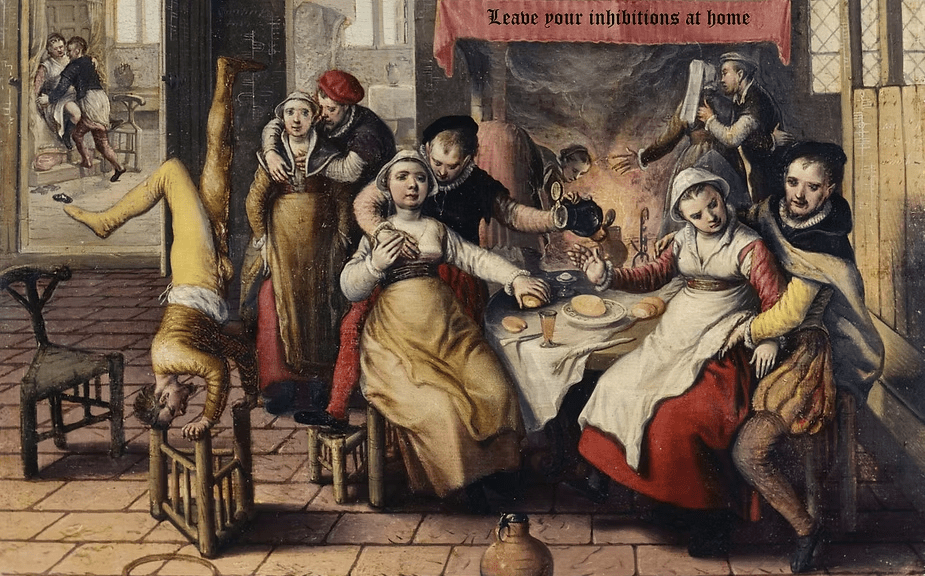
Does the color of the lighting say something?

Paul wrote, “Do you not know that whoever is united to a prostitute becomes one body with her? For it is said, “The two shall be one flesh.”’ That example can be applied to anything the body becomes joined with in a mortal life: food, dress, shelter, possessions, companionship, and sex.  A human being becomes one with that which the world offers: necessities and luxuries.  It is then up to the person to decide what becomes one with his or her body.

Life evolves as a series of inappropriate unions, which serve a purpose of some kind; but then the human body must learn to realize what is inappropriate and ween oneself from that union. One has to live as a sinner to fully appreciate how wrong that is, as experience speaks louder than words.  Thus, Paul wrote, “Such [sinners] were some of you; but you were washed, but you were sanctified, but you were justified in the name of the Lord Jesus Christ and in the Spirit of our God.” (1 Corinthians 6:11)

Because the body is created with sensing abilities, it is natural to feel the body and explore the sensations the world has to offer. That offering is external to the physical body, so the body senses what is near it (hearing, sight, touch and smell) and what enters it (taste and touch). The body’s sensations evoke a gamut of emotions in the brain, which activates bodily reactions.

Many emotions are natural, but some are artificial.  They align with the functionality of the brain.  The human brain’s capability to create experiences, more than adapt to the natural environment, is what separates human beings from animals; but human reason can plot to create emotions unnaturally, in particular those that are pleasurable.  An excess of any one emotion causes the human brain to become desensitized to it, causing the body to want more of that emotional stimulus. This leads to self-caused addictions to sensations, which takes the body far beyond natural acts of preservation, security, and emotional stability.

So, if one wants to get drunk and root for a football team and then beat the wife if the team loses, then go for it. If someone wants to be a homosexual or effeminate and have sexual acts with someone of the same sex (homosexual referred only to males), then go for that too. If someone wants to go to a prostitute or sleep with your father’s wife [1], then go for those as well.  Just understand that no one is forcing anyone to pretend to be Christian, as a justification of unstable emotions. There are no laws written into books that spell out what Christians can or cannot do. However, IF one IS Christian, then one will hear the voice of God telling that one to “SHUN FORNICATION!” [2]
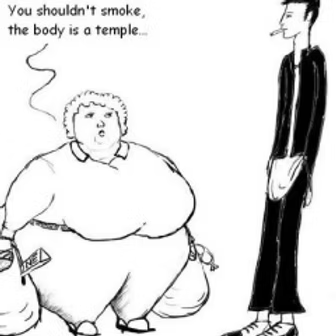
Paul wrote, “Know that your body is a temple of the Holy Spirit within you.”  To desecrate that temple for temporary pleasure is to create a temple to evil.  Beyond the ordinary definition of “fornication,” any addiction to prescription drugs, package store spirits, or even tobacco, all which are legal to purchase, is like exceeding the limits allowed within a temple that serves the One God.  Sex is fulfilled by one’s marriage partner, just as “getting high” has its proper place and time.  Anything more than natural is fornication.

It is important to see this selected reading in the context of the accompanying readings that are designated for the second Sunday after the Epiphany. The Old Testament reading is about the boy Samuel being called by God, when he had never heard that call prior. He kept going to Eli the prophet, saying “Here I am,” until Eli told Samuel it was the voice of God he was hearing. The Gospel reading is John telling of Jesus gathering his first disciples, where Jesus said to Nathaniel, “Behold, an Israelite indeed, in whom there is no deceit!” Nathaniel then told Jesus, speaking from the Holy Spirit, “Rabbi, You are the Son of God; You are the King of Israel.” This reading links to those as statements that true servants of the LORD (Samuel, Paul and the Christians of Corinth, and Nathaniel) hear God’s voice and let that be what commands their actions. Thus, nothing written down as law will become either the motivation or the explanation for actions and inactions taken.

The law is always written in a way that blurs what is acceptable and what is forbidden, with lawyers trained in using the gray between the written lines to exonerate the guilty. The voice of God always leads one to act within His Law, regardless of what society sees as commonly acceptable. When one listens and obeys the voice of God, then one becomes righteous.

Righteousness is not common.   The unholy are the masses who commonly serve evil in the world. God calls His servants to be examples that will be beacons of light to the commoners, telling them that salvation is near.  Still, righteousness is not taught by external texts.  One has to hear the voice of God explain the text within.  That explanation is to pass on to others.  God does not call servants to presume to be God and forgive sinners on His behalf.

Only God forgives.  God sends Saints to enlighten the world about the sins that each and every human has to realize personally and then become responsible for.  Like John the baptizer, an Apostle can only wash the blindness away from a sinner’s eyes.  A baptizer cannot hand out the Holy Spirit.  Only a recommendation to repent can be freely given.  With true repentance (and that means ceasing further sin) will one greater follow – Jesus Christ within.  That, once again, is a personal Epiphany.

—————————————————————————————————–

[1] According to the reference I read, the Christians of Corinth had written a letter to Paul that included the revelation that one member was having sex with his father’s wife (a step-mother).

[2] Fornication is defined as, “Sexual intercourse outside of marriage.”  It is thus any and all forms of sex with another that is not designed to propagate, where the children will be raised with love and care and taught to serve the Lord.
1 Corinthians 6:12-20 – If only Christians could understand this

“All things are lawful for me,” but not all things are beneficial. “All things are lawful for me,” but I will not be dominated by anything. “Food is meant for the stomach and the stomach for food,” and God will destroy both one and the other. The body is meant not for fornication but for the Lord, and the Lord for the body. And God raised the Lord and will also raise us by his power. Do you not know that your bodies are members of Christ? Should I therefore take the members of Christ and make them members of a prostitute? Never! Do you not know that whoever is united to a prostitute becomes one body with her? For it is said, “The two shall be one flesh.” But anyone united to the Lord becomes one spirit with him. Shun fornication! Every sin that a person commits is outside the body; but the fornicator sins against the body itself. Or do you not know that your body is a temple of the Holy Spirit within you, which you have from God, and that you are not your own? For you were bought with a price; therefore glorify God in your body.

———-

Here are a few of the words used in the above reading (as translated by the NASB):

lawful, fornication, bodies, prostitute, and sin.

In Greek, those words are: exestin, porneia, sōmata, pornēs, and hamartēma.

Included with those words is Paul telling the Christians of Corinth (symbolically everyone who God intended this epistle to be read thereafter – you) about the natural state of union: Food is meant for the stomach and the stomach for food; The body is meant not for fornication but for the Lord, and the Lord for the body; God raised the Lord and will also raise us; whoever is united to a prostitute becomes one body with her; two shall be one flesh; anyone united to the Lord becomes one spirit with him; and, your body is a temple of the Holy Spirit within you.

All of this duality reflected in the words of Paul says there is a right way and there is a wrong way. When he said “All things are lawful for me,” he then added “not all things are beneficial.” When he said, “Food is meant for the stomach and the stomach for food,” that says all things have a purpose. The implication is God made both stomachs in mortal creatures and God made food for mortal creatures to eat and digest in their stomachs; therefore, “God will destroy both one and the other.” Everything made by God on His green earth is seasonal: it comes and it goes, as by natural design, intended by God.

Of that “natural selection,” Paul said, “The body is meant not for fornication but for the Lord, and the Lord for the body.” Paul was writing a letter to others like him, those who were true Christians and not just a bunch of heathens thinking he or she could gain some benefit from going to listen to Paul speak his epistles out loud. To affirm that targeted audience, Paul asked a rhetorical question, which (in essence) states how a true Christian is measured by God. There he stated, ” your body is a temple of the Holy Spirit within you, which you have from God … you were bought with a price; therefore glorify God in your body.” That is the measure of all true Christians, then and today and for all times.

It seems that Christianity in the West, in particular in the United Snakes of America, the only words remembered from this reading are: “All things are lawful for me.” In that statement, the word “exestin” would be better translated as “permitted,” or better yet as “possible.” The law or the legality of what could be done is a moot point. Paul was a Roman citizen, although also a Jew, which meant anything permissible by Roman laws was good to go for a Roman citizen. Paul, being a Jew, was limited in what he could do, relative to Mosaic Law; but still, that is not what Paul was saying.

Paul was saying he had a penis [a sex organ that tingles with delight sometimes] and although it was possible for him to stick his penis in someone’s mouth [human or animal], or up the anus of another [again, human or animal], or in the vagina of a hooker … that was all possible physically; but it was not beneficial to his soul. While Paul later implied sticking a penis in a prostitute was possible, when he asked “Do you not know that whoever is united to a prostitute becomes one body with her?” he was saying your soul merges with whatever your body leads it to merge with.

When Paul ended this reading with the statement (one made to other true Christians), “you were bought with a price,” that applies to everyone, no matter how perverted one is. You pay the price for the actions of the body. That price is a soul.

The word written that has been translated as “fornication” (“porneia“) also can translate literally as “whoredom” and metaphorically as “idolatry.” (Strong’s) HELPS Word-studies says of the word: “[It] is derived from pernaō, (“to sell off”) – properly, a selling off (surrendering) of sexual purity; promiscuity of any (every) type.” This means to limit that meaning to simply “sexual intercourse between people not married to each other” (the Oxford Dictionary definition of the English word “fornication”) is to miss the widescale meaning that selling one’s soul for whatever it is the world offers the body to wallow in.

When Paul wrote “sōma,” “sōmati,” and “sōmata,” words that translate as “the body, body, and bodies,” it is easy to know the reality of one’s flesh and know food goes in the stomach and sex organs mesh pleasurably with other sex organs, and fail to realize the spirituality of his using an extension of those words when he wrote “melē Christou” – “members of Christ.” It is missing the point to think of a physical “body” as a church, when a brick and mortar building, or a network of buildings each run by some brain in a human body writing the rules that say what an organization finds permissible in its “members” (where membership comes with a price called tithes), cannot receive the Holy Spirit. Buildings and institutions are not “bodies.”

The meaning of a “body” is one that is alive. The Greek word for a corpse is “ptóma,” where that translates specifically as a “dead body” or “carcass” (Strong’s) Still, that word “ptóma” (very similar in sound to “sōma“) also has the primary meaning that states “a fall, hence a misfortune, ruin.” (Strong’s Concordance). When one sees how the figurative meaning for “sōma” is “the mystical Body of Christ (= the Church, the one people of God)” (HELPS Word-studies), the implication is a “body” that is alive because of the “mystical” presence of the Christ Spirit.

A “body” is only alive because it has a soul – the breath of life that in Hebrew is “ruach” or “ruah.” That is the true “member” (“melos“) of importance in a living “body.” It is not one’s lips, tongue, eyes, mouth, throat, stomach, anus, penis, vagina, or any other part of flesh, because all of that is nothing more than parts of a corpse waiting to happen – KNOWN TO HAPPEN because human beings are mortal bodies of flesh, hung around eternal souls of life. Still, a soul is single. A soul needs to find union … which is the theme of duality Paul states in this reading.

When God breathes a spirit (“ruach“) into a body of flesh, the flesh grows and grows, so it surrounds and envelops the soul, with the soul feeding that growth. In this process that mankind has deemed to be “biological,” a brain becomes the central organ, through which all commands of God are received and transmitted throughout the developing body. In this normal growth and human development, the brain slowly begins to take control over the soul, eventually making the soul a slave to the body’s wants and desires, beyond its essential needs. Once a body of flesh reaches a point of development called “puberty,” the sex organ kicks in big time. The natural purpose of this law of nature is for creating babies, as an innate drive for survival of the species; but, as Paul said about all things being possible, the brain can be usurped by Satan’s voice, keeping the soul from hearing the voice of God. Thus, not all things are beneficial for the growth and development of the soul, once the body has taken full control.

This is where one needs to understand the meaning of “pornēs” or “prostitute.” This word can mean “harlot” (Strong’s), but the word’s use in the New Testament is universally read as meaning “any woman indulging in unlawful sexual intercourse, whether for gain or for lust.” (Thayer’s Greek Lexicon) That brings out the feminine essence that needs to be explained; but let me first point out the similarity to this word and “porneia” (“fornication”). Just as “porneia” was metaphorically a statement about “idolatry,” so too does “pornēs” have the same metaphorical meaning.

Now, as to the feminine essence that “prostitute” (“pornēs“) yields, the metaphor of the duality of a living body – body with soul spirit – is this: Flesh equals earth, physical, material, such that a body is feminine in essence; and, Soul equals spiritual, invisible, immaterial, such that a soul is masculine in essence. By understanding that metaphysical aspect, the body is what receives the spirit of life, just as a vagina opens and receives a penis. Rather than make it seem like female human beings are the only life forms that can prostitute their bodies, it is important to realize that all humanity is a collection of prostitutes.

The primary definition of “prostitute” [Meriam-Webster] is “a person who engages in sexual intercourse in exchange for pay,” where no human gender is applied. The axiom most adults know is: The world’s oldest profession is prostitution. (Again, without any human gender being assumed.) The key element of “prostitution” is then based on personal profit, which mostly is measured in some form of monetary exchange; but some people may profit emotionally or physically, if addicted to sex, rather than money. This needs to take one’s mind back to Paul saying, “not all things are beneficial,” where moolah and tingly feelings might seem beneficial, but the benefit is fleeting, thus on the grand scheme of things temporal. Temporal things always leave a body wanting more.

All things human are thus possible, but not all possible things are beneficial. All things human (the capitalized importance of “Panta“) are then all things created by humans, where human beings become the parts or members of those things created. When Paul says “members of Christ” and those calling themselves “Christians” interpret that as an organization created by human beings, called a “church” (but denominational and separate from other bodies called churches, all with their own “lawful things permissible”), the reality is all things created by human beings are feminine in essence and therefore prostitutes because they profit in some way (moolah or pleasure), usually by playing God on earth, speaking for some external man known as Jesus.

In my history of writing articles on blogs, I have come down hard and heavy on all those prostitutes that call themselves popes, because they are the furthest from being filled with the Holy Spirit a human being can be. The whole pope thing began because someone misconstrued Jesus telling Peter he would be his rock [“Petros” means “Rock”] and some others figured out the cornerstone statement, so brains came together and figured out Saint Peter was like the first pope, even though he was never a member of the body [organization] called the Roman Catholic Church. Peter, like Jesus and like Paul, never found reason to build a new building and call it a church. Paul never wrote to a building in Corinth, Ephesus, or Colossae. He wrote to people filled with the Holy Spirit, who met together as many people with the same Christ Mind, all reborn in the name of Jesus Christ. The Emperor of Rome saw a need to change directions, in order to keep profiting from the little guys of its world, so it decided to start calling its emperors popes.

Well, let me just add here that the Roman Catholics are not the only group of human beings with organizations for profit that have false shepherds acting as leaders that have the magical ability to know what Jesus would say, if Jesus were alive today. One of such churches is the Episcopal Church [whatever name it officially goes by now, after it became so disgusting itself splintered into another denomination of a similar name], the one with Michael Curry named as the presiding bishop. He is nothing more than the head prostitute [do they call those Madams?] of a prostitution ring. Beside the fact that Mister Curry is parading like some political celebrity negro [he married the bastard Harry boy to the mulatto Meghan in some cathedral in London and now has opinions about crucifying Donald Trump in Washington D.C.] that benefit (as a leader of an “organizational body” calling itself a church) can only be seen as such because so many white Episcopalians are so guilt-ridden over being white that they will sell what’s left of their souls for a non-white (from Chicago) to be presiding bishop over them, simply to keep them from being afraid to go to the Target or Walmart and mix with peoples of color. Mister Bishop Curry took the place of a presiding bishop that was openly gay [maybe two: 1 male, 1 female?], who supported a bishop who denied Jesus ever lived [his name sounds like a virus – Spong]. So, the Episcopal Church has all its members of its body kneel at the rail each Sunday and open an orifice so it can be filled with some penis of social injustice and political punishment.

This mistreatment by organizations whose creators and members call their groups “religious,” based on an ability to proclaim “All these things we believe make them lawful to us to do and remain religious,” is little more than enslavement of people as prostitutes. This is actually why Paul asked the question and then immediately answered it: “Should I therefore take the members of Christ and make them members of a prostitute? Never!”

When Paul then continued, saying “Do you not know that whoever is united to a prostitute becomes one body with her? For it is said, “The two shall be one flesh,” you are who you lie down with. If you submit yourself to an organization, then how can you then submit yourself to God … without being called a prostitute? When Jesus said you cannot serve two masters, he was referring to the Jews who bowed down before the Temple leaders and did what they said to do, rather than bow down before God and let Him lead them submissively through life.

One has to be able to read Paul’s writings and see how him stating “anyone united to the Lord becomes one spirit with him. Shun fornication! Every sin that a person commits is outside the body; but the fornicator sins against the body itself” as meaning “fornication” is not having physical sex with anyone, IT IS WORSHIPING A CHURCH AS AN IDOL. Any church leader who says, “It is okay to suck penises or kiss labia out of wedlock, because I speak for Jesus” is a fornicator; and, anyone who believes a fornicator is a prostitute looking for a good time.

This is where understanding “sin” becomes vital. The Greek word “hamartanó” translates as “sin,” but more often means “miss the mark, do wrong.” (Strong’s Concordance) The roots of the word say, “properly, having no share in.” (HELPS Word-studies) By understanding this, when Paul wrote “Every mistake that a person commits is outside the body; but the idolater misses the mark against the body itself” … that says humans are born flawed, prone to make mistakes, thus always led to sin. However, when one begins to enjoy missing the mark, finding pleasure and profit in all those tingly sensations the world brings upon one’s body, then one begins searching out those who justify one’s sinful way of life. For a homosexual to go to an Episcopal church and think God has forgiven all his sins is akin to a drug addict going to a drug dealer who has free samples … temporarily (until you can sell your body for the money to pay for the next fixes). Finding someone who tells you what you want to hear is only going to benefit the one using an idiot with no backbone and a weak soul.

When Paul then asked the true Christians he knew in Corinth if they knew “your body is a temple of the Holy Spirit within you, which you have from God, and that you are not your own?” that said one who is filled with the Holy Spirit of God is married to Him and has given birth to His Son within their flesh, as a companion that leads their soul. The human organ called a brain no longer leads the body to seek pleasurable and profitable experiences that come and go, as quickly as they came. The brain’s self-ego has bowed down before the true Lord, knowing all things might be possible, but all things are not to be done. The soul is not left alone to fight against the wants and desires of a body that is as fleshy as is the brain. The presence of Jesus Christ means the brain becomes an organ that only acts as designed by God, just like every other body part. That means the High Priest of one’s body is no longer a Satan influenced brain, but the Mind of Christ. That means the Ark of the Covenant has become one’s heart, upon which God sits and all Law is therein written. One no longer needs an organization to explain the rules, which they make up as they go along, making sure they make the most in that exchange.

When Paul ends this reading by being shown to say, “For you were bought with a price; therefore glorify God in your body,” it means a true Christian has sold his or her soul to God Almighty, the true owner of that breath of life. The price paid is the price of servitude and obedience. One has to prove one’s merit to God, which comes by showing one wants to learn what Scripture says. This can mean being educated in an organization that calls itself religious. It does not matter what sect, form, or denomination that is, as none of the leaders will have their names as the author of any holy books. The truth is always in the words written, but one needs to get rid of all laziness and search for that truth, which means looking up words, asking others what they think, or asking close advisors what they see the meaning being. Sitting in a pew and thinking receipt of the Holy Spirit comes as easy as laying in a tanning bed for a tan won’t cut it.