
Beloved, let us love one another, because love is from God; everyone who loves is born of God and knows God. Whoever does not love does not know God, for God is love. God’s love was revealed among us in this way: God sent his only Son into the world so that we might live through him. In this is love, not that we loved God but that he loved us and sent his Son to be the atoning sacrifice for our sins. Beloved, since God loved us so much, we also ought to love one another. No one has ever seen God; if we love one another, God lives in us, and his love is perfected in us.
By this we know that we abide in him and he in us, because he has given us of his Spirit. And we have seen and do testify that the Father has sent his Son as the Savior of the world. God abides in those who confess that Jesus is the Son of God, and they abide in God. So we have known and believe the love that God has for us.
God is love, and those who abide in love abide in God, and God abides in them. Love has been perfected among us in this: that we may have boldness on the day of judgment, because as he is, so are we in this world. There is no fear in love, but perfect love casts out fear; for fear has to do with punishment, and whoever fears has not reached perfection in love. We love because he first loved us. Those who say, “I love God,” and hate their brothers or sisters, are liars; for those who do not love a brother or sister whom they have seen, cannot love God whom they have not seen. The commandment we have from him is this: those who love God must love their brothers and sisters also.
—————————————————————————–
This is the Epistle selection from the Episcopal Lectionary for the Fifth Sunday of Easter, Year B 2018. It will next be read aloud in church by a reader on Sunday, April 29, 2018. This is important because John goes into great detail about the love that is the bond between a Saint (Apostle) and God, which brings about the Resurrection of Jesus Christ within those lovers. John also makes it clear that not everyone knows this love of God.
In the 326 words of this reading selection, the word “love” (or “loved) appears 27 times (roughly 8.3% – a high frequency), according to this English translation. According to the Greek text, variations of the words “agapē” or “agapō” are found. The breakdown is as follows: agapē – 15 times; agapō – 1 time; agapōn – 4 times; agapōmen – 3 times; ēgapēkamen – 1 time; and ēgapēsen 3 times. Those words translate into (in order of listing here): love; [I] love; loving; [we should] love; [we] loved; and [he] loved. These are in addition to the two times John referred to the recipients of his letter as “Beloved” (“Agapētoi”), which addresses the objects of one’s love.

This preponderance of words placing focus on “love” is reminiscent of the translation of John 21:15-19, where Jesus and Peter had an exchange about “love,” when Jesus told Peter to “feed my lambs,” “shepherd my sheep,” and “feed my sheep.” The reality of the Greek in that selection is that Jesus asked asked Peter twice, “agapas me pleon toutōn?” (“Do you love me more than these?”) and “agapas me?” (“Do you love me?”), using the word “agapas.” The word “agapas” asked in the second person singular, “do love you.” The response Peter gave to those questions was the same each time: “sy odias hoti philō se.” (“You know I have affection for you.”)
The word “philō” says, “I have affection for.” In a reading where it is important to see oneself as Peter, which makes it YOU who was asked by Jesus Christ, “Do you love me?” One then has to see how one, like Peter, will hear the question and respond to the question of love as if asked, “Do you have human affections for me?”
That reading demonstrated how there is a difference between LOVE and the warm, fuzzy feelings that a human brain automatically thinks to remember, when that word (in all its shapes and forms) is heard. What John was writing about in his epistle goes beyond the physical sensations that are interpreted as “love” and explains the Spirituality of LOVE that is so much more. That is why Jesus asked Peter if he understood what “love” meant, but Peter (not yet filled with the Holy Spirit) was blinded from seeing the intent of Jesus’ question.
That prompted Jesus to ask Peter a third time, “phileis me?” (“Do you have affection for me?”) That time Peter (who was grieved at having been asked the same question about love three times – remembering that Peter had denied knowing Jesus of Nazareth three times) said, “panta sy odias” (“all things you know”) , “sy ginōskeis hoti philō se.” (“you realize that I have affection for you.”) Peter responded (according to John) with two different words that translate as “know.”
Each time Jesus heard Peter’s answers, Peter had equated “love” to caring for others. Peter was like all those disciples who loved Jesus. Still, Peter failed to grasp the significance of what questions about love demanded as acts that proved Spiritual love and human affection for family.
When Jesus said “feed my lambs,” he meant give the knowledge (food for thought) of God’s love to those newly in the fold (newborn sheep), who are then hungering for it. When Jesus said, “Shepherd my sheep” (or “Tend my sheep”), he meant to support those who would grow into Apostles and Saints, in the name of Jesus Christ, with God’s love. When Jesus then to Peter to “have affection for” him by “feeding my sheep,” he meant for Peter to show human feelings toward other Christians, as a support form of God’s love. In all cases, the follow-up Jesus made, using my, projected Peter as being Jesus Christ, through the love of God. Thus, the question, “Do you love me?” is also a command: “You do love Peter,” when you become “me.” Therefore, Jesus said, “When you become me via God’s love, you as me will feed and shepherd lambs and sheep as I have done with you.”
The conversation John remembered, via the Holy Spirit, was the same that Jesus has with all disciples that are about to be tested as metal is proved by fire. It is the conversion requirement all true Christians will face. The irritation Peter displayed (as felt by John), where he mildly snapped at Jesus, “You know all things,” represents the hesitancy disciples have receiving God’s love. Still, to be Christian, one cannot expect God knows all things, so words of “affection” prove a commitment of the heart. After all, Peter – Jesus’ lead disciple – still held onto the raw guilt of having denied “knowing” this man three times. It is easier to deny “knowing Christ,” than it is to receive God’s love.
For John to use Greek to recall a conversation most likely held in Aramaic, where there may or may not be different words for “love,” one must realize John wrote both his Gospel and his epistles from the Christ Mind. John, therefore, knew the intent of the questions, by knowing the mind of the questioner. The Greek then becomes a guide to find the intent and purpose, from language subtleties.
Again, this lesson shows the differences of speech and language that the human brain misses (like Peter’s had). It is human tendency to think we understand the words, when in reality we do not. Three times Jesus asking the same question is symbolic. His changing of terms is also symbolic. The exchange between Jesus and Peter says we can depend on our human emotions as signs of our Christianity, hearing “love” in human ways. However, because we have not yet elevated our minds to spiritual abilities to truly grasp the meaning of LOVE, it becomes easy to mistake the love in Jesus (from God) as a lesser human emotion.

From this understanding, look at what John wrote, by taking his explanations of love and examining the meaning, step by step.
First, John wrote, “let us love one another, because love is from God.” That is not explaining that love is a physical attraction to someone, due to increased levels of hormones making one’s head swell from desire to have sensual contact with another. That becomes a human emotion that stimulates outreach to another, where the cause is based on laws of attraction and not based on love from God. That is a low concept of “love,” because sensual “love” is fleeting, always seeking new sensual experiences.
To love another because love is from God means one emits God’s love to another, simply by one being in love with God. God’s love becomes one with the core of one’s being, which naturally projects outwardly to others, attracting them to one. The misunderstanding of “love” is to seek external sources that fill one’s inner lack. Thus, without God’s love within, one is incapable of projecting anything other than human feelings to another, which will be a love that changes (like emotions do) to varying levels (or definitions) of love.
To understand this concept better, I recommend reading The Path to Love, by Depak Chopra. (Disclaimer: Depak Chopra may not claim this love source to be identified as the One God, the Father of Jesus Christ, but his concept is valid as sourced within, not external.)

Second, John wrote, “everyone who loves is born of God and knows God.” This is actually a divided statement in the Greek, with a comma separating the two. It should be read as: “everyone loving , from God has been born.” This has a double meaning (as Scripture has intended multiplicity), where true LOVE is not something that adult human beings freely exude. As babies (having been born into the world), love is natural and from God. Everyone is naturally attracted to infants and babies. Over time, however, this love becomes hidden and diminished, eventually lost and confused with a plethora of human feelings that make it difficult to mentalize what “love” means. Therefore, the dual aspect here is being reborn as Jesus Christ, which comes from the love of God having been born again.

Third, John wrote, “Whoever does not love does not know God, for God is love.” The Greek word “egnō” is used here, as a form of “ginóskó.” which means “has known.” Thus, “has not known God” means to have not personally experienced God. It is a word that is at the root of “Biblically know,” which has sexual connotations, but really implies two who have never joined together as one have not known the other … even though the two recognize each other. When John said, “God is love,” the meaning is Spiritual love requires one having been joined with God as one, as the prerequisite for being able to love.
Fourth, John wrote, “God’s love was revealed among us in this way: God sent his only Son into the world so that we might live through him. In this is love, not that we loved God but that he loved us and sent his Son to be the atoning sacrifice for our sins.” As a Saint, John was speaking for all Apostles of Christ, who all had “God’s love revealed in this way” of becoming one with God. It says that God’s love is what brings forth the presence of His Son, Jesus Christ, “so that we might live through him.”
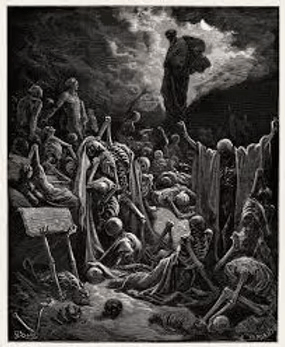
Living as the Resurrection of Jesus Christ is how one comes to know God’s love. It was “not that we loved God,” because human beings know only the changing emotions of which “love” is one of many. Human beings are therefore incapable of loving God before He loves them. Through submission to God, in a way that never tries to be equal to God … always saying, “You know” (ex.: Ezekiel 37:3), with head bowed down … God will love us by joining His love to us. Only by receiving His Son, sent by love, can one’s sins be atoned through the sacrifice of self to God, allowing one to become holy, which is what warrants the presence of the Savior … as a Saint.
Fifth, John wrote, “Beloved, since God loved us so much, we also ought to love one another.” This says John wrote to another Saint, who was likewise loved by God. The correct translation from the Greek is, “If so the [one] God loved us,” where the condition of love is from “atoning sacrifice” (Greek “hilasmon“), that gift is not for one, as many have been harmed in one’s history of angering God. Thus, “since God loved us so,” that love is not to be held selfishly.
Just as Jesus was send by the Father to offer salvation of sins to all who know God, that presence cannot be limited. By saying, “we ought to love one another,” there is a debt of thanks owed by each Saint. That debt is repaid by loving support of one another; and that is the essence of a Church of Jesus Christ, whose cornerstone is the love of God, through His Son. We shine a light that attracts the sinful to salvation (feed the lambs); we guide the disciples to receive the Spirit (shepherd the sheep); and we love one another as ourselves (feed the sheep).
Sixth, John wrote, “No one has ever seen God; if we love one another, God lives in us, and his love is perfected in us.” When John said, “No one has ever seen God,” this is the reality that the Spiritual and Heavenly is beyond the detection of physical sense organs, such as eyesight. This is the meaning of God telling Moses, “You cannot see my face, for no one may see me and live.” (Exodus 33:20) That means human beings can only face God after death, through the soul’s sense of sight; and then that can only be by wearing the face of God, as the righteousness of His Son, Jesus Christ. Therefore, we do not know God by sight. We know God through the new life given to us by the presence of His love.

That brings the desire to support the lives of others who have the same love of God in them. This means that when God lives in us, then we are alive in His love, with the “perfection” being the “completion” (the Greek word “teleioó”) of the Trinity within each Saint, where each have the love of the Father, as the Son reborn, through that presence sent via the Holy Spirit.
Seventh, John wrote, “By this we know that we abide in him and he in us, because he has given us of his Spirit. And we have seen and do testify that the Father has sent his Son as the Savior of the world. God abides in those who confess that Jesus is the Son of God, and they abide in God. So we have known and believe the love that God has for us.” This more fully states the reason for saying, “his love is perfected in us,” by reading the Greek literally. In that way it states (in translation), “The love of him having been perfected in us is.”
The word “is” is a statement of “being.” We have meaningful being through the Trinity – we in him and him in us, through the Spirit. The creation of Saints (reproductions of Jesus Christ in human form) allows God to speak through His Son (as we do testify), and the Saints then confess “that Jesus is the Son of God, and they abide in God,” as the Son reborn. That union as One is “so we have known and believe the love that God has for us.”
This is the essence of “being there.”

Eighth, John wrote, “God is love, and those who abide in love abide in God, and God abides in them.” The first segment of this verse is often repeated – “God is love” – so much so that many Sunday sermons have taken those three words alone and preached them alone as the intended meaning of this reading. God is not the same “love” that human emotions know and which everyone in a congregation hears and identifies with having felt. However, when one adds the remainder of the verse, one knows the completeness of “God is love,” where one knows that presence of God within, as to abide in God, with God One with a Saint. That is to truly know love.
Ninth, John wrote, “Love has been perfected among us in this: that we may have boldness on the day of judgment, because as he is, so are we in this world.” This verse is separated into four parts by three commas, rather than the presence of a colon and two commas. The literal translation of the Greek adds more insight into the intent of this verse (17).
Literally it states, “In this has been perfected [the one] love with us , that confidence we might have in the day of judgment , that even as he is , also we are in the world this.” Again, the “perfection” is the joining of three as One – Father, Son, and Holy Spirit. We abide in the Father and He in us, bringing about the Resurrection of the Son as us, through the power of the Holy Spirit in our souls. Just as Jesus of Nazareth was God incarnate, so are all Saints in his name.
The day of judgment is the death of a mortal body (our personal “end of the world”); but with a saintly presence, as Jesus Christ reborn, our souls are confident not to return to the earthly realm (via reincarnation). Just as was the righteousness of Jesus Christ, as God incarnate, we are also Jesus Christ in this world (as many have been, are and will be) … when we have been perfected by the love of God with us.

Tenth, John wrote, “There is no fear in love, but perfect love casts out fear; for fear has to do with punishment, and whoever fears has not reached perfection in love.” Human beings are mortal creatures, which mean their bodies are temporal and destined to cease having a capability to support physical life for a spiritual soul. Once one learns to fear, one loses touch with the God love one is born possessing. Fear is a human emotion, much like doubt, shame, guilt, and remorse; but fear is felt and then repressed, just as is human “love.”
There is no fear in God, so there can be no fear in the Saints with whom God unites His love. The unity is the perfection of the Trinity, such that love casts out fear in the One. The fear of punishment is the soul’s fear of reincarnation (or worse – eternal damnation). Thus, anyone who fears anything (except God) is afraid of His judgment at a human host’s death. Such doubts being present means that one’s soul has not “reached perfection in love.”

Eleventh, John wrote, “We love because he first loved us.” We are loved by God when our soul is allowed reentry into a human form, as a newborn. We are therefore first loved before our brains develop beyond a point that keeps it from knowing love. The time spent living acts to pare away the love of God from us, as sins bring fear, doubt, remorse, guilt, and shame (all human emotions), which takes the place of God’s love. We live as children and adults thinking “love” is occasional moments to cherish, as God’s reward for the good things we do; but that is not God’s love. Only when we submit ourselves to God can we first know God’s love as having been reborn back into our souls.

Twelfth, John wrote, “Those who say, “I love God,” and hate their brothers or sisters, are liars; for those who do not love a brother or sister whom they have seen, cannot love God whom they have not seen. The commandment we have from him is this: those who love God must love their brothers and sisters also.” This becomes a further assessment of what a true Church is. What a true Church is cannot be seen as a general collection of people who say, “I “love” God.” This is at the root of the argument over what defines one’s relationship with Jesus Christ: Faith or works?
The Holy Bible is primarily a work that tells the stories that project the living vine of God’s love, which led to Jesus Christ and his living vine Saints. The peripheral figures that come and go are like those who say they “love” God, but cannot produce the works or acts God demands. They cannot hear God’s voice, due to their own voices speaking to them so loudly. The Church that was originated by the God of Abraham, Isaac, and Jacob, devolved into the Judaic religion, which professes a “love” of God. From that (and due to that devolution) stems Christianity, the direct result of God’s Son, Jesus Christ. The original spread of Christianity has to be recognized as ONLY being based on the proclamation: “I love God,” from the truest meaning.
When the statement of John says that there cannot be a state of God’s love, if members of a Church are those professing devotion to the One God, but then saying or demonstrating otherwise means that “church” is a lie. To say, “We are Christians,” and then “hate their brothers or sisters,” those said to believe in Jesus Christ, is a lie of “love.” To profess Christianity without love means to be a disciple in need of a guide (someone to feed the lambs with love). God’s love raises oneself above the pettiness and mutability of human emotions, such that love cannot change with the winds of time. To say one “loves” God, but then “hates” another male or female within a congregation means one is a liar.

The Greek word written by John, “pseustēs” (“a liar”), says one is not telling the truth, which is a statement (the duality of meaning) of not knowing the truth, such that lying is a common state of flawed humanity. As such, an alternate translation can be “a deceiver,” where one’s rejection of God’s true love means one deceives others by saying “love” and preaching “hate.” That causes disciples to mistake human “love” for God’s love. However, the “deceiver” is more dangerous when seen as one’s punishment of oneself, where the denial of God’s love is mostly harmful to that self’s soul.
It is vital to realize that a “brother” and a “sister” are statements of familial relationship. As God’s love is the foundation of a Church, where the reproduction of His Son, Jesus Christ, IS the cornerstone of that Church. That resurrection in male human beings (“brothers”) and female human beings (“sisters”) means all members of that Church have been reborn as the Son of God, completely enveloped in God’s love. That righteous state of being joins with others in the same state, so true love is shared between all Saints, all brothers and sisters in God’s love alike. Therefore, when John wrote, “The commandment we have from him is this: those who love God must love their brothers and sisters also,” this is stating the rule that makes a Church true and strong.
A Church of Christ cannot have members that are not related to the other members, as family, born of the same Father, as the Son reborn in multiplicity. It can act as a place of refuge (a sheepfold), but all who enter the gate (Jesus Christ) must recognize the shepherd’s call to come to him. The sheepfold becomes discipleship, with the exit from it being one’s holy ministry with the Shepherd. Each individual is responsible for his or her own reception of the Spirit, meaning all must listen for the voice of Jesus Christ – their Shepherd. Once heard, one must act as the Good Shepherd, filled with God’s love.
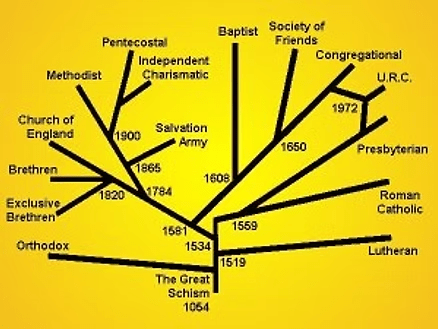
By understanding this truth about God’s love, one can then see that the Church of Christianity is only One, with no denominations. A separate denomination means the rejection of another denomination, where that rejection can be classified as “hatred.” The Greek word written by John, which has been translated as “hate” is “misē,” also means, “to detest (on a comparative basis); hence, denounce; to love someone or something less than someone (something) else, i.e. to renounce one choice in favor of another.” (HELPS Word-studies).
That definition source further presents the word’s usage as an example found in Luke 14:26. There the statement by Jesus, “If anyone comes to Me, and does not hate his own father and mother and wife and children and brothers and sisters, yes, and even his own life, he cannot be My disciple” (NASU).” The source above states how the word “miseo” translates better when meaning, “to love less than the LORD.” To be a disciple of Jesus, one must love God, first and foremost, with all others “loved” less (i.e.: “hated”). That interpretation then leads one to understand Jesus meant his statement was directed to all who would have a lesser concept of “love,” than the love of God. Familial love is the love of brothers and sisters in Christ, which may or may not include those who share physical lineage.
One cannot become the disciple of Jesus Christ if one cannot turn away from self and human emotions, and go beyond human relationships and physical bonds. To transform, one must seek to begin the process that brings about the love of God and the resurrection of Jesus Christ within oneself (one’s soul). When one submits to God in marriage, one is then welcomed into the Spiritual family that is the true Church. That personal Transfiguration means one has been transformed from disciple to saintly Apostle.

As a lesson during the Easter season, when one is in the process of transformation from disciple to Saint, when the love of God will elevate one above the changeability of human emotions to the steadiness of Jesus Christ, one must realize a need to sacrifice human dependencies and take a leap of faith. When one has a human view of family, one becomes lost in the justifications of one family’s way, versus another family’s way, even if multiple families propose to be going in the same direction – to God, through Jesus Christ. Human paths lead in circles, which mean the birth, death, reincarnated rebirth cycle for eternity. This is opposed to a straight path of heaven and eternal life for a forgiven soul. The threshold to that path and the path one must find is God’s love.
————————————————————————–
In the title of this article is a modification of the song by The Beatles – All You Need Is Love. The lyrics of that song make it clear to understand the total misinterpretation of love they intended, where the hippy-dippy days of peace and “love” had nothing to do with Christian Spirituality.

The multitude of Christian denominations are confused today about love because of this past focus on human “love” being the answer that had been missed since Jesus died. When the Beatles suggested “love is all you need,” that was more a political recommendation than a demand to submit oneself to God, the Father of Jesus Christ. No human “love” can fix a world that has always been in “love” with “hating” one another.


 Explaining the Readings