Tag Archives: 1 Kings 17:8-16

1 Kings 17:8-16 – Make God a little cake to eat

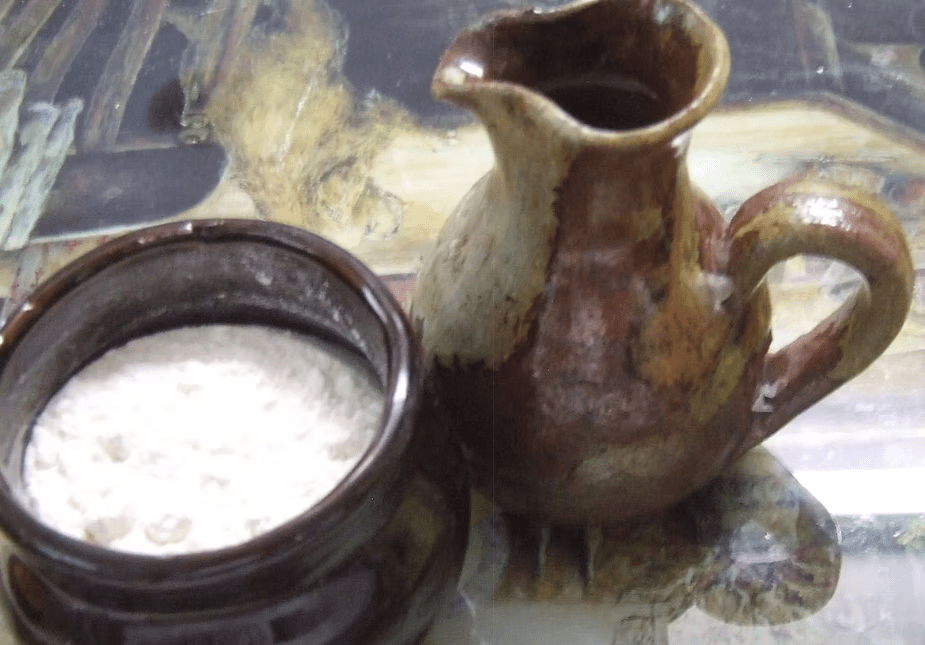
The word of the Lord came to Elijah, saying, “Go now to Zarephath, which belongs to Sidon, and live there; for I have commanded a widow there to feed you.” So he set out and went to Zarephath. When he came to the gate of the town, a widow was there gathering sticks; he called to her and said, “Bring me a little water in a vessel, so that I may drink.” As she was going to bring it, he called to her and said, “Bring me a morsel of bread in your hand.” But she said, “As the Lord your God lives, I have nothing baked, only a handful of meal in a jar, and a little oil in a jug; I am now gathering a couple of sticks, so that I may go home and prepare it for myself and my son, that we may eat it, and die.” Elijah said to her, “Do not be afraid; go and do as you have said; but first make me a little cake of it and bring it to me, and afterwards make something for yourself and your son. For thus says the Lord the God of Israel: The jar of meal will not be emptied and the jug of oil will not fail until the day that the Lord sends rain on the earth.” She went and did as Elijah said, so that she as well as he and her household ate for many days. The jar of meal was not emptied, neither did the jug of oil fail, according to the word of the Lord that he spoke by Elijah.

———————————————————————————————————-

This is an optional Old Testament selection from the Episcopal Lectionary for the Twenty-fifth Sunday after Pentecost, Year B 2018. In the numbering system that lists each Sunday in an ordinal fashion, this Sunday is referred to as Proper 27. If chosen, it will next be read aloud in an Episcopal church by a reader on Sunday November 11, 2018. It is important because it tells a story of faith being rewarded by God.

This is not the primary Old Testament reading selection, which means it will probably not be read in most Episcopal churches on the twenty-fifth Sunday after Pentecost. It is obviously chosen, however, because the message is centered on a widow woman, which is half of the focus in the Gospel reading of Mark 12. The alternative Old Testament reading selection (from Ruth 3 and 4) also deals with a widow (two actually: Naomi and Ruth) and a son, although they are not named as widows and the boy is a birth celebrated by a new marriage to a widow.

That theme of a widow with child is more pronounced here in 1 Kings. It should be read as symbolic of Mary and Jesus, as a prophecy of God protecting that most holy lineage. In the story of Ruth, Obed was the child born from her marriage to Boaz. Obed would be the father of Jesse, who would be the father of David. The same preservation of a bloodline is stated here in 1 Kings, although the woman and her child are nameless.

When this reading begins, “The word of the Lord came to Elijah,” Elijah is not named in these verses. It is understood that “to him” (Hebrew “’ê·lāw”) means Elijah, from his name having been mentioned earlier in chapter seventeen. The reading is best translated to begin by saying, “And came about the word of Yahweh.” While Elijah was a prophet of the Lord, one who heard the Word, the Word of God was a presence that was not limited “to him” alone.

Because this is a story of God speaking to Elijah, it is worthwhile to realize that the name “Elijah” means: “Yahweh is God” or “Strength Of The Lord.” Every story of Elijah is then one that shows the STRENGTH [this is the meaning of the name “Boaz”] of YHWH in a human form in worldly settings. Elijah had been sent “east” by Yahweh, after he confronted Ahab about his wicked ways, where Elijah could find safety. Ravens brought food to Elijah each day that he was in a place Ahab could not find him.

The setting now has God telling Elijah, “Go now to Zarephath, which belongs to Sidon, and live there.” Zarephath was a “Phoenician village that belonged to Sidon and was located in the northern extremity of Canaan.” Its name means, “Workshop For Melting And Refining Metals” or “Smelting Place.” Sidon was a “town a little over a day’s journey north of Tyre.” Based on the name meaning, “Sidon” was a “Fishery” or a “Place Of Fish.” Zarephath was between the two towns, but under the rule of Sidon.
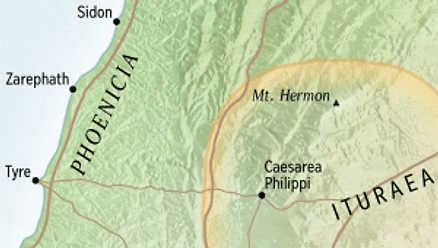
One way to look at Zarephath is as a place where raw ores and other materials were placed in a furnace and transformed from separate solids to a unified molten liquid.  This liquid would then be poured in shapes, such as ingots and bars, for easy handling and shipment elsewhere.  The production of refined [purified] metals [most likely iron alloys] was hard work, with danger being ever-present from accidents from burning by molten rock or crushing under raw materials being offloaded and transported from a nearby pier [perhaps how the widow woman became a widow?].  Because it was the possession of Sidon [a larger seaport town], it could have smelted more valuable metals, such as gold, copper-bronze, tin-lead or any of the ancient iron alloys, depending on the number of smelting furnaces that were built there.  The symbolism of God telling His Prophet to “live there” should be realized as that where the metal of the widow woman’s heart would be tested for purity.

It also should be recalled that Jesus traveled to Tyre (Matthew 15:21), where he was confronted by a Canaanite woman that pleaded with Jesus to heal her demon possessed daughter (Matthew 15:22). Jesus said he had only been “sent for the lost sheep of Israel.” (Matthew 15:24) The woman begged for help, causing Jesus to say, “It is not right to take the children’s bread and toss it to the dogs.” (Matthew 15:26) The woman agreed and then said, “Even the dogs eat the crumbs that fall from their master’s table.” (Matthew 15:27) Jesus was amazed at her having spoken via the Holy Spirit and said, “Woman, you have great faith! Your request is granted.” That story then says, “her daughter was healed at that moment.”

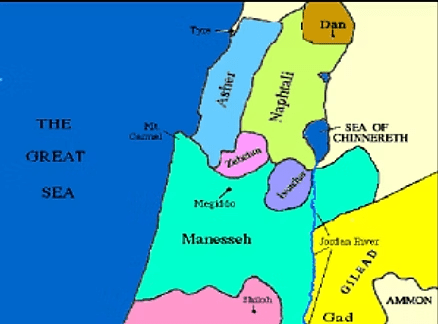
Because that story was of Matthew saying, “Jesus withdrew to the region of Tyre and Sidon” [Phoenicia], the implication could be that the mother traveled to Tyre to find Jesus, having left her daughter in Sidon, but the whole region had once been the land allotted to the Asher tribe.  It became an “alloy” of Israelite, Hittite, and Canaanite blood.
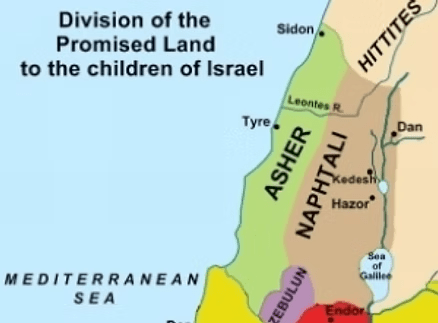
When God sent Elijah to the same region, the land that was once given by God to the Israelites had long been ceded to the neighboring Hittites, who later became the Sidonians and Phoenicians. This region is then symbolic of the outward reach of the Israelite faith, which remained true to Yahweh amid Gentile influence. Just as God sent Jesus into that mixed land, at a time when Jesus was sought by the evil rulers of the land, so too had God previously sent Elijah into the same mixed land for the same purpose of avoiding those searching for him.
When we read, how God told Elijah, “I have commanded a widow there to feed you,” the story obviously does not play out as if the widow woman had received any divine orders from God. Therefore, the Hebrew word translated as “I have commanded” (“ṣiw·wî·ṯî,” from “tsavah”) is better understood as, “I have put” or “I have committed a widow there to feed you.” The implication is a statement of God knowing the commitment of a devoted servant in that region, whom God would allow to serve Him through Elijah; further protecting Elijah, through a woman whose life was committed to following God’s Commandments.

Once Elijah reached the entrance into Zarephath and saw the widow there gathering sticks, one needs to know that the land was near the end of a three and one-half year drought. Rather than picking up vegetables and things growing in a garden, the widow was picking up the death that surrounded Zarephath as sticks were then plentiful. It should be understood that sticks (from “‘ê·ṣîm,” wood from trees) would have been used to feed the furnaces.  It would not be unexpected to find a woman gathering sticks for that purpose.  However, during a period of drought, the smelting operations would probably have been curtailed, if not shut down completely, to avoid a wildfire burning down the village.

When Elijah asked the woman to bring him a cup of water, she immediately began going to the well, which had not gone dry. One needs to see how water symbolizes emotions, so when God appeared in the form of Elijah asking the widow to produce the emotions of faith, she was prepared to readily show God her love.
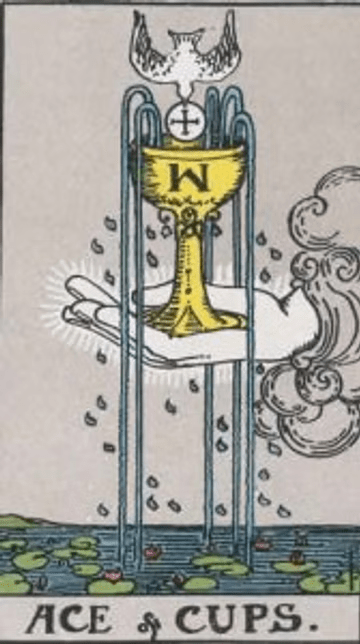
Because the widow woman did not hesitate when asked to serve Elijah a cup of water, God had him then command, “Bring me a morsel of bread in your hand.” One needs to see how bread is more than simply food that keeps human beings alive. It is the nourishment that comes from faith and is shared with those of the same faith. When it was instructed to come from her “hand,” God wanted the widow woman to share her own encouragement with a stranger, beyond showing her love of God.

When we hear the widow woman say, “As the Lord your God lives,” that was a confession of faith. By adding, “I have nothing baked, only a handful of meal in a jar, and a little oil in a jug; I am now gathering a couple of sticks, so that I may go home and prepare it for myself and my son, that we may eat it, and die.” That confession said she said she was unprepared to serve encouragement to anyone beyond her own family, which was just her and her son.

The meal symbolized the Torah and the oil symbolized those who were anointed by God as the blood of Israel. The sticks would burn as an altar fire, with death being self-sacrifice.

The assumption could then be made that her husband had died leaving his wife and their young child with enough physical foodstuff to last through three years of famine. Elijah then arrived when that inheritance had dwindled to one last supper. Death was then their sacrifice of themselves to God, in thanks for all they had already received. The husband [like Ruth’s departed Mahlon – meaning “Sickly” or “Great Infirmity”] had left behind the Laws of Moses as his only possession. While that had kept the widow and son alive until Elijah’s arrival, she had not foreseen prolonged life on earth.

When God spoke to the widow woman through Elijah, saying “Do not be afraid; go and do as you have said,” the widow was told not to fear death. She was to go and prepare for herself and her son to die, but that would not be soon. She was going to die, as all mortal human beings die … eventually, but her soul had just been assured eternal life, with God’s command through Elijah.

When Elijah then said to the widow, “First make me a little cake of it and bring it to me, and afterwards make something for yourself and your son,” the implication was asking her to make more bread than the woman had said she had left.  There is a change of request made, from “a morsel of bread” (from “paṯ-le·ḥem“) to now a “small cake” (from “u·ḡāh qə·ṭan·nāh).  From unleavened flatbread [implying hand me one of your scrolls of text] to a cake of risen bread [implying the fullness of knowledge that comes from the Holy Spirit], God had Elijah ask the woman to share her knowledge of the meaning of God’s laws, because she had then been touched by a divine presence.

Just as Jesus remarked to the Canaanite woman, “Woman, you have great faith! Your request is granted,” the faith of the widow woman of Zarephath has also been blessed.  The Holy Spirit fell upon her.  She was no longer an unmarried widow, as she was one with Yahweh, her Lord.

This is then the miracle of Jesus feeding the multitudes (twice), before that event occurred.  While Jesus had this same effect of marrying God to His devoted lovers, in numbers of five thousand and four thousand [minimally], each one that was touched by Jesus [as him through his disciples] was exactly like the widow woman touched by Elijah.  In all cases, it is God telling His devotees, “Prepare for eternal life by not fearing death by first serving others before you serve yourself, trusting that I [God] will provide for all My [His] children.”

This reading ends by stating: “For thus says the Lord the God of Israel: The jar of meal will not be emptied and the jug of oil will not fail until the day that the Lord sends rain on the earth.” She went and did as Elijah said, so that she as well as he and her household ate for many days. The jar of meal was not emptied, neither did the jug of oil fail, according to the word of the Lord that he spoke by Elijah.”

That says it was Yahweh speaking through Elijah. The Law of Moses and the anointed of God will not be emptied [disappeared from the world] before new emotion falls upon the land [the rainwater of God’s love]. The widow woman followed the instruction given to her by God’s Prophet. She never once questioned how a miracle could happen. She never doubted that Yahweh lived. Just as the widow who put all she had into the Temple treasury boxes [to feed the poor], the widow woman of Zarephath also gave everything she had to God.

In return, she was promised eternal life.

As an optional Old Testament reading for the twenty-fifth Sunday after Pentecost, when one’s own personal ministry for the LORD should be underway – one should be willing to die without losing one’s faith in God – the message here is God knows His flock. He watches over them all and sees who needs Him to appear before them as a Prophet. Strangers will come when true Christians need reinforcement and strength, to keep one’s spiritual emotions high and to give all you have to other Christians that bring orders from God.

In many Old Testament texts where a prophet is recognized as such, but not known by name, the address given to them is read as “Man of God.” It was a title of respect for the position. The widow woman did not make such an address to Elijah.

That says she only recognized him as an Israelite, but since all Israelites were expected to be men and women of God, she acted without pretense as any Israelites making demands on her during a famine would have found the same responses of service. This also says that Elijah did not travel to draw attention to himself [especially when Ahab was hunting for him], which Jesus pointed out the scribes did.  He said they wear their long robes in the marketplace, meaning that made sure the common people knew what rank they held upon their arrival.  They took advantage of the poor without concern for their lives.  Elijah did nothing of the sort.

In the optional reading from Ruth, the conclusion said the women gave Naomi a name in Hebrew that proclaimed “A son have been born to Naomi.” The son [Obed] was actually born to her daughter[in-law] Ruth, who married Naomi’s kinsman Boaz. Naomi took that son to her bosom and nurtured it, which caused her women friends to name her as a wet-nurse. Naomi was not a wet-nurse, but a woman much like the widow woman here. She helped Ruth much like Elijah helped the widow woman and her son – Elijah took them to his bosom and nurtured them, so the bloodline of God would grow strong and remain pure.
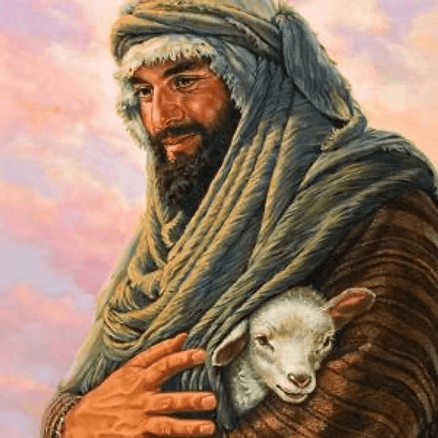
In this way it is vital to see oneself [regardless of human gender] as the widow woman. The assumption always seems to be of an old woman, but the human age [like gender] does not matter. We are all women looking for a husband’s redemption, where redemption means having all one’s debt be assumed by one who had the means to pay that off. Our debts are our sins and the only one who can forgive those debts is God. We must find a way to please God so He will marry each of us; but for that to happen we must be totally committed to pleasing God.

The widow woman was submissive to God when He appeared in the form of His Prophet Elijah. We must likewise be willing to hear the commands of God and obey as good wives. When we prove our devotion, God will show us how the bread and oil will not run out.  The basic materials of faith will give rise to new knowledge that must be shared with others. The child born to each of us, through marriage to God, will be Jesus Christ. We will take him to our bosoms and nurture him forever.

In return, we will be promised eternal life
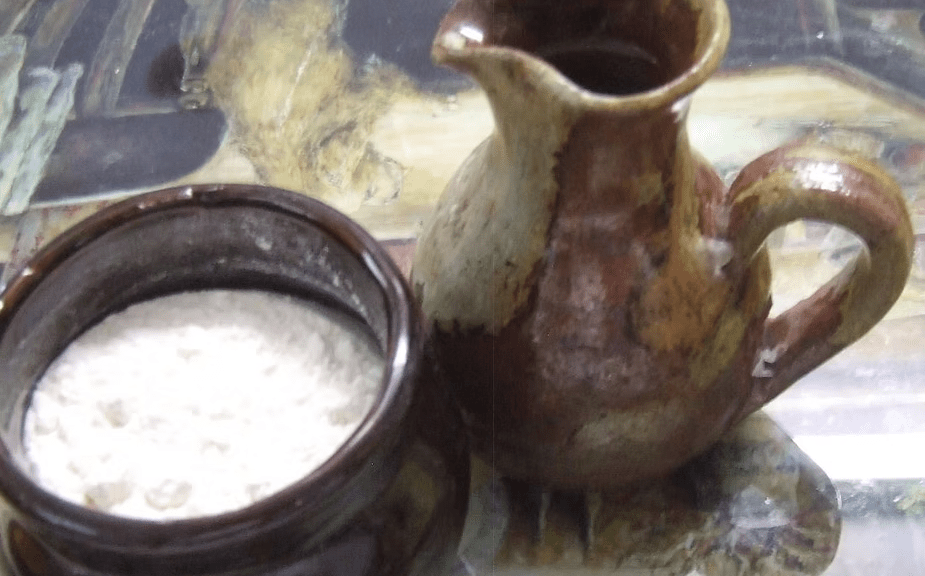
1 Kings 17:8-16 One last handful of flour in a jar and a little oil in a jug

The word of Yahweh came to Elijah, saying, “Go now to Zarephath, which belongs to Sidon, and live there; for I have commanded a widow there to feed you.” So he set out and went to Zarephath. When he came to the gate of the town, a widow was there gathering sticks; he called to her and said, “Bring me a little water in a vessel, so that I may drink.” As she was going to bring it, he called to her and said, “Bring me a morsel of bread in your hand.” But she said, “As Yahweh eloheka lives, I have nothing baked, only a handful of meal in a jar, and a little oil in a jug; I am now gathering a couple of sticks, so that I may go home and prepare it for myself and my son, that we may eat it, and die.” Elijah said to her, “Do not be afraid; go and do as you have said; but first make me a little cake of it and bring it to me, and afterwards make something for yourself and your son. For thus says Yahweh elohe of Israel: The jar of meal will not be emptied and the jug of oil will not fail until the day that sends [the gift of] rain on the earth.” She went and did as Elijah said, so that she as well as he and her household ate for many days. The jar of meal was not emptied, neither did the jug of oil fail, according to the word of Yahweh that he spoke by Elijah.

——————–

This is the Track 2 Old Testament reading selection for churches set upon that path, to be read aloud on the twenty-fourth Sunday after Pentecost [Proper 27], Year B, according to the lectionary for the Episcopal Church. If this path is taken, then Psalm 146 will be sung as a companion, saying, “[Yahweh will be] Who gives justice to those who are oppressed, and food to those who hunger.” This pairing will precede a reading from Hebrews, where Paul wrote: “And just as it is appointed for mortals to die once, and after that the judgment, so Christ, having been offered once to bear the sins of many, will appear a second time, not to deal with sin, but to save those who are eagerly waiting for him.” All will accompany the Gospel reading from Mark, where it is written: “A poor widow came and put in two small copper coins, which are worth a penny. Then [Jesus] called his disciples and said to them, “Truly I tell you, this poor widow has put in more than all those who are contributing to the treasury.”

I wrote about this reading selection the last time it came up in the lectionary cycle (2018). If you would care to read those observations, they can be viewed by searching this site. Because I offered many valid opinions on the meaning of this reading, I will not attempt to reproduce what has already been written. Feel free to read that commentary, as well as the many other commentaries I offer, and comment as you see fit. Today, I will address this reading from a slightly different angle.

In 2018, I was not concerned with the routine mistranslation of the Hebrew into English, as I was then like most Christians (then and still today), putting complete faith in the English translations that many different versions of the Holy Bible are published in. I am reminded of an old episode of Gunsmoke, where Marshall Dillon and his sidekick Festus were stuck in the wilderness, expecting to die soon. Matt said it would be nice to read something from the Bible at that time. Festus told him he had a Bible. Matt said, “I didn’t know you could read.” Festus said he could not read, but liked carrying a Bible with him. Matt told Festus to get him his copy of the Bible; and, Festus gives Matt a copy of Little Women. Matt looked at it and asked Festus if someone told him that was a Bible; and, Festus said, “Yessir. He said that was a good book.”

I mention this because Christians are just as illiterate as Festus, full of beliefs that are based on what someone told them to believe. They cannot read for themselves. They do not speak Hebrew or Greek, and they do not seek to learn to read at such a late stage in their lives; so, they bow down and give all honor and praise to someone who is only in the Bible business to make a buck. They will gladly say what the people want to hear, for a profit. The name of Yahweh is “Yahweh” [“יְהוָ֖ה”] and all Old Testament Scripture states that plain as day. However, translators change that to “the Lord,” which is wrong.

In verse one of this chapter, we read of “Elijah the Tishbite” telling Ahab (the King of Israel, the Northern Kingdom) that “Yahweh elohe Israel” would not let rain fall until Elijah said it was time. Ahab was married to the foreigner Jezebel, who imported all kinds of evil prophets of Ba’al. Ba’al was “the lord” of Jezebel, and thus Ahab. Thus, from that history of Israel and from the mouth of a true prophet, anyone who likes to rely on the words of false prophets and call Yahweh “the Lord” will have no rain of insight fall upon their souls. In my version of the reading selection today, you will note where I restored “Yahweh” in bold text. This corrects the wrong.

This correction need mirrors the mistranslations commonly presented for forms of “elohim” – a word that is clearly the plural Hebrew for “el,” meaning “gods.” Translation services make all the Festus-like ‘Christians’ of the world bow down and worship lower-case “gods” as “God.” This, again, is the false religions of polytheism, which Jezebel loved so much. The use of “elohim” is a statement of humans possessed by spirits or the Spirit, as enslaved mutations or elevated creations of souls. Elijah was one of Yahweh’s elohim, as an extension of Yahweh in the flesh, as a true prophet. His soul was married to Yahweh, meaning Yahweh’s Spirit possessed the soul of Elijah. An elohim written in association with the name “Yahweh” means all who serve Yahweh as His angels in the flesh – His hands on the earth. Only a “Yahweh elohim Israel” has the power to decide when rain will fall. That means it is important to open your eyes and read the truth, or be misled.

When we read that Yahweh sent Elijah to Zarephath, a place of Sidon, the name “Zarephath” means “Blast Furnace, Workshop For Smelting And Refining Metals.” The name “Sidon” means “Fishery, Hunting Place.” These two places are capitalized, meaning they bear a divinely elevated meaning that goes beyond the names of two places. This elevation comes forth from realizing the meanings of the words chosen to be the names of places.

This should be realized as being geographically along the coast of the Mediterranean Sea, where fishing would have been a source of plentiful food for the people. As a seaport, Zarephath would have been where ores were shipped, in order to be refined. For Yahweh to send His prophet to a region outside Israel [Assyrian controlled] and find Israelites living there suffering from the same famine from a lack of rain, this says the lack of rain or drought was wherever Israelites lived. This makes the lack of rain controlled by Elijah be more than physical rain from the sky, but also a drought in the spirituality of faith. That lack was caused by those who allowed Ahab and Jezebel to govern their commitments to Yahweh. To send Elijah to a mining-smelting town means he was sent to where people suffered to make valuable metals for kings and queens. The elevation becomes a statement of labors [worshiping] for valuables taken from the earth, not worshiping values obtained from the ethereal.

Elijah was told that a widow woman would provide for Elijah, as commanded by Yahweh. That says the widow, like Naomi, was a soul married to Yahweh and would do everything Yahweh ordered. Elijah heard that and his belief in Yahweh speaking the truth led him to ask the widow woman for a cup of water first. That request was a test if the woman he met was the one who would provide for him. After asking the widow woman to get him water to drink, she went to draw Elijah water; so, Elijah then further tested her as the one, asking for a morsel of bread. Water and bread are then metaphor for an everlasting soul married to Yahweh (cup of water) and a word of truth from the inner guide (a morsel of bread). The test was for spiritual proof, not material means. The widow woman provided Elijah with what he asked for.

When the widow woman said to Elijah, after he requested a morsel of bread, “as lives Yahweh to whom you are one of His elohim [the truth of “eloheka”] I do not have any bread,” that expressed how her soul knew Elijah was a soul married to Yahweh. One must realize that she had never met Elijah before. There was no social media or television to promote Elijah as some celebrity televangelist, who she recognized. Her soul was also married to Yahweh, as was Naomi’s, so she knew who Elijah was through divine inspiration. Her soul sensed that another like her, albeit one more elevated in devotion to Yahweh than she, was in her presence.

This must take one back [if one has been following these lessons I offer, through this Ordinary season after Pentecost] to the story of Elijah “falling asleep under a broom tree.” I said then that Elijah died and was reborn as a most divine Son of Yahweh on earth, which would allow his body to later ascend without seeming to physically die. It was after this transformation of Elijah that Scripture calls him “Elijah the Tishbite.” Elijah has yet to die, as this story is soon after he is introduced in Scripture. His introduction also identifies him as a “Tishbite.” The name “Tishbite” means “Returnee.” Thus, the widow woman was one preparing to become like Elijah and lie down preparing for physical death, before being released as was Elijah’s soul. Elijah’s soul, having returned to be with Yahweh while still in living flesh (à la Jesus’ resurrection), was sent to this servant of Yahweh to save her and her son, reviving the spirit of Israel in the true faithful. Elijah was sent to bring the rain of Yahweh.

When the widow woman said all she had was a handful of flour in a jar and a little oil in a jug, showing that she had gathered two sticks to burn in the oven for their last supper for her and her son, Elijah told her to have no fear. That was a command from Yahweh, telling the soul of the widow that Yahweh was there. As a wife to Yahweh, her only fear should be losing Yahweh. Elijah assured her that Yahweh was there; so, Elijah told her to make him a cake. He assured her it would feed him and her and her son.

This is where a translation that says, “For thus says the Lord God of Israel” is meaningless. Where does “the Lord God of Israel” say, “The jar of meal will not be emptied and the jug of oil will not fail until the day that the Lord sends rain on the earth,” anywhere other than here in First Kings seventeen? Nowhere!!! This is because Elijah said those words, as “Yahweh’s angel in the flesh [“elohe”] who was “One Who Retains Yahweh as one of His elohim” [the meaning of “Israel”]. That identified Elijah the Returnee making that promise, as a servant of Yahweh [an “elohe“]. It is the same as Jesus telling his disciples to feed well over five thousand people (including women and children) with five loaves of bread and two fish. Only Yahweh elohim can make miracles happen. The “jar of flour and the jug of oil will not fail” as they will continue to feed spiritual food and anoint His wives as messiahs [Anointed ones], until the rain of salvation comes.

This is the promise made by Yahweh to all His servants (divine wives). Naomi and Ruth were the equivalent of the widow and her son, as all they had in this world was Yahweh. They trusted in Yahweh and were not afraid of death. Yahweh spoke to them all and told them He would provide, so they could provide.

When Paul wrote that “Christ did not enter a sanctuary made by human hands,” so many Christians read those words and think they say, “Jesus did not enter a sanctuary made by human hands.” The Greek word “Christos” means “Anointed one,” which is a soul that has the Spirit of Yahweh poured out upon it, forever, like Yahweh “Anointed” David’s soul. Paul wrote his words meaning Jesus the Tishbite did not enter a sanctuary “made by human hands.” Elijah was like Jesus Christ, as Elijah Christ. The sanctuary Elijah entered was the soul of the widow woman and her son. The spiritual food of Yahweh was raining down upon them, Anointing them as His beloveds.

That eternal presence is what so many Christians today lack. Christianity is suffering from a spiritual famine, due to a drought of heavenly rains. Jesus the Returnee would be sent to the United States of America, where it has so many hunting and fishing for precious metals (even the printed on paper ‘ores’), so they can heat everything up to make molten images of the gods they love to call “my Lord.” Where are the widows who live only on the presence of Yahweh within … when no Christians these days are taught the name Yahweh, much less how to call upon Him in divine marriage? America today is filled with fears, having strayed so far from Yahweh they cannot possible conceive how to fear losing the One God none have been raised to know personally.

In the accompanying Gospel reading from Mark, Jesus warned his disciples, “Beware of the scribes, who like to walk around in long robes, and to be greeted with respect in the marketplaces, and to have the best seats in the synagogues and places of honor at banquets! They devour widows’ houses and for the sake of appearance say long prayers. They will receive the greater condemnation.” That must be seen as a perfect fit for all the popes, bishops, and priests that love pretending they have some inside skinny on what Jesus would say, if Jesus were here today. If they had that, then there would be no spiritual drought leading the Western world to ruin and destruction!

The lesson is Jesus should be here today, in those who are truly Anointed ones – the Christs of Yahweh – all who have become the resurrections of Jesus within their own souls – a most holy possession. Jesus should be here as the high priest in all who proclaim to be Christians.

But, he is not. Those who profess to be Christian ‘scribes’ are liars. They are false shepherds. They are the drought upon the land, because the people look to them for spiritual feeding [that does not come]. They are the cause of the spiritual famine, because they are the Ahabs and Jezebels who seek to destroy Elijah the Tishbite. Their later ancestors, Christian predecessors, would nail Jesus to a cross, thinking that act had killed him. However, Yahweh cannot be killed.

The reading of this Track 2 Old Testament selection on the twenty-fourth Sunday after Pentecost, when one’s own personal ministry for Yahweh should already be well underway, presents a lesson that says there are true Christians in the world who are suffering. They are preparing to leave this world and let it have itself to destroy all that is good in true Christianity. When the last true Christians leave, those left behind will be condemned prisoners of earth – souls destined to reincarnate over and over, until the world is no longer an inhabitable environment. Then, all hell is let loose upon the wayward souls. Now represents the last times to be sent by Yahweh to save others whose souls are married to Yahweh. The question is, “Are there any who will hear the voice of Yahweh and say, “Here I am. Send me.”’

Psalm 146 – Same song, Elijah verse

1 Hallelujah! [Praise Yah!]

Praise Yahweh, O my soul! *

[2] I will praise Yahweh as long as I live;

I will sing praises lelohay while I have my being.

2 [3] Put not your trust in rulers, nor in any child of earth, *

for there is no help in them.

3 [4] When they breathe their last, they return to earth, *

and in that day their thoughts perish.

4 [5] Happy are they who have se-el of Jacob for their help! *

whose hope is in Yahweh elohaw;

5 [6] Who made heaven and earth, the seas, and all that is in them; *

who keeps his promise for ever;

6 [7] Who gives justice to those who are oppressed, *

and food to those who hunger.

7 [8] Yahweh sets the prisoners free;

Yahweh opens the eyes of the blind; *

Yahweh lifts up those who are bowed down;

8 [9] Yahweh loves the righteous;

Yahweh cares for the stranger; *

he sustains the orphan and widow,

but frustrates the way of the wicked.

9 [10] Yahweh shall reign forever, *

elohayik, O Zion, throughout all generations.

Hallelujah! [Praise Yah!]

————————-

This is the accompanying Psalm that will be read aloud in unison or sung by a cantor, if an individual church is following the Track 2 path set for the Ordinary after Pentecost season. As a Track 2 accompaniment, it will follow the reading from First Kings, where it is written: “Elijah said to [the widow woman], “Do not be afraid; go and do as you have said; but first make me a little cake of it and bring it to me, and afterwards make something for yourself and your son. For thus says Yahweh elohe of Israel: The jar of meal will not be emptied and the jug of oil will not fail until the day that the Lord sends rain on the earth.” That pair will precede a reading from Hebrews, where Paul wrote, “Christ, having been offered once to bear the sins of many, will appear a second time, not to deal with sin, but to save those who are eagerly waiting for him.” All will accompany the Gospel reading from Mark, where the Apostle wrote: “[The scribes] devour widows’ houses and for the sake of appearance say long prayers. They will receive the greater condemnation.”

Psalm 146, as I have stated before, is an important Psalm of David. In the Year B schedule, it is read on the fifteenth, the twenty-sixth and the twenty-seventh Sundays after Pentecost [Proper numbering]. It is also read twice in the Year B schedule, and partially once in Year A. As this is Proper 27, this same Psalm 146 was read last Sunday. The difference is last week it was Track 1, while now (and on Proper 15) it is Track 2. All of the changes made in the above text were presented the two times before, so nothing has changed there. The only difference now is this same Psalm of praise is applied to the story of Elijah and the widow woman who Yahweh promised would provide for Elijah.

When this is seen as an accompaniment for First Kings seventeen, this is the first chapter where Elijah is mentioned in the Holy Bible. While Elijah is identified as “Elijah the Tishbite,” a name that says “Elijah the Returnee,” it should be seen that Elijah was a judge returned to Israel, at a time when famine was great upon the land. Seeing this in that Old Testament reading makes it clear that David was prophesying by song about all who were judges [as was David] and prophets [as was Elijah], because all would have their souls married to Yahweh and praise Him mightily. This is relative to the first and last words of this song being “Hallelujah!” which means, “Praise Yah!”

In verse two the aspect of “life” or “living,” from the transliterated “bə·ḥay·yāy,” meaning “while I live,” sings praise to the eternal life promised a soul by divine marriage. It is this presence of Yahweh within, One with one’s soul, that makes a soul be experiencing the eternity of heaven while in a body of flesh. Because one is giving life to such dead matter, one has become one of Yahweh’s elohim. Thus, David sang the same praise as would Elijah, where the Hebrew word “lelohay” says “to my [being one of the] elohim.” The “my” becomes a statement of divine possession, which means a soul has fully submitting itself [a “self” is a “soul”] to Yahweh. Thus, “while I have my being” is a statement that says one will serve Yahweh as one of His elohim “for as long as my soul inhabits a body of flesh.” This must be seen as how Elijah could hear the voice of Yahweh speak to him, telling him to go to Zarephath.

Verse three then sings, “not to put your trust in nobility,” because those are only “sons of man,” not immortal or divinely married to Yahweh. In First Kings, Elijah confronted Ahab in the third year of drought. Ahab seems at times to see the divinity of Elijah, but his position as king and his marriage to Jezebel kept him from listening to Elijah. Ahab was merely a “son of man,” who would die in time, leaving no lasting legacy of merit. Thus, those who do not have souls possessed by Yahweh are unable to do anything more then shuffle matter around, usually only in ways that are only beneficial to themselves (temporarily).

Verse four then sings of reincarnation, when “departs” one from his or her body of flesh. Then the “spirit” or “soul” [“ruach”] “returns to the earth,” where “earth” equates to more flesh to be born. David sang this return ends any “plans” that might have been put in place prior to death. Keep in mind here how the Egyptians believed their nobility could return and pick up where they left off. In the case of Elijah, he died under a broom tree and then returned in the same body, without any need for mummification or special priestly chants or embalming fluids. Jesus did the same. This shows how David was led to see reincarnation as not being something mortals can control. Only souls married to Yahweh can return, as He sees fit.

Verse five then sings of those who have followed in the steps of Jacob, who wrestled with himself [a “self” equals a “soul”] and defeated the demon possessing spirit within him. His victory meant his soul was renamed “Israel” [a name meaning “He Who Retains Yahweh – as one of His elolhim”]. Thus, David sang the reward was the “hope” that comes from being one of “Yahweh’s elohim.” David was one, as a judge of the people of Israel [also named king], and so was Elijah.

Verse six then sings of Genesis 1, where thirty-two times is written that “elohim” made everything. The lack of Moses naming “Yahweh” in Genesis 1 was purposeful, as the “elohim” who made everything in the material realm were first created by Yahweh, in order to do the acts of His plan. This verse does not play directly into the Elijah story; but, Elijah, like David and all Yahweh elohim, are the creations of Yahweh. The “elohim” do not create divine wives of Yahweh; although they are the ones who demonically possess human souls, as Jacob knew.

Verse seven then makes a direct link to the First Kings story, where the famine in effect when Elijah was sent by Yahweh relates to the widow woman and her son being “hungry.” While “food” was scarce, the same word [“lechem”] means “bread.” This becomes metaphor for spiritual “bread,” which symbolizes the famine that was under the reign of Ahab and Jezebel. When David sang Yahweh “gives freedom to the prisoners,” this is the story of Elijah meeting the widow woman, who was picking up sticks to burn and make her and her son’s last meal. They were prepared to die and then release their souls from the prison of the flesh and the earthly realm. Elijah was sent by Yahweh to meet her needs, as her soul was one of Yahweh’s faithful.

Verse eight then sings of the “blind,” where this is less about not having physical sight, and more about refusing to see the lures of the material realm as the carrots on a stick or bait on a hook that attempts to steal souls for Satan. They are “blind” because their eyes are looking down, while they are “bowed down in worship of Yahweh.” This is metaphor for those who submit their souls in marriage to Yahweh, which is why David sang of “love.” It is that marriage that makes one be “righteous;” and, Elijah and the widow woman were in this classification of people.

Verse nine then sings of the rescue of the widow woman and her son, which tightly fits the story of Elijah in 1 Kings 17. As for the “wicked,” whose “ways will be turned upside down,” that will be found in the priests of Ba’al, who were imported by Jezebel and Ahab. Because Elijah would put them to shame and then death, Ahab and Jezebel swore to have Elijah killed. That did not work out the way they expected.

Verse ten then sings of the righteous being the ones who will always praise Yahweh and make sure His presence on earth is maintained through a line of “elohim.” Elijah would pass this Spirit onto Elisha, who Elijah would go find and tell. This verse sings praise for the lineage that keep judges remaining on earth to fight Satan.

As a Psalm that will be sung on the twenty-fourth Sunday after Pentecost, when one’s own personal ministry for Yahweh should already be well underway, the lesson is the same as before, when this Psalm of praise has been sung. It sings of faith that comes from a soul being married to Yahweh and acting as His servants on earth. This is the purity of ministry, which is not a position of nobility, where someone is from a bloodline of wealthy who go to the best schools and wear the finest robes after graduation from the most elite seminaries (after multiple degree of education prior). Elijah, like David, was a true teacher because his soul praised Yahweh by doing whatever He led him to say and do.