Tag Archives: 1 Kings 2:10-12

1 Kings 2:10-12; 3:3-14 – The Wisdom of Solomon

David slept with his ancestors, and was buried in the city of David. The time that David reigned over Israel was forty years; he reigned seven years in Hebron, and thirty-three years in Jerusalem. So Solomon sat on the throne of his father David; and his kingdom was firmly established.

Solomon loved the Lord, walking in the statutes of his father David; only, he sacrificed and offered incense at the high places. The king went to Gibeon to sacrifice there, for that was the principal high place; Solomon used to offer a thousand burnt offerings on that altar. At Gibeon the Lord appeared to Solomon in a dream by night; and God said, “Ask what I should give you.” And Solomon said, “You have shown great and steadfast love to your servant my father David, because he walked before you in faithfulness, in righteousness, and in uprightness of heart toward you; and you have kept for him this great and steadfast love, and have given him a son to sit on his throne today. And now, O Lord my God, you have made your servant king in place of my father David, although I am only a little child; I do not know how to go out or come in. And your servant is in the midst of the people whom you have chosen, a great people, so numerous they cannot be numbered or counted. Give your servant therefore an understanding mind to govern your people, able to discern between good and evil; for who can govern this your great people?”

It pleased the Lord that Solomon had asked this. God said to him, “Because you have asked this, and have not asked for yourself long life or riches, or for the life of your enemies, but have asked for yourself understanding to discern what is right, I now do according to your word. Indeed I give you a wise and discerning mind; no one like you has been before you and no one like you shall arise after you. I give you also what you have not asked, both riches and honor all your life; no other king shall compare with you. If you will walk in my ways, keeping my statutes and my commandments, as your father David walked, then I will lengthen your life.”

———————————————————————————————————-

This is an optional Old Testament selection from the Episcopal Lectionary for the Thirteenth Sunday after Pentecost, Year B 2018. In the numbering system that lists each Sunday in an ordinal fashion, this Sunday is referred to as Proper 15. If chosen, it will next be read aloud in an Episcopal church by a reader on Sunday August 19, 2018. It is important because it tells of Solomon’s choice of wisdom as the best asset a child can have.

When David slew Goliath, he was not yet twelve years old. He was still a young boy when he led the troops out of Gilbeah and back in, after battle. He might have only been sixteen when Saul put David in command of a thousand soldiers. This youthful age of David did not make his son Solomon his equal in courage, when also just a young boy.

The story of David and Bathsheba took place when David was in the twilight of his life, probably occurring when he was around fifty-eight years of age, or twelve years before the end of his life. That means Solomon was conceived when David was around fifty-nine and born when David was close to sixty. When “David slept with his ancestors, and was buried in the city of David,” Solomon was then around ten years old. This means that when “Solomon sat on the throne of his father David,” at a time when David’s “kingdom was firmly established,” Solomon had done nothing to establish Israel. As a child king, Solomon became a “turn-key” ruler, with no threats to the Israelites because of the inexperience of their new king.

In the verses skipped over, one has to be aware that Solomon oversaw the executions of those who took advantage of David in his last years. David’s fourth son, Adoijah, tried to claim the throne, with the aid of Joab (a military general of David’s) and Shimei (who cursed David as disposed by Absalom). Solomon was advised by the priest Zadok and the prophet Nathan in these acts of retribution. Solomon did not shy away from those he would order killed at his young age.

Assuming those executions took a couple of years to administer; Solomon was still “only a little child” when “the Lord appeared to Solomon in a dream by night.” He was probably twelve years of age, before his bar matzah of thirteen. This young age can be overlooked when one reads how Solomon “sacrificed and offered incense at the high places. The king went to Gibeon to sacrifice there, for that was the principal high place; Solomon used to offer a thousand burnt offerings on that altar.”

It becomes important to see these sacrifices and burnt offerings to God were because Solomon was following the “statutes of his father David.” This means Solomon did what was required of him, led by wise men of God; but as a young boy he was still learning what was required of a king.

It makes sense to me that Solomon’s youth and his having experienced so much of the adult world so fast, led him to pray for God’s help.  In response, this would have been when God appeared to him in sleep and said, “Ask what I should give you,”

Solomon wanted the wisdom he had come to know in the adult servants to God, Zadok and Nathan. By telling God, “I do not know how to go out or come in,” young Solomon was saying that he was being told where to stand, what to say, and how to act kingly. Because Solomon knew so many people depended on an intelligent leader, he asked God, “Give your servant therefore an understanding mind to govern your people, able to discern between good and evil.”

The Hebrew word translated as “mind” is “lêḇ,” which also means “heart.” It can likewise mean the “inner man” or “will.” This word shows the link between the heart and the mind, where emotions of the heart stimulate the thought processes. By asking for an “understanding heart to judge” Israel, Solomon was asking for control of his emotions, so his judgments would not be rashly done.  One can imagine that ordering the executions of his father’s enemies was a learning experience, one which he might have been advised by a priest or prophet not to let fears cloud his judgment.

This element of “heart” is also relative to the statement that says, “Solomon loved the Lord.” The first step towards being filled with the Holy Spirit is to fall in love with God. One needs to sacrifice oneself to be the bride of God, where one’s heart opened for the LORD to enter and sit upon His throne, commanding over the kingdom that is His earthly servant.

David had loved the Lord in this manner and never once questioned if God would lead him astray. David gave up his mind so God could rule his actions from David’s heart. David made all his greatest decisions by saying, “As surely as God lives,” because God lived within David and David’s decisions were made by God. Solomon, however, did not love the Lord in that same way as his father had.

When we read how Solomon was “walking in the statutes of his father David,” David was not said to have been walking in the statutes of Jesse, his father. David was walking in the statutes of the Lord, because David loved the Lord. Solomon loved God because he had been told to love God, not because Solomon knew God as his husband. By following the rituals of David, Solomon was “showing his love of God,” a viable translation of “aheb.”  Solomon acted logically as how he understood “love” to be shown, by following the steps of the leader before him (his father). Therefore, Solomon loved God as an external presence worthy of praise as the God of Israel, but not as the God of Solomon.

When Solomon asked God for understanding of mind, rather than ask God to be his understanding of heart, we read, “It pleased the Lord that Solomon had asked this.” This  leads one to recall how God told David, “Out of your own household I am going to bring calamity on you.” (2 Samuel 12:11) Solomon was of David’s household, and was therefore not immune from playing a role in the distress that will befall the House of Israel. Solomon would cause a split in that house, based on how he would run his kingdom. Therefore, the pleasure God took from Solomon’s request is misleading, as the Hebrew word “way·yî·ṭaḇ” (from yatab“) can easily mean God “pleased” Solomon by granting him his request.

God then told Solomon, “Because you have asked this, and have not asked for yourself long life or riches, or for the life of your enemies, but have asked for yourself understanding to discern what is right, I now do according to your word. Indeed I give you a wise and discerning mind; no one like you has been before you and no one like you shall arise after you.”
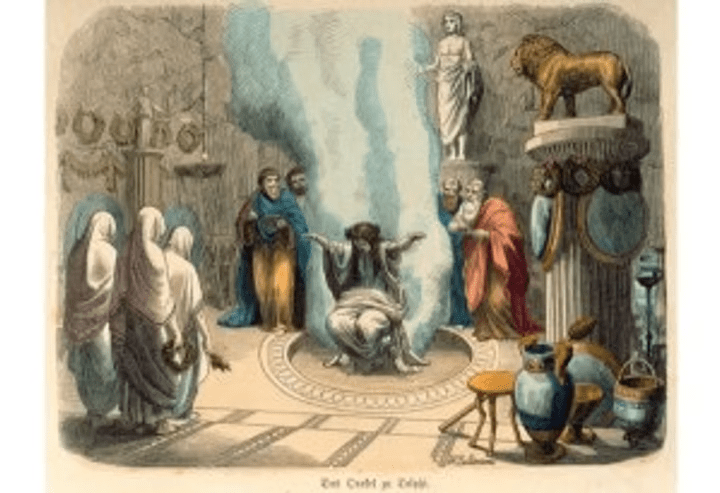
Pay a coin, ask one question, receive the truth … but it might not be what you want to hear.

This might sound good at first, but this falls under the old Chinese proverb that says, “Be careful what you wish for, you might just get it.” Because Solomon asked for (in essence) a Big Brain to judge the world with, God (in essences) said, “Since I cannot give you my Christ Mind [because you didn’t ask to marry me], I’ll give you more natural insight than anyone in the world has ever had and will ever have. There will never be a Bigger Brain that the one I will let you have.”

Then, with the wisdom of Solomon as the gift God gave, God added, “If you will walk in my ways, keeping my statutes and my commandments, as your father David walked, then I will lengthen your life.” Here the reading ends, but it is worthwhile to note that Solomon would die around age fifty-three, of natural causes, the wealthiest king Israel would ever know, failing to follow in the holy footsteps of his father. For all the wisdom Solomon had, it brought him only material rewards. When Solomon died, so too did Israel as one nation under God.

As an optional Old Testament reading selection for the thirteenth Sunday after Pentecost, when one’s personal ministry should be underway – asking not what God can do for one, but what one can do for God – the message here is to put more value in the heart center than the head. The head is where the ego lives. The heart is where one’s love of God resides.

Some people will read this set of verses in 1 Kings and think how wonderful God was to Solomon. The brand of Christianity that has spread across the Western World, in particular in the United States, sees how God blesses his people with riches and honor. It seems that the more bling one has, the more one can proclaim loudly, “Thank you Jesus! Thank you God!”

But, is that really the case?
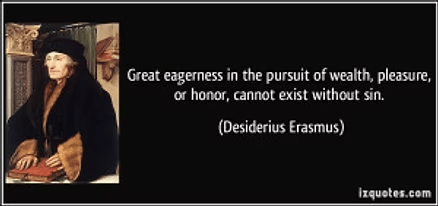
When one sees the immaturity of young Solomon wanting to be as smart as an adult, rather than learn life’s lessons the hard way – the way the masses are forced to learn – he was asking for an easy way out. Solomon wanted to be his own man, rather than have to rely on advisors to tell him what to do.

Solomon did not once pause to think that God was his wisdom, as all he had to do was ask God, “What do I do, Lord?” God went to Solomon and prompted him to ask for help, saying, “Ask what I should give you.” When Solomon did not ask for God to give him His love, Solomon rejected God as his King, just as the elders of Israel had, when they first asked Samuel for a king, to be like other nations. Solomon, only a little child, wanted to be a king like those of other nations.

Because Solomon rejected God as his lover and husband, God gave Solomon what he did not ask for: wealth and honor. That reputation lasts till this day; but what good did wealth and honor do for Solomon? Wasn’t Israel worse off when Solomon died, than it was when David died?
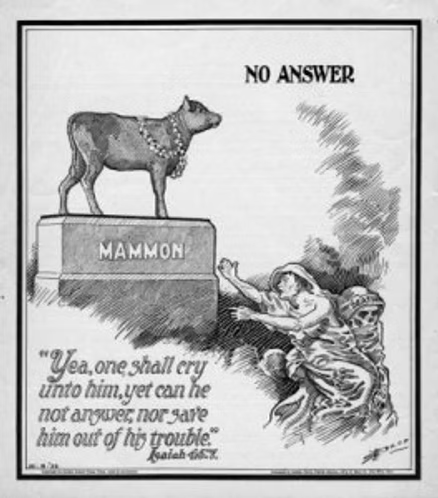
The same mirage is all around us today. We see wealth as a blessing. We are given honor by credit agencies, banks, and fraternal orders of secrecy. The richer and more powerful one gets, the more praises to God are little more than lip service.

All the wisdom of Solomon would have rejected Jesus, had Solomon asked Jesus to tell how he was assured of eternal life in heaven. Jesus would have told Solomon the same sacrifices that needed to be made he told the young rich Pharisee, and Solomon would have rejected Jesus as did the young rich Pharisee. The only difference might be Solomon offering some smart retort for Jesus (words of wisdom?), but he still would have walked away from any form of self-sacrifice.

A minister to the LORD knows the lures of money and power and has walked away from them. God provides in mysterious ways, as long as one is committed to serving the LORD. One does not need more than enough to feed oneself and one’s family – the same principle of the manna that fell from heaven and God’s orders given through Moses. Being given exceeding wealth and honor means having the problem to figure out how to sell everything and give the profits to the poor … doesn’t it?

That problem is best solved by being poor in material things, but rich in spiritual things. Then giving from the heart and teaching from the Christ Mind is more valuable than all the precious metals and gemstones the world has to offer.
1 Kings 2:10-12; 3:3-14 – The big brain of a little man breaking the rules

David slept with his ancestors, and was buried in the city of David. The time that David reigned over Israel was forty years; he reigned seven years in Hebron, and thirty-three years in Jerusalem. So Solomon sat on the throne of his father David; and his kingdom was firmly established.

Solomon loved Yahweh, walking in the statutes of his father David; except that he sacrificed and offered incense at the high places. The king went to Gibeon to sacrifice there, for that was the principal high place; Solomon used to offer a thousand burnt offerings on that altar. At Gibeon Yahweh appeared to Solomon in a dream by night; and said elohim, “Ask what I should give you.” And Solomon said, “You have shown great and steadfast love to your servant my father David, because he walked before you in faithfulness, in righteousness, and in uprightness of heart toward you; and you have kept for him this great and steadfast love, and have given him a son to sit on his throne today. And now, Yahweh elohay, you have made your servant king in place of my father David, although I am only a little child; I do not know how to go out or come in. And your servant is in the midst of the people whom you have chosen, a great people, so numerous they cannot be numbered or counted. Give your servant therefore an understanding mind to govern your people, able to discern between good and evil; for who can govern this your great people?”

It pleased adonay that Solomon had asked this. elohim said to him, “Because you have asked this, and have not asked for yourself long life or riches, or for the life of your enemies, but have asked for yourself understanding to discern what is right, I now do according to your word. Indeed I give you a wise and discerning mind; no one like you has been before you and no one like you shall arise after you. I give you also what you have not asked, both riches and honor all your life; no other king shall compare with you. If you will walk in my ways, keeping my statutes and my commandments, as your father David walked, then I will lengthen your life.”

——————–

This is the Track 1 optional Old Testament reading for the twelfth Sunday after Pentecost [Proper 15], Year B, according to the lectionary for the Episcopal Church. If chosen, it is paired with Psalm 111, which sings, “The fear of the Lord is the beginning of wisdom; those who act accordingly have a good understanding; his praise endures forever.” They will precede the Epistle reading from Ephesians, where Paul wrote, “Be careful then how you live, not as unwise people but as wise, making the most of the time, because the days are evil.” All will accompany the Gospel selection from John, where Jesus said, “Very truly, I tell you, unless you eat the flesh of the Son of Man and drink his blood, you have no life in you.”

In 2018, the last time this reading came up in the lectionary cycle, I wrote a commentary and published it on my website I maintained at that time. The article is available on this website, which can be found by a search of the reading name and number. I welcome all to read the views I posted then, as I still stand behind them. It is a view that still applies today. However, at this time I will take a new direction with this reading.

In the first nine verses of 2 Kings 2, David has chosen Solomon to follow him to the throne. Before David’s death, he counseled Solomon to be a king that obeyed all the laws and ordinances of Yahweh. David had been so led, so he told his youngest son to be likewise. Twice, David told Solomon to be wise in his decisions, which were David’s way of influencing his young son to exact revenge against those who were secretly and openly David’s enemies, who had been past allies. Young Solomon acted on his father’s guidance, ordering a series of executions that ceased any possible subversion that would take advantage of a young king; and, it was David’s sage advice that ensured “his kingdom [passed to Solomon] was firmly established.”

When we read, “David slept with his ancestors,” the better translation says, “so laid down David with his fathers.” The image of death being taking a nap, resting, or laying down to sleep is metaphor for reincarnation. While the body of David ceased to support life on the physical plane, the soul did not die. Because the soul is eternal and cannot die, death is then symbolic of sleep; and, just like sleep brings a new day when one rises and gets out of bed, so too does a soul come back into a new body of flesh. When we see that David’s soul followed suit of his father – those elders of Israel – this becomes a statement that David’s soul had not gained eternal life with Yahweh. Yahweh was not the Father of David; and, that is why David could sin and be punished with reincarnation, not rising with the Father into His kingdom. It is in this statement that one can return to the relationship David had with Jonathan, where both their souls had lived past lives together, in service to Yahweh; so, for David’s soul to be reincarnated, this was arranged by Yahweh, with David’s soul in full agreement.

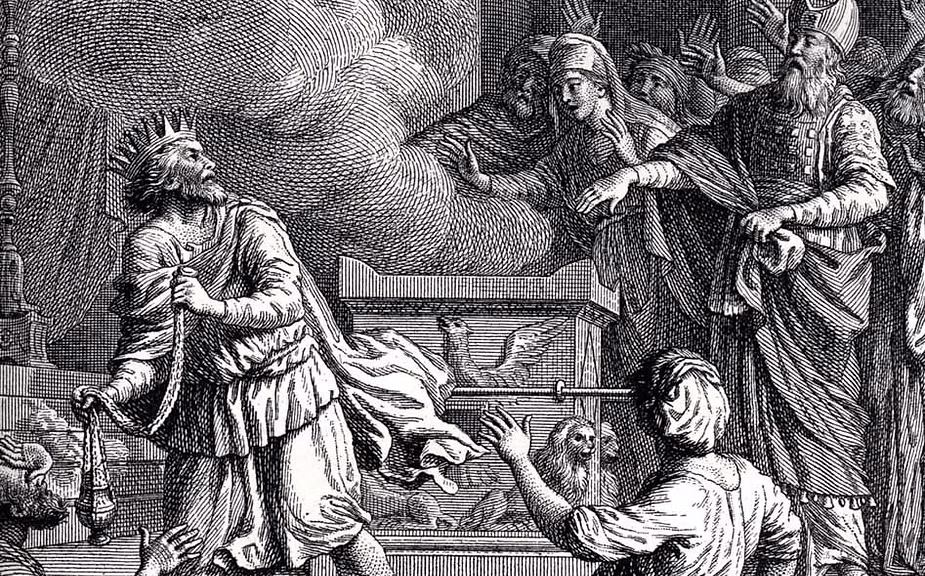
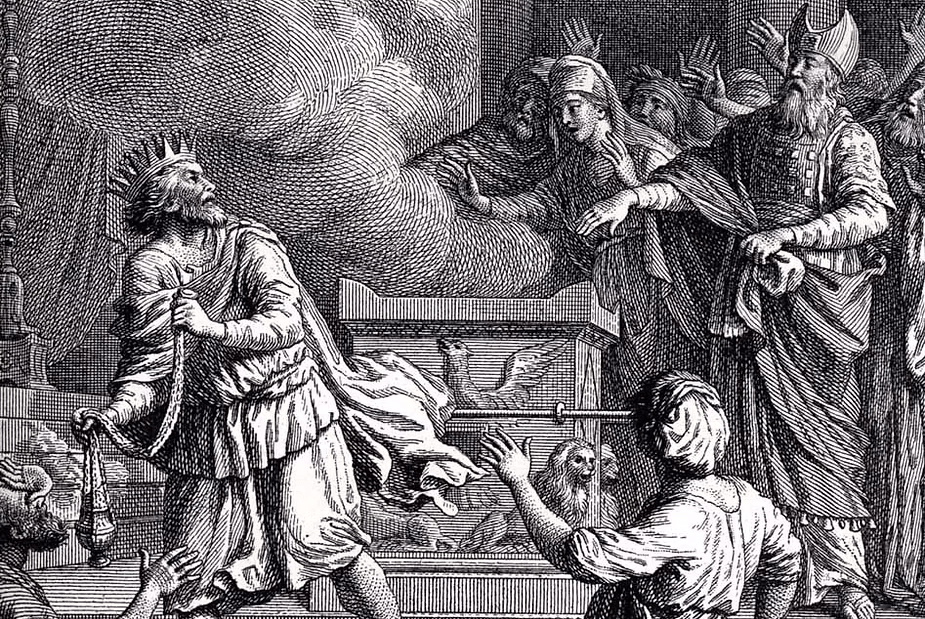
When we read, “Solomon loved Yahweh, walking in the statutes of his father David,” this gives the impression of a one-way love: Solomon’s love of Yahweh. The same words can also be read that Yahweh loved Solomon, whenever Solomon walked in the statutes of his father David. What is easy to overlook is the NRSV translation of “only,” which I have adjusted [in bold type] to say, “except that.” The Hebrew written is “raq,” which means “but, even, except, howbeit howsoever, at the least, nevertheless.” This small word states what Yahweh did not love that Solomon did. When that exception is said to be, “he sacrificed and offered incense at the high places,” it must be understood that “high places” were in the presence of the Ark of the Covenant, which was kept hidden behind a curtain, where only a high priest could enter and make burnt offering of incense.

In the history of the nation of Judah, which would come after Solomon’s reign ended and the two regions split into two separate nations, King Uzziah was said to be the second greatest of the kings of Judah, who reigned for fifty-two years. After forty-one years of excellent rule, Uzziah tried to burn incense at the altar in the temple and was stricken with leprosy. That physical curse came from Yahweh, because Uzziah had broken the rules. Of this, the Wikipedia article on Uzziah states this:

“[Uzziah] entered the Temple of Yahweh to burn incense on the altar of incense. Azariah the High Priest saw this as an attempt to usurp the prerogatives of the priests and confronted him with a band of eighty priests, saying, “It is not for you, Uzziah, to burn incense to the Lord, but for the priests, the sons of Aaron, who are consecrated to burn incense.” (2 Chronicles 26:18). In the meantime a great earthquake shook the ground and a rent was made in the temple, and the bright rays of the sun shone through it, and fell upon the king’s face, insomuch that the leprosy seized upon him immediately (Josephus Flavius, Antiquities IX 10:4). Uzziah was suddenly struck with tzaraat before he had offered the incense (2 Chronicles 26:19), and he was driven from the Temple and compelled to reside in “a separate house” until his death (2 Kings 15:5, 27; 2 Chronicles 26:3). The government was turned over to his son Jotham (2 Kings 15:5), a coregency that lasted for the last 11 years of Uzziah’s life (751/750 to 740/739 BC).”

It must be realized that Solomon broke the rules of Moses and he did not follow the advice of his father David, who said: “observe what Yahweh eloheka requires: Walk in obedience to him, and keep his decrees and commands, his laws and regulations, as written in the Law of Moses.” In that use of “Yahweh eloheka” the meaning says David expected Solomon’s soul to be merged with Yahweh’s Spirit, so Yahweh was not only Solomon’s divine Husband, but Solomon (like David) would be one of Yahweh’s elohim – the extensions of Yahweh on earth in the flesh. To be one of Yahweh’s elohim, Solomon would have to fully submit his self-will and self-ego to Yahweh, as Yahweh’s wifely king.

When we read, “The king went to Gibeon to sacrifice there, for that was the principal high place; Solomon used to offer a thousand burnt offerings on that altar,” that is a statement of ‘field trips’ Solomon would make, north of Jerusalem, while the Temple of Solomon was being built. It was in Gibeon that Solomon’s dream occurred, where he spoke with God. Following the promise, “If you will walk in my ways, keeping my statutes and my commandments, as your father David walked, then I will lengthen your life,” Solomon went to Jerusalem and offered burnt offering. Not read aloud, but stated in verse fifteen is this: “Then Solomon awoke—and he realized it had been a dream. He returned to Jerusalem, stood before the ark of the Lord’s covenant and sacrificed burnt offerings and fellowship offerings. Then he gave a feast for all his court.”

In the history of Solomon, it is said he lived to be sixty. David lived to be seventy. The fact that Solomon did not have a live that exceeded the length of his father says Solomon did not walk in the ways of Yahweh and he did not keep Yahweh’s statutes and commandments. With this known, one needs to take a closer look at what occurred in this dream that Solomon had.

We read, “At Gibeon Yahweh appeared to Solomon in a dream by night; and said elohim, “Ask what I should give you.” This appearance comes after we are told, “The king went to Gibeon to offer sacrifices, for that was the most important high place, and Solomon offered a thousand burnt offerings on that altar.” This boy king had prior [not read aloud] married an Egyptian princess, to bring a Gentile [maybe] alliance, which subverted total faith that Yahweh would protect the people of Israel. Solomon then had a temple built to replace the tabernacle that David had established in the City of David [formerly Jebus]. Nathan was still alive and advising Solomon, so either Nathan no longer talked with Yahweh (after David’s death) or Solomon rejected the advice of a prophet, which said Yahweh does not want a house built for him. It was while that temple was being built [along with other palaces and walls of defense] that Solomon took the time to go break a law of Moses, with one thousand slaughtered animals burnt as an offering [not to Yahweh] but to Solomon’s new reign. Therefore, when Solomon heard a voice ask, “What should I give you,” he was too stupid or ignorant to understand the question was about punishment, not reward.

The failure of Solomon to realize this was Yahweh speaking to him through divine possession, which was the Spirit merged with Solomon’s soul – an elohim – it was not Yahweh speaking to Solomon, but his ego. When Solomon responded to the question by saying, “You have shown great kindness to your servant, my father David, because he was faithful to you and righteous and upright in heart,” this translation misses an important aspect. Where the translation says, “he was faithful to you and righteous and upright in heart,” the Hebrew is “hā·laḵ lə·p̄ā·ne·ḵā be·’ĕ·meṯ ū·ḇiṣ·ḏā·qāh ū·ḇə·yiš·raṯ lê·ḇāḇ ‘im·māḵ.” That literally translates to say, “he walked with the face of truth with righteous and uprightness of soul with you.” That says David was blessed by Yahweh when he wore His face of truth and led a life directed by Yahweh’s marriage with David’s soul. This was not Solomon knowing this, but the elohim that possessed his soul.

Solomon’s ego then assumed it was that marriage to Yahweh that brought about little baby Solomon to rule after daddy was dead. That ignorance does not know that when David stole another man’s wife, forced her to have sex with him (because he was king and had that power), which brought about her pregnancy with Solomon, causing David to lie to keep Solomon from being his responsibility and then murder when he could not get out of that, then David had stopped that relationship with Yahweh that brought David’s soul such great kindness. Solomon’s ego assumed he deserved to rule. Thus, his ego heard the question, “What should I give you?” as an opportunity to enhance himself further.

To read Solomon say, “I am only a little child and do not know how to carry out my duties,” that must be understood as an admission of fear. Everything Solomon had done, up to this point in his reign, he had done because David gave him advice. Now that there was no external guide supplying him with suggestions for action, little boy Solomon wanted to forego any need for a prophet to tell him what to do. Solomon did not want to rely on Yahweh to tell him directly what to do either. Therefore, Solomon asked for himself to be like a god on earth.

In this aspect of Solomon admitting his fears about being too stupid to rule as a child, knowing others would readily take advantage of his lack of knowledge and mature wisdom, he spoke much unlike David. David had the experience of a shepherd, one who was led by the Spirit of Yahweh to know no fear. Had Goliath faced an Israel led by Solomon, it would have fared no better than the fear that shook Saul. Most likely, a Solomon-led Israel would have surrendered, because he admitted he did not know how to lead out or lead in. There was no fight in Solomon, other than for self-preservation.

Solomon then said, “So give your servant a discerning heart to govern your people and to distinguish between right and wrong. For who is able to govern this great people of yours?” In the words that have been translated to state, “give your servant a discerning heart to govern your people,” the word translated as “heart” [“lêḇ”] must be seen as a soul. A soul equates to a self, which is a request to be a god – an elohim – that is capable of “understanding how to judge Yahweh’s people.” David had been a true “judge” of the Israelites, because Yahweh controlled his soul. Now, Solomon wanted to have full control to himself.

When Solomon then continued, stating “to distinguish between right and wrong,” or “between good and evil,” this is a request that says the soul of Solomon was led by the serpent that tricked Eve to eat the fruit of the tree that leads a soul to be banished from heaven. This must be read as Solomon’s soul seeking banishment from Yahweh’s advice. Rather than submit his soul to Yahweh, so Yahweh would lead him in response to his prayers, which included Yahweh speaking to a true prophet to guide Solomon with faith, Solomon asked to be free of Yahweh’s involvement in his rule over God’s people. The people would then be left to follow Solomon’s lead, not Yahweh’s.

This is where having been written about Yahweh telling Samuel to anoint David, when Yahweh then poured out His Spirit into David’s soul, which remained with him forever, nothing like that being written about Solomon speaks a lot about how Solomon was nothing like his human father. Like the sons of Eli, the sons of Samuel, and the sons of David – all three true judges of the Israelite people – Solomon was as corrupted as are all sons of human fathers. Therefore, the people of Israel would be led by having true judges sent by Yahweh, so their marriage to Yahweh’s Spirit would flow from them to the people, leading the people to follow the lead of Yahweh, through a judge. Solomon’s soul was so devoid of Yahweh’s presence that the people of Israel would refuse to follow his son, after Solomon’s death.

This is where it is vital to realize that “Yahweh,” “elohim,” and “adonay” are not references to one and the same. Both “elohim” and “adonay” are plural forms of “gods” [from “el”] and “lords” [from “adon”], neither of which is a fixed statement of Yahweh’s presence. Certainly, a soul married to Yahweh is divinely possessed, so a soul in union with Yahweh’s Spirit becomes a divinely led “elohim,” a soul can equally be possessed by evil spirits, which enslave a soul to serve its flesh and not Yahweh. These evil spirits gaining possession of one’s soul-body then become that soul-flesh’s “lords.” Thus, I have adjusted verses ten and eleven in the above text, where the proper translation should say, “It pleased adonay that Solomon had asked this” and “elohim said to him”. This says the dream experienced by Solomon was not truly Yahweh in possession of bad boy King Solomon, when asked what punishment he deserved; although Yahweh was well aware of this conversation.

For verse ten to say, “It pleased adonay that Solomon had asked for self-control,” that says the “lords” of Solomon were all of the flesh, not of a soul divinely led. For verse eleven to then say, “elohim said to him, “Because you have asked this, and have not asked for yourself long life or riches, or for the life of your enemies, but have asked for yourself understanding to discern what is right, I now do according to your word,” this is nothing short of a pact being made with Satan. Solomon’s elohim was not Yahweh’s Spirit making promises to his flesh, but Satan promising worldly powers, in exchange for Solomon’s soul.

The reward for breaking the rules of a non-priest of the tabernacle burning sacrifices and incense being to grant Solomon a bigger brain that anyone ever possessed before was not given by Yahweh. Instead, it was allowed by Yahweh, as Yahweh knew the soul of Solomon when He placed it into his body of flesh at birth. Solomon was the child of sin; and, he would be the perfect new king to lead a nation of people to ruin, becoming the model of how wrong minds can be, when they are led by Satan. Therefore, the truth of Yahweh’s promise came through as the hypothetical, “If you walk in obedience to me and keep my decrees and commands as David your father did, I will give you a long life,” knowing Solomon could only break the rules and walk according to his own path of self-righteousness.

When verse fifteen [not read aloud] says, “Then Solomon awoke—and he realized it had been a dream,” this says Solomon was living a dream. The soul state of being is according to the ways of the flesh, such that to dream is to enter the everlasting realm of eternity, where true life never ends. For Solomon to “awaken” says he returned to the realm of death that is the material world. The think one has “dreamed” of promises from God, that says Solomon no longer believed in Yahweh. He saw Yahweh as a dream, and his new wisdom said dreams are not real. Therefore [also not read aloud], Solomon went to his new Temple and offered himself some fresh kill sacrifices, knowing there was no God who could ever punish a god on earth.

This reading option to be read on the twelfth Sunday after Pentecost, when one’s own personal ministry to Yahweh should already be well underway, is a lesson in selfishness. Anyone who believes he or she can break the laws of Moses and make up new rules [said to be what Jesus meant, as if one’s brain can figure out what Jesus meant] means one is playing a role like that of young King Solomon. One sees Solomon as being given the gift of great wisdom, when such a gift is actually a curse. It is the brains of the world that lead the people away from a commitment to Yahweh. The seminaries of Christianity have long since given up belief in Yahweh [they now call him a generic “Lord”], as if being Jesus resurrected is only a dream, one which can never come true.

Ministry to Yahweh means submitting one’s heart, mind and soul to Yahweh, out of the love of marriage. One does not think what is best or what is worst, as one only acts according to the divine possession of Yahweh’s Spirit. One’s personal “Lord” is Jesus, the Son of man reborn as one with one’s submissive soul. One becomes like young David, not like young Solomon. One does not point to the diplomas and plaques of achievement in a church that serves an organization, not Yahweh and certainly not the people who choose to believe in a God. A true priest of Yahweh does not teach dreams that are beyond materialization. They teach the reality of dreams come true.