
Tag Archives: 1 Peter 3:18-22

Mark 1:9-15 – The path to the LORD requires testing

In those days Jesus came from Nazareth of Galilee and was baptized by John in the Jordan. And just as he was coming up out of the water, he saw the heavens torn apart and the Spirit descending like a dove on him. And a voice came from heaven, “You are my Son, the Beloved; with you I am well pleased.”

And the Spirit immediately drove him out into the wilderness. He was in the wilderness forty days, tempted by Satan; and he was with the wild beasts; and the angels waited on him.

Now after John was arrested, Jesus came to Galilee, proclaiming the good news of God, and saying, “The time is fulfilled, and the kingdom of God has come near; repent, and believe in the good news.”

——————————————————————————–

This is the Gospel selection from the Episcopal Lectionary for the first Sunday in Lent, Year B. It will next be read aloud in church by a priest on Sunday, February 18, 2018. It is important as the testimony of Simon Peter, through Mark, who was a disciple of John the Baptizer and Jesus, who knew that both of those holy guides had endured extreme tests of piety before beginning ministries that served God.

This reading is accompanied by the reading from Genesis (9:8-17) that tells of God’s covenant with Noah, and all life forms that survived the Great Flood, that committed, “never again shall there be a flood to destroy the earth.” The sign of that covenant would forevermore be the rainbow.

The accompanying Epistle is from Peter’s first letter to the churches of Asia Minor (modern Turkey), where Peter related the presence of the Holy Spirit as a covenant similar to that made between God and Noah. Peter wrote, “And baptism, which [the Great Flood] prefigured, now saves you– not as a removal of dirt from the body, but as an appeal to God for a good conscience, through the resurrection of Jesus Christ.” This then becomes metaphor that makes the rainbow be seen as the baptism of the Holy Spirit, connecting one on earth to the right hand Spirit of God in heaven. Through a rainbow God speaks, “You are my Son, the Beloved; with you I am well pleased.”

As a lesson for the first Sunday of Lent, Peter is saying (through Mark) that one must first hear the voice of God, which streaks across the sky like lightning, arcing down to those who take the time beg for forgiveness of the sins recognized as of their own doings. Second, THE LENTEN MESSAGE is one who hears this voice and is immediately driven by the Spirit out into the wilderness, where one’s sincere repentance is tested. Third, as a result of having successfully overcome the addictive temptations of an evil world, one becomes a minister for God, as the embodiment of Jesus Christ.

Those three steps are the demands required by God of all who seek the reward of heaven and eternal bliss. That means no steps can be avoided and no steps can be assigned to a surrogate.

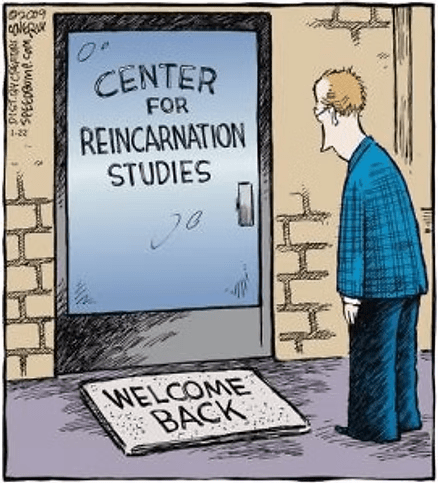
If it was easy to get into heaven, people would just live anyway they pleased and then add at the end an, “Oh by the way God, I am sorry for all the fun I had being a sinner” apology. There would be no need for heaven because being reborn back on Earth [reincarnation] would be the best reward possible [except the losing all your possessions part].
In the story of Noah and the Great Flood, Noah was the last descendant of the great Patriarchs, who at the age of 500, when his grandfather Methuselah reached the end of his life, the flooding rains came. Prior, he heard the voice of God tell him to prepare for a world-wide flood, where he had to build a large boat in the middle of dry land. He did that and was ridiculed by sinful human beings who saw that as unnecessary work.  They mocked Noah for listening to a voice they could not hear. Thus, the prerequisite for baptism by the Holy Spirit (the Great Flood) is to follow one’s heart, with a desire to make God happy, rather than follow the crowd down the path to oblivion.

One has to see the work of building an ark as a test of devotion.  Noah building an ark to God’s specifications is then a model for the forty days and nights Jesus spent in the wilderness.  Both Noah and Jesus had a plan, although nothing is written that details the plan God gave Jesus.

The forty days and forty nights of rain, followed by 150 days that the high waters prevailed, are saying that Noah and his family spent time on turbulent seas being tested after they had proved their faith by building the ark.  Their faith saved them, although the voyage took them to an unknown land.  A similar test came to Jesus after he spent forty days in a bone dry dessert – the test of his ministry.

When Mark wrote that Jesus, “was with the wild beasts; and the angels waited on him,” was not Noah on the ark with pairs of wild beasts, of every kind? Was the ark not kept afloat by angels, just as the needs of Jesus were met? Did not Moses pray to God for water to be found in dry land of the Sinai, with God delivering?  Likewise, Noah (who was not a sailor) and Jesus (who was not like John the Baptist) had faith, but stayed in constant communication with the LORD, through prayer.
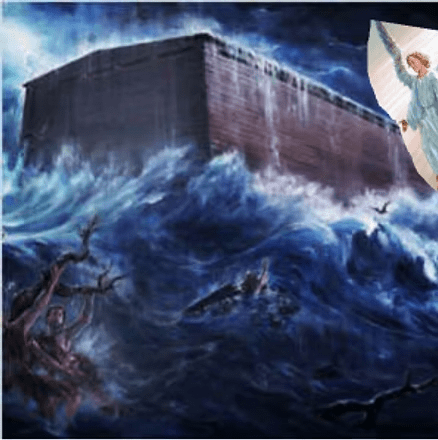
A test of faith might only officially be over forty days and forty nights, but if one is crying out in the wilderness for the test to finally be over, then one is not ready for that test. One is not “up the creek without a paddle,” one is drowning in a Great Flood without an ark. Jesus aced his test because he already had made a lifelong covenant with the LORD. Satan cannot temp one with that holy survival kit handy. However, Satan has a way of finding a way to tempt the common survivalist, one who does not pray, thus cannot hear the voice of God within.

When Peter wrote in his letter, “Christ also suffered for sins once for all, the righteous for the unrighteous, in order to bring you to God” (1 Peter 3:18), he was basically saying a Christian has to hear the voice of God warning one of a coming Great Flood; but rather than that voice saying to build an ark for survival, one must be reborn as Jesus Christ. That is the only way to survive a forty day test of faith. Christ within cleanses one of the fear and guilt of sin, turning the unrighteous righteous.  Christ within brings one to God.

Being one with God and reborn as Christ means Lent is not a New Year’s resolution (i.e.: an empty promise made to oneself). Lent is the test ride of a new YOU, a YOU that has fallen in love with God and become married into a new commitment and devotion that serves only God.

Lent is not a prescribed period of time when one is forced to comply with unwanted limitations. Lent is personal time spent asking God to write His laws on one’s heart, and explain those laws through the Holy Spirit’s knowledge, so that one finds only joy and happiness from the most barren of existences.

Lent is having one’s eyes opened, to see the illusion that the worldly domain really is and to come to the realization that no illusion – no dream – is worthy of sacrificing eternal bliss to gain.  Heaven is the reality we escaped, but need to return to.  However, when our souls fell to earth, we fell asleep and dreamt, thinking vivid dreams are real.  Jesus is the call to wake up and return to heaven.

When one sees Peter having told Mark that Jesus went to Galilee proclaiming the Gospel at the beginning of his ministry, it is easy to overlook how he said, “After John was arrested.” John the Baptizer held Jesus in his arms in the flooding waters of the Jordan River, so he too heard the voice of God speak. John also was baptized by the Holy Spirit at that time, so the rainbow arched into him, making him ready for his test in the wilderness that became a Roman prison.

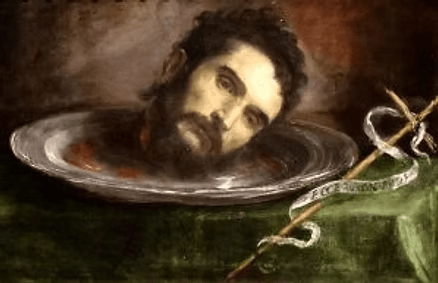
John the Baptist would give up his life for his faith in God. So too would Jesus. So too would the Apostles of Jesus. Therefore, Lent is not about being forced to do without something (sacrificing one thing), while still holding onto all the other addictions that seem impossible to let go [where is your cell phone now?].  Lent is a test of one’s readiness to turn away from a world that offers illusions that suggest it is okay to sin, if everyone else is sinning.  Instead, one must be prepared “to be arrested” … stopped … willing to sacrifice the brain in one’s head (even have that head served on a silver platter), in order to ask others to do the same.

Jesus never forbade anyone from making Fat Tuesday a theme for a life, 365 days a year serving self, grabbing onto all the physical pleasures one desires. Free will means free to sin, because sins of ego are only possible in the earthly domain.  Doing as one pleases is what makes a worldly existence seem like a vacation for some; while others rue the day they were born, because the life they have been reborn into does what it pleases with them. Living for today is blindly walking the path of reincarnation; but, like the saying goes, “You can pay me now or pay me later, but pay you will.”
That world existed when God told Noah, “Enough is enough.  Get ready, because I am washing the slate clean.” Peter wrote of those past sinners as being those, “who in former times did not obey, when God waited patiently,” to no avail.

The ruler of the world is Satan, who cares nothing about humanity. Satan tempts for the purpose of trickery. He desires to steal souls from God, and he uses the illusions of the world to get humanity to do wicked things. God promised not to wash the filth of humanity off the face of the earth with another Great Flood. Instead, the rainbow he would send would be called Jesus.

Jesus brought salvation to the world, just as Noah was told how to build an ark. However, the idea of an ark did not save Noah and the wild beasts he took with him; in the same way, the idea of Jesus saving people does not prepare them to be tested, as ready to be saved.

Lent is about a willing test that one has been prepared to take.  It is like forty days of study prior to the SATs or GREs or GMATs or any other difficult test of one’s preparedness  [name your hardest standardized test here].

Lent is like seven years of hard-nosed collegiate study, so one can begin a career that makes all the hard work worthwhile.  Children seldom prepare for such tests without a good father figure making demands on their preparation, telling them to use their talents wisely.  Likewise, Lent comes when one has heard the voice of God speak out loud and say, “You are my Son, the Beloved; with you I am well pleased.”

Lent is not a test of survival skills. Lent is a test of one’s readiness to give up one’s life for God, so Jesus can return and spread the Word through your body, causing your mouth to say, “Repent, and believe in the good news.”

You may now turn over your exam sheet and let the test begin NOW.

1 Peter 3:18-22 – Realizing Jesus died so we can become him reborn

Christ also suffered for sins once for all, the righteous for the unrighteous, in order to bring you to God. He was put to death in the flesh, but made alive in the spirit, in which also he went and made a proclamation to the spirits in prison, who in former times did not obey, when God waited patiently in the days of Noah, during the building of the ark, in which a few, that is, eight persons, were saved through water. And baptism, which this prefigured, now saves you– not as a removal of dirt from the body, but as an appeal to God for a good conscience, through the resurrection of Jesus Christ, who has gone into heaven and is at the right hand of God, with angels, authorities, and powers made subject to him.


——————–


This is the Epistle reading selection for the first Sunday in Lent, Year B. It accompanies an Old Testament reading from Genesis, which tells of God’s covenant with Noah, where no other lives would be lost due to a great flood. It also is paired with the Gospel reading from Mark, when John baptized Jesus, where the verbiage of his coming up and the heavens tore apart is closely related to the rainbow sign in Genesis. Peter mentions that Genesis event in this reading, while relating Noah and his family as saved in a comparative baptism. This becomes the important element to grasp in his words here.

Because Peter was a Saint, therefore filled with the Holy Spirit and the resurrection of Jesus Christ after Pentecost Sunday, he wrote (as did all prophets in the Holy Bible) using divine language. Just as Paul is known to be the most prolific writer of letters [epistles] in the New Testament, which have seemingly strange, long-winded statements that run on and on, making it difficult to keep up with a central theme – the way normal language syntax is designed – translations of Peter (and Paul) take liberties to fit divinely selected words into a standard syntax format, simply to make understanding easier. A perfect example here, in these five verses of Peter’s letter, is where the translation above says, “Christ also suffered for sins once for all, the righteous for the unrighteous, in order to bring you to God.” That gives the impression, which has become a cornerstone of belief in Christian denominations, that Jesus died (suffered for sins) so everyone (the unrighteous) can be saved. However, that is not truly what Peter stated, nor what the intent was.

The best way to realize the divinity of what is written by a New Testament Saint is to pay close attention to the Greek text, especially the punctuation [implied, if not directly written], which is available online, by several websites. I use the Interlinear provided by BibleHub. From their presentation of the Greek [along with literal translations and links to the root words, for deeper meaning], these five verses can be broken down into segments of words, contained within each verse. These segments are like divine sentences, which make important full statements that must be understood before trying to link all the segments of one verse into one statement. In these five verses there are 90 words written, with 19 comma marks and only one period [at the end]. Verse 18 does not begin with a capitalized first word. There are eight capitalized words in the ninety, being either God, Jesus, Christ, or Noah.


18

hoti kai Christos hapax perihamartiōn epathen ,
dikaios hyper adikōn ,
hina hymas prosagagē tō Theō ,
thanatōtheis men sarki ,
zōopoiētheis de pneumatic ,

because kai Christ once for sins suffered ,
righteous for unrighteous ,
so that you he might bring to God ,
having been put to death indeed in flesh ,
having been made alive however in spirit ,

19

en hō kai tois en phylakē pneumasin ,
poreutheis ekēryxen ,

in which kai to the in prison spirits ,
having gone he preached ,

20

apeithēsasin pote ,
hote apexedecheto hē tou Theou makrothymia en hēmerais Nōe ,
kataskeuazomenēs kibōtou ,
eis hēn oligoi — tout’ estin ,
oktō psychai — diesōthēsan di’ hydatos ,

having disobeyed at one time ,
when was waiting this those of God longsuffering in days of Noah ,
being prepared with ark ,
in which a few — that is ,
eight souls — were saved through water ,


21

ho kai hymas antitypon nyn sōzei baptisma ,
ou sarkos apotheosis ,
rhypou alla syneidēseōs agathēs ,
eperōtēma eis Theon ,
di’ anastaseōs Iēsou Christou ,

which kai you corresponding to now saving baptism ,
not of flesh a putting away of filth ,
but of a conscience good ,
demand towards God ,
through the resurrection of Jesus Christ ,

22

hos estin en dexia [tou] Theou ,
poreutheis eis ouranon ,
hypotagentōn auto angelōn kai exousiōn kai dynameōn .

who is at right hand this of God ,
having gone into heaven ,
having been subjected to him angels kai authorities kai powers .

When the words of Peter are laid out in segments, it can be seen that Jesus dying once was God’s plan to send His Son only one time into a world that has sin everywhere. Whereas God could have easily had Jesus escape death [and he was mysteriously kept from harm several times, when threatened], the plan was for God to become human only one time, so death once could release the model of salvation for a sinful world. The death of Jesus, at the hands and minds of sinners, was due to sin [unrighteous acts]. The release of the Christ Spirit, which goes by the name “Jesus” in human flesh, makes that soul of Jesus be possible for all who are sinners to accept within their flesh, becoming reborn “in the name of Jesus Christ.” Paul and Peter were two such sinners who were saved in this manner [there were many more Saints in the creation of Christianity].

In the third segment of words in verse 18 is the conditional verb that says the one time death of Jesus “might bring” the soul of a sinner “to God.” That is a condition of opportunity, which means the sinner must opt out of an unrighteous state of being [as a sinner] and choose to serve God totally. The choice is up to the sinners of the world. It is not forced by God.

However, God made it possible for a soul to be saved from eternal damnation through the one time opportunity that is Jesus Christ. When Peter wrote the opportunity was to become “alive” in the “spirit,” the use of “alive” says a soul [“spirit”] is condemned to death on the worldly plane, meaning repeatedly being reincarnated into bodies of flesh that are likewise bound to die.

This then leads to verse 19 explaining that the flesh of death becomes the “prison” in which souls that have lived unrighteous lives in bodies of flesh [sinners], because they disobeyed the Law of Moses. As such, Jesus did not die and go to some ethereal place where lost souls meander about, because he immediately came back as Saints [his Apostles], so Jesus could preach to every soul who is imprisoned in a body of flesh, given the opportunity to accept the Holy Spirit and serve God eternally thereafter.

It is then that Peter is led to compare the salvation of God, through the opportunity of being reborn as His Son, in the name of Jesus Christ, to Noah and his family in the ark. The souls of the unrighteous were separated from their bodies of flesh in the Great Flood. When he wrote the segment of words that translate as “being prepared in the ark,” that is a statement of how a disciple become protected from the influence of sin, through devotion and faith in God. It becomes the Christ being compared to the ark that kept “eight souls” from drowning in water, due to their sins. Those eight were but “a few” out of the vast many, but God protected them then by a boat to stay afloat so they would be “saved through the water.” That statement equates the Great Flood to a cleansing of sin, which was ritualized in Jewish cleaning with water. John baptized Jews of their sins “through the water” of the Jordan.

Peter then stated “baptism” after writing about Noah, but this is “corresponding to now saving baptism,” which was not cleansing by water, but salvation by the Holy Spirit. The ark becomes the model of the Holy Spirit, with Noah a Patriarch on the level of Son of God [i.e.: the name of Jesus Christ in the flesh]. This is then not washing flesh of filth, but bringing about a “good conscience,” which is the Mind of Christ knowing past sins have been forgiven [cleansed], never again to return. That absolute confidence comes “through the resurrection of Jesus Christ”.

In that “resurrection,” one must realize that Jesus of Nazareth – a man – suffered death, was buried, and then resurrected to life in the same body of flesh that had lost its life. While that can be seen as a power of being God’s Son – the Christ – the body of Jesus did not resurrect as Jesus Christ. The body of Lazarus was also resurrected to life in the same body of flesh; so, Lazarus was resurrected as Lazarus, although his soul had become married to God and Lazarus served God as His Son, until he physical death returned to that body of flesh. Jesus ascended as Jesus of Nazareth, just as Elijah ascended as Elijah. The resurrection of Jesus Christ was what came upon all who were disciples that became Apostles [Saints]. Therefore, Peter said salvation demands one become the “resurrection of Jesus Christ.”

The final verse [22] then talks not of the amazing powers of Jesus in heaven, but of Jesus Christ resurrected in the body of flesh of a new Jesus having been reborn on earth. In Peter was reborn his flesh as “the right hand of God.” The same in Paul and every other Saint. When Peter wrote the segment of words that translate “having gone into heaven,” this is a statement of a figurative death, which means to be reborn as Jesus Christ and become the right hand of God on earth, one’s ego or self-image must be that “having gone.” The replacement of the self-ego is then a spiritual presence that surrounds one’s soul. The use of “heaven” is then the equivalent to the ark that surrounded Noah and his family.

After one has died of self-ego and been reborn in the name of Jesus Christ, the God will have commanded that saved soul have the assistance of God’s elohim – His angels, along with one’s flesh being given the authority to speak for God the Father, as the Son of God reborn. Finally, a Saint will be given the same “powers” that Jesus of Nazareth possessed, which Paul called the gifts of the Holy Spirit.

——————–

As a reading presented aloud on the first Sunday in Lent, as the fifth day of sacrifice out of forty, one should see the reference to Noah as a statement that five days of flooding means there is nothing of land that can become a place of refuge. Land is the place of sin, with the earth being purged of its evil. The ark is the only place where safety can be found. One cannot think jumping overboard is a good thing to do at this time. This reading then calls for faith in God’s Holy Spirit.

When this reading is joined with the reading from Mark’s Gospel, where we read of the dove lighting upon Jesus, this should be seen as when the forty days have ended and a dove returned with a sprig of hope for the land having returned, this time cleansed. The period of Lent is a mystical time of forty days that is not about the length of time spent forcing one’s will to accept denial of sin; but it should be seen as a time of sacrificing self-will until one can handle returning to a world that loves sin more than God, without any fear of returning to sinful ways. Lent is about faith that God will save you, through the resurrection of Jesus Christ within one’s soul-flesh being, so one feels the power of becoming God’s right hand, supported by angels.