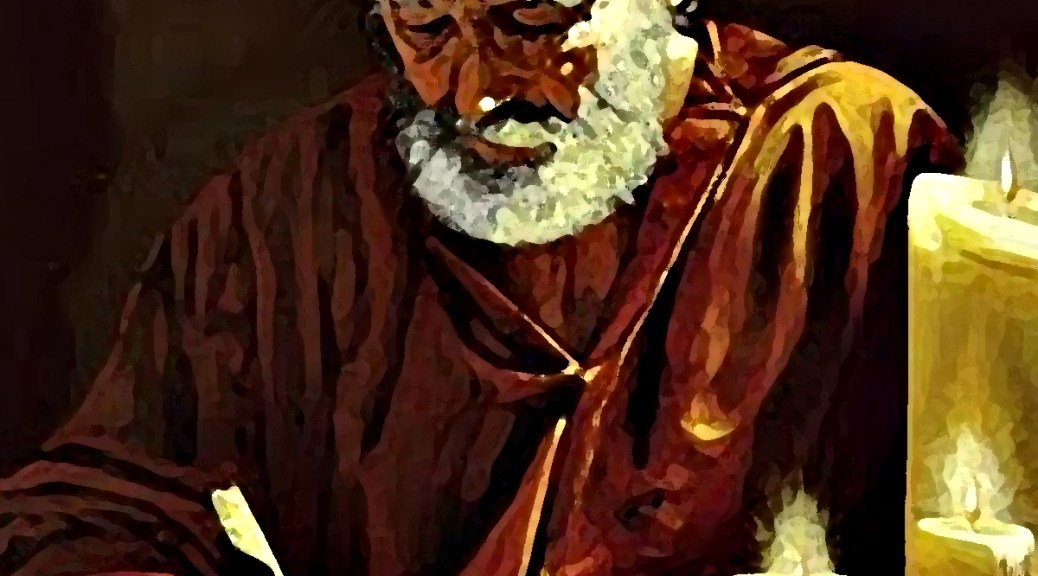
How can we thank God enough for you in return for all the joy that we feel before our God because of you? Night and day we pray most earnestly that we may see you face to face and restore whatever is lacking in your faith.
Now may our God and Father himself and our Lord Jesus direct our way to you. And may the Lord make you increase and abound in love for one another and for all, just as we abound in love for you. And may he so strengthen your hearts in holiness that you may be blameless before our God and Father at the coming of our Lord Jesus with all his saints.
———————————————————————————————————-
It should be realized that chapter three of this epistle addresses Timothy’s visit to Thessalonica and his subsequent return, to rejoin Paul and Silas [possibly in Corinth]. There were a large number of Jews living in Thessalonica, which violently rejected the Gentile converts to Christianity, whom some Jews had accepted, themselves having also converted. Those who remained non-believers then persecuted their fellow Jews. Timothy had returned with a report on how well the Christian Thessalonians were maintaining their faith, against those external pressures. The first eight verses of this chapter [omitted from this reading] speak of Timothy’s report.
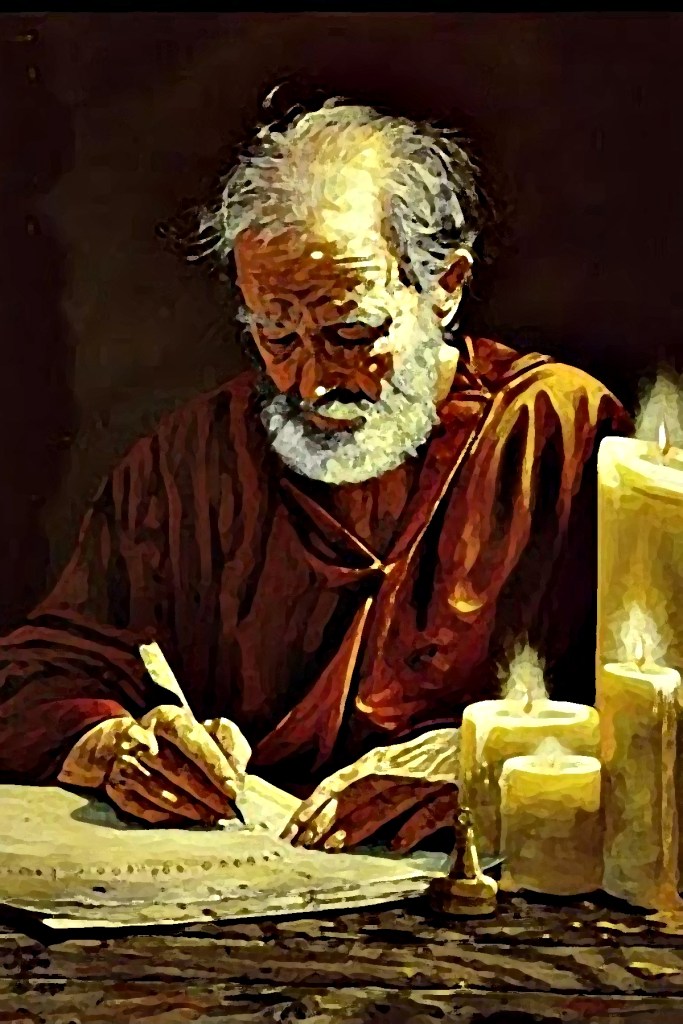
It is also important to grasp that Paul did not write epistles that were void of holy text. Everything that appears to be ‘news of the day’ is lasting in application, as long as true Christians walked the face of the earth. As such, Paul wrote letters of encouragement to those who were filled with God’s Holy Spirit, reborn as Jesus Christ. That was how a Gentile, with little-to-no knowledge of Jewish customs and history, could come to have faith in Jesus of Nazareth as the Messiah promised to the Jews. Paul’s letters were then to them yesterday and those today who struggle with maintaining that inner commitment to good, while the world constantly beats down on them with the challenges to resist sin and evil.
As with all of Paul’s letters [and the other Epistles of the Apostles], it is best read when broken down into segments, based on punctuation marks [real or imagined]. I have done this again here, while also incorporating the word “kai” as a symbolic word that lets the reader know to look at the words following its presence with an eye towards a pronounced statement. According to the possibilities of translation allowed by the Bible Hub Interlinear page for 1 Thessalonians 3, the following should be compared to the publicly read text above:
9. What for thanksgiving are we able together of God to give concerning you in return for all the joy that we rejoice because of you ,
before the God of us ,
10. night
kai day ,
exceedingly imploring union companions to see your experiences face kai to supply the things lacking in the faith of you ?
11. Himself now one God
kai Father of us ,
kai one Lord of us Jesus ,
may direct the way of us to you .
12. you now ,
the Lord may make to increase ,
kai to abound circumstances in love toward one another ,
kai toward all ,
just as also we toward you ,
13. toward people to establish yourselves one intensions ,
blameless in holiness before the face one God kai father of us at this coming of the Lord of us Jesus ,
after all those saints of him .
amen .
This reading begins with the capitalized Greek word “Tina,” which is a form of the root pronoun “tis,” meaning “who, which, what, why, how, or who.” Each often introduces a question, which is why verse ten ends in a question mark. The capitalization makes this more a restatement of the ending segment of verse eight.
There Paul wrote: “if you are standing firm in the Lord,” where the capitalized Greek word “Kyriō” is written to importantly refer to Jesus Christ. The Christ Spirit is the “Lord” of ourselves [“hymeis” as the plural “you, yourselves”], as high priest in individual kingdoms of God. This makes “Tina” be a reference to “Who,” and not a question intended in that word.
The Greek word “dynametha” is translated as “we are able.” This has simply been translated as “can we,” in the form of a question. The plural number [“we”] is then attached to the root word “dunamai,” which means, “I am powerful, I have (the) power,” and “I am able, I can.” While it is such a normal word in our English vocabulary, that ordinary use makes one overlook the significant difference that give one an abnormal “ability,” based on realizing “Who” brings that “power” to one. This “ability” is “Why” Apostles “give thanks” (from “eucharistian”). When one is filled with the Holy Spirit of God, reborn as His Son Jesus Christ [“standing firm in the Lord”], then all thanks be to God.
When God is within one’s soul, one is filled with the love of God. This is because one’s soul is “together with God” (from “tō Theō”) or “one with God,” bringing that gift of God’s love. This is then “concerning you in return,” where it was one’s love of God that accepted His proposal of marriage. This brings forth “for all the joy” of that marriage union. One stands “before God,” such that the Greek word “emprosthen” implies “before the face of,” by wearing the face of God, having sacrificed one’s self-ego in submission to God’s Will.
The “night” of mortal life means the sins one had before receiving the “joy” of the Holy Spirit. This then turns significantly to the light of “day,” when the Christ Mind becomes the light of Jesus Christ. Whereas the Greek word “deomenoi” can translate as “praying,” accurately so, the word also means, “wanting, needing, and begging,” “extremely in behalf of” (from “hyperekperissou”) Paul, Silas and Timothy, for the Thessalonian Christians to find the same union with God and wear His face before Him also. They prayed to God to supply those Apostles with everything they needed to secure their true faith.
In verse eleven, the capitalized Greek word “Autos” begins, which is an emphatic statement of “Self.” Following the end of verse ten stating “faith of you,” in the plural number (from “hymōn”), the importance is now placed on each individual’s responsibility (as “Himself”) to be “one with God,” just as Paul and his companions had. When that union is assured, then all become brothers in Jesus Christ, such that God is “the Father of ours” [or “us”]. They are brother because there is “one Lord” that is common “with us” – “Jesus.” All of them are then under the “direction” of the Christ Mind.
Due to the report of Timothy to Paul and Silas, Paul then began verse twelve by saying, “you now.” That said that each of the Apostles had been transformed and Jesus Christ had been reborn in them, becoming the new “you” that they “now” had within them. As Jesus Christ in new human flesh, “the Lord may make to increase,” where the future conditional form of “pleonazó” is written (as “pleonasai”). As a church of true Christians in Thessalonica, their numbers would be expected to be “increased,” as each would spread the true of Scripture through the Holy Spirit. They would certainly evangelize naturally, but the conditional would be found in the resistance of others to follow the same path of loving God and sacrificing self to join with God.
Because others must fall in love with God to begin the process of becoming Apostles and true Christians, Jesus Christ in each would cause love to “abound” within the gatherings [“circumstances” or “conditions” of ‘followers” – all possible of “tē”] of the church. Because a church was exclusive to true Christians, and not a club to join or a synagogue where Jews were born with rights to attend, that meant all members were brothers [including women] in the name of Jesus Christ. Through that spiritual relationship, they would all show “love toward one another.” This love would be the example for others to desire to know, as “love” would be visible and felt as a vibration sent “toward all.”
Paul then said the love they would project to others in Thessalonica would be the same as the love he and Silas and Timothy had shown them. It was a deep love that went beyond blood relationships or lifelong friendships. It was a true love of God that was expressed by their being Jesus Christ reborn, projecting the love of truth outward.
Paul then wrote in verse thirteen that ministry is “toward people to establish yourselves” as “one,” where all share the same “intentions.” The Greek words that say this are: “eis to stērixai hymōn tas kardias.” The translation read aloud in church translates those words to say, “may he so strengthen your hearts.” It can also say, “toward union to strengthen yourselves the inner selves.” The point, no matter how one flips the meanings around and viewed them in a Spiritual context, was Paul said that the ministry of Apostles is all about spreading the love of God to others.
As Apostles, all have been cleansed of sins, so all go out “blameless in holiness,” each wearing the face of God “before” those they encounter. The “hearts” of Apostles are sent out to connect with the “hearts” of others, so they too can become “blameless in holiness,” from having been shown the way to go “before the face of” God wearing His face, and no lesser gods. Worshiping lesser gods [self included among many others] is what brings one blame. Wearing the face of God puts one’s soul “in holiness,” making the new self “blameless” as Jesus Christ.
Paul then stated that by pronouncing [from “kai”] “father of us at this coming of the Lord of us Jesus.” This is the second time Paul wrote that in this chapter, with this segment not including “kai” between “father” and “Lord.” The Greek word “patros” is also not capitalized, which is important to see the difference.
The lower-case “father” is what an Apostle is, as an Apostle has been reborn as Jesus of Nazareth, in possession of the Christ Mind. Just as Jesus referred to his disciples as “little children,” he acted as the “father” of those seeking redemption. Jesus spoke the Word from the Father above, such that “God” was a human “father” in Spiritual ministry.
This concept is why a priest is referred to as “father,” because a priest [regardless of human gender] is guiding disciples to become Apostles, just as Jesus “fathered” his little children to grow into Saints. Therefore, it is that act as a rabbi [“teacher”] that makes one a “father of us at this coming of the Lord of us Jesus.” As Jesus Christ reborn, having God the Father within one’s heart, an Apostle touches a disciple spiritually, so he becomes the “father” of a new Jesus [“the Lord of us”].
Once that transformation has taken place [“after”], then “all those” disciples will be “saints,” because they will have been reborn “of him” – “Jesus.” With that, Paul wrote “amēn” (enclosed in brackets), which means “truly” or “so let it be.” The brackets make this statement be supplemental, apart from the dialogue of the text. It acts like an emphasis marker and a prayer of faith that concludes this chapter with a seal of approval.
As the Epistle reading selection for the first Sunday of Advent, beginning the Episcopal lectionary Year C, we find the purpose of ministry is established. That purpose is the spread of love for God and leading by examples, as Apostles in the name of Jesus Christ. It shows the great importance of experience being the requirement to show the children of God how to grow into Saints that bear fruit.
In the scholarly approach to the epistles of Paul, this letter is believed to be one of the first written by the Apostle, some estimating it penned around 50 A.D. Those who use intellectual dissection of ancient documents, who are not led by Spiritual insight, say Paul wrote to the Thessalonians (this first letter in particular) stating different perspectives than expressed in his later letters. The Wikipedia article on the “First Epistle to the Thessalonians” states: “It is perceived to be theologically incompatible with Paul’s other epistles.” However, as the breakdown into segments shows now [here], that assessment is ridiculous.
Chapter three is given relatively little attention, as it is summarized as Paul reporting that Timothy had safely returned from having visited the Thessalonians. As the breakdown into segments shows now [here], Paul wrote ageless words that have little to do with Timothy’s safety and good report on Christianity in Thessalonica. None of the Epistles are limited to simple exchanges of gratuities or pleasantries. They are God’s Word of timeless meaning.
When this Epistle selection is linked to the Gospel reading selection from Luke, where Jesus told of the signs of the End Times, the last line in Paul’s letter can be seen as apocalyptic in warning. The translation read aloud in church says, “And may he so strengthen your hearts in holiness that you may be blameless before our God and Father at the coming of our Lord Jesus with all his saints.” That suggestion becomes a parallel to Jesus’ words of being prepared for Jesus coming in a cloud.
The reference to “he” is not written, but it is assumed that “Jesus” is the “Lord” of all Christians. The question Paul raises in those truly devoted to God should be: Where did “all his saints” come from, if they are coming with Jesus in a cloud, at the End Times?
The answer comes from realizing what the words of Paul truly states. True Christians ARE Saints! They have been made holy by the presence of God and Christ within. They do not come from clouds, like in a Greek tragedy, saving the wicked from that which is due their souls.
Paul wrote to Saints in Thessalonica, encouraging them to forever remain true Christians, leading others to their same saintly status.
So let it be.


 Explaining the Readings