
I know a person in Christ who fourteen years ago was caught up to the third heaven—whether in the body or out of the body I do not know; God knows. And I know that such a person—whether in the body or out of the body I do not know; God knows— was caught up into Paradise and heard things that are not to be told, that no mortal is permitted to repeat. On behalf of such a one I will boast, but on my own behalf I will not boast, except of my weaknesses. But if I wish to boast, I will not be a fool, for I will be speaking the truth. But I refrain from it, so that no one may think better of me than what is seen in me or heard from me, even considering the exceptional character of the revelations. Therefore, to keep me from being too elated, a thorn was given me in the flesh, a messenger of Satan to torment me, to keep me from being too elated. Three times I appealed to the Lord about this, that it would leave me, but he said to me, “My grace is sufficient for you, for power is made perfect in weakness.” So, I will boast all the more gladly of my weaknesses, so that the power of Christ may dwell in me. Therefore I am content with weaknesses, insults, hardships, persecutions, and calamities for the sake of Christ; for whenever I am weak, then I am strong.
——————————————————————————–
This is an Epistle selection from the Episcopal Lectionary for the Seventh Sunday after Pentecost, Year B 2018. In the numbering system that lists each Sunday in an ordinal fashion, this Sunday is referred to as Proper 9. It will next be read aloud in a church by a reader, on Sunday July 8, 2018. This is important because it places focus on the weakness of the individual who is filled with the Holy Spirit, meaning the only strength one can boast of possessing is one’s ability to withstand the tests and temptations of Satan, which are painful tortures.
This reading skips over verse one, which sets the theme from which this reading flows. It states, “Boasting is necessary, though it is not profitable; but I will go on to visions and revelations of the Lord.” (NASB) However, the literal translation from the Greek says (noting spaces to highlight punctuation marks), “To boast , it should not be profitable to me . I will go on to visions and revelations of the Lord .”
Regardless of Paul’s denial of brag, the vital words in verse 1 are “optasias” (“visions”) and “apokalypseis” (“revelations”). Those words can also translate as “supernatural appearances” and “unveilings.” It should be understood that Paul was not introducing normal sights and discoveries that he had seen, during his travels, to the Christians of Corinth. He was turning his letter’s purpose into Spiritual things the Corinthians should then know.
When we read, “I know a person in Christ who fourteen years ago was caught up,” this unnamed “person in Christ” can possibly be identified by Paul’s epistle to the Galatians (believed to have been written 1.5-2 years prior to this letter). There he wrote, “Then after an interval of fourteen years I went up again to Jerusalem with Barnabas, taking Titus along also.” (Galatians 2:1) As the Book of Acts speaks in detail about Paul and Barnabas, during the early phase of Paul’s ministry, it makes more sense to see Barnabas as the one Paul was referring.
When Paul followed that knowledge of “a person in Christ” by stating, “And I know that such a person,” this is the identification of Paul. By reading slowly, in both cases Paul said “I know” (“oida“), which is a statement of personal knowledge. When Paul followed the first “I know” with “a man” (“anthrōpon“), he next followed “I know” with “tontoiouton anthrōpon,” which more accurately says, “I know this like the man.” As such, Paul and his partner in ministry both shared a similar experience, most likely at the same time.
The translations that says “caught up,” which appears twice (once as harpagenta and then as hērpagē) is rooted in the Greek verb harpazó, which means, “seized, snatched away.” This means Paul was not referring to some event where he and Barnabas went willingly into a situation that overwhelmed them. While they experienced times of trouble and persecution as Christians, some which became intense, this cannot be read as the meaning here. Paul had probably discussed old times prior, while in Corinth; so this reference is to an untold experience where he and his partner were “suddenly and decisively taken by an open display of force.”
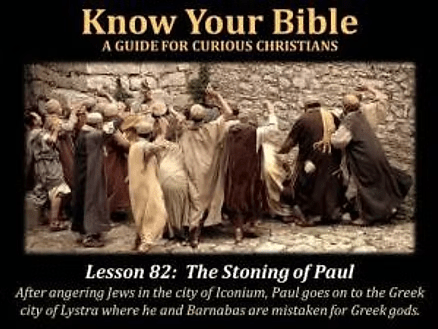
One such experience could be the one written of in Acts 14:5, while the duo was in Iconium and “some Gentiles and Jews, together with their leaders, decided to make trouble for Paul and Barnabas and to stone them to death.” They escaped that plan by leaving town. However, it could have been while they were in Lystra, where Acts 14:19 states, “Some Jewish leaders from Antioch and Iconium came and turned the crowds against Paul. They hit him with stones and dragged him out of the city, thinking he was dead.”
This certainly tells how Paul and Barnabas were suddenly and decisively overcome by force, but importantly in a way that could have separated their souls from their bodies. Such an event probably would have been told prior; but Paul is now adding a new twist to the story by writing here (in remembrance), “whether in the body or out of the body I do not know; God knows.” If Paul did not know if he was in body or not, then he was near death.
The focus is now on a version of death that is referred to as an out-of-body experience (OBE). This is vivid memory that is retained, seemingly when the soul is free to leave the body at death. People reporting these events have told of visual experiences (“optasias”) that are vivid and realistic, yet their minds realize a transcendental departure had occurred that is closer to a dream state. This can then be seen as Paul confessing a period in his life that could have been like sleep, which matches those Gospel comparisons to death-followed-by-resurrection as sleeping. Paul then indicated one who was “in Christ” went to a place only the soul can visit, while out of its body. Paul called it “third heaven” (“tritou ouranou” – lower case).

The translations of the Greek text do not capitalize this place Paul and his companion were “snatched to,” but this reference has become magnified over the centuries as “Third Heaven.” This reference is then dovetailed into the second and third books of Enoch, the Talmud, the Qur’an, the Epic of Gilgamesh, and ancient Hindu texts that refer to “seven heavens.” All of this, as a “Christian” perspective, is then projected upon this one verse of Paul’s second letter to the Christians of Corinth, as supporting all the other references of faith.
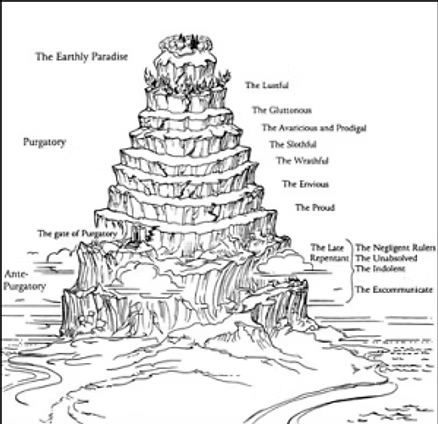
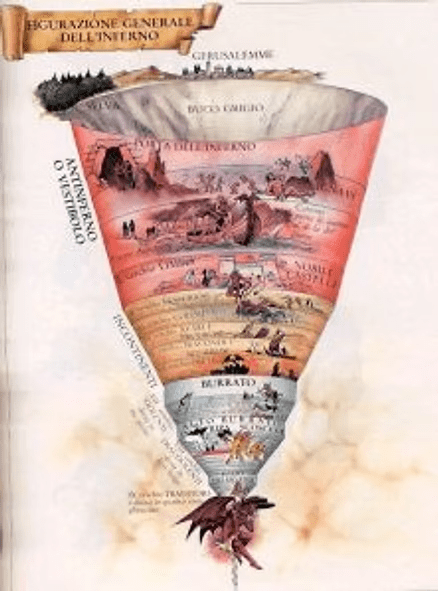
This then leads one to recall the Divine Comedy and Dante’s trilogy that projected a satirical view of the Church’s support of a layering of Hell, Purgatory, and Heaven. In Dante’s mind, the lower levels of hell and purgatory were filled with popes and cardinals, as well as the governors that supported them. His spheres of Heaven were much like the Judaic Seven Heavens, where planets and celestial orbs each symbolized a tier (Third Heaven was influenced by Venus in both models). By Dante calling his heavenly realms “Paridiso” (Paradise), there is then a link to Paul’s statement, “was caught up into Paradise” (“Paradeison” – capitalized).
In the Wikipedia article entitled “Third Heaven,” (capitalized), the information posted refers to elements from the Second Book of Enoch, which alludes to a contrast between the third level of Heaven and Paradise. The article states, “Third Heaven is described as a location “between corruptibility and incorruptibility” containing the Tree of Life, “whereon the Lord rests, when he goes up into paradise.” [Reference: Chapter 8, Second Book of Enoch]
This goes on by adding, “In contrast with the common concept of Paradise, the Second Book of Enoch also describes a Third Heaven, “a very terrible place” with “all manner of tortures” in which merciless angels torment “those who dishonor God, who on earth practice sin against nature,” including sodomites, sorcerers, enchanters, witches, the proud, thieves, liars and those guilty of various other transgressions.” [Reference: Chapter 10, Second Book of Enoch]
This certainly paints a sinister picture of “third heaven,” which forces one to look closer at the Greek word “Paradeison,” which is translated as “Paradise.” The Greek word (capitalized) means, “Paradise, Grand enclosure, Garden, Pleasure-ground,” and the “Upper reaches of the heavens,” which is a view that saw outer space (as we know it) as the first heaven. “Paradeison” is even a reference to the Garden of Eden, as well as “that part of Hades which was thought by the later Jews to be the abode of the souls of the pious until the resurrection.” This last view of “Paradise” is then more comparable to the Purgatory of Dante, rather than the Judaic association of Seventh Heaven being where God is pure light.
7. Araboth (ערבות), The seventh Heaven where ofanim, the seraphim, and the hayyoth and the throne of the Lord are located. (Wikipedia article: Seven Heavens).
It does not make sense that Paul could write about out-of-body experiences for both he and a partner, such as Barnabas, especially if one went to the “third heaven” and the other to “Paradise.” While both could have been two places together, it makes more sense that they saw the same place differently, and reported their feelings to one another afterwards. Still, even more likely, Paul knew his partner was seeing the same as him, as both were “in Christ.” The two were “snatched away” into a near-death state, simultaneously, mesmerized by “visions and revelations” while in God’s total care.
When realizing “Paradeison” can be the same place as Dante’s “Paradise,” akin to the Judaic Sheol, that would make “third heaven” capable of being a dark place.

The tone of the remainder of this reading supports that assessment. The association to Eden and the word etymology visualizing a Garden brings to mind recall that the serpent caused so many problems for Adam and wife there. Therefore, it is not hard to see how misery can be a reality, while in a place whose illusion is of something wonderful.
In this regard, “third heaven” becomes a trick of Satan. Paul and partner were forcibly taken to “a terrible place” with “all manner of tortures.” First impression could have been the lure and illusion of something wonderful; but as the letter proceeds, there were pains that one would not expect a spiritual self to experience.
Getting this picture in mind makes it easier to understand how the “revelations” or the “unveilings” (stated in 2 Corinthians 12:1) that were discovered by Paul’s soul in Paradise were then stated as: “[I] heard things that are not to be told, that no mortal is permitted to repeat.” That implies Paul saw things they were astounding, but the voice of God explained the truth behind the “visions.”
It was at this point in the letter that Paul wrote, “On behalf of such a one I will boast, but on my own behalf I will not boast, except of my weaknesses.” This should be seen as the duality of one man – Paul – who was both alive in Spirit (a truth worthy of boasting about), while still in a body (his weakness) that was with him, or not – God knows.
Paul then wrote how filled with elation he was in this state of “visions and revelations.” Still, he wrote, “to keep me from being too elated, a thorn was given me in the flesh, a messenger of Satan to torment me, to keep me from being too elated.” That can be seen as the “pinch me to make sure I’m not dreaming” axiom. Feeling the pain meant Paul still was connected, in some way, to his body.
The “messenger of Satan” (“angelos Satana”) can also be read as “an angel of Satan” or “messenger of the Adversary.” As an “angelic adversary” (another translation possibility), one can see the thought that reads like The Revelation of John (Apokalypsis) – remembering verse 1 set the theme of “optasias” (“visions”) and “apokalypseis” (“revelations”). One can grasp how John also had a view of “third” and “heaven,” which is consistent with Paul’s revelation to the Corinthians.
In chapter 12 of The Revelation, John wrote, “And his tail swept away a third of the stars of heaven and threw them to the earth” (Revelations 12:4a). Common analysis by Christian scholars interprets that as a reference to “a third of the angels” or “a third of the heavens.” In The Watchers of Enoch, we know of a rebellion among the angels, where a portion, led by Lucifer, refused to serve Adam (Holy Man). The story of the serpent and Eve in Eden is then symbolic of that rebelliousness.
John’s Greek words written are, “triton tōn asterōn tou ouranou,” where Paul wrote, “tritou ouranou.” The “stars” are then synonymous with the “angels,” which are “the Watchers” of Enoch. The “angelos Satana” were the “third heaven” thrown into the earth, which occurred when Adam and wife were banished from Eden. This means “Paradise” was the “Enclosure” (translation possibility for “Paradeison“) that is the Earth and its limitations.
The “thorn” (“skolops”) Paul felt then brings about physical pain, as Paul wrote it “was given me in the flesh,” by the “angel of Satan.” This acts as a view of the future, similar to John’s chapter nine in The Revelation (9:10), where scorpions are said to come from within the earth and be attacking. John wrote there, “They have tails like scorpions, and stings,” where “scorpions” in Greek is “skorpiois.”
Because John wrote of a dismal end time, the comparative terminology found here in Paul’s words should be seen as prophetic. Paul had stated that God told him not to repeat what he saw. This instruction was not disobeyed because Paul, like John and all prophets of the future, write of visions and revelations symbolically. This can be seen as why Jesus taught in parables, rather than giving the world a clear view of the future. God-led metaphor is required to prophesy the future, and the language of God (spoken by all His Prophets) is not easily understood.

This use of “thorn in the flesh” is then Paul speaking metaphorically about the reality of his experience, which he had said “no mortal is permitted to repeat.” John’s use of thick metaphor is then his inability to clearly state the reality of an evil presence on earth – then as now. That is forbidden from being expressly stated. However, that evil presence is nonetheless real and within the depths of planet earth.
The feel of the thorn was so great and real to Paul (remembering that he could not state for sure if he was alive in physical body or alive only in Spirit), he wrote, “Three times I appealed to the Lord about this, that it would leave me, but he said to me, “My grace is sufficient for you, for power is made perfect in weakness.”
The number “three” is then stated in a word that means “three times” (“tris”). Three is a number that is always significant as it represents a statement of “initial completion.” Three is life, where soul (1) and body (1) are joined (1), with the union point representative of “three.” Three times three (3 x 3) is then a holy octave that is the Trinity – Father, Son, and Holy Spirit are joined as one. In this sense, Paul wrote of “three times” he “begged” or “appealed” (“parekalesa“) God for his spirit and flesh to “leave, withdraw from, or to go away from” (“apostē“) the “third heaven,” where the pains of sins were part of his flesh. By begging “three times,” Paul used a word that is all-inclusive of the “times” of eternity: past, present, and future. Paul could not leave his vision of the past, which led to the present state of Christianity, and then the pains shown into the future.
By God stating “His grace” (“charis”) was enough, the presence of the Christ Mind in Paul, making him the resurrection of Jesus Christ (“God’s grace”), was enabled by the weakness of Paul – his sacrifice of self. Therefore, it was the submissive ego of the old Saul that cried out for help, because the pain of his past sins was being felt.
That pain, coming from his mortal weakness, was what led him to love God and be surrounded by God’s Holy Spirit, as the rebirth of Jesus Christ. The pains inflicted by sin endure through all times; but Redemption, through sacrifice of self, is the cure beyond the flesh.
That realization is why Paul then wrote to the Christians of Corinth, “So, I will boast all the more gladly of my weaknesses, so that the power of Christ may dwell in me.” Without the grace of God, as the rebirth of Jesus Christ, the sins of Paul’s past would be forever mounting, with new pains in the present and assured pains in the future. The pains of an earthbound body cannot be escaped. The weakness of the flesh and the ability to be able to retain the pains that led to penitence then becomes the motivation to remain devoted and submissive to God’s Will.

Relief from pain is not the Spiritual answer, as relief represents capitulation to the tests sent by Satan’s angels. The answer is to show strength in the face of pain, which is why Paul wrote, “Therefore I am content with weaknesses, insults, hardships, persecutions, and calamities for the sake of Christ; for whenever I am weak, then I am strong.”
As an Epistle reading selection for the seventh Sunday after Pentecost, when one’s personal ministry to the LORD should be underway, the message of Paul is not to expect ministry to be an easy road to follow. In this day and age, the thorns ready for one’s flesh are closer to the intent of the ancient symbolism that was used by the prophets Paul and John. We have entered the the beginning of the End Times, in bodies that are always liable to be “snatched away.”
When one sees the element of pain and understands that worldly pains represent the punishments of sins, one cannot help but see the world has reached a state of global pain. This is not simply the standard anger between nations, the typical angers between religions, and the ordinary angers between races; but it is the anger now dividing nations, destroying religions, and blending the races.
We know these pains because of the visions of cable and network media. Television and the Social Media have snatched away our bodies and souls, so we feel the thorns of pain of others as if it is our own.

For example, the issue of abortion can bring news of violent protests and attacks. We see or hear of this problem, so we feel a pain that may not be relevant to some. Still, anger acts like an angel of Satan, making us feel like we should act violently because that specific sin exists in the world. The media becomes a demon that pierces the flesh with thorns, sending our fantasy selves into a “third heaven” realm of visions and revelations where we visit a world of hurt.
Ministry seems to some to be a spiritual necessity to stand before a congregation and preach against the evils of the world. The pulpit has long been filled by the fire and brimstone warnings that plant the seeds of fear in minds, so those fears will prevent sins from happening. In the same misguided view of ministry, political philosophy has taken hold on churches as a platform for social reforms, where guilt is planted in the minds of congregations, because somewhere in the world people suffer. Some preachers actively preach the overthrow of the evils that have become common within one’s society. However, that is what Paul wrote the Corinthians to advise against.
The role of a minister is to be an Apostle of Jesus Christ, the perfect manifestation of the Trinity on earth. The mission of an Apostle is to teach, both by words and works. This means a minister must be the resurrection of Jesus Christ on earth, for the purpose of leading the lost sheep to themselves become Jesus Christ. Unfortunately, so many love a Jesus on the cross, so the popular opinion is to “Crucify him!”
Instead, the Jews shouted, “Free Barabbas!” This was because the people would always rather be insurrectionists, than teachers. It is easier to lead others to slaughter, than to be held responsible for one’s own self-sacrifice for salvation.
The message that God sends a minister into the world with is stated here by Paul. A minister must recognize his or her own weaknesses. Asking God to make all the sins of the world go away will have the same response as God gave Paul: “My grace is sufficient for you, for power is made perfect in weakness.”
The world we live in today is the “third heaven” that is “a very terrible place.” It comes with “all manner of tortures” in which merciless angels torment “those who dishonor God, who on earth practice sin against nature.” The world has long been a Paradise Lost. A religious philosophy cannot change the world, simply because the philosophy of Christianity is the equivalent of the philosophy of Islam, Judaism, Hinduism, Buddhism, Socialism, and any and all -isms. They are ideals, not realities.

The reality is Christians (like all the others philosophical sects) turn on each other every hour of every day, just as “some Jews came from Antioch and Iconium” stoned Paul until they thought he was dead. The rabble-rousers of the world are the ones who are so bold as to stand in front of an audience and promote anger. This is not the role of a minister to the LORD. If the government is messed up today, it is a sign that the government has always been messed up, is still messed up, and will always be messed up.
Get over it. Don’t let the messenger of Satan thorn you to anger. Don’t fall for the illusion that you can change the world of hurt.
A minister must have a personal relationship with God, where God speaks through one’s own heart, to a brain that should have been surrendered already to the Will of God. If one is asking God “three times” as an appeal: “Please God, give me the power to make the world see the error of its ways, so it can stop its insanity and become a Paradise for your servants.” – Then, there is still that ego within that silently wants the elation of having brought the world peace … in your name, not Christ’s. You still want to boast of the strengths God has given to you.
This lesson of Paul is not to be tricked by the angels of Satan and become snatched away from serving God. If that happens, then one returns to serving self and the thorns of pain come flowing back. The Devil wins that battle when you boast more about what you think you should do, forgetting God’s presence is the only power necessary.
A minister admits, “I am weak. Thanks be to God for Him being my strength to withstand this world.”
A minister has to learn the lesson of Ezekiel and other holy prophets. They hear the voice of God ask the questions and they only say, “You know LORD.”
——————————————————————————
As a reading that is this dark and with a content that can go much deeper in meaning, I can assure the reader that no Episcopal priest will spend his or her 12 minutes of sermon time touching “third heaven” or “messengers of Satan.” Likewise, most avoid talking about The Revelations. In this regard I had much more that I could have written about this and how it applies to future prophecy. However, at this time I am tabling that plan to write more for now.
If I do make an addition, it will be on another blog; but I will announce it here.


 Explaining the Readings