A man came from Baal-shalishah, bringing food from the first fruits to the man of God: twenty loaves of barley and fresh ears of grain in his sack. Elisha said, “Give it to the people and let them eat.” But his servant said, “How can I set this before a hundred people?” So he repeated, “Give it to the people and let them eat, for thus says the Lord, ‘They shall eat and have some left.’” He set it before them, they ate, and had some left, according to the word of the Lord.
——————————————————————————–
This is an optional Old Testament selection from the Episcopal Lectionary for the Tenth Sunday after Pentecost, Year B 2018. In the numbering system that lists each Sunday in an ordinal fashion, this Sunday is referred to as Proper 12. It will next be read aloud in an Episcopal church by a reader on Sunday July 29, 2018. It is important because it acts as a prophecy of Jesus feeding the multitudes, while being metaphor for the Word of God.
In this short reading, one who is not Jewish or a student of Scripture will not understand that “the first fruits to the man of God” is a yearly ritual. It stems from Moses telling the Israelites that God would feed them with manna – the bread from heaven. Here are some verses from the Book of Exodus that relate to this ritual:
Exodus 16:18 – “And when they measured it by the omer, the one who gathered much did not have too much, and the one who gathered little did not have too little. Everyone had gathered just as much as they needed.”
Exodus 16:22 – “On the sixth day, they gathered twice as much—two omers for each person—and the leaders of the community came and reported this to Moses.
Exodus 16:33 – “So Moses said to Aaron, “Take a jar and put an omer of manna in it. Then place it before the Lord to be kept for the generations to come.”
Exodus 16:36 – “(An omer is one-tenth of an ephah.) An “ephah” = “an ancient Hebrew dry measure equivalent to a bushel (35 liters).”
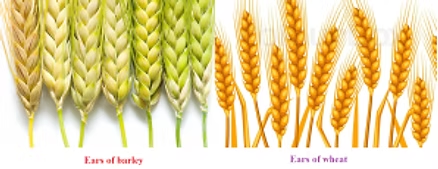
This means the “man from Baal-shalishah bringing … twenty loaves of barley and fresh ears of grain in his sack,” where the Hebrew word “le·ḥem” is translated as “loaves,” but could equally mean “twenty bundles of barley flour” (from which bread is made). Seeing the contents of the man’s “sack” (where “bə·ṣiq·lō·nōw” can mean “in the husk,” with “sack” an uncertain translation) as being little more than the basic delivery of a bushel of barley and wheat grains, which was enough flour to 20 loaves of bread. A bushel (or ephah) means the man brought about 35,000 grams of unmilled barley and wheat, which was then an omer in dry measure.
In the ritual that was lost and then recreated in captivity, the delivery of the omer of first fruits was placed in the Temple of Jerusalem, put under the care of a high priest. It has been noted by those of Jewish scholastic minds that Elisha was a prophet of Israel (the Northern Kingdom) and not a high priest of the temple in Gilgal (the equivalent of Jerusalem in Judah). As such, those scholars argue that delivery of first fruits to the prophet Elisha was improper.
It should also be realized that during this time, in the region surrounding Gilgal, there was a famine. When we read the man question, “How can I set this before a hundred people?” the “hundred people” are the priests of the temple and not ordinary citizens. This leads scholars to believe that the man coming from Baal-shalishah [1] brought an omer of first fruits to the company of prophets in Israel, who were led by Elisha. The scholars believe the man would not have delivered his sack to prophets in Gilgal, instead of to the temple and the high priest there.
This confusion can be eliminated by seeing how proper ritual was observed and the first fruits were taken to the temple, as was commanded. Then after fifty days of having being placed before God, then the blessed flours, dried fruits and grains were to be consumed by the people of Israel. This means a man was sent with a share for the company of prophets (100), as an emissary of the temple in Gilgal.

This would explain Elisha saying, “Give it to the people and let them eat,” because that was the ritual and the recognition of Shavuot (known by Christians as Pentecost) – held yearly on 6 Sivan. That represents the fiftieth day after the Israelites were freed from Egypt (the day after the Passover – Pesach), when Moses came down with the tablets (the count beginning 16 Nissan). As seen in Exodus 16:33, this practice was to be continued in ritual, which would have the gathered early harvest placed before the Lord in the temple.
Exodus 16:18 says each family of Israelites were allotted an omer of manna (collected by the father), with some questioning if this meant one omer per family tent, or multiple omers that matched the number of people living in the tent. Exodus 16:22 says twice that number was allowed on the sixth day, which could be baked or boiled and left overnight for the Shabbat, without spoiling.
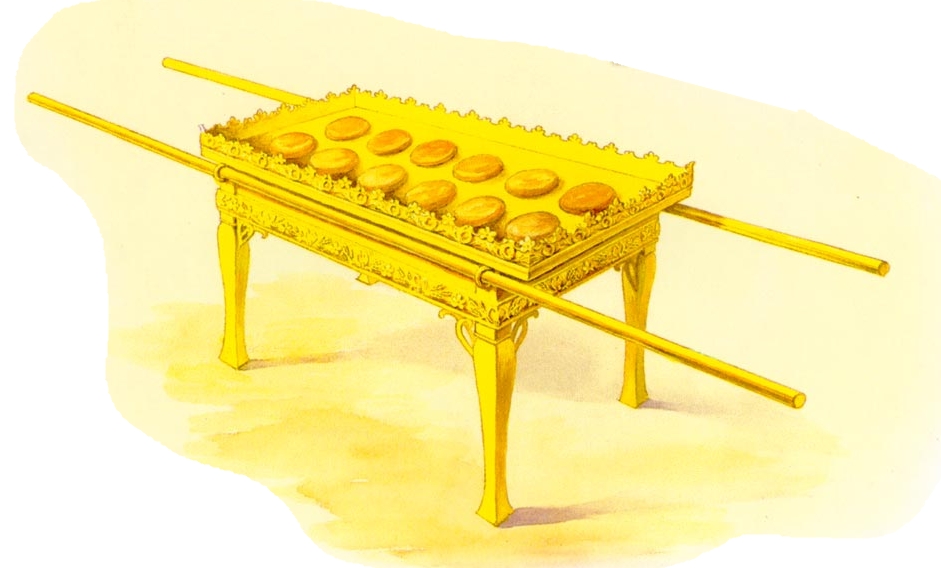
One can assume that each family then began to gather one omer of their first fruits of the fields in the Promised Land, taking that to the temple priest. As long as it sat before God, who resided between the cherubim of the Ark, then it was blessed and would not spoil. Therefore, many omers of grain would be ritually held in the temple until it was fed to the people in the Festival of Weeks (Shavuot), as blessed food for the Sabbath (spiritual food).
We then read that the servant of Elisha asked, “How can I set (twenty loaves of barley and fresh ears of grain) before a hundred people?” Elisha said, “Give it to the people and let them eat, for thus says the Lord, ‘They shall eat and have some left.’”

This was not a direct quote from God in Exodus; but, as a prophet, God might have told Elisha to quote Him then. Still, it could well be a paraphrase of God telling Moses to tell the Israelites to collect twice the manna on Friday, for food on the Sabbath as well (manna did not fall on Saturdays). That might be a sign that the man delivered the food (during a famine) on a Friday, implying there would be food left for the Day of Rest.
Regardless of the reality that had to have surrounded the telling of this event, when we read, “He set it before them, they ate, and had some left, according to the word of the Lord,” a miracle occurred. It is the miracle of manna – that any other day of the week, if left overnight for the next day, would be filled with maggots and stink – that is relative to the miracle of little food becoming plentiful food during a famine. Certainly, this miracle of Elisha and the first fruits is then prophetic of Jesus feeding the five thousand, such that the words of the Lord, spoken by Elisha resonated in the words spoken by Jesus.
This connection to Jesus feeding the five thousand is than why this reading is optional for this Sunday, because the Gospel reading is John’s version of that miracle (all four Gospels share perspectives on this miracle of Jesus). In my interpretation of the Gospel reading from Mark 6, for the ninth Sunday after Pentecost, I made a point of showing how that selection skipped over this miracle, focusing only on the gathering of the lost flocks of Israel that sought out Jesus. In my writing, I mentioned how the twelves baskets filled with leftovers was more than physical bread and meat left on fish bones that the disciples gathered. This is because the bread of the first fruits, like manna and like five loaves and two fish, is spiritually sustaining.
This means the reading about Elisha points to the root meaning of manna being the bread from heaven, which is spiritual food. Manna met physical needs, but its presence went above and beyond the limitations of physical food. According to Judaic scholars, Gentiles could never get a firm grasp on manna, even though they saw it (which assumes the Israelites passed travelers while wandering). Supposedly, it would slip out of their hands. That indicates that manna was only sent by God for his chosen people.
The scholars of the Torah also say that the manna fell closer to the tents of the true believers who followed Moses, while those filled with more doubts had to walk a distance to gather their omers of manna. That says the first fruits are not all capable of miraculous results. It depends on who is passing them out and what the circumstances are.
Some scholars also say that some Israelites worked hard to gather the manna for their families, while others lazily lay on the ground and caught the manna as if slowly drifted to earth. This says that those who are working to get fulfillment from spiritual food can feel a sense of self-achievement when their work is done. Still, those who let God bring the spiritual food to them, without trying to give self free reign, can be seen as following the axiom: Work smarter, not harder.
All of this scholastic insight then becomes symbolic of the bread of heaven being the more than physical food. The manna was the compliment to the waters that came from the rock that was struck by the staff of Moses. More than keeping the Israelites alive as mortals, their souls were being raised by the Word of God (later to be put in writing by Moses) and the Holy Spirit of living waters. The first fruits, those blessed by God’s presence, then become symbolic of the people who serve God, like Elisha and his company of prophets.
This symbolism can be summed up by the proverb, “Give a man a fish and you feed him for a day. Teach a man to fish and you feed him for a lifetime.”

God gave Moses the Law, but merely memorizing those words have less effect of good, than living a life by those rules. The fiftieth day (Pentecost in Greek; Shavuot in Hebrew) represents the feast of celebrating the Law and the Covenant with God being available to the Israelites. The six days of gathering a daily amount of food, where collecting more than one day’s worth was fruitless, was transformed when the days changed from physical to spiritual – from weekdays to the holy day. That is when the daily food becomes able to feed for a lifetime. Therefore, the symbolism of Elisha’s faith, and that of Jesus, was the Word of God feeding the devoted so that they produced manna within themselves, which was then left for the future.
The ritual of land owners taking the first fruits of their harvests and placing those harvests in the temple for God’s blessing, so they would be released back to the people after fifty days, was to recreate the blessing that was manna from heaven. The days of working to gather daily bread was then celebrated by the presence of God’s Law and one’s excited agreement to serve God faithfully for the rest of one’s life. The physical limitations that befell a ritual act of remembrance – when the high priests had sons that were priests in name only; when the tabernacle replaced by a brick and mortar temple; and when the Ark of the Covenant became the lost Holy Grail – the past then reflected the return of weekdays.
The loss of the time when God’s priests lived lives that reflected the day God blessed and deemed holy … when they were the first fruits God said, “Give them to the people and let them consume” … then that was how little the ritual of Passover and the Counting of the Omer until Pentecost (Shavuot) meant in the times of Elisha and in the times of Jesus. Other than the holy ones – “the men of God” – everyone else had reverted to living day-to-day, memorizing rules, seeing no meaning to Scripture easily within one’s grasp, while searching far and wide to find any meaning only led to too much confusion to put solid faith into. Elisha and Jesus both found people incapable of living up to the writings they said their ancestors had agreed to forever live by.
The miracle is not that Elisha had faith, as he knew what God had said. Likewise, the miracle was not that Jesus had faith that five loaves and two fish could feed a multitude. The miracles were that one hundred prophets saw the true meaning of the first fruits. The five thousand had their hearts opened, more than their stomachs, so they became the first fruits that would be sent to the Temple in Jerusalem for the Passover that was nearing. The miracle of both stories is the birth of faith, as the normal had transformed into the holy. Friday had changed into the Sabbath, for a lifetime to come; and that transformation came with plenty of food for spiritual thought left to be shared.

As an optional Old Testament selection for the tenth Sunday after Pentecost, when one’s personal ministry should be underway, the lesson is to go beyond the limitations of physical needs (as a stomach’s desire for food reflects) and let God into one’s heart for the soul’s eternal blessing. The lesson says to listen to God’s Word and then proclaim it with faith and confidence. The lesson is to be one of the one hundred who received the Word from Elisha and then give that Word so others could be filled.
The first fruits symbolize both the work involved in the gathering of the fruits of one’s labors and the blessing of that harvest by God. That becomes the promise of plenty in a time of famine, where work today will have miraculous rewards later. A minister of the LORD looks beyond the limitations of the present, simply by letting God fill one’s heart. One becomes the first fruits that will feed the famished who are in need and deserving their share.
In today’s world, where so many are struggling to get from one day to the next, a minister to the LORD offers living waters and spiritual food to nourish those seeking more than the simple Word offers. A minister becomes the servant who set the twenty loaves of barley and fresh ears of grain before the hundred, so they could eat blessed food – manna from heaven. How much of that spiritual food is left afterwards then depends on those who are gathering the manna for the members of their family tent.
[1] Nobody is certain what Baal-shalishah means, but many jump to the conclusion that it means a place in either Israel or Palestine, with those admittedly guesses. The etymology of the Hebrew says the “name” listed means “Lord” or “Master” (“Ba’al”) of “three” (“shalosh”). This means the element of a Trinity is in play, such that “the man” was “from” the “Master of the third” phase, concerning the ritual of the first fruits. This means Elisha met a man sent from the Master of First Fruits dispersion, whose title meant he oversaw who received the gathered and blessed by God (first and second steps of the first fruits) on Shavuot – when Father, Son, and Holy Spirit were joined collectively and individually as one.


 Explaining the Readings