Tag Archives: 2 Samuel 23:1-7

2 Samuel 23:1-7 – David’s last song

These are the last words of David:

The oracle of David, son of Jesse,

the oracle of the man whom God exalted,

the anointed of the God of Jacob,

the favorite of the Strong One of Israel:

The spirit of the Lord speaks through me,

his word is upon my tongue.

The God of Israel has spoken,

the Rock of Israel has said to me:

One who rules over people justly,

ruling in the fear of God,

is like the light of morning,

like the sun rising on a cloudless morning,

gleaming from the rain on the grassy land.

Is not my house like this with God?

For he has made with me an everlasting covenant,

ordered in all things and secure.

Will he not cause to prosper

all my help and my desire?

But the godless are all like thorns that are thrown away;

for they cannot be picked up with the hand;

to touch them one uses an iron bar

or the shaft of a spear.

And they are entirely consumed in fire on the spot.

———————————————————————————————————-

This is an optional Old Testament selection from the Episcopal Lectionary for the Twenty-seventh Sunday after Pentecost, Year B 2018, which is the Last Sunday after Pentecost. In the numbering system that lists each Sunday in an ordinal fashion, this Sunday would be referred to as Proper 29, but it is called “Christ the King Sunday.” If chosen, it will next be read aloud in an Episcopal church by a reader on Sunday November 25, 2018. It is important because it is reminiscent of what a true anointed king’s traits are.

The Hebrew word translated as “oracle,” as a repeated word in verse one, is “nə·’um,” meaning “utterance,” or “declaration.” The word “oracle” is understood to mean: “A person considered to be a source of wise counsel or prophetic opinions; an authoritative or wise statement or prediction; and/or, a command or revelation from God.” [American Heritage® Dictionary of the English Language, Fifth Edition]
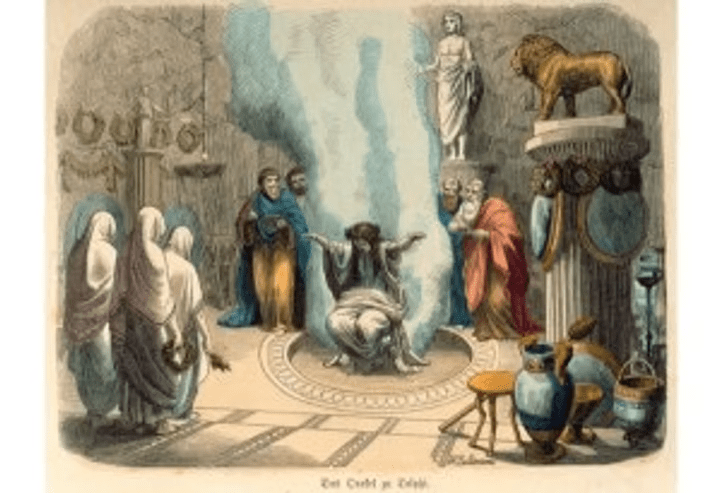
The oracle at Delphi.

This makes these last words of David be prophetic, more than a synopsis of David’s life. The repetition of this word is then important to all readers as a statement of a talent of the Holy Spirit.

When we read that David was “anointed of the God of Jacob,” this aspect of anointment has to be seen as a statement of the Messiah, such that the Hebrew word “mashiach” means both “anointed” and “Messiah,” as the “Anointed One.” To read “of the God of Israel,” one has to see “’ĕ·lō·hê” as stating “the god,” implying “God.” As “the god of Israel,” which is only YHWH elohim [the LORD of all gods], the Lord is who anoints the Messiah.

David was anointed by Samuel, at the command of YHWH, which is not quite the same as being the Messiah. David was “the man whom God exalted,” or “the man raised up on high.” This means his physical anointment was as the King of Israel. He was “raised up” to lead a nation of people.” The people were the children of Jacob [Israel].

Interestingly, this translation of verse one does not include the last segment of words, which says that David was “raised up on high  ,  the anointed of the god of Israel  ¸ the delightful psalmist of Israel .” The translation read aloud has the last segment saying, “the favorite of the Strong One of Israel.”

The Bible Hub Interlinear does not show any translation substitution of “psalmist” with anything that could be translated as “strong one,” unless one saw writing songs as David’s strength. It clearly shows “zə·mi·rō·wṯ” written, which translates as “psalmist (1), psalms (1), song (1), songs (1), songs (2).” [NAS Exhaustive Concordance of the Bible with Hebrew-Aramaic and Greek Dictionaries]
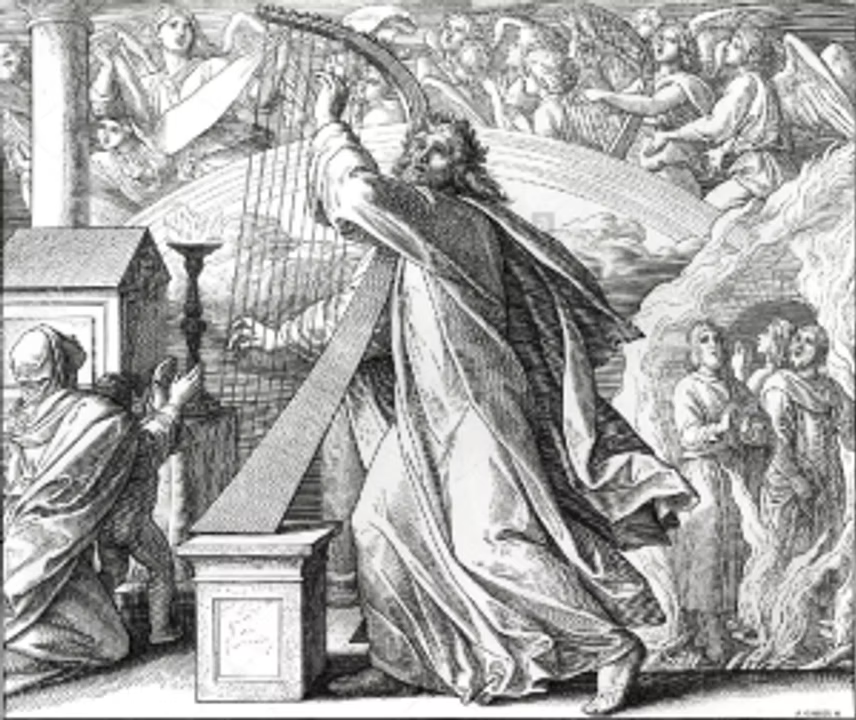
David the psalmist

This says that David’s greatest connection to the Israelites was through his songs. David was like a popular singer-songwriter today, whose lyrics are learned verbatim by his or her fans. David was anointed to sing to the hearts of Israel [which is not the way David’s psalms are seen today]. To assume that strength through music [as David not only sang lyrics, he also played the harp in accompaniment] this makes more sense when verse two begins by saying, “The spirit of the Lord speaks through me, his word is upon my tongue.” That says the Holy Spirit touched the Israelites through the songs of David. It was through David’s psalms that he heard the LORD speak through him. YHWH was his musical inspiration.

When verse three says, “The God of Israel has spoken, the Rock of Israel has said to me,” this misses the first word, which stands alone as an important one-word statement of transition from the lyrics that came to David via the Holy Spirit [“ruah”]. That word is “’ā·mar,” which means, “said,” but often translates as “answered” or “answers.” While the second segment states “spoken,” which can make “said” seem redundant, when understood as “answered,” then “’ā·mar” means the words of the Lord on David’s tongue made the Psalms the answers sent by God, to soothe all the worries and praises the faithful would encounter as His priests.

This means the Psalms are how “the god of Israel has spoken.” It is then the Psalms that are both the “rock” of high praises and the “cliff” of trials and tribulations when the people fail the Lord (both translations from “tsur “). Rather than David making decrees for everyone to follow [a mundane kingly duty], God led the people through David’s songs of praise and lament. The Psalms were how God “ruled over men justly.” The people rule themselves by feeling God’s presence in the lyrics, knowing that God knows their deepest emotions. The people then fear God by seeing, hearing, and feeling the truth of David’s song lyrics.

To read “is like the light of morning,” means the “dawning” or “first light” of insight that comes to the people, through God’s Word. Like the sun “rises,” so too does the faith of the Israelites as more light of truth is shone. All of the “clouds” of nebulosity are gone, so the meaning of the words is vividly clear. The water of emotion forms like dew on the grass after a rain, when the rainbow is seen in the sky. David’s psalms brought forth sweet emotions to the Israelites.

Rather than asking a question, this psalm sang out that the house of David was not claiming divinity or ownership in the songs. The psalms were inspirations freely given by God and lovingly received by David, for the purpose of sharing God’s insight with all God’s people. That statement of separation was then followed by the reminder that all Israelites have a covenant with God – an unbreakable agreement that shall be everlasting. The Psalms are thus ordered by God for David to pass them along, which he willingly did. They were sent, written, and received by the Israelites to ensure the covenant would not be broken.

David’s own salvation was based on his servitude to the Lord, as he was anointed by God, not to be a King of Israel, but to be a prophet through song. David desired to please the Lord completely and lead all of Israel to have the same desire. The psalms were not adding to the covenant [“he will not make increased” demands], as they were simply speaking how God was still with them, as their King, even though David held the title of king.

All reigns are fleeting.

When we read, “The godless are all like thorns that are thrown away,” this is how all other human beings do not have a contract with YHWH. They have “worthlessness” (from “ū·ḇə·lî·ya·‘al”), as “wicked” peoples with the promise of “destruction” in their futures [born as mortals to die]. This comparison is then the future all Israelites will find, should they not maintain the covenant.

When God then said, “they cannot be picked up with the hand,” this is the physical limitations that keep them from being “raised up.” Gentiles could not feel the emotional power of YHWH in David’s psalms because the deep meaning could not be picked up by simply reading Hebrew words, without a Spiritual contract with the One God of Israel.  David did not write songs of praise and lament because his hand felt the pulse of the people.  He composed when the Holy Spirit would enter him … like an oracle.

As that was written to the Israelites to help them keep from choosing a state of worthlessness over righteousness, that righteousness was the power and strength of Israel, the nation of people, because maintenance of the covenant ensured the Ark of the Covenant would defeat all who threatened Israel with the weapons of war. Should anyone “use an iron bar or the shaft of a spear” against God’s priests, then they would find themselves “entirely consumed in fire on the spot.” That was what David represented to the children of Israel. Therefore, with his death always a certainty, as a mortal, the last words of David should not cause the Israelites to fear their enemies, because YHWH was with them eternally … as long as the covenant was maintained.

As an optional Old Testament reading for the last Sunday of Pentecost, also known as Christ the King Sunday, when one’s own personal ministry for the LORD should already be underway – one should be singing songs of faith, based on the words sent by God to share with others – the message here is to see how these are the last words of Israel’s greatest king. Only God can be an eternal King for His people to follow.

It is important to see that “Christ the King” is God. Jesus of Nazareth was a human, just as was David. Both loved God with all their hearts, minds, and souls. God loved both in return. God anointed David with the talent of prophecy, which he did through song. God anointed Jesus as a greater earthly man than David, because David was the epitome of “For those who exalt themselves will be humbled, and those who humble themselves will be exalted.” (Matthew 23:12)
“I wear this crown of thorns
Upon my liars chair
Full of broken thoughts
I cannot repair.” Nine Inch Nails

David would fail God because he exalted himself above the covenant, because he wore a crown on his head. Jesus wore the crown of God on his head, as the Christ Mind, but was exalted by the Father because he died a humble man, so his soul could be released and be placed on the heads of countless men and women – Christians.

This last song of David is then expressing the talent of the Holy Spirit that comes from prophecy. One understands that which is prophesied prior and one speaks prophecy as commanded by God, so others will benefit. For the Israelites to understand the prophecy of the Psalms, God had to be with them. They were then connected to God through the Word that came through David. They then taught the meaning to their children, through the love of those songs. This is the talent of all the writers of the Holy Bible, whether it is songs, stories, history, or prophecy. The words of true prophecy speak for an eternity, because they come from God.

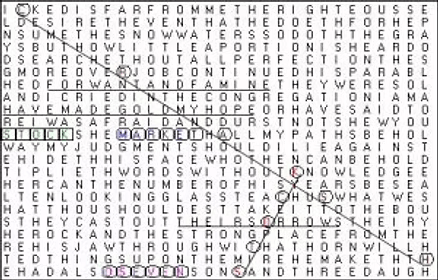
Within the last twenty-five years, there was cable TV talk of a Bible Code [or Torah Code]. A system of letters pulled at expected intervals produce prophetic words, where many known historic events were said to have been prophesied in the Holy Bible [just not realized before those events occurred]. On a cable TV show that addressed that code, it was found present in the words of Herman Melville’s novel, Moby Dick. No one would expect that book to be seen as overtly religious.  Believers in the Bible Code said that was marvelous. Skeptics said it was happenchance. I believe God speaks through all of us when we write seriously, such that all writings that impact many have holy intent the writers did not realize was there.
Many popular songwriter-musicians today write lyrics that I doubt they intended a religious message to come forth. When one is ‘in tune’ with the Holy Spirit, then that meaning can be a way for God to communicate to individuals in a deeply spiritual manner, which the moneymakers in the music business reap the benefits of, while having no idea what deeper message is conveyed … they do not care. Still, God speaks to His people through poetry and song, through novels and news articles.

The later history of David, as King of Israel, was he failed God terribly. His failures brought down [they began the collapse of] the nation of Israel. The idea of kings to be like other nations was a failure with Saul, but showed promise with David. David was not seeking to be a king, but when he reached a point in his life when he no longer found pleasure in the fights of the spring – the zest from living for Yahweh – he began believing he was important enough to sin and there was no one who could punish him.  He began to worship his self-ego.

The value of this reading is seeing how God is always watching each and every devotee – each and every wife of His – to give them everything they need to remain faithful, while reminding them of all hell breaking loose upon their souls, should they cheat on God. The worthless souls can do as they wish, pleasing self for material gains. They are not married to YHWH.

This means the lesson of Christ the King Sunday is to be like Jesus of Nazareth and humble oneself to God’s Will. Letting God wear the noble robes and golden crown means His humble servants will be promised everlasting life, knowing this momentary physical impediment we find ourselves in [life on earth] will pass … as long as our eyes do not wander and we do not make idols of lesser gods.

We must each become a kingdom for the Lord of all the gods.

#2Samuel2317 #Matthew2312
2 Samuel 23:1-7 – One last song before death arrives

[1] These are the last words of David:

The oracle of David, son of Jesse,

the oracle of the man whom [-] exalted,

the anointed of elohe of Jacob,

the favorite of the Strong One of Israel:

[2] The spirit of Yahweh speaks through me,

his word is upon my tongue.

[3] elohe of Israel has spoken,

the Rock of Israel has said to me:

One who rules over people justly,

ruling in the fear elohim,

[4] is like the light of morning,

like the sun rising on a cloudless morning,

gleaming from the rain on the grassy land.

[5] Is not my house like this with el?

For he has made with me an everlasting covenant,

ordered in all things and secure.

Will he not cause to prosper

all my help and my desire?

[6] But the godless are all like thorns that are thrown away;

for they cannot be picked up with the hand;

[7] to touch them one uses an iron bar

or the shaft of a spear.

And they are entirely consumed in fire on the spot.

——————–

This is the Track 1 Old Testament selection that will be read aloud on the twenty-six Sunday after Pentecost [Proper 29], also called the Last Sunday after Pentecost or Christ the King Sunday, Year B, according to the lectionary for the Episcopal Church. If an individual church is set upon this path for Year B, then this reading will precede the singing of Psalm 132, which includes the verses: “Yahweh, remember David, and all the hardships he endured; How he swore an oath to Yahweh and vowed a vow to the Mighty One of Jacob.” That pair will be followed by a reading from Revelation, where John wrote, “To him who loves us and freed us from our sins by his blood, and made us to be a kingdom, priests serving his God and Father, to him be glory and dominion forever and ever. Amen” All will accompany the Gospel reading from John, where he wrote of Jesus saying to Pilate, “My kingdom is not from this world. If my kingdom were from this world, my followers would be fighting to keep me from being handed over to the Jews. But as it is, my kingdom is not from here.”

I wrote about this reading selection the last time it came up in the lectionary cycle (2018) and posted my views on my website at that time. That commentary can be read now by searching this site. In 2018, I was more accommodating to the NRSV translations than I now am. In the above translation you will note how I have placed in italic type the words “elohe, elohim, and el,” in addition to the removal of one translation of “God” that was not written [the brackets with a dash in between] and one translation of “Yahweh” as “the Lord.” Additionally, the Episcopal Church seems to flow through moods that sometimes think numbering verses is a good thing, while then shifting to think verse numbers are useless. They supply no verse numbers; so, I have placed them in bold text, between brackets.

I no longer allow such mistranslations and slackadasical presentations to stand, as they are misleading and need corrections. The points of change should demand explicit explanation, which is the only role a priest holds. Therefore, I advise against reading my views of 2018, even if they still support what I will now add, as I took a position that allowed errors to stand, with only minimal admonishment.

I have looked at the verses written [on the BibleHub Interlinear page] and the NRSV translations presented by the Episcopal Church. Let me say that all English translations of Scripture are paraphrases from the original texts [Hebrew and Greek], which are inclined to slant that which is written to fit a preconception. The preconception is the problem; and, I now see how poorly this English translation is. Therefore, I will present a literal translation that allows one to see more of the deep spiritual meaning that comes from these “last words of David.”

Verse one literally states: “and these words David last , said David son of Jesse , said the man raised up high , messiah elohe of Jacob , and delightful psalmist of Israel .” This verse is divided into five segments. Each segment must be seen as a separate statement of truth. First, these seven verses end with a pe [“פ”], the seventeenth letter of the Hebrew alphabet; but when used as a stand-alone mark, it means “to mark the end of a petuhah,” meaning the end of a section in a book or paragraph. All seven should be then seen as the “last words of David.”

Next, it identifies David as a human being, therefore a mortal. By stating his father was Jesse, a man who was born, lived, and died, David is likewise to follow suit, as having been born, lived, and then died, after stating his last words.

When the third segment then places focus on David having been a “man raised up high,” this says he was elevated spiritually, beyond the normal means of mere mortals. David was then a spiritual soul who was limited in a mortal body of flesh.

The fourth segment of words then explains this spiritual elevation. The Hebrew word written [transliterated] is “mə·šî·aḥ,” which is rooted in “mashiach,” which means “anointed.” That English translation is the equivalent of a “messiah,” which says David was both physically “anointed” by oil from a horn, by Samuel, and spiritually “anointed” by Yahweh, who poured His Spirit upon the soul of David, making him be “Anointed,” thereby a “Messiah.” This being followed by the Hebrew word elohe means David was Anointed by Yahweh, becoming one of Yahweh’s elohim, or extensions of Yahweh on earth. It is then that presence of Yahweh within David’s soul that “raised him up spiritual,” beyond that of a mere mortal man. This is then saying David was equally Anointed as an elohim, in the same way that Jacob was. This confirms the plural number of “elohe” as more than one, because both Jacob and David number two [with others not named included].

The fifth segment seems to be little more than adding to the obituary: “And David was a lovely harpist and songwriter, whose beautiful words we loved to hear.” That is wrong to think. This is furthering the divinity of David, as like that of Jacob, because David took delight in receiving insight from Yahweh, which came musically. His poetry and musical arrangement were received as one of Yahweh’s elohim. This can even include his abilities with musical instruments [more than the harp]. By then saying this is relative to the name “Israel,” the name meaning “He Who Retains Yahweh as one of His elohim” makes it clear that like Jacob, David was divinely raised by Yahweh’s Anointment, which allowed him to write prophecy in songs. This is then the last of those divinely inspired songs of David.

Verse two then literally sings, “spirit Yahweh spoke to me and his word was on my tongue .” These are said by David, through the use of “me” and “my.” The words “spirit Yahweh” [“rū·aḥ Yah·weh”] is a double-edged statement that cuts two ways. First, all souls are “spirit, breath, wind” of “Yahweh.” A soul is the eternal breath of Yahweh that animates all breathing lifeforms on earth [and anywhere else they may be]. This says David spoke these words as his body of flesh still had the life of a soul in it. Still, the second meaning is as the “Spirit Yahweh,” which is what “raised up” David, making his soul be an “elohe Yahweh,” like Jacob, with both becoming “Israel.” Seeing that second meaning as foremost, that was how David received the “utterances” of Yahweh, so those divine words became those spoken by David. The “language” [“lashon”] of David’s psalms [like this one] were the Word of Yahweh.

Verse three then literally sings, “uttered elohe of Israel spoke the rock of Israel , he who reigns over men righteous having dominion in fear elohim .” In this verse are two references to “elohim,” with the first being David saying the elohim of Yahweh speak as prophets, because they are Who Retain Yahweh in their souls [each an “Israel”]. They speak for Yahweh on earth to make themselves become the cornerstone for all who will likewise serve Yahweh, as His priests. This means the word “tsur,” meaning “rock,” made David (and Jacob) be like Jesus, where the “rock of Israel” is the presence of Yahweh’s Spirit within one’s soul. Once that “cornerstone” is set in place, one Who Retains Yahweh as one of His elohim is secured. The repetition of “Israel” means both an individual’s soul being married to Yahweh, as well as a nation of people, whose souls are all likewise married divinely.

The second segment of words then speaks of the presence of Yahweh’s Spirit within one’s soul as being that which rules the soul within hits body of flesh. Without that “King” over one’s being, one’s soul acts as the ruler, which is easily misled by wicked advisors, who lead a body of flesh to act in evil ways. The overriding presence of the “cornerstone” [the possession of the soul of Jesus] then leads one’s body of flesh to live in “righteous” ways. This inner “spirit Yahweh” is then so beloved that giving it free “reign” is desired. It becomes so loved that the only “fear” that an “elohim” knows is losing the presence within. Thus, the “fear” of Yahweh means not knowing Yahweh for eternity, which becomes one’s only “fear” after knowing Yahweh from divine union with one’s soul.

Verse four then sings literally, “and like the light of dawning rises the sun , morning without clouds , as brightness after rain the grass of the land .” In this verse there is the combination of sunlight, rain, grass, and earth. These are metaphoric statements of three basic elements that generate life on earth: air, water, and earth. The word “like” alerts us to this metaphor, where the combination of Yahweh [sun], His Spirit [clouds unseen], and souls in bodies of flesh [grass growing from the land] are the Trinity that becomes the spiritual food upon which others feed. The “grass of the land” is the wheat or grain crops, from which bread is made. The presence of Yahweh is known through the light of truth. All the confusions of Scripture disappear like the morning fog has lifted. That brightness is then shared with others, so fields of souls are grown for Yahweh’s use.

Verse five then literally sings in English, “that not so my house with el ; since a covenant everlasting he has made with me , arranged in all and secure for all my safety and all desire that not he will make sprout up .” In this verse there are two uses of the word “not.” This negative initially reflects back on the “grass of the land,” where “that not” being the source from which spiritual food comes means “not so my house with el.” In the singular use of “el,” which can be both one of Yahweh’s elohim and anything other than Yahweh worshiped as a false “god” – including self, a ruler of a nation or religion, things of the material realm, etc. – the use of “not” means marriage to Yahweh is optional, not a demanded slavery. The use of “house” can be as simple as one’s body being a temple unto Yahweh, or it can be a household of a family or town, while expanding to the nation of peoples who called themselves the children of Israel. This all depends on the choice one makes towards the Word of Yahweh, and how much light one sheds on Scripture and how much inspiration falls from heaven to make one’s inner mind grow.

That element of Scripture is then seen stated as “a covenant,” which is the foundation of Mosaic Law. This must be understood as a covenant of marriage to Yahweh, because anything less makes one become poor in terms of consuming spiritual food. That agreement between a soul (an eternal entity) and Yahweh becomes “everlasting; and, it is not some generic agreement that is between Yahweh and some large group. It is specifically an agreement between David [“me”] and Yahweh. In the final segment of words, the use of “all” [“kol”] is repeated three times. This is not only a reflection on the eternal length of the covenant, but it is the same for “all” who are to be like Jacob and David. It is an “arrangement” that is based on “desire,” which means love is the bond between two in marriage. The second use of “not” is now another statement that marriage is optional; but for that love to “not” bring a soul to seek Yahweh, from having been fed His spiritual food of Scripture, with enlightenment and growth in one’s heart, then what can be expected to “sprout up” will be weeds, not wholesome grains.

Verse six then literally signs in English, “but of worthlessness as thorns stray the whole ; because not with hands they are taken .” Here, the element of “sprout up” is confirmed to be weeds, rather than good grains, from which spiritual food can be threshed and milled. When “not” is the state of a soul’s covenant with Yahweh – unmarried, thus unsaved – those souls become thorns that mix in with the “grass of the land” and choke out all good growth. In the second segment of words, where “not” is again written, this is less about attempts to physically remove weeds and briars and more about a statement of those who are the evil mixed with the good.

They are “not” the “hands” of Yahweh, which are His elohim. Instead, they are elohim of lesser gods, the most destructive being Satan. This means the word “taken” [“laqach”] speaks as a soul “taken” in marriage. This is not a final or eternal marriage, per se, as it can mean “to be taken back,” which is redemption, which demands complete divorce from a lesser marriage to a lesser god [demonic possession]. For that to happen, those souls need to realize a need to reject their lesser subjection and use their own “hands” to win the favor of Yahweh. This is the sign of a seeker, as his or her “hands” are reaching out for salvation, knowing they have done wrong. Then, if they promise their souls to Yahweh, asking nothing but salvation in return, they can be “taken back.”

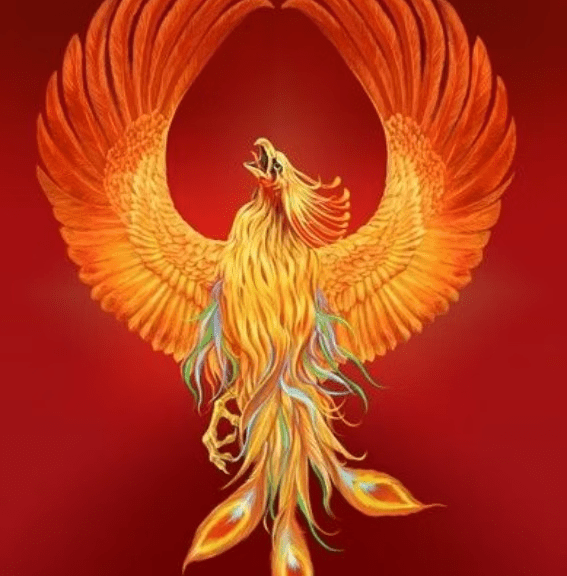
Verse seven then sings literally in English, “but man reaches must be full of iron on a shaft of a spear ; and with fire shall be burned burned in dwelling .” Here, the “reaches” must be seen as a continuation of the “hands” that have “not” been joined with Yahweh, becoming His hands on earth. For them to be redeemed, their “reaches must be full,” not some test of Yahweh or some halfway attempt to bargain with Yahweh, like one would bargain with Satan over a soul. This approach is either as warfare against the sacred or saints, where spearheads become a reflection of the cutting damage of thorns. If they reject Satan, those spears must be used to kill all desires for self or any other. The “iron on a shaft” of wood must be a spear through the heart of self-worth and self-ego, so one sacrifices self in order to fully submit to Yahweh. Again, seeing the double-edge capability of a “spear,” the same should be seen in the “fire,” where that is either the “burning” in hell a soul will reap after death; or, it can be the “burning” desire one’s freed heart and soul finds for Yahweh. The “dwelling,” as seen earlier in the “house of el,” is oneself. One’s soul will either burn in hell condemned, or one’s body of flesh will be burned, like the Phoenix, and reborn anew, better than ever before.

As a reading to be presented on the last Sunday after Pentecost, when one’s own personal ministry for Yahweh should already be well underway, the lesson is to realize death is unavoidable. David’s last words must speak to all who are living and seek salvation and eternal life, so one hears then saying, “You must marry your soul to Yahweh and serve Him as an elohim. There is no other way. Only with Yahweh’s help can one navigate the problems and troubles the world has to offer [even the lures of desire and easy temptations] and reach the point of death without regrets. David was a minister, leading many to be Israelites like him. This is a missing element in these wicked times. The world has become little green grass for spiritual food, having been overgrown with brambles and weeds. The last Sunday after Pentecost is when death needs to be felt in advance. It is a time to grow up or wither away.