
A capable wife who can find?
She is far more precious than jewels.
The heart of her husband trusts in her,
and he will have no lack of gain.
She does him good, and not harm,
all the days of her life.
She seeks wool and flax,
and works with willing hands.
She is like the ships of the merchant,
she brings her food from far away.
She rises while it is still night
and provides food for her household
and tasks for her servant-girls.
She considers a field and buys it;
with the fruit of her hands she plants a vineyard.
She girds herself with strength,
and makes her arms strong.
She perceives that her merchandise is profitable.
Her lamp does not go out at night.
She puts her hands to the distaff,
and her hands hold the spindle.
She opens her hand to the poor,
and reaches out her hands to the needy.
She is not afraid for her household when it snows,
for all her household are clothed in crimson.
She makes herself coverings;
her clothing is fine linen and purple.
Her husband is known in the city gates,
taking his seat among the elders of the land.
She makes linen garments and sells them;
she supplies the merchant with sashes.
Strength and dignity are her clothing,
and she laughs at the time to come.
She opens her mouth with wisdom,
and the teaching of kindness is on her tongue.
She looks well to the ways of her household,
and does not eat the bread of idleness.
Her children rise up and call her happy;
her husband too, and he praises her:
“Many women have done excellently,
but you surpass them all.”
Charm is deceitful, and beauty is vain,
but a woman who fears the Lord is to be praised.
Give her a share in the fruit of her hands,
and let her works praise her in the city gates.
———————————————————————————————————-
This is an optional Old Testament selection from the Episcopal Lectionary for the Eighteenth Sunday after Pentecost, Year B 2018. In the numbering system that lists each Sunday in an ordinal fashion, this Sunday is referred to as Proper 20. If chosen, it will next be read aloud in an Episcopal church by a reader on Sunday September 23, 2018. It is important because it uses the feminine pronoun “she” and “her” as metaphor for devout human beings (of both genders) being in a committed relationship with God.
There are twenty-two verses in this selection from Proverbs. There are twenty-two letters in the Hebrew alphabet; each verse is marked by a separate letter, from aleph to tav. As such, this Proverb that has some versions of the Holy Bible identify it as “The Virtues of Noble Woman” or “The Wife of Noble Character” can be seen (somewhat) as the ‘A to Z’ of those virtuous character traits. Still, the letters bear the symbolism of their numerical numbering, from 1 to 22; and in Hebrew each number has its own symbolic meaning, which cannot be overlooked.
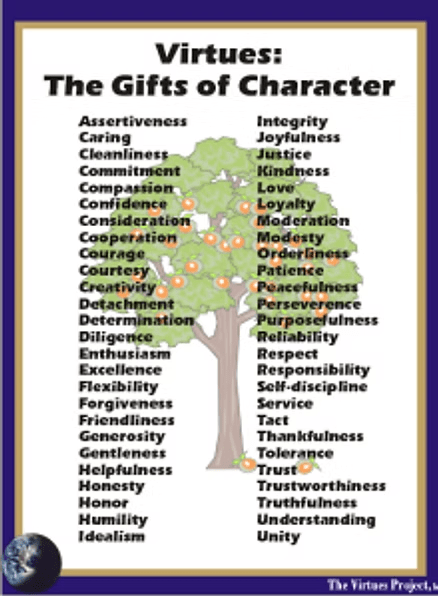
I welcome the reader to search the Internet for this symbolic meaning for oneself. Here is a link to one site that offers such opinion on this (Spiritual Meanings of the Hebrew Alphabet Letters). I will not be going into this aspect of this Proverb of Solomon; but it has to be recognized as present and that presence has intended meaning.
As to the summation that Solomon wrote about the qualities possessed by the perfect wife, it is easy to be misled, knowing the attraction that Solomon had to women. Having become known as having had seven hundred wives and princesses, plus three hundred concubines, one could then assume that this Proverb is based on Solomon having gotten to know many wives, concluding these are the best traits. Still, after getting to know one thousand ladies up close and personal, Solomon coming up with only twenty virtues of wives would seem to be based on the most repetitious traits he liked. However, that opinion of the noble character of a wife, or even of the concept of “woman” in general, is not the point of this writing.
One has to see that wise ole Solomon wrote this Proverb, even though he might have been smiling about all the women he knew while writing it, as a vehicle of Yahweh. The true source of this wisdom was from God, flowing through Solomon’s hands as he wrote. These words of Proverbs 31 have a divine origin, with a spiritual meaning intended to be found. There is nothing to be found in the Holy Bible that is mundane human opinion.

In the modern times, when human gender became a matter to protest publicly, there will certainly be women sitting in the pews who scoff at such male chauvinistic views as had Solomon. I doubt female priests will write lengthy sermons about this reading selection, unless driven by personal agendas that would misuse it to promote same-sex marriage between two women. Such views as promoted wives being subservient to their husbands, as is still prevalent in Muslim culture, is now seen in the West as having set womanhood back thousands of years. Still, that is the human opinion of divine writings misunderstood. The true meaning has to do with this writing being about the perfect servant to the Lord, where all the feminine pronoun usage points to Man (which includes woman).
I have written about this repeatedly, where those who want to achieve Heaven must submit to God and become His wife. This has absolutely nothing to do with human gender. No human being is going to know God through his or her sexual organs. God did not care what type of women floated Solomon’s boat; but He made it be known what a true servant of the Lord will do.
This translation is not completely accurate, throughout this long song; so I will not be spending thousands of words correcting those mistakes. To give one example, the translation of “jewels” comes from “mip·pə·nî·nîm,” which could be shown to state “rubies, corals, or pearls.” To read “jewels” then leaves it up to the women who look for their value in huge diamonds placed into fine gold engagement rings. From that speculation, a verse focused on “capability” (from “ḥa·yil,” also read as “virtue”) is reduced to a value that crawls along the material plane, missing the spirituality of this wisdom.
From one example, I am not about to correct all the errors of a translation that begins with a premise (a preconception) that Solomon was giving guys advice on how to find the right girl, and in the process putting the seed of thought into the minds of girls that a good wife dotes on her husband … for trinkets. Everything that leans in that direction is wrong.

This song must be read as God speaking to YOU, whoever YOU are – male, female, or child [neuter gender]. YOU have to know what God requires in His wives, regardless of what sex organs God gave you, and regardless of what other human beings make your sex organ tingle with delight. As such, YOU are “She” and “her.” YOU have to see that.
We call God the Father, despite how many women’s rights freaks try to twist that masculine principle into a misconception that promotes people should think, “God can also be a Mother.” That is false.
“God” means Masculine. “Goddess” means feminine. God is not a goddess, just as man is not a woman. There can still be equality in inequality. Equality is complimentary. As such, the Earth is the goddess who received God as her husband and gave birth to bags of dirt that were filled with souls. God, therefore, is the Father of life on Earth, with all life (as we know it) having Earth as its Mother.*
So it is written:
“I also said to myself, “As for humans, God tests them so that they may see that they are like the animals. Surely the fate of human beings is like that of the animals; the same fate awaits them both: As one dies, so dies the other. All have the same breath; humans have no advantage over animals. Everything is meaningless. All go to the same place; all come from dust, and to dust all return. Who knows if the human spirit rises upward and if the spirit of the animal goes down into the earth?’” (Ecclesiastes 3:18-21)

When one realizes how Jesus said, “So they are no longer two, but one flesh. Therefore what God has joined together, let no one separate,” (Matthew 19:6) this means the feminine of the Earth Mother is the flesh of a human body that has become one with God the Father via a soul of life being present in that flesh. It is the human equivalent of DNA, where a child is the combination of two parents that cannot be separated. Simply because of this reasoning, ALL human being bodies of flesh are feminine. Since that means we human beings are all ‘girls’ here, we are all potential “wives” to God.
That is all I have to say. I recommend each reader to go to the Bible Hub Interlinear website (here) and slowly read what was written, and investigate the full breadth of meaning each word contains. See if YOU can see yourself as meeting all these noble characteristics.
Take note that the second verse (the Beith letter verse) speaks of a husband’s heart having full trust in his wife. This is the love one has to have, in order to have a proposal of marriage made and be accepted. Love is the attraction that is essential. Therefore, the beith symbolism is: “The beginning of duality, with the One Creator bringing forth a created world.”
Two have cleaved together to make one, through love.
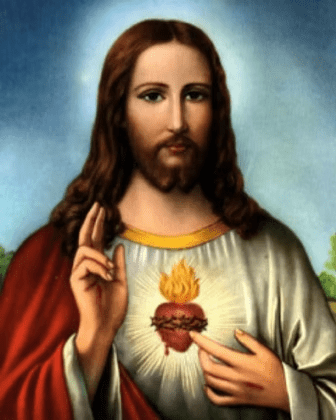
If one does not have a true love of God in one’s heart, one is not good wife material for Him. If YOU can feel this love, then take the time to see how the wisdom of Solomon used the next twenty verses to spell out what “She” (YOU) does for God.
With love, the work that comes from being in love with God becomes a joy. It is the works of an Apostle.
———-
* Footnote: God – Yahweh – did not create mankind – male and female in His image. God’s elohim created those ‘ordinary’ human beings. Therefore Yahweh is not the Father of all humanity. Yahweh is the source of all souls. Yahweh is the one who orders souls to control bodies and join egg and sperm and split cells for growth of life-to-be. Souls are elohim. Yahweh is only the Father of holy human beings that are filled with the Holy Spirit of Yahweh and with each transformed from ‘ordinary’ human being into His Son reborn. Only Sons, again, as human gender is meaningless. Sons means the Spiritual association of gender, opposite the material association of gender. Call it positive-negative or external-internal, if you like – opposites. A man and a woman can each be reborn as Jesus Christ (a “Christian”), becoming “brothers and sisters” in the name of Jesus Christ – Sons of God.
 Explaining the Readings