Peter began to speak to Cornelius and the other Gentiles: “I truly understand that God shows no partiality, but in every nation anyone who fears him and does what is right is acceptable to him. You know the message he sent to the people of Israel, preaching peace by Jesus Christ–he is Lord of all. That message spread throughout Judea, beginning in Galilee after the baptism that John announced: how God anointed Jesus of Nazareth with the Holy Spirit and with power; how he went about doing good and healing all who were oppressed by the devil, for God was with him. We are witnesses to all that he did both in Judea and in Jerusalem. They put him to death by hanging him on a tree; but God raised him on the third day and allowed him to appear, not to all the people but to us who were chosen by God as witnesses, and who ate and drank with him after he rose from the dead. He commanded us to preach to the people and to testify that he is the one ordained by God as judge of the living and the dead. All the prophets testify about him that everyone who believes in him receives forgiveness of sins through his name.”
——————————————————————————–
This is the reading from the Episcopal Lectionary for Easter Sunday, Year B 2018. It will next be read aloud in a church by a reader, as an Easter replacement for either the Old Testament or Epistle reading, on Easter Sunday, April 1, 2018. It is important as it tells of the ministry that will comes after the resurrection of our Lord in an Apostle. Serving God would no longer be limited to one small sect of believers in the One God (Jews), as professed faith would no longer be the determining factor of devotion.
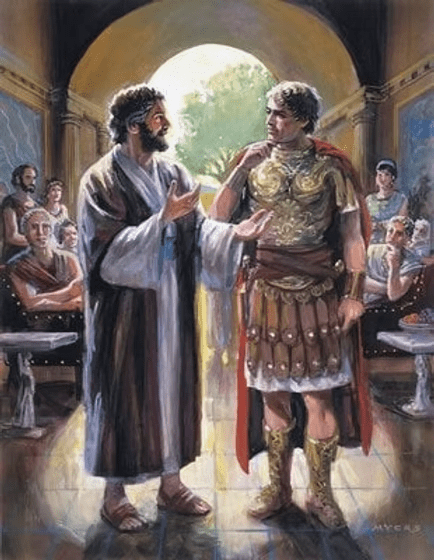
In this reading, Peter has been divinely called to meet with Cornelius, who was a Roman Centurion in Caesarea. Cornelius had also been divinely called to send men to Joppa to request Peter’s presence. Because of a spiritual dream, Peter went to meet with a Gentile who had found the God of the Jews worthy of praise.
When we read, “Peter began to speak,” the literal Greek says, “Having opened moreover Peter the [one] [his] mouth.” This should be seen as a statement of how Peter’s mouth was opened by the Holy Spirit, just as it was on the day of Pentecost. As such, Peter’s mouth – lips and tongue – was moving, but the Word of the Holy Spirit was coming out. Peter spoke, but he spoke from the same divine source that put Peter in the presence of Cornelius.
This means that when Peter’s mouth said, “anyone who fears [God] and does what is right is acceptable to [God],” that does not mean he set forth an expectation that God puts up with whatever anyone wants to do, as long as they do what is right. That leaves “what is right” up to one’s interpretation of “good” and “right.” It makes human definitions of what God expects become a question of acceptability. To get that implication makes the translation become misleading.
The Greek words actually written, “ergazomenos dikaiosynēn,” say “working righteousness,” rather than “does what is right.” This means that when one is working righteousness, then one is filled with the Holy Spirit, acting on God’s behalf. The qualifications have nothing to do with one’s Jewish heritage or lack thereof. Thus “acceptable” (“dektos”) means God has “received favorably” the heart and soul of one who prays devoutly for God’s guidance [as had Cornelius and Peter]. Such devotion in a person makes that person be “accepted” by God, and the Holy Spirit has been “accepted” by that person in return. That is how one acts from righteousness.
[Hint: This is why Easter has readings from the Acts of the Apostles.]
When Simon-Peter said, “He commanded us to preach to the people and to testify that [Jesus Christ] is the one ordained by God as judge of the living and the dead,” the element of “living” says “those who are alive via the Holy Spirit – as Jesus Christ reborn.” Jesus is only possible to come into the living; and Jesus coming into one can only result in that one gaining eternal life.
Because all who have received the breath of life at birth [from exiting a mother’s womb], all human beings have been given mortal life, which in turn (eventually) leads to an end in mortal death. Therefore, Peter said [via the Holy Spirit] that being reborn as Jesus Christ brings the judgment of life, while not receiving that Spirit keeps one locked into the mortal judgment of death. The rebirth of Jesus Christ within a servant to the LORD is wholly “ordained by God,” and not up to the human being to cast judgment otherwise. God, then, is the judge of who lives eternally (with Jesus Christ protecting that soul) and who is returned for reincarnation or soul punishment (without Jesus Christ protecting that soul).
When Peter ended this reading by stating, “Everyone who believes in him receives forgiveness of sins through his name,” one has to grasp that “through his name” ONLY comes by being reborn AS Jesus Christ. One can ONLY receive forgiveness of sins by belief that reaches a level of faith that is pleasing to God [acceptability]. For one’s love of God and faith in Jesus as the Messiah, one is sent the Holy Spirit by God, so one begins ACTING RIGHTEOUSLY … just as did Jesus of Nazareth [all his life].
As a reading that accompanies the Easter Resurrection lessons, one must see that the Resurrection of Jesus was for a promise of eternally offered redemption to those who follow in the footsteps of Jesus (as Jesus’ soul reborn in flesh, one with a saved soul). After Jesus Christ ascended to Heaven on the forty-ninth day [the seven Sundays of Easter], his Spirit [thus his name] returned in those who had shown faith and devotion. In return, they were granted eternal life over mortal death, because they chose to sacrifice themselves to the will of God. From Pentecost that year and until their deaths, the Apostles (Saints) acted from righteousness, doing what was acceptable to God.
Peter began to speak to Cornelius and the other Gentiles: “I truly understand that God shows no partiality, but in every nation anyone who fears him and does what is right is acceptable to him. You know the message he sent to the people of Israel, preaching peace by Jesus Christ–he is Lord of all. That message spread throughout Judea, beginning in Galilee after the baptism that John announced: how God anointed Jesus of Nazareth with the Holy Spirit and with power; how he went about doing good and healing all who were oppressed by the devil, for God was with him. We are witnesses to all that he did both in Judea and in Jerusalem. They put him to death by hanging him on a tree; but God raised him on the third day and allowed him to appear, not to all the people but to us who were chosen by God as witnesses, and who ate and drank with him after he rose from the dead. He commanded us to preach to the people and to testify that he is the one ordained by God as judge of the living and the dead. All the prophets testify about him that everyone who believes in him receives forgiveness of sins through his name.”
——————–
This is the mandatory selection from the Acts of the Apostles that will be read aloud on Easter Sunday, Year B principal service, according to the lectionary for the Episcopal Church. It will either be the First Lesson, removing Isaiah 25:6-9 from the schedule, or it will be the New Testament reading, eliminating 1 Corinthians 15:1-11 from the schedule. In any case, this reading will be accompanied by a reading from Psalm 118, which sings, “The Lord is my strength and my song, and he has become my salvation.” Depending on the selection process, this reading will precede a Gospel reading (either from John 20:1-18 or Mark 16, 1-8), which speaks of Jesus being found not in his tomb by women who came early on the first day of the week with spices.
Acts chapter 10 tells of a divine vision Peter had, where God showed him Gentiles were no longer forbidden from belief in Yahweh. This led to Peter being called to meet with a Roman Centurion, named Cornelius, who was a Gentile. The first thirty-three verses tell this story, none of which are ever scheduled to be read aloud in Episcopalian churches. This reading becomes the soliloquy of Peter speaking to the Gentiles at Cornelius’ home, telling of his association with Jesus, who was killed but resurrected. This translation reads as if Peter was bragging about having personally witnessed all the power of glory of Jesus, “in Judea and in Jerusalem.”
There is a concept in Christianity known as “witnessing.” From the website for a Roman Catholic Diocese is this definition of a Christian “witness”:
“As followers of the Lord Jesus, we are called to serve as “witnesses” to our faith. To be a witness to Christ is to demonstrate by our words, actions and attitude the sacred mystery that we have “seen”, heard and believe in our hearts about the Lord who has forgiven us of our sins and offered us eternal life. In contrast to the world, Christian witness is to be offered 24 hours a day, 365 days a year.” [Diocese of Bridgeport (CT.)]
In this reading selection, Peter is quoted as saying “witnesses” twice. While there are other places in the Epistles where Christians point to references such as this being a characteristic all Christians must display, some pointing to these specific verses in support of that concept, the “definition” above makes it clear that “witnessing” is not about seeing Jesus, but about experiencing Yahweh personally. That makes “witnessing” be as relevant today as it was when Peter spoke with Cornelius. It also makes it clear that “witnessing” is not a power of brain, because a brain only thinks about certain things [consciously] when queued to thought. That “24 hours a day, 365 days a year” part of the definition above says “witnessing” is more subconscious than conscious, as it is impossible to stop. That becomes a statement that the soul has married to Yahweh and the body acts in righteous ways, without any need to use forethought.
In this soliloquy, it is the translation into English that misleads those who hear them read aloud or read these words silently alone. Even those fluent in Greek cannot see the whole truth of this conversation. This is because these words of Peter, like those of Paul, John, James, and all prophets who wrote divinely, were spoken in a divine language. Divine language requires divine assistance to understand, therefore translate properly.
This can be seen stated in Acts 2, on Pentecost morning, when all the Apostles began “speaking in tongues.” Rather than them beginning to make unintelligible noises [as some ‘Pentecostal’ churches promote], they all began to explain the lesson of the prophet Joel. Not only did they speak that in Hebrew, but in all the foreign languages, for the benefit of foreign pilgrims. What the Apostles spoke was a depth of understanding that came from being able to understand Joel wrote in the divine language of Yahweh. The Apostles suddenly began to understand Scripture and suddenly began to explains Scripture in new ways it had never been explained before [thus the thought that they must be drunk on new wine].
That receipt of God’s Holy Spirit within Peter and the others [including three thousand who heard the word and also became saved souls] meant he began [like all the others] to speak in divine ways that normal translation misses. From then on Peter spoke in ways that demanded someone explain the Word he spoke in new ways. This is a concept held by ‘Pentecostal’ religions, where someone “speaking in tongues” requires someone to translate what has been spoken “in tongues.” However, rather that one being forced to make up meanings for gibberish spoken, a Saint is required to understand what an Apostle wrote.
This can be seen where the translation above [NRSV] begins with Peter saying, “I truly understand that God shows no partiality.” In reality, Luke [the believed writer of Acts] wrote: “Ep’ alētheias katalambanomai hoti ouk estin prosōpolēmptēs ho Theos,” which literally translates to state: “Above truth I comprehend because not being one who shows face this God.” This shows the words of Peter were spoken in divine language, which is impossible to state in other language translations correctly, unless the translator is led by the same Holy Spirit and enabled to understand divine language of Yahweh [speak in tongues].
From what is written, the capitalization of “Ep’” [an abbreviation of “Epi”] means a divinely elevated translation must be seen. Rather than simply being read as the preposition “of,” it becomes “Above,” where the capitalization makes that direction be heavenly. This is then the source of “truth,” such that Peter was not bragging about “truly understanding,” but his divine [“Above”] source of “truth” being how he then had an ability to “comprehend,” relative to that which he did not understand before.
He then said that limit is placed “not” on “one who shows [his or her own] face” [from “prosōpolēmptēs” means “one who is an accepter of a face”], meaning Peter was once known as Simon, which was a flawed human face. As Peter [meaning {Rock”], he became “one who shows a face” that is God’s.” This means that instead of Peter seeming to say, “God loves everyone,” Peter said a Saint stops being himself or herself and puts on the face of Yahweh, so the truth will be revealed [otherwise the full truth remains hidden].
This has to be seen as what Peter was saying to Cornelius, who was Roman. As someone from Rome, it makes sense that Peter would say, “in every nation anyone who fears him and does what is right is acceptable to him.” That means Peter was speaking the Word, as Yahweh speaking through him, saying, “The same sacrifice of self, to wear the face of God, applies in all places.” In no way did Peter imply that he spoke with the authority to determine who was a Saint, because Peter was just one servant of Yahweh.
The translation then has Peter say to Cornelius and the other Gentiles, “You know the message he sent to the people of Israel, preaching peace by Jesus Christ–he is Lord of all.” That translation implies that the Romans were present in Jerusalem when Jesus was executed, but then leaps to an expectation that they knew all about the truth of who Jesus was. While the Scripture gives some impression that Roman guards and leaders made remarks when weird things happened when Jesus was crucified, Peter’s initial rejection to meeting with Gentiles [not read today] says he would not have known anything about what “they” [as “You”] knew. He did not care to know what Gentiles knew. This becomes cleared up with a better translation of what is written here.
Luke wrote that Peter said, “ton logon honapesteilen tois huiois Israēl,euangelizomenos,eirēnēn dia Iēsou Christou—houtos estin pantōn Kyrios.” This literally translates to state: “this word which he sent with them sons Israel , proclaiming the good message , wholeness through Jesus Anointed One — this being in all Master.”
As can be seen, what Peter said [only understood by divine assistance] is greatly different than some simple history of Jesus, which [at that time] was not that widely known. The power comes from hearing Peter tell Cornelius, “before now this state of righteousness that is acceptable to Yahweh has only been received in those sons of Israelite descent , we are the sons who proclaim the truth of God’s messages through prophets , we give wholeness to the written word that have only partially been grasped and this ability come through us having been reborn as Jesus so we too have become the Christ — this state of being we all possess means Yahweh is the Lord over our souls.”
When Peter then is shown to have said to Cornelius, “That message spread throughout Judea, beginning in Galilee after the baptism that John announced,” this is where the importance of “You” is written. This series of words begins with the capitalized Greek word “Hymeis,” which becomes Peter recognizing Cornelius and the other Gentiles were likewise given a taste of the Holy Spirit, leading them to summon Peter as one truly filled. Thus, the following word, “oidate” says they were able to “appreciate” the message [as “declarations” or the spread of talk] of righteousness that had spread throughout the lands there controlled by Romans.
Included in what the Romans had heard, from having open ears to the common talk, was: “how God anointed Jesus of Nazareth with the Holy Spirit and with power; how he went about doing good and healing all who were oppressed by the devil, for God was with him.”
In that, the central focus becomes written: “echrisenauton ho Theos Pneumati Hagiō.” This says, “this anointment of him this God Spirit Holy.” This places more importance on Jesus being a man made special by God [where “anointed” reflects the “Christ”], through [as John had said: someone would come not baptizing with water, but by …] the Important divine Spirit of Yahweh, married to the soul of Jesus. That focus says that the union of Spirit made Jesus Holy, as God incarnate in human flesh. This then leads to the word “kai,” which announces importance to come, where that importance is then stated “power.” The “power” of Jesus was all due to God’s Holy Spirit” being upon Jesus.
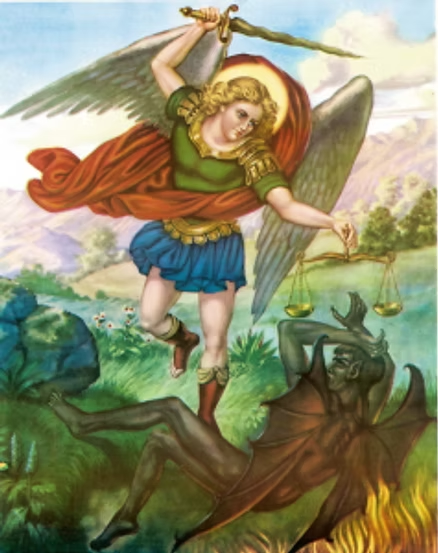
It was that empowerment of the Holy Spirit that allowed Jesus to do good and healing all, while also being the one who ordered his disciples into internship, doing the same. The power was not limited to Jesus, because the power came from Yahweh … from “Above.” The power was to counter the “oppression of the devil,” where “diabolou” is better understood as a soul that has been trapped in the lures of the world [not heaven].
While that is a concept that most Christians today will freely profess faith in: Jesus being anointed by God and given His Holy Spirit; the point of Peter saying that was Peter too [and all other Apostles – Saints] was anointed in the same manner. Peter was not telling Cornelius and his Gentile soldiers who wanted to receive Yahweh’s Holy Spirit and become righteous, with saved souls, “Man, you should have been there. You could have touched Jesus and got some of that on you.” Instead, Peter explained why he told them about how special Jesus was, by saying “We are witnesses to all that he did both in Judea and in Jerusalem.”
Here is the first of the two uses of “witnesses” [“martyres,” from which “martyrs” comes]. The word translates as “eye-witnesses,” which can only attest to “witnessing” God anoint with Spirit Holy when the same state of being has come upon Peter and others like him, all like Jesus reborn. No one can speak the “truth” [verse 34] and say, “We were there watching Jesus be made Holy.” Thus, the reason why “martyres” has become the English word “martyr” [meaning “a person who is killed because of their religious or other beliefs”] is because Peter [and all likewise filled with Yahweh’s Holy Spirit] had died of self-ego and self-will, sacrificing one’s soul-flesh to God, so they could become Sons of man [not a human gender distinction].
To make this point, Peter is then shown to have told Cornelius, “They put him to death by hanging him on a tree; but God raised him on the third day and allowed him to appear.” This talk of death and resurrection is then Peter explaining that he, just like Jesus of Nazareth, had to sacrifice his soul to Yahweh, so he could be reborn as His Son, also in a body of flesh that was human.
In this, Peter called the instrument of death “a tree” [from the Greek “xylou”], which is different than the “stauros” or “upright stake” Jesus told his disciples they had to raise, in order to follow him. The difference says an upright stake means righteousness, where an instrument of death is made of dead matter – a tree killed and honed.
When Peter said “God raised him on the third day,” the slower way to receive divine meaning from that is to see the value of the number “three” alone. This says Jesus was raised “upon the third,” which means death is equated to the number two. Two becomes the body and the soul united, which can also be stated as a son [souls have only masculine gender] with God’s breath of life. To then become “on the third” [from “en tē tritē”] means to have then received the “third” element that brings a “raised” state of being, becoming righteous and eternally saved. That “third” addition is the Holy Spirit [or the “Spirit” that makes one “Holy” or “Sacred” – a Saint]. With that elevation to divine status, all becomes the light of “day,” as darkness has forevermore been overcome.
When Peter said that Jesus was resurrected and allowed to appear, the surface meaning is he came to the disciples, so they knew he was raised. However, the deeper, divine meaning is after Jesus ascended, after which he was then allowed to appear in the bodies of his disciples. That transformation was possible because they too had died and the third state of being had been received. It was then the Apostles saw the same light of day as Jesus reborn. The surface meaning becomes little more than a tidbit of ‘inside skinny’ told by Peter to Cornelius, making it be rather meaningless to him; but, as a statement about Peter coming to Cornelius as the resurrection of Jesus within his flesh, Jesus was then appearing before Cornelius [looking like Peter]. That becomes powerful, when read with divine assistance.
Then, Peter is shown to say to Cornelius, “not to all the people but to us who were chosen by God as witnesses.” That says what I just presented. Jesus did not simply appear to everyone in the world, nor to all Jews, nor to just disciples trembling with fear because Jesus had died. The resurrection of Jesus was only to appear in those who submitted their souls to Yahweh, who had then become reborn as His Christ, Sons of man, Jesus newly appearing. Again, the use of “witnesses” says Peter was speaking from personally knowing the presence of the Holy Spirit and the life of righteousness known by Jesus from birth.
Next, the NRSV translation has Peter telling Cornelius, “[it was us] who ate and drank with him after he rose from the dead.” That once again sounds like Peter telling Cornelius he got to do some things nobody else can ever do, after Jesus left the world. Instead, those “chosen by God” have to be seen as given the divine blessing that says, “to us who did eat with” [from “hemin hoitines synephagomen”], where there is no mention of Jesus. The disciples who became Apostles dined on holy texts and singing psalms of prayer and lament, all while praying to Yahweh to lead them.
The holy texts became the spiritual food upon which they fed, which suddenly made deeper sense, once filled with God’s Holy Spirit. Thus, it was that outpouring of divine understanding that became [following the use of “kai”] importantly: “drink with him after this rising him out from dead.” That says they became the blood of Yahweh’s Christ, which allowed them all to become “him” [Jesus], them “rising” to that state of being “after drinking with Yahweh.” It was then their own deaths of self that made room in their soul-body duality for the third Holy Spirit.
The translation then has Peter telling Cornelius and his soldiers, “He commanded us to preach to the people and to testify that he is the one ordained by God as judge of the living and the dead.” Here, a confused Christian today hears the third person pronoun “he” and immediately thinks that Jesus appeared in the upper room and began telling the disciples what they needed to do, after they ate some fish and drank some leftover Passover wine together. That is wrong to think, because “he” is Yahweh, the one whose Word they consumed and who Holy Spirit filled their bloodstreams.
Just as Yahweh commanded Jesus of Nazareth [born of a woman in Bethlehem] to “preach to the people and to testify” that Yahweh was his Father, being the Son of man, it was Yahweh’s Holy Spirit that told Peter and his fellow Saints to do the same. Once they had become Jesus reborn, they would then testify to that fact, having become that themselves. All of this is “ordained by God,” who is the “Judge” [where the capitalized word “Kritēs” is written].
Here, the Greek written by Luke needs to be more closely inspected. From realizing Peter was speaking of the power of God to ordain and certainly “Judge” [not “judge”], the words written become: “zōntōn kai nekrōn.” The presence of “kai” between those words surrounding it means Yahweh is the “Judge of the living” [from “Theou Kritēs zōntōn“]. Without going beyond that point, that says Judgment by Yahweh is based only on those souls who have gained eternal life, therefore “of living.” That judgment comes when one is ordained as a righteous soul married to the Holy Spirit, becoming the rebirth of Jesus in the flesh. Judgement Day for that soul is one “living” eternally, before physical “death” comes upon one’s flesh [and it will come].
That certainty is then emphasized by the word “kai,” such that “death” requires no judgment from Yahweh. Simply by being born mortal, one’s flesh will die, meaning a soul not saved [true Judgment] will return to another body of flesh [a baby born], bound to repeat that cycle of death endless [or when one becomes ordained by Yahweh as “living”]. The use of “kai” makes it important to realize that “death” becomes one’s own soul bringing that judgment upon itself.
This reading then ends with Peter telling Cornelius and Gentile soldiers, “All the prophets testify about him that everyone who believes in him receives forgiveness of sins through his name.” While it is true that Jesus is the model for all who are ordained by Yahweh to lead righteous lives and preach the good message of Salvation [the meaning of “Jesus” is “Yahweh Saves”], all the prophets wrote of Yahweh. It is belief of Yahweh, as God Almighty [not Jesus], that brings true “forgiveness of sins.” Jesus is the model of one who has never sinned, so once God has made a soul’s past sins be erased, then one becomes the resurrection of Jesus. The “name” Jesus is then that of Yahweh, such that being “in the name of Jesus Christ” means having married Yahweh and taken His name in marriage, Anointed with the Holy Spirit so all past sins are forgiven, allowing for one’s flesh to become the new home of Jesus resurrected.
As a mandatory reading selection for Easter Sunday, the first of eight mandatory readings from the Acts of the Apostles, the importance of this reading comes from not seeing it as Peter telling Cornelius all about how well he knew Jesus of Nazareth and followed him all around. Seeing that weak meaning means Cornelius would end up being just like a modern Christian, doing little more than saying he believed Peter, never actually becoming Jesus reborn. We have to read this selection as if we are Cornelius and Peter is himself the resurrection of Jesus [as an Anointed One] telling us how to save our souls from death.
During the Easter Season [which ends on Pentecost Sunday] the symbolism is fifty days [seven Sundays and then one more makes fifty]. This makes Easter synonymous with the Jewish Counting of the Omer. An omer is a dry measure, which are amounts of green fruits – the First Fruits of the year – that would be placed in the Temple of Jerusalem before the Passover feast. A daily count would be made, beginning on the second day of the festival of the Unleavened Bread [16 Nisan], so on the Fiftieth Day [Pentecost] those fruits would be deemed ready to eat. The ripening element of Easter [which is hidden from Christian eyes] is the time a disciple is prepared to become an Apostle. Thus, readings from the Acts of the Apostles [and not some book called the Acts of Jesus – aka the Gospels] is the need for a seeker of truth to find the need to surrender his or her soul to Yahweh and become ordained to enter ministry AS JESUS REBORN. One must be a true “witness” by having died of self-ego, putting on the face of Yahweh, so one personally knows what being Jesus means.
This is why this reading selection was purposely chosen to be mandatory, because it is written in divine language that one needs to be trained how to read it, so the truth shines through. This reading should be seen as leading to the unwritten book that proclaimed The Acts of Cornelius and his Gentile companions who became true Christians, because they heard, believed, and were transformed by the Acts of Apostle Peter. There should be seen a need for someone to write the book of the Acts of [You – Fill in the name].
Peter began to speak to Cornelius and the other Gentiles: “I truly understand that God shows no partiality, but in every nation anyone who fears him and does what is right is acceptable to him. You know the message he sent to the people of Israel, preaching peace by Jesus Christ–he is Lord of all. That message spread throughout Judea, beginning in Galilee after the baptism that John announced: how God anointed Jesus of Nazareth with the Holy Spirit and with power; how he went about doing good and healing all who were oppressed by the devil, for God was with him. We are witnesses to all that he did both in Judea and in Jerusalem. They put him to death by hanging him on a tree; but God raised him on the third day and allowed him to appear, not to all the people but to us who were chosen by God as witnesses, and who ate and drank with him after he rose from the dead. He commanded us to preach to the people and to testify that he is the one ordained by God as judge of the living and the dead. All the prophets testify about him that everyone who believes in him receives forgiveness of sins through his name.”
——————–
This is a reading selection that appears each year on Easter Day (Years A, B, and C). It can assume the Old Testament position (as a “First Lesson”), or it can take the Epistle position (as a “New Testament” classification). As this analysis is relative to Easter Day, Year C, the Old Testament selection would be from Isaiah 65:17-25, where one verse sings, “The wolf and the lamb shall feed together, the lion shall eat straw like the ox; but the serpent– its food shall be dust!” The Epistle (if not this reading from Acts 10) will come from 1 Corinthians 15:19-26, which includes a verse that says, “If for this life only we have hoped in Christ, we are of all people most to be pitied.” Both of these readings (where only one will be read) are unique to Easter Day, Year C. One of them will accompany a singing of Psalm 118 (which is another choice for all three years on Easter Day), which sings, “I will give thanks to you, for you answered me and have become my salvation.” All will be read along with a Gospel story of the day Jesus is found risen, coming either from John 20:1-18 (possible to be chosen for reading all three years) or Luke 24:1-12 (only possible on Easter Day, Year C).
In 2018, I published a short analysis of this reading. It can be found by clicking on this link. Just last year, I published a more in-depth analysis, which can be read by clicking on this link. I am sure either would be good reads for today, as nothing has changed in the text written, which will be read aloud on Easter Sunday. Today I will take a simpler approach.
There are ten verses in this mandatory Easter Day reading selection. In my observations posted in 2021, I delved into the Greek text and made explanations that brought out the depth of meaning that is missed by paraphrasing into English. When I go to such depth of explanation, it becomes difficult for a casual reader to follow what I write. Once confused, a casual reader will click off the article and go on his or her merry way. A casual reader of Scripture is going down the right path (versus not doing any deeper investigation at all); but that rejection becomes like Jesus is shown to have said when he observed a Pharisee and a Publican in the Temple, where the Pharisee praised God for making him wealthy and important, while the Publican beat his chest and silently prayed for God to forgive him … but he just did not know how to stop sinning. When Jesus said the Publican was closer to the kingdom of God, many Christians are taught: “Begging God for forgiveness is the way to go.” However, always begging God for forgiveness means always continuing to sin; and, realizing that makes that lesson actually be as if Jesus said, “Trying to investigate Scripture (but giving up in frustration) is the way to go … BUT the way to go ain’t there yet.”
When I first began to understand how to read divine scripture, it was not by reading the text of the Holy Bible. It was by reading the quatrains of Nostradamus, followed by then learning to read two letters he wrote that explained his poems. Nostradamus was a prophet, in the same mold as this reading points out both Peter and Cornelius were. There are no known writings by Cornelius, like there are by Peter; but if there were, more people would jump on the boat that would plan and plot to sink Cornelius as some shyster who was led by demon spirits to write. This would be true if writings by Cornelius were discovered today, after so many Christians had been raised to only recognize the ones they had been taught to know. It is always easier to reject the new, without doing anything to test the new for proof of truth.
The proof is not in the man or woman writing, but in the way he or she writes. Nostradamus (I was divinely led to realize) was just like Peter explained in this reading. Nostradamus was a soul married to Yahweh, who had been given Jesus’ soul to be resurrected within his soul. The Nostradamus I was led to know makes every so-called Christian I have met (since I first began speaking the name “Nostradamus”) reveal himself or herself to be a vile representation of demonic possession … far from being Anointed by Yahweh as His Son reborn (the truth of being “Christian”). Nostradamus was a Saint in that manner. He then wrote what Yahweh told the Son within Nostradamus to write; and, Nostradamus did that, not once worrying about what people would think about him in the Twenty-first Century.
Because I was led to understand the writings of Nostradamus, I found the same syntactic systems (divine syntax) apply to all holy writings. The problem I had when I tried to explain to people what Nostradamus meant in his writings was people were easily confused when I went word by word, explaining how improper paraphrases had to be changed to a divine meaning. All that explanation led me to always be interrupted, with the impatient listener commanding me: “Tell me the simple version.” The simple version always led to people then asking, “How did you get that from that?!?!” To return to explaining what each word meant people would be giving up in frustration and walking away. The same thing happens when I explain the Biblical writings.
Because I have already written about this reading, somewhat in-depth, I will now simply tell you what each verse means, in a paraphrased way that is based on the truth of what was actually written. You can ask, “How did I get that from that?” and then click on a link to the 2021 interpretation. Or, you can walk away, closer to the kingdom of heaven, but still with no cigar.
Verse thirty-four:
Peter did not speak as someone who was very intelligent; as one who had figured some things out. None of the Apostles-Saints spoke for themselves. All were reborn as Jesus (his soul resurrected within many souls of followers, each individually), so all spoke as Jesus had in the flesh, saying, “I speak for the Father, as the Father is within me and I within the Father.” Peter admitted that without this divine presence of Jesus within him, he would know nothing of value. Based on what Jesus allowed Peter to know (at that point) was God (Yahweh) does not show favor or disfavor to anyone, neither because they are born of a specific religion (Judaism or Christianity) nor not so blood worthy. Therefore, Peter had been divinely led to walk away from his Judaic beliefs and meet with a Roman (Gentile) centurion … welcoming that encounter in Cornelius’ home.
Verse thirty-five
Peter said that all over the world (where Judaism, thus Christianity had not yet spread) anyone who feared losing his or her own soul and did the works of faith were good. Doing good deeds, knowing a Supreme entity was watching one’s actions in life, then impressed Yahweh (whether they knew Him by name or not). Thus, all acts of righteousness received favor from Yahweh. This is the same as James wrote: “Faith without works is dead” – an invaluable lesson to those whose claim to God’ assumed favor is in human bloodline or having been told as a child they are saved. Salvation demands the works of faith.
Verse thirty-six
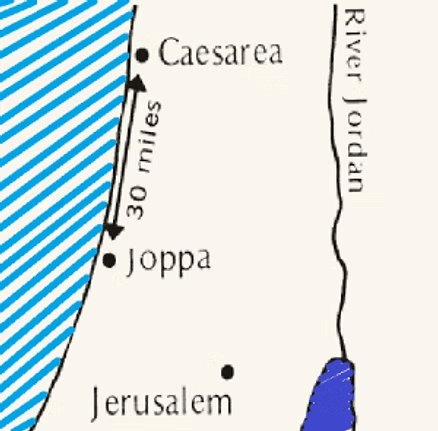
Here, Peter referred to “the sons of Israel.” Peter lived in Galilee, but received divine insight that led him to meet Cornelius, while Peter was in Joppa (now called Jaffa). Cornelius was in Caesarea, which was about fifty-seven kilometers north of Jaffa, with both on the Mediterranean coast. This means Peter was in Judea and Cornelius was in Samaria, neither of which was in “Israel.” This means “the sons of Israel” is a statement of Apostles and Saints, who were all brothers (men and women), from having all been reborn as Jesus (a masculine spirit-soul – the Son), thereby made to act righteously, becoming those “Who Retained God” (as Yahweh elohim – the soul of Jesus within them). The name “Israel” means “He Retains God” or “God Is Upright.” With that title given to all souls in flesh (“the sons of Israel”) – not meaning Jews – Peter said the presence of Yahweh’s Son (el – “God”) within led all to announce the Good News (the “Gospel”), which was the message that eternal “peace” comes by being reborn as “Jesus,” from Yahweh’s “Anointment (being a “Christ”). Eternal “peace” meant the assurance of Salvation for one’s soul, in exchange for that soul’s total submission to Yahweh’s Spirit and surrendering that soul’s control over his or her body of flesh, so Jesus could lead him or her to righteousness. With that transformation made, then Jesus becomes the “Lord” over each and every (all) Apostle-Saint. As “Lord,” Jesus was the new soul controlling one’s body of flesh, to make it act as Yahweh Willed.
Verse thirty-seven
Peter then spoke assuredly of what all like souls knew, knowing all souls possessed by Yahweh (in divine marriage to their souls) and His Son Jesus (through his soul being reborn within, as the Son born through His wife-souls) were the living proof of what had first been preached in Judea, having begun in Galilee, by John the Baptist. That preaching was, “I baptize you with water, but there will be one who comes after me that baptizes with a Spirit Holy.” The presence of the Spirit within, from a divine union between souls and Yahweh, then brought forth the most holy soul of Jesus, with that presence being the fulfillment of the promise of “baptism by the Spirit Holy.” John preached that message, because he knew the “one after” was already within his being, having Spiritually Baptized John’s soul. So, John spoke as a witness to this personal experience. Peter and Cornelius (and all the Saints at that time) were proof that what John said, as they too had come to be so Baptized Spiritually.
Verse thirty-eight
Here, Peter turns the focus on Jesus, which is a name that means “Yah[weh] Will Save” or “Yah[weh] Saves.” Jesus was one who Peter said clearly was baptized by God, not John. John was baptized by God, and led to prophesy in the same way Peter and Cornelius and all Saints do. They did so once their souls had been washed clean of sins by divine union with Yahweh. His Spirit makes all souls Yahweh divinely possesses become “Holy.” Jesus was born baptized by Yahweh’s Spirit, thus he was “Holy” at birth. That state of being allowed Jesus to have the “power” of that Spirit at his disposal, by the Will of the Father. That Will meant giving Jesus the power to dispel the illness cast over souls in bodies of flesh, which was demonic possession, where the soul of the devil had possessed many, making them spiritually ill. Jesus did not do any miracles alone, as some god on earth. Jesus did the Will of Yahweh, as His instrument of spiritual healing, placed in the flesh of a human being. A body of flesh possessed by the soul of Jesus (the Yahweh elohim created in Adam) is always (and only) the extension of Yahweh’s hand on earth.
Verse thirty-nine
Here, Peter made a most important statement about Apostles and Saints being “witnesses” to what Jesus did, does and will do. Peter was a disciple of Jesus of Nazareth and walked the same dusty roads that Jesus walked. It is most likely that Cornelius was the centurion who came to Jesus about a sick Jewish slave and then called Jesus righteous as his body hung dead on the cross. Still, none of that was “witnessing.” To be a “witness” one must have personal experience of Jesus doing miracles. Watching that be done by an external Jesus (when he lived in his own flesh) is the equivalent of hearsay witnessing; and, that is not what Peter meant. Peter was saying he and the other Apostle-Saints “witnessed” Jesus perform miracles through their own flesh (not as Jesus of Nazareth, but as Jesus reborn in flesh). Their souls watched over the soul of Jesus’ shoulder, as he performed miracles in their flesh, which they watched as “witnesses.” While Jesus did plenty of miracles when he was alive, Peter pointed out that Jesus was crucified to death; so, Peter was “witnessing” Jesus still doing miracles (beyond death), but in the flesh of others, in whom Jesus had been resurrected.
Verse forty
In this, Peter said the soul of Jesus was raised up, where “the third day” needs to be understood as meaning more than the linear timeframe of seventy-two hours having been dead. While that is a true timing element, the “third” must be seen as how the soul of Jesus was “raised up” and placed into other souls. When a soul is one, its body of flesh is two, then the presence of the soul of Jesus is a “third” presence. That “third” is the “Spirit,” connecting the Father (Yahweh) and the “Son” (a soul in flesh reborn). Therefore, that “third” reflects upon the Trinity, which means Divine Possession. The element of “day” is then the light of truth and the awake state of eternal salvation, where there is no night (the symbol of death) to worry about. Thus, when Peter said “God made him manifest to be born” (the deeper meaning of the Greek word “genesthai”), that is Peter telling that Jesus was raised up by God to be reborn in Apostles and Saints. His “appearance” was known only to those souls who “witnessed” this rebirth.
Verse forty-one
The element of selectivity is then stated in this verse, where Peter said Jesus did not “manifest” (as “reborn within”) to everyone. Jesus was “witnessed” only by those souls in flesh that had married Yahweh and come into union with His Spirit, thereby becoming clean of all past sins, allowing for that resurrection to take place in their souls-bodies. When Peter said those who were reborn as Jesus “had been chosen beforehand” (“prokecheirotonēmenois”) “by God,” one must remember Peter’s earlier statement about God not showing favor to anyone. When that truth is factored in, “having been chosen beforehand” becomes a statement of a prior ‘engagement’ with Yahweh. A marriage proposal is made to divinely unite one’s soul with Yahweh’s Spirit; but that ‘engagement’ demands the works of faith that prove one’s commitment. Commitment is relative to the marriage contract – the Covenant – which is non-negotiable. Thus, well prior to Jesus being reborn within a soul, that soul has to prove to Yahweh its total subjection, before the marriage vows can be exchanged and all one’s past debts are erased by one’s new Holy Husband (Yahweh). That makes the element of “choosing” be a two-way street, where Peter and Cornelius had chosen to serve Yahweh, before they could ever entertain the aspect of being reborn as the Son of Yahweh. Therefore, for Peter to talk about eating and drinking with Jesus, after he had risen from death, that means the soul of Jesus entered all of his followers, transforming them into him reborn; so, everything they did (including eating and drinking) they did with Jesus’s soul being one with theirs. Because all souls alone in their bodies of flesh are mortal, they then are born of death; so, having the soul of Jesus be resurrected within that state of death means their souls likewise have been raised from death.
Verse forty-two
Here, Peter said that the presence of Jesus within, having become the Lord of one’s soul and flesh, does not simply offer suggestions and recommendations, as would reading a book do. Jesus within their souls then has him command their soul-bodies he divinely possesses to proclaim this truth of salvation – the only truth of salvation – as personal witnesses (those qualified to testify to the truth). They are to tell others that Jesus exists within them, on behalf of Yahweh – His gift to humanity (not an individual soul-body) – so others will know death means judgment by God. Only those possessed by Jesus (married to Yahweh’s Spirit) will be deemed able to be “living,” as souls eternally saved. All others (souls unmarried to the Spirit and not reborn as Jesus) will be considered to be “dead.” To be “dead” means the best a soul can hope for (when death eventually does come) is reincarnation. That would be when a soul is given another eighty years (estimated animation in a body of flesh) to choose to serve Yahweh (not self).
Verse forty-three
When Peter said, “All the prophets testify about him,” this means more that Jesus was foretold in Jewish Scripture (the Law, the Psalms, and the Prophets). All of the known “prophets” were able to “testify about him” because their souls had likewise been filled with Yahweh’s Spirit AND those long dead “prophets” were likewise reborn as Jesus (a name meaning “Yahweh Saves”), well before anyone ever knew Jesus of Nazareth, a man of flesh and blood. They wrote of Jesus returning (prophecy) as Jesus’ soul in flesh, long before (a reoccurring return). Because of that being the definition of a “prophet,” Peter was led by Jesus’ soul within his to say all the Apostles-Saints (like Peter, Cornelius, and others) were also “prophets,” who could “testify” as personal “witnesses” to Jesus being within. They were shown the meaning of past Scripture, wrote present Scripture, and knew future “prophets” would understand the truth of prophecy, through the continued resurrection of Jesus’ soul in human flesh. All of this is possible by a soul being married to Yahweh (taking on His name – “Israel”) and giving rebirth to His Son (taking on the name of “Jesus” – “Yahweh Saves”), again resurrected in human flesh. This presence then becomes the truth of “faith,” which goes well beyond “belief,” because “belief” is something external convincing one of the truth; but “faith” is experiencing truth, knowing that to be.
This reading being mandatory for Easter Day, when the truth about the risen Lord means more than Jesus walking away from his tomb, alive after death, is because it speaks of the soul of Jesus being resurrected within other souls. That is the truth of Easter Day … when Jesus is resurrected in another soul with a body of flesh. This is then Peter knowing the truth of Jesus’ soul having been reborn into his flesh; but Peter had been seeing prior to this chapter how the soul of Jesus is a Tree of Life, thinking it was only for Jews. Yahweh led him through a vision to see that Tree of Life, in which the soul of Jesus flowed throughout, within and unseen, not only grew fruit that was Jewish. It produced good fruit wherever souls were married to His Spirit. Peter was led to see ‘Jews for Jesus’ was only one branch of righteousness. Cornelius proved to be another branch (one of Gentiles), equally part of that Tree of Life. These ten verses spoken by Peter are then his realization that all fruit coming from the Tree (call it the True Vine) of Life is all who are made possible by being fruit born of Jesus’ blood. All born for this Vine of Life was righteous fruit; and, that fruit was only produced for those seeking Life to consume, becoming new shoots on that Tree.



 Explaining the Readings