
While Peter was still speaking, the Holy Spirit fell upon all who heard the word. The circumcised believers who had come with Peter were astounded that the gift of the Holy Spirit had been poured out even on the Gentiles, for they heard them speaking in tongues and extolling God. Then Peter said, “Can anyone withhold the water for baptizing these people who have received the Holy Spirit just as we have?” So he ordered them to be baptized in the name of Jesus Christ. Then they invited him to stay for several days.
——————————————————————————–
This is the Acts reading from the Episcopal Lectionary for the Sixth Sunday of Easter, Year B 2018. It will next be read aloud in church by a reader on Sunday, May 6, 2018. It is important because it tells how the Holy Spirit is for all human beings who seek the truth and hear the word of God speaking to them, individually. As non-Jews hearing the word and receiving the Holy Spirit, this means bloodlines that share no DNA with the tribes of Israel, as those not direct descendants of Abraham, Isaac and Jacob, and those not educated in Mosaic Law, Gentiles have the capacity to be reborn as Jesus, the Christ promised to the Jews.
Certainly, the key element in this reading that makes one worthy of being awarded the Holy Spirit is, “the Holy Spirit fell upon all who heard the word.”
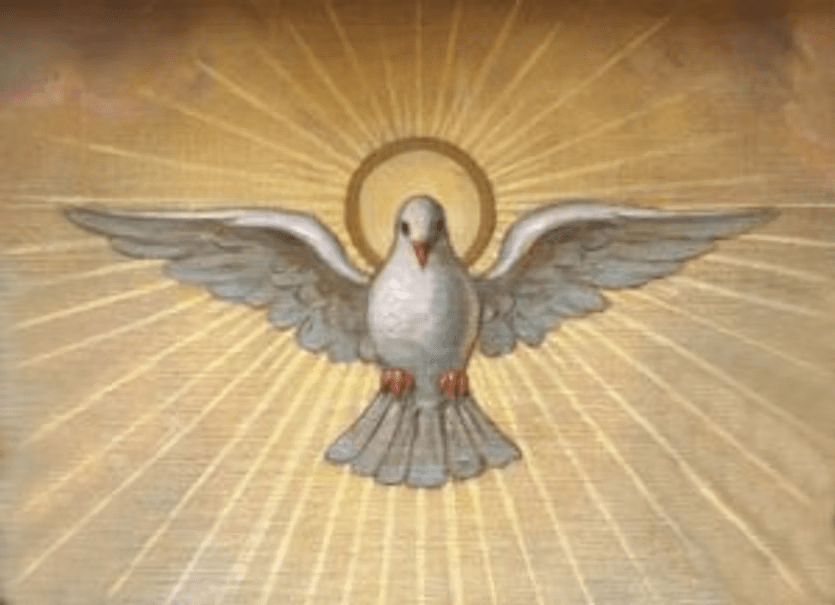
The limiting caveat is the Holy Spirit is not something everyone receives. It is not guaranteed to devoted Jews who profess to adhere to Mosaic laws; and it is not guaranteed to all Gentiles who gather around a true Christian who speaks.
As a reading presented on the Sixth Sunday of the Easter season, the key theme of the Epistle and Gospel reading is clearly “God’s love.” We see that here when we read, “The Holy Spirit had been poured out even on the Gentiles, for they heard them speaking in tongues and extolling God.” The Gentiles – Romans who worshiped pagan gods – who were filled with the Holy Spirit were highly praising [the One] God, which is a sign of the love that overcame them – a love from God.

When Peter asked, “Can anyone withhold the water for baptizing these people who have received the Holy Spirit just as we have?” the focus was on how rules, dogma, laws, or edicts that state a right to symbolically wash a body clean of sin, plays no role in true baptism. When we learn that Peter “ordered [the Gentiles of Cornelius] to be baptized in the name of Jesus Christ,” they had already been baptized by the Holy Spirit, filled with God’s love, and reborn as Jesus Christ. This states that baptism by water can ONLY truly be done after the presence of God has transformed [or Transfigured] one of faith, by His presence in one’s heart.
It is natural for Christians today to want to claim this presence; but after centuries of training by the various denominations of Christianity the majority opinion has been reduced to a belief that baptism by water (done first, as early as infancy) is the call for the Holy Spirit to come to one. We believe ministers, priests, pastors, preachers and educated church leaders are the “Jesus Christ tamers,” who command Jesus to surround a congregation, by invoking that name (“in the name of Jesus come!”). Unfortunately, this reading from Peter’s acts as an Apostle says the truth is quite different.
Prior to these verses from Acts chapter 10, Peter and fellow Apostles spoke to Cornelius and fellow Gentile soldiers. Peter said the following:
“We are witnesses of everything he did in the country of the Jews and in Jerusalem. They killed him by hanging him on a cross, but God raised him from the dead on the third day and caused him to be seen. He was not seen by all the people, but by witnesses whom God had already chosen—by us who ate and drank with him after he rose from the dead. He commanded us to preach to the people and to testify that he is the one whom God appointed as judge of the living and the dead. All the prophets testify about him that everyone who believes in him receives forgiveness of sins through his name.” (Acts 10:39-43)
Significantly embedded in that text is the truth that states, “[Jesus, the risen Lord] was not seen by all the people, but by witnesses whom God had already chosen.” That says that after Jesus has resurrected from death, he appeared to the ones who had been prepared to see him. This is why he appeared in unrecognizable form to Mary Magdalene, to Cleopas and his wife Mary, and to the disciples beside the Sea of Galilee (an event that was actually a dream). It was after Jesus spoke to those disciples that they knew who it was speaking “the word” to them. Because they had been prepared, as “witnesses whom God had already chosen” (during three years of Jesus’ ministry and lessons), they saw Jesus in the flesh and received the Spirit.
This same selectivity that is relative to who can know God’s presence is nearby and to know Jesus is the Messiah can be seen when John told of Jesus predicting his death as the Passover Festival neared. There John wrote, “[Jesus said,] “Father, glorify your name!” Then a voice came from heaven, “I have glorified it, and will glorify it again.” The crowd that was there and heard it said it had thundered; others said an angel had spoken to him.” (John 12:28-29) The point of that is it says not everyone heard the voice of God speak. It was only heard by those who had opened their hearts to God, with faith in Jesus as His Son.
This inability of some to hear the voice of God is still in effect today. It is reminiscent of the event that was witnessed by an estimated crowd that ranges between 30,000 and 100,000 people. It occurred in Fatima, Portugal on October 13, 1917, as the sixth (and final) Marian apparition before three shepherd children (all on the 13th of the months from May and October). The children had prophesied that a miracle would take place on that final date, attracting a much larger crowd than prior. The “voice of God” can be read then as visual words (a picture is worth a thousand words), rather than spoken words. (source: Wikipedia)
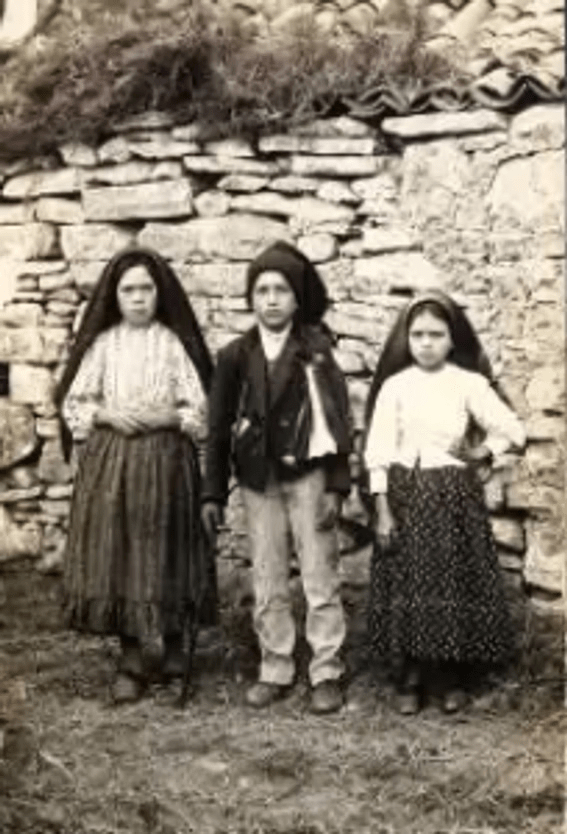
The voice of God for that event is called the “Miracle of the Sun.” According to the Wikipedia article about that event: “Newspapers published testimony from reporters and other people who claimed to have witnessed extraordinary solar activity, such as the sun appearing to “dance” or zig-zag in the sky, careen towards the earth, or emit multicolored light and radiant colors. According to these reports, the event lasted approximately ten minutes.”
This event was officially recognized by the Roman Catholic Church in 1930. However, there are critics of this recognition, such as reported by Wikipedia:
“According to theologian Lisa J. Schwebel, claims of the miracle present a number of difficulties. Schwebel states, “not only did not all those present not see the phenomenon, but also there are considerable inconsistencies among witnesses as to what they did see“. Schwebel also observes that there is no authentic photo of the solar phenomena claimed, “despite the presence of hundreds of reporters and photographers at the field.”
That is basically restating what Peter said about people not being able to see the risen Lord, as he spent time teaching the disciples for forty days before his Ascension. In John’s Gospel, where his words say, “The crowd that was there and heard it said it had thundered; others said an angel had spoken to him,” become a precise parallel to the criticism of “inconsistencies” that occurred in witnesses to the Miracle of the Sun. It is what should be expected, because not everyone is prepared by God to hear His Word.

In addition to the prophesied miracle that some witnesses claimed took place, no one in the crowd of onlookers said he or she saw the Virgin Mary. The three children knelt at the same spot they had been told to kneel each month (by an angel), with the crowd gathered each time seeing their gazes fixed upward, as if there was something above and before them. No one in the crowds gathered ever witnessed anything other than three children kneeling and gazing upward. However, after each visitation of the Virgin Mary, the accounts given by the children was how all three children had vividly seen the Blessed Mother, but only two could hear her speaking to them.
This too fits what John and Peter said, as the voice of God is relative to how well prepared one is to hear that word. The boy shepherd was said by the Virgin to need to do more repentance, which was why he could not hear. Still, he was uplifted by the visions he was allowed.
The proof of someone hearing the divinity of apostolic words being spoken is then found in Peter’s statement that the Gentiles began “speaking in tongues and extolling God.” That statement in Acts is actually divided into two separate segments (denoted by a comma), such that the word “and” has caused translators to omit the comma.
The Greek states, “lalountōn glōssais , kai megalynontōn ton Theon,” with a literal alternate translation saying, “proclaiming with languages , and enlarging (or increasing, or magnifying) the God.” This translation then allows one to stop being mesmerized by a concept that is misinterpreted by man – “speaking in tongues” – so that “languages” is more appropriate when the “voice of God” and “speaking the word” is the motivation for this reaction. Rather than them “extolling God,” the separation allows one to see how it was “the God” within them that was “increasing” their ability to speak the word, which the Gentiles suddenly were doing.
This means that the miracle of hearing God’s voice, from listening to the voice of God through Peter (an Apostle-Saint of Jesus Christ), those Greco-Roman-Gentiles began speaking fluent Hebrew and Aramaic, rather than Greek or Latin. As they spoke in those “languages,” they not only quoted from the Torah, Psalms and Prophets (a task they had no training in), but they expanded on the word of Scripture. Peter saying they “magnified” the “languages” of Holy text says the Gentiles began divinely explaining how those words prophesied Jesus Christ. They “spoke the word” just as Peter had been speaking.
This means the proof of having the Holy Spirit “fall upon” one is the God-given ability to explain and defend the books of the Holy Bible, without prior explanation or defense being taught one.

That proof was clearly visible to Peter and his companion Apostles, as there was only one way such automatic utterances could come to be. God had sent His Holy Spirit to the Gentiles, transforming their souls to a purely righteous state (i.e.: Saints). That then moved Peter to mark the event with the element of water, where they were not so much “baptized” as we Christians understand that today, but “christened” with water.
The purpose of that naming (the definition now applied to the word “christening”) was to officially proclaim those Gentiles were in the name of Jesus Christ. That is the truest form of one’s right to profess Christianity; and it is the root of the word “christen,” such that one is given a Christian name: Jesus. Therefore, the ritualistic pouring of water (or a river dunking) was done after the soul had reached a state of righteousness, through a Spiritual rebirth.
When we then read, “Then they invited him to stay for several days,” this is vital to grasp. That statement is not a simple element thrown in at the end. It is actually what links this reading to two others that have crystal clear themes of love.

The whole of Acts 10 is about God preparing Peter to accept non-Jews in his ministry (through a vision). This reading’s event occurred soon after Cornelius sent men to request a visit from Peter, asking Peter to go to Caesarea Philippi. Because of a vision Peter had experienced prior, he traveled with Roman soldiers and entered a Gentile home, which was a forbidden act of Jews. Cornelius (a centurion) and his closest soldiers were good human beings and had treated Jews with kindness and fairness. He had heard some Jews speak if Peter, who was then in Joppa, so he sent for him.
Still, neither Peter nor Cornelius expected what happened in this part of Acts 10 to happen; however, when it did, Peter was moved to recognize Cornelius and his men as brothers in Christ. Because they were then of the same “church” (those who gathered “in the name of Jesus Christ”), staying together “for several days” was then an important act of acceptance, out of love for one another, their love of God, and the love of the Holy Spirit.
As a Easter lesson, it is this aspect of God’s love that instantly came over two groups of strangers that fits into a theme of the Sixth Sunday of Easter, Year B 2018. The Easter lessons are all about a personal Resurrection of Jesus Christ needed in each of us. This Resurrection is only possible when one willingly surrenders oneself to God, dying of ego so one can be reborn as a soul cleansed by the presence of God and the Mind of Christ (which allows one to know everything about Scripture, so a Saint can “speak the word of God” fluently). Thus, from this reading we are to see ourselves as Gentiles who have been prepared for God’s presence, which “falls upon” us by our acts of goodness and fairness towards those who serve the One God faithfully.
Still, being prepared through acts of human love does not fully make one a true Christian. This reading says we need to strive for more. We need to know the love of God.
The Resurrection of Jesus Christ in us can be seen reflected in this story from Acts. Cornelius did good, but he went beyond by sending for Peter. As a Gentile, he wanted to know more. He wanted someone to convince him to convert to Judaism, rather than remain a polytheistic Roman. He reached out to find the truth. God saw that, so He prepared Peter to be His servant who would offer the truth to Cornelius.
We must become opened to receive God. We must pray that the truth will open our eyes and minds. When the bearer of truth comes, we need to listen to the word and let the Holy Spirit fall upon us, so we see the meaning. We must seek to see the truth where others have not seen it. We must desire to know the truth where others have only heard its sound. We must surrender ourselves so our brain is freed to know the truth of the Mind of Christ. When one experiences that knowledge, it is because one has been truly baptized by the Holy Spirit, with one’s soul cleansed by the presence of God, with one then in the name of Jesus Christ.
When that state of existence has been reached, one knows love. One then can recognize all others who have the same state of love surrounding them. Once one knows that love, one enjoys spending a few days with others of the same Godly heart and the same Christian mind. It is like a newfound reunion, where joy abounds.


 Explaining the Readings