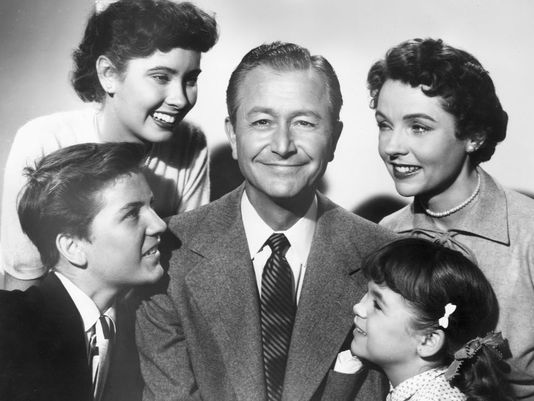
You remember our labor and toil, brothers and sisters; we worked night and day, so that we might not burden any of you while we proclaimed to you the gospel of God. You are witnesses, and God also, how pure, upright, and blameless our conduct was toward you believers. As you know, we dealt with each one of you like a father with his children, urging and encouraging you and pleading that you lead a life worthy of God, who calls you into his own kingdom and glory.
We also constantly give thanks to God for this, that when you received the word of God that you heard from us, you accepted it not as a human word but as what it really is, God’s word, which is also at work in you believers.
——————————————————————————————————–
This is the Epistle selection from the Episcopal Lectionary for Year A, Proper 26, the twenty-second Sunday after Pentecost. This will next be read aloud in church on Sunday, November 5, 2017. This is important as it makes clear the work that is involved in being truly Christian.
To repeat what I posted previously about Paul’s letter to the Thessalonians, the statement above that says “brothers and sisters” is not what was written in this letter. The Greek word Paul wrote is “adelphoi,” which is the plural form of “adelphos” and says “brothers.” We can accept “brothers and sisters” in translation, because “brothers” was used in the epistles of Paul to denote “members of the same religious community, especially fellow-Christians.” (Strong’s) However, to translate it as both masculine and feminine Christians can become confusing, when one gets to the part where Paul wrote, “We dealt with each one of you like a father with his children.”
This is confusing because Paul treated the Christians of Thessaly “like a father.” The deeper meaning in that statement says it was the Father’s love of Paul in him which Paul then modeled behavior from. God raised Paul to raise others like Paul, so all would have the same love of the Father within them, with all modeling their behavior after God the Father. This is why priests are addressed as “Father.”
This issue will be further addressed by Jesus in the Gospel reading that accompanies this epistle reading in 1 Thessalonians (Matthew 23:1-12). That was when Jesus made the remark that Pharisees and those of the Temple liked to be called “rabbi,” but they never taught by example. They were never the “Fathers” of the Jews, as those lowly people were raised as if they were orphans. So, when Paul said, “We dealt with each one of you like a father with his children,” all the “sisters” could be confused about what that means.
My wife is an Episcopalian priest. In seminary, she had a woman professor who was referred to as “Mother.” When my wife was ordained, the parishioners began calling her “Mother.” In my mind, this is not a complimentary title.
Before I comment on that, let me also say that I have sat in some Episcopal churches and read along in the Prayer Book, for the Eucharist Rite II, Prayer C: “Lord God of our Fathers; God of Abraham, Isaac, and Jacob,” only to hear the priest (a male) say, “Lord God of our Fathers and Mothers; God of Abraham and Sarah, Isaac and Rebekah, and Jacob, Rachel and Leah.”
What?
I asked a different male priest, who did not make those additions for the wives of Patriarchs (Pater is Latin for Father), why some priests did and some did not. He said it was up to the priest; but it was a modern way of making unofficial changes to the Prayer Book, which took into consideration the role women play in the Church.
If that is why “adelphoi” is translated as “brothers and sisters,” then it misses the point of the Father as the teacher of His children, with Jesus Christ the Son of God, where ALL Christians are “brothers” [male and female He made them], as reborn Jesuses. If that is why a female priest of the One God is called “Mother,” it misses the point of who is teaching, what is being taught, and how children know the difference between mommy and daddy.
It misses the point that ALL Christians are called to be “the brides of God” [male and female He calls them], with the consummation of that marriage bringing about the baby boy Jesus, with the Mind of Christ – who sits at the right hand of the Father, as the male heir to the throne – making a human being become One (a Trinity) in the flesh.
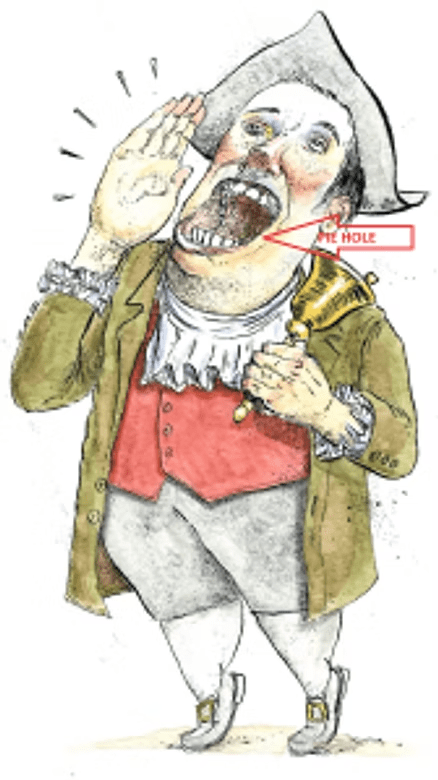
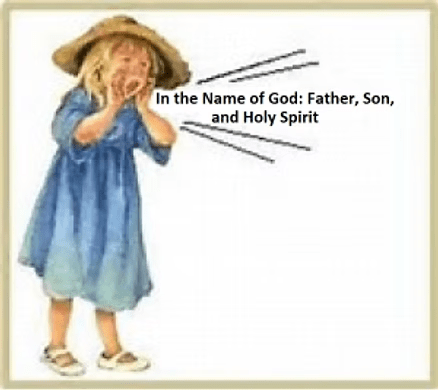
It misses the point that Christians are ALL “brothers,” because nobody speaks their sex organs as a servant of the LORD. The FATHER speaks, while Christians just open their pie holes and let the words come out.
Now, that said, let me inform whoever reads this that I had no father around when I grew up. I had a mother, and that was it. My mother did lots of things a father could do, such as go to work and leave me in someone else’s care, or go to work and leave me alone at home. Occasionally, my mother spanked me with a belt, but she never made me so afraid of punishment that I felt compelled to toe the line. In all actuality, I was allowed to do as I pleased, more and more the older I got.
My mother saw me as the “man of the house.” My mother loved me. My mother sacrificed for my benefit. My mother gave me as much as she could afford to give, and was sorry she could not give more. My friends with fathers AND mothers never had as much as I had; and as I grew older, I felt guilty for having too much … as a lower, middle-class male. (I call it middle-class because my mother bought a house to raise me in.)
From that personal historic background and experience, when I hear a priest of the LORD referred to as “Mother (fill in the blank),” it gives me the impression of one who is permissive, more than demanding. It makes me think that “parent” is there to make all my boo boos feel better, more than tell me to get up when I fall … “Rub some dirt on it!”
Without the presence of a real father in my life (my father visited on some holidays – he was not dead, just very absent), I grew up male, but knowing very little about things boys with fathers are taught. As some model by which I could become an adult male, with eventually a wife and family and responsibilities of fatherhood, I looked to other fathers. Some were real fathers I spent time with, as a friend of their sons; and some were fictional characters on TV.
At no time did I ever learn any adult male skills from my mother. I watched other males and learned through observation. Male teachers and gym coaches were the ones who told me how to become a man and do manly things; and I absorbed that knowledge like a sponge. Of course, my peers helped me learn too, by leading me down all the wrong paths of masculine ignorance. Without a real father to guide me, I found trial and error was my best teacher.
In defense of my mom, she was always buying things that I was tasked to put together and she bought some tools that I could use in that effort. Indirectly, my mother taught me to read the directions first, not after you try to put something together wrong … over and over again … never thinking to read the print under the pictures.

The point that I have made in the past and still make today is this: A priest (or pastor, minister, reverend, padre, et al titles) is THE Father, via the Holy Spirit, regardless of one’s human gender. Paul said this when he wrote how he, Silvanus and Timothy had been acting like a father to his children, “urging and encouraging you and pleading that you lead a life worthy of God, who calls you into his own kingdom and glory.”
It was not those three men who were acting like fathers, because they called the Thessalonians “brothers.” They acted as “God” who was within them. God is “who calls you into his own kingdom and glory.”
The modern Western rationale now is to find equality in the sexes (which is the same rationale that is applied to all efforts calling for equality). This is little more than a philosophy of man that seeks (through the Big Brain) to lower those who have been artificially elevated, and to raise those who have been downtrodden. This is good when the ones pointing our all the mistakes in others comes from THE Father, and not some personal agenda. That message, again, is the point made in the accompanying Gospel reading for Proper 26, where Jesus said, “All who exalt themselves will be humbled, and all who humble themselves will be exalted.” He was referring to the usual suspects in Jerusalem (Pharisees, scribes, et al).
I am reminded now of the lyrics of a song written by Roland Orzabal (Tears For Fears video), about the humbling of Spain, due to its devotion to the philosophy of Salic Law and Patrilineal or Agnatic Succession, where only male heirs could wear the crown. In two verses the song lyrics sing, “Did you know your father was an island Did you know your mother was the sea” and “Did you know all mothers come from heaven Did you know all fathers come from hell.” The lack of a male heir in Spain was then symbolically stated as a lack of a fixed (island) and ruthless (hell) ruler, which led to the ultimate ruin of the Spanish monarchy.
The Spanish refused to make a Queen their supreme leader, as that would be recognizing Mother Spain as capable of being inspired by God THE Father. A nation was not allowed to be ruled by changing emotions (the sea) or the nebulousness of spiritual faith (heaven) in the physical realm.
The Spanish did this (I presume) because the Pope had become their father figure, by whom Spain was raised. The Vatican denied women the right to serve God as His priests, for Christians. Therefore, Queens had no rights to serve God as His national rulers, over Christian lands.
That philosophy crumbled when a King of Spain sired no male heirs before dying. The War of Spanish Succession ensued. Because of that war, the Holy Roman Emperor, Charles IV, declared it would be legal for his daughter to become the Empress upon his death; a transition that was challenged by the War of Austrian Succession. All the while, the English had managed to do fine with the succession of Queens, mixed with Kings.
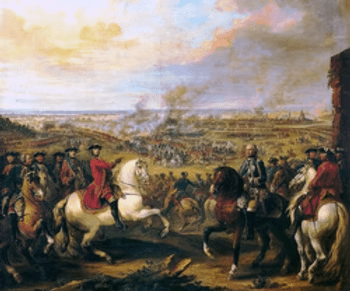
I imagine it was the costs of wars over succession that led some to reflect on how priests of Rome could call themselves “Father,” when they were denied marriage, by edict, thus denied all capability of actually having children. That system came tumbling down when brains began pondering, “Why can’t women be priests, if a queen can rule England?”
Still, men and women are different, or they would be called the same word (without gender application necessitating separate words). The same goes for fathers and mothers: They are different and not the same, because each was created for specific purpose, as compliments of the other. The Commandment to honor your father and your mother recognized the equality of separate responsibilities. Both sexes have equal value in the production of offspring and raising those children to serve a purpose. However, anyone who exalts him or herself because of gender (this is called “Pride,” which is a Deadly Sin) is then destined to be humbled in the eyes of THE Father.
The Israelites went to Samuel and asked to be given a king, to be like other nations. No man (and thus no woman) can ever be more than a human figurehead, because God told Samuel, “they have rejected me as their king.” “All who exalt themselves will be humbled,” as only THE Father leads His subjects to the true Promised Land. Mother Earth is the ruler of the physical and material, and as harsh and/or as gentle as she can be, she can only offer ashes to ashes and dust to dust as the rewards for serving her.
This means to call oneself “Father,” simply because one is a male graduate of a seminary, ordained into a job for a religious order that brings that title of masculinity, because one is masculine, is wrong. Likewise, to call oneself “Mother,” simply because one is a female graduate of a seminary, ordained into a job for a religious order that brings that title of femininity, because one is feminine, is wrong. To deny women the right to be THE Father to a congregation is equally wrong.
It is wrong because everything religious is then reduced to the human level of gender identification, rather than being elevated Spiritually. The trick question of the Sadducees put to Jesus, about who would be the rightful husband to the widow of seven brothers (where none produced a male heir), was answered by Jesus saying, “At the resurrection people will neither marry nor be given in marriage; they will be like the angels in heaven.” That means the soul has no gender. It is placed into flesh that may or may not be reproductive on earth.
The model of THE Father as being the one who sets the rules for a congregation to follow, and then fairly making sure those rules are followed – “urging and encouraging you and pleading that you lead a life worthy of God” – is God (Yahweh, the LORD). Moses did not make anything up from his own brain, such that a human male was written in stone as the only gender of humanity that could ever lead the Israelites. We know this because in the Book of Judges we are told of the Priestess Deborah, who God used to lead the Israelites back to leading lives “worthy of God.”
You might note that the Priestess Deborah was not referred to as “Mother Debbie.” She did not become a Judge of the Israelites because she knew how to raise children. Deborah was a prophet of the God of the Israelites, while also being recognized as being “a counselor, warrior, and the wife of Lapidoth.” As a wife, she presumably had babies, so that would mean she also was a mother; but her human roles, based on gender, had nothing to do with her saving the wayward from ruin. She was the physical embodiment of THE Father.
When Paul said God “calls you into his own kingdom and glory,” he did not mean a call for you to imagine your soul floating away to some magical place, where if unicorns do exist, then they run and play in heaven; and the ghost of Jesus is there to pick flowers with you, after Saint Peter allows your soul to enter that kingdom and glory, where God is the cloud that surround everyone. Paul said “God calls you.” His call is for you to be the physical embodiment of His own kingdom. Receiving that call means you become “the unspoken manifestation of God” (from the Greek word “doxa”).
There is no sexual bias attached to this call “into his own kingdom and glory.” All are welcomed to open their hearts and become engaged to the LORD. Once married, your ego becomes completely subservient to the LORD. You are God’s committed wife (till death does your soul depart your flesh), so you stand to the rear as the LORD speaks out of your mouth. The LORD speaks as THE Father, just as He spoke through Jesus, as the Mind of Christ fills the newborn baby (reborn Christian) of that marriage.
In this arrangement, you are not alone. God takes on as many wives as He can afford (and He can afford every human being). You are summoned to marry God, and His proposal is that message brought by Apostles (male and female), and served as a father to his children. Acceptance means you become “brothers” with all the other wives of the LORD. You all become like Paul and seek new Christians to raise, like a father does to his children. God calls you to be a Father, in the name of His Son, Jesus Christ.
In this way all Christians “accepted it [the words of proposal to marry God] not as a human word but as what it really is, God’s word.” It does not matter what human form God takes, as it is not their gender uttering those words. All words spoken by Saints come from THE Father.




 Explaining the Readings