Rather than list almost two complete chapters from the Gospel of Mark, I recommend going to this site and reading that account of the Passion Play.
Instead of a lengthy Gospel reading, please take the time to read this lengthy explanation of what the Passion Play says, which becomes most relative to the following Holy Week.
Palm Sunday is the last day of Lent. The celebration of Jesus entering Jerusalem is the antithesis of Mardi Gras (Fat Tuesday), with no parades, sugary cakes, or complimentary beads are passed out. Rather than revelry prior to a difficult test, it should after the successful conclusion and the end of testing that one cheers one’s graduation to the next level of achievement. To turn this day of happiness and celebration into a day of sorrowful focus on a most necessary death is the wrong view to take, remembering how Jesus said, “unless a kernel of wheat falls to the ground and dies, it remains only a single seed. But if it dies, it produces many seeds.” (John 12:24). This is why the symbol of Christianity is not the crucifix (a symbol of punishment), but the Trinity of the spiritual intersecting with the physical (+). Death is the bane of mortality; but one has gone through Lent to be prepared for a Resurrection to eternal life. Celebrate that victory!
—————————————————————————————-
This is the main Gospel selection from the Episcopal Lectionary for the Sunday of the Passion: Palm Sunday, Year B. It will next be read aloud in church by a combination of parishioners, a reader, and a priest, as a reenactment of the final two weeks of Jesus’ ministry, depicting his final entrance into Jerusalem, his final Seder meal with his disciples, his arrest, presentation before rulers, his trial, sentence, punishment, death, and entombment. It is important as these remembrances of Peter, through Mark, become the source of Eucharistic rites and the points of recognition that highlight the reverence of “Holy Week,” the lead-in to Easter and the risen Lord.
According to my Word program’s word count, the reading from Mark is over 2,400 words (making it as long, if not longer than one of my interpretations of much shorter readings). Whenever holy days call for readings of such length and audience involvement the priest is basically given the day off, with no sermon preached. The logic is, “I will let the reading speak for itself. Let us sit and bask in the glory of those words recited.”
Involving a congregation (often with begging, pleading, and threats) makes for a great theatrical presentation, but the people should seek to know the meaning of the words; and that is what a priest is called by the Holy Spirit to provide. Anyone who has a tee time scheduled after church (or a football game to watch, etc.), or has not planned on spending extra time listening to holy words being explained on Holy Days, with no plans for spending all Sunday in church, that one needs to cease coming to a building that allows the pretense of Christianity.
Whenever twenty four hundred words of God are spoken (the Year C reading from Luke is only 2,242 words, and the Year A reading from Matthew is just under 2,700 words), true Christians should thirst for deeper understanding … not just bask in the uncertainty that is known to be present, which demands a true priest explain God’s intent. As Holy Week follows the Passion Sunday reading, it would make more sense to divide this lengthy reading into seven readings, with deeper explanation of meaning able to be given each day of a Holy Week. Because this is not done, the readings theatrically presented one day a year, without explanation (in-depth sermon), are always left up to the ignorant to discern, with ignorance begetting ignorance.
The degraded state of American church worship has created many congregations that are easily bored with “religious talk.” Therefore, I will forego any attempt to spend a week’s time writing about all the meaning that can be found in this reading from Mark.

Instead, here I will address the element that has been the Catholic-Anglican production of a Holy Week, which come from elements found in Mark (and the other Gospels that tell similar accounts). These will be shown to support the six days of special recognition, leading to Easter Sunday.
Let me first state that it is my opinion that Holy Week is a fabrication of the Church of Rome, as a way to mimic the Passover week-long festival, while erasing all Jewish influence that could be associated with the resurrection of Jesus Christ. That would be well and fine IF (big IF) Jesus had told one of his Gospel writers, “Hey! Make sure you let it be known that I have come with a New Covenant, which means my followers two thousand years from now will need to toss out all remembrance of the festivals my daddy (God) told Moses to make sure the Israelites must recognize forevermore. Instead of Passover, let’s call that Easter and make sure bunnies, colorful eggs and yellow marshmallow chickens are part of that new festival in my honor.”
Unfortunately for many, Jesus did not say those words. Instead, he said, “Do not think that I have come to abolish the Law or the Prophets; I have not come to abolish them but to fulfill them.” (Matthew 5:17)
Hint: The Law being fulfilled by Jesus would include Christians recognizing Passover, of which God sent his Son to be a memorable part of. I recommend everyone read Exodus 12, with Jesus kept in mind, as a parallel event.
The erasure of the permanence of God telling Moses, “This is a day [the Passover day of blood] you are to commemorate; for the generations to come you shall celebrate it as a festival to the LORD–a lasting ordinance” (Exodus 12:14) means Christians (for the most part) know absolutely nothing about the true Holy Week that is the eight days of Passover. Most years the Jews recognize the Passover at different times than do Christians recognize Easter, when both should observe the one and the same event. Since the Roman Church made up a calendar that differs from the Hebrew calendar (not lunar-based), they artificially created a nebulous time of recognition, which only rarely aligns with the Jewish timing.
Let me add that this new tradition created by the Church centuries ago means there are dedicated priests whose faith leads them to have great belief in that tradition, as being truly holy, so their dedication is sincere. The sincerity of faith priests devote to the resurrection of Jesus on the first day of the week, following the end of the Passover festival, is a model by which Christians should match. Still, the attendance for Palm Sunday services pales in comparison to attendance for Easter Sunday services; and attendance for the Monday through Saturday services in between are sparse, at best. Thus, the faith of priests is not fully passed onto the people, which is due to an inability to explain the obvious questions that arise over Jewish Passover and Christian Easter.
Some churches like to show their non-hatred of Jews by inviting Jewish rabbis to come speak to a congregation about the Passover Seder meal. Because most churches do not incorporate the two religions regularly, only on special occasions like Passover-Easter, few Christians know anything about the Seder ritual or Jewish traditions. Even when a visit by a Jewish representative makes that awareness made, only Christian Jews would be able to explain the Passover in terms of Jesus being the God-sent Messiah to the Jews. Standard Jews would only talk about Moses and their privilege as God’s chosen people, which is why Christians do not make the same observances as do Jews.
This is why it is important to realize that Jesus of Nazareth, born of a woman in Bethlehem, was a Jew, one who said, “I was sent only to the lost sheep of Israel.” (Matthew 15:24) The Jews were those who were lost to Babylon; but the scattered descendants of the Northern Kingdom (Israel), including the Samaritans, had become assimilated into foreign nations and cultures, earning them the distinction by true Jews as being people of “Gentile” heritage.

As such, Christians of the Gentile nations of Europe (and the extended places the imperialism of those nations sent sheep to get lost) are therefore spiritual descendants of the lost sheep of Israel. They have become so lost they do not know why they believe in the King of the Jews, the Son of Man who called God his Father … born a Jew … but they respond to his call. Therefore, it is important to look at the Passover festival as the true root of Holy Week, so more lost sheep can hear the voice of truth calling them by name.
To first look at the element of Palm Sunday, it was John who wrote of Mary Magdalene anointing Jesus’ feet with nard, stating that event took place “six days before the Passover” (John 12:1). Since the Passover that year began on the Sabbath, six days before the Sabbath is Sunday (the first day of the week). However, when one realizes the Hebrew days begin at 6:00 PM, such that the Passover Seder meal (Jesus’ “Last Supper”) took place on technical Sabbath (our Friday evening), six days prior to that was the feast given in honor of Jesus raising Lazarus from the dead. Because that dinner took place in the evening, it was on an actual Sabbath eve, when 6:00 PM made it technical Sunday.
Thus, when John wrote, “On the next day” (John 12:12a) Jesus entered Jerusalem to a cheering crowd and street lined with palm branches, that “next day” was actual Sunday, following technical Sunday. This is why Palm Sunday is right to be called that.
In Mark’s Gospel, it seems the timing of the anointing with nard is confusing, because Mark 14:1 states, “It was two days before the Passover and the festival of Unleavened Bread.” That timing says when the “chief priests and the scribes were looking for a way to arrest Jesus by stealth and kill him.” This means the two days timing factor was not when the anointing took place. We can deduce that by Mark then recounting the event that drove Judas Iscariot over the edge, so that he would betray Jesus and become an asset for the Temple in their plot. Mark was then recalling an event that occurred earlier in time … six days before the Passover.
John wrote after that celebration dinner for Jesus and Lazarus, “the chief priests planned to put Lazarus to death also; because on account of him many of the Jews were going away and were believing in Jesus.” (John 12:10-11) That states the nebulosity of their plot, such that it had not been finalized prior to Jesus entering Jerusalem (Palm Sunday), but Judas Iscariot helped them go with their plot to arrest and kill Jesus, by his going to them. Judas then made that commitment to betray Jesu on Wednesday or Thursday, “two days before the Passover.”
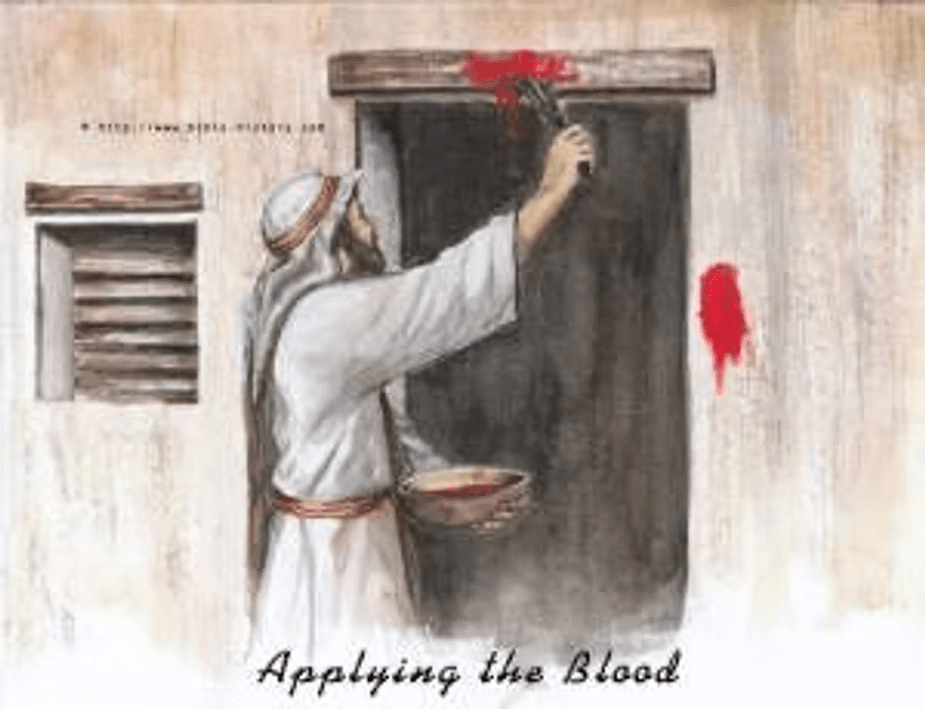
Look then at how the Temple authorities acted towards Jesus in comparison to how Pharaoh acted towards Moses “two days before the Passover.” The Passover in Egypt was the spilling of blood from sacrificial lambs (young and without blemish), whose blood was then painted over the doorways of the Israelite homes, so the angel of death would spare them. The meat of the lambs was then eaten inside the marked homes, as directed by God, through Moses [preparation, cooking, and wholly consumed].
Following the deaths that occurred, which saved the Israelite firstborn, the bondage of Egypt was broken, beginning a trek of fifty days. Passover then begins a count towards that number [“Pentecost” means “fiftieth day”], which should be part of any Christian Holy Week, because God commanded that count be made. In that number of days, they were in the wilderness without the comforts of natural food and water sources for forty days, between day eleven and day fifty. That is the symbolism of Lent leading one to Palm Sunday (40 days) AND the time Jesus spent teaching his disciples after he was risen (40 days).
Jesus, being like Moses, was going to lead the Israelites (Jews and pilgrim scattered) from the bondage that the Temple forced upon them, to a similar freedom for their souls. Whereas Moses came down with the First Testament after fifty days, Jesus came down from his Ascension on Pentecost, bringing the New Covenant when the Holy Spirit made eleven disciples become reproductions of Jesus, as the Christ Mind was in them. However, before that realization of Christ being reborn could occur, Jesus had to become the sacrificial lamb (Paschal Lamb), whose blood would be spread around each individual (to avoid the death that mortal existence brings); and forty days represents the time Christians have to digest everything written that is the body of prophecy about Jesus Christ foretold, with no scraps leftover when the sunrises within one.
That parallel of Jesus leading Jews to God, just as Moses led Israelites the same way, is the reason why observing the Passover Seder meal, by Christians, is most important. Every Passover Seder meal forevermore will symbolize Jesus Christ and the New Covenant, through remembrance of the body and blood that saved their souls for eternal life. Just as Israelites had to leave the comforts of Egypt for the hardships of the wilderness, so too do Christians have to sacrifice their worldly comforts to serve God.
Because Christians (in particular those of Anglican and Protestant descent) do not have a grasp of the symbolisms practiced in the Passover Seder meal, going to lengths to project it as Jesus’ Last Supper (see Leonardo DaVinci’s famous picture that captures European dining habits, not Jewish). Calling it a supper makes it seem to be an ordinary meal. As such, Christians do not fully understand the “bread” is unleavened matzah.
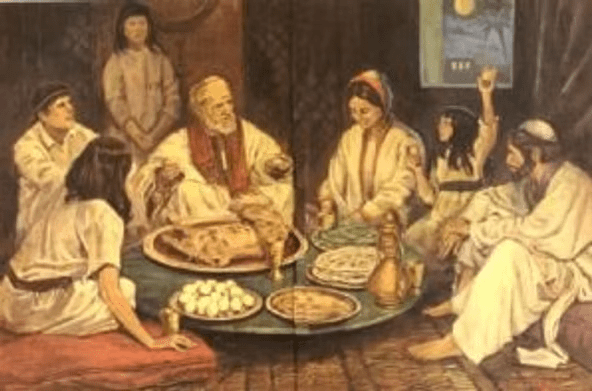
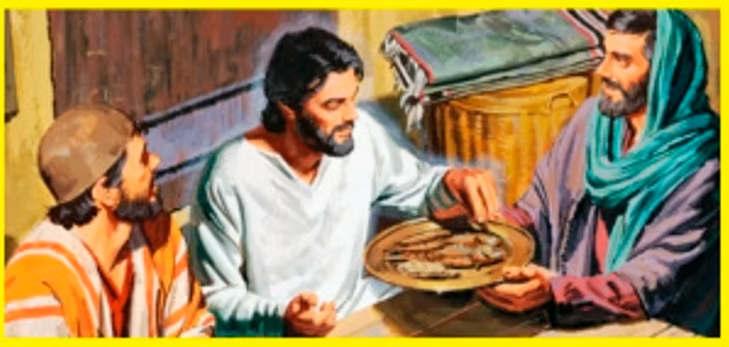
The Seder ritual calls for three matzah squares be placed on a central plate, from which the middle matzah is broken into two pieces … by the father of a family, who presides over the ritual meal. The Passover is not an official requirement that is led by a rabbi, done in a synagogue. This is what Jesus did in the upstairs room, as noted when Mark wrote, “While they were eating, he took a loaf of bread, and after blessing it he broke it, gave it to them, and said, “Take; this is my body.”’ (Mark 14:22)
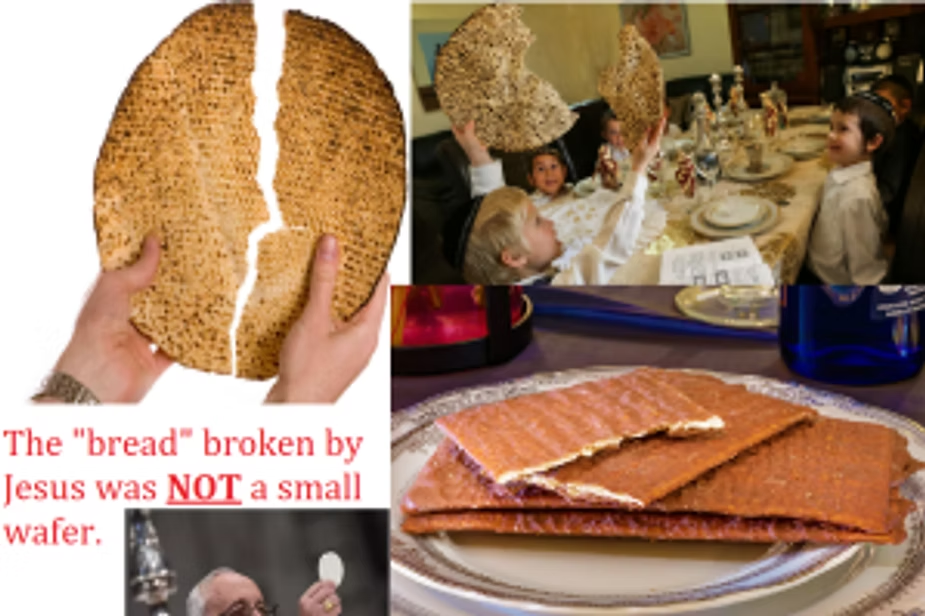
The Greek word written that translates as “bread” is “arton.” According to Thayer’s Greek Lexicon, “arton” is primarily referenced as meaning this:
1. food composed of flour mixed with water and baked; the Israelites made it in the form of an oblong or round cake, as thick as one’s thumb, and as large as a plate or platter; hence, it was not cut, but broken.
The website My Jewish Learning has posted this about how much matzah one is supposed to eat:
“During the seder, one makes two different blessings over the matzah. The first blessing is hamotzi (“…who brings forth bread from the earth”), which is recited whenever one eats bread, and which is obligatory at any festival meal. The second blessing recalls the particular obligation to eat matzah (“…who has sanctified us with the commandments and commanded us concerning the eating of matzah”).”
You will notice that Mark made reference to a very standard element of the Jewish Seder ritual, when he matter of fact stated: “Took the bread, blessed it, and broke it.” Prior to that, one washes one’s hand, and after the breaking of the middle matzah, the largest piece is hidden, as a teaching game to keep the children’s interest.
The hidden half of a matzah is later to be eaten as dessert (called afikoman). That symbolism is Jesus Christ, who is broken away and hidden, causing the devoted to seek his reward. Finding Jesus Christ is the sweet dessert that comes after sacrificing one’s self ego to allow Christ to lead one’s mind.

Likewise, the washing of hands ritual, which occurs several times during the Seder ritual, was modified by Jesus as the act of washing feet (which Mark did not write about). Jesus said to Peter, who rejected his feet being washed (not a recognized ritual), “What I do you do not realize now, but you will understand hereafter.” The feet symbolize the hidden sins that are only known by God, just as washing hands before eating symbolizes not taking in anything unclean. What only an Apostle can understand if no sins are overlooked by God, so all must be washed clean before entrance into eternal life with God can occur.

Simply from reading the Last Supper accounts of Matthew and Mark, one can easily get the impression that Jesus stood, blessed and broke bread, passed it out and then raised a toast with wine, all at the same time. That is not the case, as there are four ceremonial glasses of wine consumed during the Seder ritual, drank in an orderly and purposeful manner. Therefore, when Mark immediately followed verse 22 with, “Then he took a cup, and after giving thanks he gave it to them, and all of them drank from it. He said to them, “This is my blood of the covenant, which is poured out for many,”’ (Mark 14:23-24) it can seem like it took place shortly in time. However, thirty minutes to an hour could have elapsed in between the two – matzah followed by wine.

Mark then wrote, “When they had sung the hymn, they went out to the Mount of Olives.” That reference to a hymn meant an ending psalm in a lengthy “after dinner” ritual of singing. Many songs are sung in the Songs of the Nirtzah, with songs sung before the meal as well as after. The singing of songs can last for a couple of hours, with this accompanied by freely drinking more wine. Many Jewish children say their first experience of being drunk was from being allowed to drink wine during the Seder ritual (parents do not condone this, but aunts and uncles look the other way).

Thus, Mark’s reference was to it being late in the evening, after much drinking and singing, when Jesus led his disciples to the Mount of Olives. That exit officially ended the Passover Seder meal (first version, as the next evening the same ritual is repeated), and Mark writing, “He came and found them sleeping” (Mark 14:27a) means Jewish adult males drink themselves into sleep on that evening. The disciples were asleep because they were drunk and it was late at night (around 1:00 AM.).
That ended the eve that began the Holy Week of Passover. There were still eight days before the festival would end (Sabbath to Sabbath). However, as an aside, I will point out that when Mark wrote (and he is the only one who wrote this), “A certain young man was following him, wearing nothing but a linen cloth,” (Mark 14:51) it was improper for a Jewish male to name a woman or child in writing (unless a significant woman, such as Mary the mother or Mary Magdalene). It was proper to generally identify such people.
That reference to “A certain young man” means Mark (via Simon-Peter) knew who that someone was (“certain”), yet he was too “young” to name. The same lack of naming can be seen in the feeding of five thousand, where a “boy” was referenced, who had five loaves and two fish. The “boy” was not just someone passing by, it was a known (“certain”) “boy” who was holding the lunch for Jesus and the gang. Thus, it was communal property, not that of the boy holding the basket.
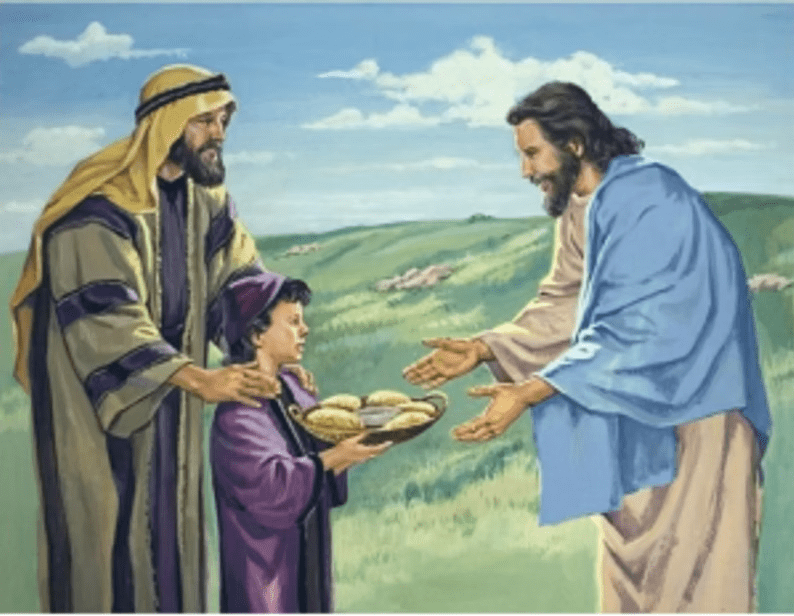
Both that “boy” and this “young man” referenced by Mark was John the Beloved, the child who reclined his head in Jesus’ lap and asked, “Lord, who is it?” (John 13:25b) John also wrote four chapters (John 14, 15, 16 & 17) about what Jesus taught after the Seder meal, as the child present who was eager to learn, while the adults were busy singing and getting drunk, thus not paying close attention, as was “young” John. Mark did, however, remember John was still awake, but in night clothes, as he tagged along with the adults to Gethsemane; and John was termed “a certain young man” who ran after his close relative, when Jesus was taken away, under arrest.
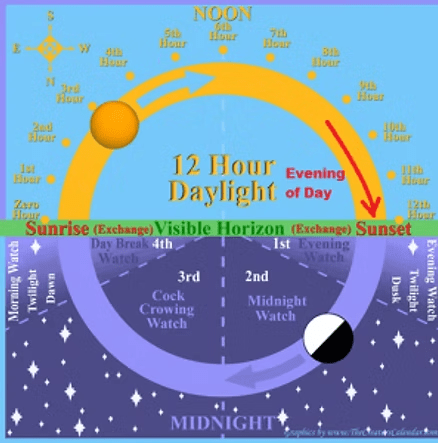
As the Passover Seder began on the technical Sabbath (after 6:00 PM on actual Friday), Jesus was arrested and held prisoner by the Temple Priests on the night of the Sabbath. By sunrise on the actual Sabbath, Peter had already denied knowing Jesus three times … before the cock’s crow (which is a watch that ends at 3:00 AM, followed by the Morning watch between 3:00 AM and 6:00 AM).
When Mark wrote, “As soon as it was morning, the chief priests held a consultation with the elders and scribes and the whole council,” it is worthwhile seeing this as the morning of Sunday, the first day of the week, and not the Sabbath. Keep in mind the chief priests, Pharisees and other elders had previously condemned Jesus for healing and doing miracles on the Sabbath. That alone would state how they could not do the work of processing a prisoner on the Sabbath. Sending a prisoner they want condemned to death to the Roman governor would be clearly against their own laws if done then AND with it being the beginning of the Passover festival, there would be plenty of witnesses that would see them breaking the law that limited work on a Saturday, had they done that. Therefore, day one of this Holy Passover Week is like Rejection Saturday, when Judas turned Jesus in with a kiss, Peter denied him three times to strangers, and the high priest spit on him.

Sunday, the first day of the week, is when the “whole council” would meet to discuss Jesus’s death by Roman decree. This means Pilate would see Jesus and question him then; but Pilate would get no response from Jesus. While Mark does not write of this, Pilate ordered Jesus be sent to Herod Antipas (who was in Jerusalem for the Passover festival), because Jesus was from Nazareth of Galilee (Herod’s area of rule). Therefore, with Sunday finished, Jesus would not be moved to Herod’s palace, until Monday. This makes the second day of Holy Passover Week be Silent Jesus Sunday.

Once one has reached the second day of Holy Passover Week, one must begin counting the number of days in will take for Jesus to come down from his Ascension with the New Covenant – THE HOLY SPIRIT. That would take place in fifty days, just exactly the same as Moses came down from the mountain with the First Covenant after so much time. Keep in mind that none of these comparisons are happenstance or haphazardly took place, by chance. God commanded the timing of the events of Moses, and God commanded the timing of the events of Jesus. If you cannot believe that, then you are not yet ready to be a Christian.
The Jews do what is called “the Counting of the Omer,” where an “omer” is a dry measure, which acts as an amount of grains harvested from the first fruits of spring. That omer of first fruits would be placed in the Temple on the second day of the Passover festival. When the count reaches “Pentecost” (the fiftieth day), then the holiday known as Shavuot (a two day festival) takes place. Pentecost is the first day of Shavuot, with “Shavuot” meaning “Weeks.” There are seven weeks between the second day of Passover and Pentecost. This timing is then attached to Silent Jesus Sunday, making it be the First Day of the Jesus Return Counting.
Monday, Jesus would have waited his turn to see Herod Antipas, just a small person in a line with all the dignitaries and the others who sought his judgment or decree, as Herod Antipas was an important man during his time on earth. Regardless of how important Jesus is to Christians today, he was seen as a lowly Jew. He was the king of a couple of Roman provinces, Galilee being one. Because it was the leaders from the Temple of Jerusalem who argued against Jesus, and with Jesus not being a legally wanted man in Galilee, Antipas ordered Jesus back to Pilate for judgment. This would have taken up all Monday, with Tuesday being the big day Pilate had scheduled to free a criminal for festival time. This makes the third day of Holy Passover Week be You’re Not My Problem Monday. This is then the Second Day of the Jesus Return Counting.

Tuesday is the big day. It makes the fourth day that Jesus appeared before important people. This is not to be overlooked, as Jesus was the Paschal Lamb that had to be inspected for four days and be found without blemish. No one told the truth about Jesus being a blasphemer to the chief priest, and Pilate saw no crime, and Herod did not either. Still, once back before Pilate and the crowd cheering for Barabbas to be freed and Jesus crucified, Pilate washed his hands of the mess and ordered Jesus flogged that evening, and crucified the next day. On Tuesday his jailers mocked Jesus with a crown of thorns, a purple robe, and spit upon his face as they called him King of the Jews. Jesus laid in that jail, beaten by a whip, until Wednesday morning. This makes the fourth day of Holy Passover Week be Flog an Innocent Son of Man Tuesday. This is then the Third Day of the Jesus Return Counting.
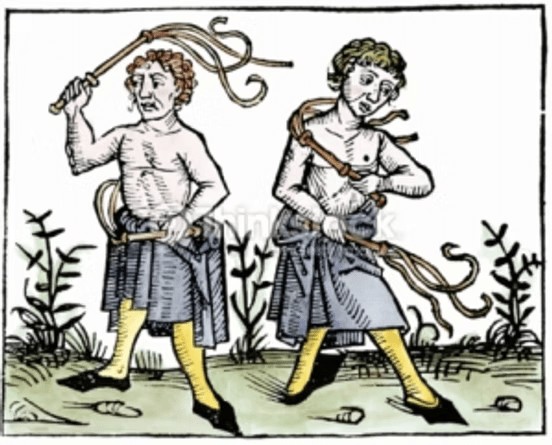
By the time Wednesday morning came around (it begins at 6:00 AM), Jesus was too beaten to carry his cross from the jail to the place of execution. This symbolism says that Jesus never asked his disciples to carry their own crosses to their own executions, when he said, “Take up your cross and follow me” (Matthew 16:24; Mark 8:34; Luke 9:23). That was a reference to raising one’s state of existence and becoming a reproduction of Jesus Christ. A beaten Jesus struggling to carry a heavy crucifix of death had no bearing on his having lived a most pious life.
It was then with help (a pilgrim in Jerusalem for the Passover – Simon from Cyrene, Libya) that Jesus and his cross reached the Place of the Skull (Golgotha). The cross was able to be in position, in time for him to be crucified (a raised cross) by 9:00 AM. For three hours Jesus was taunted and ridiculed by Pharisees, chief priests and scribes, as those were the Jews who hated Jesus. Meanwhile, Jesus’ family gathered and followed him the whole way, to mourn this punishment until the end. At noon the sun stopped giving its light, which was not a natural phenomenon such as an eclipse. At 3:00 PM on Wednesday Jesus physically died. This makes the fifth day of Holy Passover Week be Death of Jesus Wednesday. This is then the Fourth Day of the Jesus Return Counting.

Now, I have no idea why a Seder meal ritual of handwashing, which Jesus adjusted to be a symbolic foot-washing at his last Seder officiation; but it had nothing to do with a Thursday. It is laughable (in my mind) to name a day in Holy Passover Week Maundy Thursday, as Thursday was when the dead body of Jesus had hung suspended on a cross, publicly for twenty-four hours. The only indirect mention of Thursday was when Mark wrote, “When evening had come, and since it was the day of Preparation … Joseph of Arimathea … went boldly to Pilate and asked for the body of Jesus.” Because it was evening, it makes sense that the spear pierced into the side of Jesus took place on Friday morning. However, the order might have been given on technical Friday, which is actual Thursday after 6:00 PM. This makes the sixth day of Holy Passover Week be Jesus Dead on the Cross One Full Day Thursday. This is then the Fifth Day of the Jesus Return Counting.
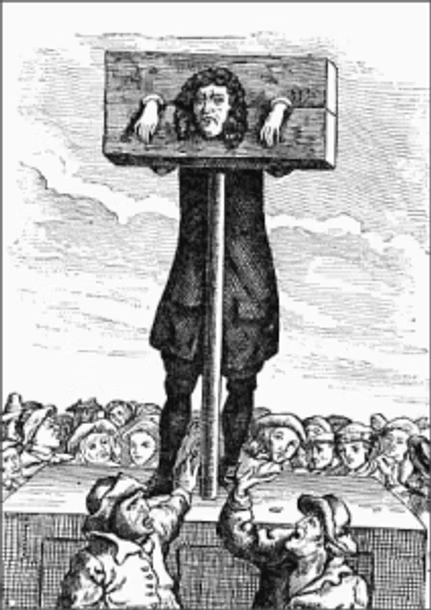
Friday is called by the Jews “the day of preparation.” This is because there can be no work done on a Sabbath, so all cooking for the Sabbath is done on Friday (before 6:00 PM). Pause for a moment and think about the significant that Jesus’ dead body was prepared for burial on the day of preparation, so Jesus would be ready to rise on the day of the LORD. After the guard pierced Jesus’ side (rather than break his legs to hasten suffocation, if he had still been alive) and reported the confirmation of death to Pilate, then his body was taken down. It was then moved to an appropriate place for washing and wrapping with his rabbinical prayer shawl (provided by family), a shroud to wrap the body (the shroud of Turin), and a face linen. By 3:00 PM on Friday, Jesus would have been dead for two full days; and at 3:00 PM is about when his body was placed in the tomb. This makes the seventh day of Holy Passover Week be Two Full Days Dead Jesus Entombed Friday. This is then the Sixth Day of the Jesus Return Counting.
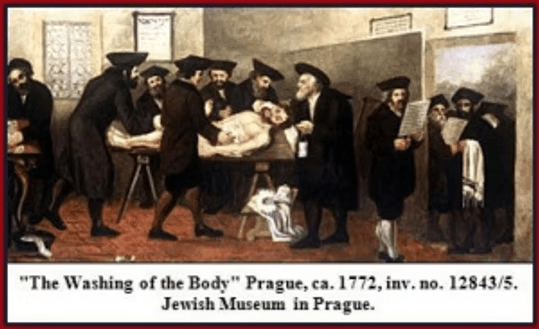
In the traditional Church, there is recognition of Saturday (the Sabbath) before Easter Sunday. This recognition is known as the day of the Easter (or Paschal) Vigil. This element of a “vigil,” which means “an overnight watch,” is more than the women of Jesus going early Sunday morning to further dress the body with nard and possibly other adornments of ritual, knowing that Jesus was only temporarily placed in the tomb of Joseph of Arimathea. The element of a vigil is a Jewish custom, keeping in mind the Temple authorities and the Roman guards kept a vigil overnight on technical Saturday, but were frightened away by angels and the stone being rolled away (Saturday while it was still night). Of this, Matthew wrote, “The guards shook for fear of him [Jesus appearing from the tomb bright and white as snow] and became like dead men.” (Matthew 28:4)
The Jewish word “shemira” means “watching” or “guarding.” The word becomes a noun when someone is employed as a shemira (males and females have gender modified variations of this word). A shemira is typically someone Jewish who is paid to stay with a deceased body from death to burial, rather than a close family member volunteering to stay awake with the deceased’ body overnight, at a time when funeral planning must be done.
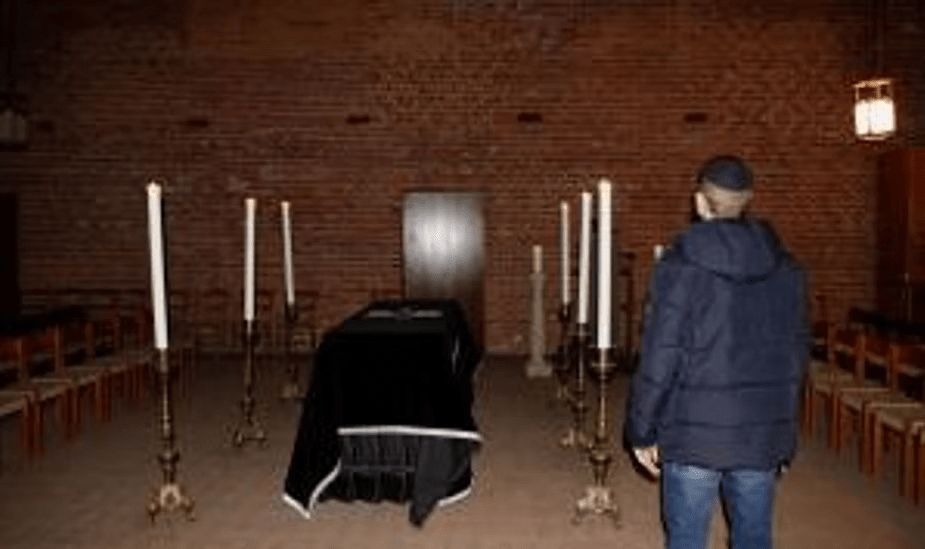
This night watch is for three days, which is why Jesus foretelling he would be dead for three days was significant. The belief was based on knowledge that some dead people had come back to life, when thought dead, needing assistance when that happened. Because of this having happened, and not wanting to entomb a body that might return to life naturally, a watcher was made part of the necessary funeral process. Still, as we read with Lazarus, the heat of the Middle East caused his body to begin decomposing, which brought about the stench of death. Less than three days “dead” meant a body that was possibly comatose, showing no sign of life but not dead, could awaken and make sounds for assistance. However, it was a belief that after three days no soul could come back into a dead body and return it to life (Lazarus was a true miracle, and that was why the chief priests plotted his death too).
As such, someone from Jesus’ family stayed near his body on the cross Wednesday night and Thursday night, as a vigil. On Friday night, when in the tomb, the Temple paid a shemira, who stayed with a Roman guard, in case a thief came to steal the body.
Now, if you have been keeping up with the timing of Holy Passover Week, Jesus was dead a full three days at 3:00 PM on the Sabbath, while in the tomb. The guard and shemira would not have to be there until 6:00 PM, but due to limits on walking distances on a Sabbath the shemira might have waited until 6:00 PM to leave home. The change to technical Sunday would have allowed him to walk any distance, however far away the tomb was from that home. Jesus could have been removed by angels before the watchers arrived, during the day of the Sabbath. However, Matthew indicated the guards confessed sleeping while on watch, as they only woke up when the women made a commotion and they saw the tomb opened and were questioned: “Where have you taken him?”
This means the eighth day of Holy Passover Week must be called Our Lord is Risen on the Day of the LORD Saturday. This is then the Seventh Day of the Jesus Return Counting.

Note: It is not insignificant that Jesus rose on the seventh day, which (besides being the Sabbath day – Seventh day) means the day God deemed holy. It is a day of rest, so one can contemplate God and His marvelous powers. Therefore, it is a day when the devoted spend time alone with the Father … as Jesus did inside the tomb. Plus, Jesus had time to neatly fold his shroud and face linen, as he talked with the Father.
It is important to realize that God planned for His Son to be offered up as the Paschal Lamb on a Sabbath and God planned for His Son’s soul to rise after three days dead on a Sabbath. With the day that soul rose again in the same flesh being on a Saturday AND the counting of Weeks being seven (one week passed), then one can see how seven Sabbaths later, on the eve of Pentecost, God planned for His Son to Ascend to his throne, next to God’s, on a Sabbath. On Pentecost (which then was on a Sunday, fifty days after Jesus was realized risen), Jesus Christ returned (his Spirit as the Christ) in eleven disciples, transforming them into Apostles, beginning the onset and spread of Christianity, from Judaic customs and commitments. They then realized the return of Christ, as Jesus risen within them … Jesus Returned.

It is important to see the forty days that the risen Lord spent with his followers, teaching them in Spiritual matters, stretched from the tenth day of the Jesus Return Counting, until the 49th day. Sunday, when Jesus first appeared to the women who loved him and relatives on the road to Emmaus, and his disciples in the upstairs room (twice), was the eighth day of the counting to Jesus’ Return. When Jesus appeared in unrecognizable form on the shore of the Sea of Galilee (a dream of John’s), that was on Monday, the ninth day of the Jesus Return Counting. Thus, when one reads in Acts, “To these [Jesus] also presented himself alive after his suffering, by many convincing proofs, appearing to them over a period of forty days and speaking of the things concerning the kingdom of God” (Acts 1:3), those forty days began on Tuesday, the tenth day in the Jesus Return Counting.
Hopefully, this article will become a seed for thought. Analyze what I have presented. Demonstrate your devotion by deeply pondering the possibilities, which have not been clearly seen since the lost sheep of Israel ceased relying on ritual training. I firmly believe what I have written, but each Christian must be able to see what I see for him or herself. Feel free to comment or ask questions. Again, the Passion Play is largely left up to movie directors to interpret, since priests like to let the words speak for themselves, without explanation. Each Christian must be in touch with the real meaning of this holy week of Passover.



 Explaining the Readings