
Jesus and his disciples went to Capernaum; and when the sabbath came, he entered the synagogue and taught. They were astounded at his teaching, for he taught them as one having authority, and not as the scribes. Just then there was in their synagogue a man with an unclean spirit, and he cried out, “What have you to do with us, Jesus of Nazareth? Have you come to destroy us? I know who you are, the Holy One of God.” But Jesus rebuked him, saying, “Be silent, and come out of him!” And the unclean spirit, convulsing him and crying with a loud voice, came out of him. They were all amazed, and they kept on asking one another, “What is this? A new teaching—with authority! He commands even the unclean spirits, and they obey him.” At once his fame began to spread throughout the surrounding region of Galilee.
——————————————————————————————————–
This is the Gospel selection for the fourth Sunday after the Epiphany, Year B. It will next be read aloud in a church by a priest on Sunday, January 28, 2018. It is important because it tells of the first miracle of Jesus, from which people first began to take notice.
This reading is particularly important to grasp in the modern days in the United States of America, as it speaks volumes about the state of Christianity here, with that state grossly influenced by other Western nations. Certainly, this addresses the congregations and leaders thereof that have been a constant influence to rewrite the Holy Bible and justify modern lifestyles. However, the ones who have staunchly upheld that “old time religion” that America was founded on are equally an influence that ignores the truth of holy word.
Even this selection is an example of how translations (from Hebrew or Greek) to English are inconsistent limitations placed on divine text. In verse 21 (the first verse shown), we are presented with a ho-hum, by the way, “when the sabbath came, he entered into the synagogue and taught.” That can give the impression that “Jesus and his disciples went to Capernaum” for some reason other than to find a “big city synagogue,” with lots of Jews in it.
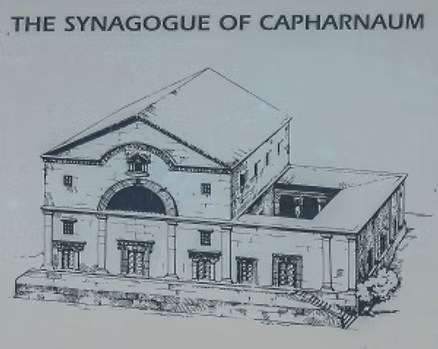
The reality is the word “euthys” says they went there and “immediately” it was the sabbath. This should be understood as the first sabbath after Jesus moved to Capernaum. Since Jews are not allowed to travel a long distance on the day of rest, Jesus moved to within walking distance of the synagogue, and as soon as he was settled “immediately the sabbath came.”
By adding a simple conjunction (“and”), rather than showing the pause reflected in a comma, there is no emphasis felt in saying, “and he taught.” The reality here is the Greek word “edidasken” has a masculine pronoun applied to the verb “didaskó,” with the focus being after he entered the synagogue, then “he taught.” While a comma implies “and,” the separation of a comma give greater emphasis to this act of teaching.
The word “didaskó” stems from the word “learn” [“daō”] and means, “to teach (literally, “cause to learn”); instruct, impart knowledge (disseminate information).” (HELP Word-studies) It can also translated as “Jesus directed” or “Jesus admonished,” which says he gave advice and warning about misunderstandings or erroneous teachings from past rabbis; and he did this gently, but sternly.
One cannot read this selection and come away having imagined the synagogue in Capernaum was like an Catholic church in Kansas, where someone stood and asked, “Anybody want to say something about the reading from the scroll today?”; with Jesus sheepishly standing up, saying, “I would like to speak.”
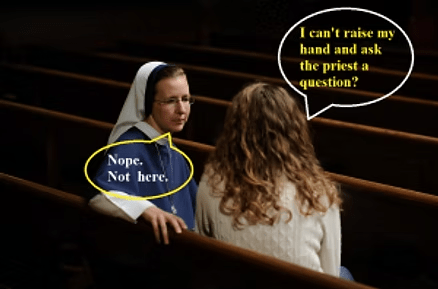
No. Jesus went there for the purpose of speaking to a large gathering of Jews; and when we read, “They were astounded at his teaching, for he taught them as one having authority,” that means Jesus spoke like he had been there with Moses and the Prophets and he knew what he was talking about.
Any scholarly folk who love questioning who wrote the Old Testament, such as a multiple of groups got together and reproduced written texts that were somehow merged into one, some rote memory, some post-exilic remembrances, with nothing saved from any original writings, scrolls or stones … blah, blah, blah … let me offer a suggestion. The original text has been preserved precisely in the Mind of God; and anyone who has served God by reproducing any holy text (Old or New Testament) has been aided by that perfect memory. That means most everyone could have ceased memorizing everything Moses taught the Israelites (a good reason why they lost their lands) and maybe most of the first Temple’s scrolls were physically lost at one point; but that big IF means everything lost was perfectly reproduced prior to the return from Babylon.
By the time Jesus came on the scene in Capernaum, those scrolls had been carefully maintained and read in that or similar synagogue, where Jews recognized the sabbath … for over 500 years. What they read that day that Jesus and his disciples walked into that synagogue in Capernaum, on that sabbath when Jesus TAUGHT, had been read many times before. [Note: “Rabbi” means “Teacher of the Torah,” so someone had taught about that lesson before; but not like Jesus TAUGHT.]
When we read, “They were astounded” and “he taught them as one having authority,” we have to see this as meaning everyone inside that Capernaum synagogue was: A: A Jew of devotion to recognizing the Sabbath as holy; and B. All of the adult Jews had heard the scrolls read and discussed their entire lives. So, for them to be “astounded,” where the Greek word is “exeplēssonto,” meaning “amazed, stricken with panic or shock,” Jesus was not teaching the same ole same ole. Nobody had heard before what Jesus said then, anywhere, ever.

When we read, “he taught them as one having authority, and not as the scribes,” you have to understand that the scribes were those big brained Jews who poured over every detail of the written text, and came up with an expanded view of the meaning each word written revealed. It was from this meticulous examination of Scripture that Jewish civil laws were written, and it was the scribes who wrote the laws that people like the Pharisees attempted to enforce. To ensure that all Jews followed the laws written by the scribes, the scribes wrote manuals from which rabbis could teach the common Jews the reasoning behind the laws, as God’s desire was all Jews to follow this law.
That was how Scripture (Torah, Psalms, Jewish history and stories, and the Prophets) was explained and discussed, from sabbath to sabbath. Home education was led by father and mother, based on their education. That was how compliance to the laws was taught prior to Jesus entering that Capernaum synagogue and TEACHING with authority, but not like the scribes.
A common problem created by a big brain is it paints itself into corners. To get out, it walks all over the floor it just painted. This equates to writing inconsistencies, even contradictions, which a truly devoted Jew would notice. The aspect of a Jewish synagogue that is unlike a Christian church is the reading of the day is explained, but then discussed. When inconsistency and contradiction questions are raised, the rabbi simply stays in the corner and says, “I don’t know. However, God knows. You just have to believe.”
That is how Jews over the millennia have become more and more agnostics and atheists. If the authorities leave unanswered blanks, then seeds of doubt grow into mighty oaks of rebellion. Failure to teach like Jesus taught causes Jews to then start ridiculing Judeo-Christian dogma as illogical, thus unbelievable. While it was inadvisable to openly leave your religion in 30 A.D., there was a huge burden placed on the shoulders of Jews then, which Jesus knew. The Jews were expected to refrain from being like the people of other nations (Gentiles, thus sinners), but they were not given any of the answers they needed to refrain happily, knowing God was their ally.
When Jesus began teaching in that Capernaum synagogue, eyes opened wide and mouths hung agape. The answers they sought were coming forth. Words were brought to three-dimensional life, so the truth they held was exposed. Jesus spoke like one who could read the Mind of God fluently, not like a scribe who tried to force round pegs into square holes. Jesus spoke as if God stood in their midst, gently but sternly telling them what it truly meant to be a priest (a servant) to the One God.

Of course, not all the Jews who were in that Capernaum synagogue were there for the right reasons. We read, “There was in their synagogue a man with an unclean spirit.”
Imagine that for a minute.
Someone sat in that large gathering who didn’t believe in God, or a Messiah, or maintaining the purity of God’s children. With an unclean spirit, he was like a wolf in sheep’s clothing. He had regularly attended for personal gains, such as keeping an open line of business with those Jews of Capernaum who had money. He was there to subvert belief in God, with gossip and evil suggestion.
Now, see if you can understand how threatened that person was with that Jesus fellow now, after he began making sense where the possessed man believed none could be found.
That man stood up and yelled at Jesus, “What have you to do with us, Jesus of Nazareth? Have you come to destroy us? I know who you are, the Holy One of God.”
Think about that. He was saying, “This is not Nazareth! This is the big city, Capernaum, where we live with more freedoms, like those allowed to Gentiles. Have you come to make us separatist Jews again, so the Romans will beat us for acting mighty righteous around them? I know who you are! You are the Holy One of God come to set us straight!”
The man probably would have then screamed, “Blasphemer!” at the thought that some guy from Nazareth could even think he was “the Holy One of God.” What Jesus did was halt that man from saying exactly what a Pharisee or scribe would have said: “Stone him!” Instead, Jesus rebuked the man, saying, “Be silent, and come out of him!”
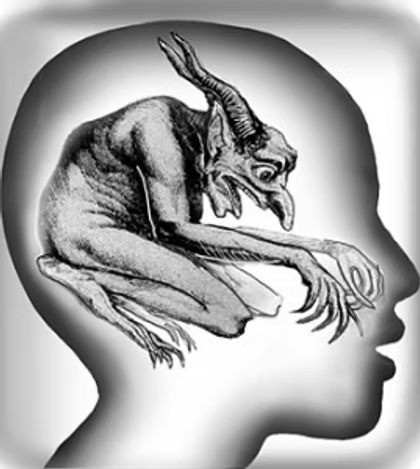
Jesus was not speaking to the human body of the man, but to the unclean spirit that possessed that body, having overcome the soul alongside. Jesus commanded the evil within to exit, immediately; and it did as God commanded, through Jesus speaking for the Father.
That man who confronted Jesus stands as a microcosm of Judaism then, and what is has become today. Ancient Judaism was possessed by an unclean spirit, which is that spirit that still exists today. It is the spirit that denies Jesus as the Christ, because to recognize Jesus as “the Holy One of God” would mean the end of Jews being God’s chosen people – which comes with rights to preferential allowances to wealth.
The children of God concept is nothing more than a myth now, as that distinction ceased when they broke their contractual agreement with God. Any good Jewish lawyer knows the Jews have no legal ground to stand on, in that regard of special rights or favors. The Jews that followed Christ (as embodied by Apostles) became Christians above all, with Judaism being both their ancestral lineage and their social customs. The children of God go by no name other than Christ – those who are reborn from belief.
The problem Christianity faces today is exactly the same as that which faced Judaism when Jesus stood in that Capernaum synagogue and taught. The spread of Christianity, through the Apostles that spoke exactly like Jesus spoke that Sabbath – with authority, not like that of the scribes – has led to the development of Christian scribes. They are akin to professors of religion in theological seminaries across the world. They write books that must be published, so they can gain tenure at a school’s department of religious studies. Their heart’s desire is more inclined to visit a collegiate library than a church congregation. They teach aspiring priests and ministers as an authority of a branch of learning. They graduate more and more youngsters who have practiced not being visibly nervous as they try to remember who to quote as the source of the message they preach.
Those are the ones that think the path to God leads through Church hierarchies. Other just begin saying they are a pastor, having learned how to act righteous from going to church. While that might be closer to the original commissions of Apostles, there is way too much song, dance, and passing the plate to prove to me they are legitimate. Of course, the pews being filled with bad shepherds of all denominations proves my generalized point.
Christian churches rarely welcome open discussion about the meaning of Scripture or the direction a sermon does or does not take. To avert that option, church members are (selectively) offered Bible study classes or others “extracurricular” activities, which may or may not be attended and /or satisfying. That means Christianity has become as rigidly fixed as was the synagogues of Judah and Galilee, under strict control of the scribes, Pharisees, Sadducees, and temple priests, with a “this is what we got, take it or leave it” attitude.
Today, just as then, the same result is the people who seek truth are being told memorized answers, which have inconsistencies and contradictions that cannot be logically defended in a world filled with unclean spirits, those whose only reason to attend a church is to degrade it. The Christian churches of the West have long left the door open to people with unclean spirits to join their congregations. Some have even risen to the highest levels that run some denominations. While not publicly proclaimed, it gives the impression that as long as the unclean spirit people bring contributions that bolster the church’s coffers, the churches have their arms open wide.

The missing link then, as now, is the attacks placed on people who shout out like voices in the wilderness, simply because they are not taught what they shout by schools of philosophy. Jesus was identified as being “of Nazareth,” which meant they assumed him to be some rube with no training by the official scribes. More people have shunned my articles than have embraced them. Few people have indicated they even felt my writings are dignified enough to comment on (spammers to the contrary).
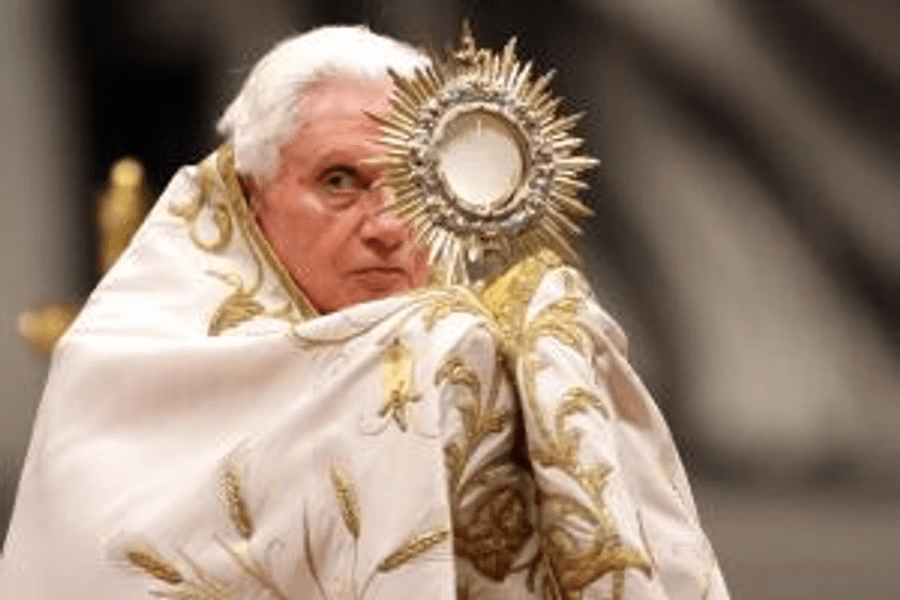
Christians seem to have lost complete touch what being “filled with the Holy Spirit” means, as half appear to think it means being sprinkled with some holy water soon after birth and then eating wafers with a sip of wine thereafter. The other half acts like it thinks Christianity means some “rock star” pastor who sweats profusely as he storms across a stage thumping a Bible and shouting charismatic passages at the congregation. In both cases, Christians seem way to busy to even sit and talk about their beliefs, reasonably, as though talking religion is bad. Forget about acting righteous!
The accompanying Old Testament reading for this selection from Mark is Deuteronomy 18:15-20, which begins by saying, “Moses said: The Lord your God will raise up for you a prophet like me from among your own people; you shall heed such a prophet.” (Verse 15) Moses had a conversation with God because when he died then someone would have to continue giving the Israelites directions.
The reading then has God say, “I will raise up for them a prophet like you from among their own people; I will put my words in the mouth of the prophet, who shall speak to them everything that I command. Anyone who does not heed the words that the prophet shall speak in my name, I myself will hold accountable.” (Verses 18 and 19)
Those prophets would be of Levite lineage, who became the Old Testament scribes that were dispersed to all areas of Israel. After that system failed to influence the people or their kings, prophets became individually necessary. We know how well that worked out, because (as Jesus said) “A prophet is not without honor except in his own town, among his relatives and in his own home.” (Mark 6:4)
The Prophets (major and minor) began speaking to the people for God. Jesus was also a prophet, like Moses and Elijah before him. The Apostles of Jesus were that same prophet, as the Christ multiplied. Prophets today are not mega-book sellers or internationally known gurus, as anyone proclaiming to speak for God presumptively (from the big brain, not the Holy Spirit) will fade away or be exposed as frauds.

You judge a prophet by the truth spoken (and that does not mean one judges a prophet by judging predictions that must come true, or else it is a false prophet [Hint: Read Jonah]). God said, “You may say in your heart, ‘How will we know the word which the Lord has not spoken?’” (Deuteronomy 18:21) That means you know on an inner level, from one’s love of God placing one’s heart in His service, as God’s throne, discerning when the truth has been spoken. A prophecy will become true when no one listens to the prophet; so judgment by hindsight is a foolish way to show faith.
The Jews in that Capernaum synagogue knew Jesus taught the truth, because they were “amazed.” They had wondered what that reading had meant for a long time. Then, out of the blue, this Jesus of Nazareth was making it understandable. It answered their questions. Plus, his words made their hearts flutter.
The accompanying Epistle reading comes from Paul’s first letter to the Corinthians, which compares idol worship and foods acceptable to gods, along with the misguided knowledge that is used to fill the minds of weak followers, such that the weak-minded think they can become closer to God by eating certain foods. In that reading, we hear Paul say, “We know that “all of us possess knowledge.” Knowledge puffs up [or “makes arrogant”].” (1 Corinthians 8:1) Paul then later wrote, “So by your knowledge those weak believers for whom Christ died are destroyed.” (1 Corinthians 8:11)
It was the knowledge of the scribes that had long been misapplied to the Israelite peoples, which had destroyed the religious confidence the Jews in a Capernaum synagogue had. That was why they were “astounded” when the truth of God’s knowledge stood up and TAUGHT.
This lesson during the season of personal Epiphany is to realize one is either a student of prophecy or a teacher of prophecy; knowing everything in the Holy Bible is true prophecy. To be filled with the Holy Spirit means one can only be either one who seeks the truth or one who is a seeker of those who seek the truth. To sit on the fence means one is filled with doubt, due to a lack of deep faith.
The same problem exists today as Jesus found in Capernaum that sabbath, which continued throughout his ministry. Casting out unclean spirits on the sabbath was judged as a sign of a demonic man. That judgment came from people born into positions of religious leadership, having done little to justify the trust they held. Their brains led them to find excuses for not explaining God’s word. It was easier to think things up, rather than seek the truth. The Jews turned just enough away from God to let unclean spirits get into their heads.
The hope of this reading is when we read, “But Jesus rebuked him, saying, “Be silent, and come out of him!” And the unclean spirit, convulsing him and crying with a loud voice, came out of him.” Turning to God in earnest can release one from the comforts of life on earth, causing one to convulse from having to live on faith, while serving the LORD over self. One might cry out loudly as one’s addiction leaves the body, freeing it to realize being reborn as Christ will bring greater rewards.
To take that leap of faith requires total commitment … a marriage to God. The truth is what commits one to God, and the truth is what sets one free from the sins of the world. (John 8:32) One is not free when one questions the answers one has heard from scholastic authorities, the men and women degreed by institutions of learning. One is not free by sending money to television evangelists. One is not free when one is afraid to explain one’s beliefs to a stranger, always stumbling over your brain trying to remember how someone else had once put something so convincingly.
 Explaining the Readings