I bow my knees before the Father, from whom every family in heaven and on earth takes its name. I pray that, according to the riches of his glory, he may grant that you may be strengthened in your inner being with power through his Spirit, and that Christ may dwell in your hearts through faith, as you are being rooted and grounded in love. I pray that you may have the power to comprehend, with all the saints, what is the breadth and length and height and depth, and to know the love of Christ that surpasses knowledge, so that you may be filled with all the fullness of God.
Now to him who by the power at work within us is able to accomplish abundantly far more than all we can ask or imagine, to him be glory in the church and in Christ Jesus to all generations, forever and ever. Amen.
——————————————————————————–
This is the Epistle selection from the Episcopal Lectionary for the Tenth Sunday after Pentecost, Year B 2018. In the numbering system that lists each Sunday in an ordinal fashion, this Sunday is referred to as Proper 12. It will next be read aloud in an Episcopal church by a reader on Sunday July 29, 2018. It is important because Paul prays that the “church” (“ekklēsia”) will be an assembly of Apostles reborn as Jesus Christ, based on each possessing the character traits that he stated in this part of his letter.
I have to ask this question first: If, sitting on a church pew, you heard read aloud, “I bow my knees before the Father, from whom every family in heaven and on earth takes its name,” then what would you think that meant to you?

Certainly, everyone sitting in a church on Sunday is a member of a “family on earth,” but what about Muslims kneeling on a mat in a mosque elsewhere? One would assume they too are of “every family on earth,” as well as Indians lighting candles in Hindu shrines. Even the members of the Communist Parties in Russia and China, who reject the concept of “the Father” as God (and all other gods and religions), instead indoctrinating their children to see the State as god, are they not part of “every family on earth”?
Consider that a rhetorical question, as the answer is obvious; even though the ideal is to make all human being believe in God the Father of Jesus Christ, the reality is otherwise. Only Christians – those in the purest sense – are the ones of whom Paul wrote, because the key words in that statement by Paul are “takes its name.” Actually, there is only one Greek word, “onomazetai,” which translates as “is named” or “calls upon the name.” That name is then relative to “the Father,” but not the name of God, Yahweh, or any other name God is recognized by (in Hebrew, Greek, or English, et al).
The name “from whom every family in heaven and on earth takes its name” is Jesus Christ. It is that name from which only Christians can claim; and that is because only true Christians are reborn as Jesus Christ. It is that change of name (from Billy or Sue) that qualifies them to go to heaven (sin-free), unlike the rest of the people in the world. That name then denotes a special “family, lineage, ancestry, and/or tribe” (from “patria”) that comes from being related to the same Father above.
This answer becomes clear when one realizes that the reading selection, as presented by the Episcopal Lectionary for the readers to read aloud, omits an aside penned by Paul. It is the last half of verse 14 (the first verse in this reading), which could be seen as verse 14b. There, stated within marks of parenthesis, Paul wrote, “tou kryiou hēmōn Iēsou christou”. That qualifying and amplifying phrase says, “the [one] master of our Jesus anointed one.” The implication of that says, “the Lord of our Jesus Christ,” with capitalization applied that was not written.
If that phrase, separated as an insertion of commonly known fact that is a digression from the theme of that stated (definition of parentheses usage), it acts like an aside whisper. It then adds the obvious to the reading, such that there is no confusion as to Paul’s focus. When included in the public reading, one hears read aloud: “I bow my knees before the Father, the one master of our Jesus anointed one, from whom every family in heaven and on earth takes its name.” With that included, no one would venture beyond an understanding that Jesus Christ is the name of the heavenly family on earth.
With that understood, one then has to remove the thought of Paul uttering a written prayer for the Ephesians. The separation of a fact that states the plural of “our” (“hēmōn”), where that plural is rooted in the singular word “egó ,” meaning the self, must mean it was understood by Paul that he and the Christians of Ephesus were likewise individually under the mastery of the Father, reborn as Jesus in name. All of them were already equally distinguished as the anointed ones of God, as His Sons; so, there was no need for Paul to pray for that transformation. Therefore, stating the obvious would be digressing from the discourse of all having already been formed as a family of God, in the name of Jesus Christ; ergo the parentheses.
Because Paul wrote, “I bow my knees before the Father,” he created the image in a modern Christian’s mind of a stance of prayer. That leads to the translation that states, “I pray that,” but Paul did not write those words. He did not indicate in any way that a prayer was unfolding. While he ended this chapter with the word, “Amēn,” that is a statement that says, “So let it be” (as the truth having been said), it is the modern brain that associates that word as the indication that a prayer has just ended. However, rather than getting on his knees to pray for the Ephesians (who were already in the name of Jesus Christ), Paul was stating the obvious, that all in the name of Jesus bow before the Father as a servant of God (as were the Ephesian Christians), in thanks for having been made a holy family member, as brothers of Jesus of Nazareth, sharing in his presence within one’s soul.
This means all the truth that is then told by Paul (his use of “Amen”) is not a wish for things to come, but a statement of the character traits possessed by all who were then (as always) in the name of Jesus Christ. Those character traits are then blurred by the evaporation of punctuation guidance and the reduction of holy text into English paraphrases.
This again calls for a segment of an Epistle to be broken down into the literal, word-for-word translations of the Greek text, so each separate segment of words can be seen for their full impact of meaning.
Simply for one to follow along with the reading as presented above, the English paraphrase should be matched to the Interlinear segments stating the truth. I will mark the paraphrase with quotation marks. The Greek text will then follow, denoted by bold text. After one is able to seek the differences stand out, I will then present a simple interpretation of the characteristics Paul stated already existed, both in himself and the Ephesians to whom he wrote.
“I pray that, according to the riches of his glory, he may grant that” – that he might give you according to the riches of the glory of him , : The Greek word “dō” is presented in the third person conditional, as “he might give, may offer, could put, or might place.” That reflects upon the plural form of “I or self” stated prior (“hēmōn” as “our). This means “he” is the presence of the Spirit of Jesus Christ in an Apostle-Saint.
This is not conditional as to a prayer being answered, but the condition of the talents of the one accepted by the Father as the resurrection of His Son. Paul wrote of those offering being the “gifts of the Holy Spirit,” of which all Apostle-Saints have minimally one, with some having multiple holy gifts. All come “according to the riches of the glory of Jesus Christ,” as all those gifts of God were held by Jesus of Nazareth.
“you may be strengthened in your inner being with power through his Spirit,” – to be strengthened by the Spirit of him , in the inner man ; : The paraphrase translation continues the conditional voice here incorrectly, as the comma’s separation follows with the Greek word “krataiōthēnai,” which states the infinitive form of the verb “krataioó,” meaning “to be strengthened, confirmed, passed, or made strong.” This is an assurance that all talents that might come are “to be,” as an elevation of powers that come from “the Spirit of Jesus Christ.” This is not to manifest as visible evidence that one has become Jesus Christ, for others to marvel over, as the strength of Jesus Christ reborn means the presence of his Holy Spirit having cleansed one’s soul of sins. This means the soul is “the inner man” (where “man” or “anthrōpon” means “one of the human race”).
“and that Christ may dwell in your hearts through faith, as you are” – to dwell the [one] Christ , through the faith , in the hearts of you , : Again, it is an error to translate the conditional, as the Greek word “katoikēsai” is the infinitive form of the verb “katoikeó,” means “to dwell, to settle in, to establish in (permanently), and to inhabit,” such that the Christ Spirit takes up permanent residence within one’s soul. The presence comes when one “bows the knees before the Father” and the self then projects that the soul has submitted to sacrifice, to be the anointed one [Christ] named Jesus.
This presence of “the Christ” is then separately stated as the true meaning of “faith,” which is well beyond a mental concept that is called “belief.” The personal experience of “the Christ” within, means one has gone far beyond “belief” [like that held by children in Santa Claus] and come to know the truth that guides one’s life. Whereas belief is centered in one’s brain, where doubts can erode belief [such as finding presents hidden under a bed or in a closet], such as previously unknown facts challenge what one has been taught to believe, faith is centered in one’s heart.

The Greek word “kardiais” means more than a physical organ of the body, as it implies “mind, character, inner self, will, intention, and center.” This is a love of God, as seen in the bending of one’s knees, where one’s self has submitted to serve God through marriage, where the soul and God become one, while together in a living human body. That union brings about the knowledge of God, which is the Christ Mind. Therefore, faith is not brain-centered, but this centering of God in you, as you (as self) have been reborn as the Son of God (both human genders).
“being rooted and grounded in love.” – in love being rooted and being founded , : In the two Greek word written, “errizōmenoi” and “tethemeliōmenoi,” the perfect past participle form is stated in both words, first as “being rooted, being planted, being fixed firmly, and being established” and second as “being founded, grounded, firmly established, and laid with the foundation.” The word for “love” (Greek “agapē”) then relates one’s marriage to God, such that His love has made one “become rooted and become grounded” in His “benevolence, good will, and esteem.”
When one’s being has been affixed to this eternal source of love, then it is that giving of one’s self, as an act of love for God in return, that reciprocal heart-felt desire keeps one’s loving eyes always on God, while God’s love becomes the motivation of one’s actions. This is then a natural state that comes from the heart and not the brain, so one does not go about calculating how to show the love of God to others. One simply acts as God commands, due to one’s love for God.
“I pray that you may have the power to comprehend, with all the saints,” – that you may be fully able to comprehend with all the saints , : The Greek conjunction “hina,” as “that, in order that, or so that,” is a direct reflection back on that just stated, which in this case is the presence of God being what roots and founds one in love. That state of love allows one the fullness of a condition of ability “to understand.”
The Greek word “katalabesthai” then states the present state brought on as the full ability “to seize tight hold of, arrest, catch, capture, appropriate” that which brings one the knowledge of God, in heightened abilities of “perception and comprehension.” Again, this is the state of love that each and every Apostle-Saint can expect, so one is not desirous of knowledge that one does not naturally possess – such as wishing to have the smarts of “the Saints” – because one is “with all the saints,” as one made “holy, sacred, and set apart by (or for) God” – the meaning of the Greek word “hagiois.”
The reason the conditional form is used (“exischysēte” says, “you might be fully able, or you may have strength (for a difficult task)” is that this ability to understand, coming from the Christ Mind, is conditional on need. One who is “with all the saints” does not go about telling people, “I know this or I know that.” It is conditional of one seeking to know, who encounters an Apostle-Saint. Such a meeting is divinely led, such that a need to speak from the Mind of God enables an Apostle-Saint to do so.
Also note that in this segment of Greek text, nothing was stated that says Paul “prayed” for the Ephesians. The inclusion of the words “I pray” is an erroneous addition of paraphrase.
“what is the breadth and length and height and depth,” – what [is] the breadth , and length , and height , and depth , : This is defining the scope of a saint’s knowledge, where the Word of God that is Scripture expands what is written in all directions. The “breadth” then applies to all possible meanings of each word written (in this letter and in all Scripture), so questions will naturally arise when one limits one’s understanding to a narrow field of view.
The “length” is especially seen here and in all of Paul’s letters, as normal humans have trained brains that regulate the attention span of statements in written text to brevity and in direct focus. This is how the “length” of Paul’s ‘sentences’ become regularly shortened through paraphrase, even though this normal view of sentence structure misses how sentences of thought can be made through individual words and short segments of words.
The “height” is then the understanding the source of the Word as above the brain capacity of mere mortals, as all Holy Scripture comes from the Mind of God, through Saints. It is an error to reason to think that Paul was using his own brain to write his epistles. Every word of every book in the Holy Bible (original text and language) comes from the Mind of God.
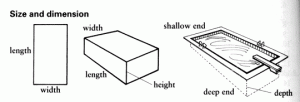
Finally, the “depth” is relating the source of meaning found in words as being multi-faceted, such that multiple meanings can be the intent and purpose of a set of fixed words. That meaning is then based on the conditions of need, such that one verse of Scripture can be helpful to one meaning one thing, but then appear most helpful in a totally new way later, based on changing conditions in one’s life. The word’s use here also states the “depth” of one’s soul, where the Holy Spirit means the mundane of past history has equal application at all times, in all places, relative to all people. This means the depth of Paul’s words in the mid first century carries as if his letter were written to all true Christians today.
“and to know the love of Christ that surpasses knowledge,” – to know moreover experiences , surpassing other knowledge , love of the [one] Christ , : This says a complete scope of knowledge is the understanding of Saints. The Greek article “tēn,” which is the neuter form of “the,” but due to the presence of a comma after this word, it then acts as “the cause or interests, the purposes, of God,” such as “what the possessed had done and experienced” (Thayer’s Greek Lexicon for Strong’s NT 3588). According to “the breadth and length and height and depth,” the word “the” can be seen as going beyond a simple statement (“to know moreover (the)” and “know by experience,” through God. This elevates one’s ability “to know” to being with the Mind of Christ and “experiencing” the intent of the chosen word by being transported spiritually to see past events and grasp the reality surrounding past times. To experience the past is to feel the power of that emotion in the present, by reliving what is written.
This is how the Holy Spirit allows a Saint to be “surpassing other knowledge,” where again we find a form of the article “the” stated (“tēs”). Instead of reading “surpassing (the) knowledge,” one can see how: “The article is prefixed to substantives expanded and more precisely defined by modifiers,” such that its use indicates “when adjectives are added to substantives, either the adjective is placed between the article and the substantive, as – other examples.” (Thayer’s Greek Lexicon for Strong’s NT 3588). Reading the article as a defining word, rather than omit its use because of the language differences between normal Greek and English, is going beyond the ordinary to the extraordinary. Standard knowledge is surpassed by extraordinary spiritual insight.
Finally comes the segment that again omits the article “the,” such that the translation says “love of Christ.” Here, the inclusion as “the (one) Christ” misses the individuality of only one Christ, which is Jesus Christ. In this segment, the Greek word “Christou” is capitalized, as the title that was bestowed only on one man. Previously, in the lower case spelling above, it is intuited that the name of the Father’s family was from Jesus Christ; but the name is actually only Jesus, such that the one who becomes Jesus reborn is thus the “anointed one” – Jesus “the Christ” resurrected.

Still, the addition here of “the (one)” makes it possible to see “the love of the (one),” who is then the servant in love with God, who in return has received the love of God, as “Christ” reborn. Each of these three segments then act to state the understanding that comes to all Saints, while making that point in words that have been neglected as coming from God – three forms of “the.” Each use projects the divine intent and purpose (in all directions) of all words written in Scripture, which is missed by those not being in the name of Jesus Christ.
“so that you may be filled with all the fullness of God.” – that you might be filled unto all the fullness under God . : Again, the use of “that” reflects back to the “love of the (one),” which brings “the Christ”. It is because “you” have been “filled” with the Christ Mind for the condition of serving God as needed. This is available “unto all” Saints, but not for personal gain. It is a gift of God, to be wisdom dispensed “unto all” who seek that knowledge.
This receipt of the Christ Mind by Saints, for the purpose of imparting the gift of Spiritual wisdom unto those who God also wants as His brides, then becomes the “fullness, the full complement, the fulfillment, and the completion” of the Covenant that places one’s soul “under God.” Whereas the Israelites accepted the Law, through Moses, they could not reach the fulfillment of that agreement to serve the LORD their God, because their brains were used more than their hearts. When the Law is written on one’s heart by the finger of God, then one has made a full commitment to God, where the New Covenant then reflects the completion of one’s soul returning to God, as Jesus Christ.
Here, again, the word “under” is an expansion of the article “the,” as the Greek word “tou” is written. The NASB options for “tō” (neuter form of “the”) shows one use of this as “under,” in accepted translation. This is such that when the article is accompanied with the noun “Theos” it is a word “spoken of the only and true God,” reflecting “under the word” of God. That use identifies an Apostle-Saint as a subject to “the (one) God.”
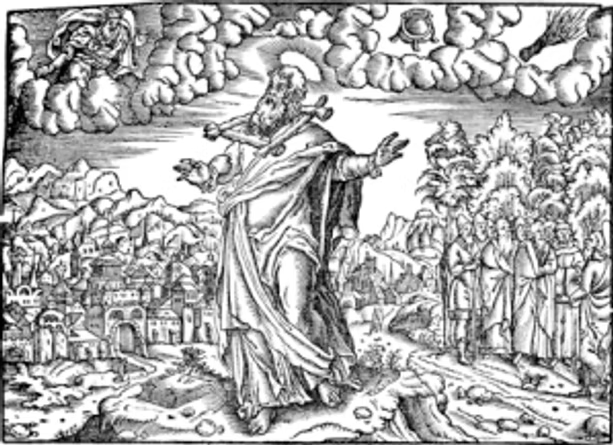
“Now to him who by the power at work within us is able to accomplish abundantly far more than all we can ask or imagine,” – To the [one] moreover being able above all things to do exceedingly above that we ask or think , according to the power the working in us ; : The capitalized Greek article “Tō” is now reflecting upon the importance of “The (one)” who was just stated prior as “God” (“Theou”). This then is saying those who are individually “The (one)” filled with God’s presence are “Those” who are “being able” to do “all things” that are “moreover” impossible to people not so filled. The powers allowed to human beings by God as “above all things” possible to mere mortals. Coming from God, they are powers from “above.”
The deeds of the Holy Spirit, from God, sent to those reborn as His Son, are “exceedingly above” anything capable of being produced by a human brain and self-will. God’s Mind leads His faithful servants above and beyond what a Saint could ever “ask or think,” because a servant does not control the Master. The way a Saint “questions” and “ponders” is relative to the meaning of Scripture, and only for one’s own abilities to understand, so one can better serve others and their questions and thoughts. Still, all that comes from human thoughts and questions is relative to “the power” of the Christ Mind, and dependent on if that wisdom is “working in us.”
“to him be glory in the church and in Christ Jesus to all generations, forever and ever. Amen.” – to him [be] the glory in the church and in Christ Jesus , to all the generations of the age of the ages . Amen . : When we read “to him be glory,” the Greek word “autō” means, “self, as used (in all persons, genders, numbers) to distinguish a person or thing from or contrast it with another, or to give him (it) emphatic prominence.” (Thayer’s Greek Lexicon for Strong’s NT 846). This means “him” is “the same” as the one filled by God’s love and the cleansing of soul by the Holy Spirit, bringing about the rebirth of Jesus Christ. The pronoun “him” is then relative to “the Father,” “Jesus Christ” and “the (one) filled” by the Holy Spirit.
As such, it means “To the Trinity the glory,” where the Greek word “doxa” states, “honor, renown; glory, an especially divine quality, the unspoken manifestation of God, and splendor.” Thus, the Trinity is present in each individual who collectively become a multitude of Apostles and Saints. Thus, “the assemblage and congregation” that is “the collective body” of true Christians is the true meaning of a “church.”
The addition (“kai” as “and”) that identifies a “church” (“ekklēsia”) is then furthering the concept of “church,” by adding that all are “in Christ,” such that all have become “Jesus” reborn. This was not a one-time deal, such that Apostles and Saints only existed long ago, but an eternal requisite for all times. It stretches from the first Apostle-Saint to “all the generations of the age.” The appearance of organized ‘Churches’ (Roman Catholic, regional Orthodoxies, and all variations of organized Protesters) has nothing to do with eliminating the necessity that all members of the true church of Jesus Christ are the embodiments of holy Jesus resurrected, who act based on the experience of faith, confident in their assurance of eternal life.
The Greek word “geneas” is translated as “generations,” but the word intends one understand it meaning as “race and family.” This word brings this reading full circle, as it relates to “patria,” in verse 15. A “church” is relative to the “family” that “takes its name” as “Jesus,” becoming themselves the “anointed ones.” While “age of the ages” is read as a fancy way of stating eternity, it is vital to know that an “age” (“aiōnos”) is “a cycle (of time)” or “a time span,” which can be determined (generally) through the “Axial precession (precession of the equinoxes).”
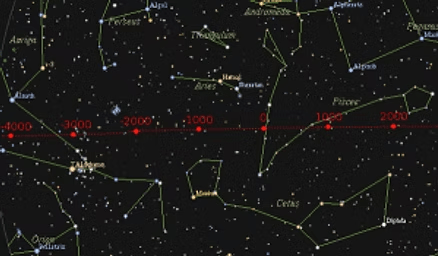
An “age” is then when a new sign of the zodiac appears aligned with the equator on the first day of spring (when the world is born anew). The astrological sign is recognized as perpetually being Aries, but due to the earth’s slow axial wobble, the current sign is Pisces (about 29 degrees away from 0-degree Aries) , heading to a change that has become commonly known as the Age of Aquarius. It is not a coincidence that Jesus of Nazareth ushered in the Age of Pisces, where the first sign of Christianity was the fish (<><). As each “age” is roughly 2,100-2,200 years long, the “age of the ages” is now reaching it end, not to return for (roughly) another twenty-three thousand years. This reflects the end of that “age” of Jesus Christ, which increases the urgency for humanity to gain faith through submission to God now.
The eternal view of “age of the ages” must then be seen as one’s soul having been saved. The age of Pisces is then related to the symbolic meanings of the astrological sign, where faith and self-sacrifice are important elements. To find eternal reward, then one must make worldly sacrifices of body, so the Soul can be cleansed. One must be willing to submit one’s being to God, so one can be reborn as the one who symbolized the age of the ages. As Jesus told his disciples, expected to be persecuted in my name.
The word “Amen” then cannot be seen as Paul praying for things to occur, because things had already occurred and all subsequent changes were wholly the decisions of the seekers, then and now. Therefore, Paul wrote to the Ephesians a separate statement that reminded them: “So let it be.” The “church” is when two or more meet in the name of Jesus, for in that assembly can be found Jesus Christ.
As an Epistle selection for the tenth Sunday after Pentecost, when one’s personal ministry to the LORD should be underway, the message here is one of the spirituality of family. A minister of the LORD is born of the Father, as a brother to Jesus of Nazareth, who is reborn in an Apostle-Saint as the resurrection of the anointed one – the Christ. This adoption into the Holy lineage, brought on by the Trinity, makes one part of the living vine of Christ, where one must become a living branch that produces good fruit.
Paul’s encounter with the Jews and Gentiles of Ephesus produced the good fruit of true Christians there. Paul did not pray for them to find Jesus after he left. Paul, like the Ephesians, were all walking, talking, and ministering resurrections of Jesus Christ. That made them all brothers (and some were female forms of the Son of God), thus an assembly on earth in the name of Jesus Christ, as a true Church. While Paul traveled the world where Jews (Israelites) had been scattered, accepting seeker Gentiles who sought the truth of good news, the Ephesians stayed put and deepened the faith of those in Ephesus. They raised their families to also become Apostles and Saints.
Today, Paul still travels with his message sent to the Christians of Ephesus, as his written words are still in search of true Christians who will be joyful with the breadth, length, height and width in the meaning they contain. A minister of the LORD should ensure that Paul’s intent is not overlooked or misunderstood. The truth is above all things expected and exceedingly above what one would ask or think. A minister of the LORD’s purpose is to stimulate deeper questions and higher thoughts, leading workhorses to living waters that they want to drink.
The signs of modern times are clearly warning that the religions of the world (including the philosophies of politics) are leading the people away from self-sacrifice for God (servants who tend to the living vine) and towards dangerous allegiances with leaders and cults (the Baal worship and golden calves). The age of the ages is slowly closing. A minister of the LORD knows this urgency, but lets the Christ Mind lead him or her to make the path to salvation be truly known.
So let it be.


 Explaining the Readings