
I therefore, the prisoner in the Lord, beg you to lead a life worthy of the calling to which you have been called, with all humility and gentleness, with patience, bearing with one another in love, making every effort to maintain the unity of the Spirit in the bond of peace. There is one body and one Spirit, just as you were called to the one hope of your calling, one Lord, one faith, one baptism, one God and Father of all, who is above all and through all and in all. But each of us was given grace according to the measure of Christ’s gift. Therefore it is said,
“When he ascended on high he made captivity itself a captive; he gave gifts to his people.”
(When it says, “He ascended,” what does it mean but that he had also descended into the lower parts of the earth? He who descended is the same one who ascended far above all the heavens, so that he might fill all things.) The gifts he gave were that some would be apostles, some prophets, some evangelists, some pastors and teachers, to equip the saints for the work of ministry, for building up the body of Christ, until all of us come to the unity of the faith and of the knowledge of the Son of God, to maturity, to the measure of the full stature of Christ. We must no longer be children, tossed to and fro and blown about by every wind of doctrine, by people’s trickery, by their craftiness in deceitful scheming. But speaking the truth in love, we must grow up in every way into him who is the head, into Christ, from whom the whole body, joined and knit together by every ligament with which it is equipped, as each part is working properly, promotes the body’s growth in building itself up in love.
——————————————————————————–
This is the Epistle selection from the Episcopal Lectionary for the Eleventh Sunday after Pentecost, Year B 2018. In the numbering system that lists each Sunday in an ordinal fashion, this Sunday is referred to as Proper 13. It will next be read aloud in an Episcopal church by a reader on Sunday August 5, 2018. It is important because Paul (once again) clearly stated one’s complete sacrifice to God allows one to be reborn as Jesus Christ.
To cherry-pick a few words written by Paul to analyze (rather than turn 316 words of Paul into a short book on the meaning of these sixteen verses), the word translated as “prisoner” is “desmios.” This word certainly says “prisoner,” but equally says, “one bound, one in bonds, and one captive,” where “prisoner” can imply judgment and/or force to make one go where one would not choose freely to go – a prison. However, this prison is “in [the] Lord,” where “Kyriō” means “one who has control of, as the master,” which makes “the Lord” like a prison warden.
That is not the case at all, as Paul (and the Christians of Ephesus) were servants (not prisoners) to “the sovereign, prince, or chief” – the Lord. While one can assume “the Lord” means Jesus Christ, the reality is God is the ultimate LORD. When one is in the Lord, then one is one with God and Christ. When that oneness is seen as being “bound in,” as “captive within,” one is under the control of God, which then emanates as one being “in Jesus Christ,” as Jesus of Nazareth reborn.
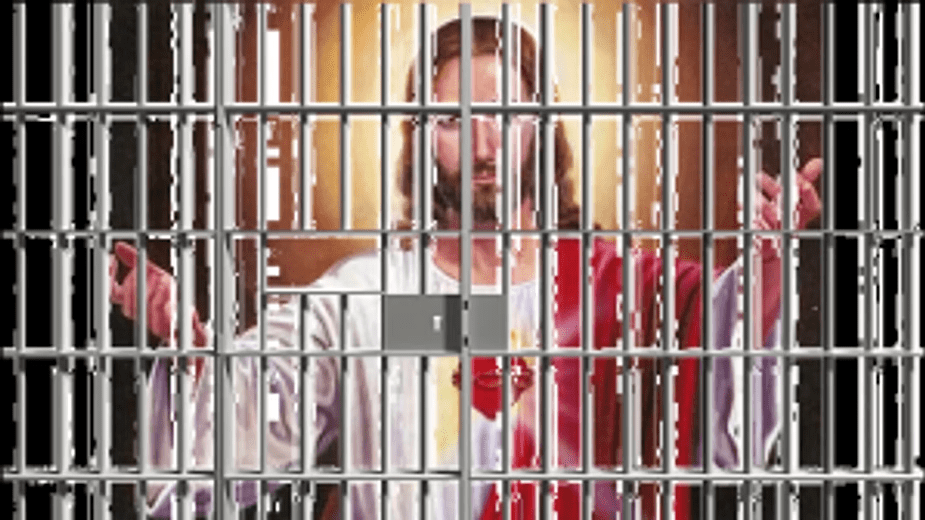
This is the meaning of Paul writing, “There is one body and one Spirit.” It is important to grasp each individual’s captivity in this way. Each Apostle is captivated by love of God and God’s love in return, through oneness. Paul wrote to other individuals who were just as one with God and Christ, so “one body and one Spirit” equally means a church or assembly, where all members of that body are the individual resurrections of the Son of God. However, to jump to that meaning without realizing the individual must be one body and one Spirit first, one is putting the cart before the horse and there is no equation to a church body of ordinary people who all agree they believe Jesus (one body) was one who was the Son of God (one Spirit).
When Paul wrote, “Just as you were called to the one hope of your calling, one Lord, one faith, one baptism, one God and Father of all,” this has nothing to do with some external ritual that fell under Roman Church discretion, three hundred years later. Each individual has become captive by one Lord of their physical bodies and spiritual souls – Jesus Christ. Each individual has personal experience of what oneness with Jesus Christ is, so belief (external words written or spoken) has transformed to faith – the knowledge of the Christ Mind. Each individual has had his or her soul washed clean of all past sins by the Holy Spirit – not bathed by water. Finally, each individual has to be adopted by God above as His Son, the resurrection of Jesus Christ, so God then truly becomes one’s Father – the Father of all like individuals who have each been adopted in the same way.
When Paul then wrote, “Each of us was given grace according to the measure of Christ’s gift,” one cannot envision Jesus Christ being some external Spirit standing like a woman on All Hallows Eve, passing out free candy to those stopping by.

The Greek word “charis” is translated as “grace” so often that few know what that means. The word means “favor, gratitude, and thanks,” which comes from God above, the LORD. As thanks for one’s sacrifice of self-ego (each individual’s), God gives the gifts of the Holy Spirit, which are duplications of those talents possessed (also gifted by God) by Jesus of Nazareth. Therefore, all gifts are facets of Jesus’ powers on earth, which Paul measured as seven in total.
When Paul wrote (as a quote), “When he ascended on high he made captivity itself a captive,” the Greek words “ēchmalōteusen aichmalōsian” are better stated as, “he held captive a multitude of captives.” Again, this element of captivity is the oneness of the Holy Spirit of Jesus Christ with a multitude of individuals who have become changed into Jesus of Nazareth reborn. Jesus of Nazareth was himself captive to God’s Holy Spirit, which made him the most holy Son of God; but it was his death (the rising of his soul spirit to heaven) that created the possibility for many others to become the same most holy Son of God on earth.
To grasp Paul’s writing, “he had also descended into the lower parts of the earth,” this is not solely meaning Jesus’s Holy Spirit went to Sheol and looked at all the souls who had died, freeing them to go to heaven. God IS the Father of all souls, so God decides who comes to heaven, who gets recycled back into a new human body, and who gets eternally banished from ever returning to heaven. This means Paul said Jesus of Nazareth was dead as a human being, after three days of death. However, that death was with purpose, so Jesus Christ could descend upon the sinners of the world who were living (dead as mortals destined to die and be reincarnated) and cleanse their souls for eternal life with the Father.
When Paul then wrote, “The gifts he gave were that some would be apostles, some prophets, some evangelists, some pastors and teachers, to equip the saints for the work of ministry, for building up the body of Christ, until all of us come to the unity of the faith and of the knowledge of the Son of God, to maturity, to the measure of the full stature of Christ,” this long series states God’s gifts to those reborn as His Son. Take note that the Greek word “hagiōn” (translated as “saints”) is a basic identification of Christians, as all apostles, prophets, evangelists, pastors and teachers are ministers as Saints – those “set apart by God as holy and sacred.” The gifts of God’s Christ are not given to special people who will lead the ignorant masses, but only to Saints, for the purpose of creating more Saints.
This means that no Christians are without these gifts of God that build up “the body of Christ” (individually and collectively) in faith and knowledge, as that held by Jesus of Nazareth, the Son of God. It means that all Christians are required to be Saints, worthy of heavenly gifts. So, one cannot call oneself Christian if one is not a Saint, without belittling what a true Christian is.
When Paul then wrote, “We must no longer be children, tossed to and fro and blown about by every wind of doctrine, by people’s trickery, by their craftiness in deceitful scheming,” this means maturity is the measure of “the full stature of Christ.” This means growing up spiritually, which usually takes (minimally) decades of belief and study. However, maturity means no longer requiring someone external to oneself to tell him or her what to do and what to believe.

In this regard, I recommend reading the accompanying Proper 13 interpretation that I published, about the optional Old Testament reading from Exodus, where manna is spiritual baby food. Growing up means taking responsibility for one’s own spiritual soul, requiring faith and knowledge that can only come through being reborn as Jesus Christ. Without that sacrifice, one is blown by the wind of Big Brain philosophies, which are never going to reward the masses with anything more than misery, and are always going to reward the cheaters and deceivers with worldly gains and the eternal frustrations of death.
Finally, when Paul wrote, “Speaking the truth in love, we must grow up in every way into him who is the head, into Christ, from whom the whole body, joined and knit together by every ligament with which it is equipped, as each part is working properly, promotes the body’s growth in building itself up in love,” this states one’s commitment to God. One must fall in love with God and show God one’s willingness to be fully submitted to His Will, where one becomes one with God through a marriage in one’s heart (in love).
The consummation of that marriage replaces the Big Brain of self motivations with the Mind of Christ. The immersion of one’s soul with the Holy Spirit then allows all parts of one’s body to become outlets for the gifts of Christ – his touch, his voice, and his presence. This build-up in the individual then spreads to others, who then also experience individual growth in their bodies, with the whole body (assembly or congregation) also growing as one.
As the Epistle selection for the eleventh Sunday after Pentecost, when one’s personal ministry to the LORD should be underway – an individual reborn as Jesus Christ in support of a collective of individuals likewise reborn – the message is being captivated by God’s love. A minister of the LORD projects the thrill and joy of being led by the Mind of Christ to know the experience of Jesus Christ reborn. This projection becomes the aura depicted in paintings around the heads of Saints; and that is not to signify personal achievement, but the radiant attractiveness surrounding one from the Holy Spirit, that acts as a magnet to others.
The natural way this began, when the disciples were filled with the Holy Spirit on Pentecost (on the first day of the week – Sunday), twelve Apostolic priests held twelve church services at once in the same place, with each in a different language and with each telling the truth of the Word that Jews from many nations had heard before, but never known. They believed the words of Scripture; but they had never had faith overwhelm them, because of the stories in the Torah only seemed historical. Hearing the Word of truth converted three thousand Jews into true Christians, because the spirituality of truth hit their hearts. This, then, is the true power of a sermon preached.
Paul continued this preaching of the Good News – the Euaggelion – the Announcement of the Truth. Paul then wrote to those whom he converted to Christianity, to further speak the wisdom of the Holy Spirit to those likewise filled with the Holy Spirit. All the Apostles, explained the Prophets, as Prophets. They were Evangelists because they sought out Jews and scattered Israelites who might not yet have heard that the Messiah had come. It was the truth of the Word that turned those believers into practitioners of faith, as Jesus Christ reborn. All then became pastors of flocks and teachers of their families and neighbors, with none ever going to a school to be taught classes in sermon writing and oration. None ever interviewed for a position as official priest of Yahweh.
Then, relatively suddenly, that way of Christ’s voice, touch, and presence became silenced by an empirical Church. The collapsed Roman Empire, led by Constantine, saw profit to be made from forcing religious belief on pagans that followed lesser gods. Regardless of the thought processes involved, they were doctrinal, from Big Brains, and not from the Christ Mind. The system God created (which works perfectly still) was scrapped for the organizational expertise of Rome.
The weathering that change, from reborn Jesus Saints coming from low-level devotees to systemic practices spoken in Latin by men in big hats, reverted back to beliefs, away from true faith. Over the next fifteen hundred years, that wind of philosophy has left the flag of Christianity torn and tattered, “tossed to and fro and blown about by every wind of doctrine, by people’s trickery, by their craftiness in deceitful scheming.” Simply by foretelling that future, Paul was gifted the talent of prophecy, proved when the words he wrote came true.
In these dangerous times, when people sit in pews, separated by an aisle that puts the goats to the left and sheep to the right, the Word of God is read aloud and then a political oration takes place. The brevity of an Episcopal “sermon” is the only goodness served up now days, often only pretending to be the Gospel. The ministers of the LORD are given fewer and fewer flocks to pastor, leaving them without an easy ability to replenish the Christian population.
With fewer Apostles and Saints in the world, the more dangerous the world becomes. The leaders of the world (those currently in power and the ones subverting those in power, so they can scratch and claw on top) are less the cause of the destruction of Christianity, than they are the result of it. The people who idly sit by and allow this devolution to happen are who own the lion’s share of responsibility in this demise. Still, all is not lost as long as God keeps the torch of truth alive.
God wants His children back from waywardness. Jesus Christ wants the truth be told. Saints risk persecution so God and Christ are pleased, through their willful obedience. The only thing missing is seekers of the truth. The world can be saved when they get on board.


 Explaining the Readings