Tag Archives: Ephesians 5:15-20

Ephesians 5:15-20 – Being wise and singing songs of praise

Be careful then how you live, not as unwise people but as wise, making the most of the time, because the days are evil. So do not be foolish, but understand what the will of the Lord is. Do not get drunk with wine, for that is debauchery; but be filled with the Spirit, as you sing psalms and hymns and spiritual songs among yourselves, singing and making melody to the Lord in your hearts, giving thanks to God the Father at all times and for everything in the name of our Lord Jesus Christ.

———————————————————————————————————-

This is the Epistle selection from the Episcopal Lectionary for the Thirteenth Sunday after Pentecost, Year B 2018. In the numbering system that lists each Sunday in an ordinal fashion, this Sunday is referred to as Proper 15. It will next be read aloud in an Episcopal church by a reader on Sunday August 19, 2018. It is important because it tells of the need for divine wisdom to avoid the pitfalls of evil ways.

Keeping in line with the way I have been presenting Paul’s Epistles, in the literal translations from the Bible Hub interlinear page (Ephesians 5), following this lead-in is that translation. The translation above is fairly representative of the message this selection presents, but (as usual) it misses the point that makes it clear each Christian must be reborn as Jesus Christ. Without that occurrence happening to each individual first, Paul’s words here are much easier said than done. [Notice, again, the presence of capitalization as being meaningful, not simply because a new series of statements [sentences] have begun.]

15Take heed therefore carefully how you walk  ,” The word “peripateite” translates as “you walk,” but is used ethically to infer “you conduct your life.”

not as unwise  ,” The word “asophoi” translates as “unwise,” but also means “foolish or unskilled.”  It is used to imply rejecting God’s guidance (His Will).

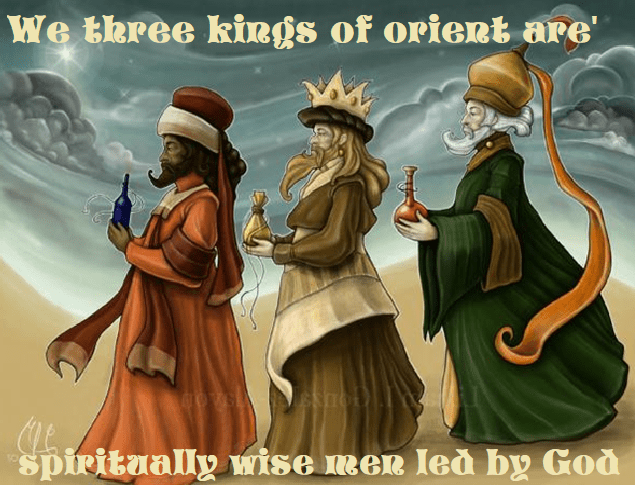
but as wise  ,” The word “sophos” means, “wise, learned, cultivated, skilled, clever.” This means to be “wise men,” where those who visited Jesus as a newborn were not smart enough to figure out where to go, what to find, and what to do on their own. They were led to Jesus by God’s guidance.

16redeeming the time  ,” The words “exagorazomenoiton kairon” are best translated as “use the opportunity” that comes from God’s guidance.

because the days evil are  .” The word “ponērai” means “evil, bad, malicious, wicked, slothful.” The meaning of “days” (“hēmerai” as “one’s time”) is more about the “years” or the “times,” being generally “always.” In another view, the light of truth (“days” versus nights) will attract those who are “evil” to one, because of the “lust of the times.” This requires one be able to shine light on that darkness.

17because of this  ,” The word “touto” (“this”) refers back to the state of evil that is always present, seen from the light of day. There is a cause (“because”) and effect challenge created that must be expected.

not be foolish  ,” One must not be “senseless” (from “aphrones”) to this evil presence, as one will be played the fool by the influences of Satan if not in possession of perspective and insight.

but understand what the will of the Lord [is]  .” The exception to foolishness comes from “perceiving” (from “syniete”) evil when it approaches, which is the will of the Lord for all His Apostles-Saints. This insight of “understanding” comes from the Christ Mind.

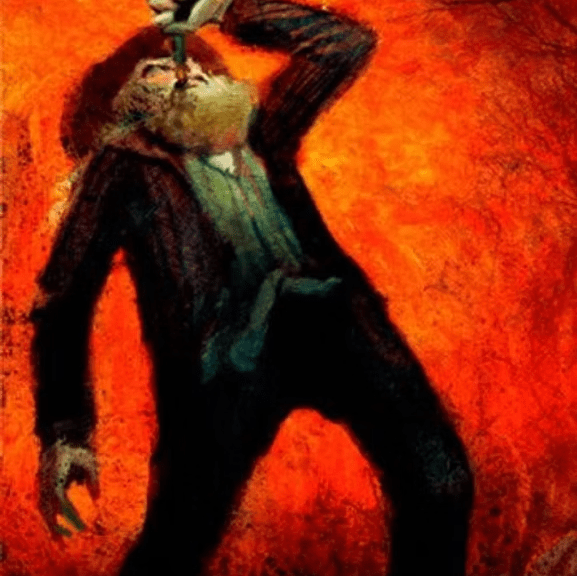
18and not to be drunk with wine  ,” The word “methyskesthe” means “become intoxicated,” where “intoxication” means, “overpowering exhilaration or excitement of the mind or emotions.” This is then a warning against the “poisoning” of evil, which possession of God’s Holy Spirit will protect one from.

in which is debauchery  .” The word “asōtia” means not to fall for “wantonness, profligacy, or wastefulness,” where “debauchery” means falling into a state that one cannot be saved from. It means, “spiritual wastefulness due to excessive behavior and the dire consequences it brings.” [HELPS Word-studies]

instead be filled with [the] Spirit  ,” The capitalization of “Pneumati” means the Holy Spirit, which is elevated above the spirit of a soul. This “Spirit” is the protection of God and the true source of wisdom and insight.

19speaking to each other [in] psalms  ,” As this follows a statement to be filled with God’s Holy Spirit, the least impact is “speaking to each other,” as the primary importance is God’s Holy Spirit speaking to them, those who are “themselves” (from “heautois” meaning “themselves” ) in touch with God’s Holy Spirit. It is the Holy Spirit that causes all Apostles and Saints to praise God in songs (“psalms”). Certainly all Apostles and Saints will join in with each other by singing the same songs of praise.

and hymns  ,” The word “hymnois” is much like “psalmois,” as both mean “songs of praise.” A “hymn,” however, is more specifically a “sacred son of praise,” one that “gives honor, praise, or thanksgiving.” In antiquity, a “hymn” was sung in celebration of a pagan god, hero, or conqueror. [HELPS Word-studies] The hero of all Apostles and Saints is Jesus Christ, whose entrance into a sinner means the defeat of Satan and his influences of evil.
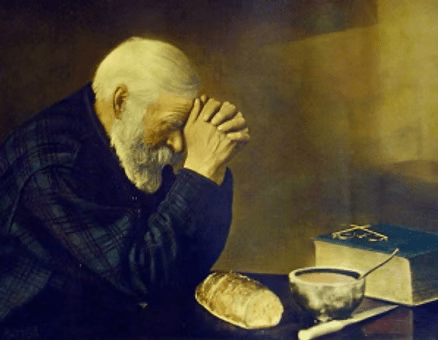
and songs spiritual  ;” The word “ōdais” means “odes,” which are defined as: “A lyric poem of some length, usually of a serious or meditative nature and having an elevated style and formal stanzaic structure.” [American Heritage Dictionary of the English Language] This word is used in the New Testament to denote: “spontaneous, impromptu (unrehearsed) melodies of praise – not merely sung about (for) God but to God from a Spirit-filled heart.” [HELPS Word-studies] These songs are thus “spiritual,” stimulated automatically by the intense joy and happiness one feels from the Holy Spirit.

singing and making melody in the heart of you to the Lord  ;” This repeats the intent and purpose of “odes spiritual” and the source of one’s need to sing praises to the LORD.  It is most important to see the use of the word “kardia” as the Greek equivalent to the Hebrew “leb,” meaning “the heart; mind, character, inner self, will, intention, center.”  Because “singing and making melody” (“adontes kai psallontes“) are more acts of the emotional center leading the brain, for the the emotions of music to be heartfelt, this is a statement about God’s presence in one’s heart moving one to sing.

20giving thanks at all times  ,” The praises one sings are of thanks for having been saved by God. This is not simply a time rescued here and there, as being filled with the Holy Spirit means eternal salvation, where the word “pantote” means “ever.”

for all things  ,” There is nothing that comes into the lives of Apostles-Saints that is not to be praised as a benefit of God’s presence.

“All things come of thee of Lord, and of our own have we given thee.” This should not be associated with an offering to an institution. If one truly believes that all things come from God, then all things received are to be used for God.

in [the] name the Lord of us  ,” God’s presence within an Apostle-Saint comes with a name that one must identify as.

Jesus Christ  .” That name is Jesus Christ. One takes on that name as all Apostles-Saints must be reborn with the Holy Spirit of God’s presence in His Son, bringing with it the Christ Mind.

As an Epistle selection for the thirteenth Sunday after Pentecost, when one’s personal ministry to the LORD should be underway – one should be singing praises to the LORD – the message here follows the theme of the Old Testament selections that apply to wisdom.  The wisdom and understanding of which Paul wrote is different than that requested by Solomon, as it requires one sacrifice self-ego for the Christ Mind.

Paul began this series of segments by saying, “Take heed.”  Before one can walk in the ways of Jesus Christ, as a true Christian, one must be led by God, via His Christ Mind.  One must become a “wise man” (regardless of human gender) by being reborn as the Son of God, allowing one’s flesh to become the body of the resurrected Jesus Christ.  Anything short of that total commitment to serve the LORD will leave one foolish, overcome by the evil influences of the days.

The only way one can understand the will of the Lord is to stop giving credit to one’s Big Brain.  The Big Brain represents the drunken state of self-glorification.  Through ego, one wastes the advantages of spirituality.  One sings praises to God for what one has achieved, acting as if God rewards the selfish with wealth and power.  Wealth and power are payments that cease when one’s life on earth ends; and human beings are mortals that are born to die.  Material rewards leave nothing in the spiritual realm to reap.

A minister of the LORD knows the voice within which is a thrill to behold.  One sings constant songs of praise to God, when little can be detected of material gain surrounding oneself.  One’s life song, where an evil end was averted by sacrifice of self for the love of God is sung to others, like a recovering alcoholic sings praises to God for salvation.  One’s salvation came by submitting oneself to God and facing all the trials of commitment, so one can be reborn as Jesus Christ.  One cannot claim to be Jesus Christ, but the glory of that presence is known and it leads one to testify to God’s greatness, so others can come to find the same reward.

Ephesians 5:15-20 – Elevated into the name of God

Be careful then how you live, not as unwise people but as wise, making the most of the time, because the days are evil. So do not be foolish, but understand what the will of the Lord is. Do not get drunk with wine, for that is debauchery; but be filled with the Spirit, as you sing psalms and hymns and spiritual songs among yourselves, singing and making melody to the Lord in your hearts, giving thanks to God the Father at all times and for everything in the name of our Lord Jesus Christ.

——————–

This is the Epistle reading selection for the twelfth Sunday after Pentecost [Proper 15], Year B, according to the lectionary for the Episcopal Church. It will follow one of two possible Old Testament and Psalm pairings, where the Track 1 option places focus on Solomon’s rise to power after David’s death, asking for the gift of wisdom. The Track 2 option is a Proverb of Solomon, which sings about the love of wisdom gained. The Psalms are songs of praise, with warnings for the necessity of repentance. All will accompany the Gospel reading from John, where Jesus said, “I live because of the Father, so whoever eats me will live because of me.”

I wrote deeply about this reading selection when it last came up in the lectionary cycle, in 2018. I published it on my website then, which can be accessed by searching this site. While I today use the same techniques for analyzing the words of Paul, new insights have come to me over the past three years, which I now add to another deep commentary of the meaning of Paul’s words. I stand behind my analysis of 2018, as those opinions are still valid today; and, I welcome all readers to read that and this and see where my new insights are stated. I welcome feedback on everything I write and post, as everything is for the benefit of other souls.

The first word of verse fifteen is capitalized, meaning “Blepete” takes on a divine level of meaning. The lower case spelling means the word ordinarily would be the second person plural form of “blepó,” meaning “you look, see, perceive, discern” (Strong’s Usage), while also being an important statement to “beware of.” The capitalization takes this to a heavenly [spiritual] meaning, such that HELPS Word-studies explains, “blepó suggests ‘to see something physical, with spiritual results (perception).’ That is, it carries what is seen into the non-physical (immaterial) realm so a person can take the needed action (respond, beware, be alert).” Thus, the meaning Paul intended is to remind the Ephesians [true Christians] to rely on their divine insight, more than what the accepted ways of the world allow, as far as how to live righteous lives.

Rather than being “careful” for their own safety and wellbeing, Paul meant for them to live according to conducting their loves so others are cared for. Such care cannot be based on foolishness, which is either fear-related reluctance to act or fear-driven rushes of action. When Paul wrote the word “sophoi,” the intent was to be one governed by piety and integrity. This cannot be determined through intellectual decision making, as that is too slow. It becomes a statement about one’s soul being married to Yahweh’s Spirit, so one’s actions are immediately taken through divine guidance.

Where the translation says, “making the most of the time, because the days are evil,” the operative word mistranslated is “exagorazomenoi,” which better translates as “ransoming” or “redeeming.” This says a life led before a soul is led to marry Yahweh is filled with plenty of sins that were brought on by both intellect and stupidity. Being led by a big brain leaves one with a life of past sins to repay. Marriage to Yahweh’s Spirit makes up for wasted time, where the continued presence of evil needs good shepherds placed into ministry to protect the flocks and lead more to also marry their souls to Yahweh. The element of “days” reflects how one must represent the light of truth, which lights the path that others must take, to cleanse their souls of past sins.

When Paul then wrote, “So do not be foolish, but understand what the will of the Lord is,” this series of words [in three segments, not two] says being “foolish” is not having married one’s soul to Yahweh, because it is impossible to fully have “understanding” [“syniete”] when one’s “will” [“thelēma”] is self-motivated. A self-motivated will makes one’s soul be the “lord” of one’s flesh [or worse, if demonically possessed by an evil spirit], where “kyriou” would need to be written in the lower case. Because of the capitalization taking this word to a divine level of meaning, where it is the “Lord” that controls one’s body of flesh, because “of the Lord” [“Kyriou”] means the resurrection of Jesus’ soul within one’s own soul [divinely possessed]. The only way to have that “perception” is to know Jesus personally and think what he is thinking [both using the same fleshy brain], which comes from the Father.

When Paul is then shown to write, “Do not get drunk with wine, for that is debauchery,” it must be understood that the ritual of the Passover Seder meal is to finish the evening getting drunk on wine, staying up as long as one cane, before passing out drunk. Paul was not saying that; and, to imply that in a letter means he wrote to both Jews and Gentiles.

The meaning must be seen as metaphor for using physical aids for artificially accessing what seems to be a higher realm of thought. Artists and musical talents in modern time [since Christianity became mainstream] have seen drugs and alcohol as a way to get in touch with the ‘gods of creativity.’ On the famous Pentecost, when the Spirit of Yahweh poured out upon the Apostles, their divine insight [things they said that impressed, as new and fresh takes on Scripture] was seen as the effects of drunkenness. While wine was a common drink that could lead to this seemingly elevated state of being, it was known to be temporary and leave a trail of forgotten sins in one’s wake. Thus, the advice given by Paul was to stay away from artificial means for attaining creative goals.

This is why Paul then followed that warning with the alternative, which said “be filled with the Spirit,” where the word “Pneumati” is capitalized. That capitalization elevates the meaning [which Christians readily recognize] to a divine state of meaning, which is beyond the lower case meanings of “life, breath, or wind.” Because the alcohol of fermented wine enters the bloodstream and yields the effects of drunkenness [such that hard liquors are called ‘spirits’], the capitalized “Spirit” is divinely entered into the soul, which thereby affects the body of flesh in ways that were how Peter and the eleven spoke divinely. In the same way that wine can allow one’s brain to access knowledge from a relaxed brain when under the influence of alcohol, the Spirit of Yahweh makes such access automatic and not temporary. The result of the “Spirit” is righteousness, never “debauchery.”

When Paul then wrote [NRSV], “as you sing psalms and hymns and spiritual songs among yourselves,” this is a further example of the excessive wine drinking after a Seder meal. The fourth ritual cup of wine is poured at the table, but then taken into a family gathering room, when the singing of songs and the reciting of psalms goes along with the drinking until one passes out drunk. For many people, especially those who do not have beautiful voices and singing is not a strong suit for them, drinking alcoholic beverages [beer or wine] will have the effect of loosening them up to singing, without worry. When attending a Seder meal, most attendees are usually family, with some close friends invited; so, the “among yourselves” element says those singing are all Jewish. All Gentiles would have then been taught what the Jews memorized, with all being elevated by the Spirit to understanding what the words of the songs meant.

To then be “singing and making melody to the Lord in your hearts” [which literally states, “singing kai making melody in the inner self of you to the Lord”] says “singing” is a way of praising Yahweh. More than reciting memorized words or reading lyrics from a hymnal, the “making melody” becomes a statement of a vibratory elevation within one’s soul, which singing enhances. Singing becomes the ‘wine’ of music, which opens one’s soul to being led willingly [and happily] by the divine possession that is the presence of Jesus’ soul with one’s own soul [submissive to that of Jesus], so the vibrations of music open one up to speaking without forethought. One then channels the Will of Yahweh, coming through the Son’s presence.

It is then in this way of celebration of marriage – the true symbolism of the Passover Seder, as a wedding feast – that Paul wrote, “giving thanks to God the Father at all times and for everything in the name of our Lord Jesus Christ.” In this verse, the capitalized words “Kyriou,” “Iēsou,” “Christou,” “Theō,” and “Patri” are written [in that order of presentation], such that all have divinely elevated meanings that must be fully grasped.

The literal translation of the Greek says: “giving thanks always on behalf of all with name of this our Lord ourselves of Jesus of the Christ to God kai Father .” In this, the genitive case states possession, which is found in “our Lord” [not simply “Lord”], “of Jesus” [not simply “Jesus”], and “of the Christ” or “of the Anointed one” [not using “Christ” like a last name]. The presence of the word “kai” between “God” and “Father” makes a profound statement that one’s soul has married Yahweh, thereby “to God” betrothed, with the “kai” making an important additional statement that the Holy Husband is also the “Father,” which means holy matrimony has brought the Son of God into one’s soul-flesh being. The marriage is what makes one “in the name of Yahweh,” with His name [“Jesus” means “Yahweh Saves”] being one’s “Lord,” so one is possessed by the same Lord,” as “our Lord” commonly. Each is then the Son reborn, such that with that possession comes each the identification of being “of the Christ,” which means the presence of Jesus’ soul is what makes one “Anointed” by Yahweh. Jesus’ soul is the pouring out of Yahweh’s name into one’s soul.

As an Epistle reading for the twelfth Sunday after Pentecost, when one’s own personal ministry to Yahweh should already be well underway, the lesson here is to run away from physical and material means to artificially ‘get high.’ So many times I have heard Episcopalians pretend to be moved by eating a wafer and sipping wine at a church rail. That is pretense and a temporary elevation of spirit, no different than drinking a shot of whisky. Paul is saying one must get the permanent “Spirit” and become Jesus reborn, so Yahweh is not only one’s God, he is also the Father of one’s ministry in His Son’s name.