Tag Archives: Epiphany Year C

Exodus 34:29-35 – Wearing the face of Yahweh

Moses came down from Mount Sinai. As he came down from the mountain with the two tablets of the covenant in his hand, Moses did not know that the skin of his face shone because he had been talking with God. When Aaron and all the Israelites saw Moses, the skin of his face was shining, and they were afraid to come near him. But Moses called to them; and Aaron and all the leaders of the congregation returned to him, and Moses spoke with them. Afterward all the Israelites came near, and he gave them in commandment all that Yahweh had spoken with him on Mount Sinai. When Moses had finished speaking with them, he put a veil on his face; but whenever Moses went in before Yahweh to speak with him, he would take the veil off, until he came out; and when he came out, and told the Israelites what he had been commanded, the Israelites would see the face of Moses, that the skin of his face was shining; and Moses would put the veil on his face again, until he went in to speak with him.

——————–

This is the Old Testament selection that will be read aloud on the last Sunday after the Epiphany, Year C, according to the lectionary for the Episcopal Church. It will precede a singing of Psalm 99, where David wrote, “Yahweh is King; let the people tremble; he is enthroned upon the cherubim; let the earth shake.” That pair will be followed by a reading from Paul’s second letter to the Corinthian Christians, where he wrote: “We have such a hope, we act with great boldness, not like Moses, who put a veil over his face to keep the people of Israel from gazing at the end of the glory that was being set aside.” All will accompany the Gospel reading from Luke, which is generally called “the Transfiguration.” There Luke wrote, “Peter said to Jesus, “Master, it is good for us to be here; let us make three dwellings, one for you, one for Moses, and one for Elijah”–not knowing what he said. While he was saying this, a cloud came and overshadowed them; and they were terrified as they entered the cloud.”

In these selected verses read aloud today, it is important to realize that chapter thirty-four of Exodus begins with the story that tells of Yahweh commanding Moses to come back up the mountain and the tablets which he broke will be replaced. This is ten chapters after we are told that Moses spent forty days on the mountain (Exodus 24:18), which is information that follows Moses reading from the “book of the covenant” (Exodus 24:7) to the elders, with everything agreed to by holy sacrifices on an altar fire. The following chapter then tells the details of the Covenant, which pertained to the Tabernacle, an Ark for the Covenant, and the priests who would maintain the Tabernacle. Then there is a magical jump to Moses being back on the mountain, when he sees the waywardness of the Israelites and he brakes the tablets after coming down from the mountain (Exodus 32:15-19).

One has to see this as a prophecy of the coming of Jesus and the New Covenant, rather than a historical repeating of an event that happened already. The breaking of the tablets must be seen as the actions of the Israelite people, who later acted in ways that broke their agreement with Yahweh. The return of Moses to the mountain needs to then be seen as Moses dying and going to heaven.

Because Moses was a Yahweh elohim, he was essentially the soul of Adam resurrected within his soul that was named Moses. The soul of Adam is, of course, the one we call Jesus. This means this reading (when understood in this light) is a perfect match for the Gospel reading that tells of the Transfiguration, when Jesus’ soul appeared with the souls of Moses and Elijah, as a gathering of the souls who were all reborn Adams, with Jesus himself being the second set of tablets written by Yahweh on the mountain. The Holy mountain is wherever Yahweh is; so, Mount Sinai and Mount Hermon (the “high mountain” that overlooks the Syrian plain) were physical locations that were Spiritually identical.

To drive this point home, the three yearly feasts that the Israelites (thus all afterwards that would be equally considered to be “children of God” … including Jews and Christians) were commanded to recognize includes the times of the Passover escape from Egyptian bondage, the feast of harvesting the first fruits, and the feast of harvest at the end of the growing season. In that, the Passover is a set date each year, with the feast of the first fruits gathered being fifty days after Passover [15 Nisan]. That number of days is based on symbolizing the ten days it took the Israelites to reach Mount Sinai and then forty days with Moses on the mountain, when he came down with the Law on the fiftieth day. There is no Yahweh-commanded recognition of a second coming down of Moses, with a second set of tablets. There is no New festivals commanded by God to remember, although the Jews have added a few on their own. Still, a second set of stone tablets would seem like a good one to commemorate; and, there is no such date set aside each year to recognize [the festival of the Golden Calf?]. This means this second set of Holy Tablets has to be relative to the coming down of Moses as Jesus.

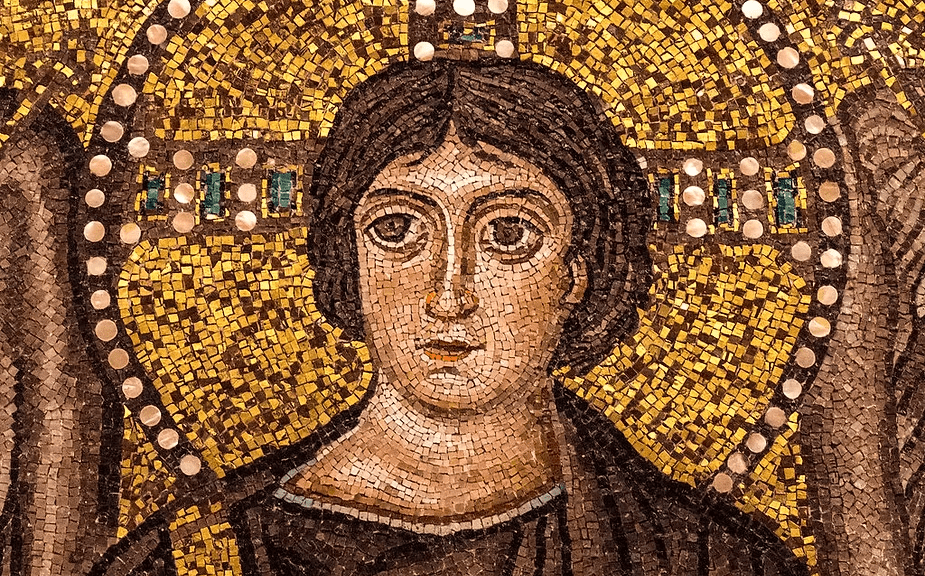
When this concept has been grasped, one can then see this glow on the face of Moses was not something that he is shown to have displayed prior. The “skin of his face shone” needs to be seen as a halo, in a similar way one is depicted around the heads of saints in early Christian artwork. It is this “shining” that denotes the presence of the Adam soul (now called Jesus, meaning “Yahweh Saves”), that is the Doubly Fruitful presence of the Yahweh elohim soul. A natural soul in a body of flesh produces an aura that surrounds itself; but a divine possession by the Son of Yahweh radiates more greatly, as a halo.
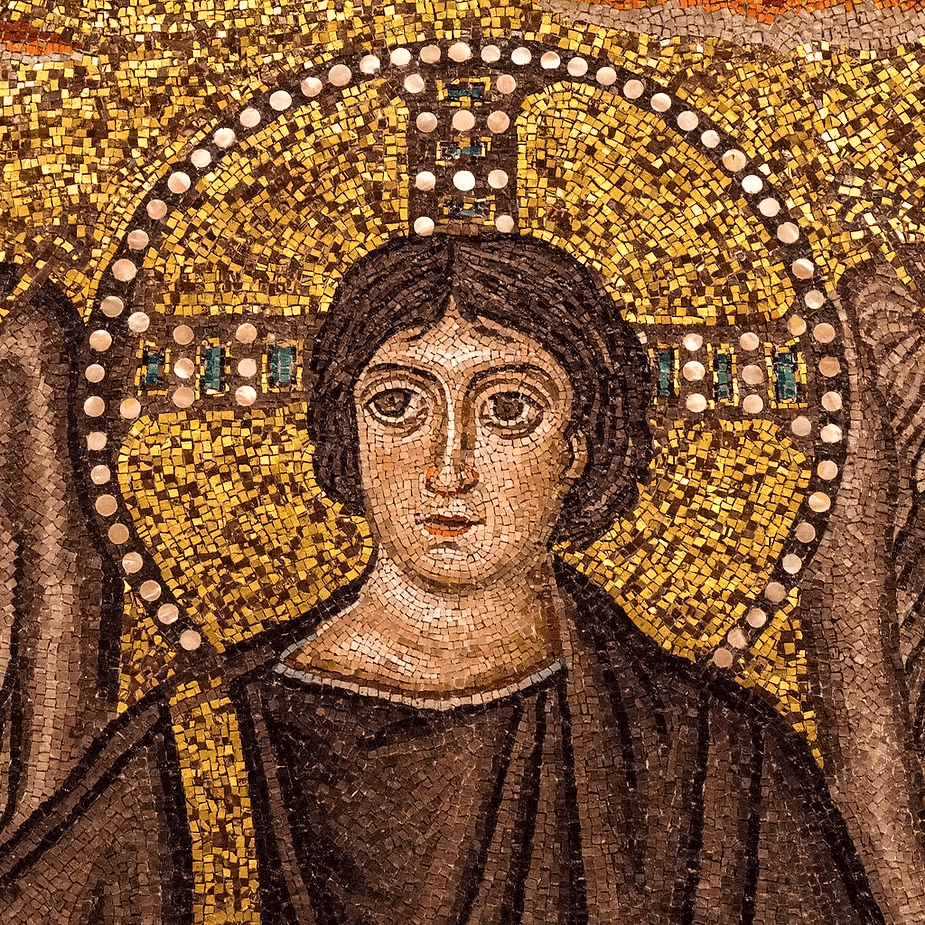
We read verse thirty saying [NRSV]: “When Aaron and all the Israelites saw Moses, the skin of his face was shining, and they were afraid to come near him.” Here, one should realize Aaron held the position of High Priest of the Tabernacle; but, in this second version of Moses bringing down new tablets, it was Aaron who coordinated the collection of gold (jewelry), when worry about Moses being gone so long led the rabble to control the leader to be filled with fear. The gold collected was then melted down and formed into the idol of a golden calf. That means Aaron is metaphor in this second telling for the later human beings who would be put in Aaronic positions of leadership, leading the Israelites away from Yahweh, towards the worship of Baals. So, when Aaron became just like all the other Israelites who saw Moses as shining like Yahweh in their presence, it was their fear that becomes synonymous with the rejection of Jesus when he was in the midst of the elders and high priests of Jerusalem.

[Aside: When Exodus 32 tells of Moses breaking the tablets, there then was an order given to the “sons of Levi” to take swords and kill those who caused the idol to be erected. We are told three thousand were executed for this, with Aaron called shameful for not controlling those actors. It would make sense that Aaron would be among the first executed; but his not being one of those killed says this is a prophecy of future kings, whose fates would be determined by Yahweh after their natural deaths.]

In the verses that speak of the “face” of Moses, it becomes worthwhile to go back to Exodus 20, where the “Ten Commandments” are stated. In these selected verses the Hebrew words “pā·nāw” and “pə·nê” are written six times (four times and two times, respectively). All are rooted in the Hebrew word “paneh,” which mean “face.” Still, this exact same word – “pā·nāw” – is found used in Exodus 34:6, where the NRSV translations shows, “Yahweh passed before him,” where the word that means “face” is translated as “him,” a reference to Moses [from “al-pā·nāw” saying “before him”]. This is where the First Commandment needs to be shown in the Hebrew, as: “lō yih·yeh- lə·ḵā ’ĕ·lō·hîm ’ă·ḥê·rîm al-pā·nā·ya.” The NRSV translates this as saying, “you shall have no other gods before me.” The reality is this says, “not shall have you elohim others before my face.” The Hebrew word “pā·nā·ya” is a construct of “paneh,” just as are “pā·nāw” and “pə·nê.”

In addition to these clearly translated words that say “face,” verse 34 is shown by the NRSV to say: “but whenever Moses went in before the Lord to speak with him.” Here, the Hebrew shows: “ū·ḇə·ḇō mō·šeh lip̄·nê Yah-weh lə·ḏab·bêr ’it·tōw,” where “lip̄·nê” is yet another construct of “paneh,” now translated as “before.” The Hebrew literally translates to state, “but whenever came into Moses the face of Yahweh to speak to him”. This says that Yahweh was not holding shop on top of Mount Sinai, but within Moses, because Moses was one of Yahweh’s elohim. Whenever Moses spoke to Yahweh, Moses wore “the face” of Yahweh “before” Yahweh.

When this is realized, all uses of “face” – from the root “paneh” – should be read in Hebrew Scripture as relative to this Commandment. The “face” a soul that is married to Yahweh wears must be the “face” of Yahweh. That “face” is then the projection made by a Yahweh elohim, where an elohim can be any other gods – self included (because a soul is a ‘minor’ elohim), but most dangerously is the “face” worn by a soul possessed by a demon elohim. Thus, when Moses spoke to Yahweh, he did so wearing Yahweh’s “face upon” his [when “al-pā·nāw” says “upon face.”].

Because this element of “face” needs to be seen as that worn by all saints-apostles reborn as Jesus, each soul resurrected in his name, each soul designated a Christ by Yahweh, this becomes fulfilling the first of the marriage vows that are represented in the Covenant. Because Moses only went up Mount Sinai one time and only came down with the Law one time, this facial glow of Moses must be seen as Jesus promising that the Law would be written on the hearts [i.e.: souls] of those who followed him [became him resurrected within their souls]. One becomes a walking, talking Moses reincarnated [a true Lawyer] when Jesus is within one’s soul; so, the shine is wearing the “face” of Yahweh. The “veil” is then no one seeing all that presence visibly. The “veil” is then all Saints and Apostles looking like normal people; but remove the “veil” and one finds the truth of Yahweh’s Spirit within.

The element of a “veil” needs to be seen as a symbol of a bride. As such, Moses’ soul was married to Yahweh. The glow on a face can also be seen as the beauty of his divine pregnancy, carrying the soul of Adam within his ‘womb.’ This makes a “veil” be the covering that says to others, “I am taken.” Some believe the tradition of a bride wearing a veil was to hide herself away from demon spirits, to keep evil from interfering with the happiness of divine marriage. The fact that Moses wore a veil can then be seen as a statement of the femininity of all souls in human flesh (regardless of human gender). All are then brides-to-be, in waiting for their most holy Husband. The use of veils in human marriage ceremonies, where the bride is the one wearing the veil, to be removed after the wedding is official, says all who are truly engaged to Yahweh will wear a symbol that says, “I am Yahweh’s bride.”

In the symbolism of the tent of meeting [“mishkān”], this needs to be seen as the body of flesh, where the body is a soul’s “covering, place of dwelling, residence.” When Moses would enter into this place, so the veil could be removed, the symbolism that must be understood today is a state of reverence for Yahweh. This can come about as visions or dreams, when one is alone with one’s thoughts. This means one has designated one’s body as a temple unto Yahweh, making one’s body become “Holy ground.” More than some external building, the “tent of meeting” is when one enters a state of prayer … an opening of the heart and mind to Yahweh … at which time the veil of human flesh is dropped and it becomes a soul speaking with the Father Spirit, as the Son reborn.

In the Gospel reading connected to this reading, on the last Sunday after the Epiphany, Peter, James and John witnessed the glowing presence of Moses, Elijah and Jesus, prompting Peter to ask if he should pitch a tent for the guests. There, he spoke from fear, just as did the Israelites who saw the skin of Moses’ face shining. The three witnessing that says they too were in a divine state being, one that connected their souls to Yahweh. Thus, when Peter spoke, Yahweh spoke back … loudly and clearly. For Yahweh to say, “This is my Son, my Chosen; listen to him!” that says Peter, James, and John were all chosen by Yahweh to become His servants. They were instructed to listen to their inner voice, who was known to be the soul of Adam, as Jesus reborn. So, in effect, each had become themselves tabernacles – tents of meeting – in whom all would have the ability to speak with Yahweh, through being the Son Jesus reborn.

As the Old Testament reading choice for the last Sunday after the Epiphany, in the Year C, this says Moses was the model for all the Israelites to follow, in the same way Jesus was the model for all Christians to follow. The point is to become Jesus, not keep him external to oneself out of fear that seeing Yahweh will mean one’s death. It is true that all who look upon Yahweh must die; but that death is the sacrifice of oneself (submission of one’s soul) to forever serve Yahweh. To serve Yahweh, one must die of self so one’s “face” of ego does not attempt to “face” Yahweh. That cannot happen. That would mean the marriage of a soul to Yahweh will cease and the soul will experience death when the body dies. One has to figuratively die (permanently of self-importance) and shine the brightness that is Yahweh’s truth – the light of Christ to lead the world to salvation. That shining light has to come from within one’s soul, so that becomes the halo of a Saint.


Psalm 99 – Knowing how to be one of all who say “Our Yahweh”

1 Yahweh is King; let the people tremble; *

he is enthroned upon the cherubim; let the earth shake.

2 Yahweh is great in Zion; *

he is high above all peoples.

3 Let them confess his Name, which is great and awesome; *

he is the Holy One.

4 “O mighty King, lover of justice, you have established equity; *

you have executed justice and righteousness in Jacob.”

5 Proclaim the greatness of Yahweh elohenu and fall down before his footstool; *

he is the Holy One.

6 Moses and Aaron among his priests, and Samuel among those who call upon his Name, *

they called upon Yahweh, and he answered them.

7 He spoke to them out of the pillar of cloud; *

they kept his testimonies and the decree that he gave them.

8 Yahweh elohenu, you answered them indeed; *

you were el who forgave them, yet punished them for their evil deeds.

9 Proclaim the greatness of Yahweh elohenu and worship him upon his holy hill; *

for Yahweh elohenu is the Holy One.

——————–

This is the Psalm that will be read aloud in unison or sung by a cantor on the last Sunday after the Epiphany, Year C, according to the lectionary for the Episcopal Church. It will follow a reading from Exodus, where a dreamlike prophecy is told in the breaking of the Tablets, causing Moses to go back up for a second set. Upon his return his face glowed from having talked with Yahweh. We then read, “When Aaron and all the Israelites saw Moses, the skin of his face was shining, and they were afraid to come near him. But Moses called to them; and Aaron and all the leaders of the congregation returned to him, and Moses spoke with them.” After the first two readings, there will be a presentation from Paul’s second letter to the Christians of Corinth. There he wrote, “Therefore, since it is by God’s mercy that we are engaged in this ministry, we do not lose heart. We have renounced the shameful things that one hides; we refuse to practice cunning or to falsify God’s word; but by the open statement of the truth we commend ourselves to the conscience of everyone in the sight of God.” All will then accompany the Gospel reading from Luke, where Jesus was Transfigured. We read there, “Now Peter and his companions were weighed down with sleep; but since they had stayed awake, they saw his glory and the two men who stood with him.”

In the above translation presented, one should note that in seven places David wrote the proper name “Yahweh,” which I have restored in bold type. Each of those specific namings are routinely translated as “the Lord,” which is wrong, because it makes Yahweh be distant, unknown, and separate from one’s soul. It is vital to know the name of one’s divine Husband, if one is seeking redemption and salvation.

Relative to those seven namings, David combine with Yahweh the Hebrew word “elohenu,” which states “our gods.” David wrote “elohenu” four times. The plural number is clearly written; and, to highlight that known difference, David also wrote the singular number word “el,” which is one “god.” At no time did David call Yahweh a God, because Yahweh is more than a “god.” Yahweh is the Creator of all, which includes all “gods.” The combination of words that are “Yahweh elohim” is reference to Adam, who was a creation of Yahweh’s on the seventh day, for the purpose of saving the souls of mankind. The application of “our” to “elohim” [“elohenu“] means Yahweh is the possessor of these “gods,” of whom David and the true Israelites were, having been souls married to Yahweh and receiving the soul of Adam within those souls, saving them. Because they were saved souls by Yahweh, they were all Jesus resurrections; and, that is the meaning of “Yahweh elohenu.” Thus, I have restored all “elohenu” and “el” words written by David, in italics.

The language of Hebrew has no capital letters. As such, a word like Yahweh becomes capitalized as a proper noun, with capitalization being the rules of syntax that English follows. In this song of praise, names of places and people are likewise capitalized in English translation: Zion, Jacob, Moses, Aaron and Samuel. All proper names have meaning behind the names, which must be understood, because those names were given with that meaning purposefully identifying a soul born into flesh. Even the name “Yahweh” means “I AM that I AM,” which says, “Do not call me Lord.” Still, the NRSV has taken the liberty to capitalize every first word of a verse, in addition to leading readers to think the words churned out by that service have been translated as godly, in some way. Thus, they bastardize everything by capitalizing such words as: King, Name, Holy One, in addition to God [from “gods”]. All of this confuses those who read Scripture, rather than helping them be led to understanding.

Verse one is better stated as such: “Yahweh reigns let them be excited the peoples ; he dwells the cherubim , let be shaken the earth .” In this, it is clear that when Samuel told Yahweh “the peoples” wanted to have a “king” be appointed to them, so they could be like other “peoples,” Yahweh said, “I Am their King.” This is now how David projected the “reign” of Yahweh. The construct that twice says “let” means Yahweh “reigns” within those who “let” Yahweh control their souls, which is then the “excitement” of divine marriage. To see this as a presence that leads one to “tremble” means all should fear Yahweh not being his or her “King” within. Here, the word “cherubim” is understood as a form of angels, who were depicted atop the Ark; but those angels are a plural number of “elohim.” Thus, where Yahweh “dwells” is with the “cherubim.” This makes the “cherubim” be synonymous with a “Yahweh elohim;” and, when the “earth shakes,” the “earth” is one’s body of flesh, with the “shaking” again is relative to the inner presence of Yahweh’s Spirit, so one’s soul is “moved” to action by Yahweh’s commands.

In verse two, the transliterated word “bə·ṣî·yō·wn” is translated as the name “Zion.” That means nothing to Christians today. Zionism is a political movement that has absolutely no belief in God. It is all about the theft of land and a valuable possession being allowed to Jews. The lower-case “zion” means “a dry place.” A “dry place” is where there is a void of spiritual emotions. Thus, verse two literally states, “Yahweh in a dry place great ; and exalting it , upon all the peoples .” This says the presence of Yahweh coming into a soul that was alone in the flesh will expand greatly, in all ways of righteous being. When this is projected as a land (as where Jerusalem was David’s capitol city), this heart-center says the whole being that was one nation under Yahweh was then “exalted” – defined as: “placed at a high or powerful level; held in high regard.” When David was “exalted,” so too were all those “peoples” who followed his lead and commands.

Verse three then shows the capitalizations of “Name” and “Holy One.” In this, the first Hebrew word written, “yō·w·ḏū,” is a form that again states “let them,” where that allowed to the “peoples” is the ability to “cast” about “your name.” Here, the “your,” as is seen in “our elohim,” is a statement of possession. This means the “name” cast out or thrown away is one’s own “name,” because one’s soul has taken on the “name” of Yahweh, which comes from divine marriage to Yahweh’s Spirit. That “name” is Israel. Thus, the whole of verse three literally states, “let them cast your name great and fearing , sacred he .” This says a soul has become divinely possessed, as a Yahweh elohim (an angel in His name raised within one’s soul), so one is now “in the name of Yahweh,” which one “fears” ever losing that presence within. That presence is what makes one become “holy.” It is impossible to declare Yahweh as “holy,” because one cannot truly know what “holy” means, until Yahweh has transformed a sinner into a saint.

Verse four then literally sings, “and the mighty king judgment it loves you to be firm in uprightness ; judgement and righteousness , in the supplanter you have made .” In that, the word “supplanter” is used to replace the word that becomes capitalized as “Jacob.” This says that it is the “love” in one’s heart for Yahweh that He is attracted to and returns “love” to a soul, who has welcomed Yahweh as one’s “king.” The entrance of Yahweh, through divine marriage, then gives “strength” that is necessary to become “upright” in one’s life. The “judgement“ that a soul is directed by Yahweh to see is then the direction that the soul takes, which is a life that is “righteous.” This means the “supplanter” that one’s soul had been prior is itself “supplanted” by the Spirit of Yahweh. One has “grabbed the heel” of Yahweh, which means a soul has fully submitted to be at the feet of Him.

A mass gathering of human brides. Imagine all of Israel, under David, as being brides of Yahweh (males and females alike).

Verse five is then where David wrote the first of the four “Yahweh elohenu” in Psalm 99. After having sung of Yahweh dwelling with “cherubim,” which was an “exalted” state of being [from verses 1 and 2], this divine state is now repeated in verse five. The literal English translation of the Hebrew says, “they exalt Yahweh our elohim , and bow down footstools to his feet , sacred he .” This, again needs to be seen as “they” being who is “exalted” by the presence of “Yahweh” within their souls. The collective means many are divinely possessed in the same way, so all are the “elohim” that are possessed as His, thus in a related relationship, as “our.” All have submitted to the presence of Yahweh in divine marriage, so all are wives who obey every command of their Husband. That places them as “footstools” at His “feet,” which says they have become subjects of useful purpose. As His “footstools” they have become “sacred,” to be put into His service as ministers and priests.

In verse six is found the names of Moses, Aaron and Samuel. Those names bear the following meanings: “Moses” – “Child, Rescued From Drowning In Water; Extracted, Loan; Hidden, Covered.” “Aaron” – “Bright; Accumulation; Center Of Cheer.” “Samuel” – “Name Of God; Heard Of God.” The differences in each name’s meanings come from which vowels are used to place between the consonants the Hebrew is mostly written in. From this, the literal translation of verse six says, “hidden center of cheer within his priests , and heard of el within those who called upon his name ; they called to Yahweh and he answered them .” This becomes a reflection of how ALL souls who serve Yahweh become just like Moses, Aaron and Samuel. In the name Samuel, the “el” must be realized as one of the collective “elohim,” which is an “angel in the flesh,” an extension of Yahweh’s hand onto the earth. They are His elohim, which is a “hidden center of cheer” that ministers to the lost souls (as “priests”). Seeing “el” as a divinely inspired saint-apostle-priest means David sang that only they can “hear” the voice of Yahweh “calling” them and “telling them” how to act.

Verse seven the literally translates into English as saying, “in the pillar cloud he spoke to them , they preserved his witnesses , and the statutes he gave them .” Following a verse that appears to name Moses and Aaron, the “pillar cloud” is assumed to be a physical phenomena that led the Israelite peoples by day. Because Samuel was not one who was so led as is written in the Exodus, “in the pillar cloud” needs to be seen for the truth that relates to the Exodus and this song of praise by David. A “pillar” is physically “a tall vertical structure” and symbolically “a person regarded as reliably providing essential support for something.” This means “in the pillar” becomes a statement of all Yahweh’s elohim who are “upright” in the way they lead their lives (influenced or led by Yahweh). The “cloud” is then the inner nebulosity that is His Spirit. It is from within this divine presence that Yahweh speaks and is heard. That personal experience makes a soul in flesh become a “witness,” whose “testimonies” are truthful, “preserving” the truth told by Yahweh in ministry that leads others (continuously) to Yahweh in marriage. The “statutes” become the Law that not only states the marriage vows, but explains them as truthful and purposeful for receiving eternal salvation.

Verse eight then presents the second use of “Yahweh elohenu,” which again is a statement of Yahweh possessing many souls, all of which are His elohim, and all of who collectively call upon Yahweh’s name in marriage [“our”]. Here, the literal English translation says: “Yahweh elohenu you answered them el lifting up you came to them ; and through you avenged according to their deeds .” In that, the use of “el” becomes the singular number of the plural “elohim.” The “answer” relates back to verse six, where those who serve Yahweh as His wives are “called” to do so, and they “respond” to that call. The “call” then goes out from souls for salvation, which Yahweh then “answers.” The creation of a soul that is elevated to the status of one of Yahweh’s “angels in the flesh” [a “god”] says those souls have been “uplifted,” when Yahweh’s spirit “came upon them.” This service of a soul then restores it from all past sins; and, it leads one to “avenge” those sins known to be done by others, through active ministry in the name of Yahweh.

Verse nine then includes two references to “Yahweh elohenu,” while repeating this as a state that is “exalted.” The literal English translation can then be read as: “those exalted Yahweh elohenu , and bow down at mountain of his sacredness ; when holy , Yahweh elohenu .” In this, again, no human can possibly “exalt Yahweh.” Likewise, no human can call Yahweh “sacred” or “holy.” Yahweh’s presence is what “exalts those” who are His “elohim,” who all refer to Yahweh as His wives (as “our”). Those souls who have come into that state of being, by the presence of Yahweh – married to His Spirit as His elohim” – they are then transformed from sinners to “saints,” from unholy to “holy.” Therefore, no one can call the Spirit of Yahweh “Holy,” as only those possessed by that Spirit will know the truth of being “Holy.” That truth means being a Yahweh elohim.

In this Psalm are the names of Moses and Aaron. That presence means this Psalm was selected to be read along with the Exodus reading that mentions both names. The Epistle reading from Second Corinthians also names Moses, as does the Gospel reading from Luke. It is important to see this mention of Aaron, in the same breath with Moses and Samuel, as representative of a priest of Yahweh, who was likewise filled with the Spirit of Yahweh and the first designated High Priest of the Tabernacle. This shows that the Aaron of the Exodus reading, who feared Moses, is not a true reflection of Aaron, but one who is of the Aaronic line – a high priest of the Temple – when the Covenant had been broken and Jesus came down from the mountain as the replacement for Moses [the bearer of the New Covenant]. This Psalm confirms that account from Exodus is a prophecy, not a repeat of the Law of Moses.

As a reading for the last Sunday after the Epiphany, it is important to see this as a song that gives praise to the known collective that were (are and always will be) Yahweh’s elohim. David was one “el” of that nation that truly lived up to the name “Israel,” as he was a king of those who all claimed Yahweh as their Spiritual Husband. If one goes about reading David writing four times “Lord our God,” that does nothing to tell the reader – the singer of praise! – that all souls are expected to serve Yahweh as one of His “angels in the flesh.” That means dying of self-ego and bowing down as a footstool at the feet of Yahweh. There can be no words of praise spoken about Yahweh, if one has not been possessed by His Spirit. Then Yahweh can make it known to one the truth of being exalted and the truth about being sacred and holy. The measure of that is one speaking the Word one’s soul receives from Yahweh, after having entered His cloud and become one of His pillars meant to lead the lost to salvation. As the last Sunday after the Epiphany, one should be on the verge of internship, when the final exams are coming [Lent]. If you do not know how to sing this song of praise, there will be no survival when self-sacrifice cannot be avoided.

2 Corinthians 3:12-4:2 – Preparing for the test in the wilderness

[12] Since, then, we have such a hope, we act with great boldness, [13] not like Moses, who put a veil over his face to keep the people of Israel from gazing at the end of the glory that was being set aside. [14] But their minds were hardened. Indeed, to this very day, when they hear the reading of the old covenant, that same veil is still there, since only in Christ is it set aside. [15] Indeed, to this very day whenever Moses is read, a veil lies over their minds; [16] but when one turns to the Lord, the veil is removed. [17] Now the Lord is the Spirit, and where the Spirit of the Lord is, there is freedom. [18] And all of us, with unveiled faces, seeing the glory of the Lord as though reflected in a mirror, are being transformed into the same image from one degree of glory to another; for this comes from the Lord, the Spirit.

[1] Therefore, since it is by God’s mercy that we are engaged in this ministry, we do not lose heart. [2] We have renounced the shameful things that one hides; we refuse to practice cunning or to falsify God’s word; but by the open statement of the truth we commend ourselves to the conscience of everyone in the sight of God.

——————–

This is the Epistle selection to be read aloud on the last Sunday after the Epiphany, Year C, according to the lectionary for the Episcopal Church. It will follow an Old Testament reading from Exodus, where is read: “When Moses had finished speaking with them, he put a veil on his face; but whenever Moses went in before Yahweh to speak with him, he would take the veil off, until he came out; and when he came out, and told the Israelites what he had been commanded, the Israelites would see the face of Moses, that the skin of his face was shining; and Moses would put the veil on his face again, until he went in to speak with him.” That will then be followed by a singing of Psalm 99, where David wrote: “Moses and Aaron among his priests, and Samuel among those who call upon his Name, they called upon Yahweh, and he answered them.” All will accompany the Gospel selection from Luke, where we read: “a cloud came and overshadowed them; and they were terrified as they entered the cloud. Then from the cloud came a voice that said, “This is my Son, my Chosen; listen to him!”’

This selection from Paul’s letters needs to be viewed in the light of it having been purposefully chosen to follow the Exodus 34 reading that tells of Moses’ face glowing after coming down from the mountain, bringing replacement tablets. This reading is only read on the last Sunday after the Epiphany, Year C. Moses broke the first tablets when he saw the sins of the people, who built a golden calf to worship. Aaron led the people to commit this grave sin, which led to three thousand losing their loves to Levites swinging swords. To see that Aaron was afraid to see Moses’ face glowing, along with the elders of the people, says Aaron was one who should have been executed for having allowed sin to be promoted. Therefore, it is my opinion that the events of Exodus 34 did not truly occur when Moses and Aaron (with Joshua) were leading the Israelites. The broken tablets are a prophecy of the future failures of the people and their leaders, with Aaron’s name merely being symbolic of a high priest in the Aaronic line. This opinion of mine is now being supported by the words spoken by Paul in his second letter to the Corinthians.

These selected verses are Paul speaking amid a section that was begun in verse seven, which BibleHub entitles “The Glory of the New Covenant.” The NRSV gives all of chapter three a heading that announces: “Ministers of the New Covenant.” In verses seven through eleven, Paul wrote to question how a ministry could succeed, if the people were afraid to look upon the face of Moses, which glowed from having spoken with Yahweh. Paul’s verse even surmised that the fear of the new commitment brought down by Moses prophesied a greater glory will come. That greater glory is the advent of Christianity.

In the above NRSV translation, I have supplied the verse numbers, in bold type, within brackets. This will aid in see where the interpretations that will follow come from. I will make some references to the NRSV translation, but my interpretations will be more heavily leaned on a literal translation of the Greek text into English, which exposes the NRSV as the producer of English paraphrases. Often, those paraphrases do a disservice to the divine text written.

In the NRSV translation of verse twelve, to see that stating “Since, then, we have such a hope, we act with great boldness” … well, that is bad paraphrase. The verse begins with the capitalized word “Echontes,” which is the Present Participle Plural form of “echó,” which means “to have, hold, possess.” When the capitalization is understood to be a purposefully written word that denotes divine elevation in meaning, the proper word in translation is “Possessing us.” That is Paul stating, as a prophet of Yahweh, that he and those to whom he wrote in Corinth were all known to be the divine “Possessions” of Yahweh, as His elohim. The whole of verse twelve then literally says, “Possessing us therefore of such a kind expectation , much confidence we make use of .” This becomes much more powerful a statement than some ‘ho-hum’ “Since we have hope, we act boldly.” Where did the “hope” come from?

Verse thirteen then uses the third of three references made by Paul in this section relative to the New Covenant, which point to “fading away.” The whole of the verse literally translates into English to say, “kai not just as Moses would place a veil upon this face of himself , advantageous for this not to gaze steadily these sons of Israel into this end of this fading away ,” This begins with the word “kai,” which means it is important to grasp how being in the “Possession” of Yahweh [Him “Possessing us”] is not to be seen [“kai ou“]. There, the word “not” becomes important to understand.

When the lesson of Exodus 34 is seen as Moses placing a veil upon his face, making that covering become advantageous for the fearful Israelites, so they would not have to look intently at the face of Yahweh worn by Moses, the point Paul made was this Scripture was not telling of the past [the times of Moses and Aaron], but the future. Hiding the face of Yahweh becomes a sign of the “end” times, when Judaism [“these sons of Israel”] were rapidly “fading away” from being anything even remotely considered “Possessions” of Yahweh. The “end” was then, when Paul was the resurrection of Jesus’ soul (along with the other true Christians like him), who feared making a commitment that placed their souls in the hands of Yahweh. Thus, Judaism was “fading away” in relevance to Yahweh, because the first set of marriage vows had been broken.

Verse fourteen also begins with a capitalized word – “Alla” – which becomes divinely elevated in meaning, so it becomes the “Exception” that comes from this “fade.” Here, Paul was not saying that Jesus is a reflection of the veil of Moses being removed. Instead, the Exodus 34 story tells of the future to come [leading to an “end” through “fade”] would be the symbolism of the Law wearing the “veil” of confusion. Without being able to understand the meaning of that written by Yahweh and given to Moses – which came to the Israelites by their own ability to discern, from making a divine marriage commitment and eating spiritual food daily – all that understanding would be lost when all explanations of meaning fell behind the “veil” of Yahweh’s “tongue” [his divine language that requires divine language fluency]. When Paul wrote, “within Christ it is removed,” this says each “Anointment” of a Saint [all reborn as Jesus, Anointed as Yahweh’s Son] comes with a ‘built-in’ understanding of all Scripture passed down to the Israelites (who had “faded” to being only Jews).

Paul then wrote in verse fifteen that the only “veil” then worn, which kept souls from being able to be led by Yahweh’s Spirit to discern the truth of Scripture, was the one that covered the “hearts” of the believers. Paul wrote this “exception” [“all’” not capitalized] was: “until this day , when shall be read Moses [Scripture] , a veil over this heart of themselves lies .” In that, the Greek word “kardian” translates as “heart,” but that usage is metaphor for “the mind, character, inner self, will, intention, center.” That soul-center being covered should be seen as the self-drive away from a Spiritual commitment that a soul is expected to make to Yahweh. The use of the plural form of “autōn” should be read as “themselves,” where the “self” is always denoting a “soul.” Thus, the “veil” that keeps the meaning of Scripture hidden from one’s understanding is self-limitations on commitment to Yahweh – a refusal to fall in love and submit one’s soul in divine marriage.

In verses sixteen, seventeen and eighteen are found five uses [in variations] of the word “Kyrios,” all basically meaning “Lord.” In addition to those are three uses [in variations] of “Pneuma,” all basically meaning “Spirit.” Before going into what Paul specifically wrote, it is important to grasp the difference that comes from an Old Testament naming [in Hebrew] of “Yahweh,” which is reduced in English translations to being “the Lord,” and a New Testament statement [in Greek] of “Kyrios,” and it subsequent translation as “[the] Lord.” The two are not the same.

In the Greek text that is based on “Kyrios,” this capitalized word denotes a word that is divinely elevated to a meaning that is much higher than the lower-case would denote. As such, a “Lord” or “Master” is Spiritual, not physical. A “lord” or “master” would denote a superior or slave owner. On the lower-case spelling level that is human, looking at spirits being present in the world, a “soul” is the “lord” and “master” of its flesh. By seeing that, a capitalized “Lord” then reflects the presence of a divinely elevated soul-spirit that becomes the new “Lord” over both one’s soul and its flesh; and, this “Lord” is named Jesus.

In the Hebrew naming of “Yahweh,” there is no way that Yahweh will ever become “the Lord” over a human being. Yahweh is the source of one’s soul, which is the gift of life, given at birth to be the “lord” over one’s flesh. Yahweh will marry a soul (living in a body of flesh) and then possess that soul-body as His; but He will not take over being His wife. Yahweh will not become the direct “Lord” over one human being. Instead, Yahweh will send His “Spirit” [Hebrew “ruach,” Greek “Pneuma”] to merge with the soul of a wife, which will lead that soul-body to compliance (willingly) to the marriage vows. Such a “Lord” is what Jesus called the “Advocate.” Thus, in Paul’s words one must read Jesus as the “Lord” and Yahweh as His “Spirit.”

Verse sixteen is then Paul making it clear that the “veil is taken away,” adding “at which time however if shall have turned toward the Lord.” This must be seen as the resurrection of Jesus’ soul within ones soul, which comes from a soul having fully submitted itself to Yahweh in divine marriage. The result of that marriage is the rebirth of His Son in the flesh [new flesh], which becomes the “Lord” over that flesh and its host soul. This is a divine possession [called “eudaimonia“]. This then means the presence of “Lord” Jesus makes one be “Anointed” by Yahweh [thus His “Christ”], because one has been reborn as the Son, who is always “the Christ.” Because Jesus becomes the Law written within the heart (or soul) of a believer, the presence of Jesus means all understanding of the Law [all divine Scripture] is immediate and forever. With that understanding, the “veil” of ignorance has been “taken away.”

Verse seventeen then begins with a capitalized “Ho,” which typically translates as “the,” in the lower-case, but it has greater divine elevation as a reference to “This,” which has just been stated. “This” is then reference to the removal of the “veil” that prevents understanding of the Law. “This” is then said to be “now Lord this Spirit,” where both “Lord” and “Spirit” [“Kyrios” and “Pneuma”] are capitalized and separately important in divine elevation. The “Lord” brings about the removal of the veil, with that presence having been generated by the “Spirit” of Yahweh. The “Spirit” brings about a new “existence” [from “estin” meaning “I am, exist”] that is able to see Spiritually, without a veil blocking one’s ability to discern spiritual matters.

Paul then furthered this about the “Lord this Spirit” by adding, “in what place now this Spirit of Lord , freedom .” In this, the order of “Pneuma” and “Kyrios” is reversed, with the genitive case used in Paul writing “Kyriou,” which states the “Spirit” possesses the power to bring about “this Lord,” because the “Spirit” is “of Lord.” The host soul in a body of flesh – a new wife in submission to Yahweh’s “Spirit” – is then “in what place” is “now” found “this Spirit,” who is the Father “of Lord” Jesus. The removal of the veil through divine marriage is then a “freedom” to understand spiritual matters.

In the last verse of chapter three, Paul wrote of the “face” as a “mirror” that becomes the “same image” that is the “glory” that made the “face” of Moses shine. In seven segments, Paul wrote the following:

“ourselves now the whole ,” – This needs to be seen as the totality of the New Testament, or the new tablets brought down to replace the marriage agreement that had been broken. This is the truth of Christianity, as “ourselves now the whole” says all are Anointed by Yahweh to see, reborn as Jesus, without a veil of ignorance. “having been unveiled in countenance ,” – This needs to be seen as the removal of the “face” of self, to be replaced by the “face” of Yahweh. This is the First Commandment that all wives of Yahweh must agree to, willingly and lovingly.

Wearing the “countenance” of Yahweh comes by being reborn as His Son. “this honor of Lord reflecting as in a mirror ,” – This needs to be seen as the Father being reflected in the Son, and vice versa. It says one wears the “face” of Yahweh by the presence of the Son [the “Lord” Jesus] projecting as the halo that surrounds one’s human “face.”

“this itself image are the transfigurations within ,” – This needs to be seen in the same way as Peter, James, and John witnessed Jesus, Moses, and Elijah [three for three, all saints or apostles], where they were themselves transfigured, which allowed them to hear the voice of Yahweh speaking to them [the “Spirit”], telling their souls to listen to Jesus [“the Lord”].

“away from renown into honor ,” – This needs to be seen as the movement that takes one away from glorifying that which is misunderstood [like seeing Jesus as the only Christ, who will come again some time in the distant future to save the world], into a state of being that receives all the honor and glory of being Jesus reborn, here now, as his soul has been reborn countless times, ever since Pentecost Sunday, when many souls received his soul and were renewed in honor.

“just as away from of Lord ,” – This needs to be seen as one’s soul being removed as one’s lord over the flesh, which in most cases is a straw boss that has sold itself and body into slavery to some demon spirit. As such, one must receive the “Spirit” and be reborn as “Lord” Jesus controlling oneself.

“of Spirit .” – This must be seen as everything being made possible through a soul marrying Yahweh, becoming divinely possessed “of Spirit.”

At this point, it is quite important to understand that chapter four is not a continuation of chapter three. Therefore, it is not adding further details about the removal of the veil of ignorance that keeps a selfish soul from understanding divine guidance through holy texts. Chapter four is taking a new thought direction, which requires acceptance that all stated prior has been properly discerned. Still, the capitalized first word of chapter four says “Because of,” followed by “this,” which can only refer backwards to that finishing chapter three.”

The first verse of chapter four then literally states, “Because of this , possessing this ministry here , just as we have been shown mercy , not we become weary .” This says that the strength of “ministry” or “service” [“diakonian”] to Yahweh comes from the divinely elevated “Possessing us” that was stated in chapter three, verse twelve. The “mercy” or “pity” shown saints [“ēleēthēmen”] is forgiveness of sin, which is only Yahweh’s to give. The continuation that is the road of righteousness, after having been cleansed by the baptism of the Spirit of Yahweh, comes from the resurrection of His Son Jesus [the “Lord”]. Therefore, no temptations will cause a soul married to Yahweh, having given birth to His Son again, will fall back into wayward ways.

Verse two then becomes Paul explaining some of the sins that will have been erased from one’s life. This is another “exception” that a soul has agreed to, in the divine marriage vows. The whole of verse two is two lengthy segments (the first divided into two parts), both ending by stating the possession of a soul, so it is “of God.” Those two segments (three parts) literally translate as this:

“except we have disowned these secrets those of shame , “ – This should be seen as there are no longer any hidden sins that Yahweh and Jesus will allow. Everything has been confessed and opened for inspection. Nothing can be retained from a past life that does not assist one in the present and future. “not conducting a life by cunning and not corrupting this word of this of God ,” – This means all allegiances to Satan (the serpent who is the most cunning of all the spiritual animals of Eden) will no longer cause one to sin; and, that means no longer twisting Scripture to suit one’s needs (as a sinner), because that will not longer be allowed.

To “corrupt the word of God” means to condemn one’s soul. “except this by disclosure of this of truth commending ourselves advantageous for every kind of consciousness of humanity before the face of this of God .” – This needs to be read as the use of the word “of God” [“Theou“] being afforded to oneself [a self is a soul] is the truth as stated by Jesus within, so one must commit to always speaking the truth of the word, regardless of the circumstances and surrounding environment. When an opportunity to present the truth comes, one must speak the truth without holding back.

These two verses of Paul’s fourth chapter (2 Corinthians) are then relative to the divine possession of a soul by Yahweh and the rebirth of His Son within one’s soul. This says the purpose of redemption is ministry; and, ministry is not found conducted in a church pew, where one has stocked it will pillows, shawls and tissues, planning on never going into the outside world, where “every kind of consciousness of humanity” is in need of having the truth be told.

As the Epistle selection to be read aloud on the last Sunday after the Epiphany, it is vital understand the New Covenant does not allow for veils to be worn, so a large number of followers can plead ignorance of Scripture as their justification to sin. One’s soul is expected to have married Yahweh Spiritually. One is expected to have had the soul of Jesus resurrected within one’s soul, becoming the Son of man reborn [menfolk and womenfolk]. One is expected to be totally “Possessed” by the “Spirit” of Yahweh and led by the “Lord” Jesus, as a Christ. The after the Epiphany time period is when one has had time to play with all the new gifts one’s soul has received at Christmas [when one became a Christ], so one has spent some time in practice ministry (internship) perfecting the use of those gifts. As with all such trial runs, the time for an exam always comes; and, once passing the temptations of the wilderness, one will completely sacrifice oneself as a servant to Yahweh, going wherever He leads. This is Paul writing words of encouragement to his New Covenant Christians, telling them to go forward without doubts.

Luke 9:28-36, [37-43a] – Entering the cloud of Yahweh

Jesus took with him Peter and John and James, and went up on the mountain to pray. And while he was praying, the appearance of his face changed, and his clothes became dazzling white. Suddenly they saw two men, Moses and Elijah, talking to him. They appeared in glory and were speaking of his departure, which he was about to accomplish at Jerusalem. Now Peter and his companions were weighed down with sleep; but since they had stayed awake, they saw his glory and the two men who stood with him. Just as they were leaving him, Peter said to Jesus, “Master, it is good for us to be here; let us make three dwellings, one for you, one for Moses, and one for Elijah”–not knowing what he said. While he was saying this, a cloud came and overshadowed them; and they were terrified as they entered the cloud. Then from the cloud came a voice that said, “This is my Son, my Chosen; listen to him!” When the voice had spoken, Jesus was found alone. And they kept silent and in those days told no one any of the things they had seen.

[On the next day, when they had come down from the mountain, a great crowd met him. Just then a man from the crowd shouted, “Teacher, I beg you to look at my son; he is my only child. Suddenly a spirit seizes him, and all at once he shrieks. It convulses him until he foams at the mouth; it mauls him and will scarcely leave him. I begged your disciples to cast it out, but they could not.” Jesus answered, “You faithless and perverse generation, how much longer must I be with you and bear with you? Bring your son here.” While he was coming, the demon dashed him to the ground in convulsions. But Jesus rebuked the unclean spirit, healed the boy, and gave him back to his father. And all were astounded at the greatness of God.]

——————–

This is the Gospel reading to be read aloud by a priest on the last Sunday after the Epiphany, Year C, according to the lectionary for the Episcopal Church. It will be led by a reading from Exodus 34, where Moses came down with a second set of tablets and we read, “Moses did not know that the skin of his face shone because he had been talking with God.” That will be followed by a singing of Psalm 99, where David wrote: “[Yahweh] spoke to them out of the pillar of cloud; they kept his testimonies and the decree that he gave them.” These will be followed by the Epistle reading from Second Corinthians, where Paul wrote, “we act with great boldness, not like Moses, who put a veil over his face to keep the people of Israel from gazing at the end of the glory that was being set aside. But their minds were hardened.”

It is important to realize that there are three accounts that are called “The Transfiguration;” and one of the three will be read each year [Years A, B, and C], so all will be read on the “Last Sunday after the Epiphany.” In the special service that is called the Feast of the Transfiguration [each August 6], this selection from Luke [sans the optional verses] will be the reading each year. This means all three should be seen as telling the same story, where small details added by one, but not the others, should be seen as the whole truth, so all are fully supported by one another.

Both Matthew and Mark [the other two telling this story] begin chapters with this event that Luke places in the middle of his ninth chapter. In Mark’s eighth chapter, he tells that, “Jesus and his disciples went on to the villages around Caesarea Philippi.” (Mark 8:27a) In his ninth chapter, Mark wrote: “After six days Jesus took Peter, James and John with him and led them up a high mountain.” Matthew offered the same information, stating in his sixteenth chapter, “When Jesus came to the region of Caesarea Philippi” (Matthew 16:13a), and in his seventeenth chapter: “After six days Jesus took with him Peter, James and John the brother of James, and led them up a high mountain by themselves.” (Matthew 17:1) Because Luke is telling the story of Mother Mary, who was not always with Jesus (as were the disciples), and because she had divine remembrances that were less aligned with chronological details, Luke only wrote: “[Jesus] took Peter, John and James with him and went up onto a mountain to pray.” This should be understood as a “high mountain” in the region of “Caesarea Philippi;” and, that is Mount Hermon.

Last February (2021), I posted my comments about Mark’s version of the Transfiguration (Mark 9:2-9), which has some good information that can be read by searching this site. I welcome all to read that. I have not written about the Matthew account, as of yet. Because this reading offers as ‘optional’ verses 37 – 43a, I will address this reading more from a perspective that attaches it to the Exodus 34 and 2 Corinthians readings, where Moses’ glowing face and his wearing a veil is the connecting Scripture to all that tells of The Transfiguration.

In the Exodus reading that takes place on the last Sunday after the Epiphany, Year A, those verses come from the twenty-fourth chapter, which tells of Moses going up the mountain, entering a cloud, and staying there for forty days. It is only in Exodus 34 that any references to Moses’ face shining is found, with that shine causing fear in the Israelites (including Aaron). It is only in Exodus 34 that tells of Moses wearing a veil so the Israelites would not be afraid. Because Exodus 34 is ten chapters after Moses spent forty days on the mountain, having come down and presented the Covenant to the Israelites, the details of Exodus 34 must be seen as a prophecy of future times, when the high priests would allow idol worship and the people feared knowing the truth of the Covenant. Thus, the three stories of Jesus going up a high mountain and entering a cloud, with his face shining, means Jesus is the fulfilment of the prophecy of Exodus 34.

Jesus is the New Commandment to be presented to those who had rejected marriage to Yahweh, by breaking those marriage vows brought down by Moses. That needs to be understood as confirmed by Paul in his letter to the Corinthians, which said true Christians (Saints and Apostles) do not wear a veil of ignorance; saying that veil was because “their hearts were hardened.” In the ‘optional’ verses from here in Luke, Jesus confirms this by telling a man with a son possessed, “You faithless and perverse generation, how much longer must I be with you and bear with you?”

In Luke’s reading, there seems to be a contradiction from that written by Matthew and Mark. Luke wrote, “About eight days after” (NRSV beginning to verse 28, omitted from the reading today by the Episcopal Church), whereas both Matthew and Mark wrote, “After six days.” There is nothing that is contradictory in this difference. Mary’s numbering of days as “eight” is saying that after Jesus told his followers to “take up your cross” (Luke 9:23-27), it was “eight days after” that Jesus took Peter, James and John up Mount Hermon. The numbering of Matthew and Mark are referring to the day of the week, so it was a Friday (the sixth day) when they went up the mountain. That says Jesus wanted to be in that position for the Sabbath; so, everything written in all three took place on that holy day. As for the “eight days after,” that says the day of the week when Jesus told his followers to “deny themselves and follow” him was on a Thursday (the fifth day of the week), or “about eight days” before Friday. Everything matches that way.

In Luke’s verses twenty-eight and twenty-nine, he said Jesus went up the mountain “to pray” [“proseuxasthai”], and while “praying” [“proseuchesthai”] “the appearance of his face changed.” [NRSV] This needs to be understood that “praying” is meant to be “talking with Yahweh,” or as Exodus 34:29 writes: “[Moses] was not aware that his face was radiant because he had spoken with Yahweh.” [NRSV] The Hebrew root word in Exodus is “dabar,” which means “to speak.” Thus, the way one “speaks” with Yahweh is through “prayer.” This “praying” done by Jesus, now known to be on a Sabbath and on a high mountain with three disciples present, says Jesus was “praying” for the benefit of the three with him, not for himself. He was “talking with the Father” about his disciples.

It is important to see this element of prayer being for others, as the whole concept of Moses going up the mountain to talk with Yahweh was to deliver a message to the Israelite people. When Moses “prayed” to Yahweh, he was “praying” for the people he led. This must be understood as the same reason Jesus went up the high mountain; and, the support for that comes from Luke writing, “the appearance of his face changed, and his clothes became dazzling white.” That was as viewed by Peter, James and John, because like it is written in Exodus 34, “[Moses] was not aware” of what his appearance was. Jesus would not have been aware of how his appearance changed or what others saw.

In verse thirty, Luke begins that verse with the word “kai,” followed by one word (before a comma mark), which says, “behold!” [“idou”]. This important field of vision must be realized as that witnessed by the disciples who had accompanied Jesus up the mountain. While Mount Hermon is so high it maintains a constant snow cap and is the place of a year-round snow ski resort in modern Israel, Jesus needing three men to assist him in the climbing of a high mountain can be seen as necessary, in order to have ropes and gear for mountain climbing. Where such a high mountain could demand a company of men for safety purposes, one must see the reason Jesus made the decision to go to the high mountain for a Sabbath prayer was for those who followed him, as the leader of the New Covenant would be called by Yahweh, because the Jews had broken the first. In this way, Jesus fulfills the Exodus 34 prophecy, as the second one called up the mountain because of broken tablets of vows [Mosaic Law].

In Exodus 24:13 is written this (NRSV, with my amendment in italics): “Then Moses set out with Joshua his aide, and Moses went up on the mountain ha-elohim.” That says Moses took an assistant with him as well, when he went up a mountain. In Exodus 24:16 is literally written, “and he called to Moses on the day seventh out of the midst of the cloud.” The NRSV writes this, “and on the seventh day the Lord [he] called to Moses from within the cloud” (with my strike-through and insertion). This clearly says Yahweh called Moses up the mountain, to speak with him on the Sabbath; so, this confirms the hike up the mountain took place on the sixth day of the week [Friday].

In Luke’s telling that the “clothing” of Jesus became “dazzling white,” which Mark wrote, “whiter than anyone in the world could bleach them,” and Matthew saying “white as light,” this can only be assumed to have been what the Israelites of Exodus 34 saw. Because that prophecy says Moses only needed to veil his face, there was nothing foreseen that was frightening because of Moses wearing a bright white robe. The symbolism here, where the perspective is of those who were on the mountain with Jesus (and Joshua was one who was not afraid of Moses), says they witnessed the purity that comes from talking with Yahweh. This description of an appearance that is white as light and dazzling white must be seen as a divine baptism by the Spirit of Yahweh.

When the witnesses see three men in white: Jesus, Moses and Elijah, this must be seen as a perfect ratio of three to three. Seeing Jesus with “two men” says they all were likewise baptized by the Spirit of Yahweh, so those three were equals. What is missed from them seeing three, is Peter, James and John were themselves just like Moses had been described, so none of them knew they too were likewise glowing brightly. Their gazes were affixed on Jesus, Moses and Elijah, so they could not see themselves as projections of equally holy men. This should be compared to Paul writing in the Second Corinthians selection: “And all of us, with unveiled faces, seeing the glory of the Lord as though reflected in a mirror, are being transfigured into the same image from one degree of glory to another.”

Luke writes information that neither Matthew or Mark wrote, saying, “They [the two men] appeared in glory and were speaking of his departure, which he was about to accomplish at Jerusalem.” In that, the Greek word translated as “glory” is “doxē,” which would better be translated as “honor.” The word “glory” becomes rather nebulous; and, the same word can also mean “renown,” which says seen with Jesus were famous men from Israelite history. This can be seen as Luke-Mary writing after the fact, knowing the future that had become the past (which is true), but prior to this trip up the high mountain Jesus had predicted his death – at the hands of the “elders, chief priests, and scribes” – which would have been assumed to be when the group returned to Jerusalem. Still, this projected that Jesus’ soul would be taken to the same eternal place, where Moses and Elijah were. That becomes a prophecy of the rebirth of Jesus within, which was present within the two men Moses and Elijah [the soul of Adam], being the sign of eternal salvation.

When Luke also adds the caveat that says Peter, James and John were “heavy [or weighed down] with sleep,” this must be seen as metaphor with death. While there was no real death, the fact that the disciples were human beings – souls in bodies of flesh – that had yet to be reborn as Jesus, they were “heavy [or weighed down] with the price a soul must pay for sins.” Because this experience is each of the three being baptized by the Spirit in the presence of Jesus, Moses, and Elijah, Luke then wrote, “having awoken fully” [“diagrēgorēsantes”], which is a statement of them having received the promise of eternal life for their souls.

When Peter then asked Jesus if he should pitch three tents [“tabernacles”] – one for Jesus, Moses and Elijah – one should expect that this event took place at sunrise (not at night), when the Sabbath had dawned. As such, the literal truth of having been “heavy with sleep” would mean not yet awakened to the new day dawned. That would mean that all the climbers, including Jesus, had a tent in which to sleep and stay warm in during the cold of night. This is where Peter (once again) spoke from divine possession, so he was asking if each of the three men “weighed down with sleep” [himself, James and John] should become “tabernacles” for the three men filled with Yahweh’s Spirit [Jesus, Moses and Elijah]. The request was for themselves to receive the saints within them. This is why Luke wrote that Peter was “not knowing what he said.” He spoke because his soul was moved by the Spirit of divine baptism.

When this is where a cloud suddenly appeared and they entered it, becoming afraid, this is the cloud of Yahweh that led the Israelites by day, as well as the cloud that covered Mount Sinai and what Moses entered, to talk with Yahweh. The cloud [from “nephelēn”] must be seen as the unseen presence of the Spirit. It is not something that keeps one’s eyes from seeing clearly, like a smoky mist or anything physical. The “cloud” of Yahweh is His Spiritual presence. This caused “fear” in a good way, as one should fear nothing but Yahweh; and, that means once one knows Yahweh personally, then one fears ever losing that presence within one.

When one then finds that once within this “cloud” of Yahweh, Peter, James and John heard the voice of Yahweh speak. This voice must be realized to be saying the same basic thing as the voice said that came from a cloud when John was doing baptisms of sinners, in the name “of Jesus” (not knowing he was filled with that name). Here, Luke capitalized “This” and “Son,” which divinely elevates those words to a state of Yahweh relationship. Because the words spoken by Yahweh were heard by Peter, James and John, they become each the focus of “This.” “This” is their ability to suddenly hear the voice of Yahweh (having nothing to do with Yahweh speaking to Jesus).

Because each heard “This” being said, that then referred to the “existence” within them each [from “estin” meaning, “I am, exist”] of the “Son of me,” that means Yahweh spoke to those souls who were in the cloud of the spirit [baptized by the Spirit] and heard that voice. When they heard Yahweh say, “This exists the Son of me,” Yahweh spoke that to Peter, James, and John. Each was being named as the “Son” of Yahweh. Then, when Yahweh said, “this whom I have chosen,” that says Yahweh chose their souls for divine marriage to His Spirit. Then, when the voice of Yahweh said, (in Greek) “autou akouete,” meaning “of same listen to!” or “of self hear!” that says each soul was demanded by marriage vows to “hear” the commandments that came to the “Sons of him” – which were not external, but internal, born from within. Hearing an inner voice speaks of divine possession, with Yahweh’s expectation being for those souls to act accordingly.

When verse thirty-six begins with the word “kai,” that use denotes importance that needs to be found in Luke then writing, “in this occurred the voice , was discovered Jesus alone.” That says each had become extensions of Jesus; so, it was Jesus speaking to their souls as the Son of Yahweh, which becomes a prophecy that each would be reborn as him. This foresight allowed to them kept them silent about their futures.

In Matthew and mark, Jesus would command each to tell no one about their experience, until “after the Son of man has been raised from the dead.” This would be as Paul wrote to the Corinthians about the issue of being “raised from the dead.” In that, the soul of Jesus would be that “raised” and then entered into those whom Yahweh had chosen, so they would also become fully awakened from the heaviness of death’s sleep. Once Jesus’ soul had been released from his body of flesh, it would then be able to fully be resurrected within the souls of his apostles; so, at that time they would be able to speak about the raising of the dead.

In the ‘optional’ verses, verse thirty-seven says, “the next day.” This confirms that the events on the high mountain took place on a Sabbath, and Jews were not allowed to travel great distances on that day. Thus, they hiked up on a Friday – the day of preparation – stayed the Sabbath, before coming back down “the next day.”

In the story of Jesus returning to the group that was left behind in the region of Caesarea Philippi, he is met by a crowd of people (assumed to be Jews) that had heard Jesus was in the area, so they had come to be healed. Because the disciples and close followers of Jesus had been baptized by the spirit of his presence, they were interns that were capable of performing minor miracles. Unfortunately, removing stubborn demon [unclean] spirits was not a talent they commanded at that time; so, one man came forward with a young son [derived from the use of “paida”] that was demonically possessed, who complained that the disciples had not been able to cure his son.

This story is included with these verses that tell of the transfiguration of the disciples [not Jesus], because it explains why Jesus would respond as he did, when told by the stranger Jewish father, “I begged your disciples that they could cast out the demon, kai not they were able.” Jesus said in response, “Oh generation unbelieving kai perverted , until at what time will I exist with yourselves kai bear with yourselves ?” That says Jesus was gone for parts of three days – the Sabbath and two half-days of travel – and in his absence blame is being cast on disciples for having trying to heal a possessed boy, without success. What Jesus saw was the boy was possessed because the father was one of the many who had little-to-no faith in Yahweh.

When the father said his son was his “only child” [“monogenēs”], that becomes a reflection of Adam being the “only begotten” of Yahweh, with Jesus being the reincarnation of that “only Son.” Still, Yahweh created Eve, so He had more than one child. To only have one child was a sign of something wrong, like a wife dying in childbirth or becoming barren after giving birth to one child. That becomes a reflection on the waywardness of the Jewish people, who did plenty to bring about their own woes; but they loved to blame everyone but themselves for their problems. Jesus arrived to be told his disciples were falsely saying they could heal the sick, when the man’s son was proof they could not.

The point made here by Jesus is the father needed to be reborn as Jesus, so he could teach his children to be likewise, so all could heal themselves and others. For that to take place, Jesus had to wait until his body of flesh would be killed, so his soul could be freed to enter the souls of the seekers of truth. The anger sparked in Jesus is the same seen today when Christians prefer to reject being reborn as Jesus, because they prefer blaming the world for the problems they do nothing to remedy, while adding to make them worse. Jesus then healed the boy to show it was simply a matter of telling evil to leave, so Jesus could become a permanent attachment to the soul of the boy. Most likely, the soul of the boy heard Yahweh say, “This is my Son demon, hear him say, “Get out!”’

As the Gospel selection to be read on the last Sunday after the Epiphany, it is important to adjust one’s eyes and see the Transfiguration was not of Jesus, but of the three disciples of Jesus. Peter, James, and John reflect upon all souls who are chosen to follow Jesus up the high mountain, which means do the acts and make the efforts to rise above the basic mode of human life. Once one rises to a new dawn – a new Covenant of commitment to Yahweh – then one will be made an equal to Moses, Elijah, and yes even Jesus in the flesh. One must hear the voice of Yahweh speaking, who speaks through His Son reborn in one’s soul. One is then able to cast out demon spirits and pass on the baptism of the Spirit onto others. This last Sunday after the Epiphany leads to the test of the wilderness experience, which is when Jesus will not be around to do the work for one, which one is unable to perform. The forty days in the cloud, speaking to Yahweh, means being fed daily by Spiritual food, so one’s soul will become strong enough to tell Satan where to go.