
The king and Haman went in to feast with Queen Esther. On the second day, as they were drinking wine, the king again said to Esther, “What is your petition, Queen Esther? It shall be granted you. And what is your request? Even to the half of my kingdom, it shall be fulfilled.” Then Queen Esther answered, “If I have won your favor, O king, and if it pleases the king, let my life be given me– that is my petition– and the lives of my people– that is my request. For we have been sold, I and my people, to be destroyed, to be killed, and to be annihilated. If we had been sold merely as slaves, men and women, I would have held my peace; but no enemy can compensate for this damage to the king.” Then King Ahasuerus said to Queen Esther, “Who is he, and where is he, who has presumed to do this?” Esther said, “A foe and enemy, this wicked Haman!” Then Haman was terrified before the king and the queen.
Then Harbona, one of the eunuchs in attendance on the king, said, “Look, the very gallows that Haman has prepared for Mordecai, whose word saved the king, stands at Haman’s house, fifty cubits high.” And the king said, “Hang him on that.” So they hanged Haman on the gallows that he had prepared for Mordecai. Then the anger of the king abated.
Mordecai recorded these things, and sent letters to all the Jews who were in all the provinces of King Ahasuerus, both near and far, enjoining them that they should keep the fourteenth day of the month Adar and also the fifteenth day of the same month, year by year, as the days on which the Jews gained relief from their enemies, and as the month that had been turned for them from sorrow into gladness and from mourning into a holiday; that they should make them days of feasting and gladness, days for sending gifts of food to one another and presents to the poor.
———————————————————————————————————-
This is an optional Old Testament selection from the Episcopal Lectionary for the Nineteenth Sunday after Pentecost, Year B 2018. In the numbering system that lists each Sunday in an ordinal fashion, this Sunday is referred to as Proper 21. If chosen, it will next be read aloud in an Episcopal church by a reader on Sunday September 30, 2018. It is important because the story of Esther saving her people from being executed wrongfully, in Persia, is symbolic of redemption by God, brought on by prayer.
In this story, we are told, “The king and Haman went in to feast with Queen Esther.” This feast is unnamed, but scholars believe it aligns closely (although not exactly) with the Persian-Iranian celebration called Nowruz, which is the Persian New Year (“New Day”).
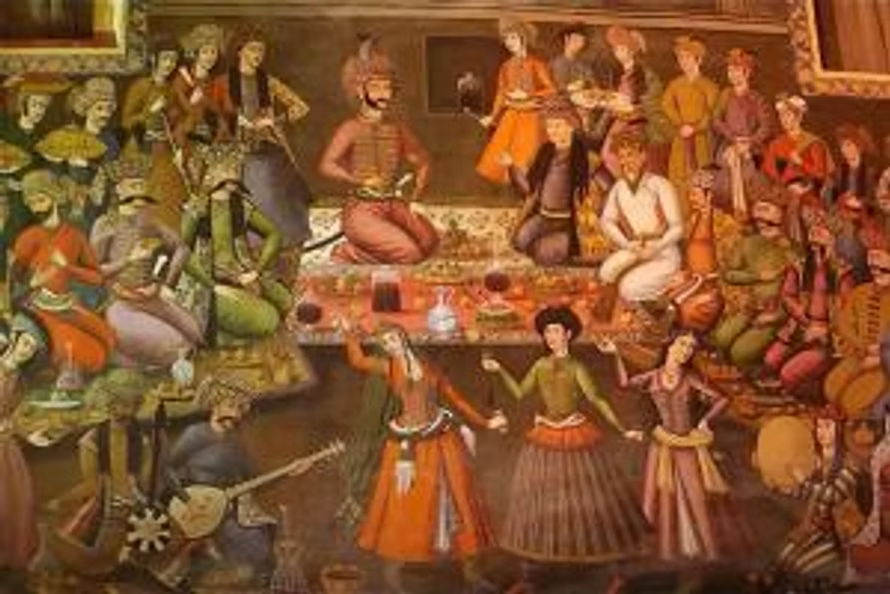
That is on the day of the Vernal Equinox, or the first day of spring (March 21). Because the fourteenth and fifteenth of Adar align with the full moon during the last month of a Hebraic year (February-March), this would be within a couple of weeks prior to the beginning of spring. As the Book of Esther is one of value to the Judaic people (not the Persians), the month of Adar would be representative of their time in Egypt, prior to the Exodus, meaning this feast of the full moon would be recognized twenty-eight days before the Passover full moon (a lunar cycle). The reason for recognizing Purim then would fit the timing in a year when the emotional judgment of Moses was found challenging Pharaoh for the safety of the Israelite people. The plagues upon Egypt were to spare the Israelites, just as would Xerxes I’s execution of Haman save the Jews in Persia.
It is important to realize that (in the story told in the Book of Esther) the king of Persia did not know the religious practices of his wives, including Esther. Xerxes I had approved a plan by Haman to execute all the Jewish people in Persia, because he was told they refused to abide by Persian laws.
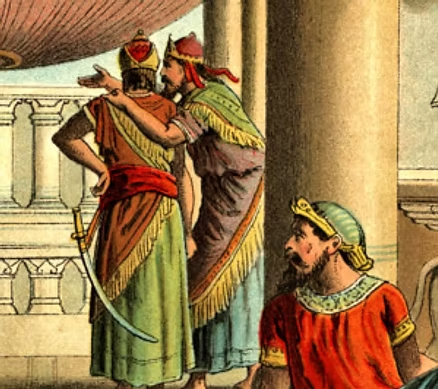
When we read that Esther told the king: “If I have won your favor, O king, and if it pleases the king, let my life be given me– that is my petition– and the lives of my people– that is my request. For we have been sold, I and my people, to be destroyed, to be killed, and to be annihilated. If we had been sold merely as slaves, men and women, I would have held my peace; but no enemy can compensate for this damage to the king,” that was news to Xerxes I (a.k.a. King Ahasuerus).
Esther, most likely, was one of many queens of Ahasuerus, as kings were expected to have many sons. After the king’s prior wife, Vashti, refused to appear before the king and dance for him, he ordered for other women to choose from. Esther was one of many young women who were then called to dance for the king, with the king choosing Esther based on her beauty and seductive dance moves. Her religious beliefs were the last thing on Xerxes I’s mind when he had sex with Esther afterwards.

It was then this sexual intercourse that forever bound the king to a queen, as intercourse was for the purpose of impregnating a woman with a child of the king (hopefully a son). As such, the designation of Esther as “queen,” is less about her having been given great powers of royalty and more about her being the “wife” of the King of Persia. She was a mother-to-be in that role.
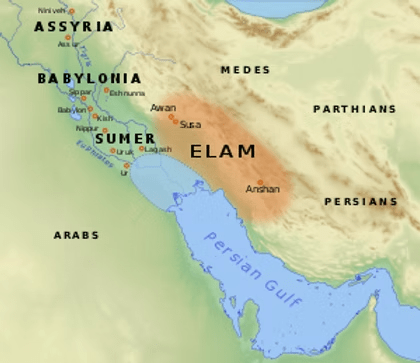
In chapter 2 of Esther, we see that Xerxes I took Esther as his wife in the tenth month (Anāmaka – December-January) of his seventh year of reign. He fell so in love with Esther that he took the crown away from Vashti and placed it on Esther’s head. He then planned a feast for Esther, which might mean he dedicated the feast of the New Day (Nowruz, on March 20 – 21) as when she would be recognized as the new queen. A two month window would give dignitaries time to travel to Susa for the feast.
That timing of a standard two-day feast with the celebration of a new marriage would have been to symbolize the newness of the sexual encounters between the king and his new wife. Expectations of a new child would be set so the kingdom could celebrate the coming of a new heir. This explains why the king offered to give Esther anything she wanted.
When Esther told Xerxes I, her husband, “my people” were “to be destroyed,” he did not know Esther’s people were the Jews that Haman had gotten approval to kill. His approval had led Haman to build a gallows on his property, upon which to hang those who would not comply with Persian law. Mordecai was a trusted advisor to the king and the uncle of Esther, had overheard this plan and told his niece.
When we read that Mordecai pointed out the newly built gallows to Xerxes I, that visual immediately angered him to act. Haman was ordered to be executed as the criminal, hung on the gallows he had built. That then led to the beginning of the Jewish recognition of the Feast of Purim.
The Hebrew word “Purim” is rooted in “pur,” which means, “lots,” as a form of “sortation” or “casting of lots” [confirmed via the aside “goral“). In Esther 9:24 (not part of the reading selection) one finds written, “For Haman son of Hammedatha, the Agagite, the enemy of all the Jews, had plotted against the Jews to destroy them and had cast the pur (that is, the lot) for their ruin and destruction.” This means the name of the feast denotes how Haman took a gamble that his will would be done, through deceit and trickery. Haman ‘rolled the dice’ and he ‘crapped out’.

The Jews celebrate that luck was on their side; but they attribute their luck as the Will of God.
As an optional Old Testament reading selection for the nineteenth Sunday after Pentecost, when one’s personal ministry for the LORD should be underway – one has been saved from the soul’s death plotted by Satan – the message here is to serve God as a loving wife, accepting His gift of a queen’s (Apostle’s) wish being granted. Just as Ester used her wish to save her people (her life was not in danger, as queen), God will protect those who serve Him. He will do this through His wives being elevated in His Spirit.
In the recent past we have discussed the Proverbs song about “a good wife.” Esther demonstrated those qualities in the way she impressed King Ahasuerus to love her and protect her. This symbolizes how all Apostles (males and females) should likewise impress God, so He loves us and protects us in the same manner.
The Jews of Persia, whose ancestors had been taken into exile by the Babylonians, had been freed by the Persian King Cyrus the Great, with he and his son Darius the Great rebuilding the Temple in Jerusalem. The Jews who went to Persia did so voluntarily, as willing servants to those who freed them, not as captives and slaves. In that way, all the Jews of Persia had submitted to the kings who had set them free.

In the Epistle reading chosen to accompany this Old Testament reading option, James wrote of prayer being the way to end suffering, to bring cheerfulness, and to raise up the sick. This is then the lesson that Jesus taught to his disciples, when they asked him to teach them how to pray. Jesus told them to see God as their Father, where they ask Him for strength and miraculous powers of salvation. Jesus said, “If you ask you shall receive.” This is now seen in the story of Esther.
Esther had developed a relationship with King Xerxes I, as his wife. He then offered her the benefits of his power. All she had to do was ask, which she did truthfully. She begged the king to save her people, and out of love he answered her prayer. Esther is then symbolic of every Christian.
Like all Christians, we volunteer to serve the Master, because God has freed us from the oppression of worldly addictions that once enslaved us. We live in an earthly realm that is distant from heaven, devoted to living lives as piously as we can, resisting laws that demand we turn our backs to God. We are all called upon to dance before God, to show our willingness to do acts that will impress God with our loyalty to Him. This, in turn, excites God and leads Him to propose marriage. Christians are then put in a position to choose to please God by becoming His Queen (regardless of human gender). A “Queen” means being an Apostle of the Lord. That then makes us become the wives of God, bearing Him children that are all in the name of Jesus Christ.
Christians must have this willingness to love and serve the Lord our God unconditionally. It is that devotion that leads us to communicate directly to God, rather than see God as some unapproachable deity that is too great to care about us individually. We must see how God cares deeply for each of us who marry with Him and serve Him daily.
As the wives of a most powerful God, He hears our pleas for help, especially when those pleas are for others in need. Because of a relationship of love, God, the Father of the resurrected Son within us, will grant our requests. That favor will not only save many others, but it will grant each soul that is united with the Christ Spirit eternal salvation. That eternal celebration is then why Purim was commanded to forever be recognized.
It is also important to see how Esther, as a Jew, sacrificed herself before King Ahasuerus. She was willing to sacrifice returning to the land of Judah and Jerusalem, choosing to give up that option of self-importance, brought by returning to the land where Cyrus the Great had allowed Jews to openly serve their God again. By choosing to stay in Persia and dance before the Persian king, she had opted to live among Persians who served one god, under a different name (Ahura Mazda). That sacrifice of self is then symbolic of one’s sacrifice of self-ego, in order to serve divine will.
Christians often find the Book of Esther and her story as one that the women of the church can most readily identify with. Study groups composed only of women, led by female priests or pastors, see Esther as representative of a feminine only relationship with God.

Men do not try to crash those study groups, demanding equal rights under the Laws of Christianity, as they are comfortable with not having to understand Esther, Ruth, Deborah, the Queen of Sheba, or any other female character in the Holy Bible. Gender-based religious study represents the ways of denial, denying one’s self as being exempt from certain Scriptural stories.
Refusal to believe that stories involving women have anything to do with men is projecting the perceived importance of the male human body (or a female body), denying it is surrounding an asexual soul. It is no different than both sexes of Christians refusing to see themselves as the Pharisees, Temple scribes, or even Haman, here in the Book of Esther. This becomes part of the problem that keeps all Christians from seeing Esther as himself or herself. Christians must identify with all Biblical characters, in order to see the errors of all mortal ways.
In the accompanying Gospel message from Mark, we are told how John of Zebedee admitted to Jesus, “We saw someone casting out demons in your name, and we tried to stop him, because he was not following us.” (Mark 9:38) See if you (regardless of human gender) can read those word told to Jesus and grasp them as capable of being restated now as, “We read of some woman was casting out demons in Persia, and we ignored her because we are men and she was female.”
Jesus later said to his male disciples, “Whoever gives you a cup of water to drink because you bear the name of Christ will by no means lose the reward.” (Mark 9:41) Can that not also mean, “Esther presented the reader a cup of living water to drink because understanding that message means being reborn with the Christ Mind, whether in a male or a female form, so the reward of faith is gender nonspecific”?
Seeing Esther as a projection of one’s faith, through a personal relationship with God (as His Queen), means human sexuality is of no bearing. She represents any and all who would be asking God to help others; and then, seeing that help comes through divine means is how God uses people of power to do His Will.
Hopefully, this element of marriage to God and bearing His Son as the responsibility of ALL Christians (males and females) can be grasped. This is why Esther was written and is read in Year B’s lectionary – a year when good wives and marriage to God is a pronounced message. Sacrifice of self-ego and submission before God is not something only one gender of humans are called to do.
———————————————————————————————————-
There are parts of this reading referenced in a sermon I presented in September 2017, posted on my previous blog. On my old defunct website I also had published these “notes” below. You might notice I utilized some of this in the above post.
Notes: (For Esther reading)
“We pick up the story of Queen Esther without knowing anything about her. I feel it is important to see last week’s Proverbs 31 reading (about a capable wife) as leading to this story of a capable wife … a queen to a king. The story told today, where we read, “they should keep the fourteenth day of the month Adar and also the fifteenth day of the same month, year by year,” tells of the first Jewish holiday known as Purim. The word “purim” means, “lots,” as a form of “sortation” or “casting of lots.” As such, Queen Esther (and her uncle Mordecai) gambled that exposing the truth would pay off and save the Jews of Persia, which it did.
When last week’s meaning is seen as a call for all believers in God to become joined with Him, as the truest form of marriage – God seated in one’s heart – one can now see God as the king, such that all of God’s faithful wives are queens. We have a subservient place, but it is a place of respect and regality. Thus, as capable wives to the King (as Christ is our true King, with God the Father), we are allowed to petition the Lord for favor. Because of our faithfulness and devotion, when our pleas to God are heard, when they are warranted, then justice will be served and prayers are answered.
In last week’s lessons there was the repeated theme of “gentleness,” which would be tested by the evil in the world. I said our sacrificial lamb characteristic is in our submission before God and Christ. Still, injustice cries out for justice; and, it is not the place of us gentle lambs to determine what punishment those with evil hearts will find. The same gentleness is now found in Queen Esther’s request to her husband, King Ahasuerus (Xerxes I), for her life and the lives of all Jews in Persia be spared. She did not ask for Haman’s death by hanging; but justice came from the king as such. The fact that Haman was hung on the gallows he had prepared for others is then symbolic of how the sins of others will be the cause of their own rewards, as justice will be served upon all injustices.


 Explaining the Readings