Moses said to the Lord, “See, you have said to me, ‘Bring up this people’; but you have not let me know whom you will send with me. Yet you have said, ‘I know you by name, and you have also found favor in my sight.’ Now if I have found favor in your sight, show me your ways, so that I may know you and find favor in your sight. Consider too that this nation is your people.” He said, “My presence will go with you, and I will give you rest.” And he said to him, “If your presence will not go, do not carry us up from here. For how shall it be known that I have found favor in your sight, I and your people, unless you go with us? In this way, we shall be distinct, I and your people, from every people on the face of the earth.”
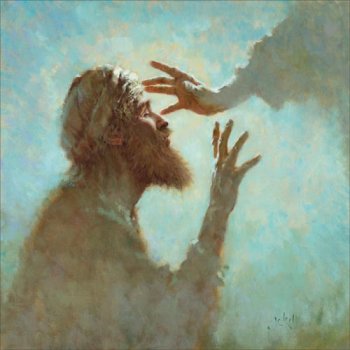
The Lord said to Moses, “I will do the very thing that you have asked; for you have found favor in my sight, and I know you by name.” Moses said, “Show me your glory, I pray.” And he said, “I will make all my goodness pass before you, and will proclaim before you the name, ‘The Lord’; and I will be gracious to whom I will be gracious, and will show mercy on whom I will show mercy. But,” he said, “you cannot see my face; for no one shall see me and live.” And the Lord continued, “See, there is a place by me where you shall stand on the rock; and while my glory passes by I will put you in a cleft of the rock, and I will cover you with my hand until I have passed by; then I will take away my hand, and you shall see my back; but my face shall not be seen.”
———————————————————————————————————-
This is the Old Testament selection from the Episcopal Lectionary for Year A, Proper 24, the twentieth Sunday after Pentecost. It will next be read aloud in church on Sunday, October 22, 2017. It is important as God tells Moses His presence will go with Moses, with Moses able to be shown the way of the LORD to God’s chosen people. The glory of the LORD will rest on Moses.
This reading continues the dream sequence that Exodus 31 presented, about the golden calf. In between that dream and this selection are other elements that are best seen as prophecy. We find that YHWH directed Moses to record a second version of the Covenant, after getting so angry he smashed the first tablets of stone, which can then be seen as prophesying the coming of Jesus and the New Covenant. Rather than the stone tablets being broken in anger by Moses, it was the Israelites (over a millennia) who broke the Law and lost their lands. The second story is then pertinent to the second phase of the agreement to abide by the Law, while the Jews were in Babylon.
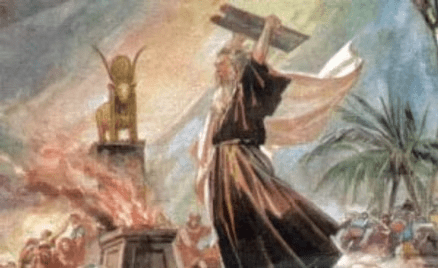
I recommend every Christian re-read Exodus and Deuteronomy, paying close attention to the stories told that are repeated, but told differently. Simply be aware of the possibility that the differences are due to a prophetic dream being the purpose, which would later be fulfilled, well into the future from then. See the purpose of two versions of the tablet story and the agreements made, and the other duplicate stories that complete Exodus (and repeat in Deuteronomy), as God looking to see who pauses and begins to look deeper, looking for truth, rather than excuse to disbelieve.
In regards to this reading, the text above suffers greatly from the Hebrew text. The reality of the Hebrew exposes more insight into the dream powers that Moses possessed. This makes the prophecy of Joel worth remembering, when he prophesied as the voice of God:
“And afterward, I will pour out my Spirit on all people. Your sons and daughters will prophesy, your old men will dream dreams, your young men will see visions.” (Joel 2:28)
One needs to see Moses as an “old man,” since he was neither young nor a child when on Mount Horeb. We regularly read of Moses going to have a talk with God; but the question now becomes, “Just how did Moses have those conversations?”
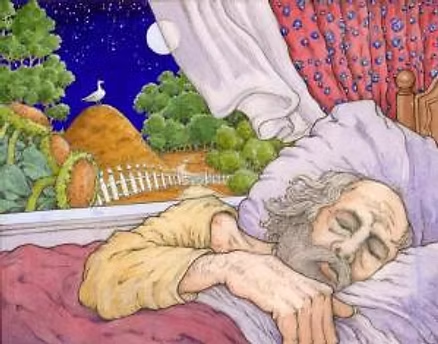
“Your old men shall dream dreams.” Joel 2:28
That prophecy written by Joel, which Peter quoted to the pilgrims in Jerusalem on Pentecost, was fulfilled on that Pentecost morning; but it was not the only fulfillment. Prophecy by the pouring out of Spirit is repeatedly seen fulfilled every time God’s Spirit comes upon men of God. Moses was one of those men who spoke to YHWH in a dream state. Samuel answered the call of God as a child when asleep. Joseph interpreted the dreams of Pharaoh, and Daniel did the same for Nebuchadnezzar. Therefore, the tent of meeting might well have been the place where Moses went to find solitude (outside the camp of Israelites), so that there he could drift into a prophetic dream state.
To grasp this Exodus 33 reading, I recommend the readers here visit this Interlinear page on BibleHub.com. It shows the Hebrew text for all of Exodus 33, so scroll down to verse 12; and the remainder of the page is this reading. The page lists the Hebrew root word and an English translation. The written words have links to a page that offers examples of other uses and their translations, with the root word (above the actual text word) having a link to a page that details the root meaning and translations, based on their possible usage. The English translation is then literal, as it maintains the order of the written text. Reading literally is a great way to realize the Hebrew text before it becomes mutated in English translation.
When the literal is compared to the English translation that will be read in churches (the New International Version), it is eye-opening how much meaning is lost. Seeing the words that were actually written, thus representative of the language of the LORD, means one is freed (somewhat) of translations that act as paraphrases of what God told a prophet to write. Looking at the root language is a good beginning, from which God will see an effort made to learn. Understanding the words of Scripture (at all times) requires the Holy Spirit’s assistance, so one can be fluent in that holy tongue.
The word count for the selected reading is 319 words. Beginning where the first verse says, “See,” the focus is strongly placed on vision. We have “my sight,” “your sight,” “show me,” “show mercy,” and “see” written multiple (14) times. Additionally, we find “the face” and “my face” three more times, with “face” an omitted part (in English translation) of the First Commandment, and the “face” is where the eyes are located. This is not coincidence, as this reading (entitled “Moses and the Glory of God” on some translation sites) is about Moses seeing, in a special way, as one filled with God’s Holy Spirit. Therefore, everything is metaphor for being led by the Mind of Christ.

All like Samuel: “Here I am!”
Here are some notes I made, from looking at the Hebrew translated into literal English translations. If you open a separate window by clicking the link to BibleHub.com, you can see what I am taking notes from, as well as check the links to word meanings.
“See” = “rə·’êh” = “Vision, View, Understanding.” The meaning is to have access to visions of prophecy and hearing what YHWH wants a prophet to “See.”
“Bring up” = “ha·‘al” = “Ascend, Raise.” This indicates that it was Moses’ role, as the leader of the Israelites and who was in touch with YHWH, to elevate the Israelites Spiritually. That helps explain 40 years in the wilderness – they were slow learners?
“you have not let me know whom you will send with me.” This means that Moses has not yet seen (through dream insight) what powers of elevation God will send to him, which can then be passed on to the Israelite followers.
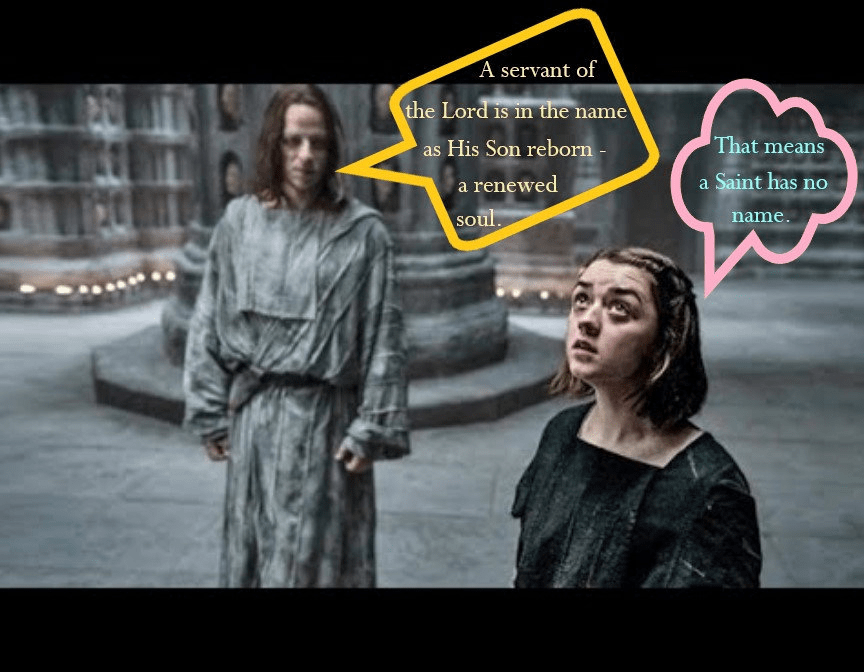
“I may know you by name” = “yə·ḏa‘·tî·ḵā bə·šêm” = “I know you by name.” By Moses having the presence of YHWH, he knows what YHWH knows, as if Moses were YHWH. This does not mean God knew Moses was named Moses. It means a union of God and Moses, so Moses can know what needs to be known “in the name” of God.
“in My sight” = “bə·‘ê·nāy” = “in My eyes.” God has shown favor to Moses, where “favor” means with God’s blessing. Moses was “accepted” [translation possibility for “favor”] by God, known by His showing Moses visions to guide him. The word for “favor” (“ḥên”) also means “grace.”
“Consider” = “ū·rə·’êh” = same as “See” [see above – “rə·’êh”]. Moses was shown that the Israelites (“‘am·me·ḵā” – “your people”) are a “nation” or “community of people.” They too are to be “this,” or the “same,” as was Moses … able to “See.”
“My presence” = “pā·nāy” = “My face.” This means that Moses will wear the face of YHWH, as the presence of God within him.
“I will give rest” = “wa·hă·ni·ḥō·ṯî”. “I will give calm or rest” means God will allow Moses to have daydreams and night dreams of prophecy and guidance.
“If your presence will not go, do not carry us up from here.” This means that without the presence of YHWH on Moses, the Israelites will not be raised or elevated. They cannot progress as servants of the LORD without that spiritual elevation.
“For how shall it” = “ū·ḇam·meh” = “Wherein” or “How many?” This asks the question “How many will know the grace of God’s Sight, [besides] I [Moses] and your people [the Israelites].” The question then applies to all who will be allowed the Sight of YHWH. If they ever become separated from that presence [face of YHWH], then they will go nowhere, nor will anyone else in the world. The “face of the world” will not be that of God, if the Israelites and Moses are separated from the “face of God.” Separated mean wearing “the face of the world.” This is a statement of importance placed on Moses and the Israelites. It is a prophecy that the world is that which needs to be saved by “the people” (of God), so they must not be separated from that service to the LORD.

“show me your glory” = “har·’ê·nî nā , ’êṯ kə·ḇō·ḏe·ḵā” = “show me now” or “show me I beg, pray, saying please” [pause of separation comma implied] “your abundance, riches, honor, glory” This says Moses asked God to give him the gifts of the Holy Spirit, so he could See for the LORD, recognizing that “glory” was not his own, but that only of God.
“I will make all my goodness pass before you” = “’ă·nî ’a·‘ă·ḇîr kāl- ṭū·ḇî ‘al- pā·ne·ḵā” = “I will pass over all My goodness over your face.” This says Moses was to shine with the face of the LORD upon him.
“and will proclaim before you the name, ‘The Lord’” = “I will proclaim the name of Yahweh on your face [which projects before your head].” This says the people will know Moses has the face of the LORD, because of the glow on his face.”
“and I will be gracious to whom I will be gracious, and will show mercy on whom I will show mercy.” = “and will show blessing to whom I favor, and will show compassion to whom I am compassionate.” This means God’s face will shine upon only those who, like Moses, are compassionate for the LORD [compassionate means, “from suffering,” meaning drawn to the LORD through suffering AND willing to suffer to serve the LORD].
“you cannot see my face” = “lō tū·ḵal lir·’ō·wṯ pā·nāy” = “not are you able to See my face [upon your face].” This means one with the Holy Spirit upon him or her will See what the LORD allows to be seen, but will still look like the human being they are [look like themselves].
“for no one shall see me and live” = “for not can See me [“hā·’ā·ḏām , wā·ḥay”] man , and be alive [live].” This means to know the image of God is impossible for human bodies of flesh, as YHWH is unfathomable to such little brains. Only through death, when the soul is released from the narrowmindedness of a physical brain, can the soul See God as He is.

“See, there is a place by me where you shall stand on the rock” = “the LORD behold! , wherever [a space, any physical place] near me , a pillar over of strength [or a cliff, a rock].” This says that wherever one Sees through the face of God, that person will stand like a pillar of strength for others.
“while my glory passes by I will put you in a cleft of the rock” = “And it will come to pass over , the pass over of my favor [glory] , and you will be set [or placed, or granted] in a cleft [or fissure, or cavern] of my strength [that rock].” This means that one filled with the Holy Spirit of God is within an encasement of the LORD’s covering.
“I will cover you with my hand until I have passed by” = “I will cover you with my power [or my branches] , will cover through the pass over.” This means the powers of the Holy Spirit, and all talents given by the LORD, surround the one wearing the face of God, for as long as God’s presence is within one.
“then I will take away my hand, and you shall see my back” = “And will turn aside with my power [my branches] , and you shall Know my back side [or hind part].” This means that the result of God’s power will be all that is Seen, as none of the power will be explainable. This is how Jesus routinely said, “Go. Your faith has healed you.” He did nothing that could be Seen, but the result (“the back side”) was the power of the LORD.
“but my face shall not be seen.” This means the face of God cannot be seen as the one who wears the face of God. One cannot say, “I am the Son of God. See? I look just like Him.”

When Jesus made insinuations, proclamations or affirmations that his Father was God, Jesus only looked like a man. Thus, Jesus did not appear to have the face of God. God’s face shall not be seen, but it is present in all who become reproductions of His Son, shining through inner powers of strength.
Hopefully, these notes will make my point clear, which is this story of Moses talking to God was a prophecy that says all who are chosen to follow God need to be elevated spiritually. If you look closely at the Greek text of Acts 2:14, where a standard translation states:
“Then Peter stood up with the Eleven, raised his voice and addressed the crowd: “Fellow Jews and all of you who live in Jerusalem, let me explain this to you; listen carefully to what I say,”
You will see that what is written more importantly says that Peter spoke, “with an elevated voice.” Maybe he yelled, or maybe elevated voices carry to ears without screaming? The meaning is that after having been given the gift of speaking in foreign languages (without formal training or education), his voice was elevated to speak interpretation of Scripture. All Apostles were, are, and will always be elevated spiritually.
Christians today are called to become Moses in this prophecy. We are to converse with God, asking Him to guide us as we take on the task of “bringing up these people” that look at us for spiritual guidance. We need to be able to wear the face of God, so He knows us by name … Jesus Christ reborn.
Peter became Christ Peter when he stood in a cleft of rock and let the Holy Spirit send words out of his mouth. He certainly lived up to his nickname (given by Jesus), as Peter the Rock of Jesus Christ. Peter was encased by the strength and power of God’s Holy Spirit.
Three thousand pilgrims did as Peter instructed that day and listened carefully to what he and the other Apostles said. Those listening also were filled by the Holy Spirit, from being told the meaning of Scripture in ways they had never been taught. That was the pass over of God; but no one saw His face. Only the back side of God was seen in the conversion of Jews, to faith in Jesus as their true Messiah.
This reading prophesied that event, and all other conversions since and still to come.
#Exodus331223 #Joel228 #twentiethSundayafterPentecost #Proper24YearA #Acts214
 Explaining the Readings