Tag Archives: Ezekiel 37:1-14

Ezekiel 37:1-14 – Can these bones live?

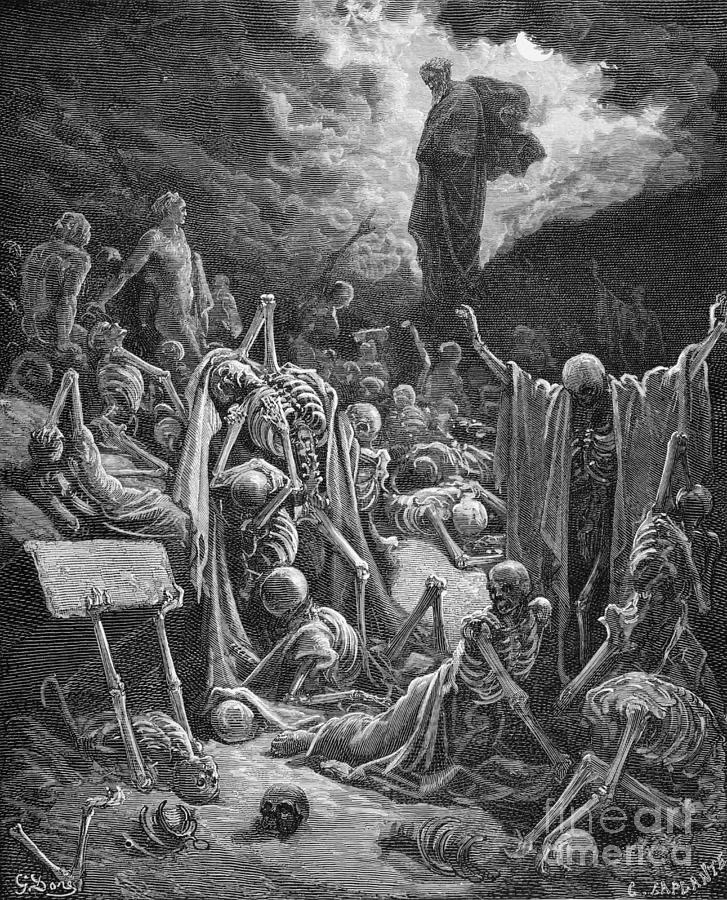
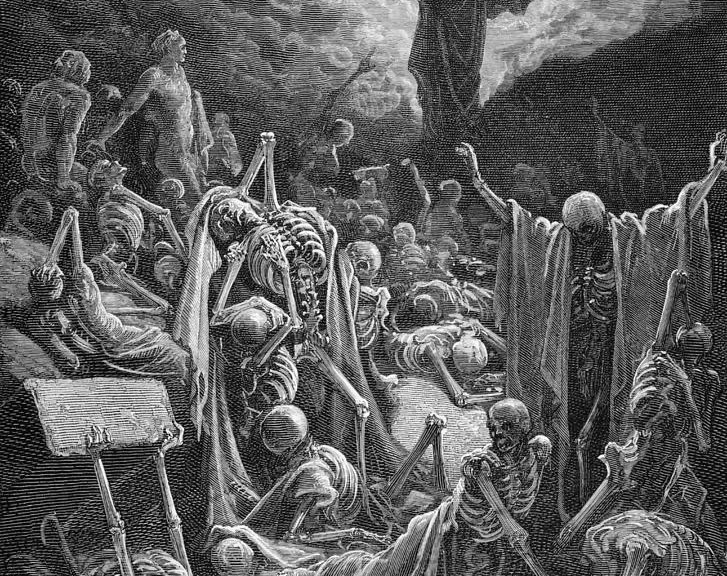
The hand of the Lord came upon me, and he brought me out by the spirit of the Lord and set me down in the middle of a valley; it was full of bones. He led me all around them; there were very many lying in the valley, and they were very dry. He said to me, “Mortal, can these bones live?” I answered, “O Lord God, you know.” Then he said to me, “Prophesy to these bones, and say to them: O dry bones, hear the word of the Lord. Thus says the Lord God to these bones: I will cause breath to enter you, and you shall live. I will lay sinews on you, and will cause flesh to come upon you, and cover you with skin, and put breath in you, and you shall live; and you shall know that I am the Lord.”

So I prophesied as I had been commanded; and as I prophesied, suddenly there was a noise, a rattling, and the bones came together, bone to its bone. I looked, and there were sinews on them, and flesh had come upon them, and skin had covered them; but there was no breath in them. Then he said to me, “Prophesy to the breath, prophesy, mortal, and say to the breath: Thus says the Lord God: Come from the four winds, O breath, and breathe upon these slain, that they may live.” I prophesied as he commanded me, and the breath came into them, and they lived, and stood on their feet, a vast multitude.

Then he said to me, “Mortal, these bones are the whole house of Israel. They say, ‘Our bones are dried up, and our hope is lost; we are cut off completely.’ Therefore prophesy, and say to them, Thus says the Lord God: I am going to open your graves, and bring you up from your graves, O my people; and I will bring you back to the land of Israel. And you shall know that I am the Lord, when I open your graves, and bring you up from your graves, O my people. I will put my spirit within you, and you shall live, and I will place you on your own soil; then you shall know that I, the Lord, have spoken and will act,” says the Lord.

——————————————————————————–

This is the optional Old Testament selection from the Episcopal Lectionary for Pentecost Sunday, Year B 2018. Act 2:1-21 may replace it.  It will next be read aloud (if chosen by the priest) in church by a reader on Sunday, May 20, 2018. It is important as it is the words of the prophet Ezekiel telling how dried lost souls could be reborn to new lives. The glory of God to renew humans born of death, offering them eternal life, is the symbolism of this prophecy.  It foretells how the Holy Spirit would fill the disciples of Christ on Pentecost (also on a Sunday), marking them for eternal salvation.

I published a “bus stop sermon” that placed focus on this reading, the last time it came up in rotation.  That was on May 24, 2015. It was a sermon relative to all the readings of Pentecost Sunday, Year B, with references to Ezekiel’s vision of dried bones made then that are still applicable today. If you want a longer commentary to read, I recommend clicking here [no longer available]. For now, I plan to be shorter, offering only slightly new views that have come to me about this reading.

I don’t think there are too many serious Christians that are unfamiliar with this reading from Ezekiel. It is a favorite of mine, because it offers a classic example of how a prophet answers a question coming from God: “You know LORD.”  As Sergeant Schultz used to say on Hogan’s Heroes, “I know nothing.”  Why try to match one’s tiny brain to the Mind of God?

In a world of simpleton heroes, I cannot see a Nazi POW guard as fitting that bill.

A good Saint has no answers other than the ones God gives him or her.  Apostles are closer to being simpletons than scholars; but having access to the Godhead and being able to fully understand what God shows them (in dreams and visions) makes them be more like savants … without any credentials from prestigious institutions.  After all, when one’s ego has been sacrificed, one’s human brain ceases trying to figure anything out.

That is what faith is all about, be that divinely inspired or blindly misguided.  The brain is useless either way, as one will always counter faith with thoughts of doubt.

In this reading, God told Ezekiel, “Mortal, these bones are the whole house of Israel.”

As a prophet of Judah, driven into exile in Babylon, Ezekiel was shown the future by God. Dried bones filled a valley before Ezekiel, which reflected the past. The Israelites – both Israel and Judah – had lost everything promised to them by God, through Moses, by breaking their commitment to the Covenant. The dried bones symbolized the death that had befallen the priests of the One God.  They received the Promised Land and only their dried bones were left to cash that windfall in.

The whole of the house of Israel was meant to be multitudes of servants to YHWH.  All had failed, save the few prophets God kept sending to warn those priests who worshipped kings and queens … those who worshipped the gods of worldly things.
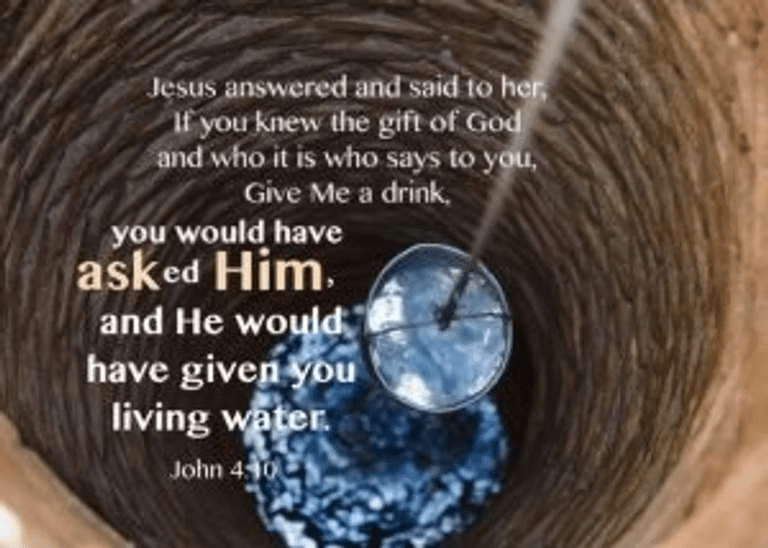
A well in the ground draws physical water out, which is a necessity for keeping sinews, flesh and skin moist. It only last a while. Then you need to draw more.

The underlying message in this vision shown to Ezekiel appears loud and clear when viewed through the lens of the Pentecost Gospel message of the “Advocate” that will be sent.  That presence will be the “Spirit of truth.”  It is clearer when viewed through the Acts 2 reading of the Holy Spirit rushing upon the disciples, giving them the abilities of that Spirit of truth. It is refined in our eyes by the words of Paul to the Roman Jews (an optional reading that will be omitted if Ezekiel is chosen) that says “the Spirit helps us in our weakness.”  The “breath” God told Ezekiel to prophesy about is all of the above, as it told of the Holy Spirit being the life for the dead.

“The Holy Spirit is coming,” said Ezekiel (paraphrasing).  It came as Jesus of Nazareth.  It has remained ever since in his Apostles in Christ.

A truth is that Man is born to die. This is why mankind is called mortal … from Old French “mort – al,” meaning “characterized by death.” Being born of death mean a soul is constantly in need of new bones, new sinews, and new flesh with new skin, so it can find comfort in a new home. Being born of death always leaves behind dried bones, after the softer tissues have returned to dust. It is the breath of the Holy Spirit that God that brings eternal life to dried bones.

Ezekiel must be seen as alive, amid a scene of death.  As such, Ezekiel was filled with the Holy Spirit. He had been in that valley of death before his exile from Jerusalem by Nebuchadnezzar.  He personally knew the breath of life that comes from complete servitude to God.

God told Ezekiel, “I will cause breath to enter you, and you shall live.” Ezekiel was the living proof of that promise of eternal life from divine breath.  Thus, as a prophet of the LORD, God told Ezekiel, “Prophesy to these bones, and say to them: O dry bones, hear the word of the Lord. Thus says the Lord God to these bones: I will cause breath to enter you, and you shall live.”

Prophecy is better when spoken with conviction, not the probability of prediction.  Ezekiel knew the breath of God.
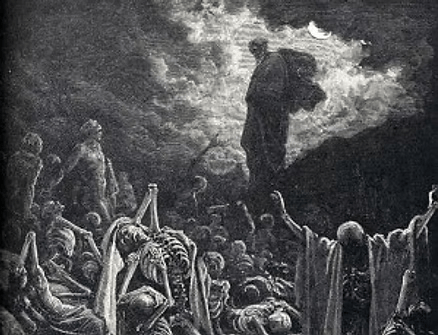
The reincarnation of souls into new bones, new sinews, and new flesh with new skin was why God told the prophet Ezekiel, “Prophesy to the breath, prophesy, mortal, and say to the breath: Thus says the Lord God: Come from the four winds, O breath, and breathe upon these slain, that they may live.”

Dirty (worldly) souls cannot go to the spiritual realm for eternity.  They go temporarily, for judgment and processing for a return to the earthly plane.  They need a new physical body then; but, more importantly, they need someone holy to shine a light on the way to eternal life when they are born anew and grow amidst the influence of sin.

Man needs prophecy.  God sends prophets to meet that need.

The lesson is simple. There are two types of souls: Those blinded by the illusions of a worldly existence; and those baptized by the Holy Spirit. There are two types of mortals: Those living in darkness, destined to death (and repeat); and those living in the light of the Holy Spirit, destined to eternal life.

God gives tarnished souls the gift of the breath of life in new human forms. It is the spirit of mortal life that comes with a baby’s first breath, replacing the amniotic fluids of the embryonic environment of the mother’s womb, whose maternal waters fill the lungs of an embryo that awaits its own soul and its own life. The breath of life in a newborn is the rebirth of an ageless soul into the worldly plane; but it is only a temporary permit. It begins another journey to find the God of life and be born again through the breath of the Holy Spirit.

With each new life a mortal must choose. Do I live for me? Or, do I live for God?

This lesson of Ezekiel is it prophesied the coming of Jesus the Messiah. Ezekiel was shown a vision when new bodies would be offered eternal life. He had a dream of what was to come. Ezekiel was a Saint because he did what God told, without asking questions. God blessed his servant with eternal life, through the Holy Spirit.  He lived a prophecy that could be fulfilled in others; but all have to make a decision that allows them to receive the Spirit.

The lesson is the same one that Christians know of Pentecost.  Just as the Holy Spirit came like a rush of wind into their bodies, dividing their tongues with inspired abilities, it was God saying to Ezekiel, “Come from the four winds, O breath, and breathe upon these slain, that they may live.”  The difference is living for death to come and living so others may live.
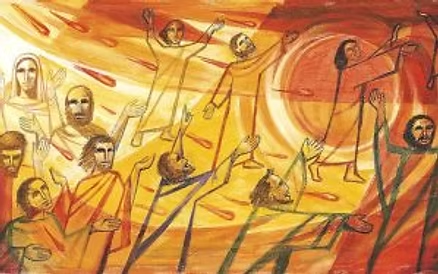
In his vision, Ezekiel then stood as the Messiah, filled with the Christ Mind. He saw the return of the exilic Jews to Jerusalem – to the valleys surrounding that place, where their dried bones had been left. Lost souls were shown to return to the site of their graves and their lost lives, seeking to regain those worldly possessions.

Those lost souls would fill their rejoined bones, their new sinews, and their new flesh and new skin. Jesus would be sent to breathe the Holy Spirit upon those returning Israelites.  Jesus of Nazareth would give those dead men walking another chance at redemption and salvation. Jesus would come saying, “Follow the LORD and find eternal life. Follow me and receive the Spirit.”

The new bodies would fulfill Ezekiel’s prophecy – ‘“I will place you on your own soil; then you shall know that I, the Lord, have spoken and will act,’ says the LORD.”

The Israelites would stand again on the soil that was once Israel and Judah, in a rebuilt Jerusalem, with a new Temple. Like the mortals reborn, so too was the land they once enjoyed.  However, that body of land was inhabited by a Roman spirit, so the Jews were like a possessive spirit cohabiting Galilee and Judea.

Jesus came telling the Jews, “The kingdom of the LORD has come near.” The kingdom of God is not on this soil.  Jesus was Christ the king in a heavenly realm.  He was designated to rule within the minds of God’s priests.  That state of Roman domination made dried spirits seek a warrior Messiah, not a humble rabbi.  The moral of their decision can be seen in the new State of Israel today:  The land is just as godless today, as the world is Satan’s domain.

Some showed interest in Jesus of Nazareth. Some felt threatened by him. Some followed him and received the Spirit. Some refused and became dried bones once again.

The question remains: Do I live for me? Or, do I live for God?

The Day of Pentecost means (from the Greek) “The Fiftieth Day.” That number of days is how long it took the freed Israelites to leave Egypt and receive the Holy Covenant. God breathed His Holy Spirit onto stone tablets; and He sent the Law to mortal beings through His servant Moses (an Ezekiel-Jesus Messianic prototype). The mortals of death that were slaves of the Pharaoh were given the promise of salvation through that breath of life that was-is-will always be The Law.  The Israelites gave an oath of agreement.
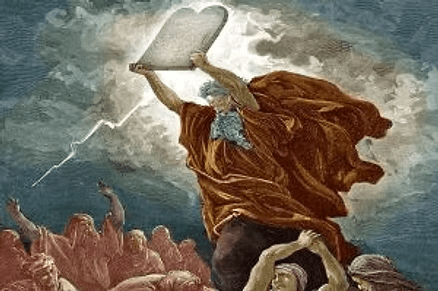
They failed to live up to their end of the bargain.  They lost the gift of land … their seminary to become mentally trained priests that would serve only the One God.  God saw that failure, which he showed to Ezekiel.  Still, God would give the Israelites another Covenant, with a higher reward than soil and dirt.  The same offer is given to all who believe in Jesus Christ, because through receipt of God’s breath of life one has proof of Jesus Christ as Jesus Christ.  The ability to live the Law comes without needing to think about anything.

God says, “Act,” then you act.  You know nothing better than following His instructions.  You live for God’s instructions.

The Easter season has ended.  It stretched over the last seven Sundays.  That span of time is meant to reflect the freedom of Jesus of Nazareth, bound by the original sin born in his soul [Adam].  He was born to serve the LORD, from his inception.  He was given over as the sacrificial lamb of Salvation; and he was returned to be with God forty-nine days later.  Pentecost is the day Jesus Christ returned to serve the LORD in Saints.

Jesus was arrested on a Sabbath, he rose from death on a Sabbath, and he spent five Sabbaths breathing the Holy Spirit into the Saints that he would leave behind (as Him). Seven Sabbaths are forty-nine days. On the Fiftieth Day, as Israelite pilgrims gathered to celebrate their receipt of the broken Covenant, the Messiah of God returned twelve-fold, offering a New Covenant, which was the breath of obedience within … not memorized from writings and oral lessons without.

This means Pentecost is personal. It is when one signs his or her mortal life away in service to the One God, gaining in return the eternal life that comes from becoming the Messiah reborn. The Day of Pentecost signals when one stops living for self and starts living for God, as His Son Jesus Christ. No one is forced to make the decision to live for God. However, be forewarned that living for self will lead to some dried bones being left behind, at the end of another selfish time on earth.

Ezekiel 37:1-14 & Romans 8:6-11: A Flesh versus Spirit Theme on the Fifth Sunday in Lent (Year A)

Romans 8:6-11

To set the mind on the flesh is death, but to set the mind on the Spirit is life and peace. For this reason the mind that is set on the flesh is hostile to God; it does not submit to God’s law– indeed it cannot, and those who are in the flesh cannot please God.

But you are not in the flesh; you are in the Spirit, since the Spirit of God dwells in you. Anyone who does not have the Spirit of Christ does not belong to him. But if Christ is in you, though the body is dead because of sin, the Spirit is life because of righteousness. If the Spirit of him who raised Jesus from the dead dwells in you, he who raised Christ from the dead will give life to your mortal bodies also through his Spirit that dwells in you.

—–

The above reading from Paul’s letter to the true Christians of Rome will next be read aloud in a church on March 29, 2020, the Fifth Sunday in Lent.  This is a perfect match to the Old Testament reading from Ezekiel (Ezekiel 37:1-14), where God talked to the prophet in a dream about life returning to dry bones.  The same theme is presented here by Paul when the reading begins with him saying, “To set the mind on the flesh is death, but to set the mind on the Spirit is life and peace.”

Yeah buddy! I feel so alive, as long as I am protected from a deadly virus.

Simply from that contrast, from “flesh is death” and “Spirit is life,” one should be able to see how God asked Ezekiel if dry bones (“flesh is death”) could live again (“Spirit is life”).  That transformation was only possible by “prophesying to dry bones.”  Alas, that is where all the dry bones sitting in pews and the dry bones talking to them (certainly not prophesying) fail to grasp the meaning of “prophesying.”

Part of the problem is basic.  Prophecy is “an inspired utterance of a prophet” (Webster’s #1 definition).  A prophet is “one who utters divinely inspired revelations: such as (a) often capitalized the writer of one of the prophetic books of the Bible.” (again Webster’s,#1 definition plus (a)).  Ezekiel was a Prophet (often capitalized).  We all get that, but we tend to miss that Paul was a Prophet, as was John (who will be read telling about the raising of Lazarus to life, from dead bones).  The tendency is to read everything in the New Testament as simply being stories that confirmed the prophecies of the OT Prophets had come true.  Yea!  We believe those Prophets!  However, the problem comes from not reading Paul and John as Prophets that are prophesying to us, today (as well as the OT Prophets have relevance today).

That failure leads to dry bones going nowhere but to another death, fulfilling only the part of Paul’s prophecy that says, “To set the mind on the flesh is death.”  The answer Ezekiel would give to God today, relative to our generation (plus or minus a hundred years) is, “Well God, they no longer appear to have ears that hear any prophesying, nor do they have eyes that see it written, nor do they have tongues that speak any prophesying.  All their sinews have become like dead flesh.”

If our dry bones of lifeless sinews really wanted to find eternal life, then we would see Paul as a Prophet (often capitalized) and realize a Prophet is not some man in a robe and collar who knows some things but a man like Ezekiel who professes to know nothing (“You know Lord” [meaning “I know nothing.”])  If we saw Paul in that light, knowing that Paul used to be Saul, who was a worthless human being, but he gave up his evil ways to be totally led by the Will of God, reborn as His Son, then we would know that Paul is nothing more than a man who let God speak through his words.  The words are not really Paul’s but GOD’s.  If we saw Paul in that light, then we would be more careful about saying Paul said things Paul (as the voice of GOD) did not say.

This has to do with translations.  As hard as it is to believe, none of our heroes from the first century A.D. spoke English.   While a movie about Paul could have him played by an English thespian, so we can be soothed by his accent into thinking Paul spoke our language, the stark reality is Paul wrote in Greek.  In addition, Paul (as GOD’s Prophet) wrote in a divine written language that is prophecy (it contains messages from God to us and everyone before and after us) AND that divine language requires another Prophet of GOD to not only understand it BUT to then go about prophesying the truth of GOD to dry bones, so they might “set their minds on the Spirit that is life.”

One easy way to know that the New International Version of Paul’s letter to the true Christians of Rome is incorrect comes from comparing the translation to the Greek text.  In the above translation (the one read aloud in church by a reader and also printed in a pewple’s bulletin) one find the word “Spirit” written seven times.  Every one of those times the word is capitalized.  Unfortunately, because Paul did not write a capital P each time he wrote (as GOD’s Prophet) variations of “pneuma,” the one who is supposed to be prophesying to dry bones is doing little more than speaking with a dry tongue, reading with dry eyes, and hearing with dry ears.  We don’t know what the difference is between little-p “pneumati” and big-P “Pneuma“; and we do not care to look at it, pray for guidance for understanding it, nor be patient to listen to why there is difference, like a devoted Ezekiel would do. 

Brother Paul is like Nostradamus in his writings, and we all know how much we hate the thought of Nostradamus being a Prophet of GOD. 

Nostradamus wrote in Old French, but modern masters of English can spin that French any way they want.

I have posted 5,000 word articles here about some of Paul’s meanings in his letters, just as I used to write quite lengthy articles about what four lines of Nostradamus poetry means.  Paul is so difficult to understand fully, he has his own cult of scholars that pour over his letters day in and day out.  Paul, like Nostradamus, wrote “sentences” that take up half a page, even though they are broken repeatedly into small segments of words and even verse changes.  To sit in a pew and listen to some man or woman read a section of Paul’s letter (usually in the most horrific monotone or nasally, whiny voice humanly possible) is to listen to fingernails scratching on a chalk board.  Paul is meant to be read slowly and with meditation; otherwise, it is too much too soon, impossible for a normal brain to capture.

Here is how the above NIV (English) translation should be seen in Greek:

6

to gar phronēma tēs sarkos thanatos  ;          [the (one) for mind of the flesh (is) death  ; ]

to de phronēma tou pneumatos ,           [the (one) now mind of the spirit , ]

zōē           [life]

kai  eirēnē  ,          [(symbol of importance to follow)  peace  ]

7

dioti to phronēma tēs sarkos echthra eis Theon  ;          [because the mind of the flesh is hostility towards God  ]

tō gar nomō tou Theou ouch hypotassetai            [the (one) for law those of God not it is subject  ]

oude gar dynatai            [nor even for can it (be)  ]

8

hoi de en sarki ontes            [those now in flesh being  , ]

Theō aresai ou dynantai            [God to please not are able  ]

9

Hymeis de ouk este en sarki            [You now not are in the flesh  ]

alla en pneumati           [but in spirit ]

eiper Pneuma Theou oikei en hymin            [if so (the) Spirit of God dwells in you  ]

ei de tis Pneuma Christou ouk echei  ,          [if now someone Spirit of Christ not has  ]

houtos ouk estinautou           [he not is of him  ]

10

ei de Christos en hymin  ,          [if now Christ in you  ]

to men sōma nekron dia hamartian            [the (one) truly body dead on account of sin  ]

to de pneuma zōē dia dikaiosynēn            [the (one) now spirit life on account of righteousness  ]

11

ei de to Pneuma tou egeirantos ton Iēsoun ek           [if now the (one) Spirit those having raised up the (one) Jesus                                                                     nekrōn oikei en hymin  ,  out from dead dwells in you  ]

ho egeiras ek nekrōn ⇔ Christon Iēsoun zōopoiēsei     [the (one) having raised out of (the) dead Jesus Christ will give life

kaita thnēta sōmata hymōn ,          [(symbol that something important follows) to the mortal bodies of you  ]

dia tou enoikountos autou Pneumatos en hymin  .          [on account of those dwelling his Spirit in you  ]

—–

Now, I know this about Episcopalians:

1.) Most do not want long sermons.

2.) Most do not like Bible Studies.

3.) Most are way too old to be told it is time to change how they live now.

In short, they are the epitome of dry bones with their minds set in the flesh.  That means they are okay with sinning for most of seven days a week, as long as they can say, “I’m sorry and I humbly repent,” and then expect a priest to give them a holy wafer and some holy wine.  “All is forgiven!!!  I’ll see ya next week on Sunday morning.”

For that reason, I will not fully address what Paul said here.  I will simply go over the difference between little-p “pneuma” and Big-P “Pneuma.”

To understand this lesson, one needs to re-ponder the reading from Ezekiel.  

God first told Ezekiel, “Prophesy to these bones, and say to them: O dry bones, hear the word of the Lord. Thus says the Lord God to these bones: I will cause breath to enter you, and you shall live. I will lay sinews on you, and will cause flesh to come upon you, and cover you with skin, and put breath in you, and you shall live; and you shall know that I am the Lord.”

In that first instruction, God used the term “breath” (twice).

The Hebrew word translated into English as “breath” is “ruach” (“rū·aḥ“). That same word also means “spirit” or “wind.” Thus, when Ezekiel prophesied to dry bones, “the bones came together, bone to bone” and “tendons and flesh appeared on them and skin covered them, but there was no breath in them.” This has to be seen as the “breath of life” being the little-p “pneuma” (or a variation of that word), such that dry bones reflect death from a lack of mortal existence, but dry bones with sinews, flesh and skin are what most people confuse with life (little-l), which is different from the true breath of Life eternal.

[Hebrew does not have capital letters, but we love to play with that language to suit our needs. The Jews do too. So, a little-r rauch might imply a Big-R Rauch; but, if God asks, just say, “You know. I know nothing.”]

With all that said, little-p pneuma means an eternal soul (which never dies), but when connecting dry bones together is only going to return to dry bones, human life after human life.

When God then told Ezekiel, “Prophesy to the breath; prophesy, son of man, and say to it, ‘This is what the Sovereign Lord says: Come, breath, from the four winds and breathe into these slain, that they may live,” this was God telling an Apostle (“son of man” or “ben adam“) to go into the pulpit and preach the truth of eternal life so that pewples have a great epiphany and stop sinning forevermore. [No more need to recite the Confession of Sin.]

This is what Paul said when he switched from little-p pneuma to Big-P Pneuma. Notice how the Pneuma is connected with other capitalized words, such as “God” (“Theou“), “Christ” (“Christou“), or “Jesus” (“Iēsoun“)? The first two state “Spirit of God” and “Spirit of Christ.” The two words are linked together as one. This is different that saying “the soul of Larry” or the “life of Sally.” The third use is then the joining of God’s Holy Spirit (which comes with the Christ Mind) and a human being (like Larry and Sally). However, that presence then makes “Jesus” be raised in one’s own dry bones, so one begins walking and talking like the Spirit of Jesus reborn. The fourth Big-P word, Pneumatos, states that as being in a “mortal body” where the “Spirit” dwells.

This is the prophesying of the “breath of Life.” It is the fulfillment of what God told Ezekiel (about the remnants of Israel), ” I will put my Spirit in you and you will live.” Paul said of this, “if now the (one) Spirit those having raised up the (one) Jesus out from dead dwells in you” (NIV = “If the Spirit of him who raised Jesus from the dead dwells in you”). When Jesus dwells in one, then one is reborn as Jesus and no longer sins. That says it is impossible to stop sinning in a fleshy, mortal body, in a world that loves sin, without help from the Spirit of God and the Spirit of Christ, which brings about the rebirth of the Jesus Spirit that guides one’s soul away from sin … eternally.

Relative to the “leftright arrow” found in verse 11 (omitted in the NIV translation), this is a symbol used that states “logical equivalence.” It means: Proposition follows from proposition and vice versa. When Paul wrote “the (one) having raised out of (the) dead Jesus Christ will give life” the logical equivalence is: raised out of death is Jesus reborn with the Christ Mind, just as Jesus reborn with the Christ Mind is being raised out of death. When one is , then one is . When one is raised out of death (flesh is death), then one is alive in the name of Jesus Christ (the Spirit is life). And, vice versa.

When one’s eyes have been opened to see this, then one can look back on the dream of Ezekiel (chapter 37) and see that Ezekiel was not just some ancient Prophet that God was playing games with, relative to dry bones. When you read, “The hand of the Lord was on me, and he brought me out by the Spirit of the Lord and set me in the middle of a valley; it was full of bones,” then you should see that ALL of those dry bones are your past lives, when you held dearly to a “mind of the flesh” that was “hostility towards God,” when you did not feel it necessary to live up to the laws of God. Mortal life after mortal life you relished the flesh of death, leaning on the crutch of an inability to please God. Mortal life after mortal life you found death again and again. Rather than being reborn to eternal life, you re-died to eternal loss of all that seemed to be gains (the illusions sin causes … like making flesh is death seem to be living flesh).

As the season of Lent winds down, when the agony of sacrificing something menial is almost over and a return to that one sin seems permissible again, it is important to have the dream of Ezekiel. When God asks you, “Mortal, can your dry bones ever find eternal life?” what will your excuse be this time?

Or, will you say, “O Lord God, you know, because the evidence shows I know nothing of value.”

Ezekiel 37:1-14 – Prophesying to the soul

The hand of the Lord came upon me, and he brought me out by the spirit of the Lord and set me down in the middle of a valley; it was full of bones. He led me all around them; there were very many lying in the valley, and they were very dry. He said to me, “Mortal, can these bones live?” I answered, “O Lord God, you know.” Then he said to me, “Prophesy to these bones, and say to them: O dry bones, hear the word of the Lord. Thus says the Lord God to these bones: I will cause breath to enter you, and you shall live. I will lay sinews on you, and will cause flesh to come upon you, and cover you with skin, and put breath in you, and you shall live; and you shall know that I am the Lord.”

So I prophesied as I had been commanded; and as I prophesied, suddenly there was a noise, a rattling, and the bones came together, bone to its bone. I looked, and there were sinews on them, and flesh had come upon them, and skin had covered them; but there was no breath in them. Then he said to me, “Prophesy to the breath, prophesy, mortal, and say to the breath: Thus says the Lord God: Come from the four winds, O breath, and breathe upon these slain, that they may live.” I prophesied as he commanded me, and the breath came into them, and they lived, and stood on their feet, a vast multitude.

Then he said to me, “Mortal, these bones are the whole house of Israel. They say, ‘Our bones are dried up, and our hope is lost; we are cut off completely.’ Therefore prophesy, and say to them, Thus says the Lord God: I am going to open your graves, and bring you up from your graves, O my people; and I will bring you back to the land of Israel. And you shall know that I am the Lord, when I open your graves, and bring you up from your graves, O my people. I will put my spirit within you, and you shall live, and I will place you on your own soil; then you shall know that I, the Lord, have spoken and will act,” says the Lord.

——————–

This is the Alternate First Lesson for Pentecost Sunday, Year B, according to the lectionary for the Episcopal Church. This reading will be read aloud if the mandatory reading from Acts 2 is chosen to fill the New Testament position. This will then precede a selection from Psalm 104, which sings, “You hide your face, and they are terrified; you take away their breath, and they die and return to their dust.” That will precede the Acts reading, which states: “All of them were filled with the Holy Spirit and began to speak in other languages, as the Spirit gave them ability.” All will be read before the Gospel selection from John, where Jesus said, “And when he comes, he will prove the world wrong about sin and righteousness and judgment.”

In 2018 I posted a commentary about this reading from Ezekiel. As the reading has not changed, what I wrote then still applies today. Please feel invited to read that posting by searching this site. As with all divine Scripture, there is new insight that comes each time one pondered what is written through prayer and exploration led by divine guidance. Desiring to ponder Scripture comes from the love of God; whereas, love of self makes one easily bored and causes a soul to struggle with paying any attention to the Word of God.

This is a very powerful reading, one that fits well with the Acts reading’s quotations from Joel and David, told by Peter to the crowd of pilgrims. No doubt, that is why this reading has been chosen by the elders who were married to Yahweh and led to devise a system of readings [the lectionary]. However, I want to direct that power now towards the Easter theme that I have been shown, which makes it be a season of preparation for ministry.

Knowing one’s soul has married Yahweh and His Son Jesus now lives within, the Easter “weeks” reflect a time when it is necessary to let the resurrection of Jesus within [the Christ Mind] lead one to find understanding in Scripture, as his willing disciple. Jesus lives, resurrected in new flesh, teacher and student as one.

This is this same state of being that Ezekiel reported, when he wrote: “hā·yə·ṯāh ‘ā·lay yaḏ-Yah·weh way·yō·w·ṣi·’ê·nî ḇə·rū·aḥ Yah·weh.” This is one segment of words that the NRSV has broken in two and added to the following segment. That misleads, as it is not what was written. Each segment must be understood, separate from the following segment[s], before putting them together contextually. The Hebrew written literally translates to say, “became upon me hand-of-Yahweh and brought me out in the spirit of Yahweh.” That needs closer inspection.

The first word is rooted in the Hebrew word “hayah,” which means “to fall out, come to pass, become, be.” The past tense then says Ezekiel “fell out, came to pass, became,” or “existed” [as a statement of “being”]. One must not imagine a scene where Ezekiel was just sitting comfortably in a chair, when up “came” Yahweh. Ezekiel is saying – clearly – that he became the right hand of God. Yahweh did not reach out a physical “hand,” as if a ‘come with me little fella’ invitation was made. Ezekiel knew Yahweh possessed him [from the combination of “yaḏ-Yah·weh” – “hand of Yahweh”], which was a “spiritual” possession [from “ḇə·rū·aḥ” – “in the spirit”], as Ezekiel being married to Yahweh, as His wife.

Certainly, Ezekiel had a vision or a dream, just like Joel prophesied, which Peter explained to the Jewish pilgrims. Still, Ezekiel [like Joel, and all prophets filled with Yahweh’s Spirit, as His ‘right-hand men’] wrote his book from a lucid state of being, while at the same time writing his book as the “hand of Yahweh,” so every word was divinely chosen. That means Ezekiel [and Joel, et al] was just like Peter, the other eleven, and the rest of the one hundred twenty that chose Matthias to replace Judas. They all knew Yahweh was their Master, with them his servants [“hands of Yahweh”], with them all knowing they had been Anointed ones [Christs, just as Ezekiel and all the prophets had so been anointed by the Spirit], so they all knew they were reborn versions of Jesus [Christ was not his last name]. Peter was telling all the visitors in Jerusalem, “Just like Joel wrote, so too are we prophesying.”

Yahweh led Ezekiel to write [NRSV translation]: “He said to me, “Mortal, can these bones live?” I answered, “O Lord God, you know.” This states the Master-servant / Husband-wife / Teacher-student relationship that was established in Ezekiel, as there was no ‘equality’ present. A big problem allowed to manifest today is anyone and everyone are allowed to question authority, even when unprepared to run one’s own life successfully. When Yahweh asked a question, Ezekiel answered as one committed to being led, not one trying to play smart.

When all the social issues of today are raised, it is Yahweh asking, “Can these bones live?” The same question is valid, because it speaks to the death of eternal souls wasting away in mortal bodies of flesh. Every minute of every hour or every day of every year of every period of history, the ‘socially correct’ call is to sin. “After all, we’re dead already, why not die a little more?” is the ignoramus question that asks everyone to join in the debauchery of a sinful world. Yahweh always asks those who serve Him the rhetorical question, “Can these morons of death save their souls?”

Rather than give the answer of commitment to Yahweh, as his “hand” on earth [as Ezekiel did], most everyone who leads a congregation in Christian churches today feel the need to play god [little-g], and say, “I think God would say …” or “I think Jesus would say …,” when the answer is right before them: “O Lord God, you know.” [“I know nothing but what you tell me to know.”]

If one does not speak what Yahweh says to speak, then Yahweh does not care what dead, dry bones think. Thinking for themselves [as little-g gods] is what turned them into dry bones. The question is [as always], “Can these bones live?”

Yahweh then led Ezekiel to write: “Then he said to me, “Prophesy to these bones, and say to them: O dry bones, hear the word of the Lord. Thus says the Lord God to these bones: I will cause breath to enter you, and you shall live. I will lay sinews on you, and will cause flesh to come upon you, and cover you with skin, and put breath in you.”’

That says, “prophesy” [“hin·nā·ḇê,” from “naba”], which means let Yahweh speak through His “hand.” It does not say, “orate an opinion, because like assholes everybody has one.” To even begin to “prophesy,” one has to “hear the word of Yahweh.” That means not thinking what one presumes God would say, but opening one’s mouth and letting Yahweh speak. As His words come out, one “hears the word of Yahweh” at the same time others listening “hear the word of Yahweh.” If anyone stands before a congregation of Christians and does not prophesy, from having heard the word of Yahweh, then that person is either a hired hand [who cares not for the sheep] or a false shepherd [who wants the sheep sacrificed to his or her will].

What Yahweh told Ezekiel then says “say to them: hear the word of Yahweh“ [the NRSV is too embarrassed to call Yahweh by His name, so they cower and whimper “the Lord”]. Every human body has a “lord,” which is its soul. That soul will lord over a body of flesh until the body of flesh takes control of the brain and makes the soul its servant. That makes the flesh become “lord” over a soul. Satan can be called a “lord” in that case. Therefore, one must know the truth that says, “the word of Yahweh” is “prophecy.”

The “prophecy” Ezekiel preached was this: “you shall live – you shall know that I Yahweh.” While that assumes “I am,” the “I” is the ego of self, which is a soul. When one lives, then one’s soul has earned eternal life … no longer the mortals made of dry bones. At that point, one’s soul is married to Yahweh, becoming His possession. That transforms “I” into “I Am,” which means knowing Yahweh. When Moses was told “I Am Who I Am,” that says, “If you are Me, then I Am you.” This marriage brings the promise of eternal life, which perks up the ears of all dry bones bound to die. By listening to “prophecy” they were given “breath,” which was an eternal “soul” that returned the essence of life to that still bound to die.

We then read that Ezekiel did as Yahweh told him and the bones began to develop bodies of flesh. This is where one needs to realize that dry bones reflect every mortal creature on earth. The bones symbolize that death one is born to experience, through mortality of flesh and bones. To use “prophecy” to those born dead – mortals just waiting until death turns them back into bones and dust – means to give the dead of the world the religion that was born of Moses, given to the descendants of Abraham, Isaac, and Jacob.

This says that every pilgrim who stood within earshot of Peter and the other one hundred nineteen on Pentecost morning were walking and talking dry bones with flesh around them. The “breath” of life had returned, through reincarnation. Same souls returning with new bodies of sinews, flesh, and skin. They were still bound to die; but they, at least, had their souls back [to some degree], so the renewed sous can then lead their bags of bones to comply [somewhat] with Yahweh’s Commandments.

Then Yahweh said to Ezekiel, where he wrote: “Then he said to me, “Prophesy to the breath, prophesy, son of man, and say to the breath: Thus says adonay Yahweh: Come from the four winds, O breath, and breathe upon these slain, that they may live.”’

That says Yahweh told Ezekiel to speak not to bodies of flesh, but to the “breath” [“ruach”] within them. That became the “lord” of Ezekiel’s soul speaking – “Yahweh” [from “adonay Yahweh”] – so the “prophecy” spoken by Ezekiel reverberated spiritually to the souls of dry bones. When Yahweh told Ezekiel to write of the “four winds,” that matches the “sounds” of the “Spirit” that came “from heaven and filled all” who were together in the upper room with Peter. This “wind” times “four” [symbolic of a foundation] becomes receipt of the “Holy Spirit” upon a soul, so it is one with Yahweh – Yahweh is that soul’s “lord” [“adonay Yahweh”].

This is why Yahweh then led Ezekiel to write: “Then he said to me, “Mortal, these bones are the whole house of Israel. They say, ‘Our bones are dried up, and our hope is lost; we are cut off completely.’ Therefore prophesy, and say to them, Thus says the Lord God: I am going to open your graves, and bring you up from your graves, O my people; and I will bring you back to the land of Israel. And you shall know that I am the Lord, when I open your graves, and bring you up from your graves, O my people. I will put my spirit within you, and you shall live, and I will place you on your own soil; then you shall know that I, the Lord, have spoken and will act,” says the Lord.”

That says the resurrection of Yahweh within one’s soul earns a soul the reward of eternal life, beyond the grave. It is the promise made to all who have regained possession of their souls, so their souls no longer serve Satan and lead a body of flesh to ruin. Being religious leaves one needing true “prophecy” spoken to those reincarnated “souls,” not political agendas that are as temporal as yesterday’s newspaper [speaking in the age of the Internet]. It says the only way for anyone religious [the “house of Israel” whose “hope is lost,” being “cut off completely” from both sin and salvation – “damned if you do, damned if you don’t”] to feel the joy of Salvation and the release of bondage to a world of sin is to marry Yahweh and become [like Ezekiel wrote Yahweh called him – “son of man”] Jesus reborn.

The escape from the tomb of death can only come after one has married Yahweh, so the tombstone that keeps one returning as dry bones, life after life [reincarnation], is to make Jesus the rounded stone that can be rolled away after one’s death. That exit allows the soul to return to be one with Yahweh, never again to be dry bones. That was the way Ezekiel knew the presence of Yahweh within him, as he was reborn in the name of Yahweh, earning the name that means “Yah[weh] Saves” [“Jesus”].

Likewise, all the one hundred twenty souls gathered together after the soul of Jesus had escaped the tomb of death. The soul of Jesus came and was “breathed” into them; and, they “received the Spirit.” As such, ALL stood as flesh and bones that were their souls joined with that of Jesus. ALL stood as Jesus resurrected. His wounds were in their flesh. They all knew their state of death had been released by that “lord Yahweh” within their souls.

As a reading selection that is possible to be heard read aloud on the fifth Sunday in Lent [Year A], this lesson might not be read aloud on Pentecost, if the Acts 2 reading is chosen over it. Still, the power held in this reading from Ezekiel fits perfectly into the preparation for ministry that one reborn as Jesus, another Christ of Yahweh, must enter. Ezekiel was married to Yahweh, so when Yahweh called upon His “hand,” His “hand” immediately responded. Ezekiel accepted the Will of Yahweh as his will, which he happily accepted as the wife of Yahweh [a submissive soul earning eternal life]. One cannot enter ministry unless one has become an equal to Ezekiel, an equal to Peter and the other one hundred nineteen. All are equal because their souls have merged with the soul that Saves – Jesus.

The parallel of the Pentecost reading from Acts 2 is Peter and the rest “prophesied to the breath,” which was the souls of the pilgrim Jews. They were the lost house of Israel, just as today the house of Jesus [Christianity] has become just as lost, with no hope, cut off from everything without being damned. Those souls are seeking redemption and are therefore looking for someone – anyone – who can share the truth of Scripture with them. Thus, Ezekiel was told by Yahweh to “prophesy to the word of Yahweh,” in the same way the “Spirit” of Yahweh landed upon His hands [120 of them], so they also “prophesied” [explaining Joel and David]. The seekers heard the truth and were redeemed [almost 3,000]. That is what ministry for Yahweh is all about.

It is important that one see how Jesus walked for three years in ministry, taking the “word of Yahweh” with him wherever he went. It was seekers that came to Jesus. It was always their faith that healed them. It was always their faith that made them whole. It was always their faith that transformed them into true Christians, after they encountered the truth of Jesus. All of those events should be seen as Jesus “prophesying to the word of Yahweh,” as a soul speaking to the soul of a seeker, where audible words were never spoken, like they were spoken by Peter and the others. Jesus spoke to them spiritually – soul to soul – so they were transformed spiritually [a perfect example is the Samaritan woman at the well].

Because the Day of Pentecost is the official graduation day, when the Easter season is left behind and ministry is to begin now and last forever, it is good to know that the practice of forty days with Jesus [him being one with one’s soul] is to spiritually communicate with Yahweh, Jesus, and others. Explaining Scripture can be moving, but as John wrote about the time the disciples spent learning to be Jesus reborn, “Jesus did many other things as well. If every one of them were written down, I suppose that even the whole world would not have room for the books that would be written.” The hope of ministry is to be there and to voice religion; but the truth of ministry is to let Jesus speak spiritually through one’s acts, so the seekers can be filled. Sitting in a church office or sitting in a church pew does little towards making Jesus available for seekers.