Tag Archives: first Sunday of Advent

Mark 13:24-37 – An in-depth analysis [First Sunday of Advent]

Mark 13:24-37

Jesus said, “In those days, after that suffering, the sun will be darkened, and the moon will not give its light, and the stars will be falling from heaven, and the powers in the heavens will be shaken. Then they will see ‘the Son of Man coming in clouds’ with great power and glory. Then he will send out the angels, and gather his elect from the four winds, from the ends of the earth to the ends of heaven.

“From the fig tree learn its lesson: as soon as its branch becomes tender and puts forth its leaves, you know that summer is near. So also, when you see these things taking place, you know that he is near, at the very gates. Truly I tell you, this generation will not pass away until all these things have taken place. Heaven and earth will pass away, but my words will not pass away.

“But about that day or hour no one knows, neither the angels in heaven, nor the Son, but only the Father. Beware, keep alert; for you do not know when the time will come. It is like a man going on a journey, when he leaves home and puts his slaves in charge, each with his work, and commands the doorkeeper to be on the watch. Therefore, keep awake—for you do not know when the master of the house will come, in the evening, or at midnight, or at cockcrow, or at dawn, or else he may find you asleep when he comes suddenly. And what I say to you I say to all: Keep awake.”

——————————————————————————–

24. “But in those the days” , If you recall from the first Epistle of Paul to the Thessalonians, when he wrote, “for you are all children of light and children of the day , we are not of the night or of darkness” (1 Thessalonians 5:5), this statement of Mark places focus on that inner light of Christ.

“after the persecution those” , The “tribulation” (“thlipsin”) must be seen as the “persecution” that the first true Christians faced, at the hands of the Jewish synagogues and the Roman Empire. Obviously, this prophecy began soon (with the execution of Jesus) and continued for two thousand years (an Age).

“the sun will be darkened” , The “sun” is the light of Christ, which shines through the Apostles and Saints that spread true Christianity. This light will then be obscured, such that the truth will become confused, opening the door of doubt.

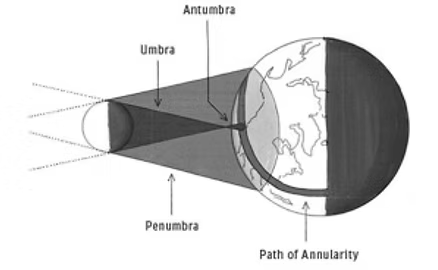
“and the moon not will give the light of it”; In these two segments in Greek, the words “helios” and “selene” are used to denote “sun” and “moon.” In Greek mythology, Helios and Selene were the names of the brother and sister that were the children of the Titan god Hyperion (ruler of light, wisdom and watchfulness” and his wife-sister Theia (name meaning divine; goddess, implying bright). It should be grasped how the moon reflects the light of the sun, in varying degrees – from absence (new moon) to total (full moon). Therefore, when “the moon will not give the light [of the sun reflected],” the meaning is that of new moon phase. A new moon is when the Sun and the Moon are conjunct, although this usually means the moon is unseen, because of the glare of the sun. However, when the “sun will be darkened , AND the moon not will give the light,” this is a statement of a total eclipse, where the moon perfectly aligns with the sun and the sun’s rays are completely blocked from earth (in a narrow umbra of total eclipse, with a wider penumbra of darkness).
25. “and the stars will be out of of the heaven falling” , The stars are the constellations that surround the earth, but are only visible in the night sky, when the sun’s rays are absent (and there is no cloud cover, where clouds are symbols of obscurity). The key word of this segment is “falling” (“piptontes”), which is said to have metaphorical meanings: “to be cast down from a state of prosperity” and “to fall from a state of uprightness.” When this meaning is applied to the stars of the zodiac, the circle of stars that the sun and the moon appear before (along with the other visible planets in the solar system), it says that the use of astrology – as a divine art of prophecy – will have fallen. Still, in that same context, those who promote and continue to use the stars of astrology to forecast and predict, they will have lost of light of truth and are not led as prophets of God. Thus, astrology as a divine art will have fallen into a state of disgrace. We live in such times now, as the art of divinity is discredited as having never been a tool presented to mankind as a tool for finding support for truth.

“and the powers (or inherent abilities) that in the heavens will be shaken” . Whenever one comes across the word “that” (in this case a second “hai” [“the”] is translated as “that”) it is referring the reader back to the prior verse, such that “the power” or “the inherent abilities” of astrology (“the power” of prediction as prophecy) is also a reference to “that.” The future tense word “saleuthēsontai” means the use of astrology “will be cast down” and “will be driven away” for God intended use – as a tool to guide man by [seasons, times, etc.].

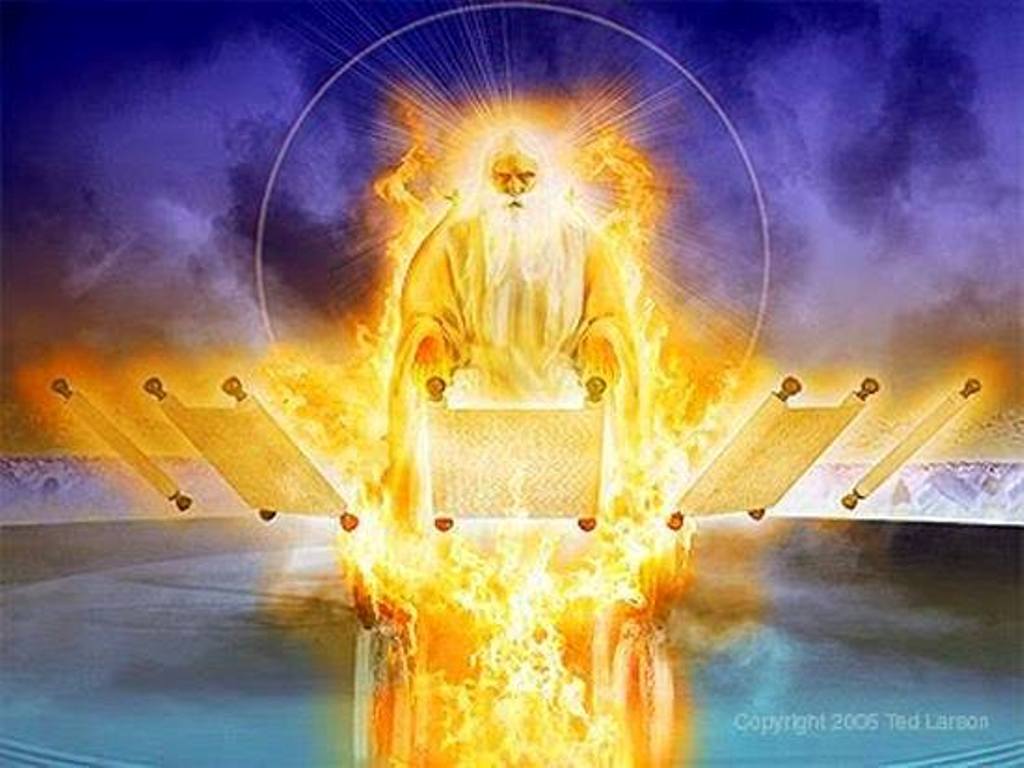
26. “and then (or at that time) will they perceive (or will they look upon; will they experience; will they see) the Son the [One] of man coming in clouds” , The use of the word “then” (“tote”), like “that” in the prior segment, is referencing when “the heavens will be shaken,” or “at that time” when astrology will “fall” in the eyes of mankind. Then the perception of Jesus Christ “of man coming” will not be concretely understood, but it will gain nebulous understanding. This statement, as a perfect example, will cause people to think Jesus Christ will come down from “clouds,” like a Greek god. This statement does not say that, as it says, “will they see” Christ “coming in clouds.” Seeing is not believing. The inverse way of reading this is as when “will they experience the Son.” “At that time will they experience the Son the [One]” of God, having been sent “of man” to be “the [One] of man” in a union. This “coming,” however, cannot be seen or touched, as it is Spiritual, as though “the [One] of man coming in clouds.”

“with marvelous deeds (or abilities; power) much (or great) and the unspoken manifestation of God (or glory)” ; Transferring thought from the presence of “the Son” having returned “of man,” in humans of God’s choosing, that nebulousness “in clouds” is now stated to be “with” or “among” or “after with” (from “meta”) those “of man,” who are Apostles or Saints. This makes “in clouds” represent the Holy Spirit, which brings with it the “marvelous deeds” or “abilities,” which are the gifts of the Holy Spirit. In addition to those abilities (from “kai”), the Apostle or Saint will not be blessed for self-importance, but they will project an aura of holiness (depicted in art by halo) around them, as the “unspoken manifestation of God,” the “glory” of God’s Holy Spirit.

27. “and then he will send the messengers from God (or angels)” , The use of “then” here, as an additional step (following “and”), says that after “the power and glory” has come “of man,” through “the Son,” then God “will send messengers” to the world. While an Apostle or Saint is human in form, it has sacrificed its personal desires to fully serve God. Their primary role is to act as righteous slaves, where their actions speak for the LORD and their deeds touch others so they seek the same presence of God upon them. It is the “clouds” of the Holy Spirit that make them appear as “angels” to those whose lives they enter.

“and will gather together the chosen (or elect) of him” , Once the return of Christ has reproduced “the Son” on earth, “of man” in multiple numbers, then the next step (“and”) “will be to gather them together,” where the root Greek word is “episunagó,” meaning “to assemble.” This denotes the called out assembly that relates to a Church, where the Greek word “ekklésia” means, “an assembly, congregation, church.” This gathering is only those Apostles or Saints, those who have been “chosen of him,” which fully means they have “chosen” to be of service “to him,” all in “the same” manner as “him” [Jesus, the Son of the Father] (from the Greek word “autou”).

“from out of (or out from within) the four winds” , The key word to understand here is the number “four.” The symbolism of “four” is “foundation” or “base.” This means “four” represents the “foundation” of the “gathered together chosen,” which is the truest meaning of a Church. “From within” that “assembly” “outward” will the “breath” of God’s Holy Spirit be spread. The Greek word translated as “winds” is “anemōn,” can also mean “breaths” or “breathings.” When “four winds” is recognized as a separate entity, this becomes symbolic of the “four corners of the earth,” which then is a statement of how far the “breath” of God will be spread.

“away from end of earth to end of heaven” . In this segment, the word “end” (“akrou”) is repeated, giving it importance. The word means an “extremity” or the “highest point,” but can also mean “the end.” This has absolutely nothing to do with the End Times (which are an “extreme” time), as those are commonly understood. Instead, this statement places focus on the extent of the “breaths” of God being sent “out from within” the “assembly,” as the purpose being to lead one “away from end of earth,” which is mortal death and reincarnation. This is then meant to guide one to and “end of heaven,” which is eternal life.

28. “Separation now the fig tree” , In some English translation Biblical sites, this verse is shown to begin a new element of focus, as “The Lesson from the Fig Tree” (NASB for one). To jump to a new heading is ridiculous. This verse begins a new line of thought, but it is based on the breath of guidance “away from” mortal death, which the Greek word “Apo” means. This means the “fig tree” offers insight into the repetition of life (a tree of reproduction and lineage), where the seasons come and go, just like do the lives of mortals. The “fig tree” is also represents a commonly recognized fruit tree of ancient Israel, which was known to be producers of early figs (usually in June) and late figs (August). These fruit trees were both cultivated and found growing wild across the land. Such fruit symbolically states the purpose of that tree.

“come to realize the comparison (or parable)” ; The Greek word “parabolēn” does translate as “a parable,” but it is more meaningful in this segment as an equally valid translation as “a comparison,” as a “juxtaposition,” where the “fig tree” can be side-by-side compared with the repetition of human reincarnation. The Greek word “mathete” means “to learn” (or “come to realize”), which is Jesus the Rabbi speaking to his disciples (and likewise to us today). While this lesson is stating the botany of a tree in comparison to the biology of a human being – and thus can be termed a “parable” – it is easier “to learn” through real experience, rather than the fantasy of a story of kings and slaves that no one had ever personally known.

“when already the branch of it tender has become” , Again, we have a timing element in the word “hotan,” which means “when.” That timing is then relative to the fig tree being “already” or “now after all this waiting,” from the word “ēdē.” The first two word of Greek could translate as implying, “at the time when the condition is met, after some length of waiting.” This seems to then point to a limb of a tree, but in comparison to a human being the Greek word “klados” means “descendant” as well as “branch.” Thus, the focus of a fig tree “branch” is no different than a “branch” on a family “tree.” Still, the words that are translated as “tender has become, “the Greek word “hapalos” implies “a shoot of a tree.” Thus, Jesus was pointing out when the death of winter has ceased and new growth was at its most “tender,” having just come upon a “branch” as buds.

“and it puts forth the leaves” , As an additional stage of new development (“and”), the “tender” buds “sprout” as the fresh, green “leaves” of spring. Just as fall symbolizes dying, spring symbolizes rebirth. This means the beginning of another drive to flourish and reproduce.

“you know that near the summer is” . In the example of a “fig tree” with “leaves,” this sign (recall the original statements about the collapse of astrology, which has constellations that are the signs of the times?) is that early figs (if this type of fig tree) will come from the leaves, in June, which is the eve of summer (the summer solstice is between June 20-22). The majority of figs are produced in August, which is the height of summer. Thus, simply by seeing leaves newly on the branches of the fig trees, one knows “summer is near.” In the comparison to human beings, spring time is that time of transition from youth to reproductive. For fruit to grow, there has to be a cross pollination of the trees (by winds or bees), which is that time of young adulthood. The summer of life is a human being’s years of productivity and reproduction.

29. “In this manner also you” , This statement is self-explanatory, as Jesus pointed to his disciples (and us today) and told them they are “branches” of him, which were just budding new leaves, but soon they would produce the fruits of summer. Summer is also the time when the days are longer and the light of the sun is strongest. Just as trees spring to life when the days are longer and more sunlight makes photosynthesis keep trees thriving, the light of Christ is the motivation for “living branches” to productively reproduce others “with him the Son.”

“when you experience (or see) these things coming to pass (or happening)” , Again, the timing word “when” is used to denote “at that time when conditions are met.” Because Jesus used the pronoun “you,” he was addressing his disciples and not “fig trees.” This means the conditions that will be met has nothing to do with “branches sprouting leaf buds.” When Jesus said “these things happening,” those things were the comparison of new life coming into them. Just as a “fig tree” feels the sap flowing upward within it trunk and branches, as a sign that the season of growth has arrived, so too will the disciples of Jesus feel and up swelling within them. That personal “experience,” “discernment,” and “awareness” (from the Greek word “idēte” – a form of “horaó”) lets them know when new growth is about to spring forth in them. The “things coming to pass” will be personal to each individual, as changes within them. The “sight” “to see” will be inspired by the Holy Spirit and not limited to the light spectrum detectable by human eyes.

“know that near it is” , This aspect of “personal experience” is then stated in the Greek word “ginōskete,” which is “knowledge” of first-hand acquaintance. It becomes the certainty of understanding that is guided by the wisdom of the Holy Spirit. Therefore, when one feels a new phase of life about to happen, it will be this newfound insight that says change is “near” or “close” (from “engys”). More importantly, however, the word translated as “it is” (“estin”) is a form of saying “I am is near,” which means “it is” God. Thus, one will “know” of “these things happening” because one has come “close” to God. That “nearness” is one’s marriage to God, via the Holy Spirit.

“on the basis of (or at) an opportunity (or doors)” . This statement says that “near” God means the conditions have been “met.” The “doors” of “opportunity” has been opened (from the Greek word “thyrais”). Just as a “fig tree” needs light and warmth to stimulate it to new growth, one become “near” to God by having done everything required beforehand, during one’s engagement period prior to the marriage, when God enters one’s heart forever. God always makes those “doors” of “opportunity” available, but it is up to the human being to say, “Yes” to those proposals.

30. “Truly I say to you” , This is a common assurance by Jesus, as one married to God, that an Apostle can only “speak” the “truth” of God. His words to his disciples assure them that everything he teaches them is tried and true. Likewise, we today can be assured the truth is being told.

“that no not will have passed away (or will have become vain) the generation this” , When the topic of comparison has been a “fig tree,” where “tender young leaf shoots” are representative of the growth that is to come, the use of the Greek word “genea” means a “generation” of “family,” “of man,” “with him the Son,” where “generation” says: “All of the offspring that are at the same stage of descent from a common ancestor.” The root of that word is from Latin (“generō”), which means “to father, procreate, and beget.” The double negative (“ou – “no-not not-lest”) then speaks of “nothing” being lost from the line generated by the Father. When “a generation” is estimated to be a twenty-year period of related children, this becomes too limiting to the lineage of God, as it stretches righteously from Adam to Jesus, with all who have, are, and will come to pass come from the same Generator: God. This is therefore a statement of eternal life that is promised (“Truly I say to you”) to all who spring forth on the “tree” of holiness, which Jesus Christ has revived (“from the stump of Jesse”).

“until (or as far as, to the point) that these things all shall have taken place” . In this statement that follows “this generation” of which Jesus spoke, the limitation is stated that “these things all shall have taken place.” One cannot be reborn as Jesus Christ without doing that which is required to have everlasting life and join the tree of righteousness that makes one “a fresh, tender leaf sprout” on the “branch” that is God’s “tree” of life (as opposed to being born of death as a mortal). In this statement, one should be aware that Jesus spoke to twelve disciples on the Mount of Olives. That number included Judas Iscariot, who becomes the example of how death would take him before the Holy Spirit descended upon the disciples, transforming them into Apostles. Judas Iscariot did not get “as far as” the “point” (from the Greek word “mechris”) when “these things all shall have taken place.” That lesson is the foremost for all future “generations” of the churches, and all who claim to be Christians. Judas made the claim as a follower, but then he sold his soul for material reward.

31. “The heaven and the earth will pass away (or will become vain)” , This has nothing to do with suggesting the end of the earth or the end of heaven – either outer space/skies (physical heavens) or the spiritual place called Heaven. The two words translated as “The” and “the” (Ho and ) both can indicate the “condition” to be met for one or the other, as “Condition heaven and condition earth.” This is then stating the “circumstances” that will dictate how one’s soul “will pass away; will come to pass; or will happen” (from the Greek word “pareleusontai”). It says that each individual will choose which path “will become vain,” where “vain” is defined as: “Not yielding the desired outcome; fruitless.” One will either call “heaven” “fruitless,” and choose “earth,” or vice versa.

“them on the other hand divine utterances (or words) of me no not will pass away (or will become vain)” . In this segment, the Greek text does not translate anything for the word “hoi,” which is the plural form of the article “the,” often translated with “polloi,” as “the many.” I have translated it as “them,” which becomes an indicator of “the [ones],” and “them” becomes the focus of those who choose “heaven,” because “on the other hand” indicates the ones who did not choose “earth” as their way to “pass away.” We can be safe in this assumption because Jesus added it will be “them” who believed the “divine utterances” (reading “logoi” from its Biblical definition, indicating holy “words”) “of [Jesus].” This becomes the promise of truth that those who heed the “words of him” (Jesus) “will not pass away” or find the way of the LORD as “vain.”

32. “Circumstances (or Concerning) on the other hand the day that” , In the Epistle reading of Proper 28 (1 Thessalonians 5:1-11) the first verse stated, “Concerning moreover the times and the seasons.” That verse begins with the same word beginning this verse in Mark’s chapter 13 – “Peri.” In my interpretation of Paul’s letter, I wrote this:

“The word “peri” means, “about, concerning,” and “around,” which “denotes place, cause or subject.” Its implied usage infers, “consideration where ‘all the bases are covered.’” As such, the important focus by the capitalization of this states, “Circumstances now” or “Conditions on top of.””

That part of Paul’s letter dealt with the “circumstances” and “conditions met,” as whether or not one would truly be deemed Christian. Following the statement in the segment prior here, about “on the other hand divine,” here we find “on the other hand” the “conditions met” that will determine “the day” of “that” choice – eternal life (“heaven”) or eternal reincarnation (“earth”). The implication in this segment is those who chose “the earth,” with “the day” being “that” of death.

“or the hour (or time)” , In this segment the focus is on “time,” where “hour” can be read as a specific “time,” but is commonly recognized as a statement that focuses on “time” running out, having reached the final “hour.” This is then the most critical “hour” when human life is about to come to an end and the soul will lose its host body.

“no one knows” ; When Jesus used the word “oudeis,” which translates as “no one, not one, none, nothing, and others,” this word categorically excludes anyone. This exclusion can allow one to see “no man” or “no one” as those who said “no” to “heaven,” instead choosing “earth” as their target of worship and devotion. Because those who choose “heaven” receive the “knowledge” of the Holy Spirit, as the Christ Mind from God, the physical process of bodily death is not a traumatic event for ‘yes ones’. However, to those whose physical life has taken on considerable importance, they would love to know when death is near, so they could repent and choose “heaven.” They will not possess that luxury of knowledge.

“not even the messengers of God (or angels) in heaven” , Following that understanding, this segment can be read two ways, with both being the truth. First, it simply says that the same lack of knowing when death will occur will be “not even” allowed to those who are Apostles – the “messengers of God” – who chose “heaven.” Still, its most powerful meaning says that the “conditions” set for those who choose “earth” will not be placed on those who chose to serve God. They will be notified by “angels” when death is near, and they will escort those souls to the crossover into eternal life in “heaven.” This says those “angels” will be notified by God when that service will be needed.

“nor the Son” , This segment than restates support for the “no one knows” segment, as those who chose “no” to “heaven,” such that those chose not to allows “the Son” to be reborn within them. Without “the Son,” they will “not know.” Still, the presence of “the Son” in Apostles and Saints means lives directed towards saving other souls, where death is not feared by them. To dwell on such an “hour” or “time” is pointless. Also, keep in mind that Jesus knew when his death would occur, as well as that of Lazarus.

“if not the Father” . This segment basically says that those whose choice is not to serve the Father (be married to God), then they will not know, due to choosing “earth.” The word “ei” clearly translates as “if,” where that conjunction implies an alternative choice (if this, then that).

33. “Take heed (or perceive; discern)” , This is a warning to all who have decided “if not the Father,” choosing to serve self on “earth.” The Greek word “Blepete” says to be “Careful.” It says to “Keep watch,” as their choice means they “will not know” when death will come.

“be awake (or watch)” ; The Greek word “agrypneite” then gives reason for “Taking heed” to what Jesus has said. A command to “be awake” means to not fall asleep. As has been discussed in prior letters of Paul and Jesus upon hearing news of Lazarus’ illness, sleep is metaphor for death. Thus, the warning to “Take heed” and be “Careful” is directed towards staying “alert” and “watchful.”

“not you know indeed when the time (or occasion; opportunity) is” . This is the message of several parables (Parable of the Rich Fool; Parable of the Ten Bridesmaids; and Parable of the Faithful Servant), where not knowing when death will come makes staying awake so important. However, if one has already been married to God and is led by the Christ Mind, one is always “alert.”

34. “Like a man away on a journey” , This verse begins similarly as the Parable of the Talents, where verse 14 states “anthrōpos apodēmōn,” as “a man going on a journey.” Similar words are written here (“anthrōpos apodēmos”). As interpreted in the Proper 28 Gospel article, the master was not the one going on a journey, but his slaves were going on a journey for the master. Here, that is clearer. However, in this context, the man is akin to a soul on a journey away from heaven, gone to enjoy a trip to the material world. In relation to not knowing the time, this becomes a parallel to knowing one needs to return home, but has lost the tickets to travel there and has forgotten the date and hour of the trip back home.

“having left the dwelling (or house; property) of him” , Here again, the use of the word “autou,” meaning “of him,” the intent is to state “a man” having left the “dwelling” of the Father. Because this follows a segment that speaks of “a man,” it is easy to be confused and think “a man” left his own home. That is a purely physical reading. Because Jesus is speaking of Spiritual matters, it is “a man’s” soul that left the Spiritual “dwelling” of heaven, where the Father resides.

“having placed (or having given) the servants (or slaves) of him the authority (or influence)” , Like in the Parable of the Talents, the false assumption was that the master had left “servants” in charge, while the master went on “a journey.” The same mistake can be made here, by thinking “a man” had “slaves” who were given “authority” in his absence. The true meaning is that God is the owner of the “dwelling” from which “a man” left, which makes that “man” the “servant” of God, the Father. It is this “influence” of God over the soul that calls this “man” back home, reminding the soul of “a man’s” servitude.

“to each one the work (or task) of him” , As a servant of God, an Apostle or Saint has the responsibility of speaking as God will have them speak. The task is to seek others who want to know God intimately.

“and the doorkeeper (or gatekeeper; porter) he commanded (or he instructed; he gave orders) he should be watchful (or he should be vigilant; he should be awake; he should be alert)” . Since Jesus was “the Son” sent “of man” to perform a “task” for the Father, sent from his Father’s “house,” he was teaching his disciples that he was “the doorkeeper” to “heaven.” He had claimed this earlier, when he said he was the “gate” to the sheepfold. Thus, Jesus was warning his disciples; but all who would become reborn as “the Son,” with the Mind of Christ, married to God, they too would keep that “portal” to “heaven” open, through the Gospel, as “messengers of God” (their “task” and “work”). As such the Greek word “thyrōrō” says Apostles will “keep the door” to “heaven” available to those who seek entrance into God’s kingdom.

35. “Watch (or Be alert; Be awake) therefore” This repeats the warning to “Stay awake” and be “Alert,” but adds the word “oun,” which means “therefore,” but: “By extension, here’s how the dots connect.” (HELPS Word Studies). The “dots” to connect then follow the two dashes, which act as a colon mark.

“not you know indeed” , Reason to stay awake and keep alert number one: You do not know when death will make you go to sleep, before you are prepared to cheat death.

“when the master of the house (or dwelling; property) comes” : The master is God, who comes to call a soul away from its material body. This is a known coming, whenever a soul is born into a physical form. This is the definition of death, where all forms of matter are born to die (change states); but the timing of that death is not fixed, so it cannot be known in advance.

“or at evening” , This is the first of four “night watches” in the Hebrew day. The first “watch” is from 6:00 PM until 9:00 PM (possibly only 6:00 PM to 8:00 PM), which is called the “evening” watch. The evening, depending on the time of the year, is when light from the sun may make “watching” easier, seeing things coming from further off. Still, with all the activity of settling in, it is easier to stay awake during this time of “night.”

“or at midnight (or night)” , This is the second of four “night watches,” which lasts from 9:00 PM to “midnight” (possibly from 8:00 PM until midnight). This is year-round a time of darkness, with the height of summer lending some small amount of twilight at the beginning of this watch. Still, as this “watch” wears on, the eyes get heavier.

“or when the rooster crows” , This is the third of four “night watches,” which begins at midnight and ends at 3:00 AM (possibly between midnight and 4:00 AM). This is the depth of “night” and when sleep wants to take hold, as there is no light other than that of the moon’s reflections of sunlight. This is often called “the graveyard shift.”

“or morning” ; This is the fourth of four “night watches,” where the wait is for the break of “day,” at 6:00 AM. This “watch” begins at 3:00 AM and leads to the official beginning of “day.” There is morning glow that begins to wear away the abject darkness.

36. “not (or lest) having come suddenly (or unexpectedly)” , This segment, following the pause of a semi-colon, says the connecting of the dots of “Vigilance” were necessary through all of the divisions of night, when darkness is symbolic of death. Thus, if one does “not” keep all the watches of nigh, then the moment sleep takes over death comes “suddenly,” “unexpectedly.” Death is always known to be coming, but the “hour” of night never known.

“he should discover (or he should find) you sleeping” . Again, the third-person masculine pronoun “he” is attached to the conditional form of “heurē,” as “he should find, because “he” is the Father of all souls. The word “sleeping” (“katheudontas”) is metaphor for “death.” This means the soul will “find” God at its moment of release from the physical body. This is when judgment will come, relative to the soul deserving eternal life in “heaven,” of deserving to be reborn of death in a body of matter. That discovery will be a matter of record in the heavenly book of records.

37. “Which (or What) on the other hand (or moreover) to you I say” , Here, Jesus is pointing out how it will be his voice, inside the head of Apostles and Saints, who will guide one to “the other hand” of Salvation. Instead of God finding a released soul from an unexpected death, when the soul had not served the LORD in physical form, Jesus will have his disciples prepared.

“to all I say” , It will thus be through all subsequent Apostles and Saints (who wrote the Gospels and Epistles and who spread the Word of Christianity) that Jesus will “say to all” in the future – this and every lesson he taught that has been recorded in Scripture.

“Watch (or Be alert; Be awake)” ! Jesus tells all Apostles and Saints how to be “Awake,” which is the permanent state of everlasting Life, as opposed to the sleep of death and the repeating of past failures on earth.

Luke 21:25-36 – The end times at the beginning of a cycle

Jesus said, “There will be signs in the sun, the moon, and the stars, and on the earth distress among nations confused by the roaring of the sea and the waves. People will faint from fear and foreboding of what is coming upon the world, for the powers of the heavens will be shaken. Then they will see ‘the Son of Man coming in a cloud’ with power and great glory. Now when these things begin to take place, stand up and raise your heads, because your redemption is drawing near.”

Then he told them a parable: “Look at the fig tree and all the trees; as soon as they sprout leaves you can see for yourselves and know that summer is already near. So also, when you see these things taking place, you know that the kingdom of God is near. Truly I tell you, this generation will not pass away until all things have taken place. Heaven and earth will pass away, but my words will not pass away.

“Be on guard so that your hearts are not weighed down with dissipation and drunkenness and the worries of this life, and that day catch you unexpectedly, like a trap. For it will come upon all who live on the face of the whole earth. Be alert at all times, praying that you may have the strength to escape all these things that will take place, and to stand before the Son of Man.”

———————————————————————————————————-

This is the Gospel reading selection from the Episcopal Lectionary for the first Sunday of Advent, Year C, 2018. It will next be read aloud in an Episcopal church by a priest on Sunday, December 2, 2018. It is important because it takes up the perception of Jesus telling of the end times, of the destruction of the Temple of Jerusalem, and adds the perception of Jesus coming in the clouds [a Revelation theme]. In reality, Jesus foretold of the Holy Spirit descending upon Apostles and the beginning of true Christianity.

Beginning this reading at verse twenty-five creates a vacuum of context, which is important for grasping the meaning. Verse twenty-four consists of four segments of words, all of which at then relative to the “signs” listed in verse twenty-five. Verse twenty-four states:

“and they will fall by edge of sword  ,

and will be led captive into the nations  ;

all while Jerusalem will be trodden down by gentiles  ,

until when are completed (namely will be) opportunity gentiles  .

That repeated use of “gentiles” (from “ethnōn”) may lead one to see Romans being the ones using swords and taking people from Jerusalem captive, so the Temple will lay in utter ruins. However, the “gentiles” that Jesus was seeing in the future coming were Muslims.

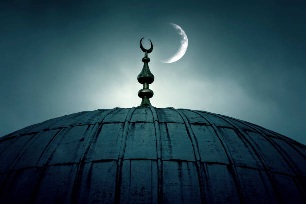
Jerusalem and the Dome of the Rock

When that is understood, one is able to see through the apparent suggestion that celestial events (such as eclipses and full moons, along with shooting stars and comets) will be the portends of when Jesus is referring. To say, “There will be signs in the sun, the moon, and the stars” is so celestially generic, no one will know which solar eclipse, which full moon, or what comet will actually be “the signs” to look for. This is where knowing how to read according to segments is important, and how symbolism has to be applied, rather than literal meaning.

Verse twenty-five breaks down into five segments, with each needing to be analyzed according to a Godly “syntax,” not Greek syntax or English paraphrase, based on Greek syntax. For those who read the interpretation of John’s Revelation, read during the Last Sunday after Pentecost, where a short reading had seventeen uses of the Greek word “kai,” the same application of “kai” (ordinarily meaning “and”) as a symbol marking important information.

If you look back at the translation of segments I presented for verse twenty-four, you will see how two “lines” began by the word “and.” The word “and” is nothing more than a conjunction and is meaningless. When redundantly used, especially following comma marks, it becomes a distraction to “normal” language. It becomes like someone often saying, “uh,” in spoken language. It becomes unnecessary and a sign of illiteracy or poor language skills. Changing “kai” to a written word that is to be used as a symbol [like Nostradamus used ampersands], such that the symbol marks a pronounced statement to follow, shows Jesus spoke and Luke wrote in a holy language [speaking in the tongue of God].

Seeing that, a segmented verse twenty-five literally states:

Kai there will be signs in sun ,
kai moon ,
kai stars ;
kai upon the earth distress [or anxiety] of gentiles with perplexity [or doubt] ,
roaring [or rumor; report] of sea
kai rolling surge [or swelling agitation; tempest] ,

In the letters and poetry of Nostradamus, he wrote of the sun and moon and stars often. He wrote French words that relate to “sun” in English over forty times. He had several words that relate to “moon” over thirty times. He only wrote “star” (“astre”) twice, but he made references to multiple astrological constellations of stars. As the theme of Nostradamus’ book – Les Propheties – is of a coming holy war, the symbolism of the sun was Christianity and the symbolism of the moon was Islam.

One needs to see how Jesus was also referring to the light of the sun as the religion bearing the name of Jesus Christ; and one needs to see the phases of the moon (especially the crescent moon) as reflected light that is found in darkness, which becomes the false religion of Mohammed.

In the translation that is read aloud in church, verse twenty-five says, “distress among nations.” The word translated as “nations” is the same word repeated twice in verse twenty-four, which translates as “gentiles” – “ethnōn.”

Even the New International Version translates these two verses with “Gentiles” repeated in verse twenty-four, but magically changed into “nations” in verse twenty-five. This lack of continuity keeps one from grasping “gentiles” as being Muslims. Still, that would be who would eventually – as is the state now – of Jerusalem having the Dome of the Rock (a Muslim mosque) on the very site that the Second Temple had once stood.

When one sees how the “signs in Christianity” [“sun”] have evolved of nearly two thousand years, that spread of light has shown signs of roaring brightly, and spreading around the globe, and over the past century dimming. Islam began after Christianity, thus the use of “moon” is listed subsequent to “sun.” It also has reflected the same growth and spread as Christianity. As such, both have had histories that mirror the stars of deep space, which ignite as stellar nebulae, glow at various brightness categories and magnitudes, then fade as red giants, before exploding as supernovas and then pulsing as neutron stars, white dwarfs or black holes.

Since all of that knowledge was unknown to ordinary human beings in Jesus’ time, the use of “stars” can also be an indication of when man would invent telescopes, then visually explore the phenomena of outer space, before learning to propel rockets beyond earth’s gravitational pull. Such a “sign” of the stars could be the entrance of the Age of Aquarius – a constellation of stars on the Vernal Equinox. That would indicate our present times as being when the “earth” would be “distressed,” due to gentiles without religion [the “doubts” of Communism] would become a most viable threat to both Christianity and Islam.

The aspect of water is then found in the word “sea” (from “thalassēs”), which becomes more than Jesus nebulously referring to either the “Sea” of Galilee or the Mediterranean “Sea.” In the theme presented by Nostradamus, a future invasion of Europe, across the Mediterranean from North Africa, is painted. That makes “rolling surge” become a tsunami of migrants that will spend decades filling Italy, France, Greece and other European “nations” [increasingly “gentile” nations], to become like the Trojan Horse within the walls of Europe, once a military invasion begins.

More than warships on a “sea,” the hatred of emotion [the water of a “sea”] will be the motivation for those attacks. The illegal immigration will be placing “perplexity” within a Christian safe-haven, for the purpose of creating “doubt” about how professed Christians should live up to the teachings of Jesus. The “gentiles” pouring in will have no religious heart [Communists] or hearts raging with hatred for Christians [Muslims].

When Jesus then said, “People will faint from fear and foreboding of what is coming upon the world, for the powers of the heavens will be shaken,” that foretells of the suddenness of warfare coming upon people who will have been so accepting of foreigners – at the expense of arguing against their own kind, who see the dangers of mixing religious races. Europe will not have the hatred to go to war and will quickly lower their arms and attempt to negotiate peace. Unfortunately, the “powers” of satellite communications will have been disrupted and the abilities to control one’s skies will be “shaken.”

In verse twenty-seven, Jesus said: “and [“kai”] then they will experience the Son one of man coming in a cloud.” The capitalization of “Huion” shows the importance that “Son” bears. This could be read [as it commonly is in the Gospels] as the “Son” of God [Jesus], who was born of a woman [“of man – not capitalized]. However, “huion” can also translate as a significant “descendant” that is “one of man,” which would then be “experienced” by It coming in a cloud – such as a vapor trail of an I.C.B.M. comes.

Because this is so far into the future, well after Jesus Christ returned to the “earth,” in the form of the Holy Spirit entering his disciples-transformed into-Apostles – all reborn as Jesus Christ, beginning Christianity – Jesus could not be talking to his disciples here about his return. The “Son of Man” is all human beings who are reborn as the “Son,” while in human form [“of man”]. Since that will have long occurred, for nearly two thousand years, then one needs to see how verse twenty-six ending by stating “the powers of the skies will be shaken,” such that shaking will be the alarm that that power is what is coming in the cloud.

When Jesus ended verse twenty-seven by stating, “with power and great glory,” the literal Greek splits that in two parts, separated by the word “kai.” It actually reads, “with power” (from the “dynameōs,” similar as “of powers” in verse 26) “renown often.” The last two words, “doxēs pollēs” are commonly translated as “glory great,” when applied to the “Son” of God; but when seen as a “power” of man, it is “renown” that is “often” proclaimed, and produced “many” times over.

In Nostradamus’ book, he wrote the word “great” [in several forms] over 450 times, with each time an indication of a “great” nation, as defined by nuclear weapons as its fame [“renown”].

Verse twenty-eight is then very important to understand, as Jesus told his disciples [including those souls seeking to be reborn of his Spirit today]:

“beginning then of these things to come to pass  ,
raise yourself up
          kai lift up the rulers of you  ,
because draws near the redemption of you  .

So many Christians see this as Jesus coming in a cloud and raising up the believers in a “Rapture,” where they will be spared all the pain and suffering the rest of the earth will experience. That perspective is a trap set by the language of God, as to who belief will be placed. False shepherds will preach this coming again in glory, when Jesus Christ has already come again, many times over, in the Saints that set the world on fire for Christianity. However, this twenty-eighth verse says for those who will be living in the Twenty-first century to see the signs of evil about that will be the beginning of the End Times of earth.

Jesus said NOW is the time to “raise yourself up,” in the Spiritual sense. To be “raised up” does not mean to stand up and be counted as a Christian that believes Jesus Christ is sitting on a heavenly throne, twiddling his thumbs as the world grows most heinous. By saying, “raise yourself up,” Jesus said to sacrifice your self-ego and submit fully to God. That will bring about the Christ Mind and the Jesus ego, which will elevate one to Saintly status.

The subset segment that begins with “kai” then says, “lift up the rulers of you,” where “kephalas” is misleading as “heads.” That translation makes it seems that individuals are asked to “lift up your heads,” which would be a sign of self-importance and arrogant pride, as if being raised by Jesus will be payment received for believing in Jesus as the Messiah. Unfortunately, belief falls well short of faith and one needs much better rulers [or “heads” of intellectual authority] than pastor Bob or minister Lemuel, who forgive all the shortcomings of their flocks … as long as those tithes keep going into the church bank account. One needs Father, Son, and Holy Spirit ruling one’s being … most especially when the nukes start falling.

In the last segment, the word “draws near” (from “engizei”) should not be read as if God is coming close to grant one redemption. Instead, the word should be read as “bringing near to you,” where it is the sole responsibility of each soul in a mortal body of flesh to do what God wants one to do, to “bring close the redemption” of one’s soul. That happens by “bringing near to one” God, through one’s love of God, as shown through total commitment to Him [marriage]. From that union, one then “brings near” the Holy Spirit and the Christ Mind. THAT is what causes “the redemption of you.”

The word “redemption” (from “apolytrōsis”) actually means, “release effected by payment of ransom.” One’s soul is held captive on the material plane by sins. The Holy Spirit joining with one’s soul cleanses the soul of all sins past, as true baptism. One cannot enter the heavenly kingdom of God without that cleansing done first. This is why Jesus said, prior to bringing redemption closer, “raise yourself up kai lift up the rulers of you.” One has to pay the price for having sinned, before one can be redeemed.

Realizing that, one can then grasp the parable Jesus told, where “parable” (from “parabolēn”) means a “comparison” to this time when “redemption draws near.” Jesus said, “Look at the fig tree and all the trees; as soon as they sprout leaves you can see for yourselves and know that summer is already near.” Spring is a time when certain expectations of trees occur, as leaves represent new life coming from the death of winter. New leaves then flower and begin the growth of fruit, which are ready to be picked in summer time. This same natural occurrence in trees is expected in those who say they are disciples of Jesus, as that sprouting of leaves brings the expectation of bearing fruit.

Jesus then told his disciples, “So also, when you see these things taking place, you know that the kingdom of God is near.” He said that to the men who had been sent into ministry at the great commission [a premonition of the coming of Christianity], as they were instructed to tell those who rejected their presence and the guidance of the Holy Spirit, “The kingdom of God has come near.” Anyone who has rejected the idea of self-sacrifice for God and Christ will know the signs of the End Times is their “last call” to fall in love with God, repent their sins, offer their soul completely to God, and submit fully to His Will … or their soul will be lost forever.

Jesus then drove home the truth of that statement, by adding: “Truly I tell you, this generation will not pass away until all things have taken place. Heaven and earth will pass away, but my words will not pass away.” It is then easy to be confused by the words “this generation” and think that means the generation in which the disciples were born. That would limit the future to within fifty years of future time; but the Greek word “genea” can be intended as more generic, as “race, family, or kind.” Therefore, Jesus went to the End Times of the Age of Pisces, which was when the death of a “family” in the name of Jesus Christ would succumb to the Age of Aquarius [Technology and Intelligence].

Christianity will survive until mankind will destroy the earth. While that destruction will forever change the atmosphere [heaven] and the surface of the world [earth], the words of Jesus will be just as valid then, as they were when he spoke them.

Because those words of Jesus will remain valid, Jesus then warned those in the future, “Be on guard so that your hearts are not weighed down with dissipation and drunkenness and the worries of this life, and that day catch you unexpectedly, like a trap.” His disciples could likewise follow that advice, as all mortal lives end with death, when the soul is released. A soul then, however, would recycle back to another body of flesh [reincarnation], to begin again the search for redemption; but when the world is on the verge of no longer being able to support physical life, then one will have fallen into the “trap” of thinking, “I still have time to serve self and sin, rather than commit fully to God too soon.”

When Jesus then added, “For it will come upon all who live on the face of the whole earth,” he said that there will no longer be a safe place where the sun will shine. A cloud will encircle the face of the earth. With no sunlight allowed to penetrate the clouds, all surface life will die. Christianity will likewise die at that time. As such, it is important to read the Greek word “prosōpon,” which translates as “face or surface,” as being the “countenance” of the world. Without the light of truth, none left alive will be able to wear the “face” of God, which shines brightly through all who would be reborn in the name of Jesus Christ. The End Times will come for all mortal beings, which means there can be no redemption possible at that time.

It is also important to grasp how Jesus saying “surface of the earth” does not exclude life from existing under the face, within the earth. This is where one should realize that the angels of Lucifer were cast within the earth and told to go where they could never “face” God again. All the talk of “ancient aliens” is truth, in the sense that Satan’s angels have long lived within the core of planet earth, still living there today. They welcome the destruction of the earth and the final fall of mankind. It is not coincidence that propaganda has begun to acclimate human beings to their possibly being supreme creatures, worthy of praise and glory, as their whispers have led to man’s ability to build the weapons of its demise.

Jesus then ended this reading selection by telling all who would serve him as disciples, “Be alert at all times, praying that you may have the strength to escape all these things that will take place, and to stand before the Son of Man.” It is important to see how Jesus repeated prior elements in the subset segment of words: “kai to stand before the Son the one of man.”

The Greek word “stathēnai” (rooted in “histémi”) translates as “to stand,” but should be read as “to make a stand,” so one resists evil with “steadfast readiness.” This “stance” can only come with the presence of the Holy Spirit giving one strength, not possible by self-will alone. Most importantly, this transformation must take place “before” (from “emprosthen”) the “Descendant of man” falls as a nuclear holocaust, as well as “before” one can be seen by God as His “Son” in a body “of man.”

As the Gospel reading selection for the first Sunday of Advent, where a new church cycle has begun, it is important to grasp how the last Sunday after Pentecost ended a cycle with lessons that speak of the End Time. While this can seem as a continuation of that theme, it is not. The End Times were the focus of the end of a cycle. Now they are the focus of the beginning of a cycle. The start of a new cycle is thus begun with the importance of what the new cycle is for. It is for not reaching a personal End Time having not prepared for personal redemption.

Anyone with a normal brain can see the hatred that is spewing from televisions and Internet “news” articles every day. The world is just like that big R.E.M. hit song, “Losing My Religion.” Everyone has to do what it takes to buy all the trinkets and gadgetry that are the worldly addictions that pull souls towards sin. The problem with sins if they are easy to enjoy and difficult to see the harm, which is the whispers of Satan saying, “What’s the harm of just a little nibble? You know God doesn’t want you to taste this because it will make you His equal … a god.”

Most Christians want to do good. Many are closer to becoming Jesus Christ reborn than they think. It becomes the point between sincere belief and complete faith that caused Peter to step out on water and sink like a rock. Jesus did not coddle Peter, saying, “There, there Simon. I guess that’s why I call you “the Rock.” Ha ha ha. Here, big guy, let me raise you up out of the water.” Nope. Jesus said, “Oh you of little faith, why did you doubt?”

Being near to the kingdom of heaven is headed in the right direction. However, it is not there yet. That is why the commissioned disciples went to the people – to teach them to welcome the Holy Spirit, by seeing the Holy Spirit in men that had been given the power of Jesus Christ. Those who did not want to sacrifice themselves to serve God rejected those who came in the name of Jesus Christ. Therefore, as close as they were to God’s kingdom [as Jews who believed in God] they were given back the dust of the earth they so dearly loved, as the disciple kicked the dust off their sandals, saying “The kingdom of God has come near.”

The End Times are like the quote from the Ancient Mariner: “Water, water everywhere, but not a drop to drink.” There are plenty of emotions that one feels in this world of pleasures and pains, but the water of the Holy Spirit is the only drop that will cure one’s thirst for sin. It is the blood of Christ that saves.

1 Thessalonians 3:9-13 – The coming of our Lord Jesus with all his saints

How can we thank God enough for you in return for all the joy that we feel before our God because of you? Night and day we pray most earnestly that we may see you face to face and restore whatever is lacking in your faith.

Now may our God and Father himself and our Lord Jesus direct our way to you. And may the Lord make you increase and abound in love for one another and for all, just as we abound in love for you. And may he so strengthen your hearts in holiness that you may be blameless before our God and Father at the coming of our Lord Jesus with all his saints.

———————————————————————————————————-

It should be realized that chapter three of this epistle addresses Timothy’s visit to Thessalonica and his subsequent return, to rejoin Paul and Silas [possibly in Corinth]. There were a large number of Jews living in Thessalonica, which violently rejected the Gentile converts to Christianity, whom some Jews had accepted, themselves having also converted. Those who remained non-believers then persecuted their fellow Jews. Timothy had returned with a report on how well the Christian Thessalonians were maintaining their faith, against those external pressures. The first eight verses of this chapter [omitted from this reading] speak of Timothy’s report.

It is also important to grasp that Paul did not write epistles that were void of holy text. Everything that appears to be ‘news of the day’ is lasting in application, as long as true Christians walked the face of the earth. As such, Paul wrote letters of encouragement to those who were filled with God’s Holy Spirit, reborn as Jesus Christ. That was how a Gentile, with little-to-no knowledge of Jewish customs and history, could come to have faith in Jesus of Nazareth as the Messiah promised to the Jews. Paul’s letters were then to them yesterday and those today who struggle with maintaining that inner commitment to good, while the world constantly beats down on them with the challenges to resist sin and evil.

As with all of Paul’s letters [and the other Epistles of the Apostles], it is best read when broken down into segments, based on punctuation marks [real or imagined]. I have done this again here, while also incorporating the word “kai” as a symbolic word that lets the reader know to look at the words following its presence with an eye towards a pronounced statement. According to the possibilities of translation allowed by the Bible Hub Interlinear page for 1 Thessalonians 3, the following should be compared to the publicly read text above:

9. What for thanksgiving are we able together of God to give concerning you in return for all the joy that we rejoice because of you  ,
before the God of us  ,
10. night
kai day  ,
exceedingly imploring union companions to see your experiences face kai to supply the things lacking in the faith of you  ?
11. Himself now one God
kai Father of us  ,
kai one Lord of us Jesus  ,
may direct the way of us to you  .
12. you now  ,
the Lord may make to increase  ,
kai to abound circumstances in love toward one another  ,
kai toward all  ,
just as also we toward you  ,
13. toward people to establish yourselves one intensions  ,
blameless in holiness before the face one God kai father of us at this coming of the Lord of us Jesus  ,
after all those saints of him  .
amen  .

This reading begins with the capitalized Greek word “Tina,” which is a form of the root pronoun “tis,” meaning “who, which, what, why, how, or who.” Each often introduces a question, which is why verse ten ends in a question mark. The capitalization makes this more a restatement of the ending segment of verse eight.

There Paul wrote: “if you are standing firm in the Lord,” where the capitalized Greek word “Kyriō” is written to importantly refer to Jesus Christ. The Christ Spirit is the “Lord” of ourselves [“hymeis” as the plural “you, yourselves”], as high priest in individual kingdoms of God. This makes “Tina” be a reference to “Who,” and not a question intended in that word.

The Greek word “dynametha” is translated as “we are able.” This has simply been translated as “can we,” in the form of a question. The plural number [“we”] is then attached to the root word “dunamai,” which means, “I am powerful, I have (the) power,” and “I am able, I can.” While it is such a normal word in our English vocabulary, that ordinary use makes one overlook the significant difference that give one an abnormal “ability,” based on realizing “Who” brings that “power” to one. This “ability” is “Why” Apostles “give thanks” (from “eucharistian”). When one is filled with the Holy Spirit of God, reborn as His Son Jesus Christ [“standing firm in the Lord”], then all thanks be to God.

When God is within one’s soul, one is filled with the love of God. This is because one’s soul is “together with God” (from “ Theō”) or “one with God,” bringing that gift of God’s love. This is then “concerning you in return,” where it was one’s love of God that accepted His proposal of marriage. This brings forth “for all the joy” of that marriage union. One stands “before God,” such that the Greek word “emprosthen” implies “before the face of,” by wearing the face of God, having sacrificed one’s self-ego in submission to God’s Will.

The “night” of mortal life means the sins one had before receiving the “joy” of the Holy Spirit. This then turns significantly to the light of “day,” when the Christ Mind becomes the light of Jesus Christ. Whereas the Greek word “deomenoi” can translate as “praying,” accurately so, the word also means, “wanting, needing, and begging,” “extremely in behalf of” (from “hyperekperissou”) Paul, Silas and Timothy, for the Thessalonian Christians to find the same union with God and wear His face before Him also. They prayed to God to supply those Apostles with everything they needed to secure their true faith.

In verse eleven, the capitalized Greek word “Autos” begins, which is an emphatic statement of “Self.” Following the end of verse ten stating “faith of you,” in the plural number (from “hymōn”), the importance is now placed on each individual’s responsibility (as “Himself”) to be “one with God,” just as Paul and his companions had. When that union is assured, then all become brothers in Jesus Christ, such that God is “the Father of ours” [or “us”]. They are brother because there is “one Lord” that is common “with us” – “Jesus.” All of them are then under the “direction” of the Christ Mind.

Due to the report of Timothy to Paul and Silas, Paul then began verse twelve by saying, “you now.” That said that each of the Apostles had been transformed and Jesus Christ had been reborn in them, becoming the new “you” that they “now” had within them. As Jesus Christ in new human flesh, “the Lord may make to increase,” where the future conditional form of “pleonazó” is written (as “pleonasai”). As a church of true Christians in Thessalonica, their numbers would be expected to be “increased,” as each would spread the true of Scripture through the Holy Spirit. They would certainly evangelize naturally, but the conditional would be found in the resistance of others to follow the same path of loving God and sacrificing self to join with God.

Because others must fall in love with God to begin the process of becoming Apostles and true Christians, Jesus Christ in each would cause love to “abound” within the gatherings [“circumstances” or “conditions” of ‘followers” – all possible of “”] of the church. Because a church was exclusive to true Christians, and not a club to join or a synagogue where Jews were born with rights to attend, that meant all members were brothers [including women] in the name of Jesus Christ.  Through that spiritual relationship, they would all show “love toward one another.” This love would be the example for others to desire to know, as “love” would be visible and felt as a vibration sent “toward all.”

Paul then said the love they would project to others in Thessalonica would be the same as the love he and Silas and Timothy had shown them. It was a deep love that went beyond blood relationships or lifelong friendships. It was a true love of God that was expressed by their being Jesus Christ reborn, projecting the love of truth outward.

Paul then wrote in verse thirteen that ministry is “toward people to establish yourselves” as “one,” where all share the same “intentions.” The Greek words that say this are: “eis to stērixai hymōn tas kardias.” The translation read aloud in church translates those words to say, “may he so strengthen your hearts.” It can also say, “toward union to strengthen yourselves the inner selves.” The point, no matter how one flips the meanings around and viewed them in a Spiritual context, was Paul said that the ministry of Apostles is all about spreading the love of God to others.

As Apostles, all have been cleansed of sins, so all go out “blameless in holiness,” each wearing the face of God “before” those they encounter. The “hearts” of Apostles are sent out to connect with the “hearts” of others, so they too can become “blameless in holiness,” from having been shown the way to go “before the face of” God wearing His face, and no lesser gods. Worshiping lesser gods [self included among many others] is what brings one blame. Wearing the face of God puts one’s soul “in holiness,” making the new self “blameless” as Jesus Christ.

Paul then stated that by pronouncing [from “kai”] “father of us at this coming of the Lord of us Jesus.” This is the second time Paul wrote that in this chapter, with this segment not including “kai” between “father” and “Lord.” The Greek word “patros” is also not capitalized, which is important to see the difference.

The lower-case “father” is what an Apostle is, as an Apostle has been reborn as Jesus of Nazareth, in possession of the Christ Mind. Just as Jesus referred to his disciples as “little children,” he acted as the “father” of those seeking redemption. Jesus spoke the Word from the Father above, such that “God” was a human “father” in Spiritual ministry.

This concept is why a priest is referred to as “father,” because a priest [regardless of human gender] is guiding disciples to become Apostles, just as Jesus “fathered” his little children to grow into Saints. Therefore, it is that act as a rabbi [“teacher”] that makes one a “father of us at this coming of the Lord of us Jesus.” As Jesus Christ reborn, having God the Father within one’s heart, an Apostle touches a disciple spiritually, so he becomes the “father” of a new Jesus [“the Lord of us”].

Once that transformation has taken place [“after”], then “all those” disciples will be “saints,” because they will have been reborn “of him” – “Jesus.” With that, Paul wrote “amēn” (enclosed in brackets), which means “truly” or “so let it be.” The brackets make this statement be supplemental, apart from the dialogue of the text. It acts like an emphasis marker and a prayer of faith that concludes this chapter with a seal of approval.

As the Epistle reading selection for the first Sunday of Advent, beginning the Episcopal lectionary Year C, we find the purpose of ministry is established. That purpose is the spread of love for God and leading by examples, as Apostles in the name of Jesus Christ. It shows the great importance of experience being the requirement to show the children of God how to grow into Saints that bear fruit.

In the scholarly approach to the epistles of Paul, this letter is believed to be one of the first written by the Apostle, some estimating it penned around 50 A.D. Those who use intellectual dissection of ancient documents, who are not led by Spiritual insight, say Paul wrote to the Thessalonians (this first letter in particular) stating different perspectives than expressed in his later letters. The Wikipedia article on the “First Epistle to the Thessalonians” states: “It is perceived to be theologically incompatible with Paul’s other epistles.” However, as the breakdown into segments shows now [here], that assessment is ridiculous.

Chapter three is given relatively little attention, as it is summarized as Paul reporting that Timothy had safely returned from having visited the Thessalonians. As the breakdown into segments shows now [here], Paul wrote ageless words that have little to do with Timothy’s safety and good report on Christianity in Thessalonica. None of the Epistles are limited to simple exchanges of gratuities or pleasantries. They are God’s Word of timeless meaning.

When this Epistle selection is linked to the Gospel reading selection from Luke, where Jesus told of the signs of the End Times, the last line in Paul’s letter can be seen as apocalyptic in warning. The translation read aloud in church says, “And may he so strengthen your hearts in holiness that you may be blameless before our God and Father at the coming of our Lord Jesus with all his saints.” That suggestion becomes a parallel to Jesus’ words of being prepared for Jesus coming in a cloud.

The reference to “he” is not written, but it is assumed that “Jesus” is the “Lord” of all Christians. The question Paul raises in those truly devoted to God should be: Where did “all his saints” come from, if they are coming with Jesus in a cloud, at the End Times?

The answer comes from realizing what the words of Paul truly states. True Christians ARE Saints! They have been made holy by the presence of God and Christ within. They do not come from clouds, like in a Greek tragedy, saving the wicked from that which is due their souls.

Paul wrote to Saints in Thessalonica, encouraging them to forever remain true Christians, leading others to their same saintly status.

So let it be.

Jeremiah 33:14-16 – A righteous branch that is named Yahweh is our righteousness

The days are surely coming, says the Lord, when I will fulfill the promise I made to the house of Israel and the house of Judah. In those days and at that time I will cause a righteous Branch to spring up for David; and he shall execute justice and righteousness in the land. In those days Judah will be saved and Jerusalem will live in safety. And this is the name by which it will be called: “The Lord is our righteousness.”

———————————————————————————————————-

In this chapter of Jeremiah, he has been banished from the temple and sent into the court of the prison. Things were not going well for the split nation of Israel. When we read here of “the promise made” by Yahweh, the Hebrew word translated as “I have promised” is “dib·bar·tî.” The root Hebrew word, “dabar,” more properly means, “to speak.” Therefore, rather than thinking God had promised to give something good to Israel and Judah, which was like a father promising a reward for his children, the reality is God had spoken what would happen in the future [and God knows all].

When the one nation of Israel began its demise under David, and more so under Solomon, when it split into two nations under two kings, one has to recall what God said through Samuel, after the elders of the tribes demanded Samuel anoint them a king to be like other nations. After Samuel said how much sacrifice the people would have to give to a human king, God ended by saying, “When that day comes, you will cry out for relief from the king you have chosen, but the Lord will not answer you in that day.”

The promise spoken is, “You make your bed. Now you have to lie in it.” The ‘reward’ given was their wish to be like other nations had been granted. They had turned away from the One God Yahweh, thus they had no King protecting either nation’s people. Jeremiah was told Israel and Judah had reached the point of being overrun by other nations and would then have to live under foreign domination, or be scattered to the four corners of the earth.

When God then told Jeremiah, “In those [future] days and at that [future] time I will cause a righteous branch to spring up for David,” this was initially prophesying Jesus. It is important to know that Hebrew does not have capital letters, but names (such as the Lord, Israel, Judah, and David) receive that honor as proper names, not simple words.

In this statement by God, the translation has capitalized the Hebrew word “tsemach,” showing it as “Branch.” The capitalization is not necessary, as Jesus was a direct descendant of David. Isaiah said, “A shoot will come up from the stump of Jesse,” (Isaiah 11:1a) which implies the tree of Israel (born of Saul and David) was dead [like the fig tree that bears no fruit].  Jesus began a new tree.

This means the “righteous branch” would be the fruit produced from the Jesus tree, as Isaiah also prophesied: “from his roots a Branch will bear fruit.” (Isaiah 11:1b) The word “tsemach” means, “sprout, growth [especially of a vine], or a bud of a plant.” Jesus would then be new “growth” from the same root of God’s holiness. The fruit of Jesus would be Christianity, which is the Christ Spirit reincarnated in Apostles, all reborn as Jesus Christ.

This is how a “branch” has greater significance as a continuous vine that spreads as it grows. With its roots in Holy soil [God], from which the fruit [Apostles] receives its nutrients, it is the tree or the vine [Jesus] that always grows from the root and always produces new fruit. Israel had failed to be one nation serving that role. Therefore, Jesus would be sent to “execute justice and righteousness in the land.”

The “vine” metaphor, as the “growth, shoot, or branch,” keeps the same root, which is God. The tree metaphor has family branches, but real trees produce fruit that falls from the branches and makes its own roots. Israel and Judah were like a forked tree that died; but Jesus was like a new vine.

When God then told Jeremiah, “In those [future] days Judah will be saved and Jerusalem will live in safety,” this certainly was the case when Jesus was born. Judah was then called Judea, as a province of Rome. The Persians secured that region for the returning exiled Jews, who were the remnant of Judah. The Persians rebuilt the Temple in Jerusalem for them to safely practice their religion. Jesus came after a beautification process had begun on the Temple; and his ministry was during times when there were no Roman hostilities directed at the Jews.

Still, it should be realized that this prophecy has not ceased to be applicable to today’s world. The name “Judah” [Hebrew “yə·hū·ḏāh”] means, “Let Him (God) Be Praised.” Christianity would become the salvation of what Israel had squandered, because it requires all disciples to fall deeply in love with Yahweh, so He will marry His wives and become one with them [individually]. At that point in the future, when Apostles were made, all would praise God. Because Jerusalem’s name means, “Possession Of Peace” or “Foundation Of Peace,” each Apostles becomes representative of Jerusalem, so each will “live in safety,” protected by the Lord.

As the key component of Jerusalem was the Temple, each Apostle is that sanctuary of God, with the heart of each Apostle where the Ark of the Covenant is kept, with Jesus Christ as the High Priest within. Therefore, Jeremiah spoke of the fruit of the vine of Christianity as being Judah and Jerusalem.

This then led to God saying, “And this is the name by which it will be called: “The Lord is our righteousness.” In this name prophesied by Jeremiah, the Hebrew written is “Yahweh [YHWH] ṣiḏ·qê·nū,” where the root word “tsedeq” means “righteousness.” The modification to that then says, “Yahweh is our righteousness,” in the plural number. Certainly, Jesus professed his righteousness was not self-made, but from the Father, meaning he was righteous because he was the Messiah of God. The plural number then means many will share in one name, where all will be like Jesus, proclaiming, “Yahweh has made us righteous through the Christ.”

As the Old Testament reading selection for the first Sunday of Advent, Year C, we are told of the times when Christians will be the extensions of Jesus of Nazareth, all born as the Christ. The association of this reading with Jesus telling his disciples of future times, when the Temple of Jerusalem will be destroyed, is now seen as the future times shown to Jeremiah, when Jerusalem would live in safety. The paradox is that Jerusalem will be both – destroyed and secured by God’s Peace.

Christians today are that paradox, as some are reflections of a worldly Jerusalem and others are reflections of a spiritual Jerusalem. One professes belief that birthright is all one needs to be blessed. During Jesus’ time on earth, the Jews that saw the worth of a fabulous and splendid building of stone and timber, they would be destroyed just like it. Just like going back to Jerusalem and rebuilding a dead tree on the stump that once was a mighty living tree of God, that dead reconstruction was like the fruitless fig tree Jesus cursed and made to wither and die. Christians that act like Pharisees and resist the teachings of Jesus today are just like a worldly Jerusalem that will face destruction.

Those Christians who are reflections of a spiritual Jerusalem, where the Law has been written on their hearts by the presence of God, through marriage and being cleansed by His Holy Spirit, they are the salvation of Judah. They praise God for taking their eyes off the worldly, through self-sacrifice, which allows them to be reborn as Jesus Christ – the fruit of the living vine.

This reading supports an End Times theme, meaning one has to see the folly of ignoring the urgency of one’s call to choose between destruction and salvation. Those who will survive must take on the name that identifies with God – Yahweh is my righteousness. Righteousness is impossible without God. Self-righteousness is a death sentence – destruction by mortality. One’s personal End Time is faced once again with divine judgment placed on an immortal soul: reincarnation or eternal damnation?

The promise to Israel and Judah are the promises made by God with all who swear an oath to a Covenant, only to find righteousness without the presence of Father, Son, and Holy Spirit is too much hard work. If a sworn Christian today is demanding to have a king to be like other nations: by having a politician to worship; by having a political party to align with; by thinking one has a birthright to privilege that allows one to sin and write it off as safety in numbers; or if one simply demands a “right to be me, because I am somebody!” then guess what.  Your wish has been granted by God.

Your ‘reward’ is you will become a slave to your addictions; and your addictions will destroy you. The clock is ticking towards a personal End Time, with God only saving those who wear His face.

The decision is up to the individual.