Tag Archives: Fourth Sunday after the Epiphany

Mark 1:21-28 – The Holy One of God [Fourth Sunday after the Epiphany]

Jesus and his disciples went to Capernaum; and when the sabbath came, he entered the synagogue and taught. They were astounded at his teaching, for he taught them as one having authority, and not as the scribes. Just then there was in their synagogue a man with an unclean spirit, and he cried out, “What have you to do with us, Jesus of Nazareth? Have you come to destroy us? I know who you are, the Holy One of God.” But Jesus rebuked him, saying, “Be silent, and come out of him!” And the unclean spirit, convulsing him and crying with a loud voice, came out of him. They were all amazed, and they kept on asking one another, “What is this? A new teaching—with authority! He commands even the unclean spirits, and they obey him.” At once his fame began to spread throughout the surrounding region of Galilee.

——————————————————————————————————–

This is the Gospel selection for the fourth Sunday after the Epiphany, Year B. It will next be read aloud in a church by a priest on Sunday, January 28, 2018. It is important because it tells of the first miracle of Jesus, from which people first began to take notice.

This reading is particularly important to grasp in the modern days in the United States of America, as it speaks volumes about the state of Christianity here, with that state grossly influenced by other Western nations. Certainly, this addresses the congregations and leaders thereof that have been a constant influence to rewrite the Holy Bible and justify modern lifestyles. However, the ones who have staunchly upheld that “old time religion” that America was founded on are equally an influence that ignores the truth of holy word.

Even this selection is an example of how translations (from Hebrew or Greek) to English are inconsistent limitations placed on divine text. In verse 21 (the first verse shown), we are presented with a ho-hum, by the way, “when the sabbath came, he entered into the synagogue and taught.” That can give the impression that “Jesus and his disciples went to Capernaum” for some reason other than to find a “big city synagogue,” with lots of Jews in it.
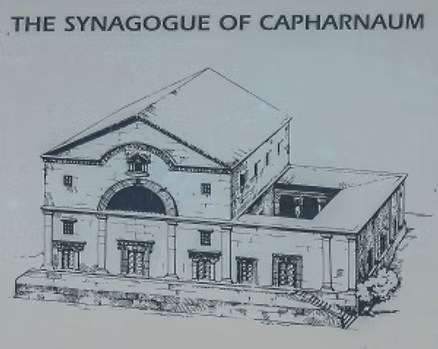
The reality is the word “euthys” says they went there and “immediately” it was the sabbath. This should be understood as the first sabbath after Jesus moved to Capernaum.  Since Jews are not allowed to travel a long distance on the day of rest, Jesus moved to within walking distance of the synagogue, and as soon as he was settled “immediately the sabbath came.”

By adding a simple conjunction (“and”), rather than showing the pause reflected in a comma, there is no emphasis felt in saying, “and he taught.” The reality here is the Greek word “edidasken” has a masculine pronoun applied to the verb “didaskó,” with the focus being after he entered the synagogue, then “he taught.”  While a comma implies “and,” the separation of a comma give greater emphasis to this act of teaching.

The word “didaskó” stems from the word “learn” [“daō”] and means, “to teach (literally, “cause to learn”); instruct, impart knowledge (disseminate information).” (HELP Word-studies)  It can also translated as “Jesus directed” or “Jesus admonished,” which says he gave advice and warning about misunderstandings or erroneous teachings from past rabbis; and he did this gently, but sternly.

One cannot read this selection and come away having imagined the synagogue in Capernaum was like an Catholic church in Kansas, where someone stood and asked, “Anybody want to say something about the reading from the scroll today?”; with Jesus sheepishly standing up, saying, “I would like to speak.”
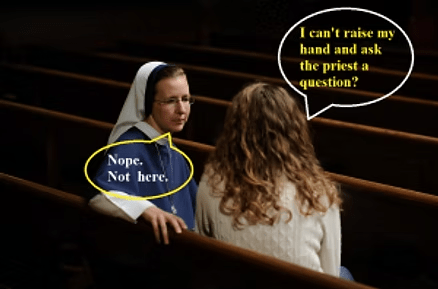
No. Jesus went there for the purpose of speaking to a large gathering of Jews; and when we read, “They were astounded at his teaching, for he taught them as one having authority,” that means Jesus spoke like he had been there with Moses and the Prophets and he knew what he was talking about.

Any scholarly folk who love questioning who wrote the Old Testament, such as a multiple of groups got together and reproduced written texts that were somehow merged into one, some rote memory, some post-exilic remembrances, with nothing saved from any original writings, scrolls or stones … blah, blah, blah … let me offer a suggestion. The original text has been preserved precisely in the Mind of God; and anyone who has served God by reproducing any holy text (Old or New Testament) has been aided by that perfect memory. That means most everyone could have ceased memorizing everything Moses taught the Israelites (a good reason why they lost their lands) and maybe most of the first Temple’s scrolls were physically lost at one point; but that big IF means everything lost was perfectly reproduced prior to the return from Babylon.

By the time Jesus came on the scene in Capernaum, those scrolls had been carefully maintained and read in that or similar synagogue, where Jews recognized the sabbath … for over 500 years.  What they read that day that Jesus and his disciples walked into that synagogue in Capernaum, on that sabbath when Jesus TAUGHT, had been read many times before.  [Note: “Rabbi” means “Teacher of the Torah,” so someone had taught about that lesson before; but not like Jesus TAUGHT.]

When we read, “They were astounded” and “he taught them as one having authority,” we have to see this as meaning everyone inside that Capernaum synagogue was: A: A Jew of devotion to recognizing the Sabbath as holy; and B. All of the adult Jews had heard the scrolls read and discussed their entire lives. So, for them to be “astounded,” where the Greek word is “exeplēssonto,” meaning “amazed, stricken with panic or shock,” Jesus was not teaching the same ole same ole.  Nobody had heard before what Jesus said then, anywhere, ever.

When we read, “he taught them as one having authority, and not as the scribes,” you have to understand that the scribes were those big brained Jews who poured over every detail of the written text, and came up with an expanded view of the meaning each word written revealed. It was from this meticulous examination of Scripture that Jewish civil laws were written, and it was the scribes who wrote the laws that people like the Pharisees attempted to enforce. To ensure that all Jews followed the laws written by the scribes, the scribes wrote manuals from which rabbis could teach the common Jews the reasoning behind the laws, as God’s desire was all Jews to follow this law.

That was how Scripture (Torah, Psalms, Jewish history and stories, and the Prophets) was explained and discussed, from sabbath to sabbath.  Home education was led by father and mother, based on their education.  That was how compliance to the laws was taught prior to Jesus entering that Capernaum synagogue and TEACHING with authority, but not like the scribes.

A common problem created by a big brain is it paints itself into corners. To get out, it walks all over the floor it just painted. This equates to writing inconsistencies, even contradictions, which a truly devoted Jew would notice. The aspect of a Jewish synagogue that is unlike a Christian church is the reading of the day is explained, but then discussed. When inconsistency and contradiction questions are raised, the rabbi simply stays in the corner and says, “I don’t know. However, God knows. You just have to believe.”

That is how Jews over the millennia have become more and more agnostics and atheists.  If the authorities leave unanswered blanks, then seeds of doubt grow into mighty oaks of rebellion.  Failure to teach like Jesus taught causes Jews to then start ridiculing Judeo-Christian dogma as illogical, thus unbelievable. While it was inadvisable to openly leave your religion in 30 A.D., there was a huge burden placed on the shoulders of Jews then, which Jesus knew. The Jews were expected to refrain from being like the people of other nations (Gentiles, thus sinners), but they were not given any of the answers they needed to refrain happily, knowing God was their ally.

When Jesus began teaching in that Capernaum synagogue, eyes opened wide and mouths hung agape. The answers they sought were coming forth. Words were brought to three-dimensional life, so the truth they held was exposed. Jesus spoke like one who could read the Mind of God fluently, not like a scribe who tried to force round pegs into square holes. Jesus spoke as if God stood in their midst, gently but sternly telling them what it truly meant to be a priest (a servant) to the One God.
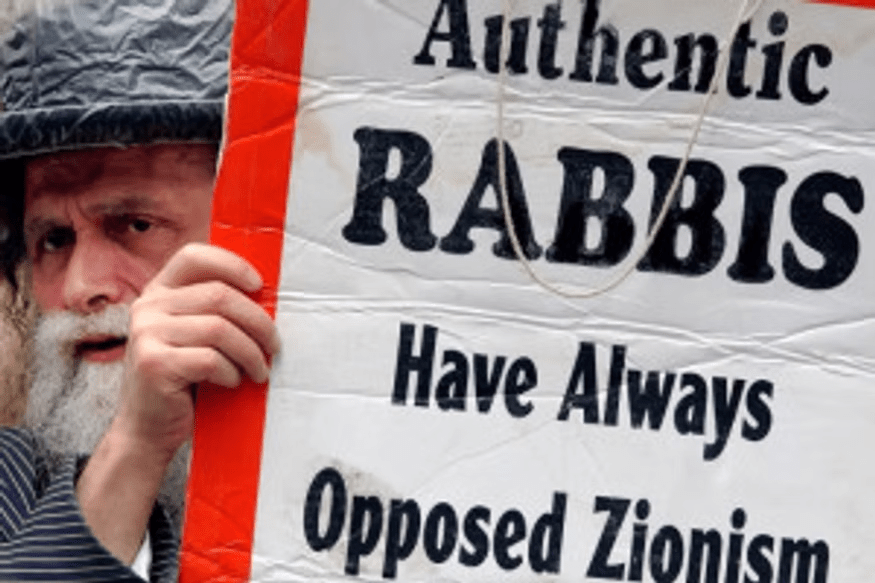
Zionist Jews have no religious beliefs. The hold dear to philosophical faith in governments.

Of course, not all the Jews who were in that Capernaum synagogue were there for the right reasons. We read, “There was in their synagogue a man with an unclean spirit.”

Imagine that for a minute.

Someone sat in that large gathering who didn’t believe in God, or a Messiah, or maintaining the purity of God’s children. With an unclean spirit, he was like a wolf in sheep’s clothing. He had regularly attended for personal gains, such as keeping an open line of business with those Jews of Capernaum who had money. He was there to subvert belief in God, with gossip and evil suggestion.

Now, see if you can understand how threatened that person was with that Jesus fellow now, after he began making sense where the possessed man believed none could be found.

That man stood up and yelled at Jesus, “What have you to do with us, Jesus of Nazareth? Have you come to destroy us? I know who you are, the Holy One of God.”

Think about that. He was saying, “This is not Nazareth! This is the big city, Capernaum, where we live with more freedoms, like those allowed to Gentiles. Have you come to make us separatist Jews again, so the Romans will beat us for acting mighty righteous around them? I know who you are! You are the Holy One of God come to set us straight!”

The man probably would have then screamed, “Blasphemer!” at the thought that some guy from Nazareth could even think he was “the Holy One of God.” What Jesus did was halt that man from saying exactly what a Pharisee or scribe would have said: “Stone him!” Instead, Jesus rebuked the man, saying, “Be silent, and come out of him!”
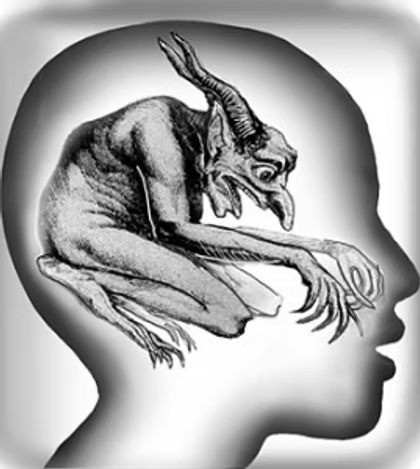
Jesus was not speaking to the human body of the man, but to the unclean spirit that possessed that body, having overcome the soul alongside. Jesus commanded the evil within to exit, immediately; and it did as God commanded, through Jesus speaking for the Father.

That man who confronted Jesus stands as a microcosm of Judaism then, and what is has become today. Ancient Judaism was possessed by an unclean spirit, which is that spirit that still exists today. It is the spirit that denies Jesus as the Christ, because to recognize Jesus as “the Holy One of God” would mean the end of Jews being God’s chosen people – which comes with rights to preferential allowances to wealth.

The children of God concept is nothing more than a myth now, as that distinction ceased when they broke their contractual agreement with God. Any good Jewish lawyer knows the Jews have no legal ground to stand on, in that regard of special rights or favors. The Jews that followed Christ (as embodied by Apostles) became Christians above all, with Judaism being both their ancestral lineage and their social customs.  The children of God go by no name other than Christ – those who are reborn from belief.

The problem Christianity faces today is exactly the same as that which faced Judaism when Jesus stood in that Capernaum synagogue and taught. The spread of Christianity, through the Apostles that spoke exactly like Jesus spoke that Sabbath – with authority, not like that of the scribes – has led to the development of Christian scribes. They are akin to professors of religion in theological seminaries across the world. They write books that must be published, so they can gain tenure at a school’s department of religious studies. Their heart’s desire is more inclined to visit a collegiate library than a church congregation. They teach aspiring priests and ministers as an authority of a branch of learning. They graduate more and more youngsters who have practiced not being visibly nervous as they try to remember who to quote as the source of the message they preach.

Those are the ones that think the path to God leads through Church hierarchies.  Other just begin saying they are a pastor, having learned how to act righteous from going to church.  While that might be closer to the original commissions of Apostles, there is way too much song, dance, and passing the plate to prove to me they are legitimate.  Of course, the pews being filled with bad shepherds of all denominations proves my generalized point.

Christian churches rarely welcome open discussion about the meaning of Scripture or the direction a sermon does or does not take. To avert that option, church members are (selectively) offered Bible study classes or others “extracurricular” activities, which may or may not be attended and /or satisfying. That means Christianity has become as rigidly fixed as was the synagogues of Judah and Galilee, under strict control of the scribes, Pharisees, Sadducees, and temple priests, with a “this is what we got, take it or leave it” attitude.

Today, just as then, the same result is the people who seek truth are being told memorized answers, which have inconsistencies and contradictions that cannot be logically defended in a world filled with unclean spirits, those whose only reason to attend a church is to degrade it. The Christian churches of the West have long left the door open to people with unclean spirits to join their congregations.   Some have even risen to the highest levels that run some denominations.  While not publicly proclaimed, it gives the impression that as long as the unclean spirit people bring contributions that bolster the church’s coffers, the churches have their arms open wide.

The missing link then, as now, is the attacks placed on people who shout out like voices in the wilderness, simply because they are not taught what they shout by schools of philosophy. Jesus was identified as being “of Nazareth,” which meant they assumed him to be some rube with no training by the official scribes. More people have shunned my articles than have embraced them.  Few people have indicated they even felt my writings are dignified enough to comment on (spammers to the contrary).

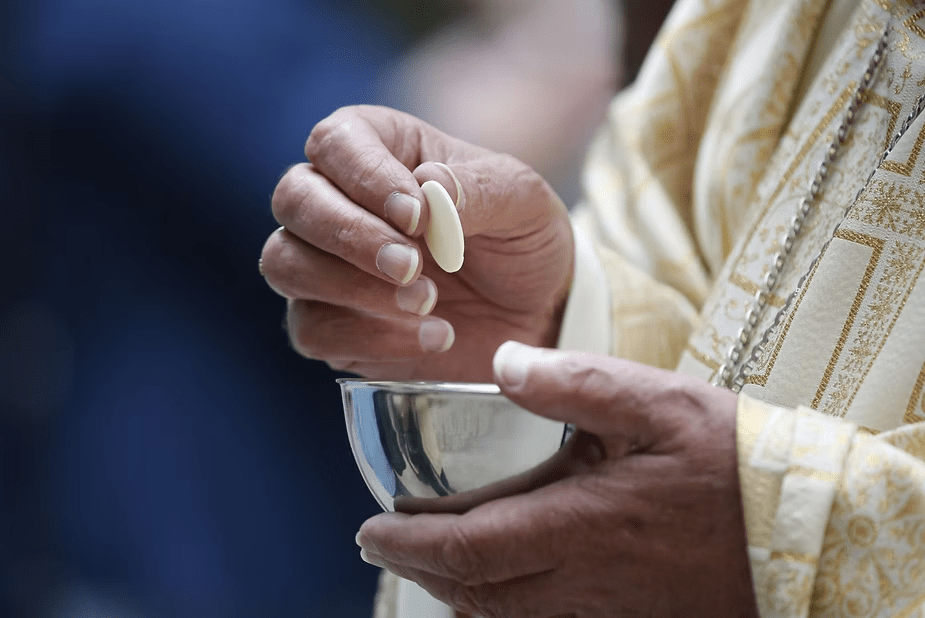
Christians seem to have lost complete touch what being “filled with the Holy Spirit” means, as half appear to think it means being sprinkled with some holy water soon after birth and then eating wafers with a sip of wine thereafter. The other half acts like it thinks Christianity means some “rock star” pastor who sweats profusely as he storms across a stage thumping a Bible and shouting charismatic passages at the congregation.  In both cases, Christians seem way to busy to even sit and talk about their beliefs, reasonably, as though talking religion is bad.  Forget about acting righteous!

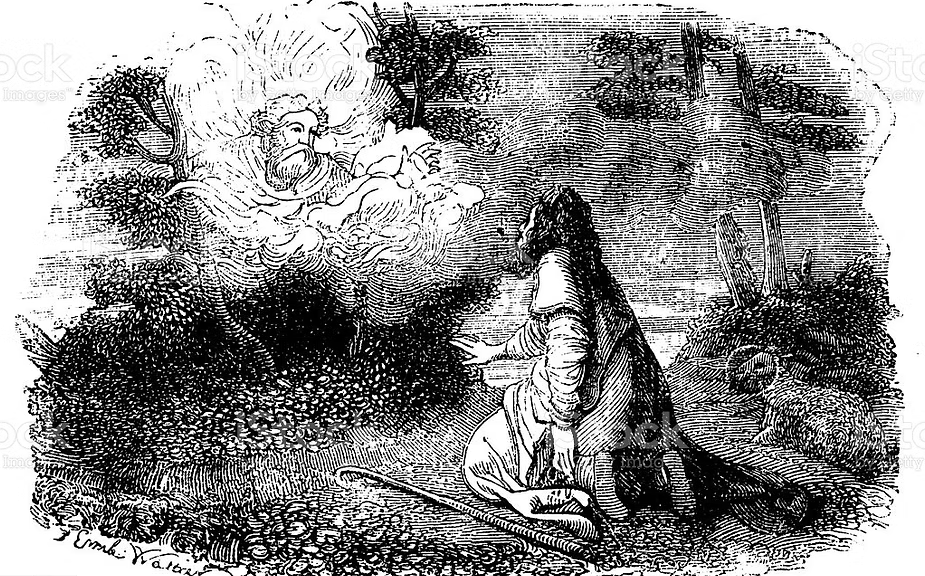
The accompanying Old Testament reading for this selection from Mark is Deuteronomy 18:15-20, which begins by saying, “Moses said: The Lord your God will raise up for you a prophet like me from among your own people; you shall heed such a prophet.” (Verse 15) Moses had a conversation with God because when he died then someone would have to continue giving the Israelites directions.

The reading then has God say, “I will raise up for them a prophet like you from among their own people; I will put my words in the mouth of the prophet, who shall speak to them everything that I command. Anyone who does not heed the words that the prophet shall speak in my name, I myself will hold accountable.” (Verses 18 and 19)

Those prophets would be of Levite lineage, who became the Old Testament scribes that were dispersed to all areas of Israel. After that system failed to influence the people or their kings, prophets became individually necessary.  We know how well that worked out, because (as Jesus said) “A prophet is not without honor except in his own town, among his relatives and in his own home.” (Mark 6:4)

The Prophets (major and minor) began speaking to the people for God. Jesus was also a prophet, like Moses and Elijah before him. The Apostles of Jesus were that same prophet, as the Christ multiplied. Prophets today are not mega-book sellers or internationally known gurus, as anyone proclaiming to speak for God presumptively (from the big brain, not the Holy Spirit) will fade away or be exposed as frauds.
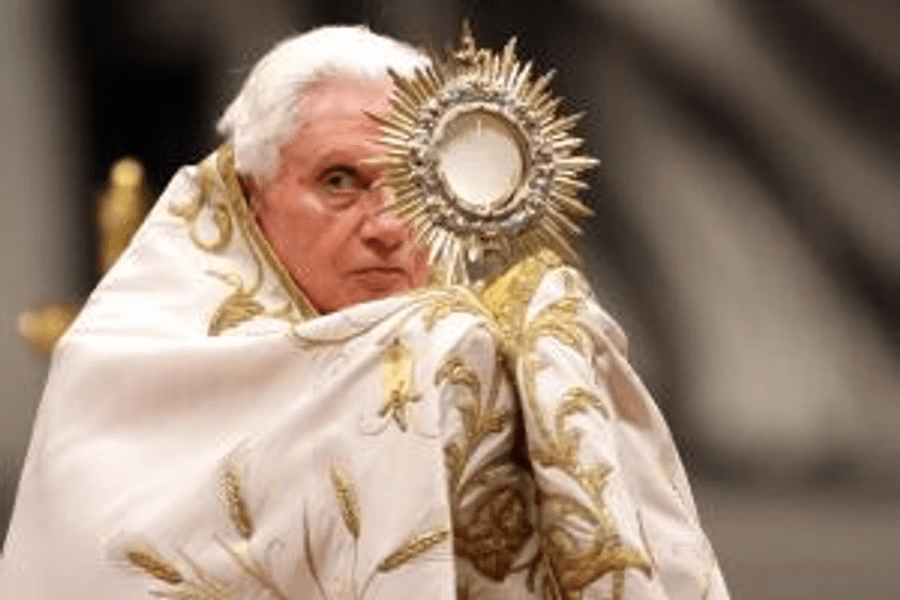

How long do I have to pretend to be pope?
As long as I keep sinning against God.

You judge a prophet by the truth spoken (and that does not mean one judges a prophet by judging predictions that must come true, or else it is a false prophet [Hint: Read Jonah]).  God said, “You may say in your heart, ‘How will we know the word which the Lord has not spoken?’” (Deuteronomy 18:21) That means you know on an inner level, from one’s love of God placing one’s heart in His service, as God’s throne, discerning when the truth has been spoken.  A prophecy will become true when no one listens to the prophet; so judgment by hindsight is a foolish way to show faith.

The Jews in that Capernaum synagogue knew Jesus taught the truth, because they were “amazed.” They had wondered what that reading had meant for a long time. Then, out of the blue, this Jesus of Nazareth was making it understandable. It answered their questions.  Plus, his words made their hearts flutter.

The accompanying Epistle reading comes from Paul’s first letter to the Corinthians, which compares idol worship and foods acceptable to gods, along with the misguided knowledge that is used to fill the minds of weak followers, such that the weak-minded think they can become closer to God by eating certain foods. In that reading, we hear Paul say, “We know that “all of us possess knowledge.” Knowledge puffs up [or “makes arrogant”].” (1 Corinthians 8:1) Paul then later wrote, “So by your knowledge those weak believers for whom Christ died are destroyed.” (1 Corinthians 8:11)

It was the knowledge of the scribes that had long been misapplied to the Israelite peoples, which had destroyed the religious confidence the Jews in a Capernaum synagogue had.  That was why they were “astounded” when the truth of God’s knowledge stood up and TAUGHT.

This lesson during the season of personal Epiphany is to realize one is either a student of prophecy or a teacher of prophecy; knowing everything in the Holy Bible is true prophecy.  To be filled with the Holy Spirit means one can only be either one who seeks the truth or one who is a seeker of those who seek the truth. To sit on the fence means one is filled with doubt, due to a lack of deep faith.

The same problem exists today as Jesus found in Capernaum that sabbath, which continued throughout his ministry.  Casting out unclean spirits on the sabbath was judged as a sign of a demonic man.  That judgment came from people born into positions of religious leadership, having done little to justify the trust they held.  Their brains led them to find excuses for not explaining God’s word.  It was easier to think things up, rather than seek the truth.  The Jews turned just enough away from God to let unclean spirits get into their heads.

The hope of this reading is when we read, “But Jesus rebuked him, saying, “Be silent, and come out of him!” And the unclean spirit, convulsing him and crying with a loud voice, came out of him.”  Turning to God in earnest can release one from the comforts of life on earth, causing one to convulse from having to live on faith, while serving the LORD over self.  One might cry out loudly as one’s addiction leaves the body, freeing it to realize being reborn as Christ will bring greater rewards.

To take that leap of faith requires total commitment … a marriage to God.  The truth is what commits one to God, and the truth is what sets one free from the sins of the world. (John 8:32) One is not free when one questions the answers one has heard from scholastic authorities, the men and women degreed by institutions of learning. One is not free by sending money to television evangelists.  One is not free when one is afraid to explain one’s beliefs to a stranger, always stumbling over your brain trying to remember how someone else had once put something so convincingly.
Mark 1:21-28 – Convulsing into righteousness

Jesus and his disciples went to Capernaum; and when the sabbath came, he entered the synagogue and taught. They were astounded at his teaching, for he taught them as one having authority, and not as the scribes. Just then there was in their synagogue a man with an unclean spirit, and he cried out, “What have you to do with us, Jesus of Nazareth? Have you come to destroy us? I know who you are, the Holy One of God.” But Jesus rebuked him, saying, “Be silent, and come out of him!” And the unclean spirit, convulsing him and crying with a loud voice, came out of him. They were all amazed, and they kept on asking one another, “What is this? A new teaching—with authority! He commands even the unclean spirits, and they obey him.” At once his fame began to spread throughout the surrounding region of Galilee.

———-

In this reading found early in Mark’s Gospel [the story told by Simon Peter], it is good to see that Jesus began his ministry by “preaching the good news of God” in Galilee [where the Greek “kēryssōn to euangelion tou Theou” is found in Mark 1:14], the word “euangelion” must be read as “truth,” because that becomes the “good” factor of Scripture. Many people can read the words and come away without seeing the truth being exposed to them. Jesus then went through Galilee spread the truth of God’s word, bringing clarity to that element.

When we read this took place on “the sabbath” and inside a “synagogue” in the city of Capernaum [where Jesus had recently moved], he was welcomed as a newcomer Jew, thus one who brought a fresh voice to the meaning of the readings on the sabbath. As a teacher in a synagogue, Jesus was recognized as a rabbi.

When the translation says, “They were astonished at his teaching,” the Greek word “exeplēssonto” is translated as “astonished.” Strong’s states the root word (“ekpléssó”) to be defined as “to strike out, hence to strike with panic, to amaze.” This should not be read as a good response to the truth Jesus taught the Jews in the synagogue in Capernaum. The meaning says the truth shocked them, making them be aghast at what Jesus said, because no one had ever said such things before.

This means that when we read “he taught them as one having authority, and not as the scribes,” that means the Jews in that synagogue in Capernaum expected Jesus to be approved by those in the Temple of Jerusalem to teach as a rabbi, such that he had been given the power to act as were all other rabbis. All the other rabbis had been taught by the scribes what the words of Scripture said, proposing a meaning, but more often proposing a way to use those words in false ways, sidestepping the truth. Therefore, Jesus taught that sabbath lesson with a confidence that expressed the assuredness of having authority to say what he said; but, nothing he said matched what had been said before, by those rabbis having learned from the scribes.

One has to then see this past history as being why “immediately [from “euthys”] there was in their synagogue a man with an unclean spirit.” As soon as Jesus spoke the truth in convincing ways [leaving the Jews with absolutely nothing they could say in retort, thus speechless], one in the congregation stood as a reflection of what not teaching the truth in a holy house will do – it will fill the seats with sinners pretending to be clean of sin. The man who rose to speak was probably a leader in that synagogue and not some newcomer like Jesus. He was probably expected to speak for those Jews in Capernaum, committed to challenge anyone who threatened what they had come to believe. That makes this man be [albeit unstated clearly] a false shepherd who had something to protect by lying to the congregation.

We then read: “[The unclean spirit within the man] cried out, “What have you to do with us, Jesus of Nazareth? Have you come to destroy us? I know who you are, the Holy One of God.” In this, a lead Jew in Capernaum knows Jesus is from Nazareth. Nazareth was a place where the Essene sect of Judaism thrived. The Essenes were seen as zealots, who did things differently than the Pharisees and Sadducees. As such, the question “What have you to do with us?” is asking, “Why are you here and not with other Essenes?” The question asking, “Have you come to destroy us?” is related to the astonishment that what Jesus taught caused. He was saying that to believe what Jesus said would mean the destruction of Judaism altogether. While the exclamation, “I know who you are, the Holy One of God!” appears to be an unclean spirit knowing who Jesus is, the reality is the man stated he knew who Jesus was proposing to be, which was the Messiah. That he said as an exclamation that nobody can ever be that holy. When Jews were led by false shepherds, he was asking, “How can anyone ever be the Holy one of God?”

This is where it is important to recall how Mark 1:14 had begun by stating, “After John was put in prison.” That was the beginning of the transfer of power from John the baptizer to Jesus the baptizer with truth, from the Holy Spirit. John, like Jesus, was an Essene. John did not teach as a rabbi in synagogues because the synagogues denied him entrance. Because John did not preach what the scribes taught, John was forced to go into the rivers, in the wilderness. Rather than dress like a highfalutin rabbi and act wealthy because of the Law, John dressed like a Wildman. Since Jesus was of the same sect as was John, he was just as unwelcome as an Essene; but Jesus did not act like John, so he was allowed into the synagogue in Capernaum.

When the translation states, “Jesus rebuked him, saying, “Be silent, and come out of him!” the Greek word “epetimēsen” is translated as “rebuked,” but also means, “to mete out due measure, hence to censure.” As such, Jesus refused to allow this man [leader of Capernaum Jews] to have any voice in that place of reverence to God. The unclean spirit had just blasphemed God by denying Jesus was His Son [even though the man did not know it]. Therefore, when Jesus spoke to the man is was stern, as a firm warning to “Be silent!” That was God speaking through the Son, as a Commandment. The man would have immediately stopped talking. Then God spoke through Jesus saying, “Come out of him,” which was a command to the unclean spirit. It, likewise, did as God Commanded.

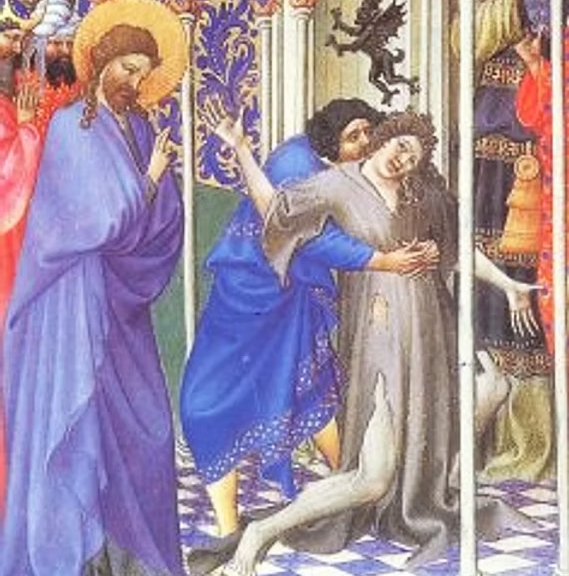
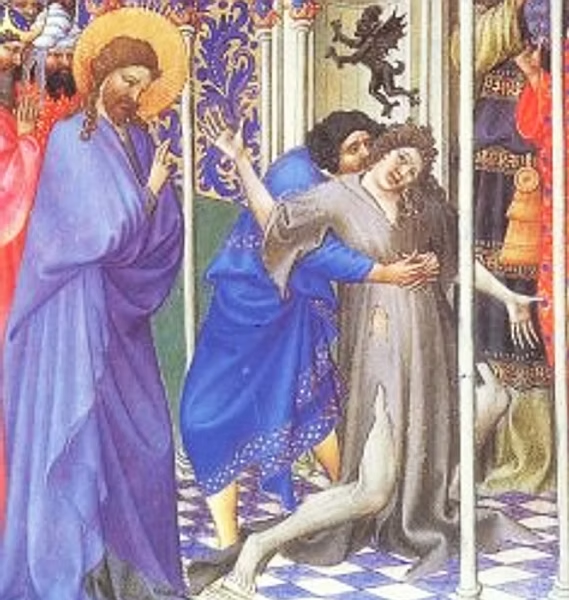
When Mark wrote, “the unclean spirit, convulsing him and crying with a loud voice, came out of him,” it is easy to see this scene with one’s mind’s eye, but it is not as easy to see this Command from God [through the Son] being to a man who had a soul of life that had been joined to an unclean spirit – a soul of death – a possession of a demon that was bad. The clarity of truth that must be seen is the man [a leader of the Jews in Capernaum] had his soul married to the soul of an evil being that had departed this world, entering his soul because he was weak and powerless to deny that unclean spirit entrance. The marriage had worldly benefits to that leader, such that he fell in love with his inner self, which whispered sweet nothings into his brain, which caused him to sin, time and again. However, when God told that dead soul to leave that body immediately, the convulsions were not unlike having a tooth pulled or local surgery without anesthesia. The unclean soul had become so much a part of the man that it was like tearing a part of him off, with the unclean soul knowing it had to leave, but the weak soul fighting to hold on.

When the man was left a weakened body of flesh, trembling on the floor or in a chair, the people are then said to say: ““What is this? A new teaching—with authority! He commands even the unclean spirits, and they obey him.” That must be seen as a synagogue of Jews, all who had been taught to memorize Scripture their whole lives, but none knowing anything of value behind the words they learned to recite, none of them had ever come to know God [YHWH]. Just like when God sent manna from heaven [manna was the truth the Israelites needed to consume daily, in order to know God], they asked, “What is it?” [the meaning of “manna” or “μάννα”]. The Jews in Capernaum had never been fed spiritual food – the manna from heaven – the truth of God’s Word [the Gospel]. They had never experienced the authority of God’s presence among them, as they only knew false shepherds. They had never had a leader who could teach them all the truth of Scripture, thereby keeping all who entered that building clean in spirit and soul. They never had a good shepherd who could spot one with an unclean spirit and cast it out, with the authority of the Holy Spirit.

When this reading closes by stating, “At once his fame began to spread throughout the surrounding region of Galilee,” a better way of translating the Greek is as: “Went out the news of him immediately , everywhere into the surrounding region of Galilee .” In this, the Greek word “akoē” is translated as “fame” or “news.” This has to be seen as a word that is comparative to the word “euangelion,” where the word “akoē” does not demand the truth be told. It is thus “rumor” or second-hand scuttlebutt, while some truth would become embellished by things made up, which are not the truth. This should then be seen as how the truth being told to someone is as lasting as is a ripple made in calm water. As soon as the truth is told, things change to cover it up and make it seem like there never was a ripple. This is why Scripture is not the truth that can be learned from listening to others, because everything becomes hearsay and hearsay is often filthy with make believe and untruths. This means crowds began to follow Jesus because they heard he did some stuff, not because they too wanted to do the things Jesus did, which demanded knowing the truth of God’s Word by being a Son of God.

What is told by Mark in these verses are not seen for what happened afterwards. The man who had the unclean spirit cast out of him was forever changed. God had spoke to him directly, through Jesus. The unclean spirit left him, leaving him not only a clean soul, but one who had become touched by God’s Holy Spirit. While names were not used, and this man was not named as a rabbi or leader of a synagogue, it would be him who went to find Jesus where he had to begin preaching (by the sea) because the synagogues had banned him. It would be that leader of a synagogue whose daughter was ill and dying, who went to have Jesus heal her. These loose parts can be seen connecting, as the truth untold, only seen when one is led by the Holy Spirit to see and know the truth. Therefore, Jesus is not limited to being only one man, as God sent Jesus to die and be reborn in many, many men and women.

———-

Now, this reading is read during the fourth Sunday after the Epiphany, in Episcopal churches. These verse speak loudly to the parallel ways that modern Christian churches have become, compared to that ancient Jewish synagogue in Capernaum. Christian church leaders speak just like men and women filled with unclean spirits – a false shepherds, who deny the truth of Scripture ever be known. They do not know the truth, because they have unclean spirits, and they do not want anyone who comes [never looking like Jesus of Nazareth] teaching with authority. They ask, “Where did you get a diploma to preach?” knowing a true Saint never needs a seminary to teach him – they only know what scribes know.

While there was Jesus of Nazareth walking into that synagogue, way back then, who taught the truth like it had neve been taught, and it made the jaws of Jews drop agape, the physical body of that Jesus left the world long ago. Jesus of Nazareth can only appear in a Christian church today as a Saint reborn in the name of Jesus Christ. A Saint, like Jesus, speaks the Commands of God, and all souls hear that voice. Saints are very rare these days.

Still, the truth of what Mark wrote is always there. It is in the Word. Anyone can read the Word and find Jesus of Nazareth speaking to him or her, just as Jesus spoke to the man with an unclean spirit. You become one with an unclean spirit who sees oneself in the Word, to the point that one prays to God to make you clean again. That might mean a long time of prayer; but one day, if one is truly committed to being married to God and being reborn as His Son, then suddenly one will hear the Command, “Be silent! Come out!” Then, be prepared to fight like heck to keep from changing – from filthy sinner to righteous Jesus reborn.

Deuteronomy 18:15-20 – God will raise up for you a prophet

Moses said: The Lord your God will raise up for you a prophet like me from among your own people; you shall heed such a prophet. This is what you requested of the Lord your God at Horeb on the day of the assembly when you said: “If I hear the voice of the Lord my God any more, or ever again see this great fire, I will die.” Then the Lord replied to me: “They are right in what they have said. I will raise up for them a prophet like you from among their own people; I will put my words in the mouth of the prophet, who shall speak to them everything that I command. Anyone who does not heed the words that the prophet shall speak in my name, I myself will hold accountable. But any prophet who speaks in the name of other gods, or who presumes to speak in my name a word that I have not commanded the prophet to speak—that prophet shall die.”

———-

This is the Old Testament selection to be read aloud in Episcopal churches on the fourth Sunday after the Epiphany, which will next come on January 31, 2021. This is a Year B reading; but verses 15-18 are also read yearly, as a selection for the feast of Saint Bartholomew, recognized each year on August 24th [in 2021 that will be a Tuesday]. In that regard [a feast for a Saint], it is good to know that the reading above cannot be only seen as prophetic of Jesus [Saint Bartholomew also, minimally]; and, that is necessary to realize during the season when a personal epiphany is the expectation for all calling themselves Christian.

This is a fairly simple conversation between Moses and the Israelites, promising them that after Moses will come another who will lead the Israelites like Moses led them. To then think beyond Joshua, to the time of Jesus, is ludacris. If there had not been a long series of prophets who truthfully spoke what God’s Will was, then the Israelites would have been overrun by the tribes of Canaan, which is the lesson taught in the Book of Judges, where one judge after another had to come with the Word of God to save those days. Each time the Israelites had to be willing to believe and follow that prophet [judge], for their salvation to be realized.

Saul was the choice of the Israelite people and Saul was not a prophet who spoke the truth of God, so Saul died. David was the choice of God, after the Israelites rejected God, much in the same way the Israelites told Moses they feared the fire leading them. So, Jesus was the one who came after all the prophets who wrote of the collapses and exiles, all who spoke the truth of God’s Word. The coming of Jesus, however, meant he would become the foremost prophet being fulfilled; but Jesus still was not the last.

Jesus would immediately be followed by twelve Apostles [Saints], who were all reproductions of Jesus, as the Christ reborn in the flesh of others. Those twelve then immediately transferred the Holy Spirit to three thousand other Jews / pilgrims, who all became reborn in the name of Jesus Christ on Pentecost Sunday [aka Shavuot]. The advent of Christianity was based on the one seed of Jesus being planted in fertile flesh, so plenty of good fruit came forth over the subsequent centuries, which is why there are people calling themselves Christians today. The problem is there is a great shortage of Saints [Apostles] now, so Christianity has reverted back to the state of being followers of Yahweh that have become lost and in dire need of a judge to come make everyone get back on the path of righteousness and be saved as a people.

When Moses said to God, “The Lord your God will raise up for you a prophet like me,” and then the Lord said back to Moses, “I will raise up for them a prophet like you,” this says Moses was a model of all prophets who will act as he acted. God told Moses: “I will put my words in the mouth of the prophet, who shall speak to them everything that I command.” Moses did that.

When John began his Gospel by writing, “In the beginning was the Word, and the Word was with God, and the Word was God,” that says “the Word” [“ho Logos”] was that model, with Jesus being the one born of God to be in the flesh speaking His Word, as He commands it.
This makes Jesus be, in essence, the ‘prototype’ of that model, which Moses had enter his flesh [reference “the burning bush”]. Thus, Moses was in the name of Jesus Christ, as was Elijah [and all others in Judaic lineage], such that Simon Peter, with James and John of Zebedee, saw this multiplicity of the Christ Mind shining through the ages [reference “the Transfiguration”] as having been Jesus … from the beginning. The “Christ” is the Mind of God, with “Jesus” being the model of all flesh that would speak for God, always known by God as His ‘prophet sharing’ plan.

This means “in the name of Jesus Christ” is the model of all prophets of YHWH. So, when God told Moses to tell the Israelites [give them fair warning]: “I will put my words in the mouth of the prophet, who shall speak to them everything that I command. Anyone who does not heed the words that the prophet shall speak in my name, I myself will hold accountable,” that means hear the truth or be judged accordingly for not understanding the truth. The message of Jesus said the old model of one prophet being sent to act as the liaison for God, to the people, so the people can be led like sheep by a divine leader of many, those days are over. The new model brought by Jesus [sent by God] is one that from then on demands each and every one of “the people” have God speak the truth of His Word directly to them, so they become His prophet who speaks His commands [the truth of the Word].

The Hebrew words that translate as saying “does not heed” are “lō-yiš·ma,” from “lo shama,” they actually mean “not to hear.” This leads one to seeing a refusal “to listen” to the Word of God, which comes from every prophet of YHWH. While Moses spoke audible words to the Israelites that were his people, he later had them write everything down on scrolls, which means all of the Torah [et al the Mishnah] is the Word of God through His prophet; and, every book written by one of God’s prophets [those of canon and non-canon designation] is the Word that must be heard [read] as the truth that must be followed. All divine Scripture acts just like Moses going to his people saying, “Listen up guys, this is what God told me to tell you to do.” It means every book in the Holy Bible [a collection of divine books] is God speaking to the reader[s], such that if the reader[s] is one of God’s people, then that reader[s] will heed [hear, listen to] those Words and ACT accordingly.

This means that those who do not listen and act accordingly will be judged for that inaction.

In that judgment, God will hold each soul accountable. When the translation above says, “I myself will hold accountable,” the Hebrew written [“’ā·nō·ḵî ’eḏ·rōš mê·‘im·mōw, from “anoki darash im”] says, “I [God] will require with.” The word “darash” brings about the aspect of an “inquiry” or “a reckoning,” from “careful study,” which means an “accountability” that each soul must go through, because God will “seek” the truth as to why one would read the Word of God [written through a prophet] and not heed that Word.

The biggest reason for that failure of ordinary souls in flesh is the answer, ‘Nobody told me I had to do any of that stuff!” That places the blame of oneself on those who oneself followed in life, like a sheep. That always places the blame on the teachers [a rabbi then; a pastor, priest, minister, preacher and a rabbi today]. Therefore, God then told Moses to tell the Israelites [modern Christian readers of the above text], “any prophet who speaks in the name of other gods, or who presumes to speak in my name a word that I have not commanded the prophet to speak—that prophet shall die.” That needs to be understood.

Here, the use of the Hebrew word “nabi,” which translates as “prophet,” should be read as a secondary [lesser] distinction, as “a spokesman” or “speaker.” This means one who speaks, without making a claim to be a “prophet,” while explaining divine text [i.e.: anyone who stands before people who say they believe in Yahweh], they become seen as “prophets,” when they are not. The literal translation of the Hebrew presents the possibility that someone will be a “speaker” who “presumes” [from the Hebrew word “yā·zîḏ,” from “zud” or “zid”] to speak for God [this perfectly fit the Pharisees Jesus pointed out, where “presumption” is a display of “arrogance”]; and, the option can also be an “or” situation, where the “speaker” stands before followers of Yahweh, while speaking “in the name of other gods” [“elohim”]. This use of “gods” is very important to grasp.

Christians [especially Episcopalians] love to translate all the uses of “elohim” in the Old Testament [especially those found in Genesis 1 and 2] as meaning “God” [rather than the clarity of the word stating “gods”]. This means Christians struggle with accepting there are many “gods” in the world, with many of them creations of God, designed to do the physical works on the material plane. Such works of “gods” are then the gods of physics, biology, mathematics, and others with laws and truths founding them. The aberration of such “elohim” are human brains, which misconstrue such “gods” created by YHWH as an understanding within their brains, which makes them stand before audiences [including those who follow God] and speak in reverence to the “gods” of science, philosophy and politics. Those are the intelligent, from whom God has hidden the truth of his Word, so they beat their chests, saying, “Look at me as a god, because I am smart!” In reality they have no authority to speak for God. They see themselves as the “gods” others should follow.

Now, when this warning that has been set forth by God, through Moses, to the Israelites [his people] and by writing to us [all readers] who follow God, the punishment stated is clear: “that speaker shall die.” Here, again, is where people refuse to accept the grander meaning of “shall die” [Hebrew “ū·mêṯ,” from “muth”]. That grander meaning says everyone born as a soul in human flesh is going to eventually die, where death is the separation of the soul from matter. Matter has no life, meaning the material plane is the plane of death [the absence of life]. Therefore, the judgment for anyone who speaks falsely as a prophet of God, and/or anyone who listens to a false prophet [or a bad shepherd] is likewise being led down the path to death. At death, the soul condemned “to die” can only be placed back into a temporary body of flesh [reincarnation].

The true prophets of God [all in the name of Jesus Christ] offer life eternal for a soul, which means a release from the physical plane. To be given eternal life, one’s soul must become married to God, as was Moses and Jesus [and all true prophets who spoke the Word of God]. Such a marriage [call it a divine spirit possession – a soul merged with the Holy Spirit of God] yields the birth of God’s Son [many names in Judaic history with the Christ Mind, the model always being Jesus]. So, the result of that marriage is one becomes Jesus Christ resurrected within one’s flesh. If one wants to avoid the judgment of death [call that reincarnation (at best) or sent to wander in darkness forevermore (at worst)], then one needs “to heed the words.”

Then one needs to act righteously, as a prophet of the Lord, who then takes the truth to others who seek eternal life, not death.

———-

In today’s perverse state of being that is found in the “United States” of America, people calling themselves “Christians” are down on their knees thanking God for having allowed theft to be the way to dethrone Donald Trump. As they do that, others calling themselves “Christians” are down on their knees praying to God for vengeance and justice, to stop the thieves and demonstrate the power of God, by casting out lightning bolts that destroy half of the people in the U. S. of A. [a political distinction]. Every one of those calling themselves “Christians” needs to look hard at the words God spoke to Moses [in Deuteronomy 18:15-20], meant to be known by them [as readers]. None of you are true prophets of the Lord. All of you are worshipers of false speakers [Joe Biden, Donald Trump, all politicians], thus your souls will be held accountable, after an inquiry as to why you think God gives a stinky about who runs the place where the name is a misnomer, with nothing being “united” about it. The leaders are all going to face the judgment “you shall die,” just as will all those who lament and rejoice the happenings related to those “other gods.”

As a lesson read aloud for followers of God to hear [thus heed] as part of a season where the expectation should be on a personal Epiphany, this says one needs to understand where one truly is. The people of Moses (by the time the book of Deuteronomy was orated by the prophet) were those who had long before left Egypt behind, where Egypt is symbolic of the world that America is today [a mess of idol worshipers]. The people of Moses were the true followers of God, walking behind a true prophet [Moses], who was born in the name of Jesus Christ, the model for all true prophets of YHWH. This country lived in today has no Moses, has no Jesus, and has no prophets who heed the Word of God and lead the flock of God’s followers, because that old system was changed with the coming of Jesus, born of a woman in Bethlehem. Thus, a personal Epiphany is YOU have come to the clear realization that little ole You is expected to lead yourself to the truth, with God’s help, as a prophet who hears, listens, and acts on what one hears the Word say … to you.

Next, look at how the Episcopal lectionary pairs this reading with one from Mark 1, where Jesus spoke in a synagogue and one with an unclean spirit spoke out against Jesus being there. The personal Epiphany all Episcopalians should have is YOU have become people with unclean spirits that need to be cleansed. The problem is clear: You think you know some things, when there is no truth in what is known by You.

Post Script: The amazing thing about the writings of the Holy Bible – First and Second Testaments – it the depth of truth contained in that written never ceases to amaze and abound with new revelations of that found amazing prior. This was written in 2020-2021, for a reading to take place in January 2021. I now write three years later, in late-November 2023.

Deuteronomy 18:15 states this, as is verifiably translatable for the Hebrew written:

“a prophet from your inward self from each to the other [all brothers] like me [Moses] , [he] will raise up in you Yahweh two eternal souls [elohim] possessing you [each soul to the other soul, in all each brothers] ; him [the possessing el sent from Yahweh] you shall listen to .

This has Moses telling each follower of him – Moses – they would each have to be joined with the soul of Yahweh elohim [Adam, stated eleven times in Genesis 2]; and, this is what makes one (a soul in a body of flesh) different from someone born in Egypt, who followed many priests, to many gods (elohim). The descendants of Jacob – the sinner – would be considered Jacobites, not Israelites. Jacob was called Jacob in Genesis, from birth until his death; but when he wrestled with his own soul (an angel el) and his soul won, when he was told he was “Israel” – a name meaning “Who Retains El” – his soul became like Moses said. Jacob became reborn as “a prophet within his soul, a brother to Adam [tba “Jesus”], therefore a Son of Man, one “Who Retained El” that was the Son of Yahweh. Jacob was then raised up spiritually by an inner Lord soul, who possessed Jacob’s soul. Jacob would never sin again, because he heard, listened to, and followed the inner commands of his newly acquired Lord soul.

Thus, what Moses said cannot be seen simply as a prophecy of Jesus coming, to be a replacement Moses, for lost sheep to follow behind. The coming of “a prophet raised for you” is YOU; but to become that prophet, YOU must wrestle with your soul and your soul must win. Otherwise, your body of flesh will always lead you away from total commitment to Yahweh and toward some external false shepherd that says two things: 1. “I am the prophet raised up for you, as Moses prophesied;” and, 2. “You can do all the sins you want, because Jesus told me he would forgive everyone.”

Moses did not lead Jacobites into the wilderness. If he took non-believers, nobody would have needed to leave Egypt. Moses would have simple said, “I’m back! Guess what. I was touched by One God and told to be the prophet everyone in the world should follow.” Moses, had he done that, would have been crucified like Jesus, with nobody ever having left Egypt [metaphor for a sinful world]. Moses led Israelites into the wilderness, where all who left with him from Egypt found the Passover the night when they all wrestled with their souls, each winning. The reason Moses had to restate this prophecy is those Israelites who originally followed him, as Israelites, then went and made babies [a responsible thing to do, as Jesus said, “bring the children to me.”]. Of those newborn in the wilderness, ALL grew up to be self-serving brats, who preferred external prophets to being responsible prophets themselves.

This is the way of life and a necessary path to knowing sin, before one can have that wrestling match with one’s soul. One has to desire Yahweh with ALL one’s heart, soul, strength, and mind … not just a little bit … which means one needs to prophesy one’s own eternal damnation and fear that end. Only when one has found the serpents of the wilderness will kill one will the message of Moses be truthfully understood. Salvation means being raised up a prophet to listen to … within, not without.

The prophecy of Jesus coming is true; but only when one’s soul has been joined with the resurrected soul of Jesus [a.k.a. Adam]. YOU must be reborn as Jesus in new flesh (that does not look like his pictures), in both males and females. To mature in Christ means to know sin first; so babies sprinkled with water does not prevent that from happening.

1 Corinthians 8:1-13 – Understanding food sacrificed to idols

Now concerning food sacrificed to idols: we know that “all of us possess knowledge.” Knowledge puffs up, but love builds up. Anyone who claims to know something does not yet have the necessary knowledge; but anyone who loves God is known by him.

Hence, as to the eating of food offered to idols, we know that “no idol in the world really exists,” and that “there is no God but one.” Indeed, even though there may be so-called gods in heaven or on earth—as in fact there are many gods and many lords— yet for us there is one God, the Father, from whom are all things and for whom we exist, and one Lord, Jesus Christ, through whom are all things and through whom we exist.

It is not everyone, however, who has this knowledge. Since some have become so accustomed to idols until now, they still think of the food they eat as food offered to an idol; and their conscience, being weak, is defiled. “Food will not bring us close to God.” We are no worse off if we do not eat, and no better off if we do. But take care that this liberty of yours does not somehow become a stumbling block to the weak. For if others see you, who possess knowledge, eating in the temple of an idol, might they not, since their conscience is weak, be encouraged to the point of eating food sacrificed to idols? So by your knowledge those weak believers for whom Christ died are destroyed. But when you thus sin against members of your family, and wound their conscience when it is weak, you sin against Christ. Therefore, if food is a cause of their falling, I will never eat meat, so that I may not cause one of them to fall.

———-

Note: Before reading this, be warned that understanding Brother Paul requires some effort. I have made an effort to help others realize the deeper meaning of this reading, in a modern context. If you are afraid of ‘blogs’ that are 4,000 words long, then leave now. I have actually skipped through the majority of this reading (verses 3-13), leaving the meaning that I have skimmed over for the true seeker to delve into later. Only the true seekers will take the time to see how deep Paul’s words are.

———-

This is the Epistle selection for reading in Episcopal churches on the fourth Sunday after the Epiphany. It is accompanied with the Old Testament reading from Deuteronomy 18:15-20 and the Gospel reading from Mark 1:21-28. All will be read aloud on Sunday, January 31, 2021. Because all writings of Paul are so rich with hidden meaning, so deep that understanding requires the reader be a true Christian and not someone void of the Holy Spirit, it is important to faintly grasp the meaning of these 305 words above, by knowing the theme of all the readings of this Sunday. In the season of Epiphany, one should be read Paul’s words from centering on the duality of: being a prophet of God; or, being an unclean spirit. A Saint knows both, but an ordinary human being has no knowledge of God’s voice.

That needs to be determined, because Paul starts this chapter off by talking about “food sacrificed to idols” (from the Greek “eidōlothytōn”). That Greek word is a combined form word, as “eidolon” (“an idol, false god) and “thuó” (“I sacrifice, generally an animal; hence: I kill). (Strong’s) This usage then becomes a statement about the pagan practices of eating the food generated by animal sacrifices to pagan gods, of which the Greeks were said to have many. By seeing that, there can be no misunderstanding the sacrifice of animals in the Temple of Jerusalem as being the direct reference here.

The issue here goes all the way back to Adam. While nothing is written about it, Adam was the first human on earth that was a priest. He was a priest to the One God – YHWH – and Adam was made for the same purpose as was Jesus: Both came to earth in mortal flesh to teach the ignorant masses about the One God. Before God sent Adam, the world was only inhabited by a Man that knew nothing of the One God; and, Man also knew nothing of other gods. Therefore, after Adam broke God’s rule and fell from grace, he was tasked with performing rituals that would be the first ever practiced by anyone. A couple of those ritual practices were altar building and animal sacrifice.

While that is not written about Adam, it can be assumed from the story of Cain and Abel. It is the role of a father to teach the children what to do and how to do it. That means the priest Adam raised his sons Cain and Abel to be priests as well. Because the ‘business’ of priesthood was new on the earth, Cain had not been taught God was only pleased with animal sacrifices. Cain’s sacrifice of grains and fruits did not please Yahweh because God cannot receive the physical, only the spiritual. The soul released by animal sacrifice is what pleases Yahweh. The burning of plants pleases the goddess we call Mother Earth. Mother Earth is not a living god, but a reflection of fertility on earth. The Greeks erected idols [altars inside temples] in the names of gods and goddesses; and, the Greeks had several masculine and feminine names for other gods. Many had Mother Earth qualities.

The story of Cain’s banishment should be seen as parallel to Adam’s banishment, but on two different levels. Adam was made pure, who sinned making him impure. Adam thus was placed into the realm where impurity is allowed. God spoke to Adam and guided him to do priestly acts that atoned for his sin. Cain was born of the world and took to the world as a grower of plants. His plant sacrifice was not pleasing to Yahweh, thus Cain was not told his sacrifice was welcome, like Abel’s sacrifice of a living creature. That led Cain to murder, which is an act only possible in the worldly realm, where life is temporal. [Adam could not have murdered in Eden, as all creatures in Eden were immortal.] That worldly sin led to Cain being banished from the priesthood that served the One God, causing him to be come the first priest that served the voice of the serpent, who likewise had been cast forever into the earth. Therefore, all religions that came to be in the world of human beings, which were not honoring the One God, were created by Cain. The lineage from Adam [those not banished] is that of Abraham, Isaac, and Jacob.

Certainly, God told Moses to have the Israelites [each family] kill a yearling lamb and spread its blood around the doorposts of their homes, then burn the flesh and consume it all before the next morning. The Passover of God meant death to all who did not know that ritual.
Once the Israelites had escaped the passing of death [mortality], the ritual of Passover became one commanded [forevermore]. Thus, the pilgrimage to Jerusalem was for the purpose of sacrificing lambs to God, with the Jews consuming the meat. Still, that symbolic act did not please God, since God only received the life spirit [souls] of sacrificed animals, able to smell the smoke that was representative of the combustible fats [et al] that were transformed in burning to a gaseous state. The charred meat was of no use to God [just like He had no use for burned vegetables], so the priests and the Jews ate that meat.

God had actually told the Israelites he no longer wanted them to make animal sacrifices to Him, because God did not want the souls of animals sacrificed to prevent death. God wants human souls sacrificed to Him, so a figurative death makes eternal life the reward [not simply continued life on earth]. Here is some evidence of that.

  1. Isaiah 1:11-14 (NIV)

“The multitude of your sacrifices— what are they to me?” says the Lord. I have more than enough of burnt offerings, of rams and the fat of fattened animals; I have no pleasure in the blood of bulls and lambs and goats. When you come to appear before me, who has asked this of you, this trampling of my courts? Stop bringing meaningless offerings! Your incense is detestable to me. New Moons, Sabbaths and convocations— I cannot bear your worthless assemblies. Your New Moon feasts and your appointed festivals I hate with all my being. They have become a burden to me; I am weary of bearing them.”

2. Hosea 6:6 (NIV)

“For I desire mercy, not sacrifice, and acknowledgment of God rather than burnt offerings.”

3. Psalm 40:6-8 (NIV)

“Sacrifice and offering you did not desire— but my ears you have opened— burnt offerings and sin offerings you did not require. Then I said, “Here I am, I have come— it is written about me in the scroll. I desire to do your will, my God; your law is within my heart.”

4. Psalm 51:16-17 (NIV)

“You do not delight in sacrifice, or I would bring it; you do not take pleasure in burnt offerings. My sacrifice, O God, is a broken spirit; a broken and contrite heart you, God, will not despise.”

All of this has to be grasped firmly, simply from Paul beginning this chapter of his letter to the Christians in Corinth by stating, “Now concerning food sacrificed to idols.”

The modern Christians will immediately turn his or her head off, simply because of the fact they do not recognize any form of animal sacrifice to idols as being relevant in modern times. They cannot see the sacrifice of a turkey in honor of the idol that is Thanksgiving in America – thanks that the natives did not kill us or let us starve to death in the winter. They cannot see the sacrifice of a lamb so one can buy meat to roast for Easter dinner. They cannot see the sacrifice of a hog, so they can glaze a ham [or buy one from Honey Baked Hams] to honor New Year’s Day. They cannot see the sacrifice of a bull, so they can roast a prime rib for Christmas dinner. Therefore, it is important to realize Americans still do what Paul warned the Corinthians to be alert for.

Paul then immediately seemed to spin the table around, changing direction from food sacrificed to idols to knowledge, writing “we know that “all of us possess knowledge.” [Notice the quotation marks around “all of us possess knowledge”.] Paul did not place marks around his words, which means the Greek translation here needs investigation. After all, what does food sacrificed to idols have to do with knowledge?

The Greek written here is “oidamen hoti pantes gnōsin echomen,” which literally translates to say, “we know that all doctrine we have.” The first word, “oidamen,” speaks of knowledge, because it says “we know.” The word “hoti” (as “that”) is then a reference to what is known, which is “that” referenced about sacrificing animals. The word “pantes” (as “all things” or “every kind”) becomes a statement saying “that sacrifice to idols” is the same as what Jews do at festivals. The word “gnōsin” is made out to be a duplication of “knowledge” (thus causing someone to see a need to quote the repeated word”), but the word also means “wisdom” or “doctrine,” which is the reasoning behind sacrificing animals on altars. Their wisdom was: “Because God said do it.” Thus, Paul began this chapter by plainly stating what pagans do is then a variation of sacrificing to idols, which is the same as what the Jews possess (“echomen” means “we have”).

This understanding allows one to take liberties with the Greek text written and translate it into English that modern Christians can more easily understand, as: “Now let us address the issue of thinking eating a certain meat for a holiday [notice how this relates to a holy day] is important to Yahweh, because everyone has an opinion about this.”

Can you see how that was the intent of Paul? Can you see how that main theme statement for this chapter makes everything else that follows make more sense?

Following this clarification of “gnōsin” as not meaning “knowledge,” but “doctrine,” it is easier to see the verse continuing by stating “hē gnosis physioi,” where this states “this” [pointing back to “doctrine we have”] is “doctrine” that “puffs up.” The word “physioi” does mean “puffed up,” but makes more sense as “inflates, makes arrogant,” or “becomes a source of pride.” This is then saying the Jews defend their sacrifice of animals as not being to idols, but to God Himself. That “doctrine” makes Jews think they are better than all the pagan [Gentile] religions that also sacrifice animals and then eat the cooked meat.

Following that is a comma mark, with the word “” repeated, which means “this,” referencing to “doctrine we have” [Jews]. So then, a comma marks a point of separation, with “” being a reference back to “inflated ideas,” which are then said to be relative to “love” (“agapē”).

The Greek word “agapē” is defined by Strong’s Concordance as meaning “love, goodwill.” In use, the word implies “love, benevolence, good will, esteem,” and in the plural number, “love-feasts.” This means the Jews find “benefit” from maintaining their doctrine, which has them be God’s chosen people, special in the world, thus able to make lots of money and give credit to God. Such a “love” has been “inflated” into love of an idol – Mammon / moolah – and not a “love” of God. It is important to catch that nuisance.

This is why Paul then said “love builds up,” from the Greek word “oikodomei.” That word is another of those combined form words, where the words “oíkos” [“a house”] and “domeō” [“to build”] are joined to yield a meaning that says “edify.” Still, the “benefit” gained by Jews is seen in the grandiosity of Herod’s Temple [then still standing]. This says the “love” that Jews have is not for God, but for themselves having inflated their relationship with Yahweh. That “love” has brought them enough “good will” to have the Romans allow them to spend tons of money on themselves [a temple], rather than have to give all that money to Rome.

By not correctly grasping the use of “agapé,” the confusion mounts when verse two is translated to state: “Anyone who claims to know something does not yet have the necessary knowledge.” The Greek is better translated literally as: “if anyone thinks to have known anything , not yet does he know as it is necessary to know” [“ei tis dokei egnōkenai ti , oupō egnō kathōs dei gnōnai”].

In that two-part statement, the words “egnōkenai” and “gnōnai” are continuing the theme of a duality between “to have knowledge” and “necessary perception” from “doctrine.” This is where Paul is speaking from personal experience, having been a Jew with puffed up self-worth and then a Christian in possession of the knowledge of God enlightening his soul.

Paul then stated that personal experience of “necessary knowledge” that makes the dogma of doctrine truly inflate, when he added: “but anyone who loves God is known by him.”

Here, verse three’s use of “agapa” is different that the use of “agapé” in verse one, such that “agapa” (a form of “agapaó”) means “to love, wish well to, take pleasure in, long for,” which is the way human brains think when they hear the English word “love.” Still, the use by Paul can also mean “the love of reason” and “esteem,” which is not about how one benefits from a “doctrine,” but how one is emotionally uplifted by knowing why the doctrine is and one “loves” how doctrine makes one feel. That feeling comes from a deep-seated relationship with God, where being “known by God” means “personal experience” or “first-hand acquaintance” [HELPS Word-studies], in the Biblical sense “knowing,” as that of marriage or union with God.

It is from this personal experience with God, through a love that makes Paul’s soul be one with Yahweh, that he states assuredly (as truth) that there are no gods [those to whom idols are erected] in the world. There is only the one God, who not one of the lesser gods can claim to be. When Paul then said there are many gods and many lords, those are the imaginary gods that human beings worship: money, beauty, power, influence, and self-worth, et al. All are nothing but false idols that souls in the flesh take a knee before, whether or not any animals are sacrificed and their cooked meat eaten in celebration.

When Paul referred to God as “the Father” (separated by comma marks), this was making a statement that he had become the Son of God, due to Jesus Christ having been resurrected within Paul’s body [the one that previously was named Saul]. It is that intimacy that allowed Paul and the true Christians of Corinth to know God through love. This is why Jesus referred to his relatives through marriage – Mary, Lazarus, John, Martha – as those who he loved. Paul was married to God and had given birth to God’s Son, becoming in the name of Jesus Christ. That made God able to be called “the Father” of Paul; and, it is the truth of the statement “Jesus Christ , through whom this the whole” [“Iēsous Christos , di’ hou ta panta”] and [“kai”] “we through him” [“hēmeis di’ autou”]. ONLY true Christians can call God “the Father,” excluding all pagans and Gentiles [all who are not in the name of Jesus Christ].

Paul clearly stated that this level of higher knowledge, from which the truth of doctrine comes, is not common to all people of all religions. In fact, it is uncommon to all. When Paul wrote, “Some people are still so accustomed to idols,” this reflects the common element in religions. A better choice for translation than “accustomed” is “habit” or “practice” (from “synētheia”). When one has reached that level of ritual adherence to doctrine, they have ceased all thought processes and simply plod along through memorized steps. One of those steps (from time to time) is ritually eating the cooked flesh of sacrificial animals.

When Paul wrote of those habitual followers of doctrine, “their conscience, being weak, is defiled.” There, the use of “syneidēsis” as “conscience” [it can also translate as “consciousness”] says the people are as mindless as sheep, followers in a flock that just meanders through life, grazing here and grazing there. Grazing is for self-preservation and only benefits each grazing sheep. That is well and fine for sheep, but it says human beings of that nature are displaying weakness. As such, the weak need a good shepherd to guide them; and, for the meek to inherit the earth, they must raise their consciousness level to that of Paul’s and the true Christians to whom he wrote in Corinth.

Paul then went into telling how the actions of one will be mimicked by others, especially if some think, “That guy or that gal is smart and they are doing these things, so it is okay for me to do them. I will win God’s love by acting like someone else grazing in the temple at the altar after animal sacrifices.” Paul said the weak love doing the easy things that do not require them thinking about anything. Thus, he asked: “For if others see you, who possess knowledge, eating in the temple of an idol, might they not, since their conscience is weak, be encouraged to the point of eating food sacrificed to idols?” That question is how modern Americans say, “Monkey see, monkey do,” with monkeys a reflection of mindlessness [thus the word “ape” means to mimic].

When Paul answered his question by stating, “So by your knowledge those weak believers for whom Christ died are destroyed,” he said the way you act, relative to doctrine, destroys any chance others will be led to be reborn as Jesus Christ, when you have not been, but still call yourself “Christian.” The same way Jews rejected Jesus as their Messiah back in Paul’s day is the same rejection that exists in the churches of Christianity today, where the doctrines of denominational worship act like Jesus is a newfound god, so they destroy worship to God and adherence to His Commandments.

Paul explained that in this way: “When you thus sin against members of your family, and wound their conscience when it is weak, you sin against Christ.” In that, one needs to understand that “Christ” is not Jesus. While Jesus was the Christ, the Christ is the Holy Spirit of God. As such, “Christ” means “God,” as the way God connects to human beings – souls in bodies of flesh. Saul was a soul in a body of flesh, who received the Holy Spirit of God and became Jesus, as the “Christ” reborn within his flesh, making his soul be married to God, giving birth to Paul’s flesh as the new flesh of Jesus. The Latin word “paulos” means “little, small,” which became the moniker for the soul who had taken on a new name, that of Jesus, because of God’s Christ Mind replacing the brain of Saul. Saul-Paul thus becomes a reflection of all would-be Christians today. His writings here point out the duality of knowledge: You are either Jesus reborn and the “Christ” in the flesh; or, you are not Jesus reborn because you reject that notion, thereby destroying all chance of eliminating sins in your life by becoming Jesus Christ reborn.

When Paul then ended this reading by stating, “if food is a cause of their falling, I will never eat meat, so that I may not cause one of them to fall,” that is less a promise to be vegan or only eat plants and more a commitment to lead others to become Jesus Christ reborn. To do that, Paul will cease making the ignorant mistakes that the weak of beliefs make, which includes everything ritual that has absolutely no bearing on one’s soul being married to God Almighty.

Give a man a wafer on Sunday and he’ll be back for more later; but teach a man to be a wafer of God and he’ll feed the world His truth.

———

The thing that needs to be taken out of this reading, as it does nothing but confuse modern Christians, is the element of food, sacrifices of animals and idols. That must be re-read as what a Christian consumes, as far as dogma and ritual is concerned. If one worships a church, a denomination, a priest-pastor-minister-preacher, then one is eating at the all-you-can-eat buffet of that idol. You become the sacrificial animal, because you bow down and pray to some false god that is dead, not alive as God’s wife.

No church, no religion, no leader [and I say this in the wake of Martin Luther King worship Day] can ever be a surrogate for personal weakness in conscience. YOU are the only one who can save you from eternal damnation [or reincarnation]; and, saints like Paul are trying to get you to ask God to tell you the meaning of his words, which flow through him from God and the Christ Mind. If Paul was to come stand next to you right now and tell you everything he meant, that would not save your soul, because your soul has to commit to God and only God. YOU have to be the one that leads others to God, having already died of self, with the blood of Jesus painted on your doorpost [flesh].

As a purposeful selection on the fourth Sunday after the Epiphany, accompanied by the readings from Deuteronomy 18 and Mark 1, where God has promised to send prophets like Moses and leaders of synagogues [and churches] were filled with an unclean spirit, YOU have to have a “come to Jesus” epiphany and stop being lazy about the doctrines you practice (lazily). You will not find your soul going to heaven when you die, if you do nothing now to transform your idol-worshiping self into an Apostle that stops doing everything for self-benefit and starts doing everything for God’s benefit.

You have to be like the man in the synagogue who convulsed wildly when his unclean spirit left him. Saul went through three days being blind as his unclean spirit left him. The Israelites would repeatedly backslide over twenty years, only to find death was not far from their front doors, before they begged God to send them a prophet like Moses to save them. Who are you going to pray to now?

Will you cook a turkey and pretend giving thanks to God will save you?

Please see the food you consume at an altar rail as what Paul was referring to in this reading. In the same vein of thought that a piece of charred lamb does nothing to make one closer to God, so too does eating a thin wafer and washing it down with a sip of wine do nothing to promote the “agapa” one has for God . Believing that does anything to one’s soul is having a weak consciousness. You see the priest and believe he or she has some magic power to bless wafers and wine, so you allow them to destroy your chances of becoming God’s Christ.

YOU have to make this reading from Paul fit you perfectly. Otherwise, you have no knowledge coming from God; and, all other knowledge is just brain farts and worthless.