Jesus said, “Just as Moses lifted up the serpent in the wilderness, so must the Son of Man be lifted up, that whoever believes in him may have eternal life.
“For God so loved the world that he gave his only Son, so that everyone who believes in him may not perish but may have eternal life.
“Indeed, God did not send the Son into the world to condemn the world, but in order that the world might be saved through him. Those who believe in him are not condemned; but those who do not believe are condemned already, because they have not believed in the name of the only Son of God. And this is the judgment, that the light has come into the world, and people loved darkness rather than light because their deeds were evil. For all who do evil hate the light and do not come to the light, so that their deeds may not be exposed. But those who do what is true come to the light, so that it may be clearly seen that their deeds have been done in God.”
———————————————————————————————-
This is the Gospel selection from the Episcopal Lectionary for the fourth Sunday in Lent, Year B. It will next be read aloud in church by a priest on Sunday, February 11, 2018. This is important as it includes the well-known verse in John 3:16 (“For God so loved the world …”), but this reading has greater impact from the explanation Jesus gave about what the words in that verse mean.
Leading in to that famous verse, Jesus made the comparison to eternal salvation and the serpent lifted up by Moses in the wilderness. The Greeks called this symbol the Rod of Asclepius, which is associated with Asclepius the god of medicine.
Moses did not follow a Greek god, so this representation goes beyond recognition of Asclepius.
To understand the background story of Moses lifting up a serpent on a staff, the Israelites (the backsliders and complainers) were dying from poisonous snake bites. The one’s who were watching those deaths were worried it would happen to them, as punishment for sins. So, the elders asked Moses to talk to God and come up with a solution that would save them from that plight. The “bronze snake on a staff” symbolizes the capturing of a snake and milking its venom, in effect the value of using evil for good. That act is what we know today as the necessary step for antivenin that comes from the snake’s venom being milked from it. Therefore, the Israelites would be saved from the punishment of snakebite for sins by drinking serpent antivenin.
Of course, the metaphor of the serpent has to be seen as the influence of evil, going back to Adam and Eve in the heavenly realm of Eden. Adam and Eve were immortals then, as it was the bite of the snake’s suggestions that injected the poison of sin that caused Eve to bite the forbidden fruit and get Adam to do likewise. They were all three banished from eternal life in heaven, with God, sent as immortal souls in the land of death. However, because Adam was required to be sacrificed to save mankind, he was the first seeding of the Son of Man (the Fall from Grace) on Earth, so that soul could be “lifted up” as Jesus Christ.
If one takes a few moments of serious thought into that Fall from Grace, which (according to Biblical timeline calculators) is the cornerstone of the 6,000-year theory of the beginning of man, those numbers alone say that the soul of Adam was punished to 4,000 years of death and reincarnation (until Jesus was lifted up at the Ascension), simply because he ate a bite of fruit from a forbidden tree in Eden.
Consider in these few moments how your sins compare to Adam’s. Are they not more from adult cunning, than from childish disobedience? Are they not more numerous than one, too many to count? To think that God will allow just any old soul back into Heaven, simply from agreeing with the thought that Jesus is the “auto-save button” for all past, present, and future sins – forever washed clean by blind faith – makes as much sense as believing snake antivenin saves everyone from poisonous snake bites, without any need to swallow that medicinal liquid and have it course through one’s veins.
This means the depth of meaning in the translation “whoever believes in him may have eternal life,” says “belief” without action on that believed yields the promise of eternal soul-life in an eternally mortal body – birth, life, death, repeat eternally. However, “belief” through the rebirth of Jesus Christ, through the Holy Spirit, means acting to save one’s soul from eternal reincarnations, by living the way that is believed.
Seeing that duality in the ways that “eternal life” goes, the Israelites who were bitten by poisonous snakes in the wilderness died in body, but their eternal souls came back in the world as reincarnated souls in new bodies of flesh. An old soul in a new body must begin again one’s quest to find God and then stay away from snakes. The symbolism of Moses supplying the Israelites with an antivenin to avoid that recycling is parallel to what Jesus offers.
Physical fluids ingested (antivenin) was a blessed gift of salvation from God, through Moses. Physical medicine saved one soul in one body of flesh, so that body and soul could serve the LORD properly. Likewise, Jesus offers a God-given gift of Salvation for one’s soul, when the Spirit of Christ becomes infused into one body, thus enabling one to deny the desires of the flesh (snake bites). One gift is physical, while the other gift is Spiritual.
The Spiritual gift from God comes from love – “For God so lovedthe world” – where one’s heart is given to the LORD, so in return “He gave His only Son” for that love.To “believe” is best when one knows belief through direct contact with the Mind of Christ, as a reborn Jesus. That path of belief means one’s soul will not perish on Earth when its fleshy host body returns to dust.
This means that when Jesus said, “Indeed, God did not send the Son into the world to condemn the world, but in order that the world might be saved through him,” the use of the conditional form of “to be” (as “might be”) makes that lack of condemnation optional, or dependent on the right choice being made. God did not love the world of sin so much that He was willing to let his boy Jesus die, so eternal sinners could be saved.
Man’s best friend … but not on man’s carpet before being washed clean! You think God accepts less?
That confirmation comes when Jesus then followed that up with the statement, “Those who do not believe are condemned already (thus already born to perish continually), because they have not believed in the name of the only Son of God.” Again, “not believed in the name of Jesus Christ” means a human has not become a reborn Jesus Christ (as an Apostle – Saint), so “belief” from personal experience is impossible.
When Jesus then spoke of the light and darkness, one has to recall John writing, “In Him was life, and the life was the Light of men. The Light shines in the darkness, and the darkness did not comprehend it.” (John 1:4-5) These statements about Logos, where “the Word was God,” says “the Light of men” is God, with Jesus being the manifestation of “the Light” of God on Earth.
This then is seen where John recalled Jesus saying (to Nicodemus, who came after 6:00 PM to where Jesus and John were staying, following Jesus’ first Passover in his ministry), “And this is the judgment, that the light has come into the world, and people loved darkness rather than light because their deeds were evil. For all who do evil hate the light and do not come to the light, so that their deeds may not be exposed. But those who do what is true come to the light, so that it may be clearly seen that their deeds have been done in God.” Jesus said “the light has come into the world” as a statement of God’s presence; but the world is a place ruled by darkness, which rejects God (and thus it rejected Jesus of Nazareth, born of a woman in Bethlehem).
When Jesus told Nicodemus, “People loved darkness rather than light because their deeds were evil,” this was how many of the Israelites with Moses in the wilderness, with no outside influences of other people or other nations to tempt them, still loved the darkness rather than the light. They sinned among each other and were bitten by deadly snakes for their punishment. Those bites probably occurred under the cover of darkness came (after 6:00 PM), when their lusts overcame them and they thought they could go out unseen. Unfortunately, the snakes were less likely to be spotted in the darkness, and the light of God knew everything they did.
This makes Nicodemus a snake by comparison, as he went at evening to tempt Jesus to serve the evil of the Temple. The Pharisees and other Temple leaders of the Law, were the ones who bit the common Jews with their ignorance, killing their belief in God’s promise. The Jews pleaded with people like Nicodemus for a cure to their maladies, to no avail. However, Jesus was raised up as antivenin to the poison Nicodemus represented, as God’s promise delivered.
When Jesus told Nicodemus, “Those who do what is true come to the light, so that it may be clearly seen that their deeds have been done in God,” this was after Jesus had told Nicodemus, “Truly, truly, I say to you, unless one is born again he cannot see the kingdom of God.” For one to “come to the light,” so that “their deeds have been done in God,” the requirement is to be born again to the light.
At that early stage of Jesus’ ministry, still a distance from his execution, his resurrection and his ascension, the only ones born again to the light, in God, were the great Patriarchs – the Holy lineage – reincarnated from Adam, the first seed of those who talked with God, who had seen God, as His Son, in His Kingdom. Therefore, Jesus was not the first to be born again to the light in God; he was the God-sent snake that would kill the evil of a building in Jerusalem, and who would then be raised up as the antivenin that would be “so that everyone who believes in him may not perish but may have eternal life.”
As a personal Lenten lesson, where one is tested in one’s complete devotion to God, through Christ, one must see oneself in the wilderness amid the snakes of sinful ways. One who is prepared for the test has learned that darkness serves no purpose but to ruin. Thus one has turned to the light, where one’s love of God in one’s heart blinds one’s eyes from the temptation of the world. The light of the Christ Mind exposes the dangerous influences the world offers, silencing their calls from the shadows.
Jesus Christ within becomes the name one takes on, as one is raised on the staff that reminds others of the dangers of sin.
This Lenten lesson tells one the wilderness is a land of One, where it is always day. Any dangers are clearly exposed; with the test being how one reacts. To pass the test, one’s deeds must be led by God, just as were those of Jesus Christ.
As Jesus walked along, he saw a man blind from birth. His disciples asked him, “Rabbi, who sinned, this man or his parents, that he was born blind?” Jesus answered, “Neither this man nor his parents sinned; he was born blind so that God’s works might be revealed in him. We must work the works of him who sent me while it is day; night is coming when no one can work. As long as I am in the world, I am the light of the world.” When he had said this, he spat on the ground and made mud with the saliva and spread the mud on the man’s eyes, saying to him, “Go, wash in the pool of Siloam” (which means Sent). Then he went and washed and came back able to see.
The neighbors and those who had seen him before as a beggar began to ask, “Is this not the man who used to sit and beg?” Some were saying, “It is he.” Others were saying, “No, but it is someone like him.” He kept saying, “I am the man.” But they kept asking him, “Then how were your eyes opened?” He answered, “The man called Jesus made mud, spread it on my eyes, and said to me, ‘Go to Siloam and wash.’ Then I went and washed and received my sight.” They said to him, “Where is he?” He said, “I do not know.”
They brought to the Pharisees the man who had formerly been blind. Now it was a sabbath day when Jesus made the mud and opened his eyes. Then the Pharisees also began to ask him how he had received his sight. He said to them, “He put mud on my eyes. Then I washed, and now I see.” Some of the Pharisees said, “This man is not from God, for he does not observe the sabbath.” But others said, “How can a man who is a sinner perform such signs?” And they were divided. So they said again to the blind man, “What do you say about him? It was your eyes he opened.” He said, “He is a prophet.”
The Jews did not believe that he had been blind and had received his sight until they called the parents of the man who had received his sight and asked them, “Is this your son, who you say was born blind? How then does he now see?” His parents answered, “We know that this is our son, and that he was born blind; but we do not know how it is that now he sees, nor do we know who opened his eyes. Ask him; he is of age. He will speak for himself.” His parents said this because they were afraid of the Jews; for the Jews had already agreed that anyone who confessed Jesus to be the Messiah would be put out of the synagogue. Therefore his parents said, “He is of age; ask him.”
So for the second time they called the man who had been blind, and they said to him, “Give glory to God! We know that this man is a sinner.” He answered, “I do not know whether he is a sinner. One thing I do know, that though I was blind, now I see.” They said to him, “What did he do to you? How did he open your eyes?” He answered them, “I have told you already, and you would not listen. Why do you want to hear it again? Do you also want to become his disciples?” Then they reviled him, saying, “You are his disciple, but we are disciples of Moses. We know that God has spoken to Moses, but as for this man, we do not know where he comes from.” The man answered, “Here is an astonishing thing! You do not know where he comes from, and yet he opened my eyes. We know that God does not listen to sinners, but he does listen to one who worships him and obeys his will. Never since the world began has it been heard that anyone opened the eyes of a person born blind. If this man were not from God, he could do nothing.” They answered him, “You were born entirely in sins, and are you trying to teach us?” And they drove him out.
Jesus heard that they had driven him out, and when he found him, he said, “Do you believe in the Son of Man?” He answered, “And who is he, sir? Tell me, so that I may believe in him.” Jesus said to him, “You have seen him, and the one speaking with you is he.” He said, “Lord, I believe.” And he worshiped him. Jesus said, “I came into this world for judgment so that those who do not see may see, and those who do see may become blind.” Some of the Pharisees near him heard this and said to him, “Surely we are not blind, are we?” Jesus said to them, “If you were blind, you would not have sin. But now that you say, ‘We see,’ your sin remains.”
——–
This reading next will be presented in Episcopal churches on March 22, 2020, as the Gospel selection for the Fourth Sunday in Lent. At the present time, when a fear of coronavirus is grabbing the hearts and brains of American human beings that call themselves Christians, it is doubtful that many people will show up to hear a sermon about this reading. It is doubtful that the fear of death from airborne disease will allow a priest the peace of mind to preach well about this Gospel of John choice for the season of Lent. It is doubtful that the symbolism of self-sacrifice (Lent) will be seen in this reading and taught to those who seek the truth, at a time when so many are fearful of self-loss: health, position, stability, etc. So, this lesson will act as a seed waiting for the fertile ground of a seeker of truth to come and welcome this truth be planted within.
As a precursor, what will probably be pointed out by a priest is this miracle is only told in the Gospel of John. Nothing else will be said that explains, “Why only John?” The same lack of explanation will have been offered the two prior weeks, when the story of Nicodemus and the Samaritan woman at the well are stories only found in John. The same “only in John” story will continue in the fifth Sunday in Lent, when the story of Lazarus being raised from death will be told. No one will say why “only in John.” That lack should be realized for what it is.
It should be understood that the priests who lead churches everywhere, in all denominations of Christianity, learned everything they know about Scripture while they were educated at Children’s church or “Sunday School” as children. Their adult education led them to find little more than adults telling the same childish viewpoints, while offering confusing conjecture, with little research for the truth possible. Devotion to a deeper truth leads men (an now women) to seek ordination (thus education for ministry), so they can expand beyond self-led faith and help others in need. After discernment by organizations that restrict ministry to only the chosen, some feel special for being given a right for higher education and being placed on a path to employed priesthood. That leads them to institutions for higher religious learning … but it is not Biblical explanation they find.
Seminaries do a great job teaching about church history, the dogma of liturgy and the secondary books of prayer. They read overviews of Old Testament New Testament Bible Stories, retold from a scholastic viewpoint of superiority that refuses to get bogged down in the details of the written text (none of which was written originally in English). To further muddle the mind of a priest, they throw brains that struggle with language learning after the age of five electives, such as Latin, Greek, and Hebrew. By the time a priest is evacuated from a seminary, none of them have had time to ponder what it is they profess faith from – the Word. They are told to practice delivering sermons that are based on their memories of personal life – with the modern trend having young priests relating how Scripture mirrored their infancy, not adulthood. Therefore, it is important to see that the parishioners and the priests have all been born blind, because the truth is before them every Sunday, pre-chosen by a lectionary that has been prepared with deep thought involved, but they (pastors and flock) cannot see the truth.
This means the value of this lesson from the Gospel of John is that redemption comes to true seekers of truth, as they beg for guidance in times of darkness. It is no different today than it was in the times of Jesus, when the Jews knew nothing, because their teachers only knew meaningless tidbits taught to them at law school. God sent His Son into a world that was blind, thus Jesus said, “I came into this world for judgment so that those who do not see may see, and those who do see may become blind.” The leaders and followers of those who were not Jesus were blind. It is the “same ole same ole” all over again, as nothing ever changes when there will always be crafty snakes to produce false shepherds to watch over ignorant flocks.
John, by the way, was the son of Jesus (born of Mary Magdalene) and John accompanied his father to Jerusalem when it was festival time (Passover, Shavuot, Sukkot, Hanukkah). For instance, in the “only John” reading about the Samaritan woman at the well, why would “the disciples” leave Jesus at a well to go get food, but John was still there, obviously able to tell that story? The simple deduction is that John was not a disciple. He was the one Jesus loved, as his son. Jesus was left alone as far as adult companions were concerned (and women and children did not count in the first century writings). Now, good luck trying finding a priest that will confirm that.
In the first part of this reading, where I placed a map of Old Jerusalem that shows where the Siloam Pool was located, it is always good to get a lay of the land. That visual helps place oneself into the story, rather than keep one thousands of miles and thousands of years away, as a priest stands in an aisle and reads a story that one has heard before. Visualize being there at the time Jesus walked up to the man born blind. That location makes the Tekoa Gate become a probable place where the blind beggar had laid his mat and begged for help. It was festival time (because John is with Jesus in Jerusalem), so the paths were overflowing with pilgrims and residents. From that gate the sound of the water in the pool nearby would be noticeable, making it be a place a blind man could find by sound, after being told “Go, wash in the pool of Siloam.” By that being followed by John writing, “Then he went and washed and came back able to see,” the blind man did as instructed without assistance. That is important to grasp.
The accompanying Epistle, from Paul’s letter to the Christians of Ephesus, he wrote, “Once you were darkness, but now in the Lord you are light. Live as children of light.”
As Saul, he was made blind for three days. He became aware of his darkness. He came out of that blindness with a new way of seeing what he had been blinded from seeing before. Paul was a changed man from becoming a child of light, just as the man born blind suddenly could see. The same ability to see the truth of the Word comes to all sinners are who are reborn as Jesus Christ. But, Jesus is not going to come to a sinner and magically do everything the sinner wants, so the sinner does not have to do anything for redemption – anything more than say “I always believed Jesus died so I could sin and be saved.”
Saul had to go to the place that made him Paul. He had to do that on his own. All sinners have to find their own way to the Pool of Siloam and wash the sin off their eyes, because we are all sinners born of sin in a world of sin. We each, individually, must take those first steps to redemption and we must take them alone. Jesus is later said to have “heard that [the Pharisees] had driven [the man born blind] out,” so Jesus had to go find him to talk with him. That says he put mud on his eyes, told him what to do and then left. Perhaps he left with his disciples, leaving his son John to watch what happened? The point is Jesus heard a prayer for help, answered that prayer, and then left for the prayer’s answer to take effect. It is always up to sinners to do what is necessary to stop sinning, before Jesus comes back to us for good.
John made an aside that says Siloam means “Sent.” According to Abarim Publication’s Biblical Dictionary: ”The verb שלח (shalah) means to send; to send whatever from messengers to arrows. It may even be used to describe a plant’s offshoots or branches.” Siloam is then the past tense of shalah, as “sent,” but using the dictionary’s assessment, the man born blind was “sent” to wash his own sins away. John wrote that aside for our benefit, not to let us know he knew what Siloam meant. If we are to become offshoots or branches of YHWH, we must receive that direction to go to the living waters and be made clean. We are “Sent” to that pool.
The Greek word written by John that makes that aside translation of Siloam is “Apestalmenos,” which is rooted in the word “apostelló,” meaning “I send forth, send (as a messenger, commission, etc.).” (Strong’s) According to HELPS Word-studies, “This verb is used of closely connecting the Lord (the sender) to the believers He personally commissions.” Here, it should be recognizable that “apostelló” is the root word for the noun “Apostle,” as those who are sent by God as His messengers – His “offshoots and branches”. The capitalization of the Greek makes this a spiritually increased meaning, not a low-level one. [Notice how God is the sender of Apostles sent, not a prestigious seminary?]
Prior to Jesus acting upon the man born blind, he was asked by his disciples, “Rabbi, who sinned, this man or his parents, that he was born blind?” That says Jesus was not only with his son John, but with some number of disciples. It then becomes important to realize the disciples heard Jesus’ response, but after hearing his response they went their separate ways. The disciples who were taught, “Neither this man nor his parents sinned; he was born blind so that God’s works might be revealed in him. We must work the works of him who sent me while it is day; night is coming when no one can work. As long as I am in the world, I am the light of the world,” then left Jesus without grasping what that meant. They did not say, “Master, please tell us what that means,” or one of them would have written about an amazing lesson taught by Jesus. Since they did not, they left at that point.
The disciples asked their question because they had been taught a person with a disease or a deformity was visibly projecting his or her inner sin. They had been taught that by Pharisees leading synagogues, who had little more than their childhood teaching to go from. The questions they asked were never answered; so the disciples did not know how to interpret a man born blind. Was he responsible for his defect at birth? surely not! So, then, did his parents’ sins cause him to be born showing sin? How many Christians have similar question that they would love to ask their priest or pastor, only to not ask because they have never been given the pleasure of having a friendly conversation about religion with a professional teacher of religion. [What? You think I know these things?]
The disciples were just like Episcopalians who listen to Scriptural readings and then a sermon (maybe or maybe not about the readings), but thirty minutes after church is over could not tell anyone anything about what they had heard – in one ear and out the other. [Although, those political sermons that have nothing to do with Scripture do get so mangled and twisted into a personal viewpoint that some listeners with either love or hate a sermon, which is remembered longer.]
On the other hand, one finds John repeatedly telling of Jesus saying, “I am the light of the world” (variations in John 1, John 2, John 3, John 8, John 9, and John 12); but nary a word from his other disciples’ Gospels. That lack says it is more typical to hear light and think of daytime, nothing more. That would confuse the disciples further, when they heard Jesus say, “We must work the works of him who sent me while it is day; night is coming when no one can work.” That might have come across like Jesus saying, “Come on guys, daylight’s burning. We got things to do and people to see.”
This departure of the disciples should be seen as due to two reasons.
First, the only reason Jesus would be in Jerusalem was because of a festival. A festival was not a time of ministry, as it was a time of commitment to the Covenant to YHWH. All Jews traveled to Jerusalem, meaning the families of all Jesus’ disciples were also there. All were staying at different places, either with extended family or in rented rooms. Thus, this event happened when Jesus and some of his disciples were walking along the path outside of the walls of Jerusalem, most probably with a large crowd of other Jews walking there. While in Jerusalem for the same reason, it makes sense that friends would gather and meet on occasion, before parting ways.
The second reason is stated by John as “Now it was a sabbath day when Jesus made the mud and opened his eyes.” That bit of information – a sabbath day – comes well into this story’s retelling, which says the time of synagogue (a main focus of the Shabbat) was over and Jesus and some disciples were heading home for lunch and family time. They were restricted by Jewish law from walking more than .59 of a mile from the city limits, but the Tekoa Gate was well within the legal distance. After Jesus gave their question an answer, the disciples probably said, “Huh. Imagine that. Okay Jesus. We’ll see you in the morning,” and off they went. That left Jesus, John and the man born blind together on a sabbath after synagogue, at the Tekoa Gate, near the Siloam Pool.
Matthew told of Jesus restoring the sight of two blind men in Jericho, when he touched their eyes. Mark told of people bringing a blind man to Jesus in Bethsaida, when Jesus spat twice in that blind man’s eyes, restoring his eyesight. Neither tell of this story of a man born blind in Jerusalem. When we then read here in John, “[Jesus] spat on the ground and made mud with the saliva and spread the mud on the man’s eyes,” there is the element of earth being added to both spit and touch that must be understood. Mud is a Trinity of soil (Son), spit (Holiness) and touch (Father).
Again, children’s church does not teach any of the stories in the plethora of holy texts that have been shunned by the Roman Catholic Church (the “Apocrypha“). This means few ordained Episcopal priests are going to climb into the pulpit and speak about the Infancy Gospel of Thomas. None are going to relate how young Jesus had the following story told of him (Greek text A):
“1 This little child Jesus when he was five years old was playing at the ford of a brook: and he gathered together the waters that flowed there into pools, and made them straightway clean, and commanded them by his word alone. 2 And having made soft clay, he fashioned thereof twelve sparrows. And it was the Sabbath when he did these things (or made them). And there were also many other little children playing with him.”
“3 And a certain Jew when he saw what Jesus did, playing upon the Sabbath day, departed straightway and told his father Joseph: Lo, thy child is at the brook, and he hath taken clay and fashioned twelve little birds, and hath polluted the Sabbath day. 4 And Joseph came to the place and saw: and cried out to him, saying: Wherefore doest thou these things on the Sabbath, which it is not lawful to do? But Jesus clapped his hands together and cried out to the sparrows and said to them: Go! and the sparrows took their flight and went away chirping. 5 And when the Jews saw it they were amazed, and departed and told their chief men that which they had seen Jesus do.”
Well, that story mixed with the story only told in John’s Gospel says that Jesus never stopped working with mud on the Sabbath and he never stopped sending off sparrows to do the Lord’s work.
When you realize this story and accept if wholeheartedly as “the Gospel” (which takes an act of faith), then you can see a glimpse of God the Father in his boy Jesus. Both like to make things from clay that would later serve a purpose AND they both do that on the day God deemed holy. (Always keep in mind that these days we live in now are still the Sabbath God Day, as there is nothing that says “On the eighth day ….”)
The “sparrows” Jesus made remind me of the song by Guadalcanal Diary “ Little Birds,” with a line in the lyrics saying, “And God watches us through the eyes of little birds.” In that way Jesus made sparrows that would be born from the pool’s waters made clean by Jesus (commanded by his word alone) and those sparrows would bring vision to a man born blind.
Of course, nothing states any of that in the reading from John, so it is up to each individual to figure out why Jesus needed mud for this blind man, when Matthew said Jesus just used touch to heal blindness and Mark said he just used spit. To understand, it might be good to bring in the aspect of blind from birth.
It could be possible that the other people Jesus healed were blinded by cataracts or by some disease of the eyes later in life, so they had all known sight previously. Because of previously having sight mud was not necessary for their healing. Remember how this reading not only had the disciples knowing this man had been born blind, but the neighbors had always known him as a beggar (due to blindness) and the Pharisees called in his parents to confirm he had been born blind, because they too believed that his blindness was a birth defect. The mud then has to be symbolic of rebirth, such that Jesus made new eyes for a new birth.
The Greek word “pēlon” is written five times in this story, where the multiplicity alone is a signal to see importance. The word translates as “clay” but also as “mud.” Thayer’s Greek Lexicon states that the word means “clay, which the potter uses,” but it also is “equivalent to mud (wet clay),” and they reference this reading from John as the “mud (wet clay)” usage of “pēlon.” By knowing that mud (wet clay) is placed on a potter’s wheel so that it can become molded by the hands of a potter; that is an act of creating something beautiful from something ordinary.
In the Old Testament reading, where Samuel has been sent [eslahaka – “I am sending you”] to anoint one of Jesse’s sons to be the replacement for Saul (a failed king), we are told of David’s appearance: “Now he was ruddy, and had beautiful eyes, and was handsome.” When that reading is matched with the reading of a man born blind, Saul was the king born blind to Israel (as chosen by his parents who demanded a king to be like other nations). God would mold a new set of eyes for Israel from the mud (wet clay) of Jesse, which would be a work of beauty in the master potter’s hands. Thus, when we read, “the spirit of the Lord came mightily upon David from that day forward,” so too did the spirit of the Lord come mightily upon the man born blind that could then see.
In every reading from the Gospels, week in and week out, Sunday after Sunday, we see someone testing or confronting Jesus. Christians hear these stories (including the priests that read them aloud) and see them like fans of Team Jesus.
Go, Jesus! Go!
Like fans of sports teams or fans of music stars and movie stars, fans think they are doing what the players are doing, when they are really doing nothing but watching. It is very easy to “watch” a Jesus play and believe we would be right there, rooting for Jesus, knowing that Jesus will win the day. The sad reality is do-nothings are in the play with Jesus, usually as the Pharisees or those who are trying to cause Jesus pain. That is why anyone who reads this story needs to see oneself as the man born blind, who miraculously has the ability to see just how deep in sin he (or she) has been. The readings and sermons are designed so light bulbs of dawning happen – so people suddenly see the Light of truth. “Aha!”
Unfortunately, that is not the case. Unlike Peter and the twelve standing and speaking in the tongues of God’s Holy Spirit, the best a priest can do these days is be theatrical enough to keep an aged congregation awake. If we do not actually become a player in this “sport” of Christianity, we find the reality of our lives played out by the characters that are the parents of the man born blind and the Pharisees, who argued and bickered at one another.
The failure of Saul, leading to the need for a David that was led by the light of God, is mirrored in how John wrote:
“The Jews did not believe that he had been blind and had received his sight until they called the parents of the man who had received his sight and asked them, “Is this your son, who you say was born blind? How then does he now see?” His parents answered, “We know that this is our son, and that he was born blind; but we do not know how it is that now he sees, nor do we know who opened his eyes. Ask him; he is of age. He will speak for himself.” His parents said this because they were afraid of the Jews; for the Jews had already agreed that anyone who confessed Jesus to be the Messiah would be put out of the synagogue. Therefore his parents said, “He is of age; ask him.”
That is, in essence, the blind leading the blind. The priest asked the pewple, “What do you know about God.” The pewple replied, “You tell me. I only know what you say.” They both read from the same scroll, hearing the same words spoken aloud, but nobody knows what the words mean, because nobody can ever read between the lines!
The only reason a priest or pastor is scheduled to stand before believers and preach is to elevate faith, so that all eyes are able to see the truth that comes from that light.
Paul said, “Sleeper, awake! Rise from the dead, and Christ will shine on you.”
Being a fan of Jesus is being asleep at the wheel. Being mortal means being bound to death, nothing more. If one seeks immortality, one must rise from watching a play and take part in the Acts of the Apostles. Receive the Holy Spirit and the Light of Christ will shine in you. Stop being blind. Beg for someone to help. Pray for someone to show you the way!!!
Here’s mud in your eye.
The man born blind is not nameless. His name is Sidonius, but some spell that Celidonius. He became a disciple of Jesus after being given sight (imagine that). This is confirmed by John when he wrote, “Then [the Pharisees] reviled [Sidonius], saying, “You are his disciple, but we are disciples of Moses.” This devotion is also later stated when John wrote, “Jesus heard that [the Pharisees] had driven [Sidonius] out, and when he found him, he said, “Do you believe in the Son of Man?” [Sidonius] answered, “And who is he, sir? Tell me, so that I may believe in him.” Jesus said to him, “You have seen him, and the one speaking with you is he.” He said, “Lord, I believe.” And [Sidonius] worshiped him.”
Sidonius stayed with Mary, Martha, and Lazarus in Bethany, as a servant. He was there along with Maximin (one of the unnamed 70 sent out in ministry, told of in Luke). Maximin was a close friend of Lazarus. They were not slaves. They were family, with responsibilities and duties, based on love and commitment. These names, and more, are part of a revered past in southern France, which is well worth looking deeper into (look here and also here), as all would be deemed Saints. The House of Bethany would be transplanted into Europe, beginning the seeding of Christianity there.
This means that the affect of being healed of sins by Jesus are not temporary. One does not receive the Holy Spirit, become the body of flesh in which the Christ Mind will rule a soul and guide it into eternal life, only to forget all about that life changing experience later and go about one’s merry way, returning to doing sins whenever one pleases. Sure. Jesus will save us from sins; but not time after time, like he and God work for us and not the other way around! To be saved from sins a true Christian must take the steps towards eternal salvation and not ever again return to the beggar’s mat.
In order to read between the lines of Scripture, Maximin and Sidonius were willingly devoted disciples of Jesus who served him by maintaining the chores of the homestead in Bethany. By seeing they had been touched by the Holy Spirit and became forever devoted to serve God through His Son, they were the ones who were sent out (siloam again) on borrowed mules to get Jesus when he was on the other side of the Jordan, after Lazarus had become very ill. Mules would be needed to get there and back speedily. On their way back, after Jesus had refused to return with them, saying Lazarus is only sleeping, one has to realize that it was Sidonius who saw blind beggars along the road in Jericho. Guess what he did for them. He told them there would be a man named Jesus (of Nazareth) coming through there in a couple of days or so. “He was the one who healed my blindness” was what Sidonius gave to them, rather than coins. That was how they knew to call out the name Jesus, saying, “Jesus, Son of David, have mercy on me!”
How did a blind man know someone named Jesus (a rather common name then) was able to heal him? Did he have forewarning from the man born blind healed giving him a head’s up?
Sidonius became an Apostle! He was a messenger Sent (Siloam) by God to leave a light of hope to follow. Sidonius was like Paul, after he shed the darkness of Saul.
None of this is seen through the eyes of children’s church ministers. It is the same as when the Pharisees ruled the synagogues and the people went along with what little they gave them, simply because if they complained they could be run out of their place of worship. We read this Scripture (and all other Scripture) so that our eyes will open and the Light of Christ will let us see. Once you have seen the truth you cannot unsee it. It stays with you forever.
From Mount Hor the Israelites set out by the way to the Red Sea, to go around the land of Edom; but the people became impatient on the way. The people spoke against God and against Moses, “Why have you brought us up out of Egypt to die in the wilderness? For there is no food and no water, and we detest this miserable food.” Then the Lord sent poisonous serpents among the people, and they bit the people, so that many Israelites died. The people came to Moses and said, “We have sinned by speaking against the Lord and against you; pray to the Lord to take away the serpents from us.” So Moses prayed for the people. And the Lord said to Moses, “Make a poisonous serpent, and set it on a pole; and everyone who is bitten shall look at it and live.” So Moses made a serpent of bronze, and put it upon a pole; and whenever a serpent bit someone, that person would look at the serpent of bronze and live.
——————–
This is the Old Testament reading selection for the fourth Sunday in Lent, Year B, according to the lectionary for the Episcopal Church. It is read aloud along with Psalm 107, which sings: “He gathered them out of the lands; from the east and from the west, from the north and from the south. Some were fools and took to rebellious ways; they were afflicted because of their sins.” It also precedes the Epistle selection from Ephesians, where Paul wrote: “You were dead through the trespasses and sins in which you once lived, following the course of this world, following the ruler of the power of the air, the spirit that is now at work among those who are disobedient.” Finally, it accompanies the Gospel selection from John, when Jesus said to Nicodemus, “For God so loved the world that he gave his only Son, so that everyone who believes in him may not perish but may have eternal life.”
It can help to realize the logistics of that which is stated in verse 4. Mount Hor is east of the Jordan River, in modern Jordan’s southwestern quadrant. The mountain range it is in runs parallel to the river, south from where it leaves the Dead Sea bodies of water. The Hebrew word translated as “Red” actually says “reeds,” so that reflects the narrow point between the main portion of the Dead Sea [north] and that to its south. This is an area known to have reeds, as the water does not cover the land deeply there.
This area of the Dead Sea is to the north of the land of Edom, which was what is today southern Israel, from the Jordan River and to the west, with it also spread on the eastern shore of the Jordan. Thus, the placement in Mount Hor was to the east of that eastern border of Edom, forcing the Israelites to travel through rugged terrain going north, As such, one can imagine the mountainous terrain became a struggle for them.
Roughly presented
The Hebrew words translated as “the people became impatient” are “wat·tiq·ṣar ne·p̄eš- hā·‘ām,” rooted in “qatsar nephesh am.” The key word left out of the translation stems from “nephesh,” which means “soul.” This means the text says, “the soul of the people became short.” The meanings of “qutsar” include “cut down, much discouraged, reaper, harvestman, mourn and loathe” (Strong’s Exhaustive Concordance), such that the best essence from this one should take is the eternal souls [married to Yahweh] suddenly wanted to “cut off” that relationship, killing their commitment to God. To say this is “impatience” is putting it too mildly.
To best grasp this meaning, one needs to recall the lesson of the third Sunday in Lent, where Exodus 20 was shown to begin with the words “waydabber elohim” – “and the gods spoke.” With the Ten Commandments seen as the wedding vows God prepared, they were not spoken by human flesh, but by the “gods” giving life to that flesh. Those “gods” are now identified as “souls” in Numbers [“ne·p̄eš- hā“].
Recalling that language from Exodus can then be seen echoed in Numbers, when verse 5 begins, “waydabber hā·‘ām bê·lō·hîm.” Where the NRSV translates this as saying, “and spoke the people against God,” in reality it says, “and spoke the people against gods,” which can only be their souls. It says the people spoke as the people, refusing to be led by souls in marriage to Yahweh. Thus, they next spoke “against Moses,” as he was the one who officiated the marriage of their souls to God, as His priest. The negative of “against” says the flesh of the people spoke up for themselves, angry that leading the pious life was too difficult and too painful.
This aspect of the flesh complaining about their souls being always following the lead of Moses, with the Promised Land always remaining a place that takes more work to obtain, the flesh began saying it only had so much time for wandering, before flesh dies [being mortal]. This can be seen in their question posed: “Why have you brought us up out of Egypt to die in the wilderness?” In that question, the mortality of their flesh [not their souls] is not so much a surprise necessity for all human beings, as much as it is about having been taken away from fun places [Egypt], where the flesh can [seemingly] die happy. Their bodies of flesh complained about dying in a place barren of fun things to do. In that question, the word “wilderness” [“midbar”] should be read as meaning “an uninhabited land” (Brown-Driver-Briggs), such that while they were there, they had no life to speak of.
To confirm their complaint was less about the physical strength their bodies of flesh needed, in order to walk in mountainous terrain, their focus was no “bread” [“lechem”] and no “water” [“mayim”], which was not so much a complaint about not having basic life sustaining necessities, as much as it was a statement that they missed the variety of foods and drinks they had given up, when they left Egypt, following Moses. The key to understanding this as such comes from the next complaint that came in the same breath.
When the NRSV translates their complaint as if saying, “For there is no food and no water, and we detest this miserable food,” the word “food” is repeated, which is important to look closer to see just what is said. Also, when the translation simply says “we,” it gives the impression that a bunch of complaining Israelites were throwing another of their rebellious tantrums. However, the Hebrew written for the last segment where “food” is repeated does not say that.
What is written is actually two segments, each consisting of two combined words: “wə·nap̄·šê·nū qā·ṣāh , bal·le·ḥem haq·qə·lō·qêl.” In the first segment the word “nephesh” is repeated, such that “wə·nap̄·šê·nū” says, “and our souls.” This is followed by “qā·ṣāh,” which is similar to the prior use of “qutsar,” because the word used here also means “loathe.” This means the previous statement of “cut down souls of the people” is now clarified as meaning “loathe souls of the people,” because here the statement following no bread or water says, “and souls loathe.” Following a comma that is not transferred into the translation is the statement “bread this worthless,” where “bê·lō·hîm” [from “lechem”] is “bread.”
This becomes significant when the use of “our souls loathe this worthless bread,” where the comma becomes a pause before they spit that out. By saying their bodies of flesh were tired of the same ole “bread and water,” with none of the variety of Egypt given to them as a form of pleasure [like a carnal sin], the “worthless bread those souls loathe” is manna. This says manna was not physical food [the first “le·ḥem”] for nourishing a body of flesh, but spiritual food [the second “bal·le·ḥem”] for nourishing the soul. Therefore, the Israelites’ souls were complaining “against gods” that had to follow Moses and digest manna from heaven, in order not to complain about all the pain and suffering of a wilderness test.
With this seen, verse 6 is translated to state, “Then the Lord sent poisonous serpents among the people, and they bit the people, so that many Israelites died.” This translation shows three segments of words, but the Hebrew shows four, as:
“so sent Yahweh the people” , [“way·šal·laḥ Yah-weh bā·‘ām,”]
“and they bit the people” — [“way·naš·šə·ḵū ’eṯ-hā·‘ām;”]
“and died” . [“way·yā·māṯ”]
In the first segment of words, the verb “sent” [“shalach”] is read as if Yahweh heard the complaining of the Israelites and their souls, so He becomes the sender. However, if one realizes the previous verse says what the people’s souls spoke against Moses [and thereby Yahweh], it becomes them who did the sending of that message to “Yahweh,” seen because this separate segment of words only identifies the two ends of the message as being “Yahweh” and “the people,” not what is “sent.”
The root words in the second segment of words are “nachash,” meaning “serpent,” and “saraph,” also meaning “serpent,” but used as “fiery serpent.” To translate this simply as “fiery serpents” is wrong and misses the importance of repetition in “serpents.” Because it is the “elohim” who sent this message of loathing to Moses [which Yahweh heard], those souls spoke as influenced by the wisest and craftiest of all animals in Eden, who had been cast out for influencing the sins done by Adam [man] and Eve [wife]. Therefore, the face worn by the Israelites was no longer that of Yahweh [the First Commandment in their wedding vows], but that of the “serpent” Satan, who had penetrated their Big Brains.
The repetition of “serpents” that are “fiery serpents” needs to be seen also on the level of immortality, where the Hebrew word “saraph” [singular number] means “seraphim” [plural number], who were “beings originally mythically conceived with serpents’ bodies, represented as majestic beings with six wings, and human hands and voices.” (Brown-Driver-Briggs) By realizing that, the second segment of words identifies “serpent-influenced seraphim,” which are “elohim” cast out of Heaven, forever contained in the physical realm.
Seeing how the first two segments of words identify how the souls of the Israelites became engaged [so to speak] with the evil whispers of a “divorce attorney” that advised them to complain and point out all wrong Yahweh was causing them, as grounds for divorce, it was they who brought about the “serpents sent,” which were “poisonous.” It was their souls that became poisoned by this evil influence [a sin to turn away from Yahweh and wear the face of other elohim], so their complaint about being led into the wilderness to die became the truth of a “self-fulfilling prophecy.” The serpent deity they were bowing down before then brought out his pet “fiery serpents,” who did what they knew to do, which was to “bite people and kill them” with poison.
The purpose of death was to release the souls from their bodies of flesh, which Satan would then claim as his possessions, no longer the wives of Yahweh. We then read that “many Israelites” suffered death, which was caused by the “serpents.” Knowing this was due to themselves, and not some punishment meted by Yahweh, we read: “The people came to Moses and said, “We have sinned by speaking against [Yahweh] and against you.” This becomes a confession of sins made before a divine priest of Yahweh, who they asked, “pray to [Yahweh] to take away the serpents from us.”
Here, it is vital to see their petition to “take away the serpents from us” was not asking God to kill all the snakes, which were causing them death. The admission that “we have sinned” says they realized their souls had become influenced by evil, so those who died had become the souls divorced from Yahweh and married to Satan. Those in that same condition of sinning, through “speaking against Yahweh” and His most divine priest, knew their souls would also be sold into slavery to the devil, if the snakes they had allowed themselves to become a plight to them were not removed from access to them. Therefore, “Moses prayed for the people” to be saved by God, meaning he begged God to take back their souls as His wives.
Yahweh heard the prayers of His priest Moses and responded to his prayers, telling Moses, “Make a poisonous serpent, and set it on a pole; and everyone who is bitten shall look at it and live.” This translation appears as three separate segments of words, thereby representing three stages of acts being required, for the salvation of the Israelite souls to be met. However, the Hebrew states this in four stages, including a very important word that has been omitted from the NRSV translation. Thus, it becomes helpful to look at what Yahweh actually said to Moses.
The segments appear as this (literally translated into English):
“make a likeness of a seraph” ,
“and set it on a standard” —
“and it shall be that” ,
“everyone who is bitten” ,
“and when he looks at it and he shall live” .
When the first segment says, “make,” the Hebrew adds “to you” [“lə·ḵā”]. This (basically) untranslatable addition should be seen as Moses being told to “make” what he thought “seraphim” [“śā·rāp̄”] looked like. He was not told to go catch a snake or kill one. He was told to make himself appear as a deity sacrificed unto Yahweh.
Here, it becomes important to realize last Sunday’s interpretation of the Ten Commandments [Exodus 20], where the marriage vows to Yahweh [spoke by one’s soul] included: “You shall not make for yourself an idol, whether in the form of anything that is in heaven above, or that is on the earth beneath, or that is in the water under the earth.” This means that Yahweh told Moses to break this covenant purposefully, to set an example of what a marriage commitment to God means – figuratively [because an immortal seraph could not be caught or killed].
When the second segment of words has Yahweh telling Moses to take his image of a seraph and “set it on a standard,” or “a pole, ensign, signal, sign” (Strong’s usage), the intent is to place the likeness of a seraph on an instrument that will raise the image up high. This then becomes a continuation of the marriage vows agreement God sent Moses to the Israelites with, which explained not making idols by saying, “You shall not bow down to them or worship them.” By having an idol raised high, one must stand and look upward [not bow down before or submit one’s being unto] in order to see it.
See this as Moses raising a likeness of himself, as a Saint of God, whose body was like all the Israelites – mortal.
The one word that has been omitted from the NRSV translation comes after this instruction to place the image on a pole, with the word separated by hyphen, making it an extension of this order by Yahweh. The word is “wə·hā·yāh,” which translates as “and it shall be that” or “and it shall come to pass.” The separation makes it importantly known that an image of a seraph atop a standard becomes a prophecy of oneself in marriage to Yahweh. Looking upon it will come to represent just what bowing down before another “elohim” and worshiping it will mean to one’s soul. It says to the soul seeking redemption from sins, sacrifice the soul of you to God in marriage or your soul will eternally find it sentenced to death, one body of life after another. Marry Yahweh or the god you see yourself as will forever be imprisoned on a stake for all to see the worthless reward that comes from not marrying one’s soul [and staying married] to Yahweh. “That will come to pass.”
From that important distinction, projected by an icon, will be a reflection of what one must not become [a little-g god lifeless on a sign post], the fourth segment of words becomes the stage where the symbol becomes the cure, as it is what “everyone who is bitten” by self-importance and the influence of evil to sin, causing them to reject marriage to Yahweh must look upon. One must stand up [arise and awaken] and lift up one’s eyes [raise up one’s stake], so one sees the outcome of living to please a body of flesh that most certainly will die. Because an “elohim” is lifeless on a pole, one’s soul will gain nothing more than the same return to a body of flesh, always complaining about not getting more of what one wants in the world.
By seeing this image of oneself, as a soul always trapped within a body, where death becomes repetitious, one is able to see one’s life of suffering is nothing, when compared to endless lives of suffering. By looking upwards to see the reflection of one’s soul mounted forever on a pole, one will realize service to Yahweh, no matter how much one’s flesh might suffer and strain, is the path that frees one from falling down and becoming the prey of Satan.
When this reading ends by stating, “So Moses made a serpent of bronze, and put it upon a pole; and whenever a serpent bit someone, that person would look at the serpent of bronze and live,” two points need to be realized. First, it says Moses did as the Lord told him. Even though Yahweh told him to do something that was against the marriage vows, it was not a sin to do whatever God told him to do. As such, “make” and “made” [forms of “asah”] is a command from the master to the subject, so nothing “done” on the command of Yahweh can ever be a sin. This becomes a lesson that confirms how Jesus said God within one’s heart will inscribe the Law on the walls there, meaning an external Law could have people wonder “Should I make an image, when I said I would not?” making them do nothing out of fear of breaking a Commandment. The order to “make” and Moses having then “made,” according to what God said, means God was in his heart.
Second, the use of “bronze” or “copper” is important as Moses made the image of an eternal “seraph” [singular of “seraphim”] out of a metal of low value, which lasts much longer than wood, where the metal can catch the light of the sun and become an attraction to the eyes. Bronze [or copper] becomes a color that is symbolic of the earth, nature and that which comes from the ground. (Colorology.com) Because, as a metal, it reflects lasting strength, durability and sturdiness as a functional element, it became the metal of choice by Moses to symbolize a fallen god, forever trapped in the earth. As a most common metal, usually an alloy of copper mixed with tin, it shows just how lowly a soul is when attempting to call oneself a god. Thus, Moses erected a metal and wood icon that symbolized a soul giving life to that which is dead and will always return to that state of being.
As a reading selection for the season of Lent, it must be seen that this says all souls who hear the proposal of Yahweh for marriage and accept it, but then find the ways of righteousness are difficult to travel, the Israelites had struggled for decades following Moses. Trying to will oneself to be righteous is impossible, because that misuse of willpower comes with few perks that are offered a soul by the material realm. Struggling to do something not truly desired says the lesson is clearly saying a soul alone cannot make the journey to eternal salvation without God. The lures of a sinful world will always become a distraction if one’s soul is not divinely committed to serve God, as was Moses. It says it is always the easy way out to blame God and blame those who serve God as His saints, than it is to keep one’s head [thus face] bowed down in subservience, always saying, “You know, Lord” when God speaks to one. [This shines new light on what being “blameless” is really about.]
This particular reading says the wilderness experience that comes from a marriage to God’s Holy Spirit is longer than forty days. In hindsight, from our modern perspective, we find it difficult to fathom forty years that the Israelites followed the lead of Moses. For Lent to be some imaginary concept of self-sacrifice, forty days becomes a reflection of a child playing church, not a soul making a commitment of marriage to Yahweh. Our complaint is more than “no food and no water” for forty days, as it is the ungrateful attitude that “I” will force myself to do without one excess of addiction, which is only one of the plethora of lustful desires available in the social environment of one’s own personal “Egypt.” A Lenten season not seen as the anniversary of one’s soul’s marriage to God, lasting until the end of one’s physical life on earth, when one’s soul is released forever to be with Yahweh, is nothing more than a game being played.
When every reading in the church lectionary ever presented must call upon oneself to see what oneself needs to see, in order to correct the mistakes of one’s own life [one’s sins confessed, begging God for absolution], this reading from Numbers calls everyone claiming to be “Christian” to see just how much one’s soul is complaining to Yahweh, “I detest having to eat this spiritual food you send from heaven.” One has to ask oneself, seriously, “Do I put any real effort into reading the divine texts prepared for my soul’s salvation, so I begin to see clearly how the divine texts are speaking loudly to me and telling me what God expects from me?”
The answer to that question, to anyone who embarks on a forty day camping trip without cigarettes of chocolate bars [whatever trivial sin one admits to], is “no.” By not taking the time to read Scripture and listen to what God tells you it means, says your soul loathes consuming that spiritual food sent to you. Sporadically listening to sermons on Sundays is far from a commitment that looks for daily consumption of spiritual food. [Spiritual food is not wafers handed out by priests at a church’s altar rail.] Whenever the thought of “Bible studies” makes you want to complain to God [and the authors of the divine texts who were the true priests of Yahweh], you then are telling God, “I prefer wearing my face, as a little-g god, rather than put on God’s face and suffer the ups and down of a mountainous terrain, in order to reach the Promised Land [i.e.: not any land on earth].”
The lesson for this Lent is then look upon yourself as a seraph on a pole, because you have been bitten by the poisonous snakes of a modern world of lusts and pleasures.
You were dead through the trespasses and sins in which you once lived, following the course of this world, following the ruler of the power of the air, the spirit that is now at work among those who are disobedient. All of us once lived among them in the passions of our flesh, following the desires of flesh and senses, and we were by nature children of wrath, like everyone else. But God, who is rich in mercy, out of the great love with which he loved us even when we were dead through our trespasses, made us alive together with Christ– by grace you have been saved– and raised us up with him and seated us with him in the heavenly places in Christ Jesus, so that in the ages to come he might show the immeasurable riches of his grace in kindness toward us in Christ Jesus. For by grace you have been saved through faith, and this is not your own doing; it is the gift of God– not the result of works, so that no one may boast. For we are what he has made us, created in Christ Jesus for good works, which God prepared beforehand to be our way of life.
——————–
This is the Epistle reading selection for the fourth Sunday in Lent, Year B, according to the lectionary for the Episcopal Church. It follows an Old Testament reading from Numbers, which tells of the Nehushtan, or the bronze serpent on a pole, which saved the souls of the Israelites who were wandering from Yahweh. There is also Psalm 107 read prior to this Epistle reading, which sings, “Some were fools and took to rebellious ways; they were afflicted because of their sins. They abhorred all manner of food and drew near to death’s door.” Finally, it accompanies the Gospel reading from John, when Jesus said, “God did not send the Son into the world to condemn the world, but in order that the world might be saved through him.”
In this reading, I feel it is important to explain that this is the beginning of chapter 2 and the only reference point possible for verse 1 can come from chapter 1, which ends with the verse 23. The last two verses in chapter 1 make a complete “sentence,” which states, “And God placed all things under his feet and appointed him to be head over everything for the church, which is his body, the fullness of him who fills everything in every way.” With that known, verse 1 in chapter 2 begins with the capitalized word “Kai,” which is a marker word that denotes importance to follow, not simply the conjunction “And.” Still, as an important “And,” one needs to know what this is being added to.
Verse one actually begins with the two words, “Kai hymas,” before a comma mark forces one to focus importantly on “you.” That “you” was the Christians of Ephesus, but “you” is important because it refers to every reader thereafter, who seeks to be a true Christian.
Relative to the end of chapter 1 placing focus on the church, “you” becomes the central focus of any form of church possible. Because Jesus defined a “church” [“ekklasia”] as “any time two or more meet in his name [i.e.: in the name of Jesus Christ],” this makes “you” be importantly introduced as to what a true Christian is. Only true Christians make up the church Jesus referred to, as Paul knew well.
Once one knows the beginning of chapter 2 is placing focus on individual Christians, with “hymas” being the second person plural, in the accusative case, Paul then completed the first verse by saying all were individually “dead” [“nekrous”] in “being” [“ontas”], before they were transformed into true Christians.
In the two Greek words written following the comma after “you” [“hymas”], “nekros ontas“can also translate as saying “existing mortal” or “living in a corpse.” That is important to grasp, as it is not an insult, but rather a statement of fact. A body of flesh is dead matter without the spirit of a soul within it. When the two are separated, the body of flesh returns to its only state possible, which is death.
When this fact is understood, Paul then explained why this is also a condition of death imposed on a soul, which is eternal. He stated the soul is kept in a state of death because of its “transgressions” or “trespasses” [“paraptōmasin”], which are then importantly [the use of “kai”] stated to be “the sins of you” [“hamartiais hymōn”].
By repeating “you,” Paul is saying the death of the body of flesh is natural, but the death of an eternal soul is due to the “lapses” in the flesh done by souls. The use of “kai” makes “sins of you” most important to grasp, because the Greek word “paraptōmasin” can also state “sins,” such that Paul understood by repeating that focus through saying, “the sins of the flesh [death] are the sins of the soul, which cause death to the soul.”
Verse 2, according to the NRSV translation, says, “in which you once lived, following the course of this world, following the ruler of the power of the air, the spirit that is now at work among those who are disobedient.”
The translation read aloud makes it appear as if verse 1 continues to imply “sins in which you once lived,” stating Christianity represents a change of lifestyle. With the reality being Paul placed a comma after stating “death,” relative to “the sins of you,” meaning one’s souls’ sins, so the soul needs rescue from the death sins cause. The comma separates the next segment of words, making them relative to but subsequent to, such that the comma says “death” is relative to knowing “once you lived” or “once you walked” [from “pote periepatēsate”], where the essence of “periepatēsate” is how the soul once conducted the flesh to act sinfully.
This revelation then leads to two segments where Paul says the soul was “following,” where the Greek word “kata” is repeated, better translated as “according to.” When that translation is amended, Paul said “according to your soul being’s” desires. The only “following” a soul does, as stated by Paul, is “according to” what makes one’s soul profit, without care for other souls. Thus, “according to” becomes relative to external urges that come from [NRSV translation] “the course of the world; and, the ruler of power in the air.” This translation gives an incomplete picture of what Paul wrote.
These two statements about how a soul acts “according to” sin, is first said to be “according to the age” [from “aiōna”]. This is then expounded on the “conditions of this world” [from “tou kosmou toutou”], as its own segment between comma marks. The second way one’s soul acts to sin is “according to this [the soul being] ruler with the authority from the air” [from “ton archonda tēs exousias tou aeros”]. This is then further explained as being “this spirit who commands activity in these sons those of disobedience.”
All of this says the outer influence is based on the “age” of man, and what that “age” has degenerated into, thereby accepting as allowable ‘norms’ that which was then sinful. Sin is sin throughout all ages, but the ages bring about waywardness. The inner influence is the soul believing it is a little-g ‘god,’ because it is a breath of eternal life from Yahweh, so it has all the authority is wants over its ‘kingdom’ it rules – that in and over the flesh.
When Paul makes a point of calling all souls who sin and are thus condemned to death as the life breath that moves from one mortal body to the next [reincarnation means sentenced to death because of past transgressions]. These are called “the sons of disobedience” [from “tois huiois tēs apeitheias”]. Here, the spelling of “sons” in the lower-case becomes the opposite of “Sons,” which is a spiritually elevated state of “being” or “you.”
The Greek word “apeitheia” not only translates as “disobedience,” but also as “willful unbelief,” such that the word’s usage implies: “properly, someone not persuaded, referring to their willful unbelief, i.e. the refusal to be convinced by God’s voice.” (HELPS Word-studies)
By grasping how Paul explained to Christians in Ephesus what they knew of themselves having this experience – having been controlled by external influences of the world and the inner lusts of a soul – one can then see why Paul then wrote in verse 3: “All of us once lived among them in the passions of our flesh, following the desires of flesh and senses, and we were by nature children of wrath, like everyone else.”
Here, Paul is translated as saying “following the desires of flesh and senses,” which are mutations of “influences of “the world” [“kosmou”] and the “power of the air” [“exousias tou aeros”]. They are now stated as “flesh” [“sarkos”] and “thought” [“dianoia”]. This state of being is “natural” [“physei”], but it is controlled by “impulses” [“orgēs”], which become the “wrath” that befalls a soul [“us”], even when our emotions will lead our bodies of flesh to do good deeds on occasion.
It is this natural state of being that the Christians of Ephesus understood, Paul was then led to write in verse 5 (according to the NRSV translation): “But God, who is rich in mercy, out of the great love with which he loved us.” This translation is misleading, when one does not slowly read divine Scripture for purposeful insight.
Verse 5 begins with the capitalized word “Ho,” which is a word of importance due to its capitalization. The word, however, is disregarded in the ways of human syntax, as a word unnecessary to translate into English. The word appears to be a useless article, as stating nothing more than “the;” but the capitalization transforms the word to an important “This,” which become a significant statement about this “natural” state that brings “wrath” upon one’s soul.
“This” is then stated to be the exception (“but”) that is “God” [“Theos”]. The importance becomes a reflection of that which is “natural” as a state of being for one who is without Yahweh, the One God. All souls are born naturally into flesh without God.
It then becomes important to see God as the source of “mercy” or “pity, compassion” [from “eleei”], which God has a great “wealth” of in His “being.” This is then a statement how sinners can become saints, due to the forgiveness God offers to all who will naturally fall prey to the lusts of a body of flesh. Repentance can mean that the sinful body can be made alive by a cleansed soul.
It is natural for a body of flesh to become the baby of the soul, such that whatever the baby asks for the parent gives. This type of care for a baby can lead a soul to become the slave of the baby. That child then leads the parent soul to greater and greater sins, even though the parent soul believes the baby was given to it by God for the purpose of giving the baby everything within its power as a soul to allow. Because God is the parent of the soul, He too understands how easy it is for a parent to become led by the child, rather than teach the child moderation. Allowance for this is why God breathes a soul into flesh in the first place: a soul wants to exist in the flesh. However, God also knows the wraths a soul will bring upon itself, due to allowing the flesh to mislead it too much; so, the soul naturally cries out to God for help, just like a baby in need.
Relative to this parent-child comparison, Paul continued in verse 5 by stating, “out of the great love with which he loved us.” In this segment of words, Paul is equating “great love” [“pollen agapēn”] to God’s “wealth of mercy.” In this, the Greek word “agapēn,” as a form of “agape,” has to be seen as not a form of “love” that is that known by a body of flesh [like “wrath, like everyone else” – meaning “like all other emotions caused by the flesh’s control over a soul”].
The Greek word means “benevolence, good will, esteem,” all relative to the “mercy, pity, and compassion God has in great supply. It cannot be seen as if God has feelings that overcome Him, leading Him to acceptance of the sins of a soul let loose in a body of flesh. That kind of “love” becomes synonymous with feelings of desire, thus lusts.
It should be seen as a statement of a parent’s love for the child, where “love” means forgiveness for having done wrong, after a promise never to do anything that will damage the “love” between a parent and child again. Therefore, when Paul said “God loved us,” the meaning is God had compassion and pity for those who realized the errors of their ways and begged God for help.
Here, Paul divided a line of thought, begun in verse 5, by making verse 6 become a statement that branches from the forgiveness of God. In that verse Paul wrote, “even when we were dead through our trespasses, made us alive together with Christ—by grace you have been saved—”. Here it still appears the line of thought continues [due to the hyphen], but divine language cannot be gulped up too quickly. One must desire to understand what this subset of being without God says.
Here, Paul repeated his beginning assessment of “you” as a soul “dead through trespasses,” or sins. The forgiveness of God’s love is then stated to be the transformation from death, so one’s soul becomes “alive together with Christ” [“synezōopoiēsen tō Christō”]. This separate statement by Paul, following one saying a soul was “dead from transgressions, is really saying “made alive together with” [“synezōopoiēsen”]. The intent is to say a soul that was dead has been ”made alive together with God.” This intuited meaning must be seen, so one can then see how Paul said (in the same breath) “this togetherness is called the Christ state of being.” That means “made together with God” makes a soul in a body of flesh become “the Anointed One of God.” The presence of a hyphen forces one to focus solely on this element that is “the Christ.”
It is then after the hyphen that Paul continued by stating, “by grace you have been saved.” Here, “by grace” [“chariti”] must be understood as “a favor” of God. The element of “saved” [“sesōsmenoi”] means one’s soul has been “rescued” from death. In between, the word translated in the past tense, as “has been,” is “este,” which is a present tense verb that says, “you are,” meaning one’s soul ceases being dead by a promise to be alive, by escaping death from sins. This is then stating a cleansing of one’s soul, through God’s favor given out of love. That clean slate is when one’s marriage to God welcomes the anointing of one’s soul as “the Christ.”
Following the segment of words that were set off by hyphens, relative to the “favor of salvation,” Paul wrote verse 6 so it began with the word “kai.” That beginning makes it important that one understand what has just been said about the Anointing a soul receives by being made alive together with God, as His favor for true repentance. The importance introduces one to: “raised us up with him and seated us with him in the heavenly places in Christ Jesus.” (The NRSV translation read above.) Within that translation is hidden another use of “kai,” such that “and seated with us” is also important to understand.
This places the word “synēgeiren” between two presentations of “kai,” makes it important to realize the deeper meaning of “he raised up together”. That is the third person singular form of “sunegeiró,” where the aorist tense makes the word refer to a simple past act. That says “he, she, or it [was] raised up along with,” where “he” becomes indicative of God [not God’s Christ]. The aspect of being “together with” refers to one’s soul merging with God, which becomes a statement of God’s Holy Spirit – God’s extension into the material plane – where a soul is seen as a spirit of God that has been elevated via marriage to God, through merger with His Holy Spirit. The two together (both from God) make a natural-state-led soul spirit become subservient to God, as a soul “raised” by a divine-state-led Holy Spirit. It is then most important to grasp that meaning.
From that comes the second use of “kai,” where that divine marriage makes one’s soul become “seated together in this spiritual realm.” That realm is where elohim (gods) live on earth – holy souls in bodies of flesh [i.e.: Apostles or Saints]. Paul then said (through the use of capitalization) this marriage of the soul with God’s Holy Spirit is what defines one being in “the Anointed” state of being that is “the Christ.” Therefore, that soul in a body of flesh, as a Saint, ceases being whatever name he or she went by before this divine transformation was allowed by God. The marriage of spirits means one of God’s breaths of life into death (a soul) has just taken on the name of God [the Christ], so the flesh that Holy Spirit controls then takes on the name “Jesus.”
The common mistake most [if not nearly all] Christians make is reading the words “Christō Iēsou” [“Christ Jesus”] as one name (and one name only), which becomes “Jesus Christ.” This makes it seem that the last name of Jesus was Christ, which is not the truth of what Paul wrote. If God truly wanted Paul to write with that intent in His Mind, the two words would be written as one: Christōiēsou.
In divine text, each word is written with divine purpose; and, two capitalized words do not merely state proper nouns, as names, but each states the importance of the words. As such, each word stands alone as a statement of importance, with meaning beyond simply a name. The two capitalized words go together because a soul of death that begs God for forgiveness from past sins has been divinely transformed into God’s extension on earth [His Christ], which makes that Saint become reborn in the name of Jesus.
Here, it is important to realize that the names in the Holy Bible are not like the names people today seem to come up with, using a sack and scrabble letters that are randomly pulled out. Each name is capitalized because of the meaning behind the name. The stories of name changes in the Holy Bible then state a divine transformation taking place.
Abram transformed from one who represented “Exalted Father,” to one who reflected “Their Protection” as Abraham. Jacob’s name changed from “Supplanter” [Holding the Heel] to Israel, meaning “He Retains God.” Saul was a name meaning “Asked For,” but his name changed to Paul, meaning “Small,” after he had a vision of Jesus. Thus, from seeing the significance of a name, a sinner’s soul goes from whatever name they held in the flesh to Jesus, a name meaning “Yahweh Will Save” or “Yah[weh] Saves.”
When one realizes that the name of Jesus was told to Mary by the archangel Gabriel [Luke 1:31], to think “Christ Jesus” is the name of Jesus, that name would say “The Anointed Yahweh Will Save” {Christ Jesus]. That makes Jesus fit that name, but Jesus was not the only human being named Jesus. Just as Jesus was not the only one to have a name that said “Yahweh Will Save,” God cannot be limited in who He can approve to be His Son, also Anointed by His Holy Spirit in marriage to a soul. This means to only see Jesus identified by Paul here, as “Christ Jesus,” is limiting God; and, is itself a sin by thinking that.
From this statement about the meaning of “Christ Jesus,” the line of thought then continues (following a comma mark) in verse 7. The NRSV translates that continuation to state: “so that in the ages to come he might show the immeasurable riches of his grace in kindness toward us in Christ Jesus.”
Here, again, is the presentation of “ages,” like that stated in verse two [“aiōna” in the singular number, verses “aiōsin” now in the plural number]. This becomes Paul stating that God [the third person pronoun “him” – “autou”] will continue to “show the immeasurable riches of his grace,” where that sums up verses 4 and 5, restating the “wealth of God’s mercy” translating into His “favors” continually saving the souls of human beings,” throughout the “ages” of time.
This is then Paul prophesying to us today that the same “kindness” [“chrēstotēti”] shown “towards us in Christ Jesus.” The word stating “kindness towards us in Christ Jesus” need close inspection to fully grasp.
The Greek written by Paul is: “chrēstotēti eph’ hēmas en Christō Iēsou,” where a viable alternate translation can be: “uprightness on the basis of us souls among the Anointed [as] Jesus [reborn].” This makes it not simply being the “kindness” of God that wants everyone in the future to believe there was a man everyone liked to call “Jesus Christ,” but a statement that the continuation of the concept of being reborn in the name of Jesus Christ comes from Saints and Apostles who will have changed from being “you of death from sins” to being “us upright” from forgiveness of sins. It forces one to accept “chrēstotēti” means a state of “righteousness” that can only come from one’s soul having been “seated with God’s Holy Spirit,” as one “Anointed” in the holy name “Jesus.” This says Paul foresaw true Christianity being God’s gift continuously, given freely to lost souls who truly seek to be found.
To make sure all the true Christians in Ephesus understood clearly what was said [including all to come “in the ages to come”], he began a new line of thought in verse 8. The NRSV translates that to say, “For by grace you have been saved through faith, and this is not your own doing; it is the gift of God—“. In this translation, once again, a capitalized first word is disregarded, due to the rules of syntax.
The verse states (in the Greek): “Tē gar chariti este sesōsmenoi dia pisteōs , kaitouto ouk ex hymōn;Theou to dōron,” which literally can translate to say, “This indeed gratitude souls are rescued by reason of faith , kai this not from out of yourselves ; God this a sacrifice”.
The capitalized word “This” places focus backwards onto “Jesus” [from “Christō Iēsou”], where “indeed” the name of “Jesus” is one earned, so received with true “gratitude” by the soul taking on that name, having received it from a “favor” from God. That name comes upon one’s “being” [root word “eimi” for “este”] as a sign of that one soul having been “rescued” or “saved” from death in a sinful body of flesh. This salvation does not come from simple belief in Jesus Christ, because it can only come from true “faith,” after having proved to God the commitment of marriage. Then after one is Anointed in the name of God’s Holy Spirit, can one then truly say, “Yahweh Saves” [“Jesus”].
The Greek word “pistis” is said by Strong’s to mean “faith, faithfulness,” with usage including “faith, belief, trust, confidence; fidelity, faithfulness.” The word is rooted in “peithô,” which means “persuade, be persuaded.” According to HELPS Word-studies, the proper intent of “pistis” is “persuasion (be persuaded, come to trust); faith.” As such, “faith” is said to “always [be] a gift from God, and never something that can be produced by people.”
This makes it different from “belief,” as people can believe in anything, especially if told to believe, without needing personal experience. It is personal experience that “persuades” one to have “faith,” from having come to know something on a deeper level, where trust has developed through the reality of personal experience. Therefore, having heard people say to believe in Jesus Christ is not the same as coming to know God personally through marriage to His Holy Spirit; as only then can one fully comprehend what it means to take on a name that says “Yahweh Will Save” me personally.
From that realization, one sees a comma mark followed by the word “kai” [a syntactical error], such that a pause reflecting on “faith” is then importantly shown to mean “this” [faith] cannot come “from out of yourselves.” The importance of this segment of words, relative to “faith,” is that “faith” demands oneself [a multiple as “yourselves”] be joined with God to know the reality of Anointment as Jesus [“Christ Jesus”]. When one is alone, without God, there is no divine marriage of the soul to the Holy Spirit, so one cannot truthfully call oneself “Yahweh Will Save.” Alone, one can have untested beliefs, but “not faith from out of yourself.”
Here, the Greek word “ex” means “from, from out of.” (Strong’s) It can intend a meaning in usage as “from out, out from among, from, suggesting from the interior outwards.” HELPS Word-studies says of this word: “properly, “out from and to” (the outcome); out from within.” When this word is attached to the word “hymon,” as a statement of what can possibly come “out from within one’s self,” this becomes an important statement [“kai”] that “faith in God is impossible by a soul alone.” It says [in reverse], “faith is a soul married to God,” where one has come to ‘Biblically’ know God.
From this conclusion being drawn, one can then understand the final segment of verse 9, which states, “it is the gift of God” [from “Theou to dōron,” which literally says, “God this gift”]. This says a soul must be married to God for faith to be possible. One can say one believes in God, but that cannot be proved simply from saying those words to others – “thus faith not from out of oneself.” Faith is therefore a “gift of God,” such that the word “dōron” acts as a statement of a wedding “present.” That “present” can then be seen as the presence of God within oneself [joined as one with one’s soul], so faith is not the words of oneself speaking, but having the ability to have God speak through oneself, as one of the gifts of God’s Holy Spirit.
Paul clarified this by writing in verse 9: “not the result of works, so that no one may boast”, which is a two-part clarification. Here the negative “ouk” is repeated, making it address his having written “[faith] not from out of yourselves,” where the word translated here as “the result of” is the same “ex” that says “from out of.” This now clarifies that inner lack of faith being outwardly expressed.
This, certainly, makes the word “ergon” correctly translated as “works,” but the word can also indicate “tasks, deeds, acts, or things done from physical works.” This means words expressed outwardly and charitable deeds, where one makes sure others give one credit for having done acts of faith, are not the purpose of marriage to God. That is not God’s works through a body of flesh.
Following a comma mark, the second half of this clarification says, “so that no one may boast.” This becomes a clear statement that a soul married to God will never go about doing or saying anything that places oneself at the center of attention. God does not need any human flesh telling anyone about how “I” did this or “I” did that, because that nullifies the marriage agreement that says first of all, “You will always wear My holy face in marriage.” Therefore, no one will take notice of a Saint in their midst, because God expects servitude to be the complete surrender of self-ego and self-will, so nothing done will ever be seen as self-serving, when one’s soul is in the name of God or His Christ.
In the final verse in this reading selection [10], Paul is shown by the NRSV to state, “For we are what he has made us, created in Christ Jesus for good works, which God prepared beforehand to be our way of life.” Again, it helps to get a fuller picture of what the words Paul wrote mean.
The word translated as “what he has made” is “poiēma,” where the focus is not the simplicity of something “made,” but the “workmanship” of a craftsman. When a soul is unified with God’s Holy Spirit through a bonding commitment of marriage, the body of flesh transforms from sinner to Saint.
From that position, the “workmanship” is then stated to be a “creation,” where “ktisthentes” becomes the finished product of “having been shaped” by the hand of God. In the same way that one would never give credit to a block of wood, a block of clay, a block of marble, or a blank canvass, for “having been created” by a master workman or artist at one’s craft, the same can be said about a Saint, as none of their creations from sin into righteousness came without God’s working them as He wants.
This then led Paul to repeat the capitalized words “Christō Iēsou,” which (again) cannot be read as one word or a whole name. It says the creation of God is “the Christ,” or “the Anointing” of a soul in a body of flesh to be a merger with God. It is then from that merger that the creation extends into that body of flesh being seen as “Saved By Yahweh” [“Yahweh Will Save”], so it truthfully can be in the name of “Jesus.”
From having been made as Jesus reborn into the flesh, this name is then proved by “good works.” Here, the word “ergois” restates the “works,” which cannot be coming out of the creation, because the bad soul-body (of a sinner) has been molded into shape by the hand of God, so it is His Son named Jesus, who only does “good.” The purpose of an Apostle-Saint is not self-preservation but to be God’s instrument that also will save others, which is how one does good works in the name of Jesus.
When Paul wrote , “which God prepared beforehand to be our way of life,” this says Jesus has been the model of all Saints since the Creation. Every leader in Hebrew history who did “good” was the master workman forming His creation in man. Jesus called himself the “Son of man” because he was a block of clay like all human beings animated by God’s life breath are. The difference was Jesus had been the design before he was born, so he did not need any changes made in the flesh, after birth. That becomes the promise for all souls in sinful flesh, who commit to marry God so He can transform them also into His Son of man. Once transformed, good works [righteousness] becomes one’s way of life.
As a reading choice for the season of Lent, the message must be seen as one’s recognition of a sinful life, where one sees death as the only expectation at the end of the line. By seeing that prior to physical death, one has to see one’s soul in need of marrying God in order to receive Salvation. This self-sacrifice must come before that union of soul to God’s Holy Spirit. One must do acts of sacrifice prior to becoming married,. so God can see one’s true willingness to commit to serve Him as a wife [regardless of one’s human gender]. This makes Lent become the ‘honeymoon’ that comes after marriage; and, the purpose of a honeymoon is to create a new you, which means getting impregnated with baby Jesus. The test of Lent is to become Jesus reborn.
Paul is a most divine writer of Scripture, as himself being one of God’s creations. In ten verses of this letter penned by Paul to true Christians in Ephesus, 207 [Word count] words were written. The true Christians of Ephesus, being themselves God’s Creations as the Christ, in the name of Jesus reborn, could read Paul’s letter and understand its meaning. They knew how to read divine text through the Christ Mind, not human brains. They would not need to read a lengthy interpretation, as this has become [now over 5,100 words]. The only ones who will need to read this Biblical commentary are those living lives of sin, seeking something to help them find salvation. Most will refuse to seek such help. Thus, Lent is never about those who refuse to admit a need to seek God, in order to avoid eternal damnation through reincarnation.
Jesus said, “Just as Moses lifted up the serpent in the wilderness, so must the Son of Man be lifted up, that whoever believes in him may have eternal life.
“For God so loved the world that he gave his only Son, so that everyone who believes in him may not perish but may have eternal life.
“Indeed, God did not send the Son into the world to condemn the world, but in order that the world might be saved through him. Those who believe in him are not condemned; but those who do not believe are condemned already, because they have not believed in the name of the only Son of God. And this is the judgment, that the light has come into the world, and people loved darkness rather than light because their deeds were evil. For all who do evil hate the light and do not come to the light, so that their deeds may not be exposed. But those who do what is true come to the light, so that it may be clearly seen that their deeds have been done in God.”
——————–
This is the Gospel selection to be read aloud on the fourth Sunday in Lent, Year B, according to the lectionary for the Episcopal Church. It will be read following the Old Testament reading from Numbers, where we learn of the bronze serpent raised on a pole. It is preceded by Psalm 107, which sings, “Let all those whom the Lord has redeemed proclaim that he redeemed them from the hand of the foe.” It also follows the Epistle of Paul to the Ephesians, where he taught: “God, who is rich in mercy, out of the great love with which he loved us even when we were dead through our trespasses.”
This reading selection from John’s Gospel takes the words of Jesus out of context, which makes them have a different effectual meaning than the deeper truth these words contain. The context is John’s third chapter begins with a visit made to Jesus by Nicodemus to where Jesus was staying near Jerusalem; and, the conversation of that visit is found in verses 1 through 21. Here, verses 14-21 are when Jesus seems to be making a soliloquy, because nothing else is said by Nicodemus; but one has to realize the context and know Jesus was speaking to a young ruler of the Jews, who was educated in religious matters, while dumb as a stump about spiritual matters.
To recall the context, Nicodemus had covertly watched Jesus make his first appearance at Herod’s Temple, when John wrote about him upsetting the order of business there, where livestock was sold within the courtyard. Jesus then quoted a verse from Isaiah and spoke in spiritual terms about rebuilding a true temple unto God in three days. Nicodemus watched how the Jewish pilgrims took to Jesus and that attraction made the leaders of the Temple see Jesus as a raw but talented recruit, which prompted this visit after the Passover was over, so a ruler of the Jews was allowed to walk outside the city limits, as far as Bethany.
The exchange that caused Jesus to remark to Nicodemus, asking, “Are you a teacher of Israel, and yet you do not understand these things?” was Jesus saying one must be reborn. Nicodemus wanted to know how a full-grown adult could re-enter his mother’s womb and be born again. That ignorance in a highly intelligent Jewish leader becomes the same context from which this excerpt from that conversation is taken, where highly intelligent Christians today are just as ignorant, letting their brains be just like that of Nicodemus.
This Gospel reading is begun with the verse that has Jesus tell Nicodemus, “Just as Moses lifted up the serpent in the wilderness, so must the Son of Man be lifted up, that whoever believes in him may have eternal life.” That beginning point makes this selection be a perfect match for the Old Testament selection that tells of what Jesus is referencing to Nicodemus, who [as a wise and intelligent lawyer of Judaic religion] would have instantly known. Still, Nicodemus did not understand the story from Numbers 21, just like most Christians today do not understand it.
The parallel being told to Nicodemus is relative to rebirth. In the Numbers account, Israelites were being bitten by poisonous snakes (serpents) that were killing them. The snakes came because the Israelites wanted to break off their marriage to God. Without God protecting them, they became easy prey for poisonous snakes and the death they brought to the Israelites. After confessing to Moses they had sinned and wanted back into the marriage, God told Moses to make a replica of a poisonous serpent and hang it on a pole, which would then be carried around with them and stuck in the ground when they rested. Anyone who got the bite of death had to then look upon the icon [called a Nehushtan], so he or she would not die. That story becomes one of death, rebirth, and eternal life; so, that is why Jesus mentioned it to Nicodemus.
This is where the Son of man is being compared to the poisonous serpent hung on a pole. The translation that capitalizes “man” is wrong, as John wrote “Huios tou anthrōpou,” where “anthrōpou” is not capitalized and means, “man, the human race, mankind.” (Strong’s) The capitalization of “Huios” gives it divine importance, as “the Son” of God. When “Son of man” is understood as meaning one who has gained eternal life, which can be transferred to all others who are going to die [mortals, thus “of man”], Jesus said the “Son of man” was just like what saved the Israelites who were going to die in the wilderness, but did not because of faith in God.
It is the erroneous capitalization of “anthrōpou” that makes most Christians today see Jesus as the one and only “Man” that can ever be the “Son” of God, so their brains [much like that of Nicodemus] hear “Son of man” and think that is a pseudonym for Jesus of Nazareth [i.e.: Jesus Christ]. Those brains cannot read Numbers 21 and hear how God told Moses to make of himself a likeness as a “fiery serpent,” which means a “seraph.” A “seraph” is one of the “seraphim,” which were six-winged angels (“elohim”).
For Moses to see himself as a seraph, he understood God was telling him [a true leader of God’s people] to imagine his eternal soul hanging dead on a pole, so all the Israelites who were going to die could look upon. When those dying Israelites saw the symbolism of the soul of Moses sacrificed to God, in order to gain eternal salvation, the dying Israelites had to have faith that the same could happen to their souls, so they regained life over death. Jesus was then making a comparison of his eternal soul being raised upon a cross of death, upon which others could look and have faith in God, granting all who saw themselves as Jesus eternal salvation.
To be like a fly on the wall that was there along with John, as a witness to this scene, one must hear with the brain of Nicodemus when Jesus said the words “son of man.” A brain using ears cannot detect any capitalization as a sign to read into those words as importance to be known. To be there in that way, as was Nicodemus, one can imagine Nicodemus thinking, if not actually asking, “Excuse me sir, but when you say “son of man,” who are you talking about? I want to make sure I am following you correctly here.”
If Nicodemus did not physically say that to Jesus, his brain had to be calculating, “Just what ‘son of man’ is he talking about now?” Here, one has to realize that Jesus is alone with Nicodemus, who is not one of his disciples, so there is no one around who knows what the “son of man” means [relative to the Christian mindset].
This is then where not reading verse 13 becomes most important in any and all assumptions that have to be made, by Nicodemus and all secret witnesses, then and now. That verse says (NRSV translation), “No one has ascended into heaven except the one who descended from heaven, the Son of Man.” Jesus explained to Nicodemus [thus us too] who the “Son of man” is.
To ponder that definition, as a comma mark sets off the definition from that being defined, “the Son of man” [heard in the lower case] is: “one [who] has ascended into heaven, who descended from heaven.” In that, order is important to catch.
When “heaven” is heard [from “ouranou”] and knowing Jesus has just insulted Nicodemus because he thought being reborn meant returning to his mother’s womb, the use of “heaven” means the spiritual place ruled by God. When the word “son” is heard [lower case], it implies there is a “father” involved. When “heaven” and “son” are put together in the same definition, “Son” becomes capitalized, as the “Son” made by God. That means Jesus defined, and Nicodemus heard [thus did not question], “the Son of man” is the “man” known to Christians as Adam [the Hebrew word meaning “man”]. As such, “the Son of adam” is synonymous with “the Son of man.”
Because Adam [and Eve] lived in Eden, which must be seen as “heaven,” his banishment says his soul and flesh “descended from heaven.” While the Bible only says that Adam lived 930 years and then died, with nothing saying what happened to his soul, we see the order of what Jesus said becomes a statement of the creation of Adam, by the hand of God, as a heavenly creature. This came first, so Adam “ascended into heaven.” That order of Adam’s spiritual being [his soul in a body fashioned out of clay] says he was raised as an eternal being, who then was lowered into the realm of “man” [lower case “anthrōpou”]. Therefore, Jesus was not directly talking about himself as a “Son” made by the hand of God, who became “man,” even if that was the deeper truth.
This means John 3:16 becomes a soundbite for Christianity, with nothing said that explains this as being spoken to Nicodemus about why Adam was allowed by God to sin and be banished from heaven. That is the way to hear these words; because to hear them any other way become misleading and false.
To clarify that the “Son of man” meant Adam, Jesus then said to Nicodemus, “For God so loved the world that he gave his only Son, so that everyone who believes in him may not perish but may have eternal life.” This says Adam was created in heaven by the hand of God for the purpose seeding the world of lesser beings called “man” with a soul-body who personally knows God, so those lesser beings could escape their mortality – souls born into bodies of flesh that were bound to eventually die [“perish” or “apolētai”] by coming to know God personally also. The only way “eternal life” [“zōēn aiōnion – “existence through the ages””] is possible for a soul in a normal human being [intelligent life form on earth] is to be saved from the repetition of death [eternal souls reincarnated endlessly]; and, that was what Adam brought into the world, as intended by the Father – to allow souls to return forever and be with God.
Here it is imperative to recall the lead-in to this being the story told in Numbers. The comparison Jesus was giving to Nicodemus had nothing whatsoever to do with Jesus knowing his fate, such that he knew it called for him to die, hanging on a cross, in the same way Moses made a bronze serpent and nailed it to a pole. He was referring to the comparison of Adam having been symbolically killed [made to die as a mortal, after 930 years] and hung out in the physical realm, so anyone who looked upon his story of there being a God – and believed – would have their souls saved too. Adam held no exclusive rights as a mortal made from the hand of God, neither did Moses, and neither did Jesus [all were born, lived, and died as mortals]; we know this because all were divine teachers of salvation brought to “man.” We have been taught of God by them.
To further this reality, Jesus then told Nicodemus (NRSV translation), “Indeed, God did not send the Son into the world to condemn the world, but in order that the world might be saved through him.” There was absolutely no way that Jesus would be making a statement about himself being so special, as if saying, “I am the Son [and I capitalize that word purposefully] of man, sent by God to save this world, including you Nicodemus.” God does not have any of His wives speak in the first person, as they keep their faces bowed to the ground and let God do all the talking.
Nicodemus, on the other hand [along with all the other rulers of the Jews] only knew how to condemn people, based on pointing out how often they broke Mosaic Law. The Jews were perplexed by always being reminded what they did wrong, told what they should have done, but never being told how to make that happen. Nicodemus and pals had no idea how to save themselves, so they could not teach about such spiritual matters [the aspect of rebirth].
The point made to Nicodemus is relative to Jesus having told him, “You call yourself a teacher of religion, but you know nothing about spiritual matters.” That becomes Jesus telling Nicodemus [and any and all who would hold the same position of worthless teacher or false shepherd], “You have the same Word of God at your disposal, which includes Genesis and Numbers [parts of the Torah], but you have no clue that Adam was sent into the world, not as a sentence of failure, but as a redeemer who had to know what sin was before he could save others from their sins.”
Jesus could have then added, “You – as a lawyer of Mosaic Law – don’t even know that Moses made an image of himself as a lower-g god [“el”] that had to die figuratively, on a pole for others to see and have faith that they too can be the same and be saved. You cannot see a soul as a seraph that is trapped in a world of death means you are the bronze serpent impaled in mortal flesh.”
In what John wrote, where the translation says “saved through him,” the Greek word “autou” becomes ambiguous to both listener and reader. Does that means Adam (or Moses, or Jesus) is the “him through” whom another soul can be saved?
The word “him” becomes reflective of the embedded pronoun coming from “krinē,” translated as “he might judge,” which the NRSV omits by simply translating it as “to condemn.” The same “he” that is the judge of all souls is the same “him” that has the power to save a soul.
To think that Jesus is the one who actually saves souls [rather than God] is the same as thinking Moses saved the Israelites from snakebites, and Adam is not the only Son who descended from heaven, made by God. It is the same thing as going to school to learn how to be a doctor and thinking all one has to do to be a doctor is believe teachers make doctors out of thin air. Believe in the teachers of medicine and <poof> you are a doctor.
It is like thinking Nicodemus could save a Jew’s soul by teaching a Jew nothing true about spiritual matters.
Because what Jesus said means God is the one who saves souls, he then continued his conversation with Nicodemus by saying, “Those who believe in him are not condemned; but those who do not believe are condemned already, because they have not believed in the name of the only Son of God.” (verse 18) Here the pronoun “him” cannot possibly refer to Adam, Moses, or Jesus. The common denominator for all is God.
Belief in a “Son of man” cannot save one’s soul. It was belief that one’s own soul is condemned to eternal death by rebelling against marriage to God that one must be led to realize; and, that becomes the role of the teacher to pass onto the student. Nicodemus certainly was not one worthy of belief, as he too was a swinging single, not married to God.
The purpose of talking about judgment [omitted by the NRSV, stated as “condemned”] and condemnation means Jesus told Nicodemus all human beings were born condemned, simply by being mortals that were not married to Yahweh. All the Jews fell into the same classification of those judged as condemned. The judgment was not punishment, as much as it was simply a statement of fact.
One can only be released from the sentence of mortal death, if one is led to the altar so one’s soul marries God. That becomes why God sent Adam, why Adam led to Moses, and why the Israelites led to Jesus. All needed to be taught to love God totally, through marriage to Him, through one’s soul merged with His Holy Spirit. Anything less is a self-condemnation, so God just needs to see a soul released from its body of flesh arrive in heaven and immediately know, “You are not My wife, so back you go.” That is judgment to return to death.
Included in verse 18 is Jesus saying, “because they have not believed in the name of the only Son of God.” This is where so many Christians are led astray and become condemned through self-negligence. They are not taught to read this as saying “belief can only come by being in the name of God.”
This becomes a statement that says a soul must give up its human body’s name and take on the “name” of God. This is commonly accepted in human rites of marriage, where the wife takes on the name of the husband. All children born of such a marriage then take on the name of the father. The name of “the only Son of God” [“monogenous Huiou tou Theou”] can then be seen as “Jesus,” a name that means “Yahweh Will Save.” Still, the “only begotten Son of God” is Adam, whose name means “man.” Thus, being in the name of the “Son” means one’s soul takes on the right to identify as “Son of man.”
To this realization, Jesus then added more clarification, telling Nicodemus, “And this is the judgment, that the light has come into the world, and people loved darkness rather than light because their deeds were evil.” Here, the “judgment” [“krisis”] must be realized as death, from having been born as a soul [God’s breath of life, an eternal “el” as a soul] imprisoned in a body of flesh [death bound to come, as mortal]. To escape that prison sentence [through continual reincarnation], God sends a “light” [“phōs”], which is not to be grasped as the physical “light” of photons and such, but the “light” of inspiration, which comes from marriage to God. This “light” becomes depicted as a saint’s halo. Being in the name of God makes one become righteous and saintly. However, wearing a halo means giving up self-gratification, through love only for God; and, the world routinely refuses to make that commitment to righteousness.
To this rejection, Jesus then told Nicodemus, “For all who do evil hate the light and do not come to the light, so that their deeds may not be exposed.” Here, it is worthwhile to recall John writing in verse 2, “[Nicodemus] came to Jesus by night.” The symbolism of what Jesus now said to Nicodemus, as it was closer to dark by that time, is the same as saying, “You are here to do evil.”
Jesus had the “light” of God’s halo surrounding him, so everything about Nicodemus was exposed to him, as soon as he saw him. It says Nicodemus was a condemned man, because he was not a wife of God. He refused to make that commitment, because it was more fun to be a rich young ruler of the Jews, having forgotten all about his mortality and his own death sentence by sneaking around in darkness.
In the last verse in this reading, John then had Jesus say (NRSV translation), “But those who do what is true come to the light, so that it may be clearly seen that their deeds have been done in God.” This was the opportunity to come clean of one’s sins and gain the halo of light surrounding a saved soul.
When Jesus said, “it may be clearly seen that their deeds have been done in God,” the clarity becomes the way of life a wife of Yahweh lives, such that all things done are for God, never for self. There the preposition “en” means the truth of a soul being in God, just as God is in one’s body of flesh, having married the soul that lives there. Without the presence of God in one’s heart, one cannot show lasting deeds of light to the world.
As the Gospel reading for the fourth Sunday in Lent, the element of self-sacrifice must be seen in the character Nicodemus, even though he is unnamed in this portion of the reading. Lent is about not remaining in a Nicodemus state of being, where the darkness becomes the illusion of secretly hiding all the sins one is doing, all while pretending to be some rich young ruler of religious philosophy. Nicodemus reflects the intellectual who knows nothing of truth, who can only lead others to ruin in the wake of his or her path. The only option one can take other than be Nicodemus reborn is marriage to God.
Lent now becomes a period of time when one becomes alone with the concept, “God’s only begotten Son” was not Jesus, but Adam. It becomes a time of testing how Adam was sent into the world on purpose, to bring it knowledge of God, so one could learn God wants to marry one’s soul, in order to save it from death. Adam was the first evangelist, but not the last or only one. The wilderness of Lent is now, when one chooses willingly to enter the void, where no others will be found to pat you on the back and tell you, “Yes, dear. That is correct. You are so wonderful.” The wilderness becomes where only your soul and God can be, together to freely talk. Without being married to God’s Holy Spirit, one goes alone into a wilderness excursion, condemned to failure.
When John ended this reading by having Jesus offer to Nicodemus (and all like him in the world) hope for eternal life, Lent becomes one’s honeymoon with God, so God can share all the truth your heart desires to know. Ask and you shall receive.
Lent is a proving ground for commitment, a commitment that lasts the rest of your mortal life. It is the proving ground before you take God’s command and go out into ministry, as the latest representative of Adam’s school of true religion, for the world to accept. Lent is when God molds your body and soul into Jesus, so your name will mean “Yahweh Will Save” me and those He sends me to save.
2 Let all those whom the Lord has redeemed proclaim *
that he redeemed them from the hand of the foe.
3 He gathered them out of the lands; *
from the east and from the west,
from the north and from the south.
17 Some were fools and took to rebellious ways; *
they were afflicted because of their sins.
18 They abhorred all manner of food *
and drew near to death’s door.
19 Then they cried to the Lord in their trouble, *
and he delivered them from their distress.
20 He sent forth his word and healed them *
and saved them from the grave.
21 Let them give thanks to the Lord for his mercy *
and the wonders he does for his children.
22 Let them offer a sacrifice of thanksgiving *
and tell of his acts with shouts of joy.
——————–
This is the Psalm selection to be sung aloud on the fourth Sunday in Lent, Year B, according to the lectionary for the Episcopal Church. This song of praise follows an Old Testament reading about the bronze serpent raised upon a pole by Moses. It precedes the Epistle reading of Paul writing to the Ephesians, saying “by grace you have been saved through faith, and this is not your own doing; it is the gift of God.” Finally, this song accompanies John’s Gospel account of Jesus telling Nicodemus, “For God so loved the world that he gave his only Son, so that everyone who believes in him may not perish but may have eternal life.”
This song of praise is 43 verses in total, meaning only 9 of the whole are read today. That equates to roughly 21% or one fifth of that stated by David. The selectivity for today can be seen (fairly easily) as cherry-picking verses that fit the Numbers theme of disobedience, death, repentance, and salvation. Still, because David did not specifically list that event, the same themes fit all wayward believers, at all times.
In these nine verses, the NRSV has translated the word “Lord” four times (which I marked in red above). The Hebrew word written each time is “Yahweh” [“לַיהוָ֣ה”]. While calling Yahweh the “Lord” is certainly appropriate for all (like David) who sing praises to God [“Yah-weh”], the mistake in always using that title, because it can mislead the weaker believers to see God as an entity that lords over one, forcing one to do His Will. Because these selected verses are David recalling Israelite history [from the Torah], where Moses was the intermediary between Yahweh and the Israelites, the name “YHWH” [which means, from “’ey-yah ’ă·šer ’ey-yah” – as YHWH] says “I Am Who I Am.” Moses knew God by that name; and, while Yahweh was the Lord of Moses, it was based on his willingness, from love, to allow that domination of the Lord come over him. It is, therefore, important to feel “Yahweh” when one reads these verses, more than know “Yahweh” is the Lord God.
Realizing that one needs to ‘be on a first name basis’ with Yahweh, where one’s soul should be in a marriage relationship with God, through union with His Holy Spirit [as His wife], the first verse sings praise to that presence within. David was married to Yahweh and his having been filled with the Holy Spirit allowed him firsthand knowledge of Yahweh. David knew he was not the only one who had willingly submitted his soul to Yahweh, so he sang to all Israelites, “Give thanks to Yahweh for he is good and his mercy endures forever.” That says David’s soul knew the eternal salvation being married to Yahweh provided.
In verse two, where David sang, “Let all those whom the Lord has redeemed proclaim that he redeemed them from the hand of the foe,” this becomes a statement that marriage to Yahweh is not the norm. While God’s goodness and mercy extends endlessly, most people will not have a deeply spiritual relationship with Him. This says that David was singing out to Israelites, “those whom Yahweh redeemed” by leading their forefathers out of Egypt, as brides He chose. The “hand of the foe” is all worldly places (like Egypt), where the lures away from marriage to God are strong. Therefore, David knew not everyone would be able to sing praises to Yahweh.
In verse three, David sang about who God will accept as His wives, because many in Israel (like Saul, and some military leaders under David) refused to marry Yahweh. God accepts anyone, regardless of which direction they come from, as long as they repent wayward ways and offer complete submission to do the works of Yahweh. In verses one, two and three, the foundation of this song of praise is established, allowing the selection of the following verses to be examples of this goodness and mercy that only the truly blessed will want to sing loudly about.
In verse seventeen, David sings loudly, “Some were fools and took to rebellious ways; they were afflicted because of their sins.” Here, David calls all those who refuse to become wives and servants of Yahweh “fools,” a word that in Hebrew is “evil” [“אֱ֭וִלִים”]. By saying the Israelites who followed Moses into the wilderness were “fools” when they acted in “rebellious ways,” it was foolishness to willfully act against Yahweh and Moses [the epitome of a ““transgression”]. That “sin” led them to bring about their own “afflictions,” which came from themselves attracting poisonous serpents to come bite them, having turned away from Yahweh.
Verse eighteen then adds to their “rebellious ways” by saying they “abhorred all manner of food.” Here, the Hebrew actually states: “kāl- ’ō·ḵel — tə·ṯa·‘êḇ nap̄·šām;” which literally translates to say, “the whole of food — abhorred their souls.” In that, the Hebrew word “nephesh” is used, making this a reflection of their “rebellious ways” being rooted in their hatred of “spiritual food,” which fed “their souls.” The only way to withstand all the challenges of life in the wilderness, the Israelites needed more than food for the flesh. Manna became the “whole food” that kept them from perishing.
Those Israelites “abhorred” having to eat manna from heaven, because it kept their faces bowed down in submission to Yahweh, not leaving them the freedom to dwell on sinful thoughts. This is the way of normal mortal, not those married to Yahweh. Thus, this verse sings loudly not only about the past of David’s Israel, but well into the future, reverberating strongly in the present.
Verse eighteen also sings about one drawing “near to death’s door.” This is a realization that the soul cannot maintain life in a body of flesh, beyond the limits of the flesh. Being poisoned by snakebites is not something easily remedied. Many had already died from the poisons of sins. All were mortal, thus known to die. Those who felt death close by were filled with great fear, due to knowing it was their faults [sins] that brought them to that doorstep.
Verse nineteen then sings, “Then they cried to the Lord in their trouble, and he delivered them from their distress.” There, David restated verse one, where Yahweh is known by His wives to be “good and show mercy for ever.” Those who realize their ways of evil, seeing the ‘up close and personal’ aspect of death being the only reward of sin, sincerely repented their wrongdoings and begged Yahweh for forgiveness (mercy) is their last hope. This then says that those who seek the salvation of Yahweh do so after having reached the bottom. Those riding high in life are never the one’s who feel “distress,” so they think of themselves as gods. However, when one has an epiphany about one’s mortality, then one often turns to God for divine assistance.
Verse twenty then places focus on God hearing the prayers, which were mediated by Moses in order to save the sinful Israelites. Since the coming of Jesus, who is the model from which all souls can become duplications of Moses-David-Jesus, as Saints reborn in the name of Christ [as Jesus resurrected], Jesus Christ merged with one’s soul becomes the mediator in all true Christians. The Transfiguration revealed Jesus in this light, along with Elijah and Moses [other mediators for Yahweh]. Thus, “[Yahweh] sent forth his word [through His mediator] and healed them and saved them from the grave.” Being “saved from the grave” does not say death will not happen to the flesh, as it means death will still come; but it means the soul is freed from returning into mortal flesh, once redeemed.
Verse twenty-one then sings, “Let them give thanks to [Yahweh] for his mercy and the wonders he does for his children.” This is a repeat of verse one, while now letting one know that songs of praise to Yahweh come from those who have receive God’s Holy Spirit and become His obedient wives. Here, the inclusion of “children” leads one to see this be a reflection of the “children of God,” who were the Israelite people. That can be misleading to Christians today. However, that translation ignores the truth of what is written.
In verse twenty-one, David wrote, “wə·nip̄·lə·’ō·w·ṯāw, liḇ·nê ‘ā·ḏām.” Those words [rooted in “pala ben adam”] say, “and his wonderful works, to the sons of man.” The insertion of a comma after “and his wonderful works” means the works of Yahweh are not His directly, as they can only manifest on earth through His children. The important point to grasp from the Hebrew is it says all His wives were [and always are] “sons of man,” thereby the resurrections of His Son. One can only be a child of God by being His Son [which differentiates normal mortals with souls from divine beings with souls merged with God’s Holy Spirit]. We Christians today know that as us having been reborn as Jesus, after our souls marry Yahweh and we receive the Christ Mind [individually].
David’s verse twenty-two then ends this selection song by singing, “Let them offer a sacrifice of thanksgiving and tell of his acts with shouts of joy.” Here, the word that fits the season of Lent is “sacrifice” [“zabach”]. While modern minds will think “sacrifice” means doing without, which will lead some to think the wayward Israelites who complained against their souls and Moses, then gave up whining in order to be forgiven and saved from the grave [like a Lenten promise]. That is not how one should read the word written, which relates it back to being the “works” that will be shown by “the sons of man.”
As a selection that fits the theme of the bronze serpent hung from a pole, the reality was the “serpent” was a “fiery serpent,” which is one of the “seraphim” [a “seraph”]. God told Moses to fashion a likeness of himself, whose soul was eternal, like an angel. The wayward souls were then like seraphim, which needed to be “sacrifice” and mounted on a pole for all to see the result of sinful ways. Thus, the Hebrew written that translates as “and let them sacrifice” [“wə·yiz·bə·ḥū”] really means “to slaughter for sacrifice,” so their “sacrifices” were themselves as the lambs of the Passover. The only way to save one’s soul from a return to a mortal existence [death repeated, via reincarnation] is to kill one’s self-ego and be mounted upon a pole for all the others to see. Death of self keeps one’s body of flesh from being led by a wayward soul that wants to complain against God, his mediators, and make one feel forced to go to Bible Studies [hating manna]. Thus, being the “works, those of the sons of man,” means doing as Moses and Jesus did, which means raising one’s soul upon a cross of death, so that others may be saved.
As a Psalm chosen with verses that are specific to the season of Lent, it is the element of self-sacrifice that must be seen as only possible when a soul has already surrendered itself to Yahweh, having already become His obedient wife. This self-sacrifice comes on the altar of marriage, when one hangs from the sacrificial pole as the bronze serpent or when one hangs on the sacrificial cross as Jesus dying. The ceremony of marriage takes place when the slaughter sacrifice is complete and one’s own holy blood [the blood of Jesus] has been smeared around the door frame of one’s flesh. That self-sacrifice is the sacrifice of self-ego, so one can take on the name of Yahweh – become another of the “sons of man.”
Lent is then the honeymoon of one’s relationship with Yahweh, when one can call Him by the name that means “I Am Who I Am,” because one has become one with God, wearing His face, in the name “I Am Who I Am” from marriage. The wilderness experience that is not from marriage to God is one of failure. It is when one acts foolish, through rejecting that presence within. Rejection of God’s Holy Spirit in marriage to a soul means one’s flesh is the god one serves obediently. Attempting to survive a wilderness experience by depending fully on one’s own intellect will lead to mortal death, and a soul bound to the grave.
This year one needs to hear the words of this song of praise, as one who has made the sacrifice of marriage and become one of the sons of man [regardless of human gender]. This is when one becomes a wife of Yahweh and can truly sing about His goodness and mercy, from having experienced I personally. In that way, Lent becomes a honeymoon that lasts for ever.



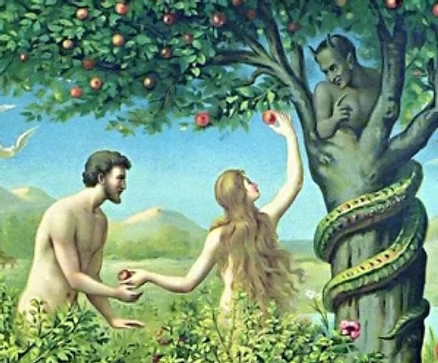



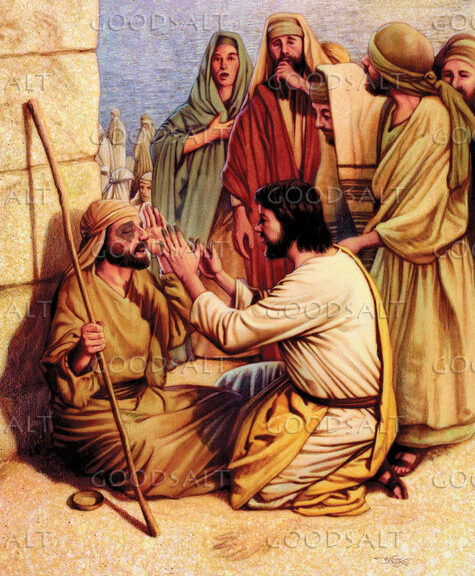

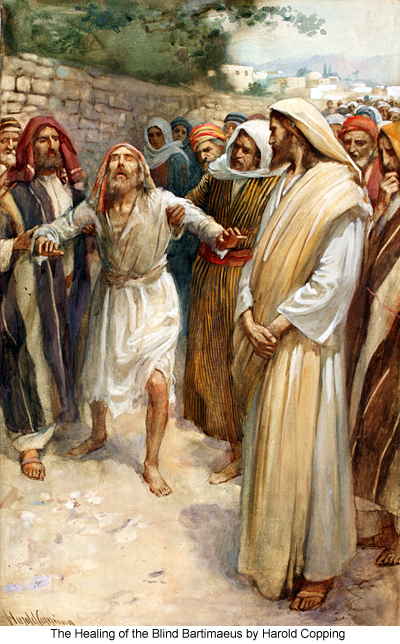
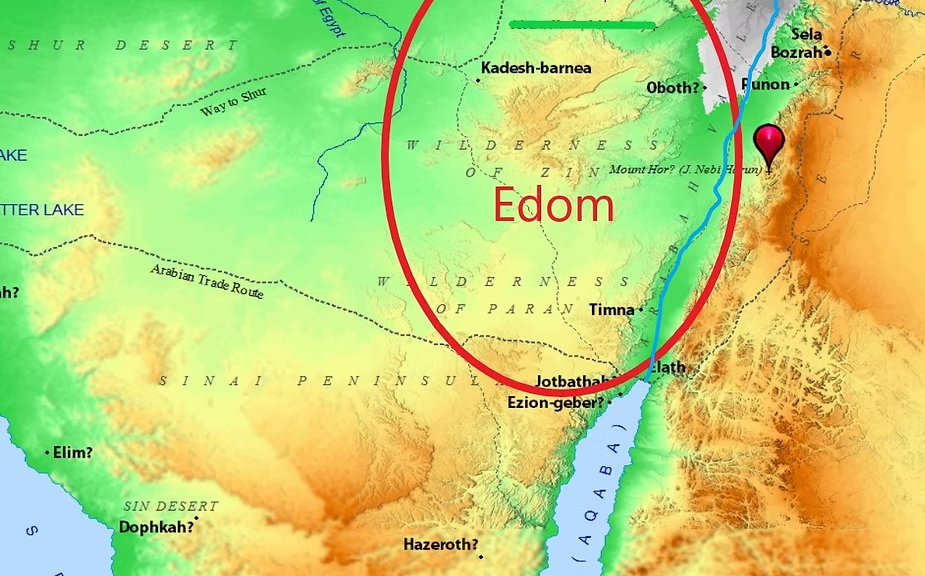
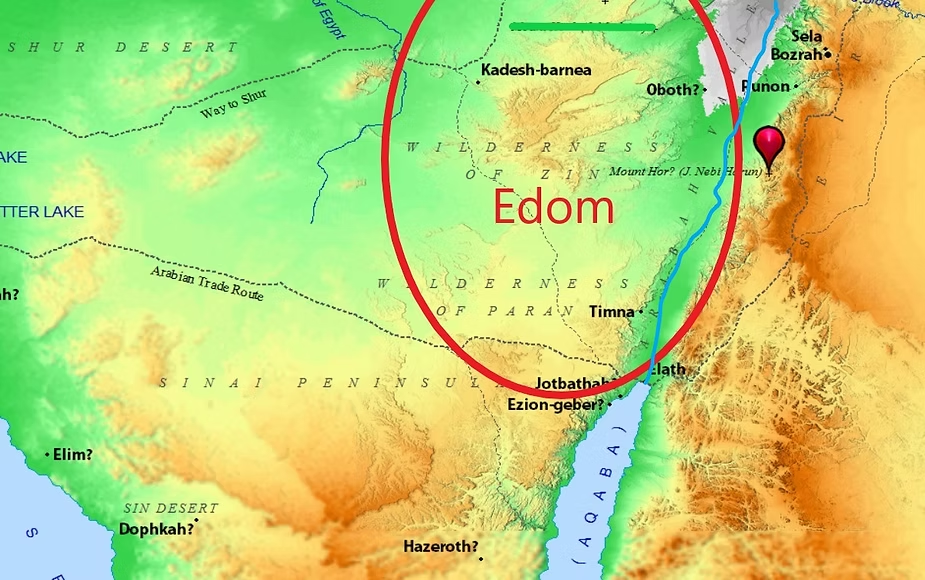
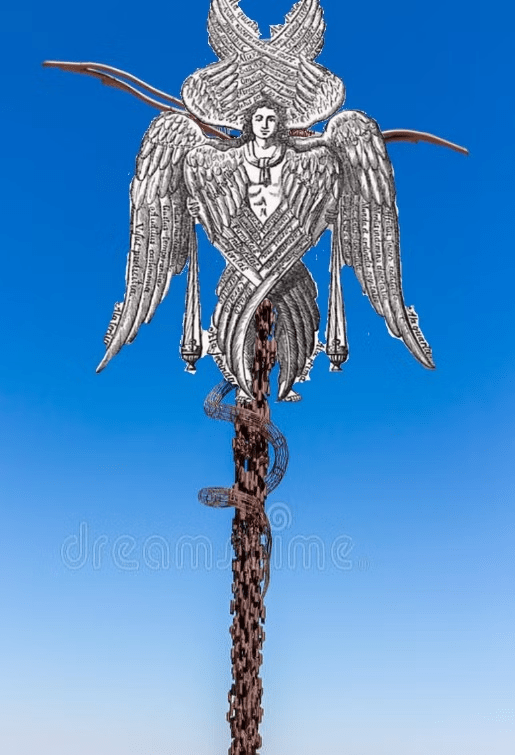


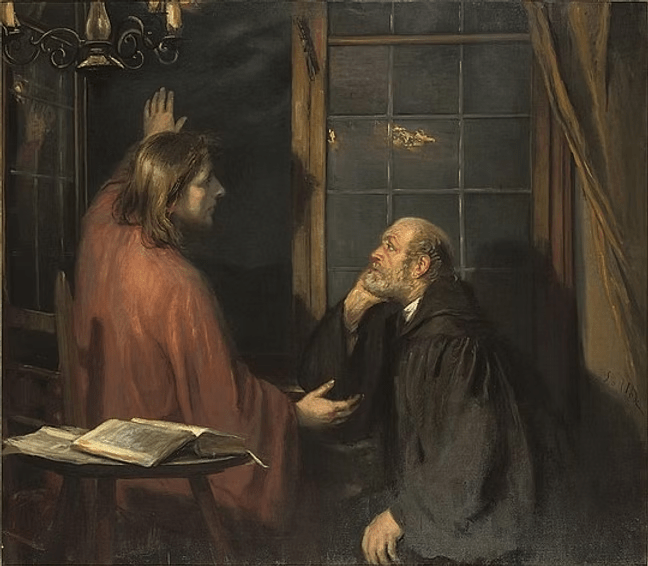
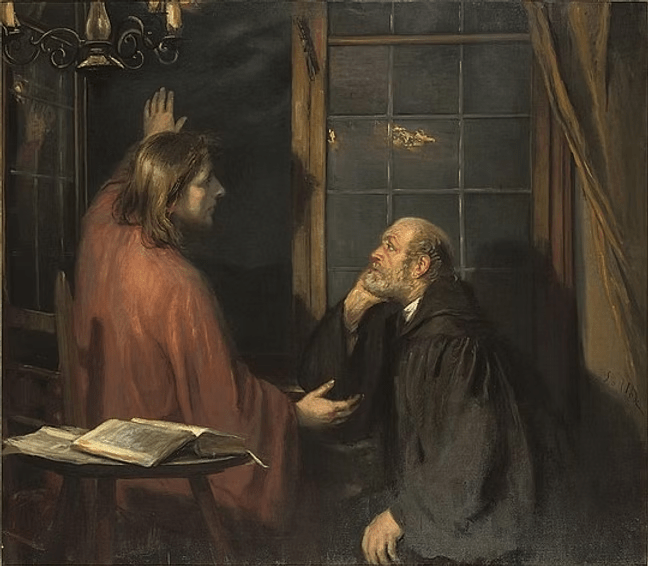


 Explaining the Readings