
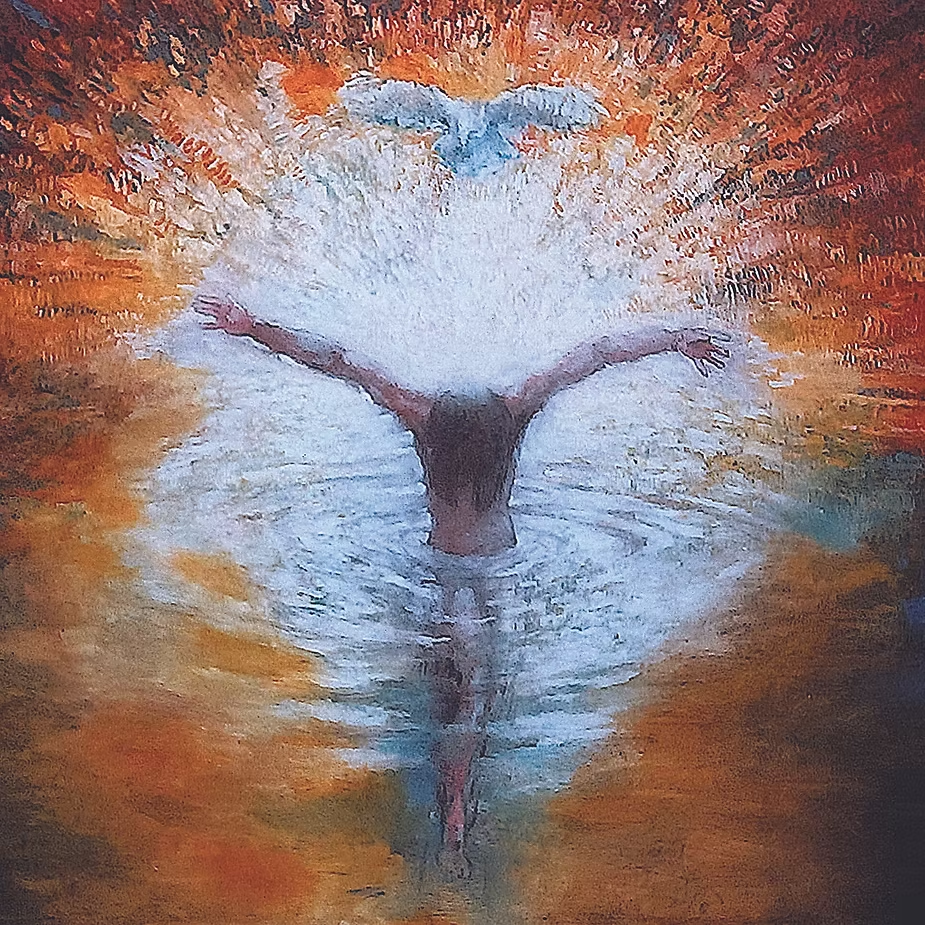
In those days Jesus came from Nazareth of Galilee and was baptized by John in the Jordan. And just as he was coming up out of the water, he saw the heavens torn apart and the Spirit descending like a dove on him. And a voice came from heaven, “You are my Son, the Beloved; with you I am well pleased.”
And the Spirit immediately drove him out into the wilderness. He was in the wilderness forty days, tempted by Satan; and he was with the wild beasts; and the angels waited on him.
Now after John was arrested, Jesus came to Galilee, proclaiming the good news of God, and saying, “The time is fulfilled, and the kingdom of God has come near; repent, and believe in the good news.”
——————————————————————————–
This is the Gospel selection from the Episcopal Lectionary for the first Sunday in Lent, Year B. It will next be read aloud in church by a priest on Sunday, February 18, 2018. It is important as the testimony of Simon Peter, through Mark, who was a disciple of John the Baptizer and Jesus, who knew that both of those holy guides had endured extreme tests of piety before beginning ministries that served God.
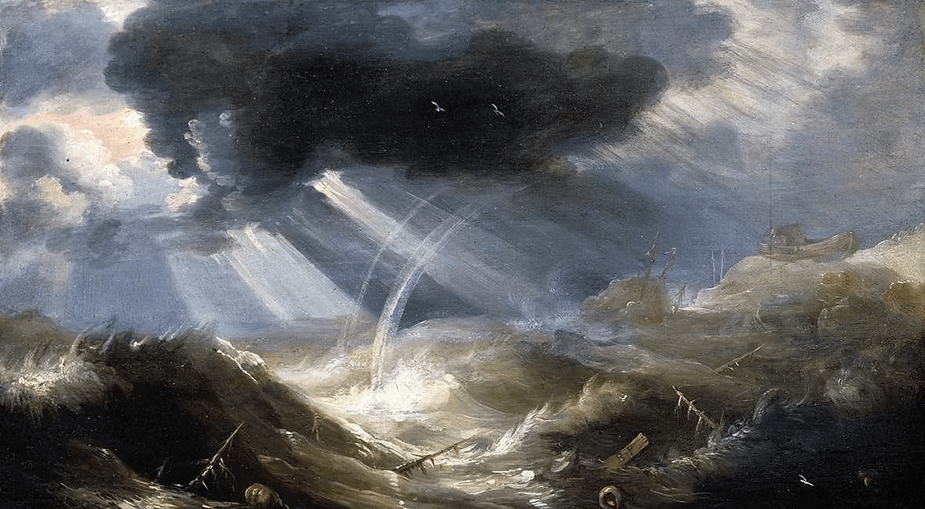
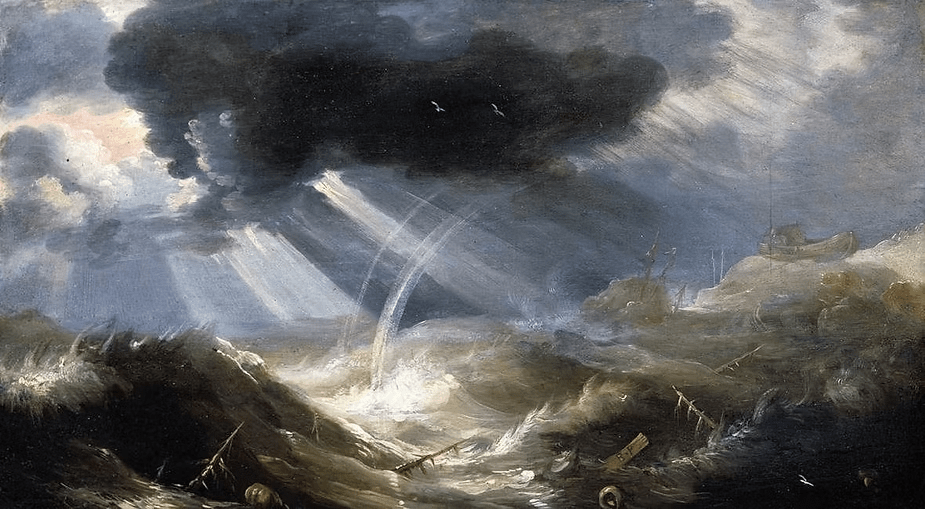
This reading is accompanied by the reading from Genesis (9:8-17) that tells of God’s covenant with Noah, and all life forms that survived the Great Flood, that committed, “never again shall there be a flood to destroy the earth.” The sign of that covenant would forevermore be the rainbow.

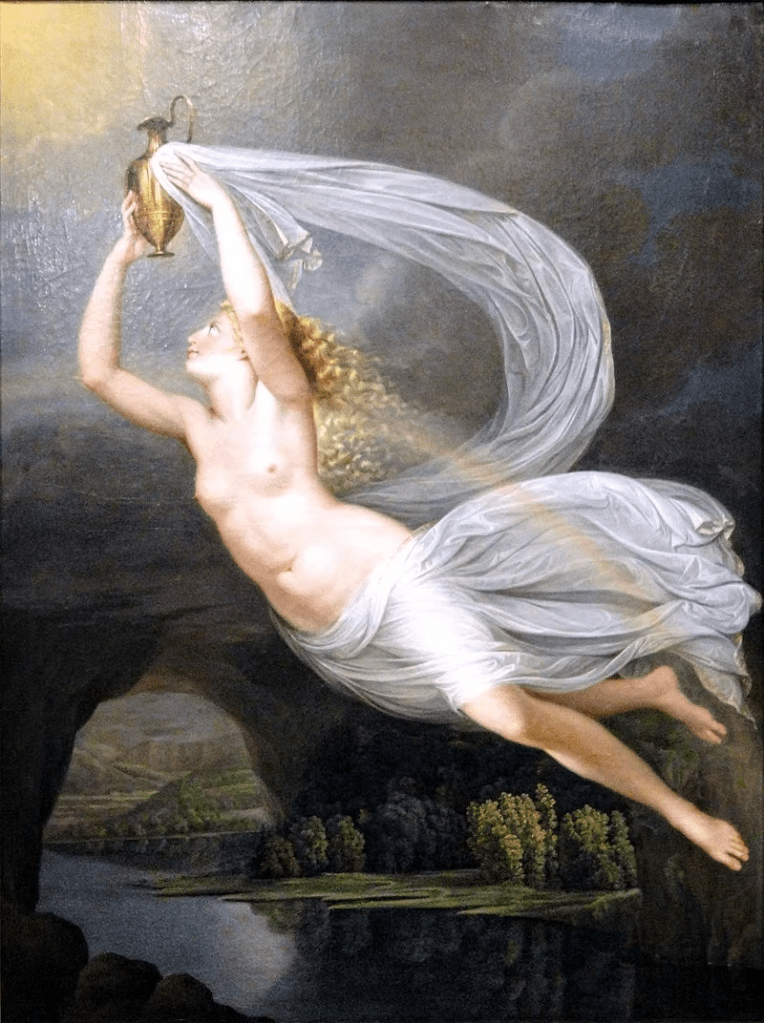
The accompanying Epistle is from Peter’s first letter to the churches of Asia Minor (modern Turkey), where Peter related the presence of the Holy Spirit as a covenant similar to that made between God and Noah. Peter wrote, “And baptism, which [the Great Flood] prefigured, now saves you– not as a removal of dirt from the body, but as an appeal to God for a good conscience, through the resurrection of Jesus Christ.” This then becomes metaphor that makes the rainbow be seen as the baptism of the Holy Spirit, connecting one on earth to the right hand Spirit of God in heaven. Through a rainbow God speaks, “You are my Son, the Beloved; with you I am well pleased.”
As a lesson for the first Sunday of Lent, Peter is saying (through Mark) that one must first hear the voice of God, which streaks across the sky like lightning, arcing down to those who take the time beg for forgiveness of the sins recognized as of their own doings. Second, THE LENTEN MESSAGE is one who hears this voice and is immediately driven by the Spirit out into the wilderness, where one’s sincere repentance is tested. Third, as a result of having successfully overcome the addictive temptations of an evil world, one becomes a minister for God, as the embodiment of Jesus Christ.
Those three steps are the demands required by God of all who seek the reward of heaven and eternal bliss. That means no steps can be avoided and no steps can be assigned to a surrogate.
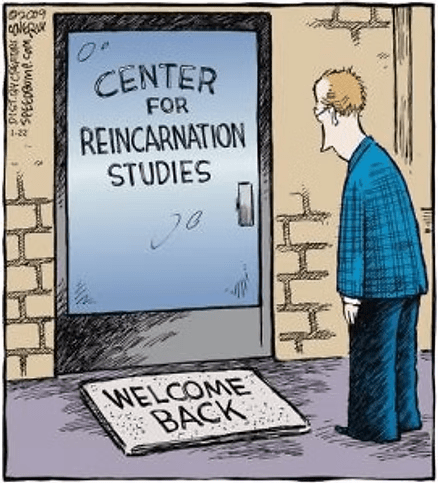
If it was easy to get into heaven, people would just live anyway they pleased and then add at the end an, “Oh by the way God, I am sorry for all the fun I had being a sinner” apology. There would be no need for heaven because being reborn back on Earth [reincarnation] would be the best reward possible [except the losing all your possessions part].
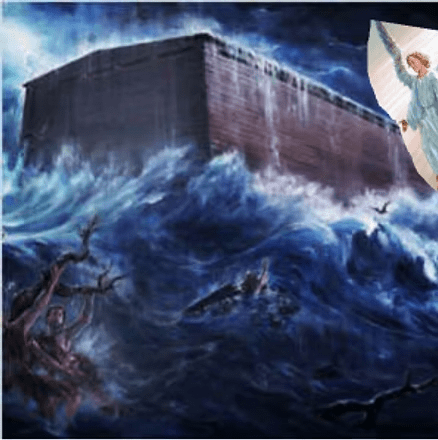
In the story of Noah and the Great Flood, Noah was the last descendant of the great Patriarchs, who at the age of 500, when his grandfather Methuselah reached the end of his life, the flooding rains came. Prior, he heard the voice of God tell him to prepare for a world-wide flood, where he had to build a large boat in the middle of dry land. He did that and was ridiculed by sinful human beings who saw that as unnecessary work. They mocked Noah for listening to a voice they could not hear. Thus, the prerequisite for baptism by the Holy Spirit (the Great Flood) is to follow one’s heart, with a desire to make God happy, rather than follow the crowd down the path to oblivion.
One has to see the work of building an ark as a test of devotion. Noah building an ark to God’s specifications is then a model for the forty days and nights Jesus spent in the wilderness. Both Noah and Jesus had a plan, although nothing is written that details the plan God gave Jesus.
The forty days and forty nights of rain, followed by 150 days that the high waters prevailed, are saying that Noah and his family spent time on turbulent seas being tested after they had proved their faith by building the ark. Their faith saved them, although the voyage took them to an unknown land. A similar test came to Jesus after he spent forty days in a bone dry dessert – the test of his ministry.
When Mark wrote that Jesus, “was with the wild beasts; and the angels waited on him,” was not Noah on the ark with pairs of wild beasts, of every kind? Was the ark not kept afloat by angels, just as the needs of Jesus were met? Did not Moses pray to God for water to be found in dry land of the Sinai, with God delivering? Likewise, Noah (who was not a sailor) and Jesus (who was not like John the Baptist) had faith, but stayed in constant communication with the LORD, through prayer.
A test of faith might only officially be over forty days and forty nights, but if one is crying out in the wilderness for the test to finally be over, then one is not ready for that test. One is not “up the creek without a paddle,” one is drowning in a Great Flood without an ark. Jesus aced his test because he already had made a lifelong covenant with the LORD. Satan cannot temp one with that holy survival kit handy. However, Satan has a way of finding a way to tempt the common survivalist, one who does not pray, thus cannot hear the voice of God within.
When Peter wrote in his letter, “Christ also suffered for sins once for all, the righteous for the unrighteous, in order to bring you to God” (1 Peter 3:18), he was basically saying a Christian has to hear the voice of God warning one of a coming Great Flood; but rather than that voice saying to build an ark for survival, one must be reborn as Jesus Christ. That is the only way to survive a forty day test of faith. Christ within cleanses one of the fear and guilt of sin, turning the unrighteous righteous. Christ within brings one to God.
Being one with God and reborn as Christ means Lent is not a New Year’s resolution (i.e.: an empty promise made to oneself). Lent is the test ride of a new YOU, a YOU that has fallen in love with God and become married into a new commitment and devotion that serves only God.
Lent is not a prescribed period of time when one is forced to comply with unwanted limitations. Lent is personal time spent asking God to write His laws on one’s heart, and explain those laws through the Holy Spirit’s knowledge, so that one finds only joy and happiness from the most barren of existences.
Lent is having one’s eyes opened, to see the illusion that the worldly domain really is and to come to the realization that no illusion – no dream – is worthy of sacrificing eternal bliss to gain. Heaven is the reality we escaped, but need to return to. However, when our souls fell to earth, we fell asleep and dreamt, thinking vivid dreams are real. Jesus is the call to wake up and return to heaven.

When one sees Peter having told Mark that Jesus went to Galilee proclaiming the Gospel at the beginning of his ministry, it is easy to overlook how he said, “After John was arrested.” John the Baptizer held Jesus in his arms in the flooding waters of the Jordan River, so he too heard the voice of God speak. John also was baptized by the Holy Spirit at that time, so the rainbow arched into him, making him ready for his test in the wilderness that became a Roman prison.
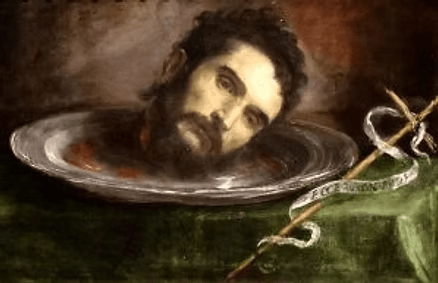
John the Baptist would give up his life for his faith in God. So too would Jesus. So too would the Apostles of Jesus. Therefore, Lent is not about being forced to do without something (sacrificing one thing), while still holding onto all the other addictions that seem impossible to let go [where is your cell phone now?]. Lent is a test of one’s readiness to turn away from a world that offers illusions that suggest it is okay to sin, if everyone else is sinning. Instead, one must be prepared “to be arrested” … stopped … willing to sacrifice the brain in one’s head (even have that head served on a silver platter), in order to ask others to do the same.
Jesus never forbade anyone from making Fat Tuesday a theme for a life, 365 days a year serving self, grabbing onto all the physical pleasures one desires. Free will means free to sin, because sins of ego are only possible in the earthly domain. Doing as one pleases is what makes a worldly existence seem like a vacation for some; while others rue the day they were born, because the life they have been reborn into does what it pleases with them. Living for today is blindly walking the path of reincarnation; but, like the saying goes, “You can pay me now or pay me later, but pay you will.”
That world existed when God told Noah, “Enough is enough. Get ready, because I am washing the slate clean.” Peter wrote of those past sinners as being those, “who in former times did not obey, when God waited patiently,” to no avail.
The ruler of the world is Satan, who cares nothing about humanity. Satan tempts for the purpose of trickery. He desires to steal souls from God, and he uses the illusions of the world to get humanity to do wicked things. God promised not to wash the filth of humanity off the face of the earth with another Great Flood. Instead, the rainbow he would send would be called Jesus.
Jesus brought salvation to the world, just as Noah was told how to build an ark. However, the idea of an ark did not save Noah and the wild beasts he took with him; in the same way, the idea of Jesus saving people does not prepare them to be tested, as ready to be saved.
Lent is about a willing test that one has been prepared to take. It is like forty days of study prior to the SATs or GREs or GMATs or any other difficult test of one’s preparedness [name your hardest standardized test here].

Lent is like seven years of hard-nosed collegiate study, so one can begin a career that makes all the hard work worthwhile. Children seldom prepare for such tests without a good father figure making demands on their preparation, telling them to use their talents wisely. Likewise, Lent comes when one has heard the voice of God speak out loud and say, “You are my Son, the Beloved; with you I am well pleased.”
Lent is not a test of survival skills. Lent is a test of one’s readiness to give up one’s life for God, so Jesus can return and spread the Word through your body, causing your mouth to say, “Repent, and believe in the good news.”
You may now turn over your exam sheet and let the test begin NOW.
 Explaining the Readings