
Long ago God spoke to our ancestors in many and various ways by the prophets, but in these last days he has spoken to us by a Son, whom he appointed heir of all things, through whom he also created the worlds. He is the reflection of God’s glory and the exact imprint of God’s very being, and he sustains all things by his powerful word. When he had made purification for sins, he sat down at the right hand of the Majesty on high, having become as much superior to angels as the name he has inherited is more excellent than theirs.
Now God did not subject the coming world, about which we are speaking, to angels. But someone has testified somewhere,
“What are human beings that you are mindful of them,
or mortals, that you care for them?
You have made them for a little while lower than the angels;
you have crowned them with glory and honor,
subjecting all things under their feet.”
Now in subjecting all things to them, God left nothing outside their control. As it is, we do not yet see everything in subjection to them, but we do see Jesus, who for a little while was made lower than the angels, now crowned with glory and honor because of the suffering of death, so that by the grace of God he might taste death for everyone.
It was fitting that God, for whom and through whom all things exist, in bringing many children to glory, should make the pioneer of their salvation perfect through sufferings. For the one who sanctifies and those who are sanctified all have one Father. For this reason Jesus is not ashamed to call them brothers and sisters, saying,
“I will proclaim your name to my brothers and sisters,
in the midst of the congregation I will praise you.”
———————————————————————————————————-
This is the Epistle selection from the Episcopal Lectionary for the Twentieth Sunday after Pentecost, Year B 2018. In the numbering system that lists each Sunday in an ordinal fashion, this Sunday is referred to as Proper 22. It will next be read aloud in an Episcopal church by a reader on Sunday October 7, 2018. It is important because it has Paul speaking of subjection to God (marriage to God through the sacrifice of self-ego) and being reborn as the Son, Jesus Christ. Unfortunately, this translation (like the translations of all of the Epistles) is poor and is from a preconception of Jesus worship, as an idol in heaven, not real, not within each and every Apostle who bears his name.
As has been my lengthy process (and boring to most readers), to break down the writings of Paul (primarily), based on the Greek text as it shows in a literal (and viable) translation, I do this segment of words by segment of words. I break the segments at points of punctuation (implied or written). I have done so here, yet again.
I recall the words of Jesus, as remembered by Matthew and relative to the event of the accompanying Gospel of Mark, about the Pharisees questioning Jesus about the legality of divorce. Matthew recalled how Jesus told the disciples who did not understand Jesus’ interpretation of a man’s written right for divorce: “Not all receive the word [of] this.” (Matthew 19:11)
That means that what Jesus said, and what the Apostles recorded that Jesus said, is easily misunderstood. The Pharisees thought they understood Jesus’ words and walked away satisfied. The disciples still had questions, as what they thought Jesus had said was against marriage completely.
This is exactly the way all readers of Holy Scripture are [dazed and confused], unless they are guided to understanding by the Holy Spirit. Unfortunately, the Holy Spirit does not write a version of the Holy Bible that skips over the difficult to understand and gets right to the meat of the meaning. Alas, when I write long explanations, it amounts to just a smidgen of the total meaning. In that way, I always leave some sinew and flesh on the bone for others to bite into and chew hardily.

The whole reason Apostles and Prophets spoke in unclear terms was they were speaking the Word of God. When people say “Speaking in tongues,” that means speaking the Word of God, with those words only understandable by those fluent in the language of God. To understand the Word of God you have to be married to God; and, that means having all your filthy sins washed clean by the baptism of the Holy Spirit (no water is harmed in that process). Once squeaky clean, one is able to be reborn as the Son of God – Jesus Christ. Once possessing the accompanying Mind of Christ, one is then capable of understanding clearly what was written.
All of the above needs to be broken down by actually looking at the Greek (as stated in this reading from the Epistle to the Hebrews of Rome), which takes more effort than simply sitting and reading (or being read to) an English translation. Belief that Paul wrote in English (or any other language of translation) needs to be eliminated. Effort to look deeper means showing God you care and want to get to the truth.
If you don’t care about doing all the hard work that I am doing for you here, then do you really think God cares about filling you in on all of His meaning? The truth is more than ‘postcard religion.’ The truth is what makes true faith possible.
Now, here is this week’s Paul breakdown. You will notice that the reading begins with chapter one, and then it hops and skips to chapter two, making it seem to be a natural fit because “angels” is a word that appears in both chapters, appearing to be a link between the two. Keep in mind there is God reasoning behind two chapters having been written; but such cut and paste, focused on a repeated word, still bears divine intent.
Hebrews 1
1. In many portions and in many ways ,
long ago the [one] God having spoken to the fathers in the prophets ,
2. in last some days these having spoken us in Son ,
whom he appointed inheritor of all ,
by reason of that he also made the ages ,
3. that being a flashing light forth suitable renown and exact expression the [one] reality of him ,
upholding then all things by the word of the power through himself ,
purification the [one] of sins having made ,
sat down at right hand the [one] Majesty on high .
4. by so much superior having become to the angels ,
as much as more excellent beyond theirs ,
he has inherited a name .
Hebrews 2
5. Not for to angels did he subject the world that is coming ,
of which we are speaking .
6. has testified however somewhere someone ,
saying ,
What is man ,
That you are mindful of him ,
or son of man ,
that you care for him ?
7. You made lower him a little some than angels ,
with glory and honor you crowned him ,
( and have appointed him over the works of the hands of you )
8. all you have put in subjection under the feet of him .
in what for subjecting to him the whole ,
nothing he forgave to him not subject to rule .
at present however ,
not yet do we see him the whole having been subjected .
9. who even though a little one alongside angels ,
having been made lower ,
we see ,
Jesus ,
because of the suffering that of death ,
with glory and honor having been crowned ,
so that by grace of God in behalf of all he might taste death .
10. It was fitting for him ,
for whom what all and on account of whom all things ,
many sons to glory have brought ,
the archetype case salvation of them ,
through sufferings to be made perfect .
11. those both for sanctifying ,
and those being sanctified ,
of one all ;
for which reason ,
not he is ashamed brothers them to call .
12. saying :
I will declare the name of you to the brothers of me ,
in the middle of the congregation I will sing praises of you .
In the translation that will be read aloud in churches, the icon of Jesus is stated in the introduction of this letter, as: “[God] has spoken to us by a Son”; “[Jesus] is the reflection of God’s glory and the exact imprint of God’s very being”; and “he sat down at the right hand of the Majesty on high.” That evokes the image of Jesus having left the earth [the Ascension] and will be God’s ‘right-hand man’ until his return [the Apocalypse].
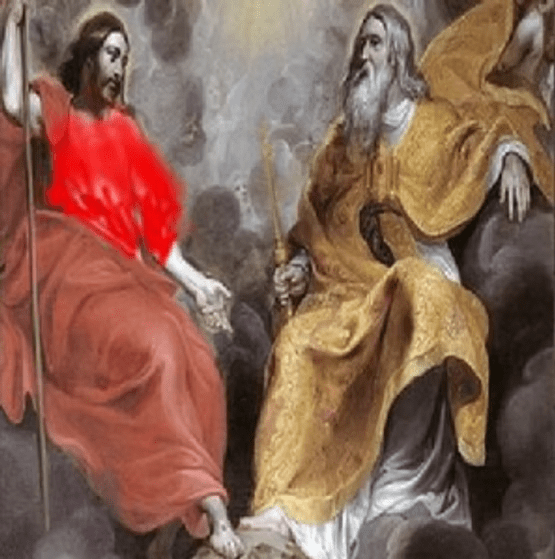
Jesus: “Father, You know.”
The literal translation from the Greek begins by saying that God has always spoken to the faithful through prophets. Prior to the current day of Paul, God had not just done this a few times, but “in many portions” [by one, two, and many human voices] and “in many ways” [prophecies, healings, and miraculous feats, etc.]. This means that God speaking to His faithful had long been expected and realized. The same could not be said of those who believed in lesser gods.
With that background stated, Paul then referred to the present day and the recent past, which was long after Jesus of Nazareth had been executed, returned to life, and ascended into heaven … the day before he returned in Spirit and became the voice of twelve disciples. Paul did not even meet the living Jesus of Nazareth. He met the Spirit of Jesus Christ and was converted from disbeliever into fervent believer. Soon after that encounter, Paul began speaking as Jesus Christ, as one of “us in the Son.” The word “us” means there were others in the same way. Thus, the reason Paul established a background of many prophets past, over thousands of years, all appointed by God, was because with the coming of Jesus and his ascension to the Christ God had appointed many prophets in the name of His Son, who inherited everything Jesus of Nazareth represented.
When we hear, “Jesus sat down at the right hand of God,” the meaning is Jesus has become God’s right hand. The Greek word “ekathisen” means, “sat down,” but also “was appointed” or “had taken the seat of.” The Greek word “dexia” was used to denote “the right side,” which is symbolic of the “right way” or the path to God. “Right” is the direction of “righteousness.” As such, Paul was stating that rather than God speaking through the prophets, judges, and kings, as of old times, the voices of God would become the resurrections of God’s right hand in the flesh, as was Jesus of Nazareth.
More than hearing God speak and then passing important messages along to others, the voice of God would be that of His Son, sent into the souls of human believers. Believers who would have accepted God into their hearts and allowed the hand of God to work through them. Paul, as an Apostle in the name of Jesus Christ, was one example of the right hand of God having been reborn into the earthly plane.
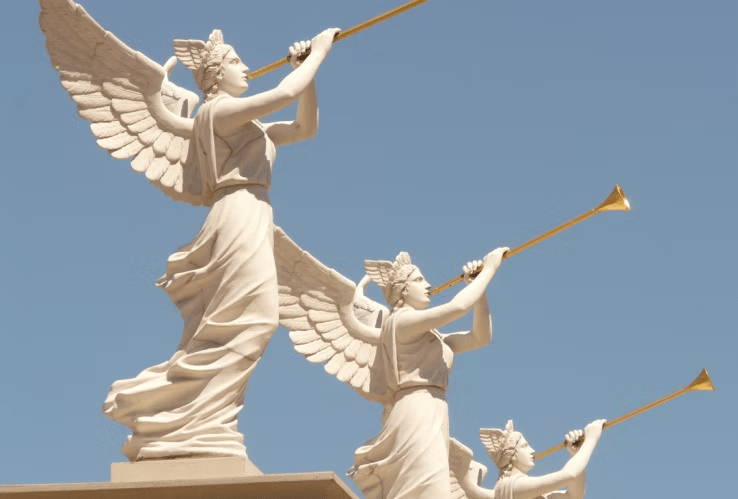
In verse four of chapter one, Paul said that Jesus “[had] become so much superior to angels.” This superiority is from becoming the right hand of God, thus an extension of God. The angels are eternal spirits created from God, but separate. The angels have been ordered to serve Man (males and females), and Jesus also serves Man as God’s Son. That name given to Jesus, as the Son of God, is only partially the inheritance of Jesus of Nazareth. His greatest title is the Christ (or the Messiah).
The linkage that has chapter one attach to chapter two is “angels.” In chapter two’s verse five, Paul wrote that it was not God’s Will to have angels speak for Him, through human beings. Angels serve God by standing with human beings, whispering good advice, letting their souls choose what a body will do. Angels lead human beings to other human beings in distress, so human beings can help one another. However, the Christ-led Apostles go beyond this “synchronicity,” which cannot be clearly attributed to God’s power.
The questions posed in the translation that will be read aloud is confusing, when the aspect of “angels” is seen, but not understood as a Spiritual entity that has no physical control over any human beings. It is difficult to see that Paul is speaking from personal understanding that is beyond that possible by a human brain alone. Thus, we hear, “What are human beings that you are mindful of them, or mortals, that you care for them? You have made them for a little while lower than the angels; you have crowned them with glory and honor, subjecting all things under their feet.” We miss the points that are struck in the slowly read literal.
The questions focus on the influence of “man,” which asks one to understand “what is man,” before one can realize that the Pharisees, Temple scribes, and high priests were nothing more than human beings, like all human beings. One has to grasp that.
One then has to ask oneself, why should a man be mindful of another man, where the Greek word “mimnēskē” says, “You are mindful.” That is rooted in “mimnéskó,” meaning “to remember, call to mind, recall, and mention.” This asks why someone else’s brain makes your brain remember or recall the meaning of things important. It asks one to answer why one cannot understand on one’s own, needing to be reminded of important matters by others. The implication is the honor and glory paid to other human beings, as opposed to giving ALL praise to God alone.
This even applies to the “son of man,” where Jesus of Nazareth was a human being, born of a woman. If one’s brain is too weak to be connected to God, because one’s heart is too hard to love Him, then to project one’s understanding onto the lessons of Jesus of Nazareth, what is the difference? Does not obeying the minds of Pharisees, who speaking meaningless words about Scripture, equate to obeying the words spoken by Jesus, simply because he spoke in ways that made the true, deeper understanding impossible? What is the difference in the blind following the blind, and the blind being blindly led by a cane of ignorance?
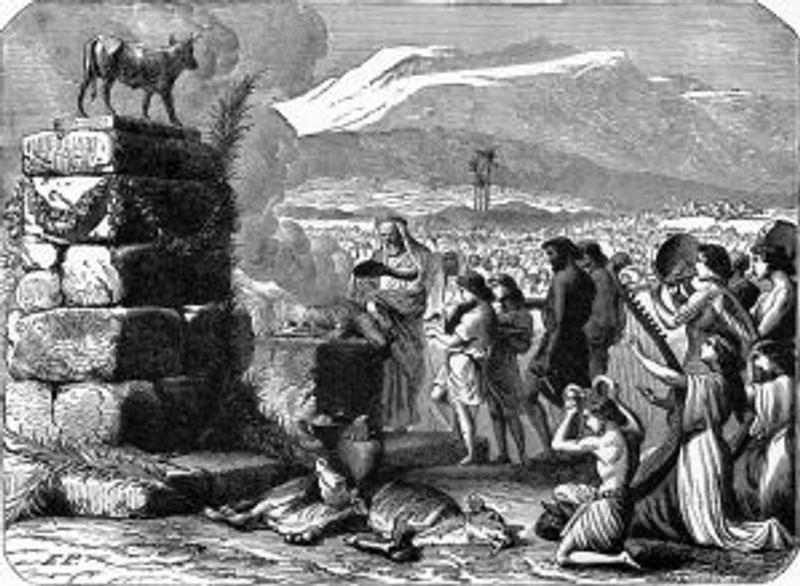
If you care for Jesus because someone told you, “Jesus is the ticket to heaven,” then is that not being mindful of man, not God?
When the statement says, “You have made them for a little while lower than the angels,” [translation read aloud] this points a finger at the elevation of idolatry, when a man has been set upon a pedestal and given human status that is higher than other human beings, but lower than angels. When the statement is seen to literally state, “You made lower him a little some than angels,” this refers to a little Jesus statue on the dashboard of one’s car … a man idolized. It reduces the Son of God to an idol.
In either way, the crown of holiness (like a pope or a cross on a wall in a church building) has been placed on the material and the physical, and not the spiritual and Godly. Just like the Israelites who demanded Samuel appoint them a king, when God was their King, human beings refuse to give God His rightful due.
Through surrogates, either religious leaders or the icons of Christianity, the works become those of interpretations of Scripture, which are external and human. Christians go about their daily lives with absolutely zero need to feel responsible for their own souls, because they willingly see themselves as too small to ever be as righteous as Jesus of Nazareth. They feel they are too lowly to ever be able to hear the voice of God [if they really believe anyone has], and they bow down to the feet of Jesus the Messiah as an idol of worship, equal to God in being all powerful.
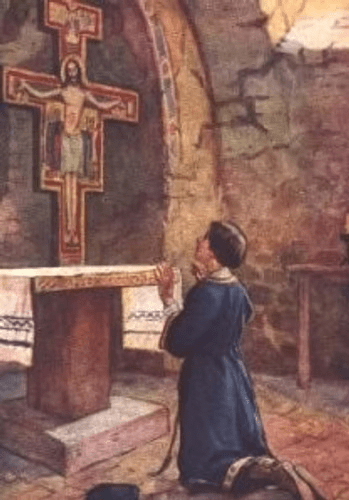
In verse eight, the words “subjection,” “subjecting,” “not subject” (or “unsubject”), and “subjected” are written. This is referencing submission to Jesus, not God. Instead of the submission of one’s self-ego (the death of self, to be reborn as Jesus Christ), so God can marry one’s soul with His Holy Spirit, the soul maintains separation from God. It does that by laying at the feet of Jesus of Nazareth, as the one-of-a-kind Messiah.
When one segment reads as, “nothing he forgave to him not subject to rule,” this means that those that do not subject to the rule of God over one’s soul are not forgiven of sins, due to the lack of baptism by the Holy Spirit. Total subjection to God must occur for forgiveness to be achieved.
While there can be compliance to external rules, as a disciple that is devoted to serving Jesus Christ, Paul wrote, “not yet do we see him the whole having been subjected.” That was at the present time, when the spread of Christianity was totally based on every member being reborn as Jesus Christ. Christians are those whose souls have been forgiven by God; but like Jesus’ disciples, prior to them speaking in tongues on Pentecost day, they had not yet been wholly subjected to the rule of the Holy Spirit. This is why they hid after Jesus was taken prisoner and trembled in the upstairs room after he was crucified and buried.
In verse nine, one needs to read the segments slowly and see how Paul said that even though man is a little one alongside guardian angels, man has to lower in a position of subjection. This means willingly being placed in a bowed down position, one of submission to God. Three Greek words make three segmented statements, all separated by commas. Those words are “ēlattōmenon , blepomen , Iēsoun,” which say “having been made lower , we see , Jesus.”
This is a progression of steps, where each step is important in its own right. Disciples must lower their self-will and submit to God’s will. It is no longer good enough to depend on one’s instinct, as far as listening to the good angel that whispers what not to do, resisting the evil angel that whispers “Go ahead and do it. God will forgive you.” It means dying of self. Once one has died of self-ego, in a completely humbled state before God, then one is not listening for intuited guidance, but seeing the truth unfold before one’s mind’s eye.
When one can see the truth, one then acts upon that light of truth and this is when one is reborn as Jesus. Just as Jesus died so his spirit could be multiplied many times over [endlessly] in Apostles, each disciple must also suffer death of self to crown Jesus as the Christ, whose kingdom is then one’s body. The Christ Mind can rule over countless kingdoms, each individually ruled by the Son of God, with all collectively joined as One Church of Jesus Christ.
Verse ten then confirms that all of this is a necessary pattern that leads to salvation. Jesus Christ is the archetype (from the Greek “archēgon”) of that metamorphosis from disciple to Apostle. Salvation depends on the “originator, author, founder, prince, or leader” that was modeled by Jesus of Nazareth. Jesus died to show us how death of the self-ego is only a temporary lowering, because once one has received the Holy Spirit of God within one’s soul, the rebirth of Jesus Christ as one’s new self raises one to divine levels.
When the verse ends by stating the segment of words, “through sufferings to be made perfect,” this is why a self-centered soul cannot lead a body to righteousness. Man cannot become perfect without giving up the self and letting God guide one’s actions completely. This was the model of Jesus of Nazareth; but then Jesus of Nazareth was born having received the Holy Spirit of God, as His Son, the Messiah.
Jesus of Nazareth modeled how all who would follow him and walk the path of righteousness had to be reborn as him. His life included sufferings, much of which was not written in the books of the New Testament. However, all Apostles have to be reborn as Jesus Christ to withstand the persecution that would come to them, just as it came to Jesus of Nazareth.
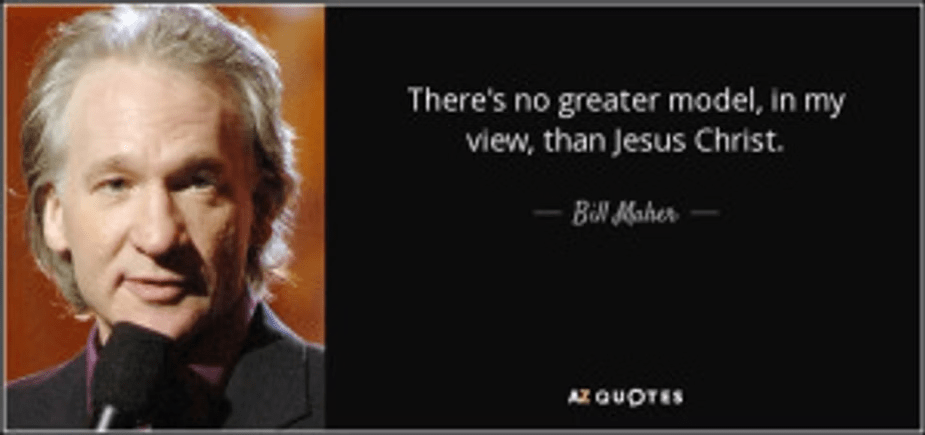
Verse eleven confirms the holiness of this union, where “sanctifying” and “sanctified” are forms of the Greek word “hagiazó,” meaning “to make holy, treat as holy, set apart as holy, sanctify, hallow, and purify.” This is why an Apostle is a Saint. They have the same powers of God at their disposal as did Jesus of Nazareth. They earn the right to be called Saints because they are all in the name of Jesus Christ. For that reason, Jesus is not ashamed to call them brothers.
This is the Greek word “adelphois,” meaning “brothers” [not “and sisters”]. ALL human beings (of both sexes) are “brothers” in Christ, because ALL (of both sexes) have been reborn as the Son of God [not “His Daughter”], making them ALL Sons of God.
When Paul then wrote in verse twelve, “I will declare the name of you to the brothers of me,” one has to realize that Paul was speaking (in writing) as Jesus Christ, not Paul. Paul had been named Saul; but when he was reborn as Jesus Christ, he took on the name Paul, or Paulus, from pauros. That name comes from the word that means “little or small.” The name reflected Saul lowering himself to the Lord. Therefore, Jesus Christ will “declare the name of you [Hebrew-speaking Jewish converts of Rome]” as also Jesus Christ, “brothers of me.” Because Paul was reborn as Jesus Christ, all who forever will do the same will be his “brothers” in the name of Jesus Christ (men and women).
When Paul then wrote, “in the middle of the congregation I will sing praises of you,” that meant that the assembly or gathering of Christians would ALL be the brothers of one another. Each member would have been reborn in the name of Jesus Christ. Thus, ALL who gathered would sing the praises of their salvation and the miracles done in the name of God.
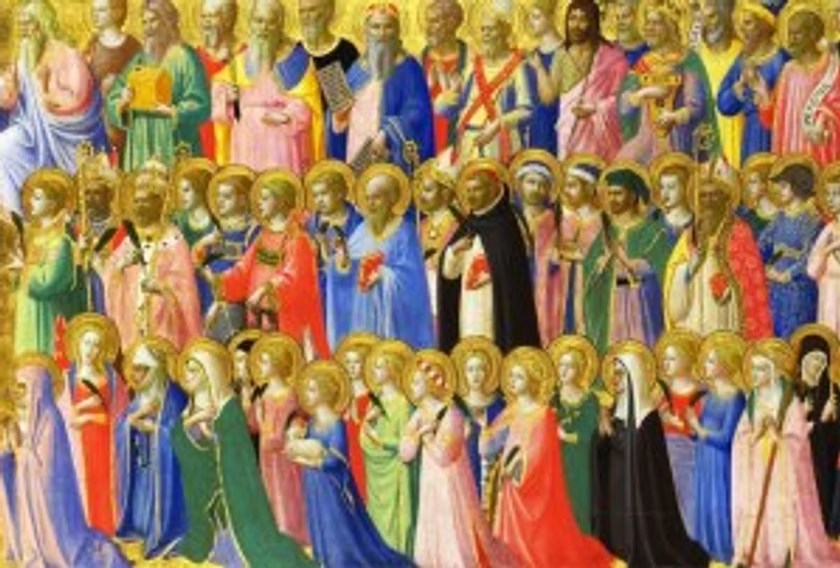
As the Epistle selection for the twentieth Sunday after Pentecost, when one’s own personal ministry for the LORD should be underway – one has lowered oneself in subjection to God – the message here is to stop lying at the feet of Jesus Christ, when one should be bowing down before God Almighty. One stands erect as a reborn Jesus Christ, filled with the Holy Spirit and capable of all God’s powers.
This is not something that one can brag about. One has to cease thinking one is important enough to make decisions regarding worldly matters. One has given up all rights [U. S. Constitutional and otherwise] of self and have submitted fully to God’s guidance. As discussed prior in another interpretation, developing a clear line of communication with God through prayer is necessary prior to being married to God. One cannot become Jesus Christ before one has been washed clean of all past sins. Once one is reborn as Jesus Christ, with God in one’s heart, one cannot sin again. One is incapable of not sinning without being reborn as Jesus Christ.
#Hebrews114 #Hebrews2512
 Explaining the Readings