
The former priests were many in number, because they were prevented by death from continuing in office; but Jesus holds his priesthood permanently, because he continues forever. Consequently he is able for all time to save those who approach God through him, since he always lives to make intercession for them.
For it was fitting that we should have such a high priest, holy, blameless, undefiled, separated from sinners, and exalted above the heavens. Unlike the other high priests, he has no need to offer sacrifices day after day, first for his own sins, and then for those of the people; this he did once for all when he offered himself. For the law appoints as high priests those who are subject to weakness, but the word of the oath, which came later than the law, appoints a Son who has been made perfect forever.
———————————————————————————————————-
This is the Epistle selection from the Episcopal Lectionary for the Twenty-third Sunday after Pentecost, Year B 2018. In the numbering system that lists each Sunday in an ordinal fashion, this Sunday is referred to as Proper 25. It will next be read aloud in an Episcopal church by a reader on Sunday October 28, 2018. It is important because Paul wrote more about Jesus Christ being the high priest of all true Christians.
One should first realize that this reading selection follows twenty-two verses where Paul wrote of the relationship established between Abraham and Melchizedek. Both figures were high priests, along with Aaron and the oath of the Law set forth by God through Moses, which Paul mentioned. This history then leads to verse twenty-three, with Paul prefacing this series of verses read today by identifying Jesus Christ as the ultimate high priest in that order of most-holy priests, now a permanent fixture as such. In all of Hebrews 7, Paul mentioned “Jesus” specifically one time, as the last word in verse twenty-two.
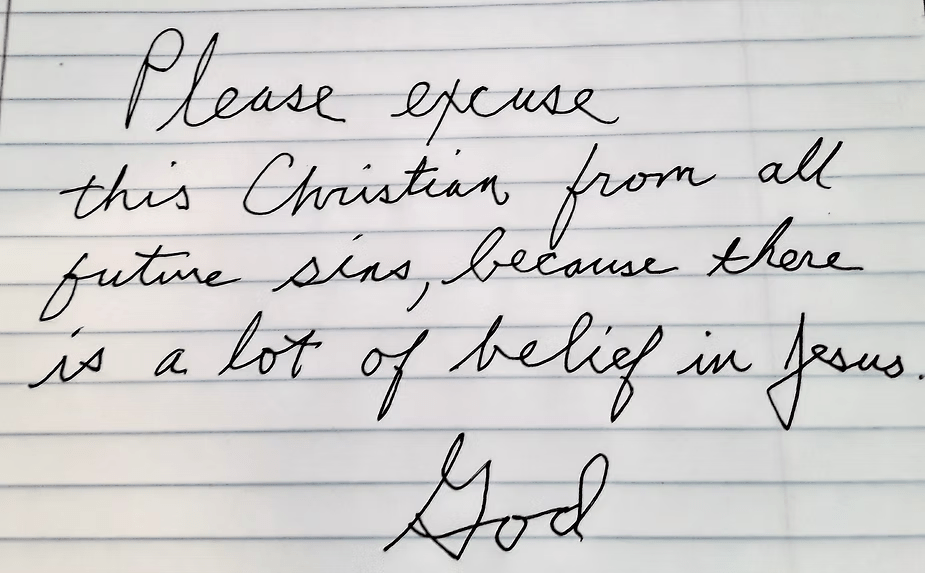
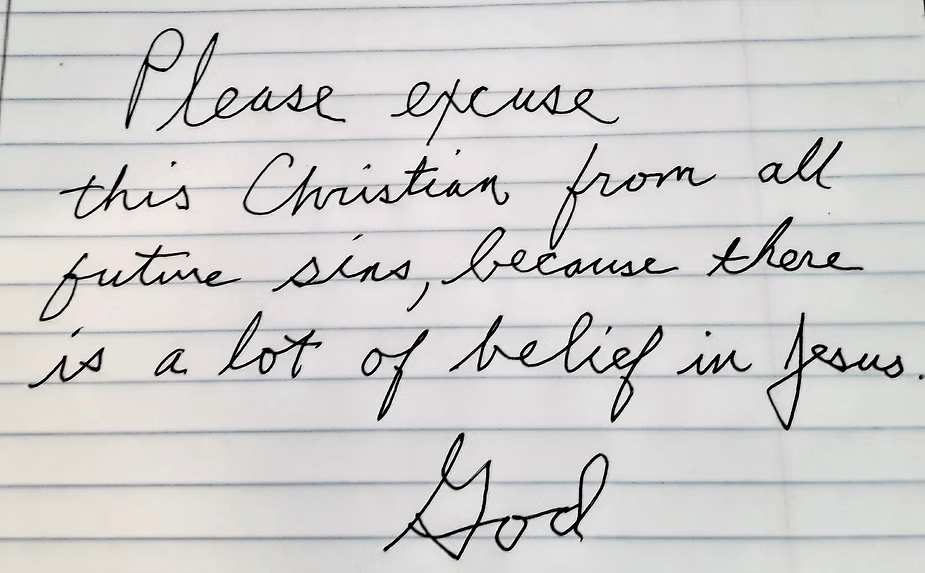
These six verses seem fairly standardized, so they fit the organization concept that is promoted in Christianity today. That view sees Jesus as an ethereal high priest, who sits in a chair to the right side of the Father, who has become the god of human beings that believe Jesus of Nazareth was the Son of God, sent by the Father to die a grizzly death, so no other believer will ever have to be washed squeaky clean of all sin, in order to get into Heaven. Getting into Heaven is promoted as being just a matter of believing in Jesus.
While that view makes it easy to go to Heaven, thus easy to welcome, it is like buying an online certificate of law school completion, having done nothing that would constitute studying law and nothing that would make one ready to pass a bar exam. Jesus was not sent to do all the work, like some modern tycoon who wants to make so much money his children will never have to work a day in their lazy lives. It is most important to realize that God sent His Son as a model for righteousness; and being righteous is the only way to earn eternal life.

Paul did not sell that easy concept of Christianity when he wrote to the Hebrew-speaking Jews of Rome. Jesus Christ is the eternal high priest whose temple is each individual human body that welcomes the Christ Mind to transform an ordinary follower of Jesus of Nazareth, and believer of Yahweh as the One God, into a walking, talking reproduction of Jesus of Nazareth – the Son of God reborn on earth [not idly taking it easy in the spiritual realm]. This means being Christian is being Jesus Christ resurrected in one who is called an Apostle or a Saint.
Just like becoming a lawyer that makes lots of money requires a lot of work, becoming Jesus Christ means doing all that is required to reach that goal. Just as being a successful lawyer means having the assistance of higher-ups, becoming an Apostle or Saint demands that one be together with the Christ Spirit [baptism by the Holy Spirit], so one’s soul will not fail to live up to the Jesus of Nazareth holiness.
All of that was written by Paul in this six-verse reading. The proof of that pudding is found in a close examination of the words written and the ordering of those words. I welcome everyone to ‘double check my math’ by visiting the Bible Hub Interlinear presentation of the Greek-to-English translations that they post for Hebrews 7, as well as look deeply into the scope of meaning each word can have, beyond their immediate translations into literal English. Minimally, looking at the Greek and then looking at the English translations makes it obvious all English translations are paraphrases, created for easy reading or easy listening. However, God did not have His holy authors paraphrase His Word.
As is my custom, to eliminate the problem of paraphrases, I have broken each verse into segments of words, based on the presence of punctuation (written or implied). I recommend slowly reading each segment and grasping the meaning of what was stated there, before continuing onto the next segment. Reading Scripture is designed to be slowly savored.
In this reading, please note where capitalized words appear, as capitalization indicates a level of importance that must be realized. There are nine capitalized words in these six verses, with six being “Theos” (God) and one being “Huion” (Son), where the importance is readily seen. The other two are words that require some investigation as how they reflect importance.
23. Namely followers certainly more excellent ones are having been born priests ,
on account of followers by physical death being kept from continuing .
24. circumstances however successfully suitable remaining with him into this age ,
an unchangeable he possesses those of holy office ,
25. whereby namely ,
to preserve union followers through all time he is enabled by God ,
all coming forward on account of him who of God ,
at all times being alive unto followers to intervene on behalf of themselves .
26. Such as these after all ourselves namely became [fittingly] high priest ,
beloved of God ,
simple [characters without guile] ,
free of stains ,
having separated ourselves away from circumstances sinful ones ,
even uplifted conditions of spiritual heavens having been born into being ,
27. these things not possesses accordingly daily necessity ,
just as together high priests ,
before above things one’s own failures ,
sacrifices to offer up unto God ,
afterwards followers those who the laity of God ;
this because he acted one time for all ,
himself having offered up to God on high .
28. followers of divine laws why human beings are set in order as high priests ,
holding weakness ;
together divine utterance on the other hand people make an oath ,
together beyond those of a force impelling to action ,
Son into condition an age ,
having been made perfect .
Verse 23 begins with the capitalized word “Kai.” That typically is the conjunction “and,” but shows little importance as a one-word statement as that (“and”) or as “even” and “also,” especially when disconnected from that which is stated prior. This means the importance comes from the adverbial translation as “Namely,” which is a statement of specificity placing focus on a clear and precise name. As a capitalized word, verse twenty-three begins by making that statement that begins with an important specific reference that has implied intent, although it is separate from the fact that verse twenty-two ends with the name “Jesus.”
The word “hoi” follows “Kai,” and typically can translate as “those,” indicating the masculine nominative plural of “ho” (“the”). Still, an acceptable translation is as “followers,” which is important in this reading, where the “followers” of Jesus will be identified as “those” who receive the specific character of Jesus as the Christ, when they become specifically reborn to that name. The translation of “followers” become repetitive in this selection of verses.
Notice how the translation read aloud says, “The former priests were many in number, because they were prevented by death from continuing in office.” That translation ignores the “Kai hoi” as worthy of address. Still, the translation I explained now begins with “Namely followers,” who are the disciples-to-Apostles of Jesus, who are the ones “having been born priests.”
This has nothing to do with a lineage of Temple high priests that were not “certainly more excellent ones,” keeping in mind the many years that the Jews spent in captivity in Babylon, when their ruin was based on a corrupted Temple and false high priests.
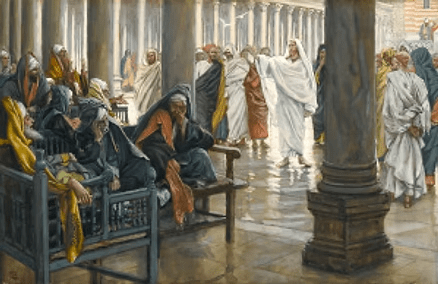
Seeing this aspect of human mortality means that one is not “prevented by death from continuing in office,” but one is prevented from that holy title because of being mortal and not having earned eternal life. All high priests of Jesus Christ have a record of excellence because of having gained the promise of eternal life. Once filled with the High Priest, always filled.
Verse 24 is read aloud saying, “but Jesus holds his priesthood permanently, because he continues forever.” Certainly, Jesus is the eternal high priest, but his name was not written in this verse. It has been drawn in from verse twenty-two. Rather than make it appear that Jesus is an absentee high priest (in Heaven), this verse allows one to see how his Holy Spirit “possesses those of holy office” [i.e.: high priests].
Verse 25 begins with a two-word statement of relatively insignificant Greek words – “hothen kai.” The translation read aloud basically ignores this as a separate statement (perhaps translated as “consequently”?), but the statement addresses the end of verse 24, “whereby” “those of holy office” are specific to Jesus Christ “namely.” That means being possessed by the Christ Mind brings the name of Jesus Christ upon a high priest (Apostle – Saint).
This whole verse then speaks of God sending that presence into “followers” (Christians), who become “alive” or “living” because of eternal life defeating mortal death. The Holy Spirit of God does not send His Son as a spirit that can be accessed through prayer (as intercessory implies); but access is given by the presence of the Holy Spirit, so it “intervenes” as the new self, when ego has been subjugated.
Verse 26 begins with the capitalized Greek word “Toioutos,” where the importance reflects back on verse twenty-six ending by stating, “” – in “living followers” where the Christ Mind “intervenes on behalf of themselves” saying, “Such as these.” That intervention is due to “all ourselves namely” being Jesus Christ. They “became high priest” [fittingly] because of: 1.) marriage to God through love; 2.) they sacrificed their Big Brains of self-ego so they were characters without guile; and 3.) they were baptized by the Holy Spirit and made clean of all past sins. That presence then “separated ourselves” [self-sacrifice] so no “circumstances of sinful acts” would distract them and cause them to stray. This means a Saint – Apostle has been “uplifted spiritually” to heavenly status, through being reborn as Jesus Christ.
Verse 27 begins by stating that the Holy Spirit does not come and go. Instead it remains in possession of one’s physical body at all times. The human body is joined together with the Christ Mind [a high priest having been made] by the Holy Spirit having joined with the soul. The sacrifice of self is what allows one to become a high priest, and that can only happen one time. Like Jesus only died physically once, so his Spirit would be freed to possess those who would follow him in service to God, one’s self-ego can only be sacrificed once. Apostles and Saints are likewise “offered up to God on high” so their sins can be erased and eternal life be received.
Verse 28 says the purpose of a high priest is to establish the Law as the measure of one’s divinity; but all humans have weaknesses, such that being a Pope or an Archbishop, Bishop, or high priest as a job title is no guarantee of a lifetime of holiness. One has to be joined “together” with the Law, so it is written on one’s heart. This togetherness allows one to go “beyond” an external “force” compelling others to obey the law, through an internal “force impelling” one “to actions” of righteousness.
Being adopted as God’s “Son” is the “condition of an age.” That is the Age of Pisces, which means “self-sacrifice for spiritual rewards.” Once in the name of Jesus Christ, one has “been made perfect,” the same as the high priest possessing one.

Again, there are two quite different translations presented here. One will be publicly read. One will only be found on this blog. It is important for all who place value in Scripture to have a personal investment in knowing the truth, which ultimately has to be sought and found on an individual basis. While listening to multiple outside opinions can help lead one to that personal epiphany, conflicting opinion can lead one away from it, towards doubt and fears. The only way to really find the truth is to make an effort to look for it yourself.
As the Epistle selection for the twenty-third Sunday after Pentecost, when one’s own personal ministry for the LORD should be underway – one has sacrificed self and received the Holy Spirit, becoming the temple for God’s high priest – the message here is to stop looking for Jesus outside of oneself. One must find the love of God and marry Him, before His Son can be reborn within a new wife. One can no longer pretend to worship Jesus as the high priest, while admitting righteousness is a state of being that no man or woman can possibly match.
Part of the problem that brings about this negative thought process is a translation like that read aloud, which says, “For it was fitting that we should have such a high priest, holy, blameless, undefiled, separated from sinners, and exalted above the heavens.” Think about how meaningless that is.
God is “holy, blameless, undefiled, separated from sinners, and exalted above the heavens.” What is the point of have Jesus be made as “God II,” when all we need is One God in Heaven?
There is no need for a high priest without a temple or tabernacle – a physical structure placed on holy ground – because God is “holy, blameless, undefiled, separated from sinners, and exalted above the heavens.” It becomes as ludicrous as the elders of Israel going to Samuel saying, “We want you to appoint us a king, to be like other nations.” Samuel said, “God is your King.”
He didn’t say it, but had to have thought: “If God wanted His children to be like other nations, He would have left you in Egypt.” That means God is the King on earth, wherever one of His priests goes. God’s kingdom is then not a piece of real estate but the body in which God resides Spiritually.
The same logic applies to a Jesus the high priest in Heaven. Who goes to God and says, “We want you to appoint us a high priest so we have someone imaginary that forgives all our sins, so we can keep on sinning,” knowing how hard You [God] are on sinners.
If Samuel were to hear that (after shaking his head in disgust) he would say, “The kingdom of God should be in YOU, so get that situation fixed and THEN YOU will need Jesus Christ to be God’s high priest in YOU.”
The reason God sent His Son to be born of a woman, was to have an extension of God incarnated on earth – in a man. Jesus of Nazareth [born in Bethlehem] was necessary because earth is where God’s Son was needed. That man had to die in the flesh so his holy soul [an extension of God] could be reborn countless times in countless humans of faith [God has the power to do that]. But, therein lies the caveat.
God’s Son must be brought in by God, as a welcomed rebirth of God’s love. God will not accept a freak show, where multiple personalities force their way into a body and then fight over control of one body of flesh [like in demonic possessions]. Instead, God demands all His servants fall in love with Him and as a wedding dowry each individual must wrap-up the self-ego and hand that [willingly] over to God.
One must become a submissive wife to God the Husband. That union of God and human heart brings in the Holy Spirit to cleanse the soul of all past sins. Once that setting is complete, baby Jesus Christ is born again [although he comes not really a baby – baby is metaphor for rebirth].
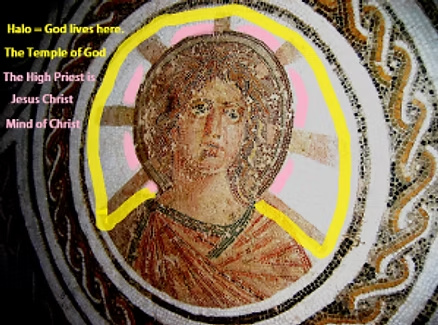
It is imperative that all who want Salvation know this. Paul wrote it over and over and over in his epistles. It is all through Scripture. It is there to see, if one takes the time to look and see.
In John’s Gospel (John 1:39), he wrote in Greek: “Erchesthe kai opsesthe.” Jesus spoke those words [translated from Aramaic into Greek] to his first disciples, Simon [Peter] and Andrew. The simple translation is, “Come and see.” The same words can also translate as: “Arrival namely experience.”
When one has arrived at the state of Apostlehood, then one takes on the character of Jesus Christ. That, in turn, allows one to see the meaning of Scripture as clearly as did Jesus of Nazareth, the Son of God. The knowledge of God opens one’s eyes to see the light of truth, which is necessary for spreading that light to others.
The first step (stated by the capitalized word “Erchesthe”) is to “Come” to Jesus and learn to love the Father.
 Explaining the Readings