
Tag Archives: Isaiah 35:4-7a

Isaiah 35:4-7a – Springs of water in thirsty ground

Say to those who are of a fearful heart,

‘Be strong, do not fear!

Here is your God.

He will come with vengeance,

with terrible recompense.

He will come and save you.’

Then the eyes of the blind shall be opened,

and the ears of the deaf unstopped;

then the lame shall leap like a deer,

and the tongue of the speechless sing for joy.

For waters shall break forth in the wilderness,

and streams in the desert;

the burning sand shall become a pool,

and the thirsty ground springs of water;

———————————————————————————————————-

This is an optional Old Testament selection from the Episcopal Lectionary for the Sixteenth Sunday after Pentecost, Year B 2018. In the numbering system that lists each Sunday in an ordinal fashion, this Sunday is referred to as Proper 18. If chosen, it will next be read aloud in an Episcopal church by a reader on Sunday September 9, 2018. It is important because Isaiah prophesied that God is the only way to turn one’s life around, from mortal born of death to soul freed to everlasting life.

Verse four, as translated above, makes God seem to come like a white knight in shining armor. Humans then can be imagined as fair damsels held captive in towers by the black knight, screaming in fear, “Somebody save me!” Such an image is misleading and this is because the translation fails to accurately make the wording clear.  This is because “elohim” [the Hebrew word that states “gods,” in the lower case and in the plural number] is incorrectly shown as “God.”

The Bible Hub Interlinear translation of Isaiah 35:4 states [with my adjustments]: “Say to those fearful hearted 、 not 、 do fear behold 、 your gods with vengeance 、 will come with recompense — gods this will come and save you .”

In this “’eloheichem” says, “your gods” [my bold] and “elohim hu” says “gods this,” where “hu” can be “this” or “he.” The repetition is complimentary, as each is different from the other, as a parallel balance of opposites.  By stating  “your gods” [the gods of self], this is the source of one’s fears.  One then moves to the opposite of “you” to “he,” where all gods are subservient to Him [“gods he”]. When one then realizes that the word “hu” can additionally translate as “one,” this then can estate how multiple “gods” serve “one” God.
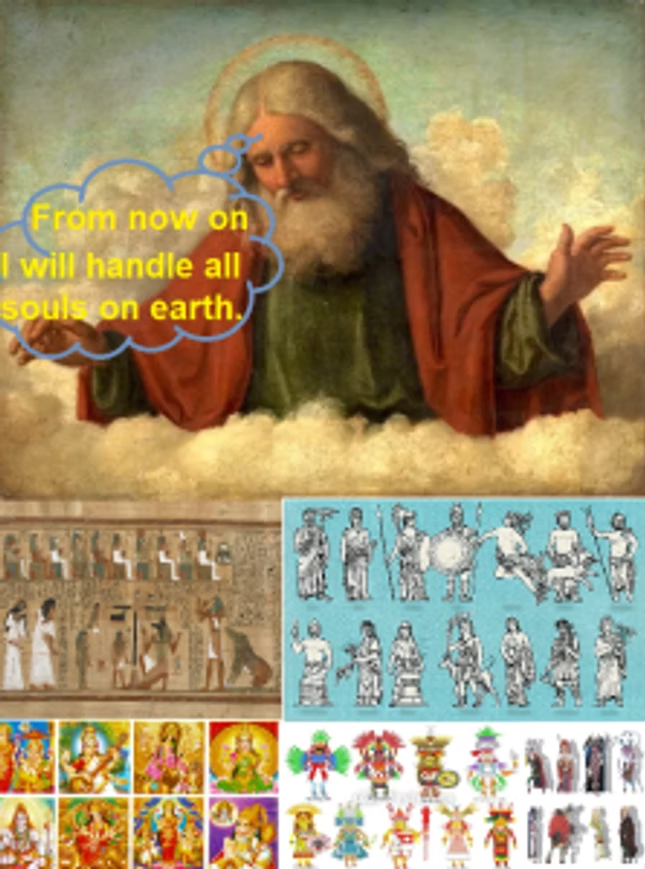
It was at the elohim retirement party that Lucifer got all huffy and took his posse of evil spirits to Hell.

The opposition is then between “you” and God, where “your gods” do not recognize “He” is the Lord of all gods.

It is important to realize the tendency is for human being to become lost because they serve multiple “gods” (“elohim”), rather than Yahweh elohim – the Lord of all gods. These “gods” do not need to be given proper names, such as Venus, Mars, Zeus, or Poseidon, as man kneels before the altars of philosophy, politics, and selfish greed, without even realizing any temple present.  Fear is the motivation for those “gods of yours.”

The commandment of Deuteronomy 6:13 says [amended to show “gods”], “Fear the LORD your gods, serve him only and take your oaths in his name.”

There it is written “Yahweh ‘eloheicha,” as “Lord of your gods.” That says (in effect) “Lord of all gods of you.” This then commands all the Israelites to have no fear of any gods; only fear the Lord.”  That law recognizes all human beings serve the lords of the material plane, but none of God children are to worship them, much less fear them.  That means turning one’s back to God and being on one’s own.

By understanding that starting point that deems one of true faith, as a true priest of Yahweh, it is easy to see how Isaiah was writing about a wayward people that served many “gods” that brought them great “fear.” Instead of the peace and serenity of Yahweh in the hearts of those of Judah, the Southern Kingdom, they had bowed down to all kinds of gods (Baal’s minions that enslave a soul), which filled their hearts with evil doubts. It was to them that Isaiah said (as one with Yahweh in his heart and without fear), “Be made secure,” as opposed to holding onto the weakness they had allowed themselves to become enslaved to.

The separation of the word “al-,” where there is a long pause before this joins to “tirau’nakam” (“do fear behold”), says “no!” first. Not only does Isaiah say, “Hang in there,” as an implication that help is on the way, he stomps his foot down heavily, saying, “Not” is fear allowed to the children of God of lesser gods.

He was telling them to “Say “no” to fear!”

The pause then allows one to linger longer on “beholding fear.” That becomes like screaming, “SPIDER!” to a woman, when there is a spider on the floor. Seeing one puts a sudden, fresh fear of awareness into their soul, so they stop failing to realize the fear that has become so normal it has become embedded in one’s being. Being made aware of a spider’s presence lets one imagine how close one was to being bitten.

Isaiah was saying, “LOOK at the fear you have gripping you!” It is a call to “WAKE UP!”
After that jolt, Isaiah said, “Your gods have control of you with vengeance.” The spider is threatening to bite, after it finishes spinning its web.  It will not be easy on one, as it comes to kill.  It brings a violent end that must be understood.

Still, in the sense that one must fight fire with fire, the same statement then says, “You must use vengeance to rid yourself of your gods.” If the spider comes to kill, you need to kill it first.

Because it is you your gods have possessed and it is you who must evict them from your being.  This means the wakeup call is saying to stop being you … at least the you that you have become. This means Isaiah said to kill the self-ego that brings forth so many neuroses and fears, which are manifest from trying to bring you everything you want.  Those gods come when one is finding out that the self is not a god of anything but generating fears.

This is why verse four continues, to state, “will come with recompense.” This means there will be compensation due to your gods.  Amends must be made for damages caused.  The Hebrew word “gemul” translates clearly as “recompense,” but implies this means “deeds” will be necessary to remove fears.  It states that one will be held responsible for taking the steps that will “benefit” oneself.

This means one must begin doing what is necessary to stop oneself from serving other gods and stop all the self-doubt. One has to show God that one actually wants to change for the better. Once those deeds prove to God one is sincere, then the “Lord of gods will come to save you.”
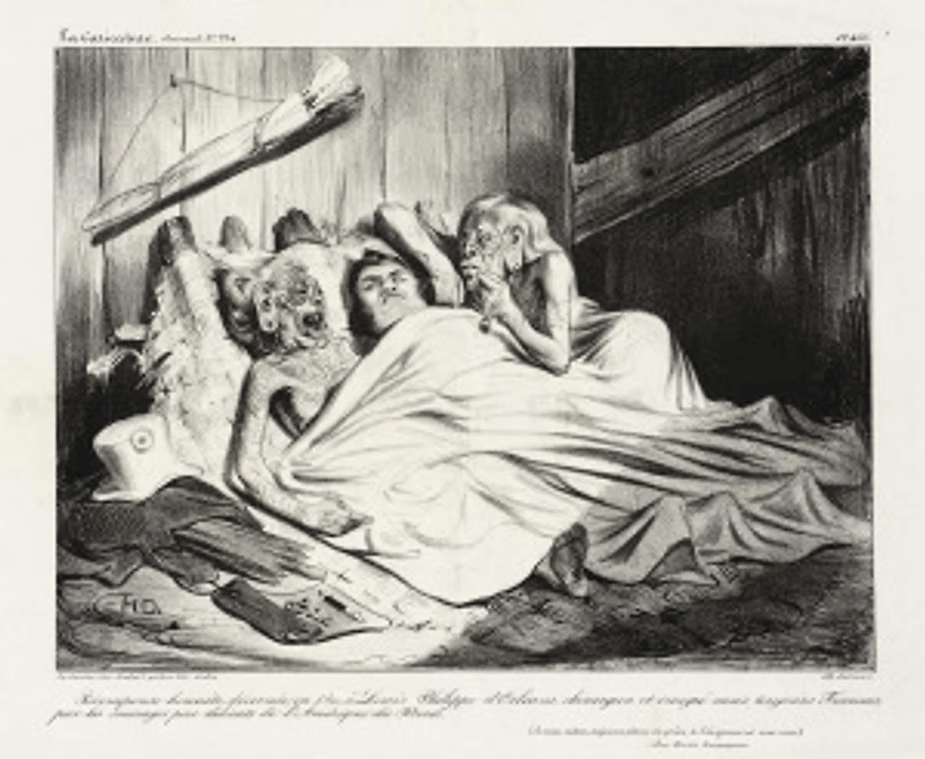
Pay what you owe and be thankful you saw the truth from the light of day.

Verse four is then the most important of this reading. By understanding one’s need to act first, before God will gallop in and take you out of the tower of imprisonment, salvation awaits one’s deeds. In that imaginary scene, rather than waiting helplessly for God to rescue oneself, it means one’s acts will have oneself standing outside the tower, waiting for a lift from God.

Still, by taking those steps to remove the self that fears other gods, one’s eyes and ears will be opened. All crippling fears will be removed, so one throws away the crutches of excuse for doing nothing. One’s silence is removed and one begins singing praises to Yahweh, as well as preach God’s insight to those seeking the truth.  These verses tell of more opposites coming, due to the Christ Mind and the Holy Spirit

The water metaphors then mean that one will be filled with the love of God, as His wife.  One has to love God for Him to return with His love.  Water is the fluid element that is like life blood, flowing from the heart to all the parts of the body.  The symbolism is that all the dryness of sin will be removed [Spiritual Baptism].  Streams will bring forth fertility, making one the fruit in an oasis.  Pools will be like wells of living water, for oneself and other to share.  The springs are the gush of love for God that had been so missed, when fears made one thirst for salvation.

As an optional Old Testament reading selection for the sixteenth Sunday after Pentecost, when one’s ministry for the LORD should be underway – one has no fear of lesser gods in one’s soul – the message here is to prove you want to save yourself, so God can give you His helping hand. So often it is easier to play Nell in a Dudley Do-right cartoon, and just lay tied by ropes on the railroad tracks.
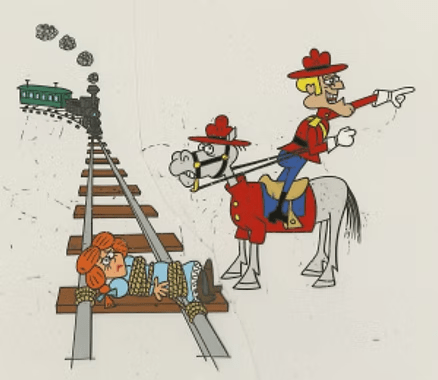
As Flip Wilson used to say – “The devil made me do it! – it is easier to blame all our shortcomings on Satan, and praise God for all our rescues, when we actually do very little to get ourselves out of danger’s way.  Nell’s ropes are of her own doing (in this analogy).

If one’s life is a series of crises, one after another, then there is very little one is doing to elicit God’s help. If God is indeed helping some poor soul, rescuing one from Satan’s grasp, then it is for the purpose of God using that one to teach others not to fear. God wants to use His wives like he used Isaiah. He does not want to litter the world with helpless failures, because they will inevitably blame God for their own mistakes. The saying, “Misery loves company,” was built on the moans and complaints of those who are too in love with fears to ever seek change.

A prophet like Isaiah, who was talking to exilic Jews or those soon to be taken to Babylon, was acting for God by telling them all was not lost. They certainly had lost their way and were being punished for not fearing only Yahweh, but they could retain their souls. One prophet (or a hundred prophets of God) was not going to undo centuries of waywardness. Still, God preserved the words He spoke through His prophet, so we could benefit from them today; just as those in captivity would eventually benefit when their freedom finally came.

In today’s world where the television news has mastered the art of fear mongering, and few Americans are not addicted to hearing the latest fears of the day, the world makes it easy to promote fear.

One cannot help but be heavily influenced to fear the gods of politics, religion, race, poverty, and material gains (et al). Isaiah and the other writers of Scripture stand in our lives as God’s prophets, who are speaking directly to us.  They all are telling the same message, given by God, so this reading today is still valid.

The fears Isaiah warned us about are masked and shrouded by bad translations and weak attempts to address an everlasting need to be faithful to God.  We are the blind, the deaf, the lame, and the mute. We struggle mightily to do what we need to do to save ourselves, much less help save anyone else.

Without good shepherds to guide us (Saints), we become emotionally dry towards God; although we might have a moist tear to shed for Jesus to come save us … again. The call this week is the same as every week – deny self, love God, be eternally cleaned of sin by the Holy Spirit, and go out into the world as a resurrection of Jesus Christ.

The only thing that stops anybody from being a Saint is fear.

Can you remember when you were a small child, set on a place that seemed to be way up high; being told by a loved one, “Jump! I’ll catch you”?

Did you hesitate then?  Or, did you have enough faith to gleefully leap?

Isaiah 35:4-7a – Leaping like a deer while singing with joy

[4] Say to those who are of a fearful heart,

‘Be strong, do not fear!

Here is elohekem.

He will come with vengeance,

with terrible recompense.

elohim will come and save you.’

[5] Then the eyes of the blind shall be opened,

and the ears of the deaf unstopped;

[6] then the lame shall leap like a deer,

and the tongue of the speechless sing for joy.

For waters shall break forth in the wilderness,

and streams in the desert;

[7a] the burning sand shall become a pool,

and the thirsty ground springs of water;

——————–

This is the Track 2 alternate option for the Old Testament reading for the fifteenth Sunday after Pentecost [Proper 18], Year B, according to the lectionary for the Episcopal Church. If chosen [as a year consistently offering the Track 2 option], it will be paired with Psalm 146, which sings, “Put not your trust in rulers, nor in any child of earth, for there is no help in them. When they breathe their last, they return to earth, and in that day their thoughts perish.” Both will precede the Epistle reading from James, where he wrote, “If a brother or sister is naked and lacks daily food, and one of you says to them, “Go in peace; keep warm and eat your fill,” and yet you do not supply their bodily needs, what is the good of that? So faith by itself, if it has no works, is dead.” All will accompany the Gospel selection from Mark, where Jesus healed a deaf man with a speech impediment, leading to Mark writing, “Then Jesus ordered them to tell no one; but the more he ordered them, the more zealously they proclaimed it. They were astounded beyond measure, saying, “He has done everything well.”

I wrote a commentary about this reading and posted it on my website, back in 2018, the last time this reading came up in the lectionary cycle. At that time, I addressed the two places where forms of “elohim” were written, but translated incorrectly as “God” [in the singular, rather than the plural indicated]. At that time, I was still feeling my way through understanding the insights sent to me about “elohim.” Since then, I have come to a better understanding that means the 2018 writing needs to be slightly tweaked. I stand behind what I wrote three years ago, because my views are still applicable to the words of these verses in Isaiah today. I welcome all to view what I wrote then and compare those words to what I add today. The article can be viewed by searching this site.

The Episcopal Church has chosen not to number the verses, other than list the range of verses in the heading. I have placed the verse numbers in brackets. I will reference the verses by those numbers. The addition of an “a” following the number “7” means the remainder of verse seven is not part of the reading. Therefore, the verse read aloud ends with a semi-colon, not a period mark.

My views on elohim are to see them as souls who have committed to a higher power and become married together, as two in one. The higher power then has complete control over the soul and its flesh. All elohim are the creations of Yahweh, but not all elohim are married to Yahweh’s Spirit. Satan is an eternal angel, which is an elohim of sorts, as a higher power that is able to influence a soul to accept his spirit within. If that happens, then a human being becomes a demonically possessed elohim. The writings of Isaiah here can allude to this danger, which is what I reflected upon in the 2018 commentary. However, in these verses, I now clearly see the call of Isaiah was for one to become a soul married to Yahweh and experience the benefits of that divine marriage and most holy possession.

Not read today is verse two, which says [in part], “They shall see the glory of Yahweh, the majesty of elohenu.” The statement about Yahweh means the elohim forms used subsequently are those who have become the extensions of Yahweh on earth. That can only come from a marriage of their souls (individually) to His Spirit. The form written here, “elohenu” is stating the collective possessive, as “our gods,” but should be seen as the possession of souls by Yahweh, as “us gods of Him.”

This understanding can then be brought forward to verse four, so it literally begins by saying, “say to those fearful-hearted , be strong not do fear ; behold! elohekim vengeance will come”. In that, the Hebrew translated as “fearful-hearted” is “lə·nim·hă·rê-lêḇ,” which more aptly says, “those whose hearts hasten.” The rapid beating of a heart can mean “fear,” but so too does a heart beat fast when one is in love, especially when emotions swell in the young and inexperienced. In such cases, a state of fear can mean feelings experienced, those one has not learned how to deal with. When one realizes the Hebrew word “leb” means “heart,” while also being metaphor for “inner man, mind, and will,” this becomes a love of God, but a fear of what a soul should do next. This can then lead to a true fear of the world, when one does not pursue heartfelt emotions for Yahweh. Therefore, David is singing a recommendation to the young children of Israel to “be strong,” which means enter into a spiritual marriage with the greatest ally possible.

When David then sang out “behold!” (which comes with its own English exclamation point, unwritten in Hebrew), this word must be seen as more than a statement of “seeing.” When it is love of God that is felt by a soul, then there is nothing material to “see” with human eyes. This means the word is a statement of “experience,” which is that step beyond heart-fluttering attraction and the anticipation of what will happen next. In that step, one’s soul becomes embraced by Yahweh’s Spirit, so the young girl’s imaginations of romance [and all human flesh equates to the young girl state of being] are like the definition of “belief,” which immediately rises to a state of “faith,” knowing the wonder, power, grace, and presence of Yahweh. True “faith” is impossible without that Spirit being received within one’s soul.

This then leads to the form of elohim that is “elohekim,” meaning “your gods.” This is the second-person statement of a personal relationship with Yahweh, as one of His elohim; but this relationship is now established as mutually possessive, such that a distant God has become “yours” alone. This is now David stating a divine marriage has bonded his soul with Yahweh forever. While this marriage is one soul’s eternal commitment to become the wife of Yahweh [as the greatest King, He can have an infinite number of wives – human gender not part of a soul, so wives means the souls of male and female humans]. As one of many, a wife becomes addressed as a Yahweh elohim – the gods of Yahweh.

The last word in this string that equates to verse 4a says, “vengeance,” which gives this verse a harsher resonance, to which I gave more attention in my 2018 analysis. The point of “vengeance” in a positive light says the innocence of a soul has been returned by divine marriage with Yahweh. His Spirit will not join with a soul in the flesh, without that soul submitting itself fully and totally to Yahweh’s Will. While I have painted a picture of young love and pure innocence, that can only be attributed to a soul, with nothing about the desires of the flesh, nor the filth that can infest an adult brain being part of this divine union. As such, “vengeance” becomes applicable to the past life a soul has led, as a prisoner of sin in a world of temptations, with the soul’s jailer being Satan and his wiles. From a soul having “beheld” the presence of Yahweh, that evil history will be exorcised.

This view is confirmed when the second half of verse four literally sings, “the recompense elohim , he will come and save you”. The NRSV seems to have taken the words saying “vengeance will come” and intuited that to mean “terrible” forms of “recompense” (a word as a noun meaning “compensation or reward given for loss or harm suffered or effort made”) “will come.” There is nothing written that can translate as “terrible,” meaning the NRSV paraphrase has made that assumption wrongfully. The “benefits” (an alternate translation of “gemul,” or “recompense”) come from being one of Yahweh’s “elohim.” The foremost “recompense” is Salvation and forgiveness of past sins. Therefore “Yahweh will come,” meaning into one’s soul-body, and one’s soul will be saved. The Hebrew transliterated as “wə·yō·ša·‘ă·ḵem” means “to be delivered by him.”

Verse five then sings of this “recompense” or the “benefits” that will enter one’s life. When the verse literally sings, “then shall be opened the eyes of the blind , and the ears of the deaf shall be opened,” this must not be seen as physical eyes and ears. Because the soul has fallen in love with Yahweh and become married with His Spiritual presence, the eyes with which things have been seen were blind before being divinely elevated. The ears that before heard the Torah recited to them in the synagogue will then hear the truth coming forth, like never heard before. This sings praise about being led to understand spiritual matters, which is the only way to begin to act in righteous ways. Obviously, there is nothing “terrible” about having elevated eyes and ears.

Verse six then literally sings out loudly, “then shall leap like a deer the lame , and joyfully sing the tongue of the mute ; when shall burst forth in the wilderness waters , and streams in the desert”.

Again, this must not be taken as physical statements, but as metaphor. Without a soul being married to Yahweh and having the benefits of His Spirit within, one’s soul-body is crippled and unable to walk righteously. To be able to “leap like a deer” means any obstacles the world places before one, impeding the path sent down by Yahweh, the soul now easily springs over them, just like a deer leaping over a fence in a farmer’s field. The “mute” are those who are the rabbis and teachers, who cannot answer to the truth of Scripture. Those silent “tongues” will then be filled with joyful noises that explain the meaning of the Word, for all to hear. This means the dryness of a soul-body is a lack of emotions bursting out from within; but the love of Yahweh that comes from marriage to His Spirit brings forth a flood of spirituality that is uplifting and replenishing. This is like Jesus told the Samaritan woman at the well, “I can give you living water, a spring of water welling up to eternal life.”

The first half of verse seven then literally sings, “and shall become the parched ground a pool , and the thirsty land springs of water”. In this, the focus turns from the body of self and shines on “the ground” and “the land.” This is then singing about the ministry of a saint, whose soul-body has become a fountain of the living waters eternally supplied by Yahweh. When one does see the connection to Jesus telling that he would supply this eternal water, where water is necessary for life on earth, then David was singing as a soul that had been reborn as Jesus, well before the man named Jesus was born. This makes the name “Jesus” be the eternal essence of the man, as the name means “Yah[weh] Saves.” This means the Son of man is, has been, and forever will be the soul born into another soul – a wife of Yahweh – so all who have become the wives of Yahweh will be the resurrections of the Son of God in the flesh.

As an optional Old Testament reading that can be chosen to be read on the fifteenth Sunday after Pentecost, when one’s own ministry for Yahweh should already be well underway, the lesson is to go beyond the girlish infatuation with God and become His Son through marriage. One must become the fountain of truth that waters the world around one. Ministry cannot be where one goes to some well of religion (a church building) and passes out free cups of physical water – the equivalent of a sermon about canned meaning of Scripture (which everyone has heard before and gets nothing more from one than a day’s worth of religious [not quite holy] water). That always leads to thirst returning the next day. Ministry is about touching the souls of others, so they marry Yahweh and become resurrections of Jesus – the living waters of Yahweh’s Spirit.