Tag Archives: James 2:14-26

Matthew 25:1-13 – Vigilant and devoted bridesmaids [Twenty-third Sunday after Pentecost]

Jesus said, “Then the kingdom of heaven will be like this. Ten bridesmaids took their lamps and went to meet the bridegroom. Five of them were foolish, and five were wise. When the foolish took their lamps, they took no oil with them; but the wise took flasks of oil with their lamps. As the bridegroom was delayed, all of them became drowsy and slept. But at midnight there was a shout, ‘Look! Here is the bridegroom! Come out to meet him.’ Then all those bridesmaids got up and trimmed their lamps. The foolish said to the wise, ‘Give us some of your oil, for our lamps are going out.’ But the wise replied, ‘No! there will not be enough for you and for us; you had better go to the dealers and buy some for yourselves.’ And while they went to buy it, the bridegroom came, and those who were ready went with him into the wedding banquet; and the door was shut. Later the other bridesmaids came also, saying, ‘Lord, lord, open to us.’ But he replied, ‘Truly I tell you, I do not know you.’ Keep awake therefore, for you know neither the day nor the hour.”

———————————————————————————————————-

This is the Gospel selection from the Episcopal Lectionary for Year A, Proper 27, the twenty-third Sunday after Pentecost. It will next be read aloud in church by a priest on Sunday, November 12, 2017. It is important because of the warning of preparedness, as told in the parable of the ten bridesmaids.

This parable seems quite straightforward, in the sense that it paints a clear picture of being prepared for when the bridegroom comes, which appears to be Jesus in allegory. Of course, nothing is Scripture is that simple, as there is deeper meaning always embedded in the specific verbiage used. Every word coming from Jesus, and remembered by Matthew, came from the All-Knowing Mind of God. Each word of Greek is perfectly chosen.

In fact, one can see such knowledge as allegorically mentioned in this parable, as the oil that the lamps burn for light. Light is metaphor for the truth.  One assumes that some oil is already in the lamp, which had been lit in the evening.  By there being ten different lamps, this becomes metaphor for ten different ways the same words written in Greek can be made available to “light” one’s way in translation. However, meditation that goes beyond the apparent and ponders the scope of meaning that is possible from the Greek, then that acts as an extra “flask of oil” from which the “light” of truth can shine.

This Gospel reading is presented on the same Sunday as the story I interpreted about Joshua, who in his last year of life told the leaders of the Twelve Tribes, “Choose to serve God, or choose to serve the gods of others.” It also goes along with the first letter Paul sent to the Christians of Thessaly, where he wrote words that were read in church as saying “died,” but in reality three times the word implying death was used, metaphorically saying, “having fallen asleep.”

Can you see how this parable strongly links to those themes, when the bridesmaids have fallen asleep, with half having extra oil, and half only having the oil that was already in their lamps?  Can you see how “to become drowsy and sleep” is the same metaphor of death?  Can you see Jesus telling a parable that warns to be prepared for that time of death, which all mortals cannot escape?

In the interpretation I wrote referring to 1 Thessalonians 4, I wrote how one only needs to look at the parables that Jesus told and place oneself in the story “as the fools,” rather than as Jesus – the one telling the story. I had not read this Gospel accompaniment at that time; but as I prepared to write this, I saw the word “fool” used. Exactly as I stated prior, one has to ponder, “How am I one of the five bridesmaids that were foolish?”

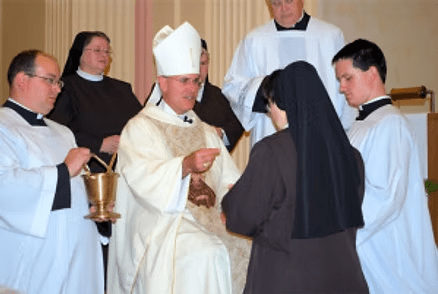
This brings us back to the point that I have made previously, where we are all called to marry the King (and become his Son), as was the allegory in the parable of the Wedding Banquet. That thought, humanly mistaking the proposal to be to marry Jesus, causes manly men to stand up and pronounce, “That is gay! No man can marry another man!” Meanwhile, all the female Christians (especially Roman Catholic nuns and nuns of other denominations) gleefully proclaim, “I am already wearing the ring of marriage to Jesus Christ!”
As I have said, sex organs play no role in spiritual matters. When Jesus told Nicodemus that being reborn did not mean finding some physical way to get back into the mother’s womb, he was heard saying, “Truly, truly, I say to you, unless one is born of water and the Spirit he cannot enter into the kingdom of God.” (John 3:5) Jesus was not talking about bridesmaids being exclusively females because sex organs are not “born of water and the Spirit.” That says “water” is symbolic of “love,” and “the Spirit” is the HolySpirit.”

Love of God brings the Holy Spirit, as the marriage of the Son to the human being of faith, devotion, and submission – the traits of God’s bridesmaids.  That marriage of one’s heart with God – a Holy Union – in turn allows one entrance into the Kingdom of Heaven. That was what Jesus was talking about to Nicodemus – being reborn is what gains entrance into God’s Kingdom (Heaven). Therefore, the bridesmaids are symbolic of Christians that have sacrificed their self-egos, to be married to God.

In this way, anyone who thinks like Nicodemus and wonders how an old man can get back into his momma’s womb (via momma’s sex organ) is as “foolish” as a bridesmaid without extra oil for a lamp. Think of it as some male Christian saying he will marry God and have God’s baby Jesus Christ be born in him, but then that “fool” never gets the extra oil of Scriptural knowledge, to help him through the threshold of death, or “having fallen asleep” like Lazarus (the one Jesus loved) did.

When we read, “When the foolish took their lamps, they took no oil with them,” one can assume they took a lamp that had some oil already in it, so the lamp was able to shine a light for a few hours. All ten bridesmaids have lamps, so the similarity means all ten are led by the light of religion. That religion represents belief in the One God, YaHWeH, the LORD. So, they are either Jewish lamps or Christian lamps today, while Jesus was talking to Jews then.

Simply by having a lamp does nothing for anyone, so being Jewish or Christian in name only (by birth), with no knowledge of what that means as an adult, means one is not  deeply committed to God. No holy light leads one’s path through life. One is (figuratively) still “playing the field,” and “keeping one’s options open.”  One is a bachelor-bachelorette and not a bridesmaid (remembering that sex organs do not matter).

The oil that is already in the lamps should then be seen as one’s personal knowledge of what one’s religion says to believe. As such, all active Christians carry the knowledge that fuels the light that shines faith in God. Jews carry around lamps that are full of the oil that reflects memorizing 613 commandments, sent from God through Moses. In this way, the extra oil that five of the bridesmaids have with them is the oil of the New Testament, which fuels the light that shines faith in Jesus Christ, as the Son of God. The foolish bridesmaids do not carry that extra oil.

Still, the five foolish bridesmaids can be broken down into five different types of Christians and Jews. These can be compared to the seven churches, to which the Spirit of Jesus told John to write letters (in The Revelation). The Jews that reject Jesus as their Messiah, while remaining devout in their adherence to the laws of Moses, simply do not have that extra oil needed to get them beyond death, into Heaven. This was the reason Jesus preached in parables to such holy Jews in Jerusalem, to no avail. But, Christians who mirror those Jews in Jerusalem today, who maintain devotion to amassing fortunes and things, through  a misguided belief that God blesses His believers with things, they are not being filled with God’s Holy Spirit; and that means a “foolish” waste of holy oil.

When the ten had waited so long they had “became drowsy and slept,” this then states symbolically that the “delay” leading to that point of rest was a lifetime of waiting “to meet the bridegroom.” The Greek word that is translated as “slept” is “ekatheudon.” That is rooted in the word “katheudó,” which Thayer’s Greek Lexicon states is used: euphemistically [as], “to be dead,” and metaphorically [as], “to yield to sloth and sin, and be indifferent to one’s salvation.”

This hints at the weights placed upon human beings, as mortals, such that the “drowsiness” is brought on not only by the deterioration of bodily parts, from age, but the weariness that comes from denying oneself the lures of the world (being faithful and true to the bridegroom), as well as succumbing to them (secretly cheating on one’s verbal commitment).  It is a lifetime of temptation to worldly things that wears one out and makes one tired.

To then hear Jesus say, “At midnight there was a shout, ‘Look! Here is the bridegroom! Come out to meet him.’ Then all those bridesmaids got up and trimmed their lamps,” the symbolism of “midnight” has to be grasped. The actual Greek words written are “mesēs de nyktos,” which says, “the middle of the night.” That can be simplified as “midnight,” but a viable implication of “nyktos” (from “nux”) can be “midnight,” by itself.  As such, the simplification makes one miss the point of the word “mesēs” (form of “mesos”), where “in the middle” becomes less a statement of time of day, and more a statement about being in transition, from life to the afterlife, when “in the middle” means the transition of death.

Seeing “the middle” from that perspective, then one can grasp how death is that period of darkness when an absence of light surrounds one’s soul. This is termed “spiritual dryness,” but St. John of the Cross, OCD, wrote a poem that has been called “The Dark Night of the Soul.” An article on that poem and its topic explains: “The term “dark night (of the soul)” in Roman Catholic spirituality describes a spiritual crisis in the journey toward union with God.” The same “crisis towards union” can be seen in this parable told by Jesus.

Jesus, the teller of this parable, said, “There was a shout, ‘Look! Here is the bridegroom! Come out to meet him,’” which can be read as Jesus Christ making that cry of alert. Seeing that as the voice of the Christ Mind exclaiming, “Good News!” is then confirmed when Jesus said at the end of this story, “Keep awake therefore, for you know neither the day nor the hour.” This is clearer when the Greek text is found to add, “in which the Son of man comes,” (“en hē ho huios tou anthrōpou erchetai“), words with translations omitted, as they have not been included in the NASB translation above.

This parable then projects the future, when Jesus told his followers, while on the other side of the Jordan, about the death experienced by Lazarus. Jesus said, “Our friend Lazarus has fallen asleep; but I go, so that I may awaken him out of sleep.” (John 11:11) That parallels this story that tells allegorically of vigilance. The Lazarus story ended when we read, “There was a shout,” as John wrote, “He cried out with a loud voice, “Lazarus, come forth.’” (John 11:43)

The slumbering bridesmaids were awakened by a shout to “Look!” or “Behold!” or “See with the Mind of Christ!” (which is the intent of “horaó”). In both stories, the command was to “Come out,” which is an invitation to leave the darkness of death, but also the darkness of mortality. That command is to enter the heavenly realm of eternal life.

Kate Bush Video Waking the witch

In the statement, “Then all those bridesmaids got up and trimmed their lamps,” the Greek word “ekosmēsan” is translated as “trimmed.” It is the past tense of the word “kosmeó,” which means “to order, arrange,” implying “I put into order; I decorate, deck, adorn.” The word “trimmed” is then used like “trimming the Christmas tree,” and not like cutting a wick, or pulling the wick of a lamp out, so it can be re-lit. According to Thayer’s Greek Lexicon, this specific usage implies “to put in order,” as well as “to make ready” and “prepare” the lamp for the meeting of the bridegroom. This is where adorning the lamp ceremoniously would mean putting the extra oil into effect, as that was what would make meeting the bridegroom possible.

We know that is the case, because we read how Jesus then said, “The foolish said to the wise, ‘Give us some of your oil, for our lamps are going out.’” Because the “fools” said that, as a command to “Give,” this makes an important point of what makes a “fool” “foolish” and not “wise.” People expect to be given Heaven. They expect to be “placed, allowed, put, bestowed, granted, and permitted” (among other possibilities stemming from “Dote,” rooted in “didómi”), rather than having to do work themselves.

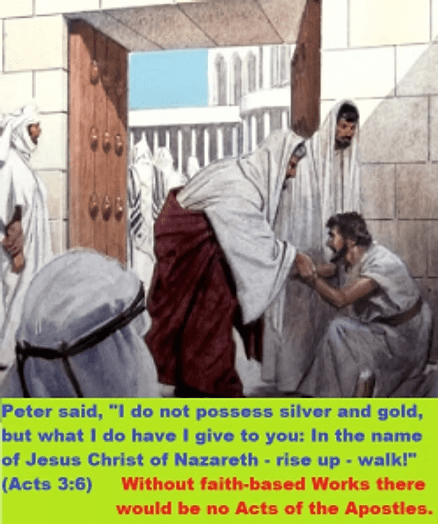
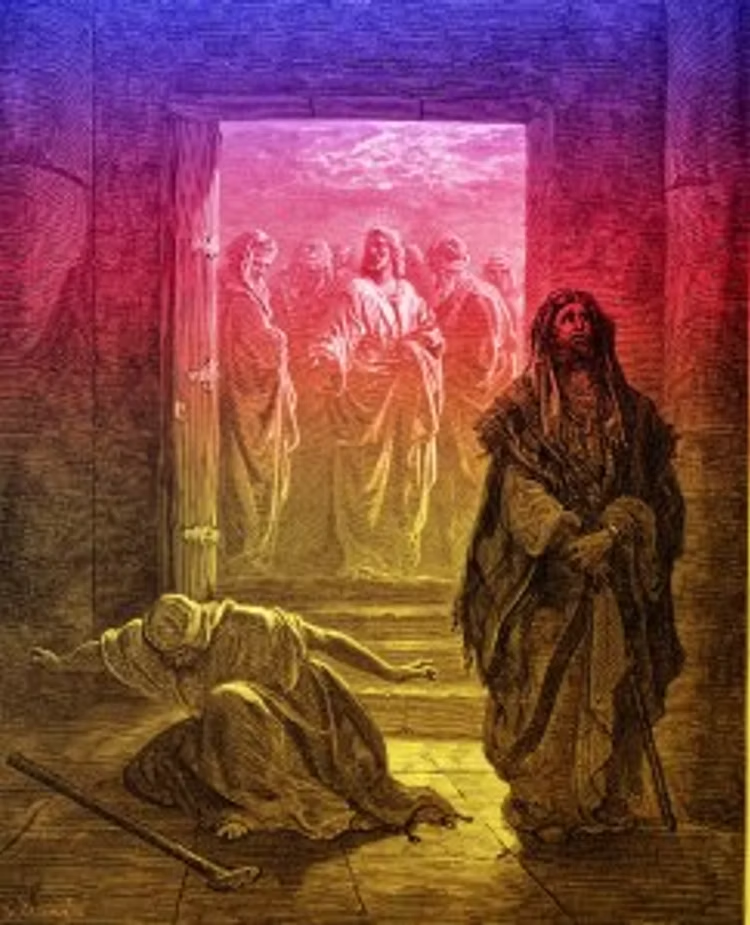
Can you hear St. James saying, “Faith without works is dead”? (James 2:14-26)

One can be given many things, but entrance into Heaven (the Kingdom of God) requires the work of the wise. This means being “wise” comes from being filled with the Holy Spirit, with all the “smarts” of the Christ Mind guiding one’s works. It is that presence of the Christ Mind’s “wisdom” that gives the five “wise bridesmaids” that “flask of oil.” That “oil” anoints them with the talents of the Holy Spirit, to prophesy and to understand prophecy, which is the fuel that “lights” their way to Heaven. It is the Holy Spirit that “adorns” the “lamp” of religion and simple faith.

Matthew 11:25 writes of Jesus saying, “I praise you, Father, Lord of heaven and earth, because you have hidden these things from the wise and learned, and revealed them to little children.”  There, “sophōn kai  synetōn” says “cleverness  importantly  intelligence” is the mistake of thinking a Big Brain will be all the ‘oil’ one’s lamp needs to stay awake until the bridegroom comes.  God does not come to meet those fools.  God does not propose to those who fall in love with convoluted masses of synapses that only serve mortal existence.  God proposes to “little children” whose faith is not hindered by the limits a human organ presents one’s soul.  Children are those who are neuter gender and not those who have not become limited to love that follows the lead of a sex organ.

In one commentary that I briefly skimmed over, the refusal of the five “wise bridesmaids” to “Give” lamp oil to the five “foolish” ones was seen as selfishness or petty bickering and jealousy. This is not the case at all.

To grasp that, I want you to think now of the story Jesus told about poor Lazarus, who in life sat at the gate of the rich man, begging for the crumbs off his table. In death, it was the rich man who begged Abraham’s Spirit to let Lazarus “Give” his tongue a touch of “cool water.” When Abraham refused, because the chasm between Heaven and Hell was too wide for Lazarus to cross, the rich man still wanted Lazarus to “Give” notice to his still living brothers, so they might change their ways (which were the ways of all rich humans).

In this parable, the five “wise bridesmaids” have to be seen exactly like poor Lazarus is seen, after death. None of them were able to “Give” what was not theirs to “Give.”  It was not a matter of selfishness, but the lesson that requires one earn that which one is “Given.”  Lazarus earned reward, while the rich man earned punishment.

The translation presented by the New American Standard Bible (NASB) has the “wise” saying, with an exclamation point, “No! there will not be enough for you and for us.” This is not what is written. The capitalized first word of this reply is “Mē¦pote” (root being “mépote”) which means “Lest.” It implies, “Lest at any time” and “Perhaps,” with the connotation of “Not” beginning their reply (without that being exclaimed).

The Greek written literally states the reply to a command to be “Given” the Holy Spirit, in the form of lamp oil.  The written words say, “Not cannot no [a triple negative] it is assistance for us and you.” That does not say there is not enough to be shared. It says there is plenty to go around, but they “cannot” “Give” that which the “wisdom” allows them to know: “not is it assistance for me and you.” The statement of reply says, “No cannot  [for] it is not to suffice for us and you.”  The “wise bridesmaids” knew, through the Christ Mind, that each individual must work for the unlimited shares that God has to Give.
The completion of the “wise bridesmaids’” reply, “you had better go to the dealers and buy some for yourselves,” states this individual responsibility to secure the holy oil necessary, by which one can enter Heaven. The literal translation says this in two segments: “but go rather to those selling,” and then “buy for yourselves.”

When one is hearing an allegory told, it is natural to think in normal, human terms; so when one hears lamp oil needed (a commodity), then it is natural to go to a lamp oil “dealer” to purchase that. In this story, we visualize some stupid girls running in darkness, trying to get an oil shop to open up and sell them some lamp oil.  However, the metaphor of “oil” is spiritual oil, or holy oil.

This means the “sellers” and “dealers” of holy oil are churches and synagogues. Therefore, the lack of work done by the “foolish” is being pointed out by those of “wisdom.” The ones who said they were “Giving” away “get to Heaven oil without working for it” I.O.U.’s are those who never “Gave” them the Holy Spirit’s “oil.”  They could not give what they did not themselves have; or they refused to give what they selfishly thought they had – scholarly knowledge – not wanting ignorant commoners to be special like them.  If you have the extra flask of oil and you are still alive, then you Give it away to those who seek it.

This, certainly, was a slap to the face of the Pharisees, Sadducees, scribes and Temple priests in Jerusalem, as Jesus was speaking allegorically in parable.  That was because it pointed the finger of “wisdom” at the lack of spiritual competence in those religious leaders.

Nicodemus, identified by John as “a man of the Pharisees” and “a ruler of the Jews” (John 3:1), was asked by Jesus, “Are you the teacher of Israel and do not understand these things (the spiritual meaning of being reborn)?” (John 3:10) This made Nicodemus one of those getting rich off selling the “oil” of Mosaic Law; but he and his pals never had in stock (as a commodity to sell) “spiritual oil,” the kind that anoints one for entrance into the Kingdom of God.
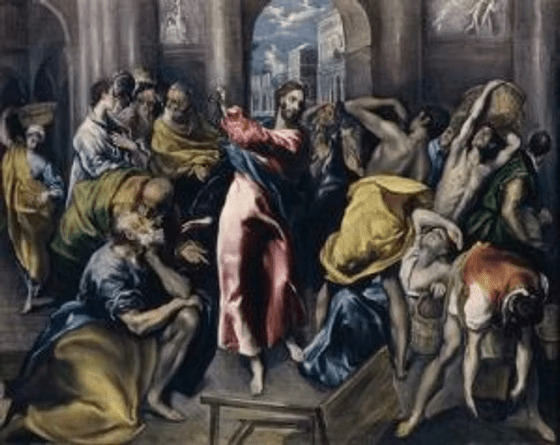
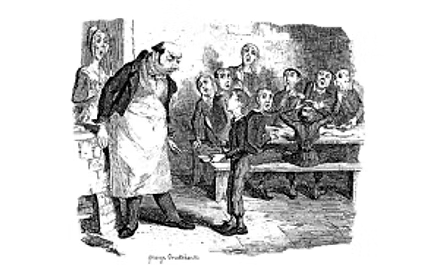
Jesus demonstrated how selling in the Father’s house was unappreciated.

Because the Holy Bible is a Living document, that which was written in ancient times, of ancient people, still applies at all times, to all people.  The eternal value of Scripture is as Paul wrote to the Hebrews of Rome: “For the word of God is living and active and sharper than any two-edged sword, and piercing as far as the division of soul and spirit, of both joints and marrow, and able to judge the thoughts and intentions of the heart” (Hebrew 4:12). Therefore, this slap at the leaders of Judaism in Jerusalem, by Jesus speaking in parable, is equally a slap at all religions professing belief in YaHWeH, the One God (the “lamps” of religion) that keep their flocks filled with costly physical “lamp oil” (like the vendors of the marketplace, selling shares of responsibility in the costs of buildings and programs), and do nothing that anoints the believers with the spiritual oil that prepares them to go beyond mortal death.

Those who are “wise” have become so by coming in touch with someone with the Holy Spirit. Jesus passed that onto his Apostles (who became Christ Jesus reborn), and they passed the Holy Spirit onto those they contacted (such as Paul and the Thessalonians). Apostles today have been led to Scripture, by those teaching programs of churches in the denominations of Christianity (readings, sermons, Bible studies, etc.); but the Holy Spirit does not come by trick or by human command.

Individuals have to show God their sincerity in wanting to become His bridesmaids-in-waiting, so that the extra flask of holy oil (the Holy Spirit) will be born within them. That rebirth of Christ Jesus in Apostles sends those Apostles out to “Give” that same opportunity to others. However, all who receive the Holy Spirit have to prove themselves as worthy, through the works of evangelism.

By the time one reaches that point of slumber, ready to meet the bridegroom they have worked so hard to please, there is no place a soul can go and “buy” or “purchase” the Holy Spirit. When Jesus said, “You cannot serve two masters. You cannot serve both God and money” (Luke 16:13), we see now how that means you cannot “purchase” a ticket to Heaven. You cannot reserve a room in the Father’s house with a credit card.

Seeing how the bridesmaids’ slumber is reference to death, after being told to go and “buy for yourselves,” the only place those five “foolish” souls could go was their own funerals.

Their souls would then hover over those grieving their passing, only to find prayers being recited over their physical corpses, as they were being lowered into the ground. Those souls then returned to the place of the wedding banquet, bringing with them the words spoken by priests, ministers, pastors, preachers, and rabbis, asking God to receive them.

Prayers are good.  Prayers are helpful to the living.  However, prayers for released souls are more for those left remaining in grief, than of any benefit for the dead.  A prayer cannot trump the requirement of being in possession of the Holy Spirit.

Reading, “Later the other bridesmaids came also, saying, ‘Lord, lord, open to us.’ But he replied, ‘Truly I tell you, I do not know you,’” that says those “virgins” (actual meaning of the word “parthenoi,” which is translated as “bridesmaids”) had supposedly set themselves apart from other lords, as committed to marry the bridegroom (God). While they promised their hearts to God, and confessed to others that was where their hearts were, the truth exposed (“Amēn legō” – “Truly I say”) is that they never did as promised nor publicly proclaimed.

God did not know those souls intimately. They were still “virgins,” “bridesmaids” with no real, committed relationship with the Lord; AND remember – we are not talking females for marriage. ALL are “virgins” until God consummates a relationship by sending His wives-to-be His Son and His Holy Spirit. The allegory of that is there must be possessed an extra “flask of oil.” Without that to light the lamp to Heaven, God can truly say, “I have not known you (in the Biblical sense).”

You have to be reborn as Christ Jesus to gain entrance into Heaven.

Jesus then said, as the storyteller who spoke for the Father, “Keep awake therefore, for you know neither the day nor the hour.” “Keep awake” means do not die before you have become baby Jesus reborn in the flesh. Do not die before the Holy Spirit has used you as an Apostle, to bring other bridesmaids-in-waiting to the Lord.

Keep awake because you never know when death will make it too late to run to the church and get some Holy Spirit.  You need to be prepared beforehand.
Ephesians 1:3-14 – Living for the praise of his glory

Blessed be the God and Father of our Lord Jesus Christ, who has blessed us in Christ with every spiritual blessing in the heavenly places, just as he chose us in Christ before the foundation of the world to be holy and blameless before him in love. He destined us for adoption as his children through Jesus Christ, according to the good pleasure of his will, to the praise of his glorious grace that he freely bestowed on us in the Beloved. In him we have redemption through his blood, the forgiveness of our trespasses, according to the riches of his grace that he lavished on us. With all wisdom and insight he has made known to us the mystery of his will, according to his good pleasure that he set forth in Christ, as a plan for the fullness of time, to gather up all things in him, things in heaven and things on earth. In Christ we have also obtained an inheritance, having been destined according to the purpose of him who accomplishes all things according to his counsel and will, so that we, who were the first to set our hope on Christ, might live for the praise of his glory. In him you also, when you had heard the word of truth, the gospel of your salvation, and had believed in him, were marked with the seal of the promised Holy Spirit; this is the pledge of our inheritance toward redemption as God’s own people, to the praise of his glory.

——————————————————————————–

This is the Epistle selection from Episcopal Lectionary for the Eighth Sunday after Pentecost, Year B 2018. In the numbering system that lists each Sunday in an ordinal fashion, this Sunday is referred to as Proper 10. It will next be read aloud in a church by a reader on Sunday July 15, 2018. This is important it touches on the predestination of Saints, where God released all human souls on the material plane with the instruction: “Come back. Don’t get lost in a physical body.”

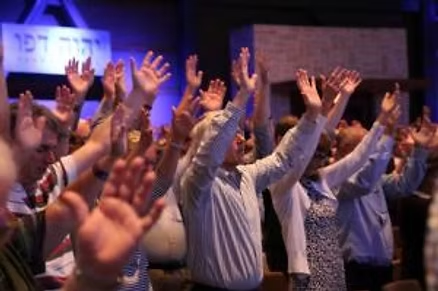
When I was a young boy being raised in an Assemblies of God church, I remember there was a “prayer room.” It had folding chairs in it, at which people would kneel and pray.

As best as my young brain could discern (from what I saw happen in that room) was the room was a place to be trained in how to “speak in tongues.” According to the methods taught to me, as I knelt in front of one of those folding chairs, I was told to repeat the word “Glory,” over and over.  I would do that until my tongue got so tied up it would stop saying “Glory” and start making unintelligible noises. I was told those unintelligible sounds was “speaking in tongues.”  One traveling evangelists actually encouraged me to just make up any noises that I wanted.  When I did, I was praised by the congregation for “speaking in tongues.”

Reading this greeting written by Paul to the Christians of Ephesus, it dawned on me how repetition being the key to leading one to speaking in tongues was the truth. Someone, somewhere along the line of the foundation of the Assemblies of God church mistook reading Scripture (the Glory of God in writing) over and over, until it begins to make deep, spiritual sense, as how one speaks in the tongues of God. What is unintelligible to those who have no time for repetition then becomes crystal clear to those who eyes and ears (and mouths) that God has opened.

Paul is a classic example (in all his writings) of how repetition is the key to understanding. The faster one reads Paul the more it sounds like babble. However, when it is read slowly, over and over, praying for the deeper truth to be exposed, it begins to amaze with how accurately detailed Paul’s words were.  They are of divine origin.

With that short lesson about speaking in tongues complete, read this over and over and contemplate its deeper meaning: “Blessed be the God and Father of our Lord Jesus Christ.”

Perhaps knowing the Greek text will help, along with knowing alternative English translations: “Eulogētos ho Theos kai Patēr tou Kyriou hēmōn  ,  Iēsou Christou” or “Worthy of praise the [one] God and Father of the Master of us , Jesus the Messiah.”

Ask yourself as you repeat those words, several of which are capitalized, showing importance, “Is this a simple church greeting, where important words are written ceremoniously, or formally, or ritually, rather than with the intent to express the truth?”

Ask yourself, “Is God truly Worthy of praise, such that God is the epitome of ones Blessings?”

Was Paul pointing out that God is the Father of all Creation, including himself, all the people breathing air in Ephesus, as well as every living being on earth? Or, was Paul making an important statement about God being exclusively the Father of himself – an Apostle – and those true Christians of Ephesus – also Apostles? Did Paul intend his use of Patēr (capitalized as “the Father,” versus “ancestor, elder, or senior” in the lower case) to be meaningless or meaningful?

Why did Paul further that by stating God is the “Father of the Lord,” going on to say “the Lord of us”? What does the word “Kyriou” mean, when it is the “Lord” and/or “Master of us”?

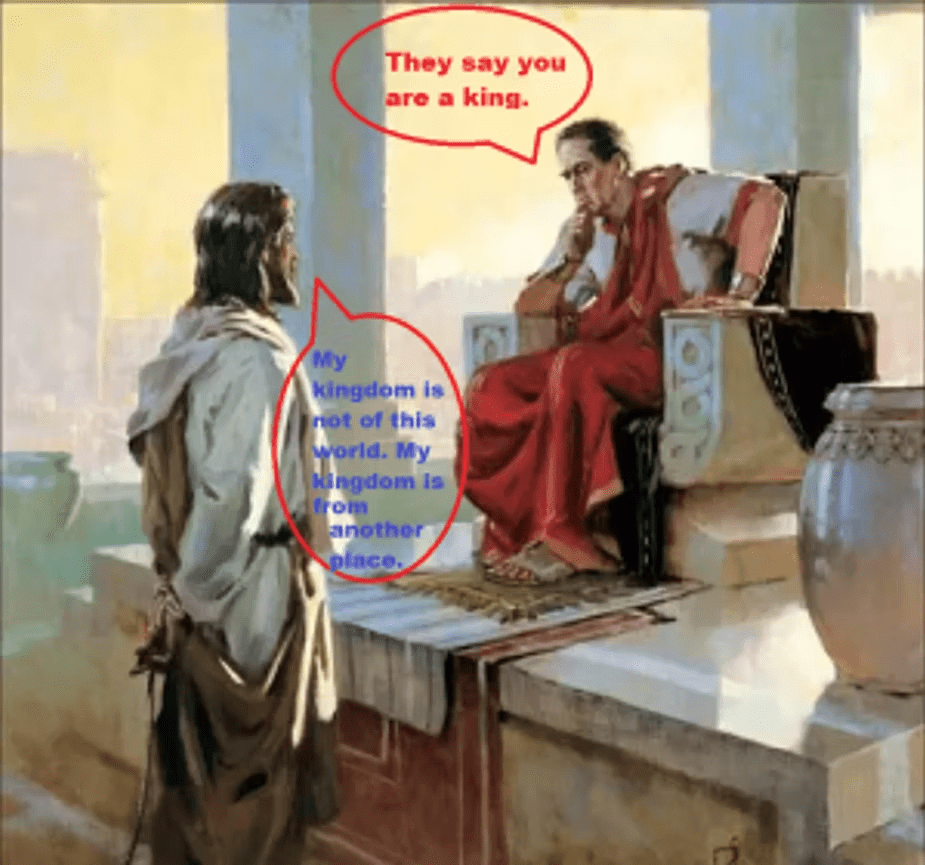
If God is King of Heaven and Jesus was not a king of a nation, where would he be Lord? Where could his kingdom be, if not within an Apostle?

When a comma is placed after “hēmōn” (“of us”), indicating a pause in this line of thought, how then does that mark in the text act to denote a separation between “us” and “Jesus Christ”?

When you read these ten words over and over … slowly … allowing the truth and full scope of intent to sink in … can you see Paul stating, “I praise the One God as do you praise the One God [“Blessed be the God”], for together we are blessed to know God as the Father [“and Father”] of new state of spiritual being, having been born of His love in His sending us our Master [“of our Lord”], the new Lord of our souls in our flesh, such that we each have become a kingdoms of Jesus Christ [“Jesus Christ”], each being the resurrection of Jesus Christ”?

When your eyes begin to open to Paul having just made a powerful statement that he was a member of the church of Ephesus, where “church” is defined by Jesus as being “where two or three gather in my name, I am there in their midst,” (Matthew 18:20), those to whom Paul wrote were just like him, in the sense they had each been “Blessed” by “God,” who then was the “Father” of their rebirth, where the “Lord” of their bodies, minds, and souls was “Jesus Christ.”  They had each become Jesus Christ incarnate.  When that becomes clear, then you can begin to do the same repetition of the rest of this reading.

To speak in the tongue of God, as Paul was writing “in tongues” using the Word of God spoken to him, each Apostle in Ephesus was then capable of “reading in tongues” (a.k.a. “speaking”) and reading the words of Paul on a divine level of understanding (above a human brain level).  To an Apostle, there is not thought that goes into word selection, as some brain-powered trick of language.  Words naturally come to one filled with the Holy Spirit.  However, a disciple can be trained to begin proving the divinity in such tongues by following logical methods.

Like I am instructing, one has to practice reading slowly, repeating each word as it was meant to be read – using the full scope of each word’s usage, not just the standard or typical. That requires learning Greek (and Hebrew) as well as God knows Greek (and Hebrew), or using a tool to make up the difference (such as an online Interlinear translation of the foreign to the known.  One has to know God’s Mind is so great it chooses the precise words necessary to convey depth beyond the standard and typical; but intelligence is elevated to inspiration when one proves to oneself how great God is to choose words with so much meaning unseen.

(I am now going off the script above and will be using the literal (interlinear) English translation of the Greek written. Feel free to see how English alters the ordering of words written, to satisfy syntactical differences from Greek.)  By seeing that Paul said “Blessed [be] the [One] God,” as the source of Apostles having been reborn as Jesus Christ, next read:

“the [One] having blessed us with every blessing spiritual in the heavenly realms in Christ.”

God is “the [One] having blessed” Apostles. God has bestowed upon His servants “spiritual blessing,” rather than physical rewards. The spirit of a human being is the soul, so an Apostle’s soul has been made “worthy of praise,” due to it having been cleansed of sins by the Holy Spirit of God. They have been spiritually blessed so their souls can gain spiritual reward in the “heavenly realms.” The plural number of “realms” shows how heaven has become one with earth in an Apostle, of which there are many.  They have been blessed with the knowledge of God that comes to them because they are in Christ. They have been blessed with the Christ Mind.

Then read:

“just as he chose us in him before foundation of world  ,  to be for us blameless and holy before him  ;  in love.” [Notice the presence of punctuation marks, which are ‘road signs’ that say how to slow down more and shift gear.]

Again, “he” is God, who has Blessed them and they praise Him for those blessings. Paul is saying Apostles are predestined to become Saints. The Greek words “katabolēs kosmou” imply verbiage that says, “the foundation of the world,” but that is a limitation that plays on one’s brain. A brain thinks the only way that can be interpreted is from Creation, a long, long, time ago. It does not have to be that far-stretched. Each soul in “the world” is reincarnated into new flesh each earthly life. The word “katabolé” actually has a meaning that is relative to “conception,” so each human being’s “foundation” in “the world” is their birth. When rebirth is factored in, then being chosen “before being born as Jesus Christ” is the call to be a disciple. In Paul’s case, the spirit of Jesus Christ knocked Saul off his donkey and blinded him for three days before he took on the name Paul and began serving God as Jesus Christ reborn. The choice one makes that answers that call from God is completely and totally “to be blameless and holy before [God].” An Apostle is not forced to serve God; but one serves out of “love.” An Apostle falls “in love” with God. An Apostle becomes married to God [the cleansing of sin from the soul] and God’s love reigns in an Apostle’s heart.

Jesus is the round stone that rolls away from the entrance to the tomb, freeing the soul for eternal life.

After absorbing that, then next read:

“having predestined us for divine adoption as sons through Jesus Christ  ,  according to the good pleasure of the will of him.”

The Greek word “proorizó” means “I predetermine,” but it equally means “preordained” and “marked out beforehand.” By seeing how Paul said Apostles were “chosen at birth,” and that means being reborn “in him” – Jesus Christ – the view is now broadened to show one’s responding to God’s call is one’s “pre-ordination” towards becoming the Son of God. This is then a “divine adoption” by all human beings, of both sexes, those who answer the call, to be reborn as Jesus Christ.  His Spirit is resurrected within one’s soul, so all who are so adopted divinely are transformed into “sons through Jesus Christ.” This Spiritual adoption goes beyond human gender because of the “love” of God, so accordingly all “sons” are everyone who is filled with the “happiness of the will of him,” which is the presence of the Holy Spirit – the same that surrounded Jesus of Nazareth.

That revelation then prepares one to read further:

“to praise of glory of the grace of him  ,  which he has freely given us in the [One] beloved.”

This “good pleasure, happiness, and delight” that is brought on by God’s love, His Holy Spirit and the Mind of Christ is then the elation that instantly causes an Apostle to “praise the unspoken manifestation of God” inwardly. Such feelings of joy are due to the “favor” and “gift” of God, leading one to give in return “thanks” and “gratitude” to God. It means an Apostle acts as did Jesus of Nazareth, giving all “honor and glory to God.” This does not come by asking for favor. It comes “freely,” given by God to His ‘wives’, those who have subjected their will in marriage to God, accepting him into their hearts as “the [One] beloved.”

If that is difficult to grasp, keep repeating those words over and over, slowly. Understand that “praise” comes from inner delight that is beyond natural emotions, which are impossible to maintain by self-will. However, seeing “happiness” as a “gift of God” allows one to then read:

“in whom we have redemption through the blood of him  ,  the forgiveness all of trespasses  ,  according to the riches of the grace of him.”

Notice the repetition of the word “grace,” which in Greek is “charis.” The form written by Paul, “charitos,” is now being linked to “the blood of him,” where the Greek word “haimatos” means “blood” that has been spilled. This means that like Jesus of Nazareth spilled his “blood” in the act of crucifixion, where he willingly became a sacrificial lamb for a higher cause, so too are Apostles called to the same higher cause, through self-sacrifice.

By being reborn as Jesus Christ, one has been given the higher reward of “redemption,” where the sins of one’s life have been “ransomed” through a “blood” payment. Therefore, the “blood” of self no longer leads one’s body, because it has been replaced by the “blood of Christ.” The “blood” of Christ is the Holy Spirit that protects one from death.  Achievement of that reward means “forgiveness of all sins” – the baptism of one’s soul by the Holy Spirit. That cleansing is “according to the abundance of the kindness of God” – through His “granting the favor of Jesus Christ” to one.

Keep repeating those words until they speak to you on a personal level, rather than as a bystander looking at an old letter written by an Apostle to a church in ancient Greece. See how Paul was not spreading the truth of some blanket promise of redemption and worldwide forgiveness of sins, given to anyone who did little more than profess belief in Jesus as the Son of God. One cannot believe in Jesus Christ without letting go of selfishness and actually living as Jesus of Nazareth lived. When one has a firm hold on that “grace of him,” then read:

“which he lavished upon us in all wisdom and understanding  ;  having made known to us the mystery  ,  of the will of him  ,  according to the pleasure of him  ,  which he purposed in him.”

The Greek words that begin this series of segments, “hēs eperisseusen,” can equally translate as “that exceeded the ordinary” or “which abounded.” The use of “lavished” means the amount of the spirituality richly given by God to His Apostles is much more than they could ever possibly comprehend with a human brain. Those “riches” are now stated as “wisdom and understanding.” It is such divine insight that allows them to understand Scripture (“the mystery” is the hidden meaning in the words – such that I am expanding upon now) is made known instantly or with quick inspiration to know, not by the will of one’s intellect (a Big Brain) but by God’s whispers. God then delights in His servants finding enjoyment in seeing Scripture unfold before their eyes – meaning that astonishes – because everything was written with that deeper purpose intended. This is the knowledge of God being conveyed through the Mind of Christ, made available to an Apostle that has been reborn as Jesus Christ.

Then read the next series slowly and with repetition:

“for administration of the fullness the [one] of times  ;  to head up the all things in the Christ  ,  the things in the heavens  ,  and the things upon the earth.”

This series begins with the Greek words “eisoikonomian,” which can also state “for stewardship.” The translation read aloud in church states, “as a plan for.” The Christian view of “Stewardship” has been applied to the responsibility of Christians to take care of the earth.  There is “a plan for” this type of “administration.”  However, that view frequently turns into pleas for donations to the churches, so the burden will be taken on by Church, directing funds to outreach programs, allowing the individuals to have the comfort of knowing that doing little more than contributing money absolves them of this “administrative” duty.

The meaning here is different.  It means Scripture is never to be read as a stagnant story of one time past. Apostles are given divine insight so Scripture is seen to always apply to current times, so there is a “full complement” of timely interpretations of meaning. The one who heads this organization is not a bishop or pope, but Christ – the head of the Church. Therefore, Stewardship can only come through Apostles who are enlightened as to the “administration” of all things that fit the requirements that bring one to God and project the Christ in the flesh. The “administration” is not for a body of people – an organization called a church – but that which ensures each soul can return to heaven. Those are the deeds one’s flesh does, through the Christ, as one in the name of Jesus Christ, while here on the earthly plane.

Being able to grasp that vital message, then slowly read and reread this:

“in him  ,  in whom we also we have obtained an inheritance  ,  having been predestined according to purpose of the case all things working  ,  according to the counsel of the will of him.”

This begins with “in him,” which is a statement of being in Jesus Christ. The Greek words “enautō” state “in him,” but also can convey “with the same” or “in self.” This says an Apostle and Jesus Christ are one, not one on earth and the other in heaven.  The Greek word “eklērōthēmen” expands on the root “kléroó,” where “inheritance” means an “allotment” or “a share.” When “inheritance” is understood to be defined as, “something, as a quality or characteristic, received from progenitors or predecessors,” then the share received is the resurrection of the Son, born of the Father, into the inheritors.  That makes them also be (regardless of human gender) “sons of the Father.” Again, the “predestination” is less a birthright that comes from professing belief that Jesus was the Son of God, but more a statement about that period of devotion preceding one being filled with the Holy Spirit, married to God, and reborn as His Son. The Greek words “panta energountos” (“all things working”) means the “predestination” is “according to the purpose” of inheritance, where one does the works of the LORD – “of every kind.” This is how Saint James could truthfully argue: “Faith, without works, is dead.” (James 2:14-26)

Those “working” acts are then not led by brainstorming with a denomination of Christianity and its political agendas, where one is blindly led by the will of other human beings.  Instead, one possesses a brain that functions, made fully cognizant of how what one does under the direction (“counsel of the will”) of the Christ Mind is works based on the gifts of the Holy Spirit.  That subjection to the Will of God is how one inherits the resurrection of Jesus Christ within one’s being.

Allowing that vision to slowly appear makes one able to then progress to this series of words:

“for this to be us  ,  to praise of glory of him  ;  those having first trusted in the Christ.”

Here we see Paul stating that doing the works of faith, directed by the presence of Jesus Christ within on, is the only way such works can be done. It means the self must be sacrificed to serve the Will of God. It is the self that becomes filled with doubts and fears and hesitates doing the works the whispers (conscience) tell one to do. “for Jesus Christ to be us,” following the counsel of his will, “all things working” are accomplished. That accomplishment is in no way attributed to the power of the self, but to the “glory of God.” As an Apostle watches him or herself doing the works of Jesus Christ – according to the talents given, listed by Paul elsewhere – “praise” is given to the Trinity having involved oneself: as Father, Son, and Holy Spirit converging in one’s flesh. That promise of accomplishment is then the “predestination,” where “one first trusted in Christ,” which is faith. Faith alone is not enough, but it is a “first” step in the direction of discipleship. To do the works of faith, one has to learn belief through study of Scripture, praying for the truth to be revealed. Until one sees that truth personally (not simply being told, like I am doing here), such that “all things working” become one’s personal acts of investigation, one will not be enabled by God to progress to Apostle status.

Seeing that insight of a search for the truth and the acts of faith coming from personal belief, read this next series of segments slowly, repeating until the meaning is clear:

“in whom also you  ,  having heard the word these of truth  ,  the gospel of the salvation of you  ,  in whom also  ,  having believed  ,  you were seated with the Spirit this of promise  ,  the Holy.”

Notice how the last segment ended with the word “Christ,” who offered one “hope” (another translation of “proelpizó,” which states “trust”) as one’s “first” step towards marriage with God and giving birth (resurrection) to Jesus Christ, Paul then stated “Christ” is “in whom also you,” where Paul was in the name of Jesus Christ and so were the true Christians of Ephesus. They have all been elevated to the status of Apostle, as completely devoted servants of the LORD, because their “works” involved study of Scripture, through divine insight. By “having heard the word these of truth” coming from whispers of enlightenment inside one’s head, one has been able to find a personal relationship with God that gives delight in His glory. That experience moves one spiritually (in one’s soul-being) to submit to the Will of God. When one has become the wife of God (males and females He weds them), the “love” child is Jesus Christ reborn into another Son of the Father. That presence of Christ in one becomes the “good news” of one’s personal soul’s salvation. The Holy Spirit has baptized the soul clean, with all sins forgiven, and “all things working” henceforth are the Will of God, through Jesus Christ reborn in flesh (“in whom also”). All comes from true belief, not just obedience to dogma and being told what one should say that one believes. One is then “seated” with salvation through having received the Holy Spirit of God.

Having grasped that last important series of segments, look now closely at this final series in this reading:

“that is guarantee of the inheritance of us  ,  to redemption of the acquired possession  ,  to praise the glory of him.”

The Greek word “arrabōn” can be translated as “guarantee,” but the truest sense of the word “arrabón” is: “an earnest, earnest-money, a large part of the payment, given in advance as a security that the whole will be paid afterwards.” This means the receipt of the Holy Spirit must be seen as a pre-payment made in the worldly realm (while alive in the flesh) that then “guarantees the balance” that assures “the inheritance of us” in Heaven. This means one cannot sin an entire lifetime, doing nothing for anyone other than self (where all forms of altruism, without being led by the Christ Mind as one with a human being, is ultimately for selfish purposes) cannot find God on one’s death bed.  Repentance must be pre-paid by selfless acts. Try borrowing money for a house in the same manner, where one has never worked to earn anything that would then act as a promise that more productive work will qualify one for total repayment. No house loans come to slackards, just as no heaven comes to those claiming faith, but without works. One has to become Jesus Christ reborn to insure entrance into the heavenly realm for eternity. In order to acquire that heavenly promise, one has to “deliver” on the promissory note of living a “Holy” life, once married to God. The act of “redemption” is payment in full for works done. Again, nothing is self-praiseworthy as no self-willed donations of time or possessions will cause one “to praise the glory of God” for one’s acts of faith. Self-acts of faith are then due to guilt or delusions of grandeur (the prayers of the Pharisee and the Publican), where neither is worthy of divine reward.

One is acquitted of his sins before God (a sheep of the flock) and one is condemned (a false shepherd blowhard), but neither can keep from further sins without the Holy Spirit’s assistance.

As a selected Epistle reading for the eighth Sunday after Pentecost, when one’s personal ministry to the LORD should be underway – like that of Paul and the true Christians of Ephesus – the lesson here is a personal relationship with God, one where oneself has become subjected totally to God’s Will. A minister supports other ministers, while being a light of truth to those “predestined” to also become ministers.

The words of Paul are written minister-to-minister. This means it requires one be led by the Holy Spirit to write in divine ways, so only those who are filled with the Mind of Christ can fully grasp the deeper meaning. In the story told in Acts 2, where Peter stood with the eleven other new Apostles and “spoke in foreign tongues,” the pilgrims in Jerusalem who heard them were amazed. It was not amazing how twelves ‘rubes’ from Galilee, who had no foreign travel experience or formal training in foreign languages, were speaking fluently in languages that were understood by those who recognized their tongue being spoken. Some wrote that marvel off as being drunk on new wine, where some slurring drunkards had been mistaken before as speaking in foreign languages. That notion was discounted because of the knowledge that came from each foreigner hearing the truth of Scripture in his or her own native tongue. Therefore, we learn that three thousand pilgrims were filled with the Holy Spirit that Pentecost morning, because their ears were opened to the truth of God’s Word for the first time.

The repetition of Scripture can be found in those three thousand pilgrims having lived a lifetime studying the Torah, Psalms, and the Prophets, so they recognized what the Apostles were speaking about in their language. They wanted to know the truth, so their hearts were opened to receive it. They were predestined to receive the truth through devotion to a religious doctrine; but they had never been told the deeper meaning of God’s Word before that time.

Decades after I left the Assemblies of God church, I heard someone say that one can speak in tongues that are not understandable, but confirmation is then required as proof.  The confirmation requires one who can understand the tongue spoken. When this is guttural noises of meaningless origin being interpreted by someone who says what the meaning of meaningless is, I see that as wolves in sheep’s clothing leading lambs to the slaughter.  However, that still makes sense as a valid test of one having a gift of the Holy Spirit, which prophesying and interpreting prophecy are two.

Paul wrote in the tongues of the LORD.  This reading from Paul’s letter to the Ephesians has 255 words in it, with only six periods.  That is an average of 24.5 words per “sentence.”  Because the human brain is not accustomed to comprehending such long-winded statements, the “normal Christian” gets confused easily when reading Paul.  This is because the sacred texts are not written to be read “normally.”

Paul’s letters, like all Scripture, requires the willingness to read them meditatively and then listen for insights.  Those whispers come from the Mind of Christ.  Thus, the reality of one speaking unintelligible words of divinity (Paul and the other Biblical writers) is indeed confirmed by others who interpret those unintelligible words (Apostles) as the truth.  From what I have heard said to be a confirmation of one speaking in tongues, this could be what the Assemblies of God believes.

Still, when people stand and quote Scripture (such as a reader does in an Episcopal church each Sunday) and no one can understand what that Scripture means, it can seem as if it is double-talk or nonsense.  But, if a priest can stand before a congregation and explain that meaning, so that everyone present is suddenly filled with the Holy Spirit and transformed into Jesus Christ reborn, then an Apostle has confirmed the meaning publicly.  Both Paul and the Apostle-priest have spoken the truth as Jesus Christ.  However, the purpose of understanding the unintelligible is not to make a living writing books of explanation or standing on the stage of a mega-church selling oneself as a prophet.

God chooses who can understand His words; and He does that for the purpose of transforming disciples into Apostles.

Somewhere, long ago, someone laid that truth before those who were not filled with the Holy Spirit, but they felt the power of the truth and believed. Speaking in tongues is not gained by repeating the word “Glory” over and over. But, it is seeing the “Glory” of God in Scripture that must be repeated over and over.

The true meaning of a church of Christ is everyone who is a member is an Apostle. When Scripture is read in that church, everyone understands, because everyone is a priest that can stand up and speak the truth to a chorus of “Amen’s.” Those churches were where Paul sent letters that were fully understood. Therefore, those churches were more like a ‘teacher’s break room’, where they gathered in the name of Jesus Christ, to rest before going to a synagogue here or a meeting place there (a classroom), where the truth could be taught to those “predestined” to receive the Holy Spirit.

This is the time to begin doing “all things working” towards one’s personal salvation and earning the down payment required for a loan for eternal happiness. A minister of the LORD makes him or herself available to those seekers of faith. A minister of the LORD teaches those how to believe with praise to the glory, glory, glory of God.

#Matthew1820 #Ephesians1314 #speakingintongues #repetitionofScripture #James21426