
Tag Archives: Jeremiah 11:18-20

Jeremiah 11:18-20 – Like a gentle lamb led to the slaughter

It was the Lord who made it known to me, and I knew;

then you showed me their evil deeds.

But I was like a gentle lamb

led to the slaughter.

And I did not know it was against me

that they devised schemes, saying,

“Let us destroy the tree with its fruit,

let us cut him off from the land of the living,

so that his name will no longer be remembered!”

But you, O Lord of hosts, who judge righteously,

who try the heart and the mind,

let me see your retribution upon them,

for to you I have committed my cause.

———————————————————————————————————-

This is an optional Old Testament selection from the Episcopal Lectionary for the Eighteenth Sunday after Pentecost, Year B 2018. In the numbering system that lists each Sunday in an ordinal fashion, this Sunday is referred to as Proper 20. If chosen, it will next be read aloud in an Episcopal church by a reader on Sunday September 23, 2018. It is important because Jeremiah spoke from the depths of prophecy, seeing through the eyes of Jesus Christ, as one totally in a committed relationship with God.

Verse eighteen is better translated by stating, “And the LORD gave me knowledge [of it], and I knew [it]; then thou showest me their doings.” The inclusion of “of it” and “it” are additions through assumption, based on the prior verses that are unknown here. The “it” is made part of the translation as “evil deeds.” “It” is “evil.”

Evil was described by Jeremiah as “found among the men of Judah, and among the inhabitants of Jerusalem.” (Jeremiah 11:9) “They are turned back to the iniquities of their forefathers, who refused to hear My words … [having] broken My covenant.” (Jeremiah 11:10) They will have brought the evil of the world upon themselves, building altars to Baal. The “evil deeds” are then the sacrifice of the innocents to the gods of evil.
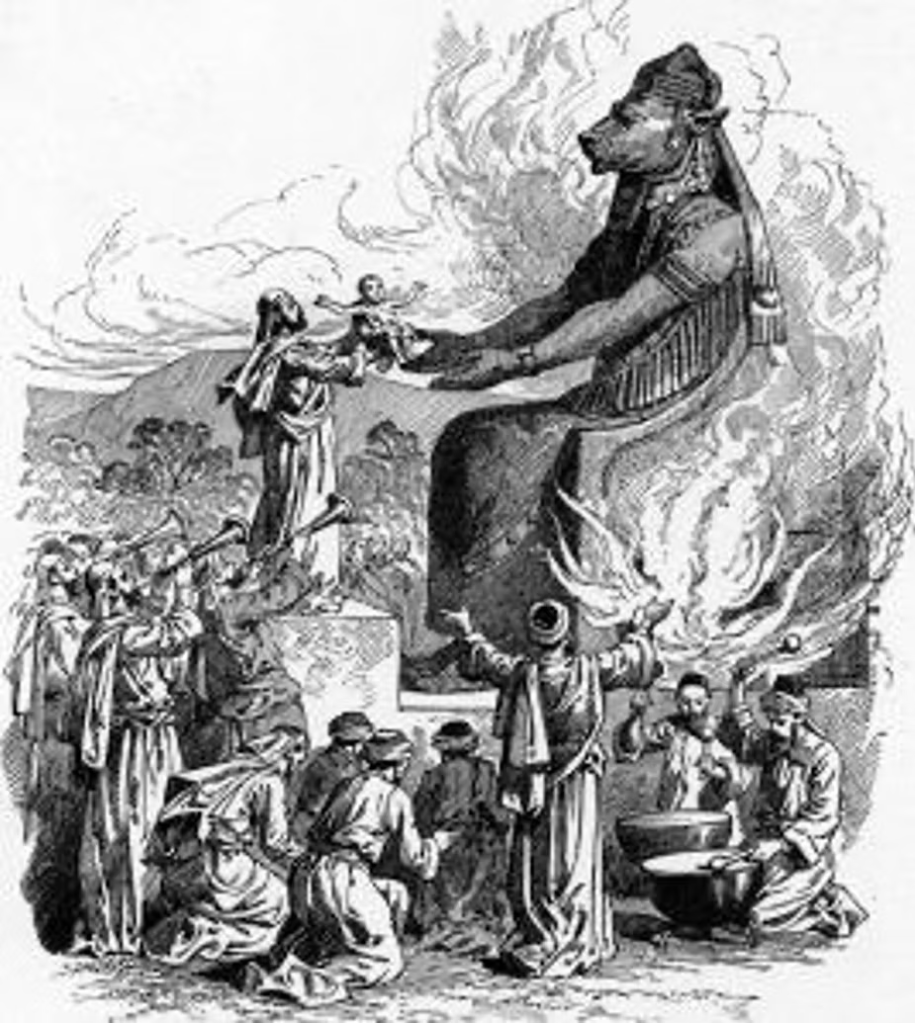
Moloch was a child sacrifice god, as Baal Hamon in Carthage.

When this is understood, we then read Jeremiah say, “But I was like a gentle lamb led to the slaughter.” This is a statement of willing sacrifice for a higher purpose. Jeremiah was channeling Jesus Christ, who would be the sacrificial lamb later in history, who had to die in order to release his soul so “it” could fill countless others. Still, Jeremiah was like all who would become Saints, as there can be no fear of evil deed doers; persecution is to be expected.

The literal Hebrew states, “I was like a lamb docile brought to the slaughter.” The word “I” is the word of the ego, stating “Myself.” This is then Jeremiah saying he was a lamb of God, who was brought to the point of self-slaughter willingly. It is the inner peace that one feels while in prayer with the Lord and the glory of God’s presence around one at other times that is most gentle. It is the comfort that keeps one from fearing anything, other than losing that closeness that God brings. This is then Jeremiah telling how the sacrifice of self-ego is an act of love for God.

Jeremiah then continued to tell of his prophetic sacrifice at the hands of priests serving Baal, saying, “And I did not know it was against me that they devised schemes, saying, “Let us destroy the tree with its fruit, let us cut him off from the land of the living, so that his name will no longer be remembered!”
This is illuminating the deception used by those who practice evil deeds. For Jeremiah to say “I did not know,” this is not a statement of his being unaware of plots against him. Instead, it says he did not live deceptively, by plotting against others.

When Jeremiah quoted the killers of righteousness as saying, “Let us destroy the tree with its fruit,” the Hebrew word translated as “tree” (“ets”) can also mean “wood, timbers, and logs,” with the implication of a “carpenters” handiwork, including a “gallows.”
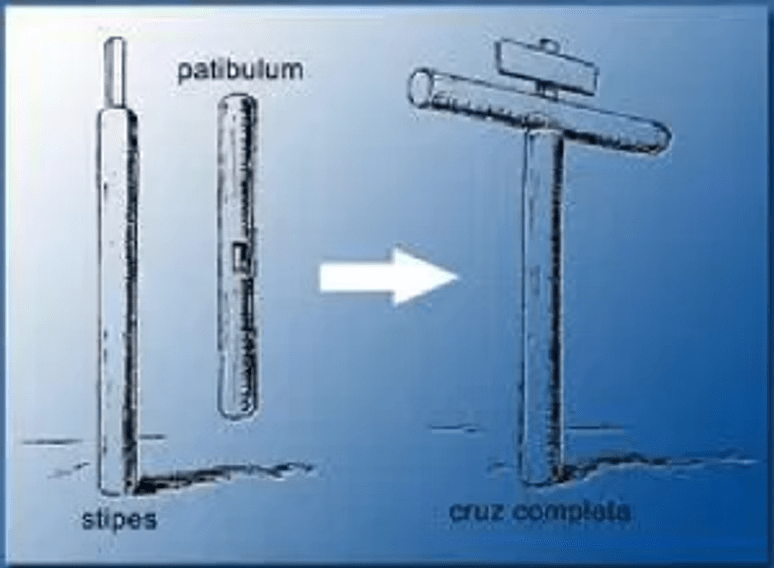
Required for assembly: Two trees, large manual drill, wooden mallet and wood chisel.

Thus, the statement can also be seen as the use of a cross to destroy the fruit, rather than support the fruit of a grapevine.

Long before the Romans would dominate the lands of Israel and Judah, the planned destruction of the “tree with its fruit” was then to turn the pure grapes of Yahweh, through the Israelites delivered into “the land of the living,” by letting them turn to wild grapes, to be eaten by scavenger birds. The corruption of the religion that was based on Mosaic Law was to be degraded until no one remembered the name Moses. Jeremiah was a prophet of Judah who saw the evil deeds of its kings and the evil deeds of impure priests, leading to the fall of Judah and Jerusalem, with the Temple destroyed. This is the lament of this song; and it is the constant danger that surrounds all who serve the Lord.

When verse twenty says, “O Lord of hosts,” the Hebrew says “Yahweh tsaba.” This states who the true LORD is – Yahweh – and the “hosts” are the angels of Heaven, not a worldly army of believers. Thus, the judgment of Yahweh is said to be based on how the people of earth live their lives. The righteous are awarded Heaven, to dwell among the hosts; but the wicked will find nothing waits for their souls beyond the world they love so dearly.

The translation that says, “who try the heart and the mind,” can be better grasped as those who “test” the LORD and are “tested” for righteousness. When Jeremiah was inspired to write, “the heart and the mind,” this is the sequence that will determine the results of the tests. The righteous have found the Lord through their hearts, so their minds are led by the Will of God. Those whose lives are led by the brain they will harden their hearts to the Lord, instead loving the illusions of the earthly realm. Thus, as goes the heart, so goes the soul.

When Jeremiah sings, “let me see your retribution upon them,” the word translated as “your retribution” (“niq·mā·ṯə·ḵā”) is better understood as “your vengeance.” This seems to be Jeremiah taking delight in the punishment that God will set onto others, but that misses the duality of “’er·’eh (“let me see”).

Jeremiah is actually praying to the Lord to “see” the path of righteousness, because without the insight of Yahweh guiding one, one will become lost. Those who refuse to seek God’s guidance are then the ones who will use “great violence or force” (definition of “vengeance”) towards those who are devoted to God. All the vengeance of God’s judgment is then of their own making, not that of a vengeful God.

When Jeremiah then ends this stanza by singing, “for to you I have committed my cause,” he was stating his love of God. A servant of God can only act out of love for the Lord. That love is a commitment to serve Him completely.

The Hebrew word translated as “I have committed” is “gil·lî·ṯî,” equally says, “I have revealed,” “I have set forth,” and “I have opened.” This is the intimacy of a heart for a lover, where all defenses are removed and the oneness of union is the natural result. It is then the marriage of one to God, as a wife surrendering the self-ego so his or her (human gender is meaningless) cause is that of the Lord.

As an optional Old Testament reading selection for the eighteenth Sunday after Pentecost, when one’s personal ministry for the LORD should be underway – one has seen through the schemes of the world and found them lacking – the message here is to allow one’s soul to enter into marriage to God. It is the commitment to His cause that should be sought.

As an alternative to Proverbs 31, where Solomon listed the characteristics of a good wife and the truest intent means a “good wife” is a soul married to God, cleansed of sin by His Holy Spirit (a true sacrament of Baptism), one should not be shocked that Jeremiah was singing praises to the same commitment. Since these readings are brought up every three years in the Episcopal Lectionary cycle, Christians have long had access to these words, with Jews even longer. The problem is then how no one seems to know, or most people have huge misconceptions about, what “commitment” means.

Can all Christians since the Roman Emperor Constantine, leader of a failing empire, claimed he saw a vision in battle (a cross formation of clouds in the sky) and suddenly began to believe in a Jew named Jesus, beginning a devised plan to subject other believers of Jesus Christ in a new Kingdom of Rome, not see themselves as part of this plan? Does the verse that says, “And I did not know it was against me that they devised schemes” not explain the ignorance of lambs led to the slaughter?

Has not the system of Christianity that was devised by the Roman Catholics, to strip all believers of any concept of marriage to God, through His Holy Spirit, thus begetting a myriad of baby Jesus Christs (i.e.: Saints) in the world – to Save it – not been a fulfillment of Jeremiah’s words: “Let us destroy the tree with its fruit, let us cut him off from the land of the living, so that his name will no longer be remembered!”? Did they not sacrifice Saint Peter, who was in the name of Jesus Christ, so no more would Saints and Apostles proliferate?
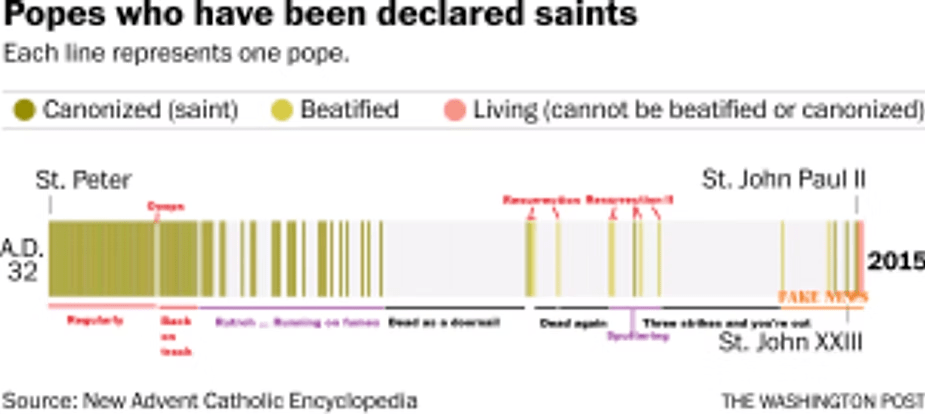
Lots of Saints called “pope” between 32 AD and 537 AD, but then a sputtering began, turning the papal seat over to corporate heads.

American Christians have been born into splinter groups of that false premise, making all conclusions based on that also false. We do not know anything about being married to GOD, because His name has been sacrificed when the corpse of Jesus of Nazareth was never allowed to rise from death and be reborn in true Christians. Women like the idea of marrying Jesus, while menfolk (gruff, gruff) have to keep a hard heart so they can bring home the bacon each month.  Jeremiah’s songs of lamentation were echoing the loss of a true religion by both men and women born into the religion created by God’s hand; given over into the hands of men who loved an icon name Baal, more than the true God. It is a story that keeps on keeping on because believers love to be subservient to a human leader, simply because they can physically sense that presence.

The message is there to be known – marry God.  Love God with ALL your heart. It is just clouded, such that to see through the mist one needs to be led inwardly, by the All-Seeing Eye of God (not a Masonic promotion).

So many have turned away from God because of the schemes of deception, revealed as false.  They ones wanting to believe in the unseen have mentally discerned Church deceptions as equating Christianity to the flaws of men. Ears have turned deaf to the truth, simply because so many lies have been told and foolishly believed.

In the Gospel message for the same Sunday this optional Old Testament reading might be chosen, Jesus foretold of his being killed by men. That prophecy fits this song of Jeremiah. It was the plot of pretending holy men then, and it has been the same since Moses took a bunch of slaves from Egypt into the wilderness. From pretending an idol of a golden calf could rescue the people, to pretending to breathe new life into a land lost, by rebuilding a Temple destroyed, believers have married to concepts and icons, but rarely God.  Only when Jesus died and his soul was freed by God to be reborn in Apostles has that marriage been known.  Men (and women now) do not like believers who have their own relationship with God and Christ.

It is the message of the Gospel that the greatest will be the least. That is a prophecy that says one cannot depend on another human being who says he or she is the greatest disciple of Jesus, because braggarts only have one soul’s interests at heart – their own; not anyone else’s.

Sunday after Sunday the message says, “God is the way to redemption and an eternity in Heaven.” For that way to be one’s own, one has to be more than human. For that to happen, one must surrender the human soul to God, which means become one with God. That is the truth of marriage. Once one has become one with God, then one stops knowing anything that would get in the way of complete servitude to God. In return, God allows one to know everything necessary, to be given to those seeking a good husband, possessing good wife potential.

Maybe one day all human souls will have the epiphany and their eyes will see that some spell has been cast over them, keeping them from accepting God’s proposal of marriage. As they wake up to divine understanding, maybe they will walk away from the human schemes and look at the true offer from God.

Maybe one day the world will be filled with only Saints. Maybe that day all souls will be in Heaven, not on earth.


Jeremiah 11:18-20 – Lambs to the slaughter willingly

[18] It was Yahweh who made it known to me, and I knew;

then you showed me their evil deeds.

[19] But I was like a gentle lamb

led to the slaughter.

And I did not know it was against me

that they devised schemes, saying,

“Let us destroy the tree with its fruit,

let us cut him off from the land of the living,

so that his name will no longer be remembered!”

[20] But you, Yahweh of hosts, who judge righteously,

who try the heart and the mind,

let me see your retribution upon them,

for to you I have committed my cause.

——————–

This is the Track 2 Old Testament selection, which will be read aloud if a church is on the Track 2 path during Year B, on the seventeenth Sunday after Pentecost [Proper 20], according to the lectionary for the Episcopal Church. If the Track 2 path is chosen, then this reading will be paired with Psalm 54, which sings, “For the arrogant have risen up against me, and the ruthless have sought my life, those who have no regard for elohim.” That pair will precede a reading from the Epistle of James, who wrote, “if you have bitter envy and selfish ambition in your hearts, do not be boastful and false to the truth. Such wisdom does not come down from above, but is earthly, unspiritual, devilish.” All will accompany the Gospel reading from Mark, where is written: “[Jesus] was teaching his disciples, saying to them, “The Son of Man is to be betrayed into human hands, and they will kill him, and three days after being killed, he will rise again.” But they did not understand what he was saying and were afraid to ask him.”

I wrote about these three verses the last time they came up in the lectionary cycle, and I posted those views on my website in 2018. That commentary can be viewed by searching this site. I stand behind the words I wrote then, as they still apply today as valid insights. I welcome all to read what I wrote then and compare it to what I am about to add. Comments, suggestions, questions and corrections are always welcome.

In this presentation of the reading, the verse numbers have been left off by the Episcopal Church. Presumably, this is their way of remedying the fact that when they do number verses from the Old Testament, they often do so incorrectly. I have supplied the verse numbers in bold type, within brackets. I will then refer to those numbers in the analysis, if need be. Also, in two places you will note that I have placed “Yahweh” in bold type. This is restoring the truth of what was written, whereas the NRSV has generalized this specific name as “Lord.” If one were to actually read all of Jeremiah 11, one would see how Yahweh told the prophet:

“Then the cities of Judah and the inhabitants of Jerusalem will go and cry out to the gods to whom they make offerings, but they will never save them in the time of their trouble. For your gods have become as many as your towns, O Judah; and as many as the streets of Jerusalem are the altars to shame you have set up, altars to make offerings to Baal.” (Jeremiah 11:12-13)

In both places where “gods” is written [“ha-elohim” and “eloheka”], that can be generalized as the many “lords” of the wayward people of Judah and Jerusalem. A “Lord” can be seen as “Baal,” when generalized as such, with nothing specifically naming what “Lord” Jeremiah [et al] was talking about. The specific name, “Yahweh,” has thus been restored; and, it should be learned by Christians today.***

These verses are shown differently by the NRSV, where the text prior and the text after is presented in standard story fashion. These three verse are displayed in song style, as Jeremiah breaking into an ecstatic chant, channeling the voice of Yahweh. As such, it is displayed like a psalm, rather than as normal prose. Because of that difference in presentation, the NRSV places a title before verse 18, which says, “Jeremiah’s Life Threatened.” BibleHub Interlinear gives it a header that says, “The Plot against Jeremiah.” Those titles extend beyond these three verses, to the end of Jeremiah 11, to verse 23.

While the observation I presented in 2018 dealt with the content of this from that perspective of Jeremiah’s conditions and ministry, I will take a broader scope of it and present how this selection fits into it being an alternate selection to the Proverbs 31 reading [Track 1]. It is important to know that all was not rosy in Israel, after David died and Solomon began to mislead the people. There has to be realized that at some point in time the Israelite people began a slow slide to oblivion; and, the Track 1 readings are pointing out the origins of that failure to serve Yahweh as His people, with Track 2 showing the destruction and ruin of long periods of bad habits and practices.

The origin of their demise was (of course) their being human beings, thus nothing any more special than all the other “Gentiles” in the world; but Year B is pointing out the history that first became endangered, when the elders of the tribes went to Samuel and demanded him appoint a king to rule over them, like other nations. Track 1 shows the beginning of that bad decision, while Track 2 shows the end results of that bad decision. The same failures made by the Israelites are made by Christians today, because it all comes down to realizing no human beings are special, especially when those people disregard the name of their marriage partner [“Yahweh”] and shuffle Him off to being some “Lord,” while bowing down before so many “gods” it is disheartening to think about how Yahweh dislikes all who do that.

This means the Proverbs 31 ooze of filth that prays to the slut “wisdom” as one’s “woman” of virtues is part of the reason Jeremiah was tapped by Yahweh to go tell the wayward, “Yahweh has disowned you guys.” It all began with goddess worship, of which Solomon promoted. When one sees how “wisdom” is the god of the 21st Century, as “science” and “philosophy” that cries out, “Beware getting a cold that might kill you.” They influence us, like Solomon’s Wisdom and Proverbs did then, to put your faith in young boys and girls [med school graduates] whose brains have been paid [hired hands] to think the way of profiteering [government and business] and selling faith in knowledge to the masses [religions] will save mankind. So, they pretend to create preventions that are impossible to create by Man. When one can see that parallel to today in Proverbs 31, then reading Jeremiah 11 becomes the parallel for tomorrow.

In verse eighteen, when Jeremiah sang, [literally translated into English] “Yahweh gave me knowledge and I know ; then you let me see their doings” this has to be seen as contrary to how Solomon schmoozed, “She opens her mouth with wisdom, and the teaching of kindness is on her tongue.” All the wise of Judah and Jerusalem were being led to sacrifice children – human sacrifices to Moloch – which Yahweh never ordered. One can only imagine a child would be burned to death after parents were soothed by the “teaching kindness from the tongue” of some priest of a goddess – “The gods will bless you for your sacrifice.” Imagine how a priest saying homosexuality is blessed by God, when that form of sterility means the end of a line. Are they not giving the go ahead – “Burn, baby, burn!”?

When one has been made aware of the “doings” of the souls who have been sold into slavery in a world that is temporal and offers absolutely nothing beyond death [a foreseen conclusion to all human lives], there is then a decision that needs to be made. Solomon was lobbying for more to sell their souls, singing nonchalantly, “Strength and dignity are her clothing, and she laughs at the time to come.” So, one can choose to join the club and go with the flow of sewage to eternal damnation; or, a soul can choose self-sacrifice to Yahweh.” Both ways you die; but one way leads to salvation and the other leads to the failure of repetition.

By knowing the “doings” of wicked ways, Jeremiah then sang of being “like a docile lamb brought to the slaughter.”

Rather than think of poor ole Jeremiah not having a clue about what was going to happen to his fluffy-haired throat, think of Jeremiah as being exactly like young Isaac, who asked daddy Abraham, “If we’re going to make a sacrifice to Yahweh, aren’t we forgetting the lamb?”

Isaac figured out he had to do what his father led him do, even if it meant dying for a cause. Americans make a lot about veterans of military service (something that usually is just a few years of a young adult’s life), making heroes of the ones killed in action or maimed for life. [“Thank you for your service,” the ones who never served say.] So, both Isaac and Jeremiah willingly went forward with self-sacrifice, knowing faith in Yahweh would make their souls A-Okay.

When Jeremiah sang, “not did I know that against me they had devised schemes,” that lack of knowledge is best. Whereas Solomon confused the brains of the Israelites by singing about “wisdom,” as if that worship of intellect was the ‘cat’s meow’ for some beauty to make one’s wife, Isaac and Jeremiah both knew only what was important: What Yahweh wanted their souls to know. The “devised schemes” are the workings of self-worshiping brains that are bowed down in subservience to a “Lord” of demonic qualities.

When verse nineteen then sings, “Let us destroy the tree with its fruit, let us cut him off from the land of the living, so that his name will no longer be remembered!” this is the scheme devised. Jeremiah was the fruit and they were the tree – Judah and its leaders. Their scheme to “destroy the tree” was akin to thinking wisdom had led them to commit suicide, in order to punish those who still wanted to be servants of Yahweh. When Jerusalem would fall and the Temple would be destroyed, the tree would bear no more fruit from there. The fruit is filled with the seeds of Yahweh; so, just like from the stump of Jesse would come a new shoot, the tree is replaceable. Therefore, those who forsake Yahweh will forever be forgotten.

In verse twenty, Jeremiah sang out, “Yahweh of hosts is who will judge righteously.” That does not mean Yahweh is so “righteous” that He gets to “judge.” It means Yahweh is who makes human beings act “righteously.” When Jesus cursed the fig tree that bore no fruit, the metaphor is the same as Judah being some worthless tree that no longer produced any worthwhile fruit. Just as that fig tree withered and died, so too did Judah, the land from which “Jews” get their name. The whole point of true Christianity is this: EVERY member of that group is a CHRIST, which means Anointed by Yahweh through divine marriage with a soul, so EVERY member is His Son resurrected in his or her flesh. That means EVERY TRUE CHRISTIAN “is who will judge righteously.” Yahweh is “Yahweh of hosts” because He can Anoint as many souls as He sees fit to be Anointed. When they say, “An apple doesn’t fall from the tree,” the meaning here is the fruit of “righteous” living has to fall from any tree calling itself “Christian.” If that fruit does not fall, then regardless of what a tree calls itself, if it is a fruitless Christian tree, then it will be cursed for using that name in vain.

When Jeremiah then sang, “testing the mind and the heart,” the words of Proverbs 31 is Solomon failing the test of the mind. He had terminal ‘Big Brain Disease’ and was so full of himself that he though intelligence was his “woman,” his main ‘squeeze.’ All the kings and priests of Israel and Judah, all who followed the lead of Solomon and took to the ways of wickedness, never giving righteous living a chance, they all were tested by how their brains thought and they all failed miserably. In terms of Dr. Seuss, they all had tiny, tiny black hearts, which were incapable of finding one iota of love for Yahweh [they called Him “Lord,” I imagine].

This means a human being today, in the Age of Wisdom, when praying to the scientists is en vogue, the test is just as applicable as always. A brain is a terrible thing to waste; and, using a brain to navigate Salvation is never going to find a soul anywhere positive. A tested mind means self-sacrifice – death of an ego – so the Mind of Christ can come and use the fleshy organ to find reason to follow all the insight that comes and verifies it as simply amazing! A well tested mind hears a question from Yahweh and says, “Whatever you say boss!” A poorly tested mind comes up with arguments that try to change the Mind of God. [Never a good thing to do.]

The test of a heart means following the advice of Jesus, when he was asked, “What is the most important Commandment?” When he said, “Well, of course, the first thing is to love Yahweh with all your heart, all your soul and all your mind,” that says marriage to Yahweh must come; and, it must come from a deeply seated love. Failure to be a soul married to Yahweh [thus His Son reborn into one’s flesh] means the heart test failed.

When Jeremiah sang [NRSV], “let me see your retribution upon them, for to you I have committed my cause,” that says as long as one’s soul is married to Yahweh, it does not matter what happens to all the riffraff that plot and scheme to rule the world. Souls like those of Solomon and the kings of Judah (Zedekiah) are like how Jesus said “dead branches will be pruned from the tree and thrown into the fire and burned.” The fates of the wayward are brought about by their own devices; and, that makes them self-fulfilling prophecies of “retribution upon them.” The element of “commitment my cause” speaks loudly of marriage vows to Yahweh that will not ever be cause to rebel against.

As a reading possible for the seventeenth Sunday after Pentecost, when one’s own personal ministry for Yahweh should already be well underway, the lesson of Jeremiah is to be a sacrificial lamb. The only thing that gets in the way of the “commitment of cause” is one’s big brain making one think, “There’s no guarantees. Woe is me. What if there is no God and I turn my back on all the luxuries of life I have become addicted to. I might never get all my things lost back!!!” If your brain thinks like that, you can have no ministry for Yahweh. You worship Solomon and his daddy – Satan. A life of abject poverty and miserable suffering is like a fleeting memory, once eternity comes and the things of this world are left far behind. Ministry means Yahweh will provide as needed. No other opinions need be considered.

***

Moses asked, “Suppose I go to the Israelites and say to them, ‘The God of your fathers has sent me to you,’ and they ask me, ‘What is his name?’ Then what shall I tell them?” (Exodus 3:13, NIV) The answer given was, “I am who I am. This is what you are to say to the Israelites: ‘I am has sent me to you.’” (Exodus 3:14, NIV) The actual Hebrew text that is translated as “I am who I am” is ’eh·yeh ’ă·šer ’eh·yeh, where this is the root meaning of “Yahweh.” In Judges 13:18 is written, “the angel of YHWH said to him, “Why do you ask my name, seeing it is incomprehensible?”‘ (Abarim Publications) Still, the word “Yahweh” is written 6,220 times in the Hebrew text, without any attempt to make that ‘name’ stand out. As Yahweh told Moses, “I AM WHO I AM” was an instruction to Moses that said, “If anyone asks who empowers you to go in my name, you tell them “I AM” here, because “I AM” sent by the One.

This is most important to realize, as “Yahweh” means one’s soul has been made a Christ (word meaning “Anointment” by Yahweh’s Spirit) and is in His name (YAH Saves is the meaning of “Jesus”). A LORD that is anywhere other than in oneself (one’s soul) is a lesser god. Yahweh was in the soul of Jeremiah. He was thus a gentle lamb led to slaughter willingly, to be led in His name.