
Tag Archives: John 10:9

Amos 5:6-7, 10-15 – The prudent will keep silent

Seek the Lord and live,

or he will break out against the house of Joseph like fire,

and it will devour Bethel, with no one to quench it.

Ah, you that turn justice to wormwood,

and bring righteousness to the ground!

They hate the one who reproves in the gate,

and they abhor the one who speaks the truth.

Therefore, because you trample on the poor

and take from them levies of grain,

you have built houses of hewn stone,

but you shall not live in them;

you have planted pleasant vineyards,

but you shall not drink their wine.

For I know how many are your transgressions,

and how great are your sins—

you who afflict the righteous, who take a bribe,

and push aside the needy in the gate.

Therefore the prudent will keep silent in such a time;

for it is an evil time.

Seek good and not evil,

that you may live;

and so the Lord, the God of hosts, will be with you,

just as you have said.

Hate evil and love good,

and establish justice in the gate;

it may be that the Lord, the God of hosts,

will be gracious to the remnant of Joseph.

———————————————————————————————————-

This is an optional Old Testament selection from the Episcopal Lectionary for the Twenty-first Sunday after Pentecost, Year B 2018. In the numbering system that lists each Sunday in an ordinal fashion, this Sunday is referred to as Proper 23. If chosen, it will next be read aloud in an Episcopal church by a reader on Sunday October 14, 2018. It is important because it tells of the downfall of Israel (the Northern Kingdom) due to the people preferring sin over sacrifice.

The beginning of this song should be heard with full understanding. When the Lord flowed through His servant Amos, saying, “Seek the Lord and live,” this says eternal life is only possible through “Yahweh.”

The Hebrew root word used to say, “and live” is “chayah.” One must understand that to be able to read a verse of Scripture, or to hear one read to one, one has to be alive and alert. That means, obviously, this usage has nothing to do with the present incarnation of one’s being, or the near future ideas and concepts of “living it up” in the same body. The word implies, “continue in life, sustain life, preserve life and restore to life.”  Living is the opposite of dying, which is the bane of mortals.

This, as the Word of God being spoken, is not a reference in cheating death, but the realization that the soul is eternal and for it “to live” it must be trapped within a body of flesh or freed forever to dwell in Heaven, in the presence of God.  The fact that one’s soul is presently in a human body says, “You have been given another chance to get it right.”  You have been reborn as a mortal that is assured of death; but the advice here is “Seek the Lord and live eternally,” flesh-free.

Under the philosophy “As above, so below,” the punishment that Amos was called to prophesy was coming, would be realized in the deaths of the soldiers of Israel and the banishment into slavery of those whose lives continues, but greatly changed for the worse. Their defeat by the Assyrians scattered the blood of Israel to the winds of the earth, with none remaining identifiable as Israelites. Israel ceased to be; the lives of those still living became a veritable hell on earth.  However, that is the “below” view.
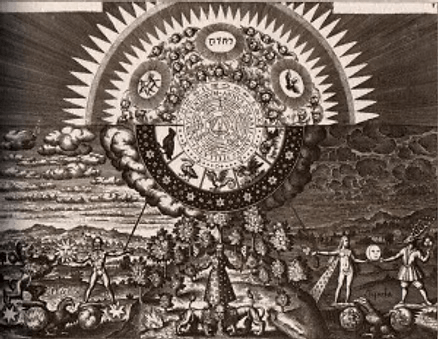
That microcosm of trauma and a lesser quality of life must be seen as applicable in the macrocosm as a soul “burning in Hell,” if one loses the comforts of God’s gift – a place to stay and call home. Beyond the clear and present danger of Assyrian annihilation, God (whose Eye sees well into the future) was not just using Amos to deliver “today’s news,” but a consistent theme that should be grasped.  To gain eternal life with God, one must first “seek the Lord.”

The aspect of reincarnation is real. An eternal soul that has not lived a righteous life on earth cannot be granted entrance into Heaven (for longer than spent receiving the Judgment of a soul). The accompanying Gospel reading from Mark points out the difficulty the rich have in gaining entrance into heaven. (Mark 10:25) If one cannot get into heaven when their soul leaves their body after one life, the soul is not sent to Hell or Purgatory, any more than a first grader who fails to earn second grade status is kicked out of elementary school. A soul repeats life in a fleshy body, just like little Johnny or Sally repeats the first grade.

As above, so below.  Macrocosm, microcosm.

The problem with this system is then said as “the end of the age” or when the end times come. If the worldly plane that is Earth became a place more like Venus or Mars, it would be most difficult to be reincarnated into a body that demanded oxygen [the breath of life] to live.  The “end of the age” becomes symbolic of great changes in humanity.

An “age” is roughly 2,200 years, when the first day of spring occurs and a new zodiac constellation has precessed into position, so it is then behind the Sun when it rises at the equator. Precession is the movement of the earth’s wobble, which makes the backdrop of stars slowly appear changed.  We now live at the end of the The “age” of Jesus [Pisces], but the earth will mosey on to having Aquarius in that position – the dawning of the Age of Aquarius.
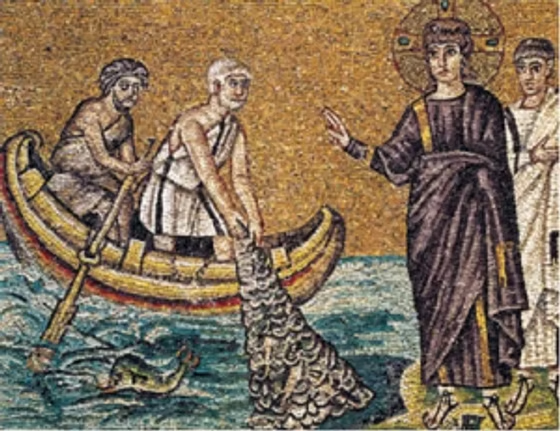
The Fish is the symbol of the sign Pisces. It is a highly spiritual sign.

We are close to that “age” now, which means it is important for human beings to realize what Amos was saying, about the nearing collapse and destruction of the Israelite world.  That foreseen destructive change is then relative to the collapse and destruction of our world as we know it.  Just as the Northern Kingdom was never regained (although a nation named Israel was artificially reinstated into the world in 1948), once Christianity comes to an end, there will be no going back.

As above, so below.  Macrocosm, microcosm.  Aquarius is a sign that loves knowledge, with few feelings for faith-based ideas.

In the movies and television shows over the past fifty years, the fiction of zombies has been made popular. In the movie Night of the Living Dead (1968), inspired by the novel I Am Legend (1954) the concept of the “undead” gained cult status. Ghouls (spirits of Muslim folklore) are demon spirits that feed on the flesh of corpses.  They act as the Universal Mind projecting a ‘what if’ into the future, as God using fiction to show what reincarnation into an unlivable planet would be like.

Like vampires (who live off the blood of living human beings), zombies are trapped in dead bodies, with souls that cannot be released from the worldly plane.  Ordinary death is not part of their futures. Eternal life for such demonic souls is denied by God, making their hell be on earth.  They live mindlessly, afraid of the sun, until a stake was driven through their hearts or their brains were blown out by survivors that are mortals attempting to never die.  Presumably that end would be when a lost soul finally is released to the fires of Hell, because Heaven is not an option.
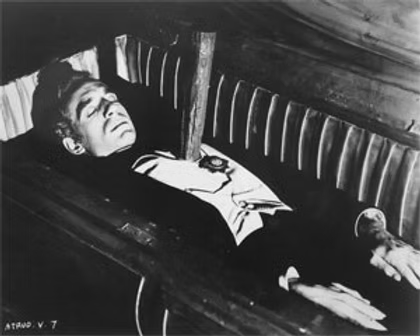
This concept of evil souls returning to the earth was probably the result of fears over the threat of a nuclear holocaust.  Splitting atoms and warfare inventions are the result of an “Aquarian” brain, tinkering with things best left alone.  A planet earth no longer suitable for ordinary life would become the punishment of souls reincarnated, over and over again, because the “age” of religious redemption was no longer possible. This should be read into the words of Amos.

Seeing that meaning, one can then read, “[God] will break out against the house of Joseph like fire.”

Here, the verb translated as “break out” is “tsalach,” which means “to rush,” implying “advance” or “prosper.” This “rush” “of fire” has to be recognized as a sudden conflagration, which was the Assyrians burning villages and towns.  However, on a greater scale, this fits the onset of a global nuclear warfare scenario.

As to the “house of Joseph,” where Joseph was given the holy name Israel by God’s angel, the implication that flows into the “end of the age” (our time) is of those who maintain the holy lineage as Christians (and Jews who believe in Jesus as the Christ). Those who will attack the West and its allies, and the retaliation released in return will then cause a burning hell on earth.

When God spoke through Amos, saying “It will devour Bethel, with no one to quench it,” one must realize there is no fire still burning in Bethel, Israel. This makes Bethel mean more than a fixed place on earth, which means the name is important.
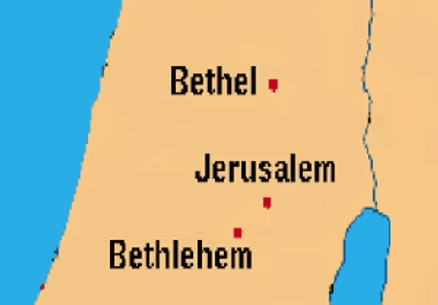
Bethel” means “House of God,” meaning the fire will eat away the foundations of Christianity and Judaism, until neither religion will “quench” the emotional thirst of the faithful. The “fire” will be impossible to “extinguish,” once it has started.  Unquenched fire will mean the the House of God [Christianity] will be devoured – destroyed, consumed, wasted.

The song then continues by singing, “Ah, you that turn justice to wormwood, and bring righteousness to the ground!”

The Hebrew word “laanah” is translated as “wormwood.” There are eight references to “wormwood” in the Old Testament (two by Amos), but only one in the New Testament. That NT reference comes in The Apocalypse of John. As such, John wrote:

“The third angel sounded his trumpet, and a great star, blazing like a torch, fell from the sky on a third of the rivers and on the springs of water — the name of the star is Wormwood. A third of the waters turned bitter, and many people died from the waters that had become bitter.” (Revelations 8:10-11)

Comet? Asteroid? Meteorite? Or, perhaps, an ICBM?

When “wormwood” is realized to be a “bitter substance,” rather than rotted wood eaten by worms.  It is the plant also known as absinthe.  As such, God spoke through Amos, saying (paraphrasing) “Justice is a bitter pill to swallow.”  When the House of God has been destroyed, justice is no longer associated with divine judgment.  Law is based on might, not right.

The translation that says, “bring righteousness to the ground” is incorrect.  It is literally written as, “justice and righteousness in the earth  ,  lay to rest  .”  Each segment must be grasped individually for the impact of the words, before they are meshed together.

The Hebrew word “yanach” means “cast down, left alone, and pacified.” This then says that “justice and righteousness” will have become lowered, no longer upright. This is a picture of the cross Jesus spoke of (the stake that grapevines run along), which must be raised to ensure good fruit on the vine.  It has fallen down.  It falls with the destruction of Beth-el – the Church of God. Therefore, the bitterness of a fire that cannot be quenched is then the death of all who represent “justice and righteousness,” which is the foundation of societal laws on God’s Law through Moses.

All the statues of the Ten Commandments will have been removed from courtyard squares and houses of justice.  As above, so below.  Macrocosm, Microcosm.

Then, the song skips forward to verse ten.

There, Amos wrote in his song, while in an ecstatic trance, the verse that sings, “They hate the one who reproves in the gate, and they abhor the one who speaks the truth.”  This relates to the keepers of the gates of heaven and hell. Neither will allow entrance into a spiritual realm once the final annihilation of a livable earth has begun.

Everyone will be alone with their souls in their deteriorating flesh, filled with “hate” towards God and Jesus Christ. They are those who “decide” the fate of lost souls. Jesus of Nazareth, the prototype of all Apostles and Saints, is known for having said, “Truly I say to you.”  However, the truth always hurts when it comes in the words, “I told you so!”

This is a lack of belief.  It is looking at the past and envisioning the future will remain the same.

Still, this was a prophecy of Amos being shown Jesus the Messiah, who as a body of flesh, born of a woman, would say, “I am the gate; whoever enters through me will be saved. They will come in and go out, and find pasture.” (John 10:9) This means Amos foresaw the time when there were no longer any Apostles or Saints, when no souls worthy of entrance into the sheepfold guarded by Jesus Christ.

Heaven is his sheepfold, and Jesus said, “I am the way and the truth and the life. No one comes to the Father except through me.” (John 14:6)  One has to be reborn as Jesus Christ, in order to be resurrected as the gate in oneself.  Without that name received, one will be reproved Heaven [rejected].

Amos then sang about the separation between the haves and the have nots, where he wrote:

“Therefore, because you trample on the poor and take from them levies of grain,

you have built houses of hewn stone, but you shall not live in them;

you have planted pleasant vineyards, but you shall not drink their wine.”

This should evoke imagery of the rich who abuse the poor. They buy island paradise homes and build palatial estates that cost millions of dollars, all taken from the poor. They own vast acres of land, on which they plant trees that require much water to grow. They not only steal the waters of the people’s aquifers, lakes, streams and rivers, but they transform the water they stole into fruits and liquids that are sold at a premium price. However, when the end of the age comes, the rich will no longer be able to enjoy the fruits of their labors, which are selfish and without redeeming credits.

It all goes to a good cause … us!

These examples of injustice and evil then led God to have Amos sing, “For I know how many are your transgressions, and how great are your sins— you who afflict the righteous, who take a bribe, and push aside the needy in the gate.”

The sins of the wicked are too numerous for the poor to keep track of, but God keeps the details on his scales of justice. There are many sins that greatly affect the lives of the masses (such as those which put wicked rulers over nations). This in turn makes it most difficult to live a righteous life, as religions of all kinds are persecuted; the most prominent of which being Christianity.

Those of Christian values will be bought, such that John wrote: “Then I heard what sounded like a voice among the four living creatures, saying, “Two pounds of wheat for a day’s wages, and six pounds of barley for a day’s wages, and do not damage the oil and the wine!” (Revelations 6:6)

Those Christians with money will pay the price to save themselves, but those without will be left to suffer. The entrance to the gate will be found in those pushed aside; but many Christians (like the Israelites of Amos’ day) will sacrifice the lives of others to save themselves, the opposite of what being Christian means.

Amos then wrote, “Therefore the prudent will keep silent in such a time; for it is an evil time.”  Those who do not capitulate to evil are then said to be careful and exercising common sense, which is expressed quietly.

The Hebrew word “yiddum” means both “keep silent” and “not keep silent,” from the root word “damam,” meaning “to be still.” This means that “the prudent” will not be caught up in the hysteria that will be pervasive in “an evil time.” Instead, their hearts and minds will remain calm as turmoil breaks out all around them. The “prudent” are then Christians led by the insight of the Mind of Christ, while Big Brains demand acts of revenge.

Plotting more revenge.

At this point, Amos repeated a variation of his first verse, saying: “Seek good and not evil, that you may live.” Here, “good” (from “towb”) means to seek those others who have God  present in them. This is a return to the true Church, where the gathering of others of the same mind – Apostles in the name of Jesus Christ – becomes the reinforcement for focus on God.  When insanity will rule the day, true Christians must come together in support of one another. Remaining true to one’s rebirth as Jesus Christ will keep one’s soul promise of service to the Lord, in reward for eternal life.

This commitment to one’s marriage to God makes the words of Amos ring true to the faithful. The reading ends his song selection today, by singing:

“so the Lord, the God of hosts, will be with you, just as you have said.

Hate evil and love good, and establish justice in the gate;

it may be that the Lord, the God of hosts, will be gracious to the remnant of Joseph.”

It is important to see how God has commanded His children to “hate evil.” This has been changed in today’s world, where the wolves in sheep’s clothing have infiltrated the pulpits to preach falsely, “Love your neighbor is what Jesus said. You cannot hate another who says he or she is Christian, even when they openly admit to actively practicing evil deeds that are called abominations in the sight of the Lord.” The words of Jesus have been so misconstrued to those in Christian denomination congregations that no one is able to hate any evil, simply from doubts that have been purposefully built.

Hate is a natural emotion in human beings.  It is that which makes enemies.  To love an enemy means to allow an enemy to hate you by afar.  Otherwise, if constantly in the face of an enemy, mutual hatred will be the prevalent expression.  Love is possible from turning away from evil.  However, when evil refuses to leave one alone, hatred will raise conflict, and conflict comes from the love of good meeting the love of evil.

Returning to The Apocalypse of John, when Jesus Christ told John to write letters to the seven churches, we today represent all of those churches. In the letter written to the church of Laodicea this was transcribed:

“These are the words of the Amen [the Truth], the faithful and true witness, the ruler of God’s creation. I know your deeds, that you are neither cold nor hot. I wish you were either one or the other! So, because you are lukewarm—neither hot nor cold—I am about to spit you out of my mouth.” (Revelations 3:14-16)

Uuugh

The “lukewarm” taste of Western Christianity means being “tepid,” which means, “Lacking in emotional warmth or enthusiasm; halfhearted.” [American Heritage® Dictionary of the English Language, Fifth Edition] One can only be “halfhearted when half of one’s heart loves self and the other half loves God.

This leads to doubts and hesitations stem from being halfhearted, exactly like those seen in Peter, causing Jesus to say, “Oh you of little faith, why did you doubt?” (Matthew 14:31b) A halfhearted Christian is lacking the faith to hate evil, by striking out against evil.  It means one is too timid to overturn a money-changer’s table in the House of God.  It means one is too accepting of trees that bear no fruit.  It means one is too afraid to tell Satan, “Get out of my face!” much less walk on the waters of one’s faith without drowning.

Only if one lives a good life, where one has “established justice in the gate,” by being reborn as the gate – in the name of Jesus Christ – then one hates evil by not bowing down to it. One establishes the justice of God by demanding that evil gets out of one’s face and serves mankind, not abuse it. As a resurrected Jesus Christ, one allows the God of hosts to Lord over one’s body, merged with one’s soul. One is adopted as a “remnant of Joseph,” as a child of God, His Son.

As an optional Old Testament reading selection for the twenty-first Sunday after Pentecost, when one’s own personal ministry for the LORD should be underway – one has no place in one’s life for evil – the message here is to see the threat of Amos’ Israel is current and present today. The sins that brought one nation’s downfall are the same throughout all times.

In my analysis of the accompanying Epistle to this optional reading, I mentioned how the prophet Nostradamus quoted Paul’s letter to the Hebrew-speaking Jews of Rome, saying “all things will be made naked and bare.” The “end times” theme of Nostradamus can be seen here in this reading selection from the prophet Amos. The mood of Christians (that I have experienced for seventeen years now, relative to Nostradamus and Scripture) is, “I do not believe.”

They don’t believe in Nostradamus being a prophet of Jesus Christ. They don’t believe in the End Times. They don’t believe in sacrifice of self. They don’t believe there can be more than one Jesus. They think that Jesus sits on a little throne next to God’s big throne, in Heaven, some day planning a return, when evil will be punished. They don’t believe they are the ones Jesus will come for, wielding the sword of justice.  They don’t believe God talks to Christians. They don’t believe there are Saints (for the most part). Therefore, in general, Christians reject the Lord and live for today, not for a restricted Heaven in the future.
Ms. Cleo sent this back from the other side: “I do believe in zombies. Please help me!” From the ghoul formerly known as Einstein.

I have had so much revealed to me over the years, since two towers collapsed from fire in New York City, that I have sought to tell as many people as would listen. The revelations I have been shown can only come from God, because I certainly am not bright enough to know what I know otherwise. I try to share with others, but few demonstrate that they have received the same spirit that I have received.

Meanwhile, the news shown on televisions and I-phones is so filled with hatred and incendiary opinions that the cameras show the hatred everywhere. This is not hatred of evil, as much as it is evil hatred.  We are our worst enemy.  We hate ourselves because we have allowed evil to rule our hearts!

Our leaders spew hatred. Our children spew hatred. Our allies spew hatred. Our enemies spew hatred. Our television shows spew hatred. Politicians spew hatred towards other politicians and the citizens in between are caught in that crossfire.

When they go low, we kick them.

I feel the time shortly coming when I must become prudent and be silent.

I have repeated in my articles posted about how “one’s own personal ministry for the LORD should be underway.” The symbolism of a season of the year being devoted to the time following Pentecost (the Fiftieth Day) and the time beginning with Advent and Christmas [rebirth from year to year] is when Apostles should be praising God and welcoming a gathering of Saints. Christian means a ministry of works, based on true faith.  However, I feel little in return that says the Holy Spirit is growing in the world.

Hatred is killing those who call themselves Christians.

As an optional Old Testament reading selection, one which has a dark theme – darker than Job’s seeming lament – I doubt this will be preached this coming Sunday. It may never be preached. The theme of the end times has become too dark to preach about.

Christianity has become lukewarm.

The time for inward inspiration has come. Few are the priests who teach people how not to hate, where hating evil means the love of separation. We have been reborn as the Northern Kingdom that sits on the eve of doom.


Hebrews 5:1-10 – According to the order of Melchisedek

Every high priest chosen from among mortals is put in charge of things pertaining to God on their behalf, to offer gifts and sacrifices for sins. He is able to deal gently with the ignorant and wayward, since he himself is subject to weakness; and because of this he must offer sacrifice for his own sins as well as for those of the people. And one does not presume to take this honor, but takes it only when called by God, just as Aaron was.

So also Christ did not glorify himself in becoming a high priest, but was appointed by the one who said to him,

“You are my Son,

today I have begotten you”;

as he says also in another place,

“You are a priest forever,

according to the order of Melchizedek.”

In the days of his flesh, Jesus offered up prayers and supplications, with loud cries and tears, to the one who was able to save him from death, and he was heard because of his reverent submission. Although he was a Son, he learned obedience through what he suffered; and having been made perfect, he became the source of eternal salvation for all who obey him, having been designated by God a high priest according to the order of Melchizedek.

———————————————————————————————————-

This is the Epistle selection from the Episcopal Lectionary for the Twenty-second Sunday after Pentecost, Year B 2018. In the numbering system that lists each Sunday in an ordinal fashion, this Sunday is referred to as Proper 24. It will next be read aloud in an Episcopal church by a reader on Sunday October 21, 2018. It is important because Paul wrote of a high priest being the designation God gave to Jesus Christ, which is manifest in mortals as Apostles and Saints that have been reborn as that high priest. All become high priests according to the order of Melchizedek.

In this reading one can clearly see how Jesus is a high priest in the order of Melchizedek. The wonder of knowing that is meaningless. If Jesus is a high priest in that order of high priests – where one must assume God was the one who established that order – why do we want to kneel down before a cross nailed to the wall with an icon of dead Jesus hanging from it and pray to a dead and long gone high priest?

“Oh,” you might say, “Jesus didn’t stay dead; he ascended to be with the Father.”

Okay. Then since Melchizedek never died, and always is, like God, why don’t we worship him? Elijah ascended into Heaven without dying, and he appears next to Moses in the Transfiguration. Why don’t we kneel down and pray to Elijah?

Don’t forget Enoch, the son of Jared who fathered Methuselah. He lived for only 365 years, when Enoch “walked with God: and he was no more; for God took him.” That is kinda like Jesus only living 34 years before God took him early in life. Let’s throw some worship towards Enoch too!

Okay, I have been facetious long enough. Jesus is the high priest in the same way that God is the King. God sits on the throne of one’s heart, while His high priest controls the spiritual direction of God’s kingdom (one’s body) as the Christ Mind. Paul wrote of this often; and Paul wrote of this in this reading. If one cannot see this appear from the words Paul wrote (as his spiritual direction from the Christ Mind leading him), then one will never become a Saint in the name of Jesus Christ.

As I have done before and do again now, I have broken down the Greek segments of words (based on pause points), so one can see how each segment should be read as a stand-alone statement that then connects to the next stand-alone statement, and so on. The translations I use are based on the Greek word analysis provided by links in the Bible Hub Interlinear of Hebrews 5.

My translations differ from those set by Bible Hub, which are more inclined to lead one to paraphrase the Greek into seemingly understandable English (American version). However, reading Paul in the manner I have painstakingly prepared makes it easier to see the true intent of his words, rather than some fluffy, warm and fuzzy, misconstrued gobbledygook that is based on preconceived notions of only one can be a high priest in the order of Melchizedek (except the aforementioned others that fit the qualification, not to mention David and Aaron).

Nope. Still not gonna let you kick that ball around.

Here is my literal translation of the Greek segment of words:

1. All for high priest  ,

out from among men being laid hold of  ,

for the sake of men being put in charge  ,

they interfacing with the [one] God so that he should offer gifts not only offerings beyond sinful deeds  ,


2. to preserve moderation in the passions empowered  ,

to those having no knowledge and being misguided  ,

seeing that also the same is surrounding frailty  ;


3. and by reason of them he is indebted  ,

according to the manner in which about those people [of the Lord]  ,

in this manner also about self  ,

to make an offering concerning sinful deeds  .


4. Namely not upon oneself a certain one takes hold of this honor  ,

but instead being name given by the [one] God  ,

according to the manner in which also Aaron  .


5. Thus also the Christ not himself did bestow value to come about a high priest  ,

but one who having spoken referring [to] him  :

Son of mine are you  ,

I today have begotten you  .  [Psalm 2:7]


6. Just as also on another he tells  :

You [are] a priest for the ages  ,

according to the order of Melchizedek  . [Psalm 110:4]


7. Whom in those days together body the same  ,

entreating both and olive branches of peace  ,

towards those who were powerful to rescue him from physical death  ,

after outcry vehement and tears having made a sacrifice  ,

and having been intently heeded  ,

deserting companions godly fear  ,


8. although being Son  ,

he gained knowledge away from this he suffered  ,

those submissiveness  ,


9. also having been made perfect  ,

he was born to all others obeying him  ,

the cause of salvation eternal  ,


10. having been addressed by name under authority one God a high priest according to the order of Melchizedek  .

Let’s break this down now.

Verse one, basically, says the plan for a human “high priest,” based on the system established by God, through Moses. Those were physical beings of righteous status who allowed entrance into the holy places and were allowed to offer sacrifices to God and communicate with God, all for the children of Israel.  They are not to be mistaken as the high priests of pagan gods.

Verse two says the purpose for a “high priest” was to be the source of strength for the weak masses. Because of that common lack of knowledge and general tendency to wander and get lost spiritually, God would offer the people guidance and stability for all, through the wisdom given to their spiritual leader.

Verse three then adds that the presence of a “high priest,” for the benefit of the people of God, leaves all the people in debt to God. This is not all people in the world, but those who believe in Yahweh – the One God of Israel. The debt is oneself, such that each individual should sacrifice their self-identity as an offering for their sins. The ultimate purpose of a “high priest” is to remind the children of God of that debt and personal responsibility for their sins.

Verse four is how one receives the title of “high priest.”  In the system of order that Moses set in place, fathers named their children; usually this was some name that devoted a child to service to God. The child did not take credit for a name given to it; but a child was expected to live up to that name. Likewise, the title of “high priest” was a name given by God to His servant, as the ceremonial one who would lead the whole gathering of Israel. As such, the child named Aaron was made “high priest” of Israel by God, the Father. All honor and praise given to that title was due to God.

Verse five then directs this theme of “high priest” to Jesus of Nazareth, who Paul referred to as “the Christ” (or “the Messiah”). Jesus of Nazareth never called himself a “high priest,” because that hat was worn by a rotation of Sanhedrin members (such as Annas and Caiaphas). God made Jesus Christ be a spiritual “high priest,” with Paul using David’s Psalm 2:7 as a prophecy of that anointment. One can then assume that David was also a “high priest” of God in a spiritual sense.

Verse six then has Paul quote another verse from David’s Psalms (Psalms 110:4), where God told David he was a “high priest according to the order of Melchizedek.” There, the Hebrew word translated as “order” (“dibrah”) means, “cause, reason, and manner.” This means it is important to understand that Melchizedek was essentially the physical embodiment of the angel placed at the entrance into the Garden of Eden, after Adam and Eve were banished. That place on earth became known as Salem and/or Zion, where Melchizedek was the King and High Priest. This was also where David was King and spiritual “high priest” of Israel. Thus, Paul compared Jesus Christ to the Holy Spirit that forbids sinners from entrance into Heaven.

Abram meeting Melchizedek in Salem.

This comparison to Melchizedek should be investigated. The name Melchizedek means “King of Righteousness.” Jesus Christ is also called a King, but he said, “My kingdom is not of this world … but … from another realm.” (John 18:36) That makes Jesus the King of Heaven on Earth, as Melchizedek was the King of Salem, which was the earthly terrain on which Jerusalem was built, but the spirituality underneath that terrain was Eden. Seeing this High Priest title as the one who allows entrance into the Father’s kingdom makes it be how Jesus said, “I am the gate; whoever enters through me will be saved. They will come in and go out, and find pasture.” (John 10:9) That is like the Angel who guards Eden.

Archangel Uriel is said to guard as written: “After he drove the man out, he placed on the east side of the Garden of Eden cherubim and a flaming sword flashing back and forth to guard the way to the tree of life.” (Genesis 3:24)

Verse seven then is Paul explaining how “the order of Melchisedek,” as “high priest” named by God (not an election by men) means a joining together of this Angelic guardian Spirit to the body of a human (as was Jesus of Nazareth joined with the Christ Spirit of God), so both are peacefully as one. This presence is then the promise of eternal life (entrance into Heaven), which is the power that rescues one from mortal death. This does not prevent death of the body; in fact, it promises to bring persecution from those who cry out against such a holy presence, along with the tears offered by those who fear death more than they fear God. Only those who are joined with God’s Holy Spirit can hear His comforting call, fearing nothing but losing that closeness to the Father.

Verse eight then is Paul explaining that even though Jesus of Nazareth was the Son, he was made man. Only by knowing the sufferings of human beings can one gain “high priestly” understanding through the Christ Mind. That spiritual guidance can only be known through complete submission of oneself (self-ego) to God’s Will.

Verse nine says that perfection can only be a result of one’s past sins being erased through baptism of the Holy Spirit, when God sits on the throne within one’s heart-center and the soul has been merged with complete righteousness. Jesus Christ has been born as the “high priest” that must be raised within each of God’s faithful, so only those perfected can return to Eden. All who will be reborn in the name of Jesus Christ will have Jesus Christ as their personal “High Priest.” They will obey his commands, and in return they will be granted eternal life.

Verse ten is then Paul saying that each Apostle and Saint will be addressed by the name of Jesus Christ, which is the title that comes under the authority of God. As such, each Apostle and Saint becomes the embodiment of a “high priest” on the earthly realm. As a “high priest,” one like Paul is another “according to the order of Melchisedek.” This is the ultimate result of “All for high priest.”

As the Epistle selection for the twenty-second Sunday after Pentecost, when one’s own personal ministry for the LORD should be underway – one should have received the high priest Jesus Christ within one’s flesh – the message here is arise to the state of being where God speaks to us individually, telling each and every one of us, “You are My Son, today I have begotten you” as another in the holy order of Melchizedek. Each of us has to be reborn as the Angel that not only guards the stairway to Heaven that Jacob witnessed in a dream, but become the high priest that instructs others what it takes to return to God’s garden.

It is too easy to read Paul’s words here and see Jesus of Nazareth as that very special guy that could put up with the insults, the false claims against him, the scourging, the ridicule as a lowly commoner claiming to be a king, the nails piercing his flesh and bones, the spearing in his side, and the rolling of dice to see who would take possession of a fine robe, too nice to cut into pieces. It is too easy to say, “He was a better man than I (regardless of one’s human gender)” and pretend that Jesus suffered so others could never suffer, while getting the password that gets them past the Angel that forbid Adam from coming back. After all, Adam ate a cookie from the cookie jar after being told not to. Whose sins could ever be greater than that?!?!

The problem with Christianity is having too many people not having a clue what being Christian means. As long as Jesus is the spiritual high priest in Heaven watching over our miserable selves, forgiving all our sins if we believe in the cross of his murder, why should anyone ever try to become Jesus Christ reborn? As long as we let common men stand up on pedestals, proclaiming, “I am the High Priest” (a.k.a. those like Mr. Roman Pope), it is just a matter of paying an indulgence fee and then go out and play. This modern version of Christianity is all about self, with very little being about sacrifice of self to God.

The holy order of Melchisedek has left the building … so to speak. The world had reverted into paganism, where an unknown number of people have posters, icons, and statues made in their likeness. Babies are named after them (when not just randomly chosen letters pulled out of a Scrabble bag arranged in some order).

Those who are given names from the Old Testament (fewer these days) have little idea of the name’s original meaning. Therefore, no one grows into a responsibility to be a servant of God Almighty.

As an accompanying reading to the Gospel reading where James and John of Zebedee asked Jesus to give them the right to be the right hand and left hand of Jesus, when Jesus told them, “You do not know what you are asking. To sit at my right or left is not for me to grant. These places belong to those for whom they have been prepared.”

Newsflash: The preparation was for all the followers of Jesus of Nazareth to be prepared to receive his Holy Spirit and become a high priest.

Maybe the reason is no one is teaching this lesson? Listen carefully to the sermon coming soon to a Christian church near you. See if that message is preached.

In-Depth Pentecost Sunday Reading Explanations – Part I of 5 (Episcopal Lectionary & Acts 2:1-21)

I was raised in a religion that is “Pentecostal.” I stopped going to the church of my mother at the age of fifteen, not having a clue what “Pentecostal” meant. I did know that my religion believed in “speaking in tongues,” and I had been trained (minimally) to become tongue-tied to the point of making unintelligible noises, which was viewed by “elders” as “speaking in tongues.” I still had no idea that “Pentecostal” and “speaking in tongues” were related.

Given that background, I became an Episcopalian after the age of fifty, due to that being the church of my wife. For the majority of my time being Episcopalian, and especially after I began writing “sermons” based on my interpretations of the lectionary, I assumed Pentecost Sunday was the beginning of the season that has every Sunday between it and Advent listed as “after Pentecost.” It was only recently (when publishing the book Easter Sermons) that I realized Pentecost Sunday is the last Sunday of the Easter season. That shows how little I know, I guess.

It does make sense, now that I have learned that nuisance, because Pentecost is really neither Easter nor Ordinary (the name of the long season “after Pentecost”). It can be seen as a gate in a wall, as the dividing line between student and professional, apprentice and master, or disciple and rabbi. The seven Sundays of the Easter season are also separate from the wall with a gate that is Easter Sunday. Easter Sunday is neither Lent nor Easter, as Easter Sunday represents a passed entrance exam or accepted application for the seven-week School of Jesus. In order to get into that program of study, one has to first die of self-ego and be told by Jesus to “Come out!” Without the ego getting in the way, one is able to learn what Jesus teaches his disciples.

In the past Fourth Sunday of Easter (only in Year A) was read from John’s tenth chapter, of Jesus saying, “I am the gate; whoever enters through me will be saved. They will come in and go out, and find pasture.” (John 10:9) Pentecost Sunday is the gate Jesus was talking about. To go beyond Pentecost (into the “after Pentecost” season of “Ordinary Time”) one has to have graduated from the forty-day basic training course for egoless plebes, becoming Jesus resurrected via the Holy Spirit – the story of Acts 2:1-21.

The point I want to make about Pentecost Sunday being a gateway to being ordained as a priest of Yahweh [even if “Ordinary” also speaks of a “numbered order” of weeks], is the field changes on Pentecost Sunday.

Ordinary time means time for green to come out. It is like time to lead the sheep to green pastures.

Unlike the field of readings chosen for each of the Sundays of Easter (and before), Pentecost Sunday comes with options, called “Tracks.” Not only does Acts replace the Old Testament selection for the seven weeks prior, as a mandatory reading during the Easter season, but it remains mandatory on Pentecost, with a caveat. It can dislodge an Old Testament reading (option 1) or it can dislodge an Epistle reading (Option 2). This means Pentecost has the possibility of four readings (plus a Psalm), rather than three. [Plus the Gospel reading.]

Once the gateway is passed and one enters the Ordinary season (numbered Sundays “after Pentecost” when priests are ordained into ministry), then the choices become paired: Track 1, being an Old Testament reading with an accompanying Psalm; or, Track 2, another Old Testament reading with its accompanying Psalm. Of this choice option, the Episcopal Lectionary states the following:

“During the long green season after Pentecost, there are two tracks (or strands) each week for Old Testament readings. Within each track, there is a Psalm chosen to accompany the particular lesson. The Revised Common Lectionary allows us to make use of either of these tracks, but once a track has been selected, it should be followed through to the end of the Pentecost season, rather than jumping back and forth between the two strands. The first track of Old Testament readings (“Track 1”) follows major stories and themes, read mostly continuously from week to week. In Year A we begin with Genesis, in Year B we hear some of the great monarchy narratives, and in Year C we read from the later prophets.
A second track of readings (“Track 2”) follows the Roman Catholic tradition of thematically pairing the Old Testament reading with the Gospel reading, often typologically—a sort of foretelling of Jesus Christ’s life and ministry, if you will. This second track is almost identical to our previous Book of Common Prayer lectionary. Within each track there may be additional readings, complementary to the standard reading; these may be used with the standard reading, or in place of it.


(Credit to The Rev Dr. J. Barrington Bates and his bold font)”

This is another thing I have only recently learned. I still have so much to learn. However, in my past days of writing notes and sermons for a three-year lectionary cycle, I chose “all of the above” and made notes on everything, as well as including everything in the sermons I would write.

As far as I am concerned, if the shoe fits wear it. If Scripture fits a theme, why not read something that adheres to the theme. When Track 1 and 2 are only chosen to appear as optional selections on only one Sunday out of a three-year cycle, tell me when one reading will ever be read and/or discussed, if it is always the one not chosen? I say read them all. Preach about them all.

But then, there is the mindset I heard of from one parishioner in my wife’s church who confided in me, “I used to be a different religion, but Sunday was an all-day thing to them. Three hour services of singing and sermons AND then they wanted to do lunch on the grounds until three in the afternoon.” Then he told me why he was Episcopalian: “When I heard a twelve-minute sermon and gone by noon, I said this is the religion for me!”

Now that man was being honest and there can be no blaming him for being the only one with this reason to prefer the Episcopal Church as his Sunday affiliation. I know many who will go to the early church service on Sunday, simply because there is no music or songs sung, so the service (including sermon) is usually no more than forty minutes long. Since I do not sing well or read music, making it worse for me to try and sing along to songs I have never heard before, I will occasionally go to the early service also. However, as far as twelve-minute sermons go, some sermons I have heard are so bad (political or fluff) that twelve minutes is too long.

One of the Facebook memes I saw today said, “God is in our hearts, not a building. We are the church, so there is no need to rush back to a building before it is safe.”

The problem with that is this: No. You are not a church. A “church” is whenever two or three are gathered in the name of Jesus Christ.

If God was in your hearts, then you would be reborn in the name of His Son. Because you do not say, “and Christ is reborn within us,” then you are barren as a lover of God, like a mistress, not a wife. The churches of 2020 are barren because the thought processes of the leaders say, “Our egos are gods to us and we will not submit our self-importance to anyone unseen.”

Today, I watched a bishop of a “Church” speak on a Facebook live video, where he explained “The Holy Eucharist cannot be done by anyone other than a priest, because a priest has the power to consecrate the bread and wine.” That speaks of self-importance, as if a diploma and a job in a “Church” makes one able to make anything “sacred.”

As leaders, you are nothing more than hired hand watching [lording] over flocks. The flocks are do-nothing Episcopalians that cheer “likes” and “hearts” as a bishop talks about why priests [supposed to be Saints] are afraid of catching the COVID19 virus, when Jesus Christ only fears God. That means there is no church other than that which is the collection of buildings called “churches” that are owned by businesses, which pays people called priests to run those businesses.

Each true Christian is a temple unto the Lord and a nation under His Son the King. Thus, there is no need to rush back to a building, to hear crappy twelve-minute orations be given by hired hands wearing masks.

As for the readings for Pentecost Sunday, in addition to the choice between an Old Testament reading (Numbers 11:24-30) or an Epistle reading (1 Corinthians 12:3b-13), there are two Gospel readings to choose from. Both come from John’s Gospel, where one can be either John 20:19-23 (I assume Track 1?) or John 7:37-39 (Track 2?). In my mind, all should be preached, but therein lies the problem.

Episcopalians do not have time for readings or sermons. They come to sing songs and then eat a wafer and wash it down with a sip of wine. They then feel elevated in physical emotion to run out and sin for six days (almost seven full), before they are ready to repeat that special feeling once again. The answer is simple.

The answer comes from Acts 2. Peter and the other eleven (and other followers of Jesus) were in the upper room in the Essene quarter of Jerusalem. They were not in an ‘official synagogue’ (as far as we know), so they certainly were not in any recognized Episcopal church. Because the twelve all stood and spoke while filled with the Holy Spirit, they were all in the name of Jesus Christ, so they were a church [twelve plus satisfies the two or more minimum requirement]. The people who the twelve preached to were pilgrims of many different languages, who heard Galilean rubes [not graduates of some seminary] preach fluently in their languages, so they heard the messages loud and clear … without singing songs and without the promise of wafers and wine passed out later. That means the reading says: Do away with the Churches

Churches only keep paying customers paying hired hands, since none of the attendees of a Church ever stand up and go out with “raised voice” and preach the truth so others can likewise be “raised” or “lifted up.” The ones in the pews do not want to be the wives of God. They don’t want to be the mothers of Jesus reborn. And they don’t want to be filled with the Holy Spirit and take on the responsibility of serving God with all their hearts, all their souls, and all their minds – led by the Jesus Christ Mind. Churches don’t have the time to discuss the Word, which is the foundation of their beliefs. The cornerstone of the Word has been rejected by the builders of those churches, because taking the time to discuss the Word fully will make the paying sheep jump the fence and run away.

Baah, baah, baah.

Overlooked in the Acts 2 reading, which tells of the most important Pentecost in history (the only Pentecost known to Christian churches), is the sermon given. The sermon is this:

“Men of Judea and all who live in Jerusalem, let this be known to you, and listen to what I say. Indeed, these are not drunk, as you suppose, for it is only nine o’clock in the morning. No, this is what was spoken through the prophet Joel:

`In the last days it will be, God declares,
that I will pour out my Spirit upon all flesh,
and your sons and your daughters shall prophesy,
and your young men shall see visions,
and your old men shall dream dreams.
Even upon my slaves, both men and women,
in those days I will pour out my Spirit;
and they shall prophesy.
And I will show portents in the heaven above
and signs on the earth below,
blood, and fire, and smoky mist.
The sun shall be turned to darkness
and the moon to blood,
before the coming of the Lord’s great and glorious day.
Then everyone who calls on the name of the Lord shall be saved.’ “

The sermon was not simply a reading from the Prophet Joel, Joel 2:28-32, but an explanation.

In verse 28, Joel’s words begin by stating, “And it will come to pass afterwards” or literally, “It will come to pass following thus.”  Peter said, “And [from a capitalized “Kai”] it will be in the last days.”

For Jews who had memorized Joel and discussed his prophecy, the concept of the unknown made it impossible to know when “come to pass afterwards” would be. Peter said it means now! “In the last days of the Counting of the Omer, God says it will be.” Pentecost was the Fiftieth and last day of those “days” counted.

How did Peter then prove that was the meaning? He and the other eleven, along with the women and children followers of Jesus who were also ablaze with tongues afire by the Holy Spirit, they were the proof.  Peter must have made a sweeping gesture with his arms, saying symbolically “Look here at these!” He would have done that as his mouth said, “I will pour out the Spirit of me upon all flesh;  and  will prophesy your sons;  and  your daughters;  and  your young men will have visions;  and  your elders will dream dreams.”

That was not simply Peter reciting from memory a quote from Joel, but a statement that all ears who heard his spiritually raised voice took to heart. God’s Holy Spirit had been poured out upon the flesh of Galileans who should know nothing of value; but the twelve had all become Sons of God. That was not only the menfolk but the women as well – the daughters were also Sons of God. They all stood prophesying to the truth of Joel.

Those who listened that were young Jewish males; their eyes began to see the meaning of Joel’s prophecy being fulfilled right before their very eyes. All the elders suddenly had their dreams of living to see this day “come to pass” were able to see their role as God’s servants become their dream of their future.

As Peter continued, he said, “ and  even upon my [male] servants;  and  upon my handmaidens; in the [light of] days those I will pour out my Spirit;  and  they will prophesy.”

That was an allusion to the “slaves” forced to bend to the whims of the Temple elite, who kept everyone in the dark with fear of their legal judgments and banishments. They became useless once the truth was known by those to whom God’s Holy Spirit rested upon. The greatest need in a lost religion was truth; and the truth had long been missing from the former inhabitants of Israel. The truth was then made possible by the most common of Jewish pilgrims.  The truth set the slaves free.

Peter then continued to quote Joel, saying, “ and  I will grant marvels by the spiritual heavens once beyond one’s reach [heavens above];  and  signs upon the inhabitants of regions less [God’s touch];  blood and fire  and  vapors of smoke.”

The pilgrims had all come to Jerusalem for ritual bloodletting – the slaughter of sacrificial animals – who would then be set upon altars of fire, producing the aroma of smoke.  However, those signs would be marking the least among them, as God would be giving the gifts of the Holy Spirit to His new priests.

Of those priests Peter continued what Joel had written, saying, “This sunlight will be turned to darkness;  and  that moon phase into bloodshed;  formerly or coming day of the Lord, the great  and  manifest.”

That spoke loudly this message to the crowd of pilgrims: “The temple elite’s day in the sun has ended. They no longer worship Yahweh but the goddess of the earth and all its riches. They will only cling to heritage, as a bloodline of God. All of their worship of former prophets of God coming to save them with a Messiah, that day has come. That day is today and it is great. The Messiah has been produced in us via the Holy spirit.

As the crowd was praising Yahweh as Peter spoke and they understood, Peter quoted one last line from Joel’s prophecy: “  and  it shall be,  everyone who chooses to call upon the name of the Lord will be saved.”

The promise is made to ALL who will marry God and be reborn as His Son, taking on the name of holiness – Jesus Christ.

Tell me, “When did you last time you heard a sermon like that in an Episcopal church?” While not read today (it was mentioned in the Acts reading of the Third Sunday of Easter), we know that “about three thousand were added to their number [Saints or Apostles] that day” of Shavuot [a.k.a. Pentecost]. (Acts 2:41) Just from reciting a variation of a prophetic reading (Scripture), three thousand (there about) were moved to spend the rest of their lives being led by the Holy Spirit of Jesus Christ!

Why does that not happen today?

Of course, it would be easy to say that these days a sermon like that wouldn’t work out so well, given how high and mighty Christians are these days. Some might even insinuate that Christians already have the Holy Spirit in them and the world has already been saved, so Joel’s prophecy is history, come and gone, finito, or cōnsummātum if you like Latin (from John 19:30 – “It is finished”).  Well, that makes now “the last days” of Christianity.  Perhaps ….

We think again. I am sure that Episcopal priests will see the “last days” as an eerie warning about the COVID19 scare, making us tremble as we listen to their twelve-minute (or less) Facebook presentations. Certainly, they will use every misdirection ploy in their “Homiletics” playbook to avoid anyone getting the expectation that he, she, or it is a son, daughter, young man, elder, male slave or handmaiden who is supposed to be saved by calling upon the name of the Lord. After all, a priest has been given special powers by some educational institution to “call for Jesus” and have him enter the “host,” so all the flock will get their bellies tickled for another week (or less, depending on how often the “sacraments” are served).

I call upon you Jesus Christ … I command you to GET in that box of wafers and bottle of wine … NOW!!!

How often have you heard a sermon that even talked about Peter being in the name of the Lord, along with all the other Epistle writers. I heard a church “elder” ask during Bible Studies one Sunday morning, “Nobody here believes they are Jesus, do they?”

That old timer had been to plenty of Sunday sermons and he is living proof that he had not been told the true meaning of Pentecost Sunday.

Tell me, “When was the last time any priest, minister, pastor or preacher inspired you with words that made you receive the Holy Spirit and accept a lifetime’s commitment to serve God as His wife, giving birth to His Son, so you knew the Lord was in you and you in the Lord, inspired to immediately go into ministry?”

It was probably the last time you heard a priest say, “Damn the Tracks! Today we are going to forego the music and pageantry and discuss the meaning of six readings (including the Psalm)!”

You and I both know when that was.

As I have reached a limit, as far as what simple minds and people with short attention spans can accommodate from a “blog,” I will post this as is. I will then add the “Part II” part of the sermon, where I address all of the readings chosen for Pentecost Sunday, Year A, 2020.

Thus, there will be Parts II, III, IV, and V for your enjoyment.