Tag Archives: John 1:1-18

John 1:1-18 – The Birth of the Word [First Sunday after Christmas]

In the beginning was the Word, and the Word was with God, and the Word was God. He was in the beginning with God. All things came into being through him, and without him not one thing came into being. What has come into being in him was life, and the life was the light of all people. The light shines in the darkness, and the darkness did not overcome it.

There was a man sent from God, whose name was John. He came as a witness to testify to the light, so that all might believe through him. He himself was not the light, but he came to testify to the light. The true light, which enlightens everyone, was coming into the world.

He was in the world, and the world came into being through him; yet the world did not know him. He came to what was his own, and his own people did not accept him. But to all who received him, who believed in his name, he gave power to become children of God, who were born, not of blood or of the will of the flesh or of the will of man, but of God.

And the Word became flesh and lived among us, and we have seen his glory, the glory as of a father’s only son, full of grace and truth. (John testified to him and cried out, “This was he of whom I said, ‘He who comes after me ranks ahead of me because he was before me.’”) From his fullness we have all received, grace upon grace. The law indeed was given through Moses; grace and truth came through Jesus Christ. No one has ever seen God. It is God the only Son, who is close to the Father’s heart, who has made him known.

—————————————————————————————————–

This is the Gospel selection for the First (and Only) Sunday after Christmas, Year B 2017. In will next be read aloud in church by a priest on Sunday, December 31, 2017. It is important because John applies the symbolism of Logos to Jesus Christ.

As the lone Sunday of Christmas, between Advent and Epiphany, this Gospel reading represents Christmas – a summation of the twelve days thereof: the Gifts of God to the world. In this regard, it should be noted that John 1:1-14 is the third selection (Christmas III) as the Gospel reading for Christmas Day (or Christmas Eve) services; so it is recognized by the Church as relative to the birth of Christ. This makes it parallel the Luke 2 options (Christmas I and Christmas II, as variations of verses 1-20: the Shepherds and the Angels). Because Matthew 2:1-12 (the wise men and Herod) is read as an Epiphany lesson (all years), realizing that story occurred after the nativity of Jesus, this reading from John 1 has to be seen as a witness to the birth of Jesus, like that of the shepherds’ visit to the manger. This can be seen in the statement of verse 14: “And the Word became flesh and lived among us, and we have seen his glory.”

Still, the importance of the birth of Jesus in Bethlehem is not why we traditionally read the Luke 2 reading; and it is not the reason we read this rather enigmatic reading from John 1 in the Christmas season. Think about it. Who else in history is known for having done something historically significant on the day of their birth, such that part of the world wants to focus on the infancy of that great person, more than the great person’s achievements? No one, Jesus included, as that representation of God being born in human form was not realized until the ministry of Jesus began, followed by his persecution to death, his resurrection, ascension and return. The birth of baby Jesus marks the historic significance of the adult Jesus.

Big Brain Note: If we did not know the end of the story beforehand, the beginning of the story would have no meaning.

In the third Sunday of Advent, the Gospel reading was also from the first chapter of John. In that reading part of this reading is duplicated: “There was a man sent from God, whose name was John. He came as a witness to testify to the light, so that all might believe through him. He himself was not the light, but he came to testify to the light.” Those words come from verses 6, 7, and 8. Because the author names “John” there, verses 19-28 are read with those on Advent 3, which are clearly about John the Baptizer.

This reading is not about John the Baptizer, thus (as I proposed in my article for Advent 3) the naming of “John” here is important as being the conditions foretold by John the Baptizer about the Messiah. The separation by parentheses is to denote an example given by the Baptist, as to how to recognize the Messiah. The name “John” has meaning above and beyond the limits of one John, as the meaning behind that name can be seen as directing one to see Jesus Christ as “Yah(weh) Is Gracious) through His Son. John the author does not use that specific identification (“Jesus Christ”) until verse 17 (next to last in this reading), when he wrote, “grace and truth came through Jesus Christ.”

By seeing this reading as a reference to the Christ (the Messiah promised to the Jews) and his birth in human form, John 1:1-18 becomes an esoteric comparison to the literal story told in Luke 2. The visitation of the angel and the heavenly host is comparable to John writing about the “Word” as the heavenly “light” to be in the “life” of “people.”
The shepherds then became “witnesses to testify to the light.” When they reached the newborn, “the Word became flesh and lived among us.” Both Gospel author wrote of Jesus coming into the world, only differently. Still, the continued importance of the “birth of Christ” is when Christ is born anew in Christians. That is how the Word of God continues to be “sent by God.”

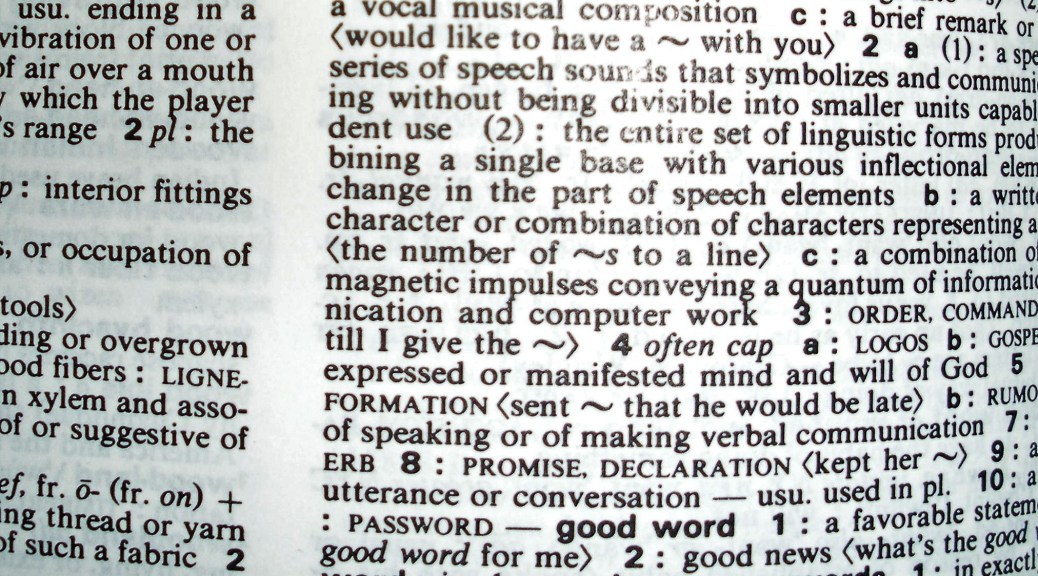
This makes “Logos” important to understand. That repeated word of importance appears three times in verse 1, and a fourth time in verse 14. Like the name “Iōannēs” (which is any Biblical entity named “John” or all named to signify “Yah Is Gracious”), the capitalized word “Logos” cannot be limited to only one translation: “Word.” This is because “logos” can also translate as “ground, plea, opinion, expectation, word, speech, account, reason, proportion, discourse, and plan.” As such, verse 1 can be seen as intending the reader grasp this depth of scope, rather than simply repeat the ambiguity of “Word.” One example would be: “In the beginning was the Expectation, and the Reason was with God, and the Plan was God.”

Certainly, Jesus was part of God’s original Idea, from the beginning to his presence on earth, and throughout his many returns in Saints and Apostles. Without the man Jesus as our guide to God, humanity remains lost. Still, Jesus did not come to promote himself over God. It is wrong to read John’s first verse and mentally translate “the Word” as Jesus Christ, because the physical reality that became Jesus Christ was “a Thought” of God. Just as God’s Plan was to bring Jesus Christ to mankind, His Reason was to transform a world of believers into duplications of His Son, all born with the same Expectation through the Christ Mind.

God cannot be limited to only producing one Jesus Christ, although the one Jesus Christ can never be replaced.
Christians (by title) are replications of Christ, which is the Mind connected to God the Father. When one’s heart has married God, then the offspring is a new “Jesus,” via the same Christ Mind, with the link between Spiritual and physical being the Holy Spirit. Jesus represents the joining of the Father to the Son, via the Holy Spirit – as a Trinity on earth.  Therefore all Saints are Apostles and Prophets of the LORD, in total commitment to serving God … just as Jesus was conceived to be and born to make that service possible in others.

This means the birth of Jesus Christ is not a one-time scene on earth, away in a manger in Bethlehem. The Christmas story is retold year after year because it represents the rebirth of Jesus Christ in Christians … true Christians who have become Saintly and righteous … in the name of Jesus Christ.

Just as the Angel appeared before shepherds to announce the Messiah had come, the shepherds became the first Saints by experiencing baby Jesus before them. They were filled with the joy of the Holy Spirit. Likewise, John is appearing before us in writing, telling us of the heavenly grace that has come into the world. It is now up to each reader to decide to run and see the baby.

Christians do that by searching the words of the Holy Bible, looking for the “hidden manger” that holds the Messiah of the world. If one acts to seek the light and the life, the grace and the truth, then the whispers of God’s heavenly messengers will lead you to open your heart and receive the Spirit of the LORD. One must love God with all his or her heart and all his or her mind to become married to Him. Total subservience bring the promise of great reward.  Then the truth will be so wonderful that one can never go back to serving self. One is reborn then as a new Jesus Christ.

I recommend a deeper view of John 1:1-18. The translation above is conversational English, not Spiritual Greek. I have offered some insights here; but be advised my words expand 300+ words of God into 3,300+ words of explanation. Even at that depth, much is still missed. Each reader must be able to see beyond what John wrote, and beyond what I have written. One needs the insight of the Christ Mind to grasp the wholeness of meaning.

Then one must have a strong desire to share that meaning with others … leading newcomers to their own personal experience.


John 1:1-18 – Finding the Word under the tree on Christmas morning

In the beginning was the Word, and the Word was with God, and the Word was God. He was in the beginning with God. All things came into being through him, and without him not one thing came into being. What has come into being in him was life, and the life was the light of all people. The light shines in the darkness, and the darkness did not overcome it.

There was a man sent from God, whose name was John. He came as a witness to testify to the light, so that all might believe through him. He himself was not the light, but he came to testify to the light. The true light, which enlightens everyone, was coming into the world.

He was in the world, and the world came into being through him; yet the world did not know him. He came to what was his own, and his own people did not accept him. But to all who received him, who believed in his name, he gave power to become children of God, who were born, not of blood or of the will of the flesh or of the will of man, but of God.

And the Word became flesh and lived among us, and we have seen his glory, the glory as of a father’s only son, full of grace and truth. (John testified to him and cried out, “This was he of whom I said, ‘He who comes after me ranks ahead of me because he was before me.'”) From his fullness we have all received, grace upon grace. The law indeed was given through Moses; grace and truth came through Jesus Christ. No one has ever seen God. It is God the only Son, who is close to the Father’s heart, who has made him known.

——————–

This is the Gospel reading that will be read aloud by a priest on the first Sunday after Christmas, Year C, according to the lectionary for the Episcopal Church. It will follow an Old Testament reading from Isaiah, where the prophet sang, “as a bridegroom decks himself with a garland, and as a bride adorns herself with her jewels. For as the earth brings forth its shoots, and as a garden causes what is sown in it to spring up.” Following that will be a singing of Psalm 147, where David wrote: “[Yahweh] heals the brokenhearted and binds up their wounds. He counts the number of the stars and calls them all by their names.” Those two will be followed by a reading from Paul’s letter to the Galatians, where the saint wrote to true Christians saying, “Because you are children, God has sent the Spirit of his Son into our hearts, crying, “Abba! Father!”’ All of those readings will accompany this reading from John.

In November 2017, I posted two commentaries about this reading. I updated the second in January 2021. The first is entitled “The Birth of the Word,” and the second is entitled “Deeper View.” Feel free to examine either of those articles (or both) by searching this site. I can assure you that the depth of interpretation I placed in both of those commentaries show just how must is said in these eighteen verses. Every word is divinely inspired by Yahweh, who knows everything about the “Word” and how that relates to both “John” and Jesus. Because I have already written about this reading, in length, I will now focus on aspects that were not as clear to me four years ago.

Because it has only recently dawned on me that the date of December 25th is more relative to the actual birthdate of John the Baptist, than to Jesus, I want to focus my interpretations now on John (the Gospel writer) speaking about John the Baptist. Because nothing is written that clearly states the named “John” to be a relative of Jesus, with nothing specifically naming Jesus, it is important to look at what John wrote as being the inspirations of Yahweh.

First of all, the writing of a capitalized “Logos” three times, surrounding a twice named “God” (as “Theon” and “Theos”), this cannot simply be grasped as John calling Jesus “the Word.” Because “the Word” was from the beginning and “was with” and “was God,” this speaks loudly (through capitalization) that Yahweh speaks through souls born into human flesh, which began when Yahweh created the first of His elohim to do His works of the Creation. In that, I explained that “Logos” means more than speaking, as it also means “Plan.” Therefore, the “Plan” has always been (from “the beginning”) Yahweh commands and His angels obey.

The implication that John was referring to Jesus when he wrote “Logos” can be seen as true, but by writing “Logos” he left Jesus as the name that is the “Word” of “God” that says “Yahweh Will Save.” In that sense, the “Word” is present in every soul that speaks as an extension of Yahweh on the earth. Thus Jesus was Adam, Noah, Abraham, Moses, Elijah, and others, while not going by that specific name. This means Yahweh Will Save through “the Word” coming into all who will completely serve Him.

For John to then differentiate from “the Word,” by saying “There came a man having been sent from God , name to him John”, this says the many souls who have served Yahweh in the past, all having received “the Word” into their being are granted eternal life. In that eternity of service to Yahweh, those souls will be reissued (so to speak) as reincarnated souls in human flesh, with the divinity of “the Word” still one with those souls. This says the soul possessing the body of flesh that would be named “John” was an angel (also called one of the elohim of Yahweh) reborn in flesh to again serve Yahweh. The name “John” (as “Iōannēs”) means, “Yah Is Gracious” or “Yah Has Been Gracious.” Because the author of this Gospel is also named “John,” the same can be said of both souls. This says the graciousness of Yahweh that has been placed upon both souls named “John” is they both equally possessed “the Word” of Him.

When John wrote that John was “a witness,” from the Greek word “martyrian,” this must not be read as John’s only role was to see Jesus and then tap him on the shoulder, saying, “You’re the guy!” The meaning of “witness” says John was “the Word,” as one who knew that divine closeness – as ONE with Yahweh – in the same way Jesus would come. While both Jesus and John were divinely conceived (it is doubtful Elizabeth was impregnated by Zechariah, with him knowing that deed hadn’t happened, causing him to laugh at Gabriel) and holy as fetuses, John knew Jesus was the soul that had been ALWAYS “the Word.” John’s soul had at one time been in a body of flesh that was a sinner; but once he submitted to marrying his soul to Yahweh, Yahweh then sent into his soul the soul of “the Word,” which forevermore saved that soul. John is then the “witness” for all souls like his (at one time prior), who will allow eternal life changes to enter their souls.

When John then said John the Baptist would be a “witness concerning the light” [“martyrēsē peri tou phōtos”], the “light” must be realized as the opposite of darkness, such that “light” is eternal life, while darkness is the repetitiveness of death, which for a soul means reincarnations. John was then a soul with personal knowledge of salvation, whose knowledge of eternal life was not ‘book read’ but a soul that retained salvation, sent back into the realm of darkness as a messenger of Yahweh about salvation. John would be known as one who immersed other souls with the inundation of “the Word” that made other souls aware of the need to cease sinning, forevermore. That cleansing by awareness would prepare other souls to ‘step into the light of truth’ and marry their own souls to Yahweh.

When Gospel John wrote that “the Word was made flesh and dwelled among us,” this is more a lasting truth than his writing hind-sightedly about Jesus (or John the Baptist), as this is simply more truth about Yahweh having created “the Word in the beginning.” All prophets, apostles and saint, at all times, are “the Word made flesh.” It “dwells among us” as us – one with our being, one with each soul. Jesus was the soul made to be “the Word” for all souls that would take the step of commitment and marry Yahweh. At that point of divine union, all those souls will behold the glory of “the Word” in oneself, with each knowing the truth of having been reborn as “the only begotten of the Father.” Each soul filled with “the Word” will become “the Son” reborn.

When John wrote that John the Baptist would cry out, “This was he of whom I said, ‘He who comes after me ranks ahead of me because he was before me.’” A better translation is, “This existed of whom I am speaking, ‘This behind me coming , has precedence over me , because before me it existed.’” In that, John is saying his soul has become merged with the soul of “the Word,” which overcomes the soul of John, who had once been a sinner. The precedence that “the Word” has over John’s soul is due to John’s soul being in complete submission to Yahweh, allowing his soul to be led by “the Word.” The reason is John’s soul has become led by the soul Yahweh created for the purpose of saving souls [which is named “Jesus”].

John the Gospel writer was enlightened in the same way as was John the Baptist. Both Johns were souls that had been reborn with “the Word,” which allowed them to be born as souls previously saved, reincarnated to be messengers of Yahweh, speaking “the Word.” This needs to be seen as the reason behind these words being chosen as the Gospel reading for the first Sunday after Christmas. The birth of John the Baptist is more aligned with what modern Christians know as “Christmas,” which comes on December 25th. John the Baptist would have been born in the tenth month (December means “the Tenth month”), as Elizabeth became pregnant in the first month (Nisan), so the tenth month in the Hebrew calendar is Tevet.

The Hebrew month Kislev is the ninth month, which is the equivalent of the time between November and December. It is much like the astrological sign Sagittarius (approximately November 23 and December 21). With Zechariah told by Gabriel his barren wife was pregnant six months before he told Mary she was pregnant with Jesus, a nine-month pregnancy for Elizabeth would have ended in early Kislev, which is the equivalent of the astrological sign Capricorn (about December 21 to January 21). This makes the Winter Solstice (usually December 21 or 22) and the timing of Christmas (December 25) be symbolically chosen to reflect the darkness of a soul (one who is a sinner) needing to be cleansed (John the Baptizer), so a soul is prepared to receive the light of “the Word,” which is when the soul of Jesus is resurrected within a former sinner’s soul, married to Yahweh on Christmas Day, and made pregnant with his soul to come.

This is the meaning of this Gospel reading. John was saying each soul that is to be saved must first become like John the Baptist and repent one’s past life of waywardness. The first Sunday of Christmas is then when one wakes up from one’s ‘wedding night’ feeling the glow of Gabriel saying, “You’re pregnant with a child that will be named Jesus.” That means to begin preparations for bringing a new self into the world, one whose ways are now righteous, with sinning the ways of the past cut free. This means the gift giving of Christmas is all one’s past sins being washed clean.