Tag Archives: John 1:46

Mark 6:1-13 – Prophets seen with dishonor

Jesus came to his hometown, and his disciples followed him. On the sabbath he began to teach in the synagogue, and many who heard him were astounded. They said, “Where did this man get all this? What is this wisdom that has been given to him? What deeds of power are being done by his hands! Is not this the carpenter, the son of Mary and brother of James and Joses and Judas and Simon, and are not his sisters here with us?” And they took offense at him. Then Jesus said to them, “Prophets are not without honor, except in their hometown, and among their own kin, and in their own house.” And he could do no deed of power there, except that he laid his hands on a few sick people and cured them. And he was amazed at their unbelief.

Then he went about among the villages teaching. He called the twelve and began to send them out two by two, and gave them authority over the unclean spirits. He ordered them to take nothing for their journey except a staff; no bread, no bag, no money in their belts; but to wear sandals and not to put on two tunics. He said to them, “Wherever you enter a house, stay there until you leave the place. If any place will not welcome you and they refuse to hear you, as you leave, shake off the dust that is on your feet as a testimony against them.” So they went out and proclaimed that all should repent. They cast out many demons, and anointed with oil many who were sick and cured them.

——————————————————————————–

This is an Gospel selection from the Episcopal Lectionary for the Seventh Sunday after Pentecost, Year B 2018. In the numbering system that lists each Sunday in an ordinal fashion, this Sunday is referred to as Proper 9. It will next be read aloud in a church by a priest, on Sunday July 8, 2018. This is important as it shows how Jesus was rejected by the Jews of Nazareth, just as were his disciples faced rejection in their appointed ministries. This is seen today in the fight among Christians to cast out anyone who offers wisdom without some degree of approved divinity, such as that handed out by professors of scholastic religion.

This is Mark’s version of the same story told by Matthew (13:53-58) and Luke (4:14-30), with Luke’s more detailed about Jesus being rejected in his hometown. Mark then followed with the commission of the twelve, which Matthew told of in his tenth chapter (the whole chapter) [slightly before Jesus was rejected in Nazareth] and Luke told of in his ninth chapter (verses 1-6) [well after Jesus was rejected in Nazareth]. Luke told the story of Jesus being rejected in Nazareth with much detail, well beyond what Mark wrote; but the inconsistencies of the chronology makes certainty of when each event occurrences difficult to pinpoint.  Still, there is purpose to the order of presentation that is found here in Mark.

There is no mention of Nazareth specifically in either Mark of Matthew, but Luke does make that specifically known, with Mark telling that the people in the synagogue knew his father was a carpenter. One can assume Joseph died before Jesus began his ministry, certainly before he moved to Capernaum, because there was no mention of Joseph at the wedding in Cana.

By knowing all of the surrounding stories of the same events, a three-dimensional view of Mark’s story emerges. When we read, “Jesus came to his hometown, and his disciples followed him,” we know from Luke that Nazareth was one of several synagogues that Jesus taught in, after he “returned to Galilee in the power of the Spirit.” (Luke 4:14a) This means that Jesus did not go to his hometown solely for the purpose of showing off his teaching talents. The synagogue of Nazareth welcomed Jesus because of the “news about him [had] spread through the whole countryside” and “he was teaching in [multiple] synagogues, and everyone praised him.” (Luke 4:14b-15)

When Mark wrote, “On the sabbath [Jesus] began to teach in the synagogue,” Luke makes a point of stating, “he went into the synagogue, as was his custom” and “he stood up to read.”
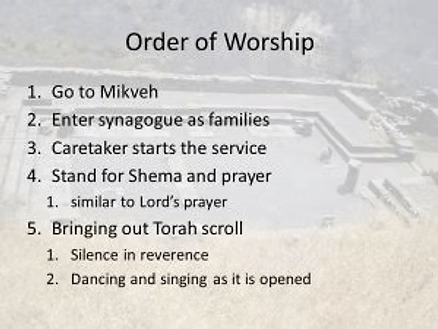
This means each Sabbath in the Hebrew calendar calls for specific readings to be read and discussed. Luke quotes the reading as being that of Isaiah 61:1-2a. In the “Calendar of Torah and Haftarah Readings,” for 2015 – 2018, the schedule for these two verses (plus verses 3-11) comes up in the reading for October 29, 2016 [27 Tishri 5777], which is called the “Blessing for Cheshvan” [Cheshvan = “Eighth Month”]. The same reading was also scheduled for September 9, 2017 [18 Elul 5777].

In the verses recited by Luke (Isaiah 61:1-2a only), the words from the verses include: “The Spirit of the Lord is on me;” and “He has sent me to proclaim.” Some English translation versions place a title on this chapter that comes from verse two-a, which is “The Year of the Lord’s Favor.” This portion of Isaiah 61 announces an unnamed prophet to come, which is not Isaiah but a prophecy of one who will bring freedom to those in captivity. Jesus stood and said, “Today this scripture is fulfilled in your hearing.” (Luke 4:18-21)

While Mark did not address this specific reading as what Jesus “began to teach” about, this is what led the Jews of Nazareth to be “astounded.” The use of the Greek word “exeplēssonto” means “astounded,” which might lead one to think Jesus impressed the Jews of Nazareth, as if he “bedazzled” them or “amazed” with his words. While Luke’s use of “ethaumazon” implies “wonder, marvel, and admiration,” it actually in a statement of “surprise.” Mark’s word most clearly shows that Jesus’ words had the effect of “striking them with panic or shock.”

This view is supported by seeing how those in attendance in the synagogue took this proclamation by Jesus as an insult. It led them to question his credentials: “Where did this man get all this? What is this wisdom that has been given to him? What deeds of power are being done by his hands!” Those questions did not in any way infer that what Jesus said was believable.

The question that asked where Jesus saw Isaiah foretelling of him was one asked in the tone of “What gall!” The use of “sophia,” as “wisdom,” misses the hint at “cleverness,” where a rabbi should teach the “intelligence” that comes from the standards of education, and not unfounded “insight.” The “deeds of power,” from “dynameis,” hints at a stunt proclaiming to be a “miracle.” The addition of “by his hands” is then meant as a preconceived “plan,” which is the art of shysters, made-up by Jesus only.

When the next question was, “Is not this the carpenter, the son of Mary and brother of James and Joses and Judas and Simon, and are not his sisters here with us?” they concluded that Jesus was just the boy down the lane who was the son of a carpenter. Growing up in Nazareth meant Jesus was from another poor family of Jews. His relatives were of no importance … pretty much like everyone from Nazareth … so the same expectations should be placed on Jesus. They let him teach out of respect for his being from Nazareth and some gossip that said, “Give him a chance,” but that sermon (in their minds) was a colossal failure.

To ensure that no one missed that point, Simon-Peter told Mark to be sure to write down, “And they took offense at him.” The Greek word written, “eskandalizonto,” is rooted in “skandalizó,” which in Latin is transcribed “scandalizabantur,” a word that is associated with the etymology of the English word “scandalous.” The “offense” caused was “disgraceful; improper or immoral.” The Nazarenes felt like they had fallen into a trap that had been set by Jesus, snared up quickly from their peaceful Shabbat Jewish selves and forced to become angry and wild in an attempt to free themselves.

Their anger led Jesus to say, “Prophets are not without honor, except in their hometown, and among their own kin, and in their own house.” As a true prophet of the LORD, such that everything Jesus said was the Word of God flowing through his mouth, the “honor” that comes to all “Prophets” (capitalization is purposeful, showing a divine connection, although the capitalization is from the paraphrase of translation) is the presence of God within.

Because a relationship with God requires many years to build up, into a marriage where a Prophet submits his (or her) personal will to the dominant Will of God – the Husband – even Jesus, as a child, was seen as no different as other children his age. Even though God spoke to Jesus daily, from human birth to human death and beyond, Jesus was free to express his personal opinions (albeit God-led) at all times prior to his Spiritual baptism, when the dove lit upon his spirit in the river Jordan, with John the Baptizer. That period of Jesus talking, rather than God speaking directly through Jesus, was not part of any written Gospel. The Jews of Nazareth, therefore, saw Jesus as a little more than an impudent human, one who (as far as they knew) was ordinary.

When we then read, “And he could do no deed of power there, except that he laid his hands on a few sick people and cured them. And he was amazed at their unbelief,” this says that the rejection of Jesus was so great that the Son of God could do little to reach through that refusal to accept holiness. It says that “unbelief” (“apistian”), which is a negative form of “faith.” It means “unfaithfulness” and “distrust” is the power of “disobedience” that pushes those professing “faith” away from God.

This makes Nazareth become a model for all of the Israelites, in particular those who maintain Judaism today, denying Jesus as their Christ. When the scope of definition for “Israelite” is broadened, to be seen as the children of God who do follow the promised Messiah that is Jesus Christ – Christians, Jewish and Gentile – then the same sense of “astonishment” and “taking offense” can be seen when so-called “believers” reject someone who is truly filled with God’s Holy Spirit.  When Saints are seen as extremely rare, then the appearance of one teaching about Scripture in ways only God could know, it seems natural that those not in a relationship with God will fail to recognize one who is.

The same “unfaithful” (“offended”) have become led by people like them, who teach an ordinary message, so they set expectations for all substitute teachers – they must teach the same faithless message. Just as were the Jews of Nazareth so “disobedient” to the Lord that they ran Jesus out of town, with few being healed by his hands, Christians today are just as closed-minded to the truth.  It is a knee-jerk reaction to reject the unknown, even when it scandalously slaps the truth in their face.

The message that so many fail to hear, and fail to learn, and fail to teach is that message that is repeatedly written in the Gospels and Epistles that says, “in the name of Jesus Christ.” Christians sit in pews and believe they should believe “in the name of Jesus Christ.” Christians believe they should be baptized “in the name of Jesus Christ.” Christians believe they should pray “in the name of Jesus Christ.”

Christians believe Jesus Christ is in Heaven with the Father, listening to prayers and placing check marks by the names of Christians who believe “in the name of Jesus Christ,” just like the Jews of Nazareth sat in pews in the synagogue and believed in the name of Isaiah.  They all believed in the prophecies of Isaiah, but they all believed they would never see the day when any of Isaiah’s Saviors would come to town. Therefore, if a Christian stood up in a church on Sunday (or Saturday) after a priest or reader said the words “in the name of Jesus Christ” and loudly proclaimed, “I am in the name of Jesus Christ!” those Christians would (for the most part) be greatly offended.

Anyone who would hear that claim and come to Jesus Christ, in the person who knew he or she had been reborn as that Christian who proclaimed “the year of the Lord’s favor has come!” then he or she would benefit. A few of the whole would only amount to a few sick people who could be cured or have demons cast out of them by Jesus reborn. In that process, those few would have the torch of the Holy Spirit passed onto them, due to their faith. However, the many would shun that person, run him or her out of town, spread ugly gossip about him or her in that wake, and blacklist him or her from ever coming back to that church. In short, a Christian today would treat a reborn Jesus Christ just as the Jews of Nazareth scorned Jesus.

This means that when Jesus said, “Prophets are not without honor, except in their hometown, and among their own kin, and in their own house” that paraphrases as, “Persons gifted at expositing divine truth [true Prophets of Yahweh – “prophētēs”] are not despised, except when surrounded by those not filled with the Holy spirit [not also Prophets of Yahweh],who are not taught by persons gifted as expositing divine truth, thus who are not led to ever be expecting to meet one person gifted at expositing divine truth, much less ever become a “Prophet” themselves.

As such, “hometown” and “own house,” in today’s vernacular, represents one’s specific denomination of Christianity, in a specific church building. The version of Christianity that one holds dear leads one to go to a place where one feels at home. The church one goes to most regularly is then personal, as one’s own house of worship. This means “own kin” are all the others who go to the same church, in the same town, and (in the cases of the devout that adhere to the tenets of Christianity) it has been this way for generations.

As for Jesus, who was a Great Prophet who only spoke the Truth of the Father, his disciples were his “house” [“a church being wherever two or more gather in my name” – Matthew 18:20]. That included his mother, brothers, sisters, aunts and uncles who were all followers that would become “in the name of Jesus Christ” following Jesus’ death, resurrection, and ascension.  The became his church, gathered in his name when Jesus Christ returned on Pentecost Sunday (the day after he ascended).  They were strong supporters of Jesus as the Christ, who would continue his work when they also became Jesus Christ reborn. All honor and glory was given to Jesus of Nazareth  by all who felt the presence of God in and surrounding him.

The Jews of Nazareth, those of Jesus’ hometown, did not bestow any honor onto Jesus, as they did not embrace him as the one Isaiah prophesied. Instead, they saw Jesus as a black sheep who had turned away from their simple mindset of belief … themselves as God’s chosen people … where all were chosen equally, with none to ever rise to the level of being truly righteous and responsible for the well-being of their family of Judaism.

This truth has to be seen in order to then understand why Simon-Peter told Mark (his Gospel writer), “Save the story of Jesus sending us disciple of Jesus out to minister in our hometowns, in the synagogues when we were raised, where the Jews who knew us before we were “in the name of Jesus Christ” could reject us also.”

Peter had Mark write about the commission of the twelve immediately after Jesus was rejected in Nazareth, because (in the imagined words of Peter), “We too were Jesus by extension, through God’s Holy Spirit being our authority.” Therefore, Mark’s story of the sending out of the twelve disciples then becomes the story of every Apostle who ever ministered Jews and/or Gentiles as Jesus Christ reborn. Matthew and/or Luke could chronologically state that event, with the same higher meaning intended to be found; but Mark’s retelling was for the purpose of understanding the future growth and spread of all true Christianity.  The commission of the twelve was the commission of all Saints in the name of Jesus Christ.

When Mark wrote, “He called the twelve,” the most basic meaning is the twelve named disciples of Jesus, as of that time in Jesus’ ministry. In Matthew 10:2-4, amid his story of the commission of the twelve, Matthew named each disciple. This included (last and least), “and Judas Iscariot, the one who betrayed [Jesus].”

That inclusion of Judas and the disclaimer that will forever go along with his name is what makes the sending out of twelve guys from Galilee, around 30 A.D., be the least intent of this commission. We can assume Judas Iscariot went, like the others; but one has to ask, “Did he and his partner obey all the instructions and cast out demons?”

That makes the number twelve stand out as the eternal condition for those who would forever be “called” by Jesus Christ AND fully comply with those commands. This means that the number is symbolic, more than literal.  Its use intends more than a number of physical disciples be discerned.  It implies that twelve is the state of being that must be reached by all who heed that call … with Judas Iscariot failing to meet that requirement (as the note beside his name by Matthew implies).
Rather than attempt to teach a course in numerology, here is one of many web pages that explain the symbolic meaning of the number twelve. It is this symbolic nature that forms the core explanation as to why Jesus had twelve disciples, when he actually had many more followers and believers. Luke wrote of a commission that included seventy (or seventy-two) that were appointed in pairs. (Luke 10:1-20)

The number twelve represents a spiritual elevation, so the self is no longer controlling the soul. Twelve ‘boils down’ to a three (12 => 1 + 2 = 3), but is a special number that is like a “master number” (11, 22, 33).  The number three represents “initial completion,” whereas twelve (as 12 => 1 + 2 = 3) is a number that represents “final completion.” We see this in the twelve signs of the zodiac and the twelve tribes of Israel.

A three is then representative of the self, while a twelve elevates the self by submission to God. Still, oneself can reject that elevation and reduce a twelve back to a basic three, which is symbolic of the free will the self maintains. In this regard, Jesus symbolically named twelve disciples to be those who assumed roles that were elevated above his other base followers. However, the inclusion of Judas Iscariot reflected how a title of respect does not guarantee complete subjection to God, as some will always choose self over becoming Jesus Christ.

When this concept of twelve is seen, it allows one to see the eternal potential of the commission of Jesus Christ into the world, through subjects that never knew him as the human being that was Jesus of Nazareth. They were then, are now, and will always be the ones sent out “two by two, given authority over unclean spirits.” That “authority” (“exousian”) is less about being a power over others, as it is more important as the power of the Holy Spirit, which rejects the presence of anything spiritually unclean to enter into an Apostle (i.e.: Saint).

This means that when Mark wrote, “They cast out many demons, and anointed with oil many who were sick and cured them,” it was the power of the Holy Spirit that had the effect of “anointing oil.”  This has to then be read as more than olive oil that has somehow been blessed by a Saint.  The use of “oil,” where the Greek word “elaion” means, “(figuratively) the indwelling (empowering) of the Holy Spirit,” means this has more power in a Spiritual sense, rather than a physical pouring of oil on one’s forehead.  It becomes synonymous with baptism by the Holy Spirit, where physical water has no effect on a soul.

By realizing the power given to the disciples (elevated to Saints) was not self-generated or self-willed, but the power of God’s Holy Spirit passed onto them, we can then best understand Jesus’ instructions. When Peter told Mark that Jesus said, “Take nothing for their journey except a staff; no bread, no bag, no money in their belts; but to wear sandals and not to put on two tunics,” those instructions apply today as well as they applied then, because Jesus spoke in ageless metaphor.

In general, Jesus told the Saints who would be in the name of Jesus Christ, “Go into the world as ordinary looking people, with nothing about you hinting at piety.” In other words, Jesus said, “Go and make it so only the truly faithful to God will be positively drawn to you.”  As a fishing analogy applied to fishers of men, Jesus sent them out fishing with just a line and a hook, but no pole, no net, no bait , no spinners, and no lures.

The Greek text of Jesus’ instructions actually states, “Nothing they should take for the journey,” where “hodon” says (in addition to “journey”), “path, road, and way.” This then becomes the path of Jesus, who said, “I am the way (“hodos”) , and the truth, and the life; no one comes to the Father but through Me.” (John 14:6, NASB) “Nothing” more is required, when one walks as Jesus Christ reborn through the Holy Spirit.
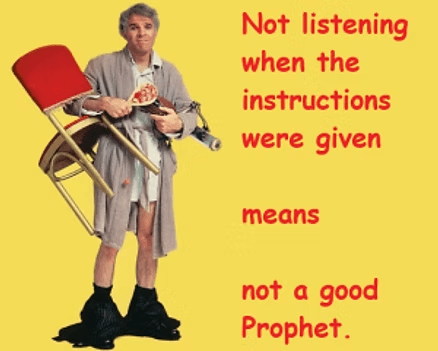
This makes the exception of “a staff” be not a walking stick (or crutch to lean on) but the authority of the Holy Spirit. It is like the invisible “rhabdos” that is the “scepter” of Christ the King.  Jesus said, “My kingdom is not of this world,” (John 18:36) but when his subjects are the souls within the realm of their flesh, his staff of sovereignty appears as just another human being.

To have his Saints carry “no bread,” this is more than the him demanding they deny the physical necessity of food (fasting), where taking a “loaf of bread” would be viewed as a lack of faith, as if there would be an unwillingness to depend on manna from heaven. More than a demand to physically restrain one’s bodily needs, the symbolism of “bread” is relative to the symbolic presence of matzah is the Passover.

At the Seder meal (the “Last Supper”) ceremonial bread was broken (a ritual breaking, called the Yachatz) and the disciples were told to eat in remembrance of him. The Yachatz is actually hidden and must be found, so it can be eaten as a dessert. Children are the focus of this exercise; and Jesus called his disciples, “little children.” (John 13:33)  As such, one is asked to seek and find Jesus Christ, who is hidden in the “bread” that is the Word of God. Scripture must be consumed to begin a journey that, when found, requires one be stripped of self.  To reach that point of sacrifice, one must see the prophecies of Jesus in the holy text first.

As an instruction to the holy priests of the LORD who are sent out to teach the truth, “take no bread” means to take no prepared Scripture lessons to teach. A prepared lecture or sermon requires the intelligence of a brain, which cannot withstand questions the brain has not been prepared to answer. When one is without “bread” due to faith, then the manna from heaven will be sent to one.

Trusting Saints are sent unprepared so they can then receive the knowledge of the Mind of Christ that is promised to come, as needed. It comes so that not only will one be fed spiritually, but so too will one’s whole family be fed spiritually. All questions will be answered without conscious thought required, through teaching by the power of the Holy Spirit.

When we hear the instruction, “no bag,” this goes beyond the literal meaning of “a sack, wallet, or leather pouch for carrying provisions.” The intent here is like a quiver that holds a supply of Biblical arrows or Scriptural quotes that are intended to wound or defend one’s position. It means (to Jews) not to be lugging around a selection of Torah scrolls to read for Jews to hear. To a Christian, it means not to carry a copy of a Holy Bible to read to others. This means “no bag” is akin to thinking outside the box, where everything written in scrolls and Holy Bibles is relative to translation restrictions or pronunciation choices. It becomes an attempt to put God in “a bag” that limits Him and the truth of His Words spoken through prophets.  Without that bag, God is free to enlighten an unfettered mind.

The requirement that says, “no money in their belts,” where “zōnēnchalkon” (literally “belt money”) can be read as “money belt” or “purse,” was stated at a time when “money” meant minted coins of precious metals. Still, when “belt” and “money” are seen as separate words, where “belt” means “girdle” or “waistband,” such as a leather strap tied around one’s mid-section, and “money” means coins of “brass, bronze, or copper,” the implication is not to go into the world displaying an underlying support (girdle) that is wealth-driven (money). It means not to travel like the scribes of the Temple, with an entourage of support encircling them; and it means not to go public in clothes that say, “Only I can afford this suit.”
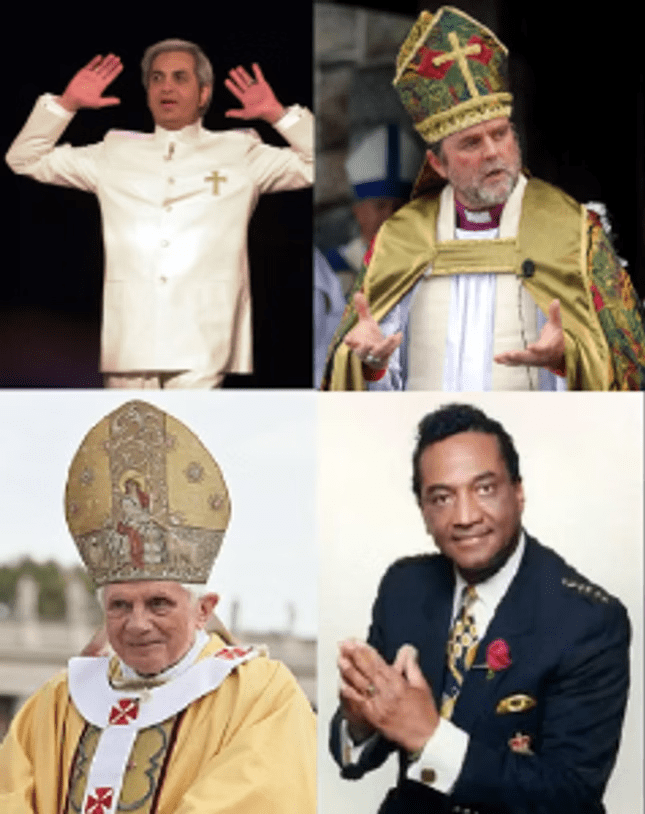
“Every girl crazy ’bout a sharp dressed man.” ZZ Top

While such a restriction set by Jesus can easily be noticed in the television stardom of televangelists who plead for contributions to buy another $54-million private jet for ministry, it still applies to all mainstream organized religions, where priests, bishops, cardinals, and popes wear fancy costumes as if those clothes (hats, belts, miters, and staffs) deem them as holy.  Further, many churches revel in ensuring their pastors live in nice homes and drive fine cars. The people tend to associate their piety in a figurehead deemed as their reflection.  However, Jesus’ order means all of that flash and glitz only distracts from God’s message of sacrifice, causing others to focus on the outward appearances of others and not their own inner needs.

When Jesus said to “wear sandals,” that fashion statement does not means shoes cannot be a footwear replacement. A “sandal” is a piece of leather worn under the sole of the foot, as an invention for the purpose of human beings being able to walk boldly over rocky and sandy soil. It is protective clothing in that sense, which any modern version of footwear that is designed for outdoor walking can match. Still, by Jesus giving an order to wear sandals it has to be seen as symbolic of keeping the feet prepared to walk wherever the Lord sends one. The use of “sandals” is then akin to being a messenger, as God prophesied through Malachi: “Behold, I am going to send My messenger, and he will clear the way before Me. And the Lord, whom you seek, will suddenly come to His temple; and the messenger of the covenant, in whom you delight, behold, He is coming,” says the LORD of hosts.” (Malachi 3:1)

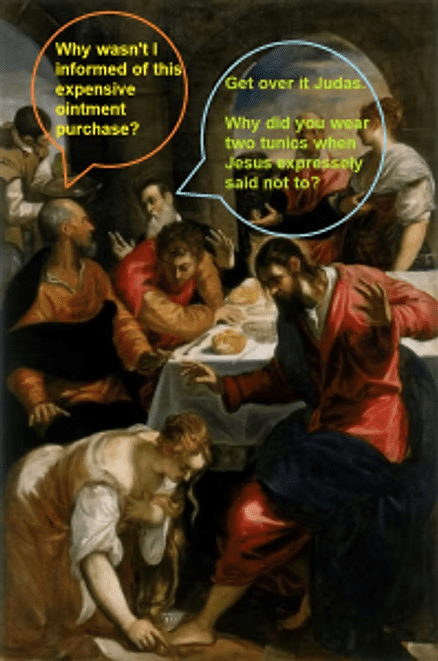
Finally, when Jesus said “not to put on two tunics,” the number two must be grasped. Two reflects the duality of humanity, which is the physical body joined with a spiritual soul. To “put on” or “be clothed” with “two tunics,” where the word “tunics” (“chitōnas”) implies “undergarments” or “shirts worn under a robe,” there is a hidden element that underlies the apparent. This should be seen as an instruction not to retain one’s self-ego under the cloak of righteousness. One can only be a messenger of God when one is wearing the robe of Jesus Christ and no one else. This is why a Prophet of the LORD is merely a nameless “mortal,” whose response to all God’s questions is, “LORD you know.”

With that state of being seen, we then read how Jesus said to the disciples, “Wherever you enter a house, stay there until you leave the place. If any place will not welcome you and they refuse to hear you, as you leave, shake off the dust that is on your feet as a testimony against them,” this should be seen as relative to the story Mark just told about Jesus being rejected in Nazareth.  One should see how this connects to the “house” of worship (the synagogue in Nazareth) Jesus had just been rejected from, where as a messenger of God he was shown dishonor.

The symbolism of “dust” (“choun”) is as “earth” or “soil,” which relates to the physical and not the spiritual. God told His Son Adam, “For you are dust, And to dust you shall return.” (Genesis 3:19f) In Ecclesiastes we read, “All came from the dust and all return to the dust.” (Ecclesiastes 3:20b)
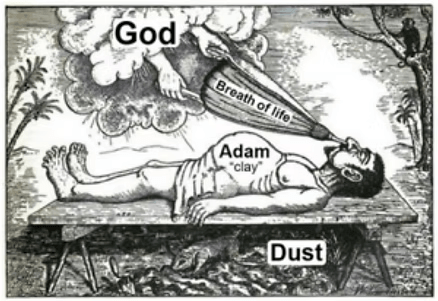
Therefore, the rejection of a Prophet of the LORD means the messenger (sandals) has been refused and the punishment means reincarnation on the worldly plane, not the reward of faith – eternal life in Heaven with God.

Mark then summed up Simon-Peter’s memory by stating, “So [the twelve] went out and proclaimed that all should repent.” The Greek word “metanoōsin” states the conditional, such that the recommendation is to repent, so one should repent; but one is free to do as one chooses. This means one must fully grasp the meaning of “repentance,” such that the Greek word “metanoeó” (the root verb) means, “change my mind, change the inner man (particularly with reference to acceptance of the will of God); properly, “think differently after,” “after a change of mind”; to repent (literally, “think differently afterwards”).” When “repent” is understood to basically mean, “to change one’s mind or purpose,” this becomes a recommendation to surrender one’s big brained ego (self) so the Christ Mind can be born within one’s being. A Saint’s purpose is then to recommend that one should make such a change of mind.

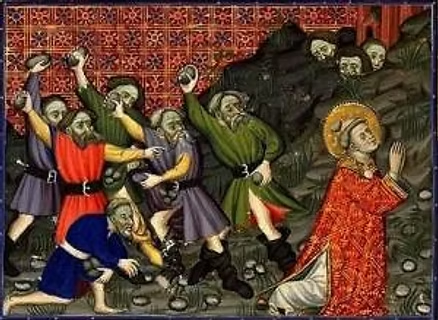
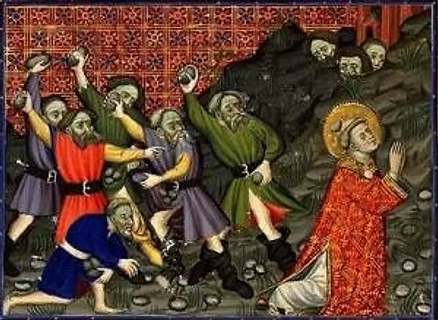
As a Gospel selection for the seventh Sunday after Pentecost, when one’s personal ministry to the LORD should be underway – one has truly repented – the intent should be to see the standard of rejection. In most cases, which can be seen in the story of Saul being transformed into Paul, rejection begins within one’s self. Saul stood holding the cloaks of those who rejected the messenger Stephen, so the persecutors’  hands would be free to stone a Saint (in the name of Jesus Christ) to death. They rejected Stephen just as the Jews of Nazareth rejected Jesus. Saul stood by and watched the rejection, not raising a hand to stop the mindset that bears the responsibility for neglecting everything Jesus ordered his disciples not to wear.

The ones who reject a change of mind hold their hard loaves of unleavened bread high, hoping the lack of yeast (the Holy Spirit) will punish those they swing hard at.  Instead, that bread breaks and crumbles, unlike bread that was allowed to expand its basic ingredients into a tasty, life-giving softness. The hands with stones have bagged God as their personal slave, whose words say what they want them to say. They have transformed the exclusivity of being God’s chosen people into a lucrative businesses that caters to intellectual giants. The ones throwing the stones that killed Saints pretended to be upholding the Laws outwardly, while they are led by the fears of responsibility denied inwardly. These are the ones a minister of the LORD is called to confront.

Luke wrote of the people of Nazareth being so angered at Jesus that, “They got up, drove him out of the town, and took him to the brow of the hill on which the town was built, in order to throw him off the cliff.” (Luke 4:29) They could not harm Jesus, as Luke continued to say, because “he walked right through the crowd and went on his way.” (Luke 4:30)

As Stephen was dying, “Stephen prayed, “Lord Jesus, receive my spirit.” Then he fell on his knees and cried out, “Lord, do not hold this sin against them.” When he had said this, he fell asleep.” (Acts 7:59-60) That was Jesus again going on his way, because Stephen touched Saul on his path that led him to encounter Jesus Christ.
This says that all ministers of the LORD begin as those who have played their part in rejecting Prophets who have suggested a change of mind and the subjection of self-ego to the LORD. Ministers have been there, done tha;, so when they see others rejecting their transformed souls as being the old insolent human beings they were before, ministers then see themselves in reflection. This leads them to pray for God to forgive them all for being ignorant for so long, while really wanting to be saved.

Aside F.Y.I.: Deleted from this reading is the verse that is marked as an aside [in parentheses] that is a long ending to verse 11, following “a testimony against them.”  It states “(Truly I say to you more tolerable it will be for Sodom and Gomorrah in day of judgment  ,  than for that town.)  This means rejecting a Prophet of the LORD calls for eternal damnation, assuming repentance does not come before the day of judgment.”
Jeremiah 23:1-6 – The Lord is our righteousness

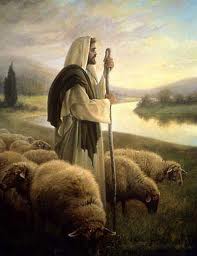
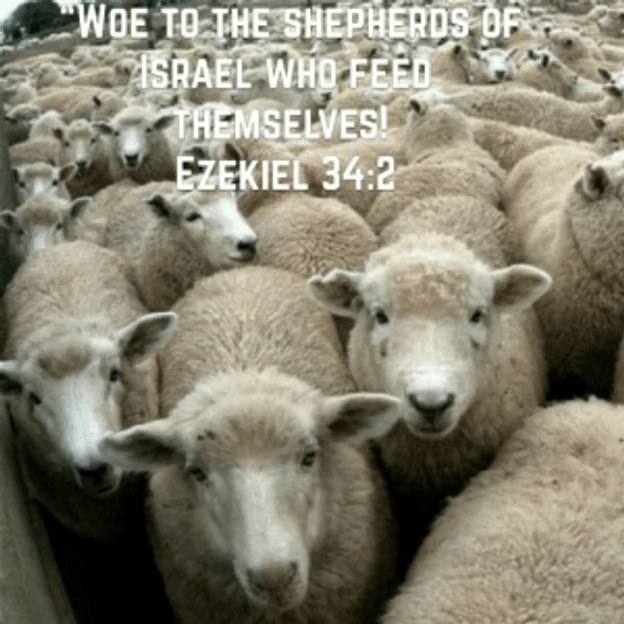
Woe to the shepherds who destroy and scatter the sheep of my pasture! says the Lord. Therefore thus says the Lord, the God of Israel, concerning the shepherds who shepherd my people: It is you who have scattered my flock, and have driven them away, and you have not attended to them. So I will attend to you for your evil doings, says the Lord. Then I myself will gather the remnant of my flock out of all the lands where I have driven them, and I will bring them back to their fold, and they shall be fruitful and multiply. I will raise up shepherds over them who will shepherd them, and they shall not fear any longer, or be dismayed, nor shall any be missing, says the Lord.

The days are surely coming, says the Lord, when I will raise up for David a righteous Branch, and he shall reign as king and deal wisely, and shall execute justice and righteousness in the land. In his days Judah will be saved and Israel will live in safety. And this is the name by which he will be called: “The Lord is our righteousness.”

——————————————————————————–

This is an optional Old Testament selection from the Episcopal Lectionary for the ninth Sunday after Pentecost, Year B 2018. In the numbering system that lists each Sunday in an ordinal fashion, this Sunday is referred to as Proper 11. If chosen, it will next be read aloud in a church by a reader on Sunday July 22, 2018. It is important because it prophesies the coming of Christianity, where Salvation comes when one is led by the true Shepherd.

One should know that Jeremiah was a prophet of Israel, the Northern Kingdom, but the LORD called him to preach about the destruction of Jerusalem and the captivity its people would suffer. He was born into a priestly family; but he went to the people to minister, as he was not welcomed by the temple priests. During his life both Israel and Judah were influenced heavily by Baal worshipers and their priests; and Jeremiah had made them enemies by proclaiming them false prophets. Knowing that history makes it easier to grasp what God was telling Jeremiah in this reading.

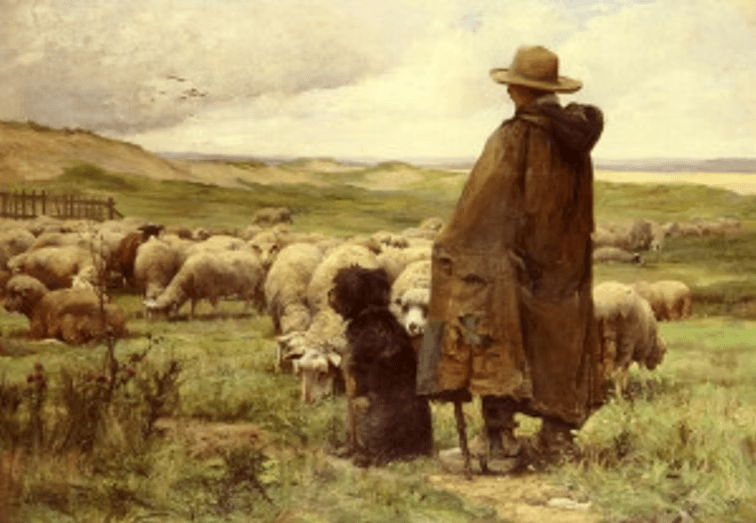
In the first verse, “Woe to the shepherds who destroy and scatter the sheep of my pasture,” it is important to know the Hebrew words “ra’ah” (written “rō·‘îm”) – translated as “the shepherds” – and “marith” (written “mar·‘î·ṯî”) offer insight through the similarities of their focus. The word “ra‘ah” accurately states “pastors,” where the word is “figurative of ruler, and teacher, accusative of people, flock.” When one sees that use of metaphor as being who powerful “Woe” (from first word importance – capitalization) will befall, then “sheep” can be read figuratively as “flock” or “multitude, which have been in God’s “pasturing” and “shepherding.”

A whole lotta woe going on!

This figure of speech is then how Judaic priest read this Scripture and it is how God intended Jeremiah to understand His words. God was not irked by little boy shepherds who let their father’s sheep get lost. God was angered at the bad rule of the Israelites by the bad kings of both the Northern and Southern Kingdoms (“Woe be to shepherds”), who let in bad shepherding priests (“who destroy and scatter the sheep”) that did not serve the God of Israel (“of my pasture”).

This means that the Promised Land that had been Canaan was “the pasture” where the flock of Israelites had been placed, to be fed and cared for. In that way, some “sheep” (rams) were raised to “shepherd” status, as they were the “rulers and teachers of the people” (the metaphor of “shepherd”), beginning with Moses and Aaron, passing to Joshua and the series of judges and prophets of Israel, including King David. Those shepherds unified the flock and kept them safe, doing so for the LORD – the figurative owner of the land and the wealth thereof, measured in the number of heads of Israelites.

As a prophecy of God’s actions against the destruction and scattering of His flock, we read, “I myself will gather the remnant of my flock out of all the lands where I have driven them, and I will bring them back to their fold, and they shall be fruitful and multiply. I will raise up shepherds over them who will shepherd them, and they shall not fear any longer, or be dismayed, nor shall any be missing.” The use of the first person here says that God “alone” will keep the evil masters from achieving what they sought: the destruction and the scattering of those who serve the true LORD, YHWH. This even includes all those who sacrificed with their lives at the swords of the wicked, because all God’s chosen souls will be brought “back to their fold.”

It should be grasped that God was speaking to Jeremiah about the faith of those souls destroyed and scattered. Despite all the trauma caused by evil shepherds, they retained their faith.  There were many who held dear to their religious tenets and never surrendered to the influence of those who served other gods. As such, those shepherds that would be raised up by God, “who will shepherd” the lost sheep, were those souls who were unjustly persecuted in human body.  This makes Jeremiah’s words be a prophecy of the Apostles of Jesus Christ, although individual prophets and leaders maintained reason for the Israelites to keep faith.

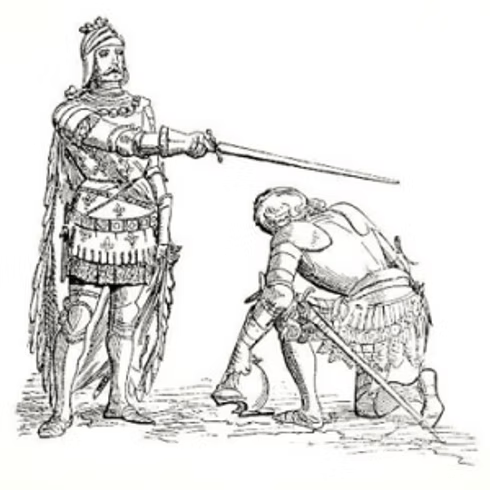
Still, only those shepherds who would be descended from Jesus of Nazareth, through the Holy Spirit, could remove the fears (heartfelt emotions), return courage to their being (strength of heart), and make the lost know they are found. They would place God in the hearts of the faithful by passing on the Holy Spirit, making each a shepherd be raised spiritually by the LORD.  Each Apostle became synonymous with a servant knighted by the Trinity.

Kneel before your sovereign and be renamed Sir, in the name of the Father, the Son, and the Holy Spirit. Rise Sir knight.

Certainly, one could see how God raised up the Persians to overthrow the Babylonians. One could see Cyrus as a shepherd who allowed the scattered Jews to return to Jerusalem. He would rebuild the temple destroyed by the Babylonians; but none of the Persians would return the pasture’s ownership to those lost sheep. The Persians had won the land in battle and deserved the spoils as victors.  Then, the Greeks, and after the Romans would gain the upper hand militarily and become the owners and dominators. This history of empirical rises and falls does not match the prophecy of Jeremiah.  This shows the prophecy has a higher meaning, which is the advent of Christianity; and that requires the fulfillment of Jesus Christ being raised.

God then prophesied this coming to Jeremiah, when He said, “The days are surely coming … when I will raise up for David a righteous Branch, and he shall reign as king and deal wisely, and shall execute justice and righteousness in the land.” By God naming David, whose six-pointed star was the shield of the nation of Israel (all twelve tribes), “a righteous Branch” (where “ṣe·maḥ” is capitalized in translation) means an offshoot of new growth, one stemming from the line that had fallen in destruction. This is how Isaiah (a mentor of Jeremiah) prophesied “a shoot will spring up from the stump of Jesse.” (Isaiah 11:1 and 11:10)

The righteous “stump” (Hebrew “mig-gê-za‘,” meaning “stem, stock, stump”) of David would become known as Judaism, which began in Babylonian captivity and returned to Jerusalem as those who clung to land and a new temple. That branch was severed and then grafted back onto its former shell.  The “righteous Branch” raised would be that religion named after the fulfillment of prophecies of a Messiah. Many would claim to be that raised shepherd, but none (not even Jesus of Nazareth) would be followed in large numbers.  At the time of Jesus’ death, the lives he touched was only a small sample of what Judaism was.  However, the religion that followed the rise of Apostles, in the name of Jesus Christ, as a religion that exists to this day and as a separate Branch of Davidic religion, those who have expresses belief in the One God (YHWH) have far exceeded those of Judaism.

The Jews remain the stem from the stump of David because they are still a lost flock that follows no new Shepherd.  They failed then in their commitment to serve God by living righteously, as priests to YHWH; and by rejecting Jesus as their Messiah, they continue to fail in this regard.  Christians grew into a dominant religion, due to a spread that was human servants (ministers of the LORD) filled with the Holy Spirit.  They, in turn, passed that righteousness to the faithful through their ministries.  However, after centuries of Saints propagating the lands, searching for the lost, Christianity (as a dogmatic organization) also has suffered the same destruction and scattering as that of Israel and Judah.

The true Branch of David is then relative to those who act righteously, not who professes a belief in God.  After 70 A.D., the Jews were again destroyed and scattered to the lands of the world.  Once again, their fate was due to their rejection of Jesus and losing the protection of God, fulfilling this prophecy of Jeremiah.  The Jews became lost sheep again; and that has been their mantra ever since.

Christianity has been become equally scattered into denominations and sects, many of which have hatred in their hearts for each other.  For every new branch (lower case purposefully) created, the flock is further scattered. New leaders pop up for each, claiming to be the new Messiah, while also claiming ownership of all the profits that comes with that new sect’s turf.  All these leaders are no different than the prophets of Baal or the Pharisees of Judea.  They come with desires set on possessing his or her own pasture with the booty of sheep and goats as their own.  The false shepherds still exist.

It is this element of one true divine line (“a Branch”) that makes this prophecy of Jeremiah’s mean Jesus Christ was not simply a shepherd raised by God, one who would lead the flock, remove their fears, give them courage, and show them they have been found by God. Jesus of Nazareth was a Sacrificial Lamb of the flock, in the sense that God sent His Son to be born, then die, resurrect, and ascend back to God.

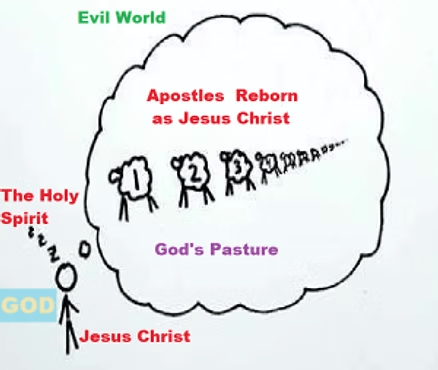
God is the owner of the flock and they are to be pastured by His Son forevermore.  This means that Jesus Christ is then God incarnate on the earthly plane, as a human being born of a woman, such that Jesus Christ was the “I” stated in this prophecy of Jeremiah that would gather the lost sheep and bring them back to the fold.  However, Jesus is not God in heaven, since he is the Shepherd on earth, which means his death sequence was the beginning of a lineage (“a Branch”) that would place the Holy Spirit of Jesus Christ in countless sheep.

The shepherds who would be raised thereafter would be the replications of Jesus Christ in Apostles. Jesus Christ would “reign as king” over human bodies who made themselves sacrificial lambs unto God. Jesus Christ would “deal wisely” as Apostles filled with the wisdom of the Christ Mind. The flocks “shall execute justice and righteousness in the land” when they have been raised as the Good Shepherd resurrected.

When we then read, “In his days Judah will be saved and Israel will live in safety,” this goes well beyond the names of two fallen nations. It does not foretell of the scattered and destroyed gaining their beloved land back.  They killed that Covenant when they became a stump.  This means Judah and Israel are statements of the characteristics of a shepherd that will be raised, based on the meanings associated with those names.

The name Judah means, “Let Him (God) Be Praised.” Thus, those who praise God (He sits on His throne in their hearts) will be saved. The name “Israel” (while debatable) means “He Will Be Prince With God,” where those who sacrifice self to be reborn as Jesus Christ are the Resurrection of the Son of God, once again raised in the world. When one has allowed the Son of God his earthly kingdom (one’s physical body and spiritual soul), then having “God’s (Vicarious) Governor” (an alternate translation of “Israel”) control one’s being, then one can “live in safety,” assured of everlasting life.  This means God named Judah and Israel as requisites for shepherding His sheep.

Seeing the meaning of the names Judah and Israel, one then reads, “And this is the name by which he will be called: “The Lord is our righteousness.”’ This is then God prophesying the name of Jesus Christ, the Spirit of whom will be resurrected in human beings of faith and devotion.

This name is a translation of the Hebrew “Yah·wehṣiḏ·qê·nū,” which others collectively call “Jehovah Tsidkenu.” “Jehovah Tsidkenu” can be translated as Hebrew, stating “The Lord is our righteousness.”  That is not a name, such that a name should be condensed from those two word, as a combined form new word.  By doing an Internet search of “Lord is our righteousness,” several links appear that offer interpretations of “Jehovah Tsidkenu” (one here); but none of them place a focus on a single name that conveys that message.  None of them take that phrase and show it as a prophesied name to be watchful of, like Judah and Israel are single names that translate as phrases.

This means the key word “ṣiḏ·qê·nū” needs to be understood. The word come from the root “tsedeq,” which is why others analyze the spelling similar to Jeremiah’s – “Tsidkenu.” The word “tsedeq” means, “rightness, righteousness, what is right, just, justice, vindication, and righteous cause.” It is related to the Hebrew word “tsadak” (or “tsadeq),” which has the same meaning, while adding “acquit, acquitted, lead to righteousness, properly restored, and proved righteous.”  That has to be seen as the constant characteristic by which ALL Christians are to be measured.

In the history of names in the Old Testament, this word would become combined as a name that is an indication of this state of righteousness and is relative to Yahweh. In that history there are names that can be listed as possible recreations: Jeshua, Isaiah, Jehozadak, Zadok, and Melchisedek. Those names all imply individual born, who were given names they lived up to, by becoming those whose righteousness or salvation could be due to their service to the LORD. Therefore, all of these names deserve analytic inspection based on this prophecy of Jeremiah.

The name “Jeshua” is the root of the name known as Joshua, where the Hebrew word “yasha‘” is combined with “Yah-,” yielding a name that means “Yah Is Salvation” or “God Is Deliverance.” Of course, the Greek name “Jesus” or “Iēsous” is deemed a variation of “Jeshua.” Thus “Jesus” is a name that means “God Is Salvation.”  Certainly those who interpret “Jehovah Tsidkenu” associate that name with Jesus Christ.

While “Righteousness” is not the same as “Salvation,” righteousness is the path one must take to reach that destination. When Jesus said, “I am the way,” that says the way to salvation is righteousness. In my opinion, “the LORD of our righteousness” comes through the Trinity in each individual, where a marriage to God in one’s heart brings about the cleansing of sins from one soul by the Holy Spirit, and the resurrection of Jesus Christ in one’s body. It is then that presence of “Jeshua” that becomes the “Lord of one’s righteousness.”

The name “Isaiah” represents an instance where the letter “j” is a relatively modern invention, as before the letter “i” was used in place of a “j.” The Hebrew letters YHWH are pronounced in English as “Yahweh,” but in German the “y” is pronounced like a “j.” Additionally, in German a “w’ is pronounced like a “v” in English, so the same YHWH is enunciated as “JeHoVaH.” From this, one can then see how “Isaiah” is a combination of the same root found in Jeshua” – “yasha‘” – with the ending now the abbreviated form of YHWH. This means Isaiah bears the same meaning as Jeshua: Yahweh Is Salvation or Salvation Of The Lord.

The parallel of Isaiah that is Jeshua can then be seen as Isaiah being a resurrection of the spirit of Joshua, who was a righteous judge of Israel. Isaiah was a contemporary of Jeremiah, said to be his mentor, so they were two prophets gathered in God’s name (as a church).  They reflect how all judges and prophets are cases of the Lord raising up shepherds for His flock. The same spirit can then be seen in prophets as was in Jesus Christ, who would come later and also be known as a prophet of Yahweh.

This brings out the commonality of the Christ Mind, where all prophets hear the word of God speaking to them. That word can only be heard by those who are sacrificial lambs, letting the din of self go so the divine word can be heard. This is how the same comes upon Apostles, whose king within brings about the personal identification of “the LORD Of My Righteousness,” which assures one’s salvation.

The name “Jehozadak” is said to be: “Jehozadak is a high priest, a son of Seraiah (1 Chronicles 6:14) and father of Jeshua, both high priests. Jehozadak was among the exiles to Babylon, and his son Jeshua was among the returnees (Ezra 3:2).” (Abarim Publications) This name clearly combines “Jehovah” (YHWH) with the Hebrew word “sadeq,” which is rooted in the Hebrew word “Tsidkenu,” as “tsadeq.” Notice how the history shows this high priest, whose name means “Yahweh Is Justified” or “Yah Is Righteous,” was the father of a son he named Jeshua.

There is more to that than coincidence, when this prophecy of Jeremiah is analyzed. God told Jeremiah, in essence, the new “righteous Branch” will be ruled “by a king [who will] deal wisely” in the same manner as when one high priest was shown to be risen in an offspring. This means an Apostle is like Jeshua, born of Jehozadak, where Jesus of Nazareth is Spiritually the high priest of one Apostle (a Saint), from whom is born another Apostle (also a Saint), with all Apostles reborn as Jesus Christ (the high priest within).

It is important to see how Jehozadak means “the Lord Has Made Just” or “Yahweh Has Justified,” where the name conveys a change of being. For one to be “just” or “justified,” one has to be transformed from a being that was previously “unjust” or “without faith” and “dishonored.” This leads one back to the beginning of this reading, where the LORD said, “Woe to the shepherds who destroy and scatter the sheep of my pasture.” Those who have been destroyed and scattered by the bad shepherds will resort to survival mode and that represents sins.  That wildness is where one finds guilt from their own wretched states of being, from their own misfortune, sorrow and misery as the inner call to repent and seek salvation through righteous ways. Lost sheep call out for salvation.  Still, only the power of God within them can bring about that change.

The name “Zadok,” who might not be well known, was that of a priest of David, who became high priest under Solomon.  David placed the Ark of the Covenant in the care of Zadok during a rebellion, and Zadok anointed Solomon as King of Israel.  This name is not a combined form because “sadeq” is the name.  This name makes a direct statement of “Righteous” or “Just.”

This leads one to analyze the name of the high priest and King of Salem, “Melchisedek.” The same word found combined in Jehozadak, “sadeq,” is found in this name as well. The combinations here are of the Hebrew words “melek” and “sadeq,” where the result is a name that pronounces, “the King of Righteousness.”

This makes the history of Melchisedek important, as he offered bread and wine to Abraham; and David wrote (in Psalm 110:4) how God told him, “You are a priest forever, in the order of Melchizedek.” David was a king, thus a King of Righteousness.” In Paul’s letter to the Hebrews of Rome, he wrote how Jesus Christ is also “a priest forever, in the order of Melchisedek” (Hebrews 7), which matches how God told Jeremiah, “I will raise up for David a righteous Branch, and he shall reign as king.” This equates the Son of God to the Son, as Yahweh, who is truly the “King of our righteousness.”

It is said that Melchisedek (in Hebrews 7:3) was: “Without father or mother, without genealogy, without beginning of days or end of life, resembling the Son of God, he remains a priest forever.” Paul wrote those words with the wisdom of the Christ Mind, meaning he had some “inside knowledge” about this matter.  This then states that Melchisedek is as John wrote in his Gospel, “In the beginning was the Word, and the Word was with God, and the Word was God. He was with God in the beginning.” (John 1:1-2) This language states the permanence of one’s soul, with few who have lived righteously forever.

This is a statement that the human embodiment of God is for the purpose of bearing the Word to mankind. Melchisedek is said to have given Abraham the robes of Adam, thereby blessing Abraham as a priest in the same order, who was at that time childless, but who would become the father of many nations. Jesus was likewise fatherless, as Joseph the human did not sire him.  Again, few souls can claim God as the Father, as His Son.

This means Jesus Christ is a Spiritual king that cannot be recreated, as he is, as always, a most righteous being, as is God. Jesus Christ can pass on the robes of Adam (the Son of God) to those who have successfully passed the test of priesthood in the highest order. Apostles in the name of Jesus Christ wear those kingly robes. They are invisible, as they are worn inwardly, reflecting Christ the King has been reborn.  Therefore, Jeremiah was saying for God, “I will raise up for David a righteous Branch, and he shall reign as king in the order of Melchisedek.”

As an optional Old Testament reading for the ninth Sunday after Pentecost, when one’s ministry to the LORD should be underway – raised up as the Good Shepherd – the message has to be: Shepherd the flock as God wants His people pastured. This means one must be found and be resurrected from the ways that a worldly life tends to destroy religious values and scatter the focus of humans, from One God to many idols. To be a shepherd raised by God, one has to have God “attend to you for your evil doings,” so the Good Shepherd can come forth.

A minister of the LORD is then one who has been brought back to the fold, safe and secure in the presence of Jesus Christ. This then leads one into ministry, as God says an Apostle “shall be fruitful and multiply.” While the simplicity of that message is to marry and have a family that one raises to serve God (just as Jehozadak begat Jeshua), the reality is one’s children are not born without a need to find their own path to righteousness. Therefore, one is fruitful by being of the living Branch of Christ that multiplies by being the food for thought for others to consume.  A minister to the LORD offer the fruit of the Word to those seeking to find redemption from misfortune, sorrow and misery.

Watching over a flock does not mean yelling and screaming “Wolf!” just to see what happens. Flocks need to feel strength shown in presence, not words that cause fear.

A minister of the LORD is one sent to others, so “they shall not fear any longer, or be dismayed, nor shall any be missing.” In this direction, one should realize that a minister of the LORD does not randomly go out into the world preaching to those who find hatred in one speaking of the One God, Yahweh. Muslims do not want to hear such a person speak publicly. It is doubtful that atheists would welcome anyone offering religious talk of any kind. Attempting to “save” a Buddhist or Tibetan monk could become an unending argument in logic, where each response is, “I hear you saying the same thing as I,” with no benefit being the result. Thus, a minister of the LORD is for those who are lost sheep of Judaic-Christian values, but only those who are crying out, “Help me. I am lost.”

In today’s America, there are many who stand up and pretend to be ministers of Jesus Christ, who express sorrow, fear, and misery, preaching that the evil government should be replaced by an equally evil (or compoundingly evil) government, which has nothing to do with saving or justifying any specific individuals. This means we are today suffering in the same ways as was Jeremiah’s corrupted Israel and Judah.

The LORD’s ministers that are raised up to find the lost and gather them again into the fold of righteousness, do not preach hatred or violent upheaval. Hatred is an emotion felt for one’s enemies.  One can only love an enemy by allowing an enemy to hate one by afar.  One does not stand before an enemy and curse it for being evil.  Turn the other cheek by leaving one’s enemies alone.  Take care one those who cry for help, as a shepherd returning lost sheep to the fold.

A minister of the LORD can only establish one-to-one relationships that bear real fruit. Many of those have no need for an exchange of words. Being verbally attacked and not responding in kind may have an unexpected result.  Simply by being an example of quiet acts of love can cause another to be touched by the Holy Spirit and seek the path of righteousness in one’s life.

When the current troubles of our times are factored in, some can read, “shall execute justice and righteousness in the land” and think that means name-calling and threats that are made in social media, by people with religious order collars around their necks. Those people are the puppets at the ends of string that are being pulled by the same equivalents as were the priests of Baal.  They were allowed into the pastures of Israel and Judah by kings who married the harlots of foreign nations, a sign of mixed blood and reduced links to heritage. They are the same as were the temple scribes, Pharisees and Sadducees, none of whom were good shepherds of Judea and Galilee. Anyone who preaches revolution against governments or religions is only seeking to destroy and scatter, not gather and restore. The error in misreading those words comes from overlooking “deal wisely.”

A minister of the LORD has sacrificed the Big Brain of self-importance, such that the Christ Mind brings about the wisdom of God. A Big Brain has it all figured out and sends its emissaries to protest, arm-in-arm with photo-op downtrodden and ‘poster boy’ images of evil-doings.  They are false prophets and bad shepherds, based on having figured out what “Jesus wants.” Rather than utilizing the wisdom of being Jesus Christ reborn, using the “I” word instead of “Jesus says,” they become agitators – those who scatter the flock with fearful messages.

A minister of the LORD, without thought, will see how a kind act without publicity will be noticed by the one looking for signs, causing the first step of positive change.  The media portrays those who think Jesus (who is in heaven) said to do what a minority of the society desires to hear priest of Baal to say.  Like them, priests today stand with women who want the right to abort babies, which is no different than the practice of human sacrifices Jeremiah sought to warn the people against. Those ‘would-be gods’ today are speaking hatred in the name of Jesus, which breaks the Commandment that says, “Do not use the LORD’s name in vain.” That Law says, “Do not act like you know what Jesus wants, before you become Jesus Christ reborn.”

Therefore, the message in this reading says to become one who knows the “LORD is our righteousness.” Our righteousness does not go about pointing out the lack of righteousness in a world owned by wicked people, as the world is not the ultimate goal. Our righteousness is only possible by becoming married to God in our individual hearts, and then becoming a walking, talking reproduction of Jesus of Nazareth.

Amos 5:6-7, 10-15 – The prudent will keep silent

Seek the Lord and live,

or he will break out against the house of Joseph like fire,

and it will devour Bethel, with no one to quench it.

Ah, you that turn justice to wormwood,

and bring righteousness to the ground!

They hate the one who reproves in the gate,

and they abhor the one who speaks the truth.

Therefore, because you trample on the poor

and take from them levies of grain,

you have built houses of hewn stone,

but you shall not live in them;

you have planted pleasant vineyards,

but you shall not drink their wine.

For I know how many are your transgressions,

and how great are your sins—

you who afflict the righteous, who take a bribe,

and push aside the needy in the gate.

Therefore the prudent will keep silent in such a time;

for it is an evil time.

Seek good and not evil,

that you may live;

and so the Lord, the God of hosts, will be with you,

just as you have said.

Hate evil and love good,

and establish justice in the gate;

it may be that the Lord, the God of hosts,

will be gracious to the remnant of Joseph.

———————————————————————————————————-

This is an optional Old Testament selection from the Episcopal Lectionary for the Twenty-first Sunday after Pentecost, Year B 2018. In the numbering system that lists each Sunday in an ordinal fashion, this Sunday is referred to as Proper 23. If chosen, it will next be read aloud in an Episcopal church by a reader on Sunday October 14, 2018. It is important because it tells of the downfall of Israel (the Northern Kingdom) due to the people preferring sin over sacrifice.

The beginning of this song should be heard with full understanding. When the Lord flowed through His servant Amos, saying, “Seek the Lord and live,” this says eternal life is only possible through “Yahweh.”

The Hebrew root word used to say, “and live” is “chayah.” One must understand that to be able to read a verse of Scripture, or to hear one read to one, one has to be alive and alert. That means, obviously, this usage has nothing to do with the present incarnation of one’s being, or the near future ideas and concepts of “living it up” in the same body. The word implies, “continue in life, sustain life, preserve life and restore to life.”  Living is the opposite of dying, which is the bane of mortals.

This, as the Word of God being spoken, is not a reference in cheating death, but the realization that the soul is eternal and for it “to live” it must be trapped within a body of flesh or freed forever to dwell in Heaven, in the presence of God.  The fact that one’s soul is presently in a human body says, “You have been given another chance to get it right.”  You have been reborn as a mortal that is assured of death; but the advice here is “Seek the Lord and live eternally,” flesh-free.

Under the philosophy “As above, so below,” the punishment that Amos was called to prophesy was coming, would be realized in the deaths of the soldiers of Israel and the banishment into slavery of those whose lives continues, but greatly changed for the worse. Their defeat by the Assyrians scattered the blood of Israel to the winds of the earth, with none remaining identifiable as Israelites. Israel ceased to be; the lives of those still living became a veritable hell on earth.  However, that is the “below” view.

That microcosm of trauma and a lesser quality of life must be seen as applicable in the macrocosm as a soul “burning in Hell,” if one loses the comforts of God’s gift – a place to stay and call home. Beyond the clear and present danger of Assyrian annihilation, God (whose Eye sees well into the future) was not just using Amos to deliver “today’s news,” but a consistent theme that should be grasped.  To gain eternal life with God, one must first “seek the Lord.”

The aspect of reincarnation is real. An eternal soul that has not lived a righteous life on earth cannot be granted entrance into Heaven (for longer than spent receiving the Judgment of a soul). The accompanying Gospel reading from Mark points out the difficulty the rich have in gaining entrance into heaven. (Mark 10:25) If one cannot get into heaven when their soul leaves their body after one life, the soul is not sent to Hell or Purgatory, any more than a first grader who fails to earn second grade status is kicked out of elementary school. A soul repeats life in a fleshy body, just like little Johnny or Sally repeats the first grade.

As above, so below.  Macrocosm, microcosm.

The problem with this system is then said as “the end of the age” or when the end times come. If the worldly plane that is Earth became a place more like Venus or Mars, it would be most difficult to be reincarnated into a body that demanded oxygen [the breath of life] to live.  The “end of the age” becomes symbolic of great changes in humanity.

An “age” is roughly 2,200 years, when the first day of spring occurs and a new zodiac constellation has precessed into position, so it is then behind the Sun when it rises at the equator. Precession is the movement of the earth’s wobble, which makes the backdrop of stars slowly appear changed.  We now live at the end of the The “age” of Jesus [Pisces], but the earth will mosey on to having Aquarius in that position – the dawning of the Age of Aquarius.

The Fish is the symbol of the sign Pisces. It is a highly spiritual sign.

We are close to that “age” now, which means it is important for human beings to realize what Amos was saying, about the nearing collapse and destruction of the Israelite world.  That foreseen destructive change is then relative to the collapse and destruction of our world as we know it.  Just as the Northern Kingdom was never regained (although a nation named Israel was artificially reinstated into the world in 1948), once Christianity comes to an end, there will be no going back.

As above, so below.  Macrocosm, microcosm.  Aquarius is a sign that loves knowledge, with few feelings for faith-based ideas.

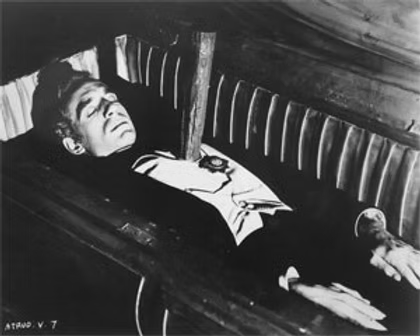
In the movies and television shows over the past fifty years, the fiction of zombies has been made popular. In the movie Night of the Living Dead (1968), inspired by the novel I Am Legend (1954) the concept of the “undead” gained cult status. Ghouls (spirits of Muslim folklore) are demon spirits that feed on the flesh of corpses.  They act as the Universal Mind projecting a ‘what if’ into the future, as God using fiction to show what reincarnation into an unlivable planet would be like.

Like vampires (who live off the blood of living human beings), zombies are trapped in dead bodies, with souls that cannot be released from the worldly plane.  Ordinary death is not part of their futures. Eternal life for such demonic souls is denied by God, making their hell be on earth.  They live mindlessly, afraid of the sun, until a stake was driven through their hearts or their brains were blown out by survivors that are mortals attempting to never die.  Presumably that end would be when a lost soul finally is released to the fires of Hell, because Heaven is not an option.

This concept of evil souls returning to the earth was probably the result of fears over the threat of a nuclear holocaust.  Splitting atoms and warfare inventions are the result of an “Aquarian” brain, tinkering with things best left alone.  A planet earth no longer suitable for ordinary life would become the punishment of souls reincarnated, over and over again, because the “age” of religious redemption was no longer possible. This should be read into the words of Amos.

Seeing that meaning, one can then read, “[God] will break out against the house of Joseph like fire.”

Here, the verb translated as “break out” is “tsalach,” which means “to rush,” implying “advance” or “prosper.” This “rush” “of fire” has to be recognized as a sudden conflagration, which was the Assyrians burning villages and towns.  However, on a greater scale, this fits the onset of a global nuclear warfare scenario.

As to the “house of Joseph,” where Joseph was given the holy name Israel by God’s angel, the implication that flows into the “end of the age” (our time) is of those who maintain the holy lineage as Christians (and Jews who believe in Jesus as the Christ). Those who will attack the West and its allies, and the retaliation released in return will then cause a burning hell on earth.

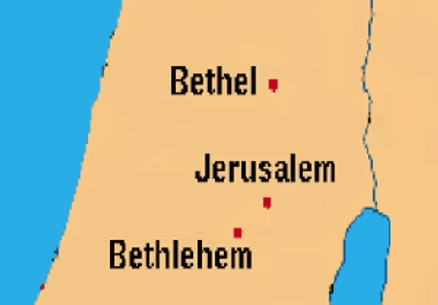
When God spoke through Amos, saying “It will devour Bethel, with no one to quench it,” one must realize there is no fire still burning in Bethel, Israel. This makes Bethel mean more than a fixed place on earth, which means the name is important.

Bethel” means “House of God,” meaning the fire will eat away the foundations of Christianity and Judaism, until neither religion will “quench” the emotional thirst of the faithful. The “fire” will be impossible to “extinguish,” once it has started.  Unquenched fire will mean the the House of God [Christianity] will be devoured – destroyed, consumed, wasted.

The song then continues by singing, “Ah, you that turn justice to wormwood, and bring righteousness to the ground!”

The Hebrew word “laanah” is translated as “wormwood.” There are eight references to “wormwood” in the Old Testament (two by Amos), but only one in the New Testament. That NT reference comes in The Apocalypse of John. As such, John wrote:

“The third angel sounded his trumpet, and a great star, blazing like a torch, fell from the sky on a third of the rivers and on the springs of water — the name of the star is Wormwood. A third of the waters turned bitter, and many people died from the waters that had become bitter.” (Revelations 8:10-11)

Comet? Asteroid? Meteorite? Or, perhaps, an ICBM?

When “wormwood” is realized to be a “bitter substance,” rather than rotted wood eaten by worms.  It is the plant also known as absinthe.  As such, God spoke through Amos, saying (paraphrasing) “Justice is a bitter pill to swallow.”  When the House of God has been destroyed, justice is no longer associated with divine judgment.  Law is based on might, not right.

The translation that says, “bring righteousness to the ground” is incorrect.  It is literally written as, “justice and righteousness in the earth  ,  lay to rest  .”  Each segment must be grasped individually for the impact of the words, before they are meshed together.

The Hebrew word “yanach” means “cast down, left alone, and pacified.” This then says that “justice and righteousness” will have become lowered, no longer upright. This is a picture of the cross Jesus spoke of (the stake that grapevines run along), which must be raised to ensure good fruit on the vine.  It has fallen down.  It falls with the destruction of Beth-el – the Church of God. Therefore, the bitterness of a fire that cannot be quenched is then the death of all who represent “justice and righteousness,” which is the foundation of societal laws on God’s Law through Moses.

All the statues of the Ten Commandments will have been removed from courtyard squares and houses of justice.  As above, so below.  Macrocosm, Microcosm.

Then, the song skips forward to verse ten.

There, Amos wrote in his song, while in an ecstatic trance, the verse that sings, “They hate the one who reproves in the gate, and they abhor the one who speaks the truth.”  This relates to the keepers of the gates of heaven and hell. Neither will allow entrance into a spiritual realm once the final annihilation of a livable earth has begun.

Everyone will be alone with their souls in their deteriorating flesh, filled with “hate” towards God and Jesus Christ. They are those who “decide” the fate of lost souls. Jesus of Nazareth, the prototype of all Apostles and Saints, is known for having said, “Truly I say to you.”  However, the truth always hurts when it comes in the words, “I told you so!”

This is a lack of belief.  It is looking at the past and envisioning the future will remain the same.

Still, this was a prophecy of Amos being shown Jesus the Messiah, who as a body of flesh, born of a woman, would say, “I am the gate; whoever enters through me will be saved. They will come in and go out, and find pasture.” (John 10:9) This means Amos foresaw the time when there were no longer any Apostles or Saints, when no souls worthy of entrance into the sheepfold guarded by Jesus Christ.

Heaven is his sheepfold, and Jesus said, “I am the way and the truth and the life. No one comes to the Father except through me.” (John 14:6)  One has to be reborn as Jesus Christ, in order to be resurrected as the gate in oneself.  Without that name received, one will be reproved Heaven [rejected].

Amos then sang about the separation between the haves and the have nots, where he wrote:

“Therefore, because you trample on the poor and take from them levies of grain,

you have built houses of hewn stone, but you shall not live in them;

you have planted pleasant vineyards, but you shall not drink their wine.”

This should evoke imagery of the rich who abuse the poor. They buy island paradise homes and build palatial estates that cost millions of dollars, all taken from the poor. They own vast acres of land, on which they plant trees that require much water to grow. They not only steal the waters of the people’s aquifers, lakes, streams and rivers, but they transform the water they stole into fruits and liquids that are sold at a premium price. However, when the end of the age comes, the rich will no longer be able to enjoy the fruits of their labors, which are selfish and without redeeming credits.

It all goes to a good cause … us!

These examples of injustice and evil then led God to have Amos sing, “For I know how many are your transgressions, and how great are your sins— you who afflict the righteous, who take a bribe, and push aside the needy in the gate.”

The sins of the wicked are too numerous for the poor to keep track of, but God keeps the details on his scales of justice. There are many sins that greatly affect the lives of the masses (such as those which put wicked rulers over nations). This in turn makes it most difficult to live a righteous life, as religions of all kinds are persecuted; the most prominent of which being Christianity.

Those of Christian values will be bought, such that John wrote: “Then I heard what sounded like a voice among the four living creatures, saying, “Two pounds of wheat for a day’s wages, and six pounds of barley for a day’s wages, and do not damage the oil and the wine!” (Revelations 6:6)

Those Christians with money will pay the price to save themselves, but those without will be left to suffer. The entrance to the gate will be found in those pushed aside; but many Christians (like the Israelites of Amos’ day) will sacrifice the lives of others to save themselves, the opposite of what being Christian means.

Amos then wrote, “Therefore the prudent will keep silent in such a time; for it is an evil time.”  Those who do not capitulate to evil are then said to be careful and exercising common sense, which is expressed quietly.

The Hebrew word “yiddum” means both “keep silent” and “not keep silent,” from the root word “damam,” meaning “to be still.” This means that “the prudent” will not be caught up in the hysteria that will be pervasive in “an evil time.” Instead, their hearts and minds will remain calm as turmoil breaks out all around them. The “prudent” are then Christians led by the insight of the Mind of Christ, while Big Brains demand acts of revenge.

Plotting more revenge.

At this point, Amos repeated a variation of his first verse, saying: “Seek good and not evil, that you may live.” Here, “good” (from “towb”) means to seek those others who have God  present in them. This is a return to the true Church, where the gathering of others of the same mind – Apostles in the name of Jesus Christ – becomes the reinforcement for focus on God.  When insanity will rule the day, true Christians must come together in support of one another. Remaining true to one’s rebirth as Jesus Christ will keep one’s soul promise of service to the Lord, in reward for eternal life.

This commitment to one’s marriage to God makes the words of Amos ring true to the faithful. The reading ends his song selection today, by singing:

“so the Lord, the God of hosts, will be with you, just as you have said.

Hate evil and love good, and establish justice in the gate;

it may be that the Lord, the God of hosts, will be gracious to the remnant of Joseph.”

It is important to see how God has commanded His children to “hate evil.” This has been changed in today’s world, where the wolves in sheep’s clothing have infiltrated the pulpits to preach falsely, “Love your neighbor is what Jesus said. You cannot hate another who says he or she is Christian, even when they openly admit to actively practicing evil deeds that are called abominations in the sight of the Lord.” The words of Jesus have been so misconstrued to those in Christian denomination congregations that no one is able to hate any evil, simply from doubts that have been purposefully built.

Hate is a natural emotion in human beings.  It is that which makes enemies.  To love an enemy means to allow an enemy to hate you by afar.  Otherwise, if constantly in the face of an enemy, mutual hatred will be the prevalent expression.  Love is possible from turning away from evil.  However, when evil refuses to leave one alone, hatred will raise conflict, and conflict comes from the love of good meeting the love of evil.

Returning to The Apocalypse of John, when Jesus Christ told John to write letters to the seven churches, we today represent all of those churches. In the letter written to the church of Laodicea this was transcribed:

“These are the words of the Amen [the Truth], the faithful and true witness, the ruler of God’s creation. I know your deeds, that you are neither cold nor hot. I wish you were either one or the other! So, because you are lukewarm—neither hot nor cold—I am about to spit you out of my mouth.” (Revelations 3:14-16)

Uuugh

The “lukewarm” taste of Western Christianity means being “tepid,” which means, “Lacking in emotional warmth or enthusiasm; halfhearted.” [American Heritage® Dictionary of the English Language, Fifth Edition] One can only be “halfhearted when half of one’s heart loves self and the other half loves God.

This leads to doubts and hesitations stem from being halfhearted, exactly like those seen in Peter, causing Jesus to say, “Oh you of little faith, why did you doubt?” (Matthew 14:31b) A halfhearted Christian is lacking the faith to hate evil, by striking out against evil.  It means one is too timid to overturn a money-changer’s table in the House of God.  It means one is too accepting of trees that bear no fruit.  It means one is too afraid to tell Satan, “Get out of my face!” much less walk on the waters of one’s faith without drowning.

Only if one lives a good life, where one has “established justice in the gate,” by being reborn as the gate – in the name of Jesus Christ – then one hates evil by not bowing down to it. One establishes the justice of God by demanding that evil gets out of one’s face and serves mankind, not abuse it. As a resurrected Jesus Christ, one allows the God of hosts to Lord over one’s body, merged with one’s soul. One is adopted as a “remnant of Joseph,” as a child of God, His Son.

As an optional Old Testament reading selection for the twenty-first Sunday after Pentecost, when one’s own personal ministry for the LORD should be underway – one has no place in one’s life for evil – the message here is to see the threat of Amos’ Israel is current and present today. The sins that brought one nation’s downfall are the same throughout all times.

In my analysis of the accompanying Epistle to this optional reading, I mentioned how the prophet Nostradamus quoted Paul’s letter to the Hebrew-speaking Jews of Rome, saying “all things will be made naked and bare.” The “end times” theme of Nostradamus can be seen here in this reading selection from the prophet Amos. The mood of Christians (that I have experienced for seventeen years now, relative to Nostradamus and Scripture) is, “I do not believe.”

They don’t believe in Nostradamus being a prophet of Jesus Christ. They don’t believe in the End Times. They don’t believe in sacrifice of self. They don’t believe there can be more than one Jesus. They think that Jesus sits on a little throne next to God’s big throne, in Heaven, some day planning a return, when evil will be punished. They don’t believe they are the ones Jesus will come for, wielding the sword of justice.  They don’t believe God talks to Christians. They don’t believe there are Saints (for the most part). Therefore, in general, Christians reject the Lord and live for today, not for a restricted Heaven in the future.

Ms. Cleo sent this back from the other side: “I do believe in zombies. Please help me!” From the ghoul formerly known as Einstein.

I have had so much revealed to me over the years, since two towers collapsed from fire in New York City, that I have sought to tell as many people as would listen. The revelations I have been shown can only come from God, because I certainly am not bright enough to know what I know otherwise. I try to share with others, but few demonstrate that they have received the same spirit that I have received.

Meanwhile, the news shown on televisions and I-phones is so filled with hatred and incendiary opinions that the cameras show the hatred everywhere. This is not hatred of evil, as much as it is evil hatred.  We are our worst enemy.  We hate ourselves because we have allowed evil to rule our hearts!

Our leaders spew hatred. Our children spew hatred. Our allies spew hatred. Our enemies spew hatred. Our television shows spew hatred. Politicians spew hatred towards other politicians and the citizens in between are caught in that crossfire.

When they go low, we kick them.

I feel the time shortly coming when I must become prudent and be silent.

I have repeated in my articles posted about how “one’s own personal ministry for the LORD should be underway.” The symbolism of a season of the year being devoted to the time following Pentecost (the Fiftieth Day) and the time beginning with Advent and Christmas [rebirth from year to year] is when Apostles should be praising God and welcoming a gathering of Saints. Christian means a ministry of works, based on true faith.  However, I feel little in return that says the Holy Spirit is growing in the world.

Hatred is killing those who call themselves Christians.

As an optional Old Testament reading selection, one which has a dark theme – darker than Job’s seeming lament – I doubt this will be preached this coming Sunday. It may never be preached. The theme of the end times has become too dark to preach about.

Christianity has become lukewarm.

The time for inward inspiration has come. Few are the priests who teach people how not to hate, where hating evil means the love of separation. We have been reborn as the Northern Kingdom that sits on the eve of doom.