Tag Archives: John 20:22

Romans 14:1-12 – Judgement on another becomes a reflection of one’s own Judgement before Yahweh [Fifteenthe Sunday after Pentecost]

“Welcome those who are weak in faith, but not for the purpose of quarreling over opinions. Some believe in eating anything, while the weak eat only vegetables. Those who eat must not despise those who abstain, and those who abstain must not pass judgment on those who eat; for God has welcomed them. Who are you to pass judgment on servants of another? It is before their own lord that they stand or fall. And they will be upheld, for the Lord is able to make them stand.

Some judge one day to be better than another, while others judge all days to be alike. Let all be fully convinced in their own minds. Those who observe the day, observe it in honor of the Lord. Also those who eat, eat in honor of the Lord, since they give thanks to God; while those who abstain, abstain in honor of the Lord and give thanks to God.

We do not live to ourselves, and we do not die to ourselves. If we live, we live to the Lord, and if we die, we die to the Lord; so then, whether we live or whether we die, we are the Lord’s. For to this end Christ died and lived again, so that he might be Lord of both the dead and the living.

Why do you pass judgment on your brother or sister? Or you, why do you despise your brother or sister? For we will all stand before the judgment seat of God. For it is written,

“As I live, says the Lord, every knee shall bow to me,

and every tongue shall give praise to God.”

So then, each of us will be accountable to God.”

———————————————————————————————–

This is the Epistle selection for the Episcopal Lectionary readings for Year A, Proper 19, the fifteenth Sunday after Pentecost. It will next be read in church on Sunday, September 17, 2017. This is an important lesson that can be summarized as a notice to all true Christians that they are not to judge their brothers or sisters in Christ.

The first verse of this reading, as translated by the New International Version (and similarly by other versions) has English syntax pull the Greek word “proslambanesthe” (meaning “receive, take aside, take to yourself,” thus “welcome”) to the front, so we think an instruction is given to “Welcome” those who have “weak faith.”

This can be confusing if one assumes (which many people readily do) that Paul was asking you (the reader) to greet some newbies. Instead, as I see it, it addresses all of the Christians of Rome (Romans) who had not yet fully welcomed the Holy Spirit. That is the majority of Christians today, so modern Christians can read Paul telling them (all who are weak in the gifts of the Holy Spirit) to “receive.” Once that is grasped, those true Apostles are to welcome those who are struggling with the letting go of the ego and the opening of the heart to God, so others can increase and strengthen their faith.

In John 20:22, Jesus breathed upon the disciples-in-hiding and then said, “Receive the Holy Spirit.” The word written there is “Labete,” which means “take hold of” or “get.” The difference between “proslambanesthe” and “Labete” (or “welcome” verses “Take hold of”) can be seen as relative to the different states of the disciples.

When Jesus “breathed into them” (or “blew upon them”), his followers had been stricken with fear, afraid they would be the next to be crucified, if they were to be identified as  followers of Jesus. His “breath” was then akin to someone telling a panicked child, “breathe … slowly … in … out.” In other words, Jesus calmed the disciples before he then gave an order to God that those in that upstairs room were his to be saved. As such, Jesus made a prayer to God, for those present to be given his approval to “Receive the Spirit of Sainthood.”

In Paul’s case, he was writing to those who had been presented the revelation that the promised Messiah had indeed been delivered to them, in the person that was Jesus of Nazareth. Those Jews (and a few Gentiles possibly, other slave citizens in the slums of Rome) had “welcomed” that Good News. Certainly, some had believed and readily acted upon that belief, such that they full-heartedly were filled with the Holy Spirit. Others were not so able to be so self-sacrificing, which hindered their progress to sainthood. Therefore, Paul was telling those filled with the Holy Spirit to help those who still had doubts and questions, while also telling those who were struggling to stop thinking so much … and just let the Holy Spirit come into you.

“Breathe … slowly … in … out.”

Giving birth to a new you requires some labor.

When one is able to see that significance that comes from looking deeper at just one word written, one then needs to understand the second half of verse 1.  It is translated above as, “but not for the purpose of quarreling over opinions.”

This seems to be a clarification as to why one has “weak faith,” as they are using their brains too much (“quarreling opinions”). As such, one of true faith should “welcome” those who like to argue about faith. That actually leads one to missing the point of what Paul wrote.

The Greek of the letter has verse 1 saying, “mē eis diakriseis dialogismōn.”  This literally states, “not for passing judgment on reasonings.” It could also be translated to say, “not for discernment on deliberations.” This means a new disciple who, for example, believes Jesus was the Messiah, but struggles with the concept of resurrection and ascension, should be aided in that struggle (‘welcomed, received”) but not for the purpose of “setting them straight” on what to believe.

This is why Paul went into the example of foods.  Some meats and vegetables are seen by some as acceptable to eat, but by others as forbidden. Because new disciples are seeking God in their struggles to understand (“discernment by deliberations”), they are seeing ways that faith can be weakened by outside influences. (“Hey, I ate pork and nothing bad happened!  What’s up with that?”)

These become confusing at first; but because new disciples have been “welcomed by God,” this is part of their “discernment” towards stronger faith. This means it is not for an Apostle “to pass judgment on servants” other than themselves, as their “reasonings” [the Apostle’s] may not be where God will lead another [the weak-faith disciple] to conclude. Therefore, “Let all be fully convinced in their own minds.”

This means that following someone else’s brain will never lead one to ownership of an idea. Each disciple must be convinced of the truth alone, with only God’s whispers being the breath that one’s mind follows.

Since Paul was an Apostle, one who never personally knew the living man that was Jesus of Nazareth, he had to have a metaphysical experience of Jesus Christ to find his own way to receiving the Holy Spirit.

In Acts (9:9) we read, “For three days he [Saul] was blind, and did not eat or drink anything.” Remembering that, see how that parallels Paul writing to the Romans about food and eating.

A new disciple has “blind faith,” which is “weak faith.” Paul was stricken blind by his encounter with Jesus Christ, which is a symbolic statement that Saul was no longer able to see as he had seen before – as a Jew who condemned Jesus and those Jews who believed he was the Messiah. Saul had been totally influenced by one view prior to encountering that Holy Spirit, which was that view the Pharisees preached to him.

This means the symbolism of food and drink are those words and beliefs that one consumes, which come from external sources. This is where those who are not filled with the Holy Spirit will preach what to eat or what not to eat, with opposing viewpoints on religious matters being that which further weakens faith [contradictions]. Thus, Paul wrote of his personal experience of going without food and drink for three days (three is a symbolic number that denotes a period of initial completion), simply by saying in his letter to the Romans how someone else’s views do nothing to strengthen the faith of new disciples.  Without external influences, Saul became Paul.

From this understanding, one is then led to understand the deeper meaning that caused Paul to write, “Those who observe the day, observe it in honor of the Lord.” The only light of day one observes that matters is that of God’s, which is absorbed like photosynthesis and nourishes the new disciples (young vines) inwardly. This inner growth of awareness is then what leads one to stronger and stronger faith, such that one cannot owe honor to another human being, as all honor and thanks is due to the LORD.

When Paul posed the question, “Why do you pass judgment on your brother or sister?” he asked from personal experience. Saul held the coats for those who stoned Saint Stephen to death, when his “brother” Jews had cast their judgment on Stephen, for proclaiming Jesus as the Christ. Paul, as Saul, it was written: “Saul was still breathing out murderous threats against the Lord’s disciples.” That action brought on his spiritual encounter, where the Spirit of Christ asked Saul, “Why do you persecute me?” Thus Paul (the name of the converted Apostle) knew not to judge others, and by the Holy Spirit he advised those Christians of Rome, “We will all stand before the judgment seat of God.”

True Christians stand together as fountains of water of eternal life.  They support one another by offering a drink of the Spirit, when another may become thirsty. But Apostles do not judge others, as they known no human can get any soul to Heaven, other than their own; and that means supporting others in their own individual relationships with God.

This is why Paul quoted Isaiah, who wrote: “Before me [the LORD] every knee will bow; by me [the LORD] every tongue will swear.” (Isaiah 45:23b) In that way Paul reminded those Christians of Rome to lead by example, with the Holy Spirit being the only motivation for tongue-wagging.

[Isaiah 45:23 – “By myself I have sworn, my mouth has uttered in all integrity a word that will not be revoked: Before me every knee will bow; by me every tongue will swear.”]

“Each of us will be accountable to God.” When each individual has found his or her judgment coming from within, knowing there are no secrets kept from God, where every heart is truly known by the Christ Mind, then total commitment to God lead each one’s knee to bow to Him and an oath of love is sworn to serve only Him [engaged to God].

Accountability leads to repentance, which means one is able to gain a clear idea of where all false influences come, leading to the severance of loyalties to those who offer opinions that weaken one’s faith. We become “accountable to God,” which means we are each “expected or required to account for one’s actions.” One is then able to receive the Holy Spirit and then ACT for God, “in the name of Christ.”

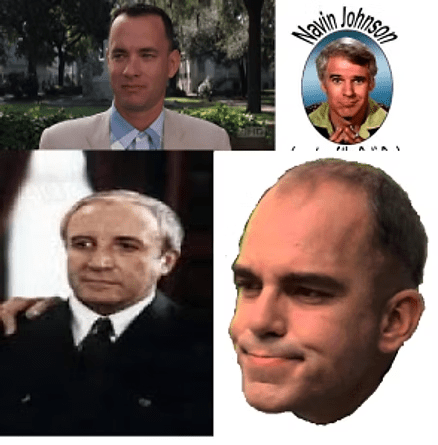
The moral of this part of the Epistle to the Romans is directed at those human beings who claim to be Christian, but really have “weak faith.” I like to use the Forrest Gump analogy, where a true Christian sits at the bus stop meeting strangers. Strangers are those of all varying degrees of faith, most very weak in their devotion to the One God.

Weak-faith Christians often will “go to battle” for Christ, as if humming the tune to “Onward Christian soldiers” in their heads (an external influence). Many follow the mega-church superstars of cable television as their teachers, who tell them what to eat and what not to eat (or what trinket to buy for a “love offering”, so in return Pastor [fill in the blank] will have God bless them).

At the bus stop encountering the “Forrest Gump” Christian, those of weak faith open their mouths and insert their feet.  Time and again Forrest asks them a question they have never been told the answer to. Those so-called Christians hop on the next bus or run away with their tails between their legs. All atheists (those of faith in science, not God) are left scratching their heads, with no learned retorts of biblical quotes they have memorized as examples of contradiction. The “Forrest” Christian explains all of that seeming inconsistency for them, using the tongue of God (not his brain … he’s not a smart man).

Like Forrest, Paul would not be judging any of the varying opinions that show up at the bus stop.  When one is fishing for souls, you still have to put bait on the hook.  The elderly woman that was enthralled by what Forrest was saying, offering, “Oh, there will be another bus.  Please, go on.” was like the Romans.  The ones who want to hear the truth have weak faith, but they want their faith strengthened.  An Apostle has to speak for God, because God will have it no other way.

Silence is not the way.  We need to talk about it.”

The Israelites made lots of commitments to God, through Moses, Aaron, and Joshua, but they really had weak faith. They eventually went to Samuel and told him to go tell God they wanted to be led by a king, to be like other nations. That meant they were tired of being personally responsible for their own souls. They wanted to put all the guilt of a nation on one scapegoat, and then catch the bus into town so they could do wicked deeds for self-advancement. They lost everything in that process.

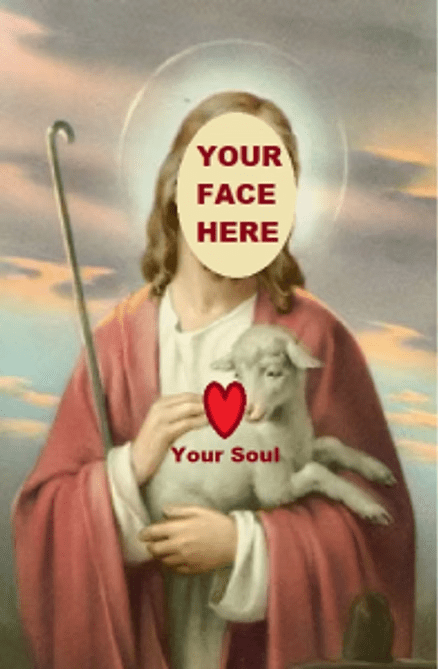
Paul was writing letters to lead the lost sheep back to the One God. The picture in Sunday School for children shows Jesus carrying a lost lamb to safety. In the adult word of true Christianity, the picture is you doing the carrying of your little lamb ego, while you can barely make out the Jesus Christ Mind that is behind your face. The moral of that picture is you must bow your knee to the LORD. After you make that commitment, then you go to bus stops and let God speak the truth. Forget ever getting on a bus and getting lost again.
“Each of us is accountable to God.” I know that is a fearful concept. So … breathe … slowly … in … out. Receive the Holy Spirit.

Proverbs 1:20-33 – Wisdom cries out to fools

Wisdom cries out in the street;

in the squares she raises her voice.

At the busiest corner she cries out;

at the entrance of the city gates she speaks:

“How long, O simple ones, will you love being simple?

How long will scoffers delight in their scoffing

and fools hate knowledge?

Give heed to my reproof;

I will pour out my thoughts to you;

I will make my words known to you.

Because I have called and you refused,

have stretched out my hand and no one heeded,

and because you have ignored all my counsel

and would have none of my reproof,

I also will laugh at your calamity;

I will mock when panic strikes you,

when panic strikes you like a storm,

and your calamity comes like a whirlwind,

when distress and anguish come upon you.

Then they will call upon me, but I will not answer;

they will seek me diligently, but will not find me.

Because they hated knowledge

and did not choose the fear of the Lord,

would have none of my counsel,

and despised all my reproof,

therefore they shall eat the fruit of their way

and be sated with their own devices.

For waywardness kills the simple,

and the complacency of fools destroys them;

but those who listen to me will be secure

and will live at ease, without dread of disaster.”

———————————————————————————————————-

This is an optional Old Testament selection from the Episcopal Lectionary for the Seventeenth Sunday after Pentecost, Year B 2018. In the numbering system that lists each Sunday in an ordinal fashion, this Sunday is referred to as Proper 19. If chosen, it will next be read aloud in an Episcopal church by a reader on Sunday September 16, 2018. It is important because Solomon was led to write about the foolishness of human being, ignoring the call to serve God; then they call out when times of trouble have hit, having squandered their souls from that ignorance.

Here, again, is Solomon writing a song of praise to the LORD, referencing “Wisdom” as feminine. He wrote, “Wisdom cries out in the street; in the squares she raises her voice. At the busiest corner she cries out; at the entrance of the city gates she speaks.” This reference to Wisdom as a female means Wisdom is a goddess. She is one of the elohim, under Yahweh – Yahweh elohim – the Lord of the gods of Israel. Wisdom is then the manifestation of the voice of God through one of His messengers.

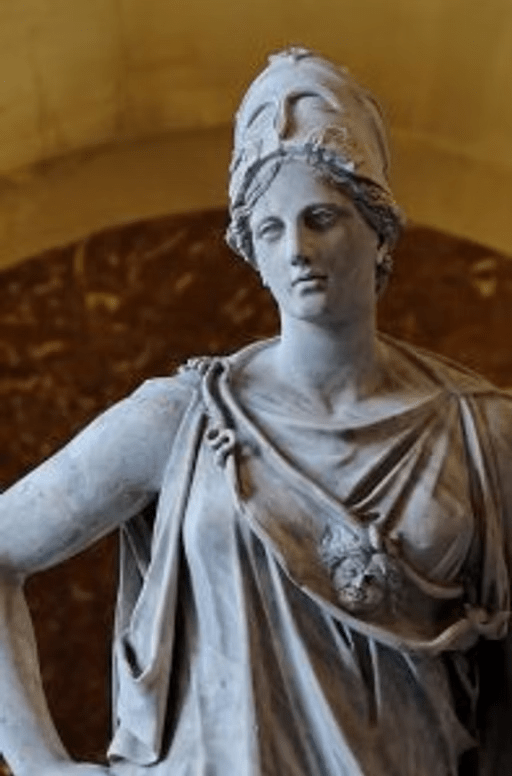
Wisdom is ruled by elohim.  This goddess of wisdom was named Athena.

It should be grasped that Solomon, as a child king, had God appear to him in a dream, asking, “What can I do for you?” Solomon asked for the ability to understand adult matters. In response to that request, God blessed Solomon with wisdom that was greater than any other human being had ever possessed, or would ever possess. This means the goddess of Wisdom was always made available to Solomon, such that he had the insight for this song from her; albeit the voice of God disguised as a goddess. This means Solomon could write this song in ways that can be interpreted as God speaking, while also reading the same words as the voice of intelligence calling to the ignorant to listen to those with Big Brains.

The translation of verse 20 misses the aspect presented by the literal, where it is written, “Wisdom outside – calls aloud in the open square – she raises her voice.” The Hebrew word “ba·ḥūṣ” (rooted in “chuts”) is then stating that “Wisdom” is an external influence, where one learns from one’s environment, as opposed to one being filled with “Wisdom” within, promoting God like a prophet. The translation above makes one be unsure of the source of this voice.

Children look for outer guidance and adults offer them wisdom.

When the questions are then raised, “How long, O simple ones, will you love being simple? How long will scoffers delight in their scoffing and fools hate knowledge?” there is a double-edged sword being raised. On the one edge cuts God, but on the other cuts the philosophies of man.

The latter is presented by the leaders of governments as their reasoning that offers to lead the ignorant masses, leaving them ignorant.  The few rise above the many who are left in love with their simple minds.  Wisdom cannot be special when everyone possesses it.

While the religious (Biblical readers) will see this song as Solomon and immediately think he was writing about God’s warning to the people, prompting them from his wisdom to be led by God’s will, the reality is they then fail to heed this message. The people are more often led, like lambs to the slaughter, by those possessing Big Brains, than inspired to seek God’s Wisdom.  The promotion of fear leads one astray.

The words translated as “simple ones” and “simple” (actuality “simplicity”) imply an “open-mindedness” that stems from the Hebrew word “pthiy,” which means “one.” This can be read as “oneself,” where one is “stupid” to think one knows enough to save “oneself.” As such, “Wisdom cries out,” asking “how long” before ‘oneself’ realizes a need for inner guidance that is greater than ‘one’ can give alone?”

The question is then, “Will ‘one’ choose God or ‘elohim’?”  The “open-mindedness” implied is “one” can be like a god with Wisdom’s influence, rather than having to allow God to be one’s source of Wisdom.

The Hebrew word that states “fools,” is “kesil.” That word means “stupid fellow, dullard, fool,” implying a “foolish man” and “stupid man.” This again can be taken two ways. One is as someone who does not listen to the reasoning of logic and fails to apply the powers of intellect. Most educated Christians would shudder at the thought of being called a “fool.”  The second option is to see stupidity as a positive, where innocence and purity are a desired absence of cunning and strategy.

I have regularly used metaphor to portray “fools” that have been characters in popular movies in this positive light.  I have done this because one dying of self-ego means willingly becoming “dumb” – “ Conspicuously unintelligent; stupid.”  This is then a willingness to sacrifice intellect for the blindness of faith that is obedient to God’s voice.  I have projected this image as “simpleton heroes.”

Forrest Gump, Navin R. Johnson, Chance the gardener, and even Karl Childers are all fictitious examples of “stupid men” that achieved higher goals, while being incapable of plotting their successes alone. Ezekiel, likewise, did not offer God his mental powers of thought when asked, “Can these dried bones live?”  He simply replied, “Lord, you know.”  That statement said he was too stupid to know the answer.  Therefore, “fools” should not be seen categorically as a shortfall.

The translation, “Give heed to my reproof,” is perhaps better read literally as, “Turn at my rebuke  ,  surely,” where the one-word statement that is the Hebrew word “hinneh” (“surely”) says, “behold!” This places emphasis on how one “gives heed” to the call of Wisdom, as it is by beholding that outer influence within, as the inspiration of God’s knowledge in one’s soul. Thus, Wisdom says, “I will pour out my thoughts to you; I will make my words known to you.”

The Hebrew word “rū·ḥî” is translated above as “thoughts,” but it means “my spirit,” or “my breath,” rooted in the word “ruach,” which means “spirit, wind, and breath.” It acts as “thoughts” when the voice is heard inside one’s brain, when the external influence has been welcomed to come into “one.”

This is just as Jesus said to his disciples (those “fools”), when he appeared in the upstairs room after his resurrection, saying, “Receive the Holy Spirit.” (John 20:22) John began that verse by stating, “He breathed on them” that command. Solomon’s wisdom now makes it possible to see that John meant the Mind of Christ had joined with the brains of his disciples, so he was leading their “thoughts” by the Holy Spirit of God.

This is where “I will make my words known to you” becomes prophetic of Jesus Christ, where “my words” (the possessive “debaray”) become more than believing that God was the source of “the words spoken through the prophets,” but those “words known” by being one with God.  This was the ability of Jesus to instantly know Scripture and point out the errors in the Pharisees. This knowledge comes from the Holy Spirit into Apostles, as the Christ Mind. Still, the Hebrew word “debaray” can state “my business,” in which case one is not filled with holy knowledge of “words,” but influenced to act selfishly. The “words” heard are not divine inspirations.

Can you handle the “charm of making” like Merlin could? Can you call the dragon with Wisdom?

When the song sings, “Because I have called and you refused, have stretched out my hand and no one heeded, and because you have ignored all my counsel and would have none of my reproof, I also will laugh at your calamity,” it becomes difficult to believe that Yahweh would take delight in such failures. Satan, on the other hand, would be an elohim who would. Instead of God being refused, unheeded and ignored, those who seek God and find His love are then laughed at by their persecutors. Their calamity is then due to their refusal to be swayed to be influenced by evil, which uses Wisdom as it means to success and power.

The verses that state, “I will mock when panic strikes you, when panic strikes you like a storm, and your calamity comes like a whirlwind, when distress and anguish come upon you,” the repeated word “p̄aḥ·də·ḵem” is found. Coming from the Hebrew root word “pachad,” it states the possessive use of “panic, terror, dread, and fear.” It says “your terror” or “your panic.”

Since it is told to the Israelites, “You shall fear the Lord your God and no other,” the “calamity that comes like a whirlwind” is the death of one’s ego, when one chooses to serve God and fear only Him. The Hebrew word “bə·’ê·ḏə·ḵem” can then change from “your calamity” to “your destruction,” where you is destroyed, making you free to marry with God. Then, the “distress and anguish” that “come upon you” is not from within, but without.

Wisdom is thus saying, all who choose to serve God rather than self (the Big Brain) will be mocked for having turned one’s back to the lures of the material realm.

Conversely, when one has not come to fear only God, these words project the influences that will lead one to seek Wisdom and worldly safety through knowledge and intellect. It will be the dullards who will be destroyed, because they cannot call upon their brains for help. They will be abused for their lack of education, being treated like wild animals whose fears lead them into traps. Thus, when the song continues by singing, “Then they will call upon me, but I will not answer; they will seek me diligently, but will not find me,” the “fools” will have no way to link to Wisdom. God will be their only salvation.

Singing, “Because they hated knowledge and did not choose the fear of the Lord, would have none of my counsel, and despised all my reproof, therefore they shall eat the fruit of their way and be sated with their own devices,” it is easier to see this as Solomon speaking for Yahweh, because “did not choose the fear of the Lord” uses “Yahweh.” In this view, sinners are without counsel, rebuked, and promised to suffer the consequences of their waywardness. Seeing the literal Hebrew, however, shows this in a different light.

Two segments make up the first statement: “Because they hated knowledge and did not choose the fear of the Lord.” It literally states, “Because that they hated knowledge  ,  and the fear of Yahweh not did choose.” The second separated segment literally can actually state that one “did not choose,” because of “the fear of Yahweh.” Following a separated segment that says, “Because that they hated knowledge,” the second segment is then seen to be not choosing knowledge, due to “fear of the Lord.” Therefore, this section of verses can be seen as Wisdom singing angrily at her rejection, due to the influence of God winning out.

This means, “would have none of my counsel” means ignoring common advice based on probability.  It says “despised all my reproof” means pointing out the errors of reasoning that many argue.  When Wisdom is not accepted wholly, as Jesus refused to bow under the pressure of the Pharisees, it is possible to “eat the fruit of that way” of righteousness.  Christians can “be sated with their own devices,” when those are the “principles” (from “moetsah “) come from God, rather than man.

The final verses then sing, “For waywardness kills the simple, and the complacency of fools destroys them; but those who listen to me will be secure and will live at ease, without dread of disaster.” The Hebrew word “mə·šū·ḇaṯ” can equally mean “turning away,” as an alternative to “waywardness.” When one then reads, “For turning away kills the simple,” this is both the death of one’s ego, to those who choose to serve God, as well as the continuance of mortal death to those who are “wayward” from God. The root word is “meshubah,” which states “faithlessness.” It predicts the outcome of one’s faith,” be it towards righteousness or wickedness.

The focus on “complacency,” stemming from the Hebrew “shalvah,” is actually the “ease, quietness, and time of tranquility” that “fools” experience when self is “destroyed.” That is a statement of God’s presence within them. However, when one becomes at “ease” with a “foolish” lifestyle, which sells a soul for momentary gains, that is then self-destructive. The result is a soul destroyed because it stupidly followed Wisdom.

The danger of Wisdom is it lures one into a mindset that seeks “those who listen to me,” thinking they “will be secure and will live at ease, without dread of disaster.” This is the trap that so many Christians today have fallen deep into, as they seek a lifestyle of comfort and material power, thinking God has made their lives “secure” and “at ease,” due to the profits of their brainy wiles.

When God speaks, he sounds like did Jesus when he said, “If you want to be perfect, go, sell what you have and give to the poor, and you will have treasure in heaven; and come, follow Me.” (Matthew 19:21) Failure to do this means one should face the “dread of disaster” that comes when one’s physical time on earth comes to an end … and all possessions are lost. The rich and famous listen to Big Brains, so they cannot fathom self-made disaster that helps others, at their expense. This is the trick of Wisdom.

As an optional Old Testament reading for the seventeenth Sunday after Pentecost, when one’s personal ministry for the LORD should be underway – one has been played the fool by the world – the message here is to see the danger of Wisdom. There is a fine thin line, one that cuts deep, which separate the powers of intellect from the All-Knowing Mind of Christ. If Holy Wisdom is sought, then one needs to destroy the biggest impediment to that: the love between the self and its brain.

Holy Wisdom reads the words of this song of wisdom written by Solomon and sees the dangers a Big Brain can cause. The human mind shuts the soul away in a heart that is kept from the voice of God.

The self is falsely empowered by higher education and study of philosophies that use logic and reason to find advantages over others and put those advantages to use for personal gains. Wisdom was an overpowering influence on Solomon, such that he lost his way, turned his back on God, and brought the onset of destruction to the land of his father.

The heart is where one falls in love with Yahweh and sees the flaws of a brain that rejects oneness with the Lord. Subservience can only be complete when one realizes a union with God demands the destruction of self, because a house divided against itself cannot stand. The heart trusts God and follows His lead, finding the power within to withstand any outer troubles. Wisdom is then a slave of God that comes to speak to others as the Mind of Christ, from within the simple and meek.

Wisdom, as an angel of Satan, cannot display perfection. It is the voice of catch phrases and double-speak that sounds good, but under closer inspection dissolves into nothing. Wisdom is the voice used by false prophets and bad shepherds. Her voice is used to mislead the ignorant masses, taking them away from a personal relationship with God, so the heart cannot be opened by Scripture.

In today’s world, where science has replaced religion as the belief system of the West, faith has been placed in the care of Wisdom. Technology can be seen as an elohim that many now bow down before. The simple masses listen to talk of life existing elsewhere in our universe and believe travel through space, to distant worlds, will soon be within the grasp of human intellect. Wisdom has become the god (elohim) of the Twentieth and Twenty-first centuries.

To test that statement, take one minute out of a busy day, while in a public place,  and look around you.  See how many people are engaged in one-to-one conversations and then how many are engaged with a cell phone in their hand. One shows the heart-mind connection, while the other shows the brain-heart enslavement.

Eventually, one has to have a conversation with another, if only to say, “I want the value meal, please.”

Jesus spoke of the signs at the end of the age (Matthew 24:3-14).  He began those words of true Wisdom by warning, “See that no one leads you astray.  For many will come in my name, saying, ‘I am the Christ,’ and they will lead many astray.”  Can Wisdom be one who comes falsely in the name of Christ, intent on leading believers astray?

The signs of the times are pointing toward Wisdom worship. This signals the beginnings of the Age of Aquarius, where the heart is disconnected, allowing the brain to rule freely. This follows the age of Pisces, when self-sacrifice and faith in an unseen presence ruled for two thousand years. The Age of Pisces was all about the emotions flowing from the heart.  Jesus and his Apostles wrote of the end of the age, and we are reaching that point now. The voices of the elohim are getting louder and more persistent than ever; many like what they are saying.

It is time to determine which way the sword of Wisdom cuts. Has it made us complacent fools that have become addicted to the illusions of the world? Or, has it awakened us to the faithlessness that is trying to destroy our souls?

Remembering how John prophesied Jesus coming on a white horse and “out of His mouth goes a sharp two-edged sword, that with it he should strike the nations” (Revelations 19:15a), is that not symbolic of how “I will make my words known to you”?  Will that sword of truth come from his mouth as words that defend the servants of the Father and cut to pieces those who have dared to speak falsely in his name?

Cannot Wisdom be both the path to salvation and the road to destruction?