
Jesus said, “Those who eat my flesh and drink my blood abide in me, and I in them. Just as the living Father sent me, and I live because of the Father, so whoever eats me will live because of me. This is the bread that came down from heaven, not like that which your ancestors ate, and they died. But the one who eats this bread will live forever.” He said these things while he was teaching in the synagogue at Capernaum.
When many of his disciples heard it, they said, “This teaching is difficult; who can accept it?” But Jesus, being aware that his disciples were complaining about it, said to them, “Does this offend you? Then what if you were to see the Son of Man ascending to where he was before? It is the spirit that gives life; the flesh is useless. The words that I have spoken to you are spirit and life. But among you there are some who do not believe.” For Jesus knew from the first who were the ones that did not believe, and who was the one that would betray him. And he said, “For this reason I have told you that no one can come to me unless it is granted by the Father.”
Because of this many of his disciples turned back and no longer went about with him. So Jesus asked the twelve, “Do you also wish to go away?” Simon Peter answered him, “Lord, to whom can we go? You have the words of eternal life. We have come to believe and know that you are the Holy One of God.”
———————————————————————————————————-
This is the Gospel selection from the Episcopal Lectionary for the Fourteenth Sunday after Pentecost, Year B 2018. In the numbering system that lists each Sunday in an ordinal fashion, this Sunday is referred to as Proper 16. It will next be read aloud in an Episcopal church by a priest on Sunday August 26, 2018. It is important because it tells how Jesus knew how difficult it would be for those who followed him to walk in his footsteps as Christ reborn.
For five Sundays now the Gospel reading has come from John’s chapter six, focusing on Jesus telling those who followed him from the flood plain of Bethsaida, where five thousand Jewish men were served bread and fish miraculously, that they should stop seeking physical food (free handouts from Jesus) and instead eat his flesh and drink his blood. Today we read how hard that message was for the followers of Jesus. They stopped following him, because it seemed he was saying they had to cannibalize him. Because that message is so hard to grasp, and so difficult to swallow, the Church has meted out John’s retelling of it in small bites. A little more Jesus food is served each week, so eating his flesh and drinking his blood will seem more palatable.
Last Sunday (August 19, 2018), we ended that reading with verses 56, 57, and 58. This week we repeat them, by beginning with those verses and then finishing the chapter, except for verses 70 and 71. Those last two verses are actually important to this whole series of readings from John 6, which began with the feeding of the five thousand [we read of that and the walking on water from Mark]. The last two verses of John 6 are important because they point to Judas Iscariot.
The unread verses state: “Then Jesus replied, “Have I not chosen you, the Twelve? Yet one of you is a devil!” (He meant Judas, the son of Simon Iscariot, who, though one of the Twelve, was later to betray him.)”
If you have been keeping up with my interpretations over the past five Sundays, you might recall that I pointed out that the ones who followed Jesus to Capernaum were those who were not spiritually affected by being fed spiritual food on the plain of Bethsaida. Those who were filled with the Holy Spirit left that event changed men, beginning new lives as Apostles. A fraction, however, were not; and I surmised the number could calculate to one-twelfth of five thousand (about 417), which would have been those served by Judas Iscariot – the one being the devil that would betray Jesus.
This naming of Judas (by John, as an aside), who Jesus referred to as earlier as being a disbelieving follower – “among you there are some who do not believe” – is the whole reason Jesus went off in the flesh and blood direction. The one disciple that followed Jesus because he saw Jesus as some masterful conman (that Judas hoped to figure out), Judas saw Jesus as a path to wealth and fame. Judas was an intellectual who lived for the material world (thus he held onto the money for the group).
Judas was then a disbeliever who passed out bread and fish to like-minded Jews. None of them wanted spirituality, because all of them wanted a physical advantage over others. Their minds were closed to spiritual language, thus spiritual food was nothing more than bread and fish. We can deduce this because Jesus said, “No one can come to me unless it is granted by the Father.” Therefore, God set it up so a disbeliever of Jesus and spiritual matters would serve disbelievers.
As for speaking of flesh and blood being eaten, that was not much different than when Jesus tried to tell Nicodemus (another intellectual that profited from religion) about being reborn of the Spirit. Nicodemus could only think in physical terms, so he thought Jesus was the one talking crazy talk. Nicodemus heard Jesus say, “No one can see the kingdom of God unless they are born again,” but he could only grasp that in physical terms. His ignorance caused him to ask Jesus, “How can someone be born when they are old?”
How can anyone eat the flesh and drink the blood of Jesus? Intellectualizing that statement misses the point.
The encounter with four hundred (plus) Nicodemus-like, close-minded Jews demanded that Jesus use the same approach he told to Nicodemus: “I have spoken to you of earthly things and you do not believe; how then will you believe if I speak of heavenly things?” It was in that vein of understanding disbelievers that Jesus told those who followed after him (in essence), “The food you were fed on the flood plain was based on your needs. You obviously seek physical food, not spiritual nourishment.”
How more earthly could Jesus get than to say, “Those who eat my flesh and drink my blood abide in me, and I in them. Just as the living Father sent me, and I live because of the Father, so whoever eats me will live because of me”?
If they had understood heavenly things, then they would have gone out into the world spiritually changed men, after being fed spiritual food. Because they followed Jesus to Capernaum, they demonstrated their ignorance. Jesus had a way of spotting ignorant Jews, before they could open their mouths.
Nothing Jesus could have said to a group of blind idiots would have been any less misunderstood than was “eat my flesh and drink my blood.” Jesus said this after he originally told them, “Do not work for food that spoils, but for food that endures to eternal life, which the Son of Man will give you. For on him God the Father has placed his seal of approval.” (John 6:27) That flew over their heads to, as they asked “What must we do to do the works God requires?”
To those who do understand, Jesus saying, “eat my flesh and drink my blood” is recognized as being no different than his saying one must be “born again” to “see the kingdom of God.” It just makes it clearer that “born again” now means human beings must become walking, talking resurrections of Jesus Christ, as his new “flesh and blood.” Jesus did not expect anyone to whip out a knife and fork and begin carving up the body of Jesus. He meant after he died his flesh and blood would be that of those who had been spiritually nourished by the living Jesus. Jesus Christ was to be reborn into different living bodies, but with the same Spirit of Jesus joining with the souls of those bodies. Those reborn as Jesus Christ would then be doing the works God requires.
For Jesus to say, “This is the bread that came down from heaven, not like that which your ancestors ate, and they died. But the one who eats this bread will live forever,” this is (again) repeating what was read last Sunday. Jesus said (in essence), “I am not manna. I am spiritual food. I am like that spiritual food we handed out on the flood plain, appearing as morsels of bread and fish, but nourishing the soul instead of the stomach. People who physically eat material things are only kept from hunger for a short while. I have to be consumed in whole being – Spiritually eaten and Spiritually drank – at which point I become one with another for eternity.”
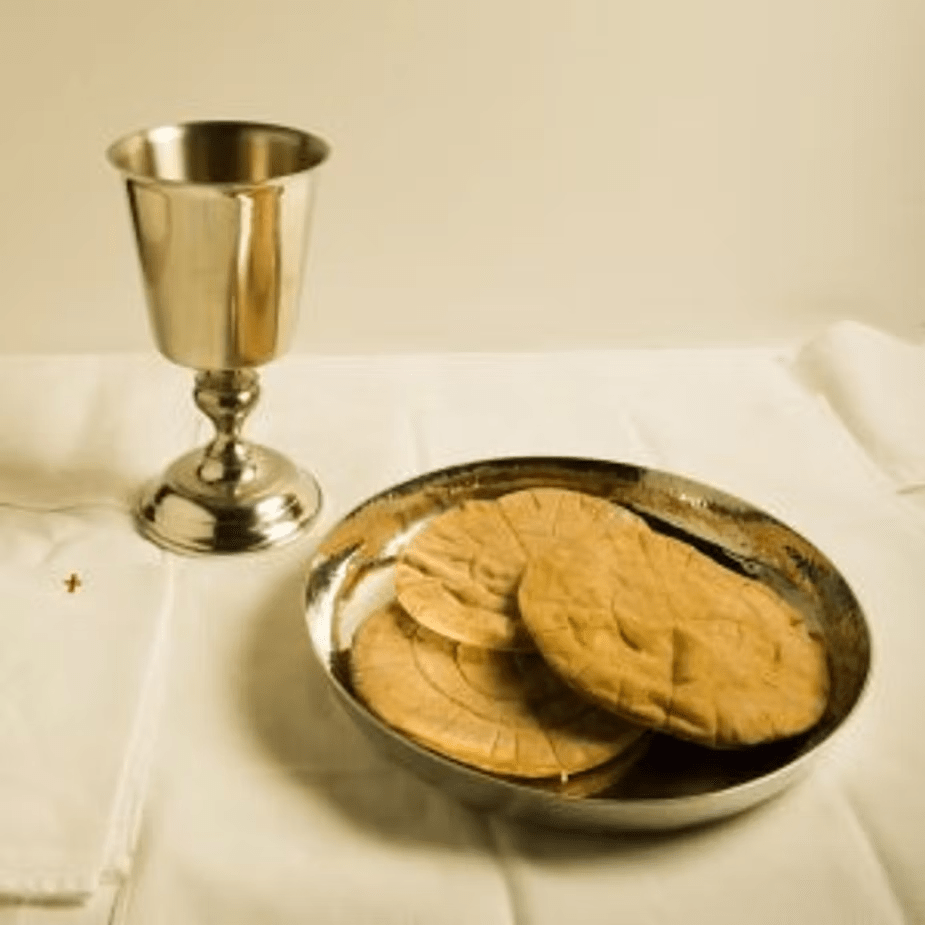
The repetition is important because the concept of physically eating Jesus and drinking his blood is still alive and well in the Nicodemian minds that think a priest can call down from heaven the spirit of Jesus Christ (like ‘Christ tamers’ – <whip snap!>) and make him become one with a bowl of wafers and a carafe of wine. It makes Communion come off to disbelievers like comedian Mike Meyers acting like Fat Bastard, saying to Jesus, “Get in my belly!”

YOU CANNOT EAT THE FLESH OF JESUS OR DRINK HIS BLOOD BY THE ‘OVER THE LIPS, PAST THE GUMS, LOOK OUT STOMACH HERE JESUS COMES’ MENTALITY!!!
To even be reborn spiritually, one must become a resurrection of Jesus Christ in the flesh (not drunk from new wine). To get to that point, one has to fall deeply in love with God (Yahweh, the LORD of gods) and become His wife (regardless of human gender). As a wife of God, God speaks and His wives (like ALL the Prophets) only say, “You know, Lord.” A wife can then ask God any question and God will respond with inner wisdom.
From that union, where one’s heart becomes married to God and the Holy Spirit has washed away all past sins FOREVERMORE, little baby Jesus is born from that union. One is reborn as Jesus Christ when one becomes an Apostle of Christ, taking on his name.
At that time, one can be deemed “a priest” who serves God Almighty in the name of Jesus Christ. Therefore, no priest – who IS Jesus Christ resurrected – would ever be so sacrilegious as to pretend to be able to command the spirit of Jesus Christ to hop into a cracker or dip into some wine. No one in the name of Jesus Christ would ever feed bread and wine to disciples as supplemental replacements to falling in love with God and giving rebirth to Jesus Christ, for the purpose of filling the world with more Apostles and Saints in the name of Jesus Christ.
The Sacraments of Communion are symbolic replications of God’s commandment to the Israelites to forever observe the Passover. They do that with bread and wine. In Jesus’ last Seder meal observance with his disciples, he told them “whenever you eat (or drink) this (the unleavened bread and the wine cup of thanksgiving) remember Jesus. That remembrance is because Jesus Christ is the yeast that give rise to flat bread; and Jesus Christ is the high of spiritual awareness that the alcoholic beverages cannot match. Still, remembering Jesus at Passover means one has been freed from the bondage of the material world by being reborn as Jesus Christ.
The wafer is not the flesh of Jesus. A true Christian is that flesh. The wine is not the blood of Jesus. A true Christian is that blood as the Son of Man, born of the Father’s spiritual blood.
As hard and hurtful as this might seem, especially to Roman Catholics and the splinter churches that are modeled after that style of sacramental pretense, such a reality slap in the face is the message of this conclusion to John’s sixth chapter. It is a strong challenge to Christians, to find God’s truth swell up within them in order to understand difficult words. The Jews in the synagogue of Capernaum struggled mightily as their reaction to Jesus, as John wrote: “When many of his disciples heard it, they said, “This teaching is difficult; who can accept it?”’

You have to ask yourself, “WHY?” “Why is this teaching so difficult to accept?”
The answer is no different today than it was that Sabbath in Capernaum, when Jesus taught in the synagogue. It is no different than any other time in the two thousand years since, when people of belief have been served “useless flesh” when spiritual food should be the fare of the day. The answer is “useless flesh” keeps disciples always coming back for more “useless flesh,” whereas spiritual food transforms disciples into Saints. The responsibilities of a Saint means going out and teaching the same message as did Jesus of Nazareth in Capernaum.
It is difficult to accept Jesus Christ in one’s flesh. It is difficult to accept the blood of salvation in one’s heart. It is not easy to receive that Spirit within one’s being, when one is programmed that such a feat is impossible. The Jews marveled at the miracles of Jesus, but found his ‘out of the box’ ideas about Scripture hard to take. Christians who have lived their entire lives not knowing “Why?” are shocked that they might not be doing all they should be doing, if heaven is their goal.
Just as Judas Iscariot wore the face of Jesus Christ as he walked before roughly 417 pilgrims and smiled as they took food that amounted to bread and fish that satisfied them until the next morning, priests, pastors, ministers, and preachers of Christianity have long failed to serve themselves as Jesus Christ to disciples who want to be Jesus Christ also. That failure is from having never truly “eaten the flesh and drank the blood” of Jesus Christ themselves. Since church leaders cannot beget Apostles from a disciple’s ignorance, and the irresponsibility of self-love (as theological intellectuals), is is the blind leading the blind (as always). Difficult to interpret passages of Scripture are avoided or whitewashed with simple stories that are easy to swallow and desirable to accept.

Jesus said, “The words that I have spoken to you are spirit and life. But among you there are some who do not believe.” That means “words” that are from God require one be given His Spirit and possessing His promise of eternal life (through marriage vows), in order to understand what Jesus said. Those who do not have this God-given ability to understand holy words do not fully believe the Word of God. Laypeople try to learn what works the Lord requires, but without the resurrected Jesus there to inform them, the constantly beat their chests and rend their clothes in exasperation. They want to know how to not sin, but no one has ever told them how to eat the flesh and drink the blood of Jesus.
Having the people kept in the dark means some will purposefully profit from those who are blind, like them, but want to be close to someone who speak of God’s words (holy texts) with authority. Because they have never found any teacher who could actually transform any students into the Messiah, they can easily slip on the clothes of a shepherd. Often, seeing the complete trust their clothing brings, those trusts are violated. When violations are exposed (and they will be), belief turns to disbelief, with faith nowhere to be found. Judas was such a disbeliever who profited in this manner.
Today there are plenty resurrections of Judas Iscariot serving as priests; so why not more Jesuses?
John then wrote, “For Jesus knew from the first who were the ones that did not believe, and who was the one that would betray him. And he said, “For this reason I have told you that no one can come to me unless it is granted by the Father.”’ Jesus had earlier said, “It is written in the Prophets: ‘They will all be taught by God.’[Isaiah 54:13] Everyone who has heard the Father and learned from him comes to me.” (John 6:45) That means this later quote is a statement about one’s commitment to God, through spiritual marriage. To “come to Jesus,” one must go through God first.
Jesus then said (in essence), “You cannot be reborn as me unless you have come into union with the Father.” Those who could not believe in Jesus were known as disbelievers by Jesus, because Jesus was in the Father and the Father in him, with the Father knowing the hearts of all, including those who had rejected His proposal.
All Christians must know that God wants to marry them. Therefore, anyone who is not a duplication of God’s Son (regardless of one’s human gender) has rejected that offer. One has to ask oneself why that is.
This means Jesus knew Judas’ heart when he first was given a seat at the table of Christ, accepted as a disciple that would betray him. Jesus knew a betrayer was necessary for his ability to be reborn in others, following the release of his soul at his death. Therefore, Judas Iscariot was granted that seat by the Father, and Judas’ insincerity was known by the Son immediately (that’s why Jesus picked him to handle the money).
We then read, “Because of this [misunderstanding of “eat my flesh” and “drink my blood”] many of his disciples turned back and no longer went about with him,” the use of “disciples” [from the Greek “mathētōn”] is different from the use of “twelve” [from the Greek “dōdeka”]. Here, the “disciples” were “students” that were pilgrims that came to Capernaum from the Bethsaida plain (and others), who sought to learn from Jesus, seeing him as a worthy “teacher” (rabbi). However, because his lesson that Shabbat was too hard to swallow, those newcomers left Jesus.
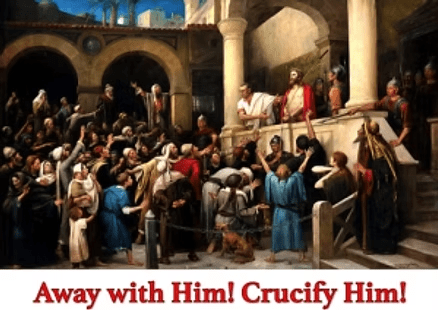
[Keep in mind there was a crown of pilgrims who would later scream out, “Crucify him!” They probably heard a lesson that was hard to swallow too.]
When Jesus then turned to “the twelve,” asking those closest followers, “Do you also wish to go away?” it is vital to understand that Judas Iscariot was one of the twelve. This is why not reading the verses that name him and identify him as one who caused doubts and disbelief – stated in the asides that remember him as the one who betrayed Jesus – makes grasping Judas’ role more difficult.
Judas was asked if he wanted to leave, but he did not get up and go, nor did he speak out. Peter spoke (as usual) for the group of twelve, giving Jesus a mild vote of confidence. He said that after they found out of John the Baptizer’s beheading. When Simon-Peter said, “We have come to believe and know that you are the Holy One of God,” that truth was based on the material miracles they witnessed, not their still-to-come Sainthood.
When Jesus said in the unread verse 70, “Have I not chosen you, the Twelve? Yet one of you is a devil!” Jesus made it clear that he knew the hearts of each of those twelve Jews that followed his lead. Jesus knew Judas was a necessary evil; and one who had no plans on leaving at that point in time. Judas is believed to have been the intellectual who tried to pick Jesus’ mind; but Jesus knew how much the brains of all his disciples led them and how befuddled and confused Jesus’ words made them.
They were not going to leave Jesus, but they were no different than the befuddled and confused 417 (there about) pilgrims walking away from Jesus. Those “pupils” were no longer looking like lost sheep running to their master, as they did at the Bethsaida plain. To them, it was like Jesus had just told them, “To be good sheep, you have to eat some haggis and drink some bloody goat milk.”

As the Gospel selection for the fourteenth Sunday after Pentecost, when one’s personal ministry for the LORD should be underway – having come to believe and know that Jesus is the Holy One of God – the message here is know that “among you there are some who do not believe.” This includes those intellectuals that follow Jesus, even though their soul is possessed by the devil, like Judas.
It must be understood that Judaism then stood as the religion of God’s chosen people. This was before Christianity was begun by true Christians – Jews and Gentiles filled with God’s Holy Spirit that were transformed into Saints spreading the truth of God, as Jesus Christ reborn. The Judaic system of religion taught the words memorized and written onto scrolls, but it could not wholly interpret those words. That system was called out by Jesus as being the blind leading the blind, because teachers gained respect (and wealth) simply by knowing more memorized words than the majority.
With all that brain power, no one could teach how to fall in love with God, hear His proposal in one’s heart, accept that proposal and become a prophet that spoke for God – them in the Father as the Father was in them.
While Christianity spread rapidly because it was Saints touching the hearts of seekers of truth, who then married God and became the resurrections of Jesus Christ themselves, the institutions of that religion have long since ceased that growth. It has pruned the living vine, greatly reducing the good fruit that has been produced. It is not yet a stump in the ground, but it is like the fig tree that did not produce fruit.
In that regard, the present state of Christianity is no different than that past state of Judaism. The blind still lead the blind; and some profit, while the majority feels lost. This is because Christians today fail to accept the words that say, “You have to be Jesus Christ reborn, in order to gain eternal life in the kingdom of heaven,” spoken as “eat my flesh and drink my blood [to] abide in me, and I in [you].”
The present state of Christianity is that it has not been taught to receive the Holy Spirit, through complete submission to God out of love. It has been taught to follow Jesus in the same way the Jews were taught to follow Moses’ Laws. To hear a teacher say today, “It is the spirit that gives life; the flesh is useless,” explaining that those words mean one’s soul is responsible for eternal life in God’s kingdom and satisfying the desires of the flesh will never achieve that heavenly goal,” many Christians today would walk away from that teacher. It is hard to accept responsibility. Thus, it is easy to do like the Jews of Capernaum did to Jesus, saying, “This teaching is difficult; who can accept it?”
One cannot let Jesus of Nazareth become an idol of worship, where one feels safe and secure doing all the sins of the worldly domain. To see Jesus Christ as an absent ruler – in heaven with God the Father – Christians are just like the Israelites that went to Samuel saying, “Give us a king so we can follow decrees made for us.” Each Christian is expected to be an ordained priest of God, authorized to teach as Jesus of Nazareth did. Believing that idol will forgive one’s continuing to sin each week AND make it easier for some to get wealthy from sins, is an error of reasoning (intellectualism).
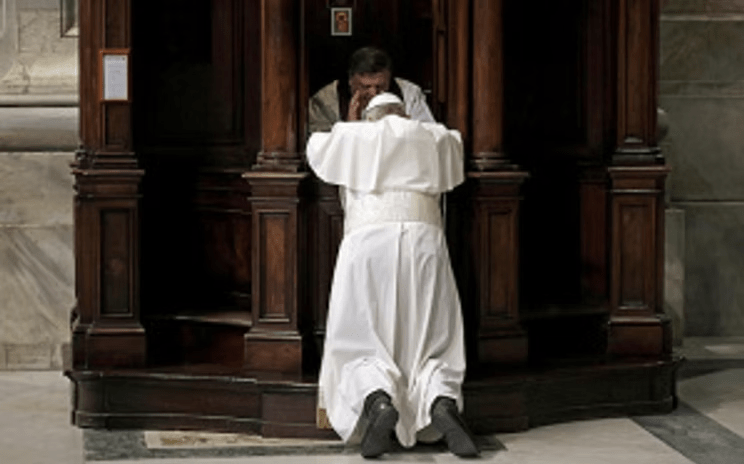
Baptism by the Holy Spirit is a one-time cleansing of sins, such that absolutely no sins will again be done by the flesh, after that cleansing of one’s soul. No human flesh can absolve anyone of earthly sins. Confession is an act of one’s relationship with God, not man. A soul is free to choose a life of sins (with the death of one’s flesh that then comes, over and over again) or choose eternal life (where the flesh is useless to the soul). A soul is then responsible for the choices made in that regard.
This reading places focus on Jesus turning to his closest followers, with John stating, “Jesus, being aware that his disciples were complaining about it, said to them, “Does this offend you?” That same awareness is held by Jesus Christ and God the Father.
Knowing that “eating the flesh and drinking the blood” of Jesus means becoming a reproduction of the Son of Man, does that offend you?
Do you think it is sacrilege to think anyone other than Jesus of Nazareth can be Jesus Christ, resurrected in flesh and blood?
If you do, then “What if you were to see the Son of Man ascending to where he was before?” With Jesus of Nazareth ascended into heaven, gone to sit in a seat at the right hand of the Father, who then becomes the flesh and blood of righteousness on earth? No one?
What about the Saints? Are they just good men and women that used to walk the earth, trying to be righteous by utilizing will power? Can you believe in Saints when there are so few of them these days?
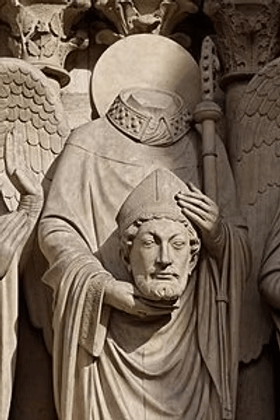
“Jesus asked the twelve, “Do you also wish to go away?” Likewise, Jesus asks you, “Are you a Christian because you love God as your Father, or are you a Christian so you can betray Jesus every time you sin, telling others he forgives so easy?”
There are people wearing sacred robes who are professed sinners. They commit sins that have been condemned in Scripture. For them to change the word to suit their wants and desires, saying it is okay to sin: “Come and let us forgive you! Jesus loves you no matter how much you sin!” … are they not those “who do not believe”? Are they not those seated at the table for the purpose of betraying Jesus, as the devil?
This reading brings to a close a month of Sundays where the Gospel is centered on eating the flesh of Jesus. Jesus never said it was okay, if his message was difficult to swallow, to “Just chew it a little bit at a time and that will be a good start.” It is a call to do as he said or not, with no in-between place having merit. You are Jesus Christ reborn or you are not truly a Christian.
Can you accept that teaching? Or is it too difficult to accept?


 Explaining the Readings