
Joshua gathered all the tribes of Israel to Shechem, and summoned the elders, the heads, the judges, and the officers of Israel; and they presented themselves before God. And Joshua said to all the people, “Thus says the Lord, the God of Israel:
“Now therefore revere the Lord, and serve him in sincerity and in faithfulness; put away the gods that your ancestors served beyond the River and in Egypt, and serve the Lord. Now if you are unwilling to serve the Lord, choose this day whom you will serve, whether the gods your ancestors served in the region beyond the River or the gods of the Amorites in whose land you are living; but as for me and my household, we will serve the Lord.”
Then the people answered, “Far be it from us that we should forsake the Lord to serve other gods; for it is the Lord our God who brought us and our ancestors up from the land of Egypt, out of the house of slavery, and who did those great signs in our sight. He protected us along all the way that we went, and among all the peoples through whom we passed; and the Lord drove out before us all the peoples, the Amorites who lived in the land. Therefore we also will serve the Lord, for he is our God.”
———————————————————————————————————-
This is an optional Old Testament selection from the Episcopal Lectionary for the Fourteenth Sunday after Pentecost, Year B 2018. In the numbering system that lists each Sunday in an ordinal fashion, this Sunday is referred to as Proper 16. If chosen, it will next be read aloud in an Episcopal church by a reader on Sunday August 26, 2018. It is important because it says the option is up to the individual, as to what deity one chooses to serve.
This reading takes the introductory verses of this chapter and then jumps to verse fourteen. In between is a brief history of the lineage of Abraham, Isaac, Jacob, with all the great signs given by God to them; and then it moves to the powers that protected the Israelites under Moses and their move into Canaan. Basically, every time there was an enemy trying to get in the way of that holy line, God caused the defeat of that enemy. With that history stated as a reminder for why the Israelites should completely devote themselves and their households to Yahweh (the LORD), Joshua gathered the elders of all the tribes of Israel to Shechem and asked them to commit to Yahweh or commit to some lesser god of prior.
This element of commitment makes this gathering read like an engagement party. Joshua was the first to announce his planned marriage to Yahweh. The history of Yahweh being with the children of Abraham, Isaac, and Jacob reads as the courtship, when the family came to know God on an intimate level. With Joshua’s announcement of his planned union, his entire household (family under Joshua’s direct control) was to be committed to the same One God. Such a thorough marriage would then be forever – till death do them part.

Prior to that pledge to “serve him in sincerity and in faithfulness,” Joshua was free to ‘play the field’. He knew of the polytheism of Egypt, where there was an individual god for each different aspect of life; and he knew the gods of the Amorites (the Philistines generally, but the Assyrians too), where similarly many gods were worshiped for many things. One could choose to be closer to a few “household idols” and ambivalent to the rest, until a special need arose. However, Joshua had been in a close relationship with Yahweh and that relationship was built on love; and there was nothing any other god offered that could persuade Joshua to leave the God of his heart.
When we read the introduction that states, “Joshua gathered all the tribes of Israel to Shechem, and summoned the elders, the heads, the judges, and the officers of Israel; and they presented themselves before God,” it is easy to presume that Joshua held the sway of a king. Certainly, Joshua was important in the settling in Canaan by the Israelites and his call for a gathering, so he could announce his engagement with Yahweh, would have been heeded. After all, Joshua was close to God and had defeated the Amorite enemies, with God’s helpful guidance. Still, the aspect of the tribes of Israel being presented before “elohim” (“gods,” the plural form of “el“) is a clue about the timing of this event.
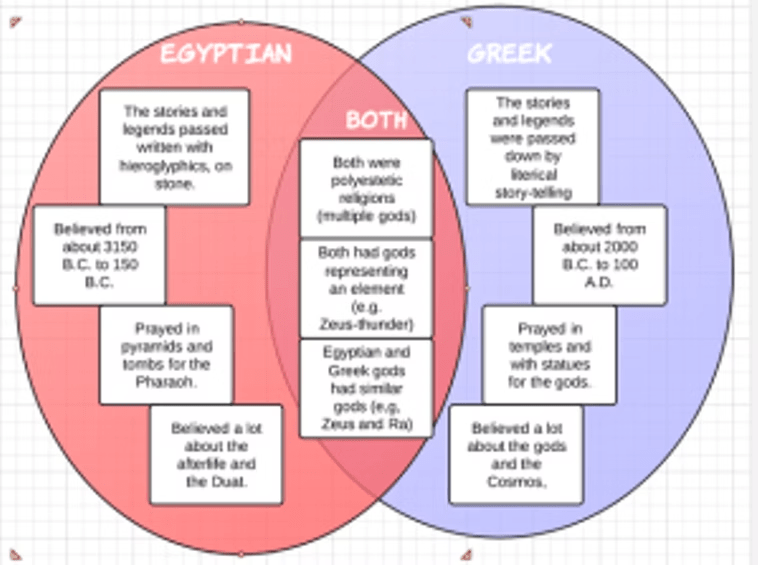
In verses two through thirteen, Joshua differentiated the “elohim” of others and the “Yahweh ’ĕ·lō·hê yiś·rā·’êl” – “the LORD of gods of Israel.” Those who had worshiped “other gods” had been defeated – as their history told – by those who followed “the LORD of gods of Israel.” That remembrance, told to the leaders of the Twelve Tribes of Israel, was most probably done at one of the three God-commanded gatherings: Passover, Shavuot, or Sukkot. As Shechem was the holy city of Israel, where the Ark’s tabernacle was set up, attended by the Levite priests, the leaders of Israel would have naturally gathered in compliance to their Covenant with Yahweh. In that atmosphere of recognition, celebration and remembrance, Joshua stood before those leaders and stated his commitment to God forever.
In a gathering that was obligatory and with manna no longer falling each day to spiritually uplift each family of Israelites, strengthening their commitment to Yahweh, the Israelites were set amid peoples who served other gods. At a time when the Israelites were obliged to remember all that the LORD of gods of Israel had done, setting them free, delivering them into a Promised Land, and defeating all the enemies whose land was taken from them, they were spread out into places where the enemy might outnumber them. Set before the “elohim” of the Amorites and knowing in their history their forefathers knew the “elohim” of Egypt and Canaan, it would be much easier to allow their enemies the right to worship as they pleased, and even adopt some of the foreign rituals as their own, so everyone could live happily together.

A holy day like the Passover remembrance was kept so such reductions to the Laws of Moses would forever be avoided. Joshua’s engagement announcement was a call for all the Israelite tribes to likewise choose which of the gods they would be married to as one.
“Then the people answered, “Far be it from us that we should forsake the Lord to serve other gods; for it is the Lord our God who brought us and our ancestors up from the land of Egypt, out of the house of slavery, and who did those great signs in our sight. He protected us along all the way that we went, and among all the peoples through whom we passed; and the Lord drove out before us all the peoples, the Amorites who lived in the land. Therefore we also will serve the Lord, for he is our God.”’
The Israelites all became engaged to Yahweh. All of the families under the leaders of Israel made the same commitment to become one with the LORD of gods of Israel. They would become His wives and serve him sincerely and faithfully forever. The leaders of Israel spoke a commitment that would bind generation after generation (“for me and my household”), to forever be married to Yahweh.

When they said “we also will serve the Lord, for he is our God,” that meant God was the husband betrothed to the Israelites (regardless of what tribal names they called themselves). “Our God” also stated they would serve “Yahweh,” for He was all “gods” (“elohim” translated as “God”) to them. Yahweh was the only God protecting a household, and the only God to whom one of that household should pray.
As the reading selection for the fourteenth Sunday after Pentecost, when one’s own ministry to the LORD should be underway – one should be married to Yahweh – the message here is to examine one’s past and see if one enemy after another has been miraculously defeated, with all credit for such victories due to God. If not, then one needs to examine who one faults for those setbacks.
Many people prefer to give the credit to the god of good luck and good fortune. Some say the god of chance swept into their lives. Others bow down before the altar of the god of self-accomplishment, the twin brother of the god of self-importance. Of course, there is the god of higher education, overseeing his sprites and fairies that specialize in the degree fields of universities: law, medicine, professional sports, acting, television series writing, and film (others don’t show a profit after student debt is calculated).
Those are all under the great god Mammon, whose favors drive away the lesser gods: famine, poverty, and sickness. No matter which god(s) one chooses to serve, one or more is the only option if one does not marry Yahweh, the LORD of the gods, making Him one’s only God.

A minister of the LORD knows that it is easier to announce one’s engagement to Yahweh than it is to actually follow through with the marriage. Rather than a gold ring with a huge precious stone, the engagement ring of Yahweh is a halo of righteousness (invisible to the naked eye).
This is because God requires virgin brides (again, human gender has nothing to do with that designation), which means a holy engagement is a promise that comes with sincere confession and a trial period of abstinence from sin. During that proving period, tests of one’s commitment to righteousness will be presented, with patience and restraint needed to be demonstrated. That is because during that period old lovers will be drawn to call upon one newly engaged, suggesting one last fling with: drugs, sexual ‘hook-ups’, lying, gossip, cheating, stealing, and all the things the lesser gods whisper in one’s ear, while nuzzling one’s neck: “It’s okay. No one will know.”
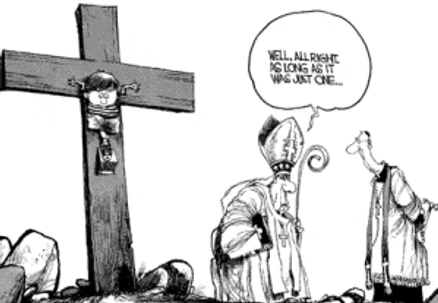
In the Roman Catholic Church news these days is the touchy subject of the Church failing to do anything to stop sexual predators – pedophiles – who held positions of trust that were: parish priests, dioceses bishops, and cardinals, all under the head of a series of popes. In other denominations, homosexuals have been ordained and even elevated into great leadership positions, some proudly pronouncing themselves as still actively homosexual. All of these men (and women) have announced their engagement to the One God, simply by their titles, the robes they wear, and the Sacraments they bless; but, at some point in their lives they reverted to paganism and turned away from Yahweh. They chose to serve Satan.
Now, they believe they can beg the people for forgiveness and then go on as if there is no sin that cannot be absolved. They absolve one another from confessed atrocities, while professing to be holy Apostles. They have fallen in love with the god of evil, who loves to mislead them to such beliefs. An Apostle of Jesus Christ does not break holy vows.
Jesus said, “No one can serve two masters. Either you will hate the one and love the other, or you will be devoted to the one and despise the other. You cannot serve both God and money.” (Matthew 6:24) He said that to the Pharisees who loved to milk the Jews for their wealth, proving their love of Mammon. Had Jesus known of pedophile priests, bishops and cardinals, he would have told them the same thing, only ending his words with “You cannot serve God and lust.”
These uncorrected acts of abuse are reason for good Catholics to leave the Roman Catholic Church. There is no trust left when church leaders are led by lust in their hearts. They do not serve Yahweh, the LORD of gods. If a religious organization refuses to drive out the false shepherds, then the good shepherds will stand outside building owned by that organization and lead the flock away from corruption.
Staying with a corrupted Church (an organization) means the guilt of association spreads, spoiling all good priests that think serving God means protecting those who rape children. Priests swear oaths to their bishops, not to God. When an individual has committed the sin of using the LORD’s name in vain – by professing to be of holy cloth and acting in unholy ways – forgiveness has been placed in much higher hands than any human body can reach. Good priests and ministers must leave a corrupted Church, or they bow down to an institution and serve it.
God never said His priests must organize and institutionalize. God never authorized His wives to kill their children. God never gave His seal of approval to Jezebel and her priests of Baal. God did not send prophets to scream His condemnations at the blending of religions that overtook Israel and Judah, because God wanted it known that He does not approve of cheating wives.
What is different between the sacrifice of children by clerics in modern times and the sacrifice of children by those abusers that God told Jeremiah of:
“The people of Judah have done evil in my eyes, declares the Lord. They have set up their detestable idols in the house that bears my Name and have defiled it. They have built the high places of Topheth in the Valley of Ben Hinnom to burn their sons and daughters in the fire—something I did not command, nor did it enter my mind.” (Jeremiah 7:30-31)
A child trusting a man he or she has been told to call “Father”, only to lose his or her life of innocence to burning nightmares by a holy trust broken, is like being a trembling lamb in the hands of a priest holding a slaughter knife before the altar. Once the knife slices the neck and the life blood is forever spilled, there is undoing that act. No child harmed by a priest has ever been done in the name of the LORD – Yahweh. They are sacrifices made to lesser gods.
When the message of this reading is taken as simply being, “Choose who you will serve – God or god(s)” – the ambiguity leaves this open to thinking one’s choice leaves room for some affairs and flings from time to time. It is easy to see how Jesus and God forgive sins, as if each week new sins are gladly wiped off the heavenly ledger. An engagement to God that thinks sins will forever be forgiven, so go out and sin in the name of the LORD, is misguided. It mistakes modern families as the norm.
The looseness of how Westerners, including many Christians, see marriage today misleads many to think God and Jesus Christ have approved lower standards of morals. Gays of the same sex can now marry one another, even in services overseen by priests or ministers … in some Christian churches. Marriages can be ‘open’, so multiple partners are okay if both agree, with or without both of the married pair present during sexual liaisons. This corrupted way of life has always existed, but never deemed appropriate behavior for one married to God.
Divorce is so rampant that it belittles the lifetime commitment the marriage vows emptily state. Prenuptial contracts are signed because someone expects divorce. Couples more frequently choose not to have children, if they do choose to be limited to one spouse, simply because it is so difficult determining what to do with the offspring after the divorce. This is another example of child sacrifices done in the name of God, every time divorce follows a church wedding.
All of these lowered standards make it seem it is okay to cheat on Yahweh. No such changes have been made. The statement made by Jesus still hold true: “What God has joined together, let no one separate.” A man and a woman join together to make babies, which will forever be formed of the DNA of two parents. A marriage is a commitment to have children AND THEN raise those children until they get married. That is the oath of marriage. It is not a commitment to have sex, but a vow to serve God by being fruitful and then serving God by raising children to love God.
An oath to serve God is a greater oath than one made between two human beings. It is a pledge to complete and total subservience. It is not to be taken lightly. Therefore, no one is ever forced to marry God against one’s will. Therefore, choosing God and then living life like a sinner is breaking an oath.
Jesus said, during his “sermon on the mount”:
“Again, you have heard that it was said to the people long ago, ‘Do not break your oath, but fulfill to the Lord the vows you have made.’ But I tell you, do not swear an oath at all: either by heaven, for it is God’s throne; or by the earth, for it is his footstool; or by Jerusalem, for it is the city of the Great King. And do not swear by your head, for you cannot make even one hair white or black. All you need to say is simply ‘Yes’ or ‘No’; anything beyond this comes from the evil one.” (Matthew 5:33-37)
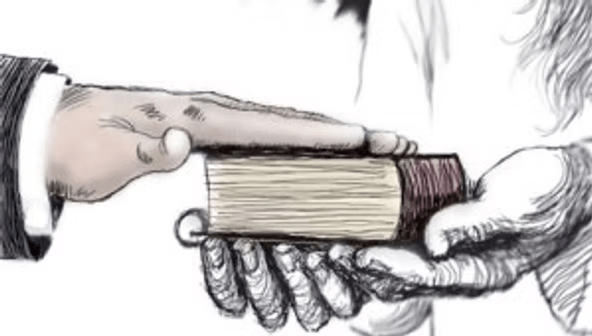
“Do you swear to tell the truth, the whole truth and nothing but the truth, so help you God?” means one helps God by spreading the truth, not lies. Breaking that oath appears to be commonplace in the courts these days.
Jesus spoke those words after speaking wisdom about adultery and divorce, where oaths of commitment are broken. All of this can apply to the words of Joshua, where he said, “Now if you are unwilling to serve the Lord, choose this day whom you will serve.” Each individual of adult age is responsible for making that choice. No one is forced to choose God. However, you cannot announce your engagement to God and then run out and cheat on Him with lesser gods (“elohim”).
Because Joshua gave all the Israelites that option out, there is nothing that says anyone must be a child of Yahweh. Yahweh chose the children of Israel; but Joshua’s challenge to the Israelites was to choose God too. It is a proposal that makes one choose the One God for one’s life. It requires an oath when one says, “Yes.” “Yes” means God does all the leading from then on, while the wife (male and female they are made) subserviently follows.
Before one chooses, or if one says, “No,” then everyone is free to play the ‘god field’ all their lives. Everyone is free to gamble his or her soul away. Everyone is free to choose to serve self at all times, walking over as many people as might dare to get in one’s way. God has given all souls the freedom from heaven, to do as they please on earth. People are free to commit the most heinous of crimes imaginable, because without morals creating laws, no crimes can be judged. It is up to each freed soul to decide when and if that soul wants to return and live with God.

But, there comes a time when one has to stand and defeat evil, which requires an engagement to Yahweh [minimally]. Everyone is free to choose to be the wife of Yahweh and follow His orders completely. Equally, everyone is free to choose to be the wife of religions, governments, philosophies and all of that of the world, which breeds the arguments and disagreements that lead to wars.
One way or another, one has to fight for survival. Everyone has the freedom to choose who he or she will fight for or fight against. Everyone has the freedom to choose to fight for temporary pleasures, with death as their future; just as everyone has the freedom to choose to fight for temporal pains, with everlasting life as the future.
Choosing is not easy, just as marriage and commitment means hard work. Just keep in mind how the things earned through hard work and attention to details are the most rewarding. It is good to look back one one’s life and see where sacrifice paid off greatly later. Most likely, God played a role.
 Explaining the Readings