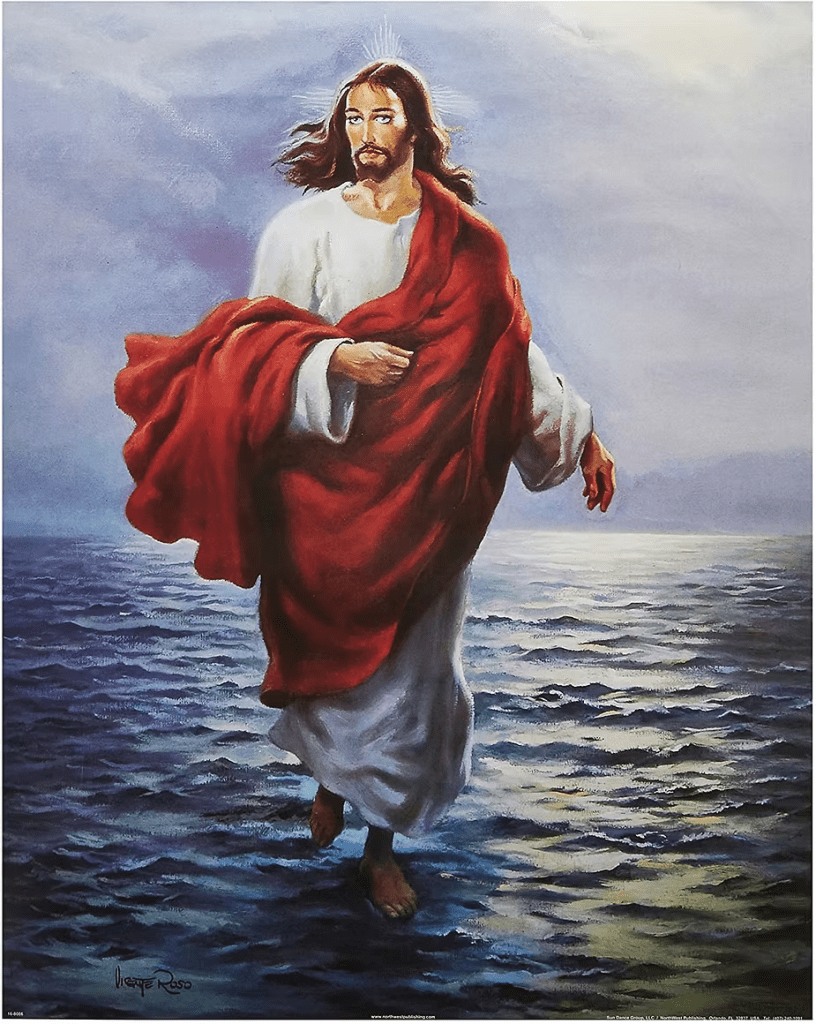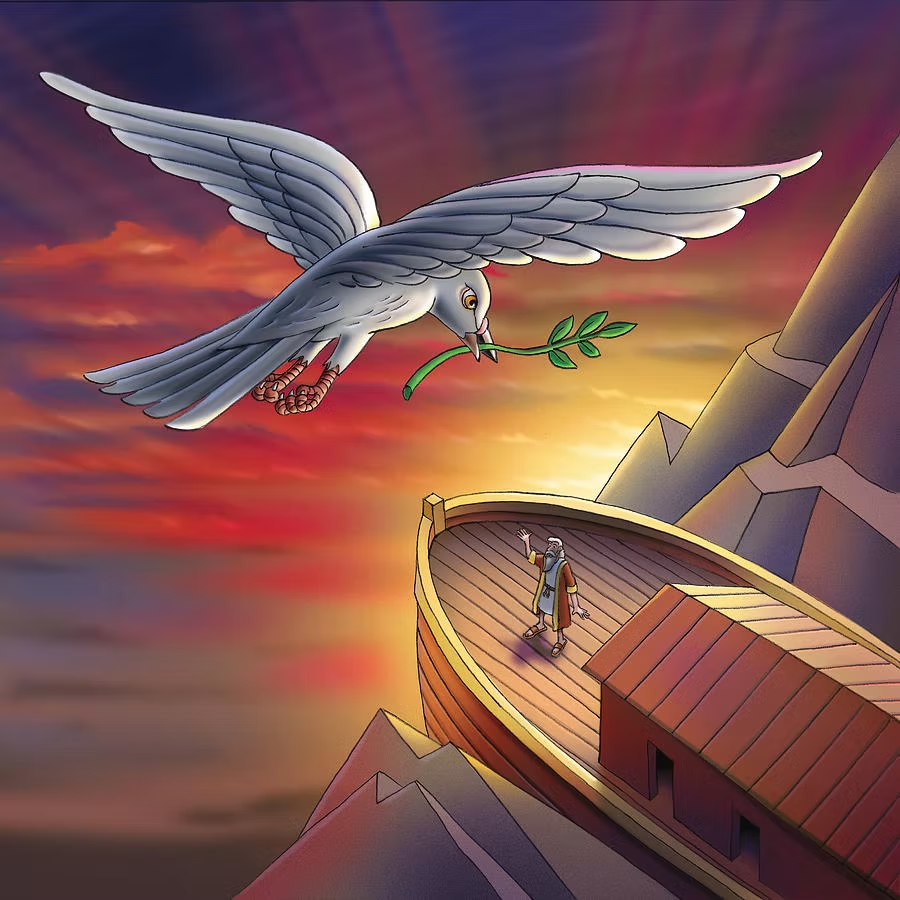
Tag Archives: Lent 1 Year B

Mark 1:9-15 – The path to the LORD requires testing

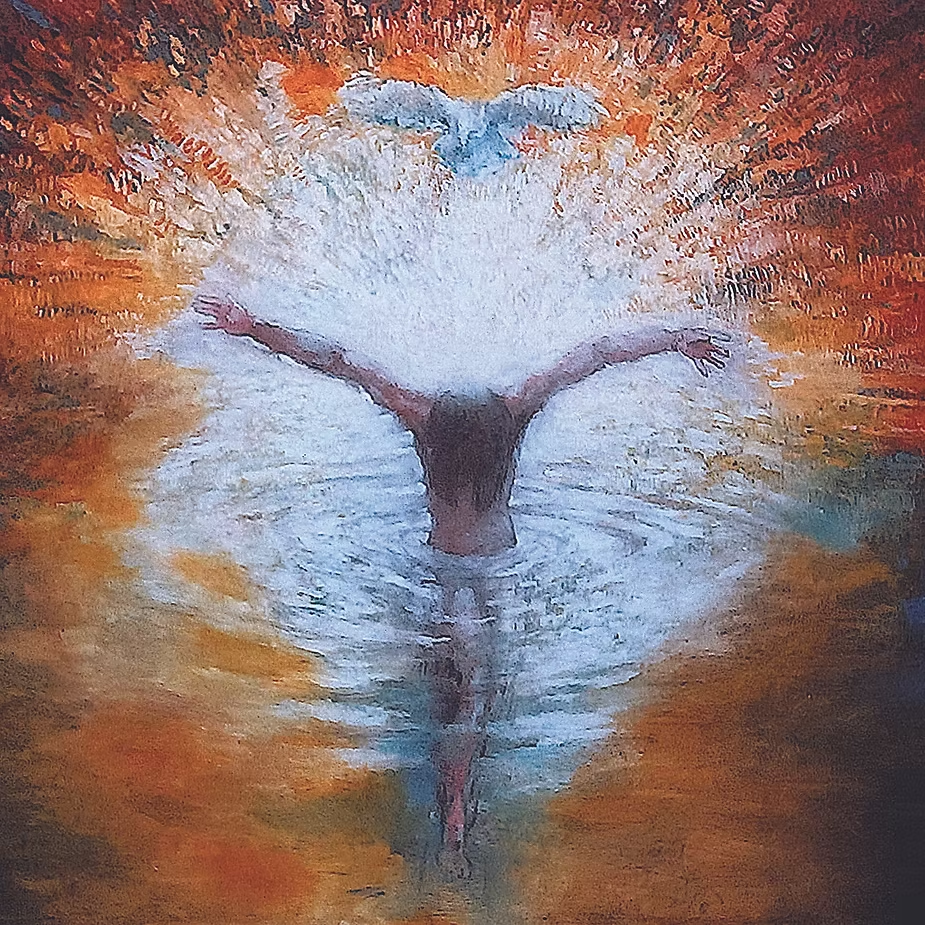
In those days Jesus came from Nazareth of Galilee and was baptized by John in the Jordan. And just as he was coming up out of the water, he saw the heavens torn apart and the Spirit descending like a dove on him. And a voice came from heaven, “You are my Son, the Beloved; with you I am well pleased.”

And the Spirit immediately drove him out into the wilderness. He was in the wilderness forty days, tempted by Satan; and he was with the wild beasts; and the angels waited on him.

Now after John was arrested, Jesus came to Galilee, proclaiming the good news of God, and saying, “The time is fulfilled, and the kingdom of God has come near; repent, and believe in the good news.”

——————————————————————————–

This is the Gospel selection from the Episcopal Lectionary for the first Sunday in Lent, Year B. It will next be read aloud in church by a priest on Sunday, February 18, 2018. It is important as the testimony of Simon Peter, through Mark, who was a disciple of John the Baptizer and Jesus, who knew that both of those holy guides had endured extreme tests of piety before beginning ministries that served God.

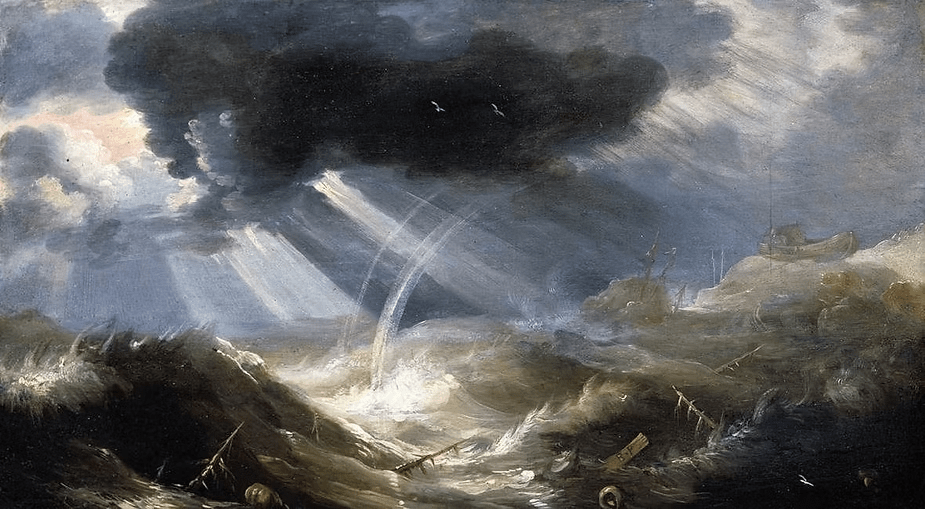
This reading is accompanied by the reading from Genesis (9:8-17) that tells of God’s covenant with Noah, and all life forms that survived the Great Flood, that committed, “never again shall there be a flood to destroy the earth.” The sign of that covenant would forevermore be the rainbow.

The accompanying Epistle is from Peter’s first letter to the churches of Asia Minor (modern Turkey), where Peter related the presence of the Holy Spirit as a covenant similar to that made between God and Noah. Peter wrote, “And baptism, which [the Great Flood] prefigured, now saves you– not as a removal of dirt from the body, but as an appeal to God for a good conscience, through the resurrection of Jesus Christ.” This then becomes metaphor that makes the rainbow be seen as the baptism of the Holy Spirit, connecting one on earth to the right hand Spirit of God in heaven. Through a rainbow God speaks, “You are my Son, the Beloved; with you I am well pleased.”

As a lesson for the first Sunday of Lent, Peter is saying (through Mark) that one must first hear the voice of God, which streaks across the sky like lightning, arcing down to those who take the time beg for forgiveness of the sins recognized as of their own doings. Second, THE LENTEN MESSAGE is one who hears this voice and is immediately driven by the Spirit out into the wilderness, where one’s sincere repentance is tested. Third, as a result of having successfully overcome the addictive temptations of an evil world, one becomes a minister for God, as the embodiment of Jesus Christ.

Those three steps are the demands required by God of all who seek the reward of heaven and eternal bliss. That means no steps can be avoided and no steps can be assigned to a surrogate.

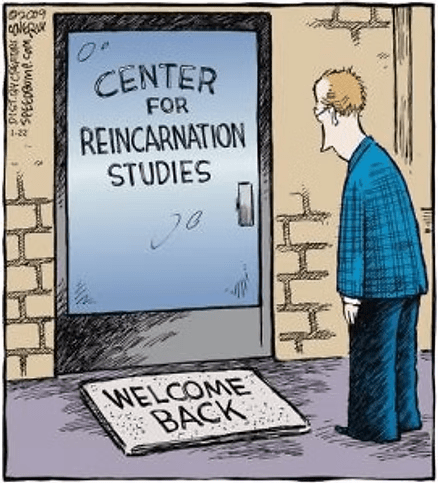
If it was easy to get into heaven, people would just live anyway they pleased and then add at the end an, “Oh by the way God, I am sorry for all the fun I had being a sinner” apology. There would be no need for heaven because being reborn back on Earth [reincarnation] would be the best reward possible [except the losing all your possessions part].
In the story of Noah and the Great Flood, Noah was the last descendant of the great Patriarchs, who at the age of 500, when his grandfather Methuselah reached the end of his life, the flooding rains came. Prior, he heard the voice of God tell him to prepare for a world-wide flood, where he had to build a large boat in the middle of dry land. He did that and was ridiculed by sinful human beings who saw that as unnecessary work.  They mocked Noah for listening to a voice they could not hear. Thus, the prerequisite for baptism by the Holy Spirit (the Great Flood) is to follow one’s heart, with a desire to make God happy, rather than follow the crowd down the path to oblivion.

One has to see the work of building an ark as a test of devotion.  Noah building an ark to God’s specifications is then a model for the forty days and nights Jesus spent in the wilderness.  Both Noah and Jesus had a plan, although nothing is written that details the plan God gave Jesus.

The forty days and forty nights of rain, followed by 150 days that the high waters prevailed, are saying that Noah and his family spent time on turbulent seas being tested after they had proved their faith by building the ark.  Their faith saved them, although the voyage took them to an unknown land.  A similar test came to Jesus after he spent forty days in a bone dry dessert – the test of his ministry.

When Mark wrote that Jesus, “was with the wild beasts; and the angels waited on him,” was not Noah on the ark with pairs of wild beasts, of every kind? Was the ark not kept afloat by angels, just as the needs of Jesus were met? Did not Moses pray to God for water to be found in dry land of the Sinai, with God delivering?  Likewise, Noah (who was not a sailor) and Jesus (who was not like John the Baptist) had faith, but stayed in constant communication with the LORD, through prayer.
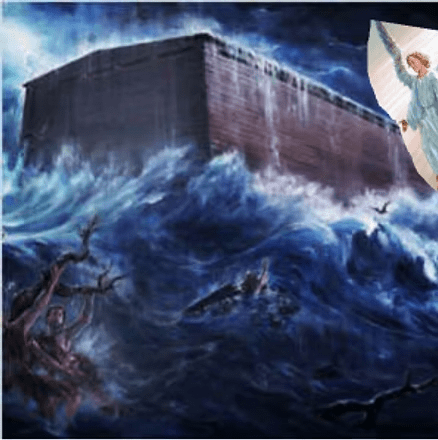
A test of faith might only officially be over forty days and forty nights, but if one is crying out in the wilderness for the test to finally be over, then one is not ready for that test. One is not “up the creek without a paddle,” one is drowning in a Great Flood without an ark. Jesus aced his test because he already had made a lifelong covenant with the LORD. Satan cannot temp one with that holy survival kit handy. However, Satan has a way of finding a way to tempt the common survivalist, one who does not pray, thus cannot hear the voice of God within.

When Peter wrote in his letter, “Christ also suffered for sins once for all, the righteous for the unrighteous, in order to bring you to God” (1 Peter 3:18), he was basically saying a Christian has to hear the voice of God warning one of a coming Great Flood; but rather than that voice saying to build an ark for survival, one must be reborn as Jesus Christ. That is the only way to survive a forty day test of faith. Christ within cleanses one of the fear and guilt of sin, turning the unrighteous righteous.  Christ within brings one to God.

Being one with God and reborn as Christ means Lent is not a New Year’s resolution (i.e.: an empty promise made to oneself). Lent is the test ride of a new YOU, a YOU that has fallen in love with God and become married into a new commitment and devotion that serves only God.

Lent is not a prescribed period of time when one is forced to comply with unwanted limitations. Lent is personal time spent asking God to write His laws on one’s heart, and explain those laws through the Holy Spirit’s knowledge, so that one finds only joy and happiness from the most barren of existences.

Lent is having one’s eyes opened, to see the illusion that the worldly domain really is and to come to the realization that no illusion – no dream – is worthy of sacrificing eternal bliss to gain.  Heaven is the reality we escaped, but need to return to.  However, when our souls fell to earth, we fell asleep and dreamt, thinking vivid dreams are real.  Jesus is the call to wake up and return to heaven.

When one sees Peter having told Mark that Jesus went to Galilee proclaiming the Gospel at the beginning of his ministry, it is easy to overlook how he said, “After John was arrested.” John the Baptizer held Jesus in his arms in the flooding waters of the Jordan River, so he too heard the voice of God speak. John also was baptized by the Holy Spirit at that time, so the rainbow arched into him, making him ready for his test in the wilderness that became a Roman prison.

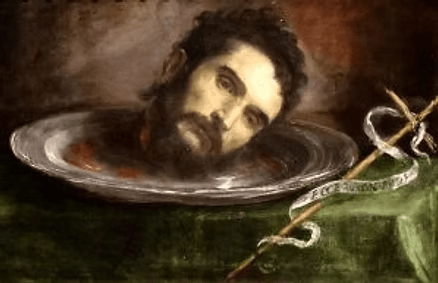
John the Baptist would give up his life for his faith in God. So too would Jesus. So too would the Apostles of Jesus. Therefore, Lent is not about being forced to do without something (sacrificing one thing), while still holding onto all the other addictions that seem impossible to let go [where is your cell phone now?].  Lent is a test of one’s readiness to turn away from a world that offers illusions that suggest it is okay to sin, if everyone else is sinning.  Instead, one must be prepared “to be arrested” … stopped … willing to sacrifice the brain in one’s head (even have that head served on a silver platter), in order to ask others to do the same.

Jesus never forbade anyone from making Fat Tuesday a theme for a life, 365 days a year serving self, grabbing onto all the physical pleasures one desires. Free will means free to sin, because sins of ego are only possible in the earthly domain.  Doing as one pleases is what makes a worldly existence seem like a vacation for some; while others rue the day they were born, because the life they have been reborn into does what it pleases with them. Living for today is blindly walking the path of reincarnation; but, like the saying goes, “You can pay me now or pay me later, but pay you will.”
That world existed when God told Noah, “Enough is enough.  Get ready, because I am washing the slate clean.” Peter wrote of those past sinners as being those, “who in former times did not obey, when God waited patiently,” to no avail.

The ruler of the world is Satan, who cares nothing about humanity. Satan tempts for the purpose of trickery. He desires to steal souls from God, and he uses the illusions of the world to get humanity to do wicked things. God promised not to wash the filth of humanity off the face of the earth with another Great Flood. Instead, the rainbow he would send would be called Jesus.

Jesus brought salvation to the world, just as Noah was told how to build an ark. However, the idea of an ark did not save Noah and the wild beasts he took with him; in the same way, the idea of Jesus saving people does not prepare them to be tested, as ready to be saved.

Lent is about a willing test that one has been prepared to take.  It is like forty days of study prior to the SATs or GREs or GMATs or any other difficult test of one’s preparedness  [name your hardest standardized test here].

Lent is like seven years of hard-nosed collegiate study, so one can begin a career that makes all the hard work worthwhile.  Children seldom prepare for such tests without a good father figure making demands on their preparation, telling them to use their talents wisely.  Likewise, Lent comes when one has heard the voice of God speak out loud and say, “You are my Son, the Beloved; with you I am well pleased.”

Lent is not a test of survival skills. Lent is a test of one’s readiness to give up one’s life for God, so Jesus can return and spread the Word through your body, causing your mouth to say, “Repent, and believe in the good news.”

You may now turn over your exam sheet and let the test begin NOW.
Genesis 9:8-17 – The covenant of no more great floods

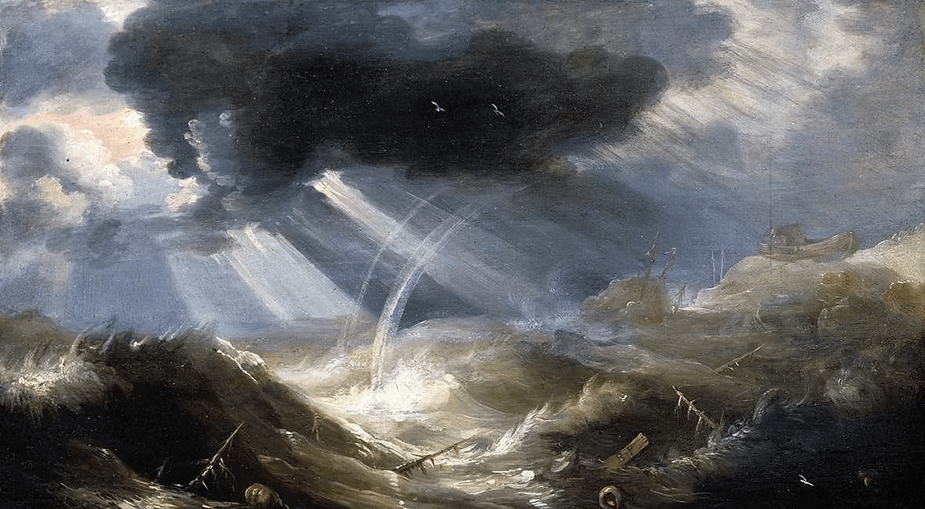
God said to Noah and to his sons with him, “As for me, I am establishing my covenant with you and your descendants after you, and with every living creature that is with you, the birds, the domestic animals, and every animal of the earth with you, as many as came out of the ark. I establish my covenant with you, that never again shall all flesh be cut off by the waters of a flood, and never again shall there be a flood to destroy the earth.” God said, “This is the sign of the covenant that I make between me and you and every living creature that is with you, for all future generations: I have set my bow in the clouds, and it shall be a sign of the covenant between me and the earth. When I bring clouds over the earth and the bow is seen in the clouds, I will remember my covenant that is between me and you and every living creature of all flesh; and the waters shall never again become a flood to destroy all flesh. When the bow is in the clouds, I will see it and remember the everlasting covenant between God and every living creature of all flesh that is on the earth.” God said to Noah, “This is the sign of the covenant that I have established between me and all flesh that is on the earth.”

——————–

In this reading it is important to understand that “the covenant that I make between me and you and every living creature that is with you, for all future generations” means every creature that has God’s breath of life within them – Man and animal. It is easy to think this is a covenant between God and Noah [thus Man only] to never again destroy humanity by a great flood [a universal inundation by water], but it includes “every living creature” that coexists on earth with Man. It says nothing about granting eternal life to all that breathe air upon the earth, as mortality was still in place [including fish that breathe in water, unaffected by floods, with their own lives naturally limited in scope]. Therefore, it is important to see the value of such a covenant that a great flood would not be repeated as a form of sacrifice separating a soul from its flesh.

Sacrifice must be seen as the issue of a covenant. God willed this sacrifice. It was not voluntary. Still, in light of Cain and Abel being priests who made sacrifices of other living things, where fire was the transformative symbolism of death that pleased God [or didn’t, as far as plants being burned], those sacrifices were individual and yearly. The Great Flood was global and all-encompassing, brought about by the relationship between God the Father and Mother Earth, the two essences that were joined in all life forms possessing souls.

The key to this reading is the promise of a rainbow, such that God told Noah, “I have set my bow in the clouds, and it shall be a sign of the covenant between me and the earth.” The promise to Noah and the animals of the land and air is one between God and the earth. God promised to never again cause the earth to become submerged, as a way for flesh to be destroyed.

Here, the symbolism of flesh equals the essence of earth. The symbolism of water is emotional outpouring, in a physical sense. Water is the union of hydrogen (2 atoms) and oxygen (1 atom) – earth and ether, symbolizing body and spirit. God had become upset by the way His elohim corrupted the earth, causing monsters and giants to arise from the interbreeding of lesser gods with female human beings, which acted harshly as demigods towards the creatures God had commanded His gods to create: the living creatures that culminated with male and female Man.

This means the symbolism of the rainbow in the clouds must be seen as the life breath (souls) rising from those killed in the inundation, ascending from the earth, along with the evaporating molecules of water. The clouds were the same as the smoke from burning altars, but this was caused by God, thus reflected as evaporation being pierced by the light of God’s sun. The rainbow is then symbolic of sacrifice that is pleasing to God.

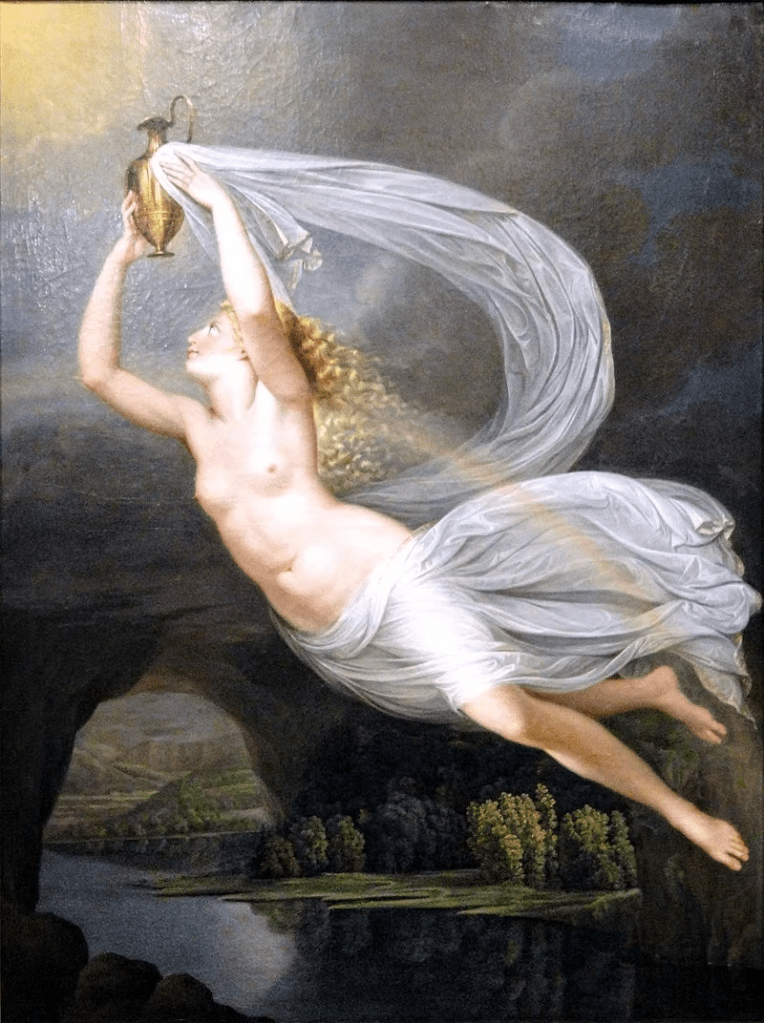
Relative to the Greek mythological goddess name Iris, who was the personification of the rainbow; she was a messenger of the elohim (gods).

According to Hesiod, she had the duty to carry a vessel of water from the River Styx [the river of the underworld] whenever a god had made a solemn oath. That water would be used [drank] if the god lied, rendering him or her unconscious for a year. [Source: Encyclopedia Britannica] Thus, from this mythology it can be seen that the beauty of a rainbow is a distraction, when the deeper meaning is it is both a symbol of death and a promise. The souls separated from their flesh in the Great Flood included many born of lesser gods, which had forced the earth to cover the world with floods to appease God the Father. Those demigods were forced into an oath of submission to YHWH, when born of fallen angels [a great lie].

When one sees this reading being paired with those for the first Sunday in Lent, in the Year B, the element of sacrifice must also be seen as the test of one’s commitment to serve God eternally. The reading ends with Jesus immediately being driven into the wilderness for forty days and nights [the same duration of the Great Flood]. However, more than the test of an oath by the waters of death brought by Iris [the temptation of Satan], the deeper meaning comes from the creation of something pleasing to God – the formation in the sky that is the bow from earth to heaven.

In the accompanying Gospel selection from Mark is written, “as he was coming up out of the water, he saw the heavens torn apart and the Spirit descending like a dove.” This can be seen as metaphor for the symbolism of Iris, the goddess of the earth – Iris the rainbow nymph. The words used to state “coming out of the water” [“euthys anabainōn ek tou hydatos”] are less about Jesus remaining in water and standing up [a statement of his flesh] and much more about “immediately ascending from the water” [a statement of his soul]. The soul of Jesus became a sacrifice from symbolic death [baptism] that immediately released his soul to God. The soul of Jesus became the stuff of rainbows.

The presence of Jesus in water, along with John, places focus on the Greek word “ebaptisthē,” where the word states Jesus was “submerged” or “dipped underwater.” His presence in water deep enough to be submerged in becomes metaphor for the Great Flood, when many souls were separated from their flesh. The presence of water also stands out as the element used in ritual cleansing by Jews. Sins were viewed as dirt upon the flesh that needed to be bathed away. The souls of Jews, however, still felt the presence of their sins, which led to John bringing forth baptism by water, to be symbolic of death of the old [the filthy from sins], so that soul [it an eternal elohim] has died of flesh with the promise never to sin again. The joy of baptism by water brought with it an oath to serve God with a renewed soul, which was the symbolism of a promise made at a time when overwhelmed with emotions [the rainbow’s appearance]. Baptism by John was then fulfilling God’s promise that destroying flood waters would never again separate a soul from its flesh [saying all animals that breathe air have souls], as true death; it was more symbolic death by dunking, creating a soul in need to realize a need to promise self-service to God, which must then be fulfilled.

It is here that one must realize that Noah, his family, and the selection of animals-in-pairs had all been spared the death of the Great Flood. While the rest of the earth was destroyed by water, with their souls rising from the flood waters creating a rainbow of future promise for the earth [having been rid of evil], the family of those who had already made oaths to serve God, symbolically dying of self-ego in advance of mortal death, which they fulfilled was a parallel in selectivity that must be seen in the Jews. They were a race of people descended from Noah, through Abraham, Isaac, and Jacob. John the Baptizer was a Jew, as was Jesus, both in this lineage of selected children of God. However, the promises of all those lines of Man, who were offered the covenant of forgiveness, through an oath to God in exchange for eternal life [a Covenant made with Moses], time and again they had failed on their oaths and were forced to drink from the River Styx and suffer death [symbolic sleep]. Thus, ritual washing away of sins had fallen to the state of misery that led people to form a line to the River Jordan for a more spiritually symbolic cleansing.

Jesus would enter those waters with John, which should be seen as a parallel to Peter writing “a few, that is, eight persons, were saved through water.” Just as Noah and his sons and family [with animals] were not souls in flesh that had failed in their oaths to God, so too were John and Jesus. While the Jews lining the shores of the Jordan were admitting their souls had failed to serve God wholly, both the souls of John and Jesus ascended at that time. As John baptized Jesus with water, Jesus baptized John with the Holy Spirit. So, the dove of God’s promise fell upon them both, like a peaceful symbol of land having been found amid the flood waters [an allusion to the dove bringing back a twig as a sign land had surfaced from the depths].

The impact of this selection from Genesis is that the first covenant between God and a line of selected children had been set. Previously, the Patriarchs, from Adam to Lamech, had lived among a sinful world that grew more and more sinful every year. The monsters of sin had to be sacrificed so the normal Man [male and female they were made] could be led by the priests that would be descended from the Patriarchs, without fear of monsters and giants seeming as powerful as the gods. The promise of God was that no more floods would come to destroy evil in the world. That promise meant Noah would serve God by beginning a lineage of priests who would henceforth lead mankind to the One God, in order for Man to find eternal life, each as an elohim [the storyline of the Holy Bible after the flood]. This means the rainbow was set as the symbol of God that death could truly become an oath of commitment that a soul would keep. However, the only way to keep that promise was by becoming one of the lineage of God, as more than a child of God.

Committing to the promise would evermore mean having one’s soul ascend to being a Son of God [male and female He makes them].

1 Peter 3:18-22 – Realizing Jesus died so we can become him reborn

Christ also suffered for sins once for all, the righteous for the unrighteous, in order to bring you to God. He was put to death in the flesh, but made alive in the spirit, in which also he went and made a proclamation to the spirits in prison, who in former times did not obey, when God waited patiently in the days of Noah, during the building of the ark, in which a few, that is, eight persons, were saved through water. And baptism, which this prefigured, now saves you– not as a removal of dirt from the body, but as an appeal to God for a good conscience, through the resurrection of Jesus Christ, who has gone into heaven and is at the right hand of God, with angels, authorities, and powers made subject to him.


——————–


This is the Epistle reading selection for the first Sunday in Lent, Year B. It accompanies an Old Testament reading from Genesis, which tells of God’s covenant with Noah, where no other lives would be lost due to a great flood. It also is paired with the Gospel reading from Mark, when John baptized Jesus, where the verbiage of his coming up and the heavens tore apart is closely related to the rainbow sign in Genesis. Peter mentions that Genesis event in this reading, while relating Noah and his family as saved in a comparative baptism. This becomes the important element to grasp in his words here.

Because Peter was a Saint, therefore filled with the Holy Spirit and the resurrection of Jesus Christ after Pentecost Sunday, he wrote (as did all prophets in the Holy Bible) using divine language. Just as Paul is known to be the most prolific writer of letters [epistles] in the New Testament, which have seemingly strange, long-winded statements that run on and on, making it difficult to keep up with a central theme – the way normal language syntax is designed – translations of Peter (and Paul) take liberties to fit divinely selected words into a standard syntax format, simply to make understanding easier. A perfect example here, in these five verses of Peter’s letter, is where the translation above says, “Christ also suffered for sins once for all, the righteous for the unrighteous, in order to bring you to God.” That gives the impression, which has become a cornerstone of belief in Christian denominations, that Jesus died (suffered for sins) so everyone (the unrighteous) can be saved. However, that is not truly what Peter stated, nor what the intent was.

The best way to realize the divinity of what is written by a New Testament Saint is to pay close attention to the Greek text, especially the punctuation [implied, if not directly written], which is available online, by several websites. I use the Interlinear provided by BibleHub. From their presentation of the Greek [along with literal translations and links to the root words, for deeper meaning], these five verses can be broken down into segments of words, contained within each verse. These segments are like divine sentences, which make important full statements that must be understood before trying to link all the segments of one verse into one statement. In these five verses there are 90 words written, with 19 comma marks and only one period [at the end]. Verse 18 does not begin with a capitalized first word. There are eight capitalized words in the ninety, being either God, Jesus, Christ, or Noah.


18

hoti kai Christos hapax perihamartiōn epathen ,
dikaios hyper adikōn ,
hina hymas prosagagē tō Theō ,
thanatōtheis men sarki ,
zōopoiētheis de pneumatic ,

because kai Christ once for sins suffered ,
righteous for unrighteous ,
so that you he might bring to God ,
having been put to death indeed in flesh ,
having been made alive however in spirit ,

19

en hō kai tois en phylakē pneumasin ,
poreutheis ekēryxen ,

in which kai to the in prison spirits ,
having gone he preached ,

20

apeithēsasin pote ,
hote apexedecheto hē tou Theou makrothymia en hēmerais Nōe ,
kataskeuazomenēs kibōtou ,
eis hēn oligoi — tout’ estin ,
oktō psychai — diesōthēsan di’ hydatos ,

having disobeyed at one time ,
when was waiting this those of God longsuffering in days of Noah ,
being prepared with ark ,
in which a few — that is ,
eight souls — were saved through water ,


21

ho kai hymas antitypon nyn sōzei baptisma ,
ou sarkos apotheosis ,
rhypou alla syneidēseōs agathēs ,
eperōtēma eis Theon ,
di’ anastaseōs Iēsou Christou ,

which kai you corresponding to now saving baptism ,
not of flesh a putting away of filth ,
but of a conscience good ,
demand towards God ,
through the resurrection of Jesus Christ ,

22

hos estin en dexia [tou] Theou ,
poreutheis eis ouranon ,
hypotagentōn auto angelōn kai exousiōn kai dynameōn .

who is at right hand this of God ,
having gone into heaven ,
having been subjected to him angels kai authorities kai powers .

When the words of Peter are laid out in segments, it can be seen that Jesus dying once was God’s plan to send His Son only one time into a world that has sin everywhere. Whereas God could have easily had Jesus escape death [and he was mysteriously kept from harm several times, when threatened], the plan was for God to become human only one time, so death once could release the model of salvation for a sinful world. The death of Jesus, at the hands and minds of sinners, was due to sin [unrighteous acts]. The release of the Christ Spirit, which goes by the name “Jesus” in human flesh, makes that soul of Jesus be possible for all who are sinners to accept within their flesh, becoming reborn “in the name of Jesus Christ.” Paul and Peter were two such sinners who were saved in this manner [there were many more Saints in the creation of Christianity].

In the third segment of words in verse 18 is the conditional verb that says the one time death of Jesus “might bring” the soul of a sinner “to God.” That is a condition of opportunity, which means the sinner must opt out of an unrighteous state of being [as a sinner] and choose to serve God totally. The choice is up to the sinners of the world. It is not forced by God.

However, God made it possible for a soul to be saved from eternal damnation through the one time opportunity that is Jesus Christ. When Peter wrote the opportunity was to become “alive” in the “spirit,” the use of “alive” says a soul [“spirit”] is condemned to death on the worldly plane, meaning repeatedly being reincarnated into bodies of flesh that are likewise bound to die.

This then leads to verse 19 explaining that the flesh of death becomes the “prison” in which souls that have lived unrighteous lives in bodies of flesh [sinners], because they disobeyed the Law of Moses. As such, Jesus did not die and go to some ethereal place where lost souls meander about, because he immediately came back as Saints [his Apostles], so Jesus could preach to every soul who is imprisoned in a body of flesh, given the opportunity to accept the Holy Spirit and serve God eternally thereafter.

It is then that Peter is led to compare the salvation of God, through the opportunity of being reborn as His Son, in the name of Jesus Christ, to Noah and his family in the ark. The souls of the unrighteous were separated from their bodies of flesh in the Great Flood. When he wrote the segment of words that translate as “being prepared in the ark,” that is a statement of how a disciple become protected from the influence of sin, through devotion and faith in God. It becomes the Christ being compared to the ark that kept “eight souls” from drowning in water, due to their sins. Those eight were but “a few” out of the vast many, but God protected them then by a boat to stay afloat so they would be “saved through the water.” That statement equates the Great Flood to a cleansing of sin, which was ritualized in Jewish cleaning with water. John baptized Jews of their sins “through the water” of the Jordan.

Peter then stated “baptism” after writing about Noah, but this is “corresponding to now saving baptism,” which was not cleansing by water, but salvation by the Holy Spirit. The ark becomes the model of the Holy Spirit, with Noah a Patriarch on the level of Son of God [i.e.: the name of Jesus Christ in the flesh]. This is then not washing flesh of filth, but bringing about a “good conscience,” which is the Mind of Christ knowing past sins have been forgiven [cleansed], never again to return. That absolute confidence comes “through the resurrection of Jesus Christ”.

In that “resurrection,” one must realize that Jesus of Nazareth – a man – suffered death, was buried, and then resurrected to life in the same body of flesh that had lost its life. While that can be seen as a power of being God’s Son – the Christ – the body of Jesus did not resurrect as Jesus Christ. The body of Lazarus was also resurrected to life in the same body of flesh; so, Lazarus was resurrected as Lazarus, although his soul had become married to God and Lazarus served God as His Son, until he physical death returned to that body of flesh. Jesus ascended as Jesus of Nazareth, just as Elijah ascended as Elijah. The resurrection of Jesus Christ was what came upon all who were disciples that became Apostles [Saints]. Therefore, Peter said salvation demands one become the “resurrection of Jesus Christ.”

The final verse [22] then talks not of the amazing powers of Jesus in heaven, but of Jesus Christ resurrected in the body of flesh of a new Jesus having been reborn on earth. In Peter was reborn his flesh as “the right hand of God.” The same in Paul and every other Saint. When Peter wrote the segment of words that translate “having gone into heaven,” this is a statement of a figurative death, which means to be reborn as Jesus Christ and become the right hand of God on earth, one’s ego or self-image must be that “having gone.” The replacement of the self-ego is then a spiritual presence that surrounds one’s soul. The use of “heaven” is then the equivalent to the ark that surrounded Noah and his family.

After one has died of self-ego and been reborn in the name of Jesus Christ, the God will have commanded that saved soul have the assistance of God’s elohim – His angels, along with one’s flesh being given the authority to speak for God the Father, as the Son of God reborn. Finally, a Saint will be given the same “powers” that Jesus of Nazareth possessed, which Paul called the gifts of the Holy Spirit.

——————–

As a reading presented aloud on the first Sunday in Lent, as the fifth day of sacrifice out of forty, one should see the reference to Noah as a statement that five days of flooding means there is nothing of land that can become a place of refuge. Land is the place of sin, with the earth being purged of its evil. The ark is the only place where safety can be found. One cannot think jumping overboard is a good thing to do at this time. This reading then calls for faith in God’s Holy Spirit.

When this reading is joined with the reading from Mark’s Gospel, where we read of the dove lighting upon Jesus, this should be seen as when the forty days have ended and a dove returned with a sprig of hope for the land having returned, this time cleansed. The period of Lent is a mystical time of forty days that is not about the length of time spent forcing one’s will to accept denial of sin; but it should be seen as a time of sacrificing self-will until one can handle returning to a world that loves sin more than God, without any fear of returning to sinful ways. Lent is about faith that God will save you, through the resurrection of Jesus Christ within one’s soul-flesh being, so one feels the power of becoming God’s right hand, supported by angels.

Mark 1:9-11 – Coming to terms with what baptism means

In those days Jesus came from Nazareth of Galilee and was baptized by John in the Jordan. And just as he was coming up out of the water, he saw the heavens torn apart and the Spirit descending like a dove on him. And a voice came from heaven, “You are my Son, the Beloved; with you I am well pleased.”

Also read in church:

[And the Spirit immediately drove him out into the wilderness. He was in the wilderness forty days, tempted by Satan; and he was with the wild beasts; and the angels waited on him.

Now after John was arrested, Jesus came to Galilee, proclaiming the good news of God, and saying, “The time is fulfilled, and the kingdom of God has come near; repent, and believe in the good news.”]

——————–

In total, this is the Gospel selection that will be read aloud in Episcopal churches on the first Sunday in Lent, in the liturgical Year B. I have written about this selection prior, with the title “The path of the Lord requires testing.” It is available on a search of Mark 1:9-15. I stand behind what I have been led to write before; but the beauty of Scripture is there is always more that can be added.

Because this selection is only fully read during Lent [with some verses here read during Epiphany 1B and 3B], I want to put focus now on the element of self-sacrifice. The season known as Lent cannot begin without baptism, which means understanding baptism is vital.

In verse nine, Mark says “Jesus came from Nazareth of Galilee”. From John’s Gospel we read that John was baptizing Jews in the Jordan, near the place named Bethany [“Bethany on the other side of the Jordan”]. (John 1:28) Thus, for Jesus to be “baptized by John in the Jordan,” Jesus had traveled from Nazareth in Galilee. The distance between those two places says there was reason for Jesus going there in the first place, rather than as a point to be baptized by John, his cousin. The most likely reason would be the late summer festival of Sukkot, which would be a time when John would also be in that area near Jerusalem (along with his disciples and other Jews seeking baptism). At that time the waters in the Jordan would be nice and warm, not too cold to enter casually.

From reading John’s Gospel, we see the order of presentation has Jesus being baptized by John, with a return to Nazareth, after which the wedding in Cana took place. That was prior to Jesus’ ministry beginning. The time that would have passed after his baptism in water by John is significant, which is not shown above in Mark’s Gospel. The reading above stating, “And the Spirit immediately drove him out into the wilderness,” gives the impression that Jesus took off right after being baptized and spent forty days in the wilderness. That could not have happened, meaning the immediacy that took place that “drove Jesus into the wilderness” occurred after a time jump from the baptism in the Jordan, to a later point in time of urgency. In between, a wedding in Cana took place.

That time leap means the verses that tell of Jesus entering the Jordan are important to see as preparation for testing, with testing being a vital step to complete before any entrance into ministry full-time could commence. Because the Gospel of Mark is the recordings of the Apostle Peter, as the disciple Simon, called Cephas, the pairing of this reading in Mark with the verses from 1 Peter 3 are significant, if for nothing more than the same source supplies both messages. That reading selection is also read with this one from Mark on the first Sunday in Lent. In his epistle, Peter made remarks about the preparatory work that must be done first.

In 1 Peter 3:20-21 is found written: “God waited patiently in the days of Noah while the ark was being built [when some] were saved through water, and this water symbolizes baptism that now saves you also”. This becomes a comparison to the waters of the Jordan River and Jesus and John, to the Great Flood waters and Noah and family. It makes water be the element that test one’s metal, sink or swim. It says that neither Jesus nor John was soiled by sins; and as such, neither needed cleansing. They were both as pure as were Noah and his sons and wives. Everyone had been led by God to their points of baptism, with cleansing from sin never the reason. None of them sank and drown. The ark Noah and family built, while “God waited patiently,” becomes a reflection of the lives led by John and Jesus, prior to each becoming baptizers: John by water; Jesus by the Holy Spirit. Baptism was the ark God had designed for each to build.

Because Jesus and John were already sin-free, Mark’s words that literally state “was baptized in the Jordan by John” need further inspection. The meaning changes somewhat, so the comparison to Noah, where his baptism was entering the ark and it floated. That comparison means both Jesus and John were baptized by God. Just as God had given Noah instructions to follow – to build the ark, which he followed – Noah’s baptism was the ability to float on water, while the sinful drown [their baptism by water]. Thus, Jesus “was baptized” [“ebaptisthē, preceded by “kai”] by God; and, that happened as soon as Jesus entered the Jordan. Likewise, while John stood in the waters of the Jordan when Jesus “was baptized” upon entry, so too was John baptized by God. Both had done the prior work as instructed by God [their arks build and seaworthy], so both were verified as possessing eternally saved souls. The importance of “was baptized” is it applies to both Jesus and John, just as the family of Noah “was baptized” by being in the ark with him, which they helped build.

When Mark is shown to have next written, “And just as he was coming up out of the water, he saw the heavens torn apart and the Spirit descending like a dove on him,” this too needs slower evaluation for deeper understanding.

The Greek text written is “kai euthys anabainōn ek tou hydatos,” where the word “kai” must be seen as a marker word, to see importance that follows. That importance places focus on “immediately rising from the water,” which becomes a statement of floating. Rather than being submerged in the water, as were the sinful that drown in the Great Flood, Jesus rose to the top of the water, as an ark built from the instructions of God to avoid submersion. The importance marked is not about Jesus coming up out of the river water after being dunked, because we have already read Jesus “was baptized” simply by going to the Jordan River. Thus, the importance is to see the purity of Jesus being shown in his ability not to sink in water – not unlike the miracles of Jesus walking on water.

When that is grasped, we next read of Mark writing “he saw the heavens torn apart.” This gives the impression that the eyes of Jesus cleared, after having been underwater, so when he opened his eyes he saw something crazy happening in the sky. This is not the proper way to read these words. Literally stated, Mark wrote, “he saw tearing open the heavens,” where emphasis must be placed on Jesus having the immediate ability to see insights, through his mind’s eye, which shredded all veils that blinded him from knowing God’s Will. This says that Jesus saw through the eye of God’s All-Seeing Eye.

Next, Mark wrote, “the Spirit descending like a dove on him.” Here, the capitalization of “Pneuma” [“Spirit”] is less a statement of the Holy Spirit then coming down from heaven to Jesus, as that would be like Noah floating above the waters of a global inundation and God then sending him an ark to get aboard. The meaning of “descending” says that the presence of the “Spirit” was already upon Jesus, such that it made him be that “coming down” [as if from higher ground]. Jesus was the presence of the Holy Spirit on earth, to those of the world of Judaism God had sent him to save.

When the element of “like a dove” is analyzed, the Greek literally states “as according” or “just like” “the dove.” Here, “a dove” must be remembered as the bird that Noah sent out to see if land had appeared above the waters. It returned empty beaked at first, but then later returned with a sprig from an olive tree, saying higher land had risen above the surface, as the waters descended. Jesus was then like the land that first appeared [hope], which held a tree [nourishment], from which the dove descended and picked a sprig. The sprig was the sign that Noah would begin to teach the world the value of serving God, as one filled with the Spirit and baptized through an ark that would not sink in water. Thus, Jesus became the symbol of hope for the future of mankind.

It is this presence of God incarnate on earth that then led Mark to write, “And a voice came from heaven, “You are my Son, the Beloved; with you I am well pleased.” Again seeing how this is begun with the marker word “kai,” it is important to see that Jesus not only saw through the eye of God, but he also heard the “voice” of God speaking to him through the “Spirit.” The voice of God spoke to Jesus in the same way that God spoke to Noah, telling him about the rainbow being a sign of His covenant with him. The covenant made to Jesus said, “You are my Son.” It said, “You are beloved.” It also said, “I am pleased to be in you.” These identifications are vital to grasp.

Again, returning to the 1 Peter 3 reading, where Peter spoke of the Great Flood and the salvation of Noah as being the original form of “baptism, which this prefigured, now saves you,” the whole point of reading verses of the Holy Bible on Sundays is not to force anyone to believe what is written. Thus, Scripture is not read aloud in churches so everyone will jump up and down with glee, having heard once again about something that happened to Jesus. We do not enter a period called Lent as if thinking Jesus was baptized, so he could handle forty days in the wilderness before going into his ministry. None of that does anything that “prefigures” you being saved. Just because Noah and his family were saved [Peter said, “a few, that is, eight persons, were saved through water,” meaning many, many others were not saved] sets a standard for salvation by baptism. The lesson means this: to be saved one must do the prior work set before one by God. For you to be saved, then you need to hear the voice of God tell you, “You are my Son, the Beloved; with you I am well pleased.” [Regardless of your human gender.]

As a reading on the first Sunday in Lent, one must be able to see oneself as having quickly been driven [only one Ash Wednesday before] into the wilderness of commitment to serve God as His beloved Son, in whom God has taken up residence in one’s heart. This is not some forty day test of commitment, just as Jesus never stopped being pure of sin and Noah never stopped serving God after the ark became landlocked at the top of some mountain and everybody got off the boat. Lent only happens every year so the new Apostles can be tested before they graduate to full pledged Saints. This makes baptism one’s official marriage to God, when floating above the waters that kill mere mortals is the beginning of a relationship that is endless [till death do us part will never happen, once one is blessed with eternal life].

Not long ago, on the cesspool named “Episcopalians on Facebook,” a snake in the grass posed the question, “What is the spirituality of the season of Epiphany?” All the other snakes that slither around those posts immediately spewed, “Epiphany is a day – January 6th. It is not a season.”

The same ignorance would make it seem that Lent has no spirituality, as it is just a month and a half of giving up one simple pleasure. That group is filled with sinners who seek to destroy all forms of faith in God. Those so-called Episcopalians call marriage anything between two human beings [preferably not those joined of the opposite sex], so they certainly would not promote anything about the Episcopal Church as demanding one recognize a need to marry God. Their big brains [with tiny, hard hearts] deny God even exists, but even those sinners realize [if they presume there is a God] a marriage to God would mean permanently giving up sin. They would vehemently argue against Lent representing that spirituality! They would say no one but Jesus … and John the baptizer … and Noah … and a few with him in the ark … could ever hear the voice of God speaking to him or her.

At some point in one’s spiritual life, regardless of whatever denomination one enjoys claiming membership with, it all comes down to one of two choices. You (which includes your body of flesh meshed with your soul) and who you will be married to. The choices are God and all others. In that regard, Jesus forewarned, “You cannot serve two masters. You will either love the one and hate the other, or you will hold on to the one and despise the other. “

You have to see yourself as one of your possible masters. If you seek a marriage between equals, it will become a house divided that cannot stand.

The symbolism of the season of Christmas [along with Advent] is the birth of the realization, “I need to be married.” The season that follows the imaginary Epiphany [according to Episcopal snakes on Facebook] is the preparations for marriage have suddenly become urgent, where you are told, “Build an ark or drown.” The season of Lent signifies a timeframe when you have five to seven weeks to get your act together and plan when, where, how, why, and who you will go down to the altar and say, “I do” to God [and mean it!].

The season of Lent is then learning how little you mean in that relationship. God is everything, and without Him you are nothing. So, Lent is all about getting used to saying, “Yessir” and “You know Lord,” and “Here I am, choose me Lord.” It is getting used to the realization that what you want only leads to sin. Let God lead you as His Son reborn. To even get to that point where God tells you, “I do too,” you have to show him how one floats on water. It is not for forty days. It is forever.

That is the truth of baptism.

Psalm 25 – A sinners plea for salvation

1 To you, O Lord, I lift up my soul;

my God, I put my trust in you; *

let me not be humiliated,

nor let my enemies triumph over me.

2 Let none who look to you be put to shame; *

let the treacherous be disappointed in their schemes.

3 Show me your ways, O Lord, *

and teach me your paths.

4 Lead me in your truth and teach me, *

for you are the God of my salvation;

in you have I trusted all the day long.

5 Remember, O Lord, your compassion and love, *

for they are from everlasting.

6 Remember not the sins of my youth and my transgressions; *

remember me according to your love

and for the sake of your goodness, O Lord.

7 Gracious and upright is the Lord; *

therefore he teaches sinners in his way.

8 He guides the humble in doing right *

and teaches his way to the lowly.

9 All the paths of the Lord are love and faithfulness *

to those who keep his covenant and his testimonies.

——————–

This is the Psalm of David that is either read [low church] or sung [high church] aloud in an Episcopal church on the first Sunday in Lent, the Year B. These verses are also read or sung aloud on Advent IC and Proper 10C, and [sans verse 9] on Proper 21A. So, these words are important to grasp, especially as a song of praise to the Lord at the beginning of a period of self-sacrifice.

After having presented baptism [the theme of this Sunday] in the light of marriage, one where the human [a soul-flesh combo] is the bridesmaid-in-waiting [regardless of human gender] and God is the bridegroom that decides when a marriage of permanence will take place, David began his song with the words: “To you, O Lord, I lift up my soul; my God, I put my trust in you.” That is a statement that parallels the commitment words “I do” at the altar, where marriage to God by a human means the soul being merged with God’s Holy Spirit, which is most uplifting. The use of the word “trust” in translation should be read as true “faith.” Thus, a human soul being wedded to God’s Holy Spirit does not come with demands made on God; one submits fully and completely to being a subservient wife of the Lord most high, with faith that God will never let one down.

When David began verse two by singing “Let none who look to you be put to shame,” those words express that a marriage to God is not exclusive, as is a human marriage. A human-soul wife of God shares their Husband with many others. One human being is merely a drop of water from an ocean of souls-in-flesh that can also become God’s wives. All have the proposal of marriage announced to them publicly, but only a few arrive at the wedding party, with even fewer coming with their lamps filled with oil. Those who reject God’s proposal and those who accept, but then get weak knees and cold feet and turn away at the altar are those who feel embarrassed by a sacrifice of self-ego, to be forevermore led by the Christ Mind. Only those who reach the altar and say, “I do” find the truth of holy matrimony and eternal commitment.

When David was then filled with the need to sing, “Show me your ways, O Lord, and teach me your paths,” those words express how little one knows about righteousness. A new wife of God is like a sixteen year old virgin given away to an experienced man. She is a girl that knows nothing of how to please a partner. That becomes a comparison to a new body of flesh with an age-old soul that needs a loving hand guide them into the ways of human life that not only pleases God, but also pleases the body-soul life form. The ways of the Lord are love and the paths lead one to righteousness.

It is from the sacrifice of self-ego that one can be led to do what pleases the Lord, as one is then able to be submissive to God’s Will. Thus, David then sang, “Lead me in your truth and teach me, for you are the God of my salvation.” This confirms that self-sacrifice is for a much higher reward, which can only be reached through truth. One in marriage to God will be shown the truth of the ways and paths, all of which lead the flesh-soul to eternal salvation.

David then confirmed this was for an eternity by singing, “Remember, O Lord, your compassion and love, for they are from everlasting.” While a human being can be seen as an innocent virgin, that is merely the absence of knowing true love and true compassion in a world where understanding such concepts must be filtered through physical sensory organs. The soul always becomes led to sin by the demands of the physical flesh. This means a soul has finally been able to say “No” to the carnal and stands naked and trembling before the One God, who holds complete judgment over a soul in His hand. This is where faith is understood to be the recognition that one cannot continue down a path to darkness, following the ways of sin. Thus, one stands before God at the altar knowing one is unworthy to be joined with pure holiness, as it can only be a union founded on absolute love and compassion.

This is why David then cried out to the Lord, “Remember not the sins of my youth and my transgressions.” We are all sinners coming to God for cleansing. The sins of one’s past are remembered in one’s brain, which become the pangs of guilt that confess themselves to the Lord as a way of purging the past from one’s being. Having been a soul led by the will of the flesh, one has to come to the point of denying the physical urges, but the mental reminders remain a constant lure to return to the ways of transgression. God knows one’s heart, which is the love connection that draws the bridegroom to the altar. Fear of the past will be erased by the presence of God’s love within, via baptism by the Holy Spirit.

When David then sang, “Gracious and upright is the Lord; therefore he teaches sinners in his way,” he knew the blessing of having lost all worldly desires and the guidance to the ways of righteousness. The lessons taught in marriage become much more pleasing to the flesh than anything physical could ever duplicate. The ways of sin become seen as they truly are: fleeting and worthless. The ways of sin are found self-defeating.

This is why David then sang, “He guides the humble in doing right and teaches his way to the lowly.” No human being is ever more than the limits of mortality bring. No amount of money, no amount of influence and power over others will ever translate into the afterlife, when only a soul continues after the flesh has met death. The soul repeatedly stands before the Lord trembling from guilts of a life then past. Judgement is always on the soul, based on how well the soul rejected the will of the flesh and received the will of the Spirit. In that regard, all souls are humble and lowly, as only God is high and mighty. A soul that is willing to listen to the teaching of God is one that can stop repeating past mistakes, over and over again.

Thus David sang, “All the paths of the Lord are love and faithfulness.” There is no other way to go, once one’s soul has married with God’s Holy Spirit, other than a path set by God’s love and one’s commitment through complete faith. The lesson of love is knowing physical pleasure does not equate to true love. This is how a marriage must be tested, so one’s faithfulness can be shown to God. The wilderness experience is not some short time of sacrifice, but a continual path that tests one’s true commitment. Once that test has been passed, then a wife of God becomes a minister in the world, bringing more human beings [flesh-soul combos] that seek redemption to the altar of love and faith.

———-

Note: in the reference I made to “eternal commitment,” one must understand that eternity is much longer than one soul having life in one body of flesh. This means reincarnation must be understood as the recycling of souls: mostly failed sinners; but also thos like Jeremiah, who was known by Yahweh before his birth (“Before I formed you in the womb I knew you, before you were born I set you apart; I appointed you as a prophet to the nations.” Jeremiah 1:5, NIV). Thus, some newborns return unaware that the soul of Jesus is “eternally” with their soul in its new flesh (all as one together), allowing them to form and develop in a human life until it is time for that eternal bond with Jesus to lead those souls in flesh to become saints (unbeknownst to them at the time). This means marriage to Yahweh does not allow for divorce; and Jesus is sent to ensure that forver commitment is maintained.