Tag Archives: Lent 2 Year B

Mark 8:31-38 – Ashamed to be reduced to death and rebirth

Jesus began to teach his disciples that the Son of Man must undergo great suffering, and be rejected by the elders, the chief priests, and the scribes, and be killed, and after three days rise again. He said all this quite openly. And Peter took him aside and began to rebuke him. But turning and looking at his disciples, he rebuked Peter and said, “Get behind me, Satan! For you are setting your mind not on divine things but on human things.”

He called the crowd with his disciples, and said to them, “If any want to become my followers, let them deny themselves and take up their cross and follow me. For those who want to save their life will lose it, and those who lose their life for my sake, and for the sake of the gospel, will save it. For what will it profit them to gain the whole world and forfeit their life? Indeed, what can they give in return for their life? Those who are ashamed of me and of my words in this adulterous and sinful generation, of them the Son of Man will also be ashamed when he comes in the glory of his Father with the holy angels.”

——————————————————————————————————–

This is the Gospel selection from the Episcopal Lectionary for the second Sunday in Lent, Year B. It will next be read aloud in church by a priest on Sunday, February 25, 2018. It is important as it quotes Jesus, who said to those following him that to live for reincarnation is folly, when one can only be assured of eternal reward by setting one’s goal towards the divine.

The accompanying Old Testament selection is Genesis 17:1-7 and Genesis 17:15-16. The first set of verses includes God telling Abram, “I am God Almighty; walk before me, and be blameless. And I will make my covenant between me and you, and will make you exceedingly numerous.” As that reading continues, God added, “No longer shall your name be Abram, but your name shall be Abraham.” The last two verses then has God telling Abram, “As for Sarai your wife, you shall not call her Sarai, but Sarah shall be her name. I will bless her, and moreover I will give you a son by her.”

The accompanying Epistle choice is Romans 4:13-25. Paul there referenced the covenant God made with Abraham, saying, “For the promise that he would inherit the world did not come to Abraham or to his descendants through the law but through the righteousness of faith.” In his conclusion to this selection of verses, Paul wrote, “Now the words, “it was reckoned to him,” were written not for his sake alone, but for ours also. It will be reckoned to us who believe in him who raised Jesus our Lord from the dead, who was handed over to death for our trespasses and was raised for our justification.”

As always, the accompanying readings feed the lesson that rises from the Gospel. In the lineage of Abraham, his “exceedingly numerous” descendants are Christians. Jews and Gentiles who deny Jesus as Christ can only claim to be rightful heirs through law, which can be understood as genetics.  Neither Moses nor Mohammed lead souls to God, as they only lead them to words.  Christ is the only way to understand how to walk before God Almighty and be blameless (sin free). Jews and Muslims (of all branches, sects, and religious groups) are not descended from Abraham as the spiritual children of the same Father, cleansed by the Holy Spirit.

Thus Paul wrote, “If it is the adherents of the law who are to be the heirs, faith is null and the promise is void. For the law brings wrath; but where there is no law, neither is there violation.”  The wrath of the law is the confrontation that exists today between Zionists Jews and Palestinians (children of Esau?) and Judeo-Christians and Muslims (children of Ishmael?) and the secular tyrants in the Middle East and the temporal rulers of the West (children of Cain?). Legalities in dogma are why Protestants hate Catholics and evangelical Christians cast condemnations at orthodoxy.  The law will never be able to justify irreconcilable differences, where “faith” is defined by laws.

We can see this in the reading from Mark, when Jesus (a Jew) said that he would “be rejected by the elders, the chief priests, and the scribes, and be killed.” There was obvious conflict between the ruling elite Jews and ANY MAN who went around making people think he was the Messiah (Jesus was not the only one doing that then). For a common Jew to claim he was more special than any of the “elders, chief priests, and scribes,” he was denying the law that Abraham’s descendants were all promised favor. The punishment for denying favor to all Jews (those who turned a blind eye and deaf ear to the illegitimacy of Ishmael, the denied birthright to Esau, and rejected any rights of claim by those turncoats called Samaritans) was heresy or sacrilege, due punishment and death (coaxed out of the polytheistic Romans).

Even Peter, whose name means “Rock,” a name given to Simon by Jesus, was reflecting as one who was diametrically opposite of the elders, chief priests, and scribes, as a mirror image of the same corruption. When Peter confessed to his biographer Mark, “I took Jesus aside and began to rebuke him,” because he was saying God’s favored people were capable of doing evil, Simon Peter thought he was doing God’s work.  However, Jesus would have none of that insolence.

Blindly reflecting.

Jesus not only knew that Peter was not yet cleansed of his worldliness, but so too was everyone else standing around varying degrees of unclean.  All were hanging on Jesus’ every word, because they wanted to be clean. While Peter had pulled Jesus aside for a private scolding, Jesus would make an example of Peter, who was seen by the disciples as the cream of the crop – the best right hand man the Son of Man had.

It must have sucked the wind out of Peter’s chest when he heard Jesus say loudly, “Get behind me, Satan! For you are setting your mind not on divine things but on human things.” Imagine thinking  one’s religious devotion was reason for a personal denial of filth, only to be told one needs a holy bathing.  Jesus did that to Peter.  However, the jab was not solely directed to one person alone.

That command was meant “to teach his disciples.” It was meant to be proclaimed to the “elders, high priests, and scribes.” It was meant for anyone who would “follow” Jesus to hear how close Satan was to their hearts. Thus, Jesus continued by commanding, “If any want to become my followers, let them deny themselves and take up their cross and follow me.”

I have addressed this prior, in sermons and notes on the Matthew account of this event (16:21-28; Proper 17, during the season following Pentecost, Year A), where the crowd listening to Jesus (including his disciples) heard, “aratō ton stauron autou.” Whether spoken in Aramaic, Hebrew or Greek, those present heard Jesus tell them to “raise up your stake.” A “stauron” would not have registered as a Roman crucifixion device (being “nailed to a tree” required no lifting and carrying). It would, however, be heard as those wooden crosses that vineyard owners used, which often leaned over to the ground when the grapes were growing full.

If you want to see the reality of impact that a parable told about servants hired to work in an owner’s vineyard, most of the people following Jesus had been there, and done that. They had stood on the town corner before, waiting for an owner’s servant, a field master, to come looking for workers to straighten up the wooden supports in a vineyard, so the grapes would not be eaten by ground animals. None of them had spent a Wednesday hiking up to Golgotha, just to watch the misery of a Jew being crucified, even if they knew the poor man being executed. Heck, the disciples didn’t even show up to watch Jesus be hung on the cross. They skedaddled out of fear.  Raising grape crosses, however, they understood.

So, even though they might have heard “follow me” and thought, “Form a line behind Jesus,” the followers of Jesus knew Jesus had just called them all out for not being righteous enough. The reference to “Satan” helped in that regard.  So, even the slow-witted ones figured out that “raise up your cross” was metaphor for them being the fruit of a Jesus grapevine, so they were never allowed tohang to the ground, where Satan could find an ear and influence the brain attached to it, like he did Cain, and like he did the elders, high priests, and scribes of Jerusalem, plus most recently Simon Peter.
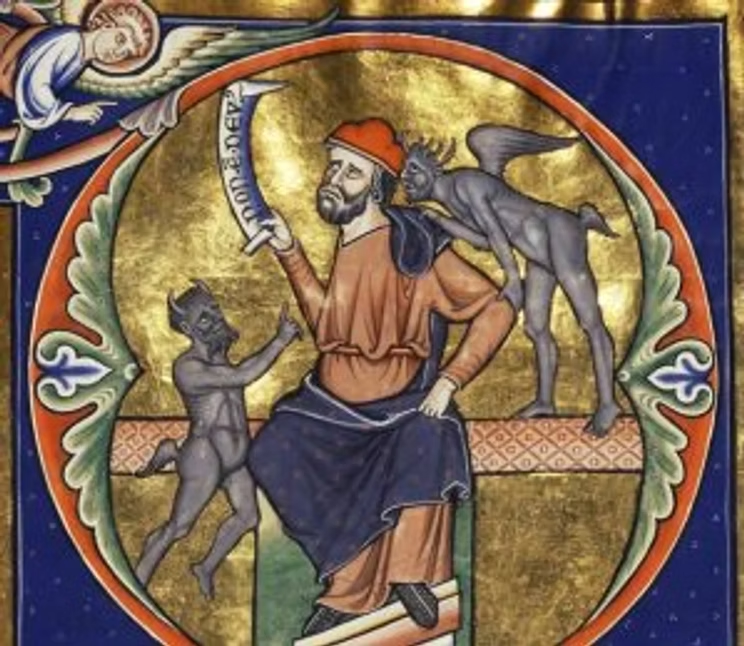
Worldly influences

I know I talk a lot about reincarnation, which many American Christians shudder at the concept of not having one death be the final parting of a soul from a body, with anyone having a cross placed on their tombstone automatically allowed into heaven. The thought of good ole granny or mom being recycled back to earth just makes people nervous.

Mainly, that anxiety is because 99.9% of the population has a skeleton closet that is crammed full, including new memories one is ashamed of.  Any thought that God will judge one by their sins is quickly forgotten when one presumes that how much money one gives to charity and how much one bakes cakes for the church fundraisers will make all the dirty little secrets and white lies be outweighed on an imaginary set of Justice Scales.

That becomes a gamble.  Gamblers have a town in Nevada set aside for them (one big name) that is known for odds and games of chance.  To think God will forgive is akin to praying to the gods of chance, where people see their souls stacked up neatly on a roulette number that says, “God forgives” or “Jesus saves.” Hope is all about that little ball landing in one of those slots.

The odds for winning that bet are slim, simply because there is nothing ever said by Jesus that promotes sin of any kind.  To “love one another” does not mean sin with everyone, or bless the sins of another.

We get a good glimpse at the indirect statement that Jesus made about reincarnation, when he said, “those who want to save their life will lose it.” Anybody that wants to save a human life (his or hers, the only body one possesses) means someone who wants Jesus and God to forgive how much one keeps for oneself, despite all the pretense of giving.

A good example of how well this “give a little, keep a lot” plan works is found in Acts 5:1-11, which is the story of Ananias and Sapphira. Both of them wanted to “save their life” by keeping “some” of the price they received, when they sold land they owned; but they lied by saying they were donating the whole amount to the church. Both of them “gave up the ghost,” as soon as Peter questioned them about it (Peter was speaking through the knowledge of the Holy Spirit, not from sending out spies to make sure the church was well funded).

By knowing that story, one can see the prophetic nature of what seems like rhetorical questions, “For what will it profit them to gain the whole world and forfeit their life? Indeed, what can they give in return for their life?”

The answer is Ananias and Sapphira could have kept everything – their land or all the money they got for selling that land. No one forces anyone to say I am a Christian; but anyone who uses the name of God in a lie (“Christian” stems from “Christ,” the Holy Spirit of God that was in His Son Jesus) is going to die a normal mortal death and be recycled back in another human form.  God forgives normal sinners by letting them try the world thing again, so maybe those souls will figure it out one lifetime.

“Crap out! Better luck next time. New roller [symbolic reincarnation]. Place your bets,” says the boxman [symbolic of a mortician].

What was the name of that creature that influenced Eve to sin?

Perhaps the most important message Jesus told (in this story) is at the end. He said, “Those who are ashamed of me and of my words in this adulterous and sinful generation, of them the Son of Man will also be ashamed when he comes in the glory of his Father with the holy angels.” Think about what that says.

<Jeopardy theme music plays during a moment of pause>

Someone who would be ashamed of Jesus can only be one [someone’s name here] who thinks he, she, or it is better off by being oneself, rather than BEING JESUS CHRIST REBORN in one’s [someone’s name here] fleshy body.

“Golly gee! I made millions over a lifetime. People look up to me! Am I supposed to give all that up and be like that rolling stone Jesus … who the important people detested?” says someone who would be embarrassed being Jesus.

In the accompanying Genesis reading, Abram became Abraham and Sarai became Sarah. They were the same bodies, but their names were changed to denote a new Spiritual presence within them. Their barrenness was taken away; and although that meant the birth of Isaac in the physical realm, it meant their sacrifice of self would beget innumerable descendants who would also be changed by the Holy Spirit, through a deep commitment to the One God. They were the precursors of the Christ Spirit in human beings.

Believe me when I say that the ones who ARE reborn as Jesus Christ AND thank God for that Spirit within them … nobody knows who they have changed into … no one can see the changed name they became. They are not ashamed to serve others.  They gladly do so without fanfare, news articles, or golden awards of recognition. They don’t ask people to guess who they have become.

Anyone who is promoted as “a great man” … by the popularity they command, the books they have sold, or the charisma they use to melt the will of others … most have secretly had Satan wrap his arm around their shoulders, saying, “See. I told you all this could be yours.”

Jesus only became famous because he rose from the dead, and the Jews deny that ever happened, saying his disciples stole his body. Jesus did not return and appear as Jesus for the whole world to see and marvel at. Nope. Jesus returned as a gardener, as a stranger on the road to Emmaus, and as an old man by the sea.

He appeared as the Jesus the disciples knew, so he could teach them and then return in them, in unknown form as one Apostle after another, with nobody recognizing any of them as Jesus Christ. That is how “the Son of Man … comes in the glory of his Father with the holy angels,” … as Apostles … as Saints … those who welcome the sacrifice of self, have a deep-felt love of God, and know the reincarnation of the Christ Spirit in them leads them to eternal bliss, not a recycling into the worldly domain.

Those who are ashamed to make that sacrifice, because the here and now smells and tastes so sweet, looks so richly beautiful, and feels so comforting to put on, are keeping “some of the profits for themselves;” and Jesus Christ is ashamed of them because they call themselves Christians.

Don’t lie about loving God and Christ, while holding back some possessions for self.  Things make sacrifice so difficult to commit to a loss of self power … just admit it. Being ashamed of Jesus means not truly being a Christian.

In this season of Lent, where the test is one’s willingness to sacrifice and be ALL IN, realize that it is hard to be all in when you have a lot to lose … real or imaginary. ALL IN is the only way to survive forty days of testing, because anything less will bring failure. However, when one puts everything on the table with absolutely no worry about losing things, then the saying goes, “It is not gambling if you can afford to lose.”

One’s Personal Lent can only come when one is truly ready to be tested, knowing failure is impossible. Sadly, some people have to be afflicted with sores all over their bodies, or become blinded from seeing the world as a place of beauty, or be crippled and made incapable of running to grab as much booty as one can, before they can beg for divine help. When destitute and poor, it is easier to give all one has left … a life … to God. Then one might be ready to serve God wholly, gladly letting the ego die.


Romans 4:13-25 – Having the faith of Abram

For the promise that he would inherit the world did not come to Abraham or to his descendants through the law but through the righteousness of faith. If it is the adherents of the law who are to be the heirs, faith is null and the promise is void. For the law brings wrath; but where there is no law, neither is there violation.

For this reason it depends on faith, in order that the promise may rest on grace and be guaranteed to all his descendants, not only to the adherents of the law but also to those who share the faith of Abraham (for he is the father of all of us, as it is written, “I have made you the father of many nations”) —in the presence of the God in whom he believed, who gives life to the dead and calls into existence the things that do not exist. Hoping against hope, he believed that he would become “the father of many nations,” according to what was said, “So numerous shall your descendants be.” He did not weaken in faith when he considered his own body, which was already as good as dead (for he was about a hundred years old), or when he considered the barrenness of Sarah’s womb. No distrust made him waver concerning the promise of God, but he grew strong in his faith as he gave glory to God, being fully convinced that God was able to do what he had promised. Therefore his faith “was reckoned to him as righteousness.” Now the words, “it was reckoned to him,” were written not for his sake alone, but for ours also. It will be reckoned to us who believe in him who raised Jesus our Lord from the dead, who was handed over to death for our trespasses and was raised for our justification.

——————–

This is the Epistle reading selection for the second Sunday in Lent, Year B, according to the Episcopal Church lectionary. It is read along with the Old Testament reading from Genesis 17, where is found the covenant God made with Abram to become the father of many nations. It is also read along with Psalm 22, where David sang that “kingship belongs to the Lord,” as it is He who “rules over the nations.” Finally, Paul’s selection from his letter to the Jews of Rome is accompanied with the Gospel reading from mark, where Jesus told his followers they must pick up their crosses and follow him.

Verse 13 here is very important to grasp, as Paul said the Law is not the source of salvation. Paul was not necessarily referring to Mosaic Law, but all the laws of man that have streamed from that [for Jews], which become the foundation for many civil laws. As such, the law [from “nomou”] is a collection of customs that are an external force of influence that impels actions. This form of external law becomes a way for forced conformity, rather than being representative of an internal influence to do what is right [righteousness]. This is opposed to doing that which is against a law [sinfulness].

Paul then wrote this assessment: “If it is the adherents of the law who are to be the heirs, faith is null and the promise is void.” By “adherents of the law,” the reference is to Jews, the descendants of Abraham, Isaac, and Jacob [at that time]. The use of “heirs” is relative to the promise between God and Abram [to be named Abraham] that a multitude of nations would come, with kings who will rule those nations. This means all nations professing to be Christian then fall into this lineage.

The change of course that says “faith is null” means the concept of a birthright as a form of exclusivity, as a child of God amid others who are no so blessed, ceases all true faith. This is like James wrote: “faith without deeds is dead.” (James 2:26b) Without true faith, there is no promise of a multitude of nations with kings born of Abraham’s blood.

This concept was stated by Jesus in Matthew 5:5, when he said, “Blessed are the meek, for they will inherit the earth.” The Greek word translated as “meek” is “praeis.” According to HELPS Word-studies: “This difficult-to-translate root (pra-) means more than “meek.” Biblical meekness is not weakness but rather refers to exercising God’s strength under His control – i.e. demonstrating power without undue harshness.” They add that the word is read as a combination of “gentleness (reserve) and strength.” Therefore, Jesus preached that the kings of a multitude of nations from Abraham would be “meek,” like their progenitor.

This is why Paul then wrote, “it depends on faith, in order that the promise may rest on grace and be guaranteed to all his descendants, not only to the adherents of the law but also to those who share the faith of Abraham.” That says that meekness is a demonstration of faith. Where there is faith there law exists within, with no need for it to be externalized in written law. Had the Israelites all possessed true faith in God [as Moses possessed], then there would have been no law needed to be brought down from the mount.

This is why Paul said, “For the law brings wrath; but where there is no law, neither is there violation.” “Wrath” is a legal punishment for breaking a law, demanded in a society where all are not on the ‘honor system’ of true faith. True faith means one never goes beyond the boundaries of law, as if no law existed beyond oneself.

Abram had faith without any external laws guiding him. When Paul wrote of Abram, saying “the presence of the God in whom he believed, who gives life to the dead and calls into existence the things that do not exist,” he was saying God was within Abram, so the law was written on his heart, exercised by his mind. The “life to the dead” is relative to any and all descendants of Abram, who at that point was childless, having cast away Hagar and Ishmael [a statement that God disowned a child born to Abram that was not from Sarai].

All souls come from God. They are breathed into clay [flesh], such that all humanity [including Abram and Sarai] is soul-flesh life forms called “into existence” that become all descendants of God, beyond those who adhere to any law given Moses. Law did not exist external to Abram; but God breathed into Abram the ways of righteousness, as an addition to his breath of life in a body of flesh, which became the codes by which Abram lived.

The faith of Abram led him to live righteously, not because he benefited from others for his good acts, but because it pleased God and that made Abram happy. The promise made to Abram by God was that he would sire a child through Sarai, when he was ninety-nine years of age, and seemingly beyond the age of parentage. As such, God made a promise of a miracle birth coming, which did not change Abram in any way [other than he started going by Abraham]. Paul wrote: “No distrust made [Abraham] waver concerning the promise of God, but he grew strong in his faith as he gave glory to God, being fully convinced that God was able to do what he had promised.” The promise increased Abram’s faith.

The promise of one producing a multitude of nations is a way of promising eternal life, through progeny. This is then a story of God’s promise to all human beings, as they too can live on forever through lineage that is founded in true faith. God’s promise that we recognize today is the eternal live through the covenant of Jesus Christ. This promise must increase one’s faith, rather than let one lose faith because one believes more in a promise than God.

When Paul then used the story of Abraham and the covenant made to him by God to turn it to a Christian theme, he wrote: “Therefore his faith “was reckoned to him as righteousness.” Now the words that translate as “it was reckoned to him” were written not for Abram’s sake alone, but for ours also. Thus, Paul wrote, “It will be reckoned to us who believe in him who raised Jesus our Lord from the dead, who was handed over to death for our trespasses and was raised for our justification.”

This says true faith is much more than a profession of belief. Whereas belief in an inheritance to God’s family through birth [Judaism and now Christianity] will be tested, judged by how righteous one is, the reckoning we all face today, in Lent, is one’s faith in God. Lent is not a test of beliefs, but a test of one’s true faith in God.

In verses 22 and 23 is the translations above that state “was reckoned to him.” In the Greek, the capitalized word “Elogisthē” is written, which means [in the lower case spelling], “was reckoned, was considered,” with usage including “was counted, charged with; reasoned, decided, concluded; thought, supposed.” However, that ignores the importance Paul placed on that past state of being between God and Abram, where the capitalization places importance on a time “Taken into Account.” Just as Abram was judged by God to be righteous, as a demonstration of his true faith, so too will everyone who claims the right to be a child of God, through Abraham, will be judged.

That is the meaning of Paul writing, “It will be reckoned to us who believe in him who raised Jesus our Lord from the dead, who was handed over to death for our trespasses and was raised for our justification.” We will be judged as to how well we have faith in a promise between us and God that says we will be granted eternal life and the absolution of past sins. Without the true faith possessed by Abram, we will distrust God, we will waver in our commitments to serve God unconditionally, and we will grow weak in what we say we believe in, as far as God’s promise is concerned. This becomes why this reading is read during the season we call Lent.

For a Christian to say he or she believes that Jesus of Nazareth “was handed over to death for our trespasses and was raised for our justification,” we need to fully understand what “justification” means. The word written by Paul is “dikaiōsin,” which means “the act of pronouncing righteous, acquittal.” (Strong’s) The word implies “a process of absolution,” whereby a demand is made upon us, individually upon each of our own deaths, such that the word’s usage “is closely associated with the pressing need to be released from deserved punishment.” (HELPS Word-studies) In other words, each individual’s faith will be judged by God, based on one’s acts of righteousness.

To say one believes Jesus died for our sins is meaningless, unless one has walked that walk, so one has the right to talk that talk. One needs to become Jesus, so one’s self-ego becomes “handed over to death,” due to the guilt one has for one’s own sins of the past; so, sacrifice of self-ego, replaced by the name of Jesus Christ, one can be judged so one’s own sins are no longer reflective of one’s faith. One has to become Jesus to know Jesus firsthand, in order to have faith that Jesus Christ has redeemed one’s soul.

The only way one can then become “raised for our justification” is to have died of self, having been reborn as Jesus Christ. The “process of absolution” can only pass the Lenten test of faith when God looks upon our flesh and sees His Son reborn within. Otherwise, one will be sweating bullets to give up one meaningless sin for forty days, longing for that time of pretend sacrifice to end, so one can return to the ways that justify eternal damnation.

This is where one needs to look closer at the story of God’s covenant with Abram, so one can understand just what it means to be a multitude of nations, where kings born of Sarah will proliferate. Each body of flesh must be a nation alone unto God, whose laws are the faith that result in righteous acts. The laws of one’s flesh are written on one’s heart, not on something external to oneself. Each body of flesh that becomes such a nation is ruled by the Christ Mind, where the true kingdom of Jesus resides. With that guidance in one’s brain, one becomes the rebirth of Jesus [name meaning “Yah(weh) Will Save”]. To be that, one must die of self.

Genesis 17:1-7, 15-16 – A covenant to walk in love forevermore

When Abram was ninety-nine years old, the Lord appeared to Abram, and said to him, “I am God Almighty; walk before me, and be blameless. And I will make my covenant between me and you, and will make you exceedingly numerous.” Then Abram fell on his face; and God said to him, “As for me, this is my covenant with you: You shall be the ancestor of a multitude of nations. No longer shall your name be Abram, but your name shall be Abraham; for I have made you the ancestor of a multitude of nations. I will make you exceedingly fruitful; and I will make nations of you, and kings shall come from you. I will establish my covenant between me and you, and your offspring after you throughout their generations, for an everlasting covenant, to be God to you and to your offspring after you.

God said to Abraham, “As for Sarai your wife, you shall not call her Sarai, but Sarah shall be her name. I will bless her, and moreover I will give you a son by her. I will bless her, and she shall give rise to nations; kings of peoples shall come from her.”

——————–

This is the Old Testament reading selection for the second Sunday in Lent, Year B, according to the Episcopal Church’s lectionary. It precedes a reading from Pauls’ letter to the Romans, in which he uses the story of Abraham as being relative to Jesus Christ and faith. It also is read before Psalm 22, where David sang, “My soul shall live for him; my descendants shall serve him; they shall be known as the Lord’s for ever,” which reflects the faith of Abraham, Paul, and Jesus. Finally, this history of Judaic lineage precedes the Gospel reading from Mark, when Jesus foretold his death, leading to him warning his followers to pick up their crosses of faith, or forget about inheriting anything heavenly.

This reading begins by making a point of stating the age of Abram. For us today, ninety-nine would be well beyond normal expectations for life in the flesh. Knowing that Abraham lived to be one hundred seventy-five years, at ninety-nine he had lived 56% of his life. In today’s standards of living eighty years, 56% would equate to the age of forty-five. For a male American today to not have children by the age of forty-five, most would have little desire to go through the challenge of raising a baby and caring for it until one’s retirement years. But, that reflects the selfish nature of these times, when there are few males who have children when they are one hundred and fewer who live to be one hundred seventy-five.

The telling of Abram’s age serves two purposes. The first is it says Abram was not a descendant of ordinary blood. Being a descendant of Noah (from Shem), who lived to be nine hundred fifty (Shem lived to be five hundred), the age of Abram says he was born of holy blood. Abrams’ father, Terah, lived to be two hundred five years. (Genesis 11:32) Still, the second purpose lets the attentive reader realize that it had been twenty-four years since Abram left Haran, as commanded by God when Abram was seventy-five. (Genesis 12:4) That says Abram had clearly been devoted to God, along with Sarai, for quite some time, dating back to when they married while living in Ur [perhaps sixty years earlier]. Thus, it is important to realize those years of service to God that led to this conversation about to take place.

The translation presented by the New Revised Standard Version [NRSV] above, has God tell Abram, “I am God Almighty; walk before me, and be blameless.” This comes after we read, “the Lord appeared to Abram.” Both of these statements should be taken as absolute truth, but they need to be understood in terms of Abram being a long-time servant of God.

From jumping ahead in the Holy Bible and knowing all about Moses, we have an understanding that God told Moses that no one can look upon the Lord and live. That knowledge needs to be brought back to this reading, so we can clearly see the truth of what is written [it was all dictated by Moses, many years after the fact, from divine visions of pertinent history]. Sleep is metaphor for death, meaning dreams are visions in a dead state of being. When in a dead state of being, one can have a “face-to-face” meeting with God.

Moses would enter the tent of meeting and once in that chamber he probably went into a deep sleep state, when he then had God appear before him. In this same way, Abram had “the Lord appear to him” in a dream. It should be realized [from having read his story in Genesis] that this was not the first time God spoke with Abram; so, it is important to see Abram was a prophet of the Lord who regularly had God appear before him and give him instructions.

From there the statement to Abram was made, but it cannot be read like an introduction that tells Abram, “I am God Almighty.” The two were already well acquainted. That means the Hebrew needs to be closely inspected.

The Hebrew written [realizing Hebrew has no capital letters] is as follows:

’ă·nî-’êl šad·day” – “I god of the land” ,

hiṯ·hal·lêḵ lə·p̄ā·nay weh·yêh ṯā·mîm” – “walk with face and be blameless” .

There is no need for God to announce His greatness. As God [Yahweh] speaking to Abram, His name needs no embellishment. Thus, God spoke of “el,” which is a “god” [in the singular number], that is “shadday” or a god of the world, land, fields. This is then a statement not about God – Yahweh – but about Abram. It says “You are Me incarnate in the flesh. As Me, You are a “god of the earth.”

In the second part, the word “walk” [from “halak”] becomes a statement of how far Abram has “come,” while also a statement of how far he will “go,” because he has become the vehicle of “god on earth.” Wherever Abram “walks,” so too does God.

Next is a word that clearly says “face,” but one that is regularly translated as “before me.” There can be no human being ever who walks before God, as “before” becomes a statement of greater than, or a leader of God, making God be seen as a follower. The root Hebrew word, “panim [sing.] or paneh [plur.],” means “face or faces.” This word becomes key in understanding the first Commandment given to Moses.

There, the Hebrew states: “lō yih·yeh-lə·ḵā ’ĕ·lō·hîm ’ă·ḥê·rîm ‘al-pā·nā·ya,” with the last word again a form of “panim.” The standard translation says, “You shall have no other gods before me,” but the literal translation says, “not you shall have gods other [as your] face [before my face].” The first Commandment says no one can come before God [in a meeting or an appearance] as self. To be received by God you must wear the face of God, as only one who has been possessed by Godcan enjoy the presence of God. Without oneself wearing the face of God, one is thinking one’s ego is a god [an elohim]. Thus, here in Genesis, God told Abram in a dream, “As Me in You on earth, you walk with My face, which makes You walk without sin.”

See the masks of Mardi Gras as symbolizing the face of self-pleasure worn for the last time, before the face of self comes off on Ash Wednesday and the face of God is then worn forevermore.

This becomes a significant statement that Abram had long before sacrificed any and all forms of self-ego, so he only wore the face of God as he went through life. When we read that Moses’ face would glow greatly after meeting with God, the Israelites made him wear a veil to cover the face of God, or else they feared they would die from looking at God. Certainly Jesus wore the face of God in the same regular way as did Abram, which was evidenced every time Jesus said, “I do not speak for me, but for the Father.” That means wearing the face of God is a requirement to “walk blamelessly,” or live a life of righteousness.

This quote by God then leads to him telling Abram of a promise He was making to him. A promise made by God is thus a covenant. Still, a covenant with God implies an agreement being made between God and the one to who God makes a covenant, such that the one receiving God’s good will will continue to be the face of God on earth. [One’s face still looks like one’s face, as God is invisible; but one’s face has a glow of holiness surrounding it – a halo.]

Simply by understanding that God does not make Covenants with just anybody, such that Abram had long proved his metal to God [think about that in Lenten terms], God was giving to Abram the one thing he knew Abram wanted, but never asked for [begging for self is selfish]. In addition, God was giving to Sarai the one thing she had long wanted, but could never reward her husband with – a son. Sarai was also a long devoted servant of God, but she had never made demands of God to make her pregnant. She did not blame God for her being barren, thus she too was “blameless.” All of this must be seen as God caring for those who serve Him unconditionally.

As a purposeful selection for the second Sunday in Lent, this story of a covenant between God and Abram [and by extension Sarai] is told one week after a purposeful selection that told of the covenant between God and Noah. This trend forces one to realize that humans having been long dedicated to serving God [Noah five hundred years; Abram ninety-nine years] do not go unrewarded. The stories of Noah and Abram [largely unwritten in the Holy Bible] say these men were upright and righteous, which means they listened to the voice of God telling them what to do. As they did what God told them to do, God supported them in those tasks. Both Noah and Abram are then projections of how we should listen for God’s lead, act upon having gained a good conscience, and thank God for leading us, rather than demand God do more to please us.

The symbolism of the Lenten experience – forty days of self-sacrifice – is not about recognizing the time Jesus spent in the wilderness of Judea and it is not about us being asked to give up one indulgence – one recognizable sin of selfishness – because Lent is a marker in one’s personal life, relative to when one ceased wearing the face of self-ego and began wearing the face of God. Once one puts on the face of God there is no end to that subservience. Thus, the lesson of this reading is hearing the voice of God say to you – from within – “I am the god of the land. Walk on holy ground forever wearing the face of God and being blameless for only doing what God has led you to do.”

All of the seasons of the liturgical year are set up the same way. None of them are expectations to remember the life of Jesus and force one to believe Jesus did this and Jesus did that. Jesus is the model for all who seek to serve God. Serving God cannot be done alone. Serving God demands one become married to God, through the receipt of His Holy Spirit, it then becoming meshed irrevocably with one’s soul.

  • Advent is when an individual servant of God remembers when he or she first felt the need to serve.
  • Christmas is when one first felt the birth pangs of a new being within.
  • The Epiphany is when one realized Jesus Christ has been born within and one is no longer wearing the face of selfishness.
  • Lent is about one’s test of commitment to God.
  • Easter is about the death of all past connections to sin and the resurrection within one’s soul to the state of Apostle-Saint, when one no longer keeps God a secret experience.
  • Pentecost is when one truly walks in the name of Jesus Christ, as a minister or priest that tells the world God wants to marry them too.

Thus, the seasons call believers to become the faithful, through coming to know God and Jesus Christ personally – not through stories told us about someone else’s life.

Mark 8:31-38 – Being taught to become a Son of man

Jesus began to teach his disciples that the Son of Man must undergo great suffering, and be rejected by the elders, the chief priests, and the scribes, and be killed, and after three days rise again. He said all this quite openly. And Peter took him aside and began to rebuke him. But turning and looking at his disciples, he rebuked Peter and said, “Get behind me, Satan! For you are setting your mind not on divine things but on human things.”

He called the crowd with his disciples, and said to them, “If any want to become my followers, let them deny themselves and take up their cross and follow me. For those who want to save their life will lose it, and those who lose their life for my sake, and for the sake of the gospel, will save it. For what will it profit them to gain the whole world and forfeit their life? Indeed, what can they give in return for their life? Those who are ashamed of me and of my words in this adulterous and sinful generation, of them the Son of Man will also be ashamed when he comes in the glory of his Father with the holy angels.”

——————–

This is the Gospel reading chosen with purpose for the second Sunday in Lent, Year B, in the lectionary for the Episcopal Church. This reading is partnered with an Old Testament reading from Genesis that tells of God’s covenant with Abram, Psalm 22, where David sang, “They shall come and make known to a people yet unborn the saving deeds that he has done,” and the epistle of Paul to the Romans, which related the sacrifice of Jesus to that of Abram.

As a reminder that is important to realize prior to any reading of Scripture, one must see oneself appear in the reading. Faith should lead one to grasp how divine Scripture is intended for the reader to gain insight for his or her own life, more than thinking Scripture is God’s way of wanting one to hear a story read to you that makes it seem there is nothing one can do about things past. It is from such a position of basic ignorance that everyone must see themselves (individually) as Peter and also as those Jesus knew wanted to save their lives, simply from hanging around one of righteousness, rather than being one of righteousness. One needs to always see oneself as coming up short in divine expectations and being in need of Scripture to save one’s soul.

This specific choice of verses are actually split into two separate events, one with Jesus only talking to his disciples and the other with Jesus having called the crowd to join with the conversation. In the versions of English translations available online, these two sets of verses will each have their own heading. For example, the New International Version (NIV) has verses 31-33 headed as “Jesus Predicts His Death,” with verses 34-38 headed “The Way of the Cross.” Simply by recognizing that separation, one can see there are two groups of people who followed Jesus then, just as there are two different groups today: those seeking to learn from Jesus; and, those wanting to be near Jesus.

Because the vast majority of people professing to be “Christians” today fall more in the second group, with those designated as seminarians and their teachers [including those ordained as ministers in churches] in the “disciples” category, most people will overlook the importance of Mark writing, “Jesus began to teach.” It is much easier to stay seated on a pew and hear those words, while imagining them saying, “Jesus began to talk.”

The Greek word written by Mark is “didaskein.” That is the present active infinitive of “didaskó,” saying “to teach, to direct,” or even “to admonish.” HELPS Word-studies adds the word literally means “to cause to learn,” by instruction and imparting knowledge. That source also states the word “nearly always refers to teaching the Scriptures (the written Word of God).”

By simply understanding that “Jesus began to teach,” one cannot read the following words in verses 31-33 as if Jesus began to prophesy his coming life. To prophesy his coming suffering, rejection, death and resurrection makes “to teach” a most inappropriate word choice. Jesus could not “teach” the future, even though he could know what was coming. Because of this one word – “didaskein” – the reader is forced to figure out how the following words [known in hindsight to perfectly fit what happened to Jesus] are “instructions, imparting knowledge.” It must drive one to ask, “What was Jesus teaching?”

The answer to that question comes in the words written: “hoti dei ton Huion tou anthrōpou.”

Those words have been translated by the NRSV as saying, “that the Son of Man,” but they are better translated as stating: “what necessitates this Son who of man.”

Here, in the NRSV, one finds another common liberty taken, which is the capitalization of words not capitalized in the original text. This is quite prevalent in the Old Testament, since Hebrew has no capital letters, leading one to improvise when it comes to proper names and other words that need importance shown by way of capitalization. However, because Greek is not like Hebrew in that regard, the capitalization of “Man” misleads one into thinking Jesus referred to himself, bringing about a need to capitalize “anthrōpou” as it three words created a title for Jesus – Son of Man.

With that mis-capitalization [commonly done through the Gospels], one is led to think that Jesus is not teaching about how to become a “Son of man,” so one thinks Jesus is not teaching, but talking about himself. The removal of the capitalization of “Man” [which would be Jesus] and reducing it to “man,” as written, Jesus can be seen “to teach his disciples” about how to be like him.

It helps to see Mark as himself an Apostle-Saint. As such when writing his Gospel he would have not only listened to Simon-Peter tell his eyewitness account of Jesus’s ministry, but Mark would have been led by the Holy Spirit to understand things in ways that normal minds cannot. As disciples, Peter and the others heard Jesus use the term “Son of man” and heard it as Jesus’ title for himself. However, after they had become married to God and their souls had been merged with the Holy Spirit, they too became Sons of man, as the resurrection of Jesus Christ. Therefore, Mark wrote divinely, saying that Jesus began to teach those who would become themselves the “Son of man” what they needed to know that transformation demanded of them.

By realizing that this verse states Jesus teaching what all Sons of man need to know, the lesson then becomes the following, all of which are important [preceded by the word “kai”] stages of “great suffering” that one “must undergo”:

· One will “be rejected by the elders”.

· One will be rejected by “the chief priests”.

· One will be rejected by “the scribes”.

· One will “be killed”.

· One “after three days will arise”.

The lesson there, which Mark [thereby Peter too] knew, was becoming the Son [of God], in a body of flesh called “man, one of the human race” meant connecting to a source of knowledge and truth that was well beyond all scope of religious education. That which the “elders” had been taught to believe was wrong. That which prompted some from within the people to perform sacred rituals and preside over holy congregations was based on beliefs, not true faith. All that had been written divinely prior was misinterpreted, thus all which was written as how one should treat holy mysteries of text was half-truth, wild guesses, or outright lies. Therefore, possessing true knowledge of God and understanding sacred texts, as a mere mortal not sanctioned by a religious organization and its leaders, meant total rejection from that establishment, in a most unkind manner.

When Jesus then got to the point of saying “be killed,” the Greek word “apoktanthēnai” is written. That word can equally state “be put to death,” where the figurative usage means “be abolished” or “be extinguished.” That figurative meaning can be seen, relative to the series of rejections taught to be expected from the leaders of the Jews [taught to Jewish disciples], to mean a form of excommunication or the end of their ability to be called “Jews.” That becomes a lesson that the disciples , once they would become Sons of man, would lead to them no longer calling themselves Jews.

That then leads to Mark recalling Jesus saying, “after three days to arise.” Here, it becomes important to slow down the reading process in one’s brain, so one no longer sees that statement as if it solely means “after seventy-two hours have passed [the sum total in “three days”] one with then arise from having been dead.” When one reads very slowly, the following appears:

meta” – “in company with”

treis” – “three”

hēmeras” – “days”

anastēnai” – “to raise up.”

From these four words are found important statements that say: One’s soul will be joined with the Holy Spirit and be in company with God; one will no longer be alone, but one of three – the Father, the Holy spirit, and the Son; the darkness of death will be replaced with the sunlight of truth, where the light of Christ means one has been saved from the death of a world of matter; and, one’s soul will ascend to a heavenly state of being.

That last statement also means that the transformation in the flesh from being a Jew will rise in a new philosophy of life that will be named after the Messiah, called Christianity – where all members are reborn in the name of Jesus Christ. When those four words are read with that scope of meaning, which still allows for them to be prophetic of the near future in Jesus’ life, one then sees this lesson taught by Jesus has a very happy ending – for those who are good disciples and receive the Holy Spirit, becoming apostles [Judas Iscariot would not be one].

For anyone who has followed my interpretations in the past, it will be remembered how I have often said the Greek word “kai” is a marker word [much more than the conjunction “and”] that denoted importance follows. At every place where a bullet point marks [mine above] the different steps in this lesson, one can find that Mark wrote the word “kai.” That word must be seen as intended to show where close attention should be placed, more than as just a word that allows a brain to scoop up large quantities of words and make them something less than divine Scripture intended. To begin this series of verses, verse 31 begins with a capitalized “Kai,” stating how important it is to realize Jesus began to teach his disciples [denoted as “them” – “autous”]. In verses 31 and 32 there are six presentations of “kai,” meaning those two verses are packed with important things to know.

From the interpretation I have just presented, there will certainly be many who will reject what I have written, simply because others have not seen the same depth of meaning that I am proposing [exposing?]. This then becomes a prophecy fulfilled, as the lesson Jesus taught brings the expectation of scholarly rejection [“the scribes”]. Still, I do not feel alone, as the next verse [32] points out how Peter immediately rejected what Jesus said. While his rejection was from misunderstanding what Jesus taught [a common mistake, one still made today], Peter then becomes an example of how one should see oneself, rather than think one knows what these verses teach [about Jesus’ life bringing suffering].

When the NRSV says Mark next wrote, “He said all this quite openly,” the word translated as “openly” needs to be understood. That word is “parrēsia,” and rather than being the last word in this segment, it is the first, immediately following yet another “kai.” The word means “freedom of speech, confidence,” (Strong’s) but its usage relative to speech implies “boldness, confidence.” Here, one needs to recall the state of Jesus speaking in the synagogue in Capernaum [told in Mark’s first chapter], as the Jews present said Jesus spoke with “authority” [“exousian”]. The same sense should be felt in Jesus teaching his disciples; so, rather than his words being expressed “openly,” they should be heard as being confidently stated, without any reason for anyone to question the truth they contain.

When we then read that Jesus had confidently made a series of teaching instruction to his students, Mark next said that Peter took Jesus aside and began to “rebuke” him. This must be seen as a more powerful statement than one student asking Jesus to speak with him for a moment, privately, because this series of words also begins with the word “kai.” The importance then makes Peter become the lesson himself, as a live demonstration of what Jesus had just taught means. Peter then reflected how the education system of the Jews had permeated their brains also, controlling the way they thought about the expectations set by the prophets.

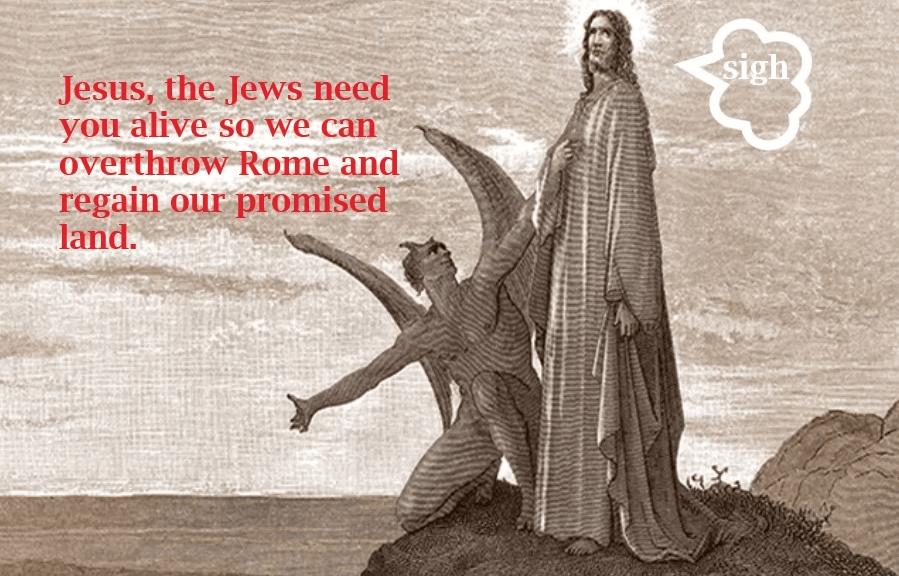
This means Peter heard the words of Jesus in the same way Mark wrote them, which was written by design to make people who are not true disciples think in simple terms, which are false. Peter thought the prophets had forecast a Messiah that would overthrow the world powers [like the Romans] and return the lands of Israel and Judah to their rightful owners, because of a covenant made with God [long since broken, made null and void]. This way of thinking, based on the education of the Jewish leaders, meant [to Peter] Jesus had to be protected and kept alive, because he was seen [by his followers] as the one who would lead an uprising that would have God come and defeat their foes. Peter then spoke as one having in his brain everything that Jesus had just said [symbolically, thus misunderstood by Peter] was wrong and was not the path to take to obtain the redemption of souls.

When this rebuke by Peter has taken place, the NRSV has Mark writing, “But turning and looking at his disciples,” as if Jesus heard what Peter had to say, but then wanted to show him up in front of the other disciples. That is not that case, as the Greek words written are: “Ho de epistrapheis , kai idōn tou mathētas autou,” which literally says, “This [capitalized] now having turned , kai having perceived this disciples of him”.

The capitalization of “Ho” makes an important recognition of what Peter had just done, rebuking Jesus [“This”]. From that Second Aorist Passive Participle Nominative Singular Masculine form of the verb “epistrephó” [“to turn back, turn around, return”] becomes a statement that says: the student is rebuking the teach; and, that was the lesson of rejection all will face from standardized religion, so wrong will stand up to right as a way to destroy that which is righteous.

Following the marker of importance [“kai“], Mark then tells us that Jesus saw Peter was not the only one with his opinion. Not only had Peter turned away from receiving the teachings of Jesus, but Jesus perceived Peter was speaking for all of the disciples. Jesus then divinely knew they all wanted Jesus to stop talking about what they all thought was him predicting his own death.

When we then read that “[Jesus] rebuked Peter and said, “Get behind me, Satan! For you are setting your mind not on divine things but on human things,” this was Jesus the rabbi [teacher] telling the student to get back in his seat. Once that rebuke was made [not knowing what private words were shared then], Jesus then confidently and probably loudly announced to all of his disciple, “Get behind me, Satan!”

Get behind me, Satan!

The thought that Jesus would identify Peter alone as the physical embodiment of Satan is giving Peter too much credit. Peter was just one disciple, who thought like all the other disciples, who all thought like the elders, chief priests and scribes. They all had an opinion that they thought was best, whether or not they knew how God felt about those opinions. This is then where one needs to return to the wilderness experience that Jesus had, where Satan did attempt to make Jesus give honor to his opinions and promises. Satan was told then (basically) the same thing. “Get behind me” says, “I lead. You follow.”

To Peter and all the twelve disciples, those words were a demand, spoken by Jesus as the voice of God coming through His Son. God spoke as Jesus, saying (in essence), “Stop having any role in my ministry, if you are not going to learn what I teach.”

When Jesus said, “For you are setting your mind not on divine things but on human things,” the same “human things” were offered after Jesus had finished forty days fasting. The promises of stones being bread and angels keeping one from harm and kingdoms of the earth to rule were all human things, just as was Peter and the eleven promising to keep Jesus safe from all those he named that would make him suffer. The “divine things” were his lessons of what they all would face in their graduation, becoming Sons of man.

By seeing how the story of verses 31 through 33 tell of twelve disciples being turned towards standard religious beliefs and past teachings by elders, priests-rabbis, and scribes, not hearing the meaning of what Jesus was teaching, we see that surrounding the class setting was the presence of others who followed Jesus, but were not officially his students. Because this continuous story is told with the same continuity by Matthew and Luke, the story being told by Luke says Mother Mary was one of the so-called “crowd” that Jesus called near to his disciples. Because the disciples had just proved to be as unknowing as the other followers – the ‘common people” [a translation possible of “ochlon”] – Jesus extended his teaching to all who were present.

At this point that all had come close enough to Jesus to hear his words, he said, “If any want to become my followers, let them deny themselves and take up their cross and follow me.” This translation of the NRSV is another that does not capture the full truth of what Jesus proposed.

The Greek word translated as “want” is “thelei,” which translates as “wills, wishes, desires, is willing, intends, or designs.” (Strong’s) A better choice would be “plans,” rather than “want to.” Next, the word translated as “to follow” is “elthein,” which translates as “to come, go.” Thus, Jesus states, “if anyone plans after me to come,” which needs to be read slowly again, as “if anyone plans … after me … [me] to come.”

That becomes a statement [and Saint Mark would have known the truth of this meaning] that says, “What I am about to say next is important, because there will be a time after me, and if you want to be me then … as a continuation of me in you … then listen up!”

At this point Jesus began teaching again, just as he had earlier about the expectations of becoming Jesus Christ reborn. Instead of telling about who will reject them and how one will die and be reborn, Jesus then said these instructions:

· Deny oneself.

· Raise up yourself as an upright stake not fallen over.

· Follow me.

Those three instructions stated in verse 34 are conditional, as the use of a capitalized “If” [“Ei”] states. That one word speaks loudly as Jesus telling those who had their own personal opinions about how to live their lives; and, at that point in time, those surrounding Jesus were thinking their ideas about the way things should be were better than those Jesus was teaching them. The “If” sets up the scenario that one is not asked to follow Jesus around, especially if the only reason is self-benefit. The “If” says plainly that the choice is each individual’s to make about salvation of one’s soul. Thus, “If” one wants to find redemption from one’s sins, then [like Jesus had just said about death-three-days-arise] one must “disown, repudiate, disregard” [all possible translations other than “deny” for “aparnēsasthō”] oneself.

To “deny” oneself means a figurative death of self-ego and self-will. Jesus had used words that taught the disciples must face rejection to the point of death as Jews. While Jesus would be punished to death in his physical body, that body would not truly be dead, because it would be resurrected. However, Jesus was not teaching his disciples about his physical death, but their own figurative death of self, which caused them to listen to Jesus teaching but reject what he told them. To be cleansed of their sins, they had to die of their old ways.

Now, I have written in the past about how Jesus did not tell all his followers that they must build a crucifixion cross out of lumber and kill themselves physically, as a means of self-denial. The Greek word “stauron” was commonly used [thus commonly heard in language use] as a statement about the stakes in the ground that the vines of grapes grew upon. The weight of good grapes would cause the stakes in a vineyard to lead over, allowing the clusters of grapes to hang down close to the ground. When low to the ground, animals could eat the grapes easier and the soil could cause the grapes to turn bad. Therefore, Jesus said their figurative deaths of self-ego must be followed by raising up the stakes that kept them all from being like Cain and rising up to a life that acts righteously.

Again, knowing this transformation was a ‘big IF,” since not all those hearing his words would do as Jesus said [Judas being one], Jesus said his disciples must rise to his state of being. Thus, after Jesus would die, resurrect, teach some more and then ascend, those choosing to do as Jesus taught then would be the next man up, as Jesus Christ reborn. Everyone listening was already following Jesus around physically; so there was no reason to tell them to “follow me” in human ways. The Greek word written by Mark [“akoloutheitō”] actually tells those followers “to attend” or “to accompany,” where the spiritual means a union of soul to Holy Spirit, accompanying Jesus Christ within their bodies of flesh. Still, to reach that state of being [the ‘big If’], one must get rid of self-importance, practice being righteous and ask God to let Jesus Christ be reborn within one’s soul.

After making those three stages of development be heard, Jesus then stated two scenarios that would be relative to the “if” condition, based on what each listener held dear. First, he said “if you desire to save your soul,” where the Greek word “psychēn” was written. Whereas the NRSV translates that word as “life,” as if the question was about saving a mortal life [a known state of being that would eventually no longer live in human flesh], the source of “life” is the “soul.” Thus, Jesus asked each to ponder “if you want to save your soul.”

When Jesus then said “you will lose it,” the word translated by the NRSV as “will lose” is “apolesei,” which also means “will destroy, will kill.” This becomes a return to the first step towards salvation of a soul, which is denial of self. That means to save a soul one must kill that which imprisons that soul with sin. This is not a scenario of killing one’s flesh [suicide], but one stating as instructed – self-denial.

Jesus then supplied a scenario that was relative to one choosing to deny self, such that it was to allow one’s body of flesh to receive the Holy Spirit and become reborn as a Son of man [the “me” of Jesus] and to do so for the purpose of becoming an extension of “the good news of the Messiah” [from “euangeliou”]. If one made that choice, then that one was promised to have saved his [or her] soul by having raised his [or her] stake to a righteous state of life, following as a line of Jesuses in the world [the true “Gospel”].

After having restated his lesson for all ears to hear, Jesus then asked his followers two questions:

1. What does it gain a human being to inherit all the wealth of a material world, if finding that profit means a soul condemned to an eternity of loss?

2. What is a soul worth, when measured in physical things?

Those questions are rhetorical, when one knows they are asking about spiritual goals, not human ones. Everything gained in the material world will be left behind at physical death; but a soul sold for such temporal gains will pay the price of eternal loss. Therefore, the obvious answer says nothing material is worth eternal sacrifice.

When the NRSV has Jesus finish this lesson to his followers by having him say, “Those who are ashamed of me and of my words in this adulterous and sinful generation, of them the Son of Man will also be ashamed when he comes in the glory of his Father with the holy angels,” the issue at hand is embarrassment felt by a body of flesh that surrounds an eternal soul. All of the brains that thought Jesus should bite his tongue and stop saying things about death were doing nothing more than acting as the prison guards of a captive soul. It is the flesh that teaches the soul to sin. Thus, it was the flesh of the followers that was ashamed for everything done in the past that was keeping all of them from having their souls saved from that control.

That means the lesson of Jesus about sacrifice meant self-denial of the flesh’s influences. The stake of righteousness had fallen over and any fruit the disciples and others had produced was being eaten by the lowlifes of the world. They were doing nobody any good, least of all their own souls. Any shame felt in feeling guilt from being unable to raise themselves upright was because they all knew how difficult it was to be righteous in an unrighteous [an “adulterous and sinful”] world [“generation”]. To forego the lesson of Jesus and to continue onward as a soul chained to the lusts and desires of a body of flesh meant the time would certainly come when the soul would be freed from its prison of flesh, only to stand naked and afraid before the judgment of God. At that point, all who had felt ashamed of doing what Jesus said to do would feel the wrath of Jesus advising God to let those souls pay for their choice to sin.

Now, I cannot fathom anyone who considers himself or herself a Christian could read the words of this Gospel reading and not come away with the insight that Jesus spoke to us today, because we too live in an “adulterous and sinful generation.” Not only do the sheep who meander into church pews on Sunday [when COVID19 allows that possibility to happen], but also the leaders of those religions considering their organizations as “Christian,” they all routinely feel too ashamed of Jesus to actually become Jesus Christ reborn. They vehemently reject anyone [like me] who thinks that is a possibility.

Modern Christianity has become the fulfillment of what Jesus taught in the Gospel reading, because our brains [a material-flesh organ] have been filled with the teachings of the religions, who [like the elders, high priests, and scribes] see it as much easier to let Jesus be a one-of-a-kind, which no one can ever duplicate [even though Christianity was created by Apostles reborn in the name of Jesus Christ – all being Jesus reborn].

It is so much easier to believe all one has to do is sit and wait for death to come naturally, at which point Jesus will wrap our souls up in his spiritual arms and take us to the Father’s house, where there will be rooms for Episcopalians, rooms for Catholics, rooms for Buddhists, rooms for anyone who ever lived, with none of them ever being required to do anything to have their souls saved. It is a philosophy created by embarrassment to admit, “I read the words, but I still have no clue what they really mean.”

This is what makes understanding that Jesus is threatening your soul with a judgment that says, “Jesus will tell God about your soul – ‘I do not know you.’” For Jesus to know one, one has to follow the instructions he gave in this reading: sacrifice self-ego, act righteously, become reborn in the name of Jesus as the Christ. One has to be Jesus to know Jesus.

If one cannot see that in this Gospel reading, then one is too blind to see the truth. Not realizing the message of this Gospel reading means one knows the love of sin [i.e.: being one with Satan] rather than know the peace of salvation [i.e.: being one with Jesus Christ].

——————-

As a Gospel selection for the second Sunday of Lent, which is a season of self-denial, when one should be practicing righteous ways [something much greater than giving up smoking], the lesson here says Lent is when one’s soul will be tested for faithfulness [not simply beliefs].

When Peter took Jesus aside and rebuked him for talking crazy, Peter must be seen as a reflection of all who think becoming Jesus – through death and resurrection and ascension – is crazy talk. If one’s brain has led one to think like Peter, then one is being led around like a bull with a nose ring by Satan. One is too weak or too ashamed to tell Satan to serve God, by getting out of the way of His Sons of man.

Lent must be realized as that kind of soul testing for eternal salvation, not some brief period of time of possible limitations, a time that endlessly repeats, year after year, with nothing ever permanently changing.

Psalm 22:22-30 – A descendant of salvation’s song of praise

22 Praise the Lord, you that fear him; *

stand in awe of him, O offspring of Israel;

all you of Jacob’s line, give glory.

23 For he does not despise nor abhor the poor in their poverty;

neither does he hide his face from them; *

but when they cry to him he hears them.

24 My praise is of him in the great assembly; *

I will perform my vows in the presence of those who worship him.

25 The poor shall eat and be satisfied,

and those who seek the Lord shall praise him: *

“May your heart live for ever!”

26 All the ends of the earth shall remember and turn to the Lord, *

and all the families of the nations shall bow before him.

27 For kingship belongs to the Lord; *

he rules over the nations.

28 To him alone all who sleep in the earth bow down in worship; *

all who go down to the dust fall before him.

29 My soul shall live for him;

my descendants shall serve him; *

they shall be known as the Lord’s for ever.

30 They shall come and make known to a people yet unborn *

the saving deeds that he has done.

——————–

This is the Psalm selection for the second Sunday in Lent, Year B, according to the lectionary for the Episcopal Church. It will be read aloud in some manner or sung by a cantor, accompanying an Old Testament reading about the covenant between God and Abram (Genesis), an Epistle of Paul where he spoke of Jesus in comparison to Abraham (Romans), and the Gospel selection from Mark, where Jesus told his followers to raise up their stakes if they were to follow him. This song of praise by David is read (in parts) on other lectionary schedule occasions.

In verse 22 [verse 23, according to the BibleHub Interlinear translations], David announced that all the descendants of “Yahweh” [rather than “the Lord”] must praise Him, saying all the offspring of Israel must respect Him with honor and glory. Relative to this second Sunday in Lent, when the story of the covenant between Yahweh and Abram is told, those descendants [specifically those of Jacob’s line] are the ones promised to be a multitude of nations. This multiplicity must now be seen not as many countries or the control of empires, but the people who, like David, give praise to Yahweh.

In verse 23 [24] we read, “[Yahweh] does he hide his face from them.”

There the word “pā·nāw” is written [a form of “panim”], meaning “his face.” This should be read as supporting detail to the Genesis reading, when God spoke to Abram, telling him, “walk before me” [“hiṯ·hal·lêḵ lə·p̄ā·nay”], where “le-panay” is translated as “before me.”
The usage actually says, “walk with my face upon you.” Therefore, what David said in this verse is from personal experience from himself have worn the face of God, as one who deeply loved God with all his heart and gave Yahweh praise for all his successes in life. By saying God “does not hide his face from them,” “them” becomes all descendants of Abraham, Isaac, and Jacob who live dedicated lives to Yahweh, as did Abram and David [and all in between of similar devotion].

In verse 24 [25], David sang, “I will perform my vows in the presence of those who worship him.” Here, the Hebrew “nə·ḏā·ray” is written [from “neder”], where “a vow” must be seen as a covenant that binds one to God. The covenant God made to Abram was “a vow,” but the covenant of one means an equal covenant from another. This says Abram made his “vows” to Yahweh, as equal promises made to one another. This means “neder” becomes a statement of a marriage, where the blessing given by Yahweh to one of His faithful wives, also says that faithful wife owes God the same blessing of commitment.

In verse 25 [26], the song confirms the “vows” to be based on a love of God, which can only be upheld when fully committed through marriage [one’s soul merged with God’s Holy Spirit – a divine possession of Master to servant]. Here, David sang out: “those who seek the Lord shall praise him: “May your heart live for ever!”

This says the kingdom of God is within one’s heart. Each body with a heart that is totally committed to God then has a soul that loves God for eternity [“for ever”]. Important here is David saying he was not the only one filled with God’s Holy Spirit, as all in Israel who likewise had God abiding in their hearts, they [like David] had sought that presence. Seeking “Yahweh” [rather than “the Lord”] means doing everything necessary to make Yahweh see the beauty of one’s soul in the flesh, so Yahweh will seek marriage with one in return.

When David sang these words, he was saying Israel was not great because all were descended from Abraham, Isaac, and Jacob – by birthright or blood – but because divine descendants will always be like their forefathers and seek to serve Yahweh with all their hearts, all their souls, and all their minds. That is a bond of love, which brings about marriage to the Holy Spirit.

In verses 26 and 27 [27-28], David sang out the promise made by God to Abram, singing:

All the ends of the earth shall remember and turn to the Lord, and all the families of the nations shall bow before him.

For kingship belongs to the Lord; he rules over the nations.

In these verses is a statement that the “nations” [“gō·w·yim,” the plural of “goy”] are the creations of “families” [“miš·pə·ḥō·wṯ,” plural of “mishpachah”]. This means each individual is a solitary “nation unto the Lord” [Yahweh], through absolute love and devotion, such that the presence of Yahweh within leads all other “family” members to likewise see the value of God’s presence and also seek to love and serve the Lord. Israel was a “family” under David, so all served Yahweh in kind. In this way Abraham was given a son through Sarah, who became “family,” and foreshadowed this model. That is how the covenant would become a multitude of nations. Rather than see a country under a king as a nation, where subservience is to that king, the subservience of a covenant of vows is to God as the king of the individual, making each a wife of Yahweh become a nation under God. Israel under David was a multitude of nations all married to the Lord [Yahweh].

In verse 28 [29] is found above, “all who go down to the dust fall before him.” Cut off from that line is Hebrew that translates to say, “even himself cannot be kept alive” [from “wə·nap̄·šōw lō ḥî·yāh”]. Here, David acknowledged the human flesh was bound to die, thus a return to the dust of the world, from which it came. All “dust” [“aphar”] is lifeless and only from receiving the breath of life from God can matter become animated. Thus, David sang that “even the soul” [where “wə·nap̄” comes from “nephesh,” meaning “a soul, living being, life, self, person, desire, passion, appetite, emotion” – Strong’s], which will be released upon death of the body of flesh, “cannot live.”

That is David knowing that death of the body releases an eternal soul, but the soul remains captive to the past deeds of the flesh. As such, the soul becomes sentenced to a return to a new body of flesh [eternal death, not life], if one’s life past had not been a marriage of that flesh’s soul to God. Thus he wrote, “To him [Yahweh] alone [totally] all who sleep in the earth [born in a dead body of matter] bow down in worship [become married to Yahweh for the promise of eternal life after death of the body].”

This realization of the afterlife caused David to then sing in verse 29 [30], “My soul shall live for him; my descendants shall serve him; they shall be known as the Lord’s for ever.” Here, when one is talking about souls, for David to say “my soul shall live for [Yahweh]” says he was married to the Holy Spirit. Therefore, a covenant of marriage had been made between David and Yahweh. The promise made to David was then the same as that made to Abram – eternal life of the soul.

When David then added, “my descendants shall serve [Yahweh],” that is not a statement of bloodline, but a statement that says all who follow after David, those who also marry their souls to the Holy Spirit, they will be the “descendants” spiritually. David had physical sons and daughters, but only those [and those of Israel] who came to know God as His wives [like David] would also gain eternal life.

When these selected verses end [verse 30 above, verse 31 in BibleHub] with David singing, “They shall come and make known to a people yet unborn the saving deeds that he has done,” the “saving deeds” are those acts based on a total commitment to do the works of Yahweh. In the Hebrew that is written here is the word “ṣiḏ·qā·ṯōw” {from “tsedaqah”], which clearly is a statement that the “saving” element is “righteousness.” When this is sang by David as the legacy of himself and the nation of people called Israel [after the divine name given to Jacob in marriage] is and can only be seen through acts of “righteousness.” Thus, when David sang, “my descendants shall serve him,” he then made that service be known as acts of “righteousness.” Nothing less can ever make one a descendant of Abraham, Isaac, Jacob, Israel or David.

It is also important to read “people yet unborn” [from “nō·w·lāḏ,” meaning “to bring forth, beget, bear”] as those souls in the flesh that have no yet been led to wear the face of Yahweh, through marriage to His Holy Spirit. This becomes an important link between the Genesis presentation of a covenant between God and Abram and the Gospel reading in Mark, where Jesus is found teaching those who had yet to receive that Holy Spirit and be reborn as Jesus Christ. That means “people yet unborn” is everyone in the world who has not committed his or her soul to serving the One God through lives of righteousness.

As a song of praise to God that is sung aloud on the second Sunday in Lent, these words of David perfectly explain the meaning of the covenant made between God and Abram [including his wife Sarai]. It perfect cements the meaning stated by Paul, in his letter to the Christians of Rome [all converted Jews], when he wrote: “For the promise that he would inherit the world did not come to Abraham or to his descendants through the law but through the righteousness of faith.” Furthermore, David confirmed in his psalm that not only must Jesus suffer rejection, death and resurrection, but all who are the descendants of the Most High must make the same sacrifices of self to Yahweh, in order for their souls to be saved eternally.

As a song of praise for Yahweh during a time dedicated to a personal sacrifice to God, as a test of one’s commitment to live righteously, one should feel the presence of Yahweh in one’s heart, if one is going to find a Lenten test a natural state of being, where only love permeates. If one is straining to go forty days without one trivial delight the world offers, one is missing the point of David’s praise. One must feel the love that exudes from a marriage to Yahweh as a normal state of being, where sacrifice has become a way of life.