
Tag Archives: Lent 2 Year C

Genesis 15:1-12,17-18 – Countless points of light

[1] The word of Yahweh came to Abram in a vision, “Do not be afraid, Abram, I am your shield; your reward shall be very great.” [2] But Abram said, “adonay Yahweh, what will you give me, for I continue childless, and the heir of my house is Eliezer of Damascus?” [3] And Abram said, “You have given me no offspring, and so a slave born in my house is to be my heir.” [4] But the word of Yahweh came to him, “This man shall not be your heir; no one but your very own issue shall be your heir.” [5] He brought him outside and said, “Look toward heaven and count the stars, if you are able to count them.” Then he said to him, “So shall your descendants be.” [6] And he believed Yahweh; and the Lord reckoned it to him as righteousness. [7] Then he said to him, “I am Yahweh who brought you from Ur of the Chaldeans, to give you this land to possess.” [8] But he said, “adonay Yahweh, how am I to know that I shall possess it?” [9] He said to him, “Bring me a heifer three years old, a female goat three years old, a ram three years old, a turtledove, and a young pigeon.” [10] He brought him all these and cut them in two, laying each half over against the other; but he did not cut the birds in two. [11] And when birds of prey came down on the carcasses, Abram drove them away. [12] As the sun was going down, a deep sleep fell upon Abram, and a deep and terrifying darkness descended upon him.

—–

[17] When the sun had gone down and it was dark, a smoking fire pot and a flaming torch passed between these pieces. [18] On that day Yahweh made a covenant with Abram, saying, “To your descendants I give this land, from the river of Egypt to the great river, the river Euphrates.”

——————–

This is the Old Testament selection to be read aloud on the second Sunday in Lent, Year C, according to the lectionary for the Episcopal Church. It will be followed by a singing of Psalm 27, where David wrote, “For in the day of trouble he shall keep me safe in his shelter; he shall hide me in the secrecy of his dwelling and set me high upon a rock.” The first pair will precede a reading from Philippians, where Paul wrote, “Join in imitating me, and observe those who live according to the example you have in us.” All will accompany the Gospel selection from Luke, where it is written: “Some Pharisees came and said to Jesus, ‘Get away from here, for Herod wants to kill you.”’

Verse one actually begins by stating, “’a·ḥar ׀ had·də·ḇā·rîm hā·’êl·leh,” where there is a vertical bar placed between the first and second words. The bar acts to separate the two, while also joining them together. The three transliterated words say, “the following part ׀ acts these.” This says that this visit from Yahweh in a vision comes “after” “those acts” told of in Genesis 14 [with “had·də·ḇā·rîm” rooted in “dabar,” meaning “acts told in words”], which was specifically of Abram’s blessing by Melchizedek, the High Priest / King of Salem, which took place after Abram rescued Lot from having been taken hostage by the four kings of the plains. This beginning is not to be taken as some, “ho-hum” meaningless dribble, optional to be discarded by churches [the NRSV shows in translation: “After these things”]. These word make it clear that Yahweh appeared before Abram in a vision because Abram had been blessed by Melchizedek.

When we read Yahweh saying, “Do not be afraid,” this needs to be related to this being the first time Yahweh appeared to Abram in a “vision.” Prior to this event being told, Yahweh had spoken to Abram, telling him to leave the land of his father. Abram married Sarai and together with Lot they went to Canaan, and then Egypt, before back to Negev [southern Israel]. All along the way Abram built altars and made sacrifices to the God whose voice he heard. Because Melchizedek is one of those mysterious human forms that is never known to have died, he should be seen as a most holy priest on earth, perhaps the one who guarded the gate to Eden. Thus, the word of Yahweh came within a vision, where it is quite possible Yahweh appeared as Melchizedek to Abram, in angelic form.

Here, it is important to see Abram as a descendant of Noah, through his son Shem. Noah, Shem and Abram lived at the same time for thirty-nine years. Noah lived for nine hundred fifty years, with Shem living six hundred years. Due to that length of time that Shem lived, he actually outlived Abram-Abraham. This longevity must be seen as being due to having a lineage that goes back to Adam, as having divinely made ‘DNA’ within their bodies of flesh. All of the altars built by Abram were taught to him by his holy relatives, as altars were for making sacrifices to Yahweh (even if they did not know a name for Him). Abram was taught to be a priest to the One God; and, by then there were priests to many gods spreading around the earth. Altars were only built by priests, not ordinary human beings. Ordinary human beings built fires and fire pits to cook in and to receive heat and warmth from; but ordinary human beings were not (and still are not) priests. Abram served the God of his father and grandfather (Shem). Thus, Melchizedek would have known who Abram was and who he served as a priest.

Back when the voice of Yahweh told Abram to leave Haran, he was promised to be blessed with greatness, which included being the name of a nation of people. He had taken Sarai as his wife, perhaps out of love, perhaps out of her having the same religious views, and perhaps because he thought the promise of being a great nation, name, and head of a family [all promised in Genesis 11] would require him to have a wife. Being human AND being a priest meant being fruitful and multiplying. The fulfilment of the promise to be blessed had come through Melchizedek. Still, when Abram again hears Yahweh telling him of greatness, in verse two above, he pleads, “What will you give me, for I continue childless?”

This says being married for around a decade, giving it his best effort, had born no children.
This said to Yahweh says this was an issue for Abram, because as a priest he was not supposed to be childless. Still, at least ten years after first hearing the voice of Yahweh telling Abram to go where He sent him, Abram was of a true priestly lineage, whose own self-interests had been set aside. This is the truth of Abram addressing Yahweh as his God, acknowledging that Abram knew he was an “adonay,” with the responsibility being his to lead others to live righteously and recognize Yahweh as the supreme deity.

When Abram then told Yahweh that the “heir of his house would be Eliezer of Damascus,” the meaning of that written [the meaning behind what appears to be names] actually has Abram say this: “acquisition of my house is ‘the beginning of salvation’ [Damascus] ‘el of help’ [Eliezer].” This is the only use of the ‘name’ Eliezer in Genesis. For Abram to see what he was building for Yahweh [being ‘in His name’ as an el], his actions were only ‘the beginning of salvation‘ placed before ordinary human beings. The continuation of that plan for salvation would outlive Abram. As such, what Abram said is, “I need the el within my soul [recognizing himself as an “adonay”] to help me, if what I have dedicated my soul and life to do … for You … is to be left for anyone else to continue. As of now, all I have is possessions that will be taken at will.” Verse three then has Abram state this is because he is childless.

It is then in verse four that Yahweh tells Abram he will father a child, who will inherit all that is promised to Abram. At that point we read, “He brought him outside.” This should not be read literally, as if Yahweh was needing to have Abram walk outside his house to look up at the sky. The meaning should be seen as all taking place within a “vision,” such that Abram’s ‘sight’ had become totally Spiritual, not physical. Thus, the scene before Abram’s mind’s eye sudden became a “vision” of the stars in the universe. At that point, Yahweh told Abram his inability to number the stars was equal to how innumerable the descendants of Abram would be.

When we read, “And he believed Yahweh; and the Lord reckoned it to him as righteousness,” the addition of another “Yahweh” that is not there has been stricken out. The literal translation of verse six says, “and he believed Yahweh ; and he accounted it to him as righteousness .” In both transliterations that add the third person masculine singular, as “he” along with “him,” are referring to Abram [not Yahweh]. The element of “righteousness” cannot be a judgment of Yahweh, because Yahweh IS. Abram was “righteous” because his soul was married to Yahweh [an elohim that was an “adonay”]; and, because of his commitment to that divine union, Abram did as Yahweh commanded. That becomes the definition of “righteousness,” because when Yahweh says to do something, it is the right thing to do. Therefore, Abram believed Yahweh’s comparison to the countless stars being his yet to be born one offspring; and, Abram had faith in that legacy being due to Yahweh’s plan for “righteousness” to be numerous on the earth … like in the heavens.

Verse eight is then shows to say, “[Abram] said, “adonay Yahweh, how am I to know that I shall possess it?” This is not a question asking Yahweh to give Abram some sign to know when he will have more offspring than can be counted. It is Abram asking as a holy priest of Yahweh – a leader of others, as one of the “lords” of the earth possessed by Yahweh (His elohim) – how will he be the father of innumerable peoples, when he has not yet seen one son born in his name. Abram asked “how” because the unstated reason Abram had no children was Sarai was barren. Thus, the question was relative to how that obstacle would be overcome.

The listing of animals to be brought from Abram’s herds and possession led him to kill them, as a priest does in sacrifices to Yahweh. These carcasses were not immediately burned on an altar. They were left dead in the open, which attracted vultures (scavenger birds of prey), which Abram had to keep from consuming his sacrifices (desecrating them). The symbolism of Abram having to defend his sacrifices to Yahweh from scavengers says that the world has been made to clean up all dead, with no regard to what life once filled those dead bodies. Without progeny, Abram would be unable to fend for any sacrifices made to Yahweh when he too was dead. Thus, the sacrifice of bodies of flesh was a sign to Abram that his legacy would be those who sacrificed their bodies as nothing worthy of defending, because the descendants of Abram would know defending their souls was what would make the name of Abram great.

When one sees that Abram was an “adonay” to Yahweh – one of His holy priests – Abram was a wife to Yahweh … one of His possessions. Likewise, Sarai, as a wife to Abram, was one of his possessions, like those animals Yahweh told Abram to bring before Him. When Abram divided the animals in two (except the doves), the lack of a command to burn them on an altar reflected what it would be like if Abram died childless. Sarai would not be able to burn sacrifices; but she would try to shoo away predators as long as she could, if Abram were to give up his soul from his flesh.

When verse twelve then says, “As the sun was going down, a deep sleep fell upon Abram, and a deep and terrifying darkness descended upon him,” the metaphor here is death. Abram going into a deep sleep means his body died and his soul was taken by Yahweh to show him the future – the sign he wanted to see. Yahweh showed Abram “strangers,” who were the children of Israel in Egypt, having struggled for “four hundred years.” All of this is written in the omitted verses; but because this is Lent, this aspect of the separation of a soul from its body after death – shown the future – is not a test one is preparing for at this time.

When verse seventeen returns the reader’s focus to a time “When the sun had gone down and it was dark, a smoking fire pot and a flaming torch passed between these pieces,” this is the sacrifice of the flesh being burned. The darkness is a reflection of after Abram’s death; but now, rather than someone standing in Abram’s place defending the need to sacrifice animals, there are new priests to Yahweh, who will take Abram’s place and pass a torch between the altars upon which the carcasses have been placed. Through the progeny of Abram the holy priesthood will continue on. This vision of a burnt offering [no live animals were sacrificed in the making of this vision] would then seal this agreement made between Yahweh and Abram, deeming this a holy agreement. With no child yet born to him, Abram was assured that his future legacy was in good hands.

As a reading selected to be read aloud on the second Sunday in Lent, the Covenant made with Abram is the same made with each and every soul that marries Yahweh and becomes one of His elohim. The livestock sacrificed becomes one’s body of flesh. The cutting them in two is the duality of a soul and the flesh being separated. One has to be willing to sacrifice one’s flesh and leave it behind for the vultures to fight over what one has left behind. The true legacy of every soul is eternal life. Without that, there is nothing of value that one leaves behind. The countless lights symbolize the spread of the Spirit through one’s ministry. One’s ministry is the test of righteousness; and, that test is easily passed, when one’s soul is letting Yahweh lead it to where one needs to go.
Psalm 27 – I will sing and make music to Yahweh

1 Yahweh is my light and my salvation; whom then shall I fear? *

Yahweh is the strength of my life; of whom then shall I be afraid?

2 When evildoers came upon me to eat up my flesh, *

it was they, my foes and my adversaries, who stumbled and fell.

3 Though an army should encamp against me, *

yet my heart shall not be afraid;

4 [3] And though war should rise up against me, *

yet will I put my trust in him.

5 [4] One thing have I asked of Yahweh; one thing I seek; *

that I may dwell in the house of Yahweh all the days of my life;

6 [4] To behold the fair beauty of Yahweh *

and to seek him in his temple.

7 [5] For in the day of trouble he shall keep me safe in his shelter; *

he shall hide me in the secrecy of his dwelling and set me high upon a rock.

8 [6] Even now he lifts up my head *

above my enemies round about me.

9 [6] Therefore I will offer in his dwelling an oblation with sounds of great gladness; *

I will sing and make music to Yahweh.

10 [7] Hearken to my voice, Yahweh, when I call; *

have mercy on me and answer me.

11 [8] You speak in my heart and say, “Seek my face.” *

Your face, Yahweh, will I seek.

12 [9] Hide not your face from me, *

nor turn away your servant in displeasure.

13 [9] You have been my helper; cast me not away; *

do not forsake me, elohe of my salvation.

14 [10] Though my father and my mother forsake me, *

Yahweh will sustain me.

15 [11] Show me your way, Yahweh; *

lead me on a level path, because of my enemies.

16 [12] Deliver me not into the hand of my adversaries, *

for false witnesses have risen up against me, and also those who speak malice.

17 [13] What if I had not believed that I should see the goodness of Yahweh *

in the land of the living!

18 [14] O tarry and await Yahweh pleasure; be strong, and he shall comfort your heart; *

wait patiently for Yahweh.

——————–

This is the Psalm that will be read aloud in unison or sung by a cantor on the second Sunday in Lent, Year C, according to the lectionary for the Episcopal Church. It will follow a reading from Genesis, which tells of Yahweh’s covenant with Abram. There it is written: “Then he said to him, “I am Yahweh who brought you from Ur of the Chaldeans, to give you this land to possess.” That pair will be followed by a reading from Paul’s letter to the Christians of Philippi, where he wrote: “[Yahweh] will transform the body of our humiliation that it may be conformed to the body of his glory, by the power that also enables him to make all things subject to himself.” All will accompany the Gospel selection from Luke, where it is written that Jesus told some Pharisees, “Today, tomorrow, and the next day I must be on my way, because it is impossible for a prophet to be killed outside of Jerusalem.’ Jerusalem, Jerusalem, the city that kills the prophets and stones those who are sent to it!”

Please take note of the thirteen places in this song of praise to Yahweh that I had to restore His proper name, which was written by David, to replace a translation into English that demotes “Yahweh” to “the Lord, of the Lord, to the Lord, Lord, or O’ Lord” (differences that all come from the same “Yah·weh” [“יְהוָ֤ה”] being written). In the first Sunday in Lent Gospel reading we read of Jesus being tempted in the wilderness by “the devil” – a word that translates better as “the Slanderer” – and, Guess what? Satan is an eternal elohim, a creation of Yahweh, who is “the Lord” over way more souls than is “Yahweh.” Yahweh marries a soul of a seeker and then sends in the one divine soul He created to become “the Lord” over both one’s soul and one’s flesh. The name of that “Lord” is “Israel,” but Christians know “the Lord” as “Jesus.” Still, there are far more “lords” in the world than Satan and Jesus: money, sex, drugs, power, lusts, U-name-it. So, calling Yahweh “the Lord” means one’s soul is still ‘swinging single’ and headed the wrong way.

You should also note that this fourteen verse song has been modified by the Episcopal Church (not the NRSV) to become eighteen verses. It seems they tried to make all verses similar in length, rather than think David was in an ecstatic trance of divine inspiration and wrote precisely what Yahweh led him to write. He did that before this psalm was written on a scroll and taught to countless Israelites (and then Jews) … none of whom spoke any form of English. Because my Hebrew source goes by David’s numbering system, I have listed the true verse numbers in bold type, set within brackets. My interpretations will be based on the true numbering, not the modification of the Church.

It is safe to say that everything translated above is a paraphrase, which is allowed in the following of syntactical rules that change text from one language to another. Such rules are based on the subject-verb arrangement that would be normal in one language being different in another; so, allowances are made to adjust accordingly. Still, when some things written in divine text are difficult to grasp [this is what divine language is all about … to keep the riff-raff from seeing the truth], it has become common practice to make things up, fill in gaps with peonic ideas, and transform something most holy into mere dribble. For that reason, I will simply state a literal translation for the Hebrew text (which might differ greatly from the above NRSV-Episcopal Church presentation), so following the proper verse numbering will be the way to cross-check and ask, “How did they get that from this?”

Verse one literally states: “Yahweh ׀ my light and my salvation whom will I fear ; Yahweh the strength of my life , whom will I hold in awe .” In this, the Hebrew word “mim-mi” is translated as a word of question, as “who?” The literal punctuation is as I have shown, but the word “whom” is translated as David asking two questions. This misses the truth of that written, where the initial naming of “Yahweh” is followed by a vertical bar (“׀”), which separates that name as its own important statement.

Deuteronomy 6:13 is a reminder by Moses to the Israelites [and David was one of those … descended] that says, “and Yahweh eloheka you will fear and him serve ; and in his name will take oaths .” That says His “name” (in divine marriage to souls in human flesh) is “Israel.” So, being in His “name” means being a “Yahweh eloheka,” where “eloheka” is the possessive case [“your,” meaning those possessed by Yahweh] of “elohim.” That means all “Who Retain Yahweh as one of His elohim” [a.k.a “Israelites”] are all those who say, “Yahweh eloheka.” Thus, David was saying it was because of “Yahweh” that he “feared Him;” and, that fear was because it had been commanded, as to fear only Yahweh. There was then no question about who else David feared … no one.

Following a semi-colon mark (not a question mark), David then renamed “Yahweh,” saying “Yahweh” was the source of his “strength.” David knew it was Yahweh that defeated Goliath, outsmarted Saul, and defeated the Philistines repeatedly in battle. By using David and those who followed him and were likewise “Yahweh elohim,” all who could truthfully call themselves “Israel” were given divine “strength.” Following a comma mark, David repeated the word “mim-mi,” which said “Yahweh” (“whom”) was to be held in awe because of the amazing “strength” that He used through David and the Israelites. Because the Hebrew word “pachad “ can also mean “to dread, be in dread,” that then applies to Goliath, Saul, and the Philistines, “who dreaded” seeing David coming. That “dread” came upon them, as they felt David and all Israel were “who” always came with amazing “strength” that could not be defeated.

As the first verse of this song of praise, this needs to be sung in the light of the second Sunday in Lent, where this sings praise that only those who are not possessed by Yahweh, as those who cannot pronounce themselves to be “eloheka,” will see a forty-day period of testing as somber and grief-inspiring. That alone says those poor souls fear being tested by Satan, because they fear him more than they fear a God they do not even know the name of. That says Lent is a period that brings out the devil worshipers, so they can bow down before him and say how sorry their souls are for having tried to pretend they could give up one sinful addiction for less than two months. Imagine how long eternity will seem to their souls.

Verse two then literally translates into English as saying, “when came upon me ׀ the evil to devour my flesh my distress and my enemies ; they stumbled and fell .” Here, again, is a vertical bar placed, coming after the words saying, “when came upon me.” This becomes a reflection to the naming of “Yahweh,” seen before the vertical bar in the first verse. As a parallel, it is “Yahweh” that came and “fell upon” David, “when” he was anointed by Yahweh’s “Spirit,” making him a “messiah” [“mashiaḥ” means “anointed”]. This then says that after David’s soul had been “anointed by Yahweh,” then his soul was prepared for whenever the test of the wilderness came – “to devour my flesh.” That testing comes as the “distress” of having “enemies,” who are easily defeated. It is “they [who] stumbled and fell.” Goliath had David cut off his head after he staggered and fell, with David keeping Goliath’s armor as a keepsake. This also speaks of how Lent should not be a time of “distress,” unless one is planning on “stumbling” and collapsing in terror.

Verse three then literally translates to say, “if they should bend down upon me a camp not will fear my heart if should stand against me battle ; hereby in it I have trust .” In this verse is written twice the Hebrew word “’im-,” which acts as a prefix that sets the conditional scenario of “if.” This can be seen as a ‘sneak attack,’ when to “bend down” gives the impression of soldiers crawling amid weeds to keep from being seen. The word translating as “camp” gives the impression of an army being gathered, in preparation for “war.” To then “stand against” is the confrontation that comes when two do “battle” in that “war.” When David sings he “has trust,” which can also be read as “confidence,” it is not in his own abilities, but those that come from being a soul married to Yahweh. This says the preparation for any test, at any time, makes one always ready to take on all challengers, without fear of defeat or loss. This is the faith one has as a Yahweh elohim.

Verse four then can be shown to state in English, “one ׀ I have asked of Yahweh that I will seek that I may dwell in the house of Yahweh all the days of my life ; to behold the delightfulness of Yahweh and to inquire in his temple .” In this verse, we again find a vertical bar that is placed after the first word – “one.” Following verse three ending with David singing about his “having trust,” we now see that “trust” is based on the “oneness” that is divine marriage, uniting a soul with Yahweh’s Spirit. The long series of words that follows the vertical bar is then the plea made by David’s soul to be “one” with Yahweh, where “asking” becomes the use of prayer in direct communication with the divine. That prayer is for David’s soul (thus his body as well) to be where Yahweh’s presence will find a home and “dwell” there, also as David “dwelling” one with the Spirit of anointment.

The words that say “all the days of my life” should be seen as expanding to say the soul of David “always” experienced the light of “day,” where this means the continual enlightenment of Yahweh’s truth. That then becomes the promise of eternal “life,” known by David to extend well beyond the physical animation of his flesh. Thus, following a semi-colon, David experienced personally the “pleasantness” of Yahweh’s presence, which transformed his soul-flesh into a “temple” of righteousness, where all questions would be answered. That relates to Lent as never fearing the unknown, because the unknown will bring all the answers, through prayer; and, prayer is a direct line of communication with Yahweh.

Verse five then literally states in English: “for he will treasure me ׀ in his lair in the day of evil he will conceal me in the hiding place of his tent ; upon a rock he will exalt me .” Once more a vertical bar is found, this time after David sings, “for he will treasure me.” The meaning of becoming a treasure should be understood as David’s soul being something of great value that was placed in a secure place: like one would put valuables in a chest, safe, or vault. With that seen, the statement that follows uses the metaphor of a “lair,” which becomes less a “hiding place,” but a statement that the security measure is Yahweh’s Spirit “hidden within” David. This relates back to the “one” stated in verse four. David is the visible “treasure,” while Yahweh is the “hidden” security. This inner warning system then becomes the light of “day,” which alerts David that “evil” is near. Rather than David being “concealed,” it is Yahweh’s Spirit that is “concealed” within David, as that unseen, “secretly” one with David’s soul-flesh – his “tabernacle” unto Yahweh. When David sang, “upon a rock,” which can also say “upon a cliff,” or “high” peak or pentacle, David became impenetrable by evil forces. As a test in the wilderness, David was set “up high,” where his soul was “exalted” and beyond the grasp of the devil.

The literal English translation of verse six is as such: “now will be exalted my head over my enemies surrounding me therefore I will slaughter in his tent sacrifices of joy ; I will sing and I will make heavenly music to , Yahweh .” This verse can be seen as relative to the reading selection from Genesis, where Abram asked how he would know his legacy continued after him (when he had no children), and Yahweh told him to bring in specific animals for sacrifice. The “sacrifices” that are “slaughtered in” one’s “tabernacle” are all self-related. The “sacrifice” of ego, self, and mental acumen is what “exalts” one’s “head” “over” that of one’s “enemies.” The enemies are those in league with Satan, who are kept low by only using their brains, when attacking others. When one has already “slaughtered” self on the altarof “sacrifice,” and done so “joyfully,” then no harm can ever come to such a servant of Yahweh. When one’s “head is over my enemies,” while they are busy thinking, one is “singing and making heavenly music to Yahweh.” That says “Yahweh” will then “slaughter one’s enemies,” so one has nothing to worry about.

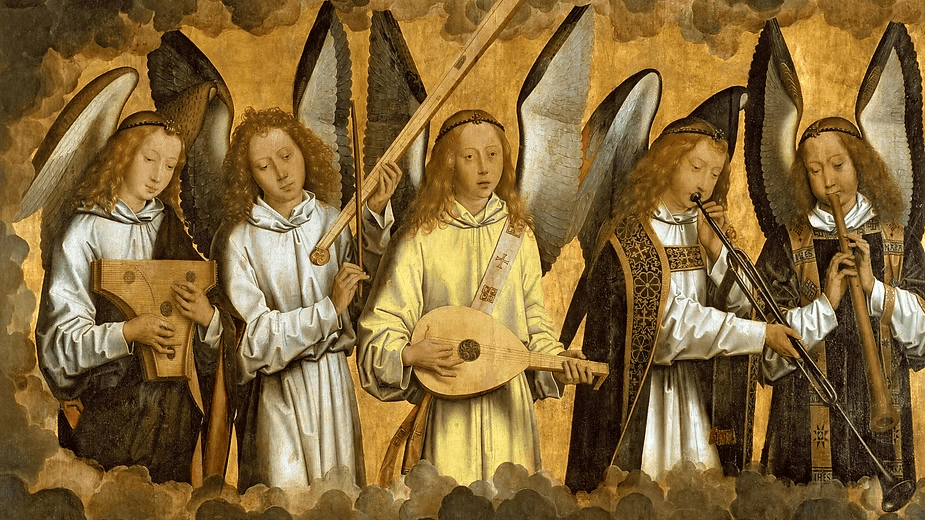
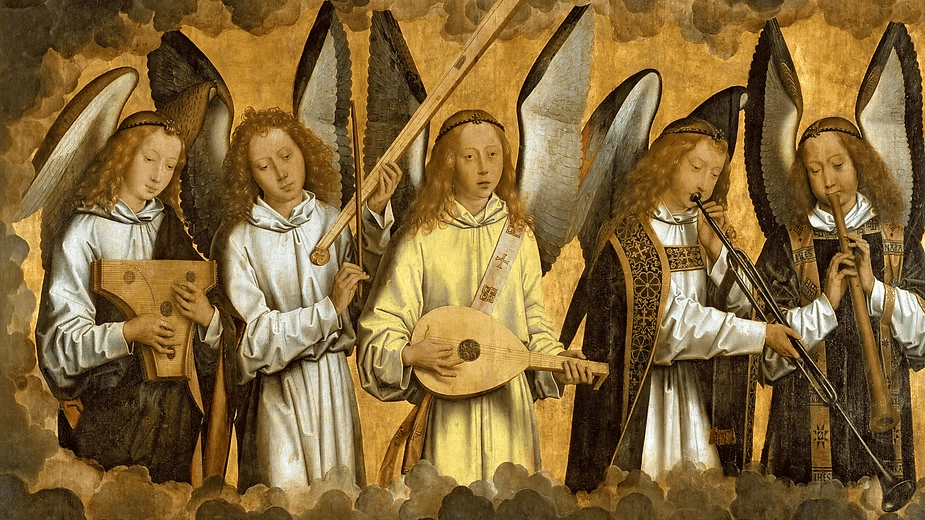
The Yahweh elohim priestly angles; or, as their fans call them: YEPA.

Verse seven is then a short one, which literally translates into English saying, “hear Yahweh with my voice I proclaim ; and show favor to me and respond to me .” When I read this verse, I am reminded of a church member (a high-ranking member of the laity – a rich lawyer) who asked us students of a Bible study program, “What does the voice of God sound like? I have never heard it.” I told him, “God sounds like your voice, if you let His speak through you.” This is what David is saying here. He “hears the voice of Yahweh” and he then speaks what that “voice” says to him. His Psalms are the “voice” of Yahweh. David “proclaimed” that voice by recording these songs of praise for all to know – so others can “hear Yahweh with David’s voice.” When David then sang, “show me favor,” that begs English translation services and churches that like to change David’s lyrics and styles to “leave the divine word be.” “Show Yahweh favor.” To “respond” to what Yahweh said through David says to let Yahweh tell you what the words mean – “hear Yahweh” – and then be led to marry your soul to His Spirit.

Verse eight then sings in English, “for you ׀ speak my heart and seek my face ; your face Yahweh I will seek .” Once more we find a vertical bar, following the Hebrew word “leka,” which implies “for you,” with “lekh-lekha” meaning “go! for you.” This relates to the promise of eternal life, which cannot be based on one having realized the promise beforehand. To say “for you” means David acted solely on the promise of Yahweh, so all his actions were for Yahweh. Thus, following the vertical bar we read David singing of his soul seeking to replace the “face” of David with the “face” of “Yahweh.” To wear Yahweh’s “face” is to deny any other “face” that cannot ever be presented “before the face of Yahweh.” That states the First Commandment, where all the Covenant is a set of marriage vows that say, “I give my soul ‘for you’ Yahweh.” To “seek” the “face of Yahweh” means to do as He commands, at all times that He commands.

Verse nine then says, “not do conceal your face from me nor do incline in anger , your servant my assistance you have been ; not do leave me nor loose me , elohe of my deliverance .” In this verse there are four negatives stated [“not” or “nor”], which makes this seem like David is pleading Yahweh “not” to leave his soul. On the contrary, once joined in the most holy of matrimony there is “no” separating a soul from that commitment. This means “not” is a positive statement that says David does “not” worry about such things, as Yahweh “hiding his face” from him. David did “not” find his soul being “inclined to anger.” All of those “not” situations were based on David always remaining a “servant” of Yahweh [a subject in marriage]; so, in exchange for his servitude, the soul of David was “assisted” by the Spirit of that marriage. Thus, David did “not” have to worry about being divorced by Yahweh, so his soul would be “left” alone and “loose” of all commitments made to the Covenant.

Verse ten then continues with David singing (in English), “when my father and my mother leave me ; Yahweh will gather me .” This short verse is misconstrued when the Hebrew word “azab” is restricted to a translation that says “forsake.” This gives the impression of willful “abandonment,” which is not the point being made by David. When one reads the Scripture that is commonly associated with marriage vows, which comes from Genesis 2:24, the loss of a father and mother is stated as a natural event. The verse says: “Therefore shall a man leave his father and his mother, and shall cleave unto his wife: and they shall be one flesh.” This means David spoke of his soul being betrothed to Yahweh in marriage. Still, on a much deeper level of thought (realizing Genesis 2 told of two divine children being made by Yahweh in Eden), the “father” is the spiritual – a soul – and the “mother” is the earth, from which Yahweh elohim were formed. This then says to read this as, “when my soul and my body forsake me,” that refers to death, when the body returns to the earth and the soul returns to the Father (for Judgement). Thus, in all senses, when married to Yahweh the soul will become His forever, thereby “gathered” into His realm.

Verse eleven then sings, “instruct me Yahweh your manner and lead me in a path smooth ; on behalf of my enemies .” Following a statement of having been given away in marriage, a submissive wife needs to be “taught” or “instructed” in the “manner” that pleases the Husband. This is then David singing about his desire to please Yahweh. Through total submission to the Will of Yahweh, David’s soul openly was “led” to walk the “road” of righteousness. This is not the “way” of Yahweh, but the “way” of David, when one with Yahweh’s Spirit. Through that divine presence showing David what to do, that “travel” or “journey” is “smooth,” because David offered no resistance. This “way” of being is not to confront “enemies,” but on their “behalf.” By David leading by example, doing as “directed” by Yahweh, the “enemies” of David are not threatened by his actions; so, they are less likely to act from anger, brought on by David’s actions.

Verse twelve then has an English translation that sings, “not do give me to the emotion of my distresses ; for have risen as my witness , deception puffing out deception .” This follows the line of thought that ended verse eleven, where David’s soul needed to stop the pendulum swing that is two enemies, each acting and reacting in tandem to one another. Here, David is admitting that enemies are caused by one’s own inability to control one’s own “emotions.” This means a soul not married to Yahweh becomes his or her own worst enemy, because all human beings swing wildly due to emotional changes within. Whenever one feels “distressed,” then one acts out of “emotions.”

When David sang, following a semi-colon, “for have risen as my witness,” that means the way one acts bears “witness” to whether or not one’s soul is married to Yahweh. The last segment of words then depicts the “puffed out” chest of a blow-hard, where self become the projection of strength, when it bears “false-witness” that says one has no strength at all. To act “violently” then becomes a statement that one seeks violence in return, because one is not strong enough to be a model of peaceful truth to others. That not only soothes their emotions, but it calms one’s nerves as well.

Verse thirteen then has David singing in English, “if not , I had confirmed that I would see the goodness of Yahweh in the land of the living .” This then speaks contrarily to the scenario proposed in the aforementioned inability to be emotionally stabilized by the presence of Yahweh. That “not” is now the condition “if not,” where two negatives become a positive [as “if not not” equals “if so”]. That then says that the condition of being married to Yahweh means one always acts in a manner that is righteous, so others can “see the goodness of Yahweh” coming forth, even if they do not realize the presence of Yahweh is the source of “goodness.” When David sang of “in the land of the living,” this is like verse four singing of the “days of my life,” such that “earth” is now metaphor for a body of flesh. The same focus on “my life” and “the living” becomes a statement about eternal “life,” which is the eternal soul within a body of flesh. Thus, “Yahweh in the land of the living” becomes a statement that the presence of “Yahweh” brings true “life” to dead matter, which is the “dust, clay, and ashes” that a body of flesh comes from and will return to. Yahweh is the source of all “life” in those who are truly “living.”

The final verse (fourteen) can then be literally translated into English as: “wait for , towards Yahweh grow strong and firm and he will encourage your heart ; and wait for , into Yahweh .” The repetition of the Hebrew word “qavah,” which is the infinitive verb meaning “to wait for,” the focus is on patience. Patience is a control on knee-jerk emotional outbursts. David speaks as if one’s soul is a plant [like a vine or planted wheat or a tree that bears fruit], such that one leans “towards” the source of life that is the light and the rain. The soul is then the “heart,” like the inner flow of nutrients flowing through a plant, making it grow to bring forth good fruit … in due time. One becomes “encouraged” by the inner sense of His presence, knowing it is leading to the production of lasting goodness. This comes when one’s soul has married Yahweh and gone “into His” Spirit, as His servant that bears good fruit.

As a Psalm to be openly sung on the second Sunday in Lent, this song sings loudly of the inner confidence that comes to a soul that is married to Yahweh. One does not enter into a testing period unprepared. David sang of the enemies that sneak up to confront one, waiting for a time when one is least prepared. To always be prepared, one needs to be singing songs of praise to the marriage of one’s soul to Yahweh, so no surprise attacks will ever take one off guard. To be tested – and all wives of Yahweh will be put to the test, more than once – the soul must welcome receiving a passing grade that says, “Eternal life has been earned.” Therefore, Lent should be a joyful time, when one plans on receiving that permission slip. However, if it is somber and full of grief, one marches to death with no help afforded to the selfishness that wraps the chains of failure around a lost soul.

Philippians 3:17-4:1 – Keeping the enemies of the cross at bay, as a Christ

[17] Brothers and sisters, join in imitating me, and observe those who live according to the example you have in us. [18] For many live as enemies of the cross of Christ; I have often told you of them, and now I tell you even with tears. [19] Their end is destruction; their god is the belly; and their glory is in their shame; their minds are set on earthly things. [20] But our citizenship is in heaven, and it is from there that we are expecting a Savior, the Lord Jesus Christ. [21] He will transform the body of our humiliation that it may be conformed to the body of his glory, by the power that also enables him to make all things subject to himself.

—–

[1] Therefore, my brothers and sisters, whom I love and long for, my joy and crown, stand firm in the Lord in this way, my beloved.

——————–

This is the Epistle selection to be read aloud on the second Sunday in Lent, Year C, according to the lectionary for the Episcopal Church. This will follow an Old Testament reading from Genesis 15, where it is written: “[Yahweh] said to [Abram], “Bring me a heifer three years old, a female goat three years old, a ram three years old, a turtledove, and a young pigeon.” That will be followed by a singing of Psalm 27, where David wrote: “Show me your way, Yahweh, lead me on a level path, because of my enemies. Deliver me not into the hand of my adversaries, for false witnesses have risen up against me, and also those who speak malice.” All readings will accompany one from Luke’s Gospel, where Jesus told the fearful, “How often have I desired to gather your children together as a hen gathers her brood under her wings, and you were not willing! See, your house is left to you. And I tell you, you will not see me until the time comes when you say, ‘Blessed is the one who comes in the name of the Lord.’”

I have inserted the verse numbers above, in order to clearly mark those transition points. I have also indicated where there is a change of chapters, as that is a significant transition point that must be realized. I also have stricken through the verbiage that panders to the modern concept of ‘women’s rights,’ where the churches of Christianity have seen the manufacture of unwritten text as a ‘better business practice,’ seeing how the old church ladies feel tickled when they suddenly [after decades of only hearing “brothers” be read aloud] hear power to the females! being given through the addition of “and sisters” to the aforementioned “brothers.”

Please, I will ask all menfolk to skip down a paragraph, as this paragraph is solely for women. Girls, you are too young; so, you can go play outside with the boys. This is only for those who seek to destroy humanity through philosophy that loves to rub human private parts. With only the church ladies left, listen to this and listen well: There is nothing about Holy Scripture that is about rubbing anything physical. Everything is divinely written by those souls who have married themselves to Yahweh, becoming in His name, which for Christians means being reborn as Jesus. The marriage of a soul to Yahweh brings on His Spirit, which floods all around one’s soul, being His Anointment, which in Greek is termed being a “Christ.” So, Scripture is about Yahweh elohim, who are all in the name of Yahweh – Israel – or in the name of Jesus; and … ladies … this includes you too. Because there is nothing written that places greater importance on a penis, thereby lesser importance on a vagina, the only thing that matters is a soul … and souls have no private parts. Angels have no need (thus no ability) to reproduce. So, whenever I speak of a soul marrying Yahweh and taking on His name, that means all the menfolk AND all the womenfolk too … because all are non-gendered souls … and those souls are ALL called “brides” and “wives” of Yahweh, with that having absolutely nothing to do with genitalia, of any kind. Menfolk and womenfolk alike have souls that are expected to marry Yahweh and give rebirth to His Son. Because Paul was so reborn, and he wrote to ALL souls in Philippi that likewise had been reborn as Jesus [and we all know that would include menfolk and womenfolk], he was not referring to their genitalia having been married to Yahweh, but their souls. Thus ALL were “brothers,” which included womenfolk. As long as that is clear, then we can all re-gather and read on like responsible CHRISTians.

Welcome back everyone, now on to the lesson Paul teaches us today. As the Baptists love to say: “Turn in your Bibles to ….” now, it is time to turn-in the translation above, as in put it to rest and do not read it. You cannot expect it to tell you the truth of that written. The ‘Epistles’ are all more greatly difficult to grasp, due to the divine verbiage all are written in. They do not focus on telling a story, which is the ease found in the four Gospels and Acts. They are explaining the truth, which can only be understood by those filled with the same Spirit that led the writers of the ‘Epistles’ to explain ‘in tongues.’ The sad thing Christianity faces is multiple denominations, based on how poorly false prophets interpret these letters. That is reflected in idiots finding reason to amend “brothers” to “brothers and sisters.” Rather than be led by the Spirit to understand “brothers,” they make stuff up, so they hear the ‘ka-ching’ in the offering plates.

The first verse does not place important focus on “brothers,” as the first word written by Paul is a capitalized Symmimētai.” As such, that capitalization places divine importance in understanding what “Joint imitator” means. The same word can be translated as “Fellow imitator” or “Co-imitator.” That makes this one word be a focus on “Joint,” where that means: “shared, held, or made by two or more people, parties, or organizations together.” The word “imitator” is then defined as meaning, “a person who copies the behavior or actions of another.” When the two are put together as one word AND the divine elevation of meaning means to be Spiritually “Joined” together – two as one – the one being “imitated” is Jesus.

That defines “brothers.” Sisters imitate women, not Jesus; so, to be blind to how a woman can imitate Jesus is to not be Christian. It is being worldly, where bodies of flesh are all-important; and, Spirituality means nothing.

Paul was not addressing a ‘menfolk only’ group of Philippians, as he was addressing the known fact that Paul had left behind those who were souls married to Yahweh, in which the soul of Jesus had resurrected within those souls. So, (like Paul) all were “imitators” of Jesus, having all “Joined” together as one soul-body [in both human sexes], so all were “Joined imitators” of Jesus [in both human sexes], so ALL were “brothers” … as all being Jesus reborn.

Before Paul wrote the separated word “brothers” [from “adelphoi” being within comma marks], he followed “Symmimētai” with “mou ginesthe,” which translates as “of myself am born.” The Greek word “ginesthe” is the second-person plural form of “ginomai,” meaning “to come into being, to happen, to become,” implying in usage, “I come into being, am born, become, come about, happen.” This means Paul wrote this: “Joint imitators in possession like my soul [a “self” is a “soul”] yours are born.” The second-person plural goes beyond Paul writing about himself [his single soul], but to all the “yous” [males and females with souls] to whom he wrote in Philippi, as (like Paul) they too had been “born anew,” “Joint imitators” of Jesus, thereby ALL “brothers” in that name, referring to souls, not sex organs.

In a religious society (as were the Jews of old), a man marries a woman to make a family. All the modern perversions of ‘marriage’ were shunned back then. Thus, a man took a wife, so together they could bring forth children to raise to be good Jews. The educational process of the Torah and the other holy writings were taught at home, by the father primarily, but the mother was not some ‘left out of the loop’ meaningless body (a slave without any say). If a man found Paul and was seeking understanding of his religion, once he would be filled with the Spirit of divine marriage, he would certainly pass that on to his wife and children. To assume “brothers” means ‘and sisters’ is correct in ordinary terms, when both men and women went to a synagogue and came home empty-headed, from not having been taught how to understand Scripture and apply that knowledge to life. However, Paul was referring only to those who had found this Spirit, knowing possession by the Spirit cannot keep it from being spread to others.

This recognition, following the comma that set “adelphoi” apart from that written to follow, Paul then wrote the word “kai,” which is the marker word that denotes importance to follow. Then, following that marker word, Paul wrote “take heed those in this manner conducting their lives” [from “skopeite tous houtō peripatountas”]. The importance of that segment of words says it was most “obvious” to “those” in Philippi, because they “regarded attentively” how much “the manner in which they conducted their lives” had changed. The knew the truth of Paul’s written words; so, when he then added in the last segment of words in verse seventeen: “according to the manner in which your possession models that of us,” that said Paul knew how they had changed, because they had changed “in the same manner” as had Paul, Silas, and whoever else had traveled to Philippi with him in ministry.

In verse eighteen, Paul placed two long dashes within the text, which takes a simple statement and expands on the first part of the simple statement, before making the second part of the simple statement be made. The literal translation of his Greek into English is as follows:

“many indeed are conducting their lives — those who I often told you of, at this instant now kai weeping I mention — these hated ones of this of stake of this of Anointment ,

In this, it is vital to grasp how the Greek word “Christos” is NOT the ‘last name of Jesus.’ I have translated it as “Anointment” to show the true intent of “Christ.” The word “christos,” spelled in the lower-case, means to be smeared with grease or oil, usually by some priest or other official, where being “anointed” is a public recognition of favor granted by an organization. The capitalization raises the word to a divine level of meaning, where it is Yahweh who “Anoints.” That becomes an outpouring of His Spirit upon a soul. The lower-case goes on physical skin (usually that of a forehead), whereas the upper-case is wholly Spiritual. While Jesus was a soul made by the hand of Yahweh [as Adam, the purposeful Yahweh elohim to save ordinary souls of human beings], Jesus was then “THE Christ,” intended to be resurrected within every soul finding its way back to Yahweh (via divine union). The soul of Jesus is resurrected [the “Joint imitators” club] in them ALL, so those are “Anointed” by Yahweh, thus a “Christ” … and that comes along with the rebirth of the Son named Jesus.

In this statement, where Paul wept as he wrote of the Saints (or Apostles) who were “conducting their lives” (or “walking”) as Jesus in ministry again, they were those of whom Jesus spoke. When he said to deny self (sacrifice your soul) and pick up your cross and follow me, Jesus said that before he was crucified; and, nobody he told that to imagined Jesus ever being nailed to a crucifix. They all imagined a “stake” [the true meaning of “stauros”] as those wooden crosses found in vineyards, which kept the grapevines up off the ground, so wild animals would not destroy the fruit of the vine. When Paul wrote “these hated ones of this of stake,” he spoke of the rejection of Apostles by Jews who rejected Jesus (as the Messiah, as having risen from death). Thus, in addition to the rejection of Christians by Jews, they were the “enemies” of Christians and rejecters of Yahweh’s “Anointment.”

Anchor those stakes to keep them raised.

This is then followed in verse nineteen, where Paul wrote: “of which this an end eternal ruin , of which this god this the inner man , kai this praise inside this shame of their souls , those these worldly thinkers .” Here, Paul was stating that all souls that reject divine marriage to Yahweh, refusing to become His “Anointed” ones, refusing to be reborn as His Son, their futures held “eternal ruin” and their “end.” When Paul then clarified that he was not talking about the death of their bodies of flesh as their “end,” but their souls – the confirmation of this is stated as a lower-case “theos” or a ‘little-g’ “god.” The reference to an “end” of “eternal ruin” was relative to their souls: hearts; inner man as a soul; even though the word “koilia” can also mean “abdomen, belly, or stomach. All of that physicality is internal and unseen; but it refers to that which makes things appear to be alive.

The importance that comes from self-worship [oneself seen as an “god,” thus eternally important] is what “shames their souls” [from “autōn” being the Genitive third-person plural for of “yourselves,” with a “self” equating to a “soul”]. To “shame” a soul means to bring upon it “disgrace,” which is a rejection by Yahweh. This “disgrace” is due to being ‘Big Brains,’ where religion has been reduced to some debatable form of philosophy; and “worldly thinkers” are the ones who think, “If I change “brothers” to be “brothers and sisters,” then more women will put the church in their wills, leaving it all to our philosophical organization!”

Verse twenty is then begun by the capitalized word “Hēmōn,” which is the Genitive first-person plural form of “Egó,” which means “I.” The capitalization take the many who claim “Self” as über alles to a divinely elevated statement that is “Self-sacrifice.” To modify many individual “I”s to “Us” says the collective has found a divine source that unifies all as one. That collective experience had led Paul to spread this concept to the true Christians of Philippi. The Genitive capitalization then states the possession of their egos by Yahweh, so He and His Son were collectively divinely elevated to be the Spirits that prevailed “Of us.” This becomes a counter to the lower-case spelling of “theos,” as Paul was saying they were all the possessions “of Yahweh.”

Paul then followed that initial capitalized word with four subsequent capitalized words, all of which support this understanding of “Hēmōn” as meaning all true Christians are “Of Yahweh.” The verse literally translates to state: “Of us indeed this commonwealth within heavens it is in possession , from out of which kai the Savior we are eagerly awaiting , the Lord this Jesus this Christ ,” Here, each soul unites as “brothers” in a relationship with the Father, through willingly subjecting oneself to being a possession in marriage, which then leads to a Spiritual possession by the Son. That is the truth of Christianity, where all true members are “Of Yahweh” through being “Joint imitators” in the same in divine union. As such, they all share “citizenship” or a “commonwealth” by being “Anointed” by Yahweh. The use of “heavens” must be read as the same Spiritual presence in many, so each “heavenly” possession becomes “heavens” of possession.

When Paul then wrote, “from out of which,” leading to another use of the word “kai,” he stated the importance of this divine possession was “Salvation.” That was the ‘birth’ of a “Savior,” who came “from out of” this divine union, “which” is “Of Yahweh.” To call that divine possession “the Savior,” one must remember that the name “Jesus” means “Yah[weh] Saves.” Thus, from the name of Jesus possessing one’s soul and flesh that makes his presence be the “Savior.” When Paul said this presence was who “we are eagerly awaiting,” this is less about some promise … like the anxiety experienced by a child on Christmas eve … and more about the ministry that comes. There, “awaiting” takes on the meaning of service. It is this eagerness that has the Savior make commands, which are eagerly awaited, so one can then act on those commands. One is eager to comply with those orders.

In the last segment of three capitalized words, all are divinely elevated to mean “the Savior” has become “the Lord” over one’s soul-body entity. Whereas the ordinary soul animating one’s flesh is the born “lord” over that flesh, that relationship changes over time. The flesh become the “master” that the soul then serves. That becomes the worldly trap that souls become stuck in, with escape seeming highly unlikely. When “the Savior” has come to rescue a soul from that slavery to the sinful ways of the flesh, it is “the Savior” that takes over as being one’s “Lord.” The name of that “Lord” is known as “Jesus,” which means “Yahweh Saves.” This Salvation is the plan of Yahweh, as “Jesus” is the resurrected soul of Adam, Yahweh’s only hand-made Son, who was created as a Yahweh elohim for the purpose of saving souls. That means Adam-Jesus was Anointed by Yahweh as His elohim, His Son, whose soul would then be “Anointed” upon other souls that would marry Yahweh and receive His Spirit, then becoming His Son reborn. As such, all who become “Jesus” resurrected will become “this Christ” that his soul enjoys.

The last verse of chapter three (verse twenty-one) then literally translates to say, “that will transfigure this body of this of spiritual abasement of us , conformed to this body of this of praise of itself , according to this working of this empowering oneself kai to put oneself into subjection to himself this all .” Here, Paul used the same word that described the “transfiguration” of Jesus before Peter, James and John, where it was not Jesus who “transfigured,” but his disciples. One must be divinely elevated from the standard entrapment of “spiritual abasement” or the “humiliation” coming from the guilt of sins, so one changes and “conforms” to a righteous way of living [“the manner one conducts his or her life”]. From submitting one’s soul to Yahweh and being reborn as His Son, then one will internally be “praising” this presence within, which brings “Salvation.” The “workings” of this presence is one’s ministry, as Paul and the Philippians were doing. All have the “power” of Yahweh, through His Son within them, so they were “enabled” to “transfigure” from simple sinner to Yahweh elohim [angels born into flesh], as adonay [teachers] of Yahweh. Everything demands total “subjection” to the Will of Yahweh, so one’s egos must be killed in self-sacrifice.

At this point, the call is to overlap this written at the end of chapter three, with the first verse of chapter four. The first word of this verse is a capitalized “Hōste,” which becomes a divinely elevated conjunction, as “So as to, So then, or Therefore.” That gives the impression that this word joins this verse to that verse ending chapter three. The divine elevation joins the final chapter of Paul’s letter to the Christians of Philippi to everything written prior (which includes that at the end of chapter three). Still, as a stand-alone word of divinely elevated importance, the word reflects Yahweh speaking through Paul’s writing, so this use as “Therefore” says there are “Consequences” that must be realized through Paul’s writings. This then leads to the rest of verse one, which is as follows:

“Therefore , brothers possessed like me , beloved kai greatly desired , delight kai that which surrounds possessing like me , in this manner persevere within the Lord , beloved .

In this, twice Paul wrote the Genitive (possessive) form of “egó,” which is “mou.” Rather than translate this simply as “of me,” one needs to realize that which is “of Paul” is his soul being the possession of Yahweh. As such, Paul had subjected himself [a “self” is a “soul”] to Yahweh, in divine marriage. The “ego” of Saul died and Paul was the reborn Son, possessed by the soul of Jesus. That made Paul a “Christ,” when Jesus became his “Lord.” As such, “of me” is shown as “possessed like me,” which was the relationship that created “brothers” [which included both males and females in Philippi], who had done like Paul and become “possessions of Yahweh.”

Twice Paul also wrote the word “agapētoi,” with each presentation being set alone to discern. Every time the word “love” is brought up in the Epistles, it refers to divine “love.” As a “beloved,” one can read that as “betrothed,” where “love” is what brings about the promise of “marriage,” with the word “betrothed” then relating “love” with “truth.” Paul is saying that Yahweh’s “Love” will fill one’s soul with the truth that becomes like a rapture of divine ecstasy.

The two used of “kai” show the importance of understanding divine possession to be “greatly desired” [from “epipothētoi”], which says Yahweh “misses” one’s soul and seeks to woo it back to Him. That relates to being “beloved.” The second “kai” tells of the importance of “that which surrounds, “ which is the outpouring of Spirit coming from Yahweh, which is His Anointment of a soul. It envelops a soul, covering it, so that presence becomes one’s refuge and protection. That security becomes a “delight” to behold [from “chara,” also meaning “joy” and “gladness”]. The use of “persevere” [from “stēkete,” also meaning “stand firm”] says one’s soul is in a permanent marriage, which means eternal life is the promise of divine union, based on Love.

As the Epistle reading selection for the second Sunday in Lent, one should see how Paul warns of the test that comes from those who are the enemies of the stake that hold up the good fruit of the vine from vermin. Because a “stake” or “stauros” is an implement that needs to be maintained by the vineyard worker, it is imperative to make sure the “stake” is always kept upright, especially after rains moisten the soil and the growth of fruit makes the “stake” be top-heavy. If one does not do the work involved in keeping the “cross” upright [and Jesus said, “you must lift up your cross” or keep it raised and upright], then one will fail the temptations of the devil. Those who fail the test will find Judgement not what they hoped it would be, as eternal ruin is not a happy ending. The key to a successful Lent is total subjection in divine marriage [not one simple sin given up]; and, then letting one’s soul find Jesus’ soul has resurrected within one’s own soul, becoming one’s “Lord.” Jesus is Lord when one has become a “Christ” of Yahweh.

Luke 13:31-35 – Teaching Peace, times three

[31] Some Pharisees came and said to Jesus, “Get away from here, for Herod wants to kill you.” [32] He said to them, “Go and tell that fox for me, ‘Listen, I am casting out demons and performing cures today and tomorrow, and on the third day I finish my work. [33] Yet today, tomorrow, and the next day I must be on my way, because it is impossible for a prophet to be killed outside of Jerusalem.’ [34] Jerusalem, Jerusalem, the city that kills the prophets and stones those who are sent to it! How often have I desired to gather your children together as a hen gathers her brood under her wings, and you were not willing! [35] See, your house is left to you. And I tell you, you will not see me until the time comes when you say, ‘Blessed is the one who comes in the name of the Lord.'”

——————–

This is the Gospel selection to be read aloud by a priest on the second Sunday in Lent, Year C, according to the lectionary for the Episcopal Church. It will follow a reading from Genesis, where Yahweh made a covenant with Abram, where we read: “[Yahweh] brought [Abram] outside and said, “Look toward heaven and count the stars, if you are able to count them.” Then he said to him, “So shall your descendants be.” That will be followed by a singing of Psalm 27, where David wrote, “One thing have I asked of Yahweh; one thing I seek; that I may dwell in the house of Yahweh all the days of my life.” That pair will precede the Epistle selection from Philippians, where Paul wrote, “[The enemies of the cross’] end is destruction; their god is the belly; and their glory is in their shame; their minds are set on earthly things.”

You will notice where I have supplied the verse numbers, in bold type within brackets. In verse thirty-one, the impression is given that “Herod wants to kill” Jesus; and, “some Pharisees” approached Jesus to give him that warning. This actually is a poor translation that gives that impression. The whole story is not seen in this translation, when the truth of that written gives much more detail. Therefore, I will now show literal English translations for these five verses, so the truth will show how profound this reading becomes.

Verse thirty-one states: “Within it same this hour they came near certain ones Pharisees , telling to himself , [You have] Come out kai journey from here , because Herod he designs you to abolish .” Here, the verse begins with the capitalized preposition “En,” which must now be read as a divinely elevated statement of “Inwardness,” as “Within.” When that divine elevation must be read as the presence of Yahweh’s Spirit “Within,” the following word [“autē”] needs to be seen as stating “the same” inward presence has come to “this hour,” which means “an hour” of prayer, when Jews were expected to offer daily prayers at fixed times of day. Because we know these verses speak of Jerusalem, this should be seen as a call to prayer at the Temple in Jerusalem, also known as “Herod’s” Temple. This then says many Jews who were led by the Spirit “came near” to worship together. When Luke wrote the word “tines,” which translates as “certain ones,” the use of “tis” should always be read as a known person, often used to denote a known Jew. When the first segment of words ends with the capitalized word “Pharisaioi,” or “Pharisees,” this capitalization goes beyond a proper name, identifying these as those “Within the same” as Jesus. Thus, as “certain ones” who were Pharisees,” the ones who “came near” to Jesus were followers of his, most probably secret followers, known more as “Pharisees” than those who followed Jesus.

It must be understood that Jesus was an Essene, as far as which sect he most readily identified with. When Jesus first began his ministry in Jerusalem, during the Passover, he caught the eye of “some Pharisees,” one of their leaders being Nicodemus. Nicodemus was a secret follower of Jesus, while remaining a high-ranking member of the Sanhedrin. When the second segment of words says, “telling to himself,” that says inside information was being shared verbally. While the same words can connect to the divinely elevated “Within,” Jesus would have had the power to know all secrets, as Yahweh saw fit. In such a case, Jesus simply being “near Pharisees” who had inside information then that information would have been known by Jesus, through a divine “telling to his soul.”

The next word is capitalized and it stands alone as an important statement. The word written by Luke is “Exelthe,” which is the second-person singular form of “exerchomai,” in the past tense, saying “[you have] Come out.” While the word can be seen as “Get out” or “Depart” that is not a divinely elevated way to read this word. The Aorist case says it is news that has taken place prior [“have come”], which is relative to Jesus [“you”]. As such, it is vital news that must be told to Jesus. That word stands alone following a comma mark and leading to the word “kai.” That says the importance of this news.

The Greek words that Luke then wrote, “poreuou enteuthen,” translate as “proceed from here” or “travel from here,” but the importance is in this stating the “journey” of Jesus’ ministry, which began in Jerusalem and will end in that same place. It is a return “from here” that will be when Jesus will “go,” which is metaphor for “die.” The news told to Jesus is a warning to him that Jerusalem is not safe for him.

This then leads to the specific of that being revealed, as the last segment of words says, “because Herod he designs you to abolish”. There, the capitalized word “Hērōdēs” is the masculine singular name of “Herod,” but the divinely elevated use in the singular points to the one temple erected in that name. This says Herod’s Temple is a danger to Jesus, where those who are allowed to rule that place are approved by “Herod” Antipas. That “Herod” needs to be understood.

Herod Antipas was the king who had John the Baptist imprisoned; and, then because his young step-daughter danced provocatively before him, asking for her mother’s wish to be granted, Herod ordered the beheading of John. Still, when Herod the Great’s kingdom was subdivided, Herod Antipas was given unimportant Galilee and the equally unimportant land beyond the Jordan (Perea) as where his authority was. His brother, Philip II (the Tetrarch), was also one of Herod’s children. Thus, the singularity of “Herod” is more to the father than to the sons. Jerusalem’s Temple was in Judea, which was under a Roman governor – Pilate. While Herod Antipas had a palace in Jerusalem, he had no authority there; and, there was some animosity between Herod Antipas and Pilate. Therefore, the use of “Herod” here must be read as meaning “the Herodians.”

The term “Herodian” means “a sect of Hellenistic Jews that was largely Pharisees, which acted as a public political party.” [pieced from Wikipedia] Thus, the capitalization is divinely elevated to say the “cause” that made “Herod’s” Temple dangerous to Jesus was the mindset of “Herod” the Great. He was a tyrant whose modus operandi was to rule the Jews like subjects in a kingdom, with all power given to rid anyone who impeded that sovereign right to rule. Herod Antipas was afraid of John and did not want to kill him; so, it is doubtful he knew much about some lone-wolf Jew from Nazareth. He certainly would not want to kill someone he did not know. This says it was his Herodian arm of power in the Temple that “Herod” Antipas trusted to keep the Jews under control.

When the Greek word “thelei” is seen as meaning “to will, wish,” with usage implying “desire, am willing, intend, and design,” to say “Herod desires” leans one towards an emotional lust. Because this recent news has been shared openly among the Pharisees, with “certain ones” not known to be followers of Jesus, it makes sense that this was a “design,” which expanded on a “will” or “intent” that became a more established plan or plot. When the Greek words “se apokteinai” are seen to be a direction to Jesus [“you”], so the threat was “to kill,” this becomes figurative language that says “to abolish” Jesus from being allowed to speak publicly in the Temple. Because “Herod” Antipas had arrested John the Baptist for speaking the truth [calling that slanderous], the same arrest of Jesus could take place, which would banish him in a prison, unable to see the light of day in Jerusalem ever again. That makes a figurative plan to “kill” Jesus be to silence him; but to actually stone Jesus to death would require strong evidence [he had a growing following the Herodians feared upsetting], so the plan might not yet mean using the Roman governor to do their killing for them.

Verse thirty-two then begins with a capitalized “Kai,” which is not only a marker of importance to follow, but this importance is divinely elevated to be great importance to take note of. The importance is found in what Jesus “said to their souls,” where “autois” means “themselves” [third-person plural], and a “self” is a “soul.” Thus, when Jesus said these words, they spoke to the souls of those hearing him.

Following a comma mark, Luke wrote the capitalized word “Poreuthentes,” which is the plural Aorist Participle form of “poreuomai”. That same root word was used in the second-person to Jesus, as “proceed [from here].” The capitalized word then says, “Having journeyed.” Jesus is responding to their suggestion that his “journey from” Jerusalem would keep him safe, after telling him “[you have] Come out.” Here, his divinely elevated response says Jesus had been sent by the Father, with the express intent and purpose to “Come out” in Jerusalem, so he will “Have died” there as well. Jesus began his journey for Yahweh, with the time and place delegated to him. That becomes a soul-level confession that says Jesus knew death from having been in human form many times prior [past lives], in all of Israel’s great leaders. That soul experience speaks confidently of what his “Having gone” will mean.

The comma mark that sets that one word alone for contemplation, then leads to Luke writing, “[you] tell that crafty person this,” where “this” is the divine meaning of “Having journeyed” and “Having died.” It is ridiculous to make it appear that Jesus would enter into some name calling reaction to being told to “Leave Jerusalem!, because Herod wants him dead. Jesus did not say, “You go tell this fox for me.” He referred to the “crafty person” [a generality of who plots to “abolish” him] as one needing to know the truth. The word “this” [from “tautē”] also directs forward, beyond the next comma mark, to the one word statement that says, “behold!” That says to tell those planners “to see for themselves” what Jesus “Having journeyed” means.

Jesus then listed some of that which had been “beheld” already. Luke wrote of Jesus saying, “I cast out evil spirits , kai healings I accomplish today kai tomorrow , kai which third I am accomplished .” In this, Jesus spoke not only of what he had done there, while back in Jerusalem, but of his overall ministry that began there. He had developed a following (which now included Pharisees) because he “cast out demons” in his “journeys.” In synagogues, along the sea, and in far away places he “healed” all kinds of ailments and deformities, caused by the “evil spirits he cast out” of them. The use of “kai” then denotes importance that needs to be seen in his saying, “healings I accomplish today.” This says the casting out of evil spirits was itself a “healing;” and, not only had Jesus done that since he began his ministry, he was still doing it “now.” The importance of “today” [from “sēmeron”] is Jesus saying “now” I am here in a journey that heals.

Following a comma mark is another use of “kai,” followed simply by the word “tomorrow.” The importance stated there says there is nothing said about “tomorrow” that involves Jesus. That implies absence, which implies his death. Still, “tomorrow” is the future, when Jesus the man will continue to heal, until Jesus the soul is resurrected in the souls of others, who will not be recognized as Jesus.

In the last segment of words in verse thirty-two, Luke again began this with the marker word “kai,” making this be three important things to know about the past, present and future … all involving Jesus. Relative to the importance of “tomorrow,” Jesus then added the importance that tomorrow brings, as “this third.” This use of the number three places a divine purpose on “tomorrow” – which is when “I am perfected” or “I am accomplished.” The “third” becomes relative to the “three” times in worldly existence [past, present, future”], with the “third” being the ‘missing link’ between “evil spirits” in and “evil spirits cast out.” The “third” is that which is added to the two that are soul and flesh. The soul of Jesus is the “third” addition that heals. In the use of the word “teleioumai,” which is the first-person singular form of “teleioó,” meaning “to bring to an end, to complete, perfect,” the first-person is important to grasp.
This usages says the “accomplishment” of Jesus will be when another can say “I am Jesus reborn.” To be reborn as Jesus means a “third” addition to the basic two.

Verse thirty-three then literally states: “except it is necessary myself now kai tomorrow kai this possessing to journey ; because not is it possible a prophet to be destroyed without Jerusalem .” The first word of this verse is “plēn,” which states this is an “exception” to the perfection of Jesus being realized. In the use of “me,” which is the first-person singular of “egó,” the “I” that says “I am perfected” or “I am accomplished” must be seen as the present [“now” or “today”] “necessarily” being Jesus’ soul animating his own flesh. Jesus had to be able to say “myself,” because the “self” of Jesus was his “soul.” It had to be in the flesh known as Jesus first. Importantly [the use of “kai“], it would still be in Jesus “tomorrow,” but “tomorrow” will expand beyond the time when Jesus’ soul will remain in his flesh. It would be “tomorrow” that the Pharisees of the Sanhedrin had plotted to “destroy” Jesus, releasing his soul. Once that release was done “tomorrow,” then importantly would come the time when “this” soul “possessing” Jesus’ flesh would “next be possessing” other souls in other flesh. That would then be the perfection of Jesus in those who would become Christians.

Here is where Luke placed a semi-colon, which adds a new line of thought to a central theme of the resurrection of Jesus’ soul. This states the “cause” that makes Jerusalem be where Jesus “[has] Come out,” “[has] Journeyed,” “Having gone” and “Having died.” That is “because it is not possible” unless the body of Jesus is “destroyed,” releasing that soul from within. This is stating the seed metaphor, where for growth to take place “tomorrow,” if must “have died today.” Then, Jesus said “a prophet,” which is the fruit of that vine, needed to be planted in “Jerusalem.” That capitalization says the meaning behind the name needs to rise divinely to the surface; and, the name “Jerusalem” means “In Awe Of Peace” or “Teaching Peace.” There can be not true “prophet” that has not been “Taught Peace” from Yahweh.

To further this, verse thirty-four begins by repeating, “Jerusalem , Jerusalem ,” making three words be written in a row that all say the same thing. All are capitalized to a divine state of relevance, where the past, present and future are all reflections of the “Teaching of Peace.” That was done in the past by the soul of Jesus rising in the Torah, the Psalms, and the Prophets, all of which have existed, still exist, and will be the food that “Teaches Peace” always. That is not related to anywhere else in the world, other than “Jerusalem” – the capital of Judaism.

Teaching Peace means knowing peace. A book is like a prompt that demands deeper knowledge.

When Jesus then began speaking beyond this ‘trilogy’ of “Jerusalem,” his words literally state: “this abolishing those prophets , kai stoning those having been sent advantageous for itself , how many times I have designed to assemble these descendants of yourselves , that manner a hen these of herself brood under those wings , kai not you were designing .” In this, Jesus used two words that relate back to the “design” or “desire” that “Herod” had approved “to abolish” Jesus, while also using “apokteinousa” as a repeating of the plan “to kill” or “abolish” him. This becomes Yahweh speaking through the Son, telling what His “design” is with Jesus.

In the history of the children of Israel [where “Israel” is more than a name, but the meaning behind that word: Who Retains God”], Moses was the “prophet” who gave them the Law – the marriage agreement with Yahweh. Yahweh sent them judges, when the people could not maintain their commitment to Yahweh, seeking to please themselves without Him. They asked for a king and chose one weak of spirit. Yahweh Anointed a boy, David, to lead the people to act righteously; and, David gave the people songs of praise and lament to learn and live by. But, when Yahweh pulled the plug on a human king, everyone forgot their marriage vows again and turned to selfish sins. Prophet after prophet was sent by Yahweh to “Teach Peace,” but the people always had other “designs.” They “killed” the prophets by rejecting their warnings. They “stoned” the prophets by neglecting the Word of Yahweh, because they did not say what the people had been taught the marriage vows allowed. Rather than seeing the “prophets” explaining the Law in ways that made the Israelites become “advantageous for” the world, as priests of Yahweh, they made the Law suit their own needs, making it “advantageous for themselves.”

When Jesus said, “how many times I have designed,” he spoke as the Father within him. The “descendants of yourselves” had been the “children” led by Moses out of Egypt. They had been the “children assembled” because Yahweh had promised Abram to have countless priests in his lineage to continue his total commitment to Yahweh. Throughout the history of the Israelite people, they had been treated like a brood of chicks, who needed the angelic wings of a judge, a king, a prophet, or a savior hero to come and “gather them together under his or her wings” and save them from themselves. After all those attempts, another use of “kai” says importantly: That was never in the “designs” of failure to serve Yahweh over self.

That leads to verse thirty-five literally stating: “behold! , is permitted to yourselves this dwelling of yourselves . I speak now to yourselves , not lest you shall perceive myself until is present at which time you say , Blessed this coming within authority of Lord .” Here, Jesus is stating the concept of free will, such that Yahweh breathes a soul into a baby when it is born, with the divine conversation said between Yahweh and the soul before birth is: “I expect you to come back to me breath,” followed by “Yes Yahweh.” Then, once in a body of flesh the soul begins to enjoy having a self-identity. Yahweh allows all souls to do as they please; but Judgement always awaits the body of flesh dying.

In the two uses of possessive personal pronouns, when translated as “myself” and “yourselves” (three times), the “self” should always be seen as a “soul.” Thus, Jesus said, “I speak now to your souls,” which are permitted to “dwell” as a soul in a body of flesh, apart from Yahweh. The double negative [“not not” from “ou mē”] becomes a statement that not “seeing” Jesus within one’s soul is due to one not yet sacrificing the right for self-failure and giving birth to the soul of Jesus within their souls.

When the last segment begins with the capitalized “Eulogēmenos,” which is a divinely elevated statement about giving Yahweh “Praise,” which comes after divine marriage, when one is “Blessed” to have His Spirit poured out upon one’s self-sacrificing soul – becoming one with His Spirit. That time of “Praise” will be when one knows Jesus has resurrected, “coming within” one’s soul. That means the soul has finally sacrificed in marriage to Yahweh, which then leads it to bow down and give full “authority” to the soul of Jesus to become the “Lord” over one’s soul and flesh.

As a Gospel selection to be read on the second Sunday in Lent, this ending that tells of self-sacrifice is when one passes the test, posed by Yahweh at first breath. Jesus can be seen explaining how religions have been an external source of belief for a very long time; but the freedom a soul has to neglect the Law means guilt will lead it to devise schemes to make the guilt go away, rather than self-sacrificing and marrying Yahweh, so all agreements will be kept … lovingly. This lesson says it is easier to deny Jesus than to deny oneself. The testing of Lent is not about a minor limitation being placed upon one’s sins for a little over a month. That scheme becomes what some Pharisee told Jesus, when he heard their plan was to abolish him, once and for all. Jesus said that has already been tried … many times … and it will not work. It goes against Yahweh’s plan.