Yahweh said to Joshua, “Today I have rolled away from you the disgrace of Egypt.” And so that place is called Gilgal to this day.
While the Israelites sons of Israel were camped in Gilgal they kept the passover in the evening on the fourteenth day of the month in the plains of Jericho. On the day after the passover, on that very day, they ate the produce of the land, unleavened cakes and parched grain. The manna ceased on the day they ate the produce of the land, and the Israelites sons of Israel no longer had manna; they ate the crops of the land of Canaan that year.
——————–
This is the Old Testament selection to be read aloud on the fourth Sunday in Lent, Year C, according to the lectionary for the Episcopal Church. This will precede a singing of Psalm 32, where David wrote of Yahweh saying: “I will instruct you and teach you in the way that you should go; I will guide you with my eye.” Those will then lead to the selection read from Paul’s second letter to the true Christians of Corinth, telling them: “If anyone is in Christ, there is a new creation: everything old has passed away; see, everything has become new!” All readings will accompany the selection coming from Luke 15, where Jesus told the parable of a man with two sons. In that he said, “Now his elder son was in the field; and when he came and approached the house, he heard music and dancing. He called one of the slaves and asked what was going on. He replied, ‘Your brother has come, and your father has killed the fatted calf, because he has got him back safe and sound.’ Then he became angry and refused to go in.”
In these four selected verses, it should be noted that I have restored the proper name of ‘Yahweh,” where the English translation has generalized that name to say “the Lord.” That change lessens the importance of Yahweh and distorts the lesson that comes from the written Word. Also, in two places the Hebrew text clearly states “bene Yisrael,” which translates as “sons of Israel.” The English translation has morphed this into “Israelites,” which (again) distorts the lesson that comes from the written Word. Therefore, I have stricken out “Israelites” and replaced that with an accurate translation. Finally, twice the English translation shows “passover” in the lower-case, which I have left as is, because capitalization makes the word take on a celebration name, as a festival. The lower-case spelling does well to force the reader to focus on the meaning behind the remembrance, where the “passover” recognizes being spared from death.
In the words that seem to simply say, “Yahweh said to Joshua,” the literal translation of the Hebrew can show this saying, “and uttered Yahweh into Joshua,” with that going further, to the meaning behind the name “Joshua.” The same words then translate as this: “and spoke Yahweh towards Yah will save.” Here, the name Joshua needs to be seen as bearing the same meaning as does “Jesus” [an English modification of “Yeshua”] Thus, the man named Joshua is not who heard the Word of Yahweh, but his soul, which was the resurrection of Adam’s soul [a.k.a. Jesus].
What needs to be understood from what Yahweh spoke is the name “Gilgal” means “A Circle Of Stones, A Wheel, A Rolling Away.” This means that when Yahweh said, “this day , I have rolled away the reproach of Egypt from you” it is important to grasp what “I have rolled away” means [transliterate as “gal·lō·w·ṯî,” from “galal”]. To think this means everyone was riding four-wheelers in the wilderness for forty years is missing the point.
Way back when the Easter Sundays were presenting the stories of a risen Jesus, the Gospels told of the women going to the tomb to prepare the body of Jesus for transport, from Joseph of Arimathea’s tomb to the family tomb in Bethany (where they had laid Lazarus’ body, before Jesus raised him) or Nazareth (where Joseph’s body most likely had been lain). The worry the women had was, “Who will roll the stone away for us?” The region known as Galilee comes from the same root verb, meaning “Rolling.” That assumes the terrain has ‘rolling hills,’ but the deeper meaning of “Rolling Away” is the same as Yahweh telling Joshua, “Today I open your tomb and call for you to “Come out!” into your new land.” This means “the reproach of Egypt” says Yahweh has freed the “sons of Israel” from “the shame of being Married to Tragedy” [the meaning behind “Egypt”]. Thus, the “rolling away” is leaving a mother’s womb behind, never to return again; so, the stone of death has been rolled into place, showing the past is dead, while rolling away the stone that blocked a new life … one that leads to salvation.
There is no physical “place called Gilgal.” The statement by Yahweh did not name anything. Joshua wrote as an ‘after the fact’ statement, which translates as: “therefore is proclaimed the memorial of this placement itself circle (of stones) as far as day here.” This says the land of Canaan, which would be encircled by the twelve tribes of Israel, would be where Salvation for the world would begin anew, as a rebirth. Moses had died before the crossing of the Jordan River; but from his death had risen Joshua. So, the wheel keeps on turning, but the transition marks the end of a bad marriage [Egypt] and the beginning of a new marriage, where the truth of the name “Israel” will bring about the promised salvation. Israel is the name of all the people, with Gilgal the name of the land all the “sons of Israel” will “Roll Away” to.
To then be told that “While the sons of Israel were camped in Gilgal they kept the passover in the evening on the fourteenth day of the month in the plains of Jericho.” That says the physical location where they “camped” was “in the plains of Jericho.” To then see added to this statement “in Gilgal” [transliterated as “bag·gil·gāl”], this says “Gilgal” was a spiritual presence, with “the plain of Jericho” their physical location. Again, by seeing “Gilgal” as meaning “A Rolling Away,” this says their souls were reenacting their acts of commitment to Yahweh, divorcing their lives as slaves to a human king (pharaoh) and, thus, human ways (sin).
Where we are shown the statement, “they kept the passover in the evening on the fourteenth day of the month,” this says it was the first full moon of the spring; as the “fourteenth day of the month” is half a lunar cycle, with the new year marked by a new moon. The crossing of the Jordan, like the parting of the Red Sea, and the gathering for two weeks is then symbolic of the miracles Moses led, in his challenge to Pharaoh … to force him to believe his God was greater than any god of Egypt. That is when the evening (or “twilight,” when night falls in the Hebrew clock) brings the Sun to set on the western horizon, as the Moon rises in the east. That becomes the timing when Yahweh would “passover” and determine whose souls will be spared death, which is the final challenge that caused Pharaoh to release Moses and the slaves of Jacob’s ancestry.
This is where it is vital to realize there is a difference between “Israelites” and the “sons of Israel.” The Hebrew word “bene” is a plural form of “ben,” meaning “sons,” but also “children” (including males and females, stated asexually). The truth of “sons” is it connects to “Israel,” which is not the name of a human being. In all of Genesis, after Jacob was told his name would be “Israel,” he is still referred to as “Jacob.” The name “Israel” is a Spiritual name, which says “One Who Retains God.” The truth of “God” is the “el” part of “Israel,” means “Who is One of the elohim of Yahweh.” This then means that “sons of Israel” are the souls of others, who likewise are Spiritually elevated into a state of being that makes each soul an elohim of Yahweh. An “Israelite,” however, is a statement of one who lives in a place named “Israel,” and places have no souls that can be elevated to serve Yahweh. Therefore, an “Israelite” is a statement of one who is not a Yahweh elohim (when “sons of Israel” are Yahweh elohim).
When we then read, “On the day after the passover, on that very day, they ate the produce of the land, unleavened cakes and parched grain,” this is fifteen Nisan. This is the symbolic food of the sorrow felt in Egypt, from having resisted Moses and his powers brought on by Yahweh. Because service to Yahweh demands willing sacrifice, which begins with the blood of the lamb marking one’s doorpost to spare one’s soul, the eating of ritual foods symbolizes the sacrifice of self-pleasures, in order to follow Yahweh’s lead. The “produce of the land” was to be gathered and set in baskets in the Tabernacle, with the days to be counted (fifty) until they were ripe and ready to be consumed. The “unleavened cakes and parched grains” symbolize their test in the wilderness, preparing for their delivery into the land that flowed with milk and honey.
When we then read, “The manna ceased on the day they ate the produce of the land, and the sons of Israel no longer had manna,” that says all souls had been brought to the point Spiritually where they no longer needed a physical production of spiritual food. The land they had been delivered into would provide their souls with the spiritual food they required, in order to continue what Moses had taught them to do. As such, the “sons of Israel” would become the spiritual food – the “manna” – that would be fed to their children and their children’s children, so the “Rolling Away” would continue; and, through the “sons of Israel” others would be taught to submit to Yahweh likewise.
When this reading ends by stating, “they ate the crops of the land of Canaan that year,” the word translated as “crops” is better shown as “produce.” The point being made has little to do with these ‘invaders’ into a new land taking “crops” away from the indigenous people who the “sons of Israel” were told to share the land with. The coming year would be when the “Rolling Away” would disperse the ”sons of Israel” as the “produce” of Yahweh among the people; more importantly the children born within each of the tribes. In this, the name “Canaan” means “Land Of Purple,” where the color purple is symbolic of royalty. This says the ”sons of Israel,” having all become Yahweh elohim, would have introduced themselves to the local people, showing the locals their powers as those Who Retained Yahweh. Still, the name “Canaan” also means “to be brought into synchronicity,” becomes a blending of the mixture of people with the “sons of Israel,” so there was a sharing of the land. This was peaceful during this first year.
As an Old Testament selection to be read aloud on the fourth Sunday in Lent, the lesson of testing should be seen as willing sacrifice for a higher cause. The ceasing of manna means the baby food would stop, as the “sons of Israel” were expected to begin ministry as the priests of Yahweh they were born to become. It says all are expected to become Joshua, who is the resurrection of Adam’s soul within an ordinary soul, so that Lord soul leads a soul to Yahweh’s Salvation. This means the test of Lent is one of being “produce” that provides spiritual food to others, so there is plenty shared on the earth. To become spiritual food for others, one must willingly self-sacrifice and withstand bitter and harsh times, knowing Yahweh will “Roll Away” all that blocks one from achieving eternal life.
1 Happy are they whose transgressions are forgiven, *
and whose sin is put away!
2 Happy are they to whom Yahweh imputes no guilt, *
and in whose spirit there is no guile!
3 While I held my tongue, my bones withered away, *
because of my groaning all day long.
4 For your hand was heavy upon me day and night; *
my moisture was dried up as in the heat of summer. Selah
5 Then I acknowledged my sin to you, *
and did not conceal my guilt.
6 [5] I said,” I will confess my transgressions to Yahweh.” *
Then you forgave me the guilt of my sin. Selah
7 [6] Therefore all the faithful will make their prayers to you in time of trouble; *
when the great waters overflow, they shall not reach them.
8 [7] You are my hiding-place; you preserve me from trouble; *
you surround me with shouts of deliverance. Selah
9 [8] “I will instruct you and teach you in the way that you should go; *
I will guide you with my eye.
10 [9] Do not be like horse or mule, which have no understanding; *
who must be fitted with bit and bridle, or else they will not stay near you.”
11 [10] Great are the tribulations of the wicked; *
but mercy embraces those who trust in Yahweh.
12 [11] Be glad, you righteous, and rejoice in Yahweh; *
shout for joy, all who are true of heart.
——————–
This is the Psalm to be read aloud in unison or sung by a cantor on the fourth Sunday in Lent, Year C, according to the lectionary for the Episcopal Church. It will follow an Old Testament reading from Joshua, where it is written: “The manna ceased on the day they ate the produce of the land, and the sons of Israel no longer had manna”. That pair will precede the Epistle selection from Second Corinthians, where Paul wrote: “From now on, we regard no one from a human point of view; even though we once knew Christ from a human point of view, we know him no longer in that way.” All will accompany the Gospel choice from Luke, where we read, “All the tax collectors and sinners were coming near to listen to Jesus. And the Pharisees and the scribes were grumbling and saying, “This fellow welcomes sinners and eats with them.” That led to Jesus telling them the parable known as “The Prodigal Son.”
This is a psalm of repentance and thanks for the sincerity of one’s heart being acknowledged by Yahweh, granting one the blessing of marriage to Him. Following a reading from Joshua, where the ritual recognition of the sorrows of past lives have been shed, with eternal life granted those ‘firstborn’ wives of Yahweh, the festival of Passover symbolizes repentance. The freedom from bondage, where “Egypt” means “Married To Tragedy,” says confession and repentance have granted one’s soul a divorce from the addictions to a sinful world. It is then that cleansing that prepares one to be tested (forty days or forty years), before one’s soul agrees to the marriage vows (the Covenant) that brings about a Marriage To Happiness. This should be understood while singing this song during the season called Lent.
One will note that I have made some changes in the text above, which the NRSV has produced for the Episcopal Church to recite. The Episcopal Church has made amendments to the NRSV translation, such that David three times wrote the word “Selah” at the end of verses. The NRSV recognizes that presence, but the Episcopal Church rejects that word. Also, the NRSV shows this psalm to be eleven verses in length; but the Episcopal Church has divided verse five into two verses, which changes the numbering of all verses after, making this song appear to be twelve verses. In all cases, I have returned “Selah” in bold type, as well as correct the verse numbering in bold type, within brackets. Finally, four times the NRSV and the Episcopal Church have denigrated the name “Yahweh” to a generalized “Lord,” which is not what David wrote. If one does not know the name “Yahweh,” then one’s “Lord” is one’s lonely soul or some demonic “god.” To help readers come to know “Yahweh,” I have restored His name in bold type.
I prefer a literal translation, taking the Hebrew and translating that into English, over the flowery greeting card translations that are so popular, but largely missing the depth of insight David intended one’s soul to intuit when singing his divinely inspired songs. Therefore, I will present these verses in a literal translation and then interpret the meaning that comes from those words written.
Verse one is identified in the introduction as a “contemplation.” The NRSV calls this a “Maskil.” The Hebrew root used is “maskiyl,” which means “a hedge.” Strong’s Exhaustive Concordance says the word comes from “sakal,” which means “instructive.” Anther source says “maschil” refers to “a poem, song, which enforces intelligence, wisdom, piety, q. d. didactic; which is true of every sacred song, not excepting Psalm 45, where everything is referred to the goodness of God.” [McClintock and Strong Biblical Cyclopedia] There are several psalms that are identified as “contemplative,” where other sources are sited as the influence of David. This song is “contemplative of David” [a name meaning “Beloved”], so a literal translation is best (in my opinion) to “contemplate,” rather than some translation service’s paraphrases.
Following the introduction, verse one literally translates into English to say: “blessed carried away transgression , covered sin .” In this, “blessed” states the presence of “happiness,” where one should intuit this usage is not focusing on a human state of emotions, but one that is spiritual. This means one’s “happiness” comes from Yahweh, which is the true way one becomes “blessed.” This joy is then said to be “carried away” or “lifted off of” or “taken from,” with that Hebrew word combined with the following word that says “transgression” or “rebellion.” Because the Hebrew word “pe·ša‘” is in the singular number, this sings of one’s own direction that leads to “transgression” or “rebellion” having been removed. Because one’s soul is the “transgressor” or the “rebel,” that which has been “carried away” is the inability to cease from kneejerk reactions to outer (worldly) influences, which cause one’s soul to allow one’s body of flesh to act out irresponsibly. When the second set of words says “covered sin,” where that can also mean “hidden or concealed sin,” this is not burying one’s past sins. Instead, it means the influences to sin have been made so they are no longer an influence. Once those motivations to “sin” are “covered,” then they will have no effect or affect on one’s soul; so, one’s body of flesh is no longer led to act sinfully. That ability to no longer see external lures is the spiritually “blessed” state that David was celebrating.
Verse two then repeats a beginning that says “blessed,” with the English translation following adding, “man , not he thinks Yahweh he who punishment for iniquity ; and nothing in whose breath treachery .” Here, “blessed adam” needs to be read from the Hebrew “’aš·rê ’ā·ḏām”. While “adam” can be read physically as “man” or “mankind” (to satisfy the egos of women), the word “blessed” must still be seen as a spiritual presence, coming from Yahweh to sincerely repentant souls. Thus, “adam” becomes the inner source of the “happiness,” as that is stating how marriage to Yahweh has brought the soul of His Son (a.k.a. Adam-Jesus) into one’s soul. This then connects to the Hebrew word “ruach,” meaning “spirit, breath, wind,” which is not the basic “spirit” of a soul breathed into a body of flesh at birth, but the divine “Spirit” that comes with “Adam’s soul.” It is then that inner presence that “conceals sin,” because this divine Son will not be swayed by anything treacherous [“nothing in whose soul has this Spirit will fall prey to treachery”]. When David sang, “not he thinks,” this is how “sin” is “covered,” as the Big Brain is what always leads a soul to follow sin, so the flesh of a brain leads a soul astray. Therefore, “Yahweh” takes control over “he who punishment for iniquity.” That sings of a debt that is due from past “transgressions; and, those sins can only be avoided through sincere repentance, begging Yahweh for forgiveness.
Verse three then begins with the statement, “because I kept silent wore out myself”. In that, the Hebrew root word “charash” can imply “silence,” but the core meaning is “devise,” as well as “to cut in, plow, engrave.” Again, realizing the need to “contemplate” these words of wisdom from a spiritual perspective, David is channeling the soul of someone whose sins have been “covered over,” for some extended period of time. While the same words written can be read as “silence grew old my bones,” this becomes a physical image that does not meet the spiritual meaning needs. This means the truth is the way a soul will “devise” ways to justify one’s sins, so there would be no need to confess any wrongs, by making wrongs right, through semantics. This begins a series of lies that eventually keep one from remembering what lies have been told, so one does not expose oneself as a liar, by lying about a lie. It is this deception that “wears out oneself,” with the Hebrew word “estem” meaning “bone,” but also “substance” and “self.” To then see a “self” as a basic “soul,” the lies bring the “soul” to the point when death seems much closer than ever before; and, that leads one to feel the weight of guilt that leads to repentance.
In the remainder of verse three, David wrote: “through my groaning , all the day long .” This says the “self-soul” felt the guilt more and more, day by day. It was “crying” that it had dug a pit too deep to ever be able to escape. The aspect of “day” means the light of truth was exposing all of one’s lies to one’s soul. The light of “day” would not stop, causing the guilt to mount daily. This, again, is the guilt one must feel, before one can sincerely repent.
Verse four then continues this begun in verse three, singing: “that by day and night was to be heavy upon , it overturned my moistness ; into the drought of summer .” This is then followed by the word “selah,” which means “to lift up, exalt.” This then sings of the weight of guilt that was the light of truth exposing one’s transgressions, which turned into the darkness that knew no way to escape the trap one had set for one’s own soul. To have one’s “moisture overturned,” that says dryness set in and one’s soul became without spiritual drink. The “drought of summer” is when no spiritual rain has fallen to wash the sins away.
Verse five is then the long verse the Episcopal Church decided to make into two verses. It also ends with David writing “selah.” Verse four sings of the burden and dryness of sin. To conclude that with a word that places emphasis on a musical pause means to reduce one’s “contemplation” to a physical understanding only. To see this in spiritual terms means to see the only escape from such a ‘weighty” misery is through Yahweh, where one is “lifted up” and “exalted.”
In that regard, verse five then literally translates into English singing, “my sin I acknowledged to you and my guilt not I have covered , I called , I shall cast above my transgressions Yahweh ; and you carried away the guilt of my sin . selah .” This is David singing of one’s heart being fully exposed to Yahweh, so all guilts felt have been admitted and laid before Him for judgment. When the separated word says, “I called,” this amounts to willful confession. A voice from heaven did not come booming down, telling anyone to confess or be destroyed. This is an important element to realize, as each individual must sincerely confess before Yahweh [not a priest or other human, as no humans can absolve or forgive sins of the soul]. This means “casting above” means not telling someone on the same human level of existence. All confessions must be made to Yahweh, as only He can “carry away guilt;” and, that is done by the presence of His Son resurrected in one’s soul, which is the fulfillment of an “exalted” state of being. Thus, verse four prayed for “exaltation” and verse five answered that prayer.
Verse six then explains this double “selah” by singing, “above this it shall mediate all who is pious ׀ towards youin a time when you may be found at the least , in a flood of waters great ; it near , not they shall touch .” Here, the Hebrew word “palal” has been translated as “mediate,” but means “to intervene, interpose,” implying “prayer” and “supplication.” Again, the directional preposition used says “above,” where that “cast above” in verse five has been received “above,” where “this [cast]” is considered, relative to one’s sincerity [“pious,” from “chasid,” implying “godly”]. At that point a vertical bar is used, which says there is a pause between the time a prayer is “offered up” [“cast above”], when “mediation” takes place. This will then bring an answer to the prayer “in a time when you may be found” truly repentant. When David wrote “at the least” [variation of “raq,” which means “howsoever” also], this says one has reached the lowest level of self-importance, when the truth is fully exposed because all else has failed. It is at this time when a “great flood” of emotion has overcome one’s soul, where the Spirit of Yahweh is poured out upon one’s soul. When that is “near,” one with one’s soul, then is when no influence of iniquity will have effect or affect on one’s being.
Verse seven then finds the third use of “selah” ending a verse. One also finds a second vertical bar coming after the first word, which states “you.” The vertical bar indicates a pause being stated, where “not that shall touch” is now connected to “you,” which is the presence of Yahweh within one’s soul. As such, “you” is protected by one having become married divinely to Yahweh’s Spirit. The attacking worldly influences do not come after Yahweh, but oneself. When oneself has united with Yahweh’s Spirit, “you” becomes oneself, as a Yahweh elohim.
The whole of verse seven then is shown to literally sing, “you ׀ covering myself from distress you shall guard me with cries of deliverance , you shall surround me . selah .” Seeing this verse as a separate verse of song, “you” … followed by the vertical bar … sings of oneself knowing Yahweh. This knowledge is from being “covered” by His Spirit, which not only “guards” one’s soul from the attacks of worldly influence, but it also leads one’s soul to “shriek” with joy from having been “delivered.” In that salvation from Yahweh, the name “Jesus” means “Yah Saves.” Thus, one is “surrounded” by the ever present Christ Spirit; and, that is reason to state one has been “exalted.”
Verse eight then sings literally in English, “I will give you prudence ׀ and instruct you , in the manner that you should walk ; I will counsel above with my eye .” Here, another vertical bar separates what the presence of Yahweh will bring. After stating, “I will give you prudence,” where one’s soul will no longer be reacting willy-nilly to external influences and stimuli, there comes a period of pause. That pause become a time of reflection on one’s newfound “prudence.” One will be able to see how one had previously acted with haste or a lack of forethought. So, following the vertical bar, Yahweh “will teach” one how to recognize how Satan trains his minions to approach souls. It is then from those lessons that one’s soul will be led to live righteously. The final segment of words say Yahweh will remain “above,” but His “eye” will be His Spirit, which will remain one with one’s soul; and, that is the Adam-Jesus resurrection within that soul, which is the “eye” of Yahweh in one’s flesh.
Verse nine then sings, “not to come to pass ׀ like the swift like the mule has no understanding from bit and bridle whose mouth must be held in check ; cannot , they will come into you .” Here, David is making it clear what is “not” to expect by the “prudence” and the “teaching” that “will be given,” so one will live righteously. This will “not” make one be transformed “swiftly.” While the inner angel [Yahweh elohim – Adam-Jesus] will become immediately the wings that cover and protect, that presence will “not” make one become like a cavalry soldier, ready to make counter attacks on sinful influences. To act so rashly would be like a ”mule” (stubbornly ignorant), which is not known for being the smartest of the animals on earth. Their movements must be controlled by a “bit and bridle,” to lead them ignorantly where the rider knows to go. It “cannot” be expected to be like that. When “they will come into you,” then one will act naturally, but with “prudence.” That will not be motivated by emotions – like anger, lust, or revenge – but whispers that let one know where to tread carefully.
Verse ten then literally sings in English, “many pains , to the wicked but he who trusts Yahweh ; goodness , shall surround him .” The initial focus being put on “many pains” says the ending of verse nine foretold of the attacks that will come to test a soul’s commitment to Yahweh. These attacks will bring “many pains” that a soul will have to endure. These can be seen as withdrawal pains from giving up old addictions. It can be physical attacks because one refuses to do evil acts like one’s old friends expect from one. They will come from “the wicked” and “the criminal,” where religion means attacks by those who say the righteous make them look bad (when it is they who are bad), striking out in anger against their own souls. The exception (“but”) says those “pains” will be endured, when one’s faith in Yahweh is secured by His presence. One will experience the benefits of His “goodness.” One will know His loving “kindness surrounds” one’s soul.
The last verse then sings literally (in English): “be glad Yahweh and rejoice you righteous ; and give a ringing cry , wholly upright in heart .” This refers to the “selah” that ended verse seven, where David sang, “with cries of deliverance , you shall surround me”. That exalted state of being brings out cries of joy, coming from the soul. The Hebrew translating as “heart” also means “inner man, mind, and will.” All of this constitutes as one’s soul, because the presence of Yahweh is spiritual. The “heart” is a physical organ; but it is the symbol of courage and inner fortitude. We now know that truly comes from the spiritual presence of Yahweh having become one’s savior.
As a Psalm chosen to be sung aloud on the fourth Sunday in Lent, when one’s test of commitment to Yahweh is the focus, this song clearly sings of repentance being the key to success in that testing. To truly reach the point of repentance, one must have sinned and reached a depth of remorse that one truly seeks forgiveness. Here, it is important to get a firm grasp of the parable Jesus told, known as the Prodigal Son. Yahweh has two forms of human sons, both sinners in some way. Only those who reach a depth of knowing the end with guilt can change and welcome Yahweh (and Adam-Jesus) into their souls. Some think they are blessed by birth and do not need to repent or pray for forgiveness. Those are the ones who cause the repentant “many pains.”
From now on, we regard no one from a human point of view; even though we once knew Christ from a human point of view, we know him no longer in that way. If anyone is in Christ, there is a new creation: everything old has passed away; see, everything has become new! All this is from God, who reconciled us to himself through Christ, and has given us the ministry of reconciliation; that is, in Christ God was reconciling the world to himself, not counting their trespasses against them, and entrusting the message of reconciliation to us. So we are ambassadors for Christ, since God is making his appeal through us; we entreat you on behalf of Christ, be reconciled to God. For our sake he made him to be sin who knew no sin, so that in him we might become the righteousness of God.
——————–
This is the Epistle selection to be read aloud on the fourth Sunday in Lent, Year C, according to the lectionary for the Episcopal Church. It will follow an Old Testament reading from Joshua, where it is written: “Yahweh said to Joshua, “Today I have rolled away from you the disgrace of Egypt.” And so that place is called Gilgal to this day.” That will be followed by a singing of Psalm 32, where David wrote: “Happy are they to whom Yahweh imputes no guilt, and in whose spirit there is no guile!” All will accompany the Gospel selection from Luke, where Jesus told the parable of the man with two sons, saying: “When [the prodigal son] had spent everything, a severe famine took place throughout that country, and he began to be in need. So he went and hired himself out to one of the citizens of that country, who sent him to his fields to feed the pigs. He would gladly have filled himself with the pods that the pigs were eating; and no one gave him anything.”
In these six verses above, six times Paul wrote a form of “Christos,” which has been translated as “Christ. Five times Paul wrote a form of “Theos,” which has been translated as “God.” At no time did Paul the name “Jesus.” Not only did Paul not write “Jesus” in any of these six verses, he did not write that name anywhere in his fifth chapter, sent in his second letter to the true Christians of Corinth. This makes it very important to understand what Paul referred to when he wrote “Christ,” but not “Jesus.”
Every Sunday I watch a live telecast of a local Baptist minister’s Sunday sermon. Routinely he refers to “Christ,” when he clearly is referencing Jesus. He promotes belief in Jesus as THE Christ, so every time he says “Christ,” he uses that word as if it is a nickname for Jesus. It comes across as if “Jesus Christ” was the name given to Jesus when he was born … as his ‘last name.’ It is routine to hear people speak of waiting for Jesus to return at the end of the world – the End Times – and talk about a ‘rapture’ that people will experience when they are carried off to Heaven. All of this externalizes “Jesus” and “Christ,” so nobody is taught they can ever become Jesus reborn, or become a Christ. One elderly Episcopalian stared at about seven of us elderly in a Bible Studies class, asking (with an obvious attitude that expected all to be like him), “Nobody here thinking he or she is Jesus, right?”
We should all be taught to be Jesus reborn. We should all be taught we must become a Christ. We must all see Yahweh (call him God) as who made our souls and to whom our souls shall be indebted. To not be taught to seek to know Yahweh as His Son … as His Christ … is to led to find eternal damnation.
The Greek word “Christos” means “Anointed One; the Messiah, the Christ.” When written in the lower-case, as “christos,” it means a public display of physical anointment, where grease, oil, or water is poured or rubbed onto one’s forehead. It is like the physical display of baptism by water, where one is ceremoniously dunked in a pool of water, or (in a christening) when a priest pours water from a cup, dipped into a baptismal font (holding water blessed as holy by that priest) over an infant’s forehead. The Greek word “christos” has the exact same meaning as the Hebrew word “mashiaḥ” – “anointed.” David was “anointed” by Samuel; but Yahweh “Mashiah” David by an outpouring of His Spirit onto David’s soul. The capitalization of “Christos” says the act of “Anointment” is done Spiritually, and only by Yahweh.
Certainly, Yahweh sent His Son into the world to be born of flesh and live as “The Christ” incarnate. Jesus was not “God” incarnate, because he was the Son of God. Jesus was actually the soul of Adam – the only Son made by Yahweh – in whom Yahweh placed the “elohim” that is “The Christ.” Adam was the “Anointment” of flesh with a most divine soul – a Yahweh elohim. Jesus is then the Yahweh elohim of Adam (The Son of God) placed into the womb of a virgin girl (young woman), to become Adam reborn, with the Yahweh elohim given by Yahweh [His “Anointment”] as his Son being name “Yah[weh] Will Save. [the meaning of “Jesus”].
The plan was to have Jesus be the seed of the Christ that had to die, so the Christ soul could then be placed [Yahweh’s “Anointment”] into an ordinary soul; so, to be reborn as Jesus [his soul resurrected within one’s soul] means to be “Anointed” by Yahweh [marriage of one’s soul to Him] AND to be reborn as Jesus … meaning being reborn as “The Christ.” Therefore, when Paul makes six references to “Christ,” he is speaking of one’s soul having become where Yahweh’s Son has resurrected within one’s ordinary soul; and, that resurrection makes one the Christ, as Jesus reborn, as a new Son of God.
The name of the movement that resulted from Apostles [like Paul] being resurrections of Jesus, as a Christ, is the truth behind the word “Christianity.” That name or title means only those souls who have become “Anointed” by Yahweh, becoming those souls where the Son of Yahweh’s soul has been resurrected [making each become a Yahweh elohim], and where all are Jesus reborn, continuing his ministry under other names for their flesh, is the truth. Christianity is not a club to join, where one’s soul has not been “Anointed” by Yahweh, and one’s soul is not Jesus reborn. “Christianity” is a state of being – a lifestyle – not a meaningless association of based on common beliefs.
All of what I have just written can be found supported in what Paul wrote in these six verses. The point that needs to be understood is duality. Oneself is an ordinary soul giving animation to a body of flesh. An ordinary soul naturally becomes sinful, simply from living in a world that promotes sin. To gain eternal life, one has to be spiritually cleansed of sin; and, that can only come from gaining a second soul that cleanses.
That soul is the one placed by Yahweh into “Man” (we call him “Adam”], which is the “Yahweh elohim” found stated eleven times in Genesis 2, when Adam was made – the Son of Yahweh. An ordinary soul can only be Baptized by Yahweh’s Spirit, in order to be cleansed of sin; and, to ensure no new sins ever come upon one’s soul after Baptism, Yahweh sends the soul of His Son to join with one’s soul, so two are then one. The “Christ,” as Jesus reborn, becomes the Lord over one’s flesh forevermore.
Verse sixteen begins with a capitalized “Hōste,” which is a divinely elevated word that must be realized to connect to Yahweh in some way. The lower-case spelling has the word mean (mundanely) “therefore,” which seems benign in its meaning. It is read simply as a conjunction, connecting one verse to the next. However, as a capitalized word the truth behind the word “Hōste” needs to be known.
According to HELPS Word-studies: “hṓste (a conjunction, derived from 5613 /hōs, “as” and 5037 /té, “both-and”) – wherefore (with the result that both . . . ), connecting cause to necessary effect which emphasizes the result (the combined, end-accomplishment). The result involved then is the combination of both elements in the correlation, underscoring the inevitable effect of the paired elements.” This explanation of “Hōste” is then saying that the result of a true Christian is a combination of both the ordinary (the before) and the divine (the after), which brings about the result of Jesus having been reborn in new flesh.
When that divinely elevated meaning is seen, the word that then follows is “hēmeis,” which seems to simply say “we.” When that spelling is the first-person plural possessive pronoun that means “of ourselves.” To see a capitalized “Hōste” as a Spiritual addition, where “both” is the result, a “self” must be seen as a “soul,” so “hēmeis” becomes a statement of divine possession that is “of our souls.” That then leads to the Greek word “apo,” which says “away from,” so that says one’s ordinary “soul” (“of ourselves”) has been removed or set aside, “away from” control of one’s flesh.
The words that then follow (“tou nyn”) say “of this at the present,” which says this duality of being was not what it once had been, when “of our souls” we had possession, as ordinary human beings. Thus, the “present” condition that Paul wrote of is not what one used to be. The change is then said to be such that “none perceive according to the flesh.” That says such perception was previously done by the physical senses: sight, sound, touch, taste and smell. However, the “Therefore” has taken their souls away from discerning things in that manner.
Following a comma mark, one word is written before Paul wrote the word “kai,” which is a marker word, denoting importance to follow that word’s use. The one word written says “if,” which becomes the conditional that says not all have been divinely changed. Thus, the importance to follow will address those who have met the conditions of being divinely changed.
The important condition met is then stated similarly as before: “we have perceived according to the flesh Christ.” This important states the difference between the ‘before’ and the ‘after’ as being the presence of Yahweh’s “Anointment” [“Christ”]. Whereas one’s soul used to “regard,” or “perceive,” or “is aware,” or “beholds” (all as forms of “eidó”) according to only senses of the flesh, those who met the conditions importantly then saw from a Spiritual perspective, which was a divinely elevated ability that overcame their normal senses.
This then led Paul to conclude verse sixteen by writing, “except at the present no more we perceive.’ Here, those who meet the condition of a “Christ” are “exceptions” to the ordinary. Those “on the other hand” are “presently” not as they used to be. The old way of being led by a soul to sense externally through the body of flesh is “no more.” The first-person plural form of “ginóskó,” which is a personal experience of knowing (an elevation of “eidó”) then says “of our souls” (“we”) do Paul and the Corinthians “come to know, recognize, perceive.” That new way of “perception” is divinely inspired, as a “Christ.”
Nothing stated in this verse sixteen, where Paul wrote “Christon,” has to do with an external Jesus. It is a personal experience of how Jesus felt, because one’s soul had become “Anointed” by Yahweh as the rebirth of His Son. Just as Jesus was The Christ, one has become the reproduction of him, as a Christ. The knowledge of Jesus was then duplicated in all who were possessed by Yahweh and granted access to the “Christ” mind.
Paul also began verse seventeen with the word “hōste,” but in the lower-case. This then transitions from the “result that both” is accepted to have met the condition of Spiritual possession, as a Christ. Paul then followed that with “if” again, saying that condition is only met in “certain ones” [from “tis”]. Whenever this word “tis” is used [in all its forms] in Greek Scripture, it refers to those known, not strangers. The meaning here then says the “result that both” meet the condition “if,” then those are “certain ones” who have entered “into,” and conversely been entered “into,” the condition that is “the Christ” [from “Christō”]. Those souls are known by Yahweh in marriage.
Following the pause marked by a comma mark, Paul continued by saying, “a new creation” or “a fresh creature.” This confirms that the old has passed away and “a new” self has been formed. Certainly, by knowing the “Christ” is Spiritual, as an “Anointment” by Yahweh, the “flesh” has not changed in any way. That which is “new” is Spiritual, thus the “creation” comes by the presence of Yahweh.
Following another comma mark, Paul wrote “those original passed away.” Here, again, there is confirmation of the ‘before’ and ‘after,’ where “those” souls [“ourselves”, as “we”] that had been prior to “at the present” time – the “original” of a normal soul-body entity – has become “rendered void, become vain, neglected, and/or disregarded.” The intent here is to say the “old” has become the “past,” and will never return. It has become like the “ancient” ways. This become metaphor for the death of the way one was; and, death then leads to rebirth – “the new creation.”
Following a semi-colon, Paul wrote one word to consider alone: “behold!” This means to place focus on that which has come anew. One needs to “look!” at the difference and see how the old and the new are so different. Thus, he follows that “behold!” by writing, “has been born new.” This is the rebirth that Jesus told Nicodemus about, saying, “No one can see the kingdom of God without being born anew,” where the word translated as “anew” equally translates as “from above.” That same implication must be seen here, as the word written by Paul assumes “not found exactly like this before,” with the connection to “Christ” (as capitalized) implying “from above.”
In verse eighteen, Paul then capitalized the article “Ta,” which becomes a statement of divinely elevated souls that are “These” or “Those” whose “old selves” had “passed away.” He said, “These now all from out of of this of God,” where the possessive case written in “tou Theou” becomes a statement of Spiritual possession “of this” who are “These now,” who are “all of God.” This means no such transformation from the old to the new would be possible without the possession “of God.” That possession says the “Christ” is His “Anointment,” which is poured out at the time a soul become possessed.
Paul then added, following a comma mark, “of this of having been exchanged our souls to his soul through of Christ.” Here, “ourselves” has been modified by me to say “our souls,” because it is the souls of oneself that are possessed by Yahweh. Where I have translated “of having been exchanged,” the traditional translation says “reconciled.” The “exchange” is from a soul given at birth, with the free will to do as that soul pleased, that freedom has be forfeited by one’s soul, sacrificed [“has passed away”] so Yahweh can regain possession of it. Where the translation says “Himself” [artificially capitalized by the translators to state the “self” of God], the “soul” of Yahweh is His elohim, which is Adam-Jesus [His Son]. Thus, the exchange is this: from one’s soul lording over its body of flesh, to the divine soul of Jesus becoming one’s Lord; and, that makes oneself become “of Christ,” where the soul of Jesus takes possession of one’s soul for Yahweh.
After that powerful statement is made, Paul then followed a comma mark with another use of the word “kai,” which denotes an important statement is to follow. That statement says, “of having been given of our souls this service of this of restoration to favor.” In this, the translation of “service” equally means “ministry,” which becomes the expectation of “active service” as a soul reborn as Jesus. His “ministry” is continued through a new soul having been sacrificed, in order to gain redemption. This says the translation “of restoration to favor” equally means “reconciliation,” where the sins of the past have been “reconciled” and washed away by Spiritual Baptism. Again, this expectation is due to an agreed possession, when one has submitted self-will unto the Will of the Father.
In verse nineteen, Paul states, “like that God existed within Christ order exchanging of his soul.” Once more, “himself” has been translated as “his soul,” which is Yahweh’s divine soul created in His Son Adam, the eternal “Yahweh elohim.” The comparison made – “like that God existed within Christ” – implies that Jesus was “the Christ,” in whom was the Father, just as was the Father in the Son. This says that “the Christ” is not limited to Jesus (thus his name is not mentioned). Instead, “God exists within the Christ,” so in whatever soul possessing flesh “that God exists,” that is where “within Christ exists.” That returns “order” or the “ordered system” that the “world” reflects upon human beings, so in “exchange” for a soul that cannot resist the “order” the “world” places on a soul, the “Christ of God reconciles order” to the way of the spiritual. This is what saves a soul.
Following a comma mark, Paul then wrote, “not reckoning of their souls those trespasses of those souls,” which speaks of the debt a soul owes for sins while animating flesh in the world. The use of “not” says Yahweh will “not” judge a soul based on past sins, when those souls have repented and been Spiritually exchanged.
Then, Paul ended verse nineteen by beginning the last segment of words with “kai,” which once more places importance on that stated next. Here he wrote, “having established within our souls this divine utterance of this of a restoration to favor.” This importantly says the “placement” of Yahweh’s “Christ” becomes “fixed” and “established,” so firmly instilled “within our souls” [from “ourselves” or “us”] that His “Word” becomes the erasure of all past sins. A soul’s newborn ability to hear Yahweh speak “within” keeps one from ever again seeking self-importance or independence from Yahweh.
Verse twenty then repeats the possession “of Christ” twice, while relating that possession to being “of God,” while repeating that as “to God.” It is a complex verse that fully sates: “For the sake of Christ then we are elders , like of this of God of encouraging on account of our souls , our souls beg on behalf of Christ : you be exchanged this to God .” This says one’s soul is not saved for one alone. One’s soul is “exchanged” before Judgment, so one’s soul has time to spend in ministry, preaching the truth of “reconciliation,” so other lost soul can likewise become “exchanged.” To be an “elder” or “ambassador” that others will follow, one must present the “Christ” in the same way Jesus did in his ministry. The projection “of Christ” is magnetic and lost souls will be drawn to it. Because all souls are “of God,” they innately know a need to return “to God.” The “Christ” is then the beacon of truth that is sent by Yahweh to the lost souls.
In verse twenty-one, Paul wrote: “this not having known sin , on behalf of our souls he made , in order that our souls might be born righteousness of God within his soul.” Here, again, pronouns in the plural are read as “ourselves,” with “selves” being equated to “souls.” This verse leans one heavily toward seeing Jesus as the intent, as he was born sin free, with the “Christ” soul, thereby able to resist all temptations to sin. Still, Jesus is the reincarnation of the soul of Adam, which was created by Yahweh for the purpose of saving souls from sin. Thus, “this not having known sin” can be read as “this” state of “exchange” is that which removes all past “sin,” so one comes to a state of being of “not knowing sin” anymore. This is Jesus repeated countless times in “reconciliation.” That soul whose name says “Yahweh Saves” was made for that purpose – Salvation. It is how “righteousness” returns into the world. It comes “of God,” as His possession of lost souls, into whom can be reborn “his soul” named Jesus – “the Christ.”
As an Epistle selection to be read aloud on the fourth Sunday in Lent, when the lesson of testing is ongoing, the lesson here is a test can only be passed by those souls that have been “exchanged.” An ordinary soul is incapable of passing the test of commitment to Yahweh. An ordinary soul must sacrifice self [be passing away], so it can be reborn anew. One must realize the test of commitment to Yahweh comes by being “Anointed” as His Son. To even begin to get to that point, one must stop thinking belief is enough. One needs to stop saying, “I believe,” while keeping an eye out for Jesus coming down from the sky. This lesson says one must become the “Christ,” as Jesus reborn. Then one must enter ministry as a servant of Yahweh – His Son.
All the tax collectors and sinners were coming near to listen to Jesus. And the Pharisees and the scribes were grumbling and saying, “This fellow welcomes sinners and eats with them.”
So Jesus told them this parable:
“There was a man who had two sons. The younger of them said to his father, ‘Father, give me the share of the property that will belong to me.’ So he divided his property between them. A few days later the younger son gathered all he had and traveled to a distant country, and there he squandered his property in dissolute living. When he had spent everything, a severe famine took place throughout that country, and he began to be in need. So he went and hired himself out to one of the citizens of that country, who sent him to his fields to feed the pigs. He would gladly have filled himself with the pods that the pigs were eating; and no one gave him anything. But when he came to himself he said, ‘How many of my father’s hired hands have bread enough and to spare, but here I am dying of hunger! I will get up and go to my father, and I will say to him, “Father, I have sinned against heaven and before you; I am no longer worthy to be called your son; treat me like one of your hired hands.”‘ So he set off and went to his father. But while he was still far off, his father saw him and was filled with compassion; he ran and put his arms around him and kissed him. Then the son said to him, ‘Father, I have sinned against heaven and before you; I am no longer worthy to be called your son.’ But the father said to his slaves, ‘Quickly, bring out a robe–the best one–and put it on him; put a ring on his finger and sandals on his feet. And get the fatted calf and kill it, and let us eat and celebrate; for this son of mine was dead and is alive again; he was lost and is found!’ And they began to celebrate.
“Now his elder son was in the field; and when he came and approached the house, he heard music and dancing. He called one of the slaves and asked what was going on. He replied, ‘Your brother has come, and your father has killed the fatted calf, because he has got him back safe and sound.’ Then he became angry and refused to go in. His father came out and began to plead with him. But he answered his father, ‘Listen! For all these years I have been working like a slave for you, and I have never disobeyed your command; yet you have never given me even a young goat so that I might celebrate with my friends. But when this son of yours came back, who has devoured your property with prostitutes, you killed the fatted calf for him!’ Then the father said to him, ‘Son, you are always with me, and all that is mine is yours. But we had to celebrate and rejoice, because this brother of yours was dead and has come to life; he was lost and has been found.'”
——————–
This is the Gospel selection that will be read aloud by a priest on the fourth Sunday in Lent, Year C, according to the lectionary for the Episcopal Church. It will follow an Old Testament reading from Joshua, where we learn: “While the Israelites were camped in Gilgal they kept the passover in the evening on the fourteenth day of the month in the plains of Jericho.” That will precede a singing of Psalm 32, where David wrote: “Do not be like horse or mule, which have no understanding; who must be fitted with bit and bridle, or else they will not stay near you.” To follow that will be a selection from Second Corinthians, where Paul wrote: “So we are ambassadors for Christ, since God is making his appeal through us; we entreat you on behalf of Christ, be reconciled to God.”
I have written about this parable multiple time. In 2016, I wrote acommentary that can be searched here. In 2020, I posted these another observation; and, in 2021, I wrote another article. In 2020, I publish a book entitled Explaining the Parables: From the Gospel of Luke, and in that is an in-depth analysis of this reading selection. If you read all of these, I can assure your there is more to be seen here. That is why I will add more to what I have already seen before.
You will notice that the reading begins at verse one, but then (after reading the three ‘introductory’ verses) it skips forward to the middle of verse eleven. It is worthwhile to realize what takes place in those omitted verses; and, it is important to understand how everything in this chapter places focus on the duality that is set up, which is the “Pharisees and the scribes” pointing fingers at “the tax collectors and sinners.” When we read Jesus “told them this parable,” in reality he told them two scenarios that focus on that which had been lost, but then was found. The first was a man who owned a hundred sheep, but one was lost. He left the ninety-nine in the field to look for the one sheep lost; and, he rejoiced when he found it. Then, Jesus told of a woman who had ten coins. She lost one and searched high and low to find the one coin lost. When she found it, she rejoiced. Those ‘lost and found’ stories that occur all the time in real life (in some way or another) are the foundation that needs to be known when reading this parable.
Now, this parable is commonly referred to as The Parable of the Prodigal Son. There is a Wikipedia article entitled “Parable of the Prodigal Son.” The introduction of this parable has Jesus say, “There was a man who had two sons.” There are no Wikipedia publications about “The Parable of the Man with Two Sons.” In the parable, Jesus tells how the one son “squandered his property in dissolute living.” The word “prodigal” means: “spending money or resources freely and recklessly; wastefully extravagant;” or, “characterized by profuse or wasteful expenditure,” with it synonymous with “lavish, luxuriant, foolish spending.” What dawned on me – especially with the length of this parable (over 500 words) – is the title made me want to finish up writing about the meaning found herein, when the story reached the point that the prodigal son was found. A title placing sole focus on “the prodigal son” leaves the other son, basically, forgotten and out of the picture. However, the second son is why Jesus told this parable; because the prodigal son reflects on the “tax collectors and sinners,” while the second son reflects on the “Pharisees and scribes.”
Here, it become important to review two other lesson taught by Jesus – one story of reality and one a parable – which are called “The Pharisee and the Publican” [publican means tax collector] and the Parable of the Sheep and the Goats. In both of these accounts a focus is placed on “two,” which are exact parallels to “a man who had two sons.” These two examples are poorly explained by pulpit orators, as the pulpit orators are the ones who stand as models for the “Pharisees and scribes, the blowhard Pharisee, and the Goats.” To understand all of these as being the same story retold different ways, one has to realize the man had one hundred sheep, the woman had ten coins, and the man had two sons are instances where number – the hundred, the ten, and the two – means all are equal, with no difference. All the sheep were the same – as sheep. All of the coins were the same – as each was a drachma (most likely of silver). Thus, the two sons were equals, in the same way the Pharisees and scribes must be seen as Jews, just like the tax collectors and sinners.
I once read a sermon posted online by an Episcopal bishop, which was his orations on the lesson of the Pharisee and the Publican. Episcopal bishops might go from church to church (based on a schedule), where I imagine they ‘cherry pick’ when they will deliver an ‘easy’ sermon, which is one everyone will agree with. That is because some lessons have been taught so much (children’s Bible Stories books) that everyone knows what is going to be ‘the moral of the story,’ before the sermon is begun. I am sure bishops go to their office file drawer and pull out a sermon marked by the lectionary schedule, sorted by each week’s reading selections, pulling out a sermon prepared back when the bishop was just a lowly priest; and, I imagine they brush that up and redeliver an old favorite to their adoring worshipers (got to love the ornate crosiers, fancy robes and high hats that bishops carry with them). Anyway, this sermon posted by the bishop placed sole focus on a moral that “God loves those who admit their faults; so, begging for forgiveness make you closer to heaven. The end.”
I sent the bishop (who I have never met or heard speak publicly) a comment on his blog, one that asked, “Do you not see how you are a reflection on the Pharisee, who was most likely preaching on the steps of the temple (not praying like the sinner tax collector)? Should the lesson of this story be one that says, “I stand before you as one who is so blessed by God, possessing a fancy walking stick, an ornate robe and a high hat that everyone knows I am holy … nothing like those sinners that I preach to, those who beg God for forgiveness so they will be closer to heaven”? His response was something like, “Well, everyone has their opinion; but I decided to focus the way I did.”
I imagine the Pharisees and scribes looked at one another after Jesus told this parable and said to one another, “Well, I’ve never seen anyone so wasteful be so humble that any father I know of would welcome him back.” They probably owned more sheep than they could count; so to lose one meant nothing to them. The same for silver drachmas. They had so much wealth that they would simply overcharge their next student of law to make up for any possible losses. The worst thing is they fully understood the attitude taken by the disgruntled son in this story (the elder).
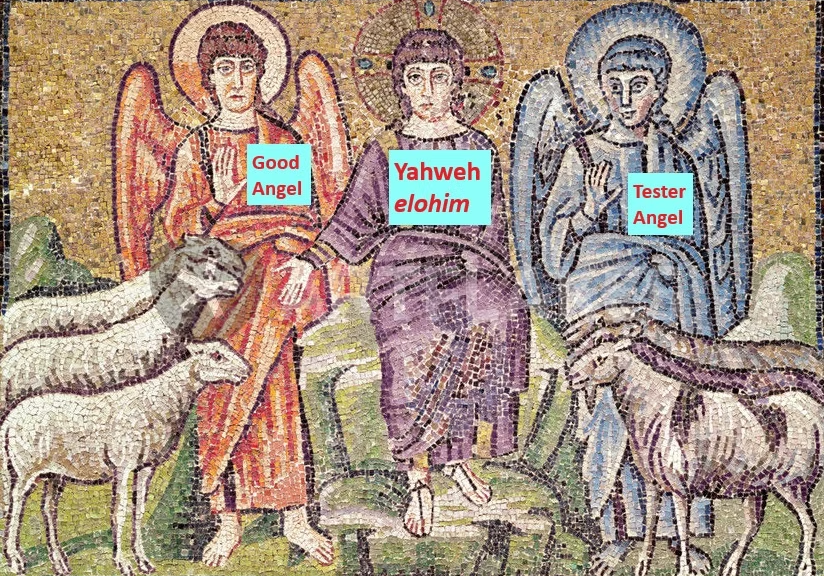
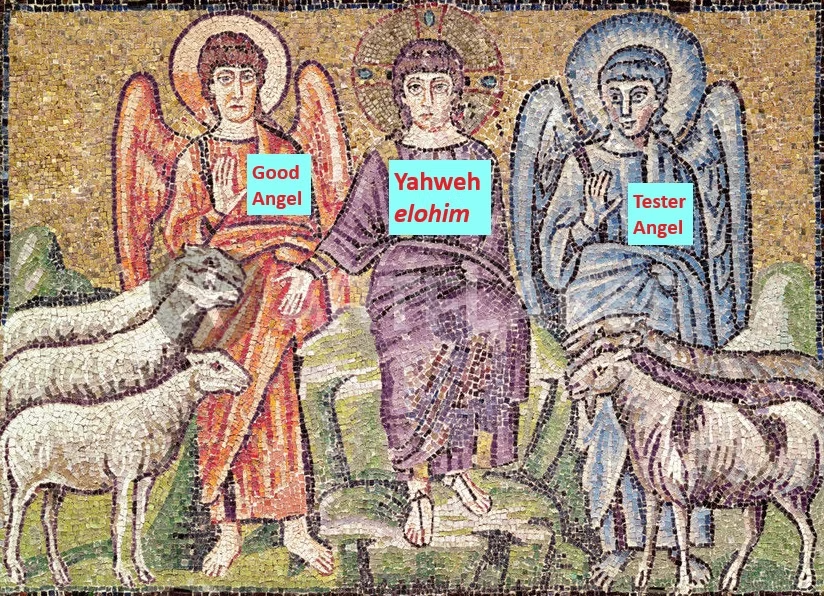
When Jesus told his disciples on the hillside of Mount Olivet the parable of the sheep and goats, he said when the Son of Man returns in glory, the sheep will be set on his right, with the goats on his left.
When those two are separated, then Yahweh will come to judge them. The sheep would be deemed righteous, while the goats would be deemed sinners; but neither of the two would know what they did that was righteous, nor what they did as sinners. This says the sheep will have been repentant and then shepherded by the Son of Man (a Spiritual possession); so, without knowing it, they would have been led to righteousness. The goats, on the other hand, will have claimed to be owned by the Son of Man; but they would have done whatever they wanted to do, justifying everything they did by twisting the words of Law to suit their needs. They were blind to their sins; and, that is the ‘moral of all these stories.’ The man with one hundred sheep goes for the one lost as if it is his only sheep. The woman with ten coins goes for the one coin lost as if it were her only coin. Thus, the man welcomed home his lost son, as if it were his only son.
One thing that needs to be seen when we read, “The younger of them said to his father, ‘Father, give me the share of the property that will belong to me,’” is this is similar to the young, rich ruler who approached Jesus, asking “What shall I do so that I may inherit eternal life?” [Mark 10:17b] In Matthew’s version of this encounter, the young, rich ruler asked, “What good shall I do, that I might possess eternal life?” This means to ask for “the share of the property that will belong to me” is an approach that has one request proof of eternal life before death. When the young, rich ruler used the word “good,” Jesus asked him how he could use that word, when only Yahweh (“God”) “is good.” This becomes the philosophical beliefs of the Pharisees rising to the top of their consciousness.
The Pharisees (thus the scribes that supported their philosophy) believed they were God’s chosen people, which made them better than Gentiles (all who were not Jews or descended with favor from the Twelve Tribes). The Pharisees believed in the slimmest form of an afterlife, where Sheol was where souls of Jews went to mill about in a spiritual realm, until the prophesied Messiah would come and take them all to heaven. The Sadducees did not believe in any afterlife at all. Everything heavenly was then based on how many possessions one held in life; and, that wealth factor was what determined how much “good” a Jew did, with possessions then being the measure of God’s favor. The Pharisees saw wealth as God’s blessing in mortal life; but they still questioned what Sheol would be like, wondering whether or not if wealthy mortals would have a similar area of comfort in the spiritual afterlife.
All of the wealthy lawyers had the luxury of sitting back and waxing philosophically about whether or not there was an afterlife, because Jews had been blessed by Yahweh, simply by choosing them as His people. Everything was already theirs, so they saw no need to do anything differently. They were already living a heavenly lifestyle (compared to most others); so, eternal life could not be better than what they already possessed. That becomes a reflection of how the one son in this parable never became a focus of being disturbed, after the younger son asked for his share of the property before leaving. The younger son is seen as the lesser form of wealthy Jews, who are then the tax collectors. The ‘publicans’ are a necessary evil in Judaism, because they collected the taxes that kept the Gentile Romans off their back and let the Temple elite steal ‘legally’ from the ordinary Jews, getting rich off them and the taxes collected that got funneled back to the Temple (by the tax collectors paying tithes).
When we read, “The younger son gathered all he had and traveled to a distant country, and there he squandered his property in dissolute living,” no one sees the elder son as having stayed in his comfortable surroundings, enjoying more than was given to the younger son. Most likely, he was the reason Jesus told other parables about a landowner that was constantly trying to find good laborers to keep the land from being squandered. What is brought into focus here, by the younger son, is how everything material will eventually be “squandered” when death comes rolling into town.
When that time comes, it says to any son, “Time’s up. Drop what you have and come with me.” The point is nothing but a soul survives after death. The younger son’s tragic life is a lesson that taught his soul to repent, because his tragedy projected as his death. He lost everything he possessed in the world and there were no strangers, those in foreign lands (Gentiles) who cared that Jews thought they were the privileged class of humanity, chosen by God. Thus, the ‘moral of the younger son’s story’ says he realized being a slave to his father was better than being a hired hand for people who cared more about their possessions (swine) than human beings that were not related to them (blood or religious philosophy).
The elder son stayed put and learned nothing. He would be found out “in the field,” which can be seen as him living off the land that was owned by his father. That becomes metaphor for Israel, which (after giving a share to the younger son) was reduced to Galilee and Judea. This says the younger son reflects the Northern Kingdom, which included the Samaritans, whose land was squandered first, to the Assyrians (then the Persians, then the Greeks, and then the Romans). Only in the “field” that was still possessed by the Temple elite (who made the Romans play their game, bartering their influence that would keep the peace) could the elder son feel that he had not squandered anything. Everything in that “field” was possessed by the Roman lienholders, who would foreclose on that land in 66-70 A. D. (call it CE if you want). The elder son was living the lie that he possessed what the father possessed, simply because he had not left when the younger son did.
When we read that “the father said to his slaves” to rejoice, because “this son of mine was dead and is alive again; he was lost and is found!” that becomes the same theme told in the lost sheep and the lost coin parables. Here, it is most important to realize that the elder son was just as lost as the younger son … lost in a mindset that placed value on material things … he just had not suffered a great loss, so still was not found.
When one researches what is written about this parable, one find scholars placing focus on the audacity of the younger son to expect any inheritance, much less before the father died. All the sorrow and anger is directed at the younger son, as if the elder son just got cheated out of half the father’s property value. No one takes the time to consider such a generous father would not only give the younger son half, but also give the elder son at least as much (if not some more). As such, the elder son still possessed the land and its value, while never finding the loss of property as projecting the certainly of death coming, when the possession of one’s body of flesh will be gone, never to return. The younger son learned that lesson and came home, willing to be a servant, owning nothing, seeking only forgiveness. The elder son had not learned this lesson; so, his future was in for a rude awakening when his death would be upon him.
The ”slaves” of the father, one of whom the elder son asked, “What is going on?” must be seen as angels. They serve the father, while keeping an eye on his sons. When the elder son was told that the father was giving the younger son his blessing (like Isaac giving Jacob his blessing, leaving Esau with only a curse), the elder son went into a fit of rage. This is where it is vital to see a “slave” to the father as an angel, in particular those guardian angels that watch after the children of Yahweh. Here, the angel (also called “elohim”) was one of those who leaned towards helping the devil, as a tester of God’s children. The “slave” was the wily serpent that hissed in the ear of the elder son, “Your brother is getting more than you.” The elder son’s outrage made the father come to investigate (just as Yahweh came to Cain when his countenance was low [angry at his brother] and told him to get up off the ground, or evil will find its way into his brain).
When the elder son told his father, “’Listen! For all these years I have been working like a slave for you, and I have never disobeyed your command; yet you have never given me even a young goat so that I might celebrate with my friends,” that was like the Pharisee standing on the top step of the Temple, thanking God for being better than sinners, “especially for not being like that tax collector over there.” The elder son could have said, “I have preached until I have been blue in the face about sinners. I have memorized every Law and I have slaved for you pointing out what laws everyone other than me has broken! You don’t even sacrifice a measly little goat and let me invite all my Pharisee friends over to let them know how much you love me.” That is a tantrum being thrown; and, just like Jesus said the tax collector (who begged God to forgive his sins that he did not know how to stop) was closer to the kingdom of God than was the blowhard Pharisee. The tax collector admitted he had faults, but the Pharisee never publicly or privately confessed his sins. He just blew hard and all his self-guilt went away. The reason the publican’s guilt was so burdensome was the blowhard Pharisee was supposed to be telling sinners how not to sin; not just tell them what they already knew. The Pharisee should have beating his chest begging God to forgive him for not telling sinners how to stop sinning; rather than bragging about how much wealth he had.
This is where reading the father tell his elder son: “’Son, you are always with me, and all that is mine is yours. But we had to celebrate and rejoice, because this brother of yours was dead and has come to life; he was lost and has been found.” That says the younger son had “died.” The younger son had entered into the house of the father (the heavenly kingdom), but his death was figurative, not literal. What “was dead” was the old way of seeing things as being more important than souls. When the father said his younger son “has come to life,” that means his soul had been awarded eternal life, taking his soul beyond the mortal limitations of the physical realm. To have been given “life” says the soul of the younger son had become a Yahweh elohim, which means he became an angel servant of Yahweh. He was able to enter the house of the father, whereas the elder son was still relegated to the realm of land allotted the children of the father. You cannot enter that house with sinful anything. The younger son had been Baptized with the Spirit of “life.” The elder son still had to ritually cleanse with water, just to get a plate of some of the celebratory cooked fatted calf.
When the father told the elder son, “you are always with me, and all that is mine is yours,” that speaks of the bloodline that has the right to claim to be children of God, with that right upheld by religious adherence to the writings of Scripture. That can be seen as Yahweh saying to the elder, “Son, you ask for a young goat, when you are that young goat. You want it sacrificed for you, when the only sacrifice that matters is that of you … like your younger brother just did. If you make the same “death to life, lost to found” decision – from a deep, heartfelt realization of material loss – then you would be just as celebrated as your younger brother. However, as it stands now, he is closer to the kingdom of God than you are [having entered it as a wife of Yahweh, His servant].”
This parable is very important to grasp, because the lesson taught is experiencing abject failure leads those who have been taught the fundamentals of Christianity to humbly repent and offer to serve Yahweh as His slave (which means have a soul divinely married to Yahweh’s Spirit). The problem comes from there being few people who are willing to seek to go to find rock bottom and experience complete despair as a way to serve Yahweh. When Jesus told the young, rich man, “Know the Law and adhere to it … then sell what you possess and give good sermons to those poor in spirit. Once you do that, be reborn as me and raise your grapevine stake real high!” The young, rich man lowered his head sorrowfully, muttering as he walked away, “That pains my soul too much to even think about sacrificing that goat.”
It is so much easier to sit in a pew (every Sunday, multiple times on Sunday, multiple times a week, or once every blue moon) and listen to some blowhard say, “All you have to do is believe in Jesus and know he died on a cross for your sins.” Following those kind words with these: “Make all checks payable to (fill in the blank church or evangelist).” Anyone who has fallen to such depths of despair, who are willing to submit their souls fully to Yahweh, they are not allowed to have an official assembly or congregation to preach to. So, they have no platform available to them (no possessions of space, no possessions of clientele), where they can tell other lost souls how to sacrifice like he or she did … now! They cannot speak as someone else who died and was reborn, whose story is so other souls don’t have to experience abject failure like he or she did. Without permission papers [today that means wearing a paper mask too], those people would be arrested for trying to do that in an existing church building or organizational sanctuary. The Temple game today says play by seminary rules; so, anyone having not taken the time and not having gone into debt with a student loan (buying a diploma), to go some place where divinely married souls would then be taught the complete opposite of what it means to make an absolute sacrifice of one’s soul to Yahweh.
If everyone were told to get out of the pew and serve Yahweh totally now – dying metaphorically, by giving up all lusts for material things – all the organizations of religion would go bankrupt, without paying customers. And, like the elder son going into a fit of rage … no church is going to stand by and let true Saints be welcomed!
As a Gospel selection to be read aloud on the fourth Sunday in Lent, when one’s soul should be tested for absolute commitment to Yahweh, as His servant, the lesson here has to be seen as understanding the churches are meant to be left. Everyone should become like the younger son and take what value one has been taught (a regular attendance in children’s church and a few good hardbound Children’s Bible Stories picture books in hand, as well as a family-given Holy Bible) and take that out into the world. Certainly, one will be taught very quickly that all the stuff fed to a child in church will quickly be dissolved in the real world. One has to be stripped of all dignity, as far as what has been taught about what being a Christian means. One needs to see just how much the world loves sinners; and, see just how much the world will trick the religious into losing their religion. With some sense of value given to Yahweh in one’s youth, one must know that talking to Yahweh (prayer) is how a lost sheep lets the Good Shepherd know one is willing to be found. The test of Lent is then finding faith from prayer … not the Pablum of belief, which quickly turns to mush and gets filled with maggots when more is taken than one can digest in a single day.
One needs to see how a soul is closer to the kingdom of God than is a body of flesh wearing all the fancy robes of false shepherding. The world forces human beings into letting the teachings of Jesus and all the Saints of the Holy Bible be devoured in the company of prostitutes, where souls are sold to the devil for some job that pays well, or some car that drives fast, or some social contact that sacrifices a goat in one’s honor. The test of Lent is to go out into the world as a model of Jesus, because one’s soul has truly married Yahweh’s Spirit and given birth to Jesus in one’s soul-flesh. That is one of those sheep things that leads to a life of righteousness, which that sheep is clueless about. The test is to let go of your self-ego and let the Christ mind lead you in ministry. The test is to experience the celebration of salvation, before one dies; and, that means leaving the pew behind, after it has served its purpose.






 Explaining the Readings