
Jesus said, “I am the bread of life. Whoever comes to me will never be hungry, and whoever believes in me will never be thirsty.”
Then the Jews began to complain about him because he said, “I am the bread that came down from heaven.” They were saying, “Is not this Jesus, the son of Joseph, whose father and mother we know? How can he now say, ‘I have come down from heaven’?” Jesus answered them, “Do not complain among yourselves. No one can come to me unless drawn by the Father who sent me; and I will raise that person up on the last day. It is written in the prophets, ‘And they shall all be taught by God.’ Everyone who has heard and learned from the Father comes to me. Not that anyone has seen the Father except the one who is from God; he has seen the Father. Very truly, I tell you, whoever believes has eternal life. I am the bread of life. Your ancestors ate the manna in the wilderness, and they died. This is the bread that comes down from heaven, so that one may eat of it and not die. I am the living bread that came down from heaven. Whoever eats of this bread will live forever; and the bread that I will give for the life of the world is my flesh.”
——————————————————————————–
This is the Gospel selection from the Episcopal Lectionary for the Twelfth Sunday after Pentecost, Year B 2018. In the numbering system that lists each Sunday in an ordinal fashion, this Sunday is referred to as Proper 14. It will next be read aloud in an Episcopal church by a priest on Sunday August 12, 2018. It is important because Jesus speaks of “living bread,” adding to the living water that means one “will never be thirsty.” It is vital to understand the “bread” meaning in this selection.
I posted an article that explained how to understand John’s chapter six (March 6, 2015). An atheist can read the exchanges between the pilgrims in Capernaum, who were part of the five thousand fed miraculously by Jesus and his disciples, and claim Jesus preached cannibalism. That was not the case at all; and, I stand by those opinions of three years ago.
But now the cycle again turns to Jesus saying, “I am the bread of life” and “I am the living bread that came down from heaven.”
The frightening part that some people shudder to even think about is the meaning that comes from Jesus having said, “Whoever eats of this bread will live forever; and the bread that I will give for the life of the world is my flesh.”
Rather than becoming confident in what this means, well enough to explain it to others and alleviate their fears and uncertainties, many Christians choose to walk away from the difficult passages and return their heads to the warm sands of ignorance.

Hopefully, everyone who reads John’s chapter six in his Gospel realizes that Jesus stood before the Jews as a human being, made of flesh, bones, organs, and blood. Since he was not a loaf of bread and knowing that he was not a glass of water either, one has to realize that Jesus spoke metaphorically.
In the Gospel reading selection for the eleventh Sunday after Pentecost (the past Sunday), Jesus encountered those Jews who were not filled with the Holy Spirit in the gathering on the flood plain of Bethsaida. Jesus told them they sought food that perishes, when they should be seeking “food that endures for eternal life,” which Jesus offered. For many of the five thousand (with women and children adding to that figure), they were fed the Holy Spirit by Jesus. Those did not follow Jesus to Capernaum, seeking more “signs” involving physical bread and dried fish.
When Jesus said, “I am the bread that came down from heaven,” the Jews imagined manna falling like rain from the sky. The Greek word written by John, “ouranos,” can be interpreted as “the visible heavens: the atmosphere, the sky,” and even “the starry heavens,” but Jesus meant “the spiritual heavens.” A “spiritual” anything is invisible and not of the “physical” world. Thus, while manna was a physical manifestation of tiny flakes of “what is it?” (the meaning of the Hebrew word “manna”), which formed somehow in the atmosphere in the wilderness of the Sinai, Jesus was not that kind of bread.
God had “been there, done that” and was not repeating the bread falling from the sky. Instead of “manna” what God sent was “umee-zoh” – “who is this?” The Jews confronting Jesus in Capernaum were asking that under their breath.
The English word “bread” has these acceptable definitions (among others) listed for it: “Food in general, regarded as necessary for sustaining life; and, something that nourishes; sustenance.” (American Heritage Dictionary of the English Language) This means the metaphor has to be applied in these ways, such that Jesus is necessary for sustaining life, as one who nourishes. “Nourish” means Jesus is necessary for life and growth, as one who fosters the development of those who “eat of this bread” he represents.
When Jesus said, “I am the bread that came down from heaven,” this supported his having said, “Whoever comes to me will never be hungry, and whoever believes in me will never be thirsty.” The word “never” (Greek “ou”) means that hunger and thirst will not be a problem for anyone nourished by the bread Jesus represents. A physical body demands food and water for life to be sustained. However, a soul, which is eternal, never requires anything physical to continue its immortal designation.

The middle of this selection has Jesus making reference to the Father. This clarified that he had come down from the spiritual heaven of God, not the physical atmosphere: like rain, a meteorite, or manna. It is worthwhile to note that the Jews asked, “Is not this Jesus, the son of Joseph, whose father and mother we know?” That is opposed to the insult of Jesus preaching in Nazareth, where he was referred to as “the son of Mary,” his mother (in Matthew 13:55 and Mark 6:3), not dignifying him as the son of Joseph (although Luke 4:22 referred to him in that manner). That reference in Capernaum led Jesus to explain his having been sent by God, while stating indirectly that Joseph was not his biological father. His reference to “the Father” was heard in human terms, not heavenly ones.
Jesus referred to “the Father” four times, saying “by God” one other time, as he told the Jews: “No one can come to me unless drawn by the Father who sent me; and I will raise that person up on the last day. It is written in the prophets, ‘And they shall all be taught by God.’ Everyone who has heard and learned from the Father comes to me. Not that anyone has seen the Father except the one who is from God; he has seen the Father.”
This is important to follow.
First, the translation, “No one can come to me unless drawn by the Father,” is not quite that simple. It is a series of segments that say: “No one is able to come to me,” followed by “if not the Father,” followed by “the [one] having sent me,” followed by “draws him.” The use of the Greek word “helkysē,” which translates as “draws,” means, “to draw by inward power, lead, impel.” [HELPS Word-studies] Rather than “to come to me,” the Greek can translate to say “to enter with me.”
This means “if not the Father” says only those who can call God “the Father,” like Jesus, are those who will also be Jesus, in union “with” him. The Greek word “pempsas,” which is translated as “having sent,” can also say “permitting to go,” where “the Father” determines who will be “with” Jesus, as His Son reborn (able to call God “the Father” too). All of this combines to state that the only ones who can become Jesus are those whose inner spirit leads them to be like Jesus.
By being able to see how Jesus meant that with his statement, look how the conclusion makes more sense. Jesus added, “I will raise that person up on the last day.” By stating the first person future conditional form of the verb “anistémi,” “I will raise up” says Jesus will elevate another, by “standing with” that one. This is a spiritual elevation that is allowed by “the Father” in heaven. At that time, one will experience their “last day” as an ego driven, selfish soul, where darkness abounds, as the light of “day” will forever shine for those servants of the LORD, who are then “in the name of Jesus Christ.”
Jesus then said, “It is written in the prophets, ‘And they shall all be taught by God.’” This is quoting from Isaiah 54, where the prophet wrote:
“All your children will be taught by Yahweh, and great will be their peace.”
“In righteousness you will be established: Tyranny will be far from you; you will have nothing to fear. Terror will be far removed; it will not come near you.”
“If anyone does attack you, it will not be my doing; whoever attacks you will surrender to you.” [Isaiah 54:13-15]
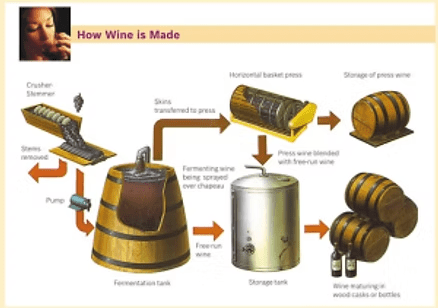
Isaiah told of the future glory of Zion, which has to be seen as heaven. When Jesus said “they shall be taught by God,” this is the Christ Mind that comes to all who are reborn as Jesus Christ. When one is “entered with” Jesus, and “raised up” spiritually by a soul cleansed of sin, one is then “taught” the will of Yahweh. Everything known by God is available to His servants, just as it was available to Jesus of Nazareth, coming at the time of need. This is the spiritual depth of meaning [the wine] that must accompany the bread of Scripture.
Realizing that source of teaching is the Christ Mind, one can then see how Jesus saying, “Everyone who has heard and learned from the Father comes to me,” means one has become one “with” Jesus. One hears the insight of holy wisdom. One learns the meaning of the Word, from God’s whispers of thought. It is repeating the previous statement, confirming this state of hearing and knowing means one has “entered with” Jesus.
This segment of statements about “the Father,” said by Jesus to the Jews, concludes with his saying: “Not that anyone has seen the Father except the one who is from God; he has seen the Father.” This is a statement that is again segmented, with the first segment stating, “Not that the Father has seen anyone,” which means “no one has seen the Father,” but also broadens to say “the Father” only has one Son [Adam], which is “the one who is from God.” As such, the Greek word “heōraken” [“has seen”] actually refers to a spiritual “knowing,” and God has only “known” one that has “seen the Father,” again in the “knowing” sense.
When Jesus then seemingly changed course abruptly, saying, “Very truly, I tell you, whoever believes has eternal life,” this is relative to seeing God. The saying goes, “Seeing is believing,” but another saying is “The hand is quicker than the eye.” The Greek word “pisteuōn” translates as “believing,” but is best read as “having faith in.” There is a significant difference between belief and faith, such that Jesus regularly asked his disciples, “Oh you of little faith, why did you doubt?”

Doubts come from “seeing,” but faith-based belief comes from “knowing,” which is the depth of commitment that comes from personal experience, not second-hand rumor. Therefore, “faith” leads to becoming Jesus reborn, which is the promise of eternal life.
When Jesus repeated, “I am the bread of life,” and then said to the Jews, “Your ancestors ate the manna in the wilderness, and they died. This is the bread that comes down from heaven, so that one may eat of it and not die,” this demands one understand the manna from heaven.
Manna had physical qualities that were like Jesus in the flesh; but once the physical was gone (when the manna stopped falling, when the Israelites entered the Promised Land; and, when Jesus was executed by crucifixion) the spiritual qualities must take over. Manna had no lasting effect, in eternal terms. Jesus offered everlasting life, avoiding the shortfall of death.
I have written in these posting from time to time about the symbolism of Jesus at his last Seder meal (the Last Supper). The unleavened bread and the four cups of wine are ritual symbols for all Israelite descendants: of freedom from bondage [bound to a temporal world] and the spiritual uplifting that transforms a normal human being into a priest of Yahweh [intoxicated by the Holy Spirit – the reason alcoholic drinks are called “spirits”]. The Jews to whom Jesus spoke [including the disciples who would later partake of Jesus’ last Seder meal] could not see beyond the memorization of ritual that thanked God for making them a separate people – special people in God’s eye, as a race linked by blood that He created.
Christians today have reverted to this same repetition of symbolism, using Jesus as their gift of specialty and favor. Unfortunately, most Christians do not feel the first Covenant, which demanded three periods of recognition each year, for eternity, which the Israelites (Jews) honor, is required of Gentile converts. Without knowing the presentation of matzo and wine are a fixed part of the ritual Jesus followed (as a devout Jew), the Christian substitutions of wafers and wine [or grape juice] are being offered metaphorically as Jesus’ body and blood, without realizing the deeper meaning. One purposefully comes before the other, as a natural progression towards eternal salvation; but Christians believe Jesus has been called down from heaven to become one with the wafer that goes on their tongue, washed down by a sip of wine [fermented or not].
The bread symbolizing the body of Christ is the same as the manna that fell from the sky was that fed the Israelites spiritually. The wine symbolizing the blood of Christ is the same as the living water from the rock that kept the Israelite alive, as they interbred into a race of holy priests. The bread (the body of Christ) is then the holy writings (the Law, the psalms, and the prophets) that foretold of the coming Christ. The wine (the blood of Christ) is then the continuation of the Christ (the legacy of lineage), as those who are the fruits of the living vine.
In a recent posting about the manna falling to the Israelites, I mentioned that this spiritual bread (in physical form) was not to keep the bodies of flesh alive. The Israelites took with them livestock and probably grew crops from the water Moses struck from the rock with his staff. The manna fed their will to serve God for forty years – three generations of the children of Israel’s growth as priests serving the One God.
Think about those forty years spent in the wilderness. Those words of timing slide right over one’s head without the slightest realization of how long that time is. What was one to do in a wilderness environment, beyond gathering manna, caring for the children born, caring for the beasts of burden, the preparation of food to eat, the washing and mending clothes, the milking goats and cattle, and all the mundane things of a normal life? There were no I-phones; there was no Internet, no television, no sports, no concerts, no movie theaters, and no places to go and spend one’s idle time. What does one do over forty years to pass the time and make wilderness living gratifying and rewarding?

The Sabbath was a day of rest – ALL DAY LONG – but that did not mean walking to a synagogue for a couple of hours of dutiful attendance, with others of the same religious practices. There was time spent praying to Yahweh. In their spare time the Israelites learned the Laws passed down to them by Moses. They memorized the history of the world, up to that point (Genesis). That activity was their entertainment, as they looked forward to living up to their commitment to God. The manna from heaven nourished their desire to do that. Likewise, Jesus, as the bread of life, has to have the same effect on Christians.
When Jesus said, “Your ancestors ate the manna in the wilderness, and they died,” this is another use of symbolism, where “they died” is not meant in physical terms. All mortals die. Mortals do not live for a thousand years; so, it was natural for ancient ancestors to have died in the flesh. Therefore, their only having eaten manna in the wilderness, but not in the Promised Land, says the land of Canaan, which became Israel (and its split into Israel and Judah), could not guarantee eternal life.
Once in the land that had been given to them, and because they stopped being spiritually motivated to keep alive the traditional Word, the Israelites died of commitment to the Father. The Israelites broke their covenant with God by finding sustenance only from the land. The Law as their bread from heaven became only a physical document (scrolls) and not their motivation to find union with God, so the Law never could pump through their bodies spiritually. The land became the bread of Israel, of which they ate under kings that were not Yahweh. That bread was unable to sustain an inner desire to serve Yahweh, so the land, the Israelites, and their covenant with the One God died.
The same error is found in every place on earth where country or nation is seen as of the utmost importance. The laws of all nations, regardless of what holy documents they may or may not be based upon, are nothing more than the bread that leads to mortal death. The leaders of all nations are merely human beings, incapable of offering eternal life, simply because humans are mortal and all things coming from humans are short-lived. Just as human beings are born to die, so too are nations, as neither the lands nor its kings can lead human beings to serve God. That can only be done individually, spiritually, between a soul and the Father.
When Jesus then said, “I am the living bread that came down from heaven. Whoever eats of this bread will live forever,” he restated “I am the bread of life” a third time. This means Jesus is the incarnation of God on earth. “Whoever eats of this bread” actually states the conditional, in a segment that reads: “if anyone shall have eaten of this the [one] bread.”
This means Jesus is only for those who “consume the divine provisions” that Jesus brings from God. Those divine provisions have been recorded in the Gospels and the Epistles of the Saints. Those divine provisions point out how the Torah, the Psalms, and the Prophets spoke the Word of God prophesying Jesus, who came as the truth answered. To have faith in the truth that is Jesus Christ, one has to eat those holy words and digest them into one’s spiritual being.
The promise of eternal life is then assured by Jesus stating, “The bread that I will give for the life of the world is my flesh.” The physical being that was Jesus was the fulfillment of Scripture; but that fulfillment did not end when Jesus died, was buried, resurrected, and/or ascended. The promise means that once Jesus was sent as the bread of life, Jesus would forever more be resurrected in the flesh of his followers. They would be followers because they would be reborn as Jesus returning into the world, as a Holy Soul united with a cleansed soul in human flesh.
To see “the bread” in light of “my flesh” one has to see these as surface elements. A body without life is a corpse; but a body freshly dead will give the appearance of flesh that is only sleeping.

That look can make one think life still inhabits the body, when it in fact does not. This is symbolic of unleavened bread. There are only the basic ingredients used, which makes bread that is flat. Without the life of yeast within bread’s crust, giving rise to much more desirable bread, unleavened bread simply keeps one alive from day to day. This is the difference between the manna and the bread of life.
Jesus must be mixed within the ingredients of one’s being, so his Spirit gives rise to a human being that is more than a mortal born to die. Jesus must be consumed within one’s being, so his presence can elevate one to eternal life. Just as one cannot tear apart a loaf of fresh hot bread and point to the yeast that gave it rise, one cannot tear apart a Saint and point to Jesus within. Still, Jesus is present in all Saints because they have become one with Jesus Christ in the flesh.
As a Gospel selection for the twelfth Sunday after Pentecost, when one’s personal ministry for Yahweh should be underway, the message is to reproduce the bread of heaven so Christ can feed the seekers called by God today. One needs to be filled with the “yeast” that is the Holy Spirit, being reborn as the Son of God.
The “bread of heaven” is the insight found in Scripture. Feeding the truth of Scripture to the hungry nourishes them in a spiritual manner. The “bread comes down from heaven” because the deep meaning to the Word comes from the whispers of God. The “bread of life” is the elevated way an Apostle follows in the holy footsteps of Jesus, led by the Mind of Christ. Those who consume the meaning then spread that way of living to those seeking to know God and Christ, giving them the opportunity to be blessed with eternal life.
A minister of Yahweh knows the difference in the symbolism of bread in ritual practices, designed to remind one of God’s sending of priests into the world. Whereas the Israelites died when the manna ceased, God sent His Son as the spiritual food that gives rise to the matzo of the Seder meal. Christians, Jews, and Gentiles are all unleavened until they receive the Holy Spirit and are reborn as Jesus Christ. Once they become the flesh of the Son of man, the blood of Christ fills their bodies. Thus, a minister of the LORD teaches we remember Jesus as the bread of life by finding delight in the breaking of the afikoman and we remember his Holy Spirit – as the Christ – when his blood has become one with ours.





 Explaining the Readings