Tag Archives: Luke 18:9-14

Matthew 21:23-32 – The authority to be a reluctant yet obedient son or a liar versed in expected answers [Seventeenth Sunday after Pentecost]

When Jesus entered the temple, the chief priests and the elders of the people came to him as he was teaching, and said, “By what authority are you doing these things, and who gave you this authority?” Jesus said to them, “I will also ask you one question; if you tell me the answer, then I will also tell you by what authority I do these things. Did the baptism of John come from heaven, or was it of human origin?” And they argued with one another, “If we say, ‘From heaven,’ he will say to us, ‘Why then did you not believe him?’ But if we say, ‘Of human origin,’ we are afraid of the crowd; for all regard John as a prophet.” So they answered Jesus, “We do not know.” And he said to them, “Neither will I tell you by what authority I am doing these things.

“What do you think? A man had two sons; he went to the first and said, ‘Son, go and work in the vineyard today.’ He answered, ‘I will not’; but later he changed his mind and went. The father went to the second and said the same; and he answered, ‘I go, sir’; but he did not go. Which of the two did the will of his father?” They said, “The first.” Jesus said to them, “Truly I tell you, the tax collectors and the prostitutes are going into the kingdom of God ahead of you. For John came to you in the way of righteousness and you did not believe him, but the tax collectors and the prostitutes believed him; and even after you saw it, you did not change your minds and believe him.

——————————————————————————————————–

This is the Gospel reading from the Episcopal Lectionary for Year A, Proper 21, the seventeenth Sunday after Pentecost. It will next be read aloud in church by a priest on Sunday, October 1, 2017. This in an important lesson because it addresses who has God’s approval to shepherd His flocks.

This reading reminds me of my experience at a seminary school. I was not a seminarian (my wife was), but I socialized with them at school functions and in the neighborhood housing arrangements. I saw several glaring problems with the whole system of educating priests (too many to get into now), but the statement, “the chief priests and the elders of the people came to [Jesus] as he was teaching, and said, “By what authority are you doing these things?” hit home for me.

I was writing books back then, which explained how to read Nostradamus, so that what he wrote can be understandable. Nostradamus can be seen as John the Baptizer, as “the chief priests and elders of the people” have not believed as I believe – that Nostradamus was a prophet of Jesus Christ. Because I fully believe that, I cannot hold my tongue about that belief.

When asked, “What do you do?” I told seminary students about Nostradamus. I told some teachers about Nostradamus. I even told some invited guest speakers coming to that school (whom I picked up or took back to the major airport nearby) about Nostradamus.

It was like I asked them all, “Do you believe The Apocalypse of John of Patmos is similar to The Prophecies of Nostradamus?”  It was like I posed the question, “Whose authority did those books come from: Prophet of Christ or Charlatan?”

Some wanted to shun me forever; but some were patronizing.  It was as if their minds were calculating, “If we say, ‘Prophet of Christ,’ he will say to us, ‘Why then did you not believe him?’ But if we say, ‘Charlatan,’ we are afraid we might be talking to an unstable, dangerous person.”  They all seemed well-versed in the “smile and nod” reaction to uncertain situations.

My amazing ability to understand Nostradamus was a gift given to me by God. There can be no other explanation for that talent.  I was the last person on earth who I figured would be able to understand Nostradamus; but I was led by a higher power, and not simply to understand his cryptic writings.  I found that I was able to apply the same systems applicable to making sense of Nostradamus to everything in the Holy Bible. That syntax is God’s, as His Holy Language … Speaking in Tongues not taught in schools.  So, it applies to everything He had His people write for Him.

There really are no authorities that grant doctorates or even bachelor’s degrees about the meaning of Nostradamus; so if I am seen teaching about his writings, authority figures have no reason to confront me. They just snicker and poke each other.  However, since I have been allowed to put Nostradamus on the back burner (so to speak), due to carpal tunnel in both wrists from writing so much, I have been encouraged to write Biblical interpretations. That will attract some frowns and questions by the religious elite.

What school did you attend to learn that? What scholastic volumes of books have you read and footnoted, while preparing properly detailed papers and dissertations that have been argued before expert authorities? How many reputable scholars can you quote in support of your views?

I will answer your questions, if you let me ask you one first. If you can answer that, then I will answer your question.

What seminary did Jesus and his Apostles attend? The same one begun by Moses in the wilderness, or a different one?

When Jesus said, “Neither will I tell you by what authority I am doing these things,” we all know he was authorized by God the Father. We know because he said that a few times, as noted in the Gospels.

“Very truly I tell you, the Son can do nothing by himself; he can do only what he sees his Father doing, because whatever the Father does the Son also does.” (John 5:19)  “ Then Jesus said to them, “When you lift up the Son of Man, then you will know that I am He, and that I do nothing of Myself; but as My Father taught Me, I speak these things.” (John 8:28)  “For I did not speak on my own, but the Father who sent me commanded me to say all that I have spoken.” (John 12:49)

The original plan was to have ALL the Israelites be ordained priests for YWHW. When Moses first took them on a 40-year hike, you have to look at the Israelites as babies and infants, because they were incapable of doing anything on their own. Forty years of rote memorization of the laws was priestly training that was more like children’s church on Sunday mornings. They just learned the stories, but the deep meaning escaped them.

When the Israelites were supposed to be priests for YHWH in the Promised Land, they were like teenagers under the Judges – always backsliding and getting into trouble, while having to be bailed out time after time. They entered the rebellious age.  By the age they asked for a king, “to be like other teens,” they were like young adults who no longer lived by the rules of their parents. But, by the time Israel and Judah fell in ruin, led by politicians whose only god was self, they were like twenty-somethings with arrest records. All their promise was washed away.

By the time the Jews had formed from those Israelite ashes and been released from Babylon, they were like thirty-somethings, who were “street smart.”  You could say they had become charismatic, prison ordained street preachers. That was who Jesus ran afoul of in Jerusalem. It was them acting with the know-it-all of young adults – their audacity – that made them the priest police.

In the parable-like question that Jesus posed to those learned men of the Law. both sons sinned against the father. One refused to go at first, but then thought about it and went (to stay out of trouble). The other said he would go, but flat out lied – a sin against his father. However, the one who refused, but then changed his mind, he was easier to forgive.

This lesson is no different than the one Jesus taught when observing the Pharisee and the Publican in the Temple. When Jesus said here, “Truly I tell you, the tax collectors and the prostitutes are going into the kingdom of God ahead of you,” this is not saying the son who lied by saying “No,” but then did “Yes,” is the exact same as a prostitute or tax collector (Publican). Saying “No,” and then thinking about it, before acting, put him in the same boat. Both were sinners, so unless change comes, both are forbidden from heaven.

What Jesus was really saying was, “You Law police fellows are too full of yourselves to ever realize you are going in the opposite direction of heaven.”
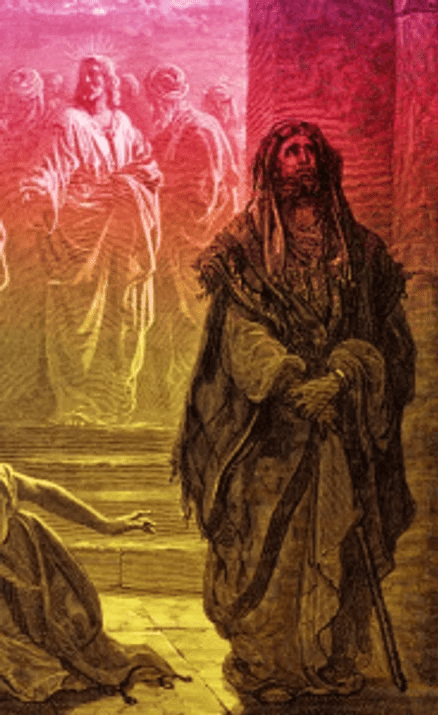
Thank you God for making me holy and not like the riffraff of the world. This is the pretense of a priest who knows nothing of spiritual matters.

At least the tax collectors and prostitutes are aware of their sins. They just can’t see how to stop sinning, in a world that forces sin upon everyone.  That is where a good teacher – such as John the Baptizer and Jesus – can get the losers to stop being a loser and change.

When the Pharisees and high priests see good teachers like that, they want to hurl stones at them. They certainly don’t want to pull up a chair and listen to what good teachers are saying. They might learn something then.  However, whose authority determines who the good teachers are, without a sheepskin to prove one has that approval?

Remember when Jesus said, “Watch out for false prophets. They come to you in sheep’s clothing, but inwardly they are ferocious wolves.” (Matthew 7:15)  That was the Pharisees wearing clerical robes, and what was then has always been and will continue to be.

This is why I see Christianity turning into a cesspool of teachers. It is not that all the sordid pieces and parts of waste in a cesspool were made for that ultimate purpose. Waste is the degradation of value.  What goes in good is split in two: the unseen nourishes, while the residue usually does not pass the smell test.  That gets flushed with good water.  It is just that when you mix the bad in with the good water, the good water has to be purified before it can be good water again.

A couple of years ago, my wife (a priest now) followed a bishop of another diocese on Facebook. She liked a few of his sermons that he posted on his website. He wrote one about the lesson of the Tax Collector and the Publican (Luke 18:9-14), which was uninspiring to me.  It was what I call out of the “puppy mill” of sermons. What priest has stood in the pulpit and looked at the smiling faces of tithers in the pews and not said the message of the Pharisee and the Publican was, “The sinners of the world have hope, because they are closer to heaven than those who think they have it made”? (The same sermon that can be preached about the two sons who disobeyed the father.)

That bishop published a sermon that had nothing new in it. What is the lesson of “being closer to heaven than some other guy,” if the sinners never hear a good teacher tell them how to “get to heaven.” Jesus was giving a sermon that said YOU bishop (and every priest who cannot see him or herself in this story) are the Pharisee in that story.  Forget about the obvious sinners, because it is YOU who Jesus said is farther away from salvation.

Telling those who feel guilt about their sins, “Have hope!  Keep coming here and I will keep telling you to have hope!” they will always come back for more of the same sermons.  But, who wants to stay in a pew when the priest says, “Jesus was pointing out how far away from heaven I am. But hey, who gets to heaven anyway?”

That’s entertainment, not a good shepherd.

A good sermon would be a true Apostle (like were Peter and Paul), who stands in front of a group of attentive sinners, all of whom want to hear how to stop sinning, and admit they too were sinners … sinners who changed.

In a good sermon the priest says, “I was the Pharisee in this story. I was farther away from heaven than you people are now; but I saw myself and felt ashamed. I had lied to the Father when I went into the priesthood. It was all about me being holier than thou. I was young and stupid and thought learning about religion would make me holy.  Therefore, I raised my arms to the sky and thanked God for giving me a sweet job that has so many fringe benefits.

Then I realized all my work had been only for me, even when I made it seem like I was helping others. I was only imagining I was working in the vineyard, when I was simply tasting the wine. I want to apologize for having not made every one of you self-sufficient priests for Yahweh.

I now speak to the LORD every day and He wants me to teach you the real meaning of the Scriptures, so you can understand by the Holy Spirit and go tell others the truth.  Truth comes not from having learned what someone else knows, but from a love of God that thirsts within one for His knowledge.

Please, I invite each and every one of you to join me in Bible Studies and fellowship, so our love of God branches out and produces fruit. Amen”

I made a post on that bishop’s blog, which suggested this alternative view … politely, in different words than here above. While he politely responded to my post, it was another example of people not really hearing what is being said or not being truthful about what they heard. He wrote back something like, “But who would be left in the pews, if I told them that?”

Wasn’t that the point when Moses freed the Israelites from Egypt? At some point the baby has to grow up, the student has to graduate from school and get a job. God didn’t free cradle to grave sons that say, “Yes sir! I’ll be working in that vineyard bright and early!” who then never do.

Did He?
Amos 7:7-15 – Human plumb lines

This is what the Lord God showed me: the Lord was standing beside a wall built with a plumb line, with a plumb line in his hand. And the Lord said to me, “Amos, what do you see?” And I said, “A plumb line.” Then the Lord said,

“See, I am setting a plumb line in the midst of my people Israel; I will never again pass them by; the high places of Isaac shall be made desolate, and the sanctuaries of Israel shall be laid waste, and I will rise against the house of Jeroboam with the sword.”

Then Amaziah, the priest of Bethel, sent to King Jeroboam of Israel, saying, “Amos has conspired against you in the very centre of the house of Israel; the land is not able to bear all his words. For thus Amos has said,

‘Jeroboam shall die by the sword, and Israel must go into exile away from his land.’ ”

And Amaziah said to Amos, “O seer, go, flee away to the land of Judah, earn your bread there, and prophesy there; but never again prophesy at Bethel, for it is the king’s sanctuary, and it is a temple of the kingdom.”

Then Amos answered Amaziah, “I am no prophet, nor a prophet’s son; but I am a herdsman, and a dresser of sycamore trees, and the Lord took me from following the flock, and the Lord said to me, ‘Go, prophesy to my people Israel.’”

——————————————————————————–

This is an optional Old Testament selection from Episcopal Lectionary for the Eighth Sunday after Pentecost, Year B 2018. In the numbering system that lists each Sunday in an ordinal fashion, this Sunday is referred to as Proper 10. It will next be read aloud in a church by a reader on Sunday July 15, 2018. This is important because it shows the rejection prophets face when they speak the truth of God, while not backing down to that rejection.

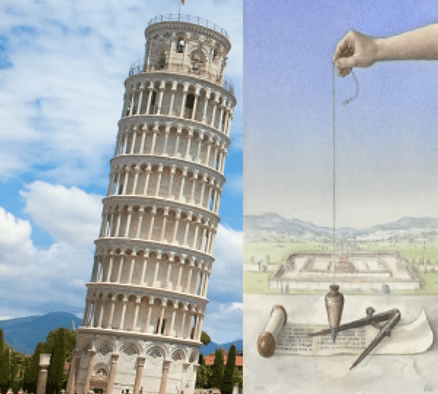
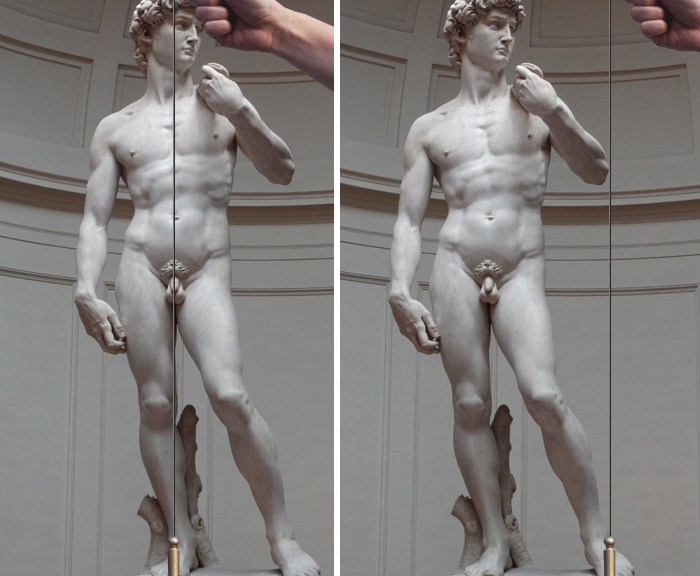
The plumb line is used to make sure a wall is going up perpendicular to the ground, assuming the ground has been leveled and a solid foundation is in place.

Without a plumb line to ensure the squareness of the angle (90 degrees), the wall will collapse under its own weight. David was the plumb line for Israel, where the wall was reworked after Saul.  Jesus Christ would be the cornerstone to a new foundation for a new wall (Christianity) that would test the squareness of each brick (Christians) making up that wall.  Thus, Jesus would also be the plumb line sent to be in the midst of God’s people, after their walls collapsed in Israel and Judah, sending those of Israel to the winds of the earth and the Jews to Babylon.

The prophets, like Amos, set that line and the people rejected it by allowing kings who were out of square to reject the prophets. The collapse of Israel and Judah can then be seen as nothing more than a law of physics. Thus, just as they fell because they were not square with the LORD, so too did the Jews of Judea and Galilee collapse for not accepting the square that was Jesus Christ.  The same building failure is often repeated throughout history in nations of people who reject God and His cornerstone.

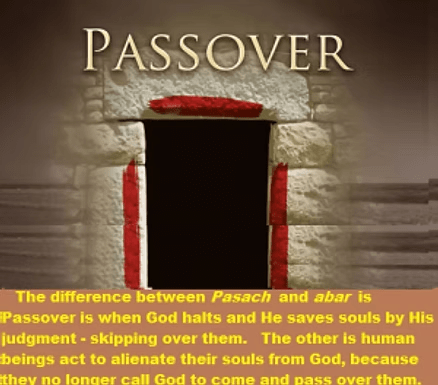
When we read how Amos wrote of the LORD telling him, “I will never again pass them by,” the actual Hebrew words from which this is translated are “‘ă·ḇō·wr lōw,” from “abar lo,” meaning “no pass over.” Those two words are separated (a hyphen mark shown in the text) from the lead-in words, “lō- ’ō·w·sîp̄ ‘ō·wḏ,” rooted in “lo yasaph od,” which state, “not again going around.”  God told Amos that the breaking of Israel into two nations meant the Israelites were breaking free of His influence.

This means the history of Moses and the Israelites comes into play, where the angel of death would no longer be allowed to pass over the doorways to homes of the children of Israel that would no longer be marked by sacrificial blood of lambs. This prophecy given by God to Amos came at a time after Jeroboam had successfully manipulated the secession of the ten tribes that became the Northern Kingdom, splitting away from Judah.

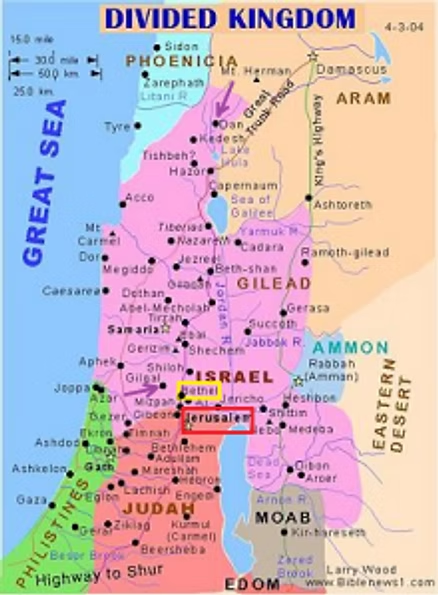
When we read, “Amaziah, the priest of Bethel,” we need to know that Bethel was the place established by Jeroboam as the second Temple. This site was deemed the holy place of the Northern Kingdom, so Israelites would not pilgrimage to Jerusalem for the required holy festivals (Passover being the first each year). Amaziah is said to be a priest of Jeroboam II, the distant descendant of the initial usurper Jeroboam. Amaziah is therefore considered as a false prophet of Israel, although his name means “Yahweh is Strong” or “Strength of the LORD”.   Amos was then prophesying for the LORD when Amaziah was a priest of Bethel, under Jeroboam II.

When we then read how Amaziah reported about Amos, “Amos has conspired against you in the very center of the house of Israel,” the map above shows how Bethel was not geographically central to the area comprising the Northern Kingdom. Amos was sent to Bethel to preach the Word of the LORD; and because of Bethel being only 10.5 miles north of Jerusalem, “the very center of the house of Israel” means the “heart” of their house of rebellion. Since the original unification of twelve tribes was Israel, and all its inhabitants were Israelites (of which Bethel and Jerusalem were centrally located), “the house of the new Israel” became synonymous with those who rebelled and broke away, stealing the name “Israel” in that process.

When we read that Amaziah told Jeroboam II, “The land is not able to bear all his words,” those words are stated by Amos as being the Word of God, stating:

“the high places of Isaac shall be made desolate,

and the sanctuaries of Israel shall be laid waste,

and I will rise against the house of Jeroboam with the sword.”

This should be seen as saying Mount Moriah will have been made a place to avoid, as Abraham took Isaac to Mount Moriah to offer him as a sacrifice. Mount Moriah is one of the hills (high places) of Jerusalem. Thus, Jeroboam, through the establishment of a second temple in Bethel (where Abram built an altar and Jacob dreamed of a ladder to Heaven), devised a scheme to desolate Jerusalem of Israelite observance of the Law of Moses. Other shrines of the newly unified Israel, in Dan and Gilgal, were where golden calves were placed, which welcomed complaints by prophets and opened doors to foreign cult worship.

This made Bethel become representative of all the “sanctuaries of Israel” that would become wasted through rebellion. Imagine how this was not seen by all the people as unwanted.  See it as similar to the removal of statues of the Ten Commandments from American public places and government buildings.  Therefore, the wasting of sanctuaries was cheered, more than bemoaned.

While God spoke to Amos during a period of relative peace and stability, “the house of Jeroboam” would be stricken down by “the sword” of Assyria in the future. The “waste laid” to that house would be such that those of the Northern Kingdom would lose all identity by not being deemed worthy of captivity.   The people of Israel would be scattered into the winds, sent to the four ends of the earth, no longer identifiable as Israelites. However, because that future had yet to materialize, Amaziah said the Northern Kingdom was, “not able to bear all his words” as truth.

Amaziah then quoted Amos as saying, “Jeroboam shall die by the sword, and Israel must go into exile away from his land.” The death of Jeroboam II should not be seen as the prophecy made by God through Amos. This is on a grander level, where the rebellious house of the Northern Kingdom took on the spirit of Jeroboam, whose name means “The People Contendeth.”  It can be seen also as “The people contend” or “He pleads the people’s cause” (from the “Etymology” section in Wikipedia article “Jeroboam”). Thus, the prophecy of Amos foretold of a future death that would come by the double-edged sword of God’s judgment.

Because all divine prophecy can be averted through belief and actions of faith based on belief, the future of a divine prophecy is both set in stone and able to be avoided.  All divine prophecies of warning will come true, but judgment is equally served.  Upon those who serve the LORD righteously and choose to change their ways, the truth is revealed as continued peace and prosperity.  The prophecy of the sword has been securely locked in stone. However, without that change, those who serve themselves above God will find judgment coming from the blade of the sword being freed and wielded recklessly.

The prophecy is not exclusive punishment of the ten tribes of the Northern Kingdom.  It was specific to those who followed a wicked leader.  Had Israel overthrown Jeroboam and reunited with Judah, the prophecy would still be in effect for any other leader of rebellion that may come later.  As such, all the rebellious peoples of the world – those who rebel against their God – can be figuratively identified as being in “the house of Jeroboam.”

The land “Israel” stands by the name meaning that is “God Strives.” It means “God [El] Persists,” such that Israel is a state of being, more than a place on the earth. Anyone who does not maintain such a state of being – of steadfastly holding onto the Will of God as one’s purpose in life on earth – then that human being has exiled oneself from the protection of the LORD. The sword of judgment will fall in the direction of one’s self soul, whose physical body becomes the land it serves.  One can only be “the land where God Strives” when the soul has been cleansed by the Holy Spirit.  Without that holy baptism, the soul is exiled from God.

We then read, “And Amaziah said to Amos, “O seer, go, flee away to the land of Judah, earn your bread there, and prophesy there; but never again prophesy at Bethel, for it is the king’s sanctuary, and it is a temple of the kingdom.” In this series of segments, where each makes an important statement, we first see Amaziah pronouncing Amos as a “seer” (“ḥō·zeh,” rooted in “chozeh”).  That was an admission that Amos was truly a prophet of God. It was recognition that Amos was one who experienced divine whispers rather than visions, confirming how Amaziah had already pronounced to Jeroboam II that the words of Amos were unbearable.

Next, Amaziah told Amos to “Go.” The Hebrew word “halak” (“leḵ”) says, “Walk; Act; Grow; and Live,” as well as “Go; Return; and Depart” (among many other things). This says Amaziah acknowledged that Amos had entered upon a path that he could not avoid. He did not tell him to “Stop,” because he knew that was impossible. Therefore, he then said “flee away to the land of Judah,” as the Word of the LORD would find welcoming ears there. The urge to “flee” said there would be danger if Amos did not leave the Northern Kingdom.

To translate “we·’ĕ·ḵālšām le·ḥem” as “earn your bread” means old beatniks from the early ‘60’s must still be around and translating the Holy Bible.

The earliest form of “rap”?

The most literal translation of the root words in that segment clearly says, “eat there bread,” but the intent is quite clearly “feed bread there.” Rather than seeing Amos as a paid priest, paid priests love to justify their “bread” (wages, housing, insurance and corporate perks) by the words of Timothy.  That Saint wrote, “For the Scripture says, ” You shall not muzzle an ox treading out grain,” and “The laborer is worthy of his wages,” (1 Timothy 5:18).

That verse says the whole purpose of a prophet is to feed, not to be paid as a laborer.  The metaphor is missed when “wages” are seen as paper notes and metal coins.  Timothy meant, “Your work justifies your reward.”  Amaziah was telling Amos that his words of prophecy would be more rewarding when fed to hungry mouths.

The Word of God flows through a prophet’s mouth like manna falls from Heaven. This means the Holy Word is the “bread” that must be consumed by the faithful. Jesus said to break and share the bread of the Seder meal and remember him, because the bread (words) of the Old Testament feeds belief in Jesus Christ.  Thus, a prophet earns the right to feed others through righteous living and a marriage to God.

This explains why “feed there bread” is followed by the stated segment(s), “there – prophesy.” Above and beyond a physical state of “there” (Judah), this word being set alone becomes a focus set upon the Spiritual state of being that is “there.”  Rather than Amaziah identifying a place, “there” set apart was the state of a prophet who has been allowed by God to “feed His bread” (“prophesy”). Once “there,” there is nothing else a prophet of the LORD can do but “prophesy.”

To be there, one has to first seek to learn where “there” is.  Then ask God, “How do I get there?”

When Amaziah then followed this recognition of righteousness in Amos by stating, “But never again prophesy at Bethel, for it is the king’s sanctuary, and it is a temple of the kingdom,” he was making it clear that the rebellious (those calling themselves Israel) were no longer following the order of Yahweh.  He was no longer their spiritual king; and the land they took was not ruled by true prophets of the LORD.

This is how Amaziah can be called a false prophet, because he remained in Bethel where priests and prophets did not advise the man who would be “king” (a procession of names) of God’s Word.  This would worsen over the years, especially under Ahab and Jezebel, when the remaining good priests were executed and replaced by pagan ones. Rather that priests advising the king, the king commanded as a god and his priests and prophets would spin those decrees to the people.

At the end of this selected reading, we read the response of Amos as: “Then Amos answered Amaziah, “I am no prophet, nor a prophet’s son; but I am a herdsman, and a dresser of sycamore trees, and the Lord took me from following the flock, and the Lord said to me, ‘Go, prophesy to my people Israel.’” This again speaks in segments, where each states the Word of the LORD.

When Amos said, “I am no prophet, nor a prophet’s son,” this was a denial that he had been professionally schooled or educated in Scripture. The ancients of Israel and Judah had a school of prophets, such as the one Eli led, which was where the parents of Samuel left their son, dedicating him to the LORD. It had once been the role of each Israelite family to present their firstborn sons to priestly service (Exodus 22:29), but this was modified to being only those of Levite parentage (Numbers 8). This means that not only had Amos never been educated in a school that taught priestly duties, he was not of Levite heritage.

When Amos said, “I am a herdsman, and a dresser of sycamore trees, and the Lord took me from following the flock,” the combination of “herdsman” and “flock” means Amos was a shepherd, although the specific animals he shepherded may or may not have been sheep. The Hebrew words written, “ū·ḇō·w·lêsšiq·mîm,” can more literally be seen to state, “gather figs from trees.”  While “sycamore trees” can be implies, the general intent is “a tree.”  The word translated as “dresser” is better understood as “gatherer,” where “figs” are the fruit implied.

A tree hung with dresses is not the intent here.

When this is read as Amos rejecting the notion of being a trained “prophet,” with him saying he made a living selling wool and figs, the point is missed that this states his qualifications for prophesying.  Amos was chosen to prophesy for God because he had found pleasure watching over creatures that needed help and he had gained strength through holy fruit. According to Google, “The fig tree is a symbol of peace and plenty,” such that Amos lived as a peaceful man and the LORD provided him with all he needed. This makes Amos be a model of the Good Shepherd, as Jesus of Nazareth shared the same lack of institutional education, with both men relying totally on the insights coming to them from the LORD.

Finally, when we read Amos saying, “and the Lord took me from following the flock, and the Lord said to me, ‘Go, prophesy to my people Israel,” the skills of a shepherd are better than having a big brain filled with memorized words and the interpretations of scholars and false prophets.  Rather than preach what he had heard or read from some other big brain, Amos had no knowledge of Scriptural meaning, other than that sent to him by God.  Those who say what they are told to say by kings, and other demigods whose brains are quite inferior to the knowledge of the LORD, pale in comparison to the words of a lowly prophet.

Amos then possessed the Mind of Christ, due to his reception of God’s voice. When the LORD said, “Go,” Amos went, without question. He went because the LORD only speaks to His servants and His servants serve by spreading the Word of the LORD so others can hear it – whether they want to hear it or not (usually, they do not want to hear it, like Amaziah).

As an optional Old Testament reading selection for the eighth Sunday after Pentecost, when one’s personal ministry to the LORD should be underway – one should be like Amos – the message here is the requirements for being a minister.

First of all, one must stand upon the solid ground of faith, squarely rising as a student of Scripture. Either one’s parents has delivered one to the church for children studies, later to attend sermons in adult church, or someone gave one a person copy of the Holy Bible, which shows evidence of having been read. One has demonstrated some interest in one’s religion first.  Addition studies are then chosen as interesting, such as attending optional classes in church, making personal investigations of Biblical questions on Internet sites, or reading books of Biblical interpretation purchased from booksellers. To call oneself Christian requires more than having water poured over one’s head as an infant.

The plumb line that one is measured by is belief, which is squared by the insight of God’s whispers, but leaned by the contradictions and inconsistencies of interpretation that keep one from actually experiencing God personally. Belief is based on questioning the meaning of Scripture, all the while knowing it is wholly the truth. One seeks answers that prove the truth of Scripture, and that proof is personally experiencing God.  One prays and is sent insight or shown signs that answer the prayers.  One is able to see through the veil of mystery.  Thus, one rises perpendicular to the foundations of Christianity and Judaism when one becomes a prophet of the LORD, without the blinders worn by scholastic professors of religion.

Second, a minister of the LORD has heard the truth be spoken within and proved time and again by searches for examples, so one knows the truth always comes when one closes the brain and lets the lips become the vehicle of God’s knowledge. One does not become a minister because one needs to pay off the loans one incurred going to school, to learn some religious stuff. One does not become a minister that is approved by a dean of theology or a bishop in an organization of religious churches, in order to “make one’s bread.” A minister of the LORD drops everything else (church flocks of sheep and the fruit of business trees) and does (gladly) what God leads one into.

Third, a minister of the LORD says what is true, expecting to find rejection and banishment. The truth hurts the ears of those who act (as pretense) faithful to God, but are really more interested in what their leaders tell them to do, so the nation state-of-being cannot be distracted by those who would point out the errors of their ways. Even though a minister of the LORD is told to get out of a disbeliever’s mindset (the “face of other gods” they wear before the LORD), a minister of the LORD teaches his or her family to remain faithful.

Finally, it must be understood that ministers of the LORD have been set in a world that has plenty of souls who want to believe; but they struggle to find the strength to turn away from a world that demands spiritual sacrifice for survival. As Jesus told the parable of two men who went into the temple to pray – the Pharisee and the publican (tax collector) – it is important to see how both men had made worldly sacrifices, in the name of the god “money.”

The Pharisee boasted to God that he gave ten percent of his stolen wealth to the priests each week, and he sacrificed by not eating during the daytime twice a week. Not once did he admit to God that he had sinned in the first place. He wore the blinders that allowed him to sin without regret.

The publican felt so much humility that he knew everything he did was based on sin. He was as wealthy as the Pharisee, but the Pharisee had the people too afraid to reject him, due to his powerful connections. The people could easily see the sin of wealth on the tax collector, and he was in a position easier to hate. This grieved the publican; but he had never met anyone from the temple or synagogue who could lead him to truly believe he could stop sinning. He saw their sins of accepting some sinners, while rejecting people like him, without any sense that any rabbi was in that position of teacher, filled with knowledge that was designed to lead sinners to being sin free.

The parable ended when Jesus said, “I tell you that this man [the publican], rather than the other [the Pharisee], went home justified before God. For all those who exalt themselves will be humbled, and those who humble themselves will be exalted.”  Neither was able to stop their sinful ways.  However, one prayed for someone to help; and that is why God sends ministers into the world … to make help available to those seeking it through prayer.

A minister to the LORD is sent by God to help the humble to find the truth that opens their hearts up to receiving the love of God. This comes by feeding the Word to them, one bite at a time, like a baby is fed by its parents. Thus, a minister must see those who seek the truth as infants that must learn to crawl before they can learn to walk. Most Christians are fed Scripture as Pablum (def.: bland or insipid intellectual fare, entertainment, etc.), and they never develop an appetite for solid religious food.  Those babies grow into hardened people, like Amaziah, who love to say, “The land is not able to bear the bread of truth.”

A minister of the LORD goes to offer food for thought to those who are seeking that fare.