
One of the scribes came near and heard the Sadducees disputing with one another, and seeing that Jesus answered them well, he asked him, “Which commandment is the first of all?” Jesus answered, “The first is, ‘Hear, O Israel: the Lord our God, the Lord is one; you shall love the Lord your God with all your heart, and with all your soul, and with all your mind, and with all your strength.’ The second is this, ‘You shall love your neighbor as yourself.’ There is no other commandment greater than these.” Then the scribe said to him, “You are right, Teacher; you have truly said that ‘he is one, and besides him there is no other’; and ‘to love him with all the heart, and with all the understanding, and with all the strength,’ and ‘to love one’s neighbor as oneself,’ —this is much more important than all whole burnt offerings and sacrifices.” When Jesus saw that he answered wisely, he said to him, “You are not far from the kingdom of God.” After that no one dared to ask him any question.
———————————————————————————————————-
This is the Gospel selection from the Episcopal Lectionary for the Twenty-fourth Sunday after Pentecost, Year B 2018. In the numbering system that lists each Sunday in an ordinal fashion, this Sunday is referred to as Proper 26. It will next be read aloud in an Episcopal church by a priest on Sunday November 4, 2018. It is important because it shows that careful study of Scripture can yield its deeper (divine) intent to those who devote their lives to searching for the truth.
Often in the Gospels we read of “the scribes,” but might not know what that title meant in the days of Herod’s Temple and Jesus. Simply by the word implying a writer, it must be realized that a “scribe” (from the Greek “grammateōn“) is defined as: “In Jerusalem, a scribe, one learned in the Jewish Law, a religious teacher.” [Strong’s Concordance] When this is used in Biblical references, it means: “A man learned in the Mosaic law and in the sacred writings, an interpreter, teacher.” [Thayer’s Greek Lexicon]
According to the Wikipedia article entitled “Scribe,” the report for the title in Judaism states: “Scribes in Ancient Israel, were distinguished professionals who would exercise functions which today could be associated with lawyers, journalists, government ministers, judges, or financiers. Some scribes also copied documents, but this was not necessarily part of their job.”
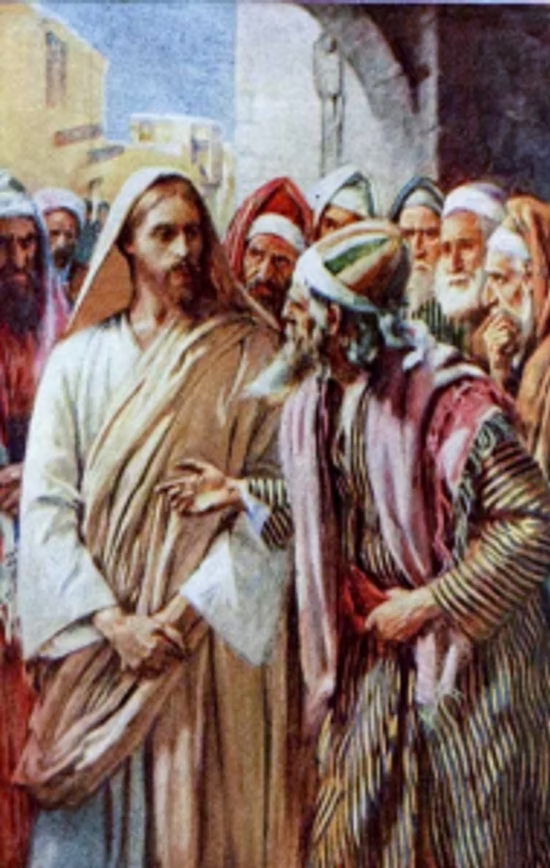
With those definitions understood, a “scribe” would be similar today to a university professor of religious studies, one whose expertise would be in some field of Judeo-Christian knowledge. In cases of seminaries for various Christian denominations, such professors might even be ordained ministers. However, the world of academia has been found to be more lucrative to them, due to having a captive congregation that is required to purchase the “scribblings” of those professors in the school’s bookstore. [The ‘scribble or be scratched’ principle.]
By seeing that educational aspect – as teachers of Mosaic Law (Rabbis) – “the scribes” were the ones who had memorized the holy scrolls, interpreted their meanings, and taught that knowledge to the Sadducees, Pharisees and High Priests. Their minds were trained to see errors of reasoning and sound logic, which would be observed in the rabbis who would teach on the Temple’s steps. They would watch and listen as if each rabbi were being graded for their schooling, which in most cases was home-taught.
Having that understanding firm in hand, this chapter of Mark has skipped forward from when Jesus was leaving from beyond the Jordan, heading to Jerusalem for the Passover festival. Mark 11 began with the story of Jesus’ triumphal entry [the Palm Sunday lesson], but had Mark also writing of Jesus going out and back into Jerusalem. In those days prior to the Friday day of preparation for a Sabbath Passover [15 Nisan], Jesus taught on the Temple steps for four days. During those four days he was inspected and found without blemish (as are all sacrificial lambs slaughtered for Passover). [Jesus, after his arrest, would be inspected for four more days before being found ‘worthy’ of sacrifice, meaning there was a second inspection.]
When this reading begins by stating, “One of the scribes came near and heard the Sadducees disputing with one another, and seeing that Jesus answered them well,” Jesus had just passed an inspection. The Sadducees were disputing why their trap set for Jesus had failed, in reference to the resurrection. The Sadducees (like atheist Jews today) did not believe there was anything beyond physical life. Jesus left them reasoning among themselves [from the Hebrew “syzētountōn”], for having not realized that God is Lord of the living, not the dead. Jesus had added that souls do not marry nor have sex organs, as they are like angels.

Now, “one of the scribes” had given Jesus an A+ for that sermon, so he felt the need to ask Jesus about something that was personal to him. More than a test of knowledge, this scribe wanted to see if Jesus could answer a burning question within him, which meant his deep studies had led him to test himself with this question; in case some student might ask it some day. However, the scribe’s answer had not led him to be bold enough to let others know his inner feelings, largely because it could not be easily defended against biased reason. [Some times it is fear that keeps one from getting ‘outside the box’ of the usual and customary.]
The question the scribe asked to Jesus was, “Which commandment is the first of all?”
According to Exodus 20:3, the first of the Ten Commandments was: “Thou shall have no other gods before me.” [More on that later.] In response, Jesus quoted Deuteronomy 6:4 to the scribe, where Deuteronomy 5 restated the Ten Commandments, with all restated as reminders of the Laws the Israelite had sworn to uphold, once they entered the Promised Land.
On a test at Jewish Rabbi School, a student priest would not have answered the way Jesus did. The scribe would have then marked a red X through that answer, making a note in the margin that said, “You misread the intent of “prōtē” (form of “prótos”),” which in Greek says, “first,” but also means “foremost” and “most important.”
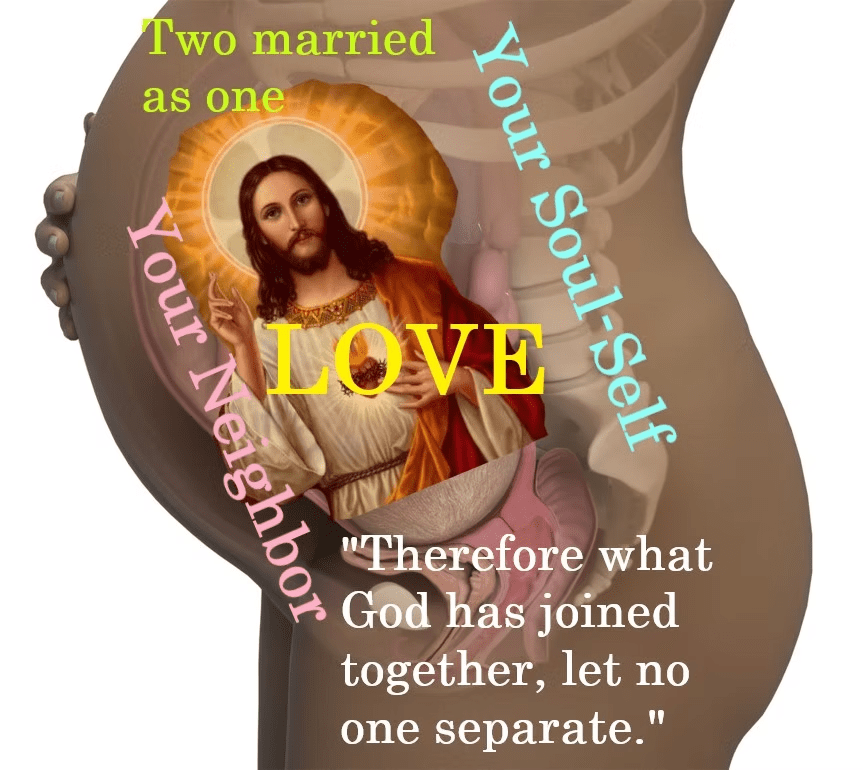
After Jesus answered by quoting Deuteronomy 6:4, he added, “The second is this, ‘You shall love your neighbor as yourself.’” This was like going for extra credit on a test; but this addition was Jesus telling the scribe, “You must know that there is a duality to the most important commandment, such that one assumes the other. It is impossible to obey the love of God with all your heart, and with all your soul, and with all your mind, and with all your strength, when this commandment is demanded of all Israel. When the foremost commandment states, ‘God is one,’ then God is one with oneself and one’s neighbors, so one cannot give absolute total love to God without it also being a given that one must love one’s neighbors as oneself.”
The Greek word “deutera” was translated as “second,” but it also can mean “subsequently.” That means Jesus was staying within the parameters of giving one answer, but that primary commandment had an immediate element that came underlying it. Therefore, the word has the impact of “twice,” where there are two parts to the one answer.
There is nothing in Exodus or Deuteronomy that Jesus quoted when he gave that additional answer. His quote comes from Leviticus 19:18b. It is the second half of a law from an assortment of laws that is the fourth [and last] of a series that refers to “neighbors.” The verse fully says, “Do not seek revenge or bear a grudge against anyone among your people, but love your neighbor as yourself. I am the Lord.”
Take a moment and think about that. What does that say to you?
Jesus was in Jerusalem being inspected as a sacrificial lamb. He would be found blemish free; but “one of the scribes” had just been told [without the use of spoken words], “Do not seek revenge or bear a grudge against anyone among your people.” Because of the scribe’s knowledge of the Torah, the omitted words did not go unnoticed. As one of the Temple insiders, he was aware of the plot to entrap Jesus. I imagine a cold shiver went down the scribe’s spine by Jesus reminding him of the “love thy neighbor as yourself” law.
That law, which is one of many in chapter 19 so the chapter is given a title by the New International Version as “Various Laws,” were those laws restated for all of the Israelites as well as those added specifically to the priests [the Levites] who would serve in the Temple. That would include scribes; that would include those sacrificing lambs for the Passover festival. The foremost commandment for Jews, especially the ruling elite, said love God totally, and love all who also love God totally as an extension of yourself … as God.
I imagine that one scribe had figured that out over the years. He realized that God never told Moses to establish a hierarchy or point system, like being one of His priests was akin to degrees [of knowledge] given to Freemasons or degrees [of physical progress] given to martial arts enthusiasts. A Rabbi was not expected to post his knowledge on the wall of the synagogue, like a restaurant has to let customers know how clean the inspectors found it. All Rabbi are expected to be the same in knowledge, with all connected to the same Godhead.
Being an Israelite was never meant to come with a box of business cards that announced, “I graduated in the lower ten percent of my class, but I did graduate!” Such announcements are worthless for doctors, lawyers, accountants, and college professors.

All of the Jews (as the ‘second time around’ children trying to reclaim their birthright as God’s chosen people) were expected to totally love God. Having already experienced what failing to follow all the laws of Moses had led their ancestors to experience, there could be no exceptions this time around. That was why the Second Temple was manned with no nonsense scribes and priests. The Pharisees and Sadducees [the Law Police] were supposed to be laying down an ‘all or nothing’ scenario.
Unfortunately, this one scribe had seen many a poor excuses for those claiming to be the children of God in his day, with few living up to expectations. That, undoubtedly, caused him to wonder: “With so many laws routinely broken, which is the foremost commandment that makes one worthy of God’s love?”
Having heard the answer given by Jesus, the scribe was moved to say: “You are right, Teacher; you have truly said that ‘he is one, and besides him there is no other’; and ‘to love him with all the heart, and with all the understanding, and with all the strength,’ and ‘to love one’s neighbor as oneself,’ —this is much more important than all whole burnt offerings and sacrifices.” The emotion of that response needs to be grasped.
The actual Greek begins that response is two one-word statements of importance, as was written in a capitalized “Kalōs” and (following a comma) a capitalized “Didaskale.” This not only made a “You are correct, sir!” statement (where “Kalōs” means “Right”) – as a professor passing a student’s paper – but it also stated the excellence of insight that the scribe knew Jesus possessed, by his ability to give the answer he gave. Because Jesus answered quickly, without hesitation or prayerful meditation, he gave an answer of highest honor, as recognition that Jesus was connected to the Godhead [a.k.a. the Christ Mind]. That inner source of wisdom meant the scribe could declare Jesus truly as a “Teacher” and “Master.”
The scribe recognized that Jesus had spoken the truth (from the Greek word “alētheias”), which according to the rules of Logic is an undefeatable conclusion. A ‘false’ answer is when the words are twisted to fit a biased conclusion, which was how one used Logic to uncover ‘false shepherds’. Without Jesus saying directly to the scribe as he did so often, “Truthfully I say,” the scribe confirmed that Jesus spoke the truth. That implied that Jesus spoke as a vehicle of the Lord.
When the scribe said, “He is one, and besides him there is no other,” he was quoting Scripture as had Jesus, while adding a clarification for the quote of Jesus – “the Lord is one.” The Greek word “heis” can mean “one,” as a cardinal number. This is like the first Commandment, which says, “Thou shall have no other gods before me,” as if that said God was number One. The word in Hebrew that says, “God is one,” is “echad,” where it too has a similar scope of meaning, based on intent of usage.
Both the Hebrew and Greek words can mean “alone” or “singularly,” and this was what the scribe was adding by saying, “besides him there is no other.” God is love, such that to love God means to become one with God. In that way oneself becomes singularly focused on God.
First Commandment that is commonly accepted as stating, you shall have no other gods before me is stated in Hebrew as, “lō -yih·yeh lə·ḵā ’ĕ·lō·hîm ’ă·ḥê·rîm- ‘al pā·nā·ya.” This can literally be translated as: “not shall have you gods other upon face.” The last two words, “‘al pā·nā·ya” are rooted in “al panim (or paneh).” The primary translation of “panim” is as “face, faces.” The translation recognized as “You shall not have other gods before me,” says that “before me” means “face of you before” or “face before,” with “me” being implied.
A scribe (fluent in Hebrew) would know this aspect of facing God, as well as the history of Moses’ face glowing after meeting with God.
For one who studied the Torah all day, every day, this first commandment would imply the oneness of God means all Israelites (like Moses) were expected to love God so much that they would become one with God, thereby wearing His face. Moses was a model of what being an Israelite should be … not an example of superhuman talents that no one could ever duplicate. As the model of righteousness, any face worn other than God’s (including one’s own) would constitute worshipping some other “elohim” (the “gods”). God and another is then duality, not singularity. This means the scribe who questioned Jesus had also deeply looked at this commandment (Exodus 20:3) and this was why he added, “besides him there is no other.”
The Greek word written that has been translated as “besides” is “plēn.” This adverb can give the impression of the preposition “beside,” leading one’s mind to imagine empty space to the right and left of God. For many Christians today, they believe Jesus Christ sits “beside” God, to his right hand side. This image makes it difficult to see how there is only One God, as many Christians pray to Jesus as if he were an elohim. The better translation of “plēn” is then as “except that” or “only,” such that the scribe said, “only him there is … no other.”

That was when the scribe told Jesus an extra credit aside, like Jesus had added a second commandment. He was linking the most important commandment with the first commandment, so the true children of God could only wear the face of God on their faces. No other face would be Yahweh’s.
That addition then linked to the next partial quote, where the scribe remembered: “to love him with all the heart, and with all the understanding, and with all the strength.” To recognize there was only One God, and no other, was dependent on loving God with all one’s heart. It was then from the love that one would become one with the One God; and that union [marriage] meant access to the Godhead [Christ Mind] where “all understanding” becomes possible.
The Greek word translated as “strength” is “ischyos,” which can also mean “power, might, force, ability.” The Hebrew word that ends Deuteronomy 6:4 and is commonly translated as “strength” (from which the scribe was quoting) is “mə·’ō·ḏe·ḵā” [“your strength”]. This is rooted in “meod,” which also means “muchness, abundance, and exceedingly,” with some usage indicating “duplication.” [Brown–Driver–Briggs] Thus, love of God allows one to have the knowledge of God duplicated or abundantly placed within one, as an extension of God [which means wearing His face].
When one has reached this state of duplicating God on earth, one must then be aware of others who also wear the face of God. Those others will also be loving God with all their hearts, having the same access to God’s wisdom and abundance. This is then how it becomes a natural extension of the foremost commandment “to love one’s neighbor as oneself.” This presumes a “neighbor” is understood as another child of the One God and not just anyone roaming the face of the earth. After all, Jesus said, “I was sent only to the lost sheep of Israel.” (Matthew 15:24)
The Hebrew word that is translated as “neighbor” is “amith.” That word means, “an associate, fellow, relation.” The word can be used to indicate a “friend,” where it was originally used to denote the Israelites who were isolated, together in the wilderness. A friend would be someone not of direct lineage, thus not close family, making a “friend” be an associate, fellow, or relation of Jacob in some way, as a child chosen by God to be His priest. The Greek word written in Mark is “plēsion” [“your neighbor”], which means someone who lives “nearby” or a “friend.” Again, the Jews of that era did not live in mixed subdivisions. They lived among their own people [many still do today], so someone “nearby” would be a Jew, as would be their “friends.”
This meant that loving another Jew, one who also loved God as much as commanded by God, must be loved as oneself. One is God. The other is God. All love God and God loves all. This is the meaning the scribe saw the foremost commandment as a natural amendment to love of God.
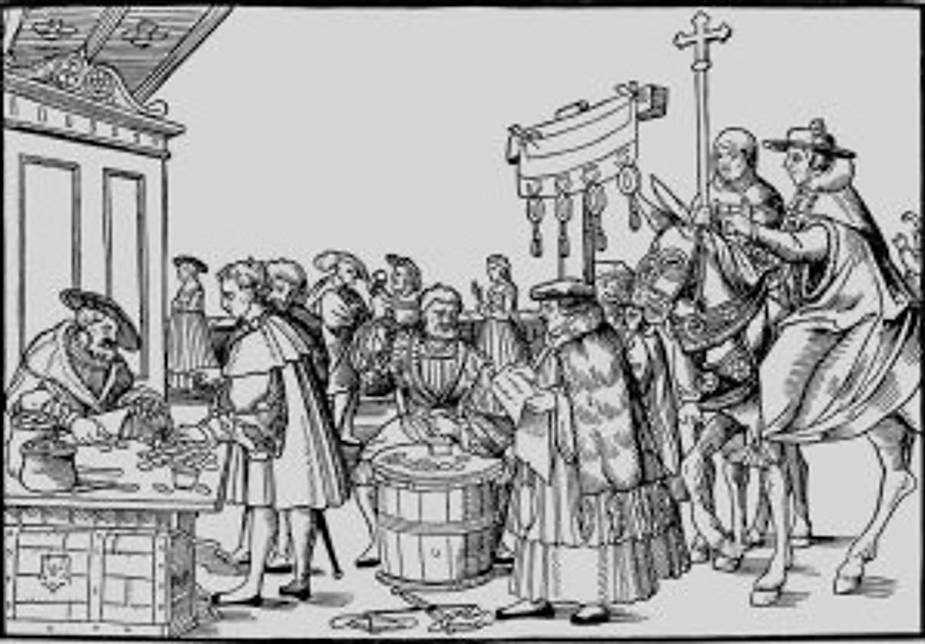
The scribe then added to the “love your neighbor as yourself” statement, saying “this is much more important than all whole burnt offerings and sacrifices.” This revelation was what the scribe saw in the twice daily sacrifices on the Temple altar, commanded by God as “peace offerings” as well as those for atonement of sins. While such sacrifices were made to appease God, as admissions of human frailties and a lack of commitment to love God totally, the scribe saw letting animals be sacrificed rather than self-ego as opening the flood-gates to sin, which could never lead the faithful to follow the most important commandments and its dual command to love spiritually and physically.
Jesus [knowing he was about to become the substitute sacrificial animal for sinning Jews] heard the wisdom coming from the scribe and knew the scribe was led by God the Father. For that reason he said to him, “You are not far from the kingdom of God.” In that statement, the Greek word “basileias” is translated as “kingdom.” The word better conveys Jesus’ intent as, “rule, especially of God, both in the world, and in the hearts of men.” [Strong’s Concordance]
Knowing that a scribe’s task was to interpret Scripture and then teach that meaning to rabbinical students, rules were more important than kingdoms. As much of that meant teaching an understanding of Mosaic Law [or Rules to live by], Jesus’ comment struck to the heart of the scribe. While still meaningful but less clearly caught by the spoken word, Mark capitalized the Greek word “Ou,” which is an important “Not.”
Rather than a simple, “You are not far away,” Mark wrote “Not far are you from this,” such that the capitalized negation has the power of converting this to a positive statement. The capitalization then implies that Jesus intended to state, “You are close to the rule of God.” For a human being, close to God was how Jesus was. Therefore, Jesus blessed the scribe with neighborly love.
They both loved God with all their hearts, with all their souls, with all their minds, and with all their abundances. Once they discovered two children of God were at the same place, at the same time, they loved one another as neighborly brothers. Because the scribe was spying on Jesus for the Temple, which led to this encounter, the love the scribe then felt for Jesus was why we read, “After that no one dared to ask him any question.”
Jesus had passed his inspection for blemishes that day. The scribe departed and would no longer play a role in the entrapment of Jesus. He waved off the Sadducees, as if to say, “The party’s over fellows. It’s quitting time.”

As the Gospel selection for the twenty-fourth Sunday after Pentecost, when one’s own personal ministry for the LORD should be underway – one has put on the face of God and lovingly embraces all other true Christians – the message here is to realize reading Bible verses from the Holy Bible your grandmother gave you when you were baptized as a child is only one tiny step in the thousands of steps that God expects His chosen servants to take. We are all called to be devoted scribes if we are ever going to be close to God. We have to write the meaning of Scripture ourselves … not just be rocked to sleep by someone else reading to us, showing us pretty pictures.
Beginning with the simple question, “Which commandment is the first of all?” one must seriously ask oneself, “Could I have answered the way Jesus did?”
Chances are that most people would have to honestly answer, “No.”
Bible Studies is the greatest failure of Christians. Most who call themselves Christian were raised in a church, forced to go there by their parents. They were placed in a Children’s Church or Sunday School program and taught the Bible with picture books. Those children that did not leave the church once they went to college or just got old enough to tell mom, “I’m not going anymore!” rarely do more than listen to sermons as adults, having little idea of what’s written. Even the ones that go to a seminary to become a minister, priest, pastor or preacher, they are more often than not taught not to believe what they learned as children.
Christians today are not enlightened. Sadly, it is the blind leading the blind – a normal way of mortal life.
Has anyone taught you the most important commandment is to love God and then love your neighbor as yourself? Has anyone said the heathen of no religious values are who Jesus meant … who the scribe meant … who Moses meant … who God meant, when the most important commandment was to love “neighbors” as yourself?
If they have, love is not showing very well. The world is in turmoil. One man’s “neighbor” is another man’s enemy. We live amid those who are most difficult to call “friends, relations, or associates,” simply because they have far different values.
Has anyone ever said, “We are Protestants so we hate Catholics” or “We are Catholics so we hate Jews”? Has anyone ever said, “We are Muslims so we hate Jews” or “We are Iranians so we hate Americans”?
Sometimes it seems like religion has turned into cage fights for entertainment, where hatred between two people claiming to love God [by whatever name] have nothing but hatred uncontrollably come spewing out. It is not the love of God or neighbor, but hatred of anyone who has socio-political-philosophical beliefs different than mine!
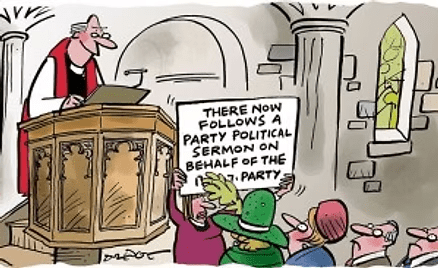
As I was looking through Exodus, Deuteronomy and Leviticus to see what was written there, I couldn’t help but see the surrounding text. The Deuteronomy 6:5 verse quoted by Jesus and the scribe leads to the following:
“These commandments that I give you today are to be on your hearts. Impress them on your children. Talk about them when you sit at home and when you walk along the road, when you lie down and when you get up. Tie them as symbols on your hands and bind them on your foreheads. Write them on the doorframes of your houses and on your gates.” (Deuteronomy 6:6-9)
That says how one who loves God totally is. Loving one’s neighbor as oneself means devoted study of Scripture and talking about it. It means raising one’s children to be able to talk about it when your neighbors are not around. It means loving God so much you want to share that love with others who love God like you do. When no one is around, you pull out the Holy Bible and start reading, all the time listening for the inner voice to say, “Write this down and ask the neighbor what that means to him or her.”
Jesus found one scribe like that in all of Jerusalem. I can only imagine the glow each had surrounding them as they walked back home after that encounter.
Additional proof:
This is one example of hatred. A collared Methodist feels he has been sent by God to place blame on all he does not agree with. The “caravan” of potential invaders are not true Christians trying to steal something they have no claim to – American asylum or residence. It is purely a political issue that only involves those who pretend to be religious in order to serve political “gods” [“elohim”]. Everything this “pastor” shouted at a career politician could equally be shouted at the leaders of Honduras, Ecuador and Mexico, but souls have been sold to the financiers [philosophers] of politicians not in power in the USA, to show religious hatred [not love of God and Christian neighbors] in front of news cameras. The face worn by political protesters is most certainly not the face of God.
Religious leaders interrupt Attorney General Jeff Sessions’ speech: “Brother Jeff, as a fellow United Methodist I call upon you to repent, to care for those in need.”
Sessions: “Well, thank you for those remarks and attack but I would just tell you we do our best everyday” pic.twitter.com/NUq5HSZZMg
— ABC News Politics (@ABCPolitics) October 29, 2018
 Explaining the Readings