Tag Archives: Mark 9:2-9

Mark 9:2-9 – Transfiguring things out [Last Sunday after the Epiphany]

Jesus took with him Peter and James and John, and led them up a high mountain apart, by themselves. And he was transfigured before them, and his clothes became dazzling white, such as no one on earth could bleach them. And there appeared to them Elijah with Moses, who were talking with Jesus. Then Peter said to Jesus, “Rabbi, it is good for us to be here; let us make three dwellings, one for you, one for Moses, and one for Elijah.” He did not know what to say, for they were terrified. Then a cloud overshadowed them, and from the cloud there came a voice, “This is my Son, the Beloved; listen to him!” Suddenly when they looked around, they saw no one with them any more, but only Jesus.

As they were coming down the mountain, he ordered them to tell no one about what they had seen, until after the Son of Man had risen from the dead.

——————————————————————————–

This is the Gospel selection from the Episcopal lectionary for the last Sunday (sixth) after the Epiphany, Year B. It will next be read aloud in church by a priest on Sunday, February 11, 2018. This reading will be accompanied by the Old Testament reading from 2 Kings 2:1-12, which includes the verse that says, “Elisha said, “Please let me inherit a double share of your spirit.”’ It will also be accompanied by the Epistle reading from 2 Corinthians 4:3-6, which includes the verse, “Even if our gospel is veiled, it is veiled to those who are perishing.” This reading from Mark is important as it addresses the event called the Transfiguration, which foretold that the Holy Spirit would come only to those who desire eternal life.

Please excuse me while I pull out my soapbox out and make an important announcement (in my mind at least), which deals with the authorship of the Gospel of John.

It was not written by John the brother of James of Zebedee. This recount of the “transfiguration” (wholly Mark 9:1-13) is also told by Matthew (17:1-13), Luke (9:28-36), and Peter (1 Peter 1:16-21), but not by John. When one sees Mark as the writer of Simon Peter’s Gospel, and with Matthew having to have reported Simon’s account of the event, which was made to the disciples of Jesus after the Son of Man had been raised from the dead (Matthew, aka Levi), then the same report was also made before the adult family of Jesus (Luke, writer of Mother Mary’s Gospel).  John of Zebedee (if he were the John of that Gospel) would have confirmed this report as well, especially having been in attendance, as a direct witness. Since that is not the case, that means John of the Gospel (the one Jesus loved) was not an adult follower of Jesus, and certainly not one of the twelve disciples (who were all over the age of 21).

Thank you. Thank you very much. The soapbox is put away.

I have written several times about the Transfiguration. Here is one post that I published on a blog in July 2017. In another I address how the “high mountain” is Mount Hermon, which today is the highest elevation in Israel, with a year-round ski resort. Its height makes it a strategic location, as it overlooks the plain of Syria.

In Luke’s Gospel, he told how Jesus went into the high mountain to pray (Luke 9:28). In the fifth Sunday after the Epiphany Gospel reading, we read how Jesus went alone in the morning while it was very dark to pray (the Jewish commitment to morning, afternoon, and evening prayer). To hike up a high mountain, while snow is on the ground, Jesus would have taken three disciples and a rope, along with tents, simply because of the danger. They had been in that northern region (Caesarea Philippi), and praying on a high mountain would place Jesus closer to the Father.

I addressed this aspect in a sermon for the last Sunday after the Epiphany, Year A, in 2014. Search the WordPress site Bus Stop Sermons to read it.

Because I have written about the “Transfiguration” (as a tag placed in five sermons on the WordPress blog “Bus Stop Sermons”) I will not address this reading from Mark as a stand alone interpretation. Still, I realized I have not addressed Mark’s version of the Transfiguration, as a Year B Epiphany lesson, on WordPress, only the Matthew account (in Years A & C, Epiphany & Pentecost seasons).  Because this Gospel selection in the season of Epiphany goes along with the Second Kings and Second Corinthians selections listed above, I will slant this reading so it suits the needs of those lessons, which support the Transfiguration.

The Second Kings reading is about Elijah going to heaven, with Elisha following him on Elijah’s “farewell tour.” Elijah went from Gilgal to Bethel and Jericho, with Elisha being told he could stay at each stop, only to have Elisha tell Elijah, “As the Lord lives and as you yourself live, I will not leave you.”

That devotion and commitment to a most holy man of God should be seen as the commitment and devotion Jesus’ disciples had for Jesus. Three went with Jesus up the high mountain, but nine stayed behind on instructions. None of them would “leave Jesus” and do what they wanted to do, in the same manner as Elisha.  Elisha was Elijah’s disciple.

At the stops Elijah made at Bethel and Jericho, we find that “the sons of the prophets” came to meet Elijah. At both places those holy descendants asked Elisha, “Do you know that the Lord will take away your master from over you today?” Each time Elisha answered, “Yes, I know; be silent.”

This same demand for silence can be seen in Jesus’ order to the three disciples he came down the mountain with: “Tell no one about what you have seen, until after the Son of Man has risen from the dead.” Thus, the three disciples saw Jesus glowing white with Moses and Elijah … the sons of God as Prophets.  That vision told them, “the Lord will take away your master,” but that topic was best not talked about.

When we see that Elijah offered a promise to Elisha, for his devotion and commitment, Elisha said, “Please let me inherit a double share of your spirit.” While Peter, James and his brother John would all be given the Holy Spirit because of their devotion and commitment to Jesus as the Christ, Jesus appeared with Moses and Elijah, having been given the same “double spirit” Elisha had requested.

When God spoke, “This is my Son, the Beloved; listen to him!” that said the only source of that “double spirit” was God. Therefore, if one encounters a most holy Prophet of the One God, “Listen to him!”  That becomes the key to receiving the Spirit, such that “if you see me when I am taken from you, it shall be so for you.”  The eyes are the windows of the soul.

Jesus told the three disciples “Tell no one about what you have seen.” Since the three disciples saw Jesus with two shares of the Holy Spirit, they believed. Telling someone what one sees might make someone close believe what you say; but telling someone what you see can produce doubt and hesitation to believe.
The saying goes, “Seeing is believing,” which means it is up to each individual to see Jesus with the double share of God’s Holy Spirit. That can only come as a reward from being committed and devoted to God.

The personal Epiphany lesson that comes from this is simple: Stop telling people you are a Christian “until the Son of Man has been raised from the dead” (keeping in mind that “dead” means mortal, like the vast majority of human beings). That means after you have died of brain-fed ego and you have been reborn as Jesus Christ. Once you reach that state of being, you know telling people is best done by acting the part of Jesus, with a double share of his Spirit.

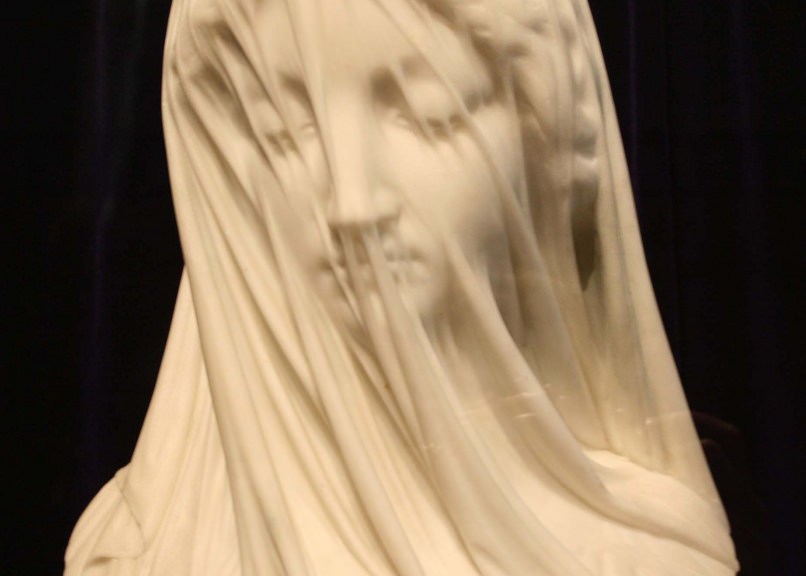
In the accompanying Epistle reading (2 Corinthians 4:3-6), Paul says, “Even if our gospel is veiled, it is veiled to those who are perishing.” The Greek word “kekalymmenon” means “veiled,” but also “hidden, concealed, enveloped, kept secret and covered over.” This is how the word of Scripture becomes a struggle to grasp.  The “dead” (mortals born of death) can read it, but not understand. It holds veiled messages.  No one can “see the truth of God” (be Transfigured or gain a double share of the Holy Spirit) simply by reading words on pages.
“Things” are those worldly distractions.

Atheists read the Holy Bible more dutifully than do most “Christians” and Atheists “convert” more Christians to disbelief, than vice versa.  However, a true Christian can open the hearts of atheists, by removing their veils.

The “gospel” (Greek “euangelion,” which literally means “God’s good news”) is telling someone about the coming of the Messiah, which Paul knew to mean the “second coming” in another new Apostle (not the end of the planet Earth). For a disciple to ever see the truth of written words come to life, like Peter, James and John saw Jesus standing with Moses and Elijah, then hearing the voice of God say, “Listen to him!” that disciple must become deeply devoted to God and committed to finding Jesus within.

A disciple needs a teacher to tell him or her what to do and explain the words that are confusing, because everything is concealed for the purpose of making a disciple show he or she really wants to be shown the truth.  However, a teacher cannot see for anyone else; they only shine light onto the words for a reader to see for oneself.

Paul then said, “In their [those who are perishing] case the god of this world [lower case “g” god means Satan] has blinded the minds of the unbelievers, to keep them from seeing the light of the gospel of the glory of Christ, who is the image of God.” This was seen in the two prior Epiphany Gospel readings, where unclean spirits and evil possessing spirits were keeping the Jews from understanding why they did what they did, because they were blinded as to why the Law was what it was. The lures of the world confound a message of sacrifice and selflessness.

The “god of this world” is why Jesus told his disciples not to tell anyone what they had seen, until after the Son of Man has been raised from the dead.  It is too easy to call disciples speaking from enthusiasm “drunk on new wine” and ridicule them.  Only a true Apostle can cease that laughter by being able to “speak in tongues” that are most sobering.

Paul then wrote, “For we do not proclaim ourselves; we proclaim Jesus Christ as Lord and ourselves as your slaves for Jesus’ sake.” This means “ourselves” is the Big Brain ego that always seems to want to follow the whispers and lures of the “god of this world.” Evil suggests to disciples, “stay here and take it easy.”  A devoted disciple replies, “As the Lord lives in me, and as you yourself lie and deceive, I will not listen you.” I will follow the righteous path of the sons of the prophets.

The tests of God present decisions to make. They continue once decisions are made.

When I say we must die of ego and be reborn as Jesus Christ, we must “not proclaim ourselves” as gods (lower case “g”) of this world. No human being can do what Jesus the Nazarene did by will power. Will power is “proclaiming ourselves.” As such, when Jesus told his disciples not to tell anyone what they had seen, until after the Son of Man had been raised from the dead,” he was telling them not to proclaim you saw something, like you are someone special. You have not yet (at that time going down the mountain) come to understand what you saw.

Apostles, like Paul, “proclaim Jesus Christ as Lord [of themselves] and [thus] ourselves [are the] slaves for Jesus’ sake.”  Slaves for Jesus’ sake are those who proclaim the Gospel to disciples and other Apostles. Therefore, as Paul wrote, “It is the [true] God who said, “Let light shine out of darkness,” who has shone in our hearts to give the light of the knowledge of the glory of God in the face of Jesus Christ.”

This means Jesus speaks through the mouths on each Apostle’s “face,” with all looking nothing like the picture book imaginations of how Jesus is depicted. When Jesus appeared in unrecognizable form after his soul had risen from his body’s death, the “darkness” is then metaphor for all souls that are alone, without Jesus within; but the switch that turns on the “light” that “shines out of darkness” is that which brings on a double portion of Yahweh’s love, as two souls united in a body of flesh Transfigured.

God shines in the hearts of His wives, those who are married to God through love. The love of Yahweh IS JESUS; and, it is impossible to speak about that … to define “divine love” … because a true Transfiguration can only be realized after one has ‘been there, done that.’ That light erases the darkness of mortal death, shining the way to eternal happiness as a soul One with Yahweh and forevermore His Son resurrected. That light then shines to those attracted to the truth, leading from their darkness active ministry in the name of Jesus]. This is what an Apostle lives to do: serve God with all one’s heart.

One who is devoted and committed to God feels the changes that overcome one. The brain is introduced to the Mind of Christ by God saying, “This is my Son.” The heart pounds from a love of God that has brought the birth of that Mind into being with one. The Mind of Christ is “the Beloved,” the progeny reborn through a consummated love of God.  The egomaniac brain then becomes too afraid to let any unclean spirits speak. The Big Brain hides its face as the evil demons are removed, a process that may take years of commitment and devotion to complete. The Apostle has indeed “listened to the Mind of Christ,” becoming Jesus reborn.

The personal Epiphany lesson here is to take a look at one’s own life and how often one is caught up in self, rather than shining a light for others to feel, silently. Christianity is not like a competitive individual’s game, where each player is ranked by how much winnings they have accumulated over a lifetime. Christianity is all about being there for others, as a slave for God to those seeking help. Shining a light is not about giving dollars and helping start foundations and charities. Shining a light is about proclaiming the good news that is the TRUTH of Scripture; so, the Messiah is possible in everyone.

By letting another feel just how near the kingdom of God is, others can act on having been touched by Jesus, in one who has been reborn in his name. Moses was Jesus reborn. Elijah was Jesus reborn. Peter, James, and John (of Zebedee) would become Jesus reborn. The Scriptures were all written to talk to you and touch your soul to likewise become Jesus reborn. Transfiguration means that.


Mark 9:2-9 – Being told nothing about the Transfiguration makes sense

Jesus took with him Peter and James and John, and led them up a high mountain apart, by themselves. And he was transfigured before them, and his clothes became dazzling white, such as no one on earth could bleach them. And there appeared to them Elijah with Moses, who were talking with Jesus. Then Peter said to Jesus, “Rabbi, it is good for us to be here; let us make three dwellings, one for you, one for Moses, and one for Elijah.” He did not know what to say, for they were terrified. Then a cloud overshadowed them, and from the cloud there came a voice, “This is my Son, the Beloved; listen to him!” Suddenly when they looked around, they saw no one with them any more, but only Jesus.

As they were coming down the mountain, he ordered them to tell no one about what they had seen, until after the Son of Man had risen from the dead.

——————–

This is the Gospel selection for the last Sunday after the Epiphany for Year B, to next be read aloud by a priest in Episcopal churches on Sunday, February 14, 2021. It accompanies the Old Testament reading from Second Kings, which tells of the passing of the baton (torch) from Elijah to Elisha. Here, we read that Elijah was one of the “spirits” who appeared before Jesus, Simon-Peter, James and John [of Zebedee]. So, the two readings connect in this way.

I have written previously about the event termed “the Transfiguration.” One is headed “Transfiguring things out” (R.T. Tippett) and another is simply “The Transfiguration” (Bus Stop Bob). I have also written “Notes on the Last Sunday after the Epiphany” and an interpretation entitled “The epiphany of Scripture transfiguring before your eyes” (one R. T. Tippett and one Bus Stop Bob). Nothing changes now, relative to what I have written prior. The elements of this event [the Transfiguration witnessed] are what they are.

What I want to do now is focus closely on the last verse in this reading, Mark 9:9. It seems like an afterthought that has been added, without explanation needed (if possible). I want to expand on that verse’s meaning, as to why Jesus gave his disciples an instruction for secrecy.

The Sunday that is always deemed the “last Sunday after the Epiphany” is when Mark’s [Year B], Matthew’s [Year A], and Luke’s [Year C] versions of this event are read aloud in Episcopal churches [if church services are allowed, based on the government’s fears of death]. This makes “the Transfiguration” become relative to the last step one goes through in one’s development as a disciple of Jesus [a Christian trying to become a Christian].

The Transfiguration is not about, nor has it ever been about, Jesus being witnessed as special by three of his disciples. To be Christian means to profess belief that Jesus was special, as the Son of man – the Son of God. Therefore, reading about three disciples seeing Jesus in three forms – all spiritual in presence – is about oneself reaching that state of spiritual development.

With that understood, a Christian should see himself or herself as one of those three disciples on the high mountain with Jesus. One needs to put oneself as a witness to the event, as the priest reads aloud. One has to feel so present at that event that one hears Jesus tell the listener what Jesus told his three disciples. Thus, the instruction was fully intended to be heard by all disciples of Jesus.

This is where the descent from the high mountain becomes the depth of this lesson, which needs to be firmly grasped. For that reason, I will list each of the three Gospel verses that tell this instruction given by Jesus to his disciples. After listing the Greek text of each Gospel’s applicable verse, I will then present the literal English translation in segments form.

[According to the Interlinear of BibleHub.com]

Matthew 17:9

Kai katabainontōn autōn ek tou orous , eneteilato autois ho Iēsous , legōn , Mēdeni eipēte to horama , heōs hou ho Houis tou anthrōpou ek nekrōn egerthē .

Kai [as] were descending of them from the mountain ,

instructed them this Jesus ,

saying ,

To no one tell the vision ,

until that the Son that of man out from dead is risen .

Luke 9:36b

kai oudeni apēngeilan en ekeinais tais hēmerais ouden hōn heōrakan .

kai to no one they told in those the days anything of what they had seen .

Mark 9:9

Kai katabainontōn autōn ek tou orous , diesteilato autois hina mēdeni ha eidon diēgēsōntai , et mē hotan ho Houis tou anthrōpou ek nekrōn anastē .

Kai [as] were descending of them from the mountain ,

he instructed them that to no one what they had seen they should tell ,

if not until the Son this of man out from dead had risen .

By reading these words that tell of the four men coming down from Mount Hermon [a truly high mountain], where the end result is neither of the three disciples told anyone about what they saw appearing near Jesus, the question becomes, “Why?”

Were the disciples forbidden from telling the other disciples what they saw?

When told not to tell what they saw, does that mean they could tell about hearing the voice of God telling them Jesus was His Son and they should be quiet and listen to him?

From looking at the three different texts of the same event [noting that Mark, as the story of Simon-Peter, would be the truest eyewitness account], all three introduce this instruction with the word “kai,” with Matthew and Mark capitalizing that word. The word “kai” must be read as a marker word that denotes importance to follow. By capitalizing the word, Matthew and Mark symbolically stated this instruction given by Jesus to his disciples was very important to grasp.

As far as capitalization goes, Matthew capitalized the word “Mēdeni,” which Mark wrote in the lower case. The root word(s) here is (are): médeis (or médemia, méden), which states “nothing, no one.” (Strong’s Concordance) HELPS Word-studies says the literal meaning is “not even one.” This becomes a statement of the importance that identifies it is “Nothing” witnessed [“To no one tell the vision”] – “the Transfiguration” – that has any value that can be put into words. Rather than being a command by Jesus not to tell anyone what they had seen, Jesus told them they would not understand what they had seen, so do not make fools of yourselves by speaking of things such as ghosts, spirits of the dead, the souls of Israel’s greatest guides. One can assume hearing the voice of God falls into the same category of being something impossible to put into words that others will believe.

The segmentation [placements of punctuation] in Matthew’s Gospel account makes this clearer to see. The Greek word “horama” is a word used to denote “a spectacle, vision, that which is seen.” This means the segment of words that state, “To no one [capitalized importance as to Nothing, implying neither Moses or Elijah]” was within their power to explain, where “eipte” means “answer, bid, bring word, command,” because they understood “Nothing” worthy of being told. Any attempts by the three to speak of “visions” would be heard as nothing more than someone at a high altitude, surrounded by snow, having seen little more than a mirage or a hallucination. While the event had a deep impact on all three men, it was not something that others [who were not there] could appreciate.

To better grasp this instruction given by Jesus, imagine if he had appeared in the upstairs room, before all the disciples except Thomas and then told them, “To no one tell the vision.” When Thomas returned later, he would see everyone looking like they had seen a ghost, but for them to say, “We have seen the Lord,” who all had seen dead and entombed, even though the tomb appeared to have been robbed, Thomas said it all – “Seeing is believing!”
Likewise, anyone told about the Transfiguration [they would not have known that term back then] would have reacted just like Thomas, saying, “Unless Moses and Elijah come appear before me, I will not believe it.” Jesus knew explaining spiritual matters was as easy as telling Nicodemus about being reborn: went over like a lead balloon. Personally uplifting events told to others mean their not being part of that event causes them naturally to be viewed with jealousy and rejection.

You saw what?

In Luke’s abbreviated rendition of this verse [only one segment of words, begun with “kai”], the use of “oudeni” and “ouden” [basically the same word] has been translated above as “to no one” and “anything.” In reality, the words written can state, “kai to no one they announced in those the days nothing of who they had seen.” There, the possessive relative pronoun “ὧν” [“hou“] is less informative as “of what” and more informative as “of who,” relative to the vision of Moses and Elijah.

When Luke wrote “in those the days,” “those” [“ekeinais”] means “Simon-Peter, James, and John,” with “the days” [“tais hēmerais”] being a statement about the time when the three were mere disciples and still unknowing of spiritual matters. This says Mother Mary [whose recorder of Jesus’ life was Luke], herself was an unknowing follower of Jesus [even after decades of being told of Jesus performing miracles], so she too was just like them all “at that time,” each knowing “nothing” of value to share with others. Everything seen [and heard] was well over their heads “in those days.” That time was then clearly stated by Matthew and Mark, as being “those days” before Jesus would die, resurrect, and spend time with the disciples, enlightening them to all things spiritual.

This is then Jesus explaining to his three disciples why they must not tell anyone what they had seen, because they would not understand what they had seen until Jesus had risen. Still, that is read by simple-minded Christians today and thought to mean the resurrection of Jesus from death was the time when they could go tell people about “the Transfiguration.” That is not the case.

That state of being [an inability to fathom spiritual matters] existed when Jesus appeared before his followers as they were hiding in fear, after this death, behind locked doors. They still would not understand how Jesus could appear before them then, after they knew him to be dead. Jesus returning to life was as unexplainable as was being able to understand how long-dead Moses and Elijah could appear before three disciples on a high mountain. Their ignorance showed so vividly then, when God had to tell Peter to shut up and “Listen!” This means the words “ho Houis tou anthrōpou ek nekrōn egerthē” [“this Son that of man out from dead is risen”] need to be better understood, because Jesus rising from death is not the deeper meaning.

It is so easy for Christians to place great importance on Jesus as the Savior, so much that Christians believe that Jesus can never be replaced by anyone. Regardless of the fact that twelve disciples were all reborn “in the name of Jesus Christ” on Pentecost [a Sunday in Roman calendar timing], all having their own “Transfiguration” into Apostles, Christians deny that an Apostle is Jesus rising multiple times, in different bodies of flesh, at the same time. That is not so much Jesus, as it is the power of God, whose Holy Spirit lands upon one deserving [like tongues being set on fire], making each become a duplication of the Christ Mind. When the Christ Mind rules over a body of flesh, that flesh has then become the resurrection of Jesus – the Son of man – where “anthrōpou” means “a man, a human, one of mankind.” A disciple is such a “man,” whether it is male or female.

The caveat that then must be seen is “death” [from “nekrōn”]. This means the words “anthrōpou ek nekrōn” [“of man out from among dead”] say the “Son” [“Huios”] must “rise” from someone human who has died of self-ego and self-will. They then leave behind a world of sinners, in a world born to die in the flesh, becoming God’s “Son” [regardless of human gender] reborn, whose presence then spiritually “is risen” [“egerthē”] within their body of flesh [call it a corpse at that time]. This means the exact same death-rebirth scenario of Jesus must take place in a disciple, if that disciple is to “Transfigure” into an Apostle [call it a Saint]. Therefore, Jesus told his three followers, in essence, “Don’t speak about this now, because everything will become crystal clear to you when you do what I am about to do … die of fleshy self and be resurrected as eternal spiritual salvation.”

Now, this reading is paired with the Second Samuel reading of Elijah leaving Elisha, such that Elisha had “a Transfiguration” when he put on the mantle of Elijah – the Holy Spirit of God that brings on the Christ Mind and the resurrection of Jesus [before Jesus was known by human beings]. In that event, which continues beyond the point of the reading on the last Sunday after the Epiphany, there was a company of fifty prophets who watched from afar as Elisha went with Elijah, to where he ascended into heaven. When Elisha went back across the Jordan, those who watched the two go away together, with only Elisha returning, offered repeatedly to go and search for Elijah … just in case he was hiding some place, in need of rescue. They asked so many times that Elisha finally said, “Yeah. That’s a good idea. Go look for Elijah.” They searched for a week and then came back saying he was gone. Elisha knew all along that Elijah had risen to heaven, because Elisha had risen as the new high priest with the Christ mantle.

The reason Elijah was seen alongside Jesus and Moses is ALL three were physical representations of the Son of God. Because Elijah ascended into heaven, the ‘heaven’ his soul was ‘raised’ into was the soul [a ‘heaven’] of the disciple Elisha. Elijah had been the Son of Yahweh; so, Elisha became the Son of Yahweh reborn [the double mantle of joined souls]. This means every Patriarch [Noah, Abraham, Isaac, Jacob, Moses, David, et al] and every Prophet [from Amos to Zechariah, and all in between] was the Son of Man [a soul in flesh], joined with the soul of the Son of Yahweh. Had they all appeared at the same time with Jesus on the high mountain, Peter would have said, “Master, we don’t have enough canvass to make all a tabernacle.” Then, Yahweh would have said, “Stop counting! Listen to him!”

Likewise, ALL of the disciples and followers of Jesus would be Transfigured into Jesus, once each of their souls died of self-inflated ego [even Simon-Peter] and totally submitted their lives in the flesh before Yahweh, so the soul of the Son could be resurrected within each one. Because the name “Jesus” means “YAH Saves,” his soul is that created by Yahweh to Save lost souls. To receive that Saving soul means to be Anointed by Yahweh’s Spirit; and, the Greek word meaning “Anoint” is “Christo.” To be Jesus reborn means to be the Christ of Yahweh, two souls in one body of flesh, to continue in divine ministry in Jesus’ name. That is what Elisha did … in the name of Elijah resurrected. Moses’ story at the burning bush is the same, retold with different names.

When Moses asked, “Who do I say sent me?” The answer was YHWH, which is a statement that announces, “I AM Who I AM.” Moses was then Yahweh in the flesh, as the Son resurrected, because Yahweh possessed the soul of Moses, so Moses became Transfigured.

That story is how it is impossible to tell anyone about a personal experience of a deep spiritual nature, because everyone must have his or her own personal experience for it to make sense. That then becomes the truth of Christianity, where all members must be Jesus Christ reborn, or else there are people hanging around that want to go search for Jesus, when Jesus is standing right in front of him or her, in a body that looks nothing like the pictures of Jesus in the Biblical coloring books.

So, as a Gospel reading on the last Sunday after the Epiphany, when all true Christians are supposed to be remembering their own days past, when he or she was a mere disciple that witnessed some remarkable, life-changing event, one that would forevermore stay with that person [those people with the same past “Transfiguration” experience, each uniquely powerful to the individual]. All reborn Apostles and Saints can do is smile, while novices are listening to a priest read aloud the words that tell of Simon-Peter, James and John witnessing ghosts on a high mountain. They know, “Yes. I witnessed Jesus glowing within my soul, just as did Moses and Elijah; but I cannot profit from telling that to anyone. Each soul must do its own ‘seeing’ to ‘believe.'”

The priest reading the words aloud should know from personal experience what the words mean and then preach a sermon that enlightens wantabe Christians to the truth. Once upon a time that was the case, when there were seekers of truth wanting to be themselves Transfigured into Christians. Alas, those days have become no more. But, then that is why God has His prophets write all this important stuff down. Since it is all up to the individual to have a personal epiphany, God is waiting to help all who truly want to be reborn as His Son. Take the time to seek and you will find.

———-

Note: Compare this reading to that in John 20:

“So the other disciples told him, “We have seen the Lord!” But he said to them, “Unless I see the nail marks in his hands and put my finger where the nails were, and put my hand into his side, I will not believe.”’ (John 20:25, NIV)

To this Jesus later said, “Blessed are those who have not seen and yet have believed.” (John 20:29b, NIV)

To tell anyone about the Transfiguration will only raise doubts. One must experience the Transfiguration within one’s soul to have faith in the truth of that word. Belief comes with doubt’s whispers. Faith comes with the protection of Jesus’ soul removing all doubts.