Tag Archives: Mark 9:31

Mark 9:38-50 – Salted with fire

John said to Jesus, “Teacher, we saw someone casting out demons in your name, and we tried to stop him, because he was not following us.” But Jesus said, “Do not stop him; for no one who does a deed of power in my name will be able soon afterward to speak evil of me. Whoever is not against us is for us. For truly I tell you, whoever gives you a cup of water to drink because you bear the name of Christ will by no means lose the reward.

“If any of you put a stumbling block before one of these little ones who believe in me, it would be better for you if a great millstone were hung around your neck and you were thrown into the sea. If your hand causes you to stumble, cut it off; it is better for you to enter life maimed than to have two hands and to go to hell, to the unquenchable fire. And if your foot causes you to stumble, cut it off; it is better for you to enter life lame than to have two feet and to be thrown into hell. And if your eye causes you to stumble, tear it out; it is better for you to enter the kingdom of God with one eye than to have two eyes and to be thrown into hell, where their worm never dies, and the fire is never quenched.

“For everyone will be salted with fire. Salt is good; but if salt has lost its saltiness, how can you season it? Have salt in yourselves, and be at peace with one another.”

———————————————————————————————————-

This is the Gospel selection from the Episcopal Lectionary for the Nineteenth Sunday after Pentecost, Year B 2018. In the numbering system that lists each Sunday in an ordinal fashion, this Sunday is referred to as Proper 21. It will next be read aloud in an Episcopal church by a priest on Sunday September 30, 2018. It is important because Jesus made it clear that being a part-time Christian would not qualify one eternal life in Heaven.

In this reading, Mark is first shown to identify a disciple of Jesus by name – “John.” This is the same John who had been chosen to go up the high mountain with Peter (whose story was recorded by Mark) and Jesus. John was accompanied by his brother James, both the sons of Zebedee. This means John was one of the first disciples Jesus chose, along with Simon-Peter. It is not John the writer of the Gospel by that name. That John was called “little child” (“paidion”) by Mark, in verses 36-37 of this chapter, meaning children were not mentioned by name.

Realizing that, we then read that the disciple John said to Jesus, “Teacher, we saw someone casting out demons in your name, and we tried to stop him, because he was not following us.” Before the response by Jesus should be understood, one needs to recall the Gospel lesson of the eighteenth Sunday after Pentecost and how Jesus had used his son, John, to tell his disciples, “Whoever welcomes one [like my son John] in my name welcomes me; and whoever welcomes me does not welcome me but the one who sent me.” (Mark 9:37) Now, in the very next verse (Mark 9:38), John’s memory has been joggled so that he remembered how on the trip down to Capernaum (while the disciples were arguing who was greatest among themselves) they saw someone claiming to be in the name of Jesus, casting out demons. And, oh by the way, John said, “We tried to stop him, because he was not following us.”

Now the heading for verses 38-41 of Mark’s chapter nine says “Intolerance Rebuked.” (Bible Hub Interlinear) Other websites that translate the Holy Bible and add such headings say, “Whoever is not against us is with us.” That is restating Jesus’ response to John (briefly), but it gives the impression that Jesus saw his disciples attempting to stop someone from casting out demons, while shouting out, “In the name of Jesus of Nazareth, I command you to leave this person!” The rebuke is, therefore, because someone is not a follower of Jesus does not mean he (or she) should be stopped.

The word “intolerance” can be defined as meaning, “An unwillingness or refusal to tolerate or respect contrary opinions or beliefs, persons of different races or backgrounds, etc.” [Random House Kernerman Webster’s College Dictionary] The fact that John admitted that he and the gang tried to stop someone from using the name of Jesus (not tried to stop someone from casting out demons) says they would not tolerate that association of healing with a man that person did not follow, as a student of Judaism [remember, John referred to Jesus as “Teacher”]. As such, the acts of the disciples were as intolerant as would be one branch of Christianity [a religion in the name of Jesus Christ] competing against another branch, simply because one sees the other as not following the teachings of Jesus Christ. While that is somewhat true, the focus on intolerance is misleading and misses the point of Jesus’ response.

Jesus said to John, “Do not stop him; for no one who does a deed of power in my name will be able soon afterward to speak evil of me.” That was first a command: “Do not stop him.” Then, it is an explanation in two parts.

The first says, “There is no one who can do a work of power that is contrarily in my name.” The use of the Greek word “epi,” which means “against, on the basis of, or to,” implying “upon,” such that Jesus said, “No one can cast out demons [a work of power] simply by calling out my name.” This then is a statement that says, “Only those who are me, reborn in my name, can do deeds of power that are born from above.”

Finally, reading that Jesus said, “Afterward to speak evil of me” is misleading. As a separate segment of words that literally state, “And will be able quickly to speak evil of me,” this is not a focus on the one in the name of Jesus who was casting out demons [doing works of power].  Instead, it refers to those who will witness such deeds and will call out the person in claiming to be in the name of Jesus as evil, not good.

By John and the other disciples trying to stop that person from doing good, they exemplified that point made by Jesus. That was then a statement about why Jesus would be “delivered into the hands of men who will kill him.” (Mark 9:31)

This is the point of Jesus then having said, “Whoever is not against us is for us.” That was not a watered-down version of the ancient proverb that says, “The enemy of my enemy is my friend,” such that Jesus was not telling his disciples, “It does not matter how wrong someone is, if they are going against those who are most wrong, as are we, then they are right.”

Those wanting to kill Jesus come disguised as religious men.

That means Jesus was not preaching tolerance to wrong, as “Two wrongs make a right,” if one wrong is better than the other. Jesus was saying that the enemy of his cause, which his disciples were learning, were those who persecuted the righteous. Thus, the assumption to be made from Jesus saying, “Whoever is not against us is for us” is that the one casting out demons in the name of Jesus was righteous, being for the same cause.

Keep in mind that Jesus was alive and well at that time.  No religion existed then that had believers calling themselves “Christians.”  The only ones who knew the name of Jesus, the Jesus of Nazareth, were those who came in direct contact with him.  It was not like today, when it is common to turn on the television and hear some televangelist shout out, “In the name of Jesus Christ be healed!”  One has to be able to see that there is a difference between using someone’s name and representing oneself as being the one named.

This perspective is clouded and difficult to comprehend when one does not grasp the influence Jesus had on those whose lives he affected, through healing.

I have written before and it bears repeating here now, someone who was born blind but was given sight by the presence of Jesus did not simply experience a miracle in the physical sense. The same goes for the lame made able to walk, the deaf made able to hear, the lepers cured, the dead raised, and even the ones who were fed bread and fish on the plain of Bethsaida.  All who experienced a miracle of Jesus were changed Spiritually.

While the pages of the New Testament do not tell the stories of the ones healed by Jesus, beyond their healing, one has to be able to intuit their futures.  They went forth into the world as the first Apostles, those unrecognized as such. They are then expressions of the epitome of what an Apostle is: One whose self-name is unimportant, because one has been reborn as Jesus Christ, sent forth to do the work of the Lord without recognition.  None of the Apostles ever sought recognition for themselves, desiring to take credit for miracles done in the name of Jesus Christ.

Realizing there were many Apostles in the name of Jesus prior to the disciples being filled with the Holy Spirit on a Sunday that was the Fiftieth Day Festival, that awareness brings more meaning to the words Jesus then spoke: “Whoever gives you a cup of water to drink because you bear the name of Christ will by no means lose the reward.” This translation is poor and should be inspected closer.

Symbolizing emotional and spiritual fulfillment.

The Greek written by Mark literally states, “Whoever for however might give to drink you a cup of water  ,  in name because Christ you are  ,  truly I say to you  ,  that none ever shall he lose the reward of him  .” I welcome all readers to look at this verse (Mark 9:41) and inspect this closer. I have only changed the double negative (“ou ”) from “no not” to a viable translation that says, “none ever.”

To repeat the use of water in all verses in the Holy Bible, the symbolism has to be realized as a word conveying the fluidity of emotions. Because water is needed for life to be maintained, we have likewise emotional needs that make life bearable.  As such, by Jesus saying “give you a cup of water,” this is metaphor for meeting an emotional need in one.

This is seen in the song of David, when he sang, “My cup runneth over.” (Psalm 23:5, KJV) It is the conversation between Jesus and the Samaritan woman at the well, when Jesus asked her, “If you knew the gift of God and who it is that asks you for a drink, you would have asked him and he would have given you living water.” (John 4:10) That focus on the element of water points to the spiritual uplift that comes from God and is always available to be poured out freely.  Therefore, what Jesus was then saying to John of Zebedee first was: “Many can meet the spiritual needs of others,” which was the obvious act the disciple witnessed, where some stranger was offering a cup of living water in the name of Jesus.  His trying to cast out demons in others was a God-sent gift, just like Jesus was offering.

This is why the second segment of words clarifies that the man they saw casting out demons was not lying, as some Jesus impersonator, but he was “in the name of Christ.” The Greek written here is “en onomati hoti Christou este.” Stating “in name because Christ is.” This is not a claim that he was saying he was “Jesus of Nazareth.”  Jesus said the man was “in Christ … because Christ is.”  That is sort of like saying the name of God is “I am that I am” (YHWH).
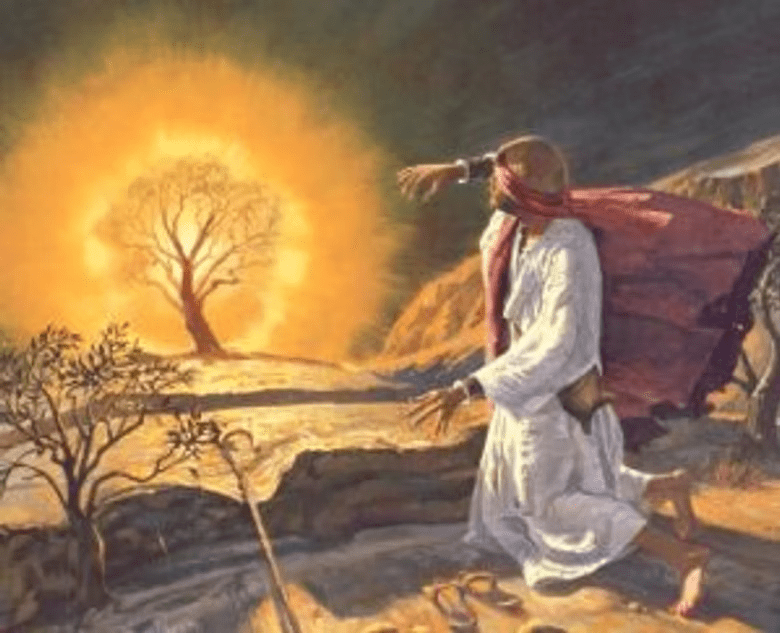
Tell them I AM WHO I AM sent you. Thus, I AM YOU. I speak through You.

The word “este” is a word of “being,” such that one takes on the name of Christ when one is filled emotionally by the Holy Spirit. One’s personal self state of being has moved aside, allowing the Holy Spirit to be the replacement self – the Christ.  This new state of being is then when one’s soul has become married with God, as One.

That is not a lie or a stretching of the truth, as Jesus confirmed: “Truly I say [this] to you.” That is the truth, as is the next statement from the final segment of words: “none ever shall he lose the reward of him.” This has two meanings.

The first is that the one who is in the name of Christ has been given the works of power from above, by Jesus [the Messiah], so he or she can have the reward of the Holy Spirit. Then, secondly, it says the one given that reward will not lose it.  So, having been given the name of Christ, such that one can act truly in the name of Jesus, means always having the same works of powers.

More than a cup of physical water given, the cup holds living waters that never leave one spiritually thirsty. Therefore, this series of segments is reflective of Jesus telling his disciples that they will be acting exactly as the one they saw, whom they tried to stop [but could not], while saying all who he had touched in his ministry were ahead of them, evangelizing as the Christ born in them [including the Gentiles healed].

Because Jesus had just told John and the rest of his disciples not to ever stand in the way of God working through one of His devotees, given the powers of the Christ, such a hindrance would be contrary to the ministry of Jesus. That awareness breathes new meaning into his warning, “Whoever is not against us is for us.”

The plural pronoun “us” is used to denote all who are married to God and committed to do His Will. One is then either part of the God team or one is against God, as influenced by Satan. As ‘black and white, right and wrong’ as that statement now becomes, it naturally follows that Jesus would then say, “If any of you put a stumbling block before one of these little ones who believe in me, it would be better for you if a great millstone were hung around your neck and you were thrown into the sea.”

Going against God is then a death sentence for the soul [the flesh that imprisons one].  Still, it is not a sentence by the judgment of God.  Instead, it is suicide, as a self-inflicted punishment.  Jesus was then using the metaphor of placing a heavy stone around one’s neck and then leaping into deep waters, where one would then die by drowning, as a better way to die than trying to save one’s life, while persecuting the righteous.  The metaphor of water (especially deep waters) as the means of self-sacrifice says it would be better to give up one’s ego and release one’s soul to the vastness of God’s living waters, than to try to keep living for self.  This example is then confirming Jesus having said, “Those who try to save their life will lose it.” (Mark 8:35)

This death of the soul is then stated by Jesus in the physical elements that represent the body parts of sensation, where the sacrifice of hands, feet, and eyes are symbolic of human aspirations. These aspirations are from adult minds that seek self-aggrandizement. It means the self “stumbles” as far as affecting the lives of “little ones” [where Jesus used the word “mikrōn” as a parallel to his prior use of his son, John, as a “little child” – “paidion”], who are those who have been accepted into the family of Jesus, as Sons of the Father [human gender insignificant]. It means acts against the children of God are against those who are reborn as Jesus Christ.

Jesus said, “If your hand causes you to stumble, cut it off; it is better for you to enter life maimed than to have two hands and to go to hell, to the unquenchable fire. And if your foot causes you to stumble, cut it off; it is better for you to enter life lame than to have two feet and to be thrown into hell. And if your eye causes you to stumble, tear it out; it is better for you to enter the kingdom of God with one eye than to have two eyes and to be thrown into hell, where their worm never dies, and the fire is never quenched.” Here, Jesus three times used a form of the Greek word “skandalizó”: “skandalisē” once; and “skandalizē” twice.

This word is synonymous with the English word “scandalize,” meaning, “to cause to stumble, cause to sin, cause to become indignant, shock, offend.” It literally means “to set a snare (a stumbling-block),” while implying “to hinder right conduct or thought.” [HELPS Word-studies] It means if any part of one’s body is used “to make a child of God fall into a trap,” one’s soul will be condemned forever.

Can anyone recall how often the word “scandalous” has been applied to the revelations associated with the Roman Catholic Church, involving money matters, murders, and the abuse of altar boys?

Vatican Bank’s Roberto Calvi, with ties to the Mafia, found hanging from bridge.  Just one of many scandals the Church has become known for.

The symbolism of one’s “hand” is based on the figurative meaning of “cheir”: “the instrument a person uses to accomplish their purpose (intention, plan).” [HELPS Word-studies] To cause one of the Apostles of God, in the name of Christ, to fall into a trap as part of a plot to destroy is then a prophecy of the leaders of Jerusalem plotting to destroy Jesus. Still, it foretells of the persecution that would befall many of the Saints of Christianity. To cut off such a “hand” means to sever one’s association with such figures. If those “hands” are passing thirty pieces of silver into the “hands” of a “little one,” causing him to sin, they are then responsible for the failure of that soul to return to God.

The symbolism of one’s “foot” is based on the path one travels. To cause one of the children serving God, in the name of Christ, to be misled, sending towards a trap into which they will be snared was the reason Jesus had been leading his disciples away from the normal routes taken by the Pharisees and Temple scribes. They expected all Jews to prostrate themselves at their feet. They taught Jews to follow in their footsteps, not how to walk in the ways of the Lord. It is better to hobble along a path that has evil-doers cause one to trip and fall, to be lifted up by the angels sent by God, than to take the easy road to ruin.

The symbolism of one’s “eye” is based on the figurative meaning of “ophthalmos,” where this is the “mind’s eye.” When one is led by the Mind of Christ, one will always be shown the light of truth. When one is led by the Big Brain, one envisions a course that is self-serving. The singular number, as “eye,” which had Jesus then say “it is better for you with one eye to enter the kingdom of God,” that is a willingness to be blinded to the distractions of a material world, becoming fully dependent on the All-seeing Eye of God to know the way to Heaven.
Those who see with two eyes are trapped in the physical plane and cannot see the value of Spiritual things. Nicodemus was a Pharisee ruler who had eyes but could not see in the ways of religion. They see well enough to bow down before science and its demand for obedience to the observable, condemning their souls to hell for failing to see through the wall of physical senses to the divine.

With these symbolic meanings explored, and each leading to hell, where the “fire is not quenched, “Mark wrote of Jesus stating, “For everyone will be salted with fire. Salt is good; but if salt has lost its saltiness, how can you season it? Have salt in yourselves, and be at peace with one another.” Here, words focused on “salt” are found repeated, meaning “salt” needs to be understood.

The Greek word “hals” translates as “salt,” which was a valuable commodity in ancient times, usually having to be mined. It is abundant in sea water, which is undrinkable. Salt was one form of preserving fish (along with smoking), meaning it pulls moisture from the fish, keeping the flesh from rotting. As a preservative, it would also add necessary salt to a human diet, while being a flavorful addition to an ordinarily bland food.

A friendly fire of life.

By realizing this, to hear Jesus say, “Everyone will be salted with fire,” this is a statement about the preservation of human souls. A soul is rolled in the salt of a human body that is seventy percent saltwater, much in the form of salty blood. The fire is smoking process or the sun drying that surrounds the salt wrap, which makes the soul a productive commodity.

When Jesus then said, “Salt is good,” it is the preservation of a soul that keeps it useful on the earthly plane. The loss of flavor is then the effect that sin has on that protective wrap. When one has sinned to the point of having lost all flavor, it has become useless. The question, “How can you season [salt that no longer is salty]?” can only be answered by realizing that salt without saltiness [the state of being salt] is nothing. The soul without a protective wrap is then like a fish out of water in the hot sun, without salt to keep it from rotting. A soul covered in sin cannot be restored to life, once the flesh surrounding it has burned away.

This is then why Jesus said to his disciples, “Have salt in yourselves, and be at peace with one another.” This returns to the family theme of all who will serve God in the name of Christ, because they have seen Jesus as the Son of the Father. Jesus is the salt that protects the soul. Jesus promised John of Zebedee and his brother James, “I will make you fishers of men.” They would all seek out the souls of men who needed to be rolled in the Holy Spirit (cast out demons) and then salted by God and Christ.

They should see themselves as salted by Jesus of Nazareth; but, like the one who they tried to stop casting out demons in the name of Jesus, they would be salted in the name of Christ soon enough. Once they reached that point in their lives, peace would come to all but Judas. The resurrected Jesus would appear to the eleven in the upstairs room, telling them, “Peace be with you! As the Father has sent me, I am sending you.” (John 20:21)

As a Gospel selection for the nineteenth Sunday after Pentecost, when one’s personal ministry for the LORD should be underway – one has removed all the limitations of hands, feet, and eyes and is fully trusting in God – the message here is to stop being part of the problem and begin being part of the solution. A minister in the name of Jesus Christ knows who is for God and who is against God.

This reading from Mark is a continuation of the past Sunday’s lesson, but few will be able to see that unless they are told to look closer. No one understands that the “little child” was Jesus’ son, and no one sees how that father-son relationship is vital for disciples of Jesus to see themselves in a Father-Son replication, as family. Being able to see that value of a family of God makes this lesson a continuation of the family theme. However, failing to see that makes this reading seem as if John of Zebedee just laughed Jesus off, saying, “Ha ha ha Jesus. But, changing the topic let me tell you how we tried to stop someone who was promoting himself as you.”

This lesson is more about the family theme, demanding that one understand the Father-Son lesson of last Sunday, which leads directly into this. Instead, there will be sermons galore about how Jesus taught us not to be intolerant to all the other people of the world, most of who are trying to kill Jesus and the truth of Christianity.  Most handouts at church doors will say, “Whoever is not against us is for us.”

By seeing with two eyes that read Scripture in socio-political ways, people promote themselves just like did the Pharisees, Temple scribes, and High priests. They find reason to justify sin, by misusing Scripture.  In doing so, they are trying to mishandle, trip, and get congregations to see things their way, so they benefit and others beat their chests as they pray to God to forgive their sins, which they know not how to stop.

Not again! Lord, please help us!

It used to be that preachers used the message of fear to get people to toe the line of righteousness. The told of fire and brimstone coming to those who did not follow Jesus religiously. That is a message that comes through loud and clear today, especially when Jesus said, “It is better for you to enter life maimed than to have two hands and to go to hell, to the unquenchable fire.” People today do not want to think of a theme of punishment, because they like to see Jesus in the light of all lovey-dovey forgiveness. It is that mean ole God that likes to burn souls in fire.

As I had stated before about every reference to water in the Holy Bible is metaphor for emotional needs, let me now add the metaphor that comes from fire. Fire is the different from emotions, as it symbolizes actions that come from within. Whereas the water of emotions can come as rushes, like waterfalls, river rapids, or tumultuous seas, they can also be still pools, quiet creeks, and the depth of oceans. Fire, on the other hand is a smoldering urge, an inspiring bonfire, or a raging forest fire. Whereas water can be solid, liquid or gas, as an indication of temperature – from frozen, to thawed, to evaporating – fire is transformative, such that the destruction of one state of matter is necessary for a return to elemental properties.

This analysis means “the unquenchable fire” (or “the fire not quenched”) means a state of existence has been reached where it is impossible for the emotions of love to become a cool touch on the tip of one’s tongue. The fire will rage on forever, always having fuel to feed it, rather than something damp to put it out. Since matter is the fuel that burns hottest, a soul will be condemned to always return into a body of flesh that will reignite into a burning spirit of selfishness, time after time after time (reincarnation). The only respite will be when the earth is cool enough to let a body of flesh grow before the flames burst forth again. Should mankind cause the planet to be too hot for any comforts, it will become the hell Jesus referred to (reincarnation no longer possible in a zombie world on fire).

Still, when Jesus said “Everyone will be salted with fire,” it is not from a vacuum that souls are drawn to the Holy Bible and the promise of Jesus Christ. I have used the analogy, “Wouldn’t it be nice to pray to God before bedtime, asking “God, please let me wake up and be a lawyer making lots of money.” If God were to answer such a prayer, it would be to send one the insight to study long and hard, so one could gain entrance into a prestigious law school. Then, after years of hard work, one could graduate from law school and begin at the bottom at some law firm. Then after years of doing all the hard labors of law, maybe one will come to understand that making a lot of money means selling one’s soul. Being a lawyer is only one way to sellout.

The moral of that story is everyone has to face the fire of testing. God will see how willing one is to do all the work He expects from a fiancée (human gender is insignificant). God will see how much flavor is in one’s salt. God will determine if one is worth His salt.

Mark 10:35-45 – Being the hands of Jesus

James and John, the sons of Zebedee, came forward to Jesus and said to him, “Teacher, we want you to do for us whatever we ask of you.” And he said to them, “What is it you want me to do for you?” And they said to him, “Grant us to sit, one at your right hand and one at your left, in your glory.” But Jesus said to them, “You do not know what you are asking. Are you able to drink the cup that I drink, or be baptized with the baptism that I am baptized with?” They replied, “We are able.” Then Jesus said to them, “The cup that I drink you will drink; and with the baptism with which I am baptized, you will be baptized; but to sit at my right hand or at my left is not mine to grant, but it is for those for whom it has been prepared.”

When the ten heard this, they began to be angry with James and John. So Jesus called them and said to them, “You know that among the Gentiles those whom they recognize as their rulers lord it over them, and their great ones are tyrants over them. But it is not so among you; but whoever wishes to become great among you must be your servant, and whoever wishes to be first among you must be slave of all. For the Son of Man came not to be served but to serve, and to give his life a ransom for many.”

———————————————————————————————————-

This is the Gospel selection from the Episcopal Lectionary for the Twenty-second Sunday after Pentecost, Year B 2018. In the numbering system that lists each Sunday in an ordinal fashion, this Sunday is referred to as Proper 24. It will next be read aloud in an Episcopal church by a priest on Sunday October 21, 2018. It is important because the disciples are seen to fear the death of Jesus that he foretold a third time.  Jesus told them not to think in terms of fists of strength but hearts of service to others.

It is important to realize three background elements of this reading. First, this follows the third time Jesus told his disciples of his coming death. He did this after they had gone to the other side of the Jordan following the Feast of the Dedication (late December on the Roman calendar) and now they were beginning their return to Jerusalem for the coming Passover, about three months later. Jesus said his death would be in Jerusalem (Mark 10:33), so that factors into this reading.

Second, Matthew’s version of this request by James and John of Zebedee was made by their mother (Matthew 20:20-28), although one can assume she brought her two sons along with her to make the request we read here now. This means that James and John did make the request; but, rather than them going directly to Jesus, their mother initiated the discussion.

The presence of their mother is important as it shows that Jesus would not take his disciples away from their families for an extended period of time; and it shows that women were routine followers of Jesus, who assisted in the care and maintenance of Jesus’ ministry. Mark (Peter’s account of Jesus’ ministry) was not one to give much credit to those who were part of his Gospel, accompanying him or encountering him, as far as naming them or giving them specific recognition. However, it is important to know that women did follow Jesus and have influence on him and his disciples.

When one accepts that the Gospel of Luke is the story of Jesus’ ministry as seen through the eyes of his mother, Mary, one can see how chapter 18 of the Gospel of Luke recounts the same events as Mark’s chapter ten and Matthew’s chapter nineteen, including Jesus heading to Jerusalem.  All recount how Jesus told the disciples again of his coming death. This means the mother of Jesus, minimally, crossed the Jordan to hear her son teach in the synagogue (probably one in Bethany Across the Jordan).  She was present when Jesus made that announcement.  Mothers were then welcomed to accompany their sons as Jesus traveled and the disciples followed their teacher.

John, on the other hand, told of Jesus escaping Pharisees attempting to grab hold of Jesus and stone him, when he said he was the Son of God at the Feast of the Dedication. John did not write of any teachings of Jesus while on the other side of the Jordan River; but he told of Jesus being alerted that Lazarus had fallen very ill. This absence of John says (minimally) that he was not an adult and certainly not John of Zebedee.  Because Mother Mary knew where Jesus could be located, John was probably allowed to go with the party sent to tell Jesus of Lazarus having fallen ill, then returning to Bethany afterwards. Jesus would begin to return to Jerusalem because of that message and because it was time for the Passover Festival.

Jesus, we have come to tell you Lazarus is gravely ill and you are needed in Bethany.

Third, it should be recalled from the Gospel reading for the twenty-first Sunday after Pentecost that Jesus, while explaining how difficult it was for a rich man to get to heaven, concluded by saying, “Many who are first will be last, and the last first.” While that event might have been some time prior (perhaps a month or so), it should be remembered as a factor for James and John of Zebedee asking to be given Jesus’ approval to sit to his right and left. One can assume they recalled that teaching and were not asking for those positions as a favoritism.

When one has a three-dimensional view of the setting for this reading from Mark’s Gospel, one can get a feel for how James and John (and their mother) were not trying to gain favor in the eyes of the other disciples. They sought to be close to Jesus to protect him, after Jesus said the rulers of Jerusalem and the Gentile governor would take him and kill him (but after three days he would rise). Because Peter had tried to rebuke Jesus for talking such nonsense (to him), the direct approach of rebuking Jesus was known not to work (Jesus told Peter, “Get behind me Satan!). The motherly approach (the idea of James’ and John’s mother) was to ask Jesus to let the two strongest, most muscular disciples (burly from being sailors and fishermen) always stand closest to Jesus, where they would give up their lives in order to save their Teacher (Rabboni).

Seeing their request in this light, one is able to see them saying, “in your glory” as a statement of the “dignity, honor,” and “praise” that was due Jesus. They were not trying to get closer to an important person, as they were already close. The Greek written shows this separate segment of words as stating, “We might stay in the realm (sphere) of [a figurative statement, conditional of future “sitting”] under divine quality of you” (from “kathisōmen en doxē sou”). This makes it more evident that the request was as protection, so the disciples (and other followers of Jesus) would be able to defend the life of Jesus, as his “hands” of strength.

It should then be understood that Jesus knew full-well the intention of the request. The way it was worded, James and John (and their mother) had heard Jesus say, “Truly I tell you that if two of you on earth agree about anything they ask for, it will be done for them by my Father in heaven,” (Matthew 18:19) and thought that if two disciples asked for the same thing, then they could coerce Jesus “to do for us whatever we ask of you.” Jesus was talking then about Apostles who were joined with the Father in Heaven, while being on earth, as the definition of a Church. The disciples only understood earthly matters, not those heavenly. Therefore, Jesus said to them, “You do not know what you are asking.”

To answer James and John (and their mother), Jesus asked, “Are you able to drink the cup that I drink, or be baptized with the baptism that I am baptized with?” This question had nothing to do with asking, “Can you drink out of the same cup I drink from” or “Can you be baptized by the same water as I was baptized in?”

The “cup” (from “potērion”) that Jesus drank (the contents thereof) was the emotionally uplifting “wine” of God (where “wine” is an undistilled “spirit,” by alcohol content). The “baptism” that Jesus was “baptized with” was the Holy Spirit having merged with the soul of Jesus. At that point in time, none of the disciples could make the claim that their souls had been submerged into the Holy Spirit, so the Will of God was not then totally leading their actions.

When Jesus added, “To sit at my right hand or at my left is not mine to grant, but it is for those for whom it has been prepared,” this was Jesus knowing that his “hands” would be Apostles in the name of Christ. Neither his right hand nor his left hand would be idly by his side, waiting like Secret Servicemen, to act after a threat had been exposed.

Little did the disciples know that Jesus had already touched the souls of many people in his three years of ministry (in all of his miracle healings) leaving the bodies of those souls as the first Apostles, who became the “hands” of Christ that extended to the right (Jews) and the left (Gentiles). They had all been “prepared” or “made ready” (from “hētoimastai”) to receive the Holy Spirit because their hearts had opened to God’s love and they were born of true faith.

By James and John saying “We are able,” they were not hearing Jesus asking them if they were prepared to receive the Holy Spirit (the “cup” and the “baptism”). They felt prepared to drink ceremonial wine and be figuratively washed clean in the Jordan River, as the two who would defend Jesus with their lives. The Greek word written by Mark, which was their answer to Jesus was the capitalized “Dynametha,” which said, “We are powerful” or “We have the strength.” Not only did that mean they were able-bodied men, but they were mentally prepared to die defending Jesus.

When the reading then says that the other ten disciples became angry at James and John, this says the two brothers had not planned this with the other disciples. Hearing their proposal made them angry and moved by great grief (from “aganaktein”), because their request made it seem that the other ten were thought to not be willing to die defending Jesus. Not only that, the other ten were not physically suited to be strongmen, meaning they could be harmed without being effective in that role.  Their anger had nothing to do with James and John asking to sit next to Jesus at dinner time.

The disciples knew James and John of Zebedee were nicknamed by Jesus “Boanerges” – the sons of thunder. (Mark 3:17) This name, stemming from Aramaic (“bēn” [“sons”] and “regesh” [“of thunder, tumult”]), probably was because of how easy it was to tick them off, at which point they would get loud and break things. (Perhaps, they had a history of easily getting into fights, prior to following Jesus?)

Easy boys.

When Jesus encountered Samaritans balking at making accommodations for the group, it was James and John that said, “Lord, do you want us to call fire down from heaven to destroy them?” (Luke 9:54) One would have to think their nickname spurred them to use the “fire from heaven” metaphor [lightening], as thunder comes before such strikes.

Jesus also chose the two brothers to go up the high mountain with him and Peter (Mark 9:2), probably because they were needed to carry most of the gear (tabernacles, rope, warm clothing, food, etc.). Their being picked because of the strength necessary to a somewhat dangerous journey safer means Jesus did not favor James and John of Zebedee over any of the other disciples.  It was logical to pick the strongest men.

With that realized, the other ten knew James and John were going into the area of brains, when their forte was brawn.  Asking to be the bodyguards of Jesus is what made the other disciples incensed at the thought that James and John (and mother) tried to maneuver it so they could keep Jesus alive by a show of manly-man strength.  Their thick skulls kept them from realizing the dangerous position that would put the others in, when they were probably less physically imposing.

Jesus saw just reason for the ten disciples to be angry, so he called them all together and said, “You know that among the Gentiles those whom they recognize as their rulers lord it over them, and their great ones are tyrants over them.” This is a somewhat misleading translation, which needs to be clarified.

The Greek word “katakyrieuousin” means “exercise authority over, be the master of, and hold in subjection,” as well as “lord it over.” This is followed by the Greek word “katexousiazousin” that means, “exercises power over” or “exercises authority over,” with abuse of those powers implied, such that oppression and strong domination can lead one to assume tyranny. Because the identification here is “ethnōn,” meaning “heathen people” or “foreigners,” such that “Gentiles” is translated rather than Romans, one needs to look closer at who Jesus was referring to when he said, “You know” or “You remember” (from the capitalized “Oidate“) to his disciples.

It is always easier to remember the past horrors than to see the present dangers.

In all of the four Gospels there is little mention of the Roman presence in Galilee and Judea, until Jesus is tried, whipped and crucified. It is understood that the Roman Empire was in control of all that was ancient Israel, but nothing was written about Romans accosting Jesus and his entourage, in Judea or Galilee, in Tyre, Caesarea Philippi, Gardara (or Gergasa of the Decapolis), or any of the places beyond the Jordan. The rulers of tyranny that all the disciples knew amounted to those in Jerusalem. Those rulers were those in power who knew Rome would rather give the Temple elite whatever they wanted, than not.  Rome sent a governor that would appease Jerusalem’s rulers, simply to avoid another costly revolt led by religious zealots.

This makes the third announcement of Jesus’ coming death, which he recently repeated to his disciples, become important to understand, now that Jesus has talked about leaders who exercise authority over subjects, to the extent of being tyrants. Jesus had just recently told his disciples, “Behold, we are going up to Jerusalem, and the Son of Man will be delivered to the chief priests and the scribes; and they will condemn Him to death and will hand Him over to the Gentiles.”

The word translated as “Gentiles” is “ethnesin,” which is a form of the same word Jesus just spoke (“ethnōn”), rooted in “ethnos.” Whereas the word “gentile” (in the lower case) is a general classification of races and peoples of nations that were non-Jewish, the implication was heavily leaned towards an identification of idolatry worship and not worshiping the same God of the Jews. When that classification is understood, the rulers of Jerusalem were capable of being put into this category of peoples, simply because they worshiped money and power. In the same way that Samaritans were deemed gentiles by the Temple Jews, the same shoe fit them in the eyes of God.

As the third (and final) time Jesus would predict his death, it is worthwhile to realize the details of the other two. The first time, Mark said Jesus “began to teach them that the Son of Man must suffer many things and be rejected by the elders, the chief priests and the teachers of the law, and that he must be killed and after three days rise again.” (Mark 8:31) That focused solely on the Temple rulers.

Then, the second time Jesus said, “The Son of Man is going to be delivered into the hands of men. They will kill him, and after three days he will rise.” (Mark 9:31b) That focused solely on the gentiles, who would be those executing the judgment brought about by the ones who truly exercised authority as tyrants, using injustice to make it seem otherwise.

Now, the third time, Jesus combined the two, so it would be the chief priest and the scribes that would condemn Jesus, handing him over to the gentiles to do their dirty work.  This becomes the necessary background element that caused Jesus to importantly remind his students about the tyrants they knew personally, not some emperor far away in Rome.

It must be seen how Jesus pointing out the exercise of authority in oppressive ways was accepted as how Rome maintained control over a vast empire. The Romans would have no moral difficulties in executing condemned men, whether they would judge them by Roman laws or have some local yokels use their laws to judge their own. Still, for Jesus to break into this aspect of tyranny, one must realize that had absolutely nothing to do with James and John wanting to sit next to Jesus at dinner time.

Jesus saw their intent was to surround Jesus with brute force bodyguards, which the other ten saw as an open invitation for the Romans to suddenly have a problem with Jesus, as a leader of rebels against Roman domination. Jesus then was telling his disciples (paraphrasing), “We are not like them.” (Literally translated above, “It is not so among you.”)  That meant, “We do not depend on might making right, in a physical sense.  We are about the inner strength and power of God.”

Jesus told his twelve disciples, “Whoever wishes to become great among you must be your servant, and whoever wishes to be first among you must be slave of all.” As Jews under the denomination of Rome and the Temple of Jerusalem, greatness was dependent on being a slave of all, as a servant of God.  Jesus had sent all his disciples out to serve the needs of the Jews; not to incite an overthrow of oppression.  Service meant giving spiritual strength to those suffering from oppression, thus freeing them to also serve God.

We are all slaves to gravity, even those born with silver spoons in their mouths. Wait until the next Great Depression and see how many will volunteer to be slaves, rather than be free to die.

This meant (even though they would not understand this meaning until after they were filled with God’s Holy Spirit) that Jesus said, “If you are to drink from the cup of salvation,” (remembering that Judas would not) “then you will be baptized by the Holy Spirit and be reborn as me.”  Jesus was teaching his disciples to lead by example, where greatness came from serving the spiritual needs of seekers.  Sacrifice of self made being a slave of all the lesson of Jesus.

To reach that point of commitment to God, there could be no revolt against the tyranny of Rome, or the tyranny of the Temple in Jerusalem. Greatness does not come from calling upon God to rain fire upon one’s enemies, such that one man’s punch given in anger deserved a punch likewise in return. Worldly power is exemplified by the pendulum, where one swing to the right means an equal and opposite swing to the left.  The hands of linear time pound the drumbeat of both victory and defeat.

The Temple rulers saw themselves as the great among the Jews, just as the Romans saw themselves as the great of the western world; but (in time) they would dissolve into nothingness. While the Temple’s ruling class of Pharisees, Sadducees, scribes, Sanhedrin, and high priest held the common Jews as their slaves, just as the Romans held their conquered as their slaves, (in time) they would become the slaves of others (Saracens and Barbarians). Those who would be filled with God’s Holy Spirit would be freed to eternal life, by submitting to marriage to God and living as His Son, Jesus Christ.

This is why Jesus then concluded this reading selection by stating, “For the Son of Man came not to be served but to serve, and to give his life a ransom for many.” Jesus told his disciples that just as he came to serve others, they (in time) would be reborn as the Son of Man and likewise expected to serve God, the Father.

It would be that subjection to God – as a wife to one’s Husband, so the Father of all Sons of Man will come as Jesus Christ reborn – that would cease trying to use brute force to change the will of powerful worldly men.  Subjection to God would mean the use of spiritual power to influence the masses to likewise forego rebellion against tyranny and serve God as true Christians. That holy service, just like the service of Jesus, would bring about persecution by the great, leading to a servant’s death. However, giving a life as the ransom paid for many other lives to be saved means eternal life and the greatness of Heaven.

As the Gospel selection for the twenty-second Sunday after Pentecost, when one’s own personal ministry for the LORD should be underway – one has already become a hand of Christ reaching out to serve others – the message here is to stop trying to use strong-arm tactics to force one’s will onto others, is some ill-conceived plan to save Jesus from being killed. One cannot act like James and John of Zebedee (and their mother) and expect Jesus to grant your wish, just because it makes good sense personally, but regardless of how little thought one gives to others following Jesus.

As it is with all Scripture, the reader needs to put oneself in the role of the characters that are not Jesus. Rather than have a priest stand before a congregation and preach his or her personal politics, which uses the “servant of all means greatness” theme as reason to vote for this politician or hate that politician, while not thinking once about how many innocent lambs are slaughtered by such persecutory speech, one needs to tune those ideas out and simply serve God. When one serves God, God will have one serve those in need of God’s help.

When Jesus asked James and John (and their mother), “Are you able to drink the cup that I drink, or be baptized with the baptism that I am baptized with?” the knee-jerk response is exactly like theirs: “We are able.” Simply by walking around town or posting memes on social media that proclaim, “I am Christian,” one is saying, “I drink the holy wine of Communion (and eat the wafer too!), which is my right as a baptized (by holy water) Christian (denominational specific membership).” However, that is totally missing the point.

The only way to “drink the cup that [Jesus] drinks, or to be baptized with the baptism that [Jesus is] baptized with” is to be Jesus. That metaphor is not some fancy chalice kept in a ‘Jesus box’ in a church, washed clean by some altar guild member after each use, as it is not a physical cup that holds physical drink.

The cup is symbolic of deep-felt emotions, which cannot be touched physically. Science cannot observe the emotional center of the human body, although they can probe and monitor electrical impulses stimulated in the heart and brain and try to measure them. The cup that Jesus drank was the love of God within his heart-center, which came from Jesus being married to God, thus His servant forever. Thus, Jesus asked every reader of this reading (and everyone listening to this reading be read), “Have you married God, having submitted your self-ego fully to His Will, lovingly speaking only the truth, from the love of God that makes one’s cup runneth over with joy?”

People dance ecstatically and wave their arms in the air for a love of Jesus, but do they love God?

The ones dancing each should be Jesus Christ reborn, but if they are truly Christians, wildly dancing and praising Jesus as the one he or she loves, then that either says: a.) I am a liar and not Christian; or b.) My heart is not devoted to God, but to an idol named Jesus.

James and John of Zebedee were the same way. So too were the other ten disciples, including Judas Iscariot, such that each worshiped Jesus of Nazareth as a most holy prophet that could never be replaced by another human being. They were, after all (at that time), Jews and not yet Christians. They believed God is great, which meant they believed God sent them a great prophet named Jesus.

That is an opinion not exclusive to Christians. Jesus would be killed because most Jews did not believe in a Messiah, unless he was a strong man that would overthrow Rome and return the land of Israel to the remnant Jews. Jesus would not pass the physical test of immortality. The Muslims, unlike the Jews, say Jesus was a most holy prophet … just not the last great prophet. They think (like did James, John, their mother, and the other ten disciples of Jesus) with their brains (and brawn); not feeling the love of God in their hearts and souls.

Christians feel faith with their hearts and follow the insights of the Christ Mind.  They go beyond the limits of belief (the words of others), feeling a presence they had never felt before, which is more than human emotions can attach a word to.  They see in inexpiable ways, with inaudible whispers leading them to go places their brains would have never thought for them to go.  They experience God, so there is no need to memorize His words through others, when a Christian has the same knowledge of God as did all true prophets.  To worship a prophet then means to take one’s eyes off God.

When Jesus asked James and John of Zebedee (and mother), “[Can you] be baptized with the baptism that I am baptized with?” one only has to remember the words of John the Baptist. He said, “I baptize you with water for repentance. But after me comes one who is more powerful than I, whose sandals I am not worthy to carry. He will baptize you with the Holy Spirit and fire.” (Matthew 3:11) Again, baptism is a word that means “submerged,” implying water. But the Holy Spirit and fire do not represent a physical “dipping,” but a spiritual transformation.

Few people understand the Holy Spirit. While they can grasp the Father and the Son of the Trinity … because they have physically seen fathers and sons … there is difficulty explaining the Holy Spirit to doubters.

Does that mean belief in ghosts?

Many Christians cannot answer that question, nor can they explain the Holy Spirit to non-believers. The reason is few people are indeed filled with the Holy Spirit.

Again, dancing wildly with ones hands raised in the air is not an indication of being filled with the Holy Spirit.  The hands of God reach out to seekers, not towards a sky or ceiling.

Being filled with the Holy Spirit comes after one’s marriage to the love of God. It is when one’s soul is submerged with God’s Spirit, so the two are one. Sin becomes a thing of the past. That union brings the resurrection of God’s Son in a new servant in his name. One serves God as Jesus reborn, which means “whoever wishes to be first among you must be slave of all.” It means the expectation has been set, “to give [one’s] life [as] a ransom for many.”

It does not mean being a pastor of a megachurch. It does not mean having a need to demand donations for another new private jet. It does not mean greasing one’s path to a fast track to riches, vacation homes, and fancy cars. It does not mean being so poor that others will not take the time to listen to what one’s message from God says.

Being married to God and baptized by the Holy Spirit means raising a family of Christians, who may or may not be one’s own physical flesh and blood. It means loving God with all one’s heart and wearing His face always. It means telling the truth and shedding the light into a world of lies and darkness. It means being persecuted for doing that, but with nary a worry.