
When the wife of Uriah heard that her husband was dead, she made lamentation for him. When the mourning was over, David sent and brought her to his house, and she became his wife, and bore him a son.
But the thing that David had done displeased the Lord, and the Lord sent Nathan to David. He came to him, and said to him, “There were two men in a certain city, the one rich and the other poor. The rich man had very many flocks and herds; but the poor man had nothing but one little ewe lamb, which he had bought. He brought it up, and it grew up with him and with his children; it used to eat of his meager fare, and drink from his cup, and lie in his bosom, and it was like a daughter to him. Now there came a traveler to the rich man, and he was loath to take one of his own flock or herd to prepare for the wayfarer who had come to him, but he took the poor man’s lamb, and prepared that for the guest who had come to him.” Then David’s anger was greatly kindled against the man. He said to Nathan, “As the Lord lives, the man who has done this deserves to die; he shall restore the lamb fourfold, because he did this thing, and because he had no pity.”
Nathan said to David, “You are the man! Thus says the Lord, the God of Israel: I anointed you king over Israel, and I rescued you from the hand of Saul; I gave you your master’s house, and your master’s wives into your bosom, and gave you the house of Israel and of Judah; and if that had been too little, I would have added as much more. Why have you despised the word of the Lord, to do what is evil in his sight? You have struck down Uriah the Hittite with the sword, and have taken his wife to be your wife, and have killed him with the sword of the Ammonites. Now therefore the sword shall never depart from your house, for you have despised me, and have taken the wife of Uriah the Hittite to be your wife. Thus says the Lord: I will raise up trouble against you from within your own house; and I will take your wives before your eyes, and give them to your neighbor, and he shall lie with your wives in the sight of this very sun. For you did it secretly; but I will do this thing before all Israel, and before the sun.” David said to Nathan, “I have sinned against the Lord.”
——————————————————————————–
This is an optional Old Testament selection from the Episcopal Lectionary for the Eleventh Sunday after Pentecost, Year B 2018. In the numbering system that lists each Sunday in an ordinal fashion, this Sunday is referred to as Proper 13. It will next be read aloud in an Episcopal church by a reader on Sunday August 5, 2018. It is important because this tells more than of the punishment of sin, but of the self-imposed punishment of turning away from God after having been given all the blessings of God. This is the difference between sinning while believing there is God, and sinning after having come to know God personally.
In the tenth Sunday after Pentecost’s optional Old Testament interpretation (last week) that dealt with the sins of David, I delved into this reading. It should be evident that the two are difficult to separate. It is important to see that David, as king, had no laws of Israel that he could break, when Israel had chosen to have a king to be like other nations. David, because he had been anointed by God, through Samuel, was the Law. In that sense, Bathsheba is freed of sin because she was obeying the orders of the king. Uriah was then a willing sacrifice unto the king’s desires.
This links to that, meaning the whole sin sequence becomes a human reflection of how the Israelites were in a committed relationship with God, who was essentially their true King and husband. The purity of David, as the reflection of God incarnate, made him appear divine, which made it possible for him to teach the nation of Israel to know that everyone should do only as God commands. Such loving devotion meant the result would always be that one’s soul is cleansed free of sins against God. However, in this conclusion to that story, David becomes an example to the children of Israel as one who chose to serve a human king, rather than serve only God above.
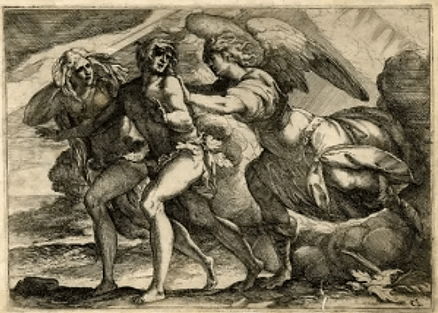
The moral of the story is that souls become responsible for their sins that break the Law. David was like Adam, before each experienced their original sins. They disobeyed and were punished. They tried to hide their sins, but were caught as cheaters. Both cheated themselves by thinking they could do whatever they desired to do, without seeking God’s advice before their leaps of selfishness.
It is vital that Christians realize how the Israelites set themselves up for failure when they told Samuel to give them a human king. Saul was a sinner king and his selfishness destroyed his reign. David fell from grace, like Saul, because he reduced himself from divine king to a human king that broke his marriage vows to God. This story then tells of an an unholy divorce from the One King, one which forced the Israelites to be remarried to a human being with human flaws.
The Covenant with the Israelites was a marriage contract with God that made every one of them (adult men and wives) His brides. That commitment was to live as priests for Yahweh. When your husband is God Almighty, you do not want to file for divorce, simply because any other husband (used in a submissive sense, as whatever gods men and women choose to follow … like presidents, political parties, moolah, etc.) is a huge step down in class.
Marriage to God, ever since a guy named Jesus of Nazareth came along (the Christ or the Messiah of the Jews), has meant an exercise of the brain, such that one learned the Laws that pertained to that Holy Matrimony. God was the Father, David was the mother, and the Israelites were the children that were to be raised as holy before God. The Law was kept in a box, but also written on the heart of Mother David. With the Holy Mother running the household of Israel, the Law of David was one thing the Israelites feared to break. They listened to their Mother and did what David said, because none of them ever wanted to hear mom say, “Just wait until your Father comes home!”

Because the Israelite children would lose respect for the Mother and no longer fear the Father, they would suffer greatly by the divorce that hit that marriage. David’s failures in this story are why a written contract that is external to a couple can never again be the definition of “marriage to God.” It was then, beginning with this reading of God’s punishment set upon David (ergo Israel), no longer enough to simply say the words, “I do.” All trust was erased that a Law kept in a box, and no longer in their king’s heart, would be given anything more than lip-service.
Jesus would come to teach the scattered children of Israel how one must become one with God, in a holy union where He is in one’s heart, not elsewhere. That love center is where His name is then written, “I Am that I Am” (YHWH). A child of God must become an extension of God, through complete submission to God’s Will, so that the I of God become the I of God’s human wife (males and females). Two egos must merge into one, where one is dominant (the Husband) and one is submissive (the wife). That marriage of soul-to-body IS the defining factor for Holy Matrimony. Therefore, there is nothing sacred about a verbal commitment, as actions speak louder than words.
Nothing lasting can come from the pageantry of a marriage between two humans (as was the celebrated marriage between David and the Israelites). David was made their king and all was well; but then David lost his desire to do the same ole same ole – go do battle in the spring, like all kings did. He had a ‘mid-life crisis’ and let his eyes wander. While no one stood in holy robes, holding a holy book, saying the words, “Till death do you part,” the marriage of David as King to the Israelites was supposed to have that forever commitment, with a fairy tale ending.
It did not. The condition was then “Till divorce do you part.” The “death” was not only to the relationship between God and ex-wife David, but the destruction of the children of Israel. They needed to fear the Father to maintain the Law. Unfortunately, the disgrace that fell upon their Mother David meant all the threats about a belt in the Father’s closet were lies; because none of the children had the intimacy of a relationship with God as Husband, only that believing God was the Father.
The reality of divorce means the sanctimony of human marriage is suspect, at best. Marriage between human is supposed to reflect an individual’s marriage to God above. We like to think that means we are all born of the Father because we have a soul. Unfortunately, David had a soul, just as Adam had a soul, and souls are more easily influenced by the whispers of Satan, than those of God. Souls love to stroke egos, more than be self-sacrificing. Souls love to play the field and be promiscuous.
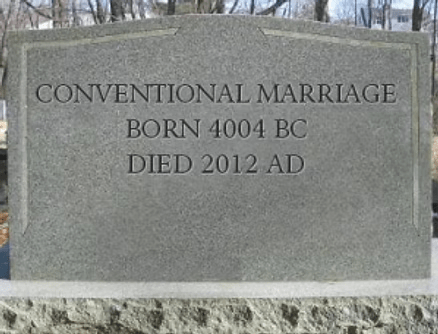
This becomes a problem for all the church denominations of Christianity, as marriage (that between two human beings) is considered one of the sacraments (i.e.: “A rite believed to be a means of or visible form of grace.”). Unfortunately, that logic fails to be confirmed when David and Bathsheba became husband and wife (“she became his wife”). This failure is realized in the text of the story; but the translation above, of the last verse in chapter eleven (2 Samuel 11:27b), has conveniently disappeared.
That ending omitted says: “But what David had done [including marry Bathsheba] was evil in the sight of Yahweh.” Feel free to look it up and see for yourself.
An evil union (reasons stated by Nathan to David above) cannot be blessed by a priest of Yahweh (God the Father of all Christians and Jews). Nathan flat out called David’s theft of Bathsheba a sin and he told David that God promised there would be nothing blessed in Israel, because of that unholy union. David admitted to Nathan (and thus confessed before his priest – another sacrament), “I have sinned against the Lord.”
Again, there has been all faith lost in human words of promise. When one proves a lie was spoken when the words “I do” were uttered, thy then should anyone believe a confession that admits one is a liar?

It is important to take notice how Nathan did not bless David’s confession. Nathan did not wrap motherly arms around David, to make his boo boo feel better. God spoke through Nathan; and God was not telling Nathan to tell David how much David’s words of sorrow to God were heard and approved, so everything would all be okay. Nathan could talk to God as a prophet, because he too was married to God and knew better than to think that relationship gave him the right to start acting like God on earth. Nathan was not pretending to speak for God; and God had no blessing for David in this matter. No matter what words David said (unwritten and otherwise) would save Israel from an unholy end, albeit and end that would come centuries later.
As unholy as David’s “marriage” was to Bathsheba, he was indeed married to her and she was officially David’s wife, once she moved into David’s house. This is how people today see marriage. Jews, Gentiles, and Christian alike see “marriage” as moving in together. However, the reality and sole defining act by Bathsheba that proved she was married to David was that she “bore him a son.” That is the root meaning of “husband and wife.” Two adults [of the opposite sex] come together to make babies. Anything less than that is two children ‘playing house’ together [regardless of their neuter genders as children].
This birth of a son, although it would only live seven days (unread here), was the confirmation of the marriage. Bathsheba mourned the death of her husband Uriah first, and then she shacked up with David before the baby was born. That togetherness made it look like sex before marriage was made right. Shotgun weddings are descended from the same logic. Lustful sex out of wedlock brings about a socially forced bonding, as father and mother, which are the titles given to parents of babies. Those title changes are the epitome of being married.
That means understanding what marriage truly is. Understanding that word, in my humble but strongly held opinion, yields the deep, underlying purpose for this reading on the eleventh Sunday after Pentecost. Marriage is not about someone proclaiming two people can go happily out into the world, free to have sex before God, because that flimsy definition leads people towards understanding a physical act of procreation as marriage, not the raising of children that must follow. It transforms “marriage” into a lessened meaning, where approval is given (blessing “marriage” as saintly) to a sin – that of worshiping the god of pleasure and delight.

Man, as an animal, will always procreate because of natural urges. Some animals mate as set pairs for life, but some animals mate with any available mate, or with the one who wins one of those battles of spring. Often, the animal mothers are left to raise the young alone or with the help of other ‘single moms’, other females and their young male and female children. Only a few crazy people in California would bring in a priest to bless an animal mating union, which means animals generally do not have a “rite of marriage” that “blesses” their unions. Therefore, all animals (including man) are “married” by their offspring – when the DNA of two parents are forever joined as one in the child (or in case of multiple births – children).
When Jesus encountered the Pharisees that wanted to trick Jesus into saying a man’s right to divorce his human wife was wrong (Matthew 19:1-14), Jesus said:
“Haven’t you read,” he replied, “that at the beginning the Creator ‘made them male and female,’ and said, ‘For this reason a man will leave his father and mother and be united to his wife, and the two will become one flesh’? So they are no longer two, but one flesh. Therefore what God has joined together, let no one separate.”
This statement dates back to the beginning of mankind (male and female He made them), when male and female human beings were harry animal-like creatures (caveman and cavewoman). Back then, they paired off to mate, without any religion existing. There were no priests or ministers to make any pairing official or legal tender. However, by stating, “A man will leave his father and mother and be united to his wife, and the two will become one flesh,” the “one flesh” is a baby.” Certainly, two newlyweds will try their hardest to stay cleaved together for as long as possible, but unlike the lore about the soft-rock star Sting, men and women spend much more time apart than joined.
The “wife” is the mother of that baby. This means God Created males and females to become fathers and mothers, committed (a bond beginning with a live birth of a child) to raise their child(ren) until adulthood.
When Jesus said, “What God has joined together, let no one separate,” this is not God gently guiding a male and a female into a sexual act, patting them on the rear ends with a smile of His blessing. God does not work towards leading males and females to have sex. God made creatures so they would do that instinctively. Sex happens regardless. However, once a male’s semen is swimming around a female’s egg, then God goes to work joining those two together.

That means God goes to work making all the necessary changes occur that develop an embryo into a fetus. God’s handiwork in a woman’s womb is what readies a new mass of functioning flesh for receiving a soul. That flesh takes possession of a life soul with its first breath after birth. Thus, “let no one separate” applies to anyone who would unnaturally abort a child in the womb or kill one after birth, before it can reach adulthood.
Keep in mind how Jesus only came for the Jews. Jesus did not come to condemn any Gentile society that wants to kill its children. Jesus never came to tell the Romans how to live as priests to Yahweh. Jesus, as the Son of God, knew there was a world led by Satan to sin; but God sent His Son to make sure some true priests of the One God were available for all the lost souls on the planet. Obviously, as Jesus listened to Pharisees not have any understanding of marriage, much less divorce, Jesus was not sent by God to change the illegitimate children of Israel into those that would become true priest of God, married to Him as His wives, knowing the love of God and fearing life without the Father always present.
Simply by being able to grasp how two adult human beings are married in the sight of God, by getting pregnant and preparing to raise that child together … until it becomes a responsible adult … makes it possible to see that marriage can only be Holy Matrimony when the union is between the Spiritual and the physical. God develops babies (as this is not some natural result of a living being’s will, absent of God), just as God develops His priests (as this is not some natural result of a living student’s will, absent of God).
When Jesus told the Pharisees, “Let the little children come to me, and do not hinder them, for the kingdom of heaven belongs to such as these,” that means that parents should teach their children the religious values that are based on the lessons of the Holy Bible. That assumes the parent are both married to God. Such a holy marriage raises holy children, which leads the adult children to leave their parents and cleave with the Word of God that promises them a Messiah. Once they find Jesus and are reborn as the Christ, they will have gained the kingdom of heaven. Then, that formula is to be repeated, over and over.
This is what was lost by David’s sins, which led to a “shoot from the stump of Jesse” being Jesus Christ. Holy Matrimony can no longer be obtained by finding God through an external Law. One has to seek to become the child of God that is Jesus Christ reborn; and that comes by the union of a bride of the earth (physical males and females as unfertilized eggs) with the divine ‘semen’ of the Father’s Word being joined. The consummation of that marriage yields another example of the Trinity being born.
In my interpretation of 2 Samuel 11 for the tenth Sunday after Pentecost, I mentioned that David had never sinned until he saw Bathsheba naked, after he did not go out with the soldiers in spring to do battle. David was a virgin wife of God, given to the LORD at birth by Jesse. The baby God and David birthed was Israel – all of the Israelites – and together that pair of parents ( Spiritual joined with physical) would raise their child to be a holy nation of priests serving Yahweh. Then, when David sinned, he became a wife who had cheated on the husband by having sex with another human being – a mere mortal. The words of Nathan then need to be read as a divorce decree.

Sayeth the LORD, the husband of David:
“I anointed you king over Israel, and I rescued you from the hand of Saul; I gave you your master’s house, and your master’s wives into your bosom, and gave you the house of Israel and of Judah; and if that had been too little, I would have added as much more. Why have you despised the word of the Lord, to do what is evil in his sight?”
Does that not sound like a husband scorned by his wife? It states the grounds for divorce. David cheated. He coveted. He forced Bathsheba into adultery. He had Uriah unjustly killed, and made it look like an enemy could be blamed. What God spoke through Nathan was like a husband who came home to find out his wife had slept with a neighbor, after getting drunk in a bar, then driving wildly through a school zone, killing multiple people in the process. Not only was her infidelity an issue, she was going to prison, leaving the children without a mother to raise them!
Still, it was not poor little ole Bathsheba who lured David into sin. It was David choosing to please David, without one iota of thought to his husband above – God. Excuse me ladies out there, but it is a wife’s duty to be submissive to the husband, just as it is the husband’s duty to provide for his wives. Commitment works both ways and David had never wanted in his entire life. [Keep in mind that human males and females are to become the wives of the LORD, so human gender does not remove the element of submission to God. Humans of the world should reflect this arrangement if an earthly marriage is to be blessed.]
“The LORD is my shepherd. I shall not want. He maketh me to lie down in green pastures. He leadeth me beside still waters. He restoreth my soul. He leadeth me in the paths of righteousness for his name’s sake. Ye though I walk through the shadow of death, I shall fear no enemy, for thou art with me; thy rod and thy staff they comfort me. Thou preparest a table before me in the presence of mine enemies: thou anointest my head with oil; my cup runneth over. Surely goodness and mercy shall follow me all the days of my life: and I will dwell in the house of the Lord for ever.” (Psalm 23, KJV)

David wrote that song. It came from his heart for his LORD and Master. It is a love song that admits, “What more could a religious guy want from a heavenly husband?” It is a love song all should sing to God.
Now we read that David had sinned egregiously. God told Nathan to write down in the divorce decree what David gets to take with him in the split.
[Also, notice how Nathan – a true prophet – handled this divorce. No lawyer was called in. It would later be something the lawyer types in the temple would administer; so much so that now the law demands one have a lawyer to get divorced. No one directly quotes God these days.]
The LORD said, “I will raise up trouble against you from within your own house; and I will take your wives before your eyes, and give them to your neighbor, and he shall lie with your wives in the sight of this very sun. For you did it secretly; but I will do this thing before all Israel, and before the sun.”
So much for God being the influence David needed to raise the baby that had been a stubborn people ever since Moses was married to God. The Israelites would slowly forget about the Father, who they saw shine on the face of their true King. Now, after the divorce, David became just another king … like those of other nations. The children began to run wild without the threat of the Father’s belt.
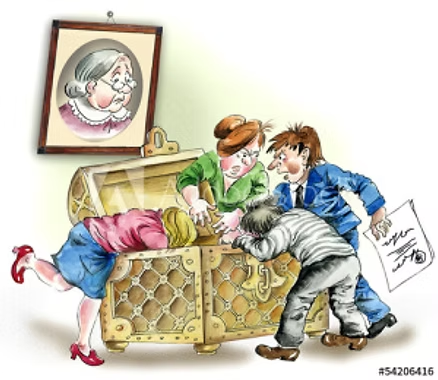
Still, like a good ex-husband, the child support checks arrived in the mail, as Solomon would turn Israel into one of the wealthiest nations in the known world. But, without Solomon being a good wife to God (he did love his human wives and concubines), the children would squabble so much over their inheritance that they would rip the nation in two, letting just about anyone lord over their lives (and ruin their religious devotion to Yahweh).
That end was stated in Nathan’s parable to David, where Israel was the poor man with nothing but a little ewe lamb to his name. That stands for the Israelites and the Law, which is impossible to understand without God; but the Law was warm and fuzzy and sounded sweet to the ears, so much that a bond of love made the poor feel like they had something special. Then, that Law was broken by the rich man (David), who had everything (as king). Without just cause, the rich man killed and cooked the Law (the little ewe lamb) and served it up to some guest. The guest was Bathsheba, but she represented any foreign nation (Gentile pagans with worship to lesser gods) that could dance a sexy dance and whisper sweet nothing into a king’s ear. Bathsheba would become Jezebel, who would see Israel’s Law (the little ewe lamb) as the distraction that kept a nation from being rich.
David killed the Law, just like Moses slammed down the holy tablets when he saw the Israelites had built an idol to Ba’al and were appeasing that guest. God purged the wayward Israelites from those who would be redeemed. Moses got a second chance set of tablets. David and Israel were the last straw on that camel’s back.
David’s divorce from God meant there would be no more kings of Israel acting as His wives. Only a living vine of prophets would keep the poor man and his little ewe lamb alive in Spirit, until God would send His next virgin bride to Jerusalem, named Jesus of Nazareth. God and Jesus would marry and beget the child known as Christianity, named after the union that is the Father, the Son, and the Holy Spirit, christened Jesus Christ. Those who fall in love with God and marry, so His Law is then written on the hearts of individuals, can give life again to the poor man and his little ewe lamb, watched over by the Good Shepherd.
As an optional reading selection for the eleventh Sunday after Pentecost, when one’s personal ministry to the LORD should be underway – married to God and dutifully bringing up the children to Jesus Christ – the lesson is the fidelity demanded in Holy Matrimony. The message of this story, as told the Sunday prior, was responsibility, which is not much different than the “faithfulness to obligations, duties, or observances,” which defines “fidelity. Still, the intent now is on the commitment to intimacy, for the purpose of yielding Jesus Christ resurrected, and tending forever to that most holy child.
A minister to the LORD is able to see the truth of marriage, because the ‘other nation’ view, the Big Brain thought of Gentiles who have no love of God, is to tear down the idol that false shepherds have created – the sacrament of the love between a man and a woman. That is not holy matrimony, even if it tries to mirror it. Legal marriage is not holy, when it is making sex between two human beings the lesson taught to children.

A minister knows sexual desires have been around since the beginning of time, and when sex is called love (an emotion of sudden urge), then all forms of that kind of “love” destroy the truth of love. Perverse forms of “love” began long, long ago, soon after the first male and female ever mated. They say prostitution is the world’s oldest profession. In the words of God to Nathan, what mankind considers “love” often displeases the Lord and is evil in his sight.
That does not men God wants anyone to stop doing perverse physical acts, or cease justifying them in the name of “love”. It means those who do evil acts do not have God’s blessing. Man (males and females) is as free to do whatever man (males and females) wants to do to man (males and females), in any combination(s) thereof; and, man (males and females) is free to have it all forms of “love” be glorified by pagan priests (those serving gods like Ba’al) or have none be glorified, using the logic that sex is what animals naturally do. What man (males and females) does without God is evidence of a lost soul, one destined to forever wander the face of the earth, with no chance of eternal redemption.
Worldly ways must feel guilt. Guilt must lead to repentance. Repentance must lead to a marriage to God, leaving the world and all its lures behind. Without ministers of the LORD to help that recovery, man will only find snakes in the grass whispering bad ideas.
It is without a doubt that a minister of the LORD knows – as Jesus Christ reborn and as a bride of the Father (males and females) – that God’s hand-guides a baby’s development in the womb. The ancients used to smash unwanted babies (usually females) on the rocks below a cliff, using the excuse that the unwed mother (or very young couple) was too poor to afford a child. Female babies are still killed in some countries today, using the poverty angle as the justice. In America, women march in protest about men writing laws that take away their rights to abort a baby, regardless of the reasoning. They march without caring that the majority of women aborting babies are of minority races.
A woman’s rights assumes a leadership role within a “marriage,” or the lack of willingness to submit to anyone in union. If they deny a man’s rights, where is the equality sought? Sexual freedom begat “the pill,” which does not do away with the need for abortion, because poor people can’t always afford medications that prevent pregnancy. With all that to consider, there have been times in modern history when ethnic cleansing became medical sterilization that was forced upon certain classes of people. Jesus spoke of forced eunuchs way back then; but now the popularity of same-sex couples is like waving a wand over a group of people and convincing them they want to be sterilized … without any need for force.
The institution that has been called “marriage” is unpopular with children today. Many come from split homes, many forced to know multiple parents that want to be called mom or dad. Children detest their being torn asunder in this way, knowing they only have one father and one mother. There is nothing setting a good example for marriage, much less having children. Children raised in broken homes are less likely to want to share the personal pain they know with a child of their own, especially when the economy is weak, the family unit is weaker, and religious values are at their weakest in history. No one trusts that commitment is permanent anymore. It is just a meaningless word used without deep thought.
Jesus spoke of these issues when he talked to the Pharisees about divorce. A minister of the LORD can see that the world of man is free to act like animals, so the only thing one can do is stay committed to what one’s heavenly husband says to do. Commitment is an individual relationship with God, where one’s rights are what God says, without argument and without complain. Commitment founded in God’s love is forever lasting. Therefore, bring the child in you to Jesus Christ and give that child the opportunity to gain the kingdom of heaven.
The lesson of David is then the virgin state one is given by God, when one sacrifices one’s own Big Brain and lets the selfishness of ego turn to total submission to the Holy Husband’s commands. An Apostle-Saint is like David in that sense, as David, prior to his sins surrounding his lustful sex with Bathsheba, was like Jesus – pure as the driven snow. Thus, David shows what happens to a wife that cheats on her Holy Husband. It is an emptiness that is greater than that felt by Judas Iscariot, when he too realized, “I have sinned against the Lord.” It is a return to the agony of a sinful existence, prior to finding the love of God and a heartfelt desire for redemption.
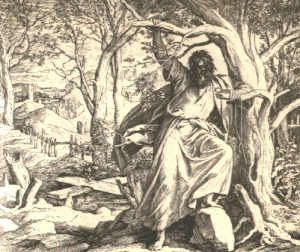
David still had God by his side after divorce, because he was a ‘first-time offender’, much like the parable Jesus told, of the father who still loved his prodigal son. Unfortunately, to have lived as a sinner first, then found God and became Jesus Christ, only to have God throw one out in divorce, the Law is clear. Moses wrote that you can never be taken back.
That divorce by God means all the subsequent “husbands” (lower-g god worship) make it impossible to go back to the LORD. Moses wrote, as the laws of divorce, those which the Pharisees tried to trick Jesus on, “then her former husband who sent her away is not allowed to take her again to be his wife, since she has been defiled; for that is an abomination before the Lord, and you shall not bring sin on the land which the Lord your God gives you as an inheritance.” (Deuteronomy 24:4)
Food for thought.
A minister of the LORD knows that, lives it willingly out of love of God, and raises any children that have been sent to Jesus Christ for teaching to follow the same written Law. All one can do is follow the Father’s commands and not fear. Even in today’s world, where the children are as wild as were those leading Israel and Judah to ruin, a minister to the LORD stands tall amid persecution … and smiles.
The truth whispered by God is much more pleasurable and lasting that human sex can ever be.
You are





 Explaining the Readings